Charles Darwin in Philately
|
|
|
|
|
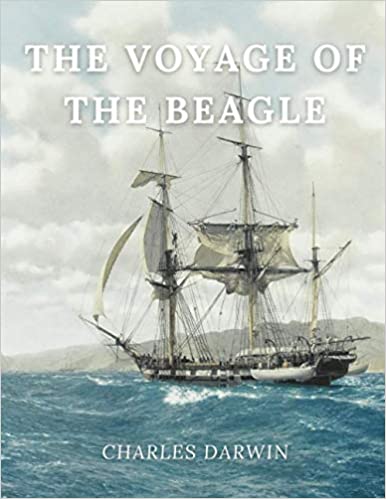
"The Voyage of the Beagle" Amazon: USA, GB, DE |
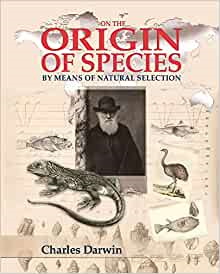
"On the Origin of Species: By Means of Natural Selection", by Charles Darwin,
6th (last edition, 1872, with all additions and corrections) Amazon: USA, GB, DE |
"Darwin: The Man, his great voyage, and his Theory of Evolution", by John Van Wyhe.
Published in 2018. Amazon: USA, GB, DE |
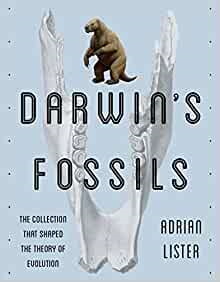
"Darwin's Fossils: The Collection That Shaped the Theory of Evolution", by Adrian
Lister. Published in 2018. Amazon: USA, GB, DE |
Introduction
Charles Darwin was an English naturalist whose scientific theory of the development of all forms of life through the process of natural selection, became the foundation of modern evolutionary studies and transformed our understanding of the development of life on Earth.
|
| Charles Darwin in the age of 31, next to the Mount (his parents’ house) in Shrewsbury on stamp of Cuba 2009, MiNr.: 5216; Scott: 4934a. |
Darwin’s central ideas on evolution remains powerful today and continue to drive many fields of biological science, including Paleontology and Paleoanthropology.
Childhood and Family
 |
| Scenes from Charles Darwin’s life on margins of the Souvenir Sheet of Gibraltar 2009, MiNr.: Bl. 90; Scott: 1215. The Mount (his parents’ house) is on the bottom-left. Charles Darwin in 1816 (7 years old) on the left side. |
 |
|
| Letter sent from Shrewsbury by Robert Waring Darwin, father of Charles Darwin, dated 19 November 1814. Shown courtesy of fellow collector Peter Brandhuber (Germany). |
The eight-year-old Charles already had a taste for natural history and collecting when he joined the day school in 1817, particularly the observation and collection of birds and insects. He continued to be an avid collector, during his entire life, accumulating all kinds of natural and antiquarian objects.
In school, Charles wasn’t an impressive student, only chemistry lessons interested him. When back home from school, he continued chemistry experiments with his elder brother Erasmus in a home “laboratory”.
Darwin’s mother, Susannah (1765-1817), was a daughter and elder child of Josiah Wedgwood. She was depicted on the cover of the booklet “The story of Wedgwood”, where she sits on horseback in the middle, while her parents sit on the bank on the right side.
Her father, Josiah Wedgwood (1730-1795), was an English potter, entrepreneur and manufacturer, who transformed the making of pottery from cottage craft to an international industry. In 1759, at the age of 29, Wedgwood started his own business and established the Wedgwood Company, which survives to the present.
In 1765 the company received an order from the Royal family. Later Queen Charlotte granted her permission to the company to style themselves as “Potter to Her Majesty”. Russian Queen Catherine the Great made some orders from the Wedgwood Company too. In 1780, after death of his business partner, Thomas Bentley, Josiah asked his friend Erasmus Darwin for help in managing the business.
Today, Josiah Wedgwood is often called the “Father of English Potters”. As a result of the close association that grew up between the Wedgwood and Darwin families, one of Josiah's daughters later married Erasmus's son Robert.
After the death of Josiah Wedgwood, Susannah inherited 25.000 GBP, equivalent to approx. 2.7 million GBP today. Susannah died in 1818 from cancer when Charles was only 8 years old.
Robert Darwin (1766-1848) was a medical doctor and investor. He invested the money inherited from his father and the money inherited from his wife, in housing, buying the freehold of several buildings in Shrewsbury and getting income from rents. Later he became a major stockholder in the Trent and Mersey Canal, and an investor in the London to Holyhead road built by Thomas Telford as another part of the infrastructure being built during the Industrial Revolution.
Robert Darwin was the son of Erasmus Darwin (1731-1802) who was an English physician. One of the key thinkers, a natural philosopher, physiologist, slave-trade abolitionist, inventor, freemason, and poet.
 |
 |
| Charles Darwin’s parents were not featured on any postage stamp or postmark, to date. The only philatelic material related to them consists of prestige booklets issued by Royal Mail. | |
|
Charles Darwin’s father, Robert Waring Darwin, and grandfather, Erasmus Darwin, were depicted
on one of the panes in the prestige booklet accompanying the Great Britain 2009 issue commemorating
the 200th anniversary of Charles Darwin.
|
Charles Darwin’s mother, Susannah Darwin (née Susannah Wedgwood), was depicted on the cover of the 1980 Great Britain prestige booklet devoted to the Wedgwood family. Susannah (the elder child) is shown seated on horseback, and her brother Josiah Wedgwood II, who persuaded Charles’s father to support his son’s voyage on the HMS Beagle, appears as the next figure to the right. |

|
 |
| Susannah Wedgwood - Charles Darwin mother | Josiah Wedgwood on stamp of Great Britain 2009, dedicated to the British Industrial Revolution |
Her father, Josiah Wedgwood, was featured on a Royal Mail stamp issued in 2009 and dedicated to the British Industrial Revolution. The stamp commemorates his pioneering role in transforming the ceramic industry through industrial innovation, refined design, and entrepreneurial vision.
As a member of the prosperous Wedgwood and Darwin families, Charles Darwin enjoyed financial security throughout his life. This independence allowed him to devote himself fully to natural history, scientific research, and the long development of his evolutionary ideas without the burden of earning a living.
Early life and education
Edinburgh
In October 1825 Charles Darwin went to the University of Edinburgh Medical School, to join his elder brother Erasmus, at the request of his father, who hoped his son would follow in his medical footsteps. However, Darwin neglected his studies, because he found the lectures dull and surgery distressing.Darwin was influenced by several notable figures at Edinburgh.

|
| Robert Edmond Grant in 1852. Image credit: Wikimedia. |
 |
|
Jean-Baptiste Lamarck on postmark of France 1979. Jean-Baptiste Lamarck began to lose his eyesight in the early 19th century, and he was completely blind by around 1818. Despite his blindness, Lamarck continued to work with the help of his daughters, who assisted him in transcribing his scientific thoughts and manuscripts. His major work on evolution, "Philosophie zoologique", was published in 1809, well before he lost his sight entirely. |
Darwin studied under Robert Jameson, a geologist and professor of natural history, whose lectures on geology and mineralogy introduced Darwin to debates about Earth’s history (though Darwin found them dry).
More significantly, he befriended Robert Grant (1793 - 1874), a radical evolutionist and marine biologist, who taught Darwin how to study invertebrates. Darwin spent much of his time outside the classroom, exploring the Scottish countryside and collecting specimens along the Firth of Forth. He assisted Grant's investigations of the anatomy and life cycle of marine invertebrates, and on 27 March 1827 presented his own discovery that black spores found in oyster shells were the eggs of a skate leech.
One day, Grant praised Lamarck's evolutionary ideas.
Jean-Baptiste Lamarck (1744 - 1822) referred to a
tendency for organisms to become more complex,
moving "up" a ladder of progress.
Lamarck claimed, when environments changed, organisms had to change their behaviour to survive.
If animals began to use an organ more than they had in the past, it would increase in its lifetime, on the
other side,
organs that animals stopped using would shrink.
Lamarck believed in the ongoing spontaneous generation of simple living organisms through action on physical
matter by a material life force, rather than being created by God.
This idea was revolutionary, because at this time all scientists in Europe believed in the
Divine creation of the Earth and its life.
All species were created by God for particular a role in Nature.
As the roles were fixed by the Creator from the beginning, there is no need for species to change.
At the time of publication, the theory was rejected by most scientists, because it was in conflict with their
religious beliefs.
In the 21st century, experimental results in the fields of epigenetics, genetics, and somatic
hypermutation demonstrated
the possibility of transgenerational epigenetic inheritance of traits acquired by the previous generation.
These proved a limited validity of Lamarckism.
However, Lamarck's theory was a very remarkable step in thoughts about the origin of animals, because in the
Lamarck's theory animals
change their initial characteristics without any interactions with God.
In 1827, in Darwin's second year at the university, he joined the Plinian Society, a student natural-history group featuring lively debates in which radical democratic students with materialistic views challenged orthodox religious concepts of science.
These experiences, rather than his formal medical training, nurtured his skills as a naturalist and prepared him for his later voyage on HMS Beagle.
Cambridge

|
 |
| John Stevens Henslow. Image credit: Wikimedia. | Adam Sedgwick. Image credit: Wikimedia. |
During his study in Cambridge Darwin became a close friend and follower of botany professor John Stevens Henslow, and was often called as "the man who walks with Henslow". Henslow inspired Darwin with a passion for natural history, as he was also knowledgeable in many other disciplines such as entomology, geology and mineralogy. Contact with Henslow brought Darwin into the world of intellectuals in Cambridge.
Darwin was also influenced to go on the voyage by Adam Sedgwick - who was an important British geologist. Sedgwick named the Cambrian Period and co-named with Sir Roderick Impey Murchison both the Silurian and Devonian periods. Darwin often accompanied Sedgwick on his geological voyages. The knowledge became very useful during Darwin’s voyage on HMS Beagle.
During the stay in Cambridge, Darwin read "Personal Narrative" of the famous German naturalist, Alexander von Humboldt (1769-1859). This book was about von Humboldt’s expedition through Central and South America between 1799 and 1804, providing stimulus for the young Charles Darwin to visit tropical locations to observe their animals and plants for himself.
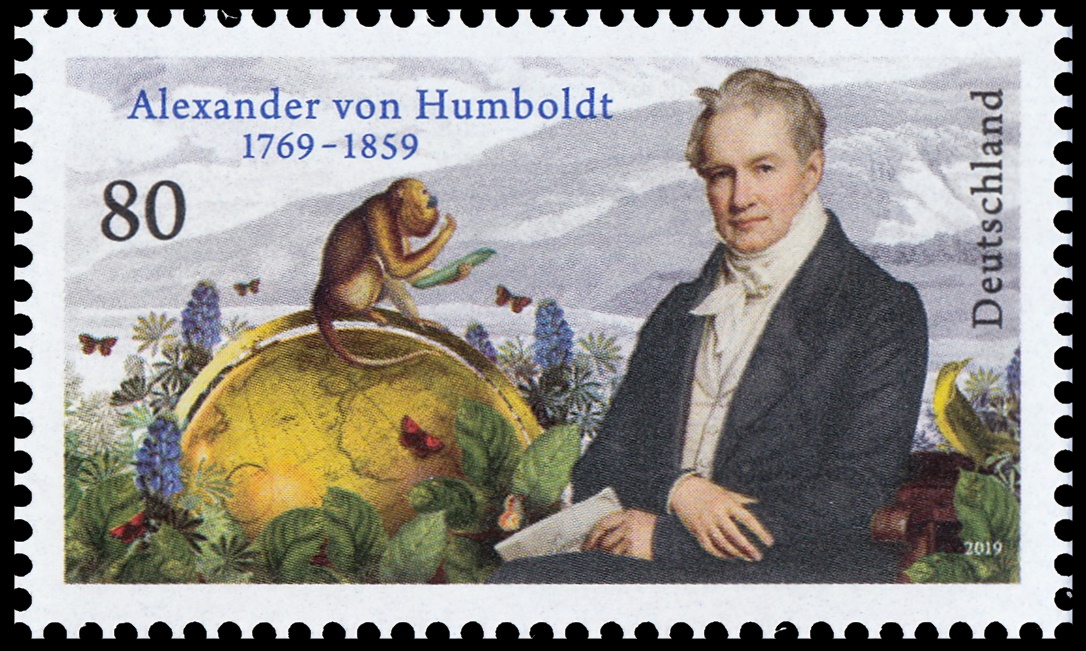 |
| Alexander von Humboldt on stamp of Germany 2019, MiNr.: 3492, Scott: 4269. |
 |
 |
|
Above:
Captain Robert FitzRoy, commander of HMS Beagle, on a stamp of the Cocos (Keeling) Islands
issued in 1990 (MiNr. 229A; Scott 219), together with a letter he sent in 1831.
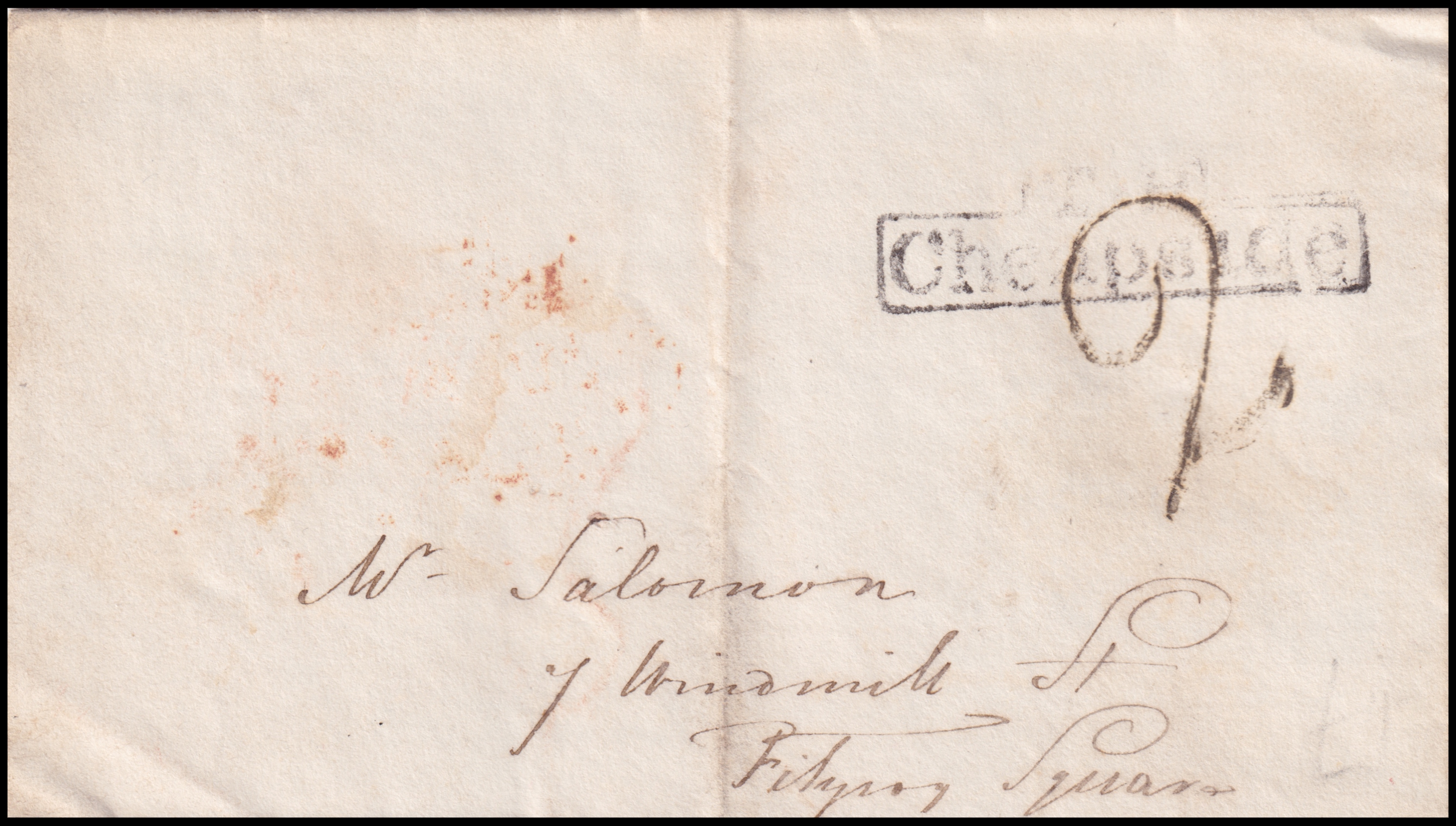
The letter is shown courtesy of a fellow collector Peter Brandhuber (Germany). Below: An envelope from 1835 addressed to FitzRoy Square, London. The Square takes its name from the aristocratic FitzRoy family, who owned the estate and oversaw its development in the late 18th century. Captain Robert FitzRoy belonged to the same extended FitzRoy lineage, though there is no evidence that he ever lived on the square itself. |
 |
In the summer of 1831 John Henslow was offered a place as naturalist to sail aboard the survey ship HMS Beagle on a two-year voyage to survey the coast of South America. However, his wife persuaded him not to accept the offer. Recognizing a perfect opportunity for his protégé, Henslow recommended that Charles Darwin, who had just earned his B.A. degree, join the global voyage of the HMS Beagle.
Charles was thrilled at the chance to emulate his hero, Alexander von Humboldt, but his father initially opposed the idea. He believed the journey would be a waste of time and a distraction from a proper career for his son. However, Darwin’s uncle, Josiah Wedgwood (1765–1843), named after his father Josiah Wedgwood (1730–1795), successfully convinced Darwin's father to support his son's decision.
This support was essential, as young Charles had to cover the cost of the voyage himself; the Admiralty provided no funding for his participation. The self-paying guest, was allowed to keep all collected specimens for himself, while everything collected by naval officers was normally considered to be the property of the Government.
Captain Robert FitzRoy (1805-1865) wanted a companion, because he feared the loneliness and
psychological strain
that had affected previous captains on long voyages.
FitzRoy wanted to have a gentleman of similar social status,
someone to help him maintain morale and provide intelligent conversation.
The companion should also be a naturalist capable studying the little-known lands the ship would visit,
including
geology, flora, fauna, and fossils.
The captain Robert FitzRoy later became a Vice-Admiral of the Royal Navy, was politician and
scientist who served as the second governor of New Zealand between 1843 and 1845.
FitzRoy gained enduring recognition as the captain of HMS Beagle during Charles Darwin’s renowned voyage —
his second expedition to Tierra del Fuego and the Southern Cone.
FitzRoy was also a pioneering meteorologist who made accurate daily weather predictions,
which he called by a new name of his own invention: "forecasts".
The voyage of HMS Beagle (1831-1836)
 |
The HMS Beagle was small two-masted sailing ship, only 27.50 meters long and 7.50 meters wide, 10-gun ship brig-sloop of the Royal Navy, one of more than 100 ships of this class, launched on May 11th 1820. Later it was adapted as a survey barque and took part in three survey expeditions (the voyage of Darwin was the second survey expedition of HMS Beagle. FitzRoy was the captain of the first survey expedition too).
 The map of Voyage of the Beagle. Image credit: Wikimedia.
During the visit Darwin visited the following locations.
The countries marked by "*" issued philatelic materials related to Charles Darwin.
|
|
In many locations Darwin made his observations and experiments while staying a long time on shore, while FitzRoy with the crew surveyed the coastline from the sea side. During almost five years at sea on the voyage, Darwin spent three of the years on land.
 |
| Georges Cuvier on stamp of France 1969, MiNr.: 1673, Scott: B430 |
Darwin also kept contact with his friends and family, though the post. These letters and his diary were later used by him as the basis for his book "Journal of Researches Into the Natural History and Geology of the Countries Visited During the Voyage Of H.M.S. Beagle Round The World", published in 1845 for the first time, and commonly known today as "The Voyage of the Beagle".
At the time Darwin started the voyage many leading naturalists already accepted that the Earth was many million years old and had experienced multiple distinct eras of life. This view aligned with the theory of Catastrophism proposed by George Cuvier (1739-1832), French naturalist, who often regarded as the "founding father of paleontology". According to Cuvier's theory environmental changes caused species to go extinct permanently, and new species were subsequently created, often believed to be by divine intervention, to match the altered conditions.
It was also understood that the fossil record showed a clear progression: simpler, more primitive organisms appeared first. The oldest rock layers contained only shellfish, followed by fish, then amphibians, then reptiles and eventually mammals. Additionally, it was widely accepted that groups of organisms were related through chains of similarity, with smaller groups fitting within larger, more inclusive categories.
During his voyage on HMS Beagle, Darwin found evidences suggesting that not only do humans descend from earlier forms of life, but that all organisms that have ever lived on Earth arose through the same fundamental process: reproduction, with each generation producing descendants that either succeeded or failed in their environments.
One of the observations that particularly impressed the young Darwin in South America, was the gradual change of species as he travelled southward along the continent. The range of one species would end, and a closely related, but distinct, species would begin.
Cape Verde Island
Darwin’s first major scientific study during the voyage began on Cape Verde. He examined rock formations containing marine shells lying above basaltic lava flows.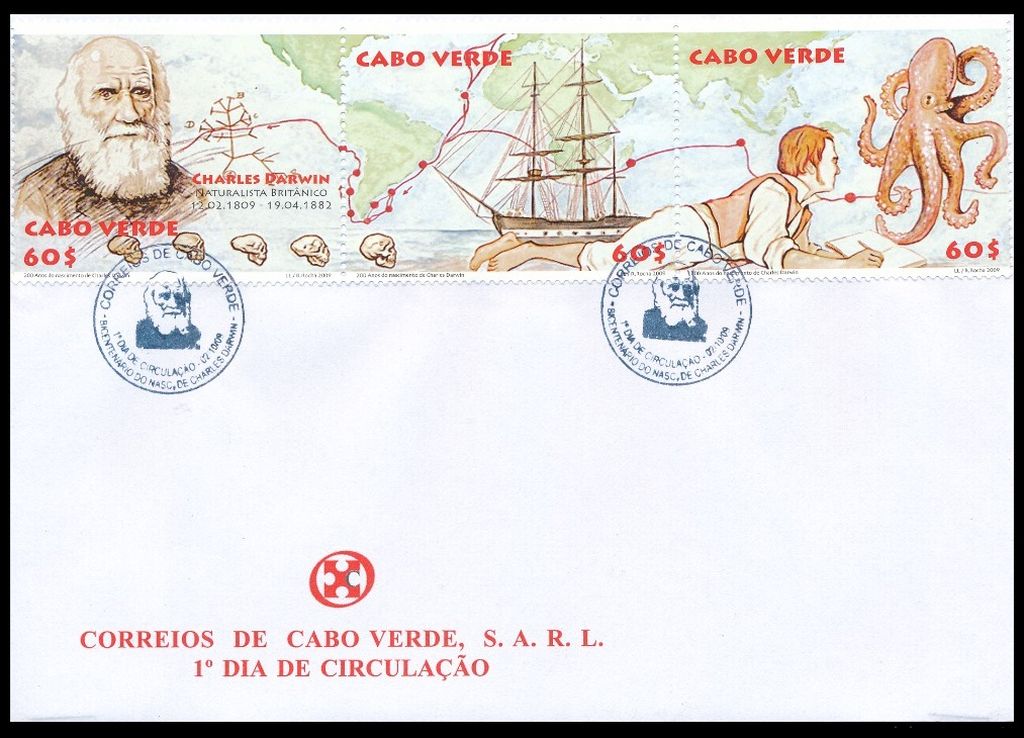
|
| Charles Darwin on FDC of Cape Verde 2009 |
Uniformitarianism is a theory based on the work of Scottish geologist James Hutton (1726-1797) and made popular by Charles Lyell in the 19th century. This theory states that the forces and processes observable at earth’s surface are the same that have shaped earth’s landscape throughout natural history.
On Cape Verde, Darwin saw things Lyell's way, theorising and thinking of writing a book on geology. They met personally when Darwin returned to Cambridge after the voyage and debated various geological concepts in the following years.On the island Darwin collected plants, insects, and marine organisms—although his primary focus here was geology.
The geology of Cape Verde gave Darwin his first glimpse into deep time - the vast time spans necessary for geological processes. It was here that he began to move away from Catastrophism proposed by George Cuvier, toward gradualism, formulated by Lyell, the idea that slow, continuous processes shape the Earth. Cape Verde was where Darwin began to see nature as a dynamic and ancient system, laying the mental groundwork for his later ideas on evolution and natural selection.
Chile
Charles Darwin visited Chile in September and October 1835, where he continued his exploration of the country's natural history, geology, and wildlife. During the visit he experienced a powerful earthquake first hand while in the city of Valdivia and later visited Concepción, which had been devastated. Entire towns had been destroyed and land had been uplifted several feet along parts of the coast. Darwin saw shell beds and marine rocks raised above sea level, providing dramatic, real-time evidence of geological change.The earthquake deepened his belief in Charles Lyell's theory of gradual geological change. It helped him realize that slow, natural processes like earthquakes and uplift—given enough time—could shape mountains, coasts, and continents. These observations also strengthened his thinking about the long timescales needed to form the Earth.
Peru
The next country visited by Charles Darwin was Peru, where he spent three weeks ashore and where he made several observations that contributed to his studies of geology, flora, and fauna.Darwin was fascinated by the geology of the region, particularly the uplifted marine terraces along the coastline. He noted that many of these terraces appeared to have once been part of the seabed but were now raised several hundred meters above sea level. This led him to theorize about the gradual, ongoing processes of geological change, a view that would influence his later writings on evolution and natural selection.
The Galapagos Islands
 |
| Galapagos Islands on postage stamp of Ecuador 1957, MiNr.: 2; Scott: L2. |
 |
| Galapagos Islands on postage stamps of Ecuador 1957, MiNr.: 5; Scott: LC2. |
Ecuador is a small county on the west coast of northern South America. It also includes the Galapagos Islands in the Pacific Ocean, about 1,000 kilometres west of the mainland.
He soon learned that these islands have relatively recent volcanic origins. The soundings measurement of captain FitzRoy revealed that the ocean around the islands was extremely deep. These facts puzzled Charles Darwin about origin of the animals on these islands - these volcanic islands first appeared by lava eruption and were devoid of life.According to the theory of Charles Lyell (1797 - 1875), which Darwin considered before embarking on his voyage aboard HMS Beagle, species found in the fossil record had become naturally extinct over time as environmental conditions changed. New species were somehow created by a divine act specially designed to fit the new environments, then spread outward from a central point of creation.
Darwin began to question this idea. He wondered where this "center of creation" might be, from which species could have dispersed to remote places like the Galapagos Islands, and how terrestrial animals had managed to reach such isolated locations.
 |
| Fauna of Galapagos Islands on postage stamps of Ecuador 1957 and 1986 MiNr.: GA3, GA6, 2018, 2022 ; Scott: L3, LC3, 1115, 1119 . |
He also questioned why animals have such short lifespans and do not live forever, especially if they were created by God for a specific purpose and had remained unchanged since the moment of creation.
His observations and collections of endemic species on these islands contributed to the inception of Darwin's theory of evolution by natural selection.
Darwin speculated that the distribution of the mockingbirds, finches and the tortoises might "undermine the stability of Species".
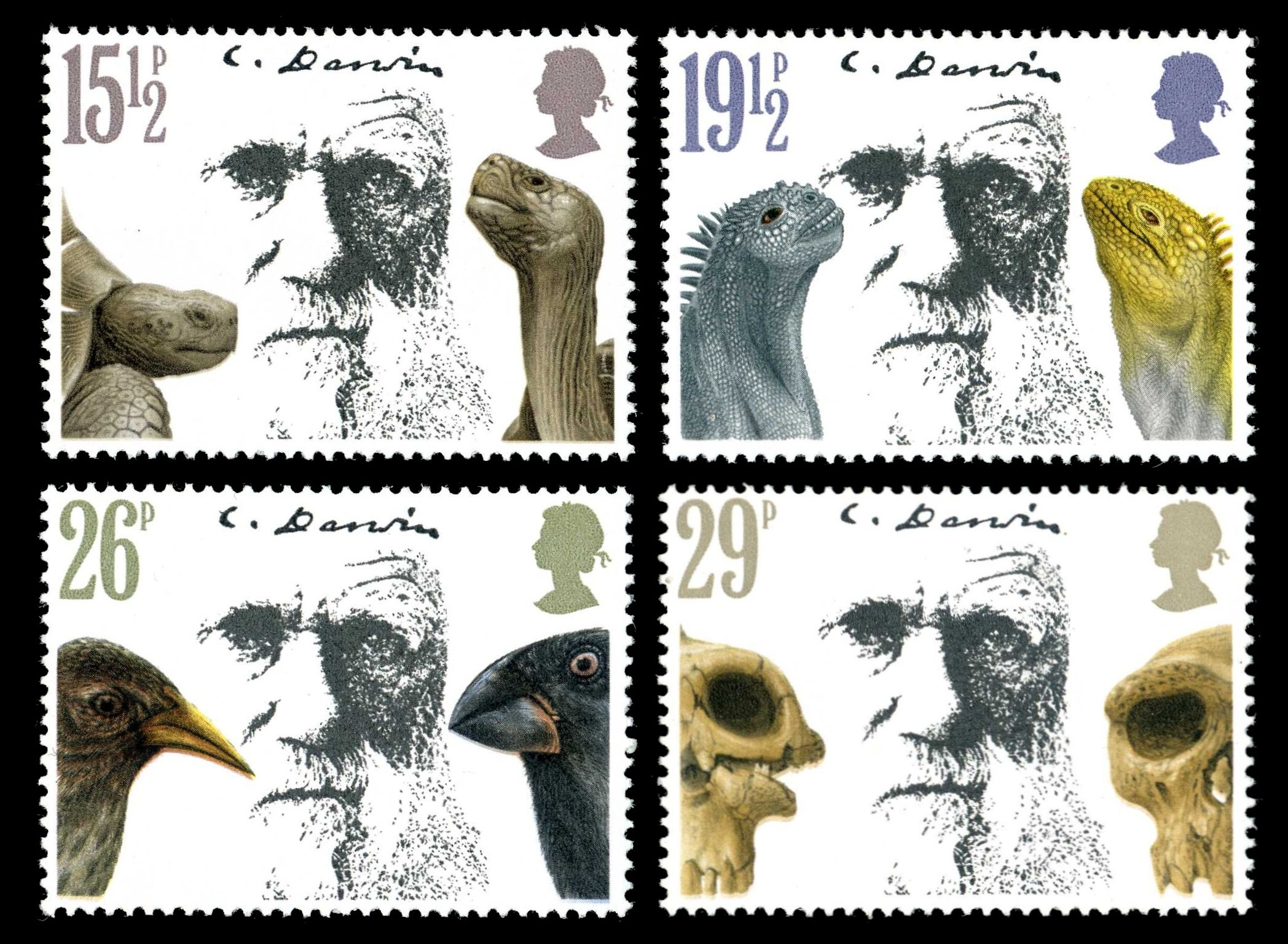
- The dark marine iguana, feed on seaweed in the cold waters round the rocky coasts. They spend a considerable part of their day basking in the sunshine after their feeding excursions in the sea. Their broad, blunt jaws and armoured heads protect them from the sharp rocks even in rough water.
- The land iguana, which feeds on cactus pads and other plants, has a tail with a round section and a narrower face with less protection.
- The dome shaped tortoises are ground feeders eating cactus pads and low growing plants.
- The saddle backed tortoises with their long necks and flared carapace stretch up and feed on bushes and taller cacti.
Cocos Islands
 |
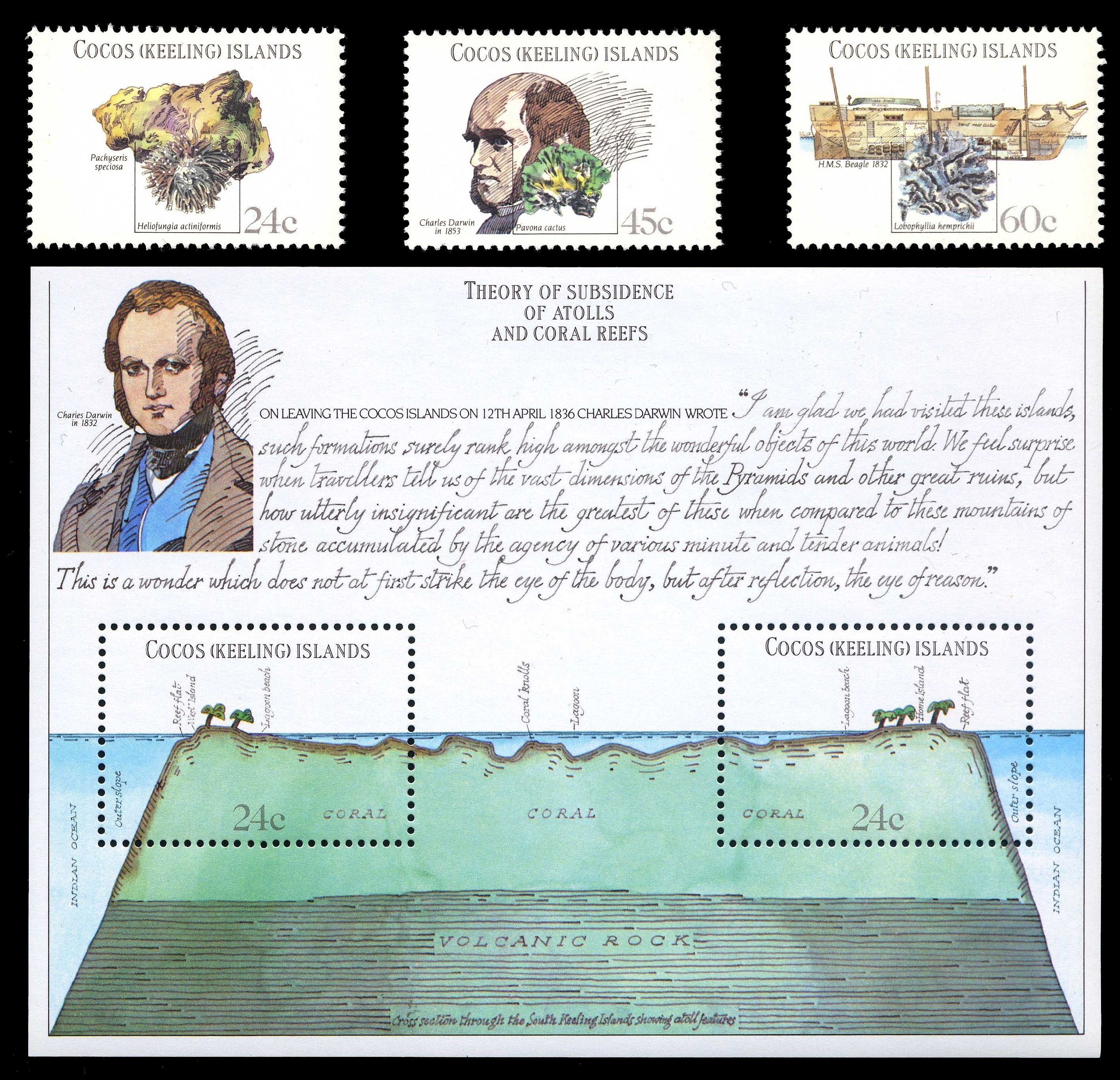
| Charles Darwin on postage stamps of Cocos Islands 1981, MiNr.: Bl. 1 (81-82); Scott: 81 (a-b). |
FitzRoy accepted this explanation. In 1950s the Darwin's theory was confirmed, when scientists bored through an atoll in the Pacific Ocean and found volcanic rocks underlying the coral.
On April 12th 1836, HMS Beagle left the Cocos Islands, while Charles Darwin wrote in his diary (later published as “The Voyage of the Beagle”)
I am glad we have visited these islands: such formations surely rank high amongst the wonderful objects of this world… We feel surprise when travellers tell us of the vast dimensions of the Pyramids [in Egypt] and other great ruins, but how utterly insignificant are the greatest of these, when compared to these mountains of stone accumulated by the agency of various minute and tender animals! This is a wonder which does not at first strike the eye of the body, but, after reflection, the eye of reason.
Return to England
Charles Darwin returned from the voyage of the HMS Beagle in October 1836. To his surprise his name was already known to the scientific community of England, through his tutor from the Cambridge, John Henslow, who had read some of Darwin’s letters at scientific meetings and had them printed.After a short visit with his family, Darwin returned to Cambridge where he stayed for two years and then took a house in London to be close to the scientific experts and societies that were describing and discussing his many specimens from the voyage.
Darwin's collections and papers published by Henslow on Darwin's behalf and published by Darwin himself upon his return to England proved to the scientific elite that young Darwin was a naturalist of the highest caliber. His father was proud of his youngest son and provided him financial support.
In the same month he returned from the voyage, Charles Darwin was introduced to Charles Lyell, who was already famous for his influential work "Principles of Geology"", which Darwin had read during the voyage and greatly admired.

|

|
| Charles Lyell in 1840 (about the same time he met Charles Darwin for the first time). Image credit: Wikimedia. | Portrait of John Gould, c. 1864, by Ernest Edwards. Image credit: Wikimedia. |
 |
|
| Letter from the British Association for the Advancement of Science. | |
The same year, Darwin became a member of the Geological Society of London and in February 1838 he was elected to the Council of the Society.
In 1837 Darwin's first paper showed that the South American landmass was slowly rising. With Charles Lyell's enthusiastic backing, he read it to the Geological Society of London on 4 January 1837. On the same day, he presented his 80 stuffed mammals and 450 stuffed birds collected during the voyage to the Zoological Society.
The ornithologist John Gould (1804 - 1881) soon announced that the Galapagos birds that Darwin had thought a mixture of blackbirds, "gros-beaks" and finches, were, in fact, twelve separate species of finches.
In 1839, Darwin was elected as a fellow of the Royal Society of London and in 1850 he became a fellow of Linnean Society of London.
Charles Darwin was involved with the British Association for the Advancement of Science (BAAS). Darwin attended meetings of the BAAS, especially in the 1830s and early 1840s, where he presented some of his early geological observations and corresponded with other members through this network.
Even before his famous Origin of species, Darwin already had an impeccable reputation in the scientific community from his voyage on the Beagle as naturalist and best-selling book of travels about it, his major geological, paleontological, zoological and botanical discoveries, his revolutionary coral reef theory, his ongoing comprehensive taxonomy of barnacles and a large variety of other original work and discoveries.
Fossils Collection of Charles Darwin
During the voyage, Darwin collected many specimens of exotic plants and animals, as well as many fossils from South America, especially in Argentina and Uruguay. Among many fossils of marine shells, Darwin also discovered remains of big prehistoric mammals such as: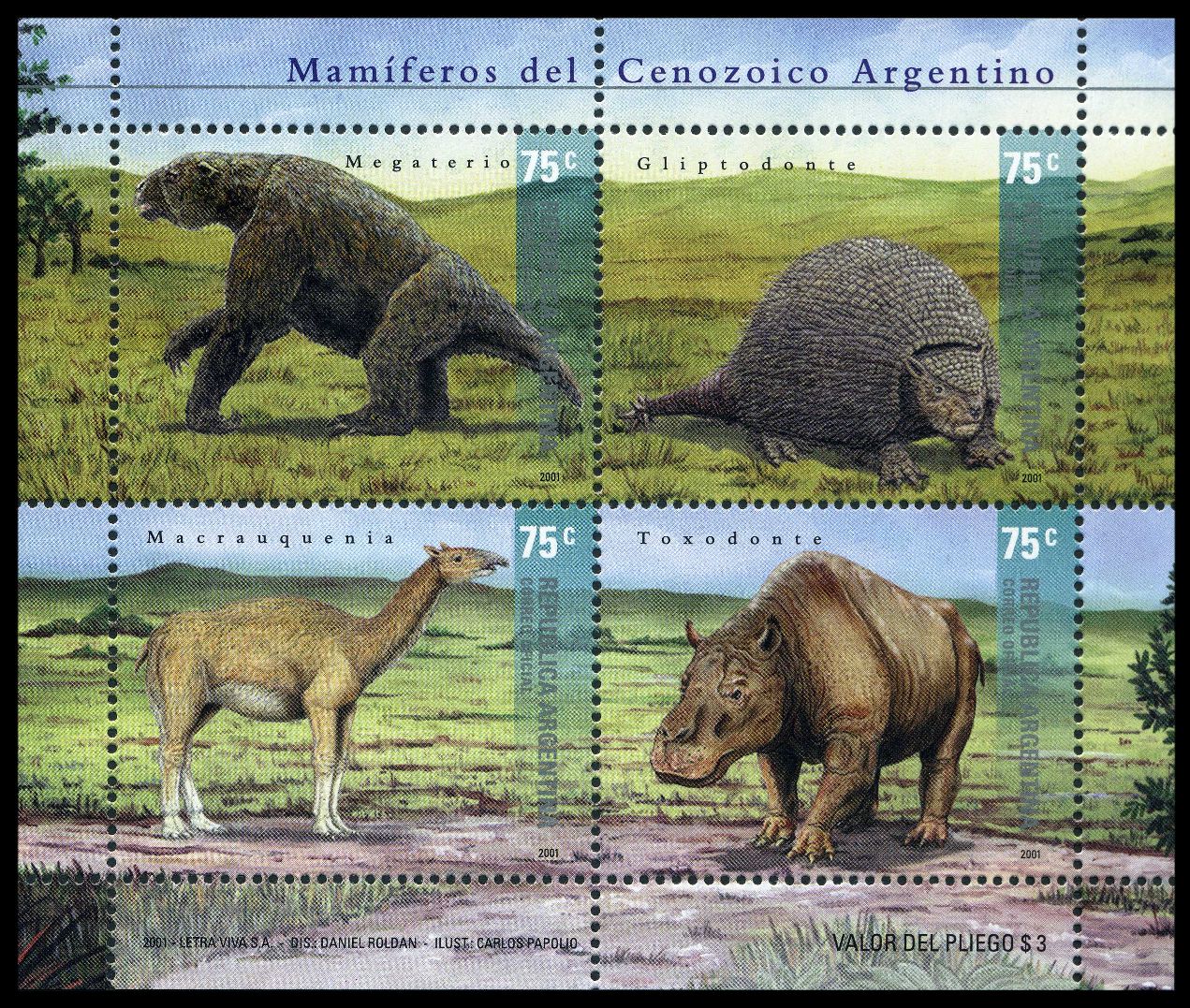 |
|
| Reconstructions of four prehistoric mammals discovered by Charles Darwin on stamps of Argentina 2001. | |
 |
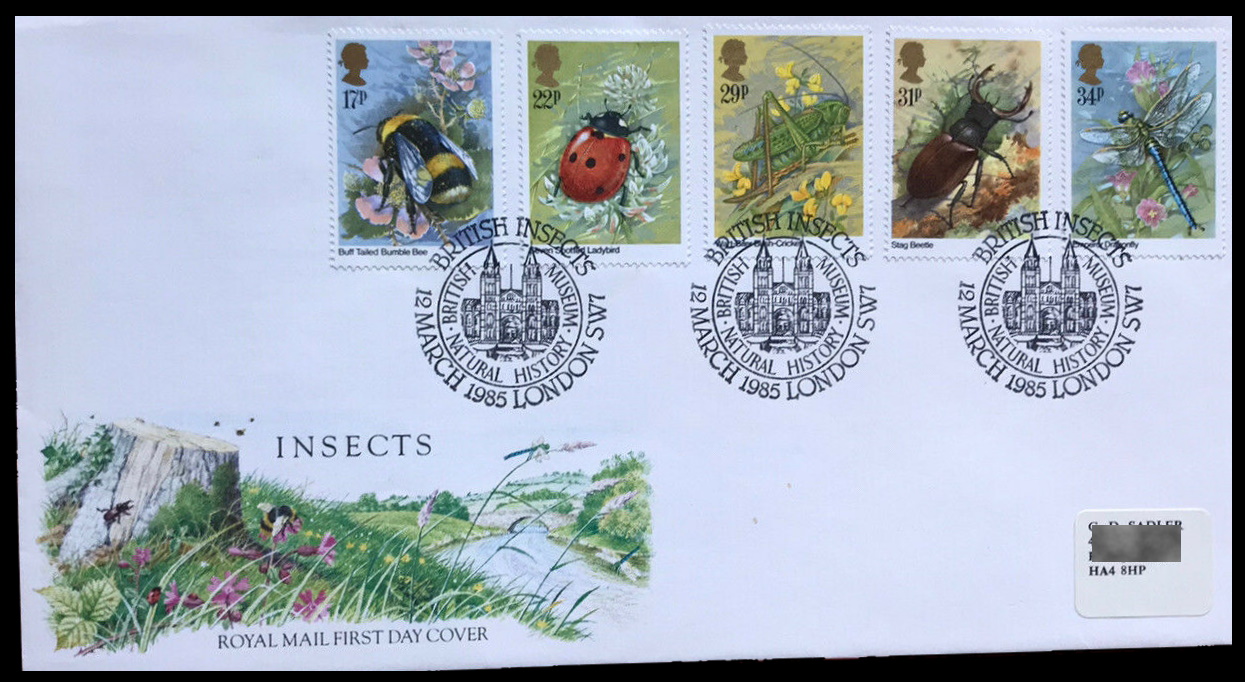 |
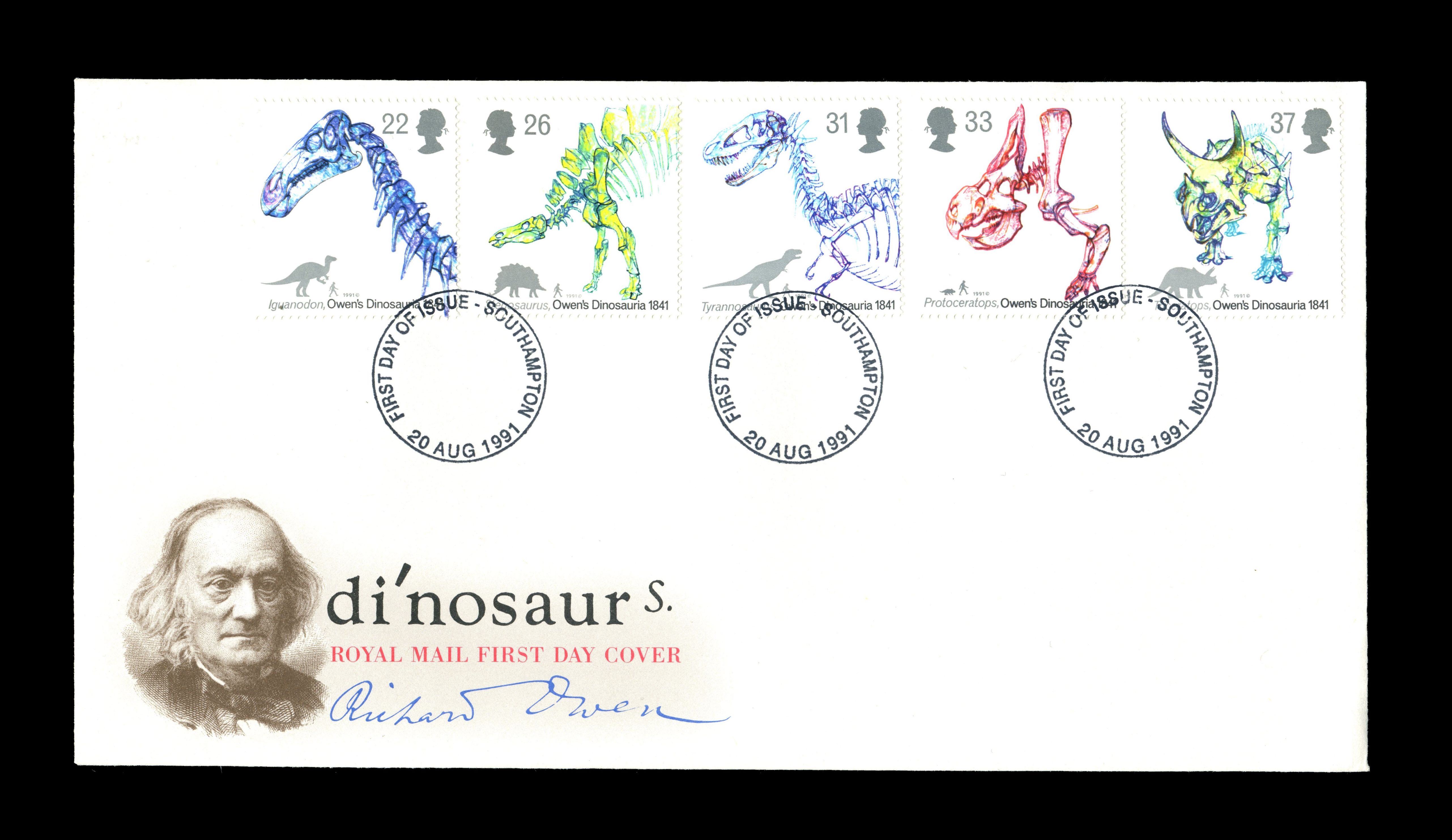
| Sir Richard Owen on the cachet of FDC of Great Britain 1991. | The Natural History Museum in London on postmark of Great Britain 1985 |
- Huge femur and skull of giant Ground Sloths (Megatherium and Mylodon) - these extinct species closely resembled modern sloths but were much larger.
- Glyptodon - a massive, armored mammal resembling a giant armadillo
- Toxodon - a large, extinct hoofed mammal with a strange mix of features (like a hippo and a rodent).
- Macrauchenia - A long-necked, extinct mammal (like a camel crossed with a llama).
In 1836, after Darwin return to England, he was introduced to Richard Owen (who had not been knighted yet) by William Whewell, a prominent philosopher and historian of science who was also the Master of Trinity College, Cambridge. Richard Owen was a leading expert in comparative anatomy and paleontology at the Royal College of Surgeons in London.
(The term "paléontologie" (from the Greek palaios = ancient, ontos = being, and logia = study) was coined by the French scientist Henri Marie Ducrotay de Blainville in 1822.)
Sir Richard Owen (1804 – 1892) was the leading comparative anatomist and
palaeontologist of his time, an a contemporary of Charles Darwin.
A controversial figure, he is perhaps best known for coining the word dinosaur
(meaning "Terrible Reptile" or "Fearfully Great Reptile").
Owen maintained a cordial relationship with Darwin, at least until 1859,
when Darwin published his landmark work, "The Origin of Species".
Before the book’s publication, the two had become friendly, and Darwin often
called on the Owens for afternoon tea.
Owen’s greatest legacy is the Natural History Museum, but he was also an adviser to governments,
reported on environmental health issues and was awarded more than 100 honours – including a knighthood
in 1883.
Darwin relied on Owen for his knowledge of anatomy, especially of vertebrates, and on his deep reading of continental morphologists and philosophers of biology. Although he disagreed deeply with Owen's transcendental philosophies, he respected Owen's vast knowledge, and many passages in "Origin of Species" not only reflect Darwin's appreciation of Owen's views; they often appear to be written to anticipate or encompass Owen's potential objections.
These fossil discoveries raised many questions by Darwin. It pushed him into thinking of the primeval world and what had caused those giant beasts to die out.
Down House
In January 1839 Darwin married his cousin Emma (1808-1896), daughter of Charles Darwin's uncle Josiah Wedgwood, who convinced his father to support his son during the voyage on HMS Beagle.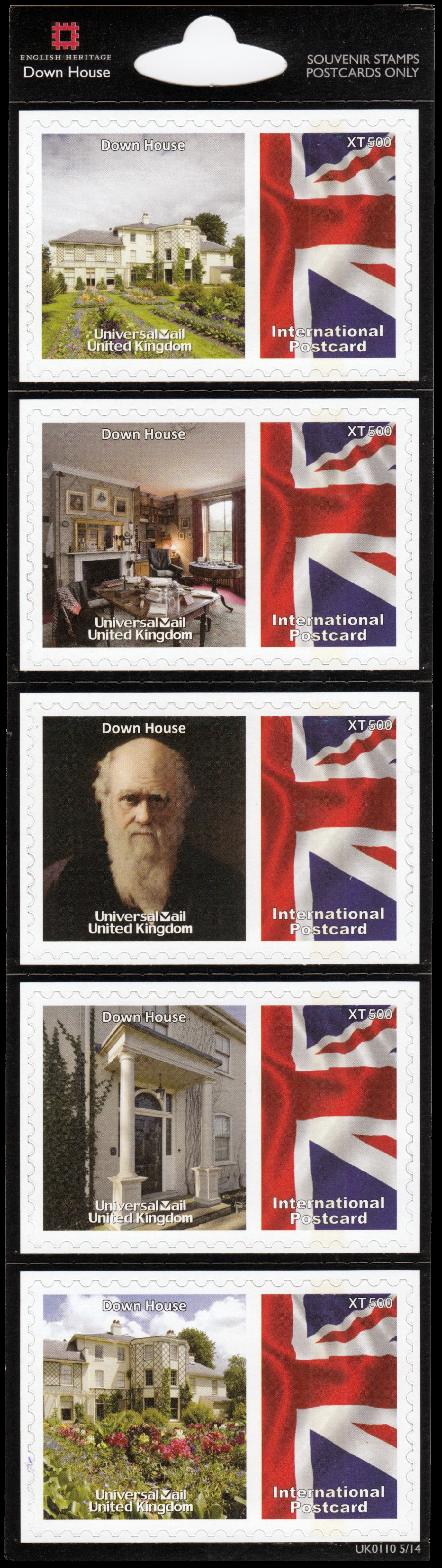 |
| Charles Darwin and Down House on "International Postcard" stamps of "English Heritage" company. |
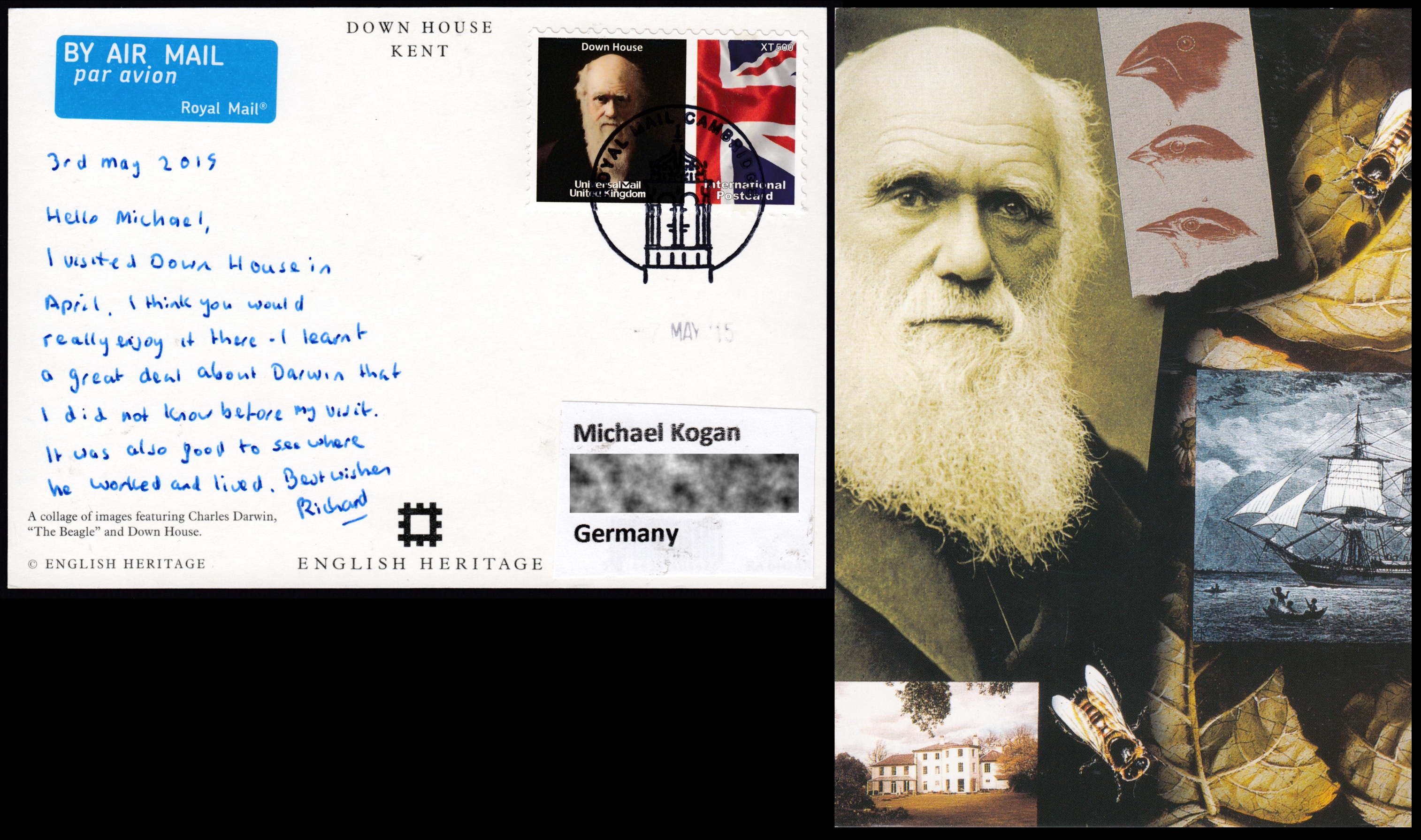 |
| Charles Darwin’s stamp from the English Heritage series on a postcard sent to Germany. |
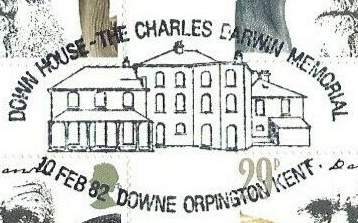 |
| Down Hiuse on postmark of Great Britain 1982. |
Here Darwin would live and work for the rest of his life, while this home became his experimental station, laboratory and workshop. Darwin’s estate in Down was not just a house, but more like a farm with many service animals living there: a cow for milk, chickens for eggs, horse, donkey … a dog and some cats.
He employed numerous domestic servants including a butler, footmen, coachmen, cooks, gardeners etc. Shortly after Darwin moved to Down, he became a respected and integral part of the community.
Charles Darwin is well known for his scientific works, but his contribution to the local society is almost unknown. From July 1857 until his death in 1882 he was elected justice of peace (village Magistrate).
A justice of the peace (JP) is a judicial officer of a lower court, elected or appointed by means of a commission (letters patent) to keep the peace, while his jurisdiction extends to trial and adjudication for small offences. Serving as a magistrate was not only unusual for someone of his place in society, but actually rather typical. Several members of Darwin’s family also did so.
Even at the same time when he was working on his famous books, he was fining thieves for stealing plums. Contemporary sources and the recollections of those who knew him described Darwin being a justice of the peace as civic-minded volunteering. He may have seen it as one of the obligatory responsibilities of a man of his means and social position. And abhorrence of theft, violence and animal cruelty were some of Darwin’s most deeply felt passions.Emma Darwin was active as well. She paid regular visits to some of the poorer ladies in the village and brought food, old clothes and small cash donations.
Today, Down House is managed by "English Heritage" company who made it museum of Charles Darwin and issue their-own postage stamps to be used on "International Postcards, under license of the Royal Mail.
The theory of Evolution
Transmutation Theory of Darwin
When Darwin returned to England from the voyage on HMS Beagle, he began organizing his notes and studying specimens and publishing articles on different parts of his collection.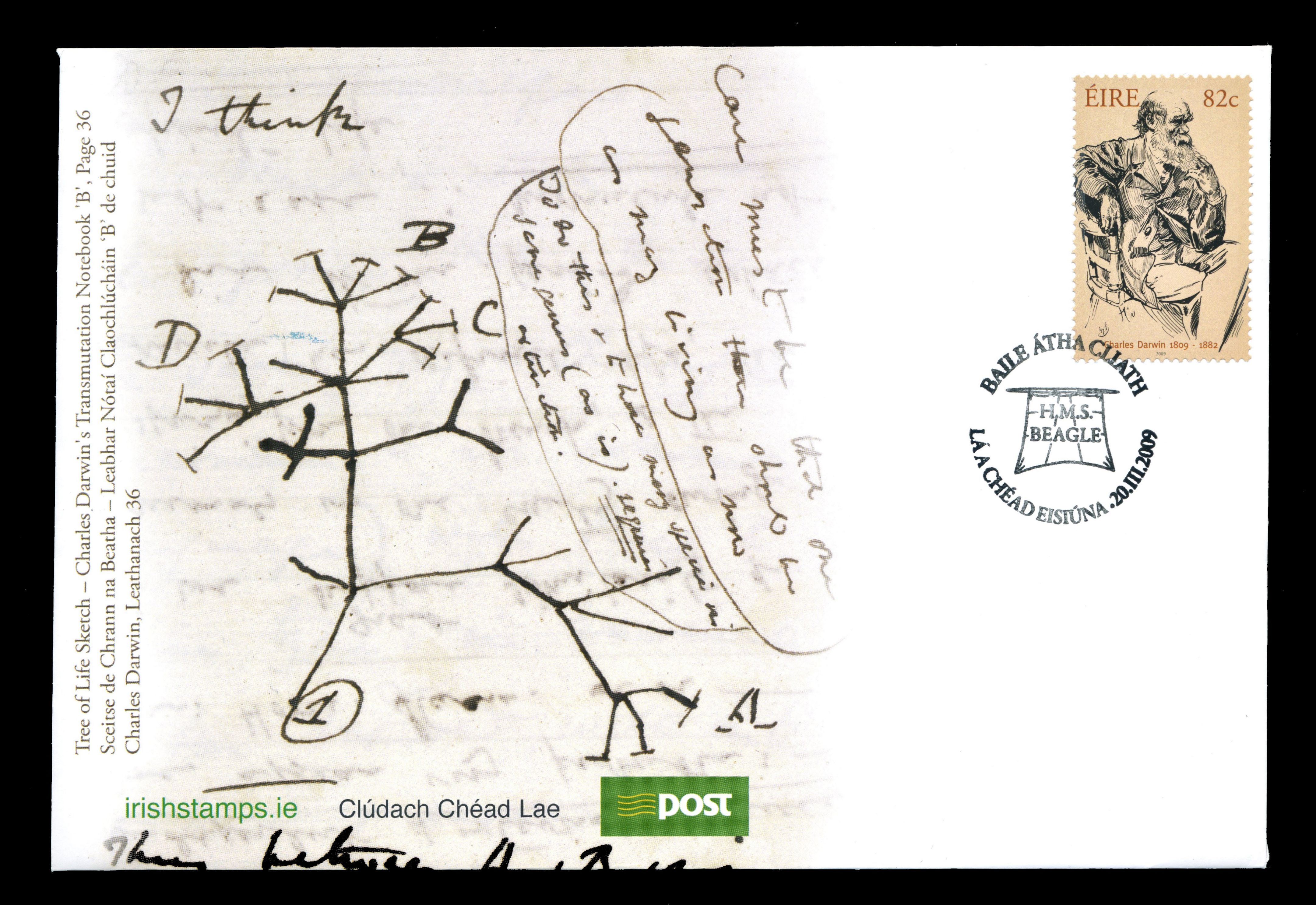 |
| Charles Darwin's Evolutionary Tree on cachet of Irish FDC from 2009. |
In September 1838, Darwin read "Essay on the Principle of Population", by Thomas Malthus (1766 – 1834). Malthus’s idea that populations outgrow their resources sparked Darwin’s insight: individuals with advantageous traits survive and reproduce—the core of natural selection.
While thinking about his ideas about natural selection and talking about it with other leading scientists, Darwin published many books and articles.
Here are a few:
"Zoology of the Voyage of H.M.S. Beagle", published in five volumes between 1838 and 1843 with contributions by leading specialists. One of the volumes, published in 1840, is about fossils was written by Richard Owen.
"The Structure and Distribution of Coral Reefs", introduced his subsidence theory for coral atoll formation, was published in 1842.
"Geological Observations" on Volcanic Islands and on South America were published by Darwin in 1844 and 1846 respectively.
Darwin was not in rush to publish his ideas about natural selection, he wanted to amass a wealth of evidence before publicly presenting his idea.
The Tendency of Species to form Varieties
 |
| Pigeons on stamp of Ukraine 2014, MiNr.: 1443-1446, Scott: 985-988. |
 |
| "Darwin receives Wallace’s manuscript". Charles Lyell – standing in the center, Joseph Dalton Hooker, who was an important Botanist at the time (Hooker, Alfred Russel Wallace and Thomas Henry Huxley were the big three supporters of Darwin during the debates on evolution) – seated on the right on stamp of Cuba 2009, MiNr.: 5218; Scott: 4934c. |
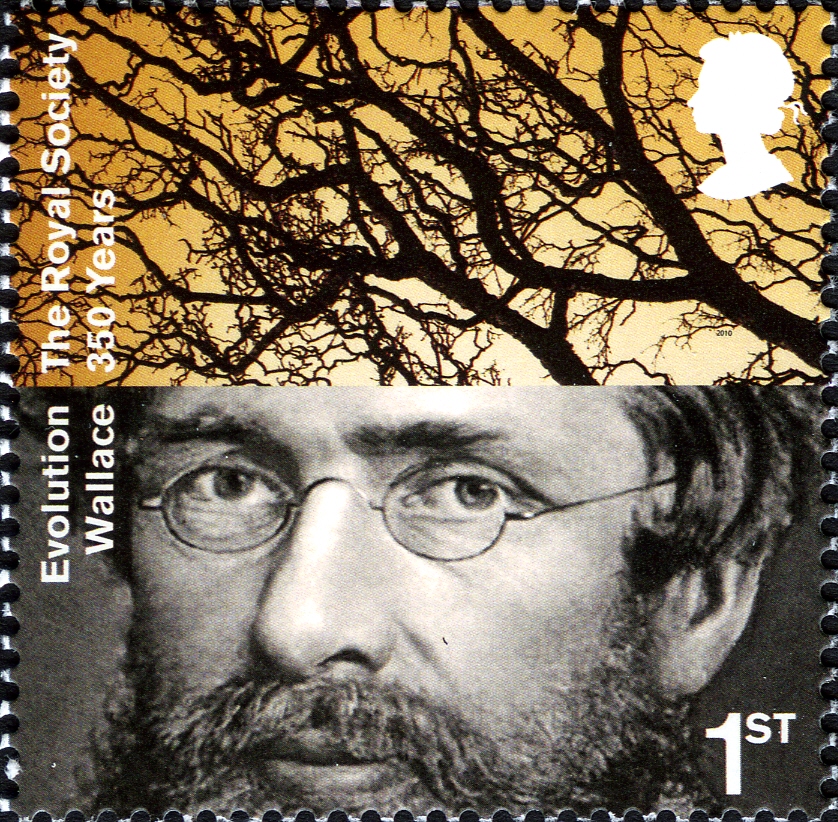 |
| Alfred Russel Wallace on stamp of Great Britain 2010, MiNr.: 2893, Scott: 2752 |
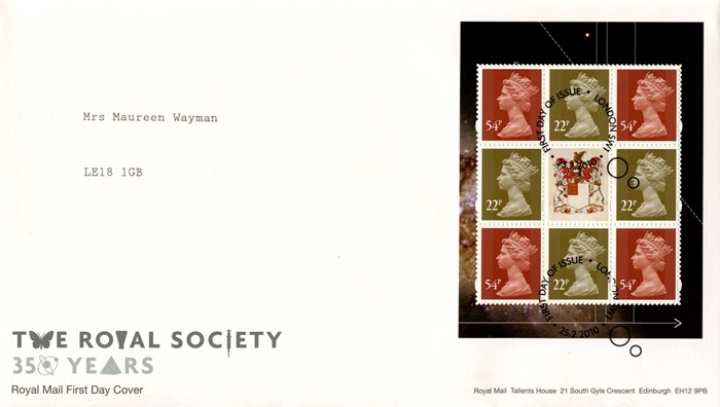
|
| Postmark of Great Britain 2010 commemorates Alfred Wallace evolution theory |
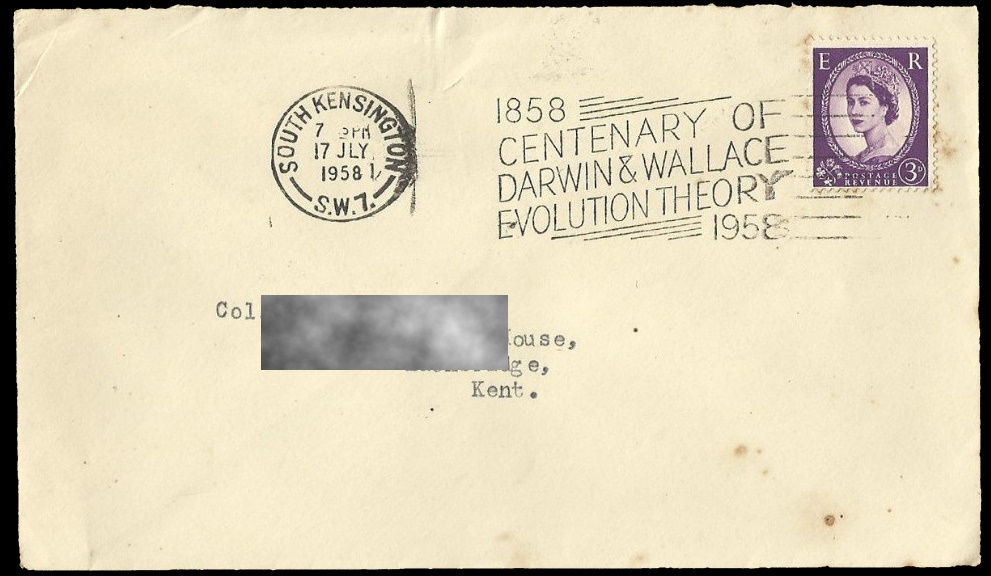
|
| Postmark of Great Britain 1958 commemorates Charles Darwin and Alfred Wallace evolution theory |
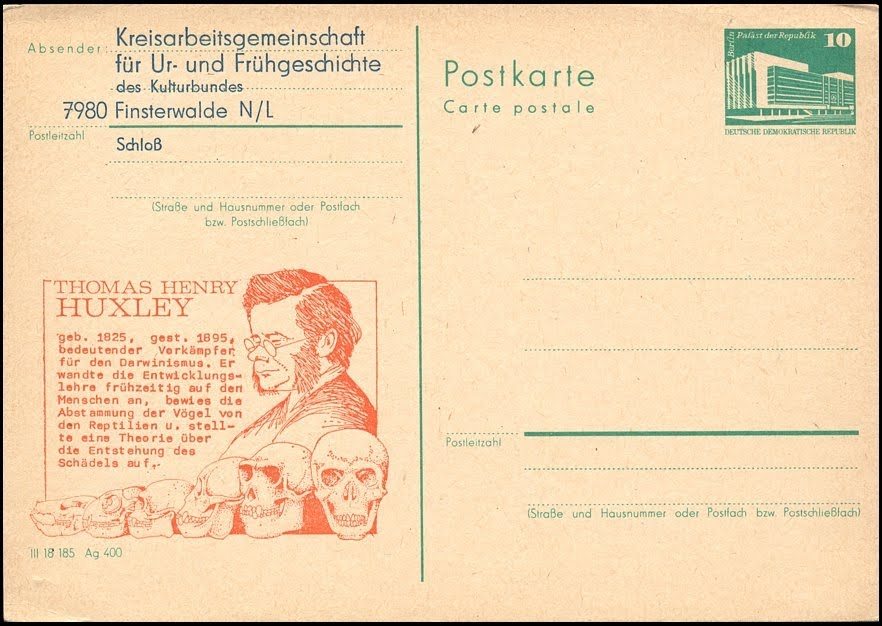 |
| Thomas Henry Huxley on postmark of German Democratic Republic, 1984. |
For his research on artificial selection as an analogous process to natural selection in nature, Darwin kept domesticated pigeons.
Through 1855 Darwin experimented with seeds in seawater, to prove that they could survive ocean crossings to start the process of speciation on islands. Then he kept fancy pigeons, to see if the chicks were more like the ancestral rock dove than their own bizarre parents. Darwin perfected his analogy of natural selection with the fancier’s “artificial selection,” as he called it.
In May 1856 he began writing up his theory for publication. By mid-July 1857 he had completed seven and a half chapters.
On 18 June 1858, Darwin received a paper from Alfred Russel Wallace describing his natural selection theory, where Wallace asked Darwin to forward it to Charles Lyell if he thought it worthwhile.
Darwin and Wallace had met in London a few years before and corresponded briefly. During his expeditions in South America and Asia, Wallace supplied Darwin with birds for his studies.
Alfred Russel Wallace (1823 - 1913), travelled the
world, observing and collecting samples of species.
He travelled to Brazil and various islands of the Malay Archipelago that make up modern-day Indonesia and the
Philippines,
where he collected thousands of specimens of insects, birds, and other animals.
By 1855, his observations led him to the conclusion that living things change over long periods of time—they
evolve.
However, he could not explain how or why they evolve.
Later, in 1858, he came to conclusion species evolve by adapting to their environment.
Knowing Darwin was working on similar research he sent him his essay.
Wallace spent eight years studying and collecting biological specimens in Southeast Asia.
During that time, he gathered over 125,000 specimens.
His research on the geographic distribution of animals provided critical support for his evolutionary
theories and led him to draw a boundary line through Southeast Asia that divides Asian and Australian faunal
provinces.
Wallace’s Line, as it was later named, runs from the Indian Ocean to the Philippine Sea.
It signifies the unexpected distribution of animals on either side of the line.
With the finches - Darwin recognized that there was a similar species living in South America and suggested that a population became isolated on the islands - over time these finches diversified into different species due to the different conditions on each island.
On July 1st 1858, “On the Tendency of Species to form Varieties; and on the Perpetuation of Varieties and Species by Natural Means of Selection” comprising and resulting from the joint presentation of Darwin and Wallace was read for the Linnean Society of London.
On 20th August, 1858, the Darwin-Wallace article was printed and in November 1859 “On the Origin of Species” was published by Charles Darwin.
The Tendency of Species to form Varieties
Darwin’s theory explains how life was created and how it developed from simple to more complex over time. Without directly mentioning humans, he implied that human evolution had also occurred.Darwin proposed that species change over time through a process called Natural Selection, where individuals with traits better suited to their environment are more likely to survive and reproduce, passing on those advantageous traits.
This doesn’t necessarily mean the strongest or the fastest, but rather the ones whose traits (physical or behavioural) give them an advantage in their specific environment.
“On the Origin of Species”
"On the Origin of Species by Means of Natural Selection, or the Preservation of Favoured Races in the Struggle for Life", by Charles Darwin, commonly known as just “On the Origin of Species”, was published in 1859.The book was written for non-specialist readers and attracted widespread interest upon its publication. After more than 20 years since the young, promising naturalist returned from the voyage of the HMS Beagle, Darwin had become highly regarded as a scientist, therefore his findings were taken seriously and the evidence he presented generated scientific, philosophical, and religious discussion.
The newspapers drew the one conclusion that Darwin had specifically avoided: that humans had evolved from apes, and that Darwin was denying mankind’s superiority, even though the origin of humans was not discussed in the book. There was only one sentence about human origin in the final paragraph of the "Origin of Species": "Light will be thrown on the origin of man and its history".
Many scientists, including Richard Owen did not accept the theory, due to their Religious beliefs.
Charles Darwin, who hated public appearances, never, never debated his theory by himself and left to his good friend, Thomas Henry Huxley (1825 –1895) to manage the debates, who later become known as "Darwin's Bulldog" for his advocacy of Charles Darwin's theory of evolution.
One of the most famous discussions took place in 1860 at the meeting of the British Association for the Advancement of Science between Thomas Henry Huxley and Bishop Samuel Wilberforce. Wilberforce ridiculed Huxley for believing that he was descended from an ape. Huxley replied that he would rather have an ape for a grandfather than be descended from a man who refused to use the intellect God gave him and who had opinions in subjects about which he knew nothing.
Within the years Darwin continued to refine his arguments based on scientific feedback and public criticism. He published another five editions of the "Origin of Species", the last one was published in 1872.
 Postage stamps of Vanuatu 2009 - the bicentenary of the birth of Charles Darwin
Archaeopteryx – The Missing Link

|
| London specimen of Archaeopteryx on cachet of personalized postal stationery of South Korea 2004 |
The first such transitional fossil was discovered in 1861 (only two years after publication of the "Origin of Species") - the famous Archaeopteryx, common name - Urvogel, a German name meaning "primeval bird".
Archaeopteryx fossils, clearly showed bird-like feathers and reptilian features: teeth in its beak, clawed fingers on its wings, and a long, bony tail. It seemed to confirm Darwin's theories and has since become a key piece of evidence for the origin of birds, the transitional fossils debate, and confirmation of evolution.
The discovery of the first Archaeopteryx fossil in Germany in 1861 caused a lot of confusion. No birds were known from so far back. Some people even thought it might be an angel.
The first Archaeopteryx skeleton — the famous "London Specimen" — was discovered in 1861,
only two years after a single feather of Archaeopteryx was discovered.
The "London Specimen" was unearthed in 1861 near Langenaltheim, Germany, and perhaps given to local
physician Karl Haeberlein in return for medical services.
He then sold it to the British Museum of Natural History (today the Natural History Museum),
where it remains.
The specimen contains a nearly complete skeleton with poorly preserved skull, but with
clear impressions of feathers, mainly on the wings and tail.
The Berlin Specimen was discovered in 1874 or 1875 on the Blumenberg near Eichstaett, Germany,
by farmer Jakob Niemeyer.
He sold this precious fossil for the money to buy a cow in 1876.
With financial support from Ernst Werner von Siemens, founder of the company that bears his name,
the species was purchased by the Berlin's Natural History Museum.
This specimen is the most complete and best-preserved Archaeopteryx, with
beautifully preserved full skeleton and feather impressions all around the body.
The idea that birds evolved from small theropod dinosaurs, as proposed by Huxley in 1868, was revolutionary, but it was largely forgotten or sidelined, due to the limited fossil evidence and dominance of alternative theoriess, and the prevailing view of dinosaurs as slow, primitive reptiles. Additionally, feathers on dinosaurs were unknown, making the connection less believable. These factors caused paleontologists to favor more ancient ancestors for birds until new fossil discoveries in the late 20th century revived Huxley’s hypothesis.
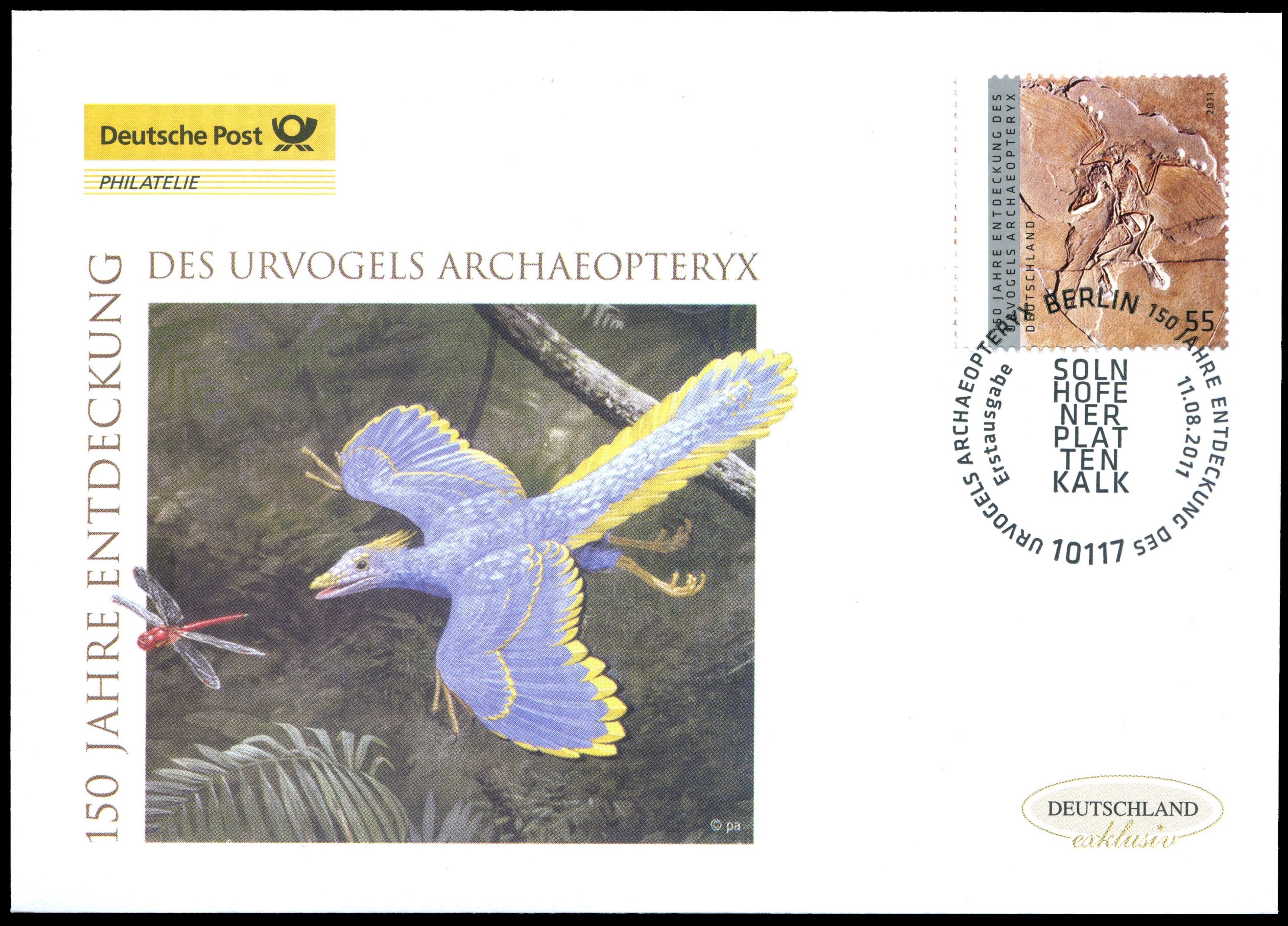 |
 |
 |
| Berlin specimen of Archaeopteryx on stamp and cachet of FDC Germany 2011 and stamp of Great Britain 1999 (rotated). The bird on the Great Britain's stamp is one of Darwin's finches. | Reconstruction of Archaeopteryx on stamp of Poland 1966, the first stamp of Archaeopteryx | |
|
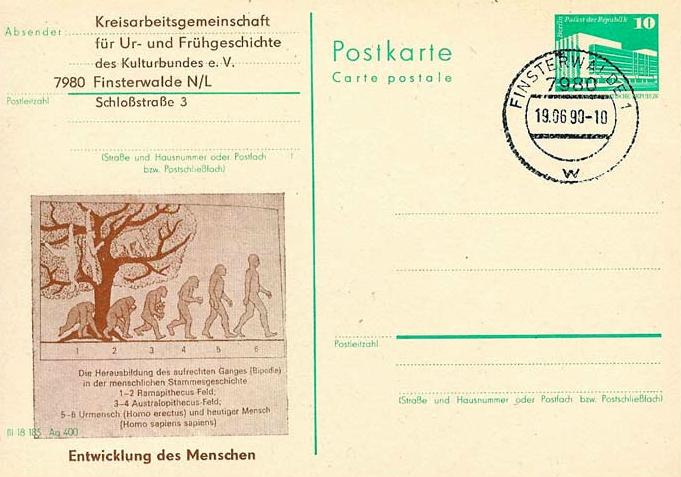
| Evolution tree and human evolution sequence on the cachet of postal stationery of German Democratic Republic 1990. |
Within twenty years, the scientific community broadly accepted that evolution had taken place, following a branching pattern of common descent. However, many scientists were initially hesitant to recognize natural selection as the primary driving force, as Darwin had proposed. It was not until the 1930s and 1940s, with the emergence of the modern evolutionary synthesis, that Darwin’s idea of adaptation through natural selection gained prominence. Today, it stands as a central principle and the unifying foundation of the life sciences.
Darwin death and Legacy
Charles Darwin died on April 19th 1882 in his home at Down House.Darwin had expected to be buried in St Mary's churchyard at Downe, but at the request of Darwin's colleagues, after public and parliamentary petitioning he was honoured by burial in Westminster Abbey (where a lot of famous British people are buried), close to Isaac Newton.
Darwin’ statue was placed on the main staircase, keeping watch over Hintze Hall of the Natural History Museum in 1885 , four years after the Natural History Museum opened.
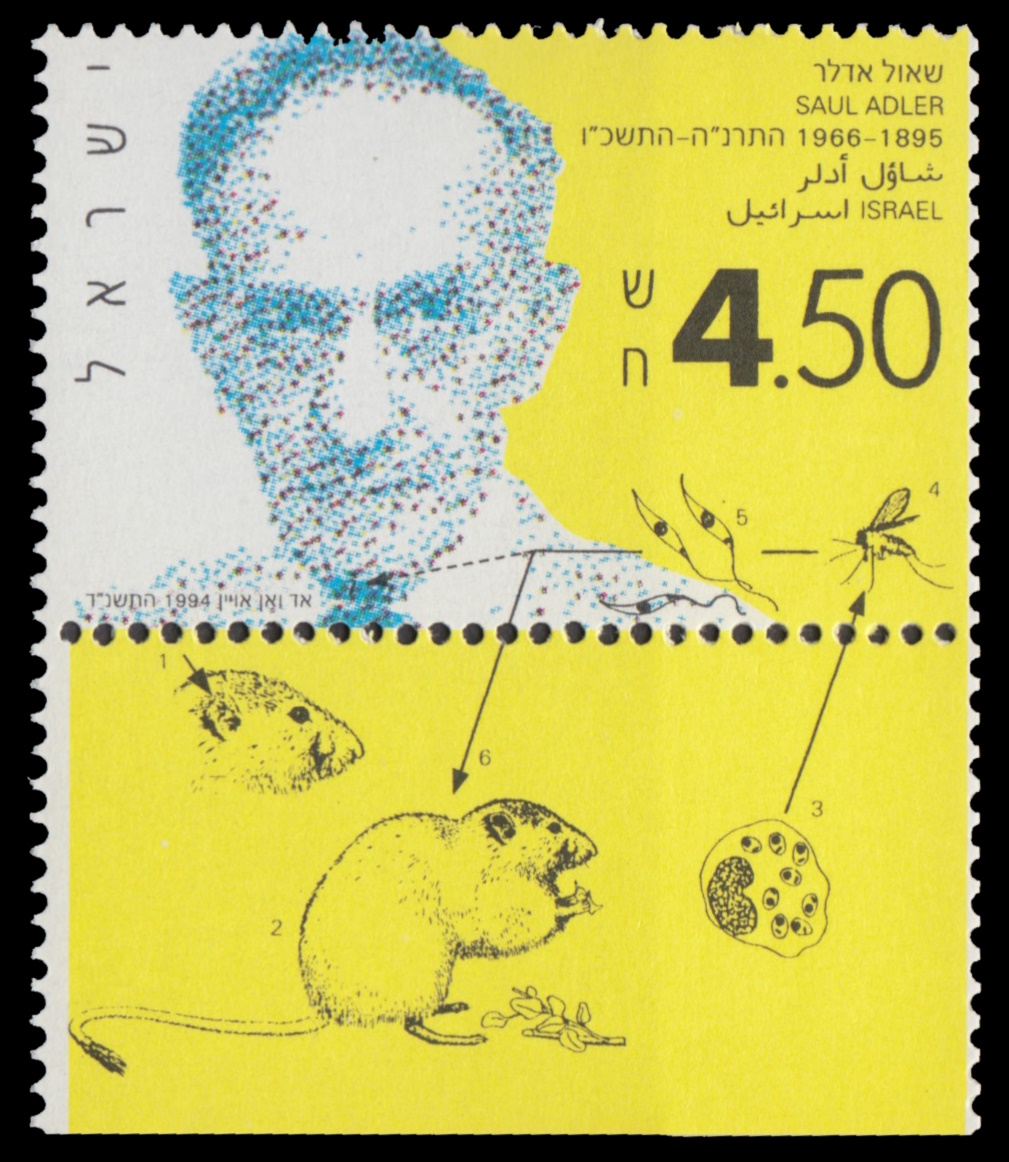 |
| Saul Adler one of Israel's most outstanding scientists on stamp of Israel 1994, MiNr.: 1299, Scott: 1202. Adler's translation of Darwin's Origin of Species into Hebrew was awarded the Tchernichowsky Prize (prestigious Israeli literary award granted for excellence in translation). |
There are a dozen locations in the world called Darwin. 8 of them are in the USA, but none of them is directly related to Charles Darwin.
The other 5 locations are:
Argentina
Darwin is a village and municipality in the Rio Negro Province of Argentina. It is situated along National Route 22, approximately 10 kilometers from the town of Choele Choel.
The area gained prominence with the expansion of the railway in the early 20th century. The first railway station was inaugurated on June 30, 1898, initially bearing the name of the neighboring locality, Choele Choel. By 1908, a new station was constructed and named Darwin, in honor of Charles Darwin, recognizing his contributions to science and his explorations in the region.
Today, the small town has a population of approx. 1.500.
Australia
Darwin is the capital city of the Northern Territory, Australia – approx. 140,000 population, located in the north, whereas Darwin visited the south of this country.
In 1839, the HMS Beagle with Lt. John Lort Stokes aboard sailed into the waters of what is now known as Darwin Harbour. Stokes named the harbour after his former shipmate British evolutionist Charles Darwin.
Darwin was granted city status in 1959 due to an extensive increase in population and economic growth.
Falkland Islands
A small settlement on East Falkland, named after Charles Darwin following his visit to the Falklands during the Beagle expedition.
During his time on the Falkland Islands, Darwin conducted zoological surveys and is reported to have spent a night in the area that would later bear his name. Established in 1859, Darwin initially served as a center for cattle ranching.
Uruguay
Villa Darwin, also known historically as Sacachispas, is a village in the Soriano Department of western Uruguay. It is located near the Arroyo Perico Flaco, approximately 50 kilometers from the departmental capital, Mercedes.
On November 24, 1833, Charles Darwin explored the area during his travels in Uruguay. He ascended a nearby hill, now known as "Cerro Darwin," where a monolith commemorates his visit.
The name "Villa Darwin" began to be used around 1930, proposed by local laicist groups as a tribute to Darwin's visit. However, the name "Sacachispas" remained in use, leading to a dual identity for the village. In 2008, a plebiscite was held to decide the official name, resulting in the reinstatement of "Sacachispas" as the village's official name.
Zimbabwe
Mount Darwin is a town located in the Mashonaland Central province of northeastern Zimbabwe. It lies approximately 160 kilometers northeast of Harare, the nation's capital. The town was named by British hunter and explorer Frederick Courtney Selous in honour of the renowned naturalist Charles Darwin, recognizing Darwin's contributions to science, who never visited the country.
Some of these locations have post offices with the name of these locations on their regular postmarks.
Charles Darwin in Philately
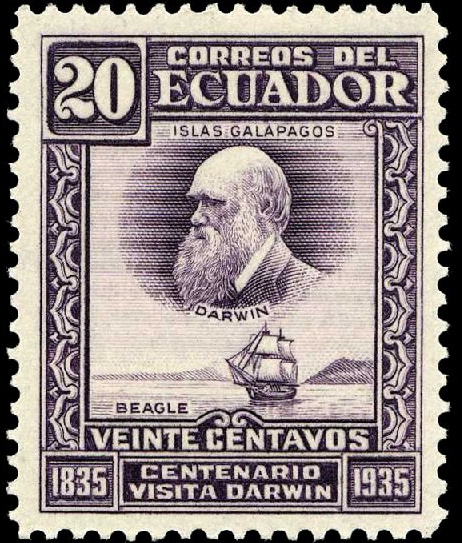
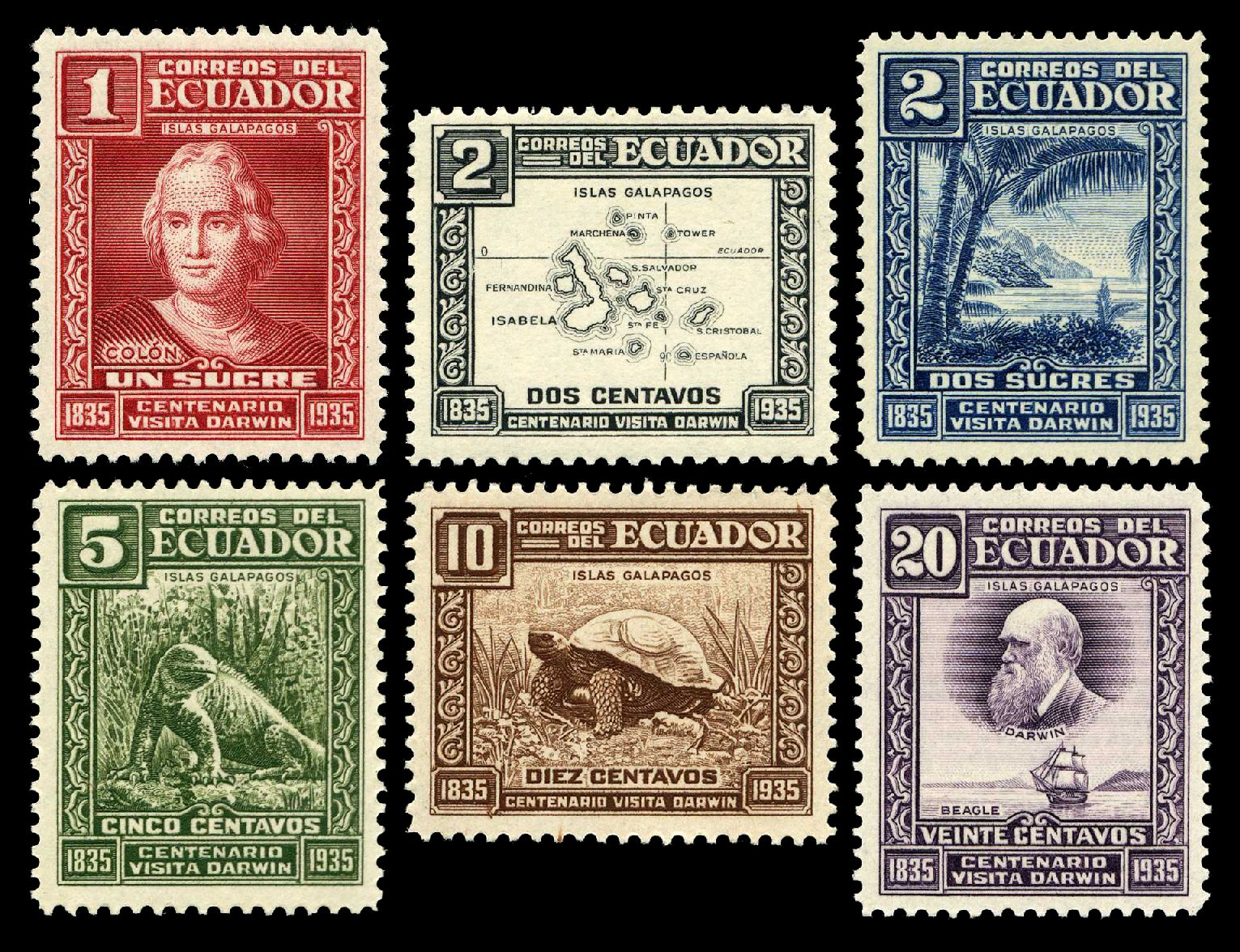
The first time Charles Darwin appeared on a philatelic item was the stamp issued in Ecuador in 1936.In 1936 (exact date is unrecorded), the Post Authority of Ecuador issued the set of 6 stamps "Centenary of the Darwin voyage to the Galapagos Islands".
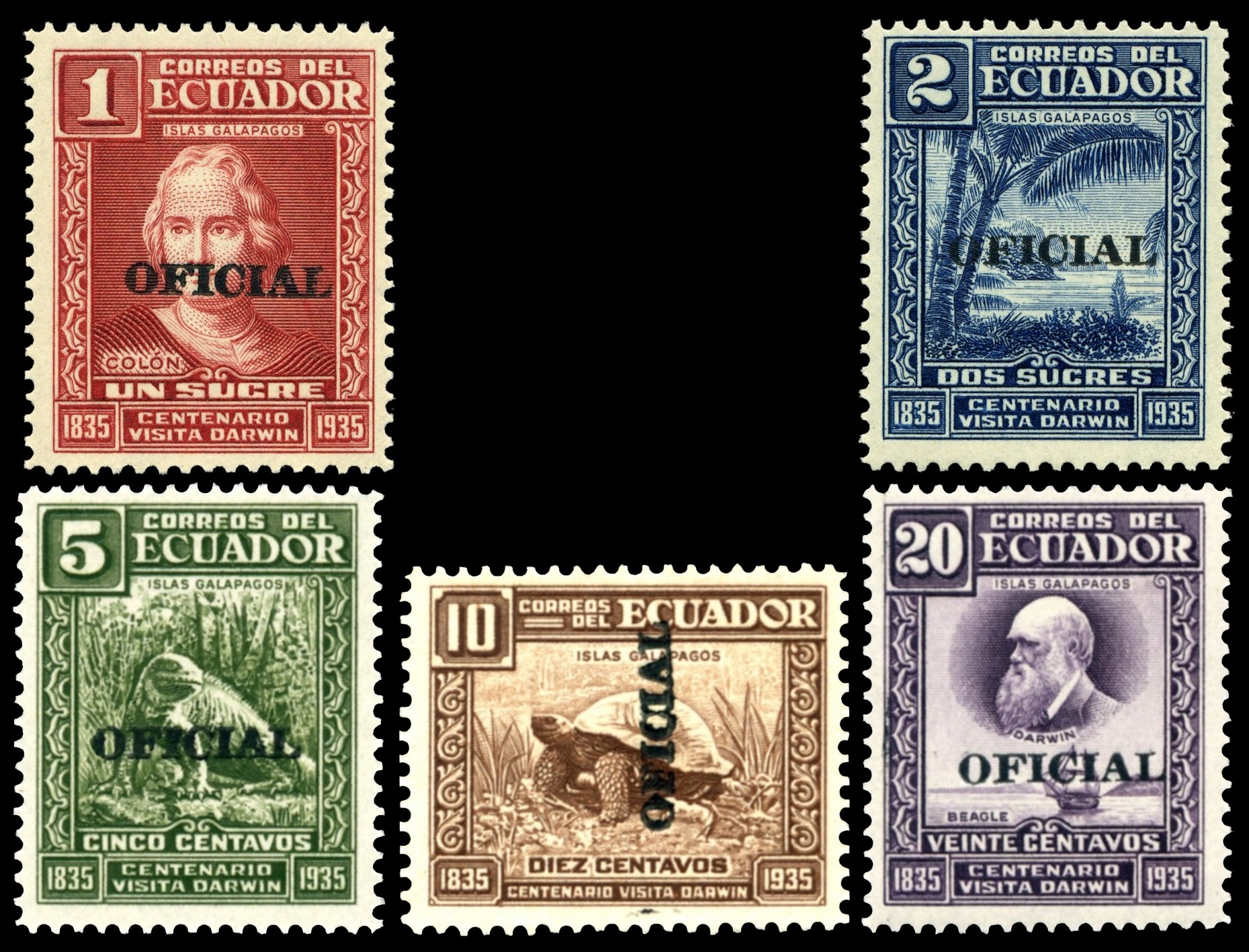
Later the same year, 5 of the 6 stamps were issued overprinted with "OFICIAL" (official) for government mail use. Only the map stamp was not overprinted.
 |
 |
| The first stamps of Charles Darwin - Ecuador 1936 MiNr.: 351, D146; Scott: 345, O195. | |
 |
|
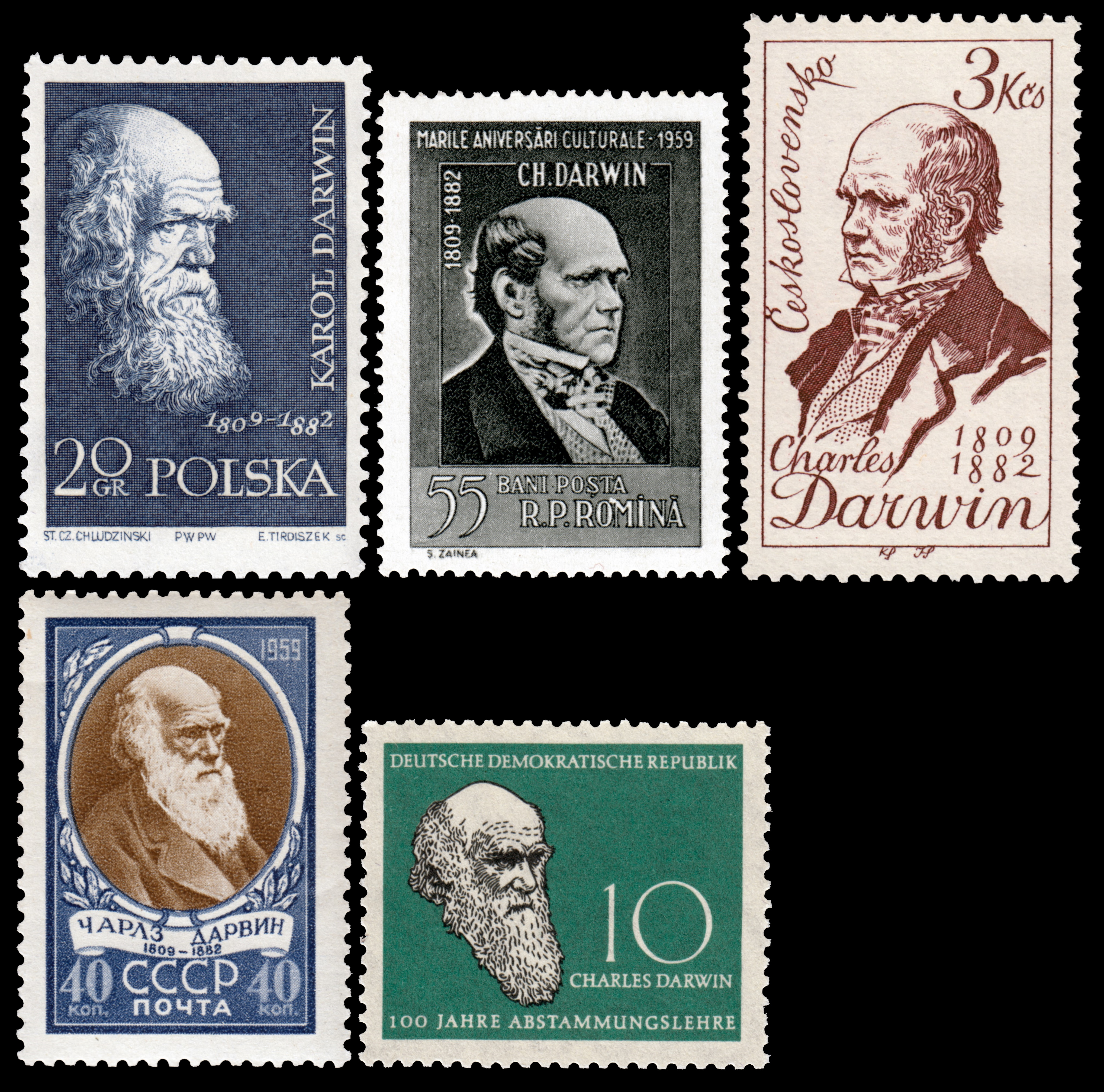
| All stamps of Charles Darwin issued in 1959. | |
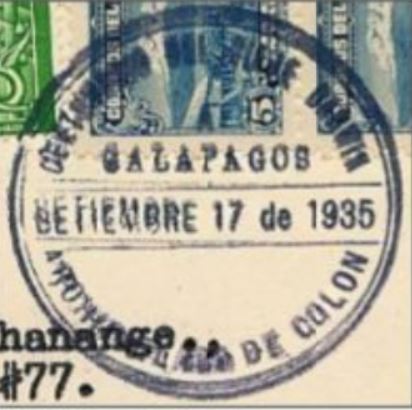
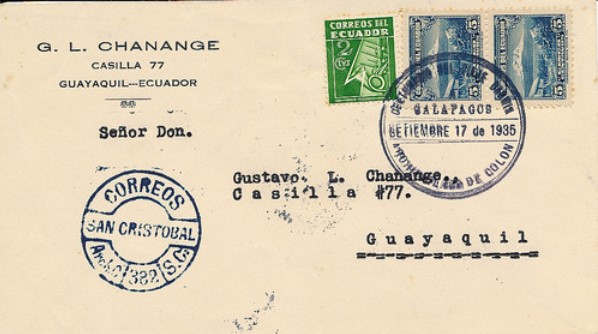
With few exceptions, the scientific community had forgotten the date. No official celebrations were organized. These stamps were planned for 1935, while Charles Darwin landed on the Galapagos Islands in September 1835, but due to technical issues, these stamps were issued in the following year. Only the postmark was in use on the day of the ceremony: September 17th 1935. More details about the "Centenary of the Darwin voyage to the Galapagos Islands" issue of Ecuador are here.
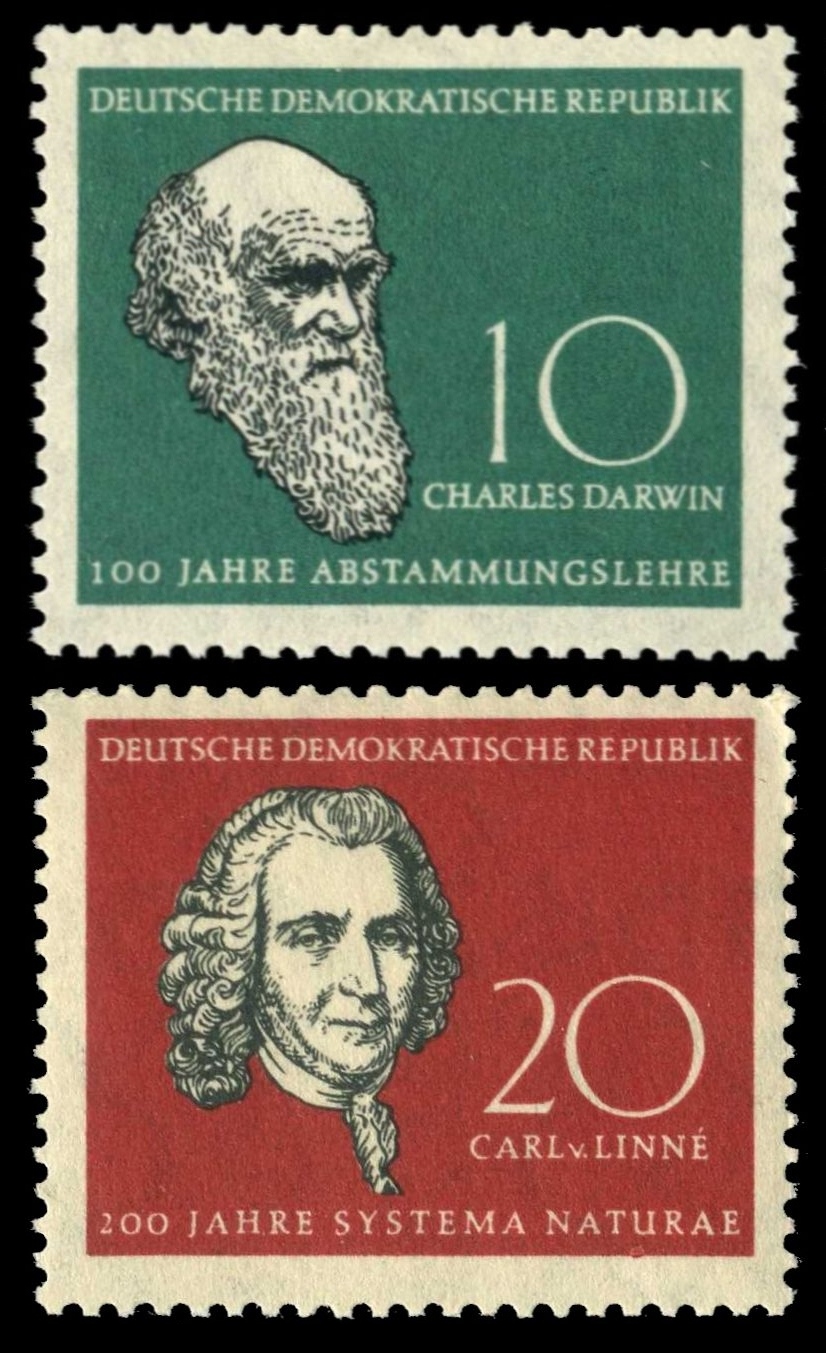
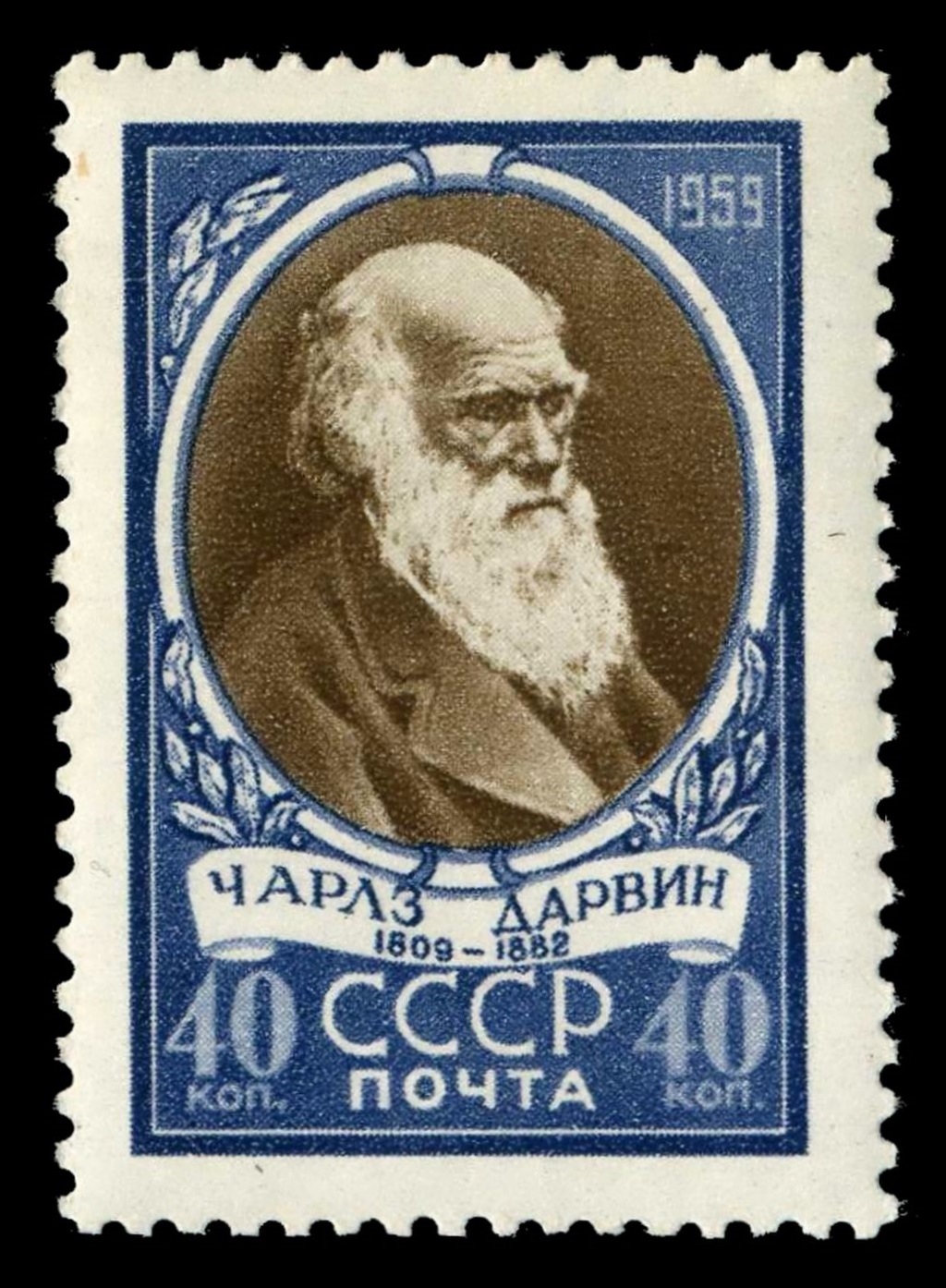
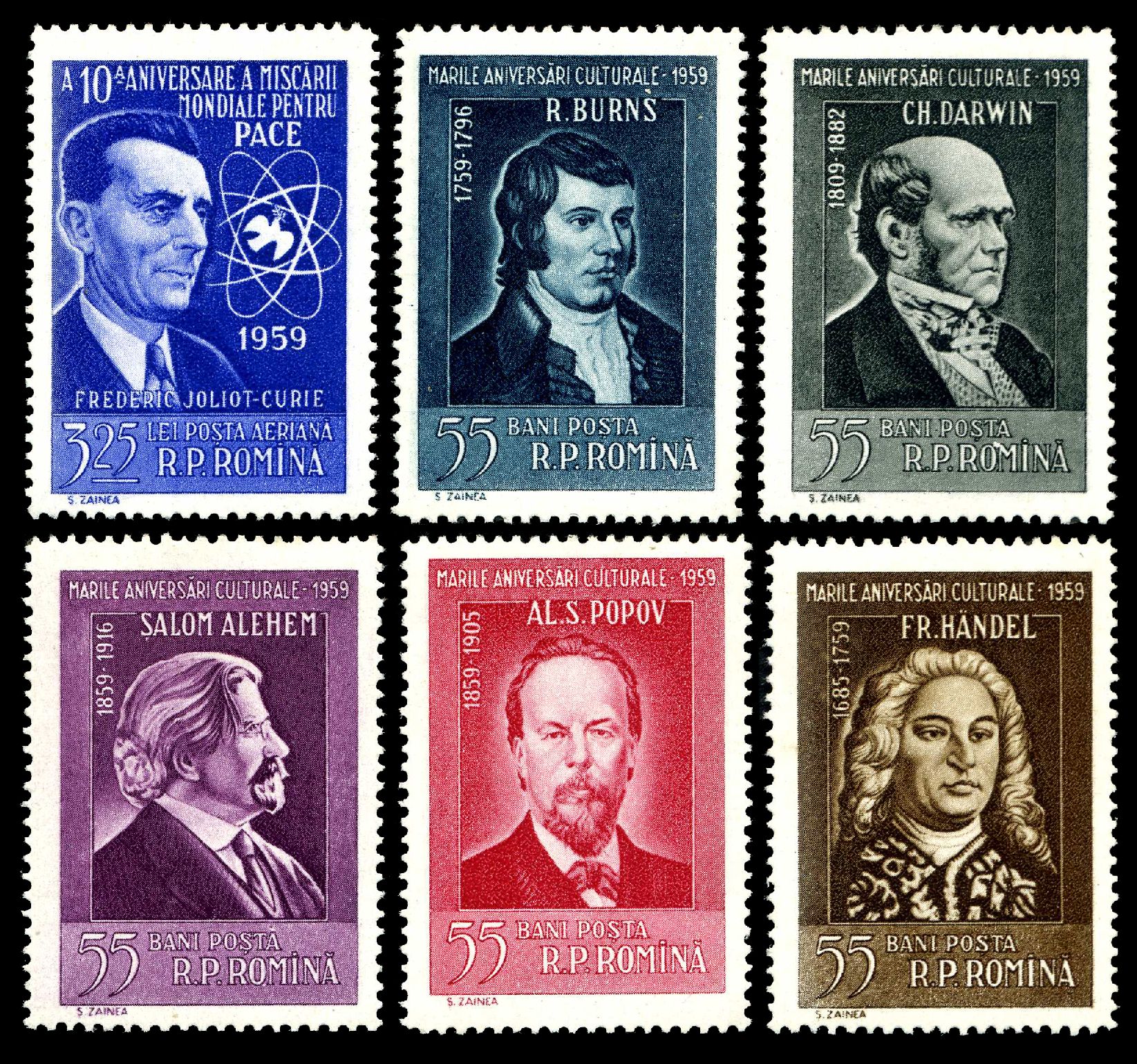
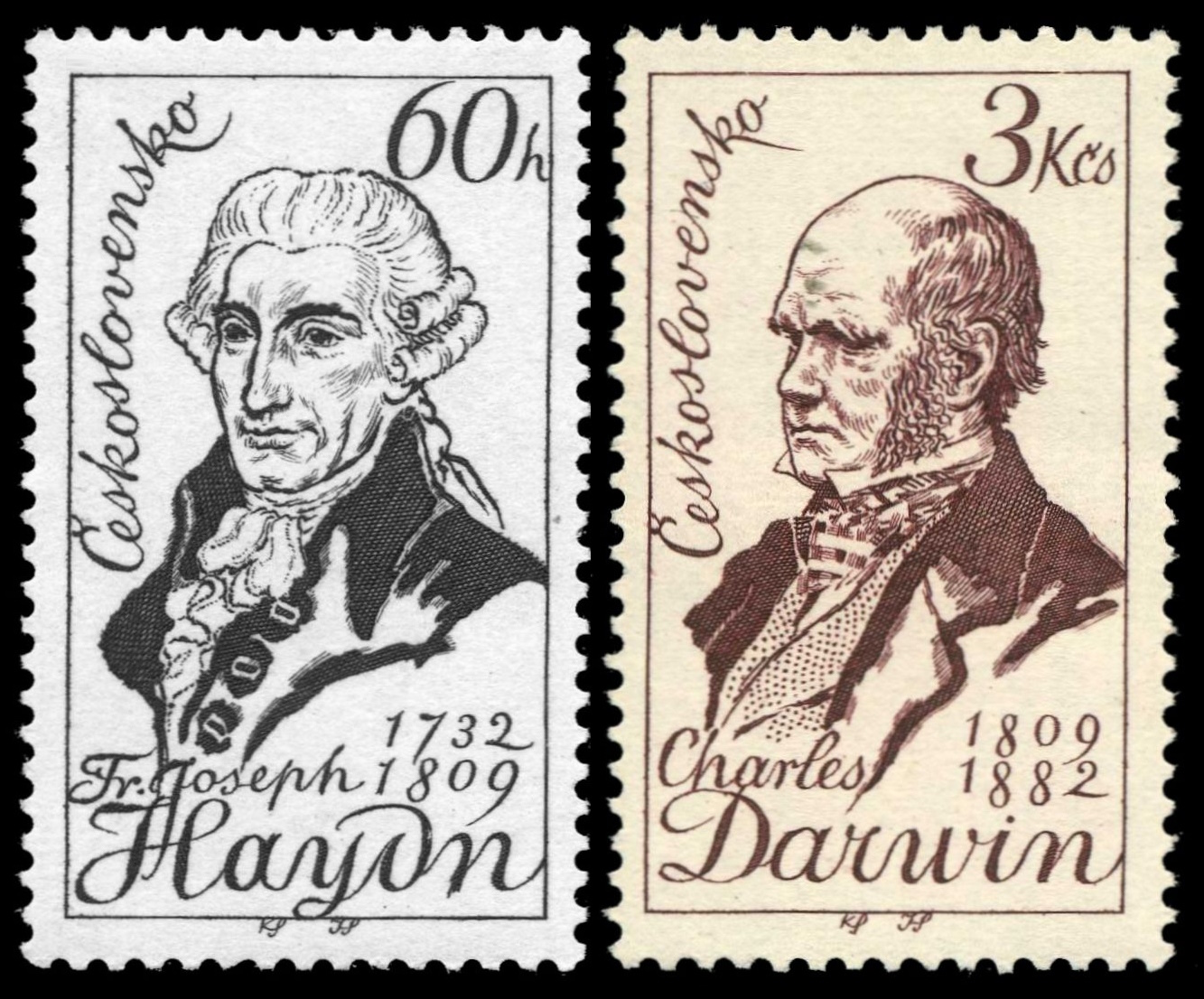
In 1958 - 1959 only a few socialist European countries issued stamps to commemorate 150th anniversary of Charles Darwin' birth and the 100th anniversary of the publication of his most famous work "On the Origin of Species by Means of Natural Selection". The German Democratic Republic issued their stamp in 1958, the rest of the countries issued their stamps in 1959 (Czechoslovakia, Poland, Romania and the Soviet Union). Yugoslavia issued a commemorative postmark.
Communists were against any religion, many churches were closed or even destroyed, because
Lenin claimed "Religion is a sort of spiritual booze, in which the slaves of capital drown their human image
[obraz],
their demand for a life more or less worthy of man".
The only accepted explanation for animals appearance and development was
the Evolution Theory of Darwin which was taught in schools instead of the Bible.
In 1982, unlike 1959, none of the socialist countries issued stamps to honour the 100 years since the death of the great scientist, but Ecuador, India and some island countries, visited by Charles Darwin, issued some stamps. In 1982 Charles Darwin appeared on stamps from Great Britain for the first time.
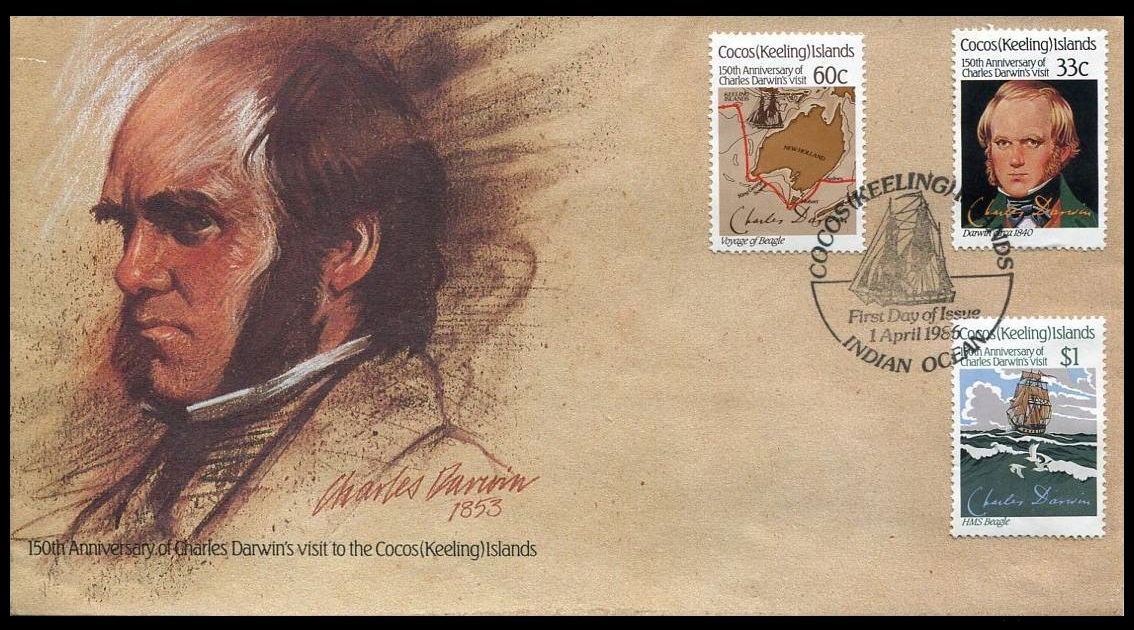
In 1986, Australia, Ecuador and Cocos Islands issued stamps and a postal stationery (pre-stamped envelope) to honour 150th anniversary of visit of Charles Darwin to their country.
Since then, Charles Darwin started to appear on postage stamps regularly, in sets of great scientists or explorers for example.
The year 2009 marked both the 200th anniversary (bicentenary) of the birth of Charles Robert Darwin and the 150th anniversary of the publication of his most famous work, "On the Origin of Species by Means of Natural Selection". To commemorate these milestones, many postal authorities around the world issued postage stamps and postmarks featuring Charles Darwin.
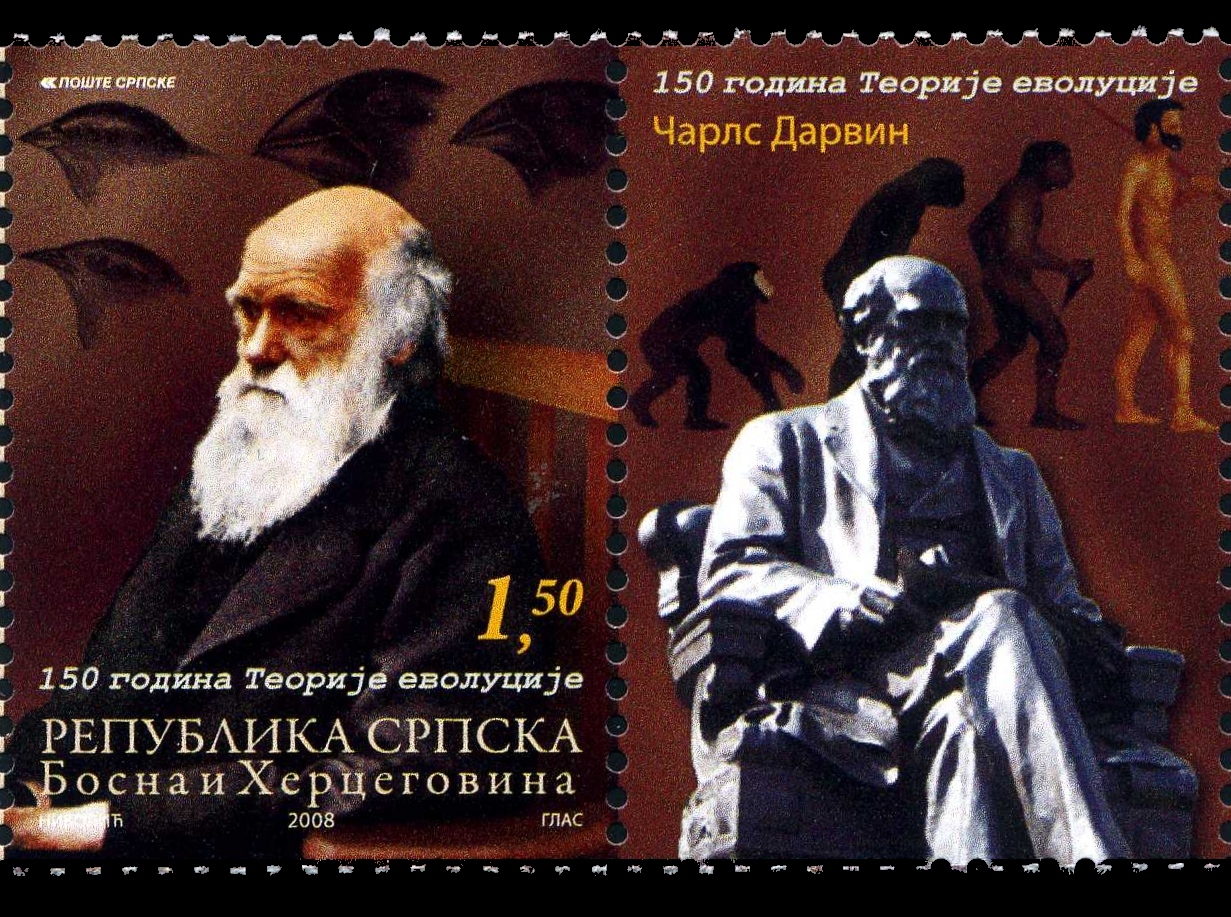
The first country to issue a commemorative stamp set was Bosnia and Herzogovina, in July 2008. The last countries were Paraguay and Palau, which released their Darwin stamps in 2010.
Since 2010, a dozen African countries, never visited by Charles Darwin, have issued stamps featuring Charles Darwin almost every year, with only one purpose - to be sold to collectors. These countries outsource production of their philatelic products to a Lithuanian-based company, who might produce over a thousand stamps for every country they represent per year.
Many of these issues also include dinosaurs, even though dinosaurs were not a focus of Darwin's research. All fossils collected by Darwin in South America during his voyage in HMS Beagle, were fossils of prehistoric mammals. During Darwin’s time, dinosaurs were viewed as gigantic, isolated creatures with little connection to earlier or later forms of life, and thus they had little to no influence on his theory of evolution.
These stamps are excluded from the list below, as they are considered irrelevant by the author of this website. A few examples of such undesired stamps are shown below.
 |
 |

|
 |
Some stamps on the gray background below were issued by country who issue too many stamps relative to their population and were never visited by Darwin, and are considered by the author of this website as undesired.
Anniversaries Issues
1935-1936 - Centenary of the Darwin voyage to the Galapagos Islands
| Ecuador, 17.09.1935 | Ecuador, xx.xx.1936 "Centenary of the Darwin voyage to the Galapagos Islands" | |
 |
|
 |
| On Cover | FDC: N/A, On Cover: [1] [2] [3] | FDC: N/A, On Cover |
![[1]](../../../images/used/ecuador_1936_darwin_env_used.jpg)
![[2]](../../../images/used/ecuador_1936_env_used2.jpg)
![[3]](../../../images/used/ecuador_1936_env_used3.jpg)

1959 - 150th anniversary of Charles Darwin' birth and 100 years since publication of "On the Origin of Species by Means of Natural Selection"
Postage stamps
| Germany (GDR), 19.06.1958 "Famous personalities" |
Soviet Union (USSR), 05.02.1959 "150th anniversary of Charles Darwin" |
Romania, 25.04.1959 "Famous personalities" |
 |
 |
 |
| FDC, On Cover | FDC: N/A, On Cover: [1] [2] | FDC: |
| Czechoslovakia, 16.10.1959 "Famous personalities" |
Poland, 10.12.1959 "Famous personalities" |
|
 |
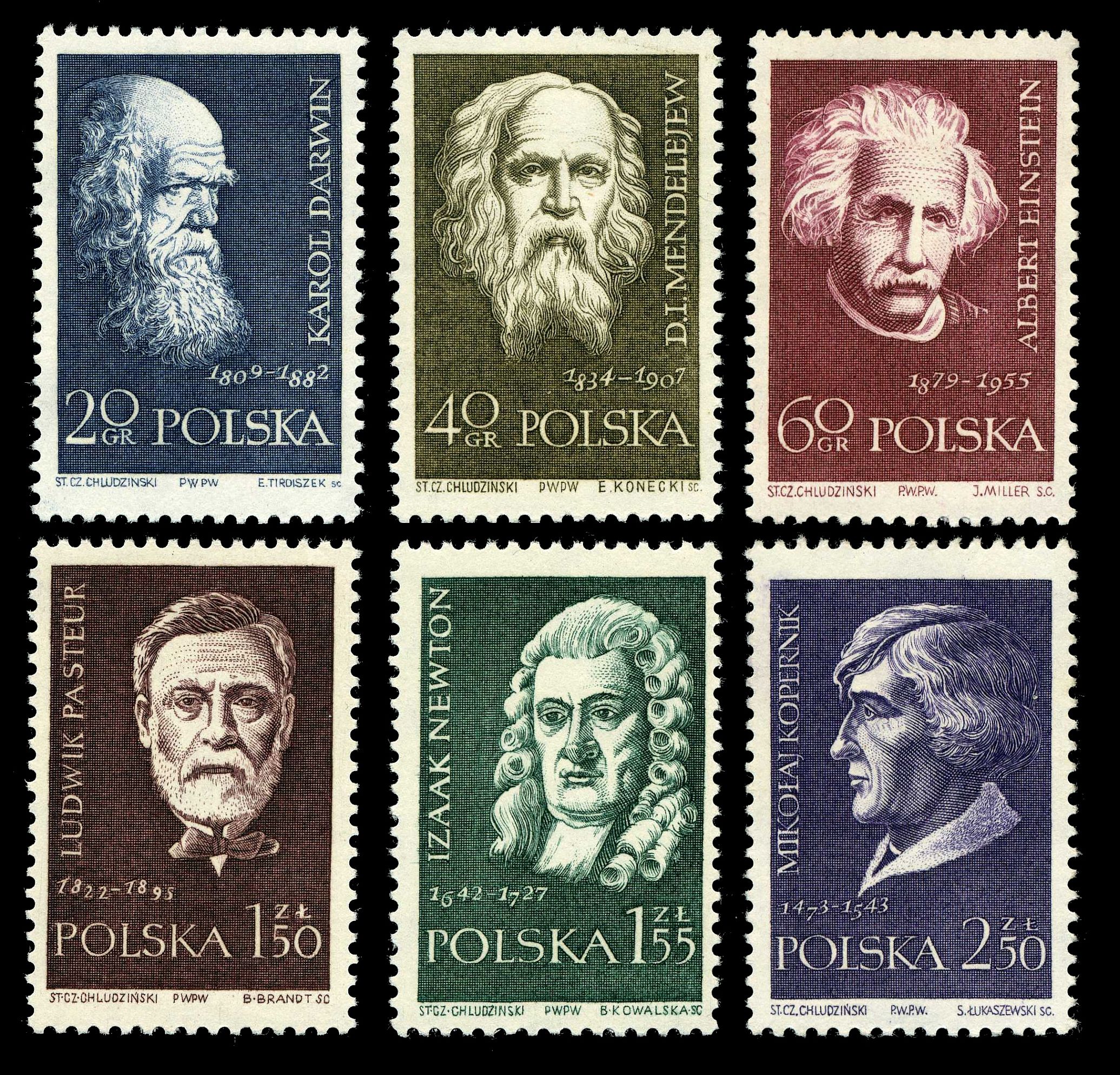 |
|
| FDC | FDC, On Cover |


![[1]](../../../images/used/ussr_1959_darwin_env_used.jpg)
![[2]](../../../images/used/ussr_1959_darwin_env_used2.jpg)
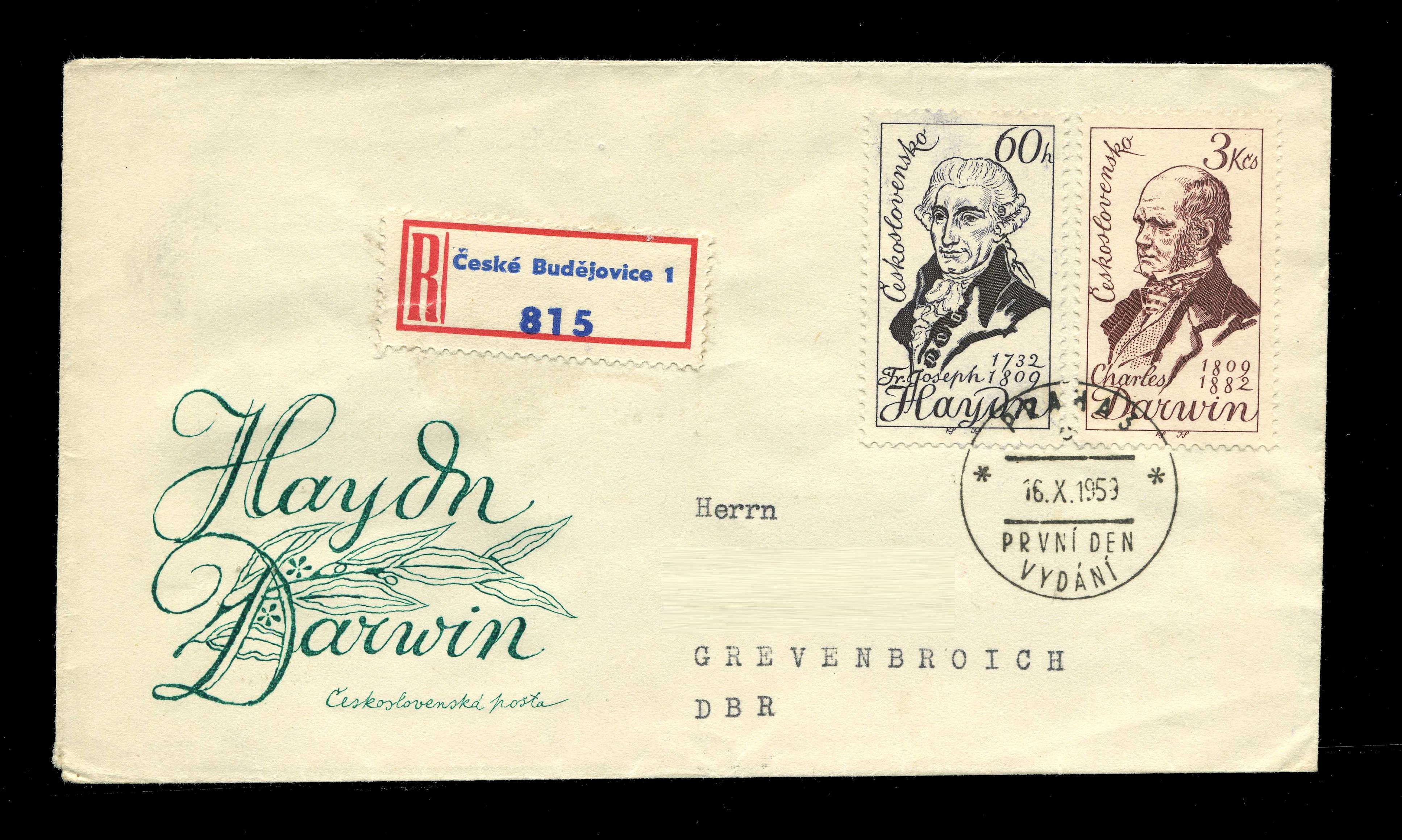
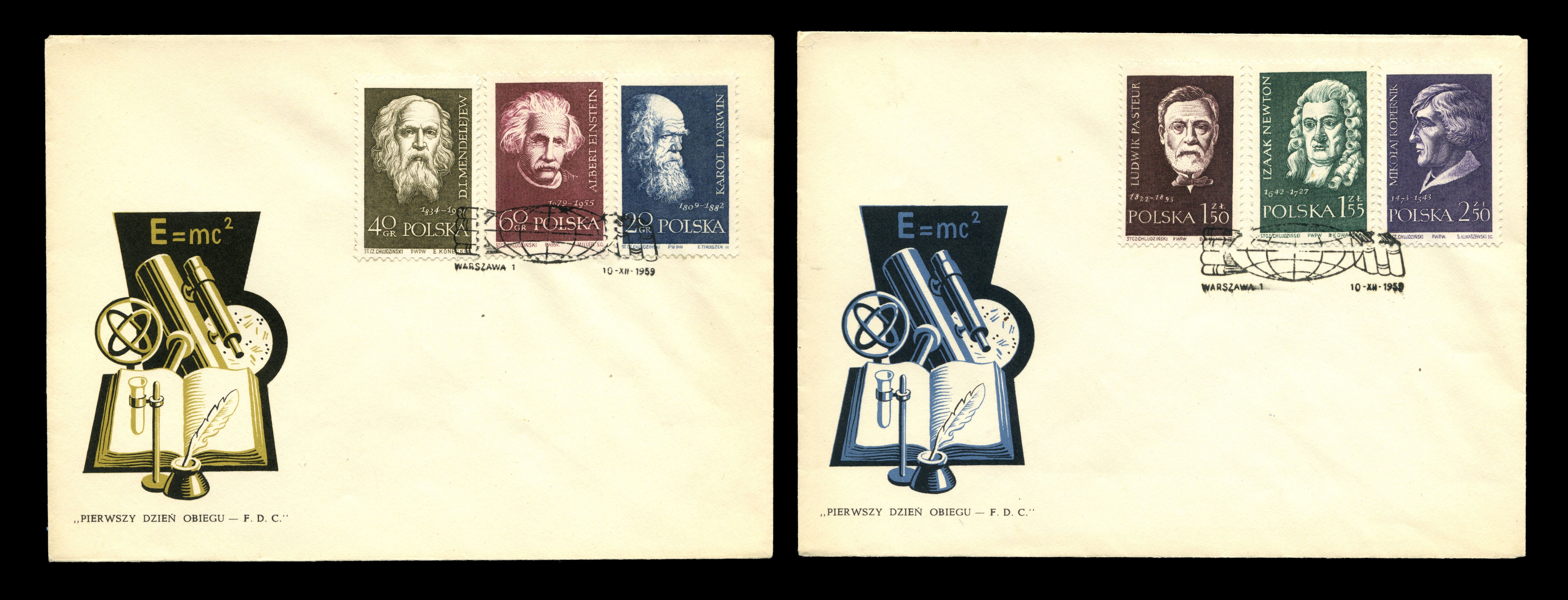

Postmarks
| Great Britain,
1958 "Centenary of Darwin and Wallace Evolution Theory" |
Yugoslavia,
19.12.1959 "Centenary of the Origin of Species" |
|
|
|
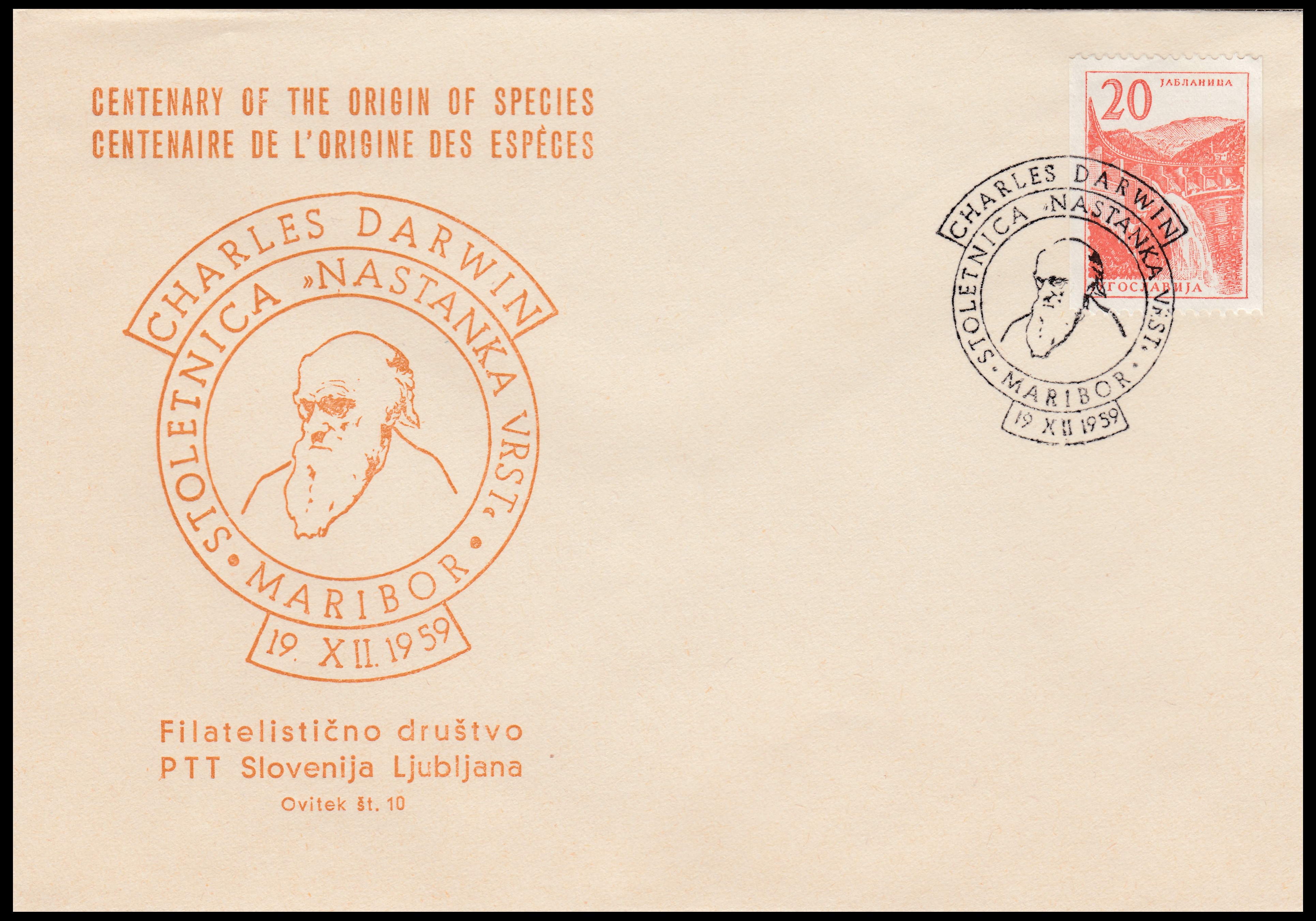 |
|
1982 - 100 years since Charles Darwin’s death
| Cocos Islands,
28.12.1981 "100th anniversary of death and 150 years since start of his trip on HMS Beagle of Charles Darwin" |
Great Britain,
10.02.1982 "Death Centenary of Charles Darwin" |
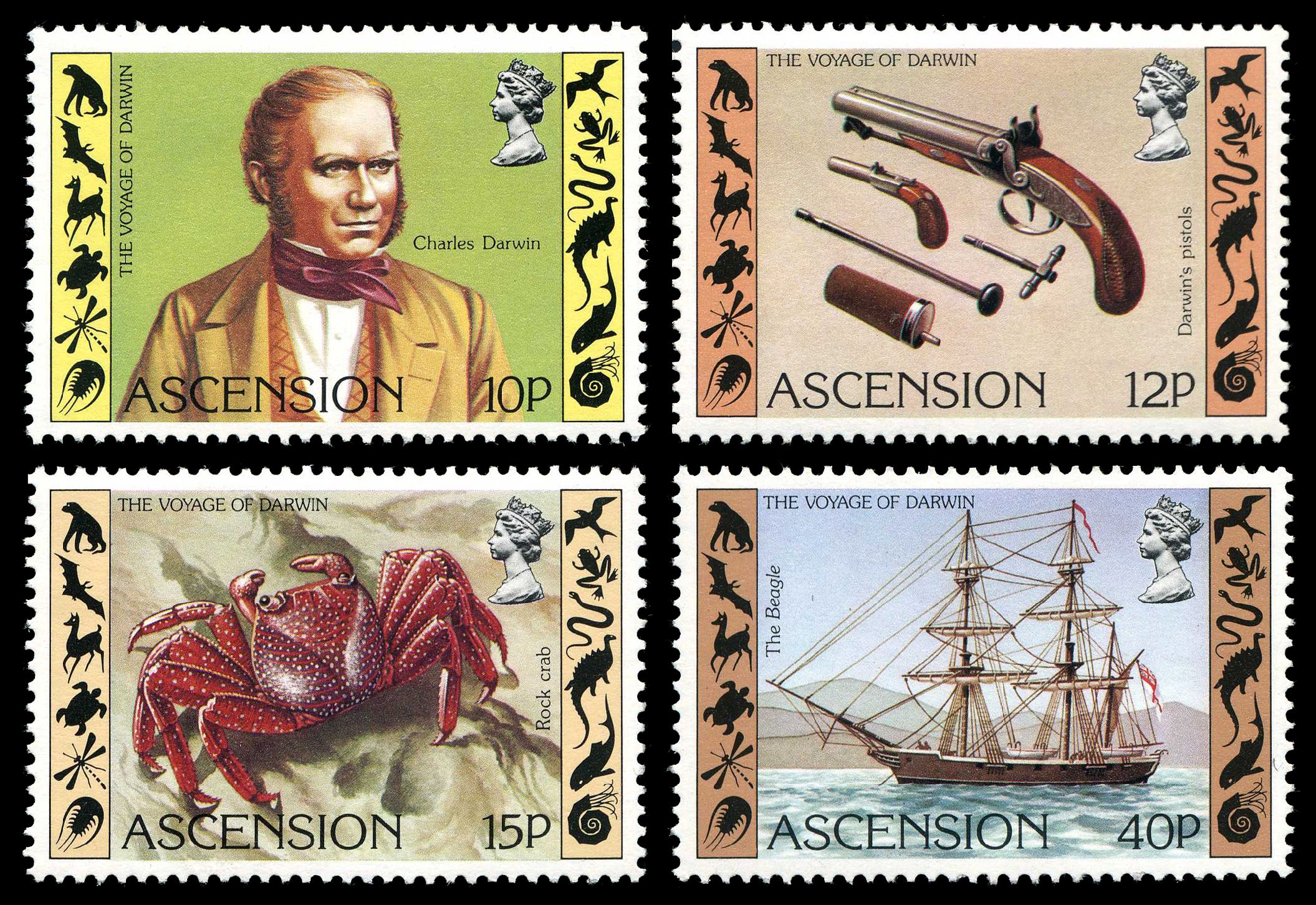
Ascension Islands,
19.04.1982 "Charles Darwin visit" |
 |
 |
 |
| FDC | FDC | FDC |
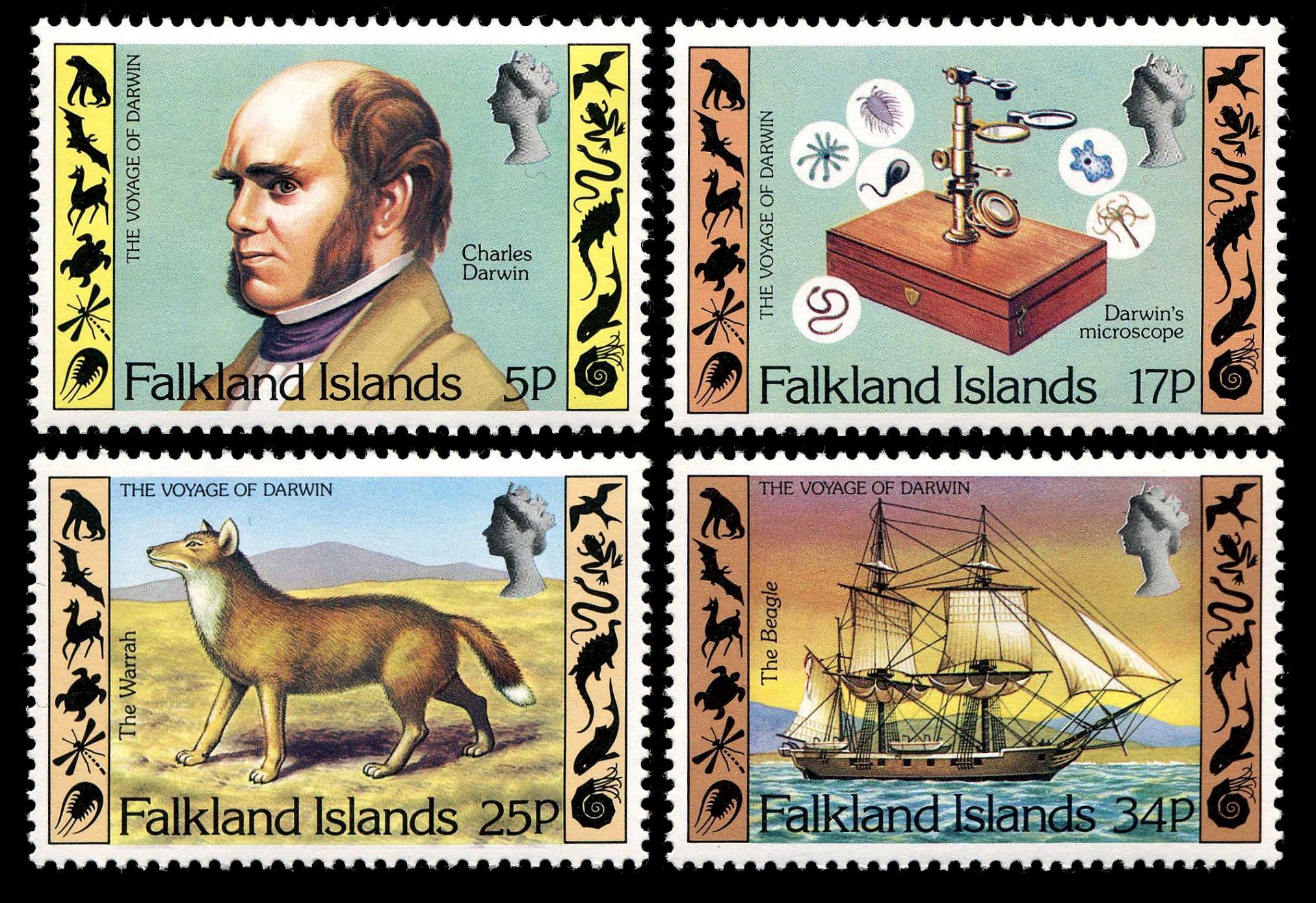
| Falkland Islands,
19.04.1982 "Charles Darwin visit" |
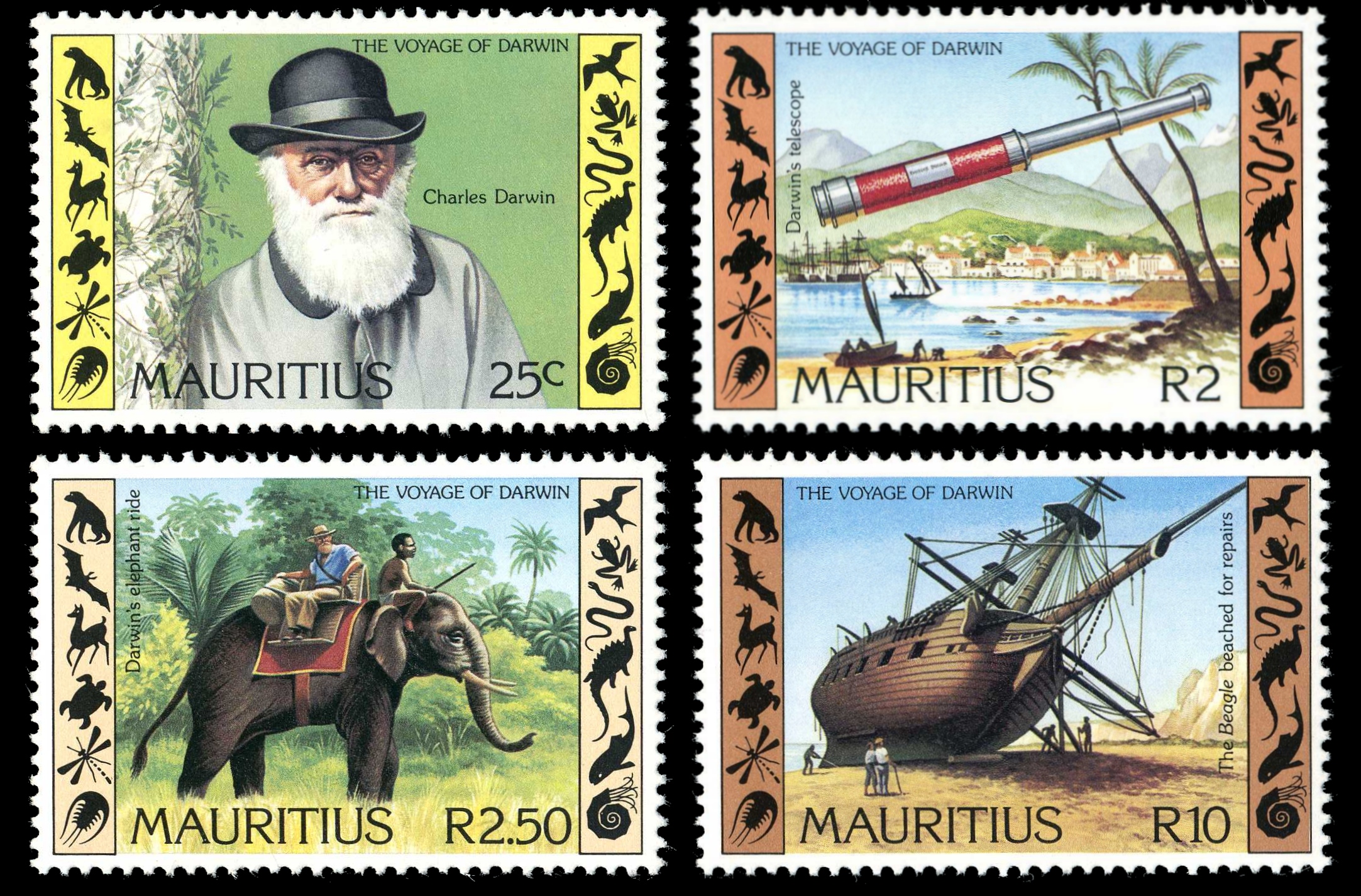
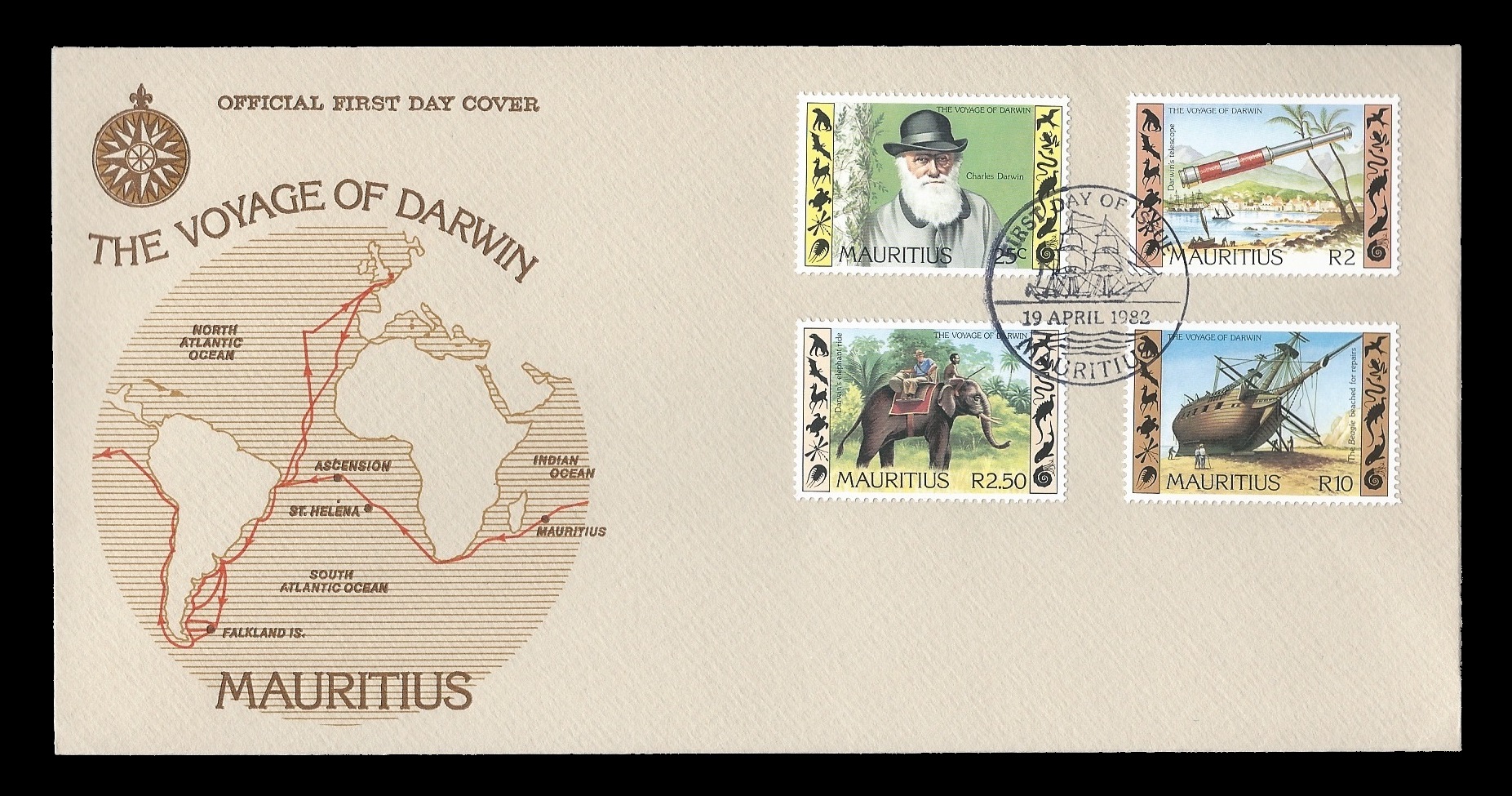
Mauritius,
19.04.1982 "Charles Darwin visit" |
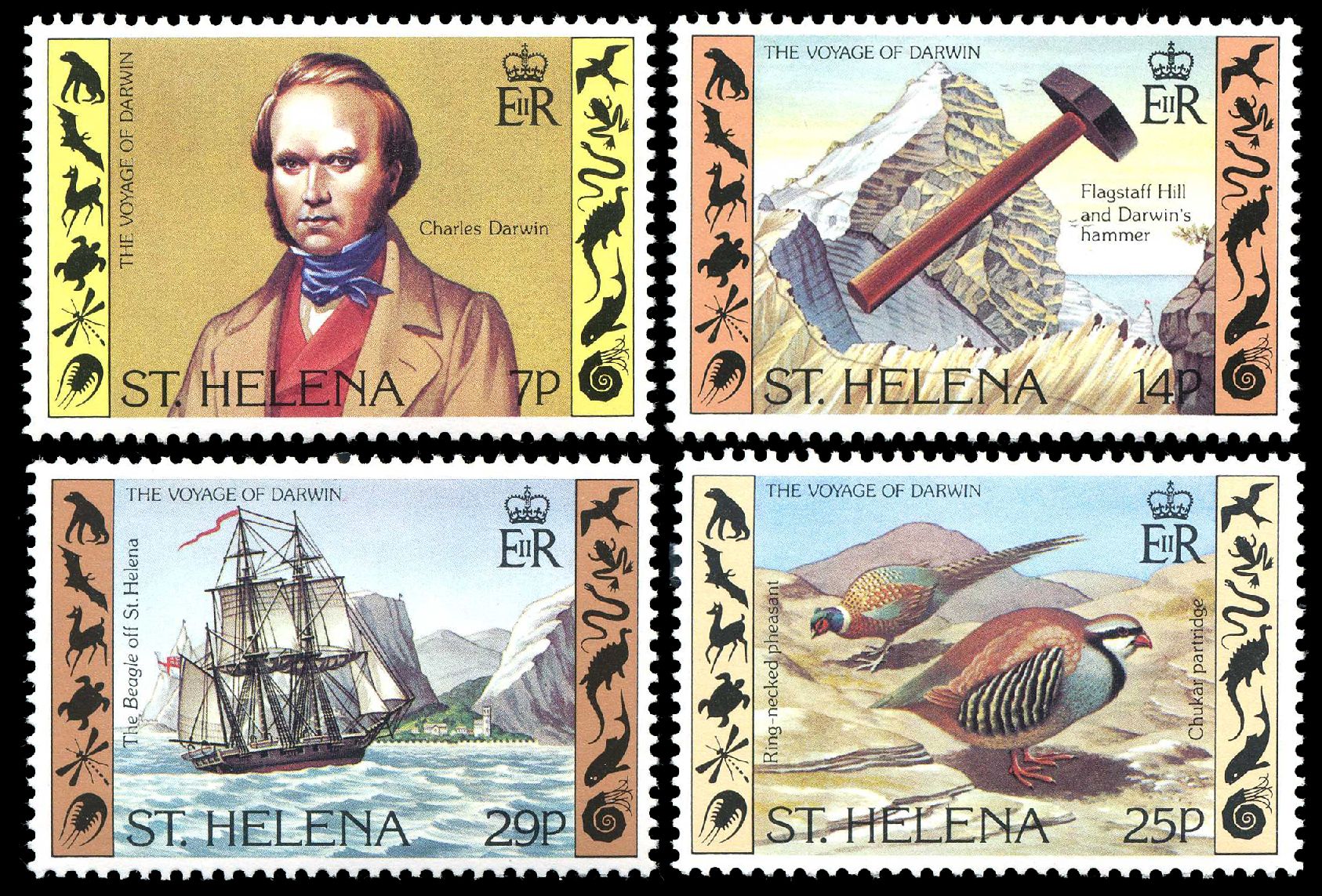
St. Helena,
19.04.1982 "Charles Darwin visit" |
 |
 |
 |
| FDC | FDC | FDC |
| Antigua,
28.06.1982 "Centenary since death of Charles Darwin" |
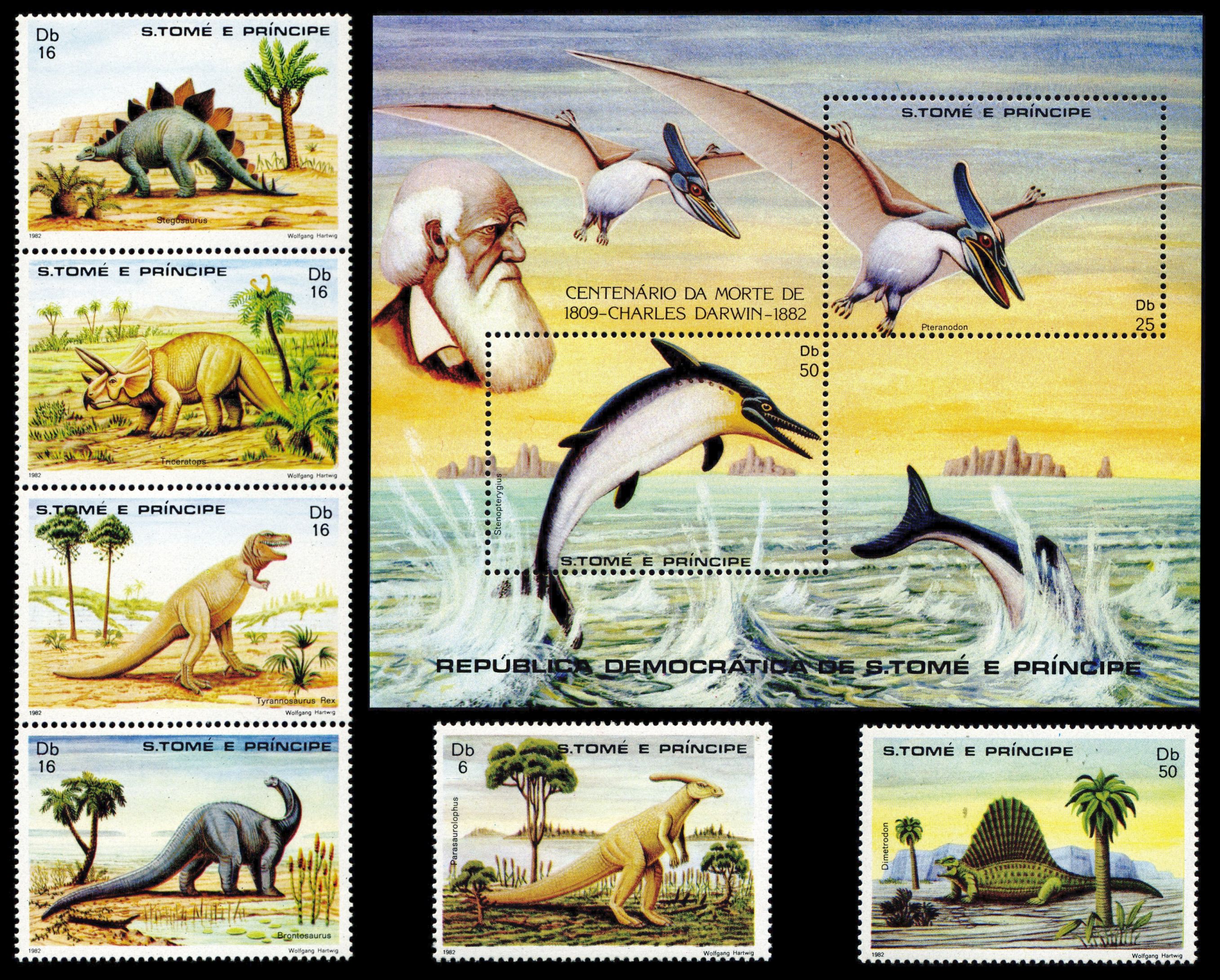
Sao Tome and Principe,
30.11.1982 "Centenary since death of Charles Darwin" |
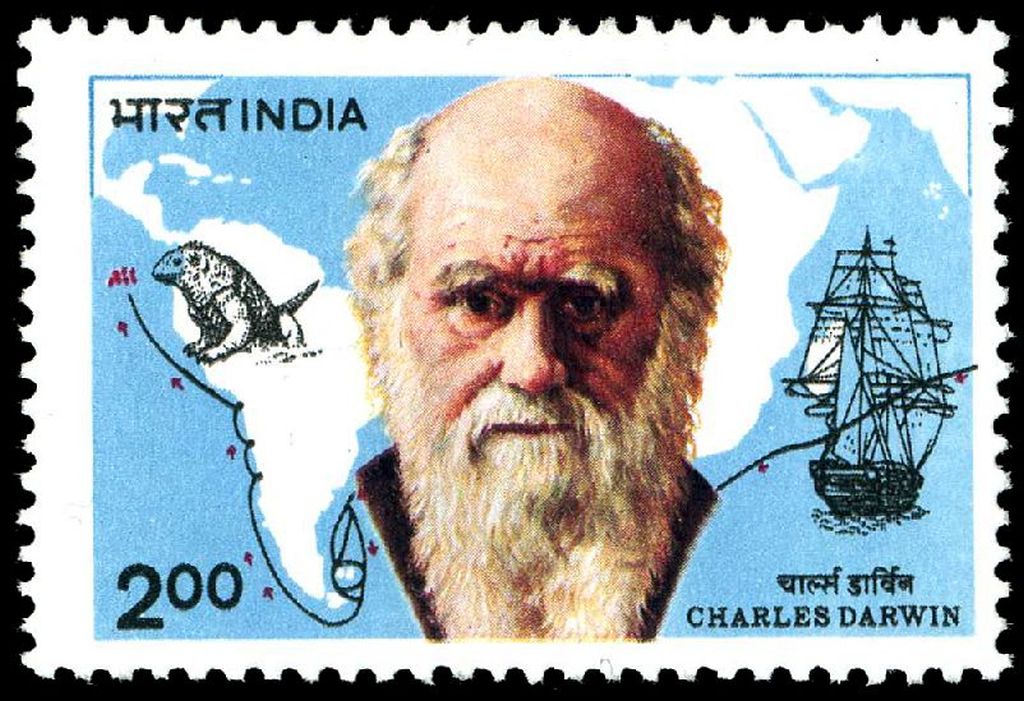
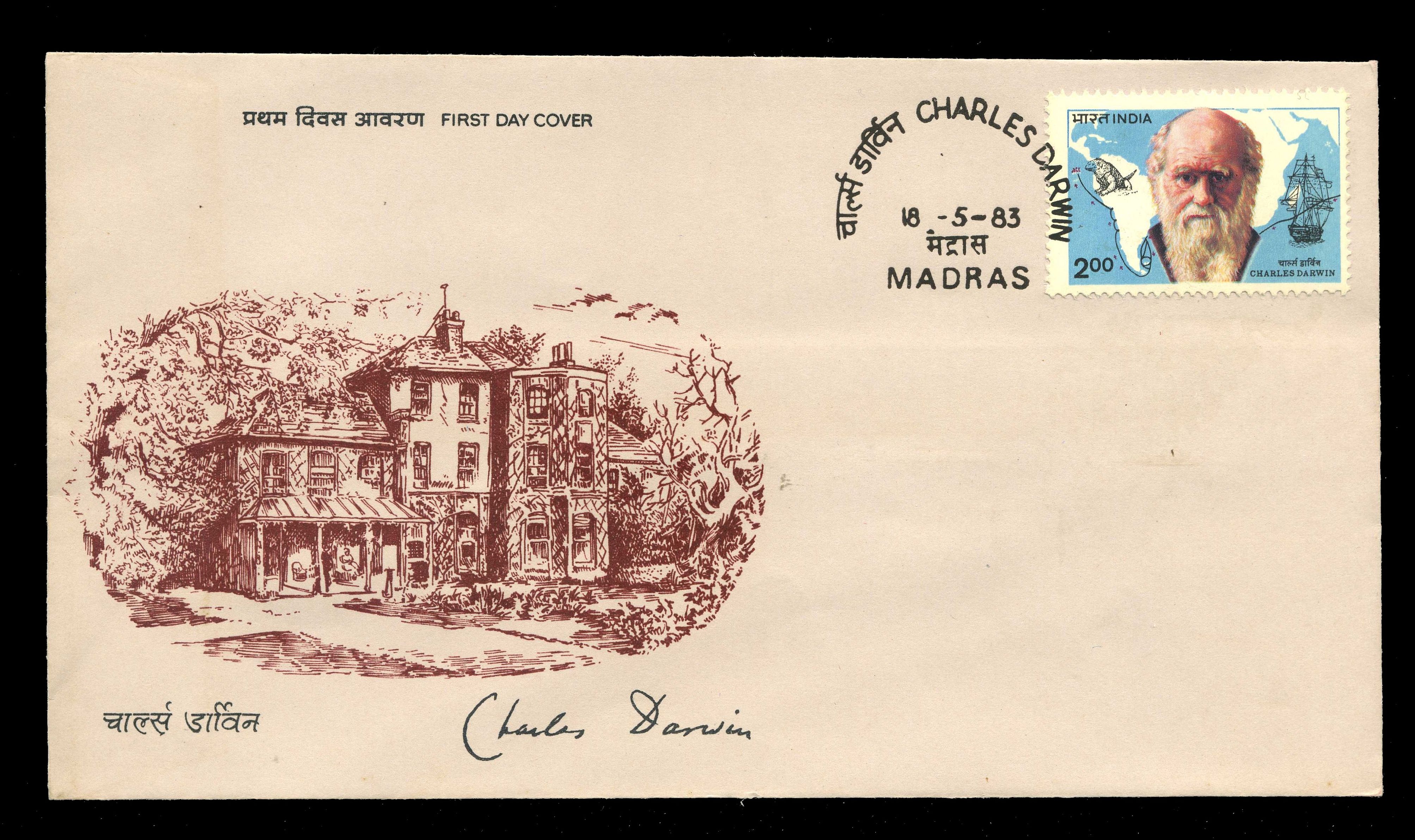
India,
18.05.1983 "Centenary since death of Charles Darwin" |
 |
 |
 |
| FDC | FDC clean, used | FDC (a dozen similar postmarks exist) |
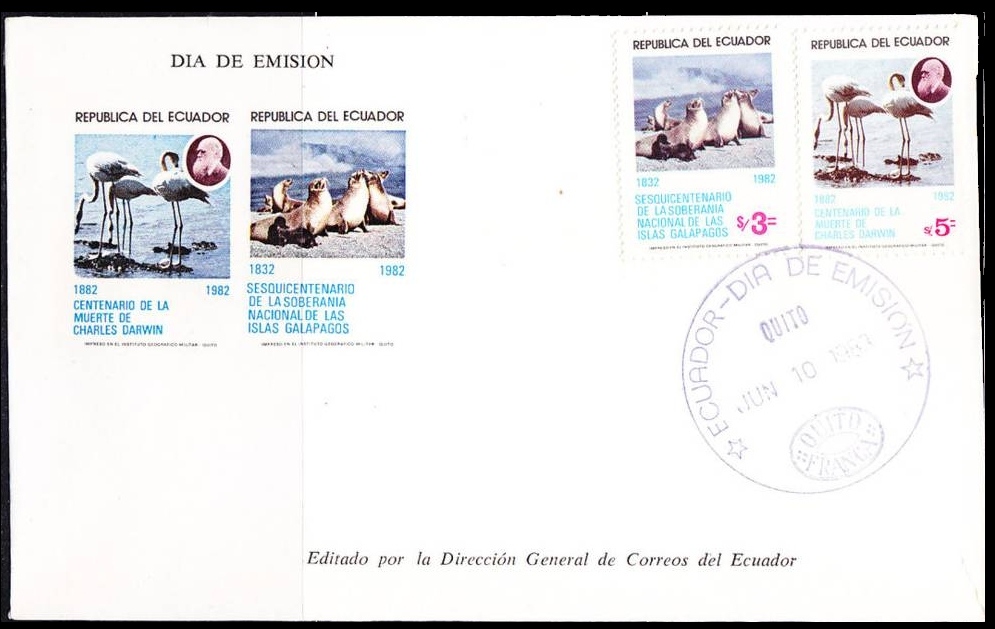
| Ecuador, 10.06.1983 "Centenary since death of Charles Darwin" |
||
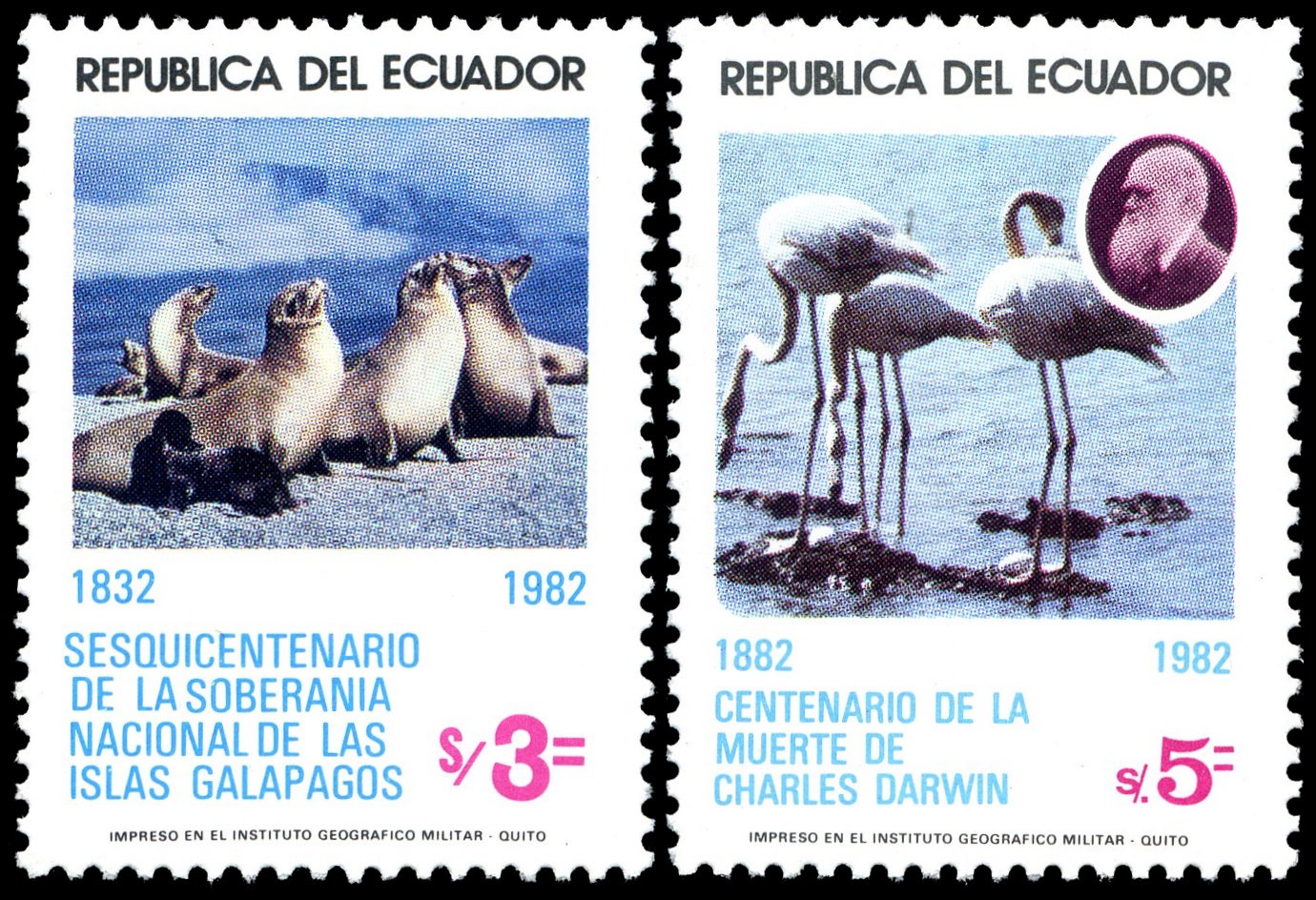
|
||
| FDC | ||

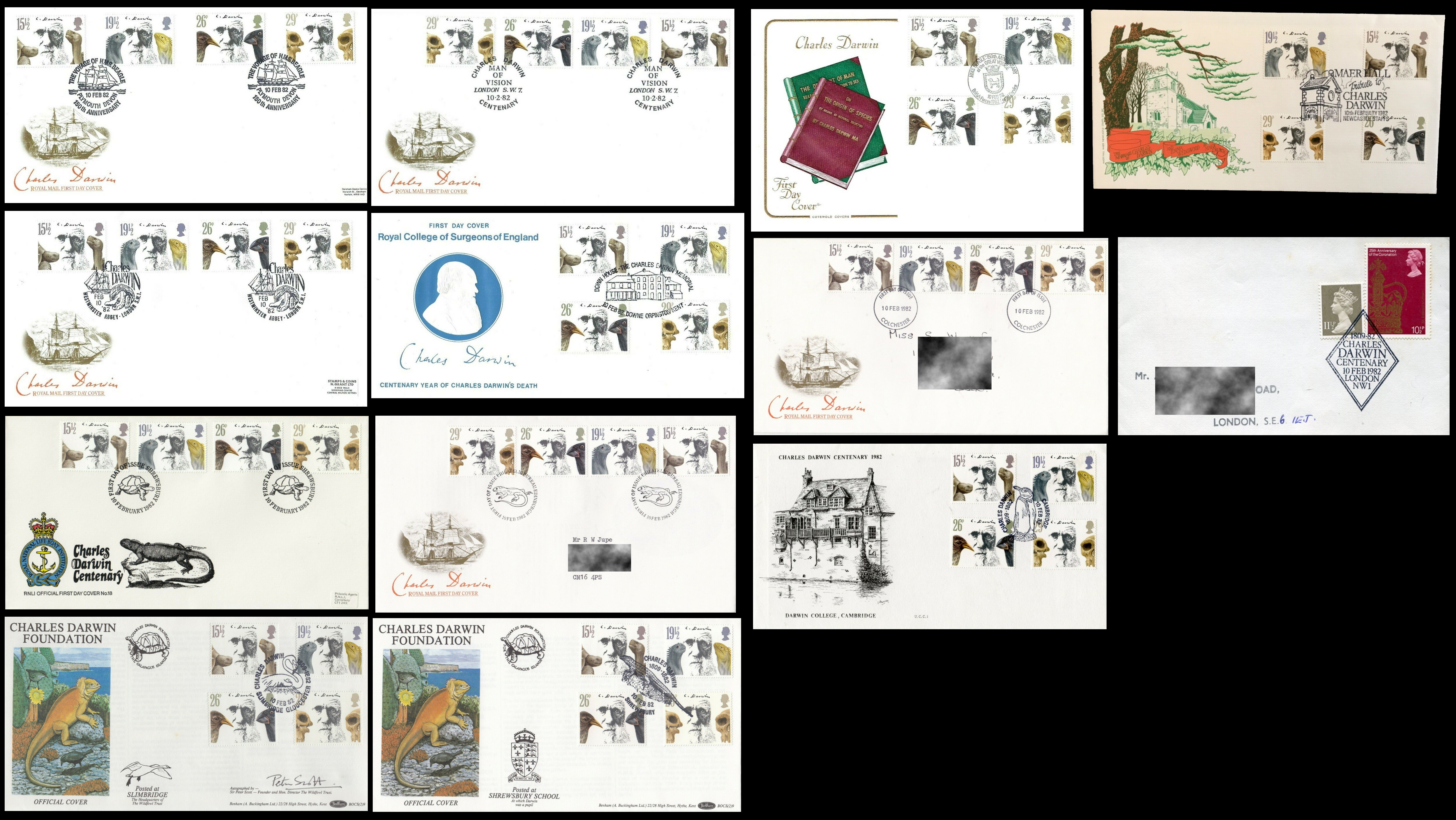

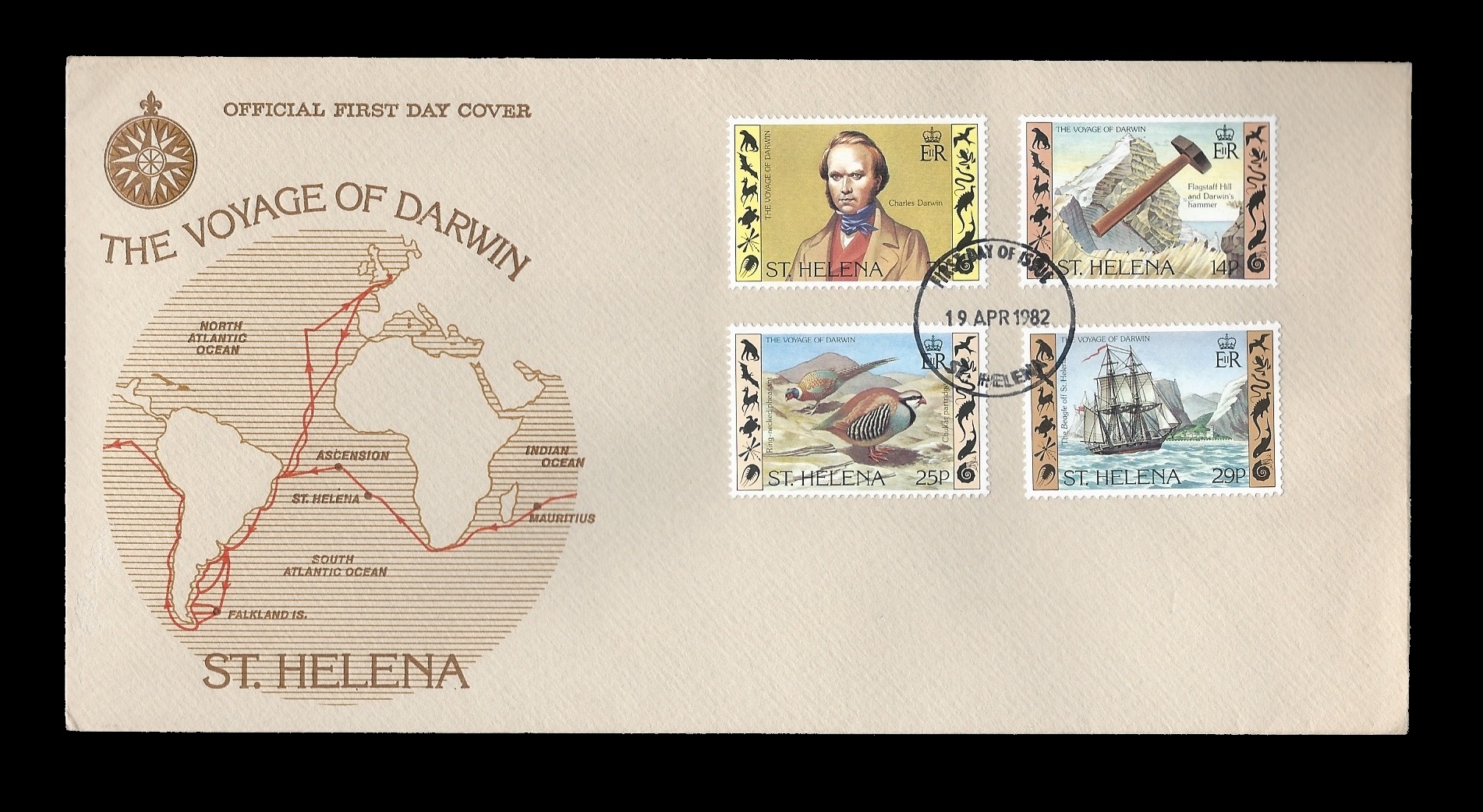
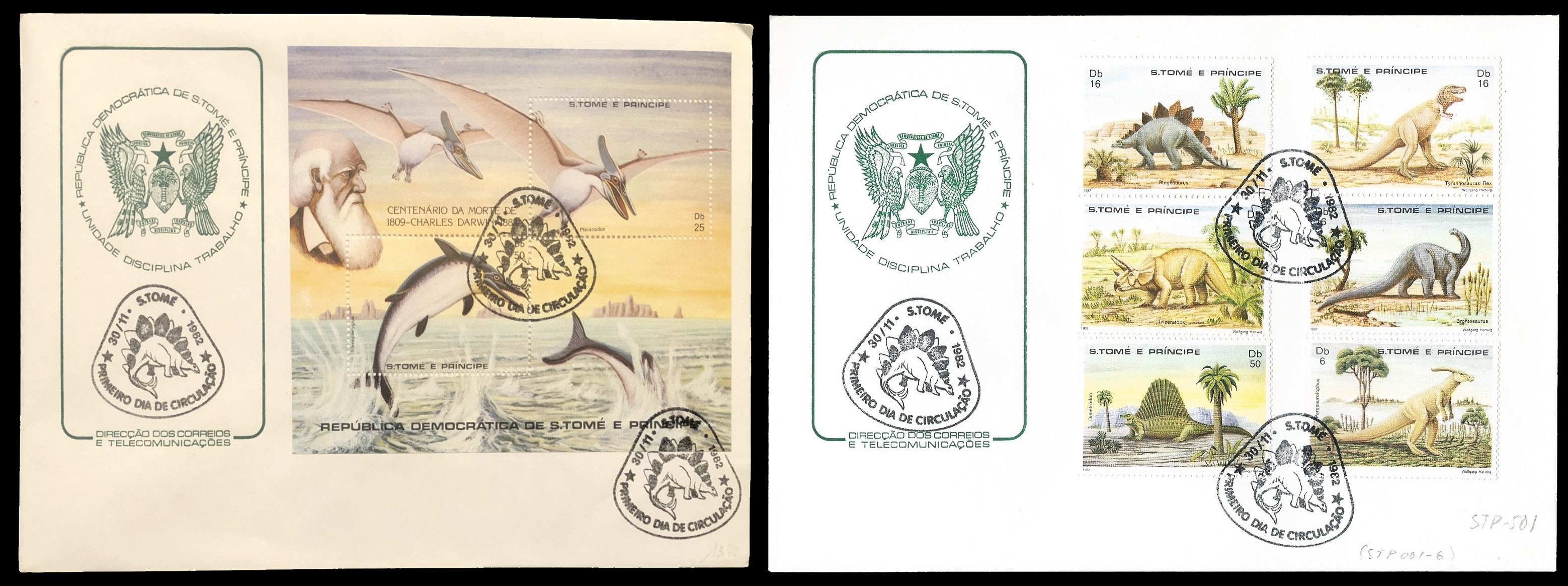

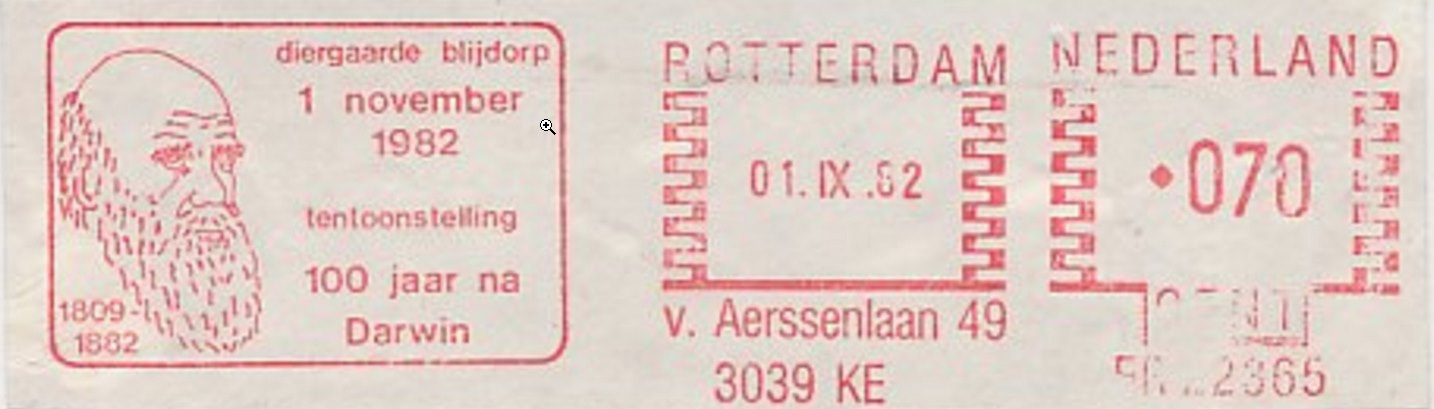
Postmarks from 1982-1983
| Germany, GDR,
1982 "100 year since death of Charles Darwin" |
The Netherlands,
1982 "100 year since death of Charles Darwin" |
|
 |
 |
 |
| Mauritius,
19.04.1982 "Charles Darwin visit" |
Great Britain,
10.02.1982 "150th anniversary the voyage of HMS Beagle", Plymouth, Devon |
Great Britain,
10.021982 "Charles Darwin", Westminster Abbey, London |
|
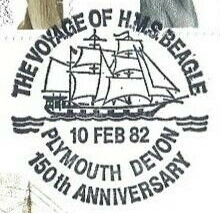 |
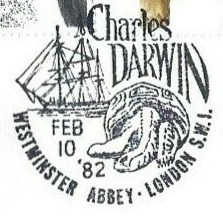 |
| Great Britain,
10.021982 "Charles Darwin - centenary man of vision", London |
Great Britain,
10.02.1982 "HMS Beagle: 150th anniversary of the great voyage", British Forces 1762, postal service |
Great Britain,
10.021982 "Down House - the Charles Darwin Memory", Downe Orpington, Kent |
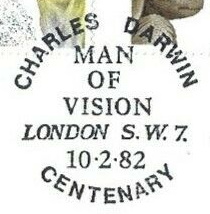 |
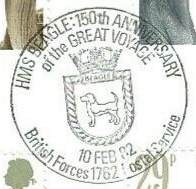 |
|
| Great Britain,
10.021982 "Tribute to Charles Darwin", Newcastle |
Great Britain,
10.02.1982 Shrewsbury |
Great Britain,
10.021982 Philatelic Bureau, Edinburgh |
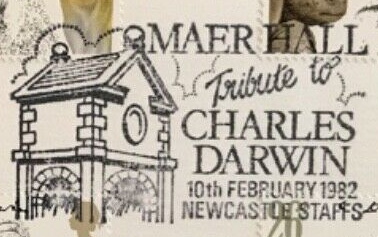 |
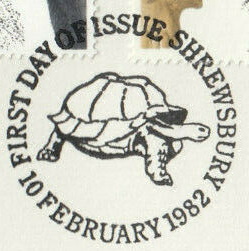 |
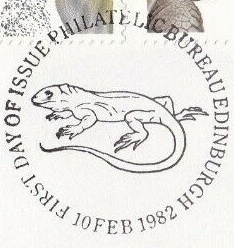 |
| Great Britain,
10.021982 "Charles Darwin", Cambridge |
Great Britain,
10.021982 "Charles Darwin", Slimbridge, Gloucester |
Great Britain,
10.021982 "Charles Darwin", Shrewsbury |
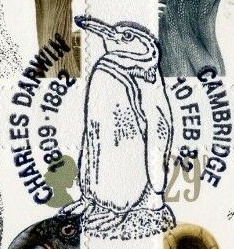 |

|
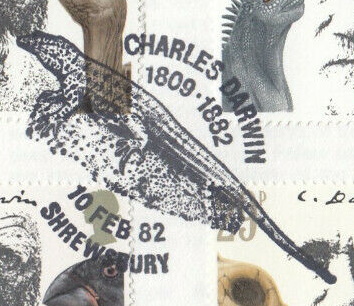 |
| Great Britain,
10.021982 "Charles Darwin Centenary", London, NW1 |
Romania,
08.061982 "Charles Darwin Centenary" |
India,
18.031983 "Charles Darwin" (a similar postmark was issued in a dozen cities of India) |
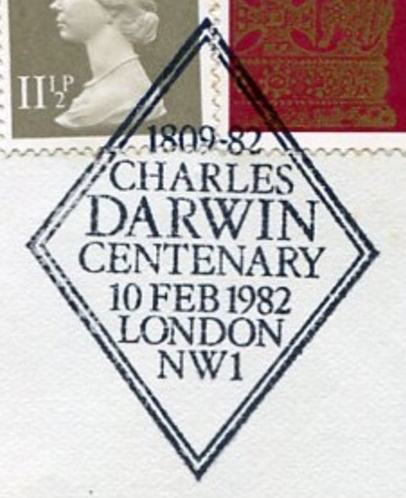 |
 |
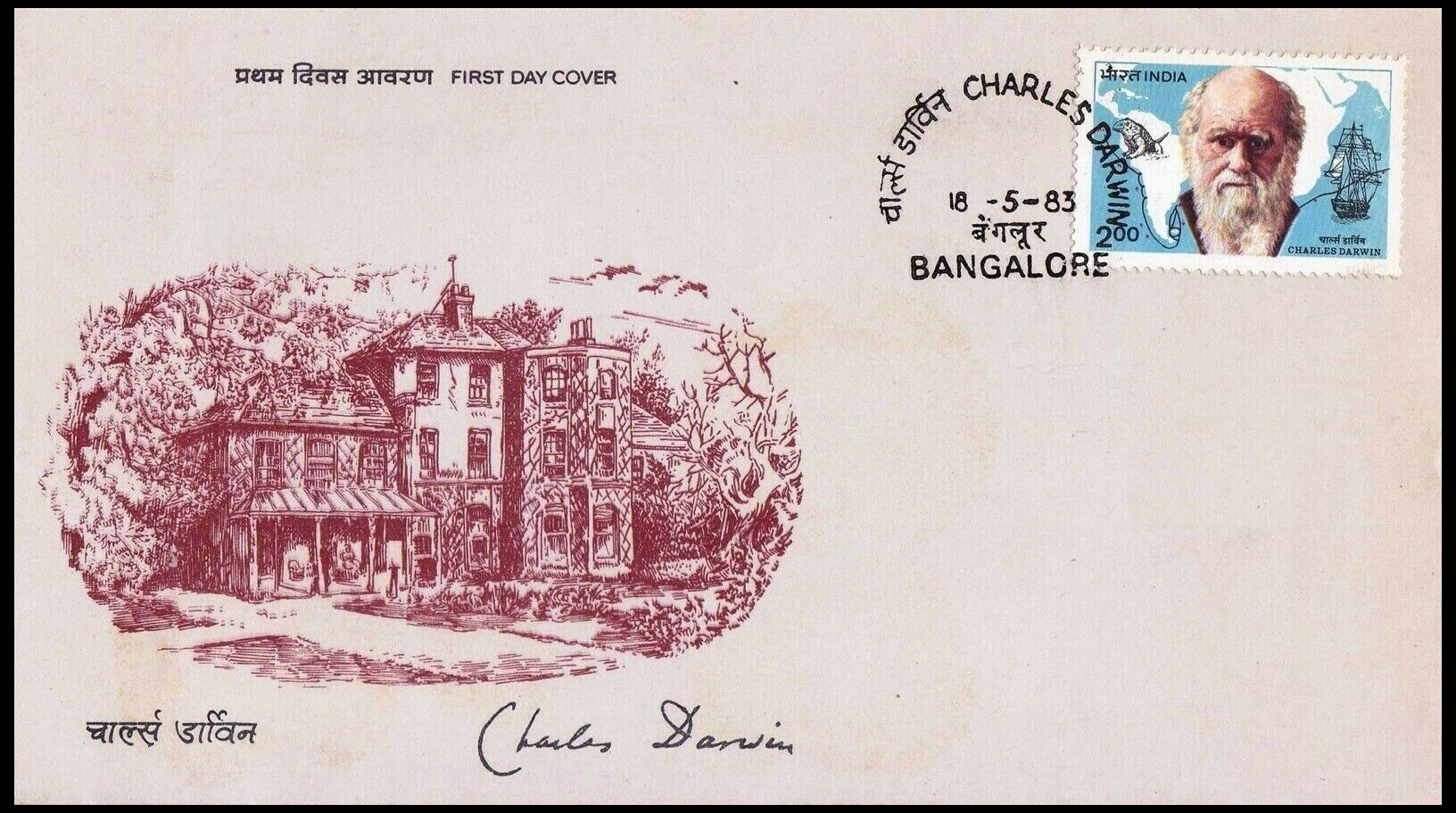 |
Postal stationeries issued in 1982
| Germany GDR,
1982 "Charles Darwin" |
||
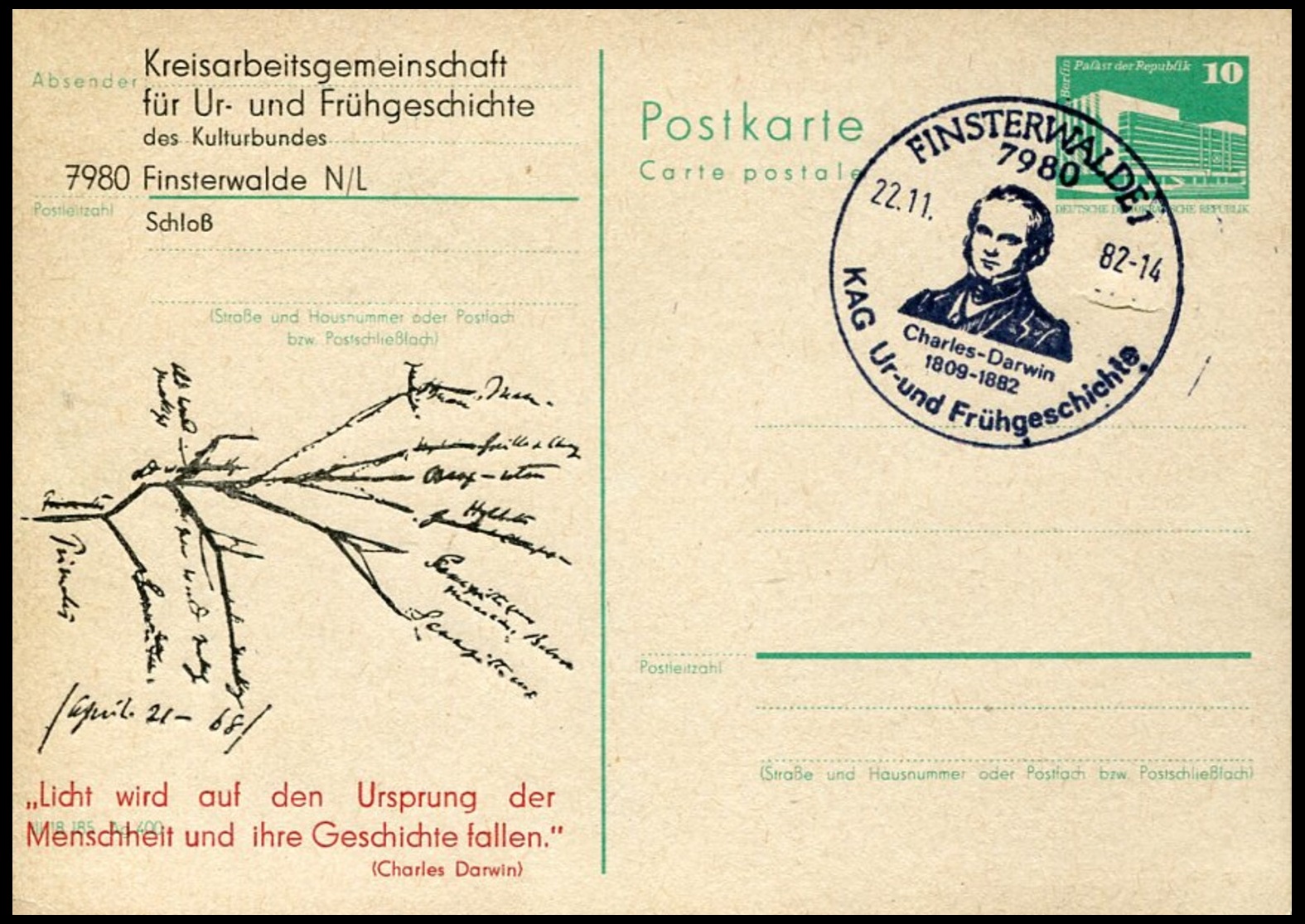
|
||
1986 – 150th anniversary of visits
Postage stamps issued in 1986
| 1986 - "150th anniversary of visits" | ||
| Australia, 15.01.1986 "150th anniversary of Charles Darwin's visit to Australia" |
Ecuador, 12.02.1986 "450 years since discovery Galapagos Islands" |
Cocos Islands, 01.04.1986 "150th anniversary of Charles Darwin's visit" |
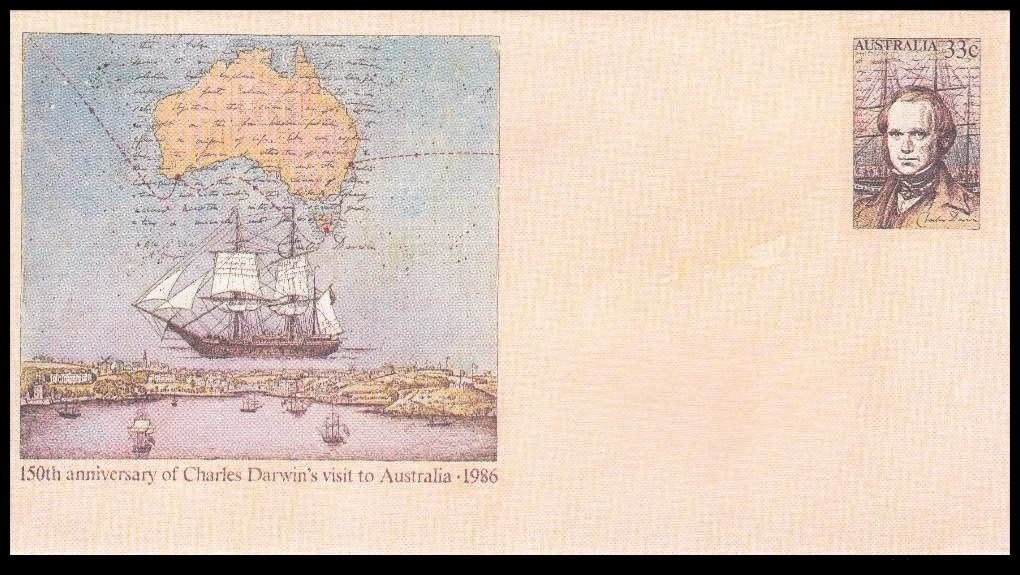 |
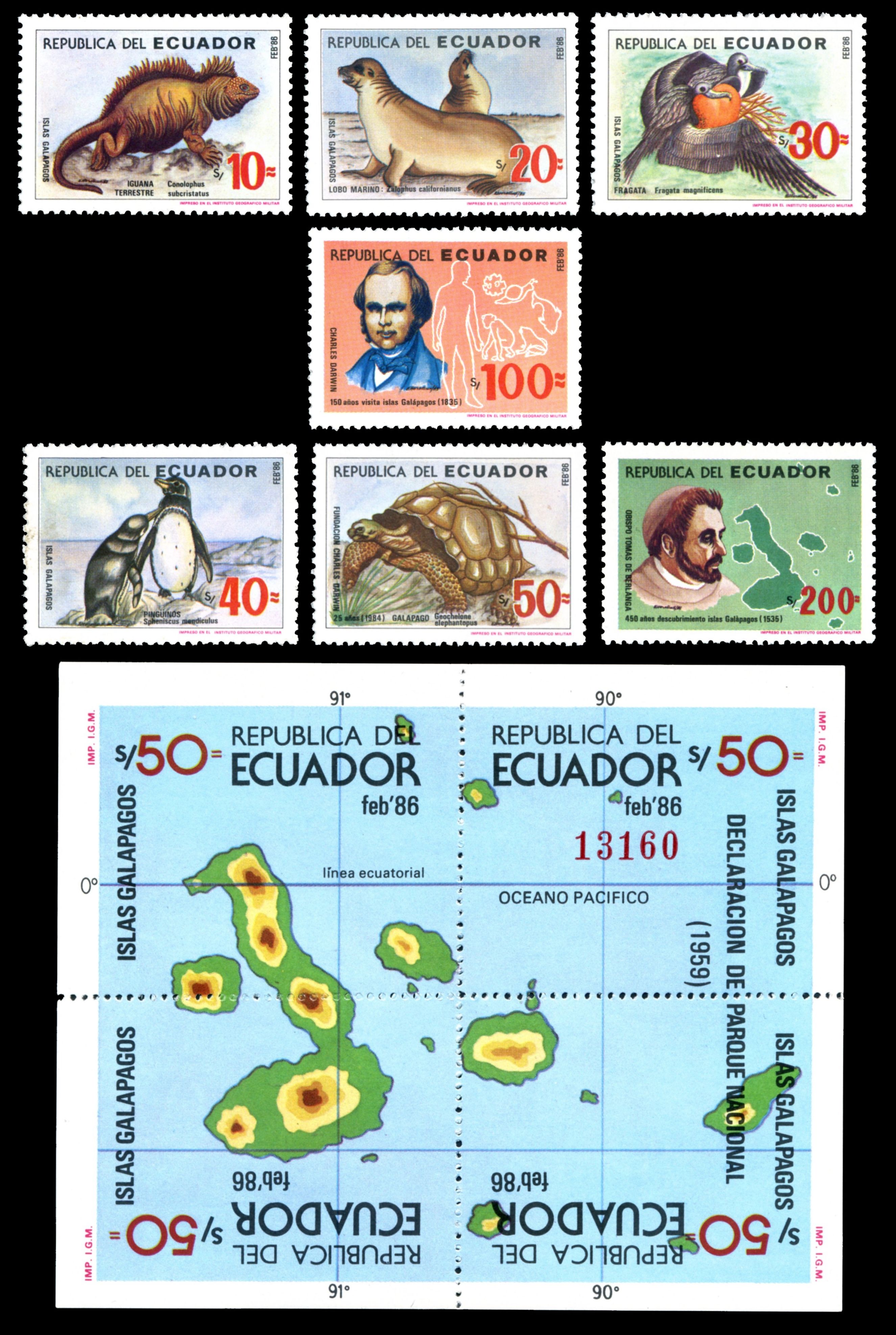
|
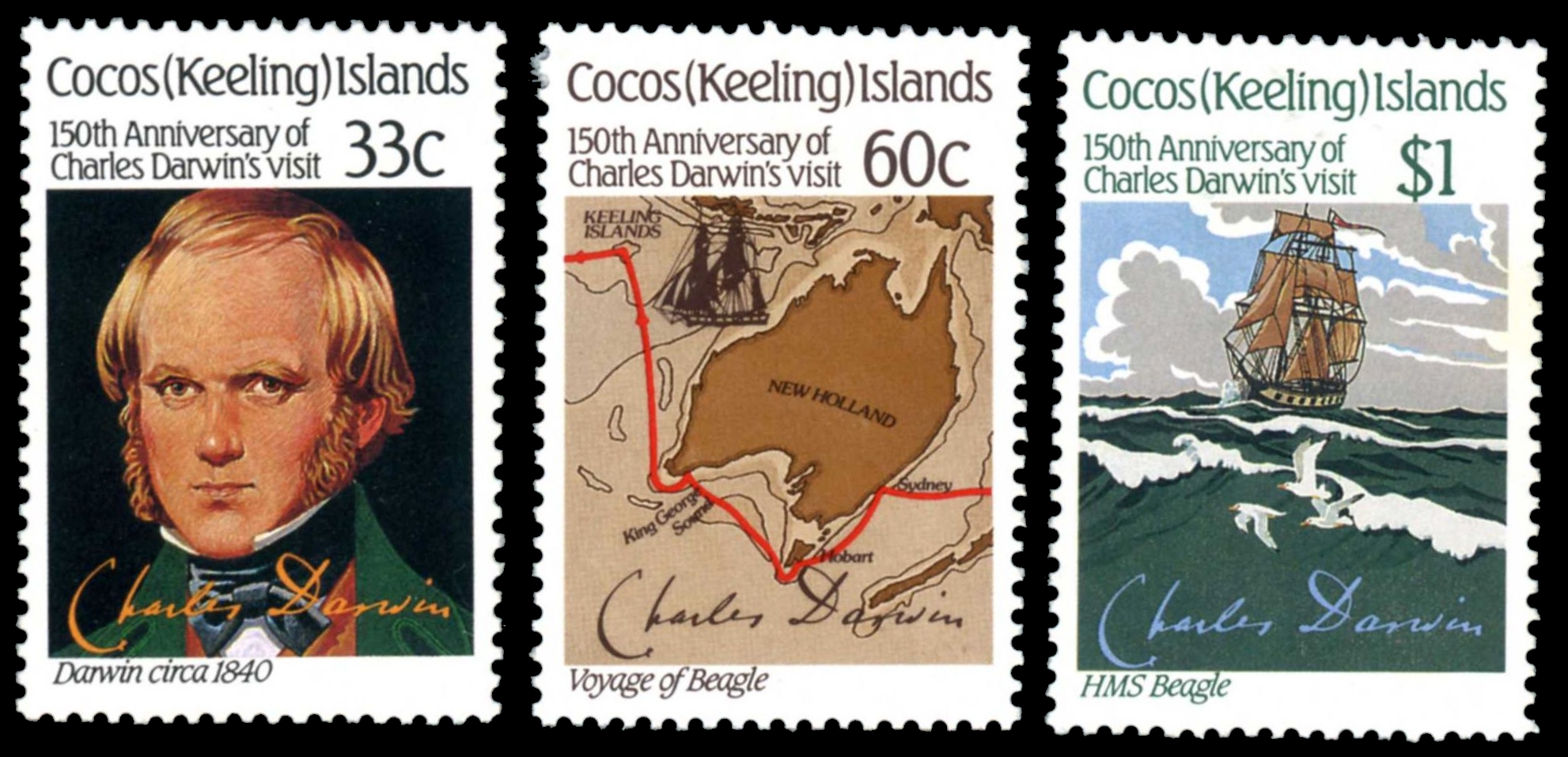 |
| PS | On Cover | FDC |
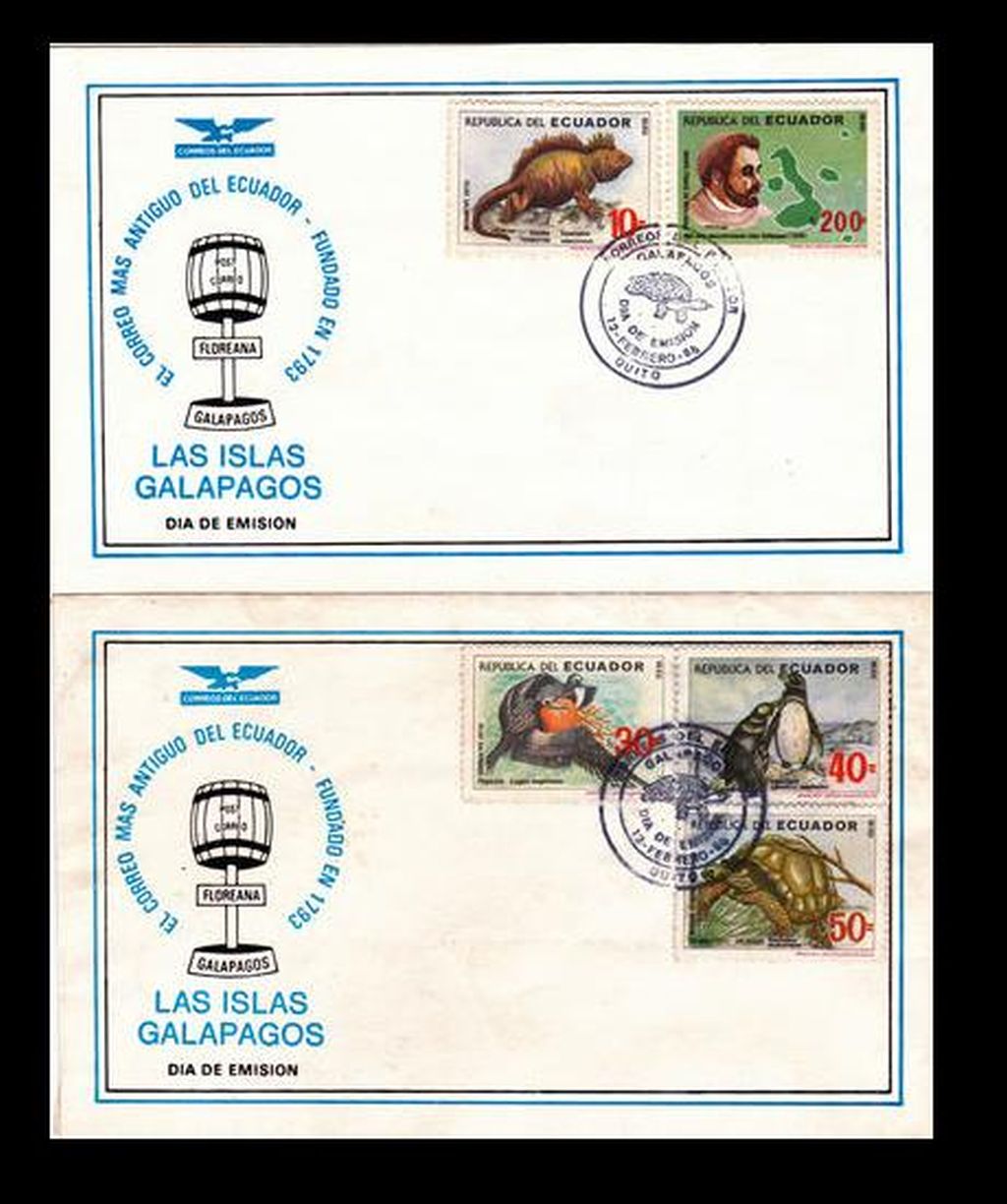
Postal Stationeries and Postmarks issued in 1986
| Australia,
1986 "150th anniversary of Charles Darwin's visit to Australia" |
Cocos Islands,
1986 "150th anniversary of Charles Darwin's visit to Cocos (Keeling) Islands" |
|
|
 |
|
2008-2010 - 200th anniversary of Charles Darwin's birth and 150 years since publication of the "Origin of Species".
Postage stamps issued in 2008-2010
| Bosnia and Herzegovina (Republic of Srpska),
01.07.2008 "150th anniversary of Charles Darwin's theory of evolution" |
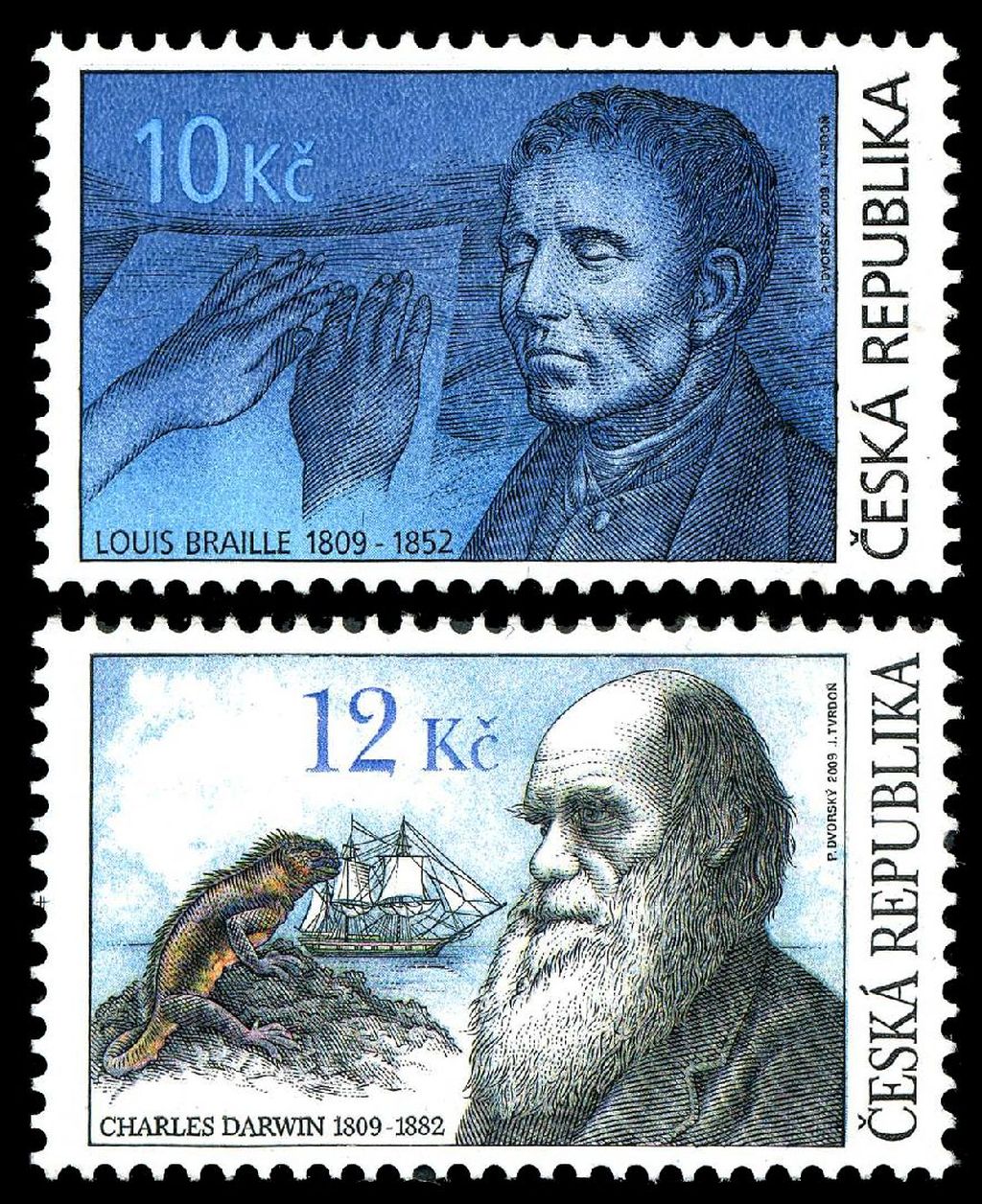
Czech,
02.01.2009 "Personalities" |
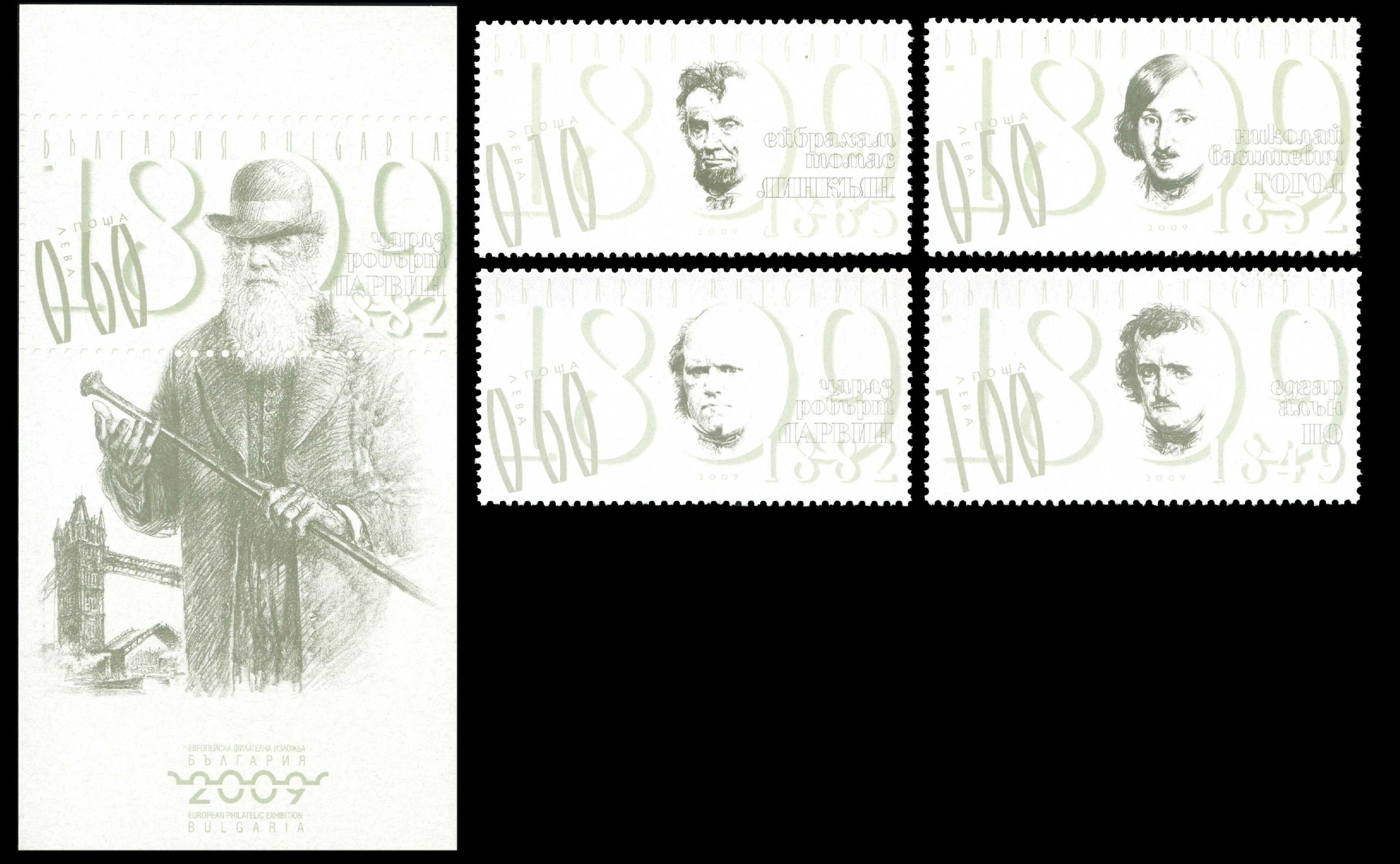
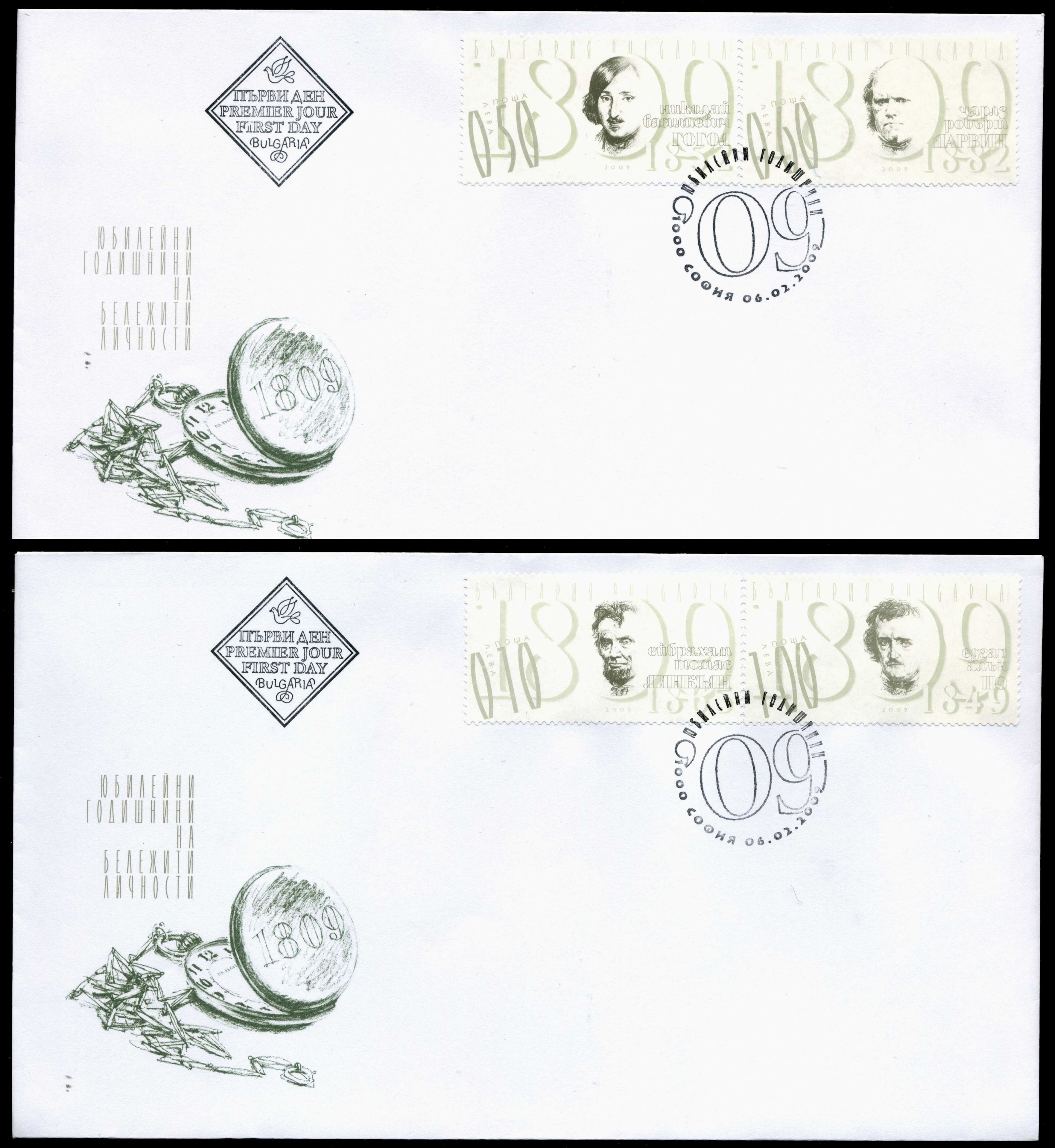
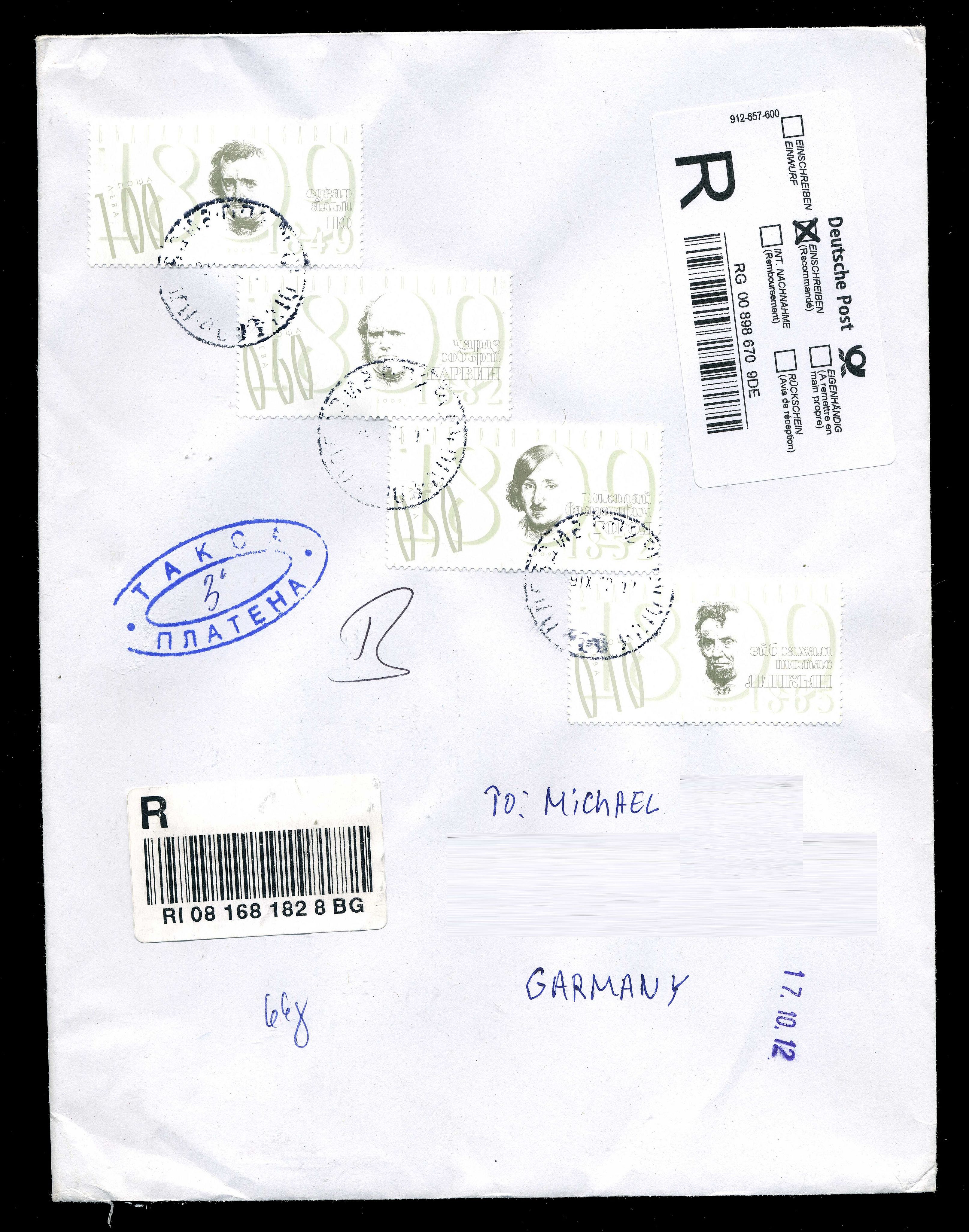
Bulgaria,
06.02.2009 "200th Birthdays of Famous Persons" |
 |
 |
|
| FDC | FDC | FDC, On Cover |
| Cuba,
02.02.2009 "200th anniversary of Charles Darwin and 150th anniversary of Charles Darwin's theory of evolution" |
Great Britain,
12.02.2009 "The 200th anniversary of Charles Darwin's birth and the 150th anniversary of On the Origin of Species" |
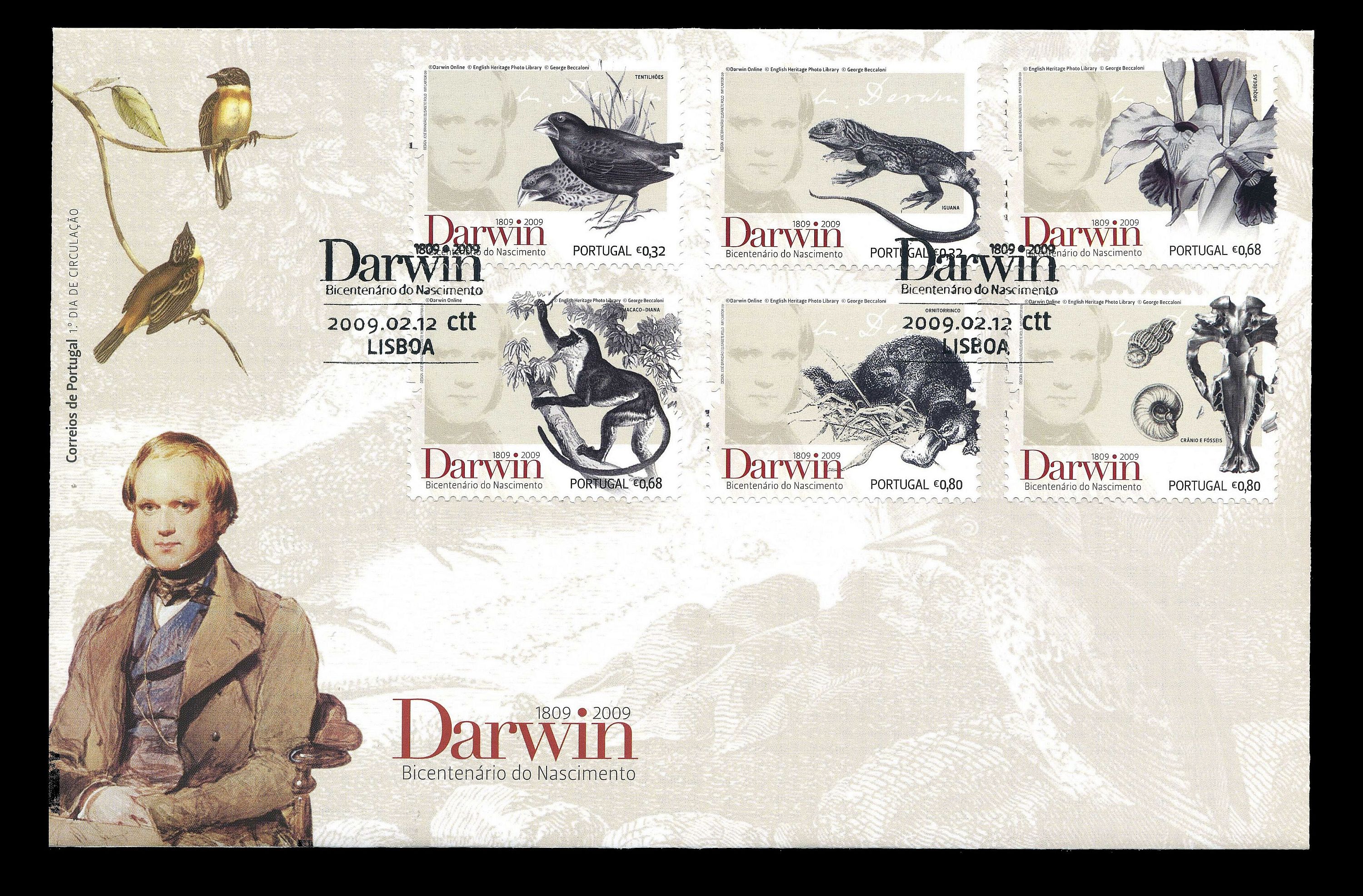
Portugal,
12.02.2009 "Bicentenary of Charles Darwin's birth" |
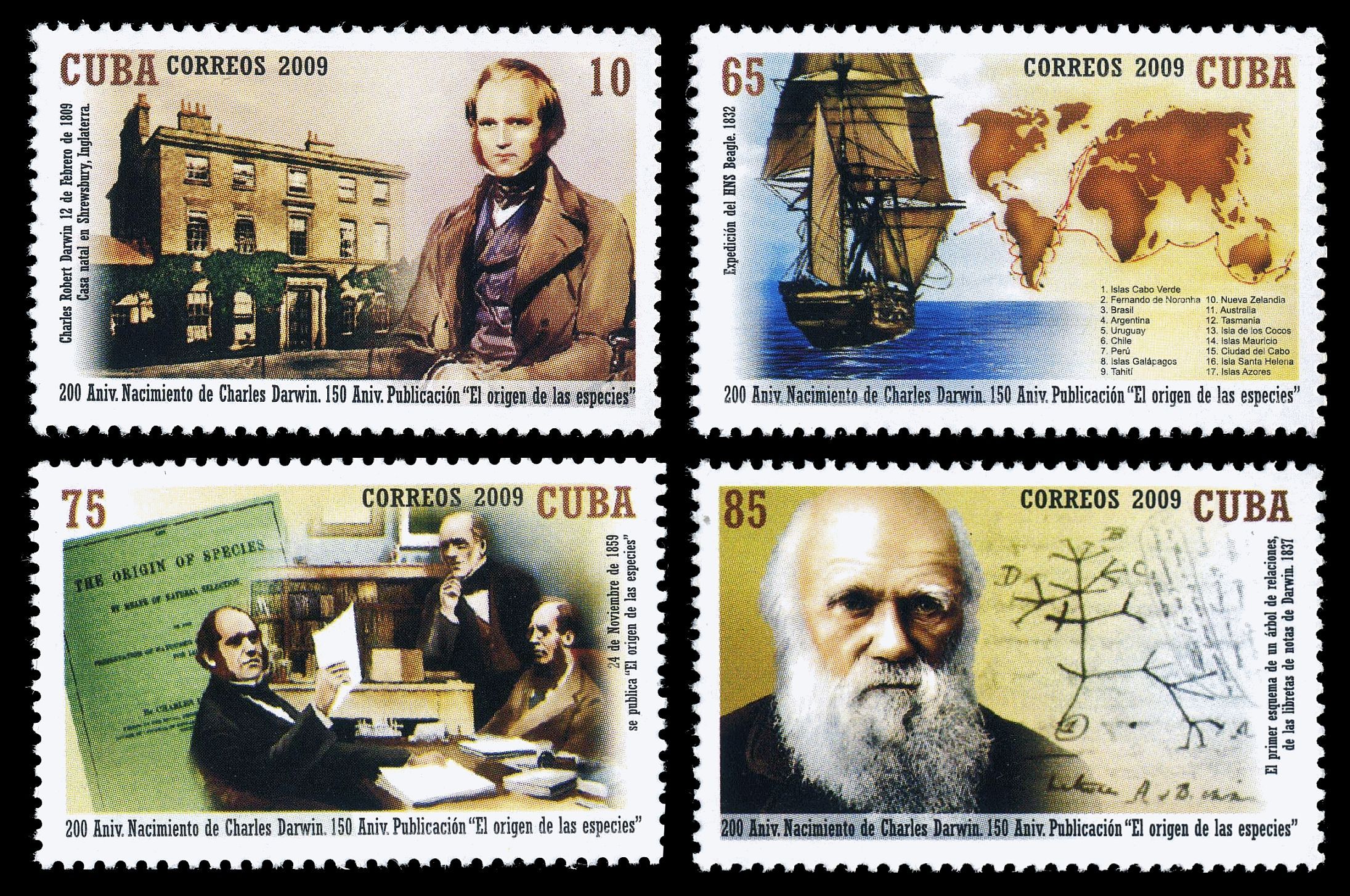 |
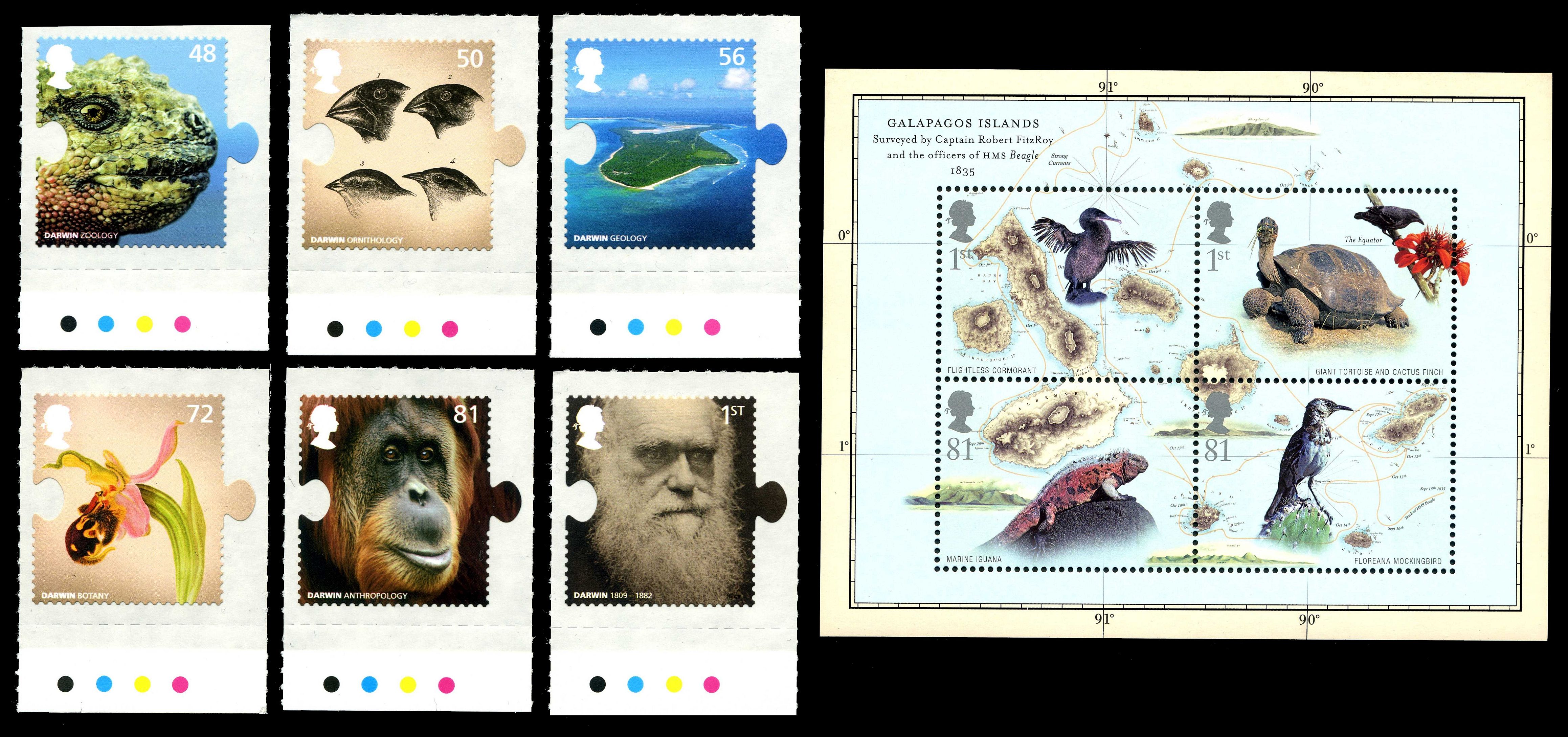 |

|
| FDC | FDC: [1] [2] | FDC: [1] [2] [3] |
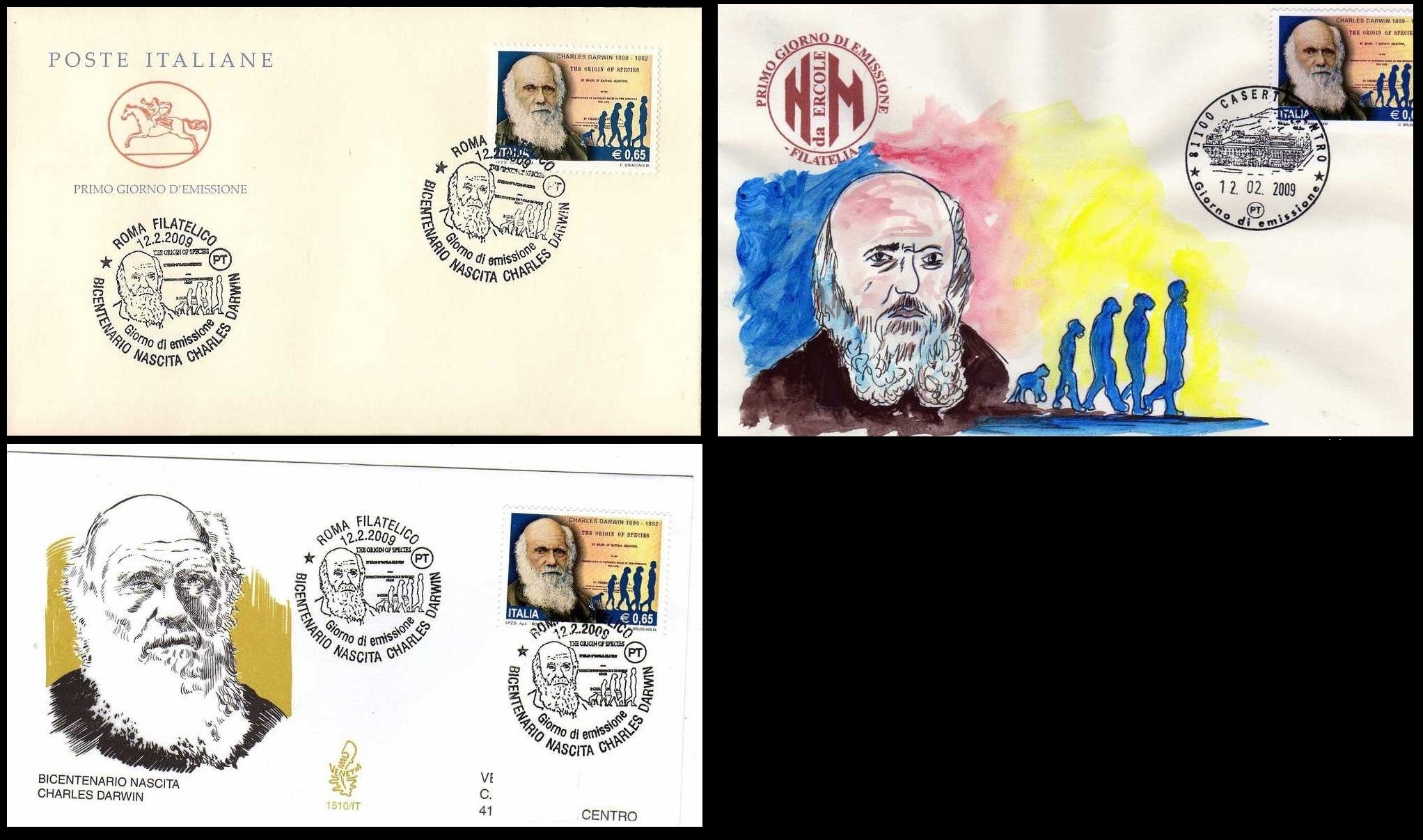
| Italy,
12.02.2009 "200th anniversary of Charles Darwin and 150th anniversary of Charles Darwin's theory of evolution" | Vietnam,
12.02.2009 "200th anniversary of Charles Darwin" |
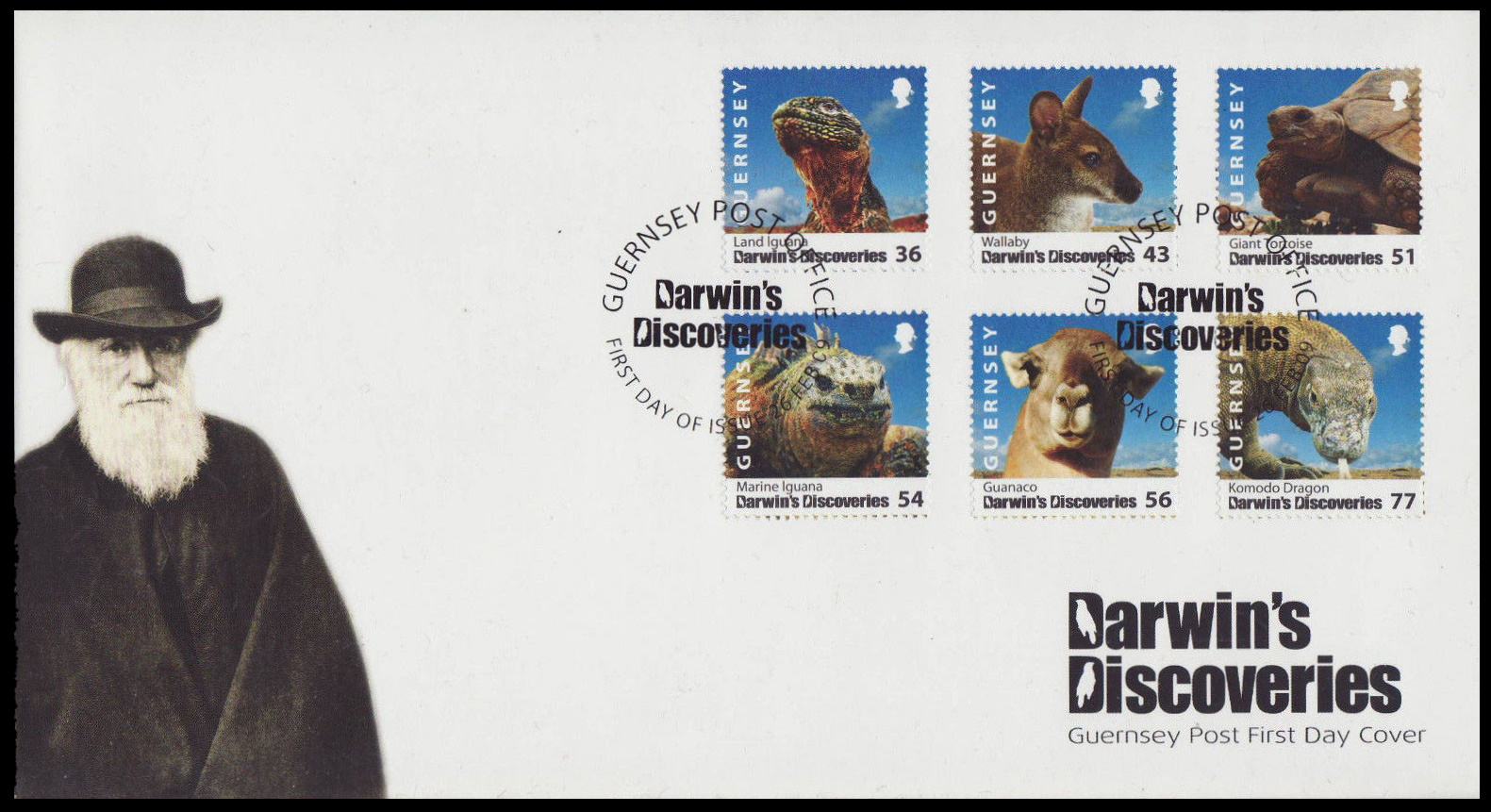
Guernsey,
26.02.2009 "Darwin's Discoveries" |
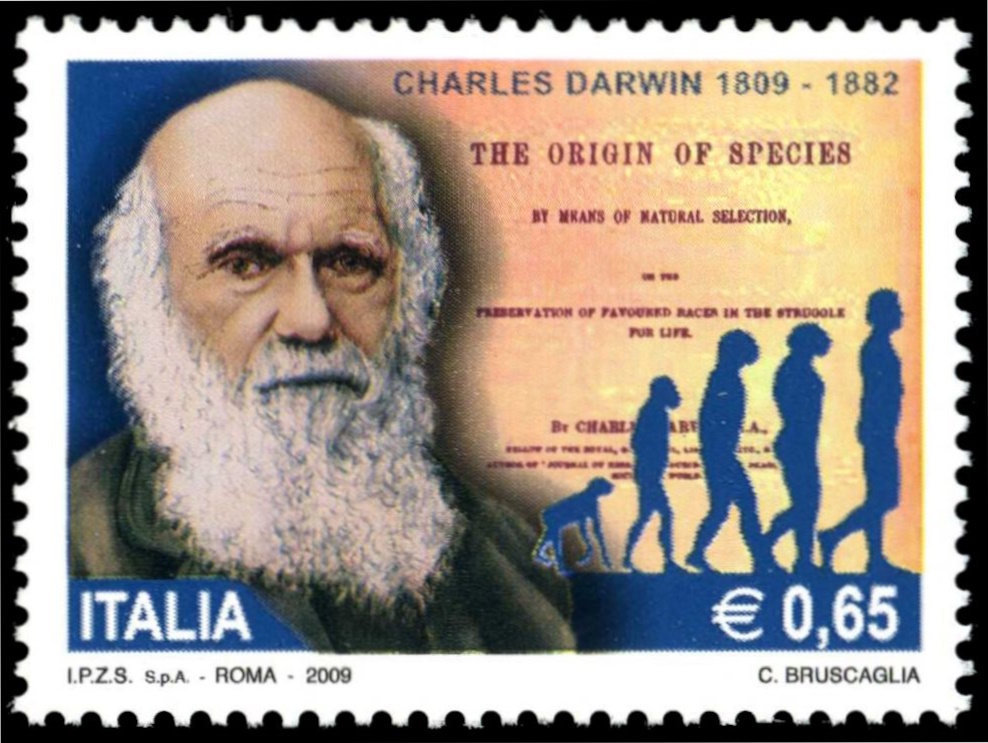 |
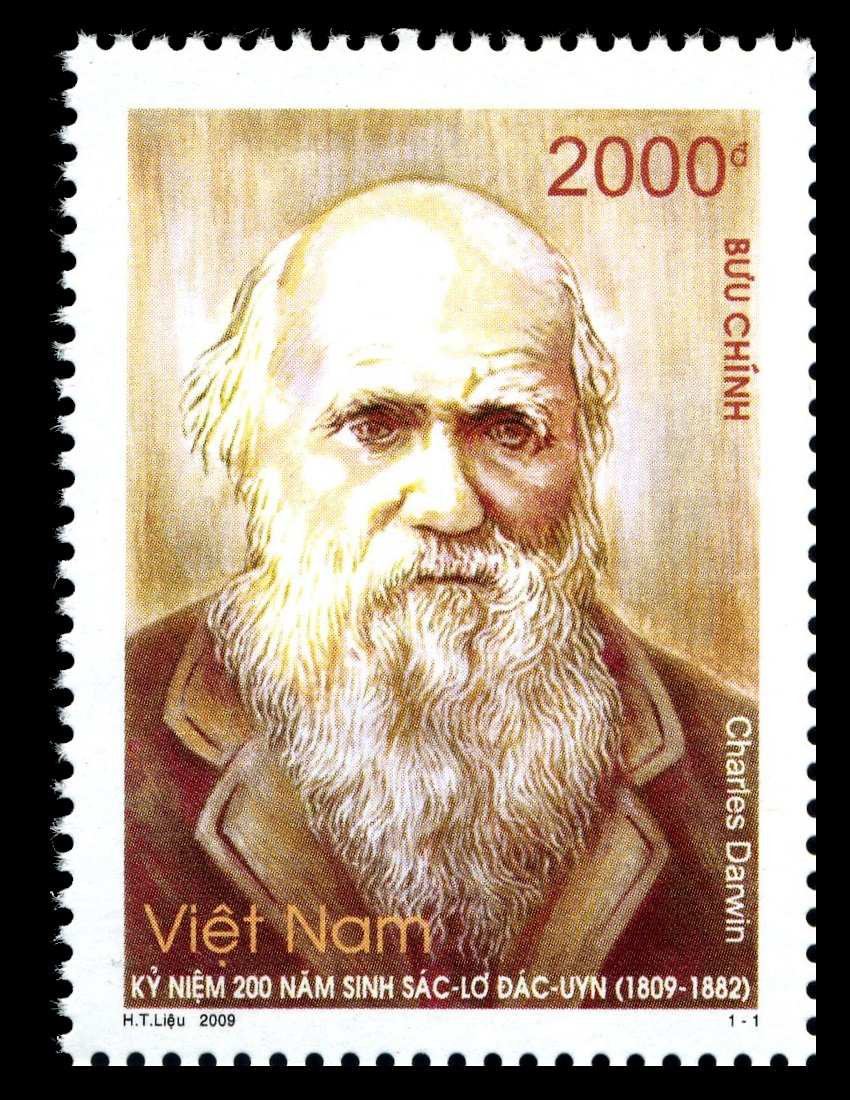
|
|
| FDC | FDC | |
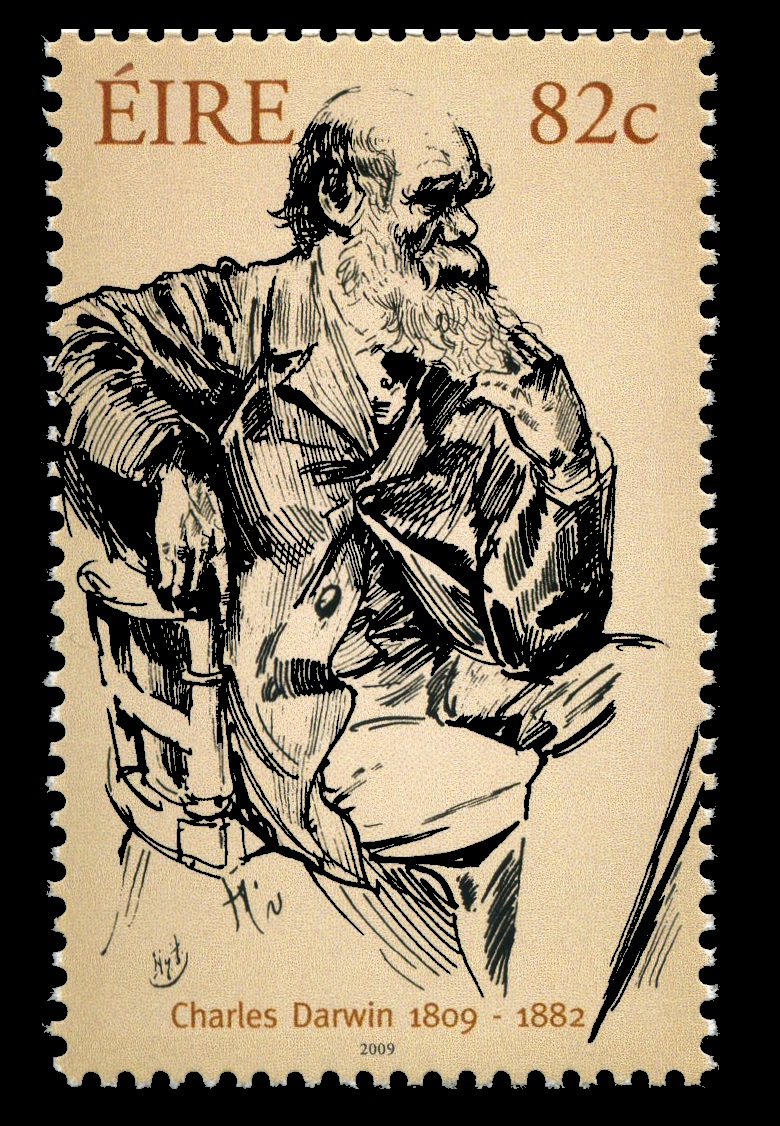
| Ireland,
20.03.2009 "200th anniversary of Charles Darwin" |
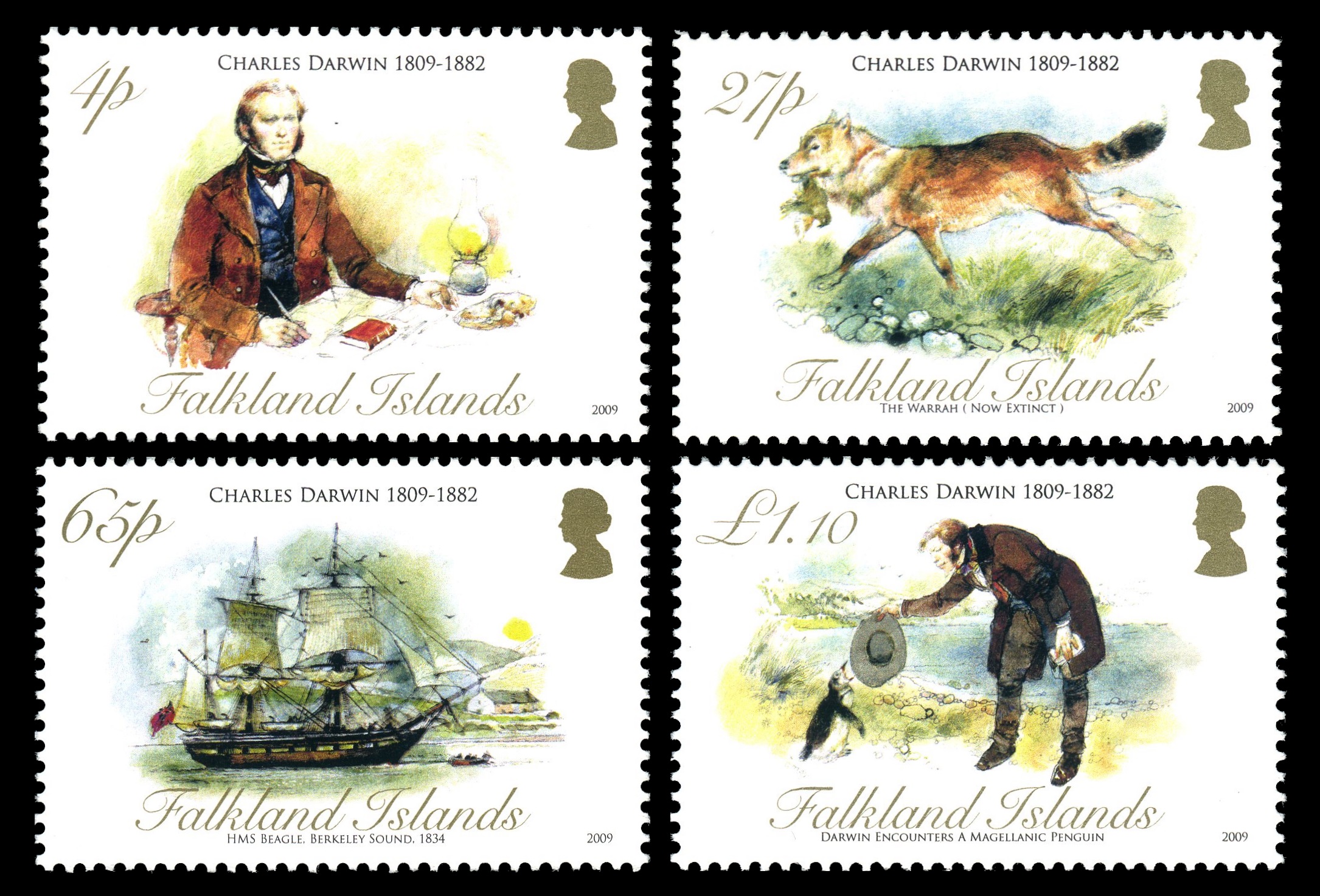
Falkland Islands,
23.04.2009 "Bicentenary of the birth of Charles Darwin" |
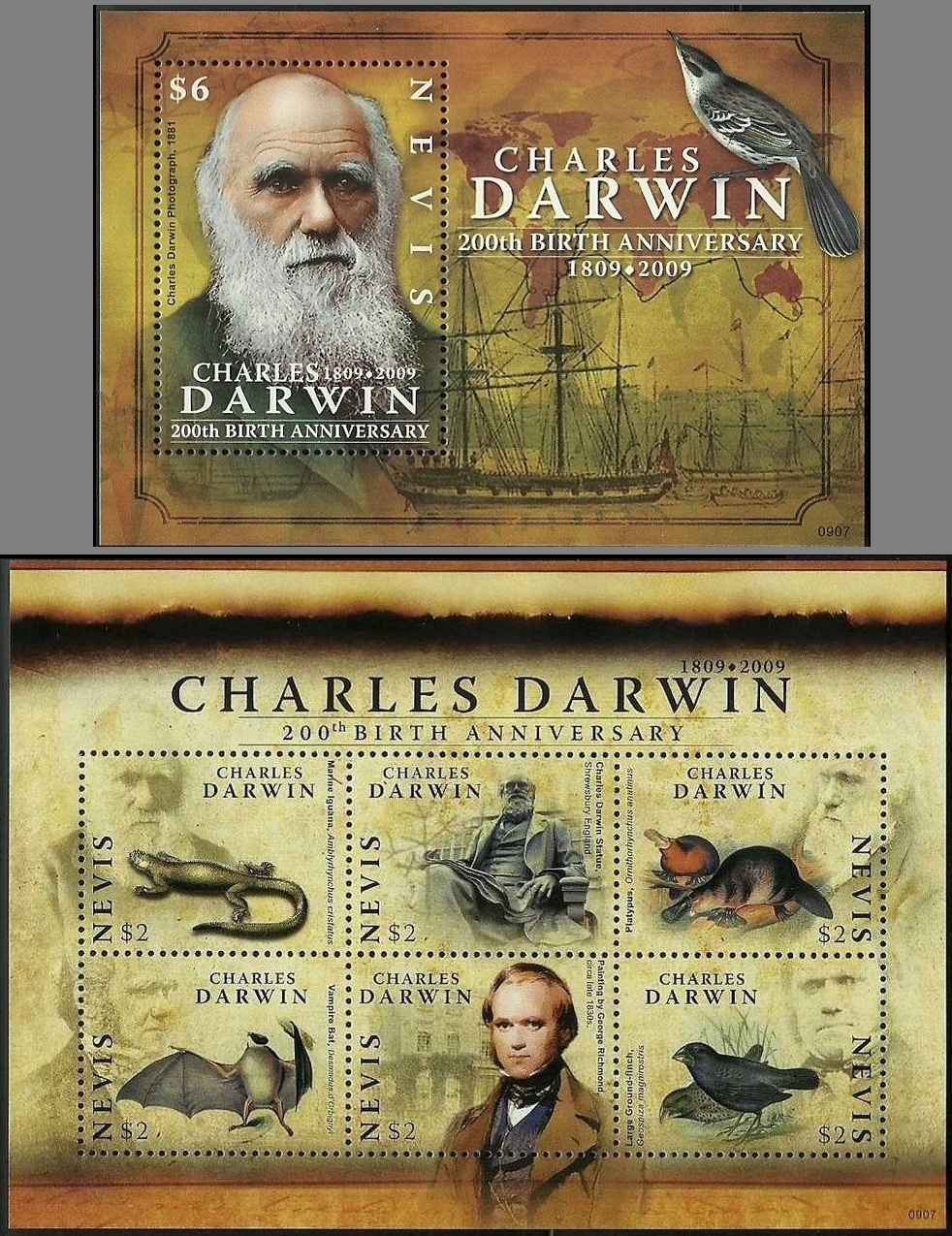
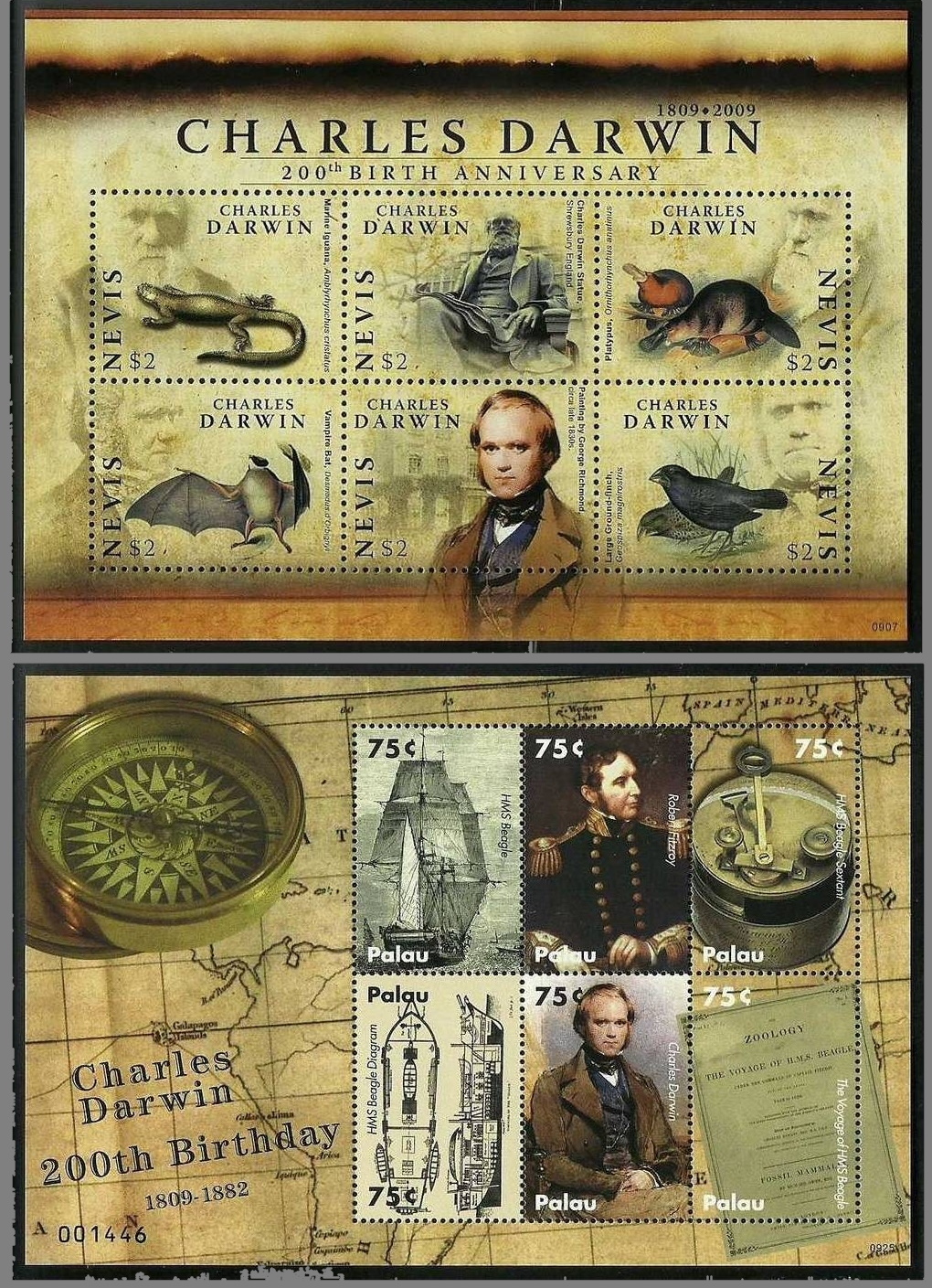
Nevis, 15.06.2009 "200th anniversary of Charles Darwin" |
|
 |
|
| FDC | FDC | |
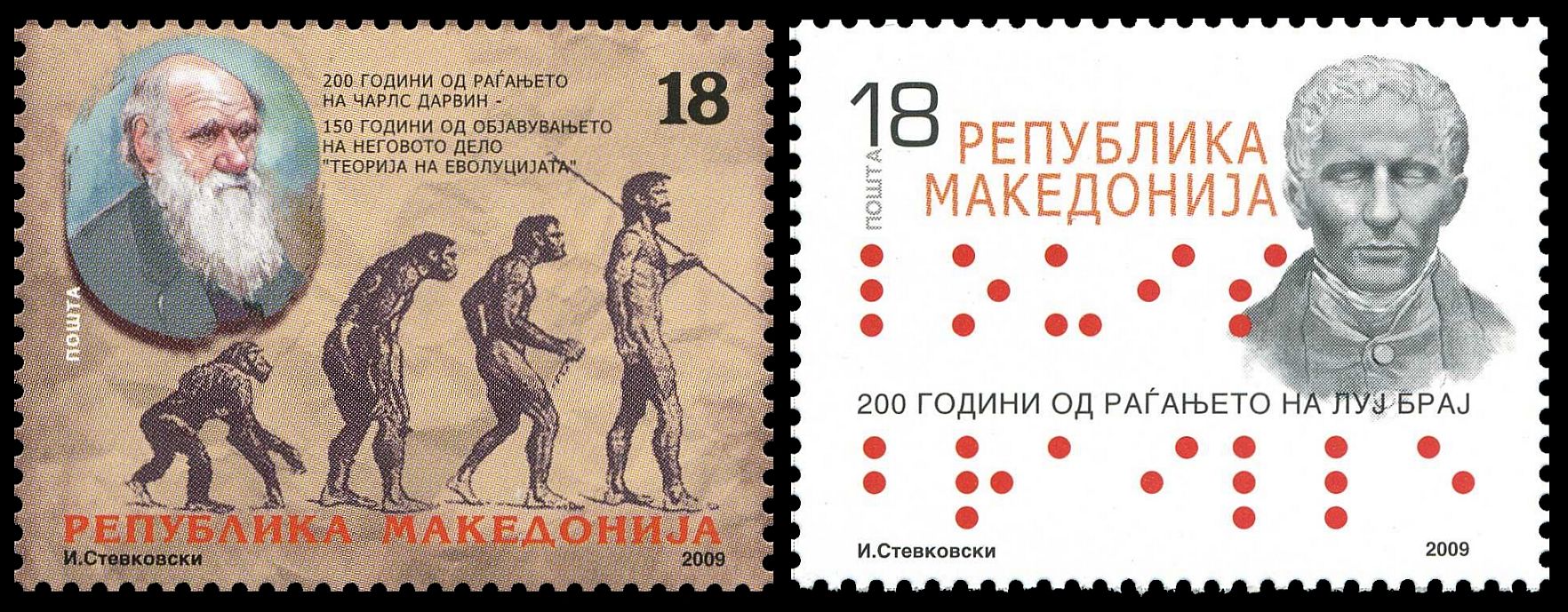
| Macedonia, 17.06.2009 "200th anniversary of Charles Darwin" |
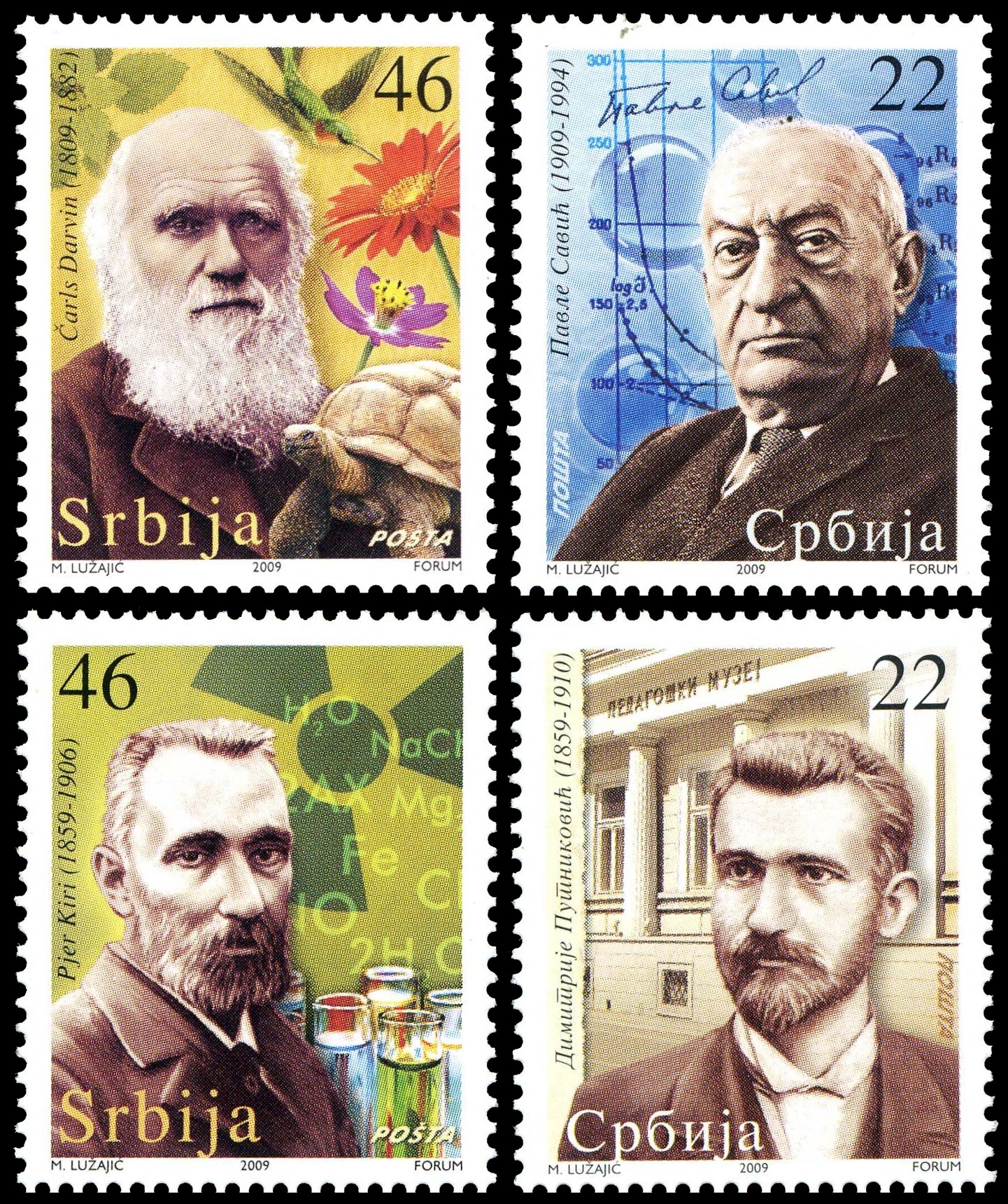
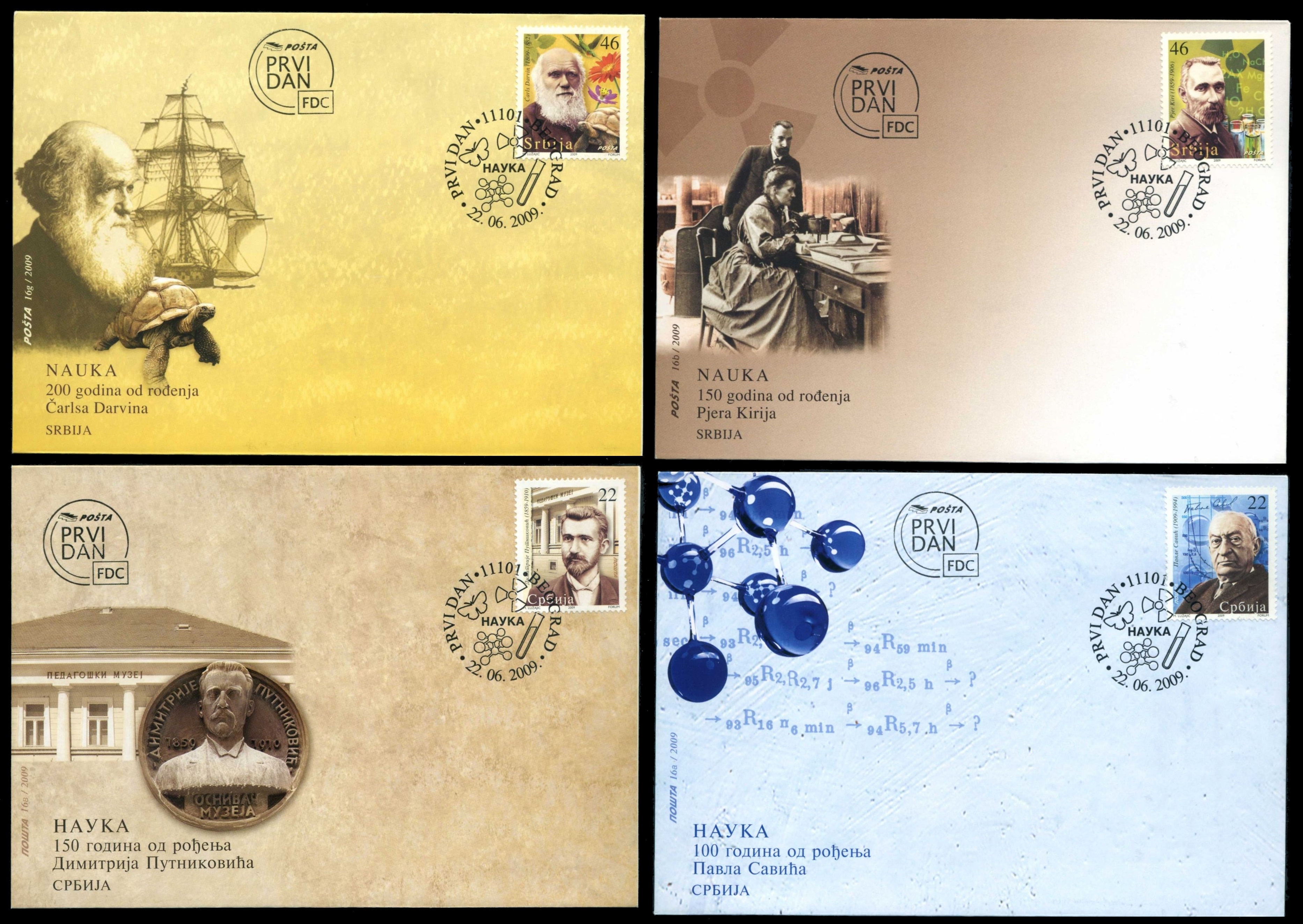
Serbia, 22.06.2009 "Science - Famous scientists" |
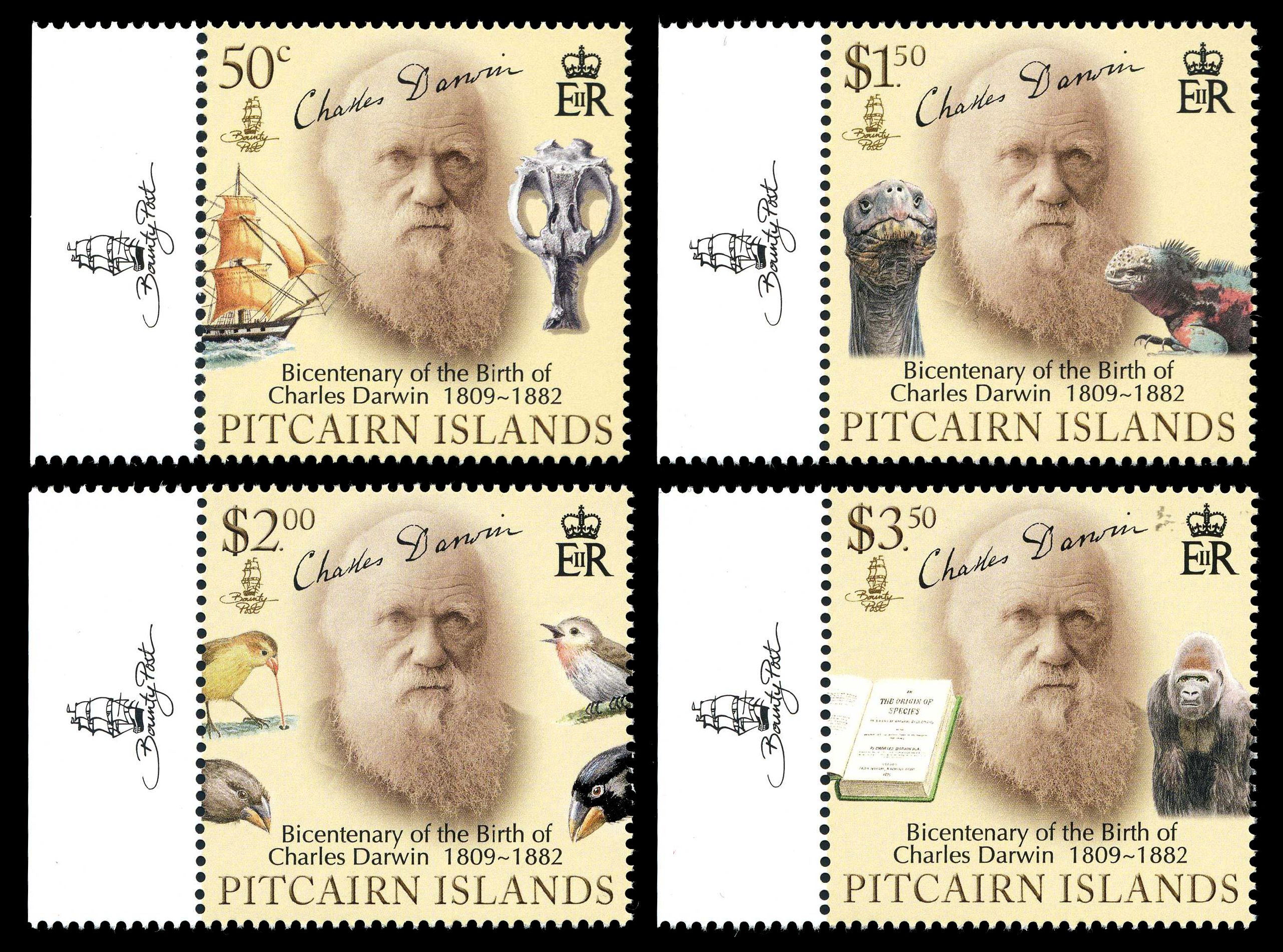
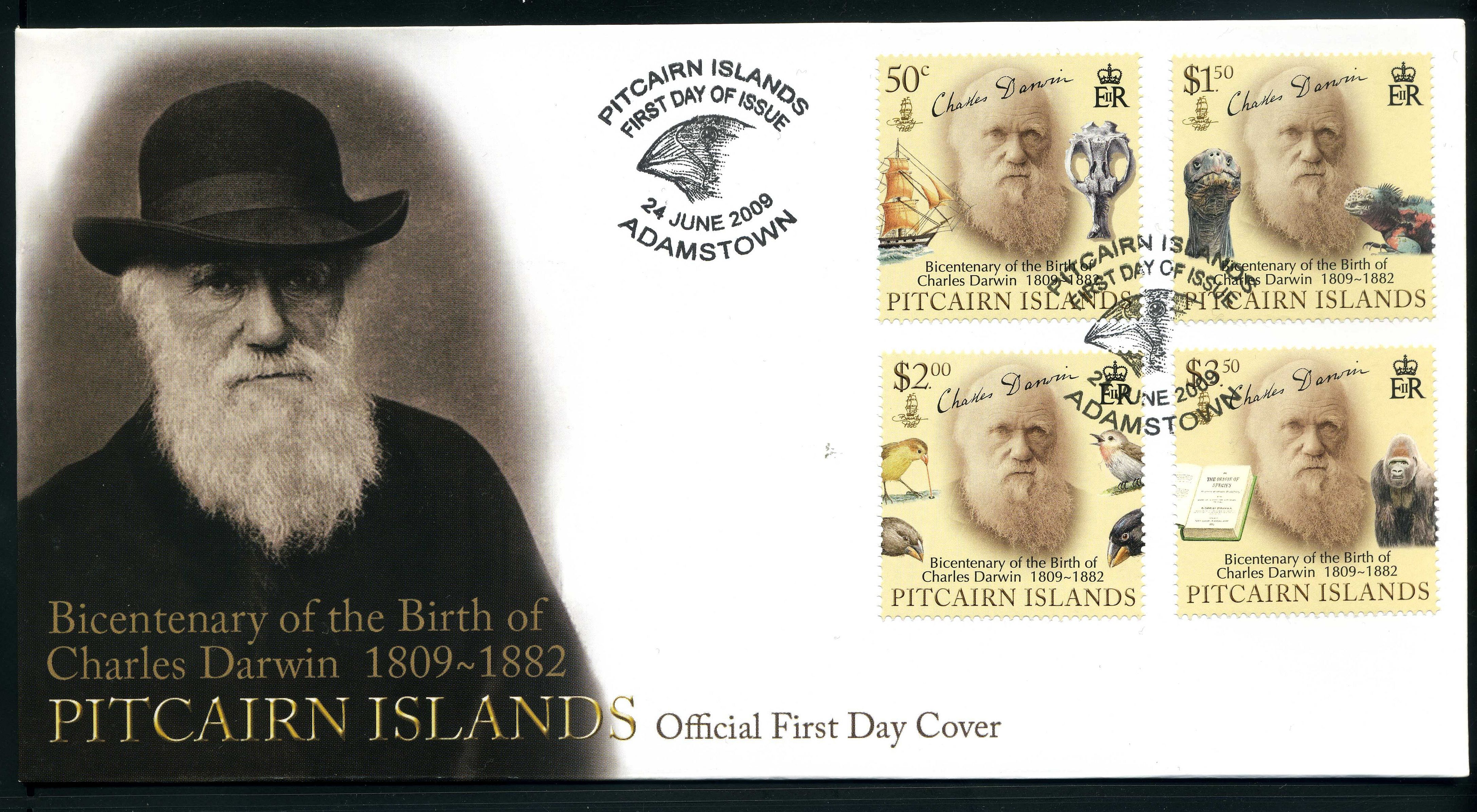
Pitcairn Islands, 24.06.2009 "200th anniversary of Charles Darwin" |
 |
|
 |
| FDC | FDC | FDC |
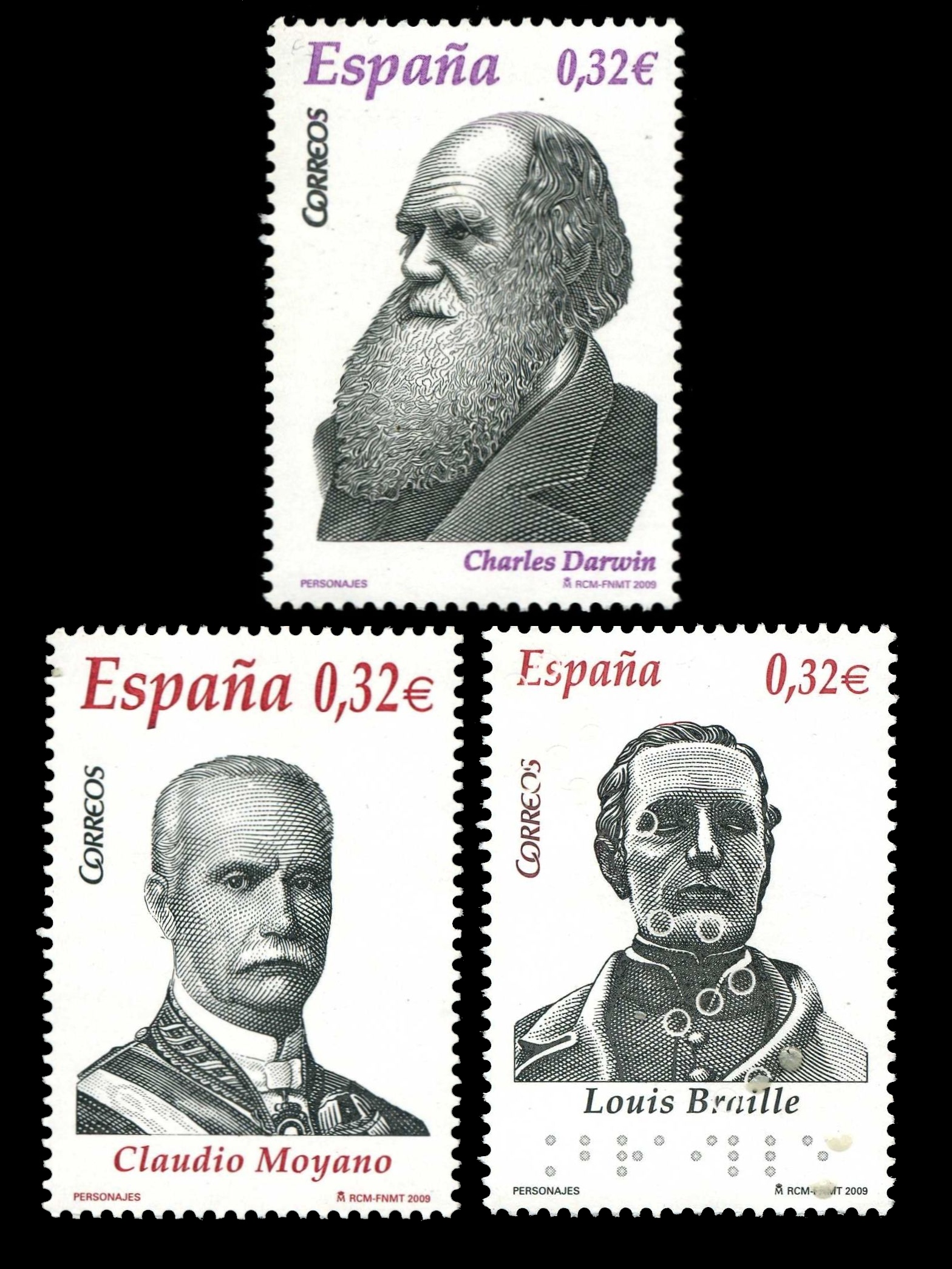
| Spain, 15.07.2009 "Popular Characters" |
Grenada, 21.07.2009 "Science - Famous scientists" |
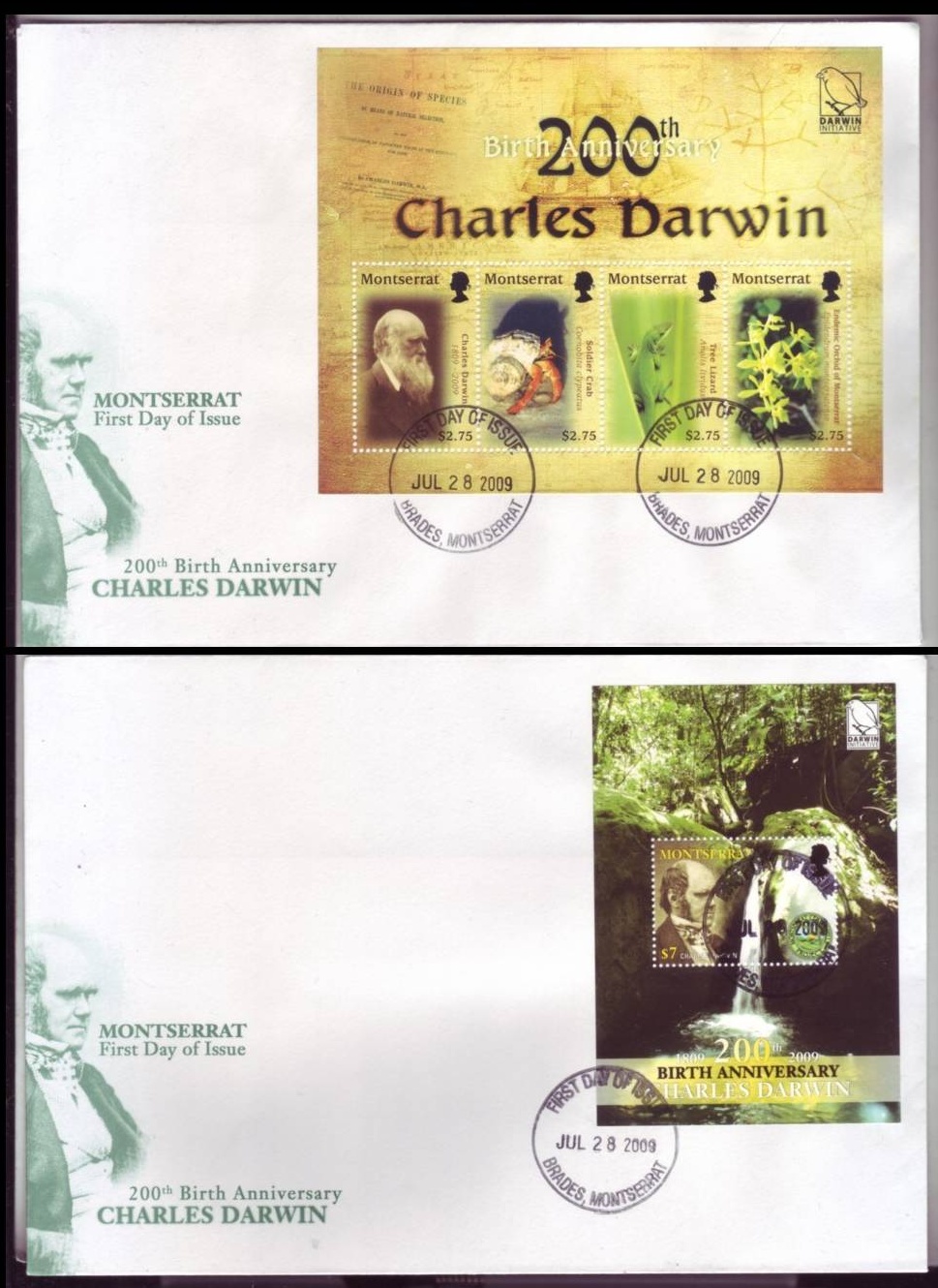
Montserrat, 28.07.2009 "200th anniversary of Charles Darwin" |
|
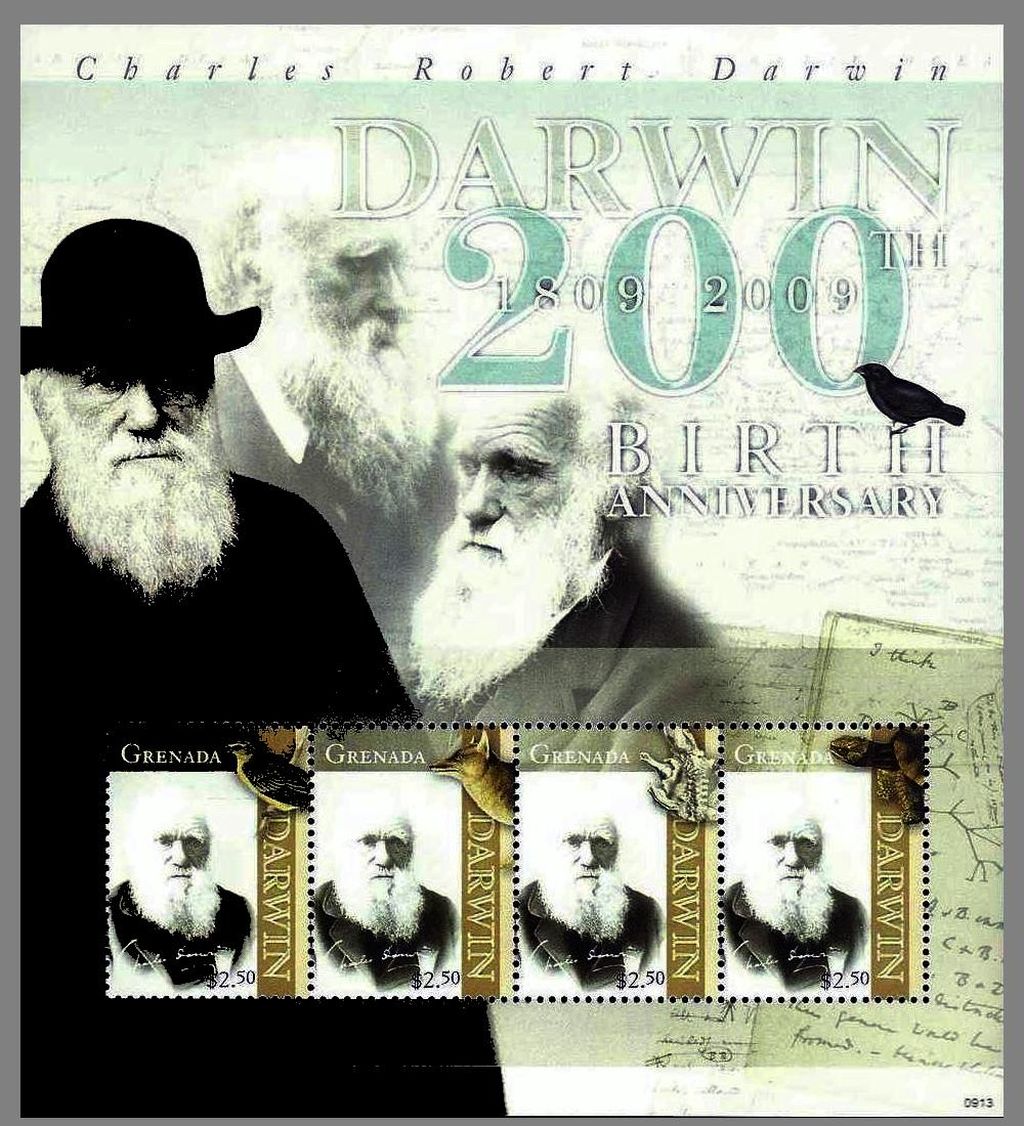
|
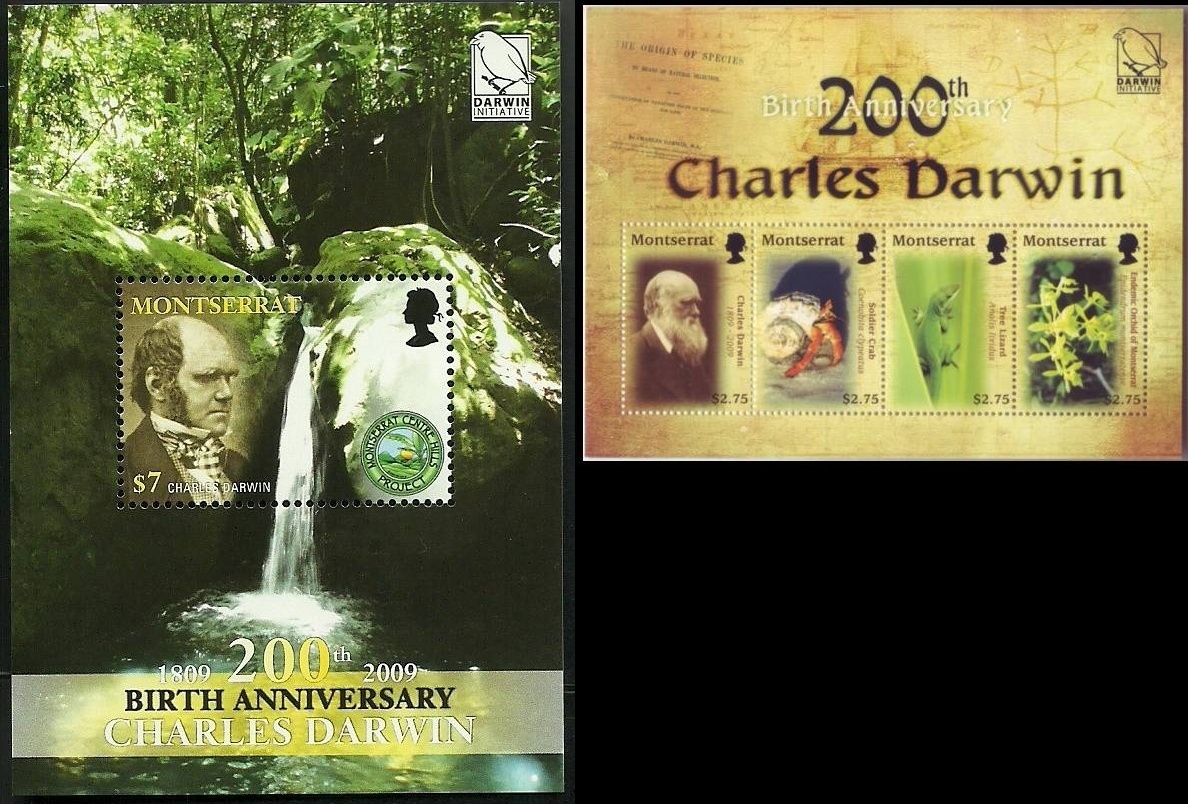 |
| FDC: [1] [2] | FDC | |
| Uruguay, 31.08.2009 "200th anniversary of Charles Darwin" |
Cape Verde, 31.08.2009 "200th anniversary of Charles Darwin" |
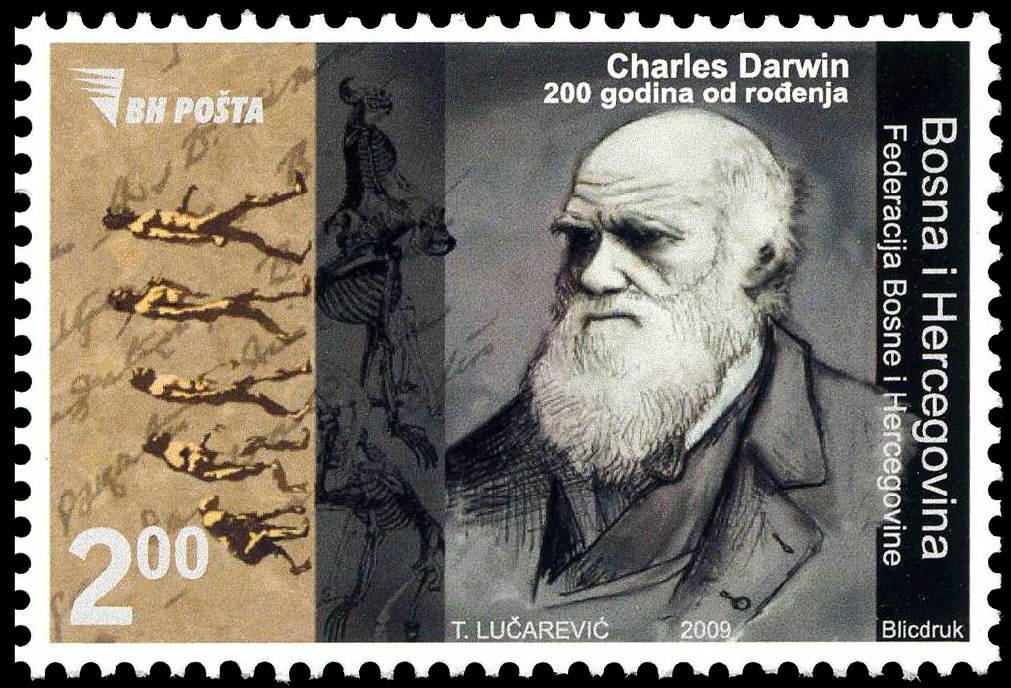
Bosnia and Herzegovina (BH Post), 10.09.2009 "200th anniversary of Charles Darwin" |
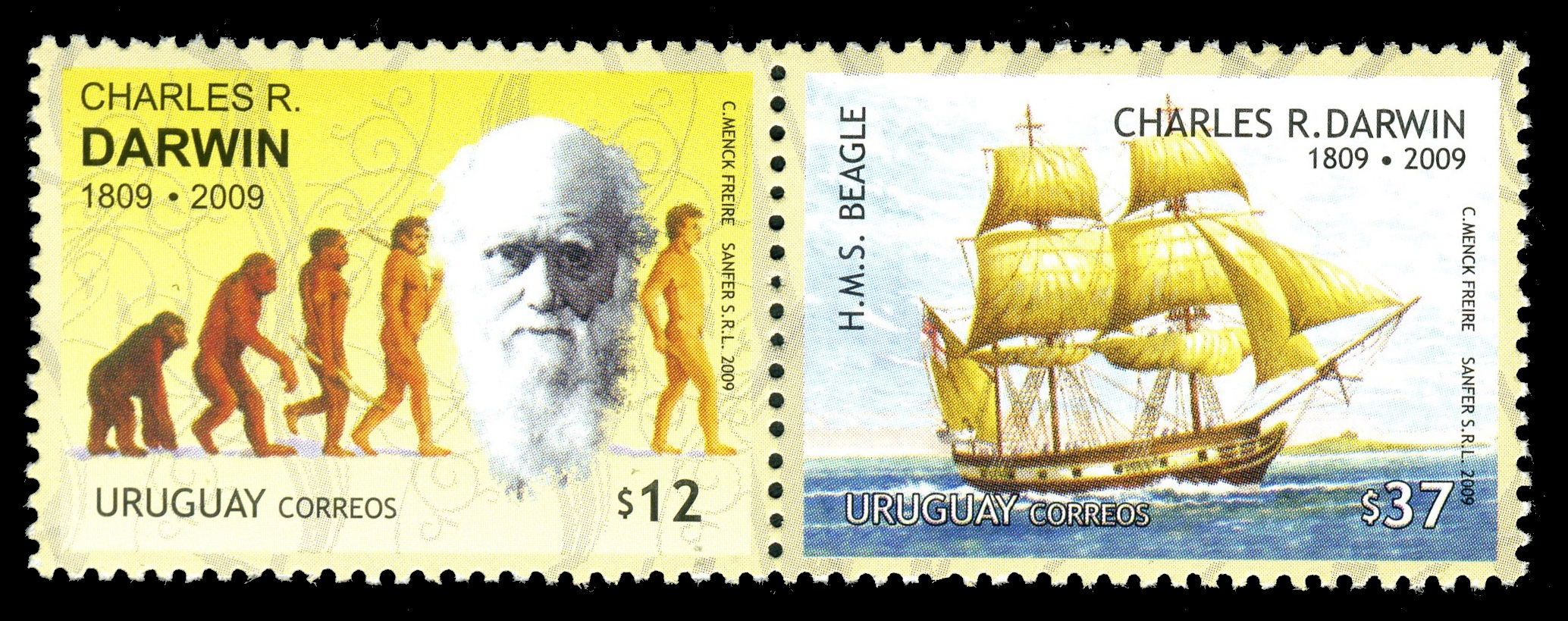
|
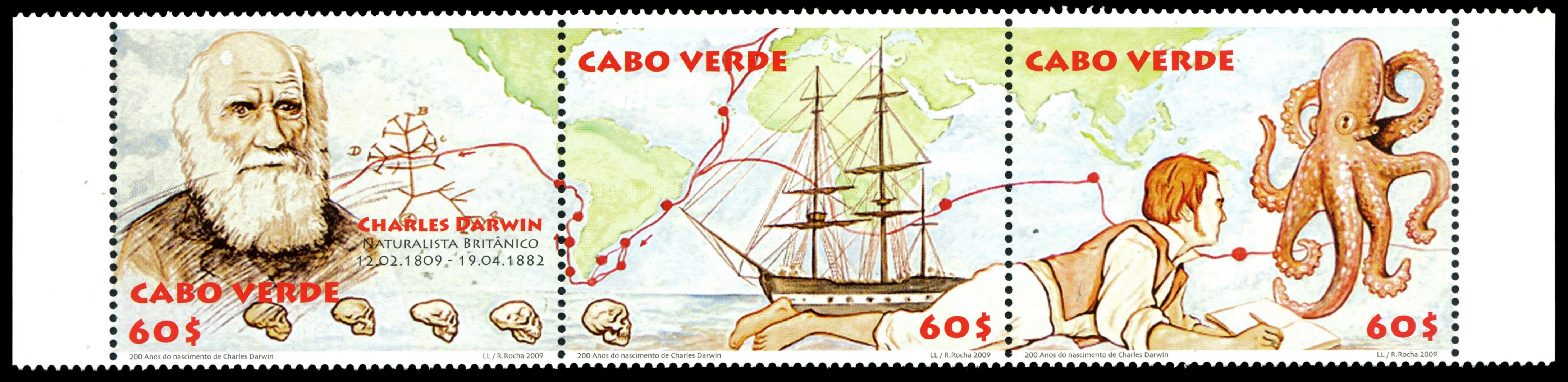 |
 |
| FDC | FDC | FDC |
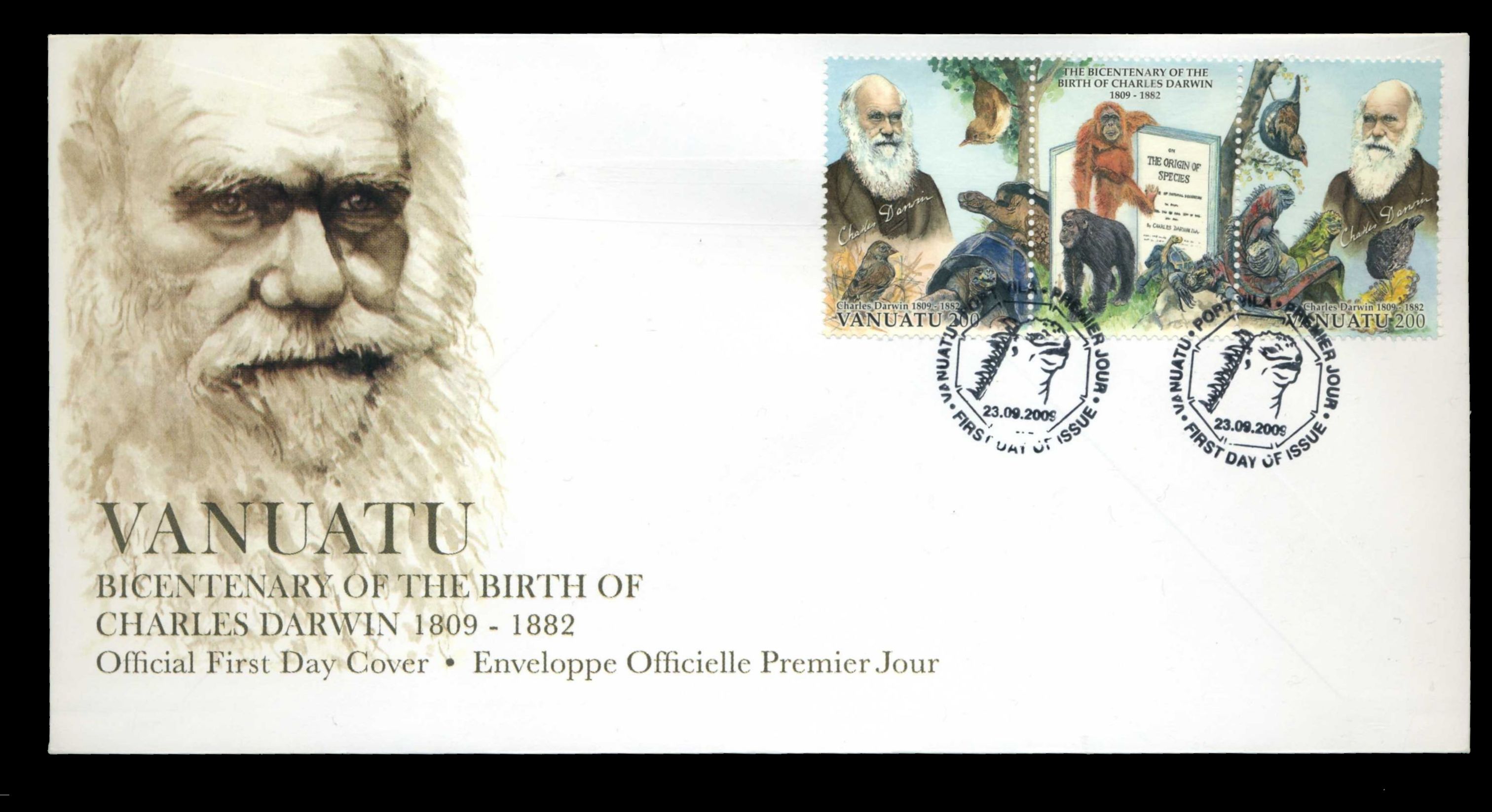
| Vanuatu, 21.09.2009 "Bicentenary of the birth of Charles Darwin" |
Ascension Islands, 09.11.2009 "200th anniversary of Charles Darwin" |
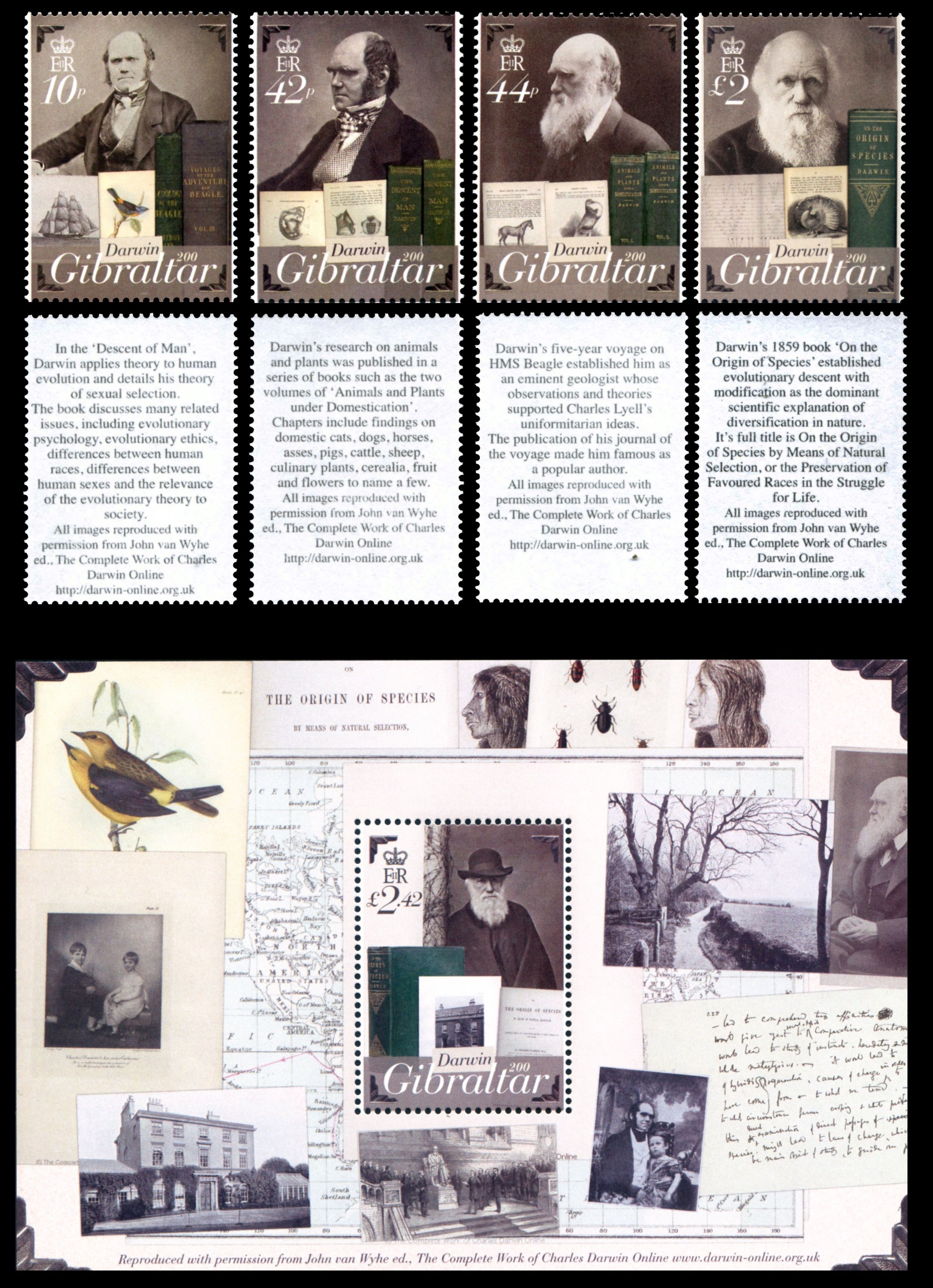
Gibraltar, 12.11.2009 "200th anniversary of Charles Darwin" |
|
|
 |
 |
| FDC | FDC | FDC: [1], [2] |
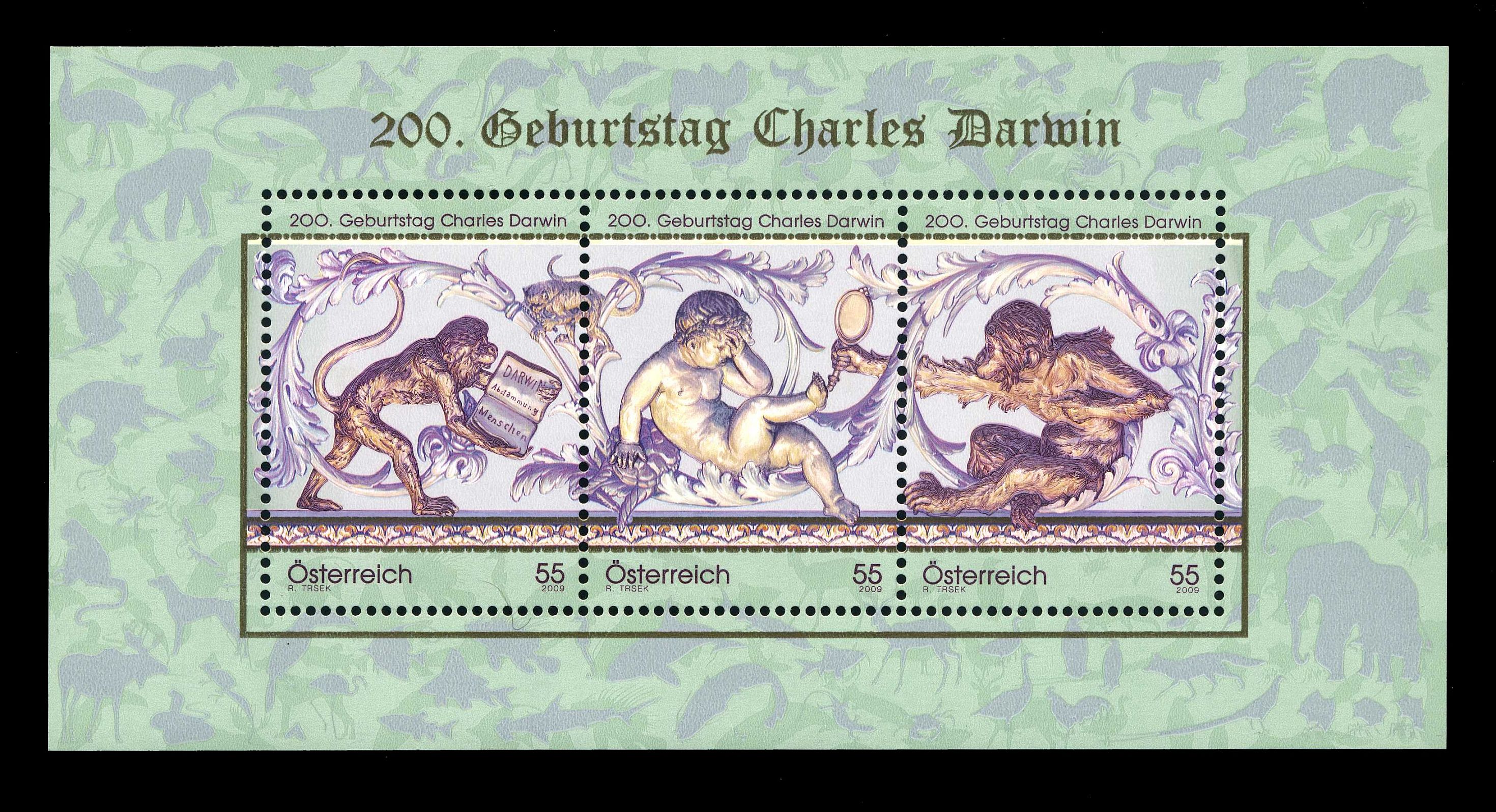
| Austria, 24.11.2009 "200th anniversary of Charles Darwin" |
Micronesia, 17.02.2010 "200th anniversary of Charles Darwin" |
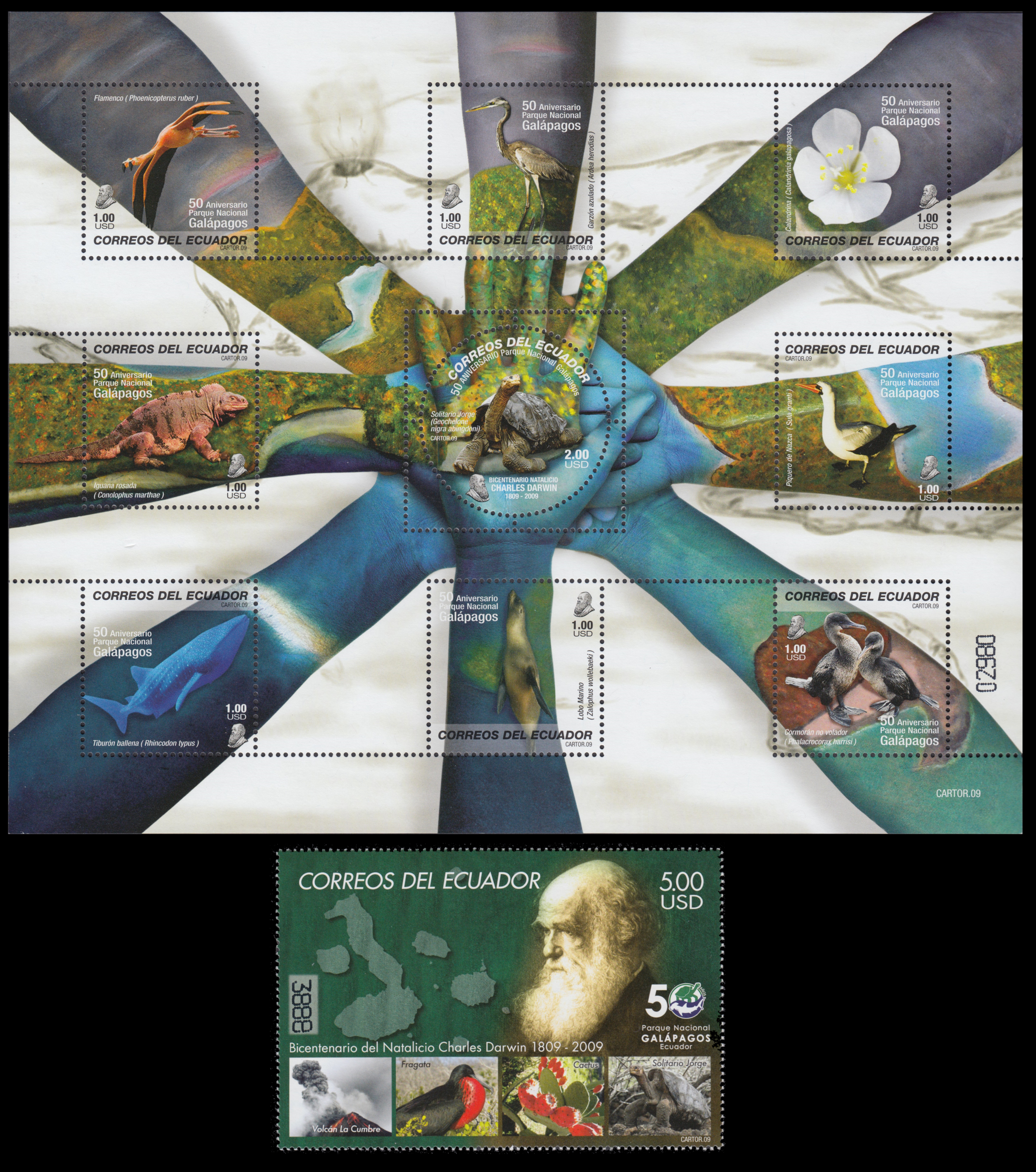
Ecuador, 30.11.2009 "200th anniversary of Charles Darwin" |
|
 |
|
| FDC: [1] [2] | FDC, On Cover: [1] [2] | |
| Paraguay, 20.04.2010 "200th anniversary of Charles Darwin" |
Palau, 28.05.2010 "200th anniversary of Charles Darwin" |
|
 |
|
|
| FDC |
![[1]](../../../images/fdc/uk_2009_darwin_fdc.jpg)
![[2]](../../../images/fdc/uk_2009_darwin_fdc_ms.jpg)
![[2]](../../../images/fdc/portugal_2009_darwin_fdc2.jpg)
![[3]](../../../images/fdc/portugal_2009_darwin_fdc_ms.jpg)
![[2]](../../../images/fdc/spain_2009_darwin_fdc2.jpg)
![[2]](../../../images/fdc/gibraltar_2009_darwin_ms_fdc.jpg)
![[2]](../../../images/fdc/austria_2009_darwin_fdc_personalized.jpg)

![[1]](../../../images/used/ecuador_2009_env_used.jpg)
![[2]](../../../images/used/ecuador_2009_env_used2.jpg)
Postmarks 2009
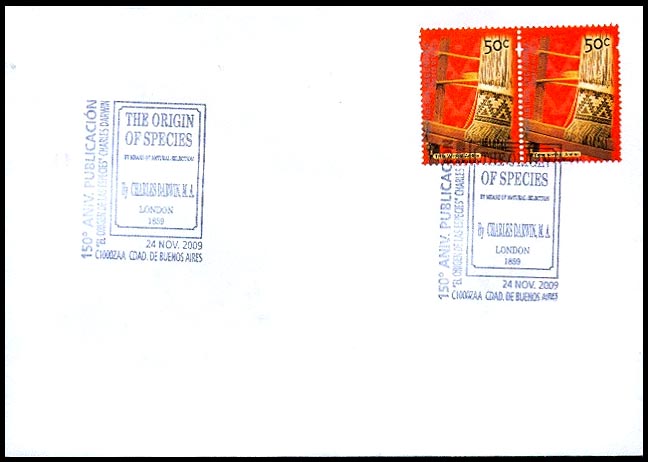
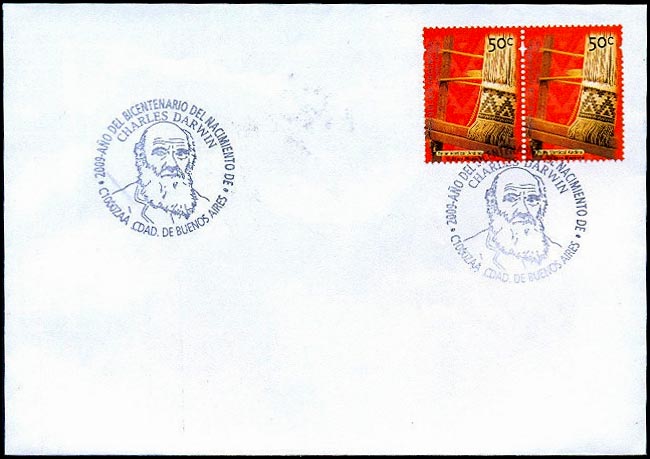
| Argentina,
24.11.2009 "150 years since publication of the Origin of Species" |
Argentina,
2009 "200th anniversary of Charles Darwin" |
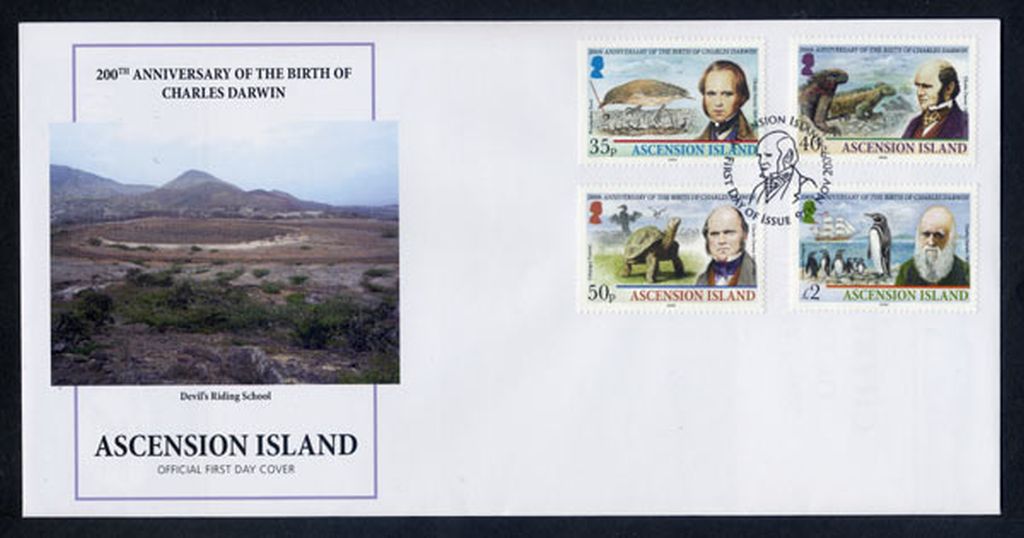
Ascension Islands,
09.11.2009 "200th anniversary of Charles Darwin" |
|
 |
 |
 |
|
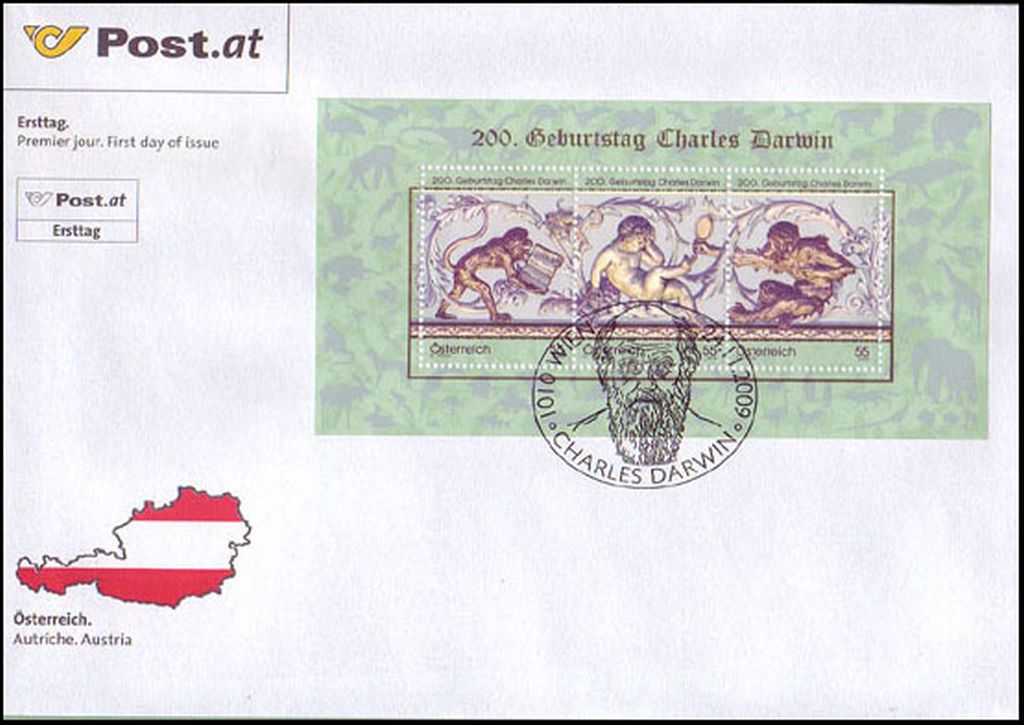
| Austria,
24.11.2009 "150 years since publication of the Origin of Species" |
Bosnia and Herzegovina,
01.07.2008 2008 "150 years since publication of the Origin of Species" |
Bosnia and Herzegovina,
10.092009 "200th anniversary of Charles Darwin" |
|
 |
 |
 |
|
| Cape Verde,
20.102009 "200th anniversary of Charles Darwin" |
Croatia,
20.042009 "The Science Festival - Charles Darwin anniversary" |
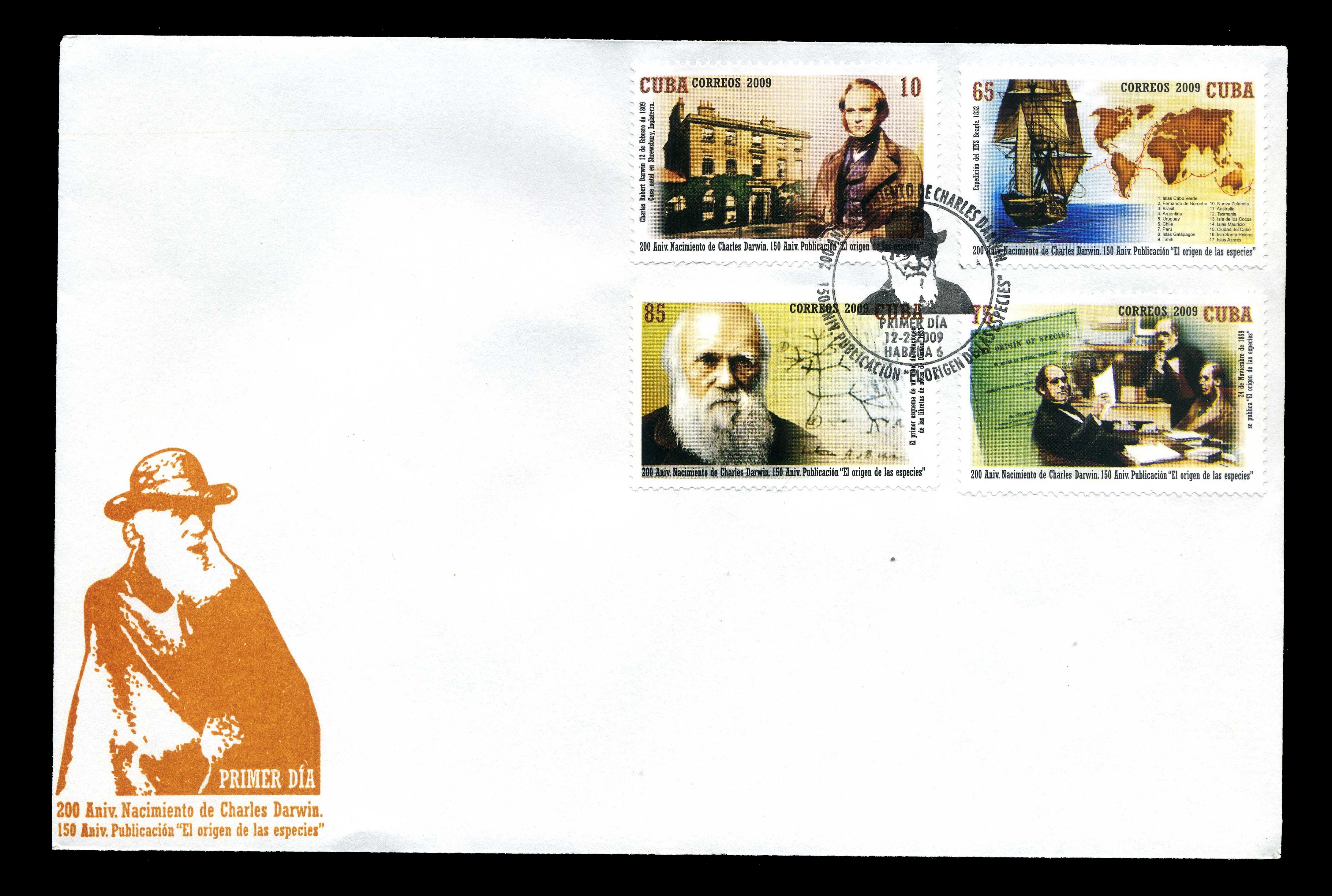
Cuba,
12.02.2009 "200th anniversary of Charles Darwin and 150th anniversary of Charles Darwin's theory of evolution" |
|
|
 |
|
|
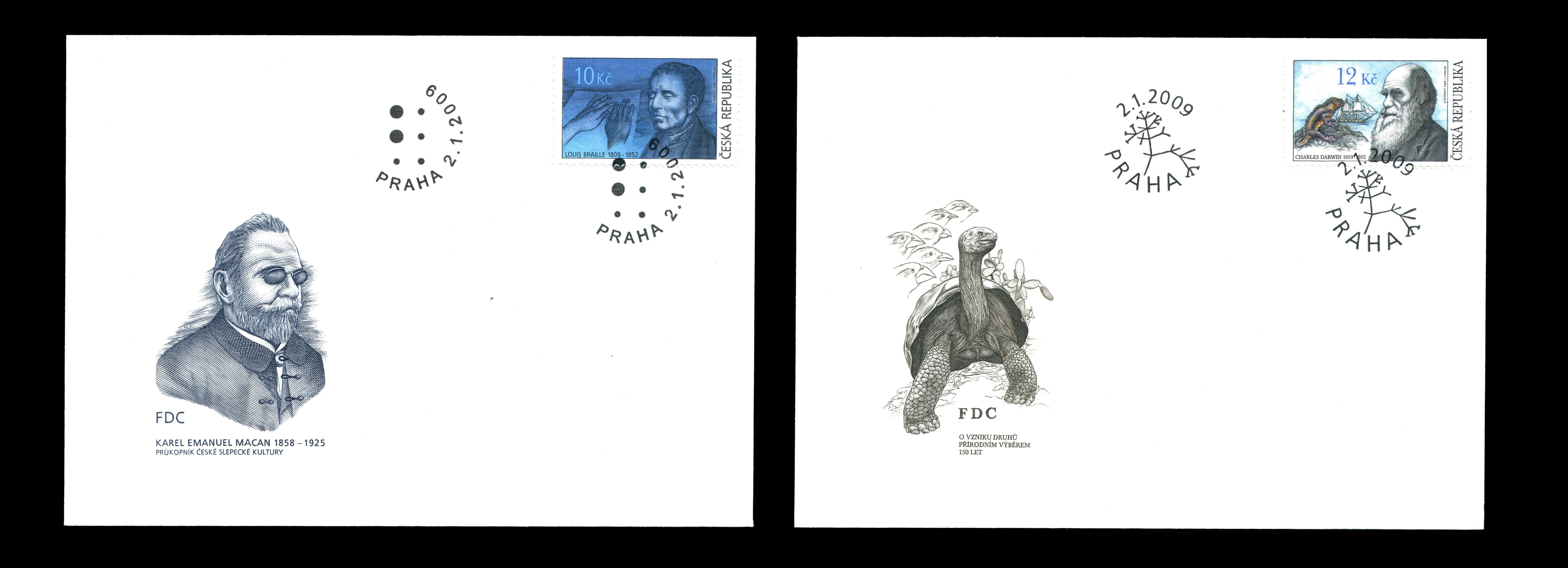
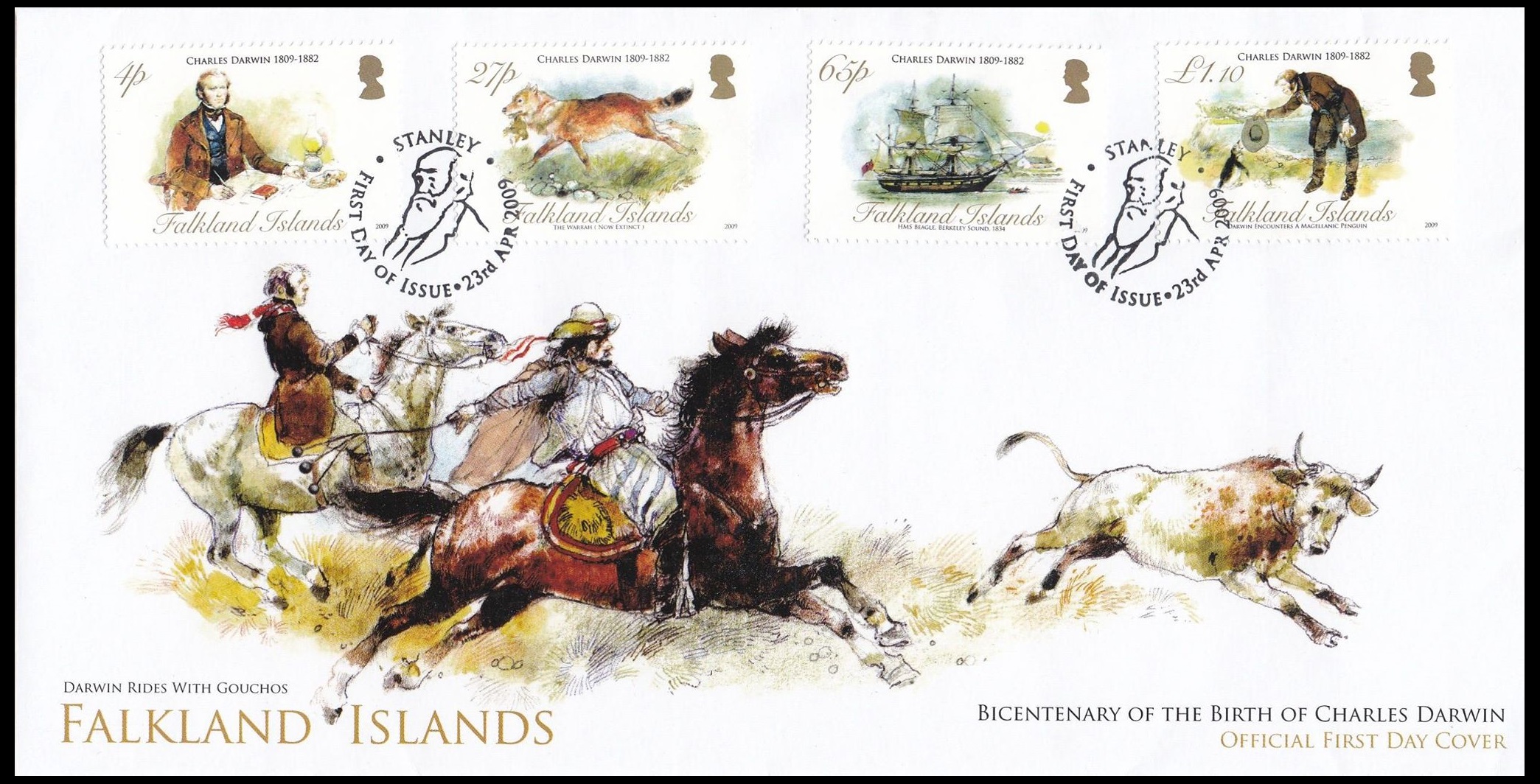
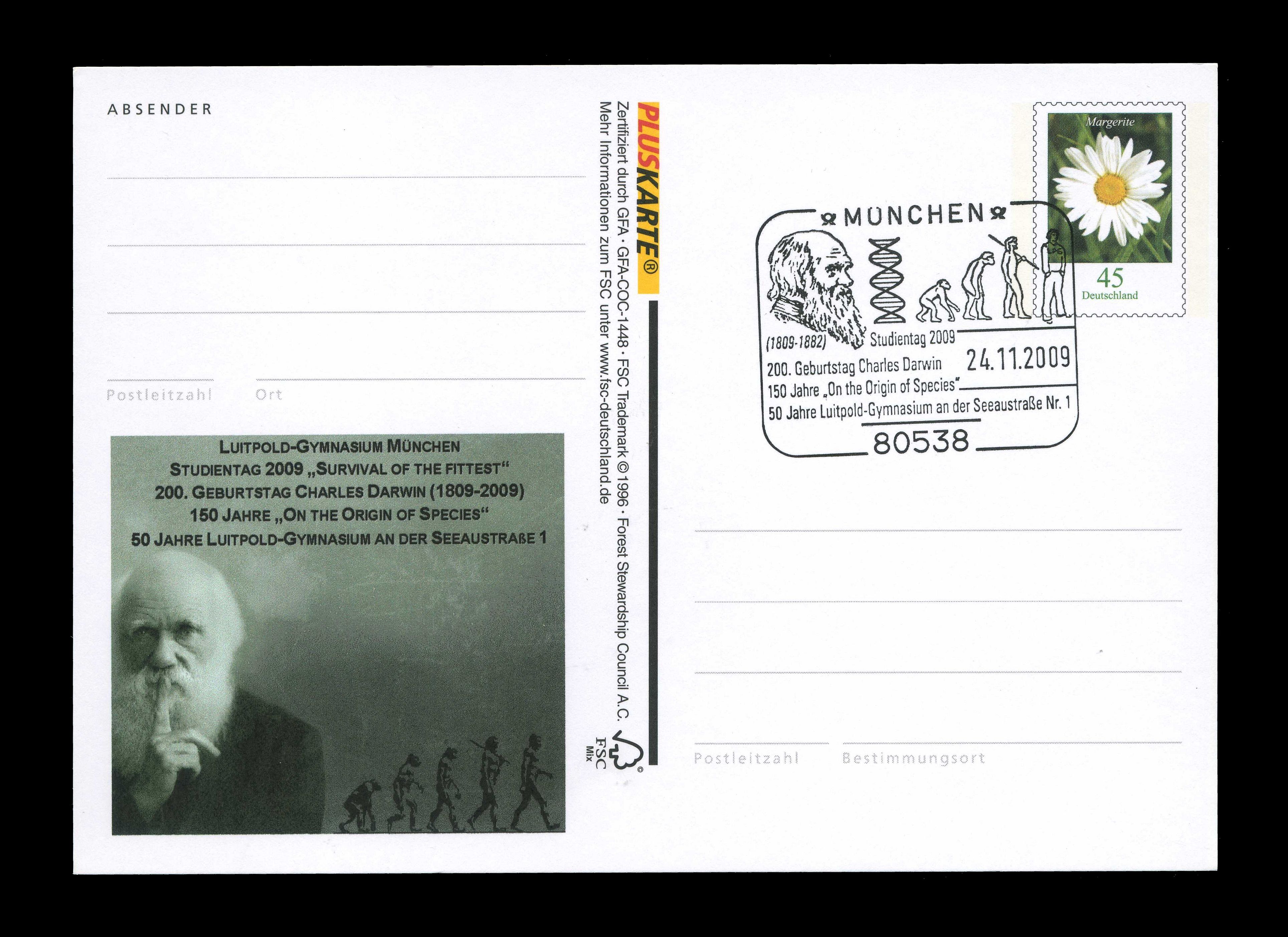
| Czech,
02.01.2009 "150th anniversary of Charles Darwin's theory of evolution" |
Falkland Islands,
23.04.2009 "Bicentenary of the birth of Charles Darwin" |
Germany,
02.01.2009 "150th anniversary of Charles Darwin's theory of evolution" |
|
 |
 |
 |
|
| Germany,
12.02.2009 "200th anniversary of Charles Darwin and 150th anniversary of Charles Darwin's theory of evolution" |
Germany,
24.11.2009 "150th anniversary of Charles Darwin's theory of evolution" |
||
 |
 |
 |
|
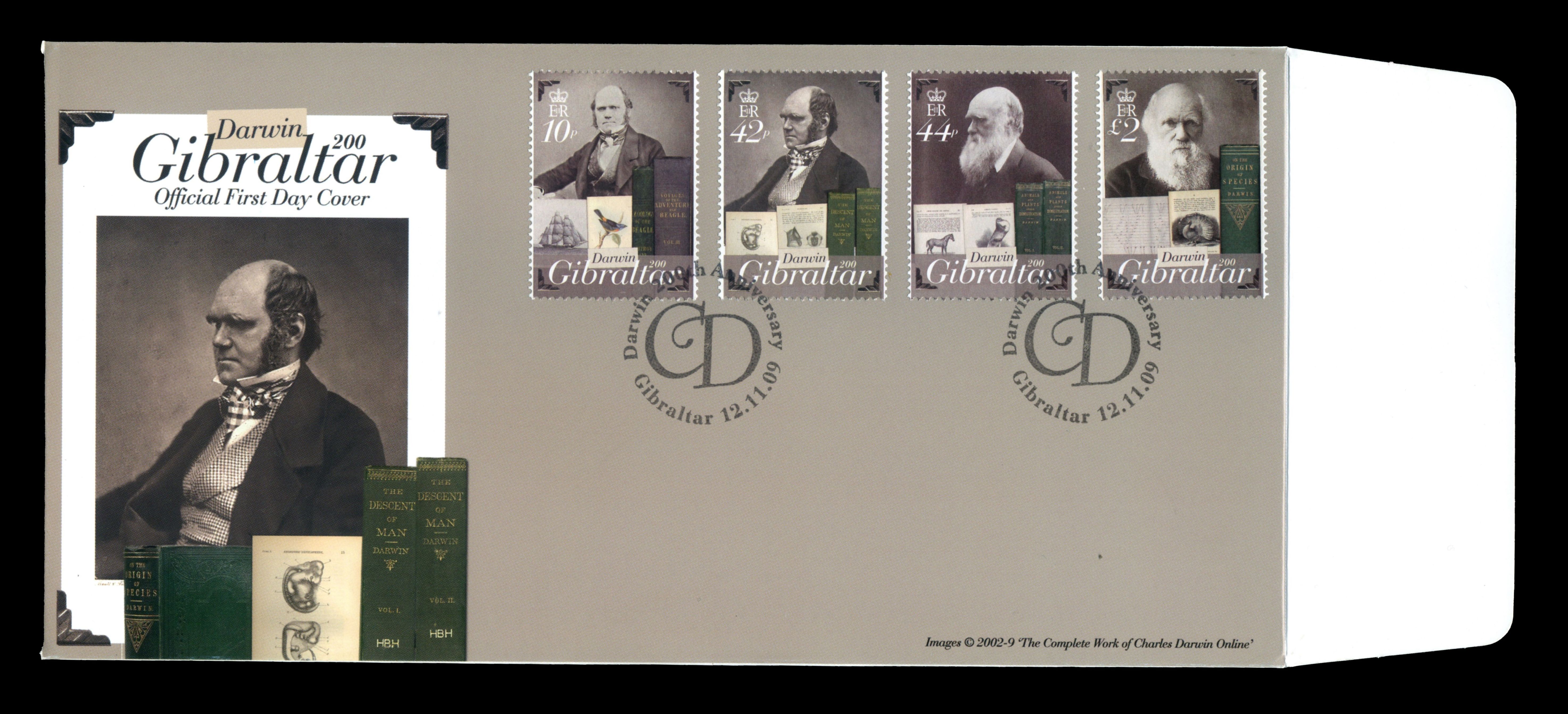
| Gibraltar,
12.11.2009 "Bicentenary of the birth of Charles Darwin" |
Ireland,
20.11.2009 "HMS Beagle" |
||
 |
|
|
|
| Italy,
12.02.2009 "Bicentenary of the birth of Charles Darwin" |
Italy,
12.02.2009 "Bicentenary of the birth of Charles Darwin" |
Italy,
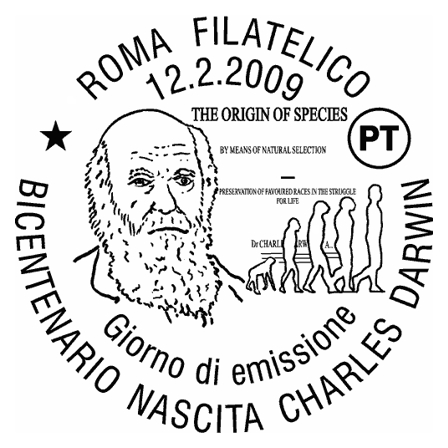
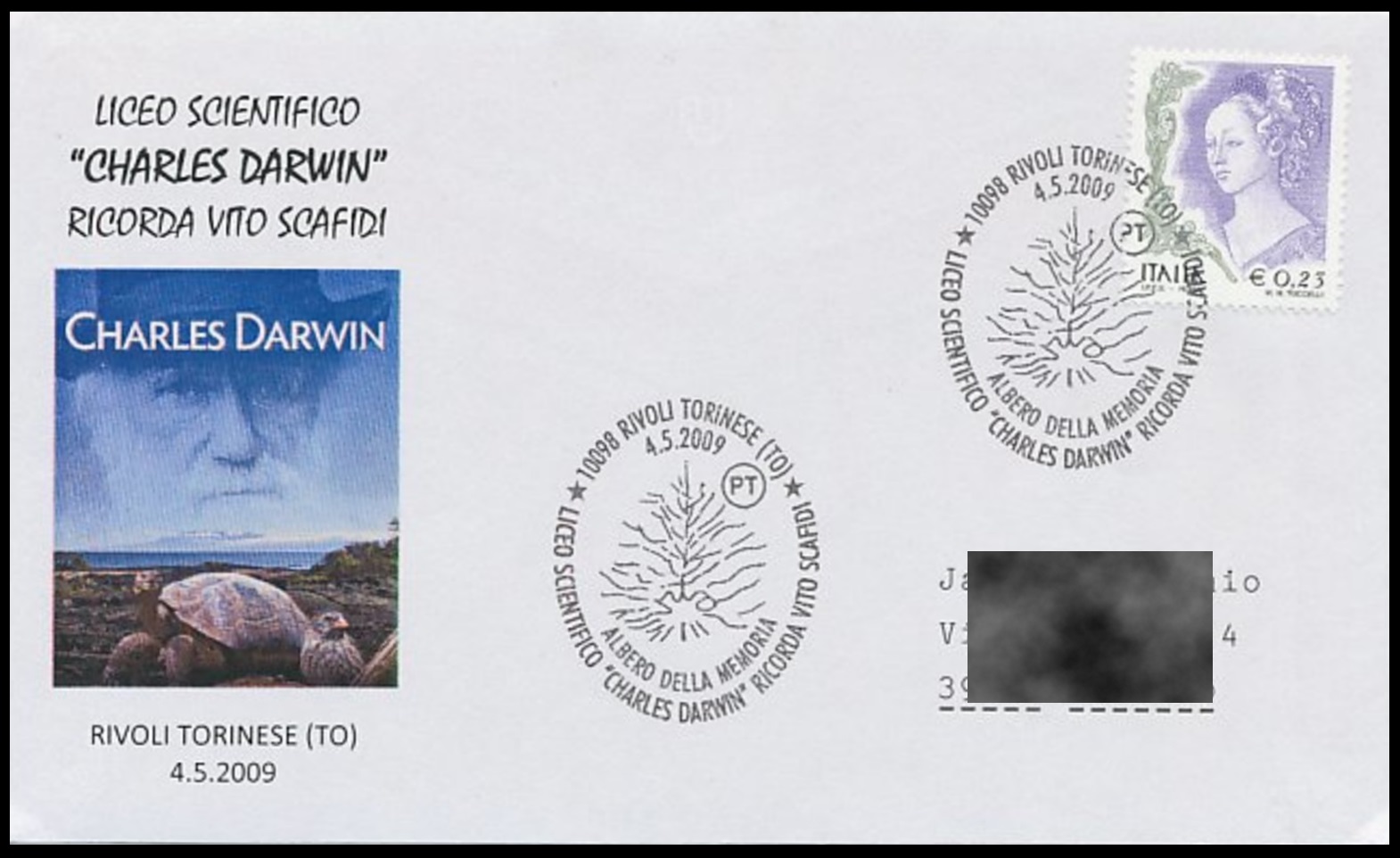
04.05.2009 "Bicentenary of the birth of Charles Darwin" |
|
 |
 |
 |
|
| Italy,
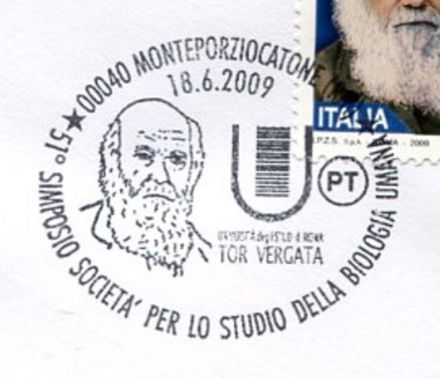
18.06.2009 "Bicentenary of the birth of Charles Darwin" |
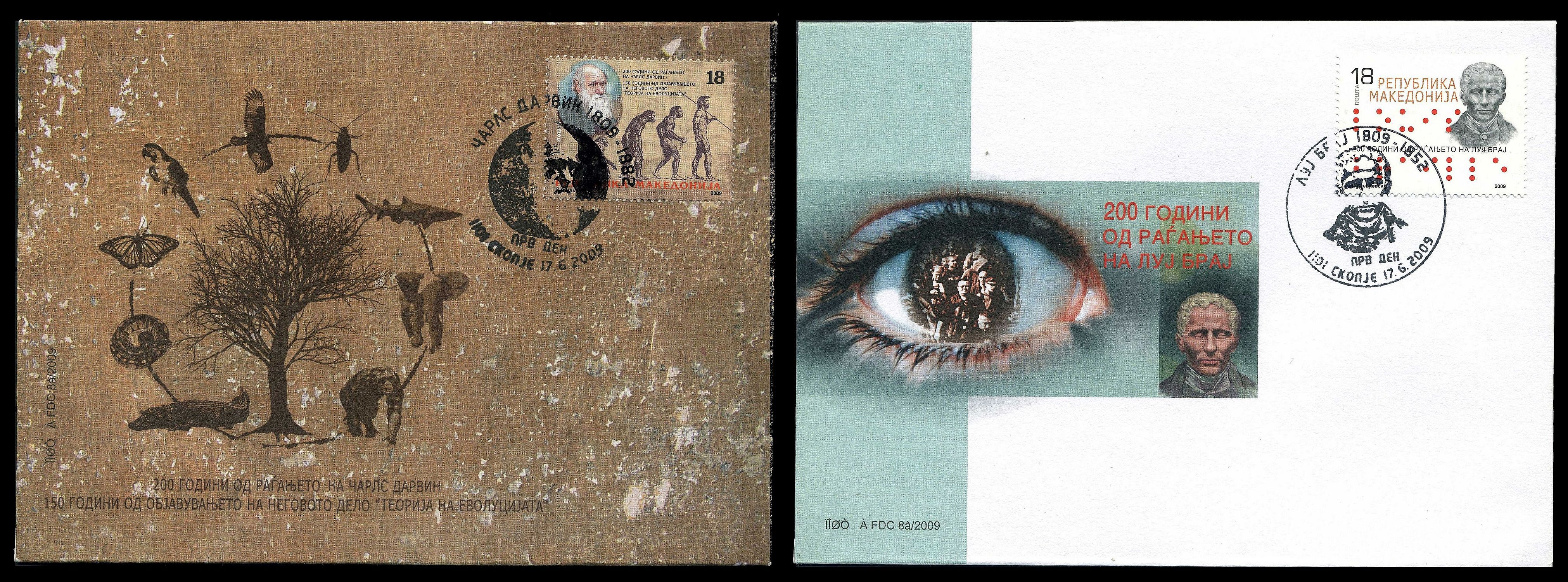
Macedonia,
17.06.2009 "200th anniversary of Charles Darwin and 150th anniversary of Charles Darwin's theory of evolution" | Pitcairn Islands,
24.06.2009 "Bicentenary of the birth of Charles Darwin" |
|
 |
|
 |
|
| Portugal,
12.02.2009 "Bicentenary of the birth of Charles Darwin" |
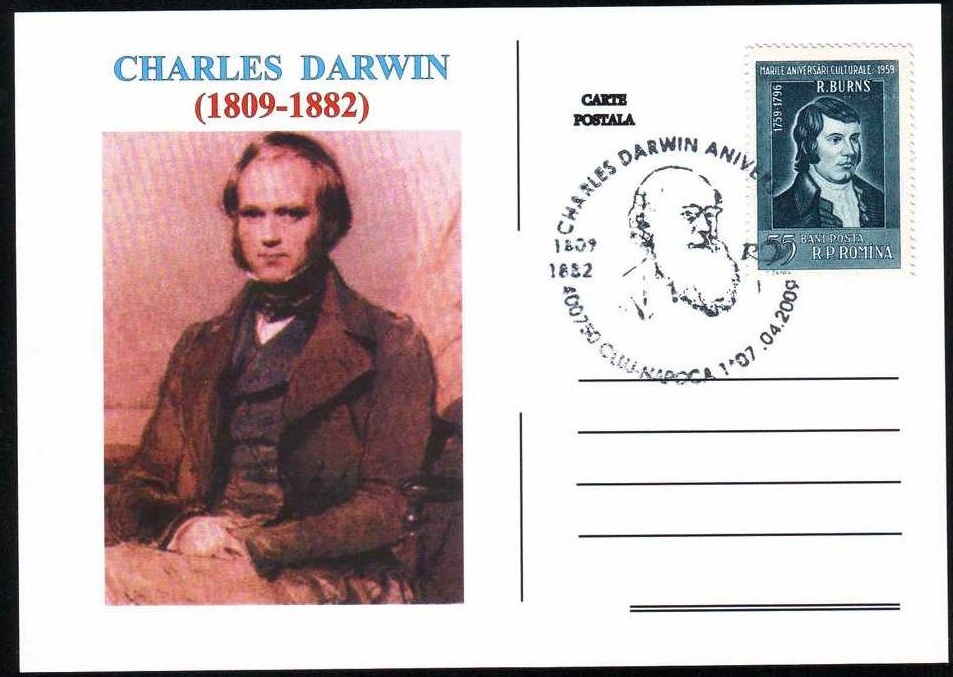
Romania,
07.04.2009 "Bicentenary of the birth of Charles Darwin" |
Spain,
15.07.2009 "200th anniversary of Charles Darwin" |
|
 |
 |

|
|
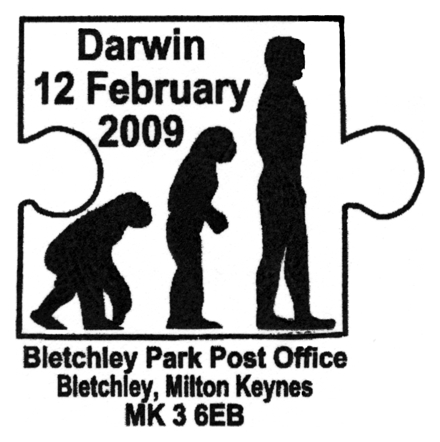
| Great Britain,
12.02.2009 "Bicentenary of the birth of Charles Darwin", Bletchley |
Great Britain,
12.02.2009 "Bicentenary of the birth of Charles Darwin", Piccadilly, London |
Great Britain,
12.02.2009 "On the Origin of Species", Down, Orpington, Kent |
|
 |
 |
 |
|
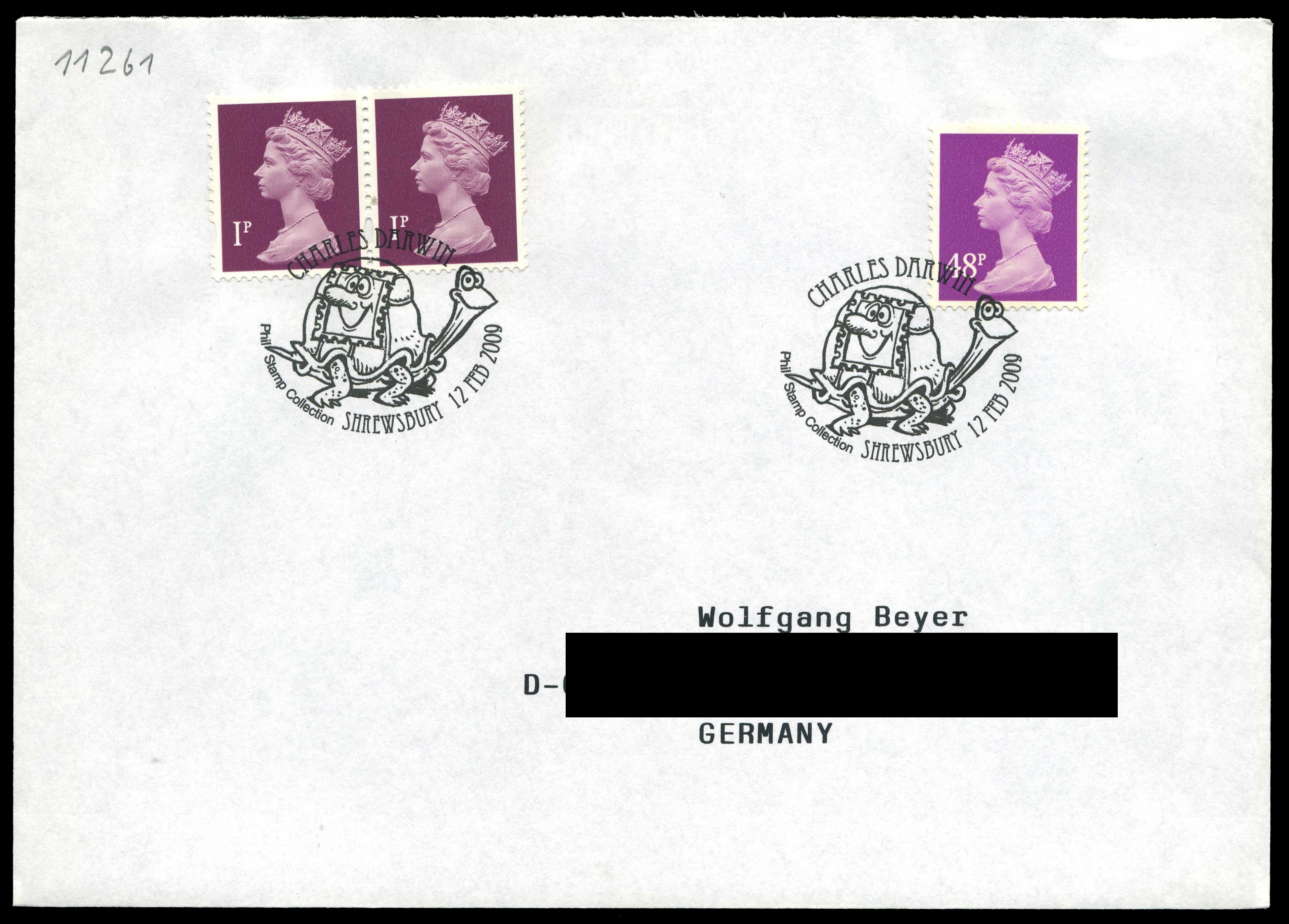
| Great Britain,
12.02.2009 "Bicentenary of the birth of Charles Darwin", Shrewsbury |
Great Britain,
12.02.2009 "Bicentenary of the birth of Charles Darwin", London |
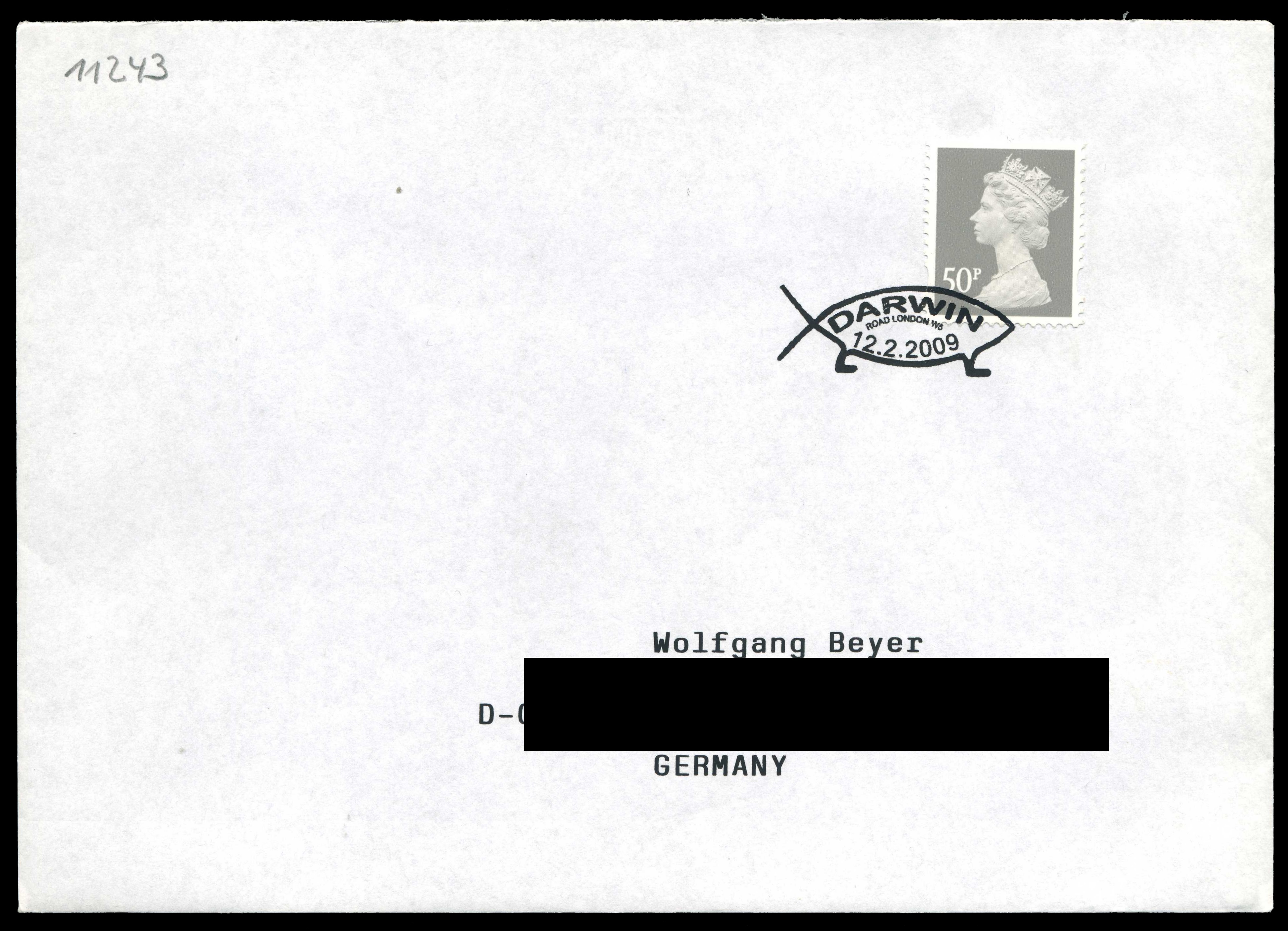
Great Britain,
12.02.2009 "Charles Darwin's evolution symbol", London |
|
 |
 |
 |
|
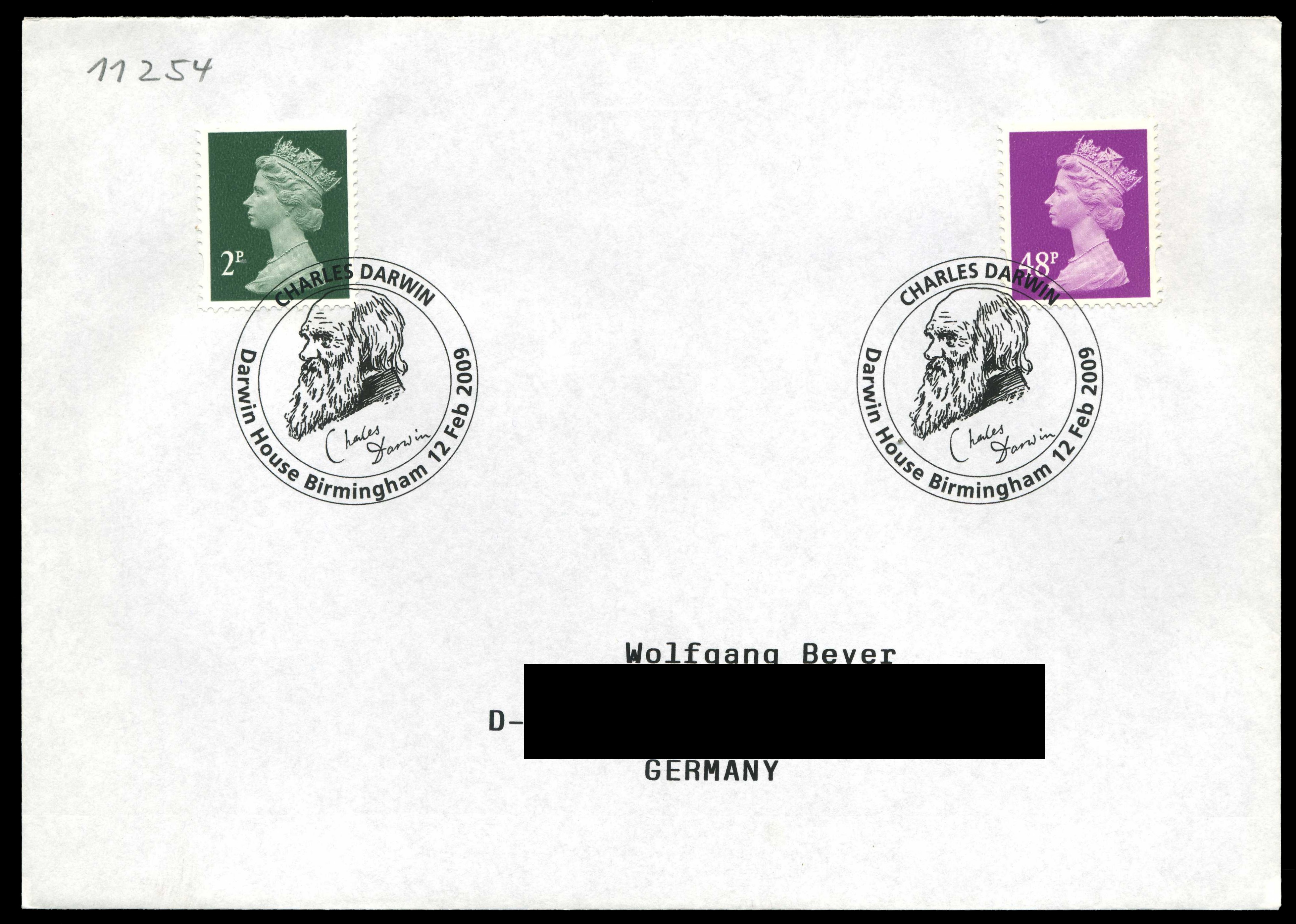
| Great Britain,
12.02.2009 "Bicentenary of the birth of Charles Darwin", Birmingham |
Great Britain,
12.02.2009 "Bicentenary of the birth of Charles Darwin", Shrewsbury |
Great Britain,
24.06.2009 "Bicentenary of the birth of Charles Darwin", Shrewsbury |
|
 |
 |
 |
|
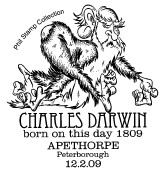
| Great Britain,
12.02.2009 "Bicentenary of the birth of Charles Darwin", Peterborough |
Great Britain,
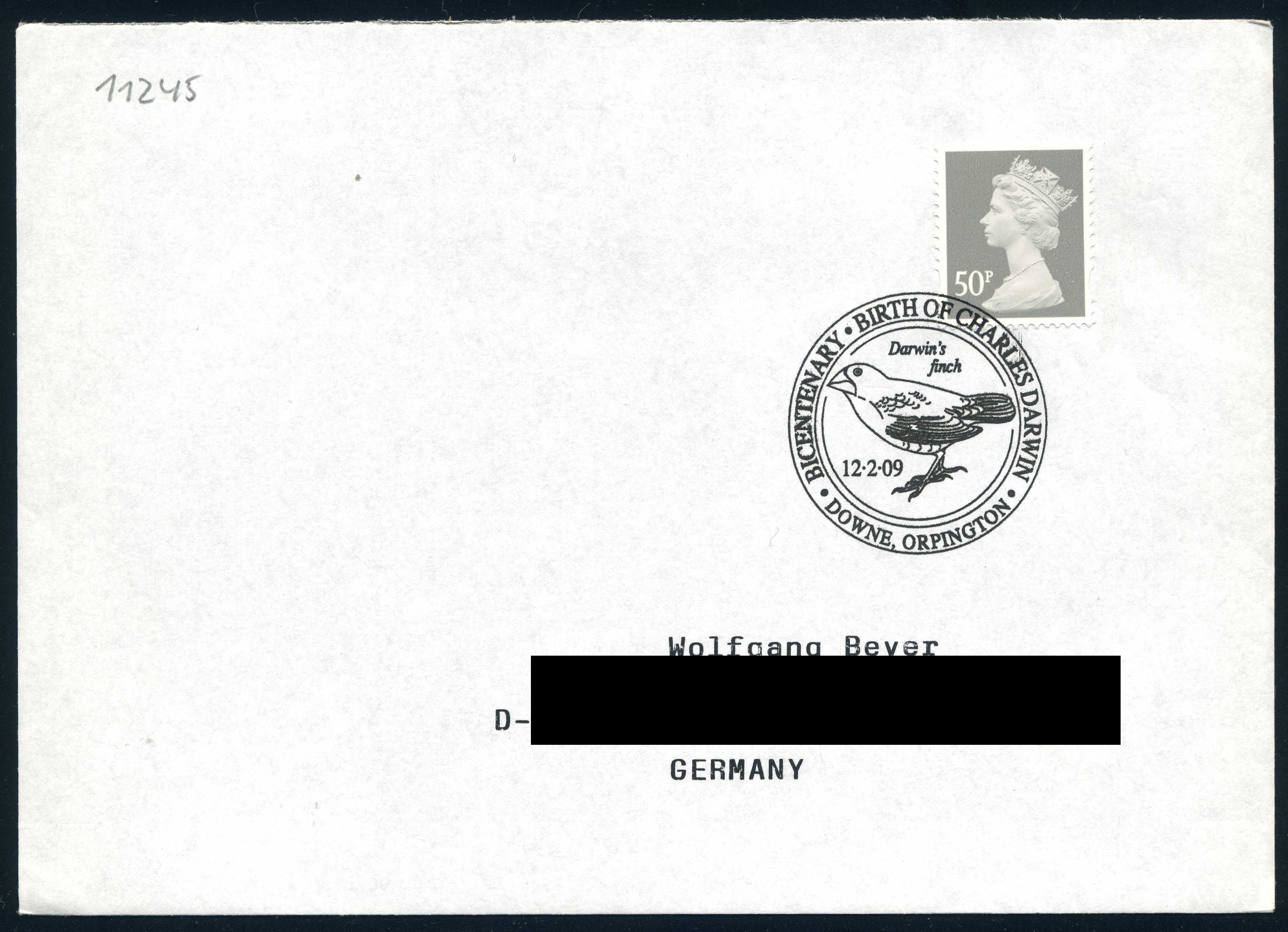
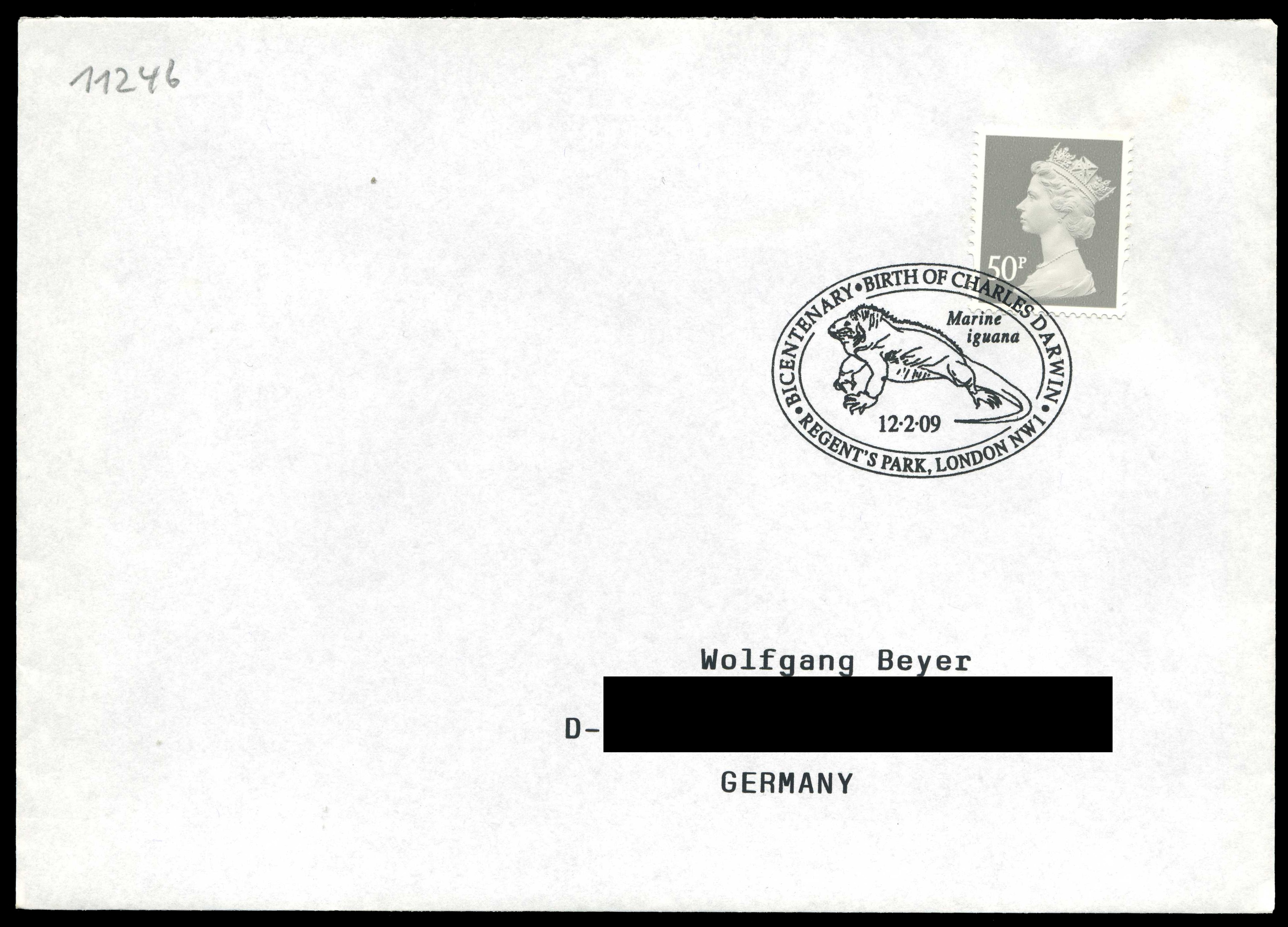
12.02.2009 "200th anniversary of Charles Darwin", Down, Orpington |
Great Britain,
12.02.2009 "Bicentenary of the birth of Charles Darwin", London |
|
 |
 |
 |
|
| Great Britain,
12.02.2009 "Charles Darwin's theory of Evolutions", Cambridge |
Great Britain,
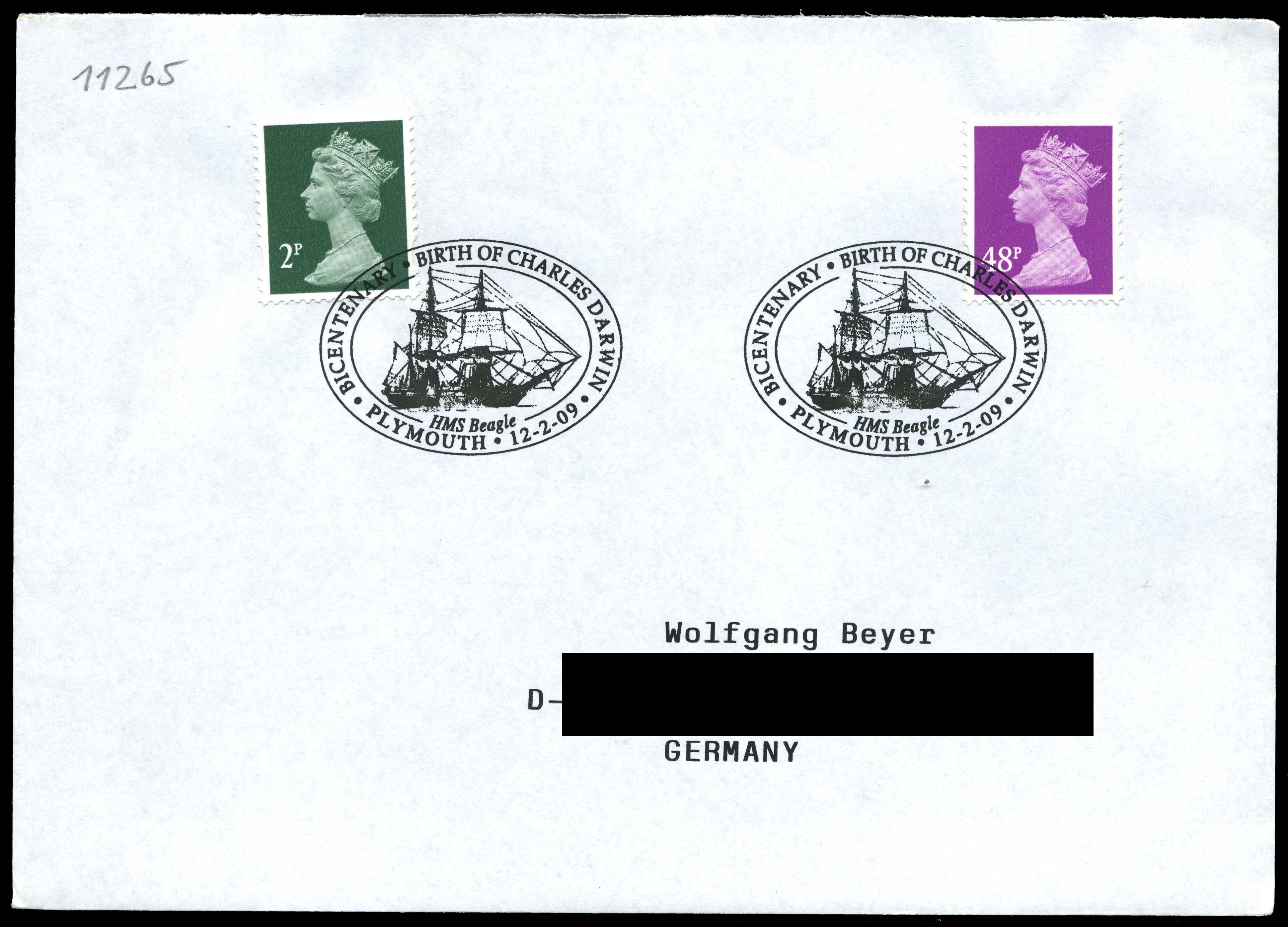
12.02.2009 "Bicentenary of the birth of Charles Darwin", Plymouth |
Great Britain,
12.02.2009 "Bicentenary of the birth of Charles Darwin", Lawrenny Pembrokeshire |
|
 |
 |
 |
|
| Uruguay,
31.08.2009 "Bicentenary of the birth of Charles Darwin" |
Vietnam,
12.02.2009 "Bicentenary of the birth of Charles Darwin" |
Paraguay,
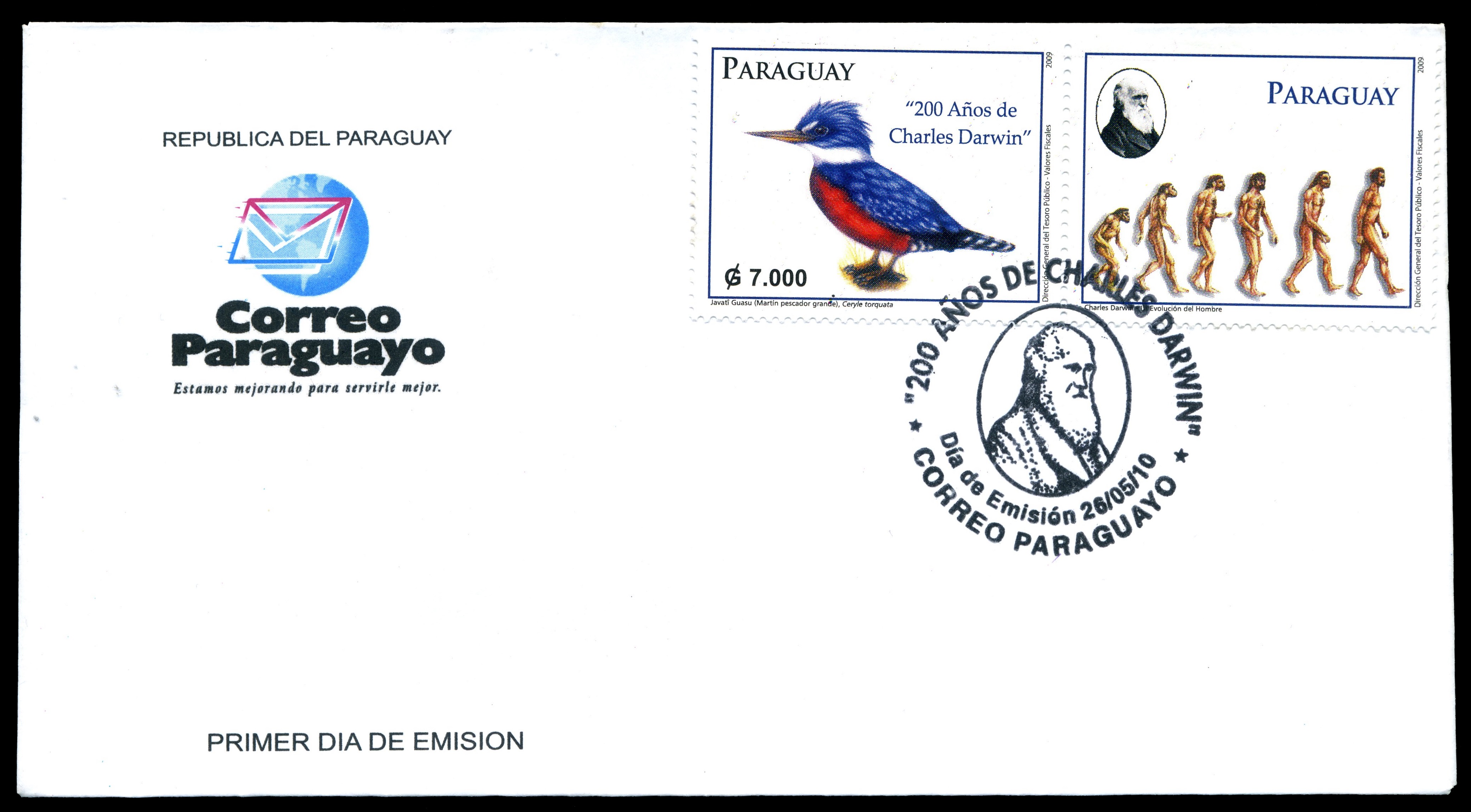
26.05.2010 "Bicentenary of the birth of Charles Darwin" |
|
 |
 |
|
|
Postal stationeries 2009
| Germany,
2009 "Charles Darwin" |
||
 |
||
| Postage stamps of Charles Darwin issued on other occasions | ||
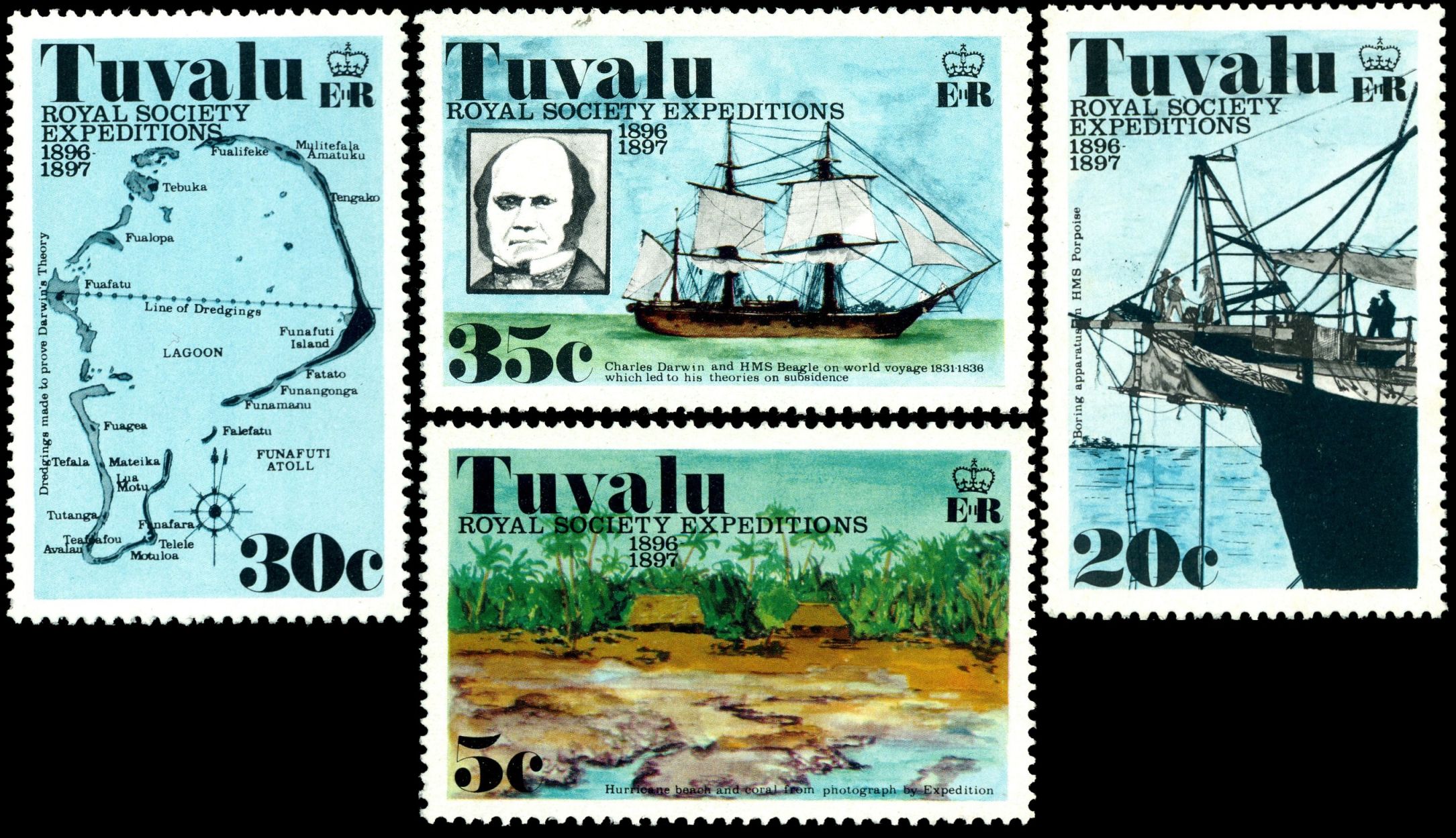
| Tuvalu, 02.11.1977 "Royal Society Expeditions" |
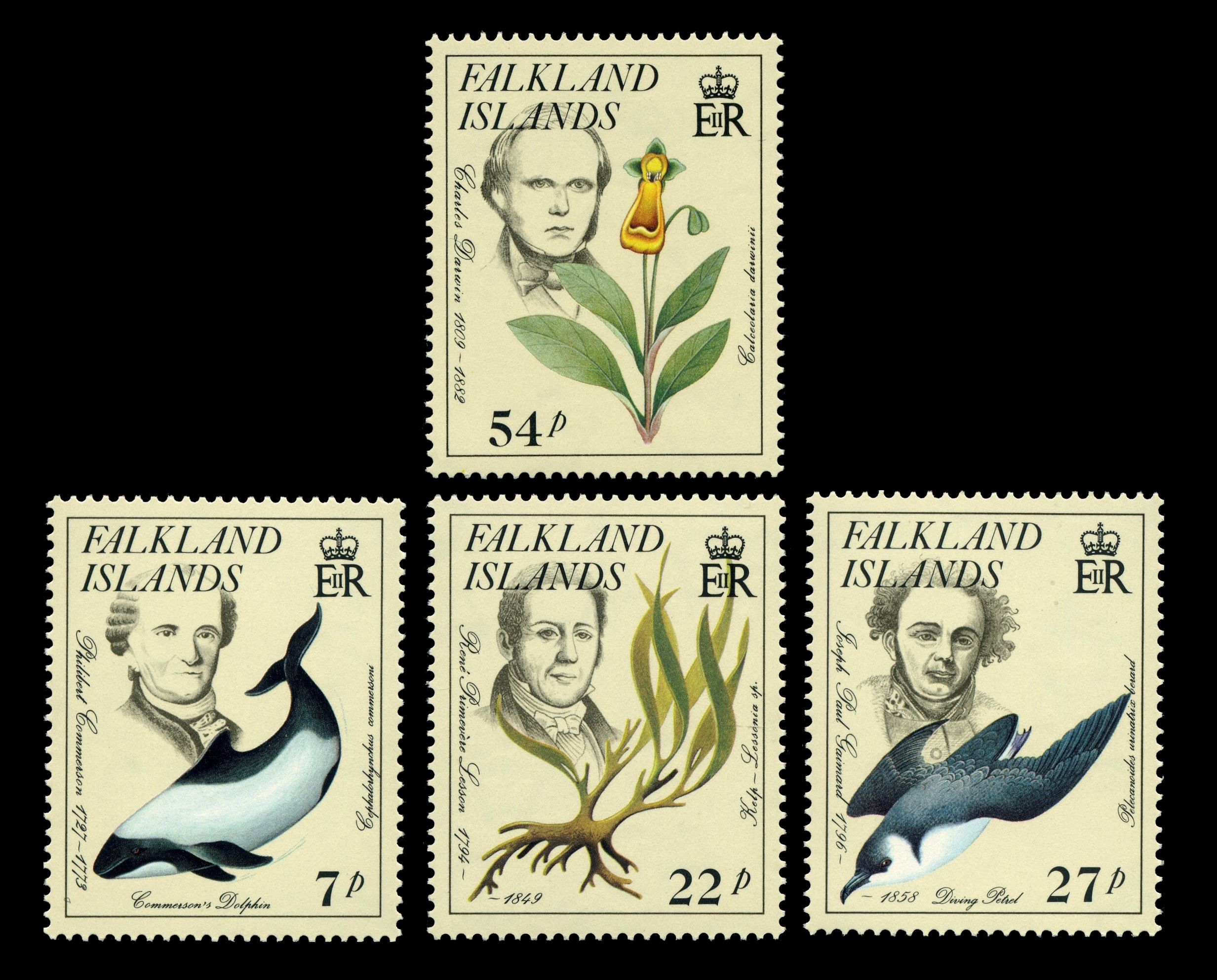
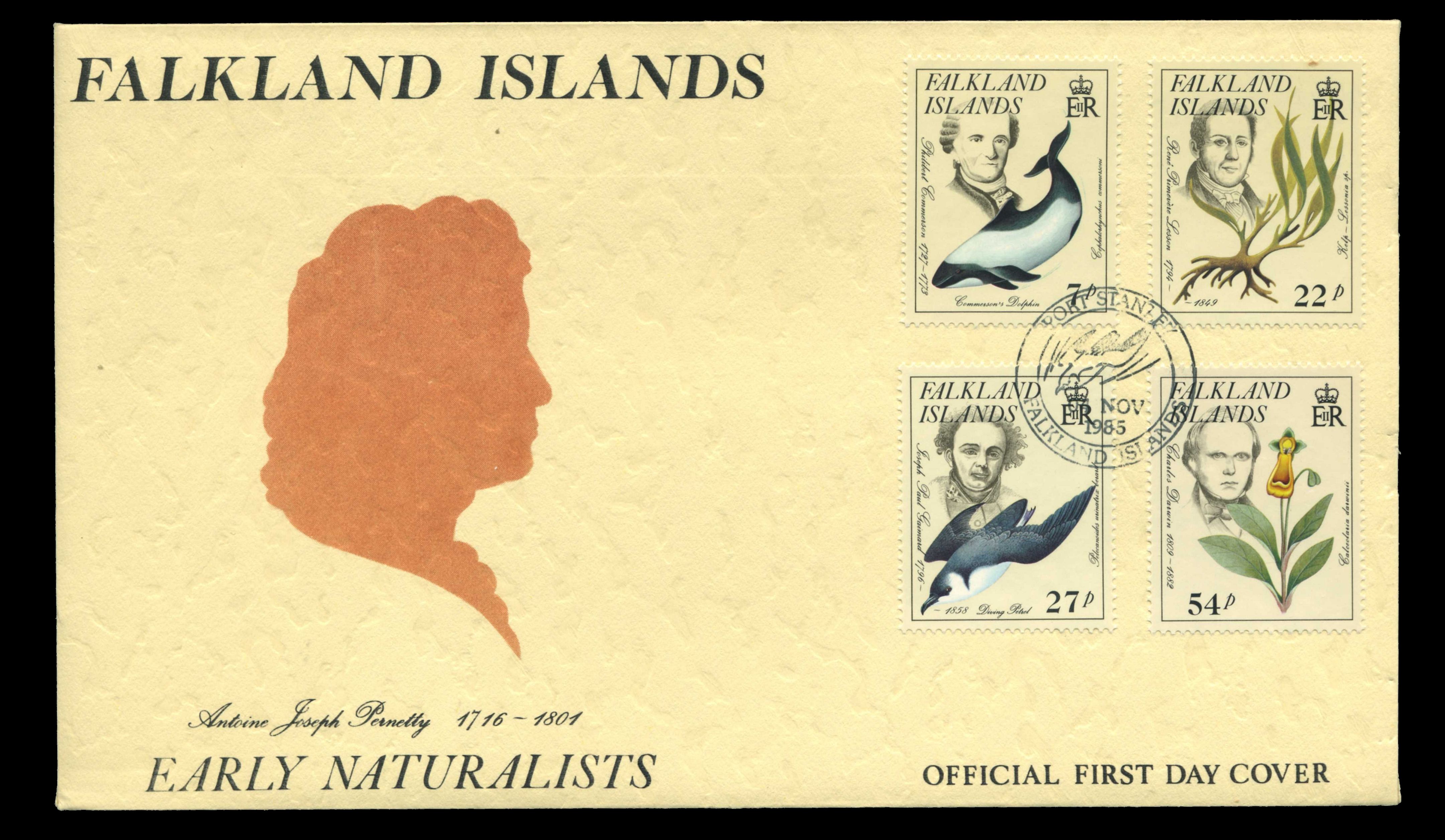
Falkland Islands, 04.11.1985 "Naturalists" |
Albania, 20.04.1987 "Famous persons" |
|
 |

|
| FDC | ||
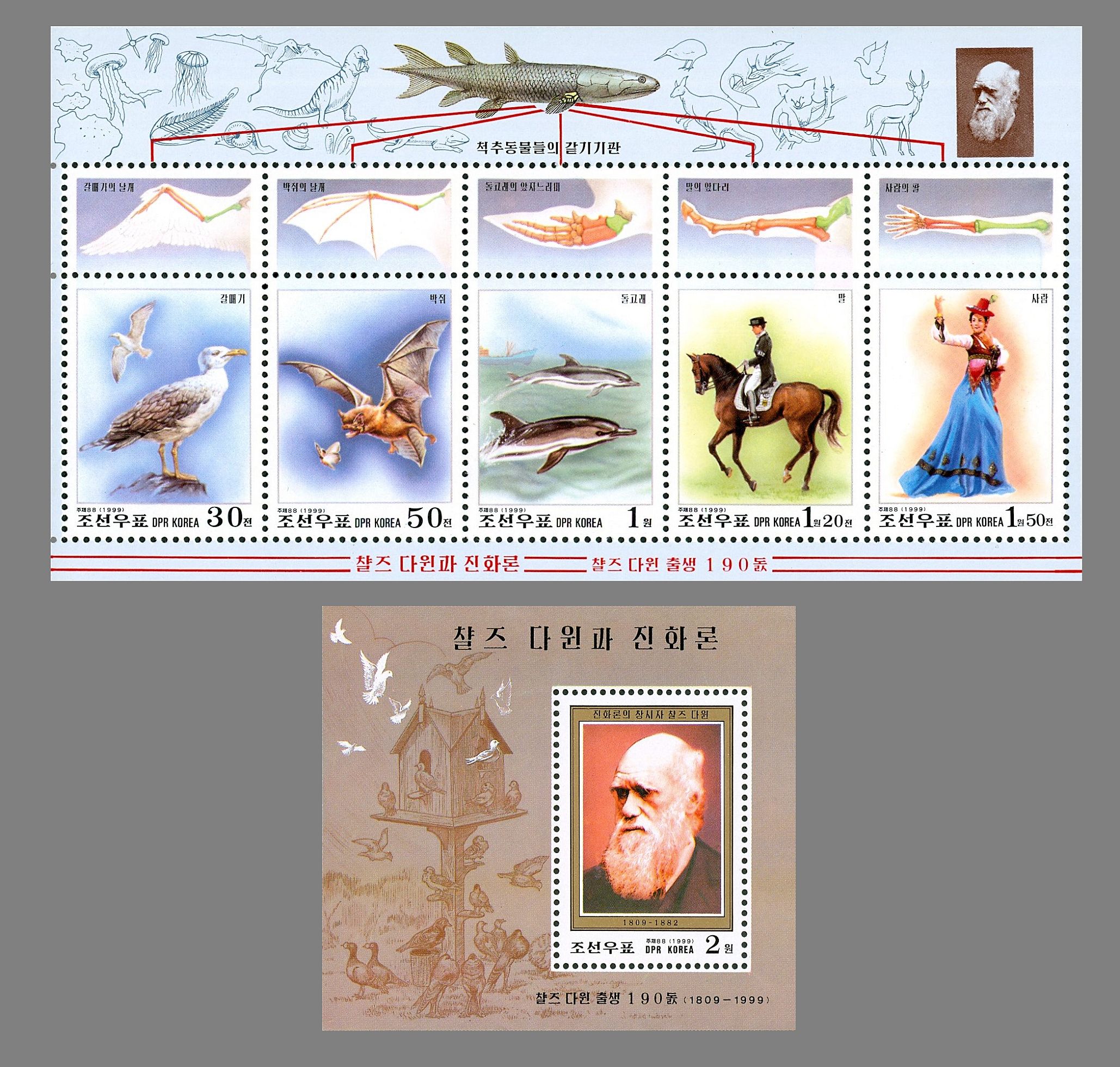
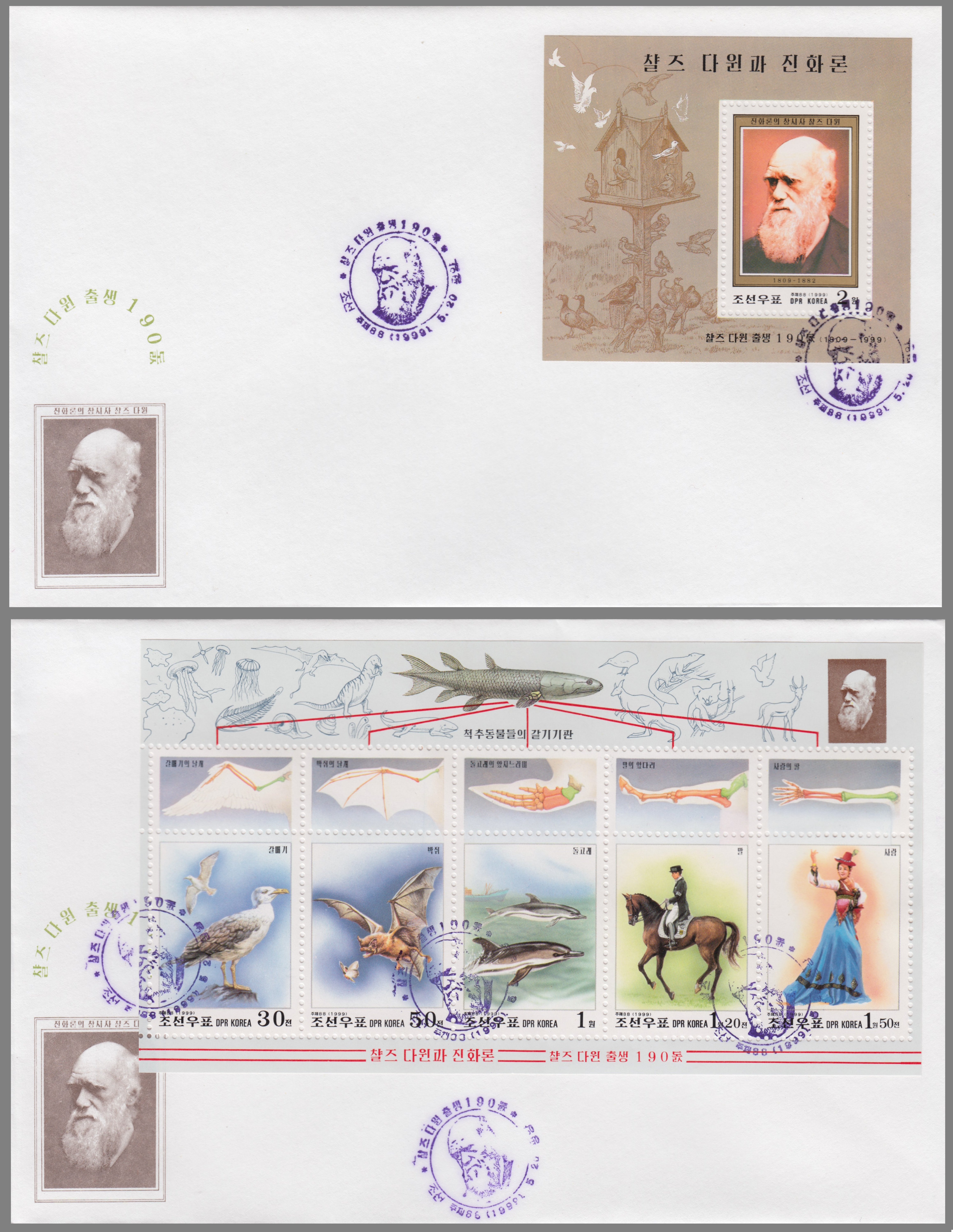
| North Korea, 20.05.1999 "190 years of Charles Darwin's birthday" |
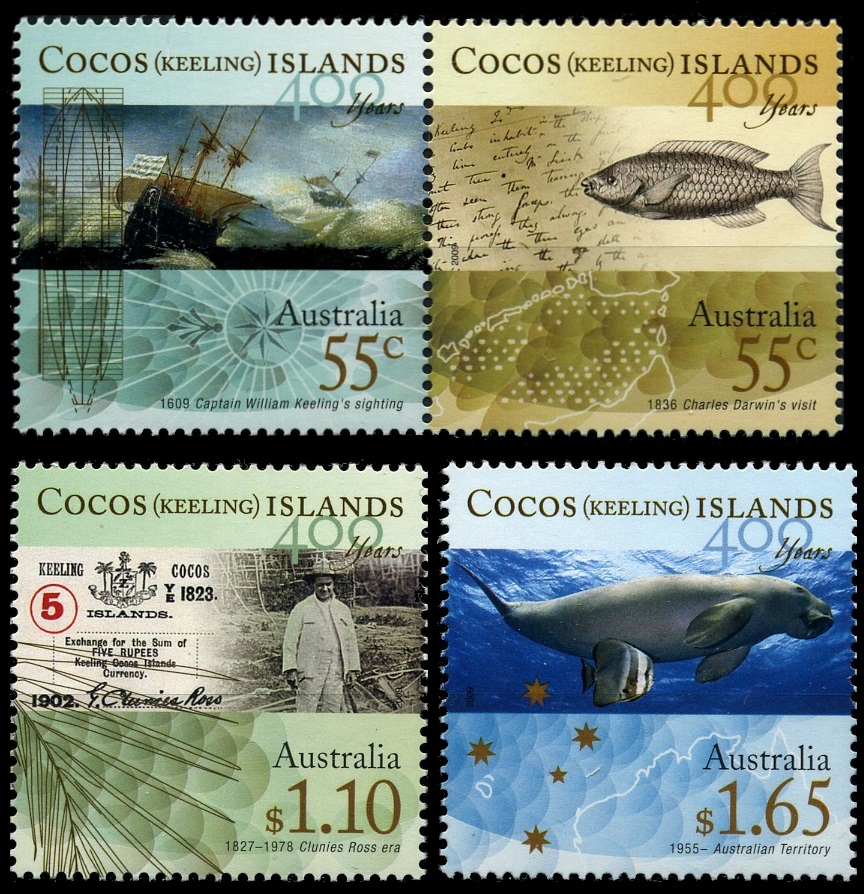
Cocos Islands,
21.04.2009 "400th anniversary of discovery of the Cocos Island" |
Cuba,
30.01.1996 "Scientists" |
 |
 |
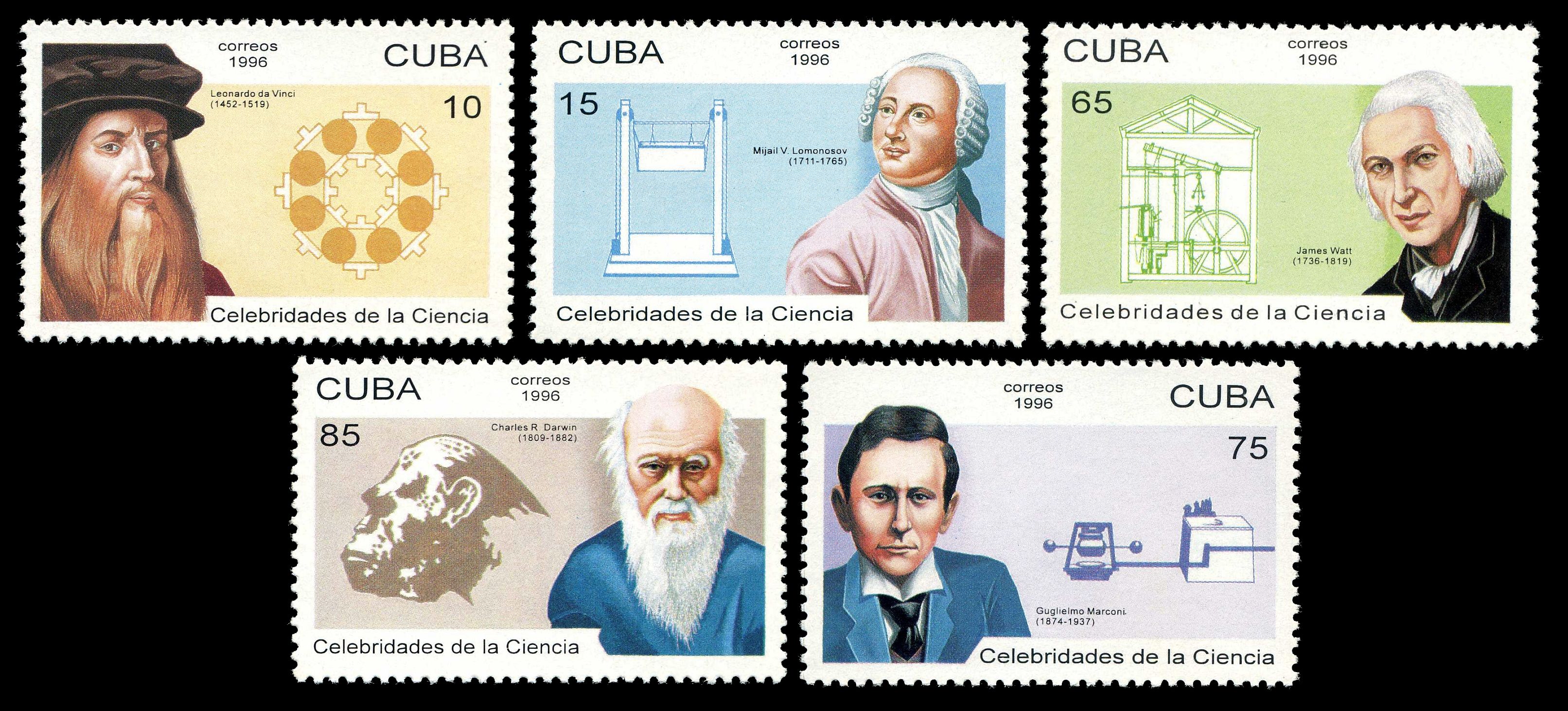 |
| FDC | FDC | |
| Palau,
02.02.2000 "Millennium" |
Uganda,
28.06.2000 "Millennium" |
Mongolia,
05.10.2000 "Millennium" |
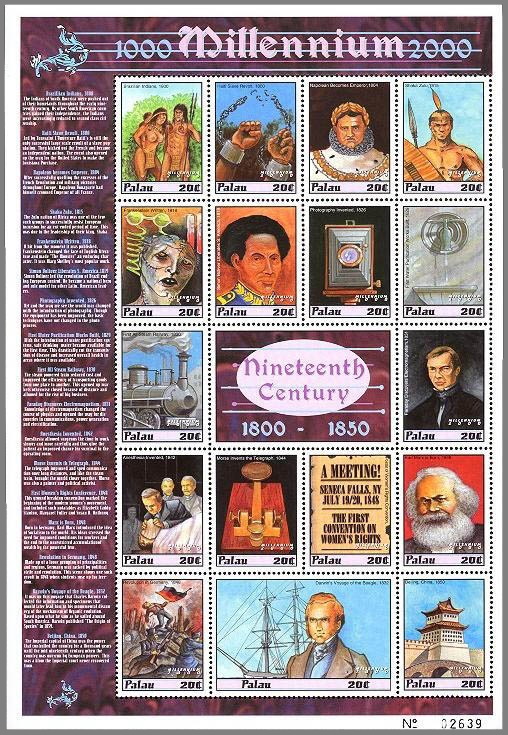 |
 |
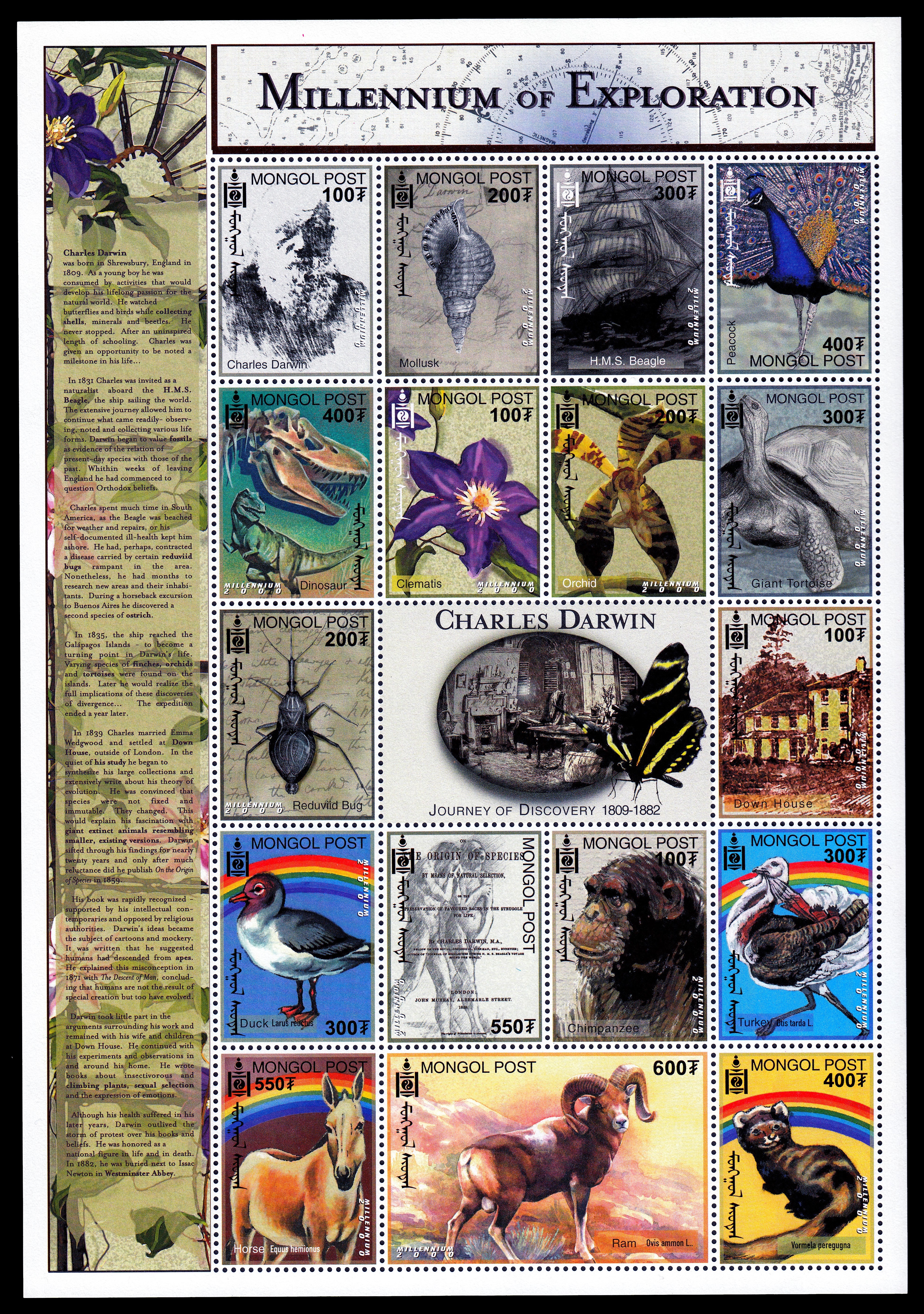 |
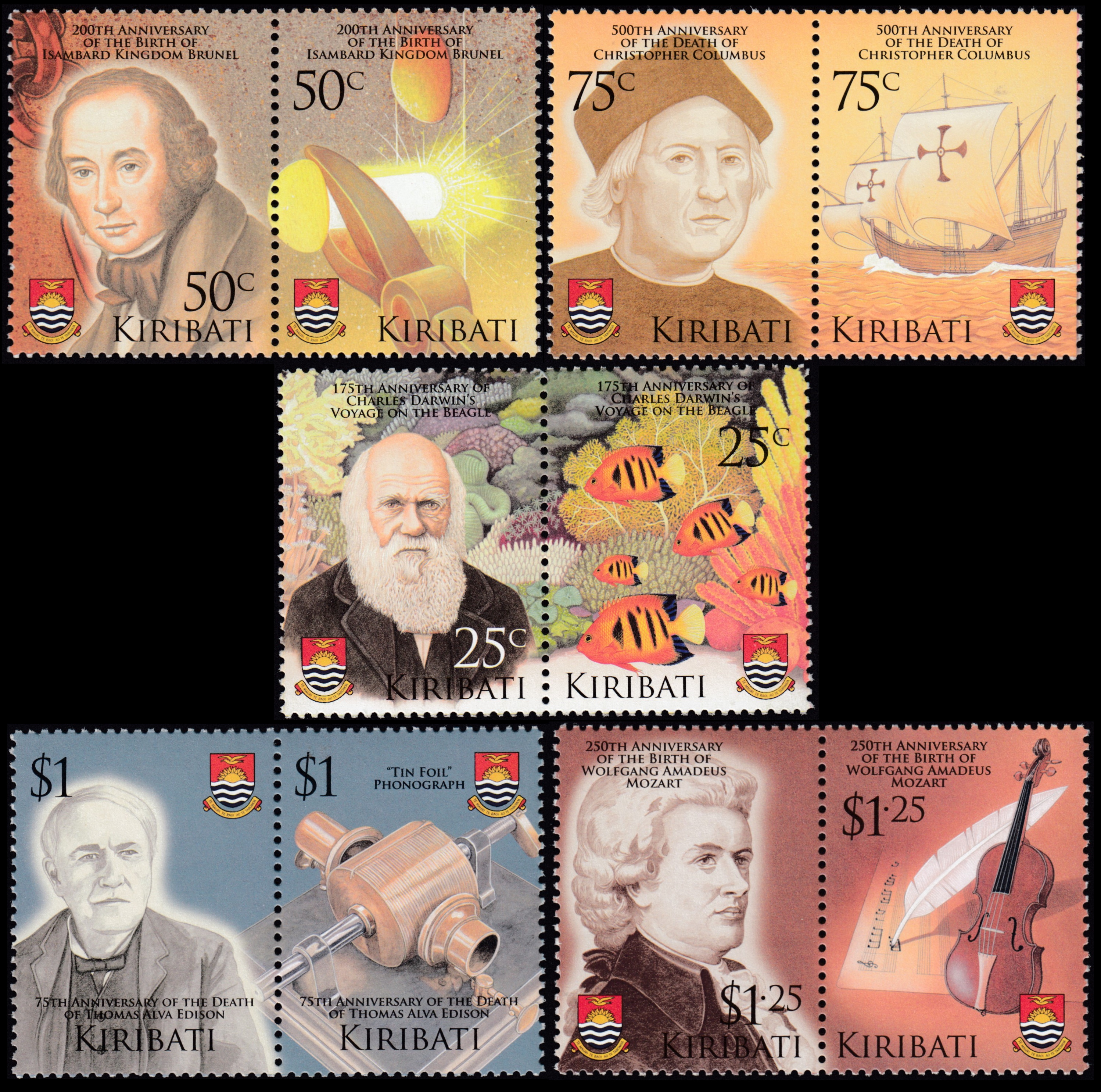
| Solomon Islands,
30.04.2006 "Exploration and Innovation" |
Kiribati,
27.05.2006 "Exploration and Innovation" |
Ascension Islands,
24.07.2006 "Exploration and Innovation" |
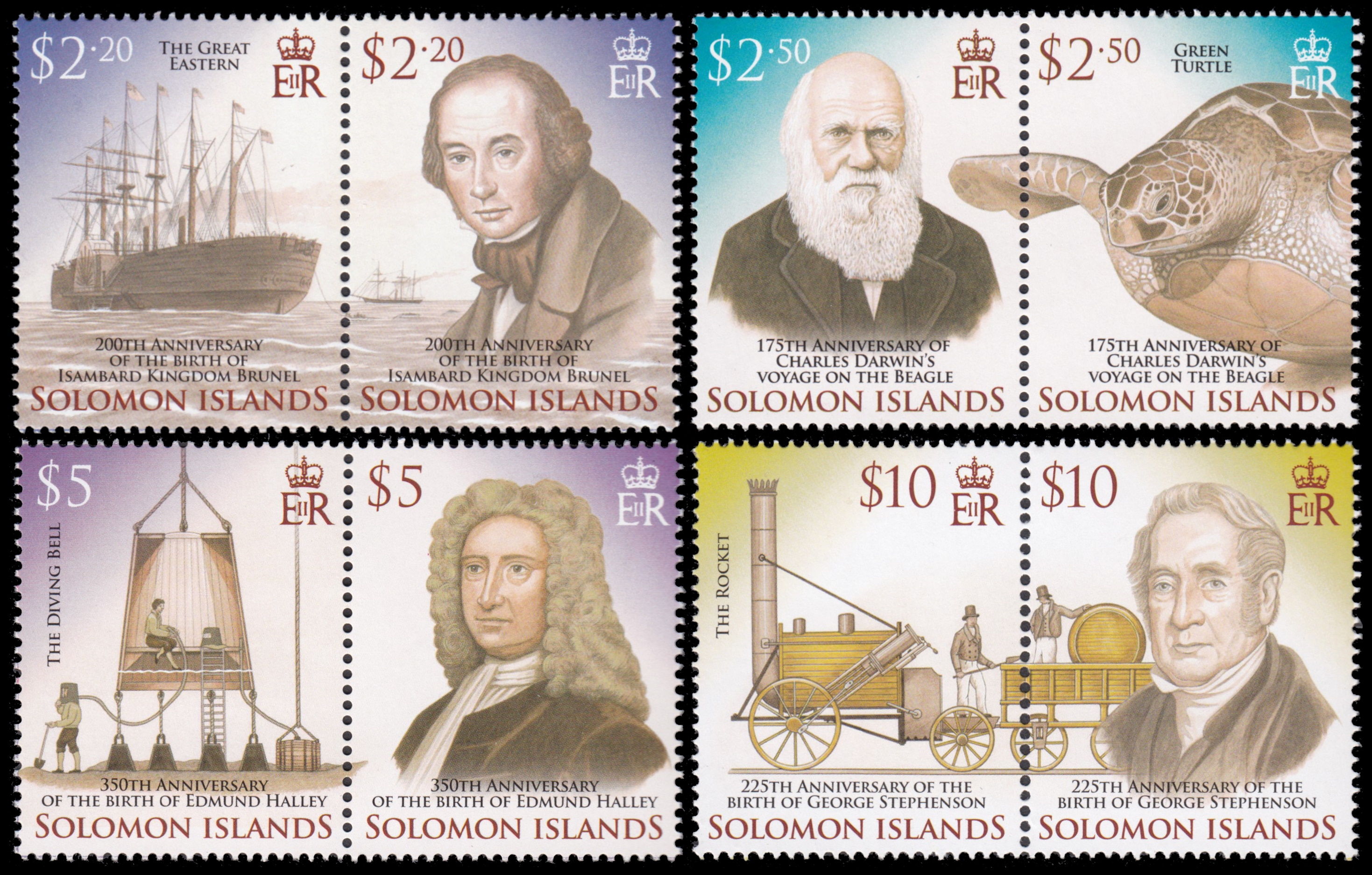 |
 |
 |
| FDC | FDC | |
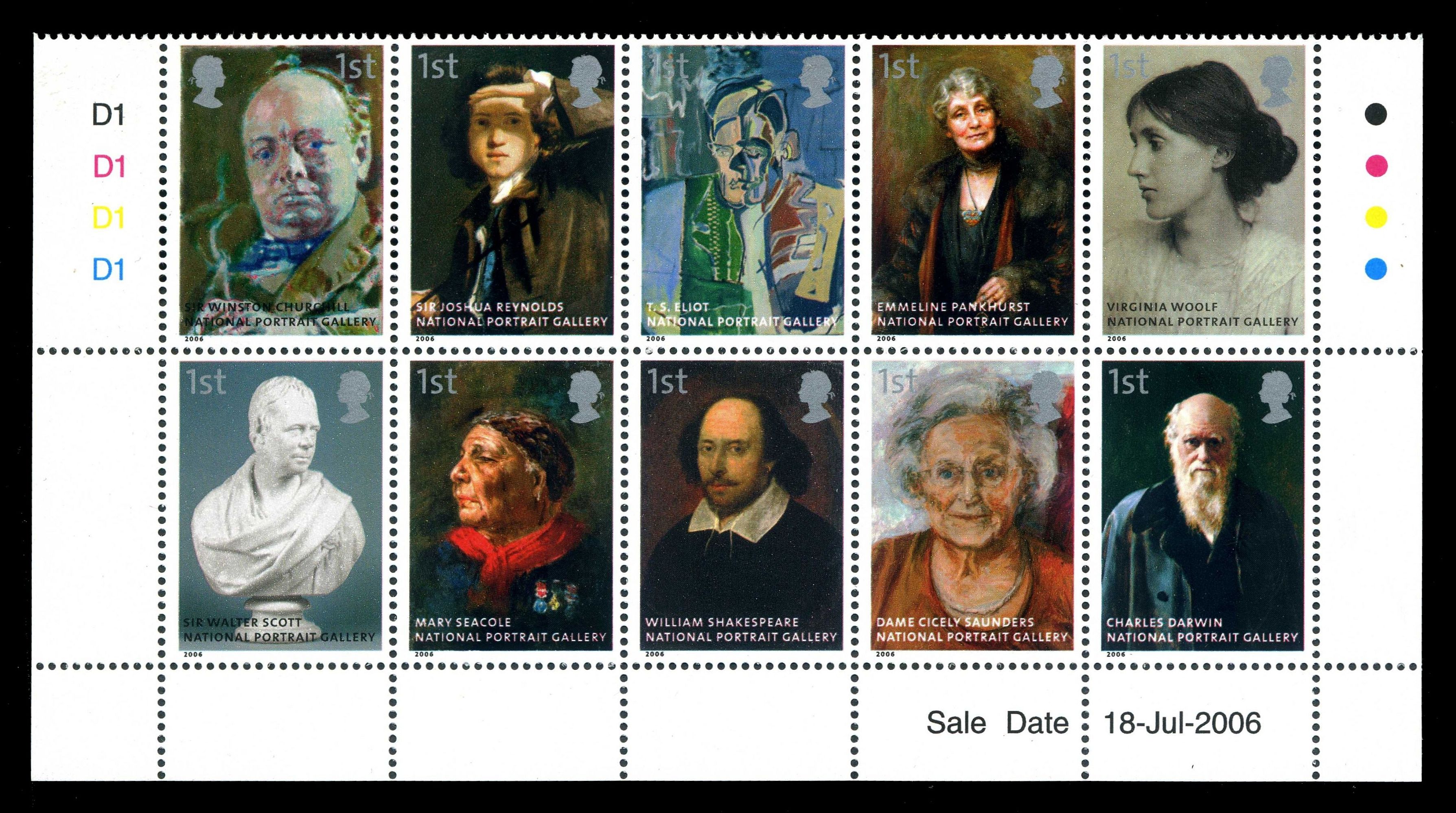
| Great Britain,
18.07.2006 "150th Anniversary of the National Portrait Gallery" |
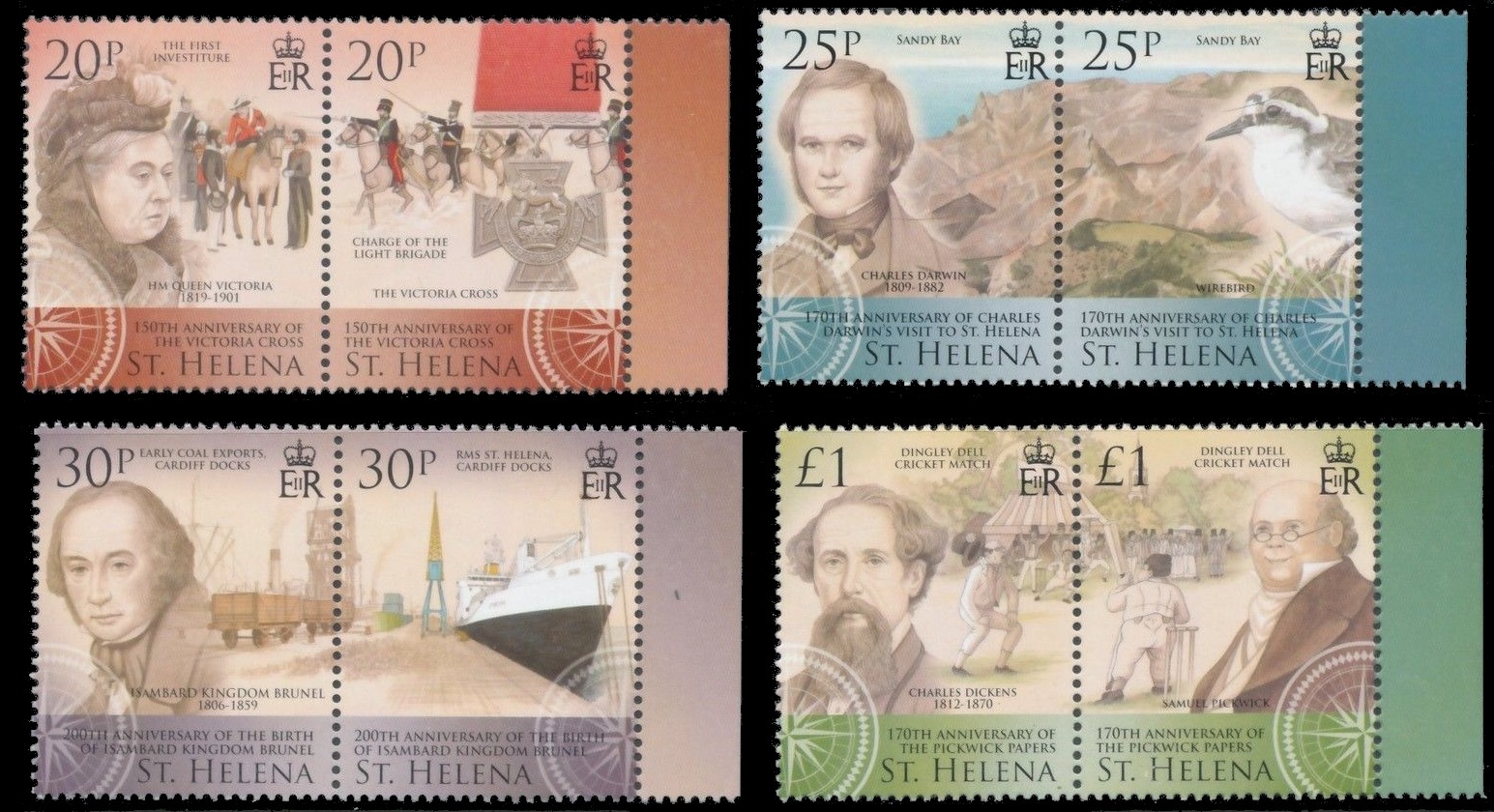
St. Helena,
03.11.2006 "Anniversaries" |
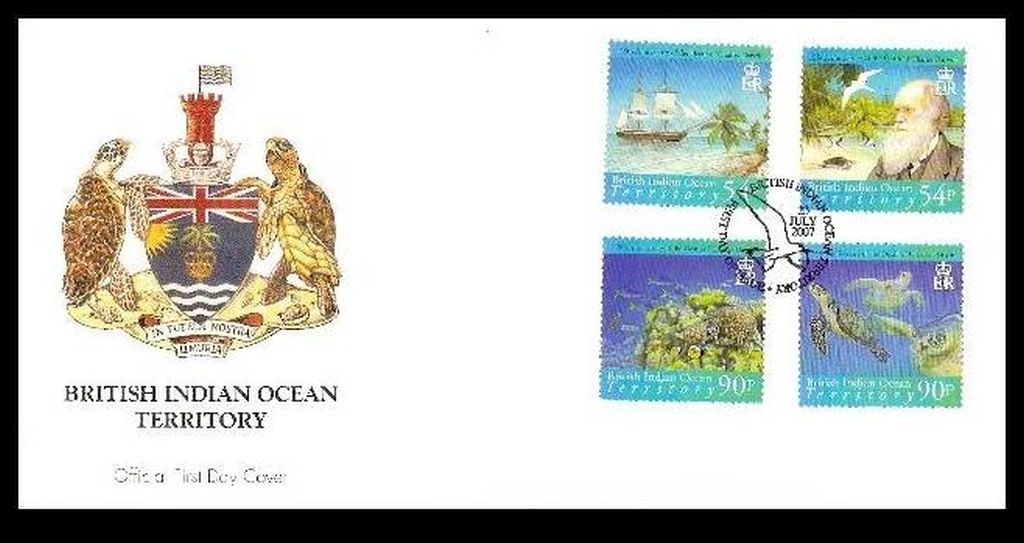
British Indian Ocean Territory,
23.07.2007 "125th Anniversary of the death of Charles Darwin" |
 |
 |
 |
| FDC: [1] [2] | FDC | FDC |
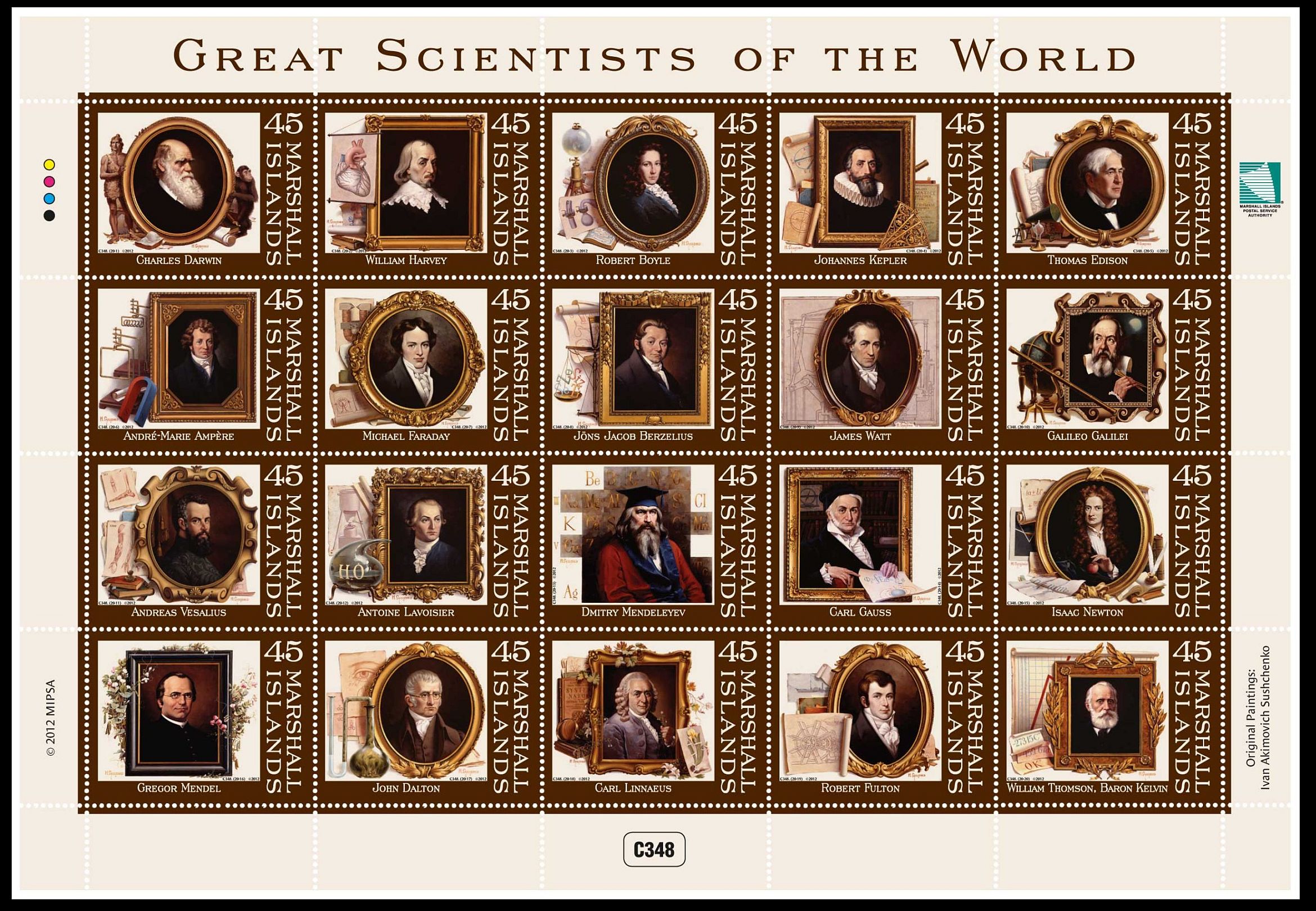
| Marshall Islands,
23.04.2012 "Great Scientists of the World" |
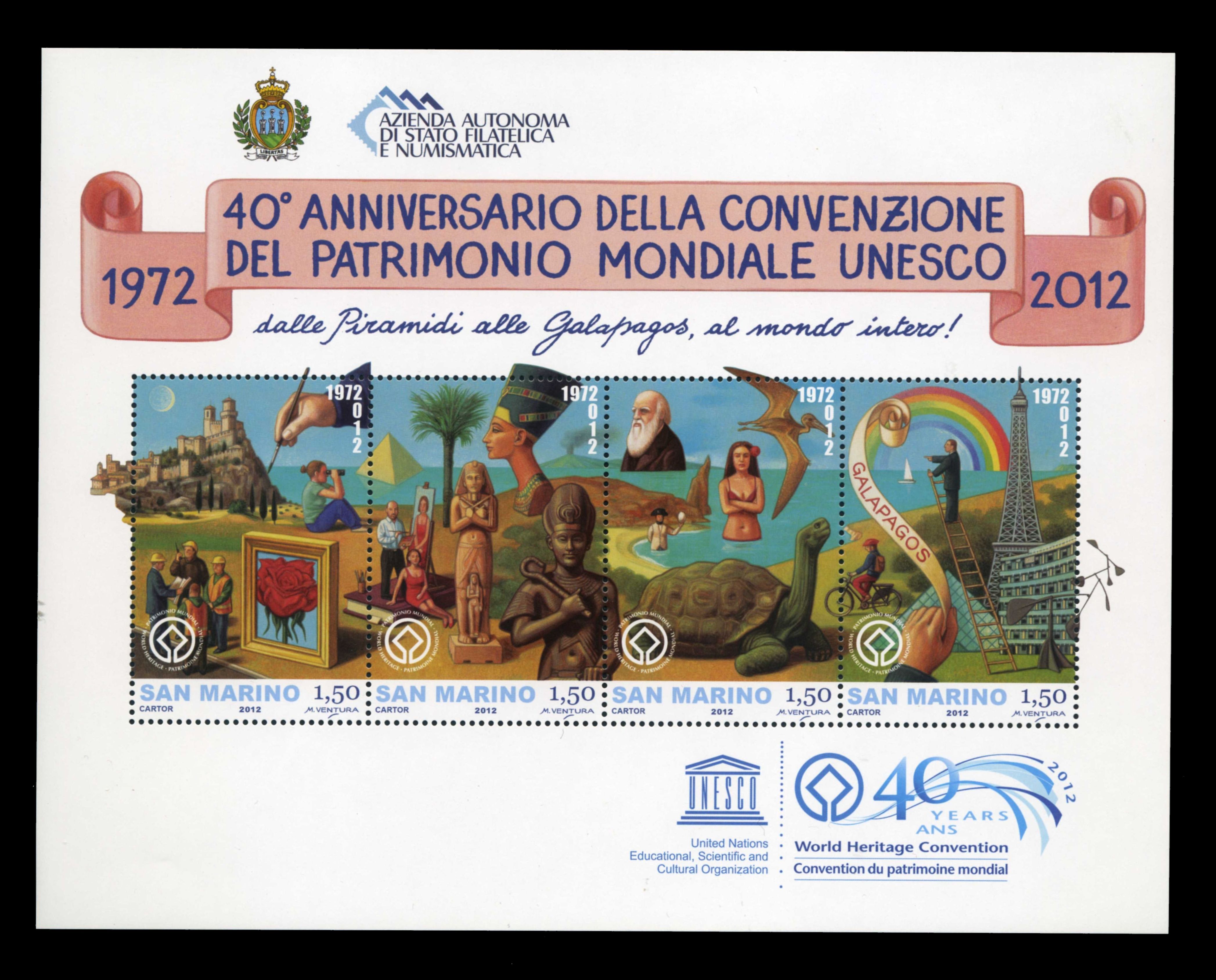
San Marino,
09.05.2012 "40th anniversary of UNESCO heritage" |
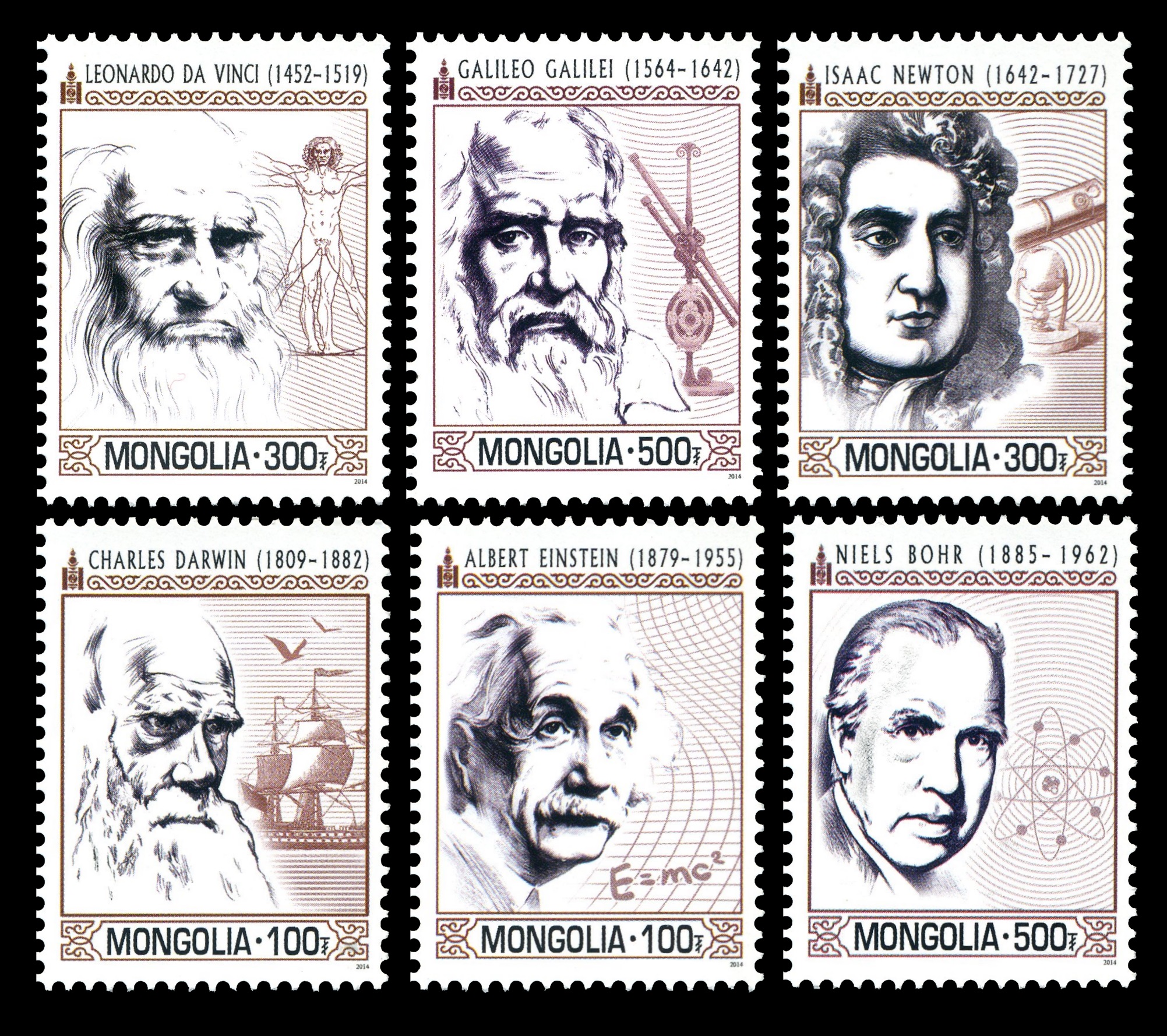
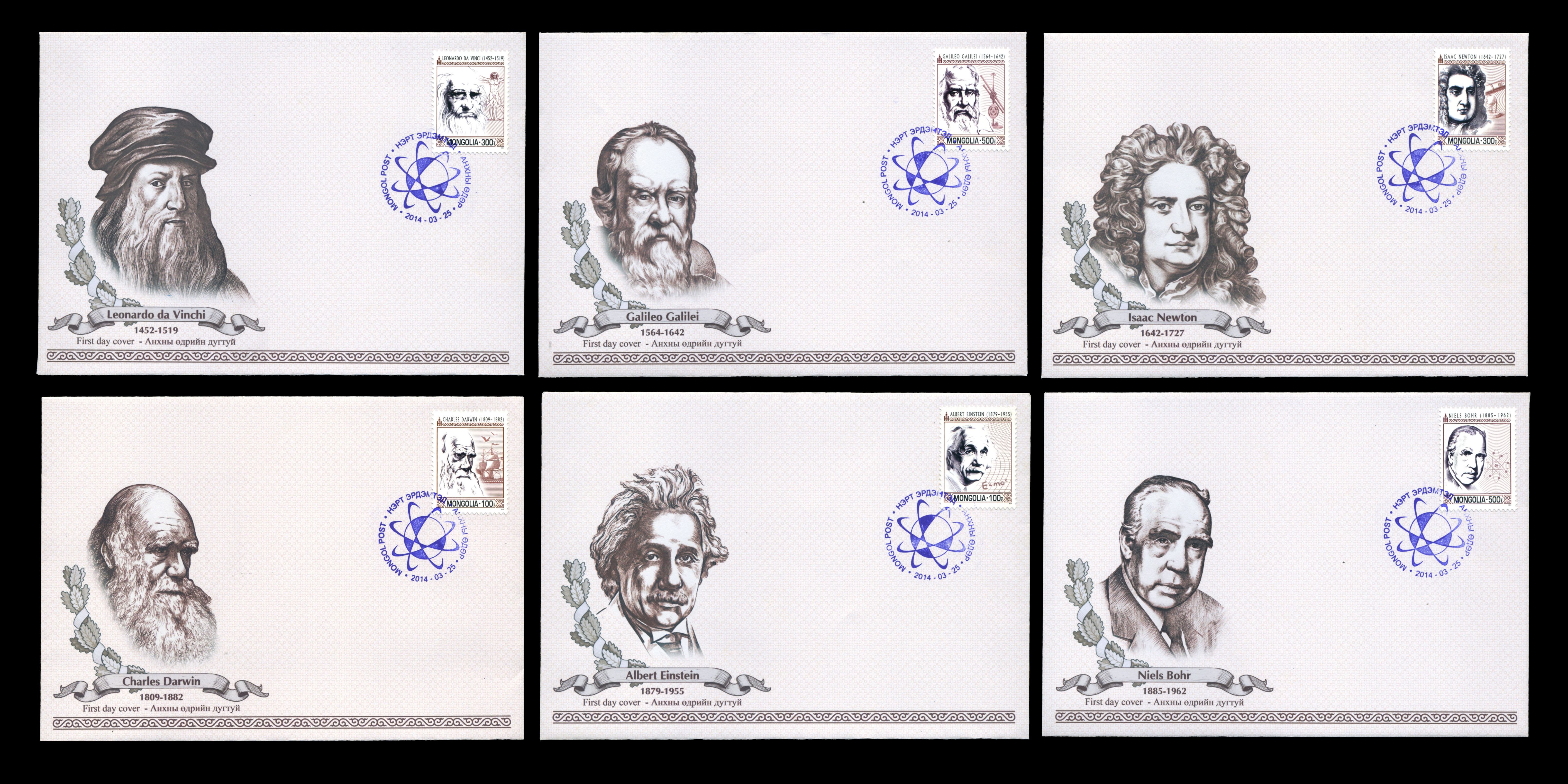
Mongolia,
25.03.2014 "Famous personalities" |
 |
 |
 |
| FDC | FDC, On Cover: [1] [2] | FDC |
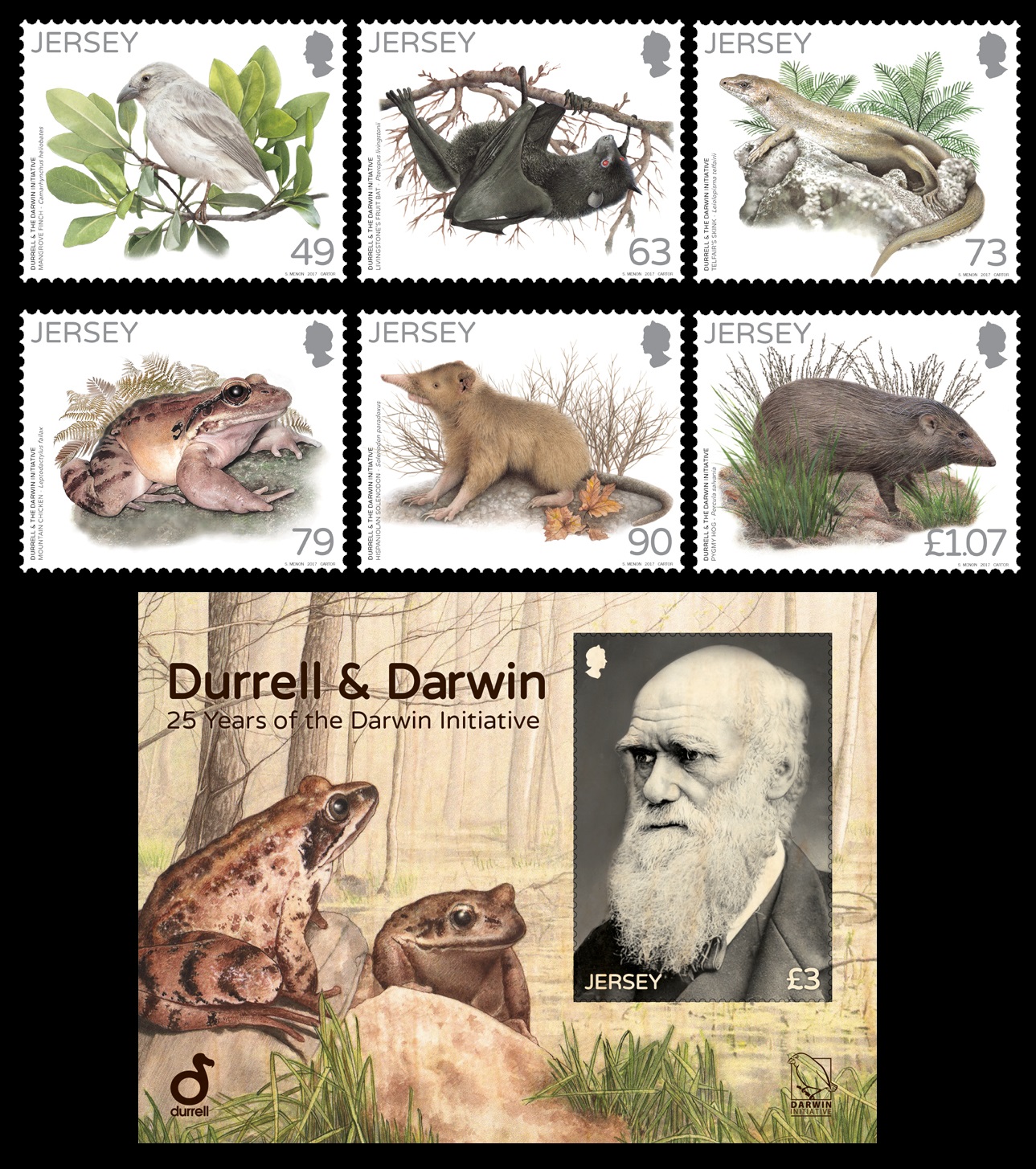
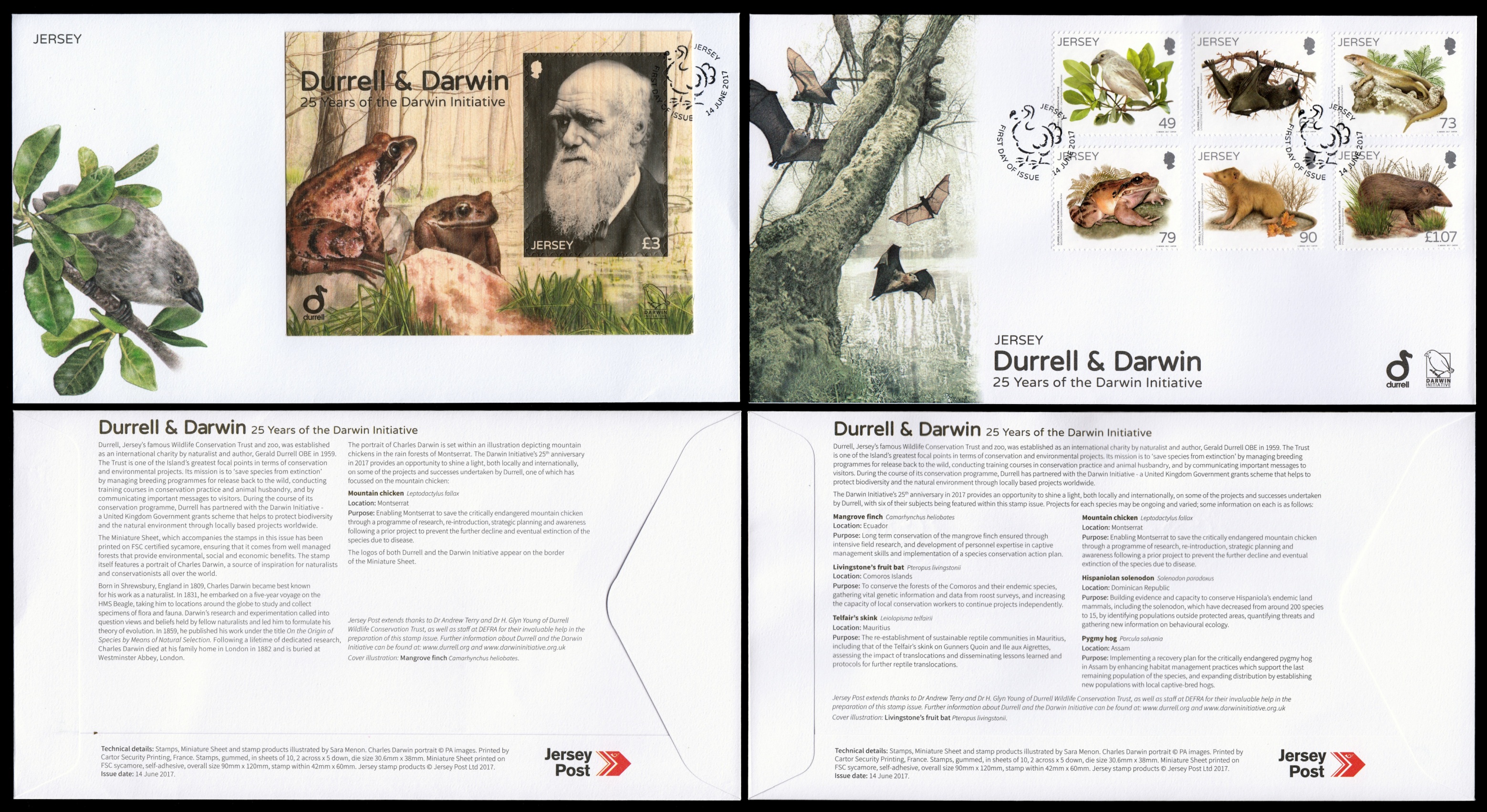
| Jersey,
14.06.2017 "Durrell & Darwin – 25 Years of the Darwin Initiative" |
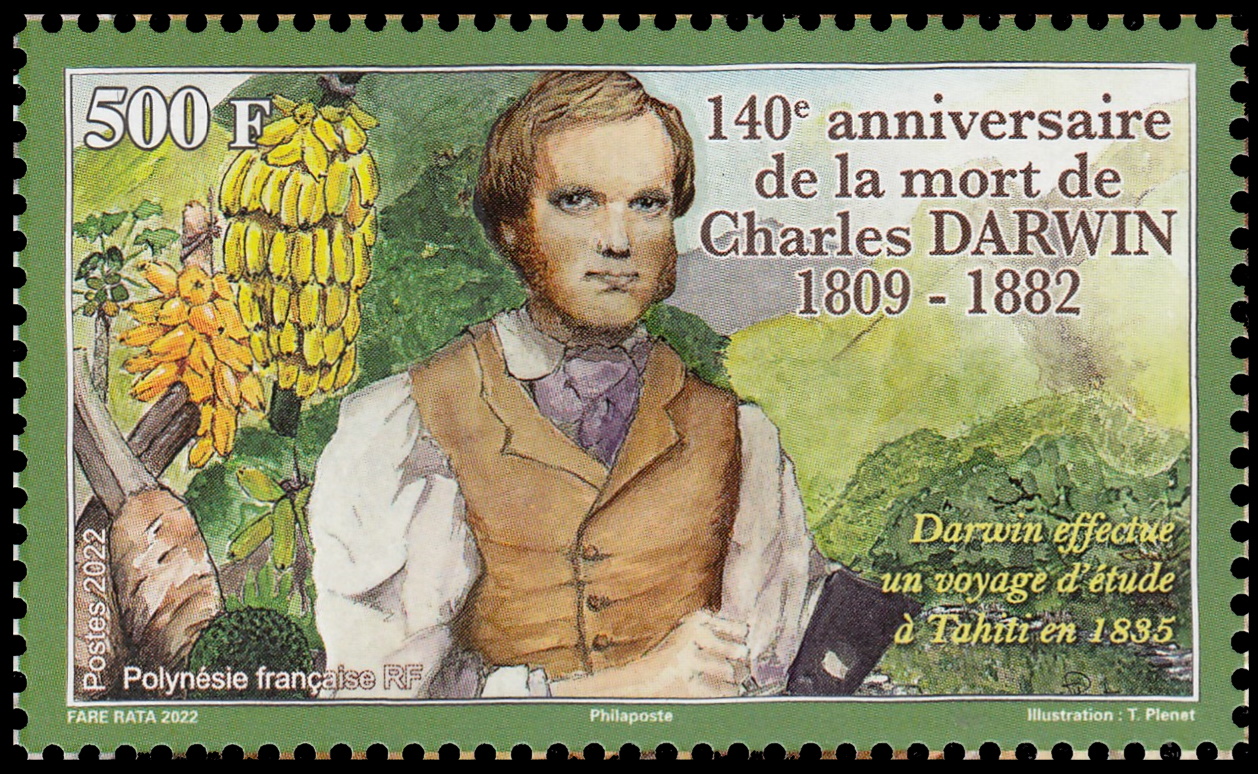
French Polynesia,
19.04.2022 "140 years since death of Charles Darwin" |
Slovenia,
10.03.2011 (personalized stamp) "Charles Darwin" |
 |
 |
 |
| FDC | FDC | FDC |
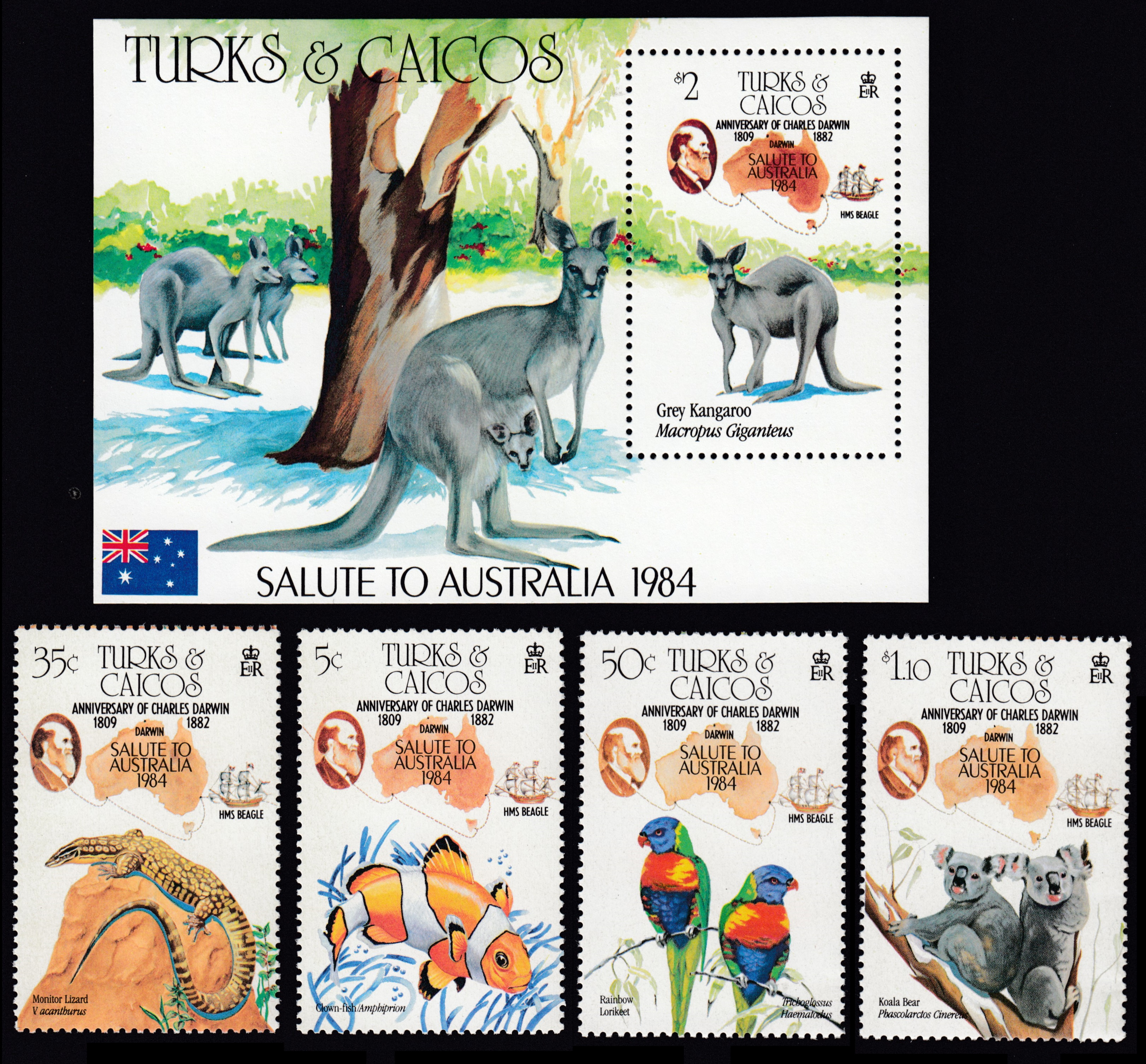
| Turks and Caicos,
14.06.1984 "Salute to Australia" |
||
 |
||
| FDC | ||


![[1]](../../../images/fdc/uk_2006_darwin_fdc.jpg)
![[2]](../../../images/fdc/uk_2006_portraits_fdc2.jpg)



![[1]](../../../images/used/san_marino_2012_env_used.jpg)
![[2]](../../../images/used/san_marino_2012_env_used2.jpg)


Postmarks of Charles Darwin issued on other occasions
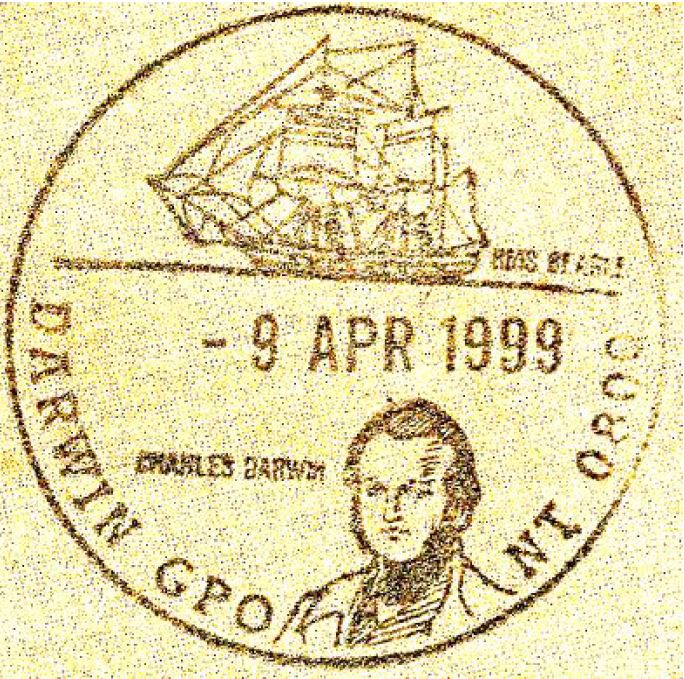
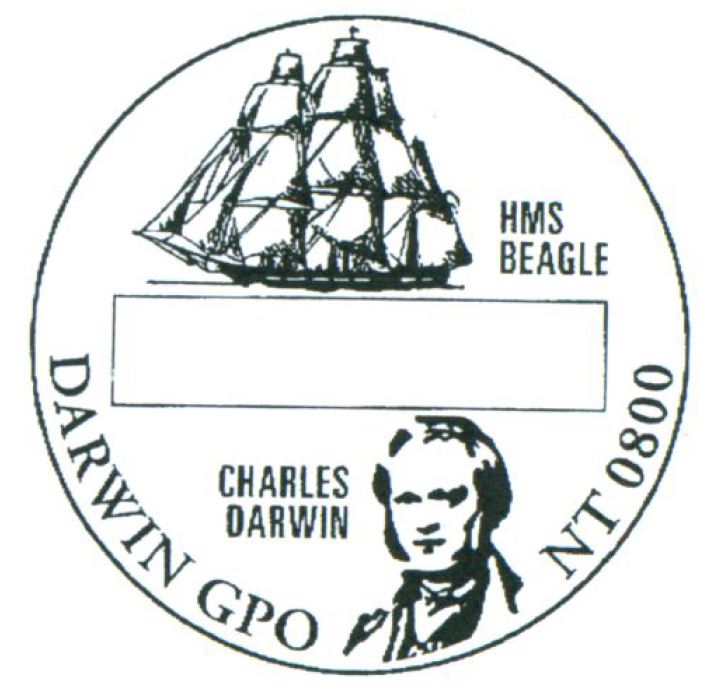
| Australia,
1999, replaced in
2015 "Charles Darwin", Darwin GPO |
French Polynesia,
2022 "140 years since death of Charles Darwin" |
|
 |
 |
 |
| North Korea,
20.05.1999 "190th birthday of Charles Darwin" |
Great Britain,
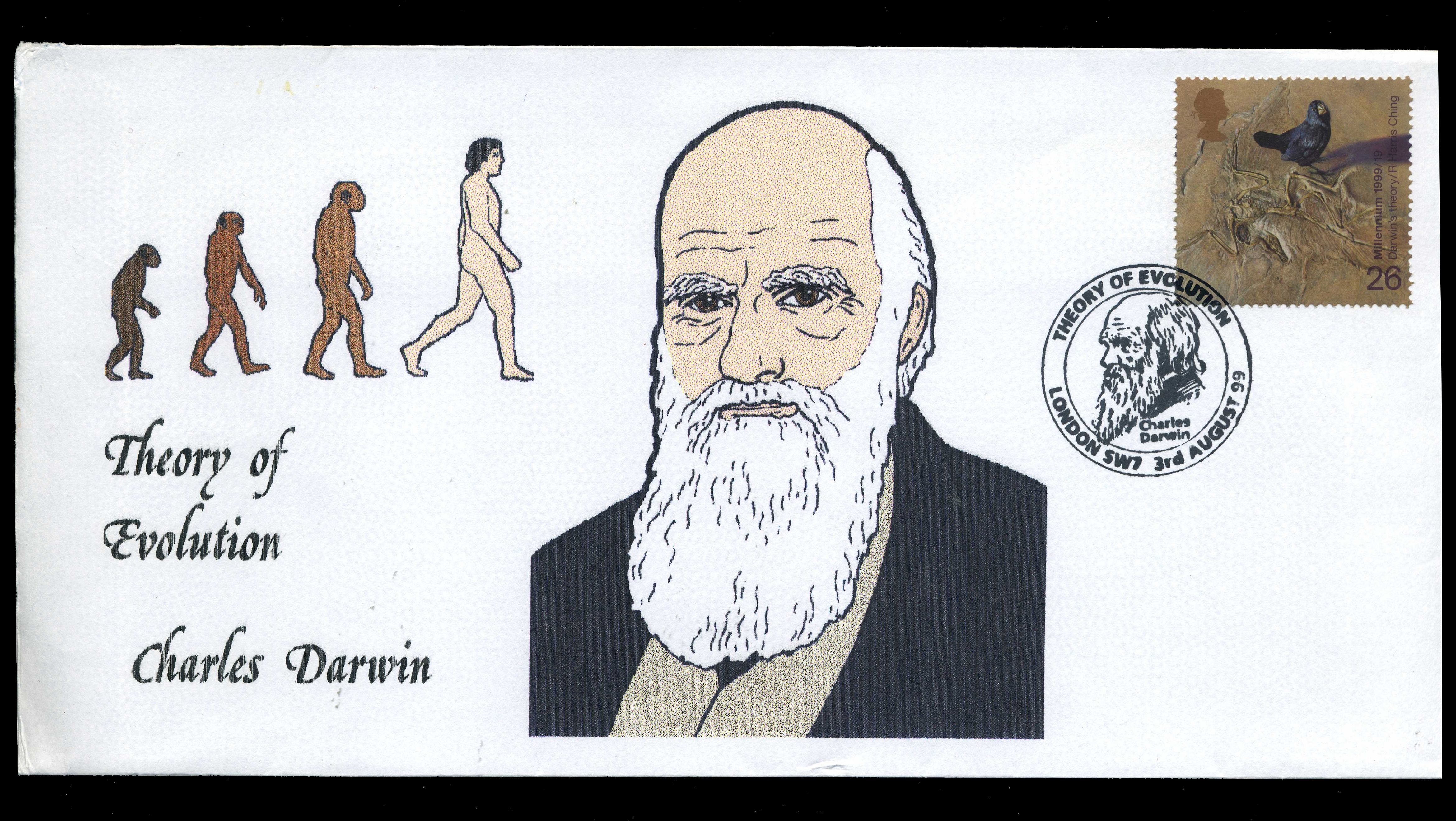
03.08.1999 "Charles Darwin - Theory of Evolution", London |
Great Britain,
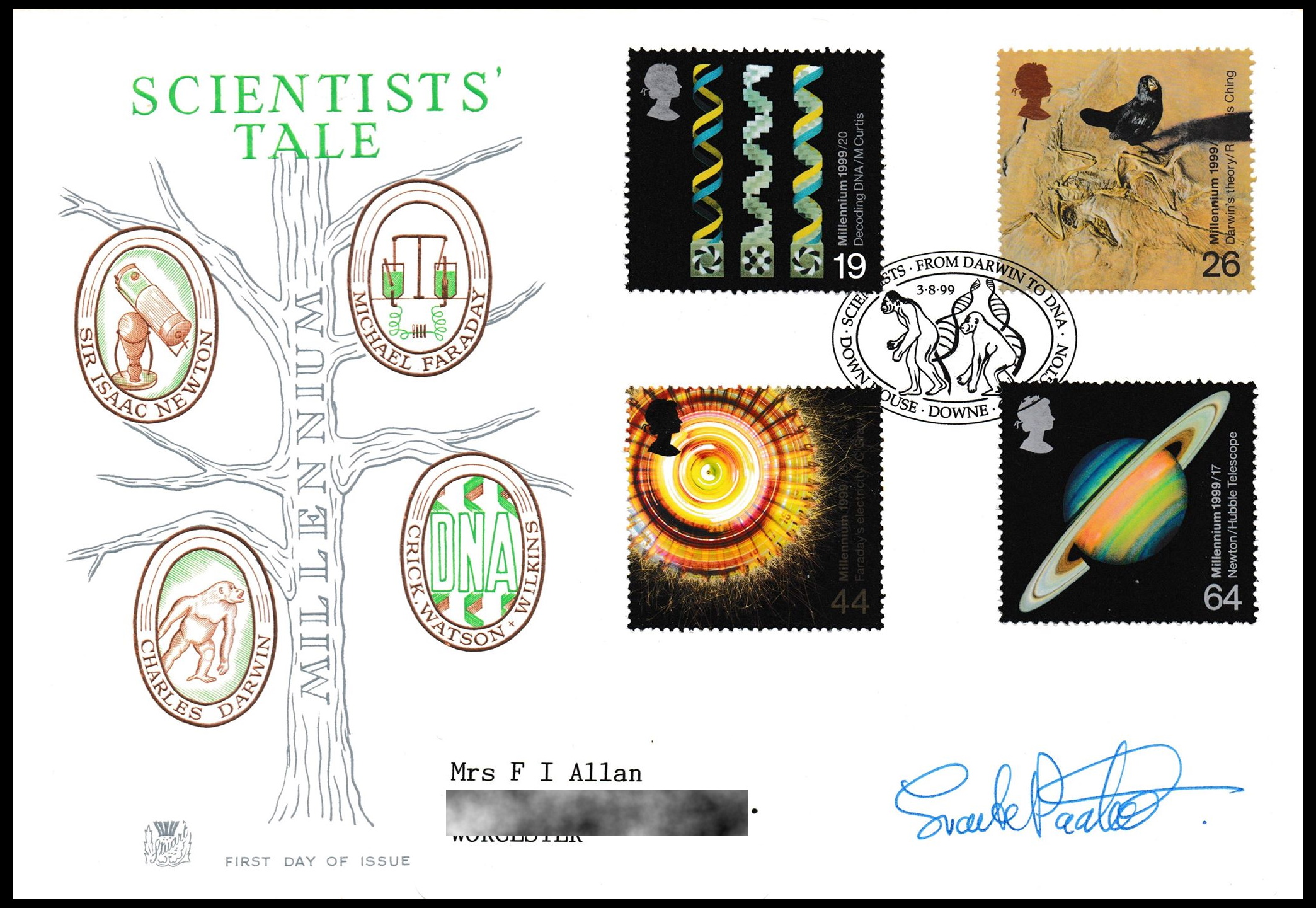
03.08.1999 "Scientists from Darwin to DNA", Down House, Orpington |
 |
 |
 |
| Great Britain,
03.08.1999 "Charles Darwin - Theory of Evolution", London |
Great Britain,
03.08.1999 "Evolution", Shrewsbury |
|
 |
 |
|
Captain Robert FitzRoy in Philately
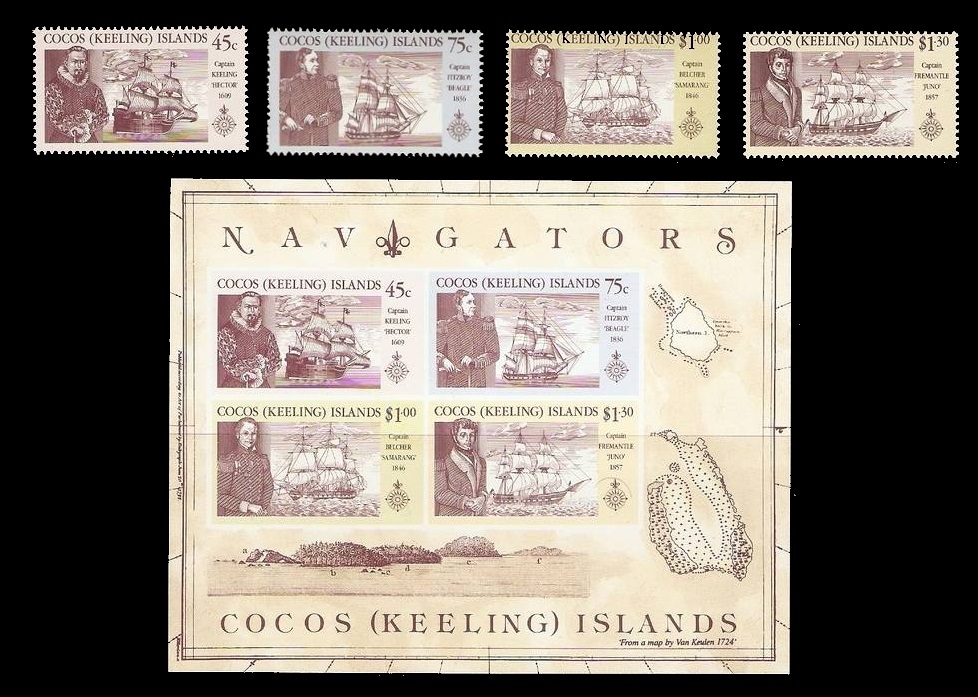
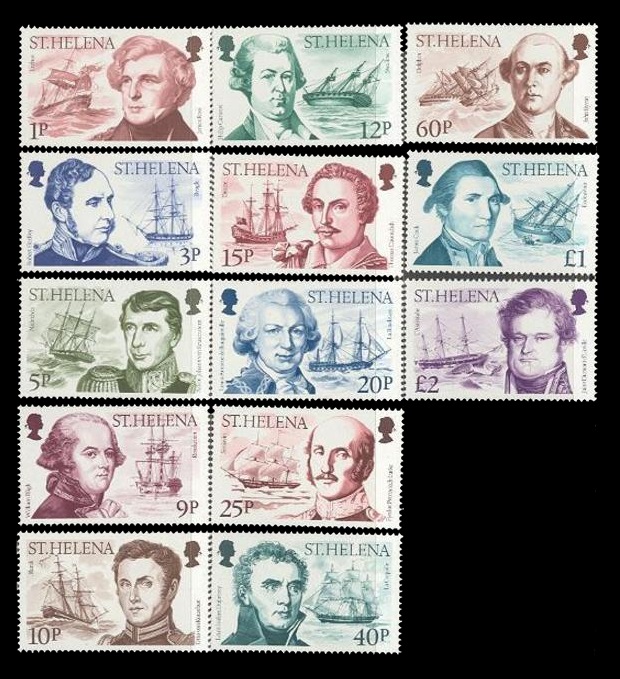
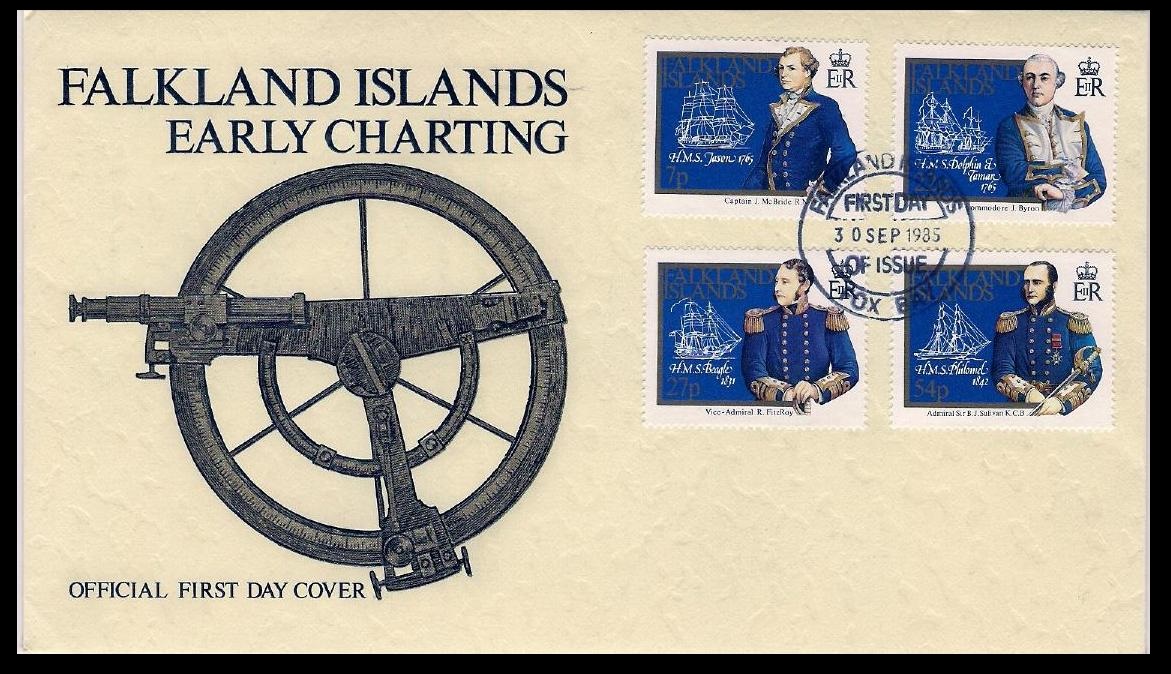
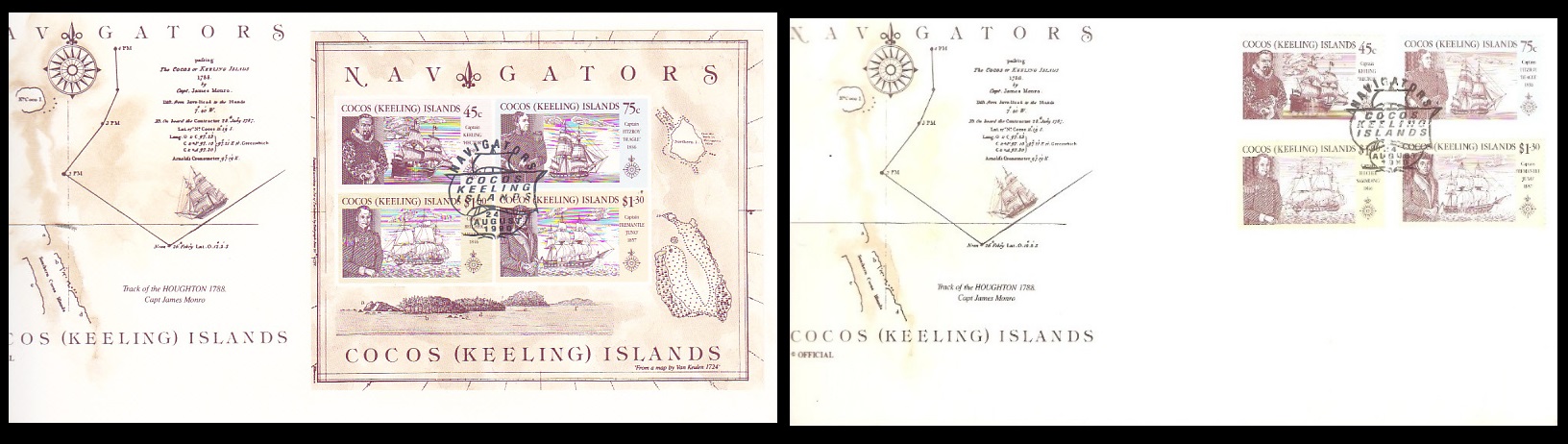
There is only one stamp set where the captain Robert FitzRoy was depicted together with Charles Darwin - Palau 2009 and three stamp sets of the navigator and explorers contains stamps of captain Robert FitzRoy.
| Falkland Islands, 23.09.1985 "Navy Explorers - captains and their ships" |
Cocos Islands, 24.08.1990 "Navigators" |
St. Helena, 22.09.1986 "Explorers" |
 |
 |
 |
| FDC | FDC |
HMS Beagle in Philately
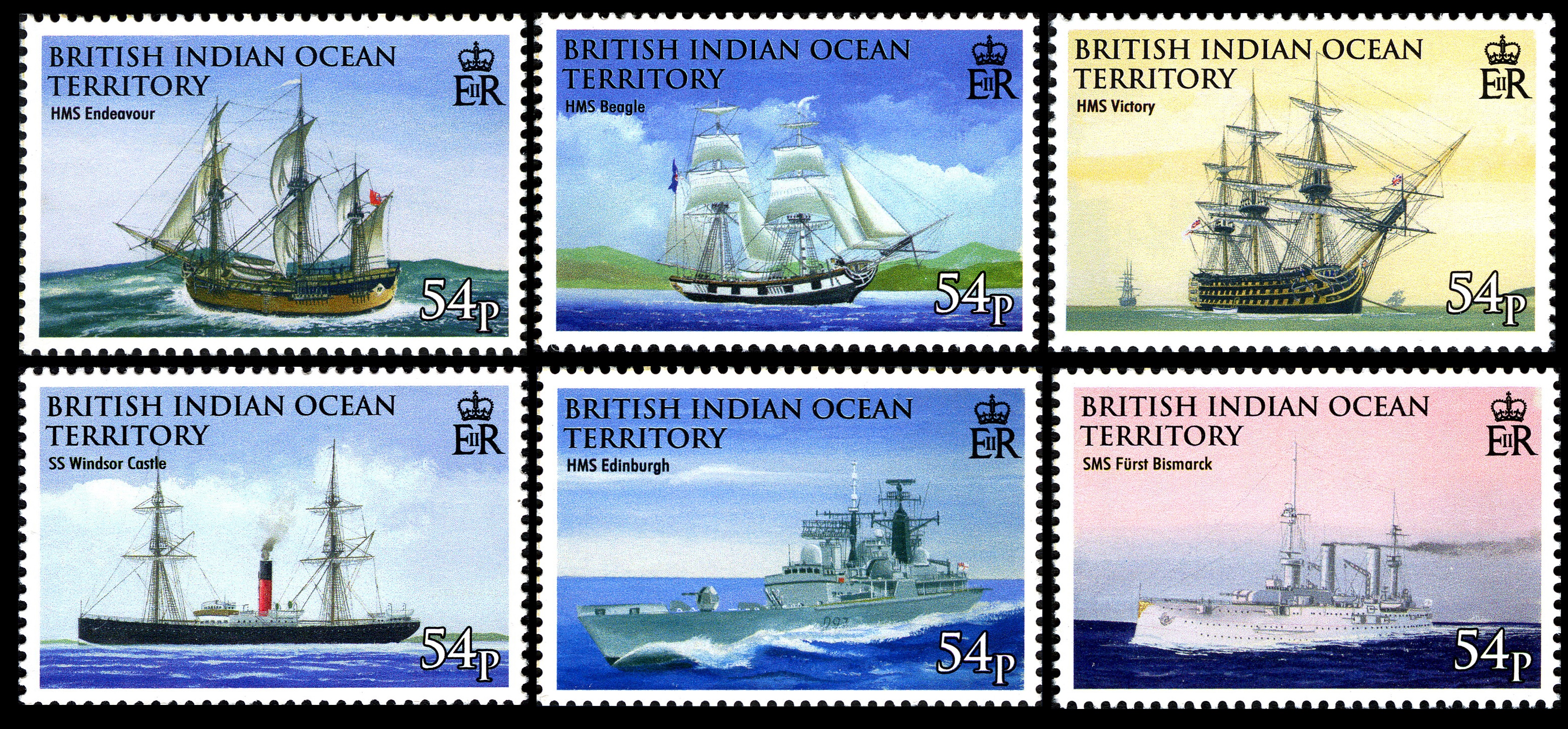
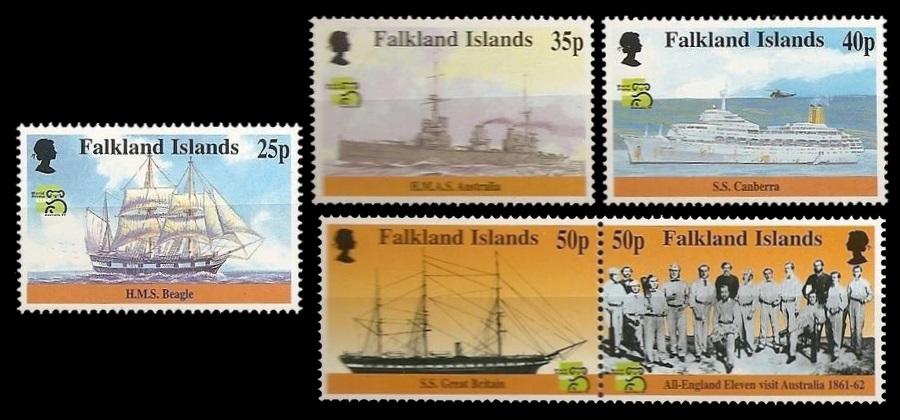
HMS Beagle appeared in many stamp sets of Charles Darwin, as well other sets, such as famous ships.Postage stamps dedicated to HMS Beagle
| Austria, 2009 (personalized stamp) "Bicentenary of Charles Darwin" |
British Indian Ocean Territory, 09.03.2009 "Seafaring and Exploration" |
Falkland Islands, 05.03.1999 "Australia’99, World Stamp Expo" |
 |
 |
 |
| Great Britain, 19.09.2019 "Royal Navy Ships" |
Seychelles,
27.02.1991 "Ships" |
Solomon Islands,
23.01.1980 "Ships and crests" |

|
 |
 |
| MS | ||
| South Africa, 19.03.1999 "Famous Ships" |
St Helena, 01.03.1988 "Bicentenary of Australian Settlement" |
|
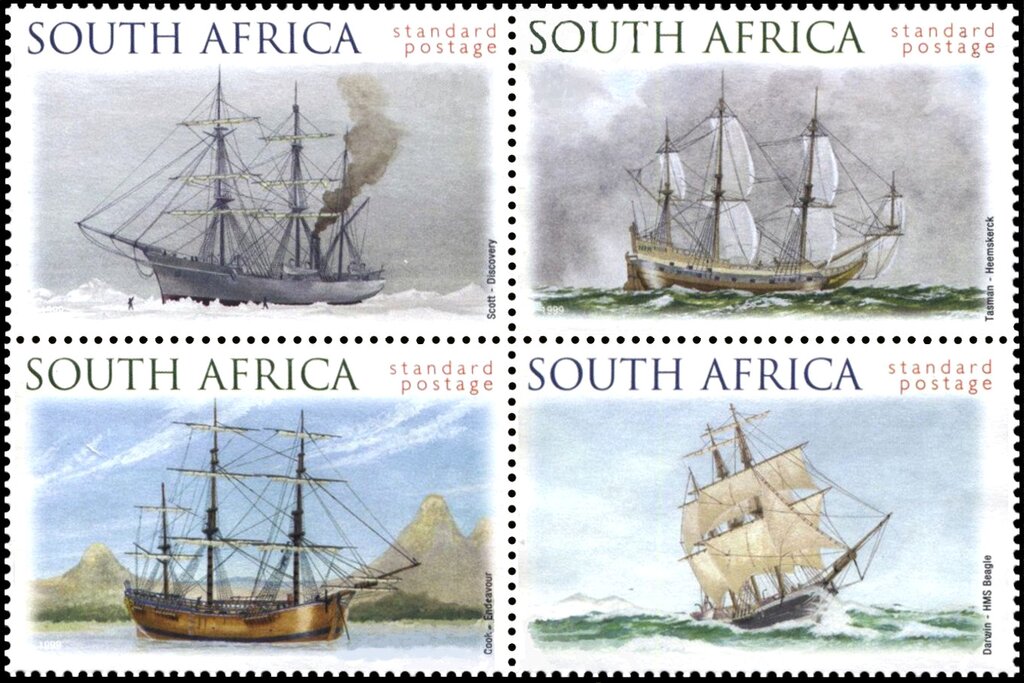
|
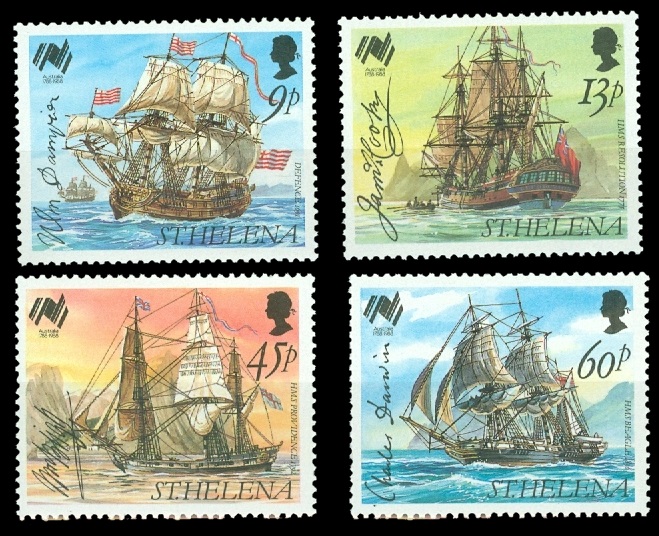 |
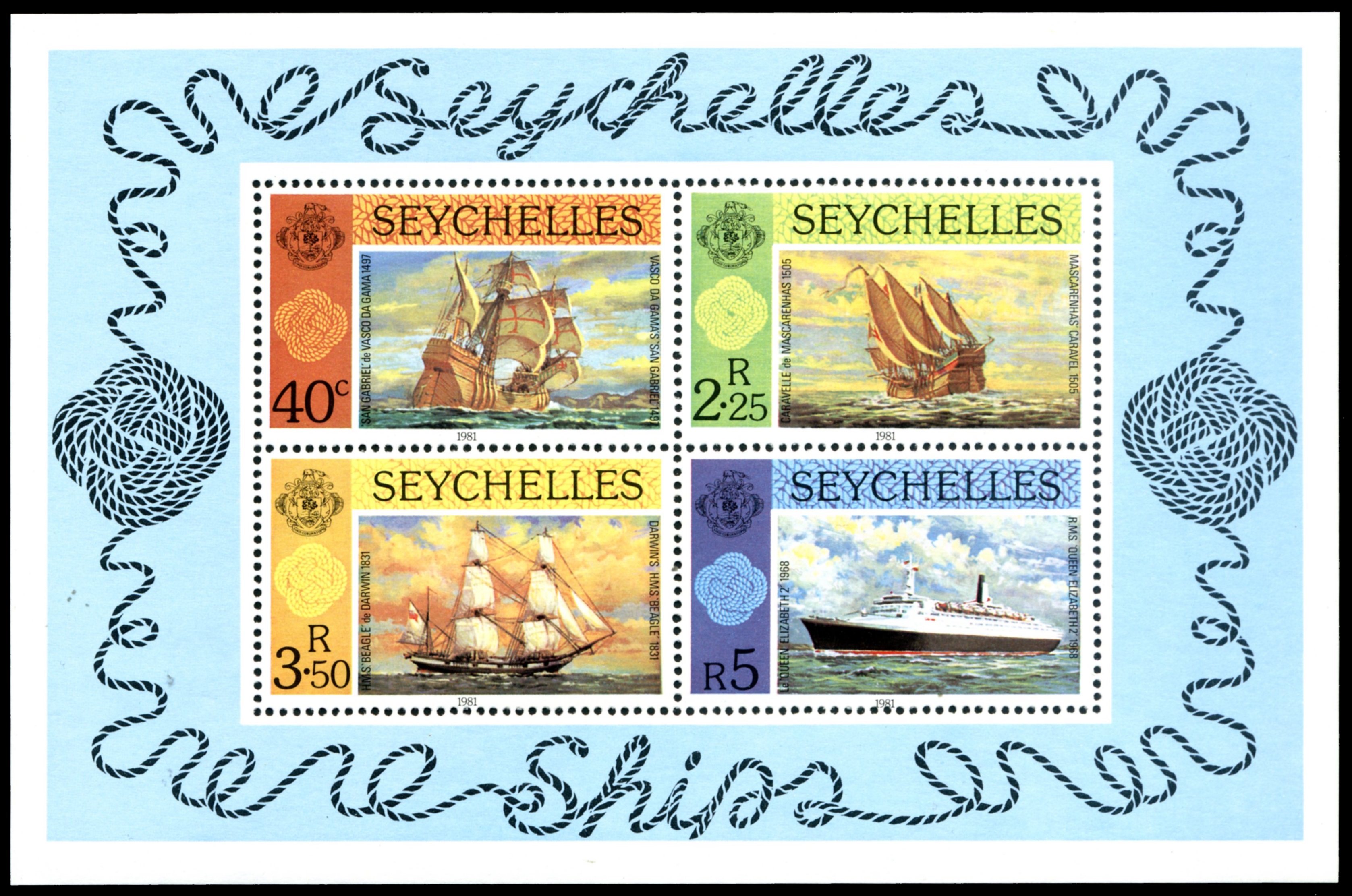
Postmarks dedicated to HMS Beagle
| Great Britain, 11.05.1995 "175th Anniversary of HMS Beagle" |
Great Britain, 27.12.2000 "HMS Beagle" |
Great Britain, 11.05.2020 "200 years since the launch of HMS Beagle from Woolwich Dockyard", London |
 |
 |

|
Postmarks and Cancellations from locations named Darwin
| USA, Darwin, California (CA) | USA, Darwin, Illinois (ILL) | |
 |
 |
 |
| Darwin, California, USA - the town was founded in 1874 and named after Darwin French (1822–1902), a local rancher, miner, and explorer. Population in 2020: 36 people. | Darwin, Illinois, USA – named after Robert Darwin – father of Charles Darwin. | |
| USA, Darwin, Minnesota (MN) | ||
 |
 |
|
| Darwin, Minnesota, USA – a city in Meeker County, Minnesota, United States. The population was 348 at the 2020 census. Darwin was platted in 1869 and named for E. Darwin Litchfield, a major stockholder of the Saint Paul and Pacific Railroad. A post office has been in operation at Darwin since 1869. | ||
Postmarks and meter stamps from Darwin streets
 The collage was created by a fellow collector Peter Brandhuber from Germany.
Postmarks of organizations named after Charles Darwin
| Great Britain, Charles Darwin School, Westerham, Kent | ||
 |
||
Some Cinderellas related to Charles Darwin
Cinderella - stamp-like label that is not a postage stamp.| Germany, "Kosmos" | ||
 |
||
| Promotional stamp-like label of "Kosmos" Natural History Magazine. The issue date is unrecorded. |
Acknowledgements
- Many thanks to Dr. Peter Voice from Department of Geological and Environmental Sciences, Western Michigan University, for reviewing the draft page and his valuable comments.
- Many thanks to fellow collector Mr. Peter Brandhuber from Germany for his support and for sharing scans from his personal collection.
- Many thanks to fellow collector Mr. Stephen Green from Great Britain for his help finding missing philatelic items related to the topic of the article.
References

|

|
| "Darwin and Evolution" philatelic presentation by Jos van den Bosch |
 |
| Artwork of Mongolian stamp of Charles Darwin from 2014, from collection of fellow collector Peter Brandhuber |

|
- Charles Darwin:
- Wikipedia, Encyclopaedia Britannica, Darwin Online (The Complete Work of Charles Darwin Online).
- "The Autobiography of Charles Darwin", By Charles Darwin Edited by his Son Francis Darwin
- "Charles Darwin: his life and work" by Charles Frederick Holder, published in 1892 (PDF)
- Charles Darwin Family
Parents:
Grandfathers: - Personalities influenced on Charles Darwin:
- Robert Edmond Grant (professor of anatomy in the University of Edinburgh Medical School): Wikipedia,
- John Stevens Henslow (professor of botany in the University of Cambridge's Christ's College): Wikipedia,
- Adam Sedgwick (professor of geology in the University of Cambridge's Christ's College): Wikipedia,
- Charles Lyell (the author of Principles of Geology (1830–33) ):
Wikipedia
- Uniformitarianism: Wikipedia, University of Illinois,
- James Hutton: Wikipedia
- Thomas Henry Huxley (an English biologist and anthropologist who specialized in comparative anatomy): Wikipedia, Encyclopaedia Britannica.
- Jean-Baptiste Lamarck (French naturalist, an early proponent of the idea that biological
evolution occurred and proceeded in accordance with natural laws)
Wikipedia,
Encyclopaedia Britannica.
- Lamarckism: Wikipedia, Encyclopaedia Britannica, Berkeley University.
- Alfred Russel Wallace (independently conceived the theory of evolution through natural selection): Wikipedia, Encyclopaedia Britannica, NHM UK The Alfred Russel Wallace Website
- Alexandr von Humbolt (a German polymath, geographer, naturalist, explorer, and proponent of Romantic philosophy and science): Wikipedia, Encyclopaedia Britannica.
- Georges Cuvier (French naturalist and zoologist, sometimes referred to as the "founding father of paleontology"): Wikipedia, Encyclopaedia Britannica.
- John Edmonstone (taught taxidermy in Edinburgh, regarded as one of the "100 Great Black Britons"): Wikipedia, NHM UK.
- Richard Owen (helped Darwin to describe his fossils): Wikipedia, "Clift, Darwin, Owen and the Dinosauria ..." , THE LINNEAN SOCIETY OF LONDON, 1991.
- Charles Darwin voyage on HMS Beagle (1831-1836):
Wikipedia,
Encyclopaedia Britannica
- HMS Beagle: Wikipedia, Encyclopaedia Britannica
- Captain Robert FitzRoy: Wikipedia, Encyclopaedia Britannica
- Cape Verde (January 1832): Wikipedia,
- Galapagos Islands (September–October 1835): NHM UK, Centenary of the Charles Darwin voyage to the Galapagos Islands
- Cocos Islands (April 1836 ): NHM UK,
- Charles Darwin at Down (1842-1889):
- Down (Downe) House: Wikipedia, English Heritage
- Justice of the Peace: Wikipedia, Charles Darwin justice of the peace, Darwin Online (PF),
- Charles Darwin death (1889) and the Legacy:
- Down (Downe) House: Darwin Online.
- National Center for Science Educarion: part 1, part 2.
- Charles Darwin in Philately:
- "Charles Darwin - His Life through Commemorative stamps", by Barry Floyd, published by "D S Media Resources" in Malaysia in 2011, ISBN: 978-967-10223-0-6.
- Galleries of philatelic materials related to Paleontology of Paleophilatelie.eu website
- "Charles Darwin", by Michael Kogan (author of this website), Stamp Collector, March 2025
- Check list of American Topical Association
- Darwin200stampzoo's Blog
- Darwin online (contains many Cinderella)
- World wide places named "Darwin":
NT Independent (13 places named Darwin),- Argentina, Darwin, Rio Negro Wikipedia
- Australia, Darwin, Northern Territory Wikipedia, Community website.
- Falkland Islands, Darwin Wikipedia, falklands-southatlantic.
- Uruguay, villa Darwin Wikipedia.
- USA, Darwin, California Wikipedia,
- USA, Darwin, Illinois Wikipedia,
- USA, Darwin, Minnesota Wikipedia,
- Zimbabwe, Mount Darwin Wikipedia, Encyclopedia Britannica, official website.
Some books of and about Charles Darwin
|
|
|
|
|
|
"The Voyage of the Beagle" Amazon: USA, GB, DE |
"On the Origin of Species: By Means of Natural Selection", by Charles Darwin,
6th (last edition, 1872, with all additions and corrections) Amazon: USA, GB, DE |
"Darwin: The Man, his great voyage, and his Theory of Evolution", by John Van Wyhe.
Published in 2018. Amazon: USA, GB, DE |
"Darwin's Fossils: The Collection That Shaped the Theory of Evolution", by Adrian
Lister. Published in 2018. Amazon: USA, GB, DE |
More YouTube videos about Charles Darwin and his Theory of Evolution
/div>