Slovenia
Fossils and reconstructions of prehistoric animals, fossils found places, contributors to Paleontology science on stamps and postmarks of Slovenia
Slovenia, officially the Republic of Slovenia is a nation state in
southern Central Europe, located at the crossroads of main European cultural and trade routes.
It covers 20,273 square kilometers and has a population of slightly mote than 2 million.
The territory is mostly mountainous with a mainly continental climate, with the exception of the Slovene Littoral that has a sub-Mediterranean climate and the north-western area that has an Alpine climate. Additionally, the Dinaric Alps and the Pannonian Plain meet on the territory of Slovenia.
The country, marked by a significant biological diversity, is one of the most water-rich in Europe, with a dense river network, a rich aquifer system, and significant karst underground watercourses. Over half of the territory is covered by forest.
The Slovene lands were part of the Austro-Hungarian Empire until the latter's dissolution at the end of World War I.
In 1918, the Slovenes joined the Serbs and Croats in forming a new multinational state, which was named Yugoslavia in 1929.
After World War II, Slovenia became a republic of the renewed Yugoslavia, which though communist, distanced itself from Moscow's rule. Dissatisfied with the exercise of power by the majority Serbs, the Slovenes succeeded in establishing their independence in 1991 after a short 10-day war. [R1]
The first stamp of independent Slovenia was issued on 26 June 1991 and was dedicated to Independency declaration. Yugoslav stamps were valid for postage in Slovenia until 25 April 1992.
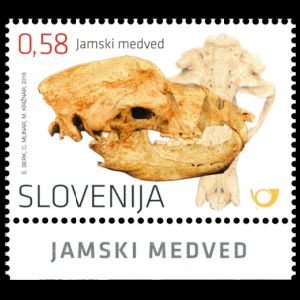
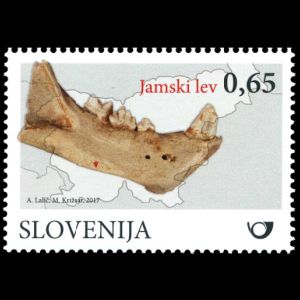
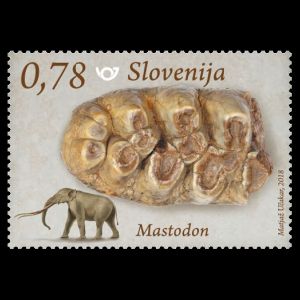
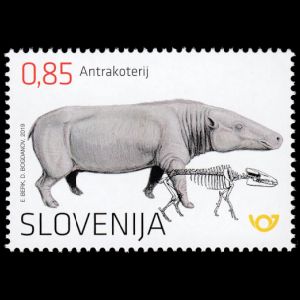
Since 1993 Post of Slovenia issue fossil stamps regularly. Slovenia’s fossil stamps highlight prehistoric animals whose remains have actually been found in Slovenia. [R2]
Notes:
[P1] This personalized stamps issued by the sculptor of the sculpture - Miha Kač (1942-2018).
During his professional life he made over 300 sculptures.
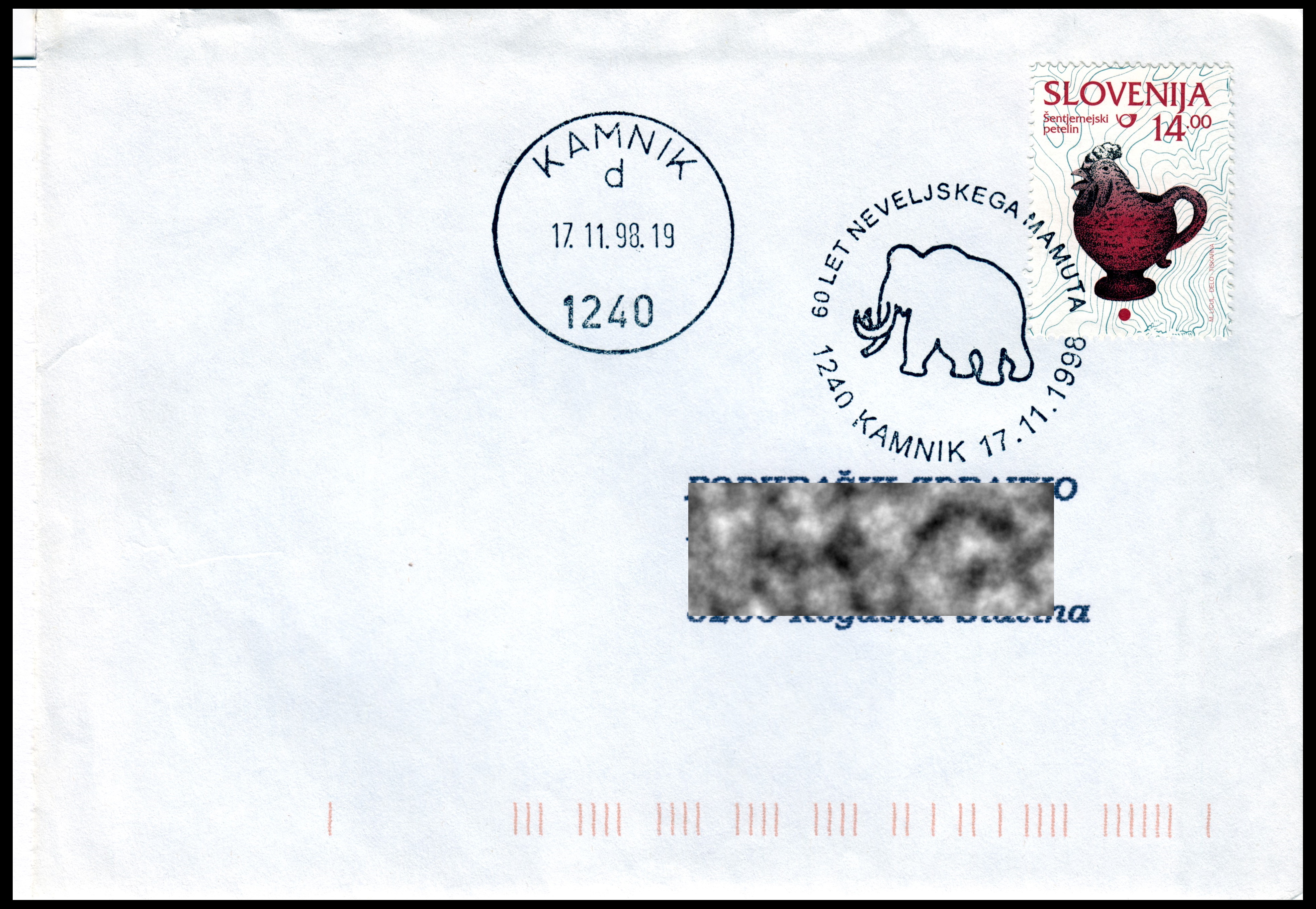
The life size Mammoth statue was completed by Miha Kač in 2008, after 3 years of work, for the 70th anniversary of discovering the mammoth skeleton in Nevlje by Kamnik. [R7]
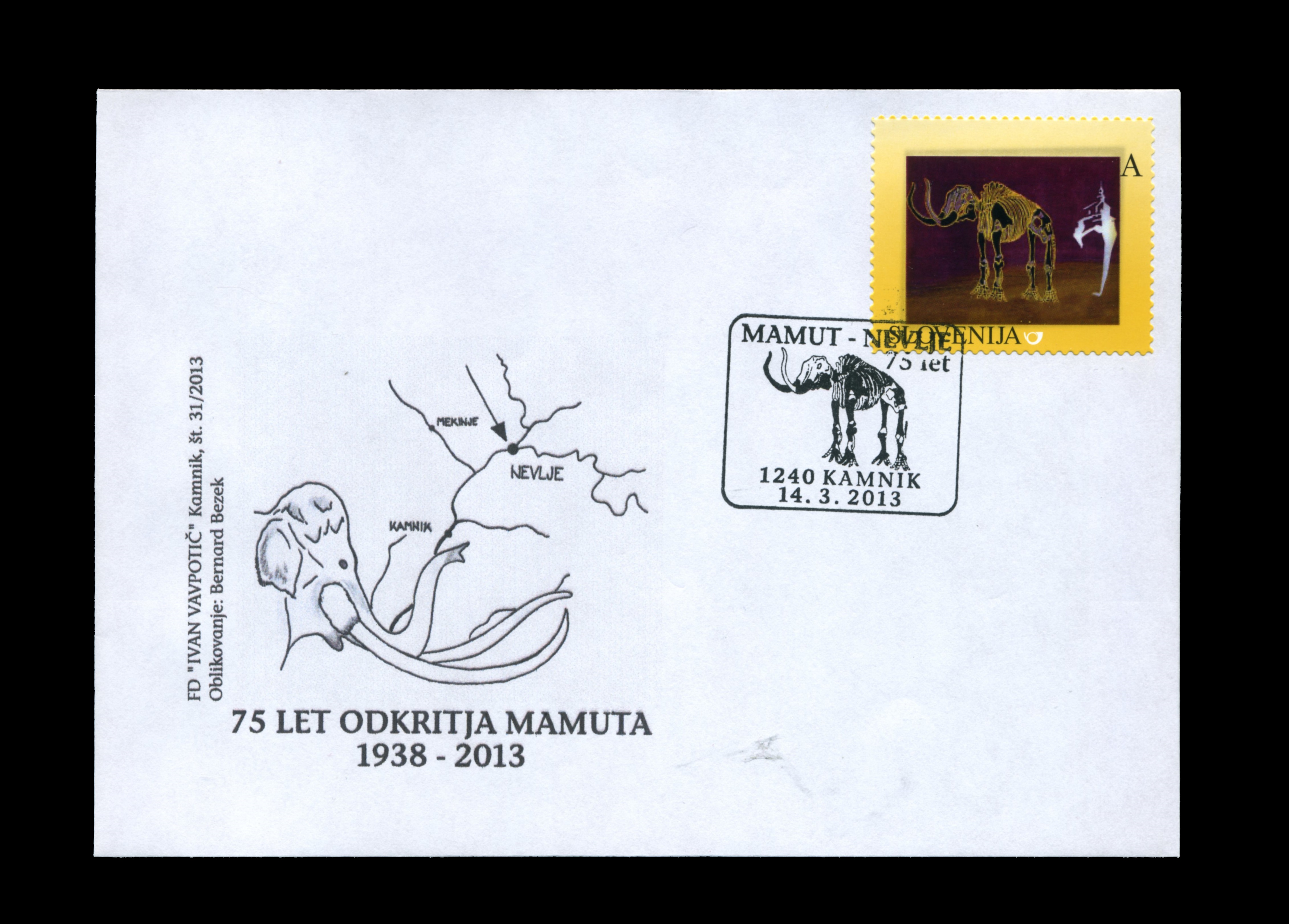
In 2013, philatelic club of Kamnik and Natural History Museum of Slovenia in Ljubljana issued their own personalized stamps for the 75th anniversary of discovering the mammoth.
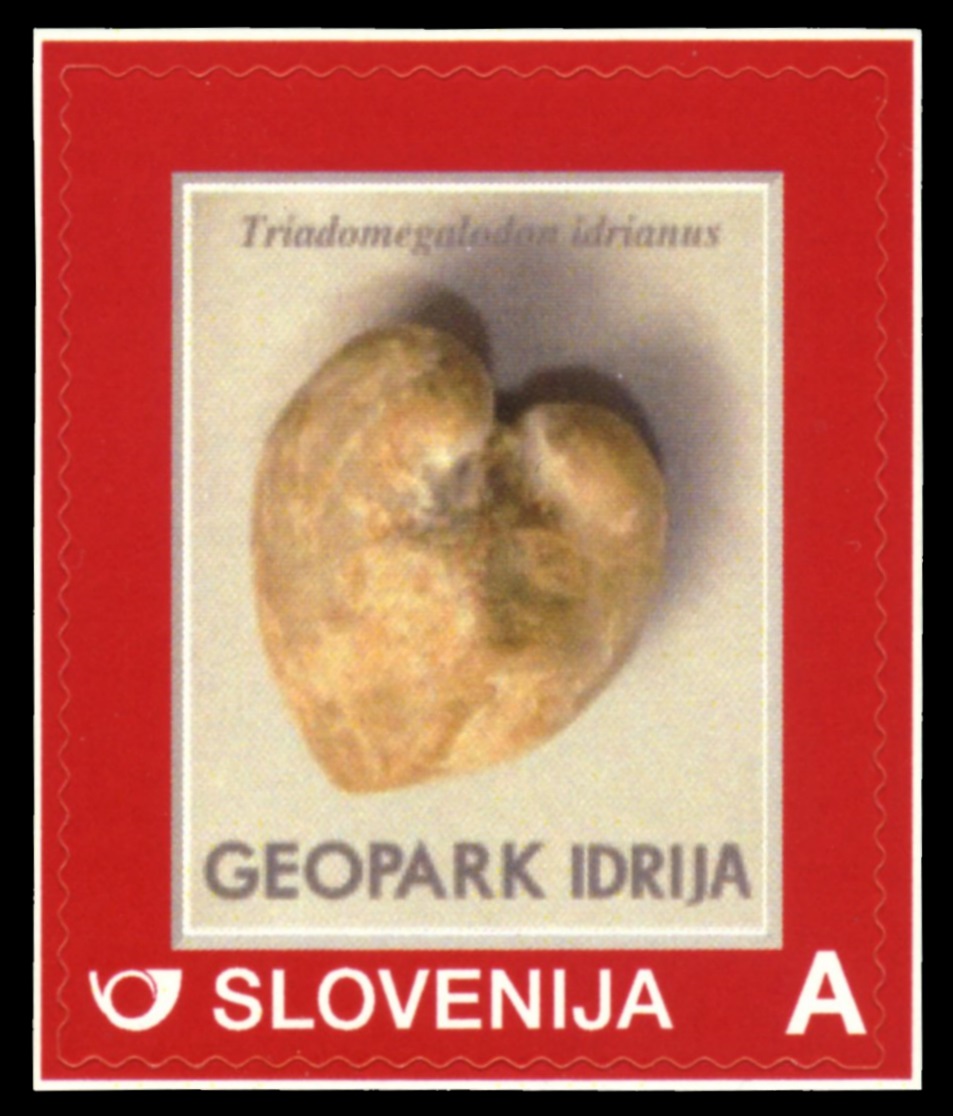
[P2] Issued by Geopark Iderija
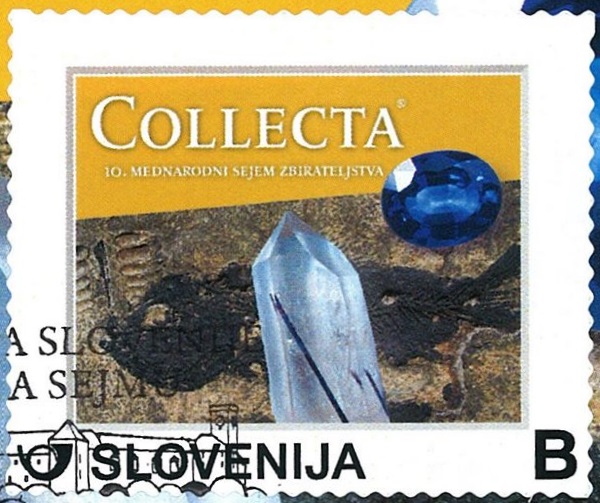
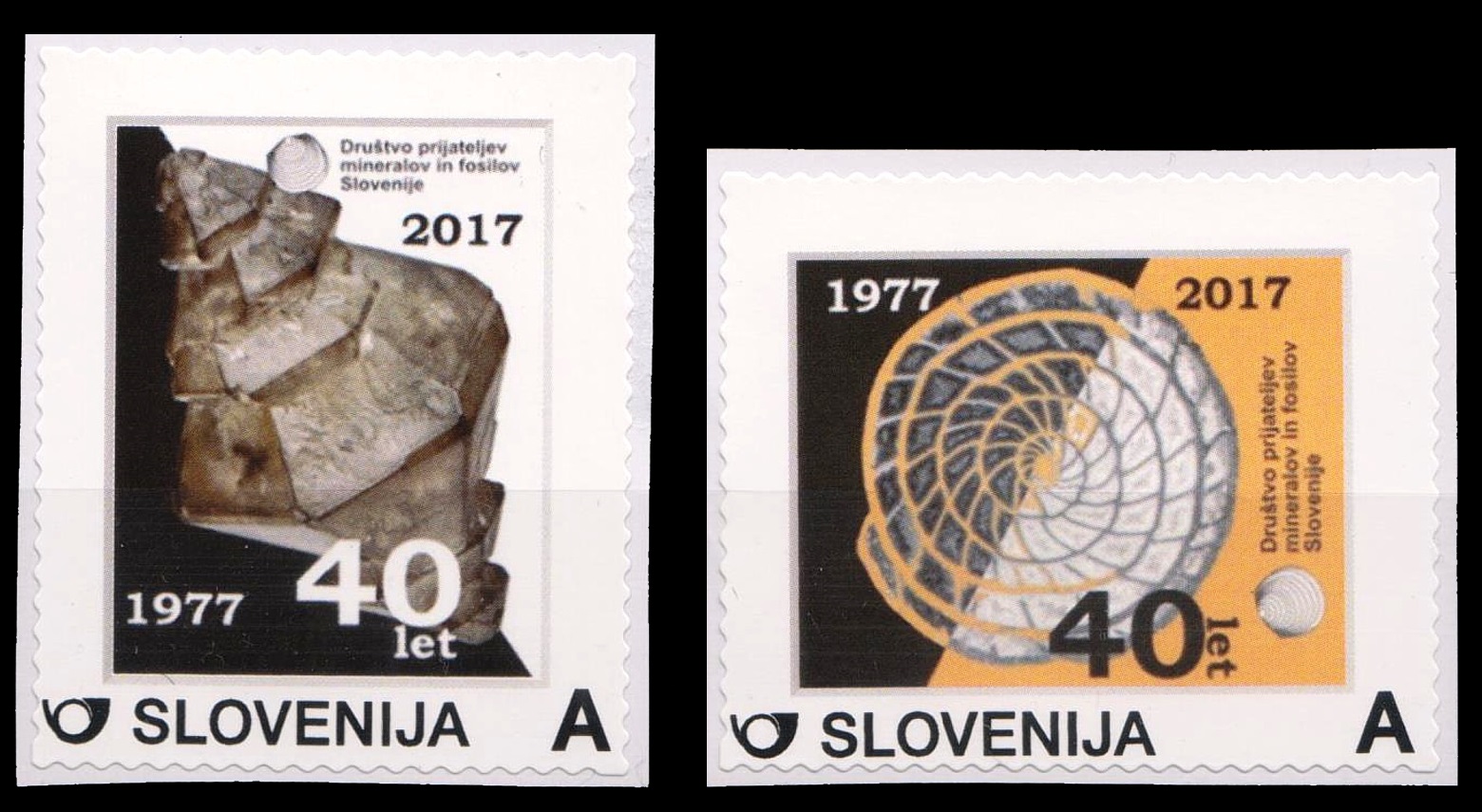
[P3] On occasion of 40th anniversary (1977-2017) of the Friends of Minerals and Fossils Association of Slovenia, two personalized self-adhesive stamps and two corresponding FDC were issued.
The first stamp shows a crystal of quartz, the second -
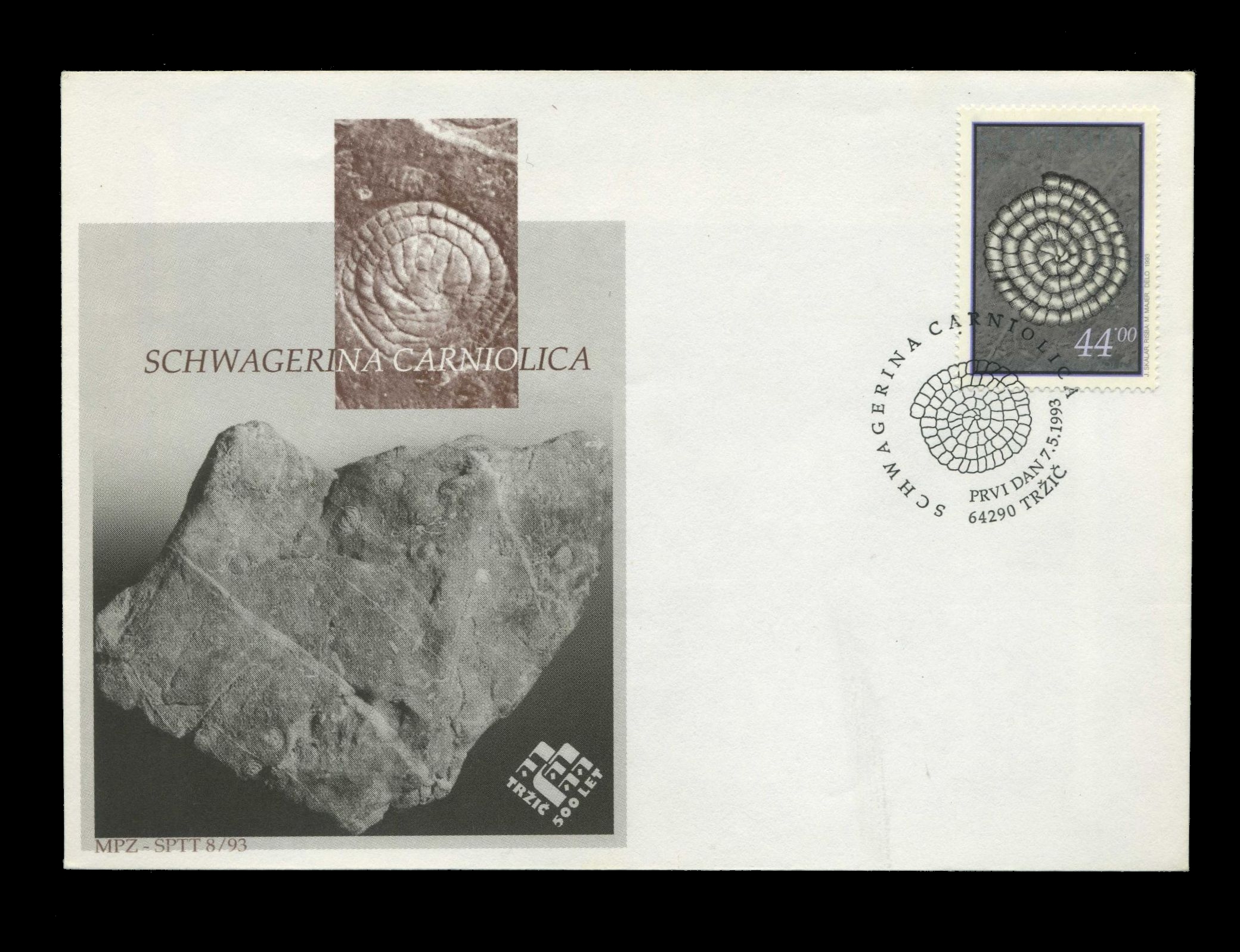
Sphaeroschwagerina carniolica, fusulinid foraminifera (transverse section) from
Lower Permian beds of Dovžanova soteska (near Tržič).
Miocene (Mid. Miocene, Badenian) brittle star from vicinity of Maribor town. All fossils and minerals are from Slovenia sites, shown on one of FDC covers.
Note: the brittle star is one of the best-preserved fossils (for echinoderm fossils) in Slovenia. Sphaeroschwagerina carniolica is from the fossil site (Dovžanova soteska) near Tržič, the place where the Friends of Minerals and Fossils Association of Slovenia is based. Dovžanova soteska is one of the most well-known fossil sites in Slovenia.
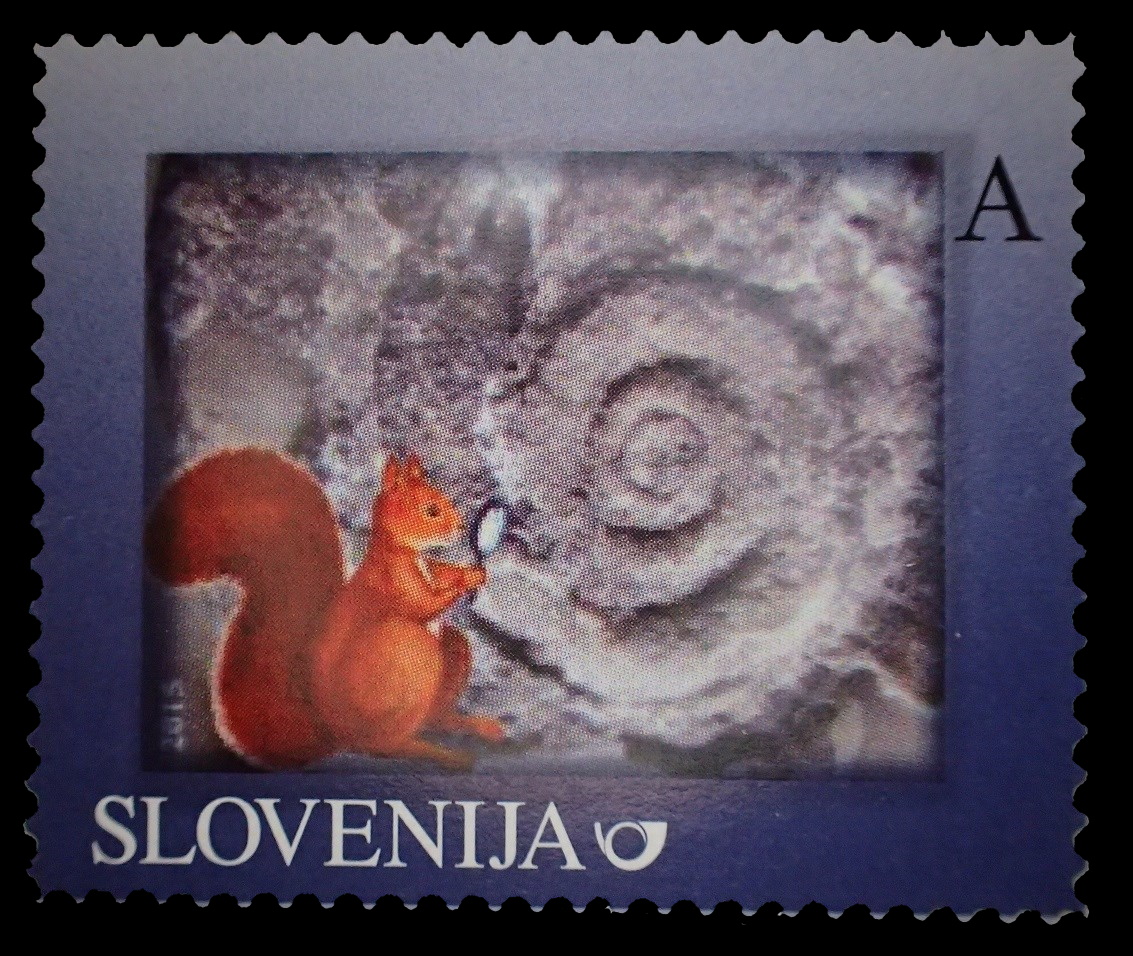
[P4] Permian gastropoda from Karavanke Mts
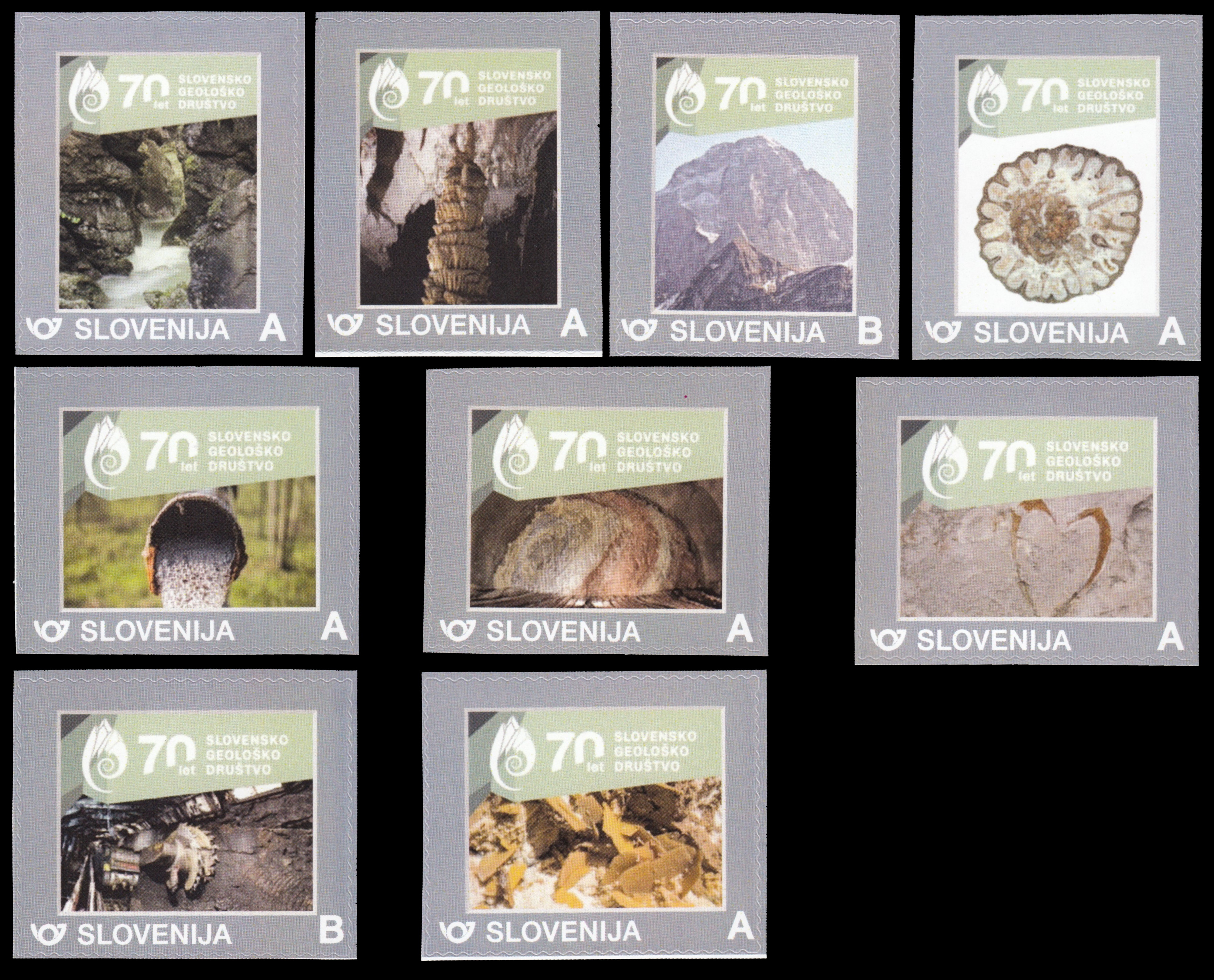
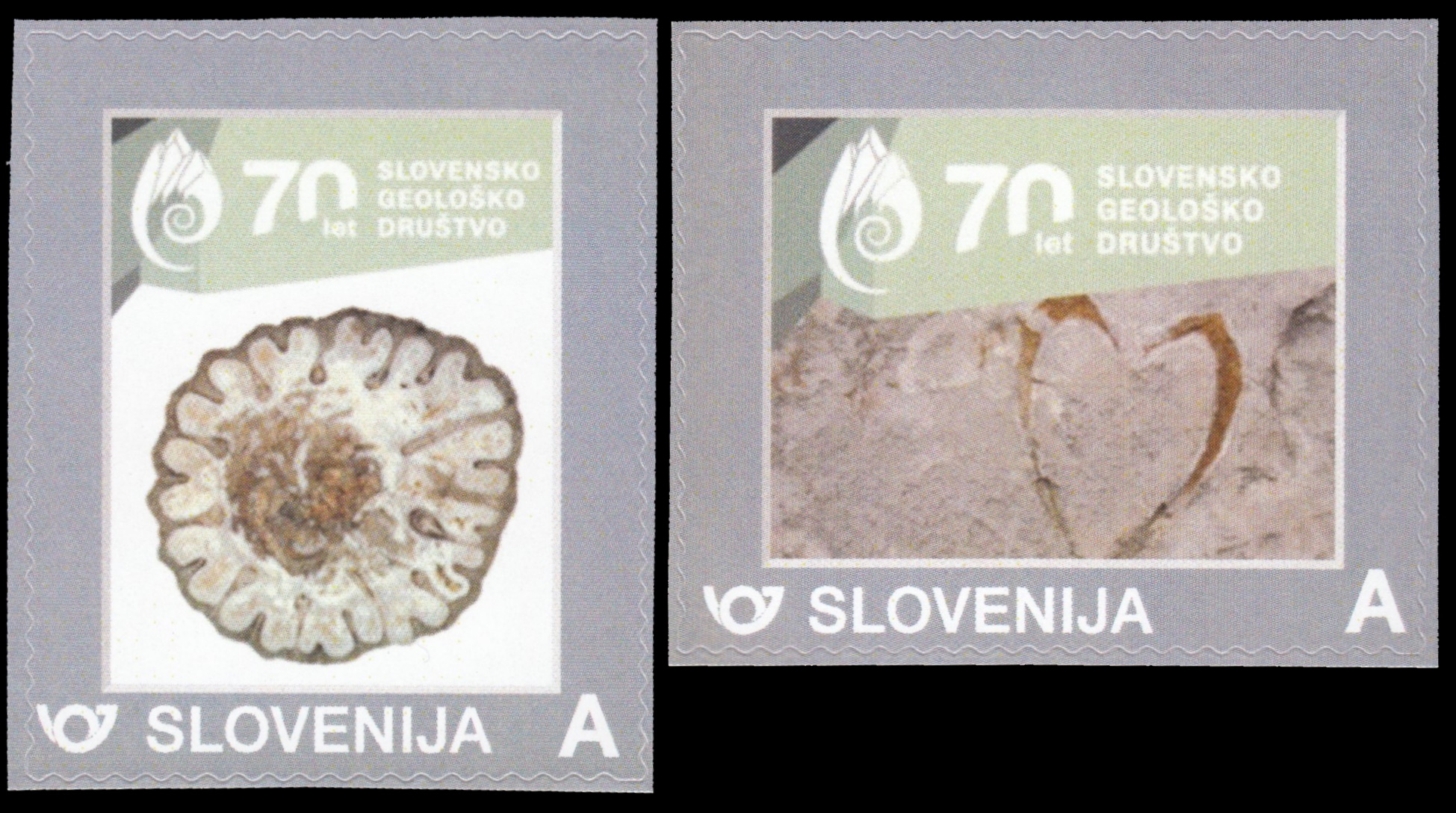
[P5] This set of self-adhesive, personalized stamps were issued by the Slovenian Geological Society.
Two of the issues show photographs of bivalve fossils.
In the upper row, far right is a stamp showing Pironaea. Pironaea was a rudist bivalve – rudists were major reef-builders during much of the Mesozoic.
In the center row, far right is an example of a Megalodontid bivalve.
Megalodontids are Triassic in age and lived in reefs – in cross-section they have a distinctive heart-shaped morphology.
Notes:
[A1] In 1995, the excavations of the archaeologists of the Scientific Research Centre of the Slovene Academy of Sciences and Arts (SRC SASA) unearthed a perforated thigh bone (femur) of a juvenile cave bear (Ursus spelaeus) from the cave bear bone accumulations of the Divje Babe I Cave Site situated over the hamlet of Reka in western Slovenia.
The artifact discovered was later recognized as possibly the oldest flute in the world, dating back to the middle of the last Ice Age, which began 115,000 years ago and ended with a long-lasting warming 10,000 years ago.
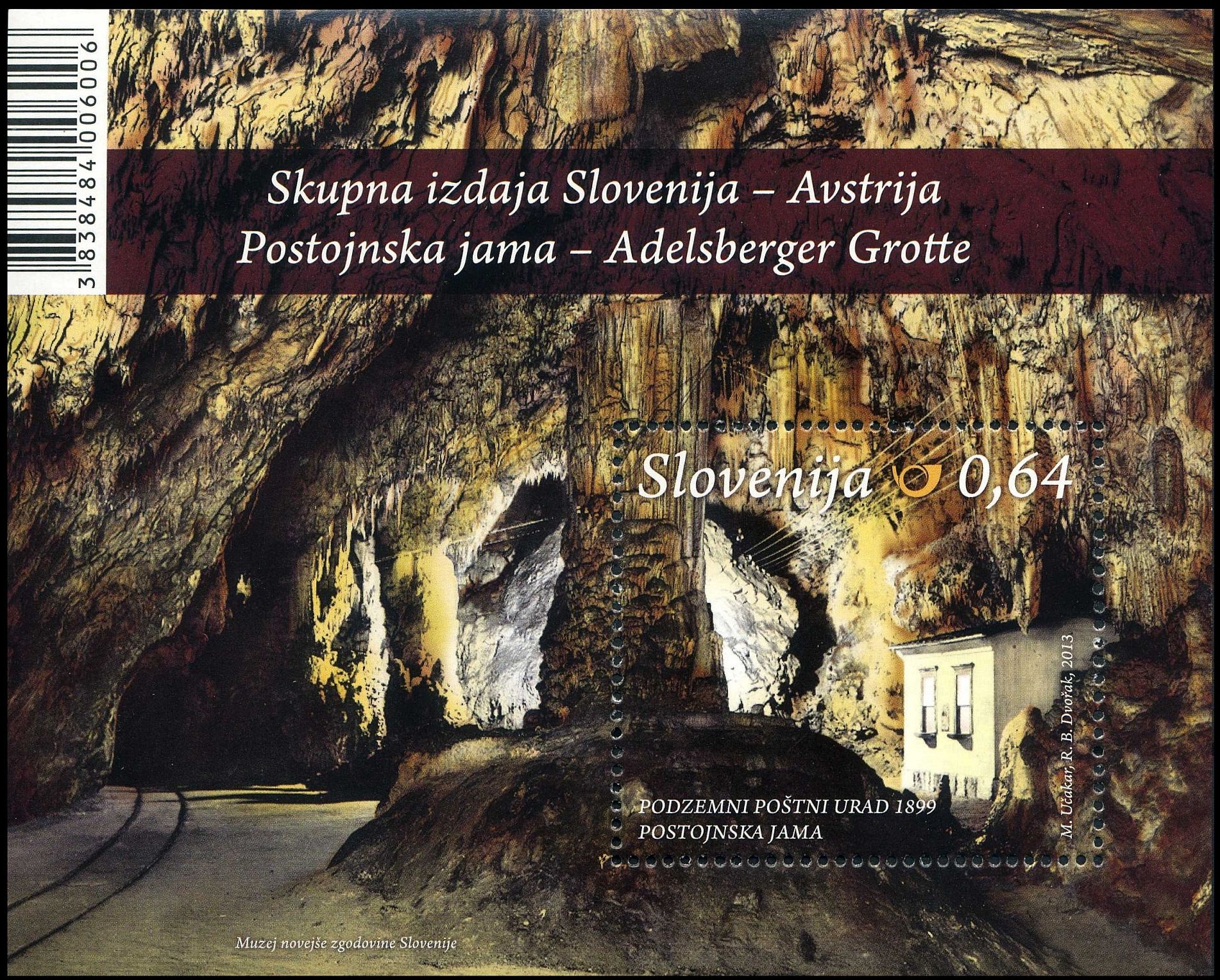
[A2] Joint issue with Austria.
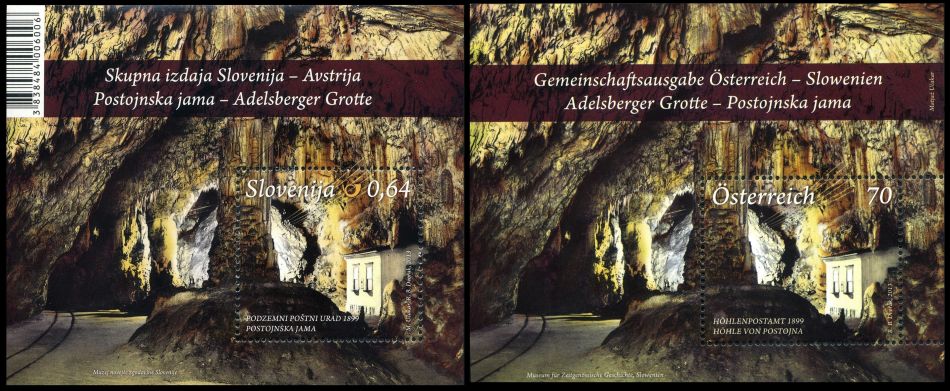
Postojna Cave on joint issue stamps of Austria (MiNr.: Bl73, Scott: 2431)
and Slovenia (MiNr.: Bl68, Scott: ). The Austrian stamp issued two weeks later, on April 6, 2013.
Postojna Cave is a 24,340 m long karst cave system near Postojna, southwestern Slovenia. It is the second-longest cave system in the country (following the Migovec System) as well as one of its top tourism sites. Postojna Cave was carved by the Pivka River over millions of years.
Some fossils of Cave Lion depicted on Slovenian stamps in 2017 are found in the cave.
The cave was first described in the 17th century when Slovenia was part of Austro-Hungarian Empire.
In 1899 August 15th, Austria opened the first underground cave post office in the world, near Kongresna Dvorana 500m inside the cave from the entrance.
In 1927, another cave post office was opened – in the Concert Hall. This post office is in operation till today and is world’s only underground post office. [R4]
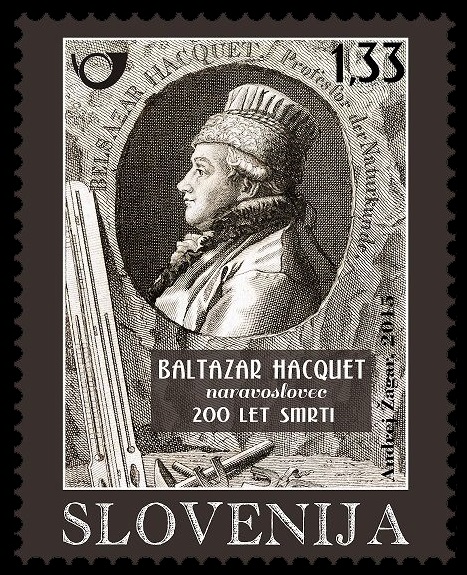
[A3] Official release of, 30.01.2015 "200 death anniversary of Baltazar Hacquet" stamp, says "He was interested in several other fields, including geology, palaeontology, mainly botany, ethnology and the Slovene language (he was French but learned to speak Slovene very well).
More information wanted.
Notes:
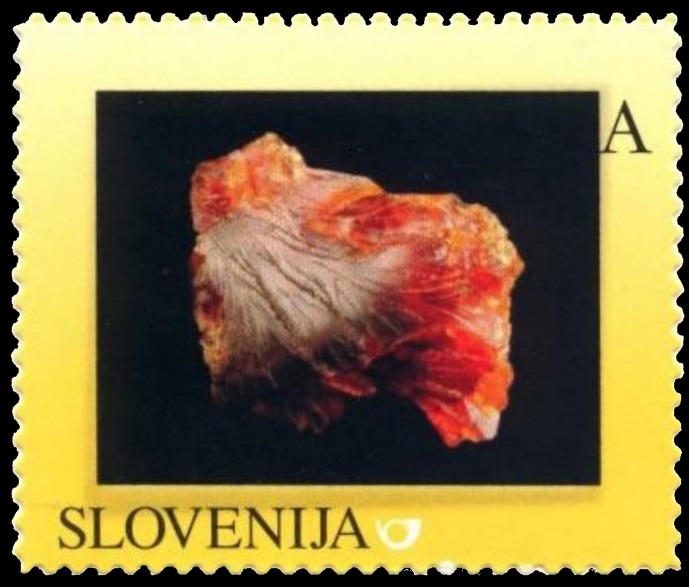
[PSA1] Amber is fossilized tree resin, sometimes small insects, leaves, hair or feather of some animals preserved inside of amber. In 2016 tail of a 99-million-year-old dinosaur, including bones, soft tissue, and even feathers was found in Amber in China.
Legend is here
Notes:
[PM1] Heinrich Freyer (Slovenized: Henrik Freyer; July 8, 1802 – August 21, 1866) was a Slovene botanist, zoologist, paleontologist, pharmacist, cartographer, and natural scientist.
In 1848 he arranged the basic plan and exhibition for the Natural History Museum in Klagenfurt, Austria and in 1852 he became a curator at the Zoological-Anatomical Museum of Trieste, Italy.
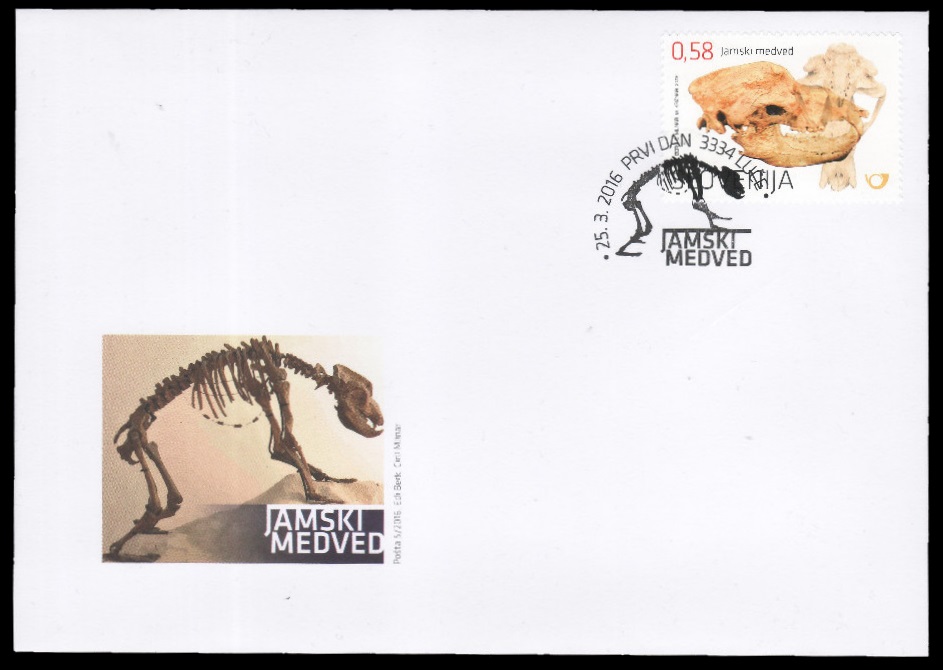
One of his major preparatory part is the complete skeleton of a cave bear in Ljubljana, that show on FDC and postmark of Slovenia in 2016 Freyer was custodian of Carniolan Provincial Museum from 1832-1852 (only in 1848, few months he worked in Klagenfurt) [R3]
Legend is here
Notes:
[PMO1] Carl Linne/Carl Linnaeus (1707 - 1778), was a Swedish botanist, physician, and zoologist, who laid the foundations for the modern scheme of binomial nomenclature uses in all biology related since, including paleontology.
He is known as the father of modern taxonomy, and is also considered one of the fathers of modern ecology.
It covers 20,273 square kilometers and has a population of slightly mote than 2 million.
The territory is mostly mountainous with a mainly continental climate, with the exception of the Slovene Littoral that has a sub-Mediterranean climate and the north-western area that has an Alpine climate. Additionally, the Dinaric Alps and the Pannonian Plain meet on the territory of Slovenia.
The country, marked by a significant biological diversity, is one of the most water-rich in Europe, with a dense river network, a rich aquifer system, and significant karst underground watercourses. Over half of the territory is covered by forest.
The Slovene lands were part of the Austro-Hungarian Empire until the latter's dissolution at the end of World War I.
In 1918, the Slovenes joined the Serbs and Croats in forming a new multinational state, which was named Yugoslavia in 1929.
After World War II, Slovenia became a republic of the renewed Yugoslavia, which though communist, distanced itself from Moscow's rule. Dissatisfied with the exercise of power by the majority Serbs, the Slovenes succeeded in establishing their independence in 1991 after a short 10-day war. [R1]
The first stamp of independent Slovenia was issued on 26 June 1991 and was dedicated to Independency declaration. Yugoslav stamps were valid for postage in Slovenia until 25 April 1992.
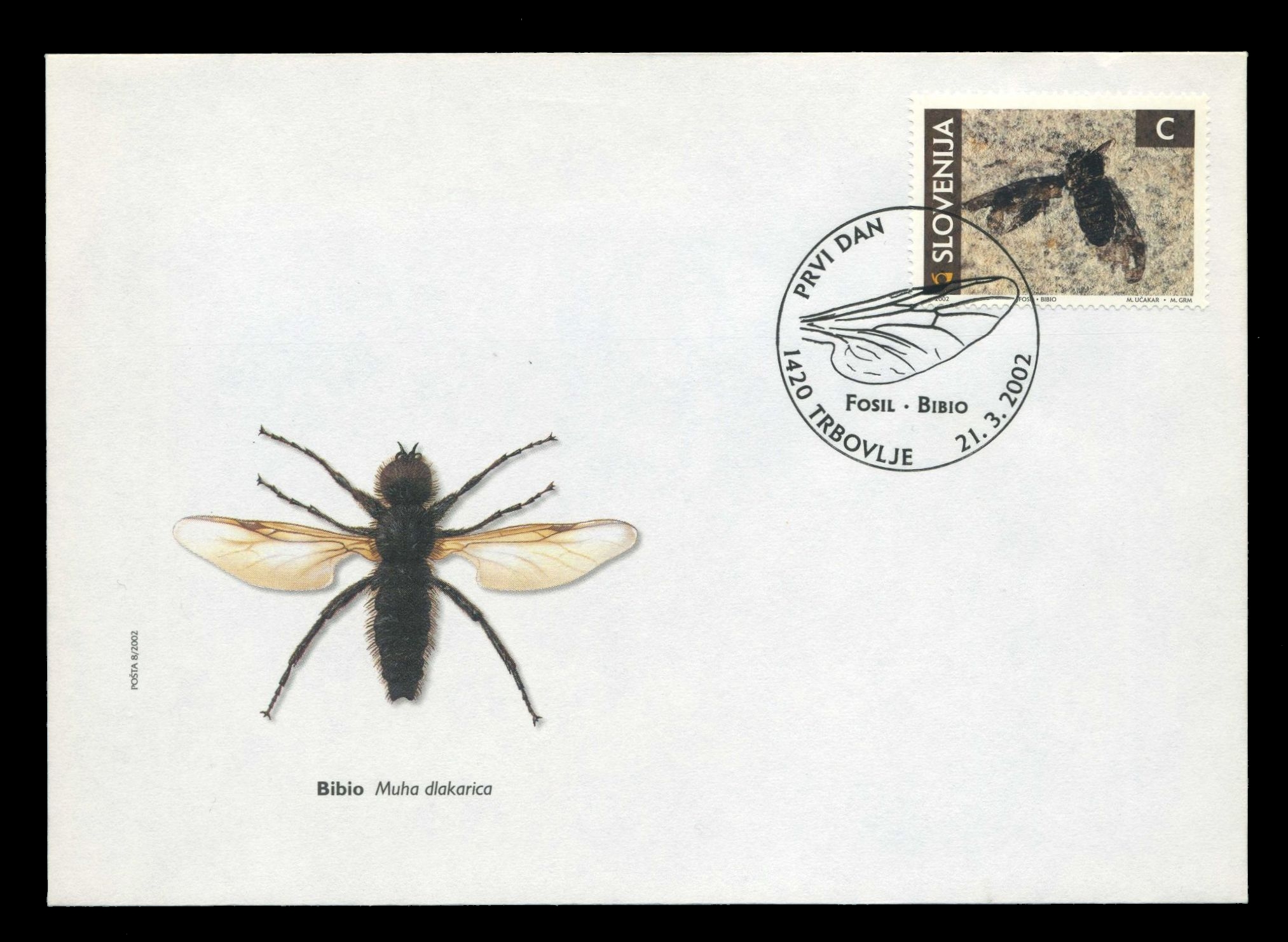
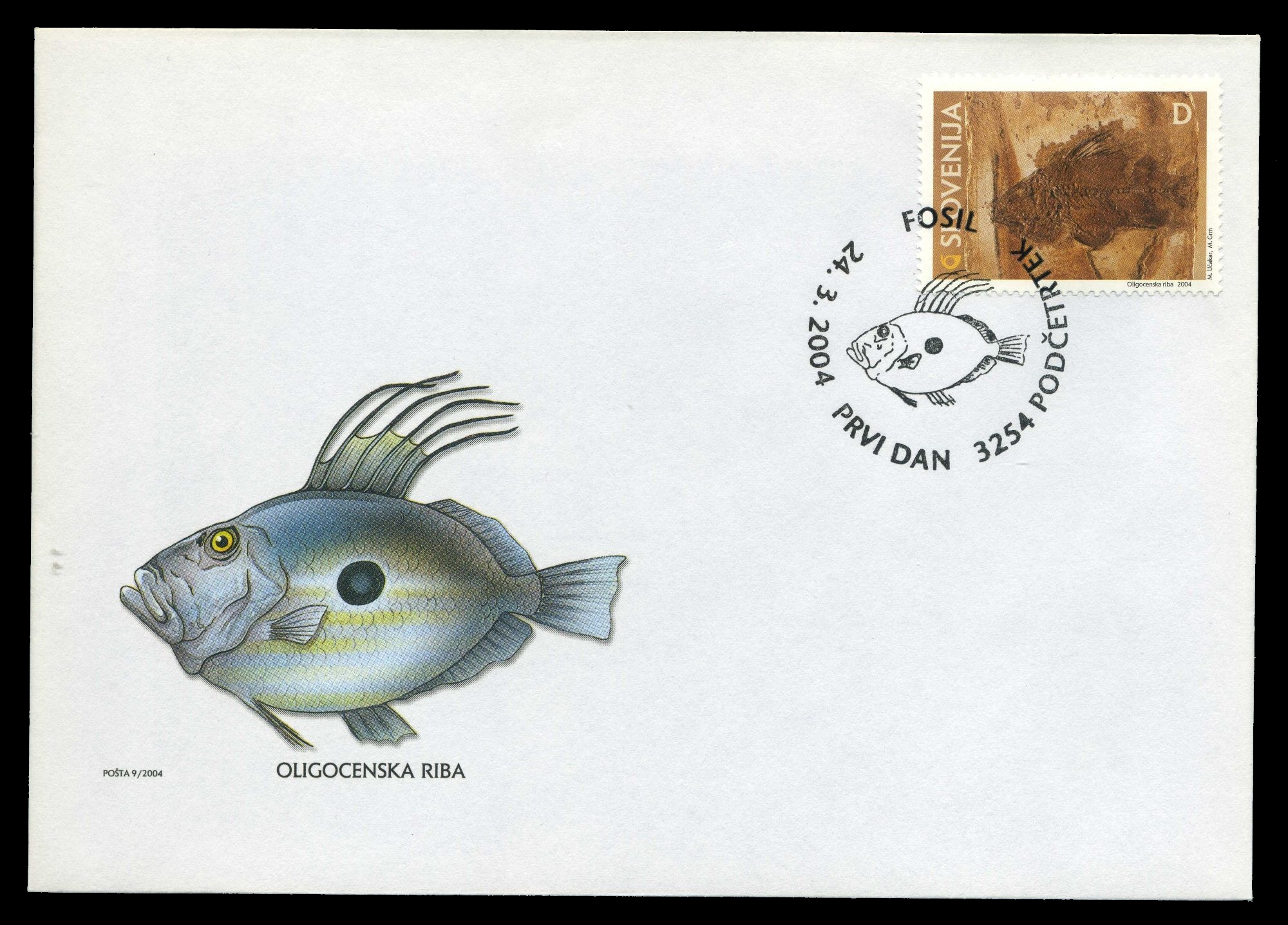
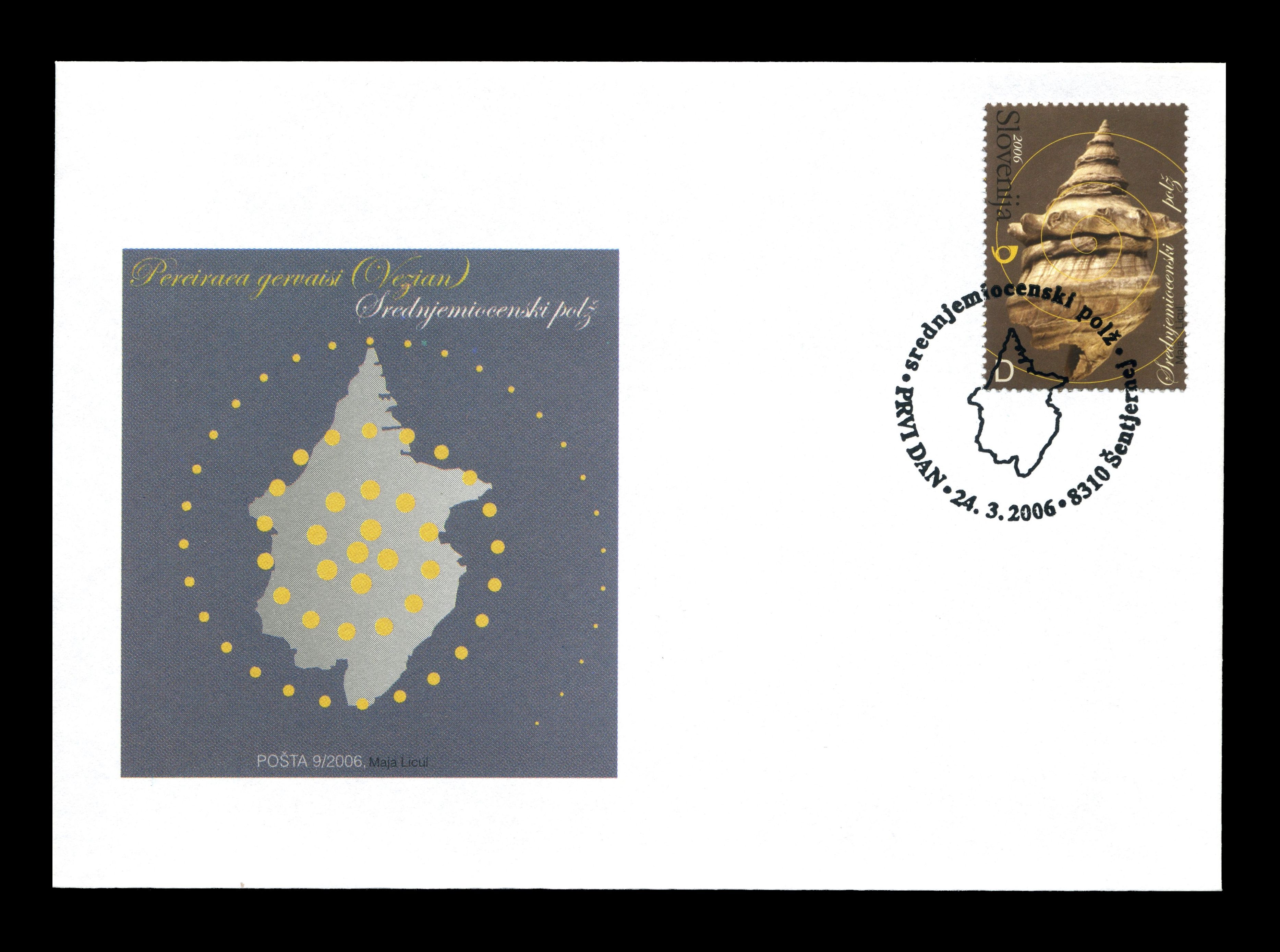
Since 1993 Post of Slovenia issue fossil stamps regularly. Slovenia’s fossil stamps highlight prehistoric animals whose remains have actually been found in Slovenia. [R2]
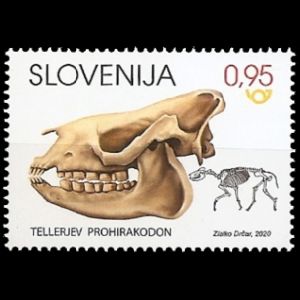
Official stamps of Slovenia related to Paleontology: fossils and reconstructions of prehistoric animals
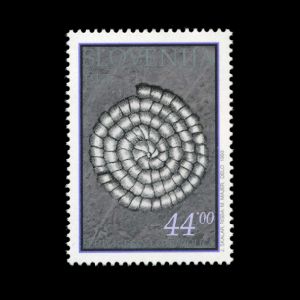
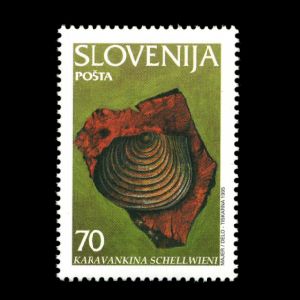
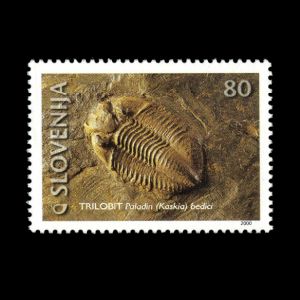
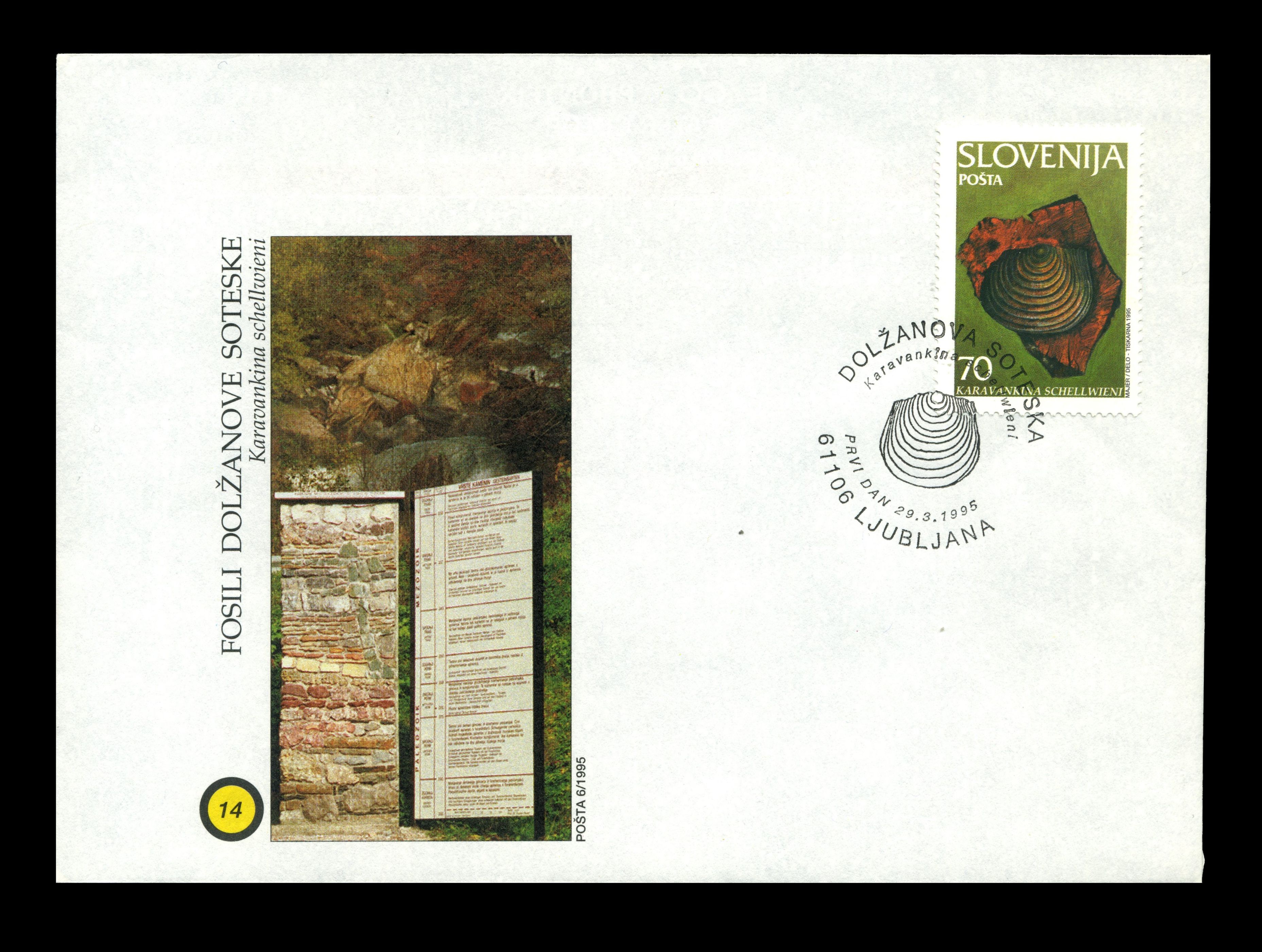
| 07.05.1993 "Fossils of Dolzan Gorge" | 29.03.1995 "Karavankina schellwieni" | 21.03.2000 "Fossils - Trilobite" |
 |
 |
 |
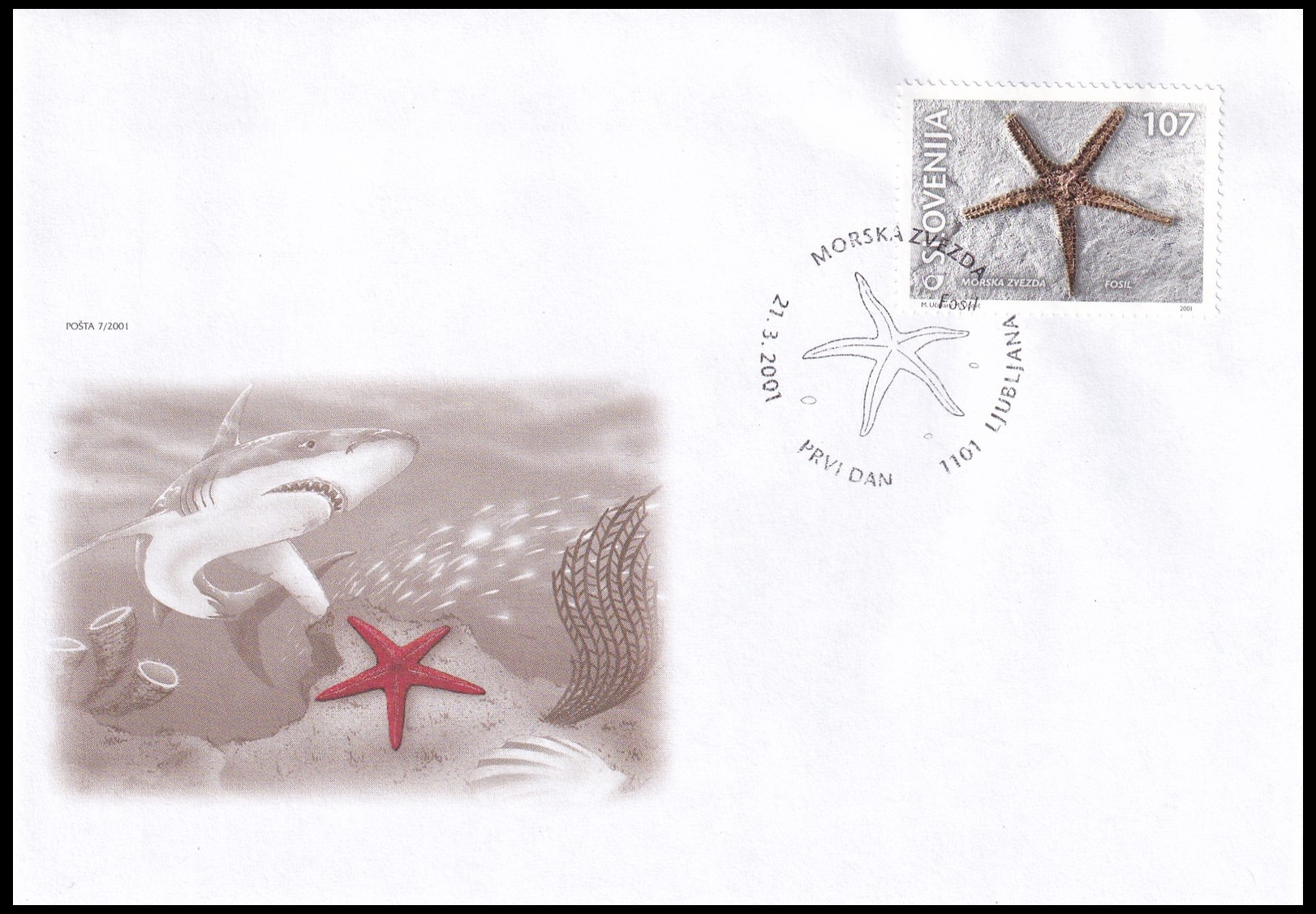
| 21.03.2001 "Fossils - Starfish Fossil" | 21.03.2002 "Fossils - Insect from the Oligocene" | 24.03.2004 "Fossils - Oligocene Fish" |
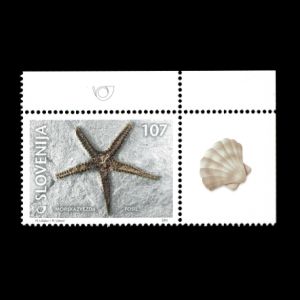 |
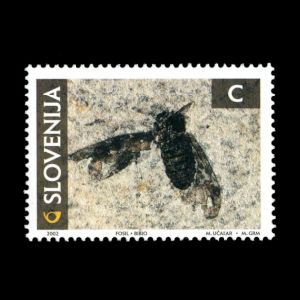 |
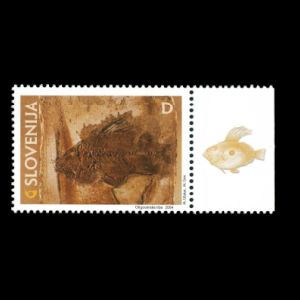 |
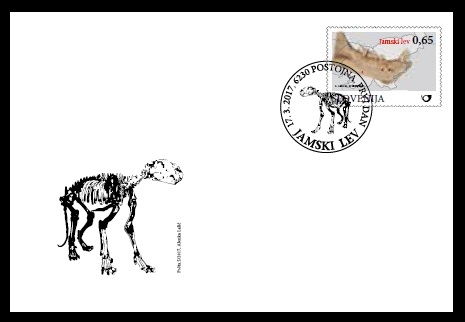
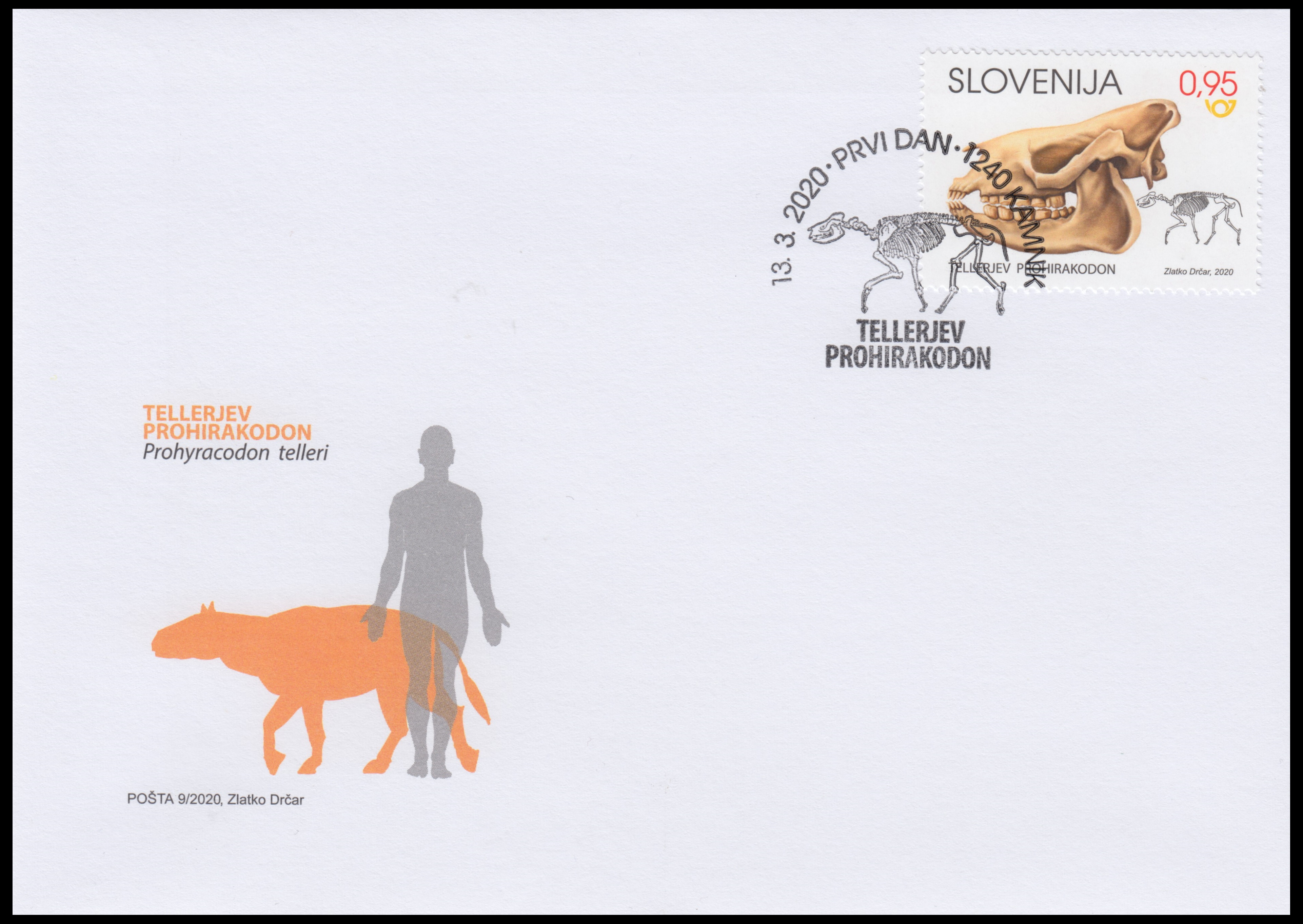
| 24.03.2006 "Middle Miocene Fossil Snail" | 25.03.2016 "Mammal Fossils in Slovenia: Cave Bear" | 17.03.2017 "Mammal Fossils in Slovenia: Cave Lion" |
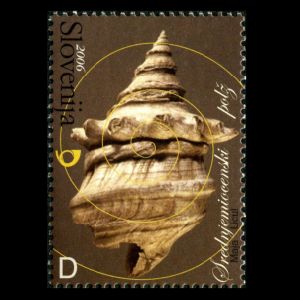 |
 |
|
| 23.03.2018 "Mammal Fossils in Slovenia: Mastodon" | 22.03.2019 "Mammal Fossils in Slovenia: Anthracotherium" | 13.03.2020 "Mammal Fossils in Slovenia: Prohyracodon telleri" |
|
|
 |
Some personalized stamps of Slovenia related to Paleontology: fossils and reconstructions of prehistoric animals
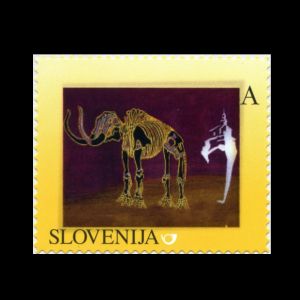
| xx.xx.2010 "Mammoth" [P1] | 14.03.2013 "75 years of the discovery of a mammoth in Nevlje by Kamnik"
Issued by philatelic club of Kamnik. |
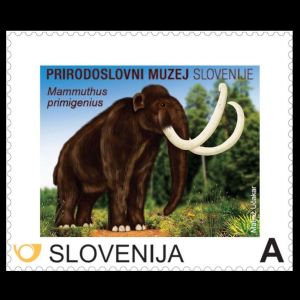
19.09.2013 "75 years of the discovery of a mammoth in Nevlje by Kamnik" Issued by Natural History Museum of Slovenia in Ljubljana |
 |
 |
 |
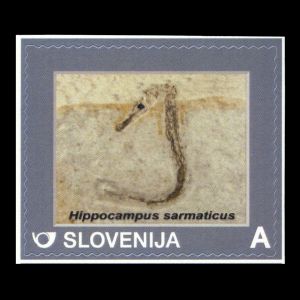
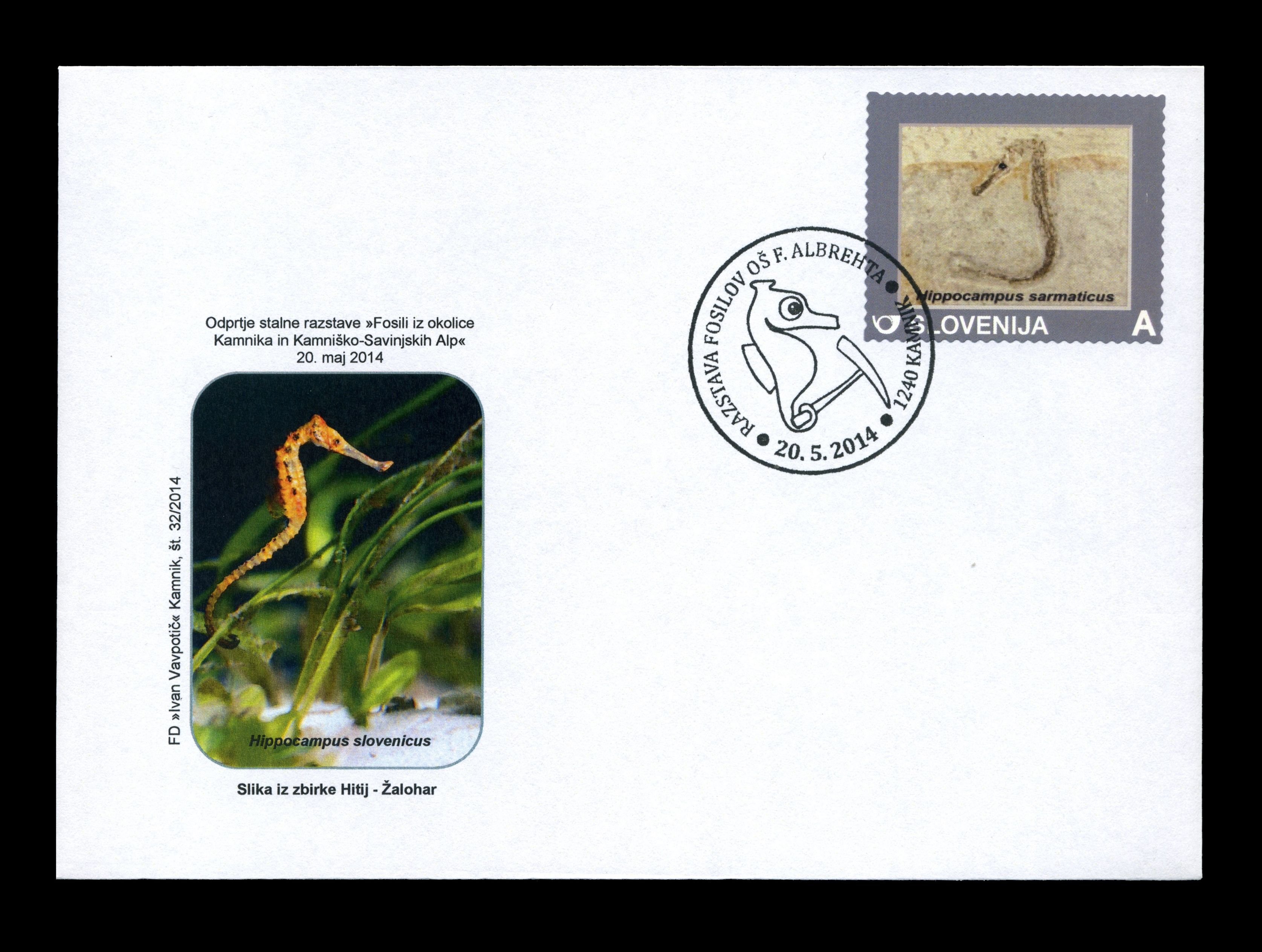
| 20.05.2014 "Discovery of sea-horse fossil at Kamnik–Savinja Alps, Slovenia"
Issued by philatelic club of Kamnik. |
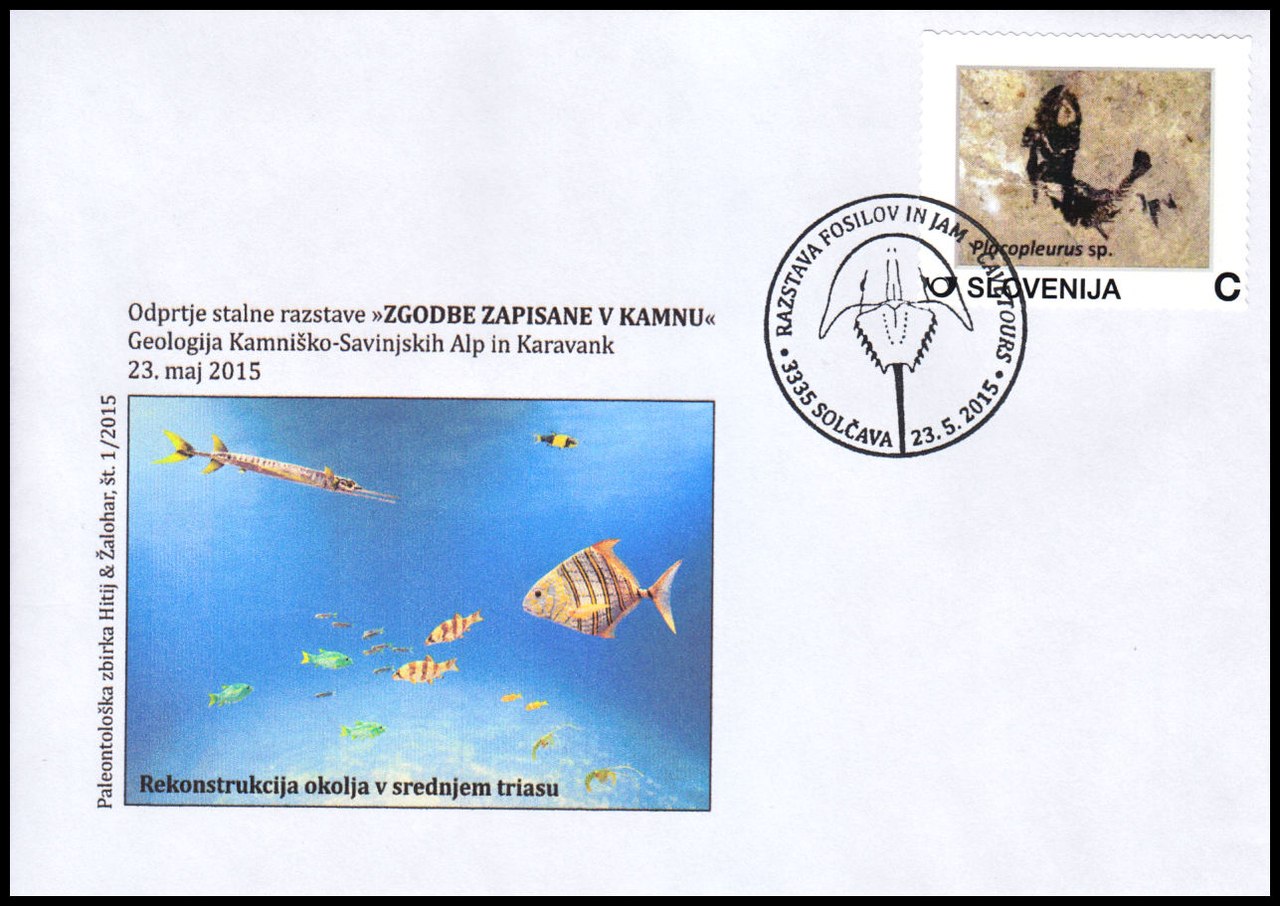
21.06.2014 "Fossil shell: Triadomegalodon idrianus" [P2] | 23.05.2015 "Stories written in stone - Geology of Kamnik-Savinja Alps and Karavanke"
Issued by philatelic club of Kamnik. |
 |
 |
 |
| 04.07.2015 "7 years of the founding of the Sciurus club" [P4] | 25.03.2016 "Collecta trade show" | 17.03.2017 "40th anniversary of the Friends of Minerals and Fossils Association of Slovenia" [P3] |
 |
 |
 |
| xx.xx.2021 "70 years of Slovenian Geological Society" [P5] | ||
 |
||
Notes:
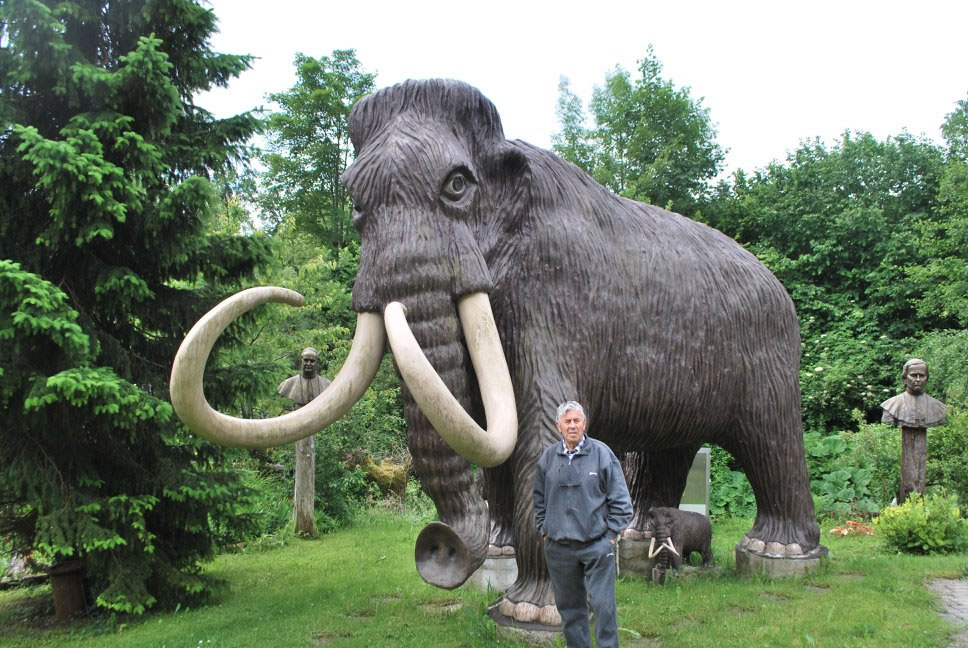 |
| The sculptore Miha Kač by his Mammoth. Image credit: kamnik.info. |
During his professional life he made over 300 sculptures.
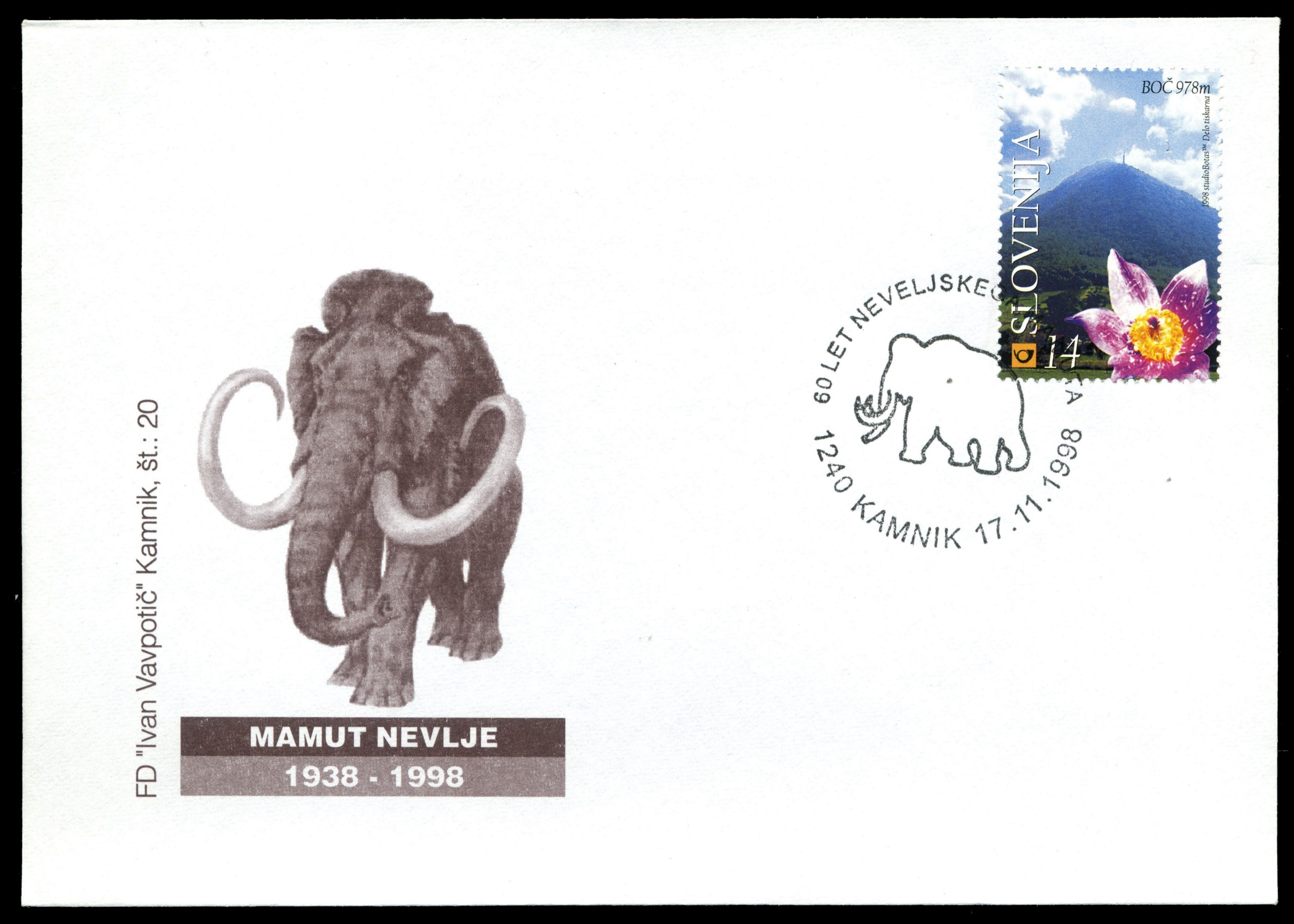
The life size Mammoth statue was completed by Miha Kač in 2008, after 3 years of work, for the 70th anniversary of discovering the mammoth skeleton in Nevlje by Kamnik. [R7]
In 2013, philatelic club of Kamnik and Natural History Museum of Slovenia in Ljubljana issued their own personalized stamps for the 75th anniversary of discovering the mammoth.
[P2] Issued by Geopark Iderija
The Idrija Geopark covers the area of the Municipality of Idrija,
extends over an area of 294 km2 in western Slovenia, in the hills of Idrija and Cerkno.
Because of its unique position at the crossroads of the Alps and the Dinarides,
it represents a clear transition from subalpine to karst terrain with incredible diversity:
deep dells below high karst plateaus with peaks offering scenic panoramas from the Julian Alps to the Adriatic Sea.
The rocks forming the surface of the Idrija Geopark can be dated back to 340–60 million years ago.
[R6]
[P3] On occasion of 40th anniversary (1977-2017) of the Friends of Minerals and Fossils Association of Slovenia, two personalized self-adhesive stamps and two corresponding FDC were issued.
|
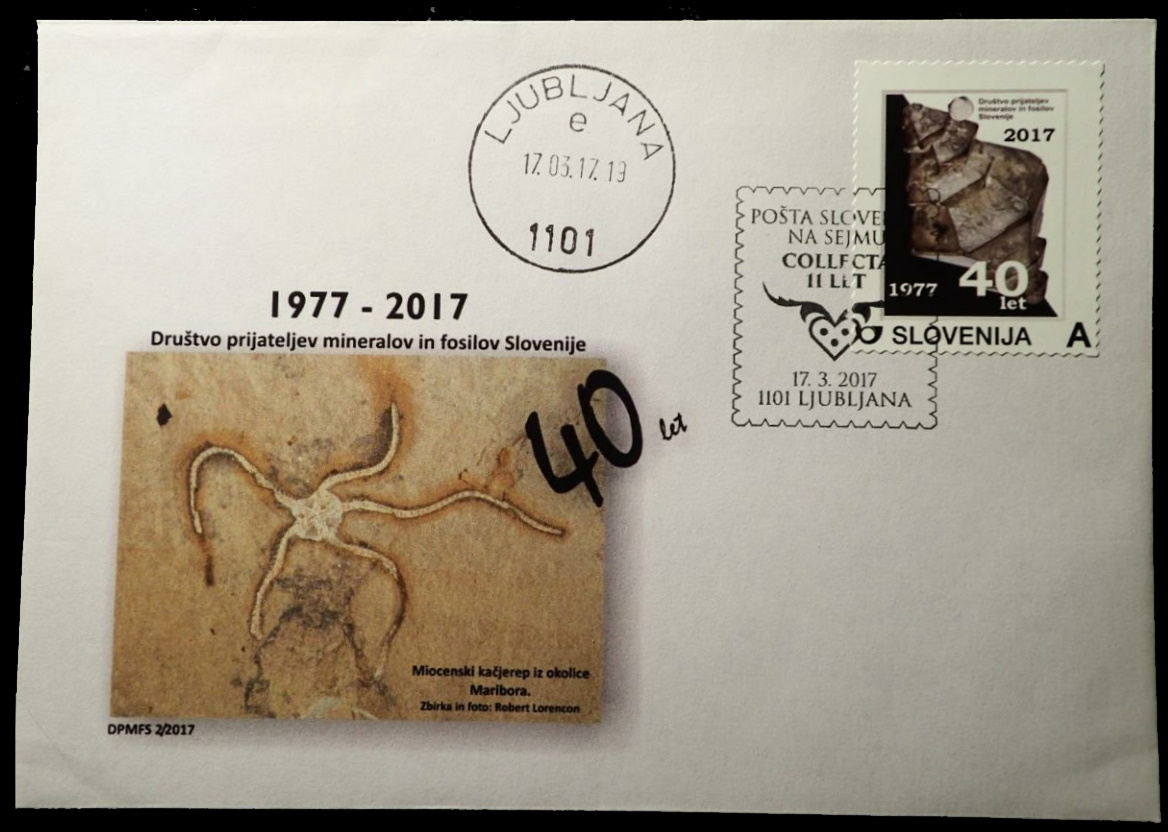
| Sphaeroschwagerina carniolica from fossil Dovžanova soteska site on personalized FDC of Slovenia 2017. |
Miocene (Mid. Miocene, Badenian) brittle star from vicinity of Maribor town. All fossils and minerals are from Slovenia sites, shown on one of FDC covers.
Note: the brittle star is one of the best-preserved fossils (for echinoderm fossils) in Slovenia. Sphaeroschwagerina carniolica is from the fossil site (Dovžanova soteska) near Tržič, the place where the Friends of Minerals and Fossils Association of Slovenia is based. Dovžanova soteska is one of the most well-known fossil sites in Slovenia.
[P4] Permian gastropoda from Karavanke Mts
[P5] This set of self-adhesive, personalized stamps were issued by the Slovenian Geological Society.
Two of the issues show photographs of bivalve fossils.
In the upper row, far right is a stamp showing Pironaea. Pironaea was a rudist bivalve – rudists were major reef-builders during much of the Mesozoic.
In the center row, far right is an example of a Megalodontid bivalve.
Megalodontids are Triassic in age and lived in reefs – in cross-section they have a distinctive heart-shaped morphology.
|
|
Fossils on "70th years of Slovenian Geological Society" personalized stamps of Slovenia 2021. The stamp showing Pironaea on the left. The stamp showing Megalodontid bivalve on the right. |
-
In the Valley of the Lake in Lužnica, below the Batogniški sedlo mountain, there are slightly,
to the north, sloping deposits of light gray Upper Triassic Dachstein limestone.
The rocks are full of diverse cross-sections of fossil remains of megalodontid shells.
Several centimeters large, typically heart-shaped and also differently shaped cross-sections are usually white or gray, and the fossil shells under the Batogniški sedlo are special because they are colored red. -
Three decades ago, workers at the Rodež quarry near Anhovo found a fossil of the lower shell
of the Upper Cretaceous rudist species Pironaea buseri, which was transferred from the edge of
the carbonate platform to the Paleocene flysch basin in the Paleocene. Dr. Desanka Pejović
recognized a new rudist species and named it after prof. Stanko Buser.
Rudists were bivalve mollusks very similar to the clams, they had two shells or valves joined at a hinge. Some of these bivalve mollusks had horn-shaped shells which lay flat on the bottom of the ocean shore, prevented currents from flipping the mollusks or washing them away.
Rudists evolved in the Jurassic Era and burgeoned throughout the Mesozoic, but their greatest success came during the Cretaceous when they pushed out corals and sponges to become the major reef-building organisms in the Tethys Ocean and various other warm tropical shelves around the world. [R5]
Other stamps of Slovenia to consider: fossil found places, bone tools, contributors to Paleontology
| 23.11.2007 "Archeological Finds" [A1] | 22.03.2013 "Postojna Cave – Underground Post Office" [A2] | 30.01.2015 "200 death anniversary of Baltazar Hacquet" [A3] |
 |
 |
|
Notes:
[A1] In 1995, the excavations of the archaeologists of the Scientific Research Centre of the Slovene Academy of Sciences and Arts (SRC SASA) unearthed a perforated thigh bone (femur) of a juvenile cave bear (Ursus spelaeus) from the cave bear bone accumulations of the Divje Babe I Cave Site situated over the hamlet of Reka in western Slovenia.
The artifact discovered was later recognized as possibly the oldest flute in the world, dating back to the middle of the last Ice Age, which began 115,000 years ago and ended with a long-lasting warming 10,000 years ago.
[A2] Joint issue with Austria.

Postojna Cave is a 24,340 m long karst cave system near Postojna, southwestern Slovenia. It is the second-longest cave system in the country (following the Migovec System) as well as one of its top tourism sites. Postojna Cave was carved by the Pivka River over millions of years.
Some fossils of Cave Lion depicted on Slovenian stamps in 2017 are found in the cave.
The cave was first described in the 17th century when Slovenia was part of Austro-Hungarian Empire.
In 1899 August 15th, Austria opened the first underground cave post office in the world, near Kongresna Dvorana 500m inside the cave from the entrance.
In 1927, another cave post office was opened – in the Concert Hall. This post office is in operation till today and is world’s only underground post office. [R4]
[A3] Official release of, 30.01.2015 "200 death anniversary of Baltazar Hacquet" stamp, says "He was interested in several other fields, including geology, palaeontology, mainly botany, ethnology and the Slovene language (he was French but learned to speak Slovene very well).
More information wanted.
Some other personalized stamps of Slovenia to consider: amber
| xx.xx.2008 "Amber" [PSA1] | ||
 |
||
Notes:
[PSA1] Amber is fossilized tree resin, sometimes small insects, leaves, hair or feather of some animals preserved inside of amber. In 2016 tail of a 99-million-year-old dinosaur, including bones, soft tissue, and even feathers was found in Amber in China.
Commemorative postmarks of Slovenia related to Paleontology
Legend is here





Notes:
[PM1] Heinrich Freyer (Slovenized: Henrik Freyer; July 8, 1802 – August 21, 1866) was a Slovene botanist, zoologist, paleontologist, pharmacist, cartographer, and natural scientist.
In 1848 he arranged the basic plan and exhibition for the Natural History Museum in Klagenfurt, Austria and in 1852 he became a curator at the Zoological-Anatomical Museum of Trieste, Italy.
One of his major preparatory part is the complete skeleton of a cave bear in Ljubljana, that show on FDC and postmark of Slovenia in 2016 Freyer was custodian of Carniolan Provincial Museum from 1832-1852 (only in 1848, few months he worked in Klagenfurt) [R3]
Some other postmarks of Slovenia to consider: fossil found places, bone tools, contributors to Paleontology
Legend is here
| 21.06.2001 "Carl von Linne and J.A. Scopoli" [Sp] [PMO1] | 23.11.2007 "Archeological Finds" [FDC] [A1] | |
 |
 |
|
Notes:
[PMO1] Carl Linne/Carl Linnaeus (1707 - 1778), was a Swedish botanist, physician, and zoologist, who laid the foundations for the modern scheme of binomial nomenclature uses in all biology related since, including paleontology.
He is known as the father of modern taxonomy, and is also considered one of the fathers of modern ecology.
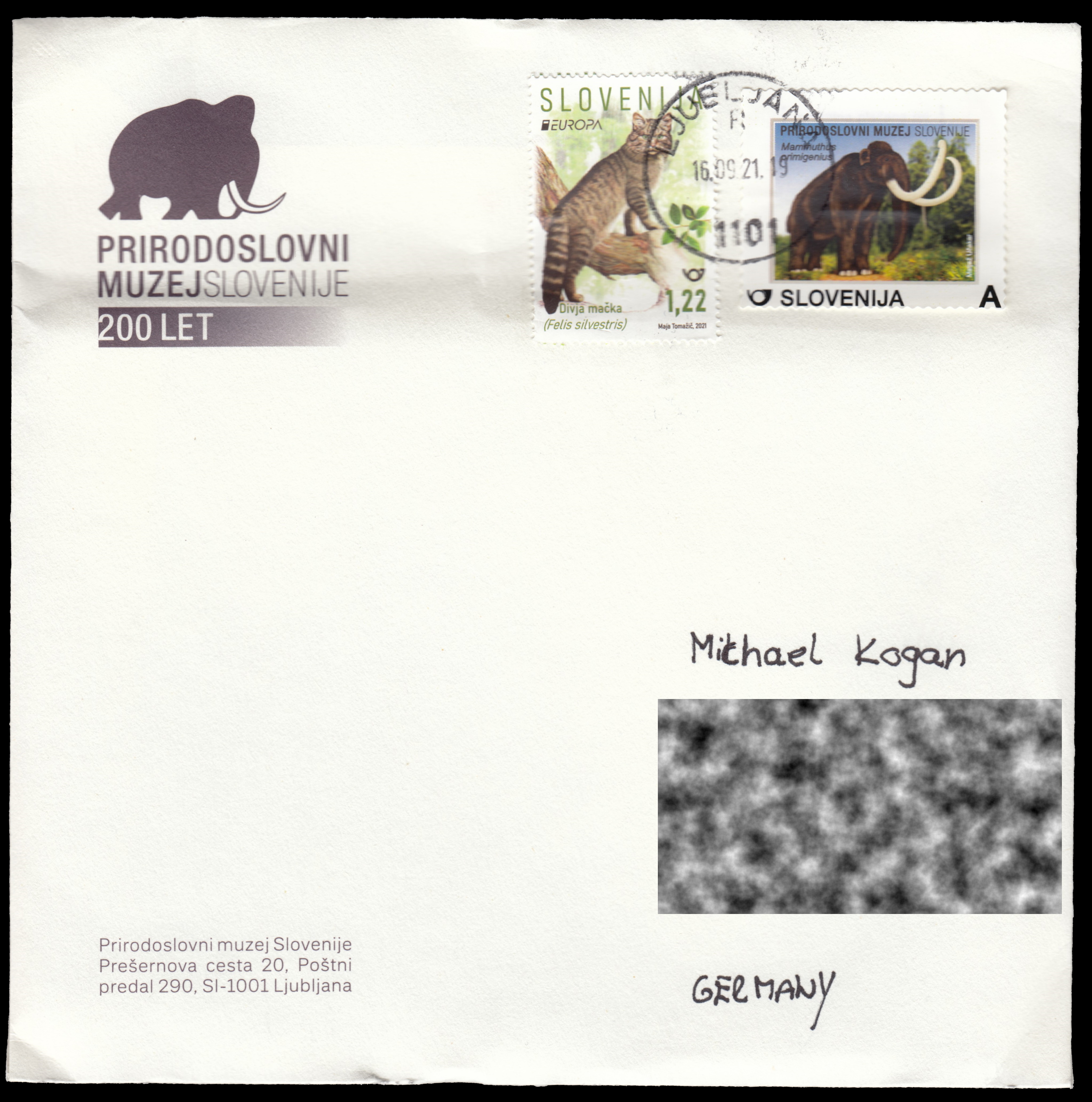
Some commemorative covers of Slovenia related to Paleontology: prehistoric animals
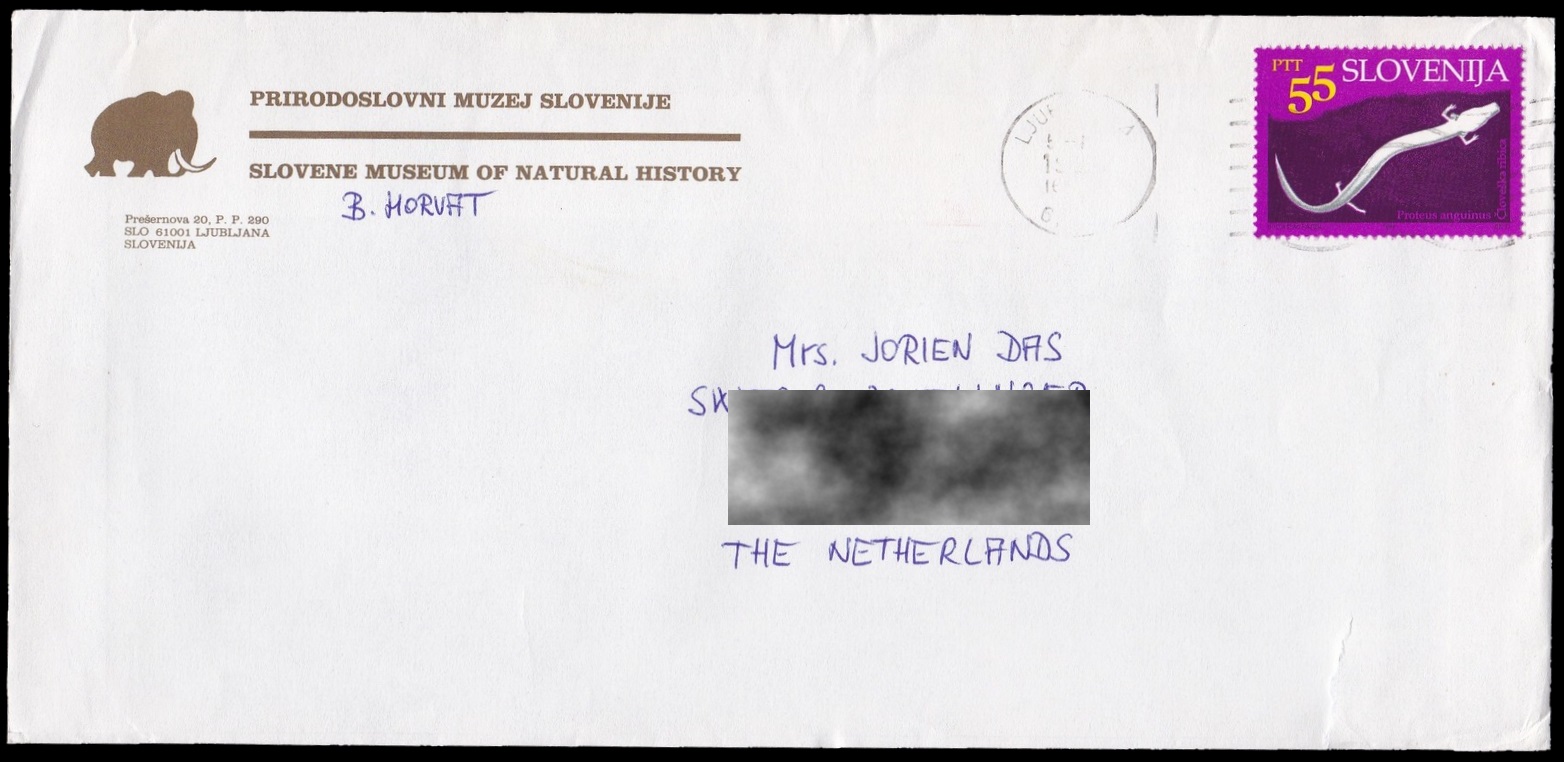
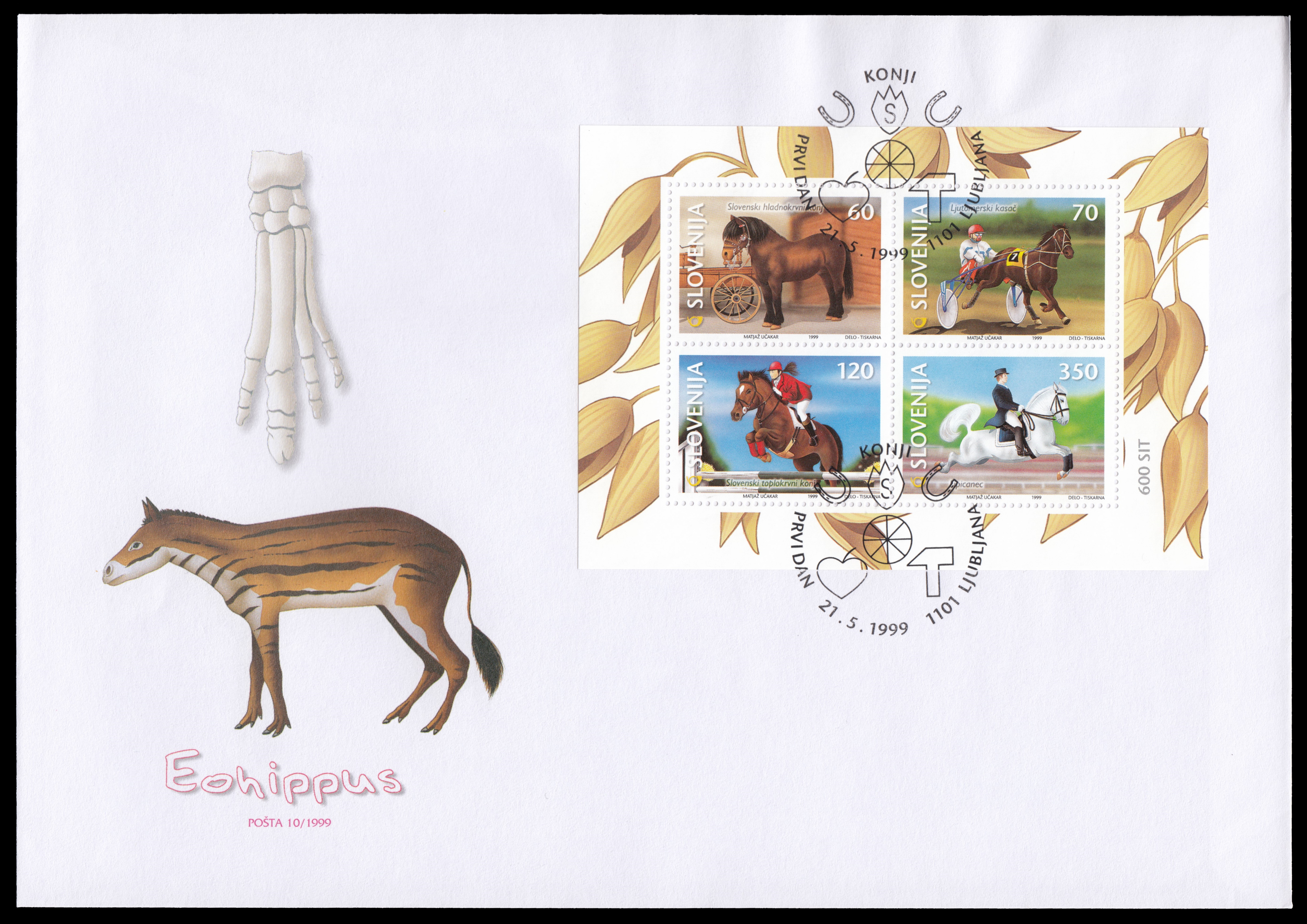
| "Natural History Museum of Slovenia in Ljubljana" | 17.11.1998 "60 anniversary of mammoth fossils discovery in Kamnik" [Sp] | 21.05.1999 "Horses" [FDC] |
 |
 |
 |
| 22.06.1999 "Henrik Freyer" [Sp] | 2021 "Natural History Museum of Slovenia in Ljubljana" | |

| 
|
|
References
- [R1] Slovenia: Wikipedia, WikiTravel, FlagCounter.
- [R2] Postal History and Philately of Slovenia:
Wikipedia,
Links to official website of the Post Authority, stamp catalog and a list of new stamps of Slovenia are here. - [R3] Heinrich Freyer: Wikipedia. Visit Polhovgradec.
- [R4] Postojna Cave: Wikipedia, postojnska-jama.eu, philateli.blogspot.
- [R5] Rudists: ferrebeekeeper, Slovenian Geological Society.
- [R6] Geopark Idrija: official website.
- [R7] Miha Kač: kamnik.info.
Acknowledgements
- Many thanks to Dr. Peter Voice from Department of Geological and Environmental Sciences, Western Michigan University, for reviewing the draft page and his very valuable comments.
- Many thanks to a fellow collector, paleontologist Matej (Matija) Križnar from Slovenian Museum of Natural History for his help finding images and information about Slovenian stamps and postmarks.