Turks and Caicos Islands
Dinosaurs and other prehistoric animals on stamps of Turks and Caicos Islands
They are known primarily for tourism and as an offshore financial centre.
The resident population is about 32,000, two third of them live on Providenciales in the Caicos Islands. The islands have a total land area of 430 square kilometres.
The first recorded European sighting of the islands now known as the Turks and Caicos occurred in 1512.
In the subsequent centuries, the islands were claimed by several European powers with the British Empire eventually gaining control. For many years the islands were governed indirectly through Bermuda, the Bahamas, and Jamaica.
When the Bahamas gained independence in 1973, the islands received their own governor, and have remained a separate autonomous British Overseas Territory since.
In August 2009, the United Kingdom suspended the Turks and Caicos Islands' self-government following allegations of ministerial corruption. [R1]
The first stamp of the Turks Islands was issued on 4 April 1867 and was the one penny red.
The stamp was reissued numerous times, surcharged to create new values between 1/2 penny and 4 pence.
The islands became a Crown Colony in 1962 and the first stamps issued under the new status were the Freedom from Hunger omnibus issue of 4 June 1963. [R2]
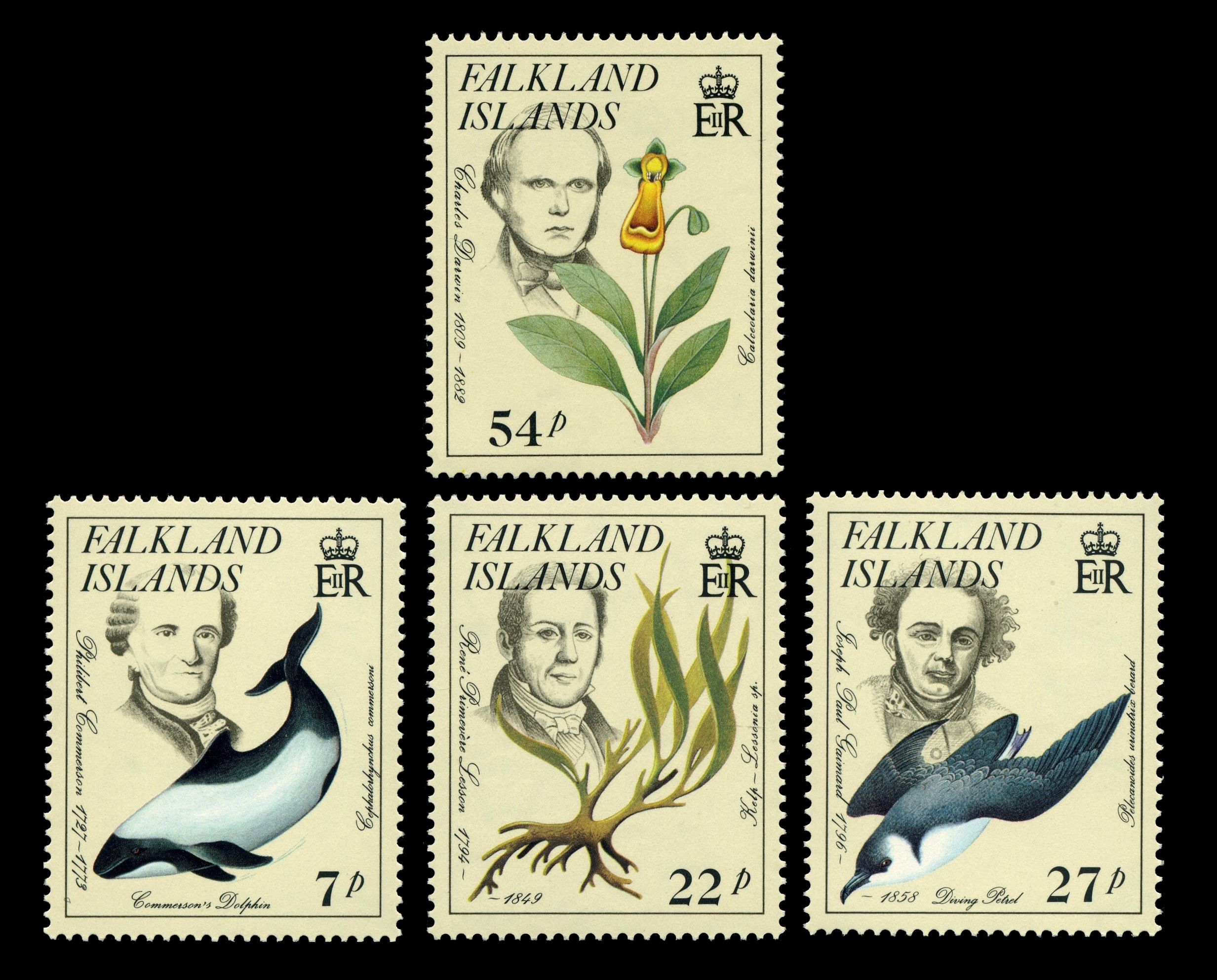
Official stamps of The Turks and Caicos Islands related to Paleontology: dinosaurs and other prehistoric animals, Charles Darwin
| 22.08.1984 "175th anniversary of Charles Darwin" | 03.06.1991 "Prehistoric animals" | 15.11.1993 "Dinosaurs" |
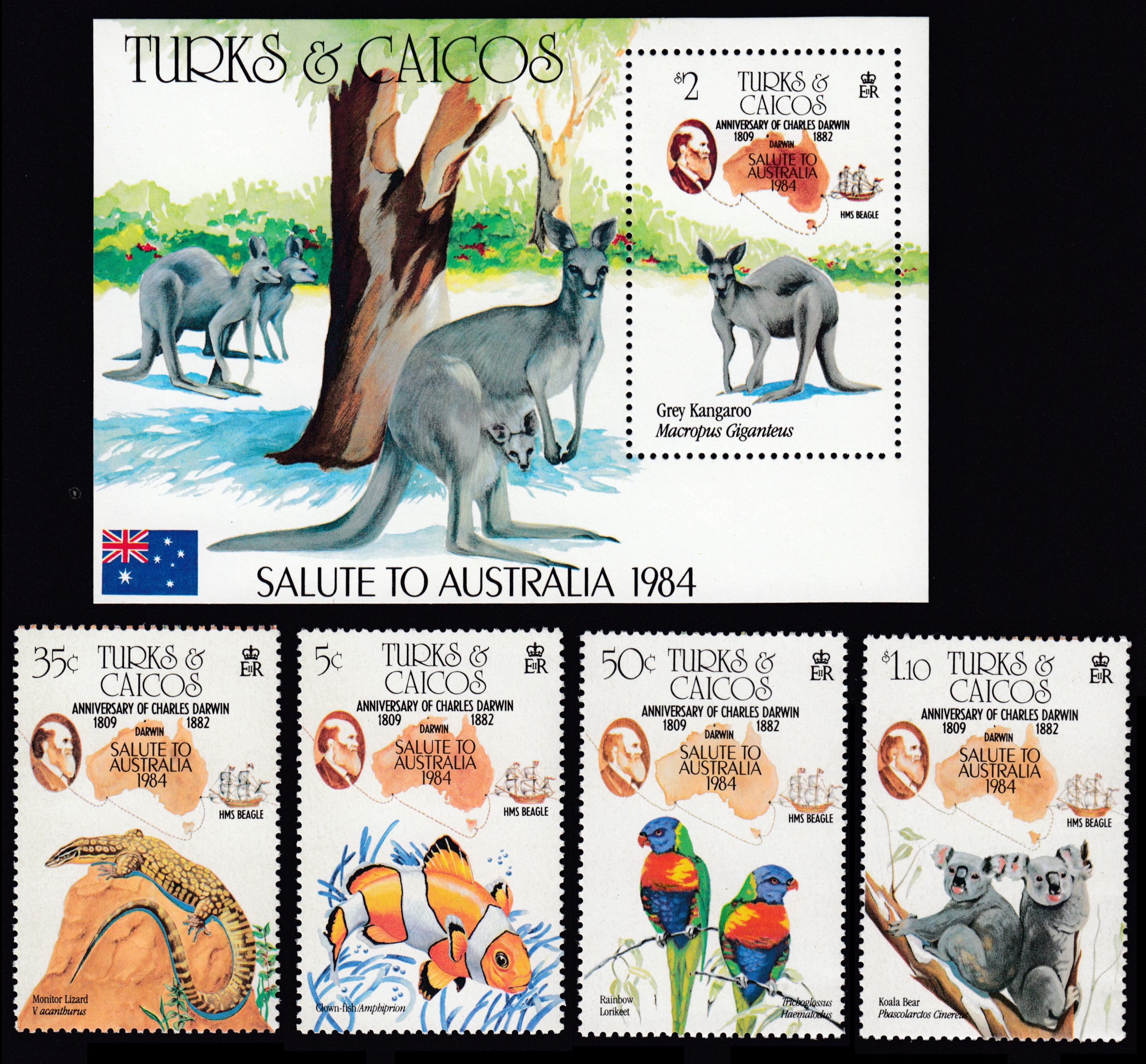 |
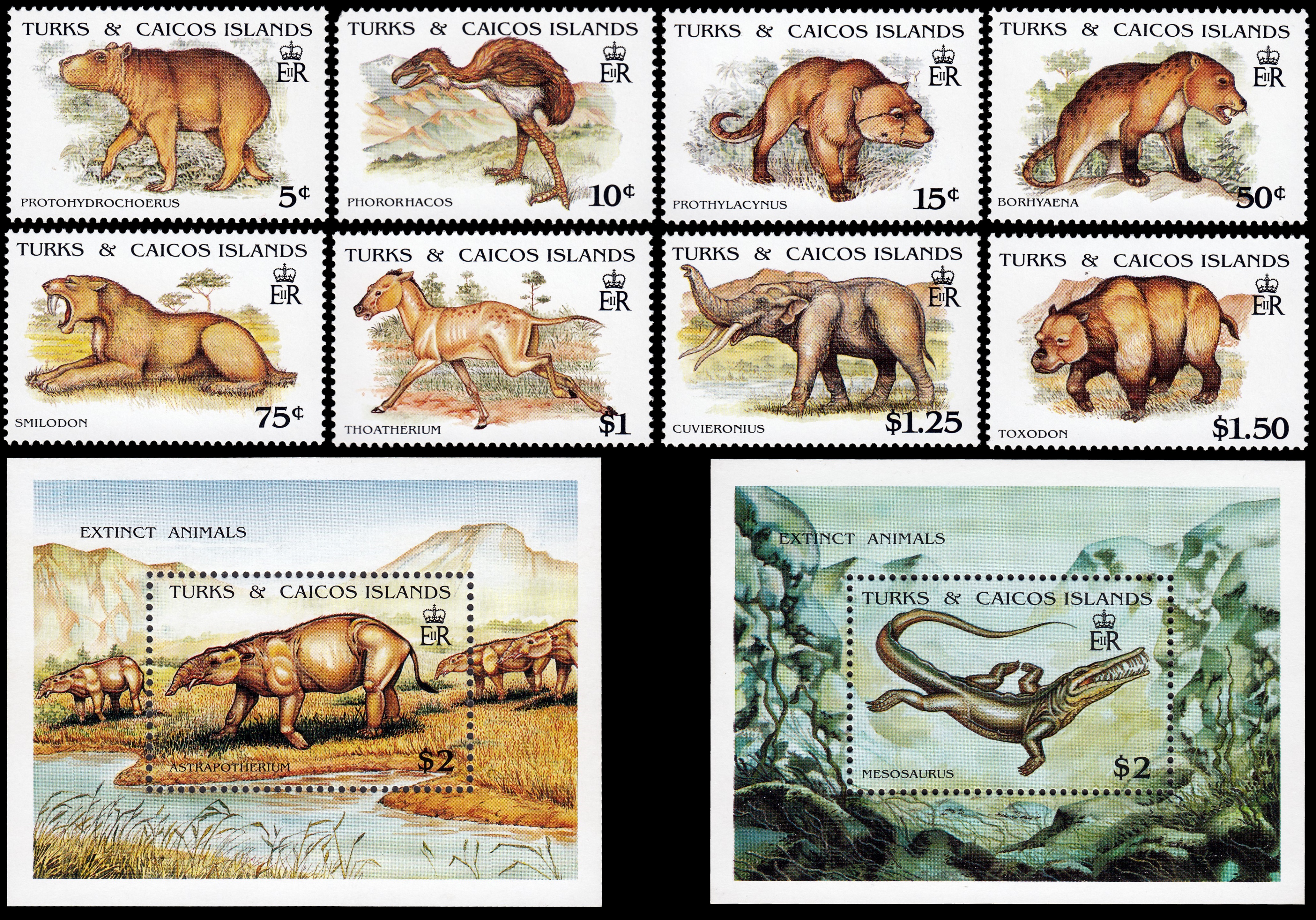 |
 |
| 23.01.1995 "Jurassic marine reptiles" | ||
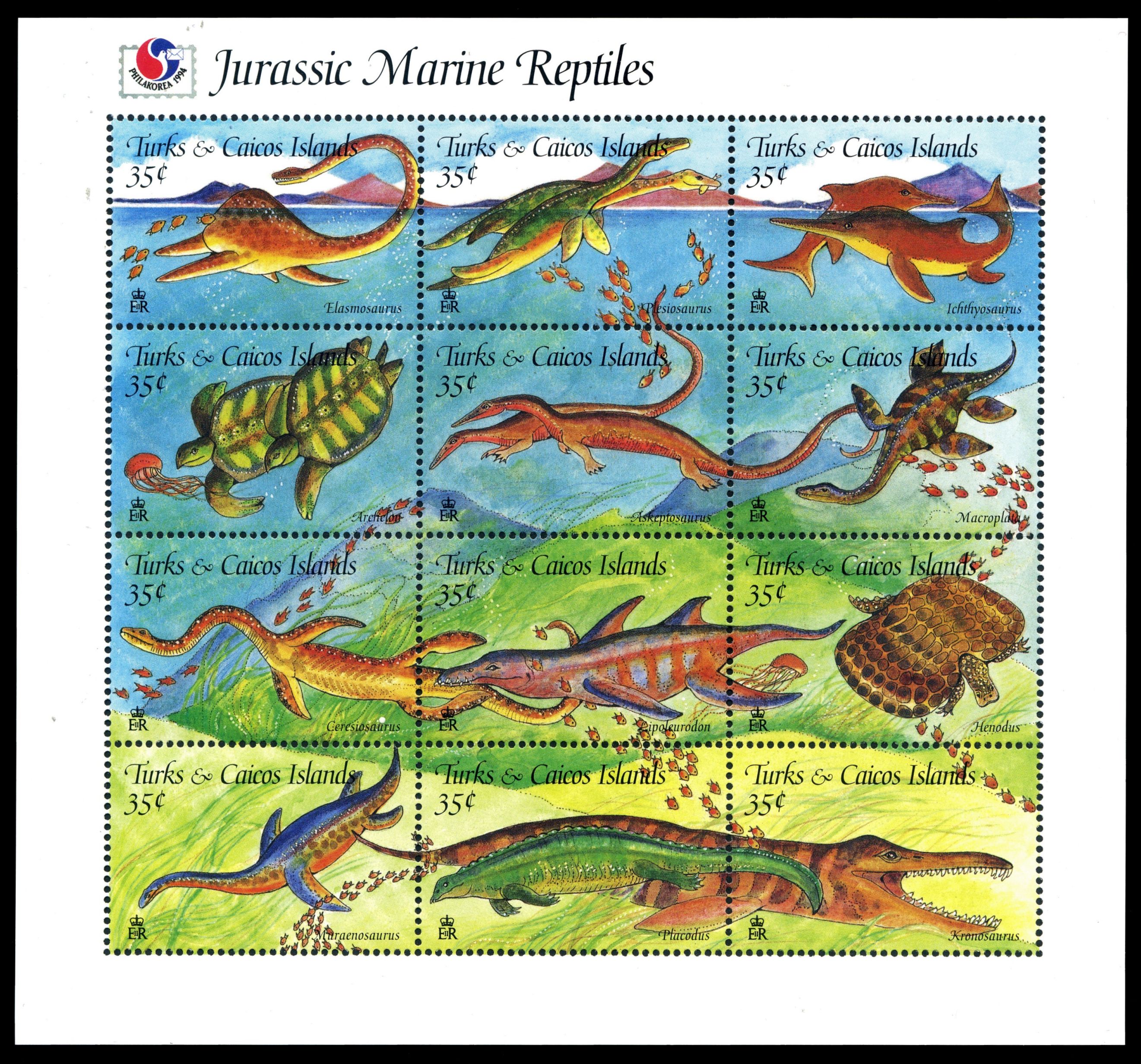
|
||
Some other stamps of the Turks and Caicos Islands to consider: living fossils
| 21.08.1997 "The 111th Annual A.P.S. Convention "STAMPSHOW '97" - Milwaukee, USA - Underwater Exploration" [A1] | ||
 |
||
Notes:
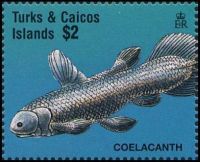
[A1] Coelacanth shown on stamp of one of two Souvenir Sheets.
|
| Coelacanth on stamp from the Turks and Caicos Islands 1995 MiNr.: Bl.173, Scott: 1235 |
Until 1939, Coelacanth was known to science from fossil record only.
It appeared about 400 million years ago during the Devonian Period and was abundant over much of the world.
The fish is also considered to have been the ancestors of land vertebrates.
It was supposed that coelacanths became extinct about 66 million years ago.
On 20 February 1939, the strange fish was caught off the Chalumna River mouth
near East London (a city in RSA).
Miss Marjorie Courtenay-Latimer, Curator of the East London Museum, was informed of
the catch, but was unable to identify the fish.
"Searching for African Coelacanths"
exhibit of Susan Bahnick Jones explain the story of the "living fossil" discovery.
References
- [R1] Turks and Caicos Islands: Wikipedia, FlagCounter
- [R2] Postal History and Philately of Turks and Caicos Islands:
Wikipedia
Links to official website of the Post Authority, stamp catalog and a list of new stamps of Turks and Caicos Islands are here
Acknowledgements
Many thanks to Dr. Peter Voice from Department of Geological and Environmental Sciences, Western Michigan University, for reviewing the draft page and his valuable comments.