Milestones of Paleontology and Paleoanthropology related Philatelic items.
Definitions
Paleophilatelie (Paleophilately) is branch of Philately dedicated to collection of Philatelic items related to Paleontology and Paleoanthropology.
Paleontology, also spelled Palaeontology, scientific study of life of the geologic past that involves the analysis of plant and animal fossils, including those of microscopic size, preserved in rocks. It is concerned with all aspects of the biology of ancient life forms: their shape and structure, evolutionary patterns, taxonomic relationships with each other and with modern living species, geographic distribution, and interrelationships with the environment. Paleontology is mutually interdependent with stratigraphy and historical geology because fossils constitute a major means by which sedimentary strata are identified and correlated with one another. Its methods of investigation include that of biometry (statistical analysis applied to biology), which is designed to provide a description of the forms of organisms statistically and the expression of taxonomic relationships quantitatively.
Paleoanthropology, also spelled Palaeoanthropology, also called Human Paleontology, interdisciplinary branch of anthropology concerned with the origins and development of early humans. Fossils are assessed by the techniques of physical anthropology, comparative anatomy, and the theory of evolution.ENCYCLOPADIA BRITANNICA
Introduction
Early postage stamps from the mid-19th century featured rather plain designs. Typically rectangular or square, they showed a country’s ruler—such as a king, queen, or president—or simply displayed a numerical value. Despite their simplicity, stamp collecting began almost immediately, with early philatelists focusing on subtle differences between otherwise similar issues, such as variations in color, paper, perforation, or printing errors.
It was not until more than 30 years later that the first commemorative stamp appeared. In 1871, Peru issued a stamp depicting a locomotive, marking a shift in design. Soon after, postal authorities around the world began producing stamps celebrating significant events, notable landmarks, landscapes, and prominent national figures. Today, stamps serve not only as proof of postage but also as cultural ambassadors, reflecting a country’s heritage through images of its people, scenery, traditions, and wildlife.
Fossils of prehistoric creatures, particularly large ones like dinosaurs or giant mammals, have long captured human imagination, inspiring myths and legends of dragons, cyclopes, and ancient giants. These well-preserved remnants of Earth’s early life hold immense scientific and material importance, and some are even regarded as national treasures.
Do you know who was the first paleontologist honored on a stamp ?
These, and other interesting facts can be found throughout this article.
The list of Paleontology and Paleoanthropology related Philatelic milestones
1922 USA - First postal stationery with prehistoric animals
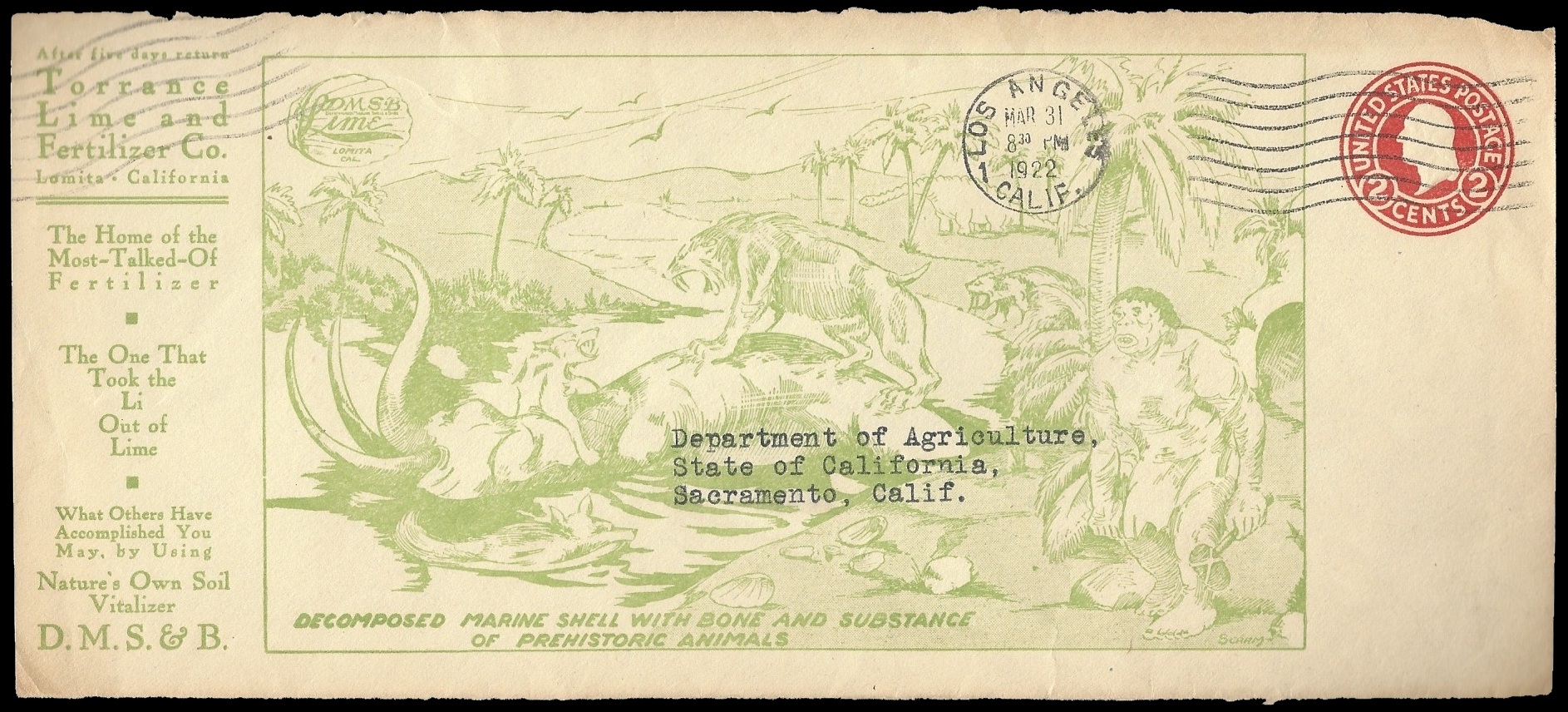
The postal stationery from collection of Dr. Jon Noad from Calgary, Canada. One of the first postal item showing prehistoric animals.
This is one of the earliest philatelic item related to paleontology. It is a 2-cent prepaid envelope from the United States, produced by the Torrance Lime & Fertiliser Company in Lomita, California, and features illustrations of prehistoric animals alongside Neanderthals.
The next piece of paleontology-related postal stationery was issued in Poland nearly 50 years later, featuring an ammonite fossil on the imprinted stamp.
The imagery on the envelope is based on several earlier illustrations and reconstructions: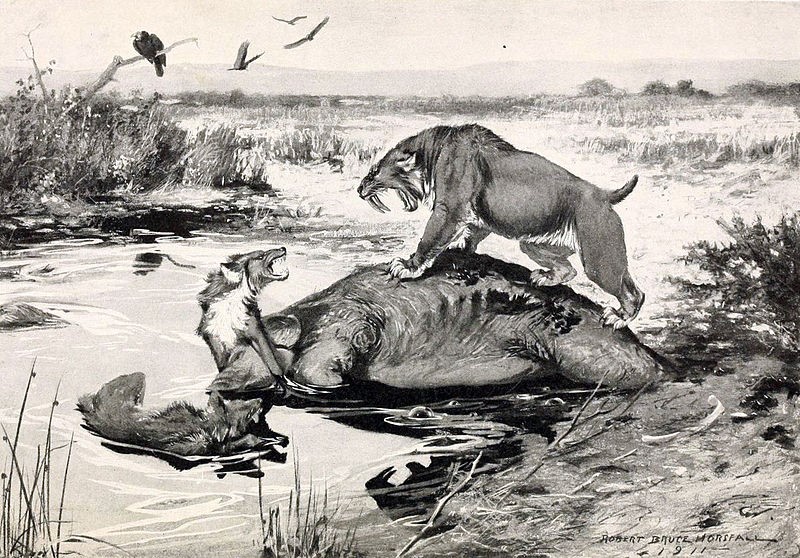 |
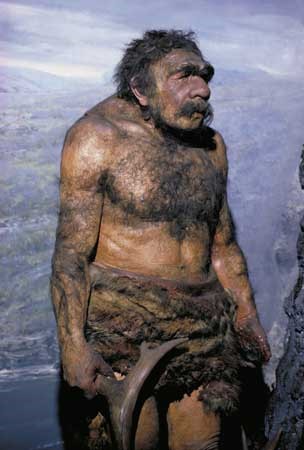 |
| Prehistoric animals on illustration of History of Land Mammals in the Western Hemisphere book of Robert BERRYMAN Scoot | Neanderthal of Chicago's Field Museum diorama |
- A depiction of Neanderthals as imagined in a diorama at Chicago’s Field Museum around 1920.
- An illustration by Robert Bruce Horsfall for A History of Land Mammals in the Western Hemisphere (1913) by Robert Berryman Scott, showing a saber-toothed cat (Smilodon californicus) and a dire wolf (Canis dirus) battling over the carcass of a Columbian mammoth (Mammuthus columbi) at the La Brea Tar Pits.
 |
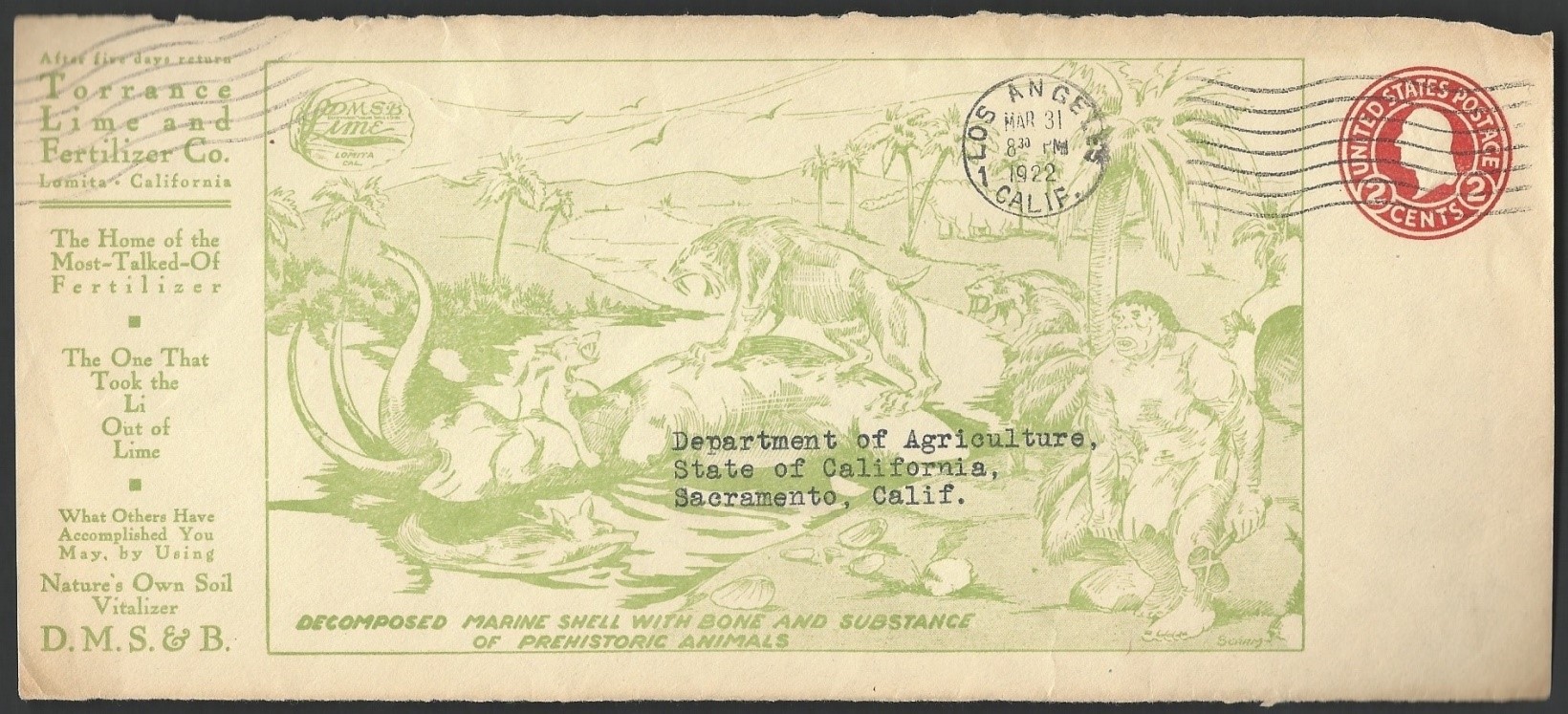 |
Interestingly, the company used fossils of prehistoric animals as a raw material for producing fertilizer — a practice that seems quite unusual from a modern perspective.
A fertilizer is any natural or synthetic substance (excluding liming materials) applied to soil or plant tissues to provide essential nutrients needed for plant growth.
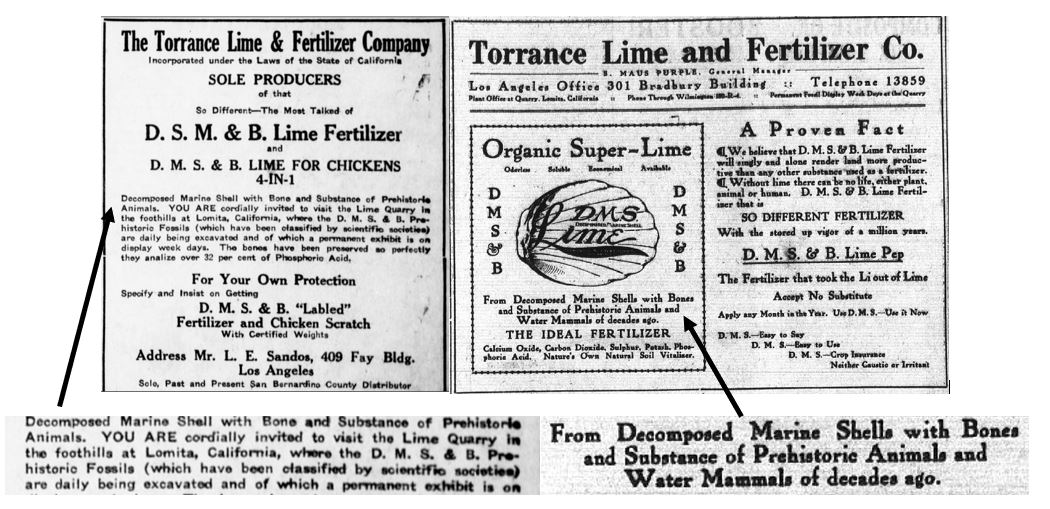
Special thanks to fellow collectors Peter Brandhuber (Germany) and John Noad (Canada) for their valuable assistance in uncovering information about this postal stationery and for providing scans from their collections.
Another item that could be considered an early example is a postcard from Germany.
Postcards without imprinted stamps fall outside the scope of philately and instead belong to deltiology, the study and collection of postcards.
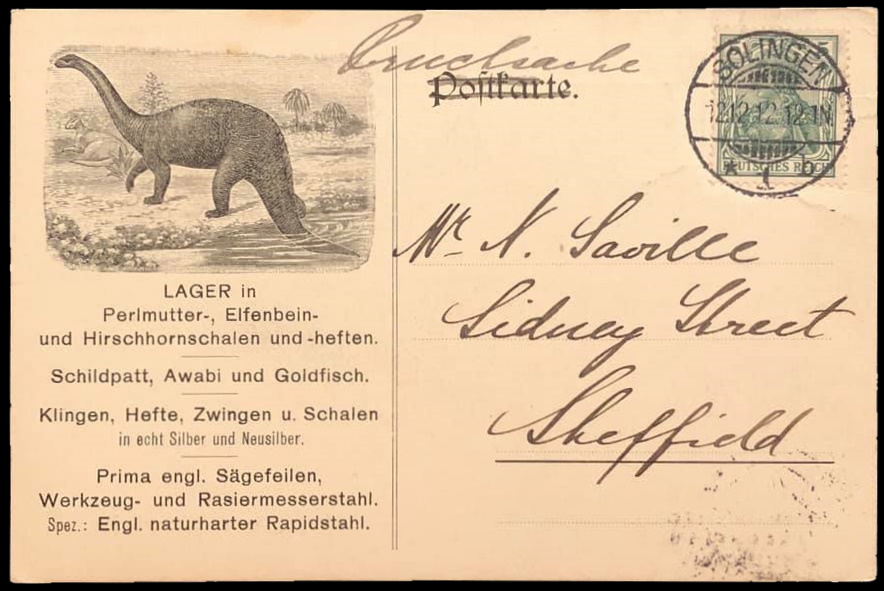 |
| Dinosaur on a postcard of Germany 1912 |
Plateosaurus lived during the Late Triassic Period, approximately 214 to 204 million years ago, in what is now Central and Northern Europe. It was discovered in 1834 by Johann Friedrich Engelhardt and formally described three years later by Hermann von Meyer. Plateosaurus became the fifth named dinosaur genus that is still considered valid today. Although it was identified before Richard Owen coined the term Dinosauria in 1841, it was not among the three genera he used to define the group, as it was still poorly understood and not yet clearly recognized as a dinosaur.
Today, Plateosaurus is one of the best-known dinosaurs, with more than 100 skeletons discovered — some of them nearly complete. The large number of fossils found in the Swabian region of Germany has earned it the nickname “Schwäbischer Lindwurm” (Swabian lindworm). More info are here.
193x USA - First meter franking with dinosaurs
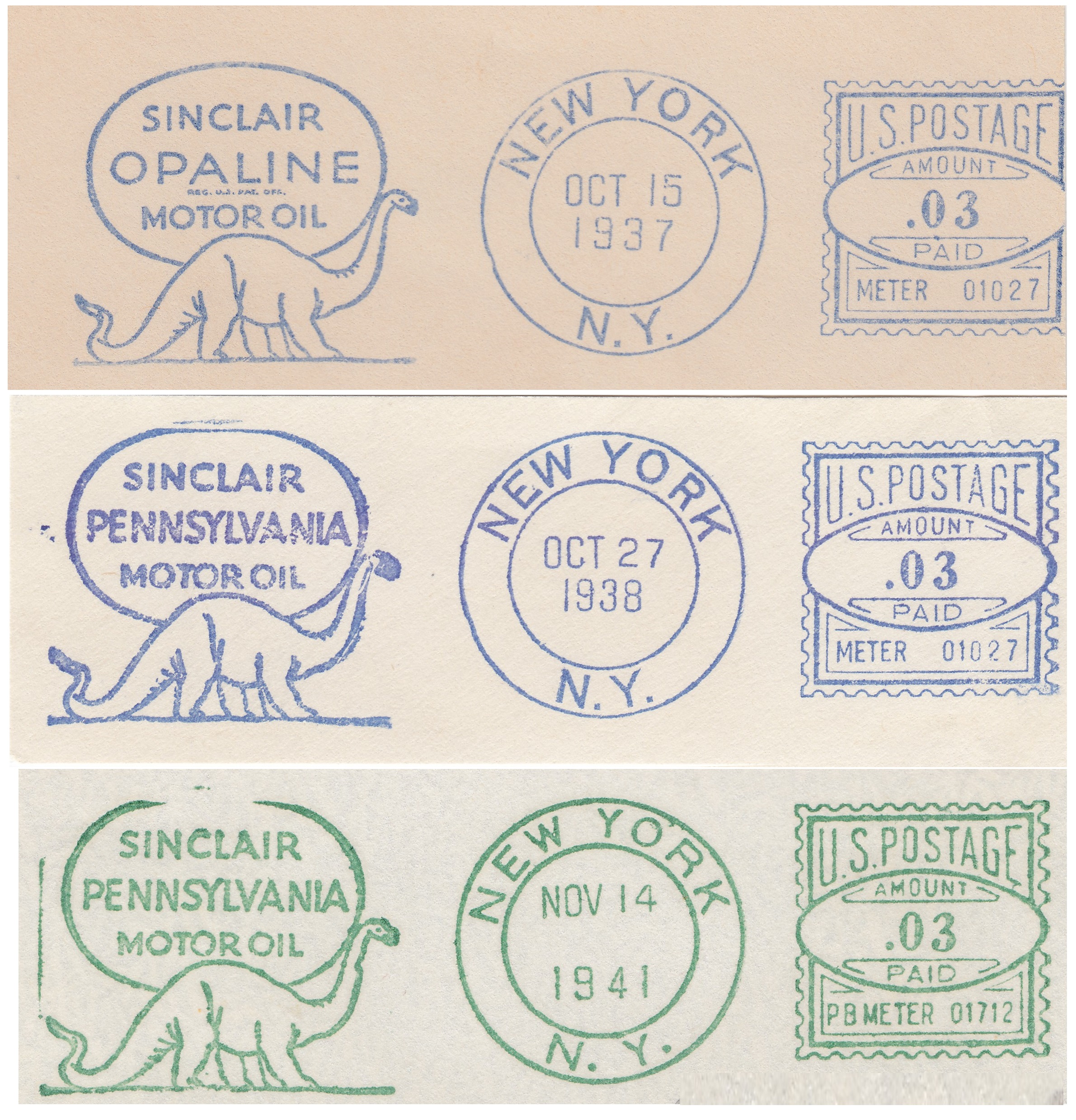 |
| The first meter franking with dinosaurs, issued by Sinclair Oil Company in 1930s. |
Dinosaurs became so closely associated with the brand in the United States that Sinclair registered one as a trademark in 1932. The company’s logo featured the silhouette of a large green sauropod — Brontosaurus — based on the then popular belief that petroleum deposits originated from the remains of ancient dinosaurs.
Sinclair’s Brontosaurus mascot became widely known as “DINO”. A life-sized model of DINO appeared at the “Century of Progress” Chicago World’s Fair (1933–1934), alongside several other dinosaur models created by P. G. Alen, who specialized in lifelike papier-mâché animals for motion pictures.
Following the World’s Fair, in 1935 the company began issuing dinosaur-themed stamp-like labels, along with a stamp album designed to collect them. These labels, distributed weekly at Sinclair service stations, are known in philately as “Cinderella stamps” and represent the first such set depicting prehistoric animals.
These promotional items were primarily aimed at children. Customers visiting a Sinclair station would receive a stamp album during the first week, followed by a new sheet of stamps each week for the next eight weeks. While the albums included some advertising, they mainly offered educational content, presenting scientific and historical information about dinosaurs and petroleum in an engaging way for young audiences.
The company even sponsored dinosaur excavations led by the renowned American paleontologist Barnum Brown. In the summer of 1934, he conducted excavations in the Morrison Formation at what is now known as Howe Quarry. This expedition was highly successful, uncovering more than 20 skeletons and around 4,000 individual bones. Among the discoveries was Diplodocus, another long-necked dinosaur similar in shape to Brontosaurus, though generally smaller.
At the same time in Europe, another oil company featured a fossil on a postal stationery to advertise their products.
A set of 28 postal stationeries was produced by the Estonian Red Cross to support the Youth Red Cross and was released for sale in post offices on 23 December 1937. These stationery envelopes with imprinted stamps were made from a single sheet of paper folded in half with perforated edges, and featured advertisements on both the front and back. One or more writing sheets were glued inside the envelope for correspondence. These postal stationaries were sold in the Post Offices as so called private articles, the net amount thus realized was not remitted to the GPO but transferred to a special fund for the benefit of the Postal Officers.
 |
| Trilobite on a cachet of Estonian postal stationary 1937. |
During the 1920s and 1930s, Estonia strongly promoted fuel produced from its famous kukersite oil shale, an Ordovician rock formed around 450 million years ago in an ancient sea.
Why the trilobite?
Trilobites are iconic fossils of the Ordovician Period, the same geological age as Estonia’s oil-shale deposits. They were also closely associated with Estonia’s oil-shale industry and with the branding of Estolin.
Fossils are common in Estonian oil shale and limestone formations, and the trilobite likely symbolized the ancient marine origin of the raw material used to produce Estolin gasoline. At the same time, it conveyed the idea of “prehistoric energy” through a modern Art Deco commercial design.
1946 USA - First FDC (First Day Covers) with a dinosaur and prehistoric animals on the cachet
On August 10, 1946, the U.S. Post Office Department issued a stamp to commemorate the centenary of the Smithsonian Institution. Several First Day Covers (FDCs) bearing this stamp feature cachets depicting dinosaurs and other prehistoric animals. The stamp itself illustrates the Smithsonian buildings in Washington, D.C.This stamp can also be considered part of a paleontological theme, as the Institution includes a major Department of Paleobiology.
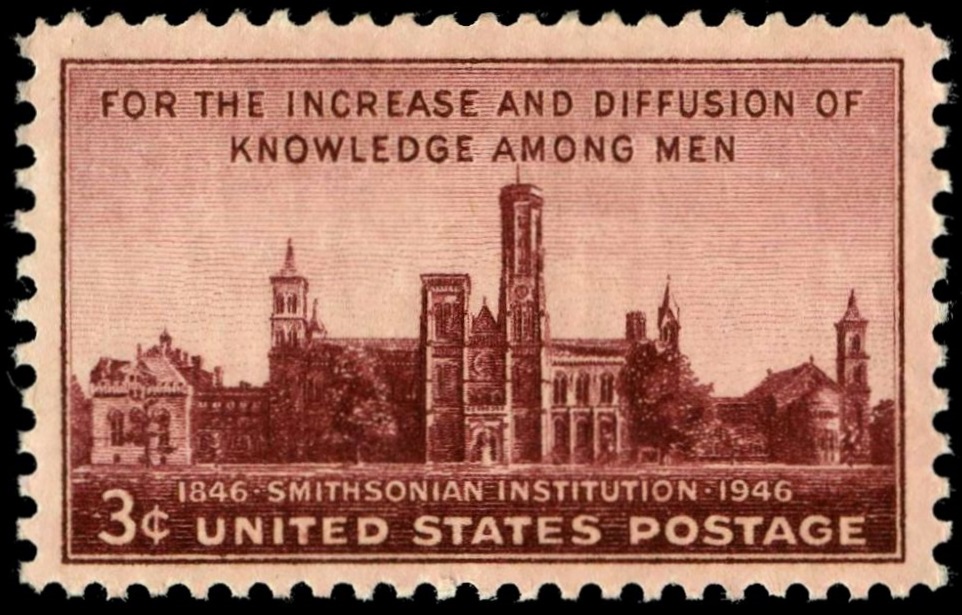

First FDC (First Day Cover) with dinosaurs and other prehistoric animals on their cachets, USA 1946.
The illustration (cachet) on the left side of the first FDC depicts a sauropod, most likely a Diplodocus. Other covers feature stegosaurs and Moropus, a prehistoric mammal.
* All of these FDCs are privately produced by dealers or individual collectors.
The U.S. Postal Service does not create official first day covers and does not
issue commemorative postmarks for its stamps.
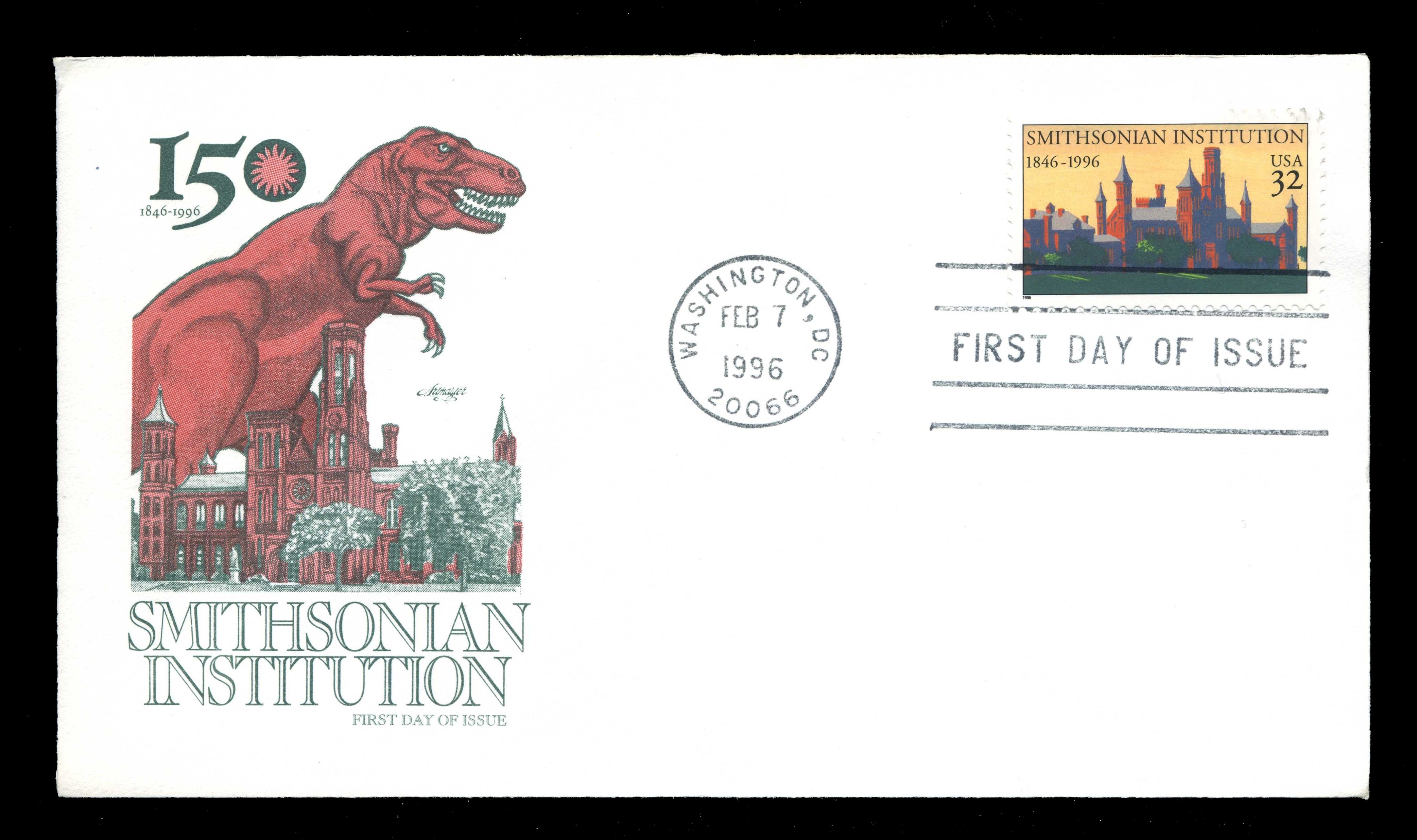
* On 7 February 1996, the U.S. Post Office Department issued a stamp celebrating the 150th anniversary of the
Smithsonian Institution. As with the 1946 release, collectors produced various unofficial FDCs decorated with dinosaur
artwork. One example depicts Tyrannosaurus rex, which can be seen
here.
1947 USSR - First paleontologists on a postage stamps
Identifying paleontologists on stamps can be difficult when the design shows only a portrait or a neutral background. At the same time, the presence of a fossil or prehistoric creature in the background does not automatically mean that the person featured is a paleontologist.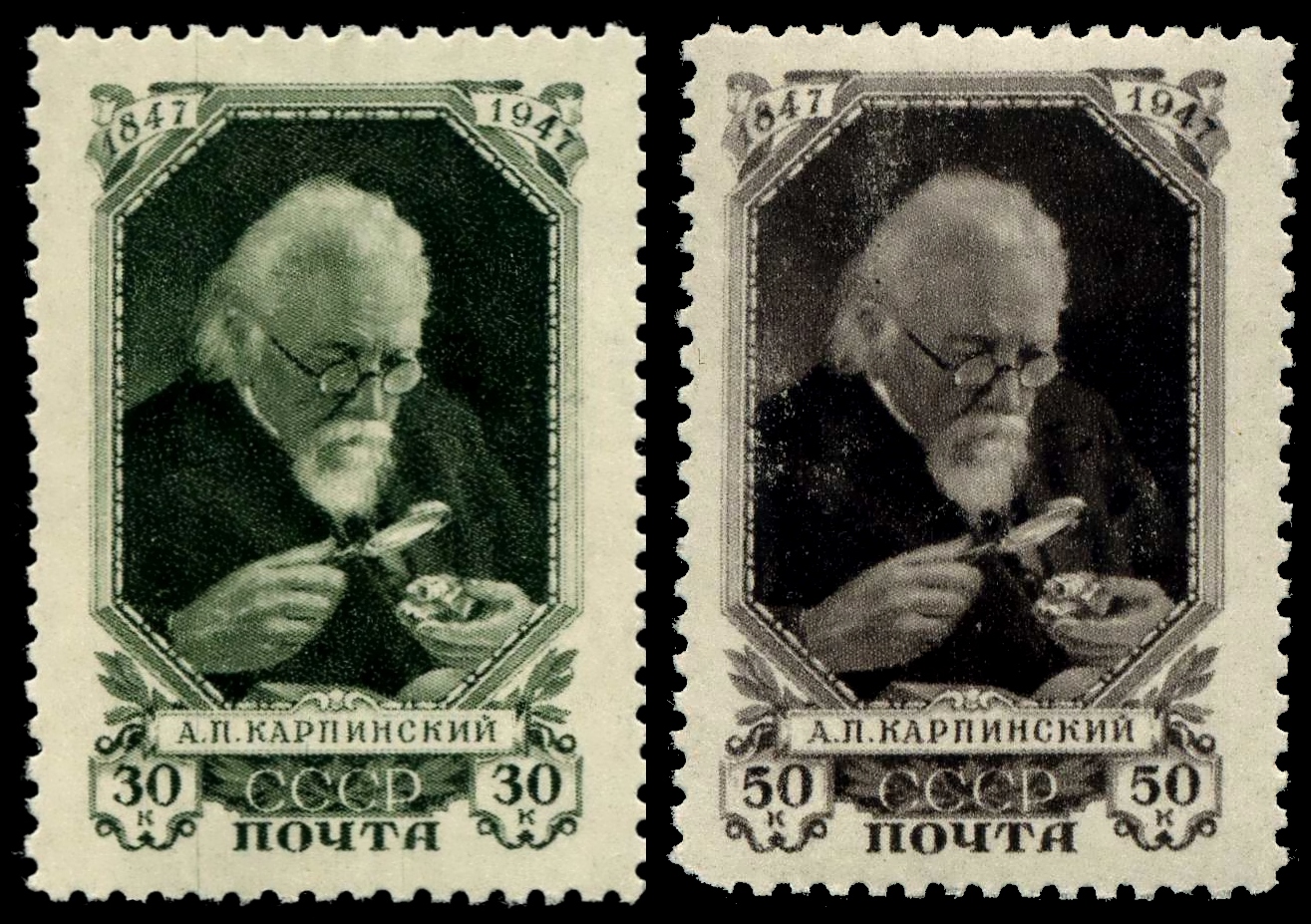 |
| The first stamp depicting paleontologist issued in USSR in 1947, showing A.P. Karpinskij (1847–1936) who was the first elected President of the Russian Academy of Sciences, MiNr.: 1081; Scott: 1087. |
 |
| First stamp dedicated (and inscribed) to paleontologist issued in USSR in 1951, showing W.O. Kovalevskij, MiNr.: 1621, Scott: 1616. |
There is nothing on the stamp itself that indicates he was a paleontologist.
On 3 March 1952, the Soviet Union issued a stamp titled "Greatest Russian scientist biologist ‑ paleontologist: W.O. Kovalevskij" with a face value of 40 kopejka. This is, in fact, the first stamp explicitly dedicated to a paleontologist.Vladimir Onufreivich Kowalewskij (1842–1883) was a Russian paleontologist and an early supporter of Darwinism. He was among the first to propose that horses originated in Europe, migrated to North America, and later returned to Europe. Evidence supporting this idea was discovered more than a century after his death — following his suicide caused by personal and financial difficulties—at the Messel Pit near Darmstadt, Germany. A very small prehistoric horse, roughly the size of a large dog, was found there and later depicted on a 1978 stamp of the Federal Republic of Germany.
The first stamp showing a scientist with a prehistoric animal fossil in the background was issued in Romania on 29 July 1967 as part of a set of famous Romanian people.

 |
| Bilogist Grigores Antipa with fossil of Dinotherium on stamp of Romania 1967, MiNr.: 2609, Scott: 1941, |
As director of the Museum of Natural History in Bucharest, he played a major role in organizing the museum’s collections according to phylogenetic and ecological principles. In recognition of his long and influential work, the museum has borne his name since 1933. The confusion arises from the fossil of Dinotherium giganteum shown in the background of the stamp. It appears there simply because it is the museum’s most impressive exhibit.
Another category of persons worth mentioning is "Contributors to Paleontological science".
People have discovered fossils since ancient times, but paleontology as a scientific discipline emerged only in the mid‑19th century. Its development would not have been possible without contributions from specialists in many other fields, including biology, botany, and geology. Numerous politicians and wealthy patrons also supported the young science.
 |
| Carl Linnaeus on stamp of Sweden 1939, MiNr.: 273; Scott: 298 |
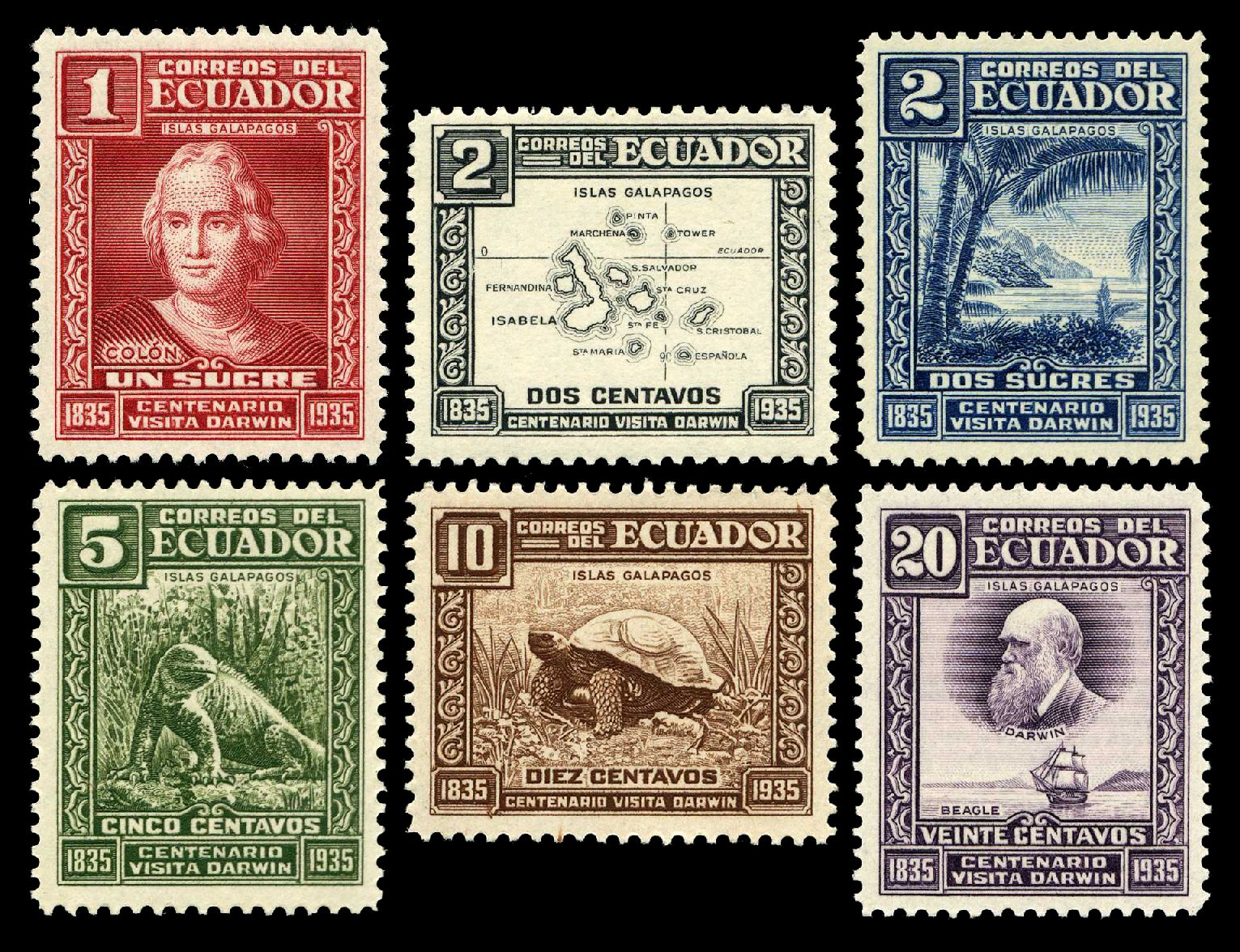 |
| The first stamp of Charles Darwin issued in Ecuador in 1936, MiNr.: 349, Scott: 343. |
The reality of evolution became widely accepted by both the scientific community and much of the general public during Darwin’s lifetime. His theory of natural selection gained broad recognition as the primary mechanism of evolution in the 1930s and today forms the basis of modern evolutionary biology. In its refined form, Darwin’s discovery remains the unifying framework of the life sciences, offering a coherent explanation for the diversity of life on Earth.
In recognition of his scientific importance, Darwin was one of only five non‑royal figures of the 19th century to receive a state funeral in the United Kingdom, and he was buried in Westminster Abbey near John Herschel and Isaac Newton. His work profoundly influenced the development of paleontology, anthropology, and many other biological and psychological sciences.
There are many stamps depicting Darwin issued around the world. The earliest was released in Ecuador in 1936 (printed in 1935) to commemorate the anniversary of his visit to the Galápagos Islands.
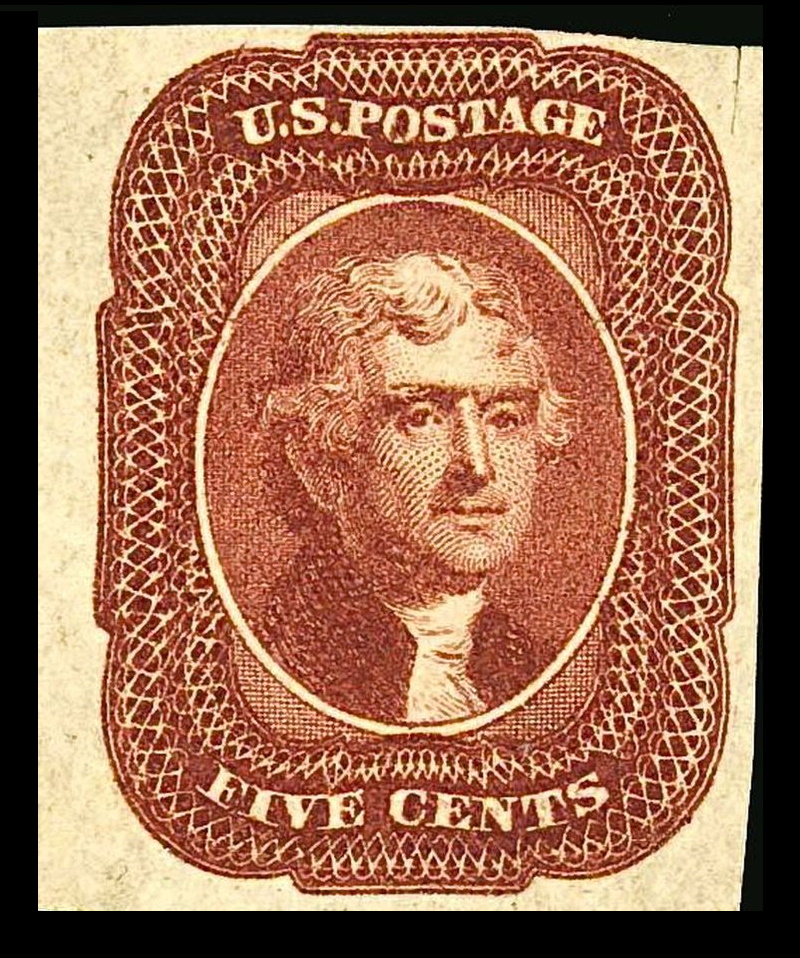 |
| Thomas Jefferson on stamp of USA 1856, MiNr.: 5; Scott: 12. |
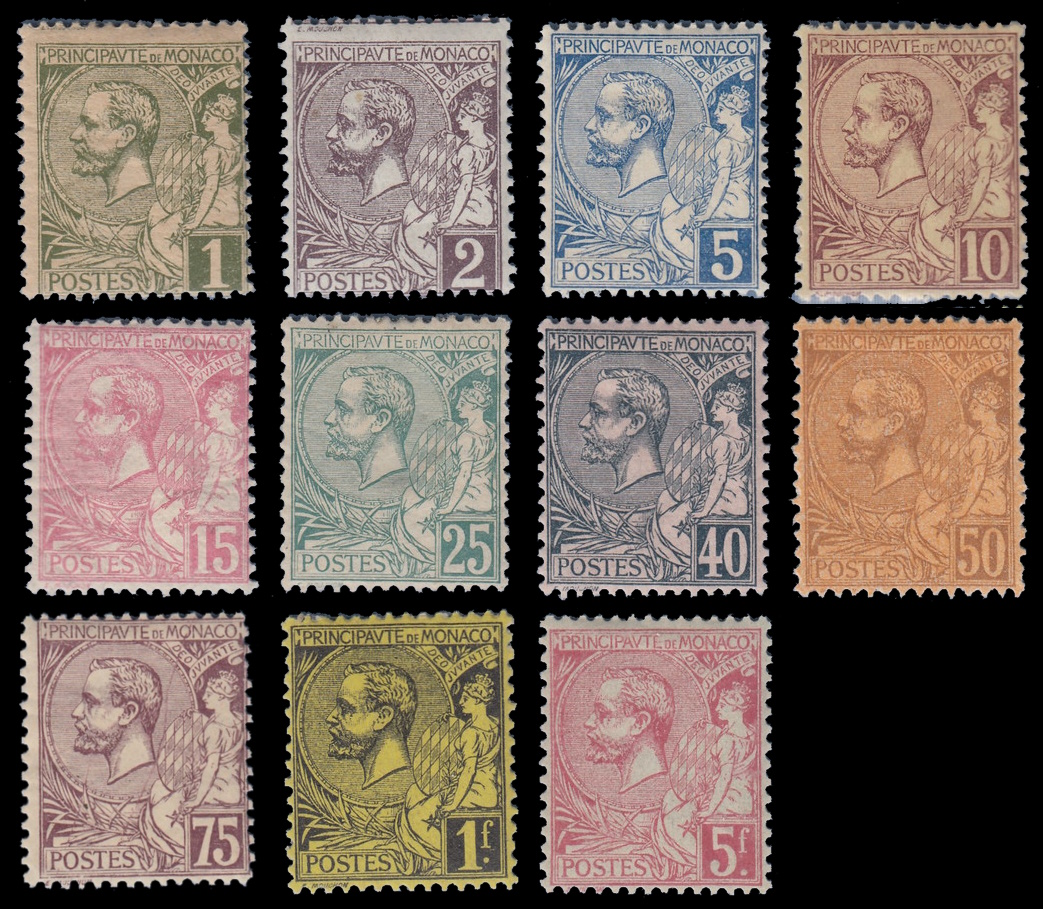 |
| Prince Albert I of Monaco on definitive stamps of Monaco from 1891, MiNr.: 11-21, Scott: 11-13, 15, 17, 20, 22-24, 26-27. |
Jefferson is widely celebrated as the principal author of the Declaration of Independence, the third President of the United States, and a defender of individual liberty. Yet he also played a significant role in the early development of American paleontology. His involvement came at a time when scholars were still grappling with the meaning of fossils as evidence of past life, the concept of extinction, and the idea of an Earth far older than described in Biblical chronology.
Some of the fossil material studied by Jefferson eventually became part of the collections of the American Philosophical Society in Philadelphia. Beginning in 1849, these holdings were transferred to the Academy of Natural Sciences of Philadelphia, where they remain today as the Thomas Jefferson Fossil Collection.
Prince Albert I of Monaco, who had a deep interest in human origins and founded the Institute for Human Paleontology in Paris, is also depicted on many stamps of Monaco and several international issues. His philatelic presence begins in 1891, when his portrait first appeared on Monaco’s definitive stamps.
1949 Monaco - First stamps with cave painting, paleontological and anthropologic museums
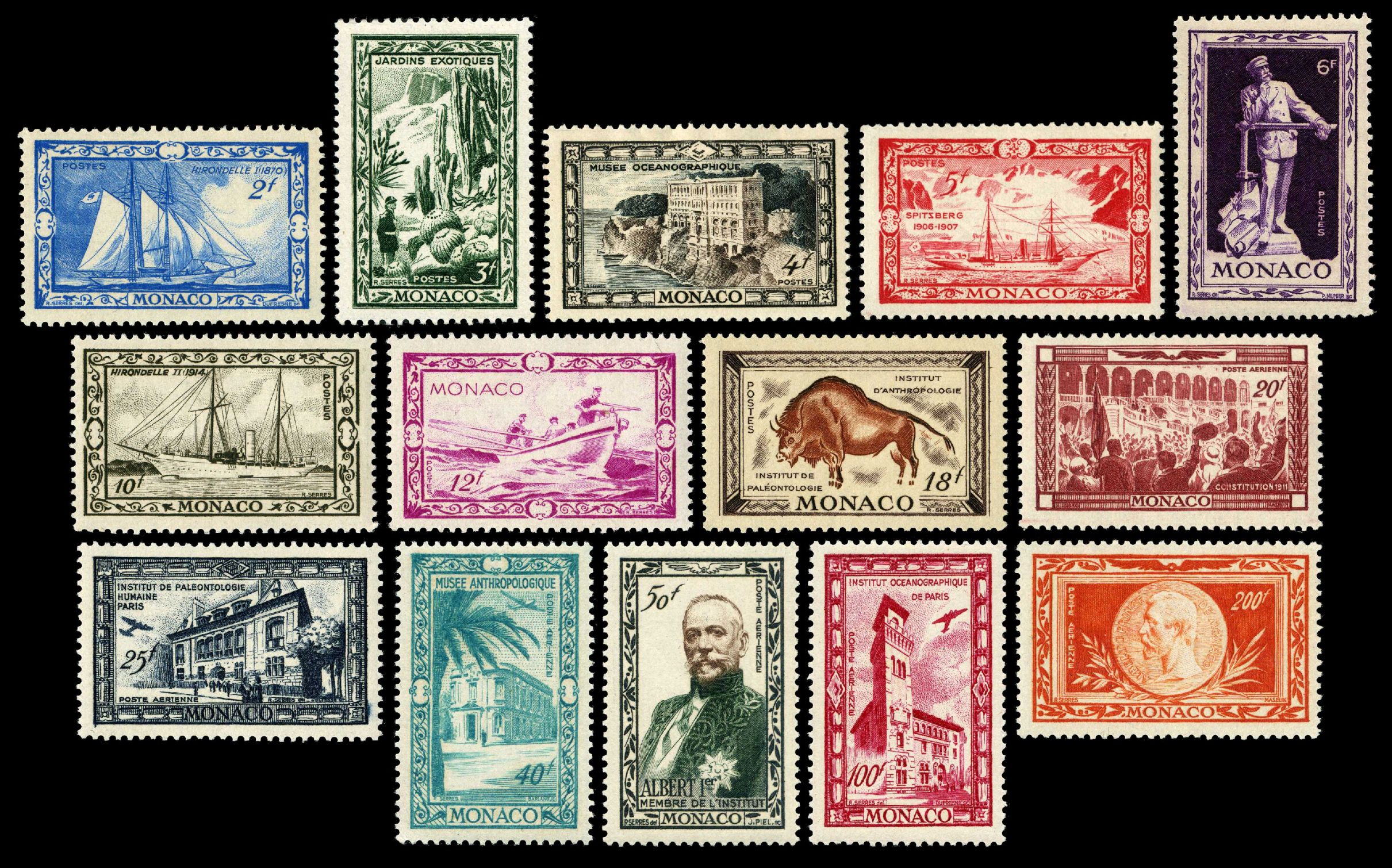
|
|
|
|
|
||
| Four stamps from "100th anniversary of Prince Albert I" set of Monaco 1949. Portrait of Prince Albert I, prehistoric cave painting, Human Paleontology museums and Antropology (green), MiNr.: 368, 364, 366, 367; Scott: C24, 244, C22, C23 , respectively. | ||
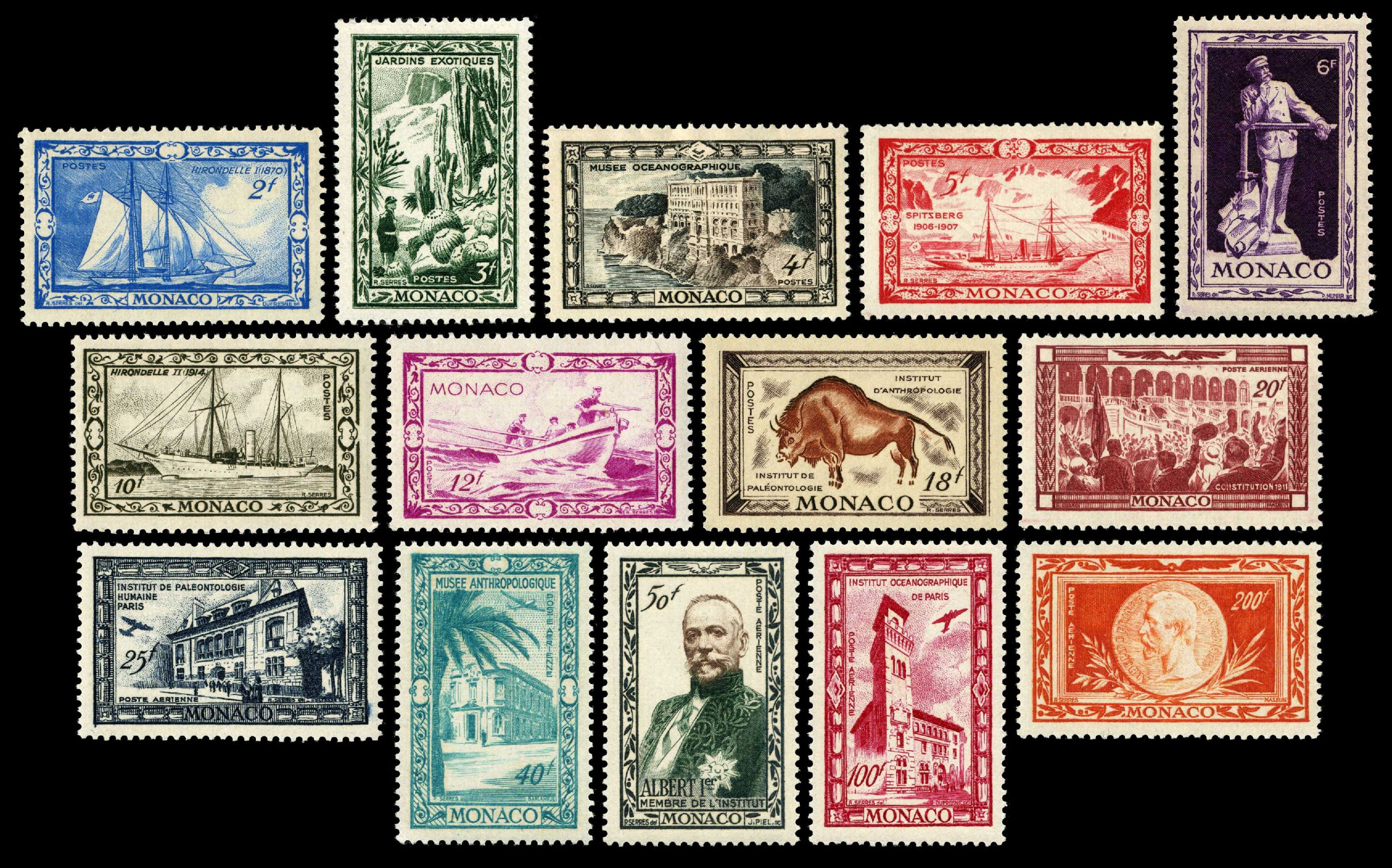
Four stamps from this set can be considered related to paleoanthropology:
- Portrait of Prince Albert I
- Aurochs drawing from the famous Lascaux cave
- The buildings of the Institute for Human Paleontology in Paris (face value 25f)
- The Musée d'Anthropologie Préhistorique in Monaco (face value 40f)
1951 India - First reconstruction of a prehistoric animal on stamps
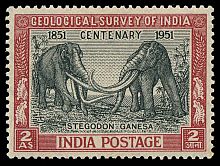 |
| The first reconstruction of a prehistoric animals on stamp issued in India in 1951, MiNr.: 218; Scott: 232. |

Stegodons were primarily an Asiatic group within the Mammutidae. This family is thought to have evolved during the middle Miocene, nearly 15 million years ago, and became extinct by the late Pleistocene, around 30,000–40,000 years ago. They are considered transitional forms, standing between true mastodons on one side and true elephants on the other.
Why are Stegodons depicted on stamps for the anniversary of the Indian Geological Survey?
 |
| Dr. Darashaw Nosherwan Wadia on stamp of India 1984, MiNr.: 1003, Scott: 1068. |
1952 Algeria - First fossil on a stamp
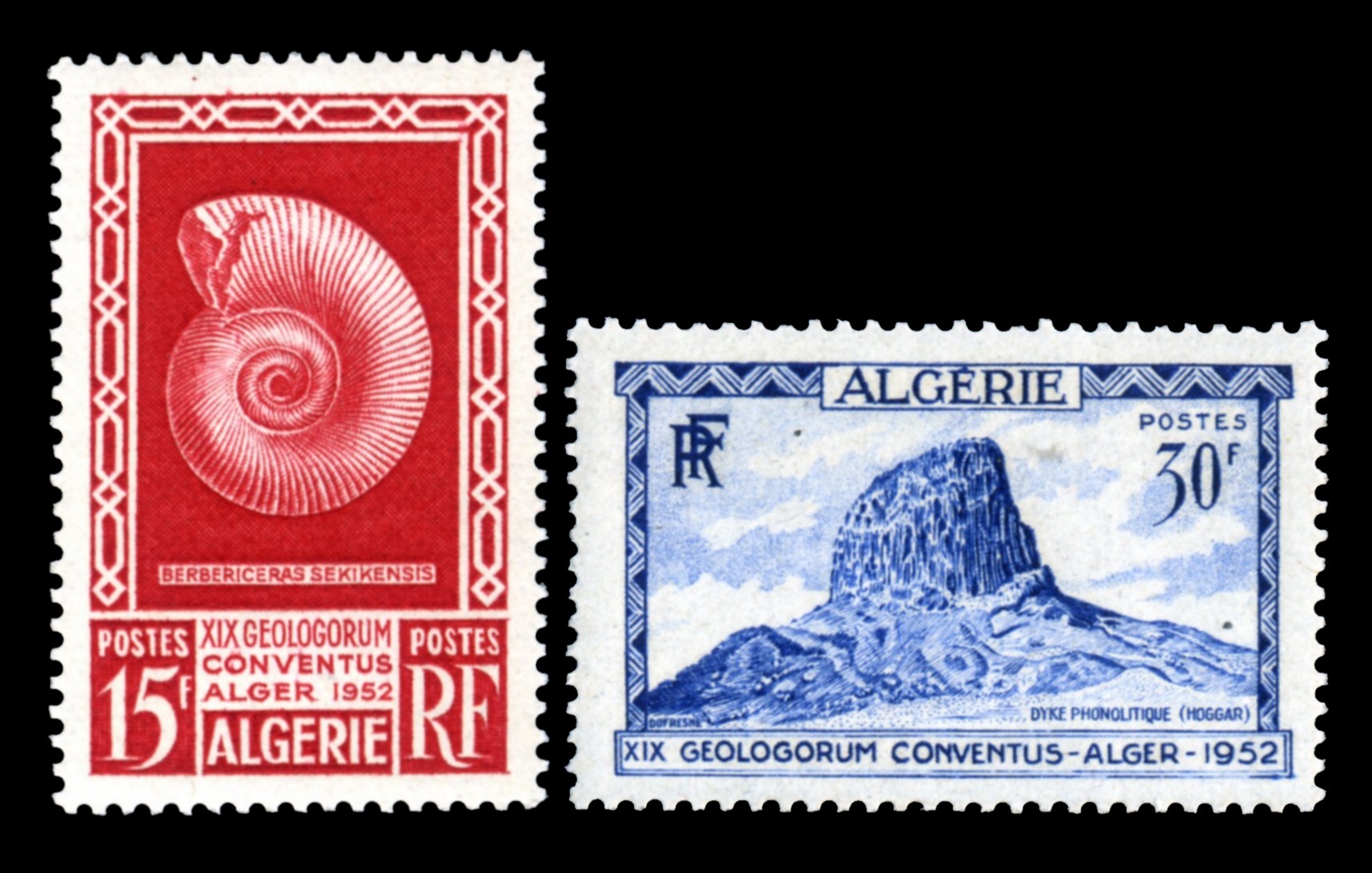 |
| First stamp with fossil issued by Algeria in 1952, MiNr.: 308; Scott: 247. |
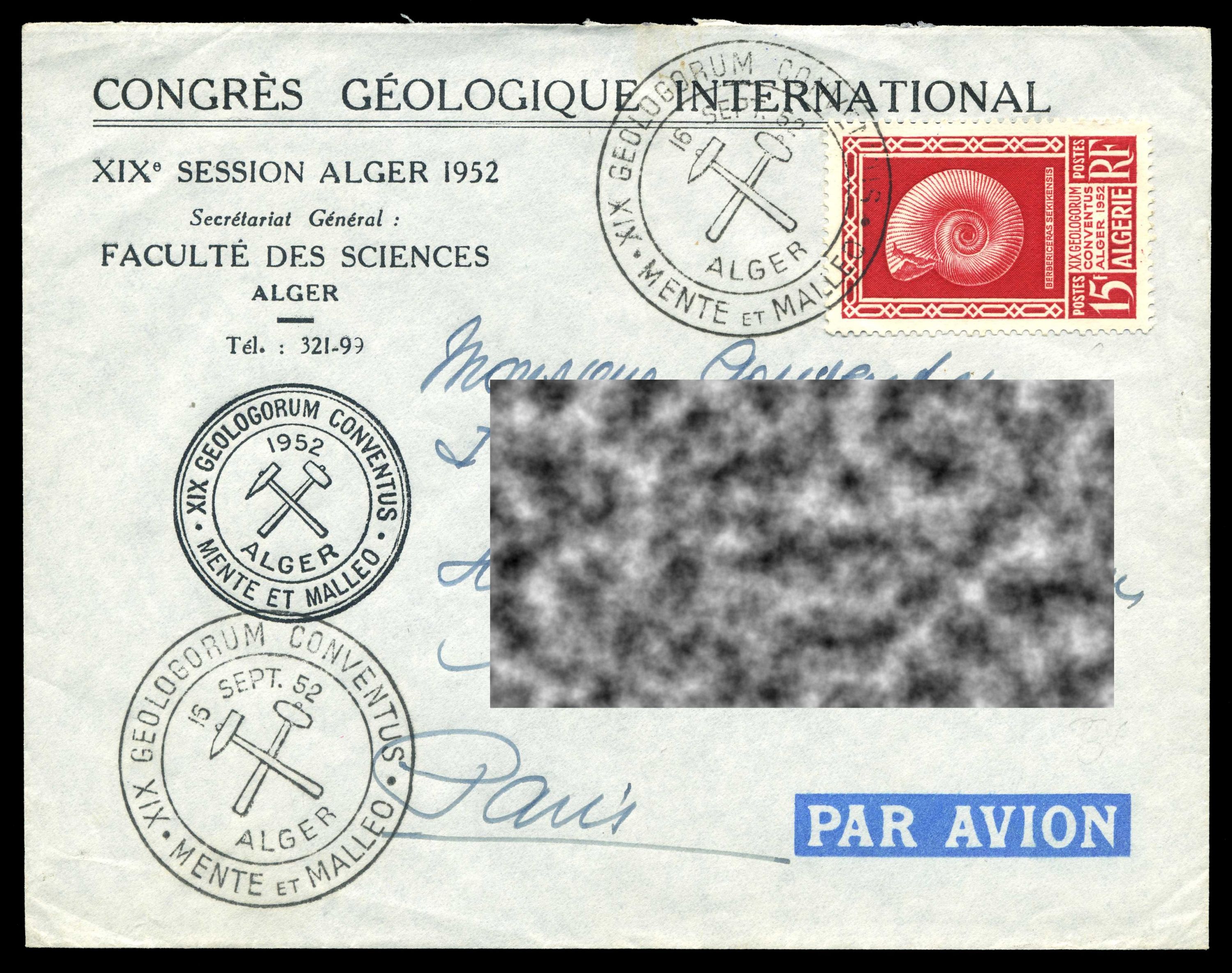 |
| The Ammonite stamp from the "XIX International Geological Congress" set on a cover posted fom Algeria during the congress. |
In that year, the XIX International Geological Congress was held in Algeria, and the host country issued two special stamps on August 11th to promote the event.
The ammonite fossil depicted on the 15‑franc stamp is Berbericeras sikikensis. Ammonites are excellent index fossils, allowing geologists to correlate the rock layers in which they are found with specific geological time periods. For this reason, they frequently appear on philatelic items connected to geological themes and scientific congresses.
The second stamp, denominated 30fr, shows one of the most famous geological sites in the country—the Hoggar Mountains.
1955 USA - First stamp with a bones, skeleton of prehistoric animal
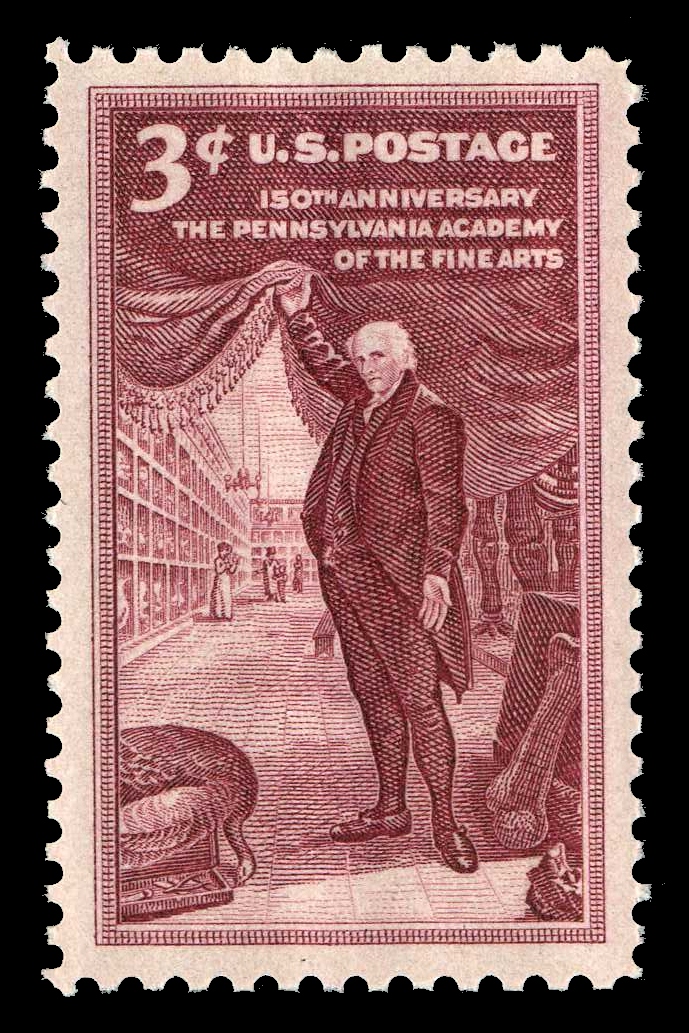 |
 |
| First stamp with a bones and skeleton of prehistoric animal (Mastodon) was issued in the USA in 1955, MiNr.: 684; Scott: 1064, The stamp is the reproduction "The Artist in His Museum" painting. Image source Wikipedia. | |
The stamp was issued to mark the sesquicentennial (150th anniversary) of the Pennsylvania Academy of the Fine Arts.
It features Charles Willson Peale’s self-portrait, The Artist in His Museum . Many of the exhibits depicted in the painting were collected by Peale himself, and several of them are visible on the stamp. These include a wild turkey prepared for preservation and a large mastodon bone, referencing one of Peale’s most famous achievements — the reconstruction of a mastodon skeleton.
Only a piece of mastodon skull is shown on the bottom-right corner of the stamp. The skeleton and the femur bone of the mastodon are depicted on the right side of the stamps
1958 China - First stamp of dinosaur
 |
| The first dinosaur (Lufengosaurus) stamp issued in China in 1958, MiNr.: 370; Scott: 342. |
 |
 |
| Trilobite and Megaloceros from the “Chinese Paleontology" set of China 1958 MiNr.: 369, 371;, Scott: 341, 343, respectively. | |
The 8-fen stamp features both a fossil and a reconstruction of Lufengosaurus.
Lufengosaurus, meaning “Lufeng lizard,” is a genus of early sauropodomorph dinosaur from the Early to Middle Jurassic of what is now southwestern China. It was named in 1941 by the Chinese paleontologist C. C. Young.
It is one of the few prosauropods known from the Early Jurassic period. Prosauropods—meaning “before the sauropods”—were relatively small, herbivorous dinosaurs closely related to the giant sauropods of the later Jurassic. Notably, Lufengosaurus became the first dinosaur in China to be mounted as a complete skeleton and displayed publicly in Beijing.
The other two stamps (shown on the right) depict a trilobite (Kaolishania pustulosa) from the Paleozoic era, discovered at Haoli Mountain, and the Chinese giant deer (Megaloceros [=Sinomegaceros] pachyosteus) from the Cenozoic.
The FDC of this set is very rare, as it was issued in very limited quantities.
1961 Switzerland - First fish and plant fossil on stamp
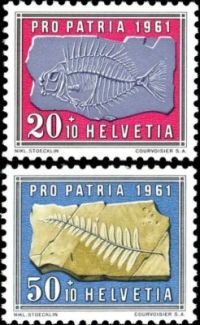 |
| Fossil and Mineral stamps of Switzerland 1958-1961 Mn: 657-661, 674-678, 714-718, 731-735 ; Sn: B272-B276, B282-B286, B292-B296, B303-B307, respectively. |
 |
| Fossil and Mineral stamps of Switzerland 1958-1961 Mn: 657-661, 674-678, 714-718, 731-735 ; Sn: B272-B276, B282-B286, B292-B296, B303-B307, respectively. |
Each set consisted of five stamps:
one bearing the Pro Patria campaign logo and four illustrating minerals and fossils. The additional surcharge paid for each stamp was donated to the organization. These issues are considered the first semi-postal stamps with a paleontological theme.
Pro Patria is a Swiss patriotic and charitable organization whose mission is to give special meaning to Switzerland’s National Day on August 1 by raising funds for social and cultural projects of national importance. One of its key fundraising methods is the issuance of semi-postal stamps, a tradition that began in 1938.
The 1961 set is particularly notable, as it includes two fossil stamps—one depicting a fish and the other a plant—both representing the first appearances of their kind on such stamps.The fish is most likely Scorpaena porcus, while the plant is probably Asterotheca meriani.
Asterotheca is a genus dating back to the Permian period (approximately 299–252 million years ago). It thrived in humid, swampy environments and represents some of the earliest plant life on Earth. Fossil plants such as this are studied within the field of paleobotany.
Paleobotany is the branch of paleontology concerned with the recovery and identification of plant remains from geological contexts, as well as their use in reconstructing past environments. It explores the evolutionary history of plants and contributes to our understanding of life’s development as a whole. Paleobotany plays a key role in reconstructing ancient ecosystems and climates—known as paleoecology and paleoclimatology—and is fundamental to the study of plant evolution.
1965 Poland - First pictorial stamp sets depicting prehistoric animals
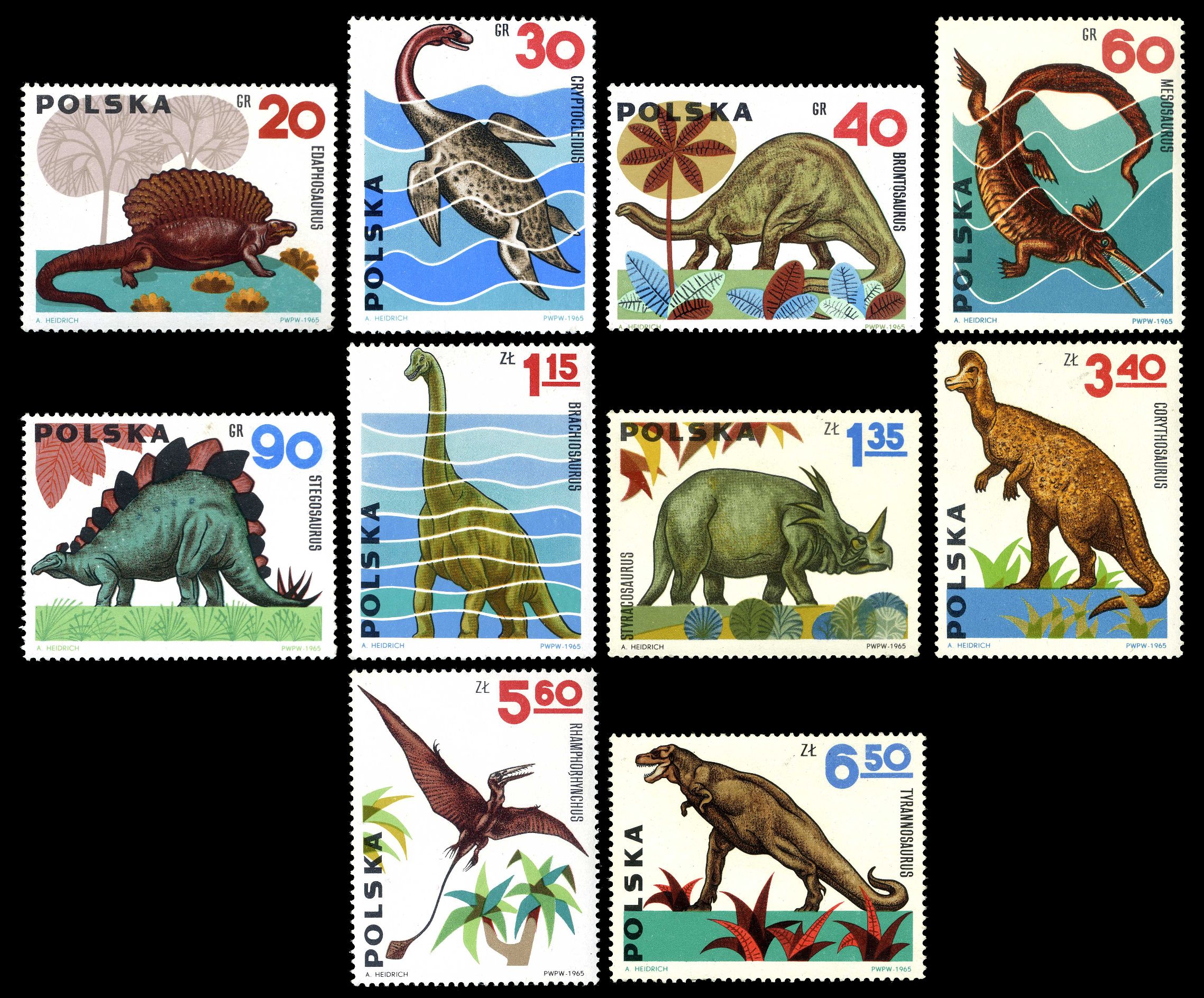 |
| First pictorial stamps depicting prehistoric animals issued in Poland in 1965, Mn: 1570-1579 ; Sn: 1307-1316. |
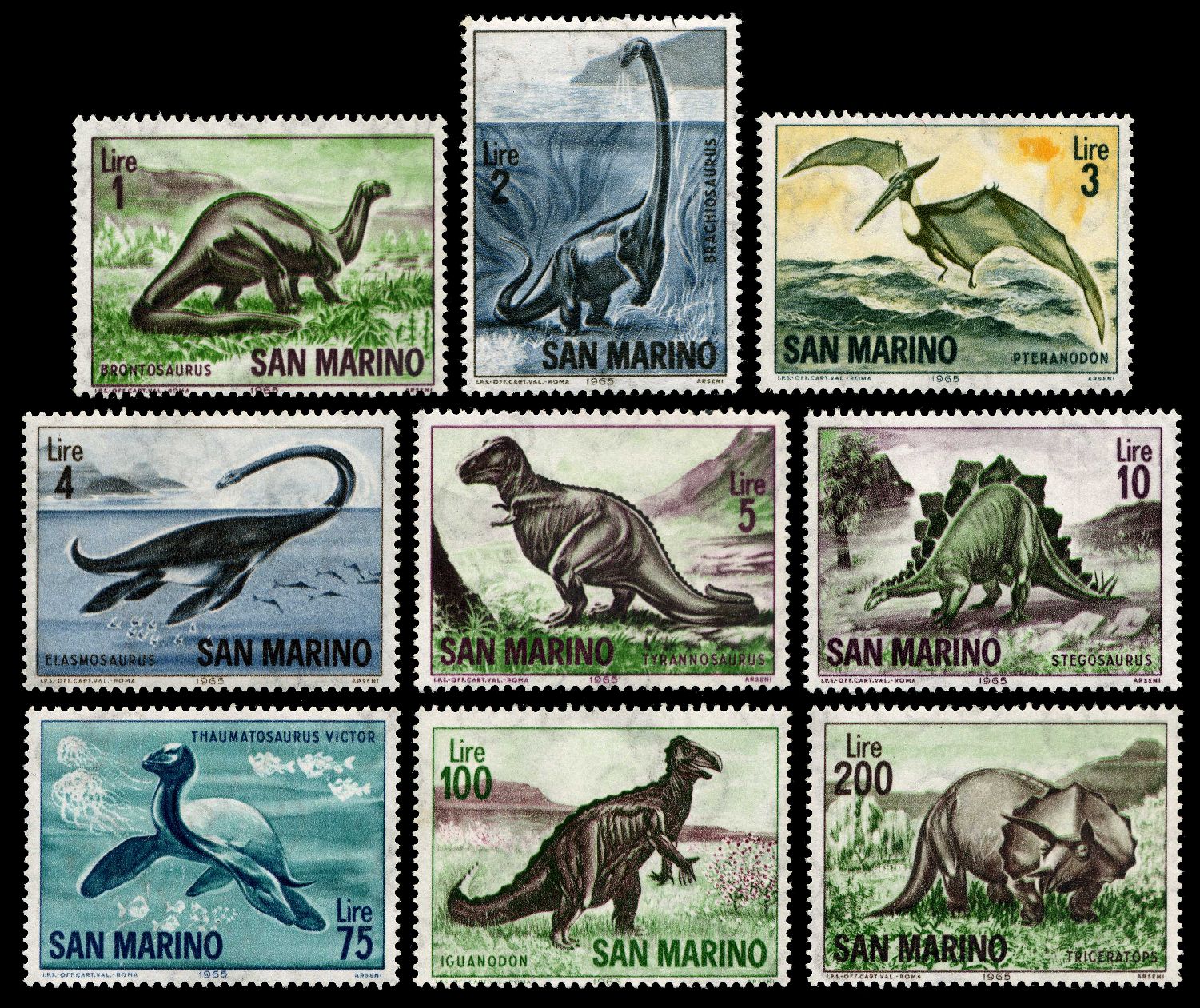 |
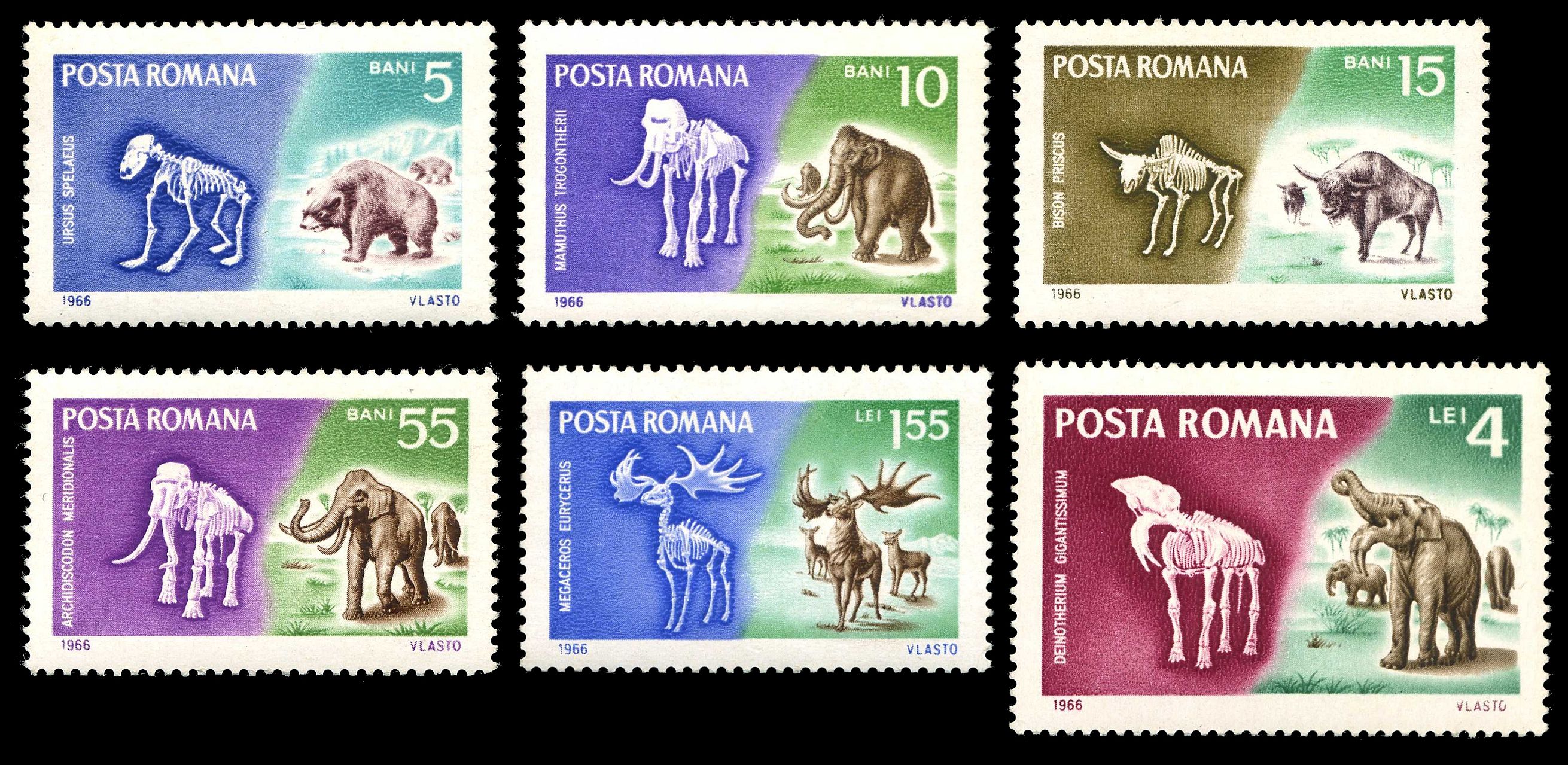 |
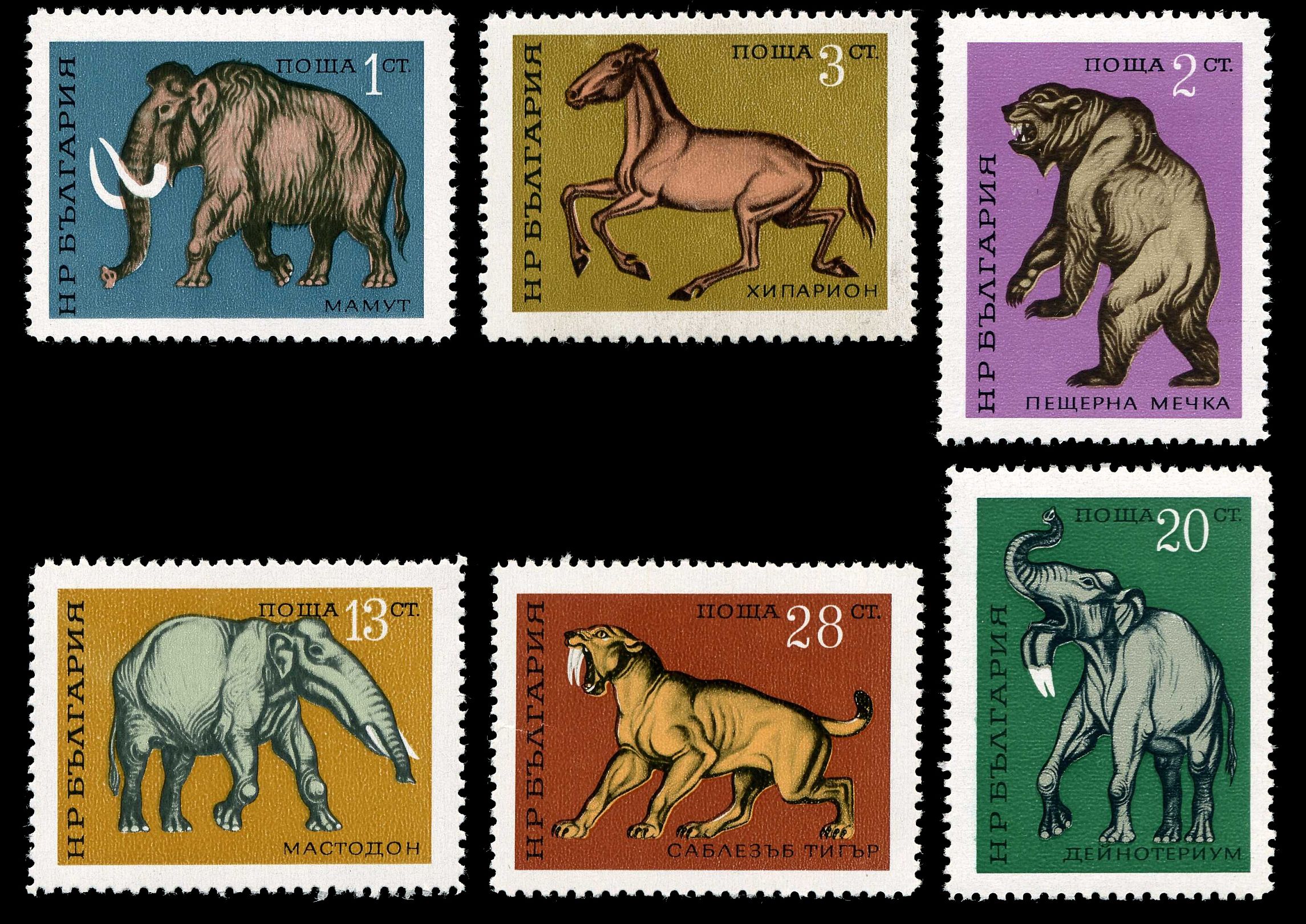 |
| Other earlier issues of pictorial stamp sets depicting prehistoric animals: San Marino 1965 MiNr: 833-841, Scott: 612-620; Romania 1966 MiNr.:2553-2558 ; Scott: 1887-1892; Bulgaria 1971 MiNr.: 2088-2093, Scott: 1944-1949. |
Only three months later, a second pictorial set featuring prehistoric animals, again largely dinosaurs, was issued in San Marino. Like the Polish series, its designs were also based on Burian’s artwork. In the following year, Poland released another set depicting prehistoric life, ranging from fish to mammoths, intended to illustrate the evolution of animals. That same year, the first stamp set dedicated specifically to prehistoric mammals was issued in Romania, showing both reconstructions of the animals and their skeletons. A subsequent set focusing on prehistoric mammals appeared five years later in Bulgaria.
1965 Tanzania - Fist stamp of human fossil
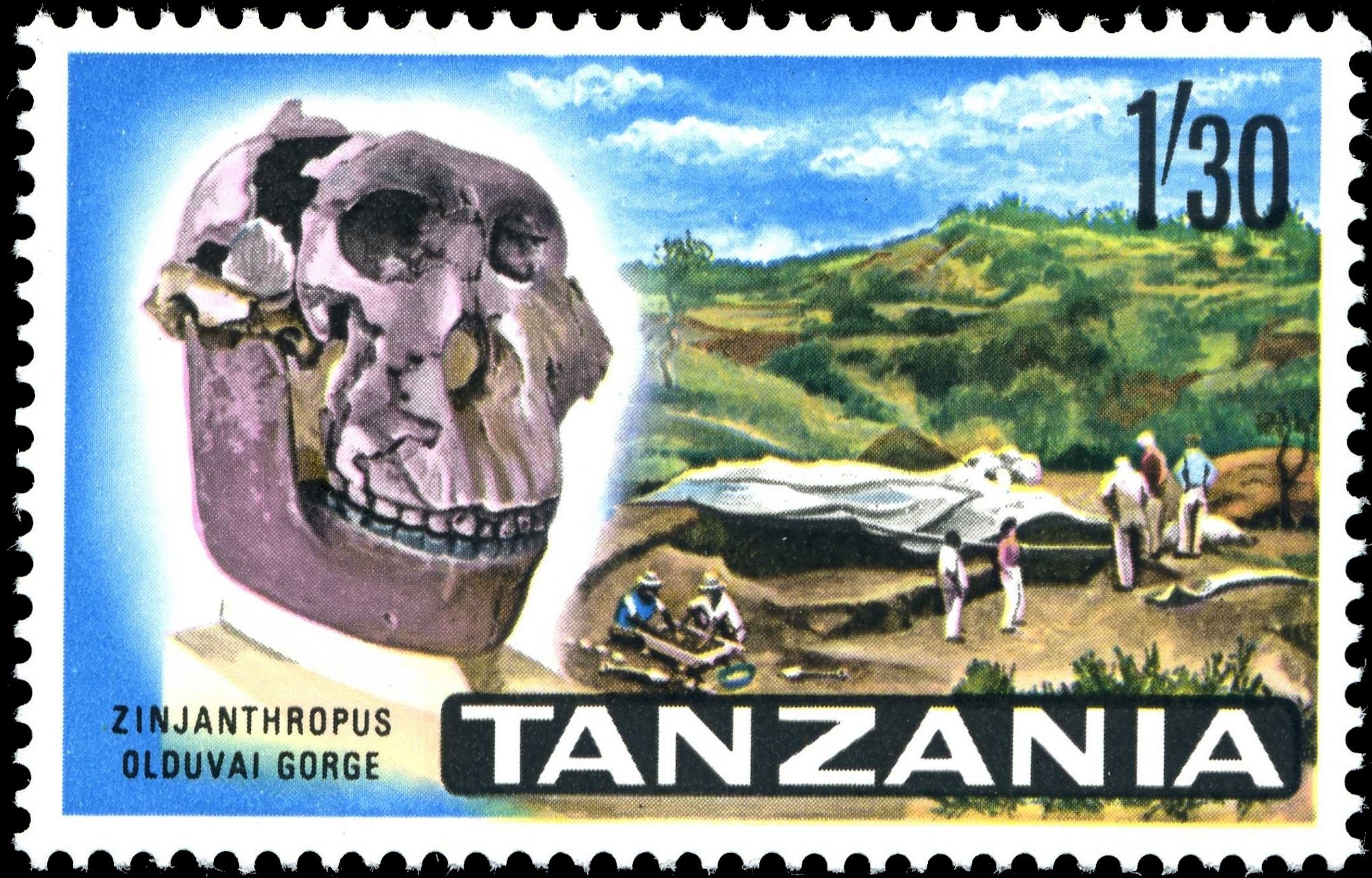 |
| First stamp with prehistoric human fossil (skull of Zinjanthropus) issued in Tanzania in 1965, MiNr.: 14, Scott: 14. |

The 1.30 shilling stamp shows the skull of Zinjanthropus alongside its excavation site at Olduvai Gorge. Zinjanthropus, later reclassified as Paranthropus boisei, is an extinct hominin species identified from a skull discovered at Olduvai Gorge in Tanzania by British paleoanthropologist Mary Leakey on July 17, 1959. It is even possible that she herself is depicted on the stamp.

 |
| Mary Leakey on stamp of UK 2013, MiNr.: 3448, Scott: 3164. |
In 1960, she became director of excavations at Olduvai and later assumed full leadership, assembling her own research team. After her husband’s death, she emerged as a leading figure in paleoanthropology and played a key role in establishing the Leakey family’s lasting legacy in the field. Mary Leakey passed away on December 9, 1996, at the age of 83. She is remembered as a pioneering paleoanthropologist whose contributions were fundamental not only to her own research but also to the work of her husband and their sons—Richard, Philip, and Jonathan.
1967 Cuba - First pictorial stamps set of prehistoric humans
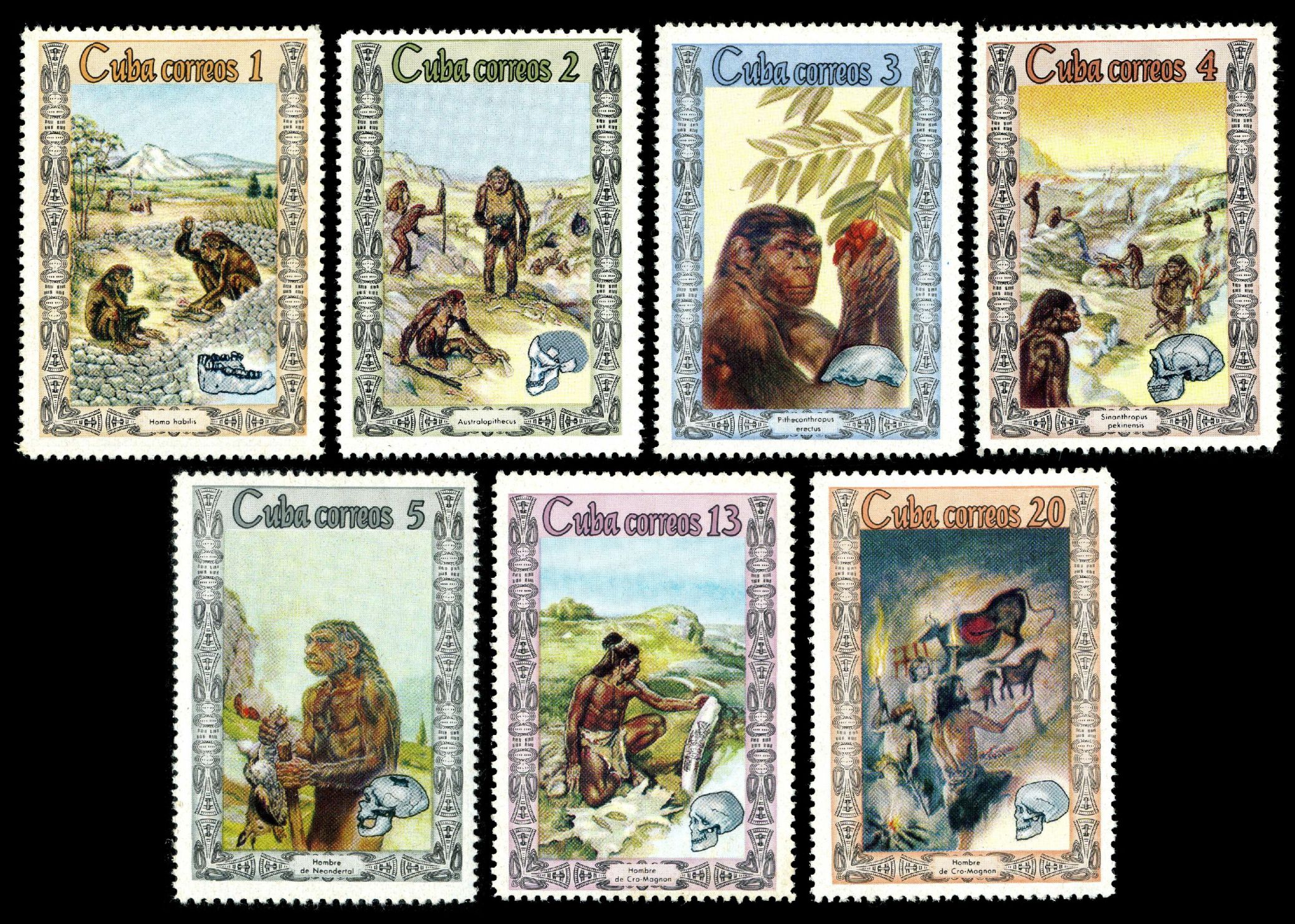 |
| First pictorial stamp set depicting prehistoric human issued in Cuba in 1967, MiNr.: 1280-1286 Scott: 1210- 1216. |
The first two stamps portray very early species: Homo habilis, which lived approximately 2.8 to 1.5 million years ago, and Australopithecus.
Fossil and archaeological evidence suggests that the genus Australopithecus originated in eastern Africa around 4 million years ago, later spreading across the continent before becoming extinct after about 2 million years ago.
Pithecanthropus erectus and Sinanthropus pekinensis are both now classified within the Homo erectus group, which lived between about 1.9 million and 700,000 years ago. Pithecanthropus erectus was discovered along the Solo River at Trinil in East Java, while Sinanthropus pekinensis, also known as Peking Man, was found in China.
Neanderthals are closely related to modern humans, differing in DNA by only about 0.12 percent. Their remains, including bones and stone tools, have been discovered across Eurasia and North Africa. They are generally classified as Homo neanderthalensis, although some researchers consider them a subspecies of modern humans, Homo sapiens neanderthalensis.
The final stage represented is modern Homo sapiens. The 13c and 20c stamps depict Cro-Magnon humans — early modern humans who lived in Europe during the Upper Paleolithic Period. Although older terminology placed them between 500,000 and 10,000 years ago, current research typically uses the term European early modern humans (EEMH). Fossils of these populations have been found across Europe, including Italy, Britain, and even Arctic regions.
All stamps in this set are based on illustrations by the renowned Czech painter and illustrator Zdenek Burian, taken from his 1960 book Prehistoric Man.
1970 Lesotho - First stamps with footprints of prehistoric animals
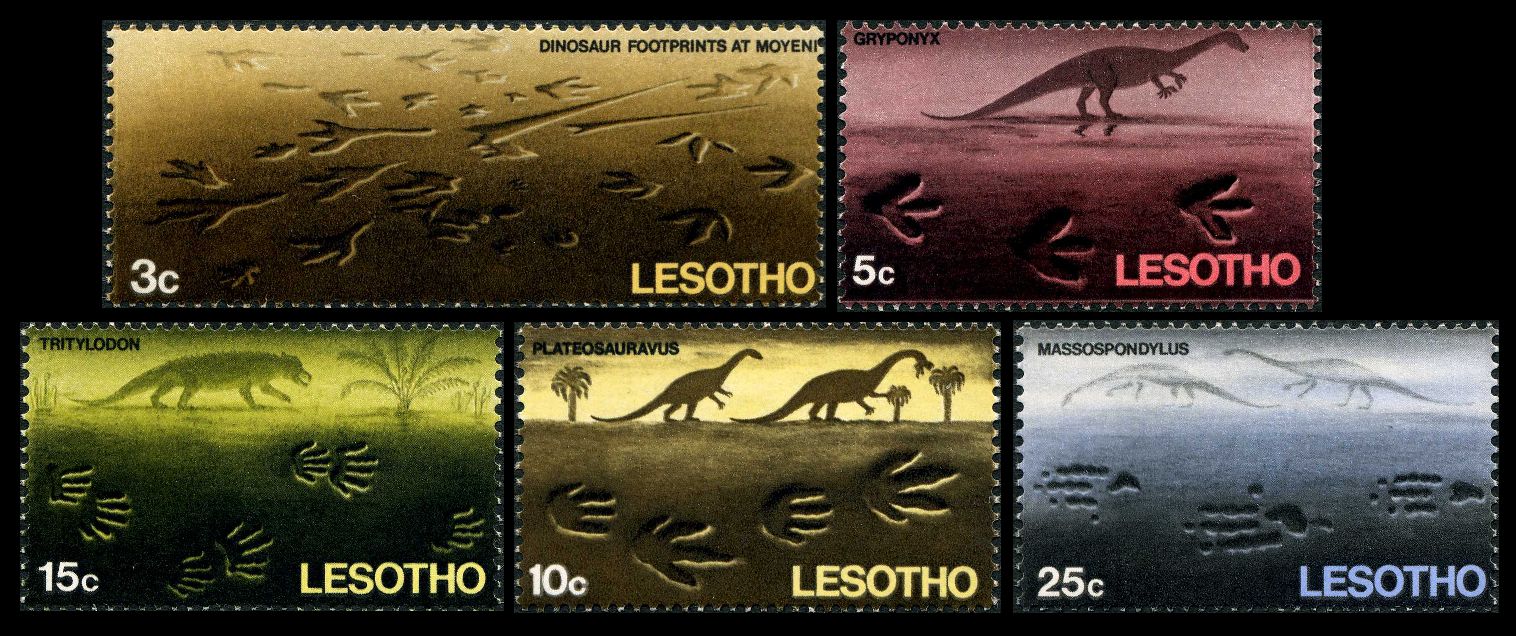 |
| First stamps with footprints of prehistoric animals issued in Lesotho in 1970, MiNr.: 75-79; Scott: 75-79. |
The set, titled “Dinosaurs and Footprints at Moyeni,” was later followed by a second series in 1984, which featured footprints of three additional dinosaurs.
These fossilized tracks, dating to around 200 million years ago (Upper Triassic), were discovered at Moyeni in the Quthing District of Lesotho. Four of the five stamps illustrate not only the footprints themselves but also artistic reconstructions of the animals that made them, moving across sandy and coastal environments.
Paleoichnology is the study of fossilized footprints and tracks. Such traces can reveal a great deal about prehistoric animals, including their size and whether they walked on two or four legs. The spacing between footprints can indicate speed and behavior, while trackways with multiple sets of prints can provide insights into social behavior, such as whether animals moved in herds, pairs, or alone. Additionally, footprints can offer valuable information about foot structure and soft tissue, such as padding.
1970 Poland - First post stationary with imprinted fossil stamp
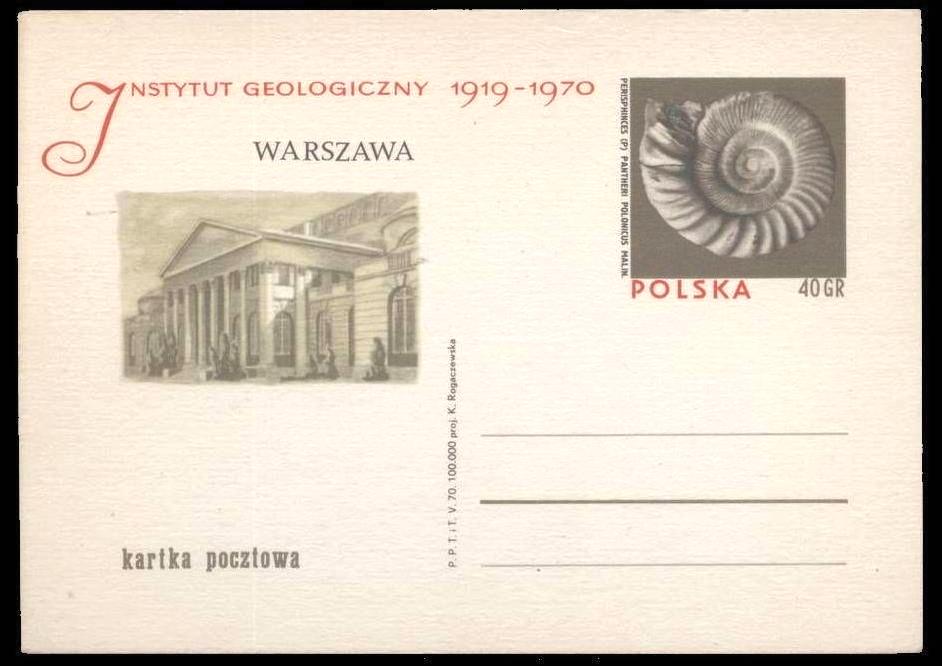 |
| First postal stationery with fossil on imprinted stamp issued on Poland in 1970. |
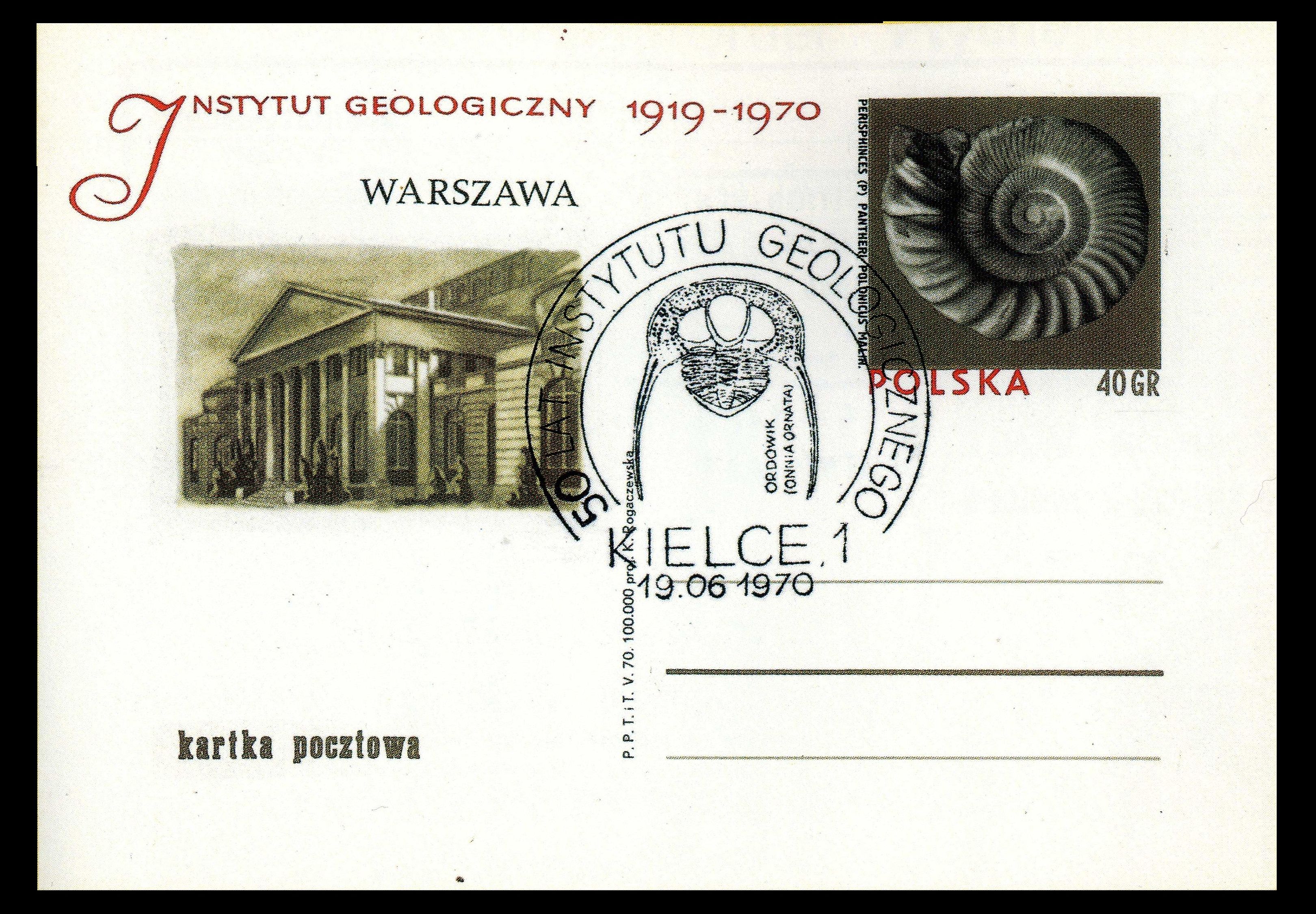 |
| The postal stationery cancelled by commemorative postmark to sign the 50th anniversary of the Polish Geological institute. |
A trilobite of the genus Marrolithus ornatus appears on a special postmark issued in Kielce. This small, blind trilobite, measuring only about 2 cm, likely lived burrowed in the mud of the Ordovician sea floor (approximately 485–443 million years ago).
1970 Angola - First Paleontology related stamps at diamond shape
 |
| First paleontology related stamps at diamond shape issued in Angola in 1970, MiNr: 563-574; Scott: 551-562. |
The first diamond-shaped stamp was issued by Nova Scotia (now a province of Canada) in 1851. Triangular stamps first appeared in 1853 in the Cape of Good Hope (in present-day South Africa), while oval stamps were introduced in 1879 in the Indian state of Bhor. Free-form stamps were later pioneered in 1964 by Sierra Leone.
On October 31, 1970, Angola issued a definitive series titled “Geology, Mineralogy, Paleontology”, featuring minerals and fossils found within the country. All 12 stamps in the set were produced in a distinctive diamond shape.
|
Six of these stamps are devoted to paleontology: 0$50 – Angolasaurus, showing a skull and reconstruction; 2$00 – Gondwanidium validum, representing the first stamp depicting a petrified plant; 3$00 – stromatolites; 3$50 – Procarcharodon megalodon tooth; 4$00 – Microceratodus angolensis fossil; 6$00 – Nostoceras helicinum; 10$00 – Rotula orbiculus angolensis. |
Angolasaurus is an extinct genus of plioplatecarpine mosasaur. Its remains have been found in Turonian deposits in Angola and elsewhere. The genus was first described in 1964 by Miguel Telles Antunes based on a partial skull and skeleton — similar to the specimen depicted on the stamp. |
1971 Manama - First Souvenir and Miniature sheets with stamps of prehistoric animals
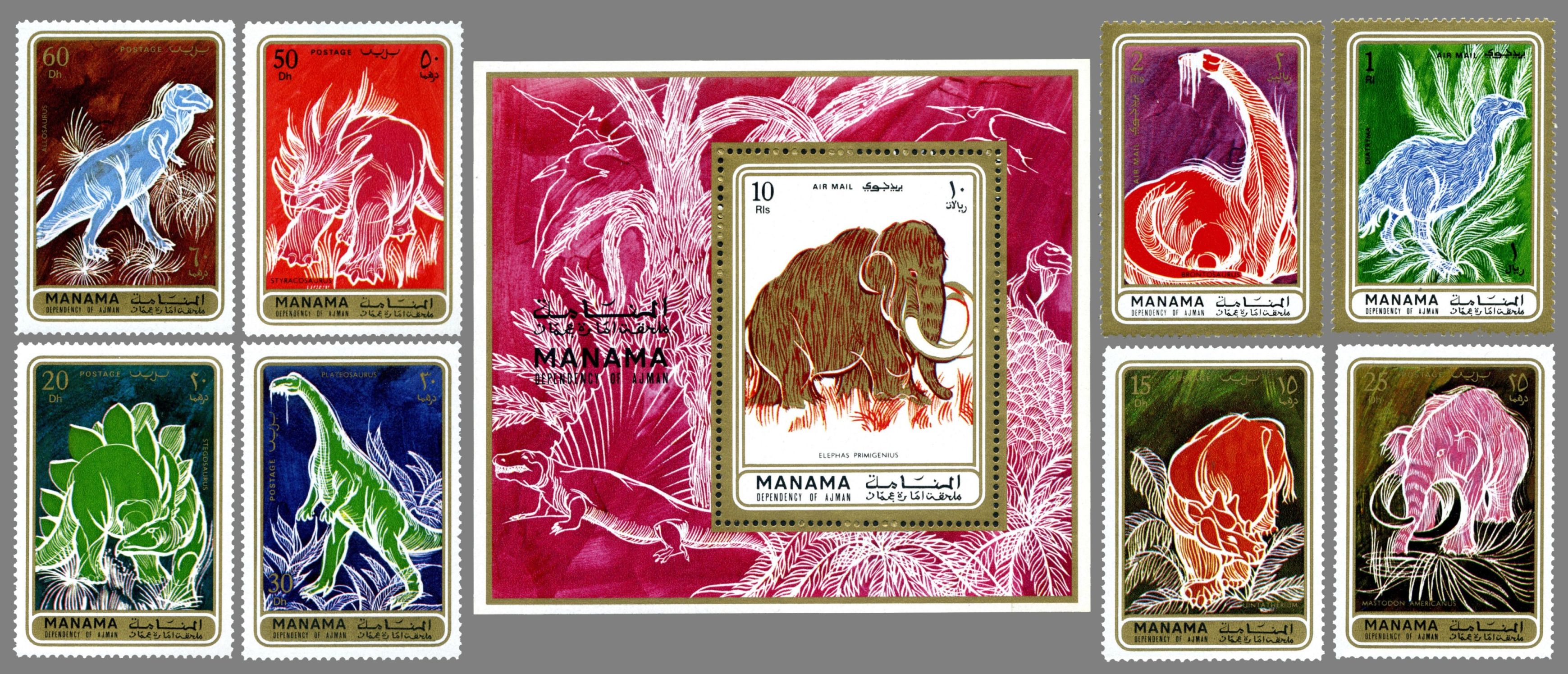
First Souvenir Sheet with stamp of prehistoric animal (mammoth) issued in Manama in 1971, in a set with 8 stamps, MiNr: 681-688, Bl. 135 (689); Scott: not listed.
In 1971, Manama released the first stamp set that included a souvenir sheet depicting a woolly mammoth along with other prehistoric animals in the margins.
Souvenir sheets are small stamp sheets that feature one or more stamps surrounded by wide margins, often decorated with
illustrations or inscriptions.
The first souvenir sheet was issued by the Post of Luxembourg in 1923.
They became increasingly popular among collectors with the rise of pictorial issues around 1970.
From the 1960s through the late 1980s, several small Middle Eastern territories. referred to by philatelists as
"Sand Dunes", issued enormous quantities of stamps covering every popular theme: space exploration,
sports, famous personalities, and more.
These issues were produced primarily for the collector market rather than for postal use, and in many cases were never
available in their countries of origin for actual postage.
One such example is the set of Manama.
Another example is a set from Fujeira (1968).
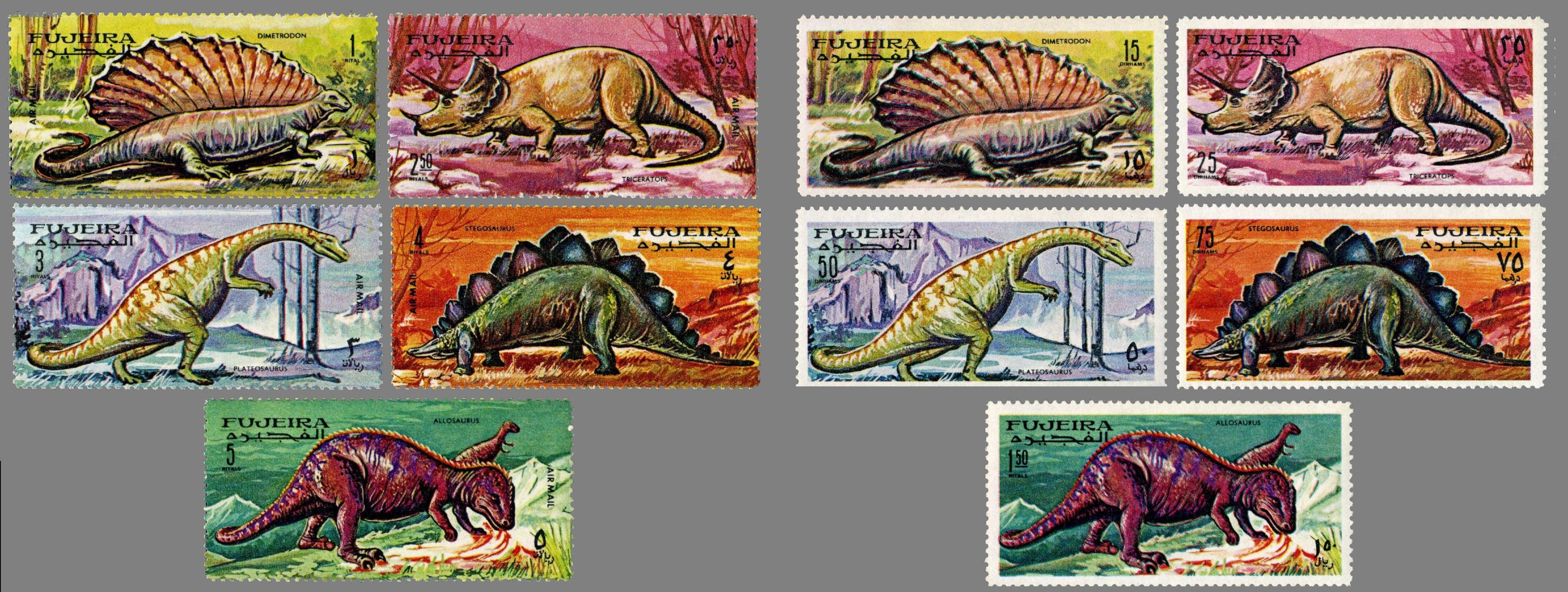
"Prehistoric animals" stamp set of Fujeira, as an another example of the "Sand Dunes" issues.
MiNr: 252-256, 257-261; Scott: not listed.
1980 State of Oman and Dhufar - First unofficial/ illegal issue of stamps with prehistoric animals
 |
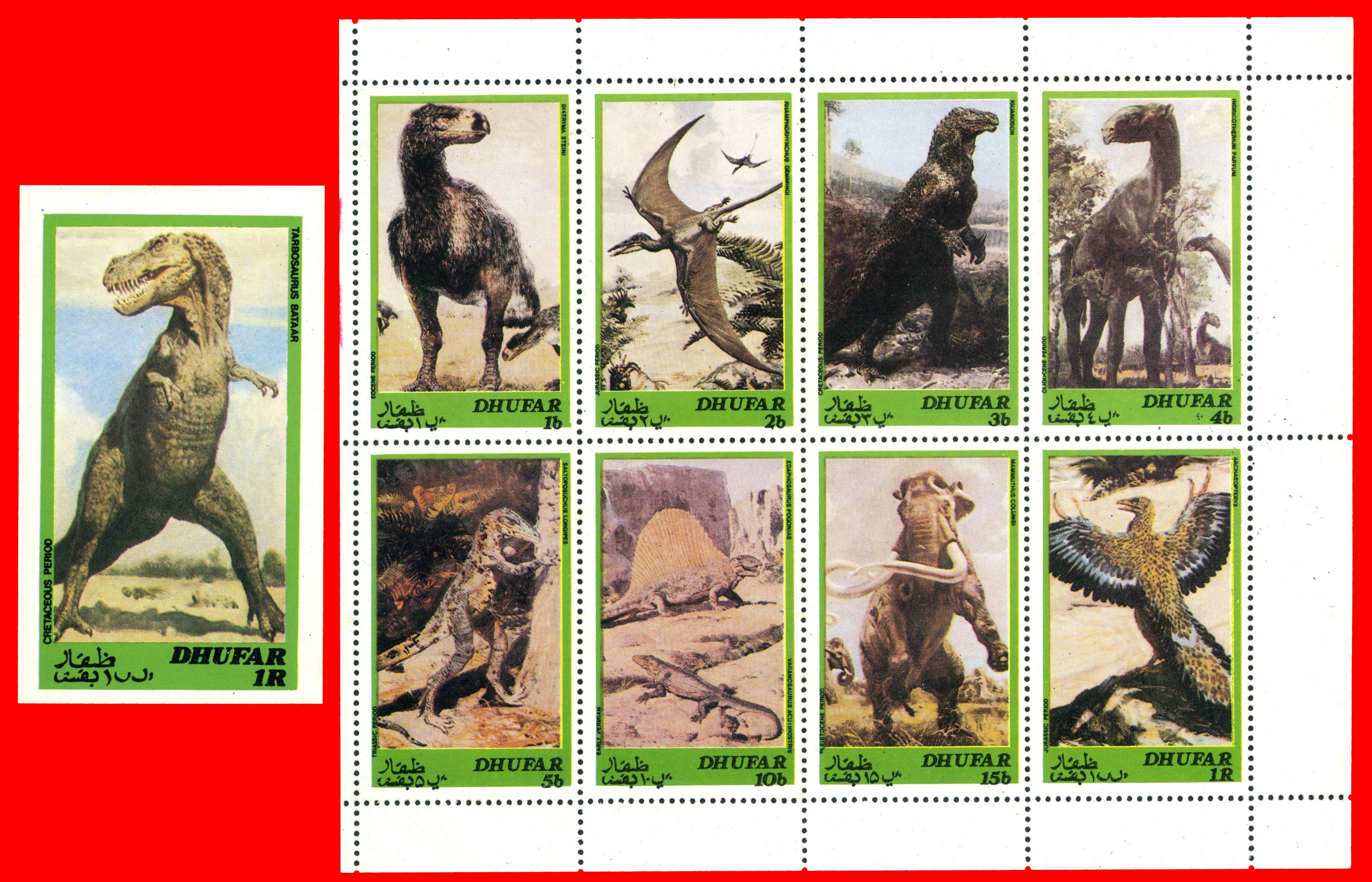 |
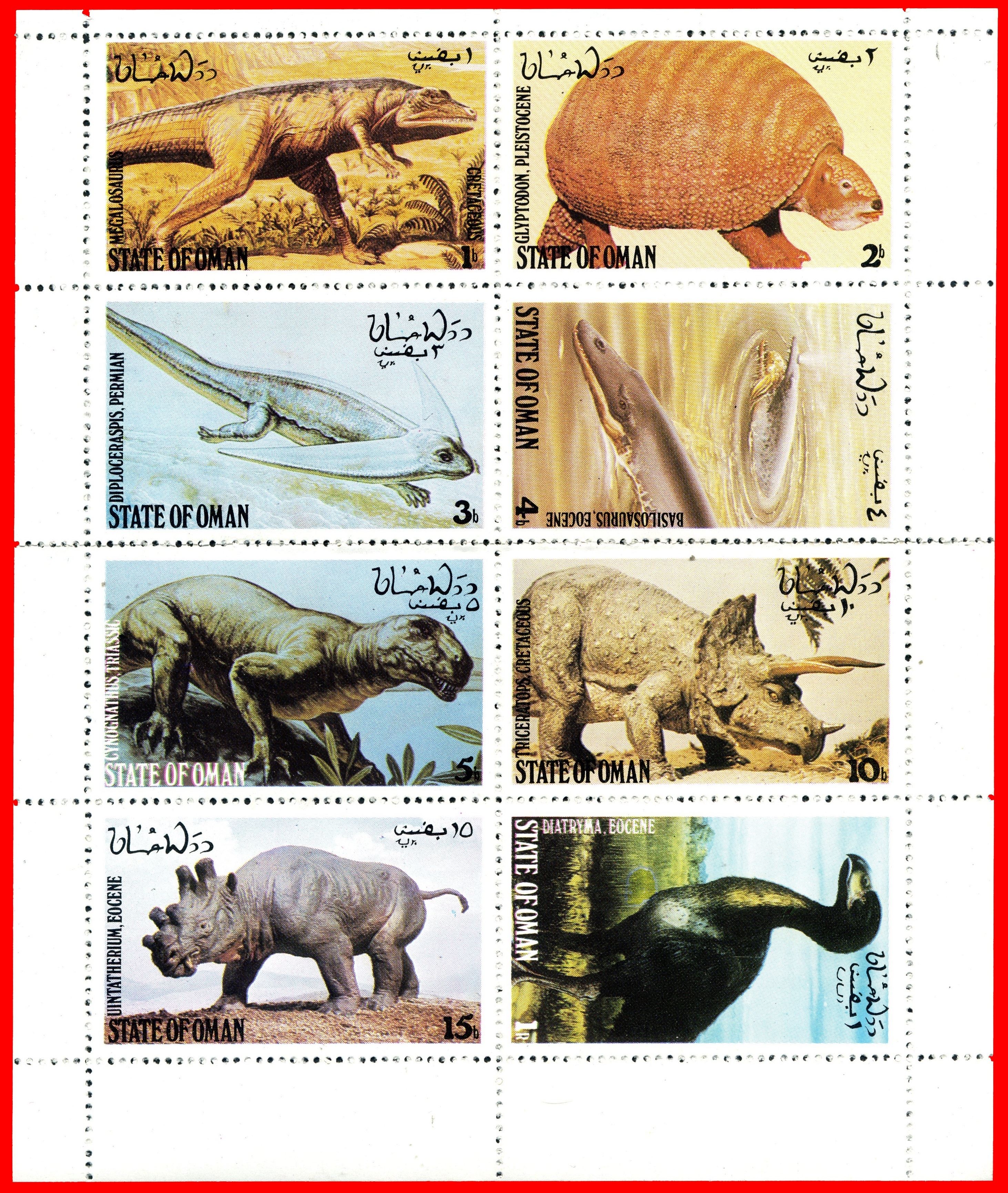
| First unofficial/fake stamps of prehistoric animals issued in Oman and Dhufar in 1980. | |
In the nineteen seventies and -eighties, rebel groups seeking to overthrow the government of Oman gained control over parts of the Arabian Peninsula. To raise funds and present themselves as legitimate authorities, they issued stamps under the names “State of Oman” and “Dhufar”.
In 1980, a set featuring prehistoric animals was released under both names. Each issue consists of eight values in a sheet (both perforated and imperforate) and an imperforate miniature sheet. “Used” covers exist, though all are addressed to a stamp dealer. Since that time, numerous companies and individuals have produced stamps depicting various prehistoric animals, mostly dinosaurs, using the names of non‑existent countries in order to profit from inexperienced collectors.
1991 Guyana - First stamps Sheet with prehistoric animals
 |
| "Prehistoric creatures of South America: Cenozoic era" stamps of Guyana 1990 - the first stamp sheet with stamps of prehistoric animals, MiNr: 3407-3426 ; Scott: 2378a-t. |
The first sheet of this type with a prehistoric theme was issued on 6 November 1990 by the South American country of Guyana. It included twenty different stamps depicting prehistoric animals native to South America.
By the way, most prehistoric‑animal‑themed stamps are issued by Guyana and are created with a single purpose: to be collected. There is no real narrative behind these issues — just colorful images of various prehistoric animals.
One of the most beautiful souvenir sheets depicting prehistoric animals, issued by the United States on 1 May 1997, features a painting by the renowned American paleoartist James Gurney, creator of Dinotopia.
 |
| "The World of Dinosaurs" on stamps sheet of USA 1997, MiNr.: 2814-2828 ; Scott: 3136a-l. |
One of the experts he consulted was the prominent American paleontologist Jack Horner, whose discoveries have greatly expanded our understanding of dinosaurs. Horner also served as a scientific adviser for Steven Spielberg’s films Jurassic Park and The Lost World.
The First Day of Issue ceremony for the stamps took place at the Dinosaur Valley Museum in Grand Junction, Colorado, located in the heart of the world‑famous “Dinosaur Triangle”. This region, stretching from western Colorado into northeastern Utah, is known for its exceptionally rich concentration of dinosaur excavation sites.
1992 Thailand - First stamps booklet with prehistoric animals
In 1895, Luxembourg introduced the first booklet containing postage stamps. This new format quickly became a useful platform for postal administrations, allowing them to include promotional messages and commercial advertisements on the covers or interleaves. Such advertisements first appeared in booklets issued in Germany in 1905 and in Great Britain in 1909.
On 1 January 1992, Thailand released the first fossil‑themed stamp booklet. It features five stamps illustrating a dinosaur dig and several dinosaur skeletons. These stamps form part of a four‑stamp set celebrating the 100
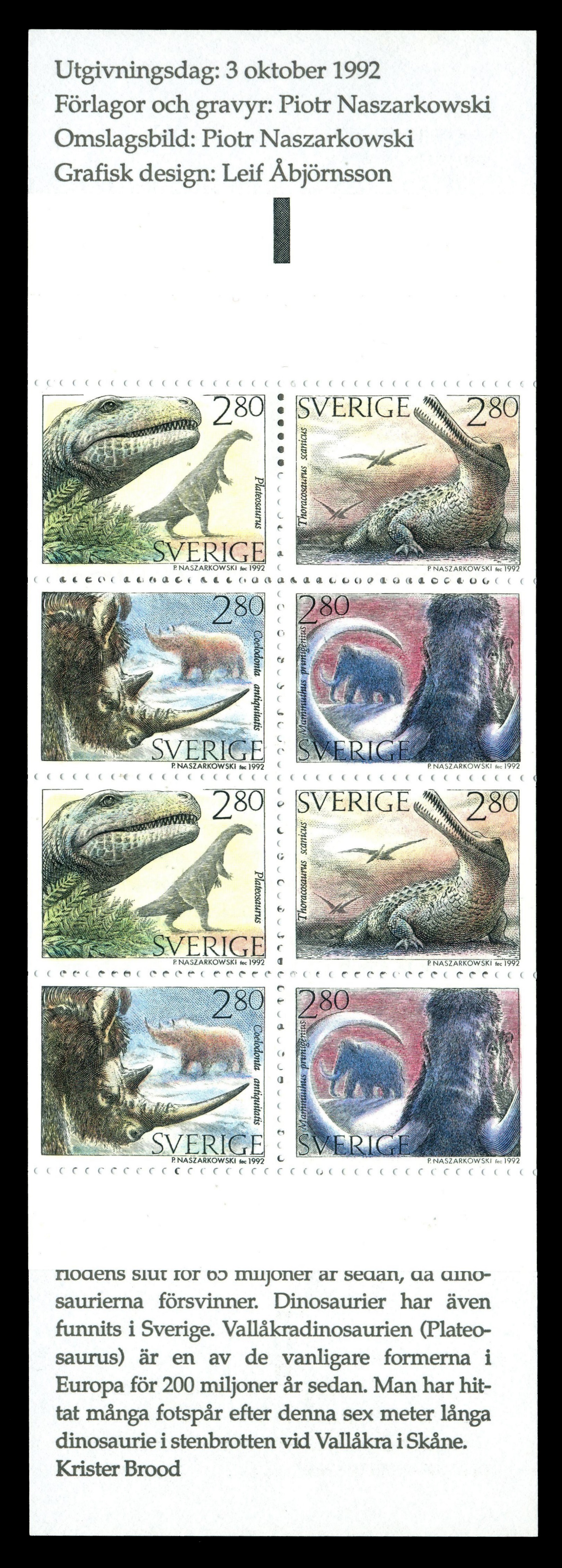
Later that same year, on 9 September, the Swedish postal service issued a booklet devoted to prehistoric animals, arranged in two blocks of four stamps and accompanied by short descriptions of the creatures depicted.
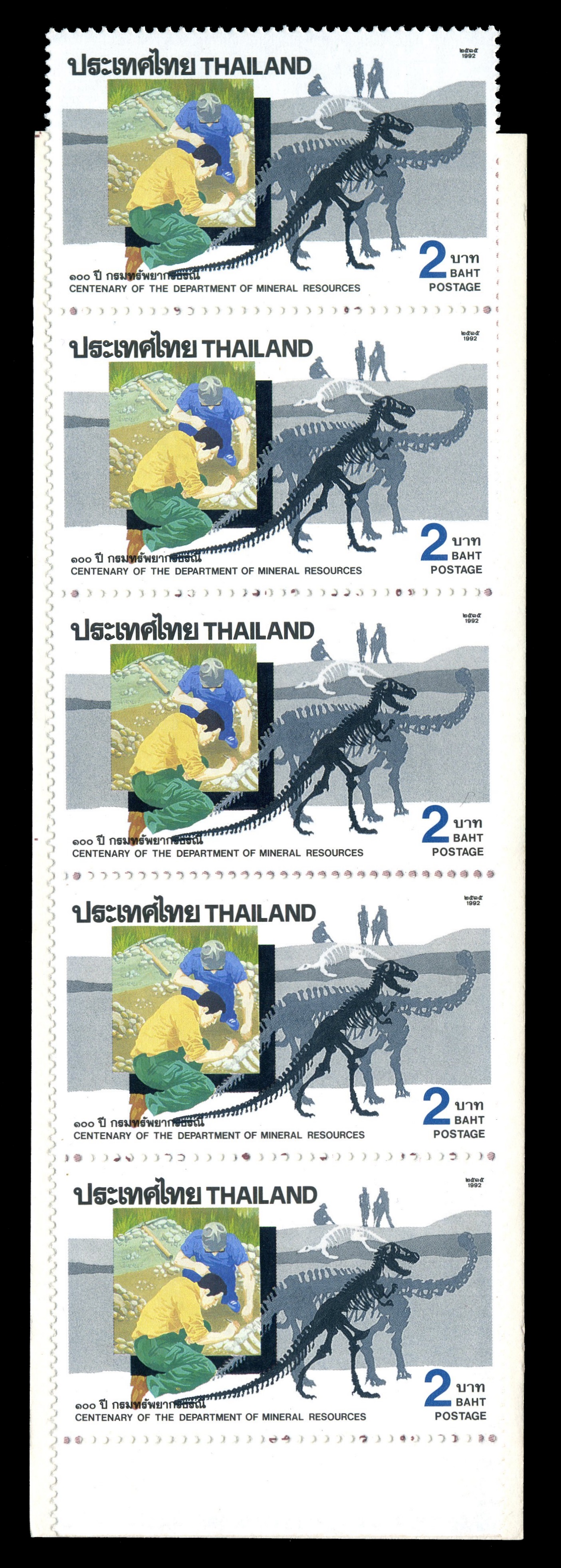 |
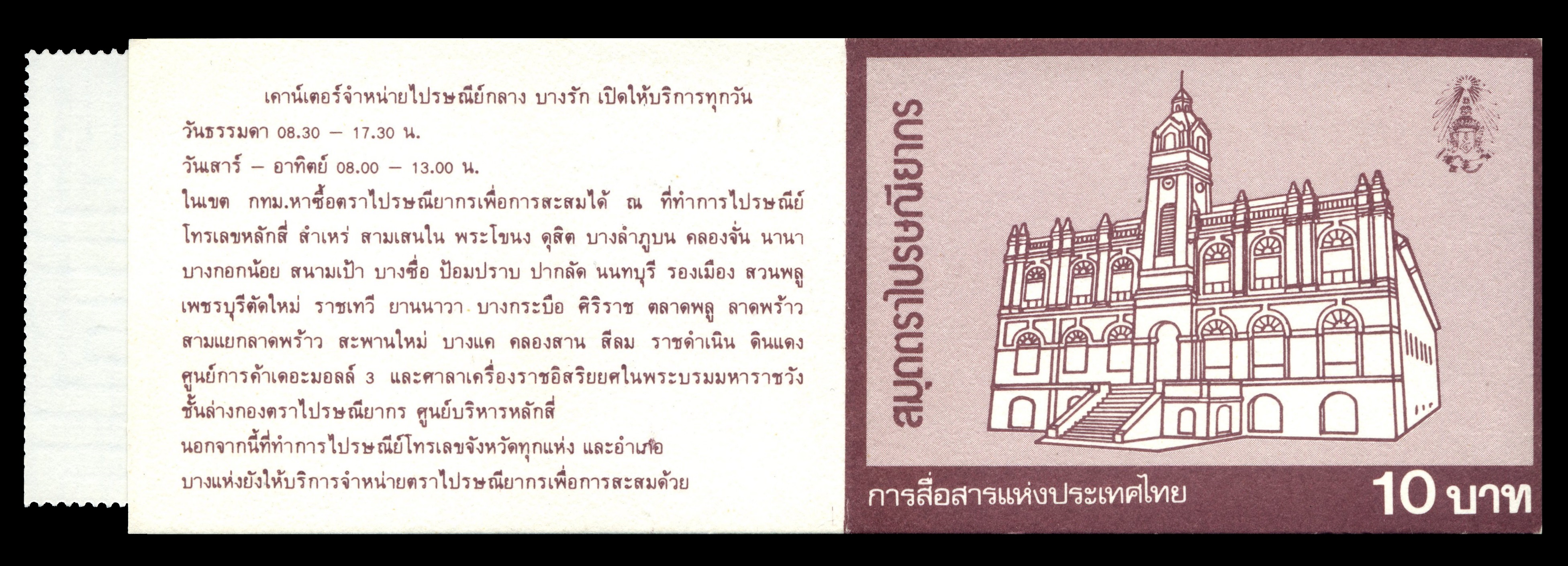
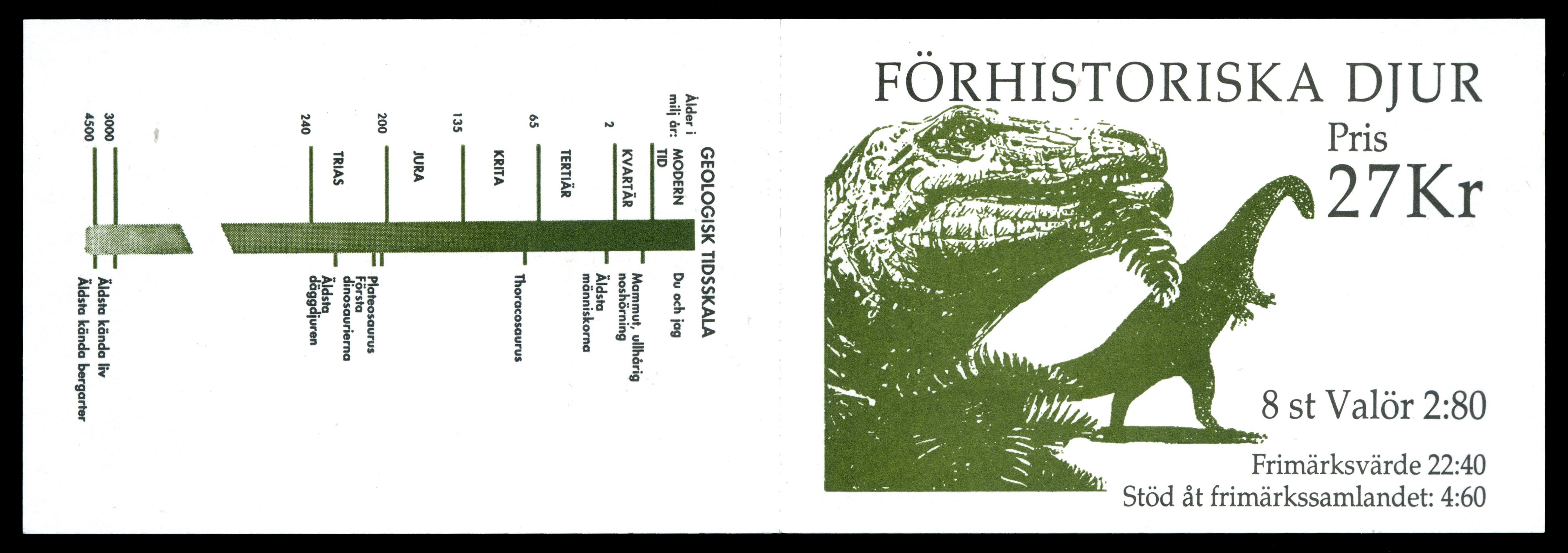
Left and top-middle: the booklet of Thailand 1992 - the first booklet
with adhesive stamp showing fossils of dinosaurs.
Right and bottom-middle: the booklet of Sweden 1992 with two sets of 4 stamps each, showing reconstructions of prehistoric animals. |
 |
1993 Australia - First self-adhesive stamps of prehistoric animals
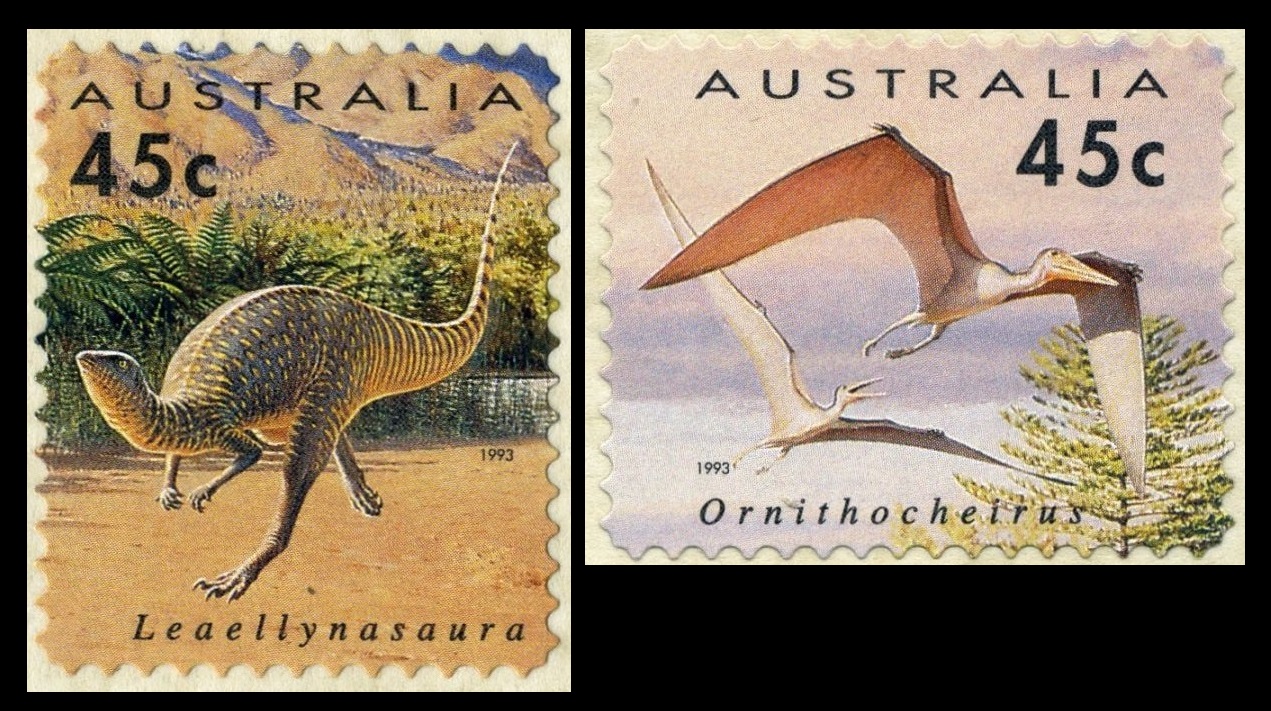 |
| The first self-adhesive stamps with prehistoric animals (Leaellynasaura and Ornithocheirus) issued in Australia in 1993, MiNr.: 1376-1377; Scott: 1349-1350. |
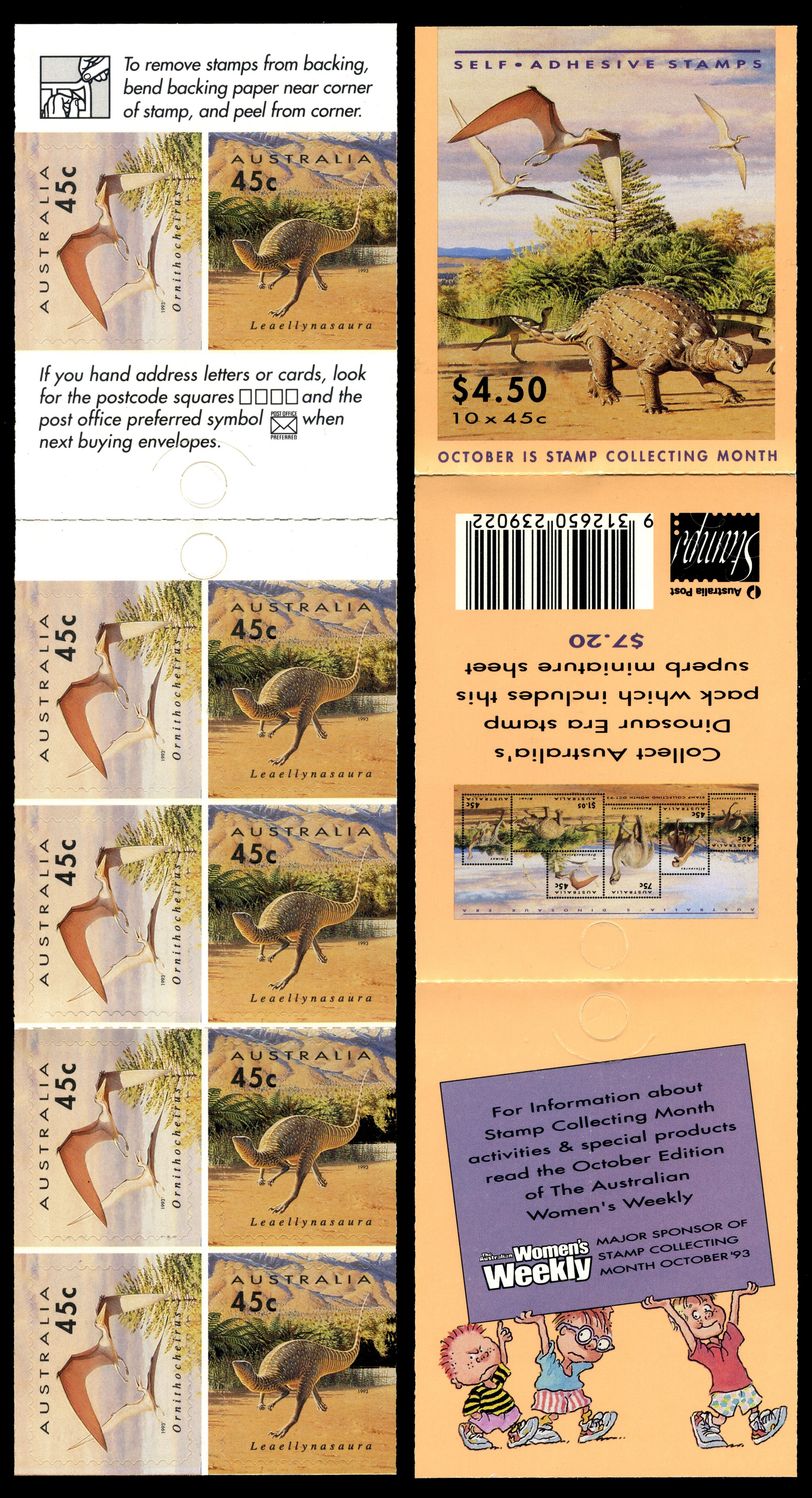 |
| The first booklet with self-adhesive stamps showing prehistoric animals was issued in Australia in 1994. The pterosaur stamps printed rotated by 90 degree. The reverse side of the booklet promote the issue of "Australia’s Dinosaur Era" stamps. |
Australia issued its stamps in several formats: six stamps printed in separate sheets of 15, and a mini sheet containing all six designs. Two of the Australian stamps were also produced as self‑adhesive issues, sold both in booklets of ten and in rolls (coils). These were the first self‑adhesive stamps depicting prehistoric animals, and they featured the following species.


| Leaellynasaura, a small herbivorous dinosaur roughly the size of a chicken, had a skull only six centimetres long. It walked on two legs and possessed unusually large eyes, along with an enlarged region of the brain devoted to vision (the optic lobes). These features suggest it was well adapted to low‑light conditions. During much of the Cretaceous, when Leaellynasaura lived, Australia lay much closer to the South Pole than today and experienced two to three months of near‑continuous winter darkness. Too small to migrate long distances, this little dinosaur may have remained active throughout the long polar night. |
Ornithocheirus, one of the pterosaurs or flying reptiles, was not a dinosaur, yet lived alongside
them and shared their warm‑blooded physiology—an essential requirement for the high energy demands of
flight.
Ornithocheirus lived during the Late Cretaceous and is known from fossils found in Europe,
South America, and Africa.
In 19th century England, many fragmentary pterosaur remains were discovered in
the Cambridge Greensand.
The species was first identified in Australia in 1979 near Boulia in south‑western Queensland.
It was a coastal flier with an impressive wingspan of about 2.5 metres. |

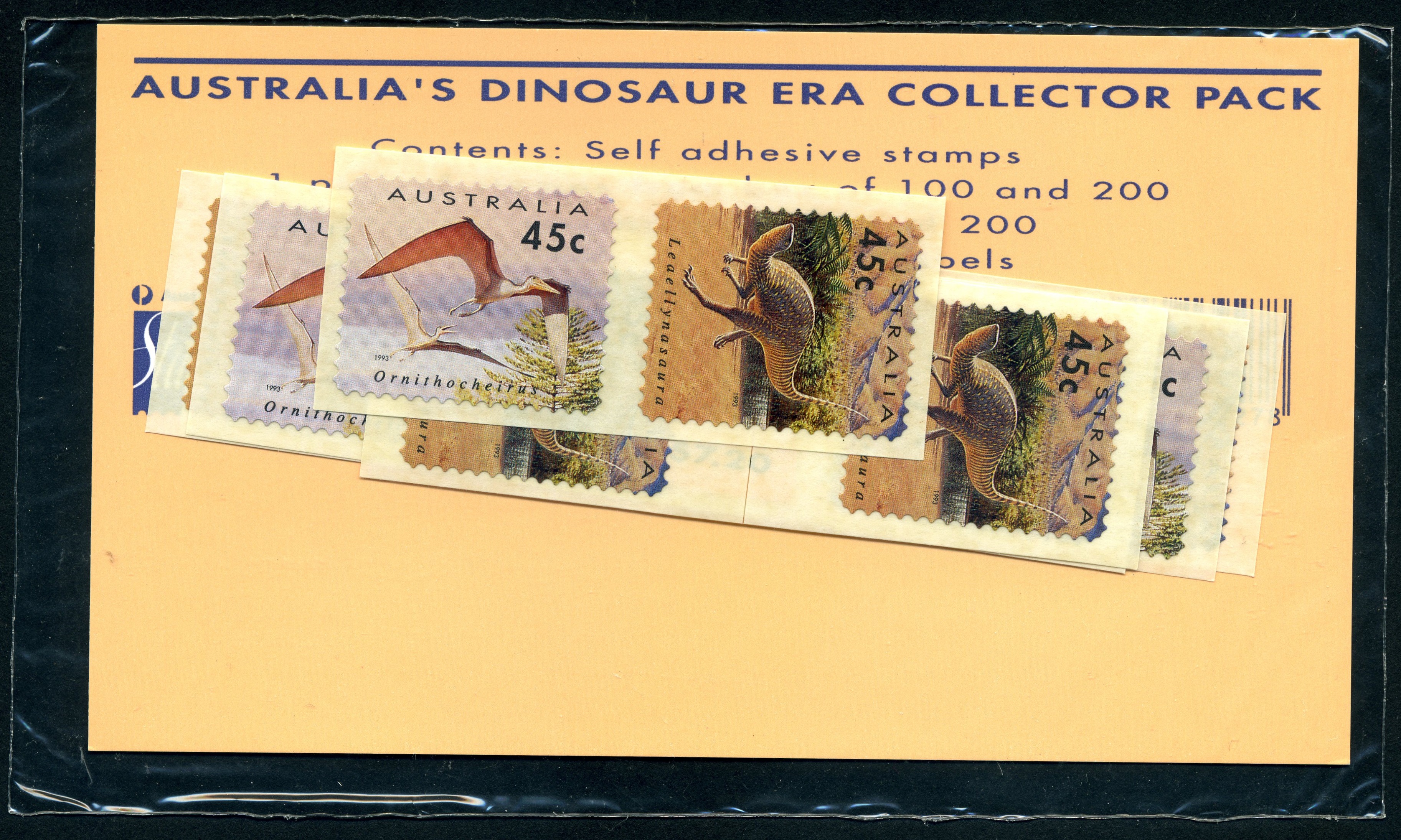
Variations of the first self-adhesive stamps, which were issued in different roles, with and without labels in between. All variants offered by Australian Post in a collector pack.
1998 Singapore - First stamps with prehistoric animals sold in ATM machines
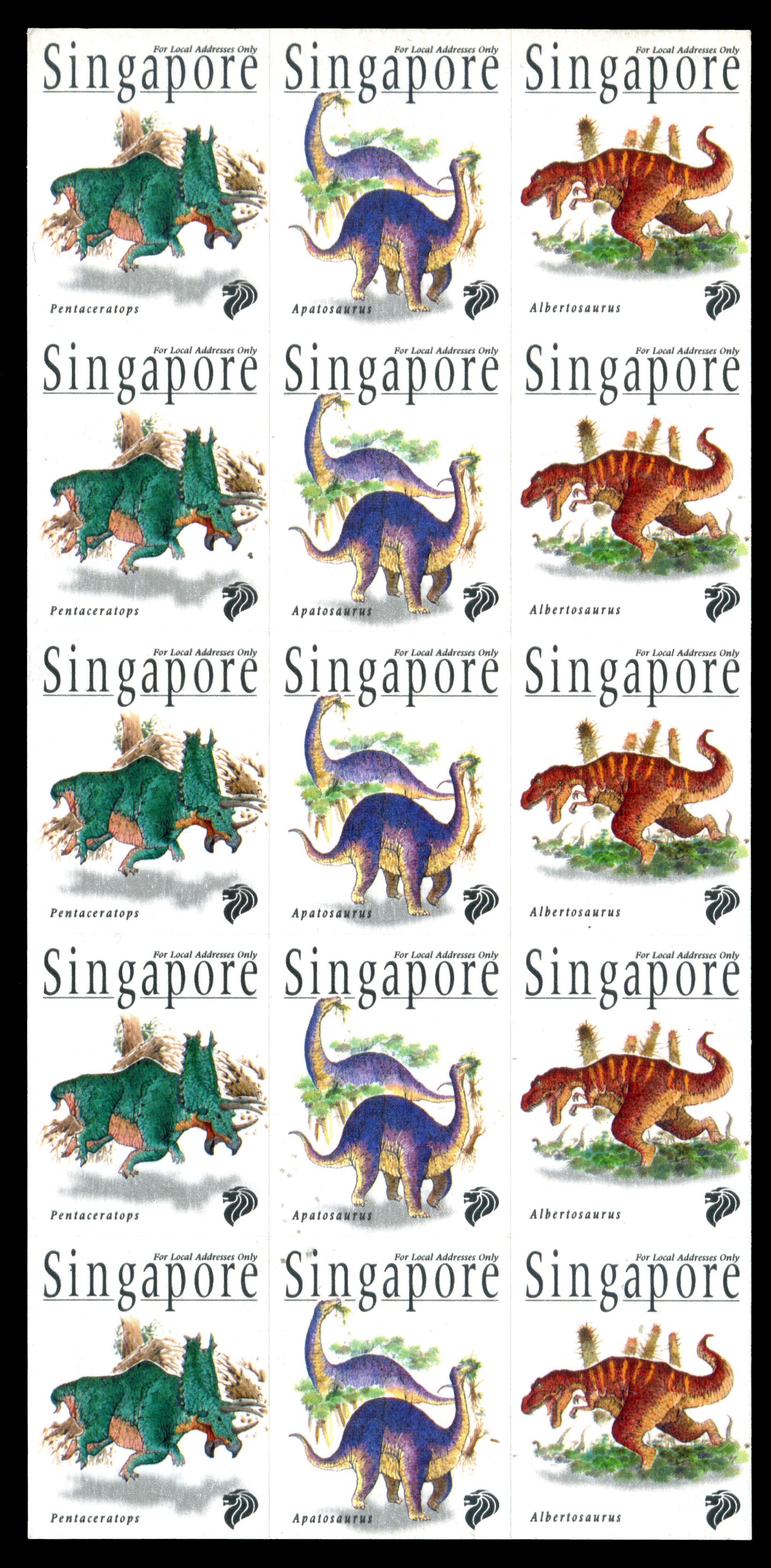
On 22 April 1998, Singapore Post introduced the world’s first automatic teller machine (ATM) stamps to feature dinosaurs.
 |
 |
| The booklet with "Dinosaurs - animals that once ruled the Earth" stamps of Singapore issued in 1998 is the first and the only booklet with stamps (Michel: 874-876; Scott: 831-833) of prehistoric animals sold in a bank terminals. | |
The sheets were produced with the exact dimensions of a SGD 50 banknote (156×74 mm) and were extremely thin, less than 0.13 mm, so they could pass smoothly through the same dispensing slot. These remain the thinnest stamps ever issued with a paleontological theme.
During the release period, two different designs for the reverse side were issued, the booklet with the brown reverse side is less common. The stamps depict the following dinosaurs.
| The Pentaceratops (“five‑horned face”) belonged to the Ceratopsidae family. These animals resembled modern rhinoceroses in general build and were herbivores with massive skulls, sturdy bodies, and strong limbs ending in hoof‑like claws. Their impressive frills and horns made them among the most distinctive dinosaurs of the Late Cretaceous. | The Apatosaurus (“deceptive lizard”) was a member of the Diplodocidae family. Diplodocids stood highest at the hips and carried their weight on column‑like limbs with broad, sturdy hands and feet. Apatosaurus lived during the Late Jurassic and was an enormous herbivores (plant‑eater), easily recognized by its long neck and powerful, whiplash‑like tail. | The Albertosaurus (“Alberta lizard”) was a close relative of the famous Tyrannosaurus (T‑rex) featured in popular films. It was a swift and formidable predator, relying on speed and powerful jaws. When attacking, it likely lunged forward to deliver deep “scoop bites,” tearing large chunks of flesh from its prey. |
1999 Portugal - First ATM stamps of prehistoric animals
ATM stamps (short for Automatenmarken, German for vending machine stamps) are postage stamps that are dispensed by automated machines rather than pre-printed with a fixed value. First introduced in the late 20th century, especially in countries like Germany, they became popular for their convenience. ATM stamps are variable-value postage labels produced at the time of purchase by a vending machine or postal terminal, printed with the exact postage amount requested by the customer or one of the preprogrammed values.
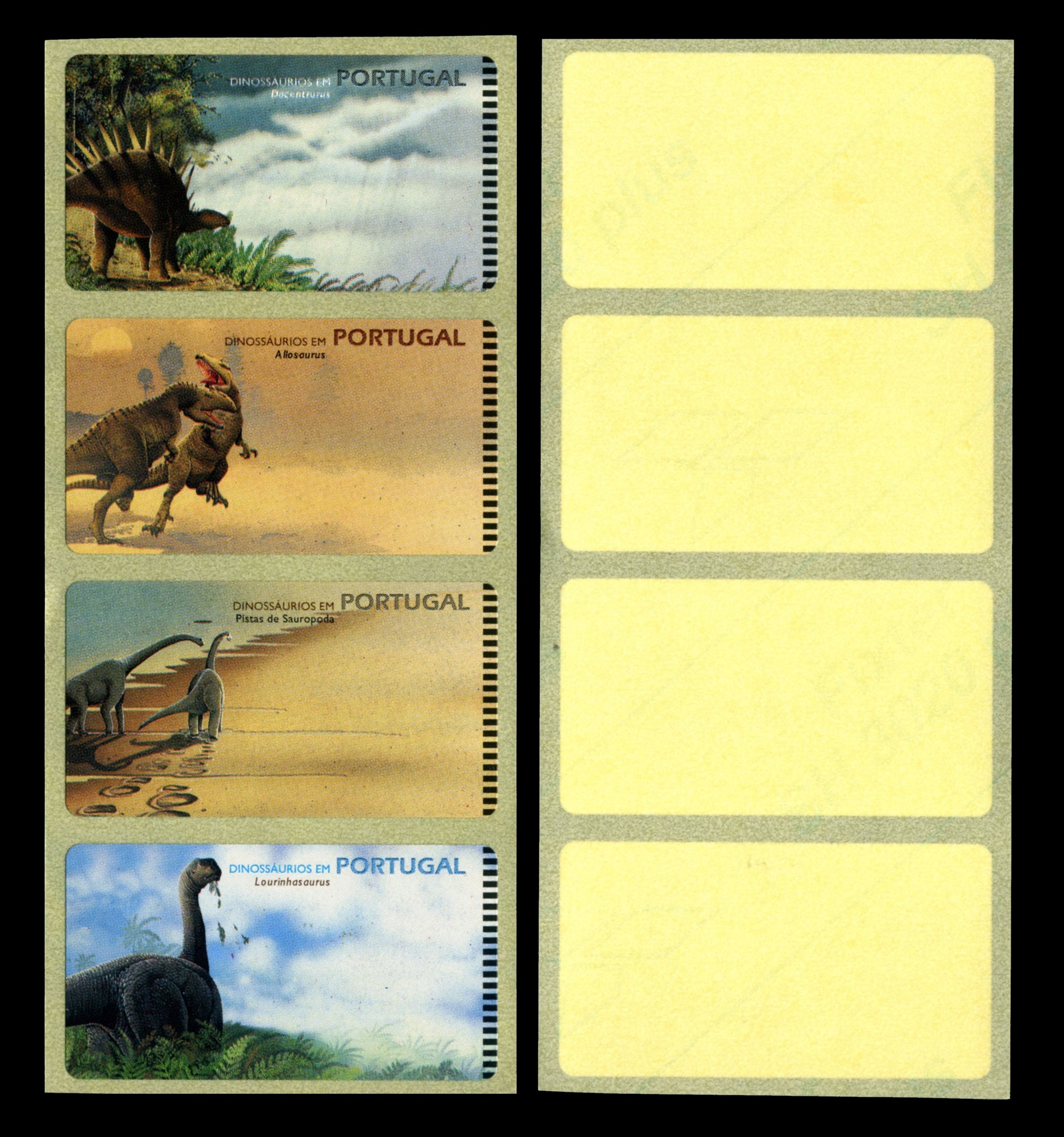 |
| First ATM stamps with Dinosaurs, Portugal 1999 MiNr.: AT24-AT27; Scott: not listed. The labels without values, part of a big role loaded in the vending machine. |
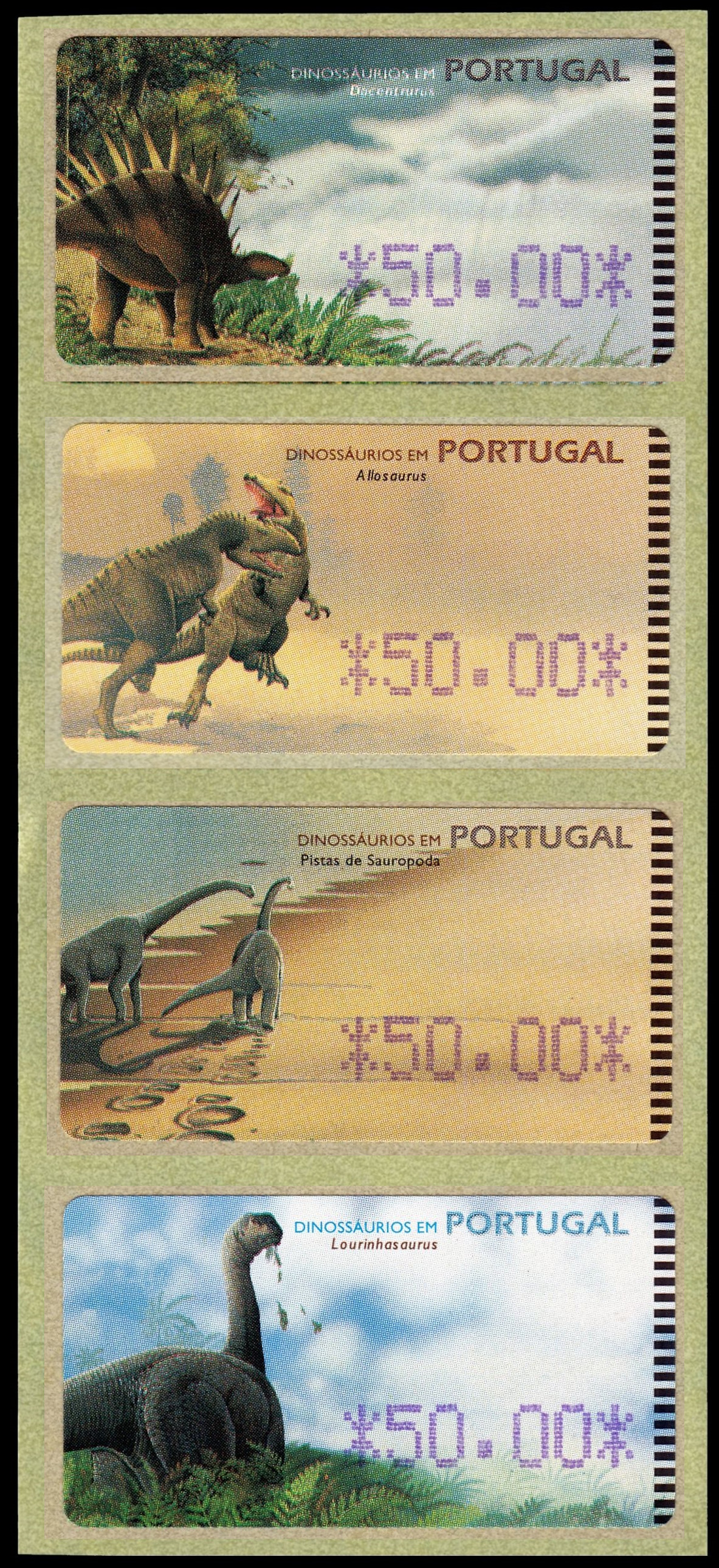 |
 |
| "Dinosaurs of Portugal" ATM stamps with printed values: Stamps issued by the Amiel vending machine (bold text) are at the top, followed by stamps issued by the SMD vending machine. |
These stamps were issued with seven predefined values, ranging from PTE 50 to PTE 350, and were printed by two different ATM machines: Amiel and SMD.
The Amiel machine produced labels with a large, bold typeface, while the SMD machine printed the text in a smaller, more regular font. Some machines used black ink instead of the usual blue, and stamps printed in black are particularly difficult to obtain.
In addition, ATM machines located at the philatelic desk of the Portuguese Post were programmed differently from those in regular post offices.
Stamps sold to collectors used a dot (".") as the currency separator, whereas stamps sold at post offices used a comma (","). As a result, mint stamps with the comma separator are notably harder to find.
With the introduction of the common European currency, the ATM machines were reprogrammed to print values in both Escudo and Euro in 2000, and in Euro only from 2002.
The next ATM stamps depicting prehistoric animals (dinosaurs) were issued by the Portuguese Postal Services, too, in 2015.
2009 South Africa - First 3D stamps of prehistoric animals
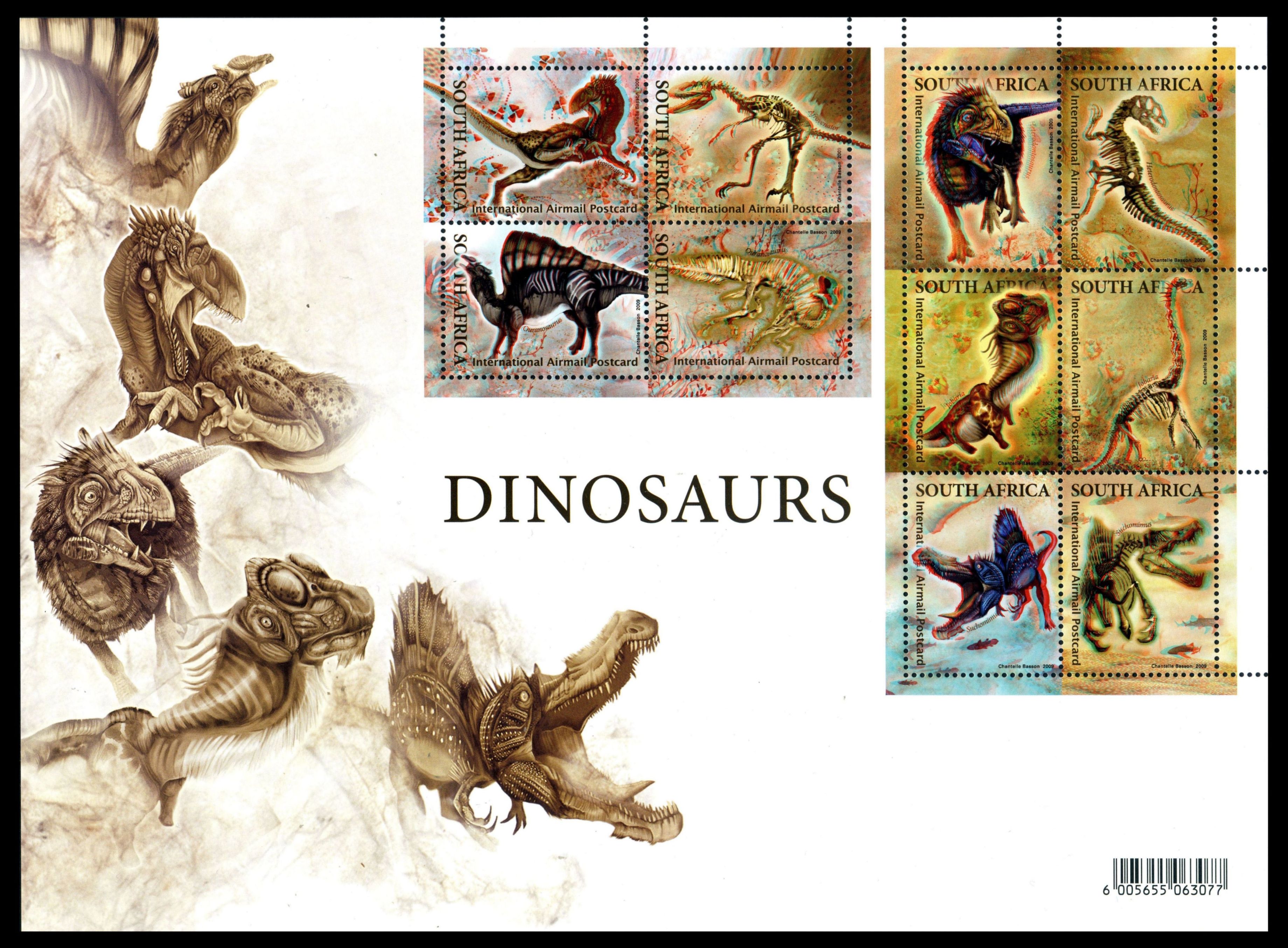 |
| First set with 3D stamp depicting prehistoric animals was issued in South African Republic in 2009, MiNr.: 1875-1884 ; Scott: C98a-j. |
 |
| Two colour glasses supplied with Dinosaur stamps of South Africa 2009 to allow to see them with 3D effects. |
The first 3D stamp set was issued by South Africa in 2009.
In this issue, the South African Post Office brought together the distant world of prehistory and modern printing technology by using the anaglyph method to create a striking three‑dimensional effect. It was the first time the postal service had ever produced stamps with a true 3D appearance, and it marked another milestone: each stamp sheet and commemorative cover was accompanied by a pair of viewing glasses, allowing collectors to experience the images exactly as intended.
An anaglyph is a type of stereo image that requires special glasses with red and green (or blue) lenses to reveal its depth. To achieve the illusion, two slightly offset views of the same picture are printed in different colours — traditionally red for the left eye and blue or green for the right. When viewed through the glasses, the two images merge into a single scene with a vivid sense of dimensionality.
The issue consists of two blocks of stamps printed in a sheet, one containing four stamps and the other six, along with two first day covers. Five of the stamps feature skeletal reconstructions of various dinosaur species, while the remaining five depict how scientists believe these animals appeared in life. All of the dinosaurs shown have a direct connection to Africa, highlighting the continent’s rich paleontological heritage.2010 South Korea - First stamps with perforations in form of prehistoric animals
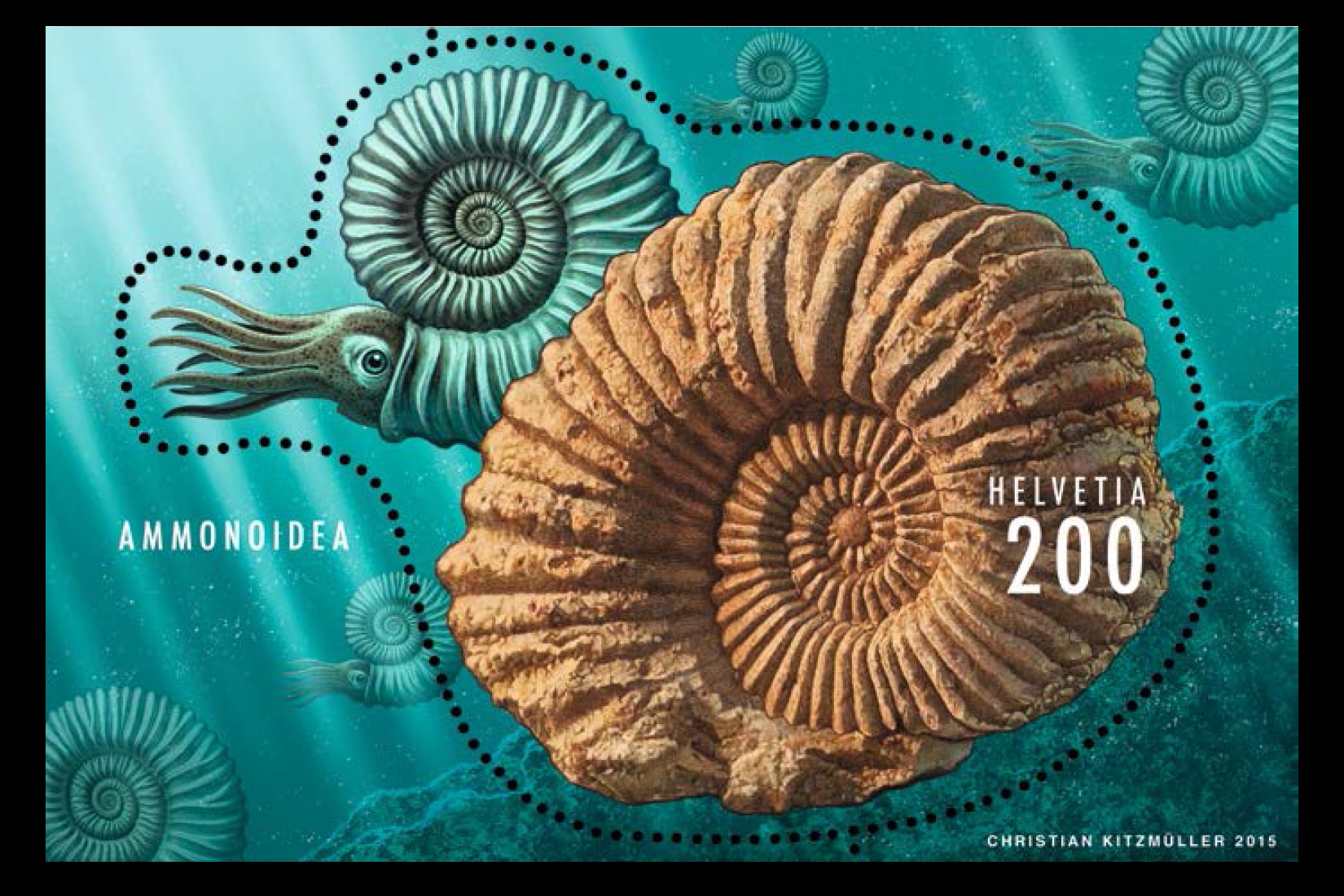 |
| Ammonite on stamp of Switzerland 2015 have irregular shape of perforation, MiNr.: Bl. 59 (2389), Scott: 1559. |
 |
| First stamps with perforation in form of prehistoric animal (dinosaur) issued in South Korea in 2010, MiNr.: 2780-2781; Scott: 2339a-b. |
The number of holes in a 2cm distance is called the perforation number. For example, perforation 11 means the stamp has 11 holes along a 2 cm distance.
A particularly striking example appeared on 5 August 2010, when Korea Post released the set titled "The Age of Dinosaurs Series (1st Issue)". Instead of the usual outline, each stamp was perforated in the silhouette of a dinosaur, giving the set an instantly recognizable and playful appearance. Over the following years, Korea Post continued this innovative approach, issuing two additional dinosaur sets with similar shaped perforations in 2011 and 2012.On 5 March 2015, Switzerland introduced another creative twist on stamp design with a 2‑Swiss‑franc souvenir sheet. The sheet contains a single irregularly shaped stamp depicting an ammonite fossil, paired with an illustration showing how the animal may have looked in life. The unusual outline of the stamp echoes the spiral form of the ammonite itself, blending scientific accuracy with artistic presentation.
Why these innovations matter?
Security: irregular perforations are harder to counterfeit than traditional rectangular ones.
Aesthetic appeal: ihaped stamps stand out immediately in an album and attract both thematic and general collectors.
Educational value: by matching the stamp’s outline to the subject—such as a dinosaur or ammonite —
the design reinforces the theme and invites curiosity.
These creative approaches show how postal administrations use design innovation to keep stamps relevant, collectible,
and visually engaging.
2012 Turkey - First hologram-motion stamps depicting dinosaur
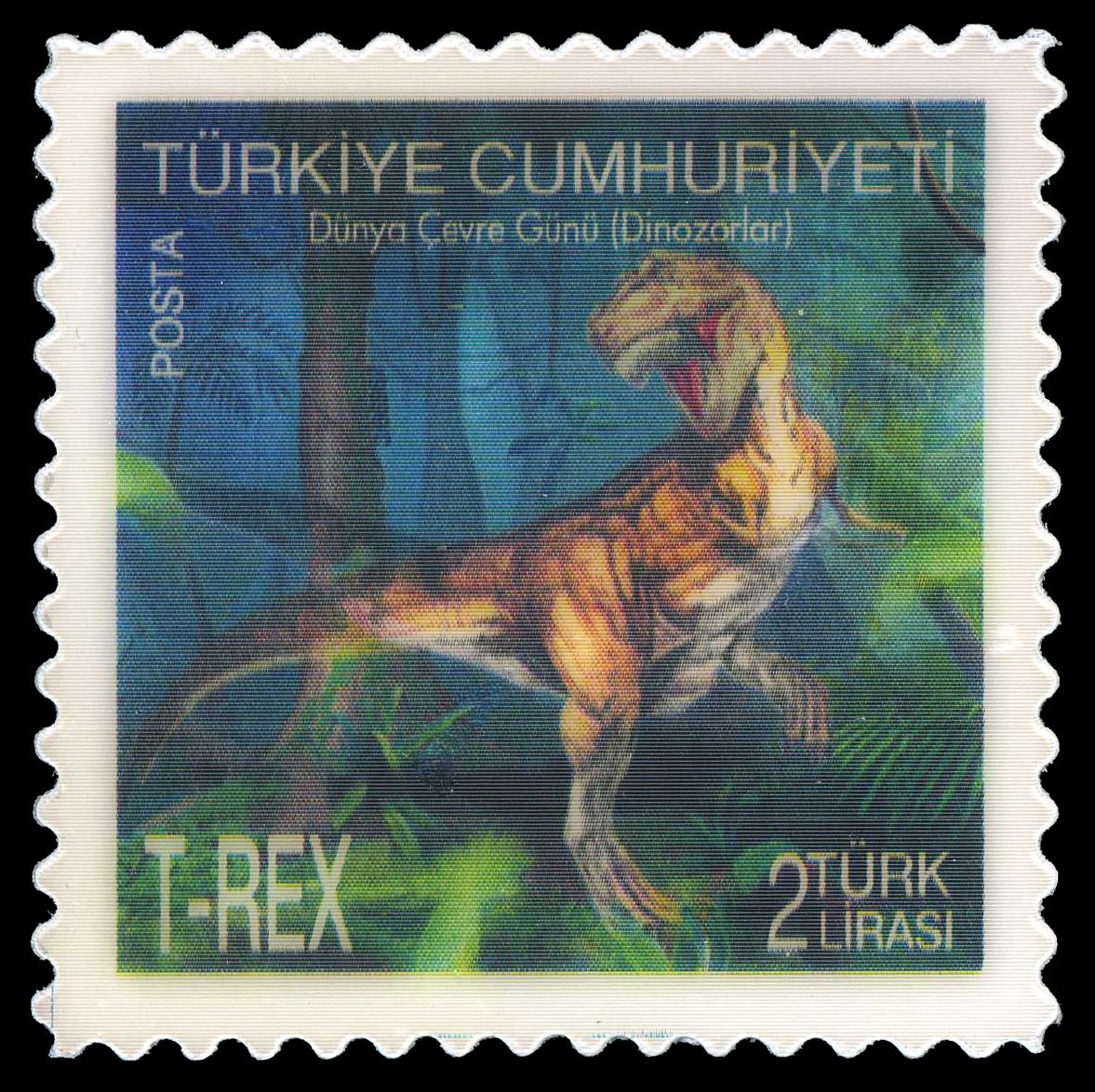 |
| First hologram-motion stamps depicting prehistoric animal (dinosaur) issued in Turkey in 2012, MiNr.: 3969; Scott: |
 |
| The hologram-motion stamp on a registered letter to Germany, posted in 2012. |

The lenticular stamp, showing a running Tyrannosaurus rex (T‑Rex), holds particular significance: it is the first lenticular stamp ever issued that depicts a prehistoric animal.
Although this 3D stamp was available only as part of the souvenir booklet, it was valid for postage and could be used on mail, as illustrated on the right. Its motion effect, created by the lenticular printing process, gives the impression of Tyrannosaurus rex charging forward, adding a dynamic visual element rarely seen in paleontology-themed philately.
2014 Hong Kong - First luminous stamps depicting prehistoric animals
 |
|
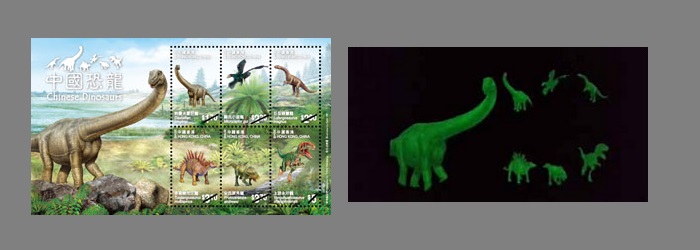
| First luminous stamps depicting prehistoric animals, glow in the dark, issued on Hong Kong in 2014, MiNr.: 1871-1876, Bl. 271; Scott: 1630a. | |
 |
 |
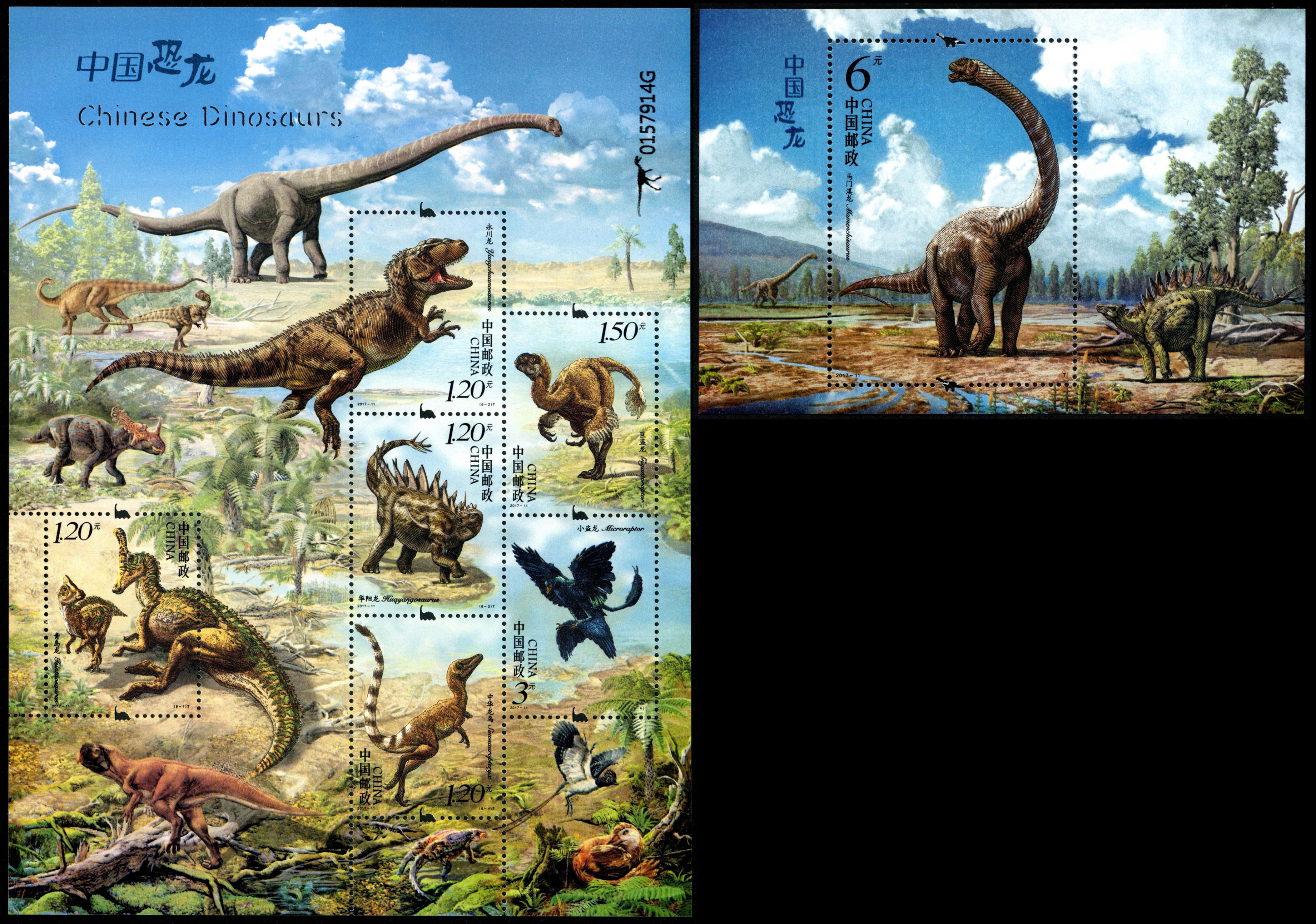
| "Chinese Dinosaurs" stamps from China 2017 allows to see the dinosaur bones and stamp numbers under UV light, MiNr: Bl. 228 (4894-4900), Bl. 229; Scott: 4444, 4445 | |
On 19 May 2017, China Post expanded the theme with another set titled "Chinese Dinosaurs". For security reasons and to attract philatelists, the stamps were printed with special ink and used fluorescent technology that allows one to see the dinosaur bones and normally invisible security number of every stamp under UV light. Another features of these stamps is the diversity of Mini Sheet's numbers and dinosaurs silhouette attached to it.