India
Dinosaurs and other prehistoric animals, plant fossils, Charles Darwin on stamps, postmarks and postal stationeries of India
Bounded by the Indian Ocean on the south, the Arabian Sea on the south-west, and the Bay of Bengal on the south-east, it shares land borders with Pakistan to the west; China, Nepal, and Bhutan to the north-east; and Myanmar (Burma) and Bangladesh to the east. In the Indian Ocean, India is in the vicinity of Sri Lanka and the Maldives; in addition, India's Andaman and Nicobar Islands share a maritime border with Thailand and Indonesia..
Gradually annexed by and brought under the administration of the British East India Company from the early 18th century and administered directly by the United Kingdom after the Indian Rebellion of 1857, India became an independent nation in 1947 after a struggle for independence that was marked by non-violent resistance led by Mahatma Gandhi. [R1]
The first pictorial stamps of India appeared in 1931. The set of six, showing the fortress of Purana Qila, Delhi and government edifices, was issued to mark the government's move from Calcutta to New Delhi.
According to the Guiness World Records "The highest post office in the world can be found in the village of Hikkim, in Himachal Pradesh – a state of Northern India. Part of the Himalayan mountain range, the village lies at an altitude of 4,724 meters above sea level. Hikkim Post Office opened in November 1983 and now serves the village’s 600 inhabitants – processing 15–20 letters per day and holding savings deposits for approximately 50 people." [R2]
Official stamps of India related to Paleontology: prehistoric animals, plant and animal fossils, Charles Darwin
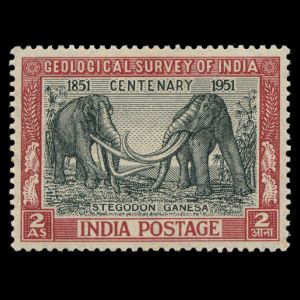
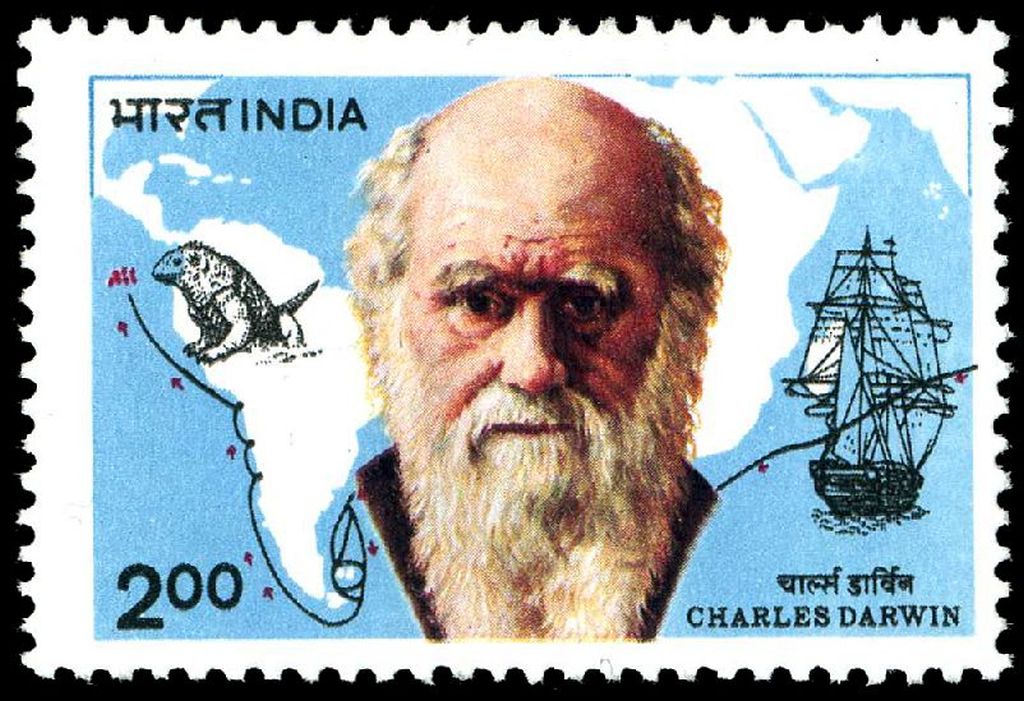
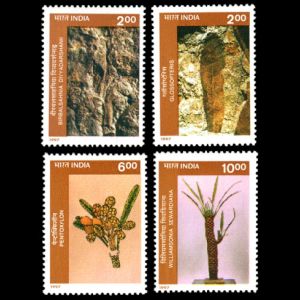
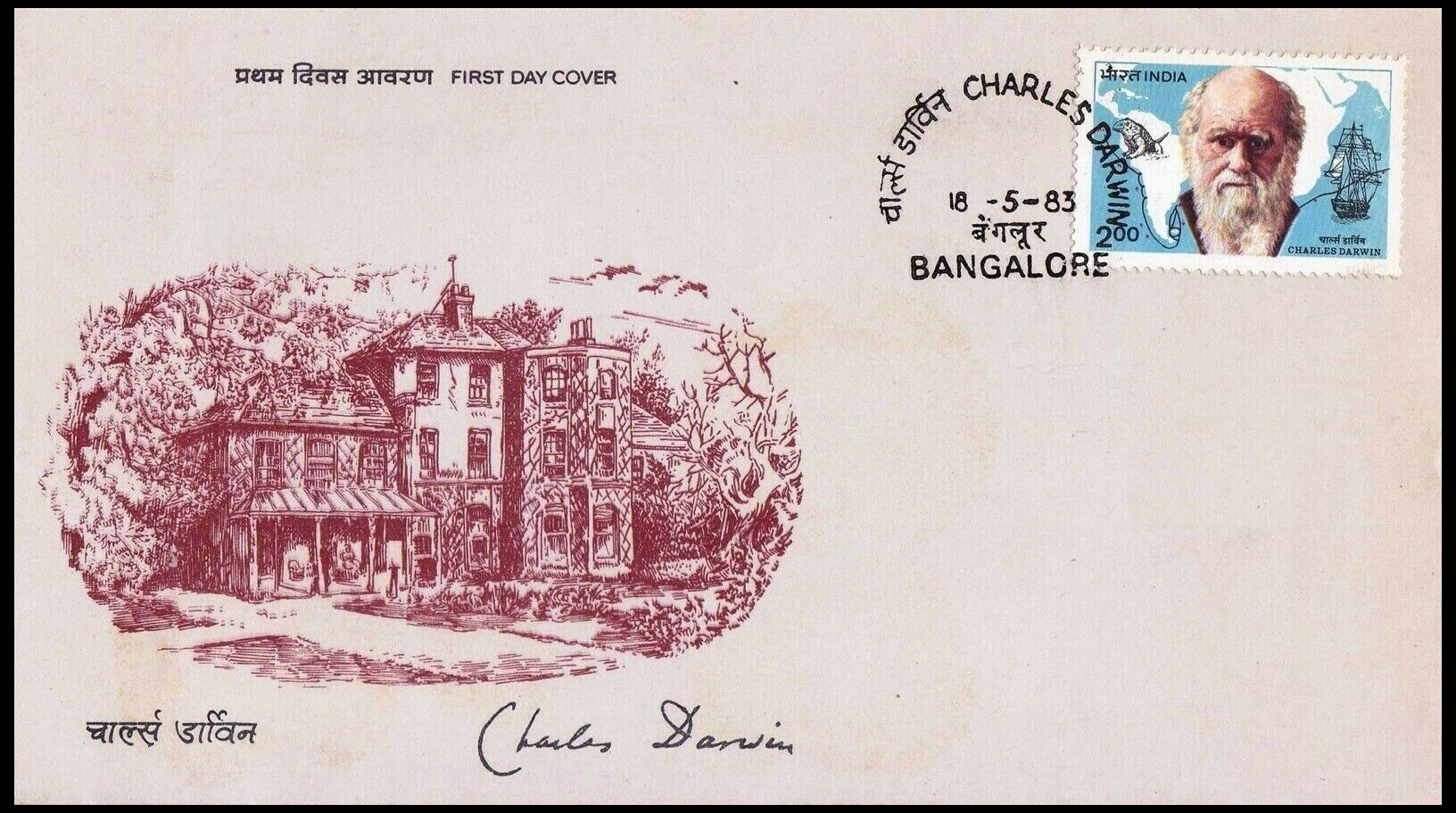
| 13.01.1951 "100th anniversary of Geological Survey of India" [1] | 18.05.1983 "Charles Darwin" [2] | 11.09.1997 "Birbal Sahni institute of Palaeobotany, Lucknow" [3] |
 |
 |
 |
Notes:
|
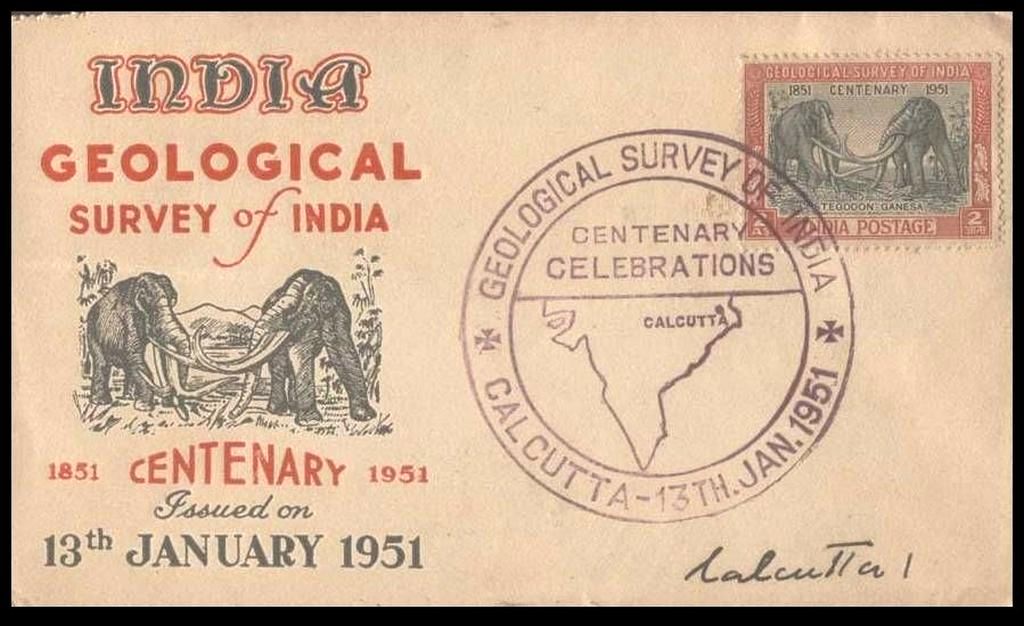
| FDC with stamp for the Centenary of Geological Survey of India cancelled with a large postmark in honor of the Survey at Calcutta. MiNr.: 218, Scott: 232 |
All FDC available on the market produced by stamp dealers, mostly cancelled with regular, date postmark of various cities across India. FDC with large postmark of Geological Society of India from Calcutta is very rare.
Stegodons were primarily an Asiatic group of Mammutidae. This family is believed to have evolved sometime by the middle Miocene, nearly 15 million years ago, and became extinct by the late Pleistocene about 30,000–40,000 years ago. Stegodons appear to be transitional between true mastodons on the one hand and true elephants on the other.
[2] FDC cancelled by similar postmarks in various cities across India.
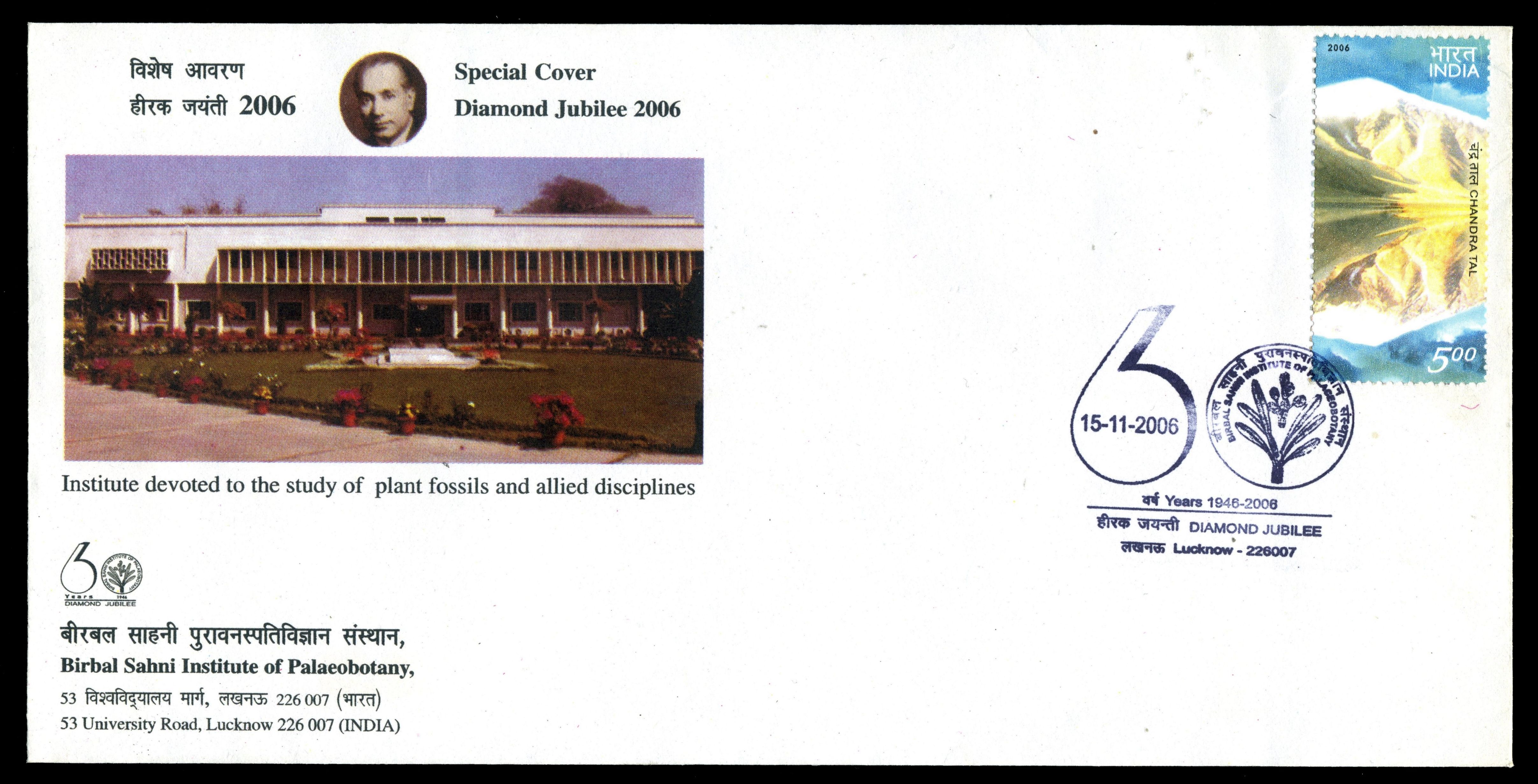
[3] There are at least two special covers and cancellations related to Birbal Sahni institute of Palaeobotany in Lucknow issued by Indian Post in other years.
It changed name at some point – it is now the Birbal Sahni Institute of Palaeosciences.
Other stamps to consider: contributor to Paleontology
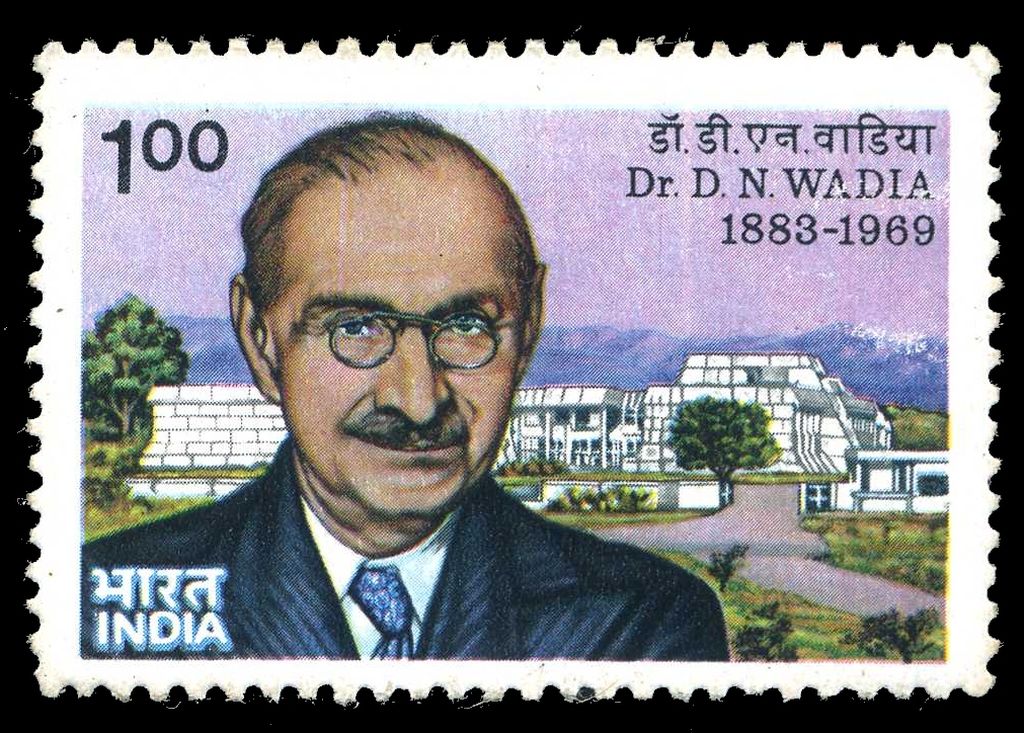
| 23.10.1984 "Darashaw Nosherwan Wadia" [A1] | ||
 |
||
Notes:
[A1] Darashaw Nosherwan Wadia (1883 – 1969) was a pioneering geologist in India and among the first Indian scientists to work in the Geological Survey of India. He is remembered for his work on the stratigraphy of the Himalayas. He helped establish geological studies and investigations in India, specifically at the Institute of Himalayan Geology, which was renamed in 1976 after him as the Wadia Institute of Himalayan Geology.
In 1925 he discovered tusks and fragments of the extinct elephant-like animal already described as Stegodon ganesa, depicted on stamp in 1951. [R3]
Special commemorative covers related to Paleontology
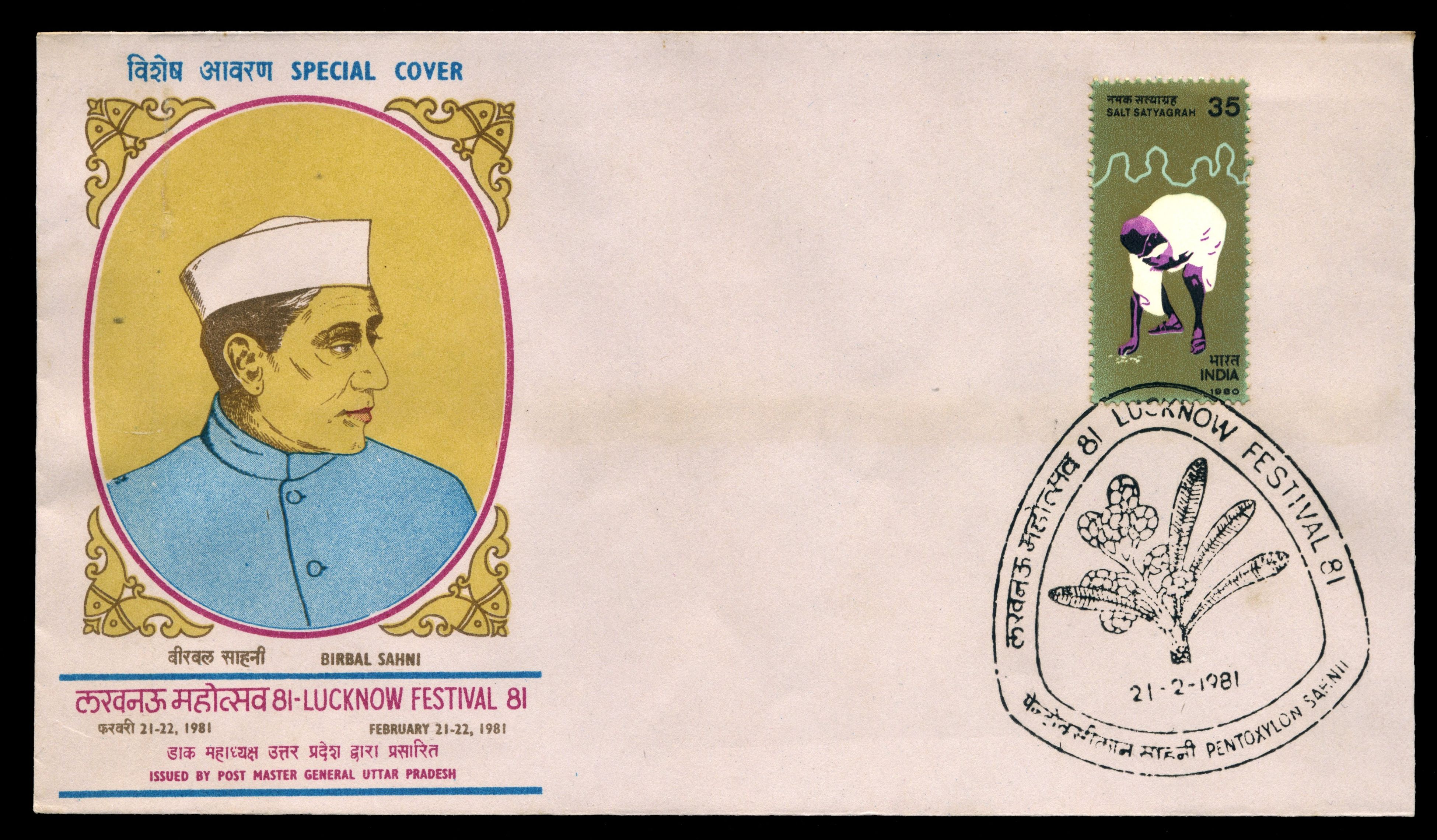
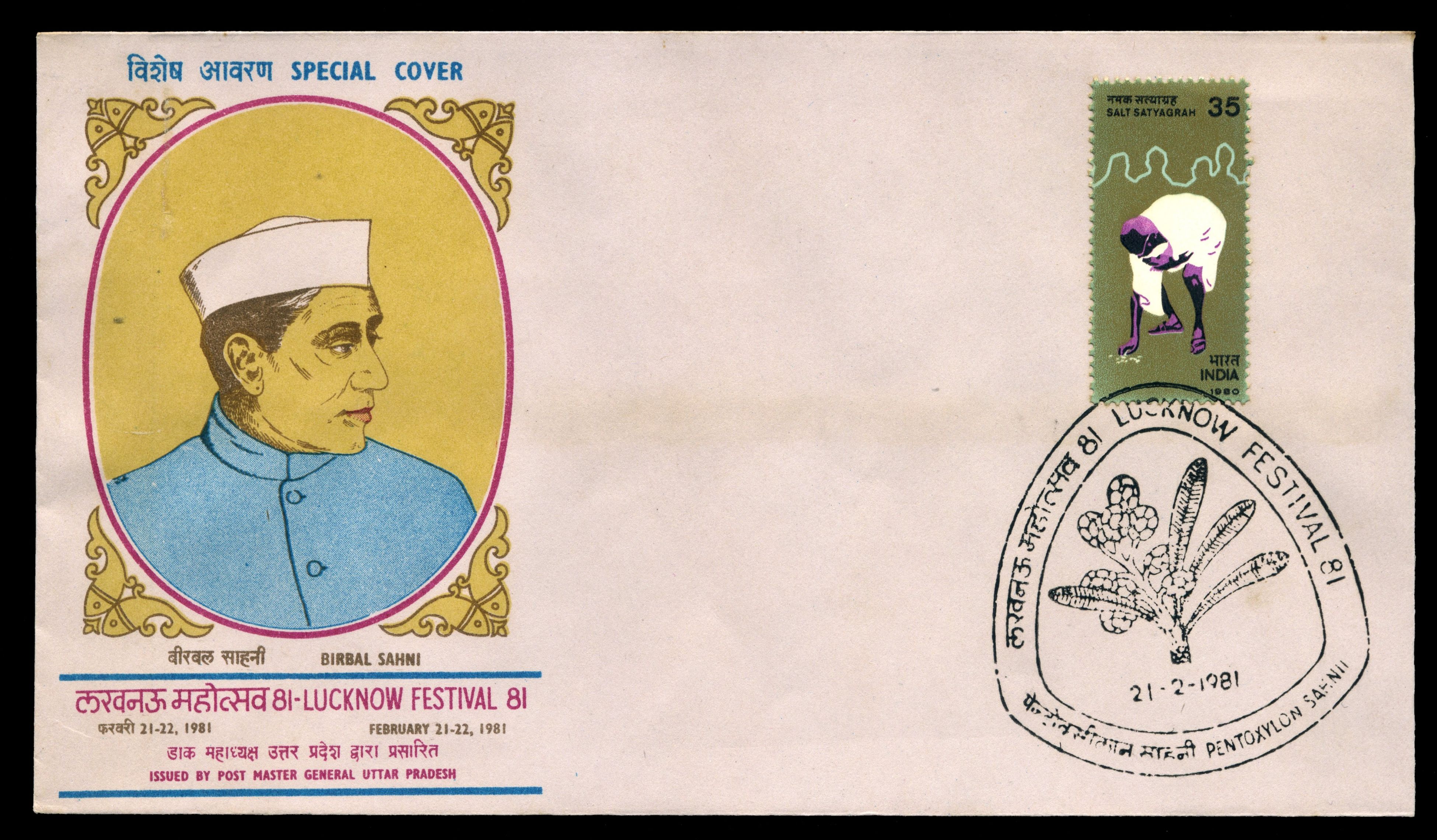
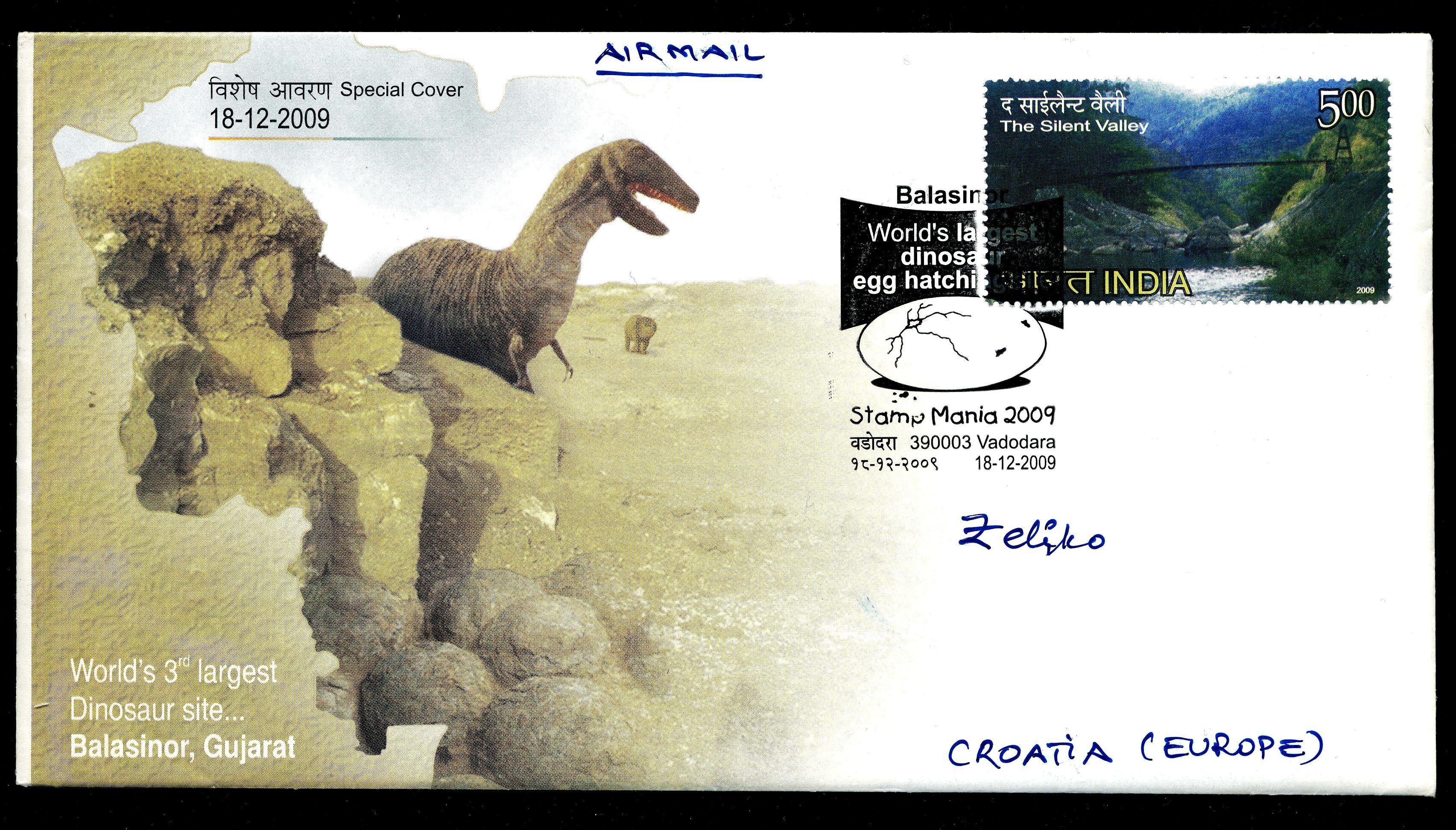
| 21.02.1981 "Lucknow Festival 81" [C1] | 15.11.2006 "Diamond Jubilee of Birbal Sahni institute of Palaeobotany" [C2] | 18.12.2009 "Stamp Mania 2009" |
 |
 |
 |
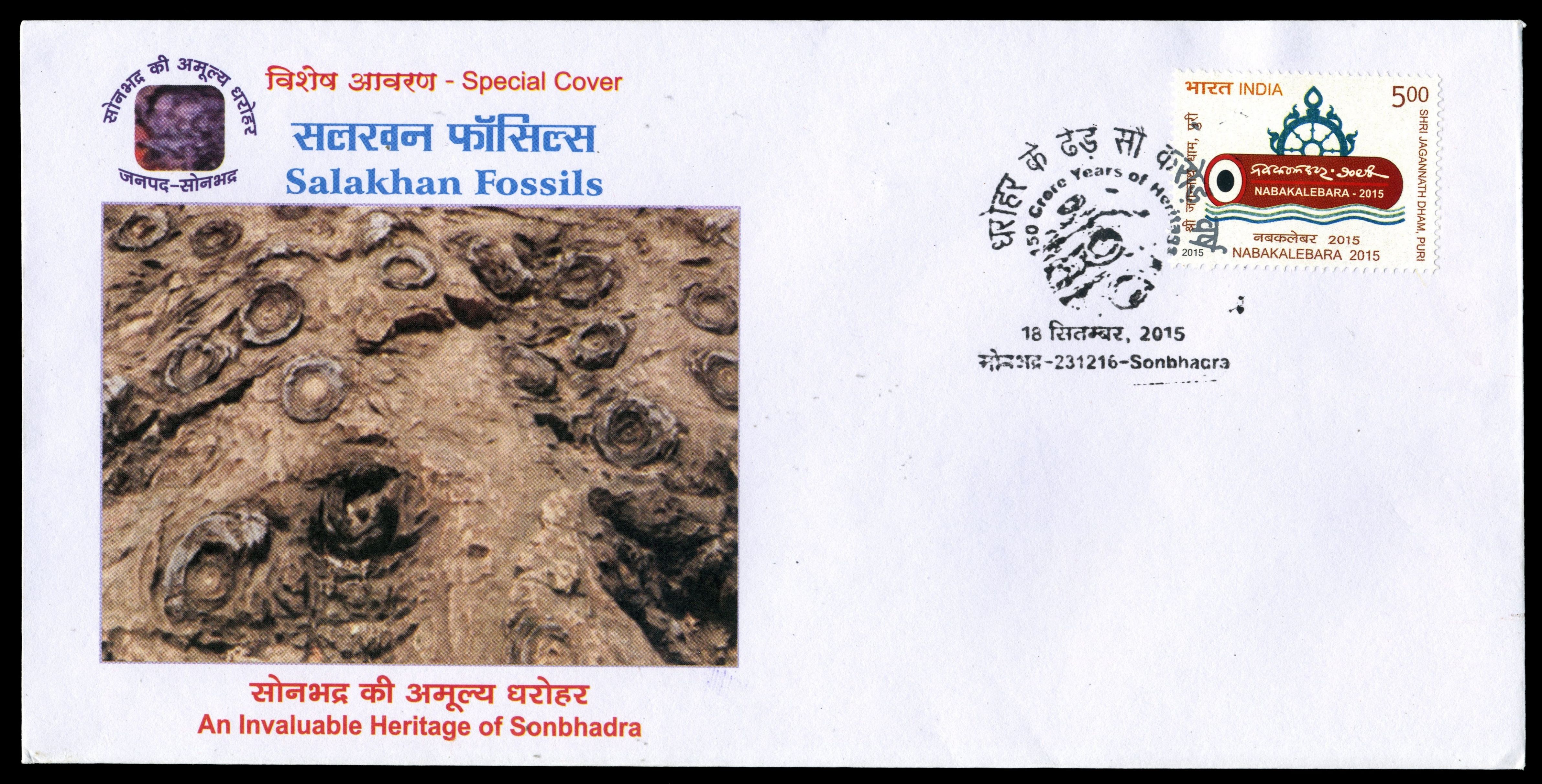
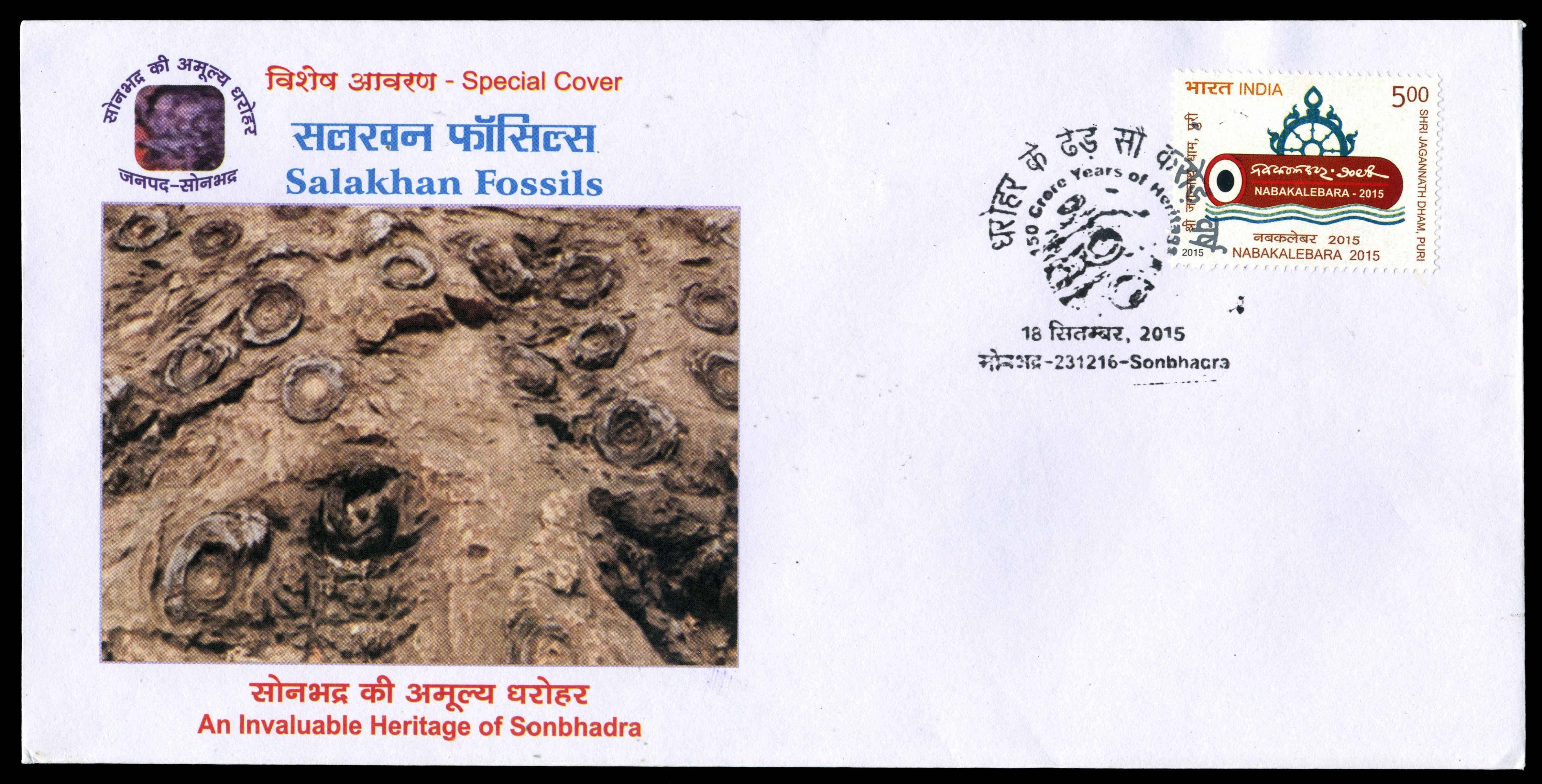
| 18.09.2015 "Salkhan Fossil Park" | 29.07.2020 "Biodiversity in Shivalik Hills of Saharanpur" [C3] | 30.06.2022 "Geo Heritage Parks of Rajasthan" [C4] |
 |
 |
 |
Notes:
[C1] In 1997 Post of India issued a set of 4 stamps dedicated to thw Birbal Sahni Institute of Palaeobotany. Two fossils and two reconstructions of prehistoric plants are shown there.
|
|
|
| Logo of The Birbal Sahni Institute of Palaeosciences | Professor Birbal Sahni as depicted on a cachet of commemorative cover of India in 2006 |
Birbal Sahni (1891 – 1949) was an Indian paleobotanist who studied the fossils of the Indian subcontinent.
His major contributions were in the study of the fossil plants of India and in plant evolution.
In 1921 he was appointed the first Professor and Head of the Botany Department of the Lucknow University, a position he retained until his death.
Based on the ecology of plants and the altitude of the fossil finds, he attempted to estimate rates of uplift of the Himalayas.
The goal of BSIP is the visualizing its potential in solving issues of origin and evolution of plant life, other geological issues including exploration of fossil fuels. Originally plant fossil and related studies based, the mandate of the BSIP was recently expanded to combine it with other areas of palaeosciences, and creating modern facilities to achieve this end. [R4]
Some fossils and reconstruction of prehistoric plant from collection of the Institute are shown on stamps in 1997.
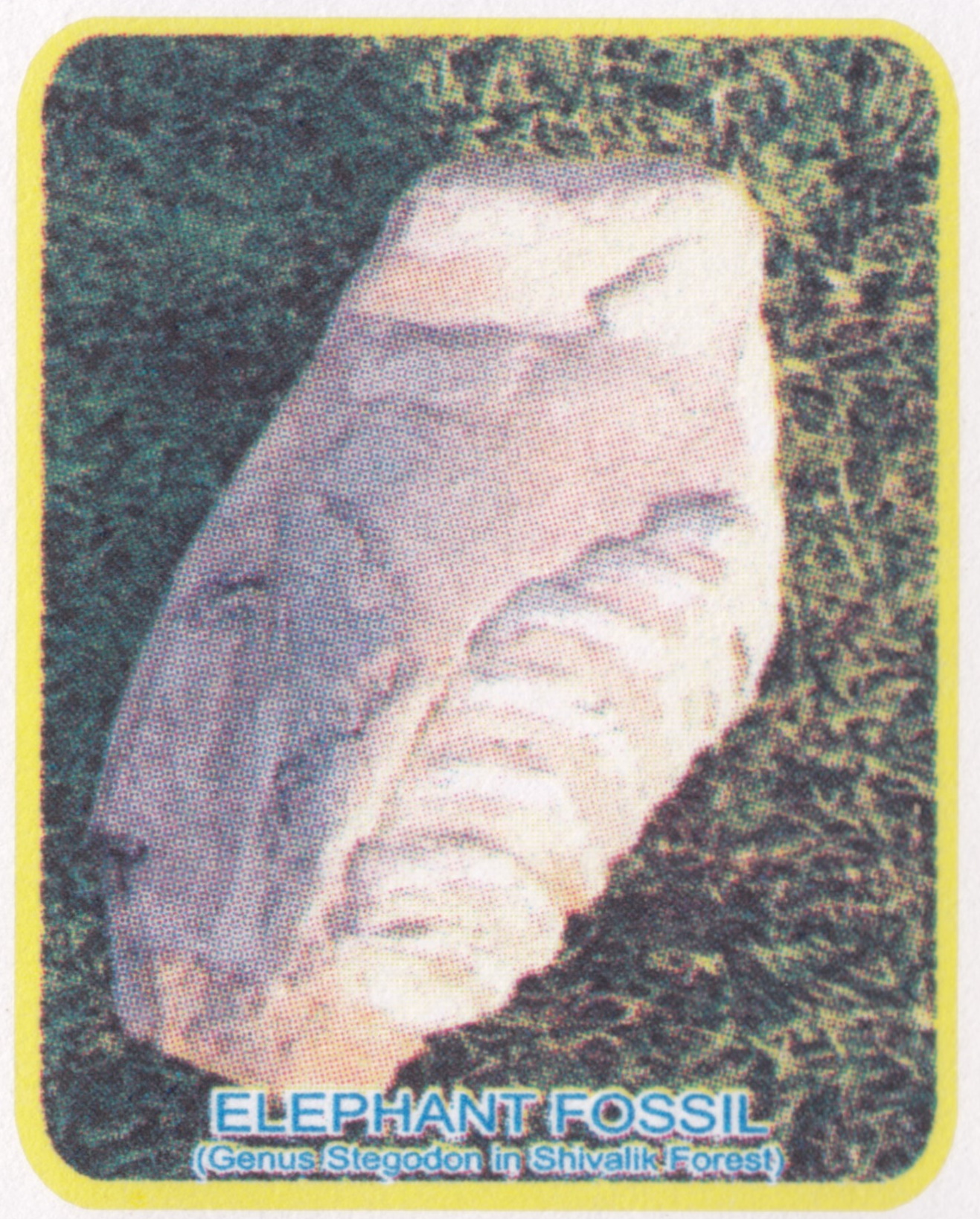
[C3] Fossil of tooth of Stegodon, embedded in a piece of rock, can be seen on one of the images of the cachet on "Biodiversity in Shivalik Hills of Saharanpur" commemorative cover.
The Shivaliks Hills, lying at the southern foot hill of the Himalayas, is known for its rich fauna and flora.
The Shivalik Hills are a recent range of hills that run parallel to the Himalayas, south of the much larger mountains. They host a distinctive ecosystem in a landscape of Hills, Piedmont Plains, Fluvial plains and Valleys.
The Shivalik Hills were first surveyed by Captain Proby Cautley of the East India Company in the 1840s-1850s during the construction of the Ganga Canal in the Doab region and was involved in Dr. Hugh Falconer's fossil expeditions.
The Shiwalik Hills are made up of Tertiary deposits of the Outer Himalayas and are among the richest fossil sites for large animals in Asia, with fossils that date to the Miocene in age (up to 24 million years old).
At the end of June 2020, several Indian newspapers reported about fossils of Stegodon discovered in the Shivalik Range of Saharanpur.
|
|
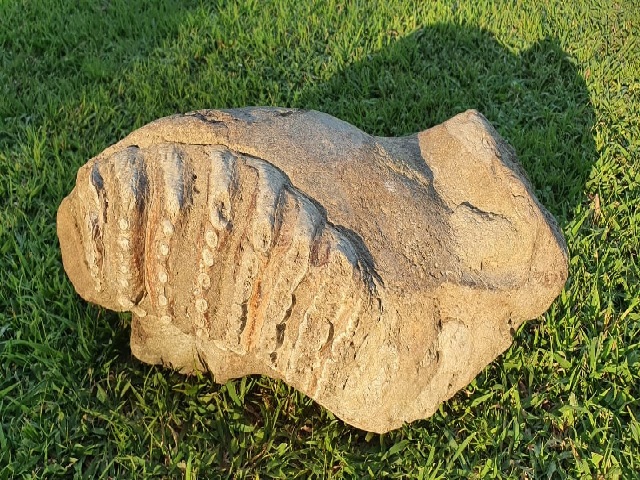
| Tooth of Stegodon in a piece of rock on a cachet of commemorative cover of India in 2020 | The tooth of Stegodon. Image credit: India Times. |
A joint team of forest officials and wildlife organisation World Wide Fund for Nature (WWF),
led by chief conservator of Saharanpur division VK Jain, was busy doing a trap camera survey
for the counting of animals in the region.
Lying in a shallow water stream just 50km north of Saharanpur city in Badshahu Bagh
was an unusual long stone that caught the team's attention.
Upon the closer look, they agreed it was a fossil.
The fossil was shown to scientists from Wadia Institute of Himalayan Geology Institute, Dehradun:
Dr RK Sehgal and Dr AC Nanda.
Both scientists have been recognized for their past work on Elephants from the Shivalik Group.
The scientists compared this fossil specimen with the fossil specimens of Stegodon displayed in the Museum
of the Institute and hence they concluded that the fossil was from a Stegodon.
This fossil is a moderately well-preserved third lower molar with none well-developed ridges on
its upper surface and very thick enamel.
The overall length of the tooth is about 24 centimetres.
The sandstone that is embedded in the fossil is medium grained, pepper, and salt in nature.
This form of lithology is the characteristic of Middle Shivalik.
The fossil was dated between 5 to 8 million years old, by magnetostratigraphic technique.
This technique relies on the ability of sedimentary rocks to acquire remnant magnetization.
The presence of the Stegodon shows the existence of dense forest during that time.
[R5]
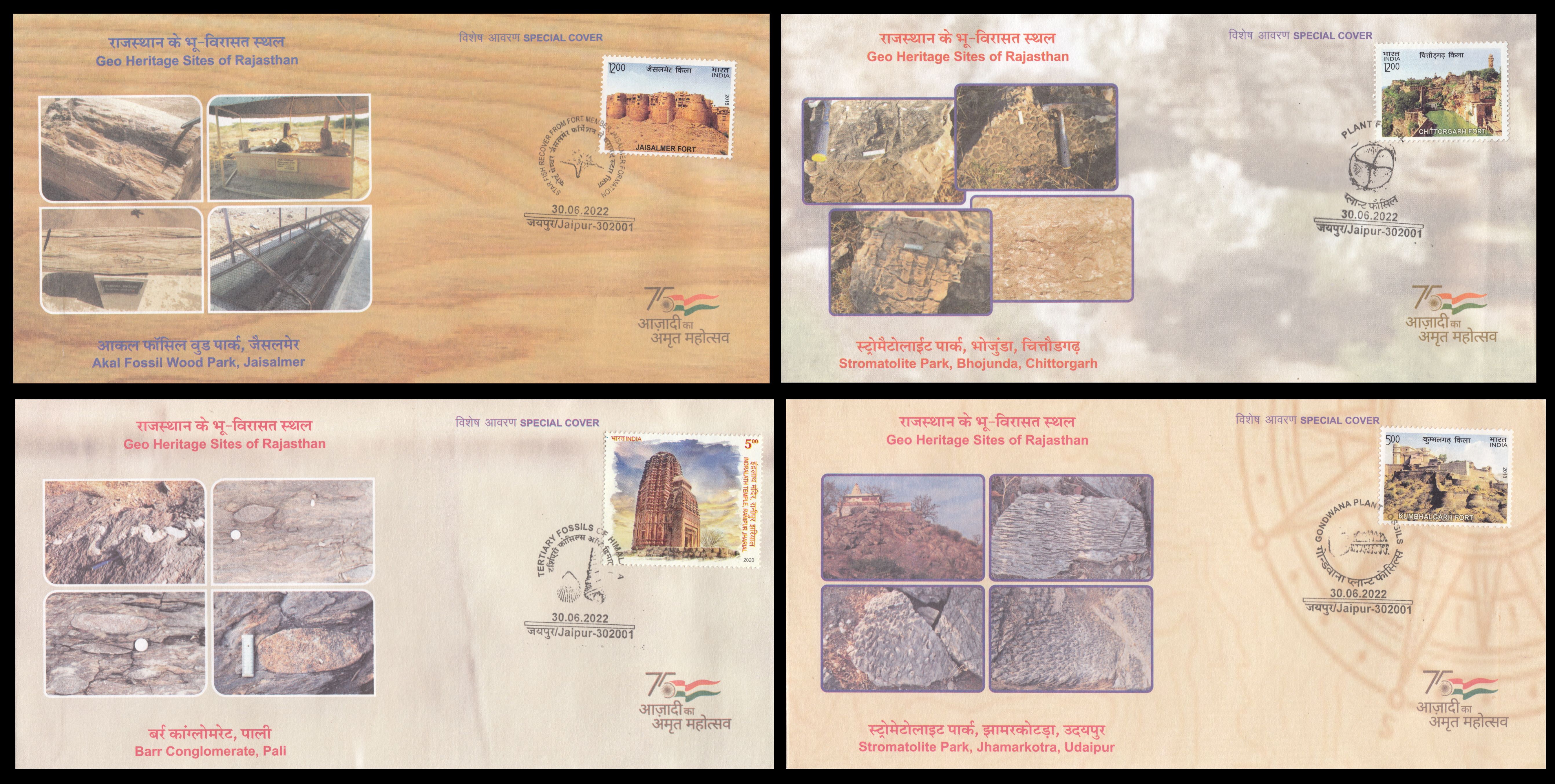
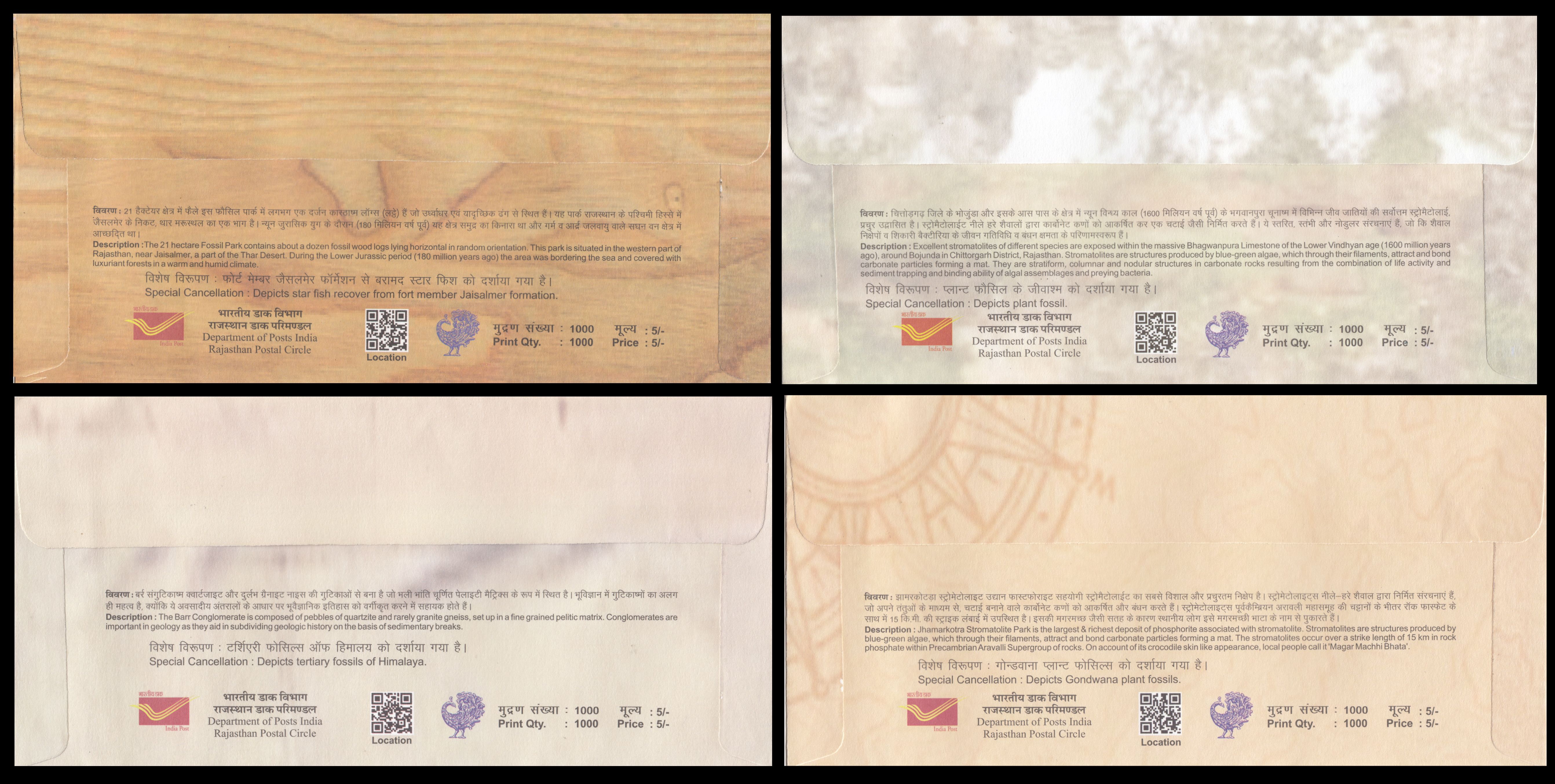
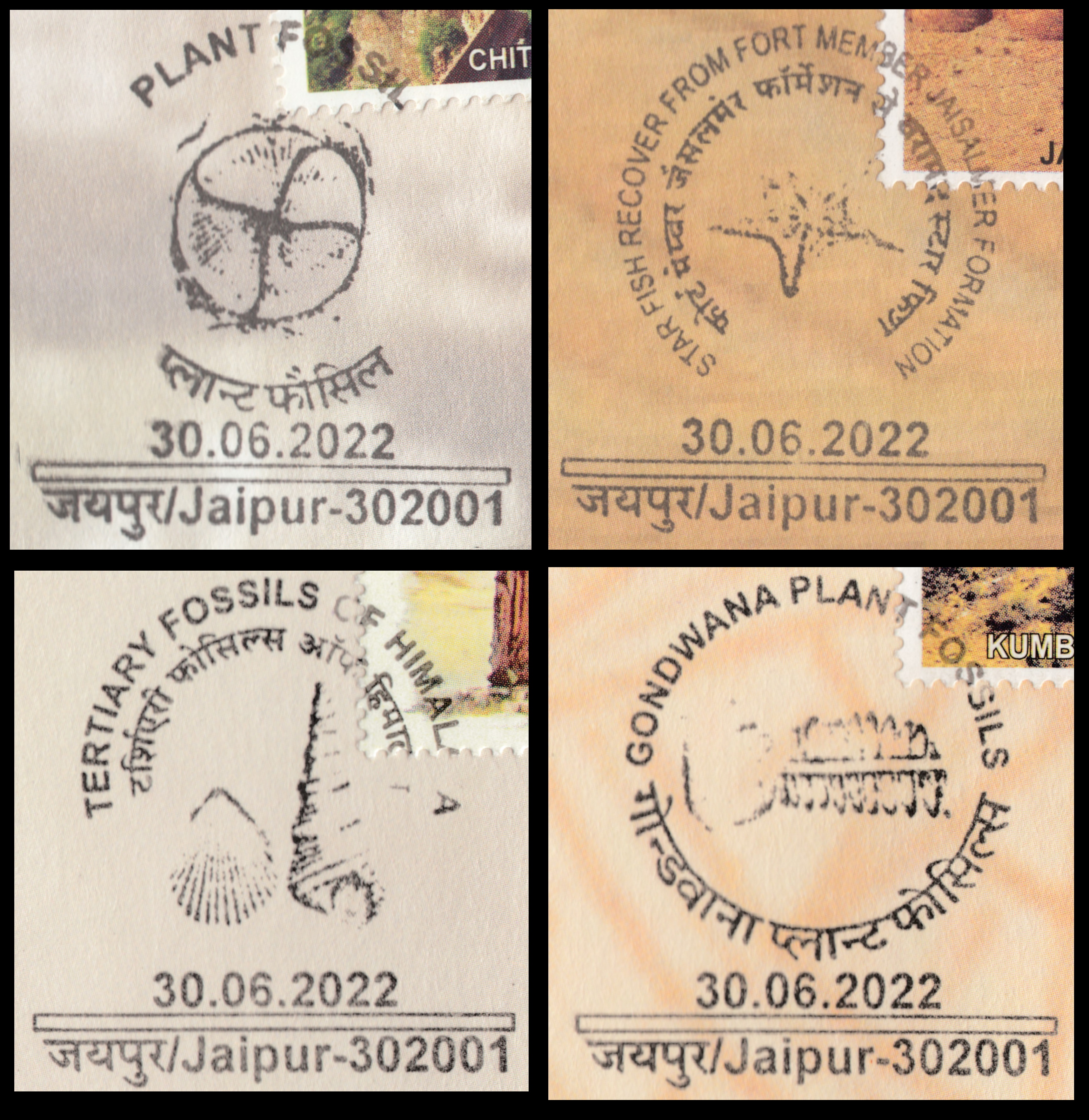
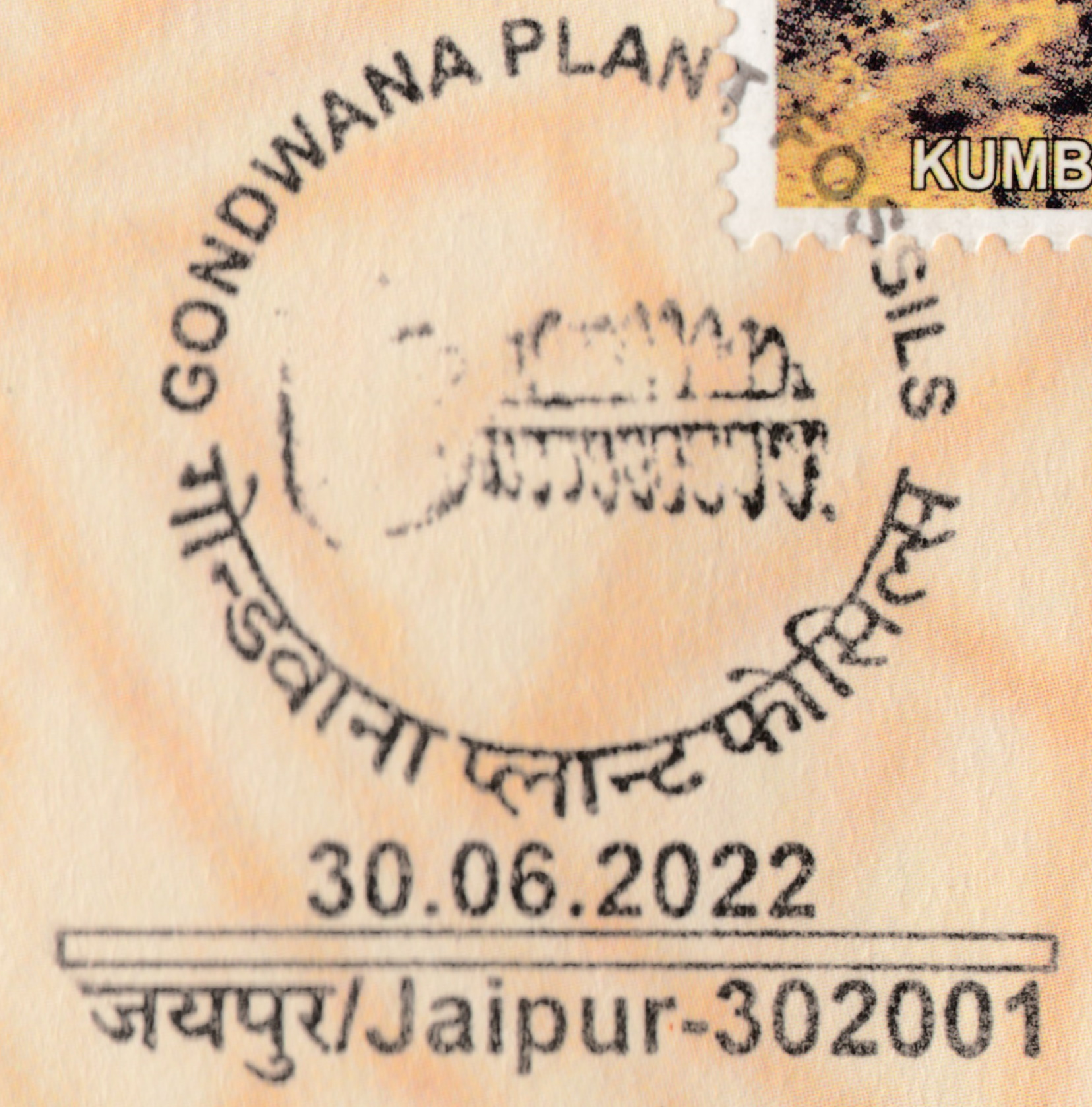
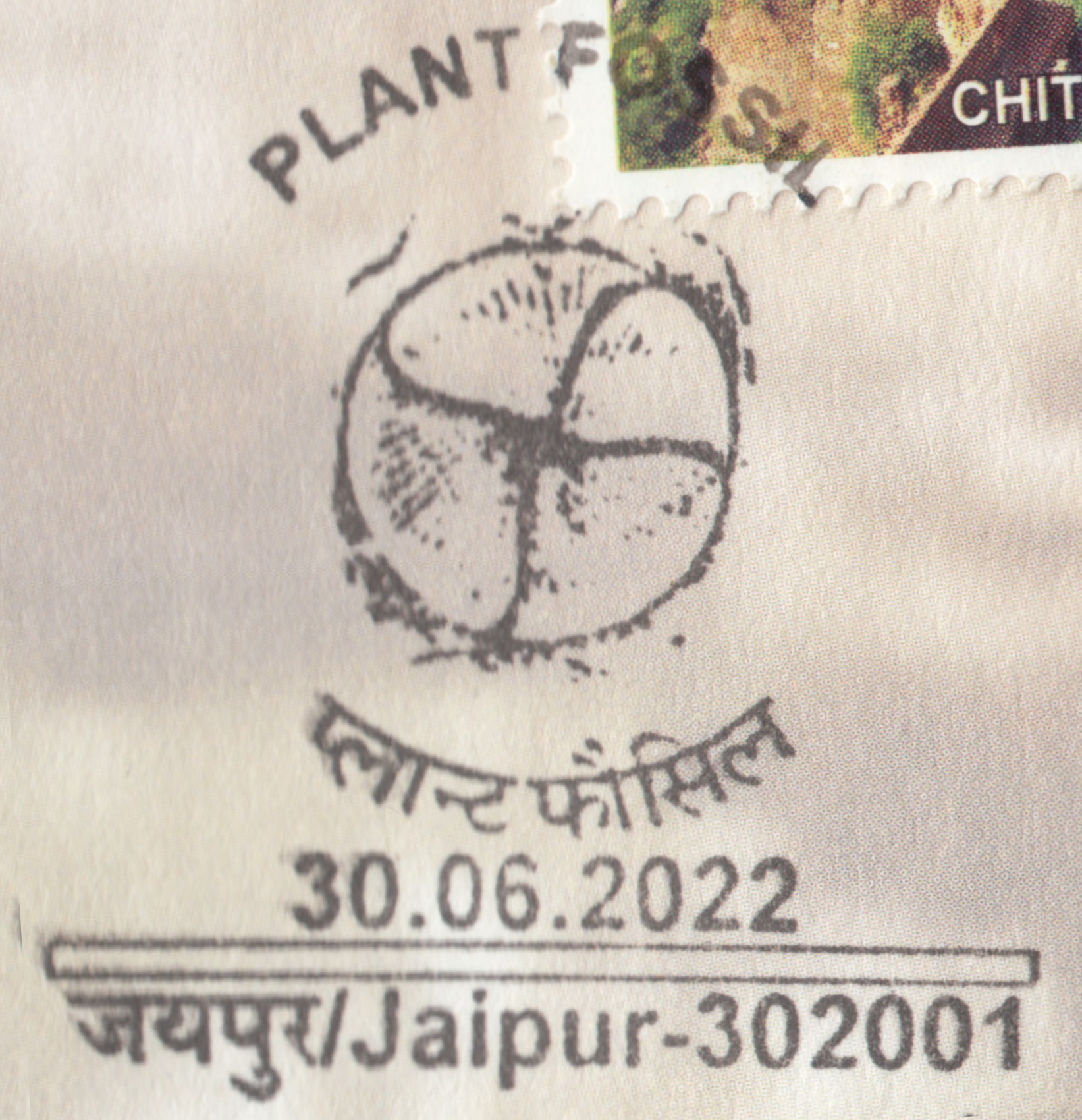
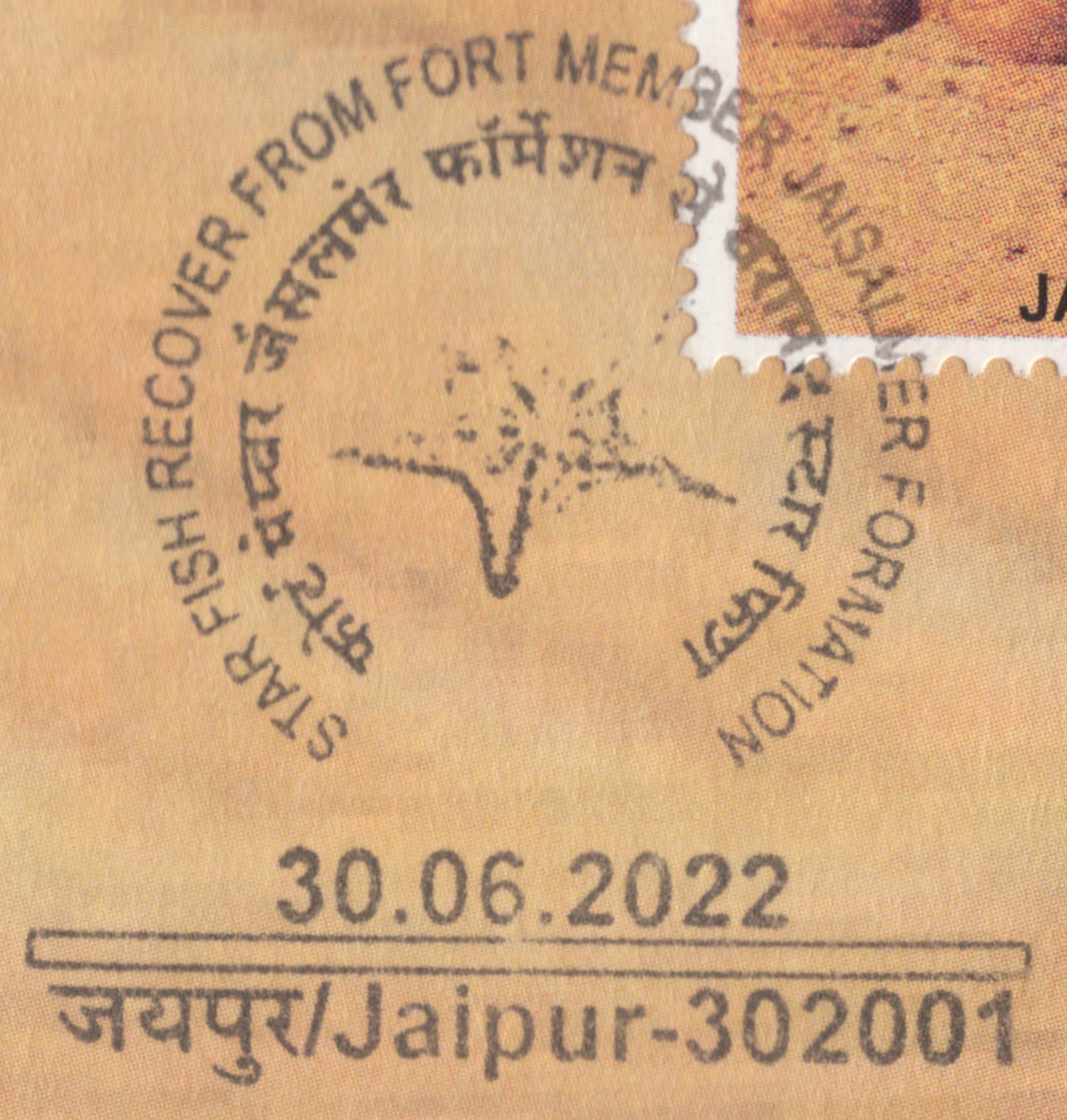
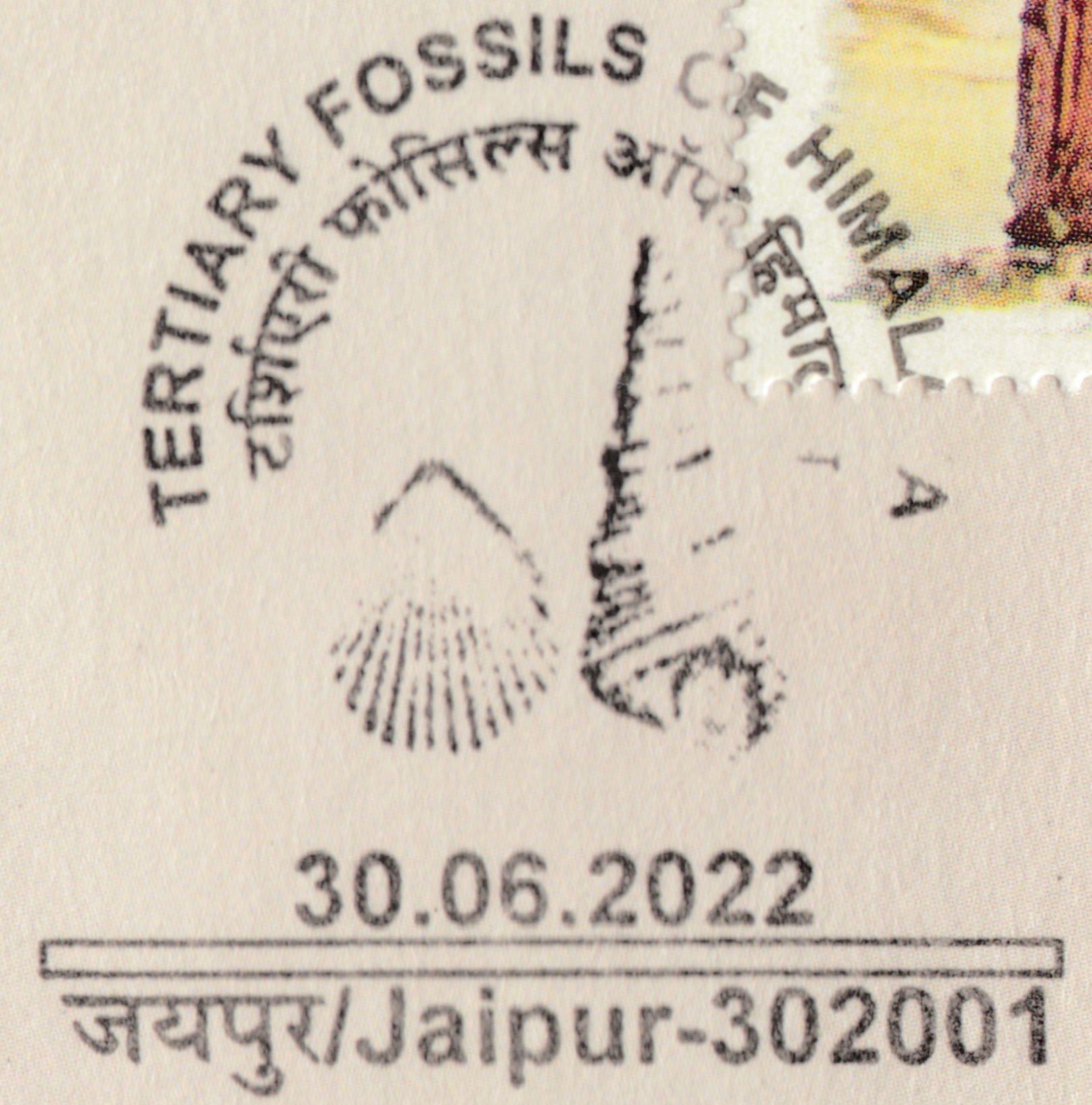
[C4] On 30.06.2022, Department of Posts India, Rajasthan Postal Circle, issued a dozen commemorative covers and postmarks - "Geo Heritage Parks of Rajasthan", each one in quantity of 1.000. Four of these covers and their postmarks shows some fossils. The following short description provided on the reverse sides.
 |
| Fossils on commemorative postmarks of India 2022. |
-
Akal Fossil Wood Park, Jaisalmer.
The 21 hectare Fossil Park contains about a dozen fossil wood logs lying horizontal in random orientation. This park is situated in the western part of Rajasthan, near Jaisalmer, a part of the Thar Desert.
During the Lower Jurassic period (180 million years ago) the area was bordering the sea and covered with luxuriant forests in a warm and humid climate.
Commemorative postmark depicts star fish recover from fort member Jaisalmer formation. -
Stromatolite Park, Bhojunnda, Chittofarh.
Excellent stromatolites of different species are exposed within the massive Bhagwanpura Limestone of the Lower Vindhyan age (1600 million years ago), around Bojunda in Chittorgarh District, Rajasthan.
Stromatolites are structures produced by blue-green algae, which through their filaments, attract and bond carbonate particles forming a mat.
They are stratiform, columnar and nodular structures in carbonate rocks resulting from the combination of life activity and sediment trapping and binding ability of algal assemblages and preying bacteria.
Commemorative postmark depicts plant fossil. -
Barr Conglomerate, Pali.
The Barr Conglomerate is composed of pebbles of quartzite and rarely granite gneiss, set up in a fine grained pelitic matrix.
Conglomerates are important in geology as they aid in subdividing geologic history on the basis of sedimentary breaks.
Commemorative postmark depicts tertiary fossils of Himalaya. -
Stromatolite Park, Jhamarkotra, Udaipur.
Jhamarkotra Stromatolite Park is the largest & richest deposit of phosphorite associated with stromatolite.
Stromatolites are structures produced by blue-green algae, which through their filaments, attract and bond carbonate particles forming a mat. The stromatolites occur over a strike length of 15 km in rock phosphate within Precambrian Aravalli Supergroup of rocks.
On account of its crocodile Skin like appearance, local people call it 'Magar Machhi Bhata'. Commemorative postmark depicts Gondwana plant fossils.
Commemorative postmarks related to Paleontology: dinosaurs and other prehistoric animals, fossils
Legend is here
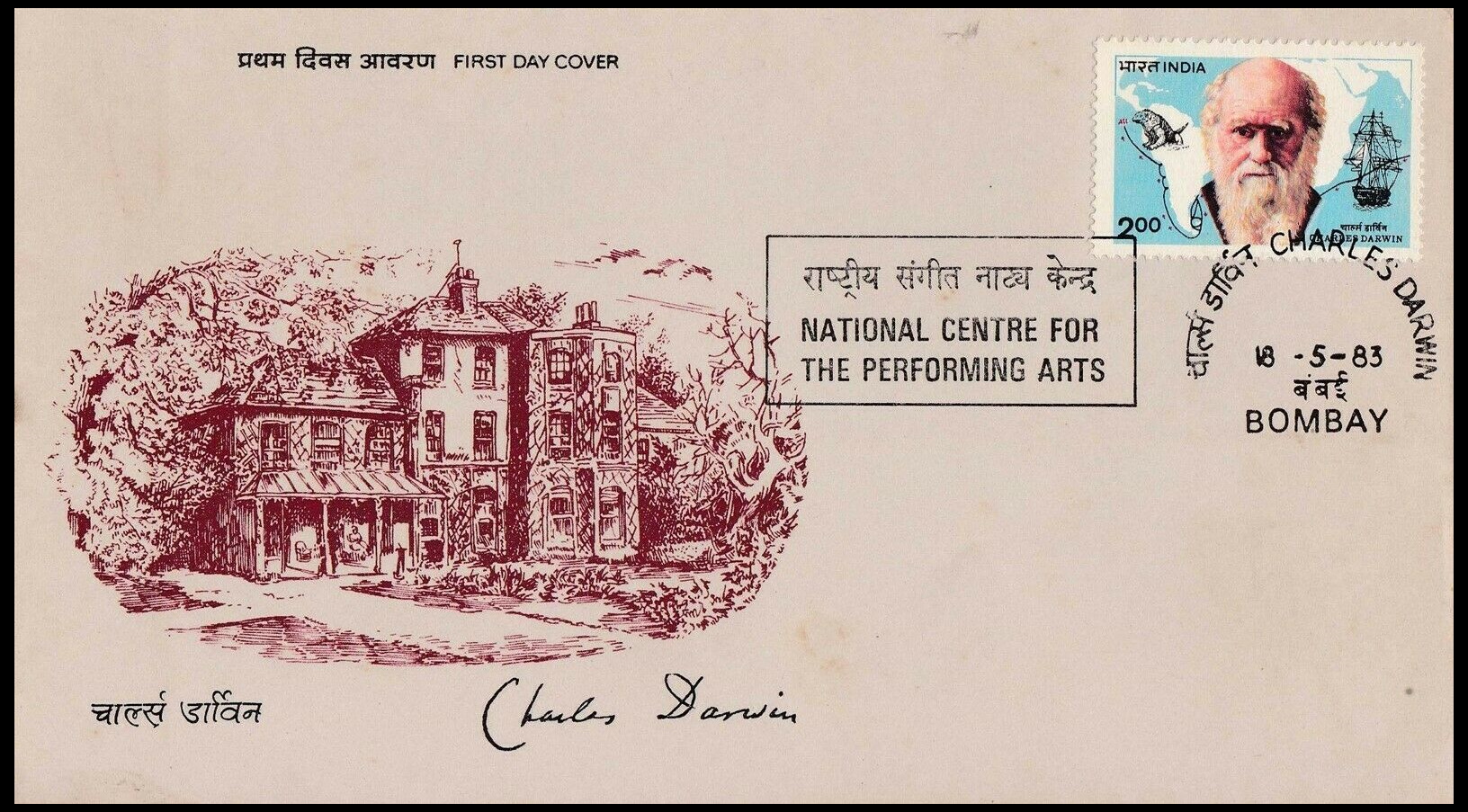
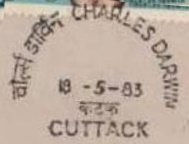
| 21.02.1981 "Lucknow Festival 81" [C1] | 18.05.1983 "Charles Darwin" | |
 |
 |
 |
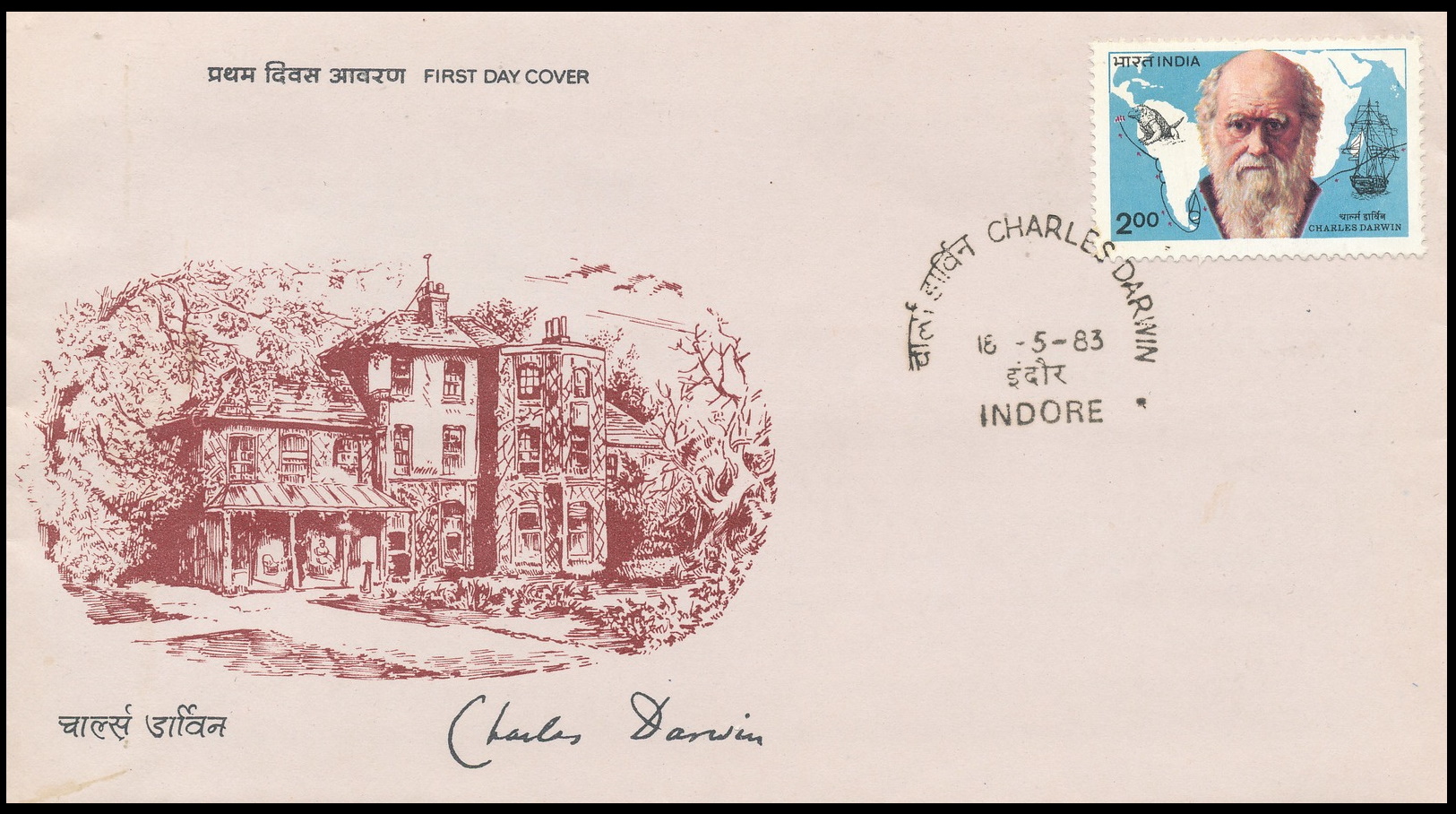
| 18.05.1983 "Charles Darwin" | ||
 |
 |
 |
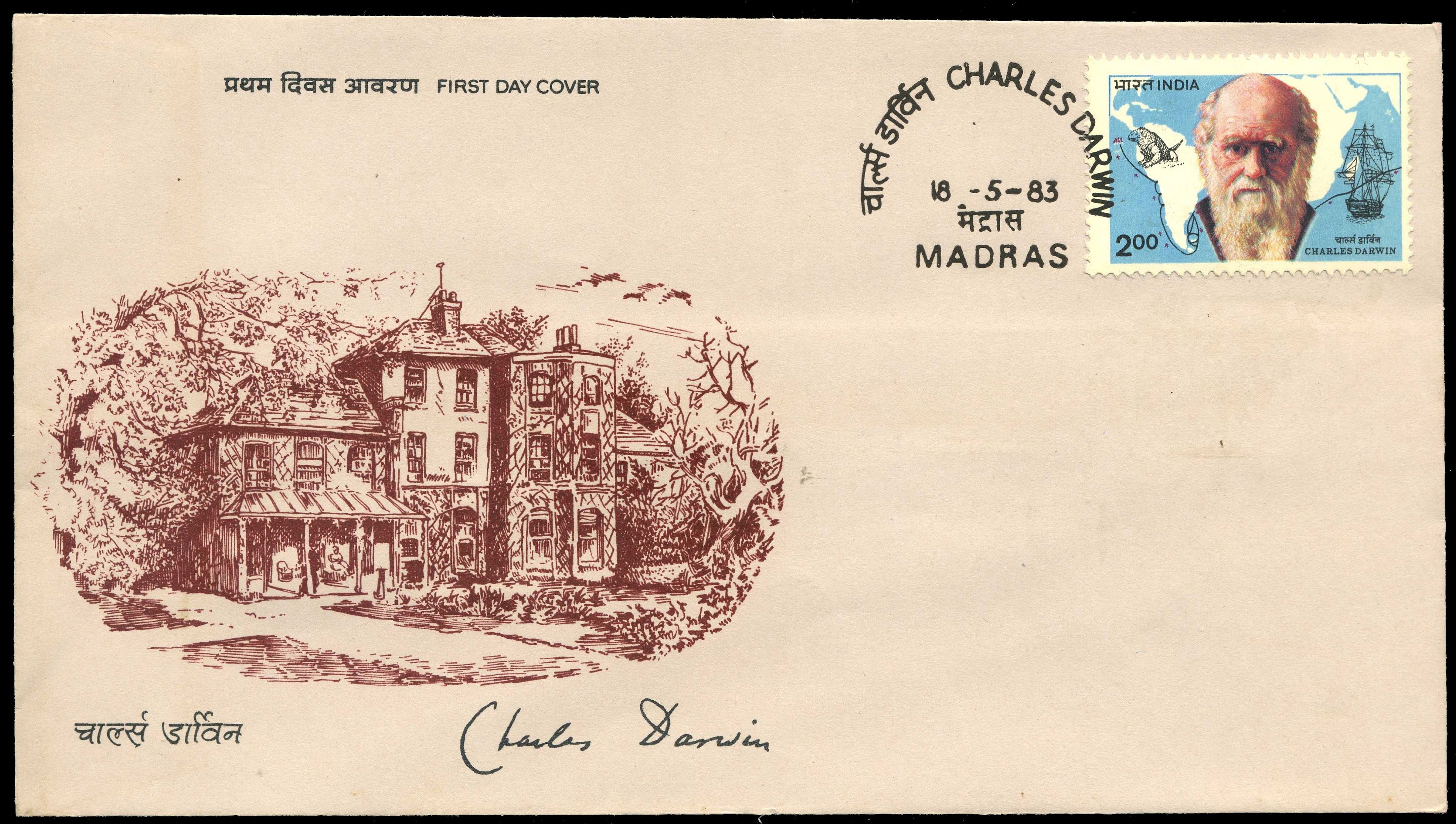
| 18.05.1983 "Charles Darwin" | ||
 |
 |
 |
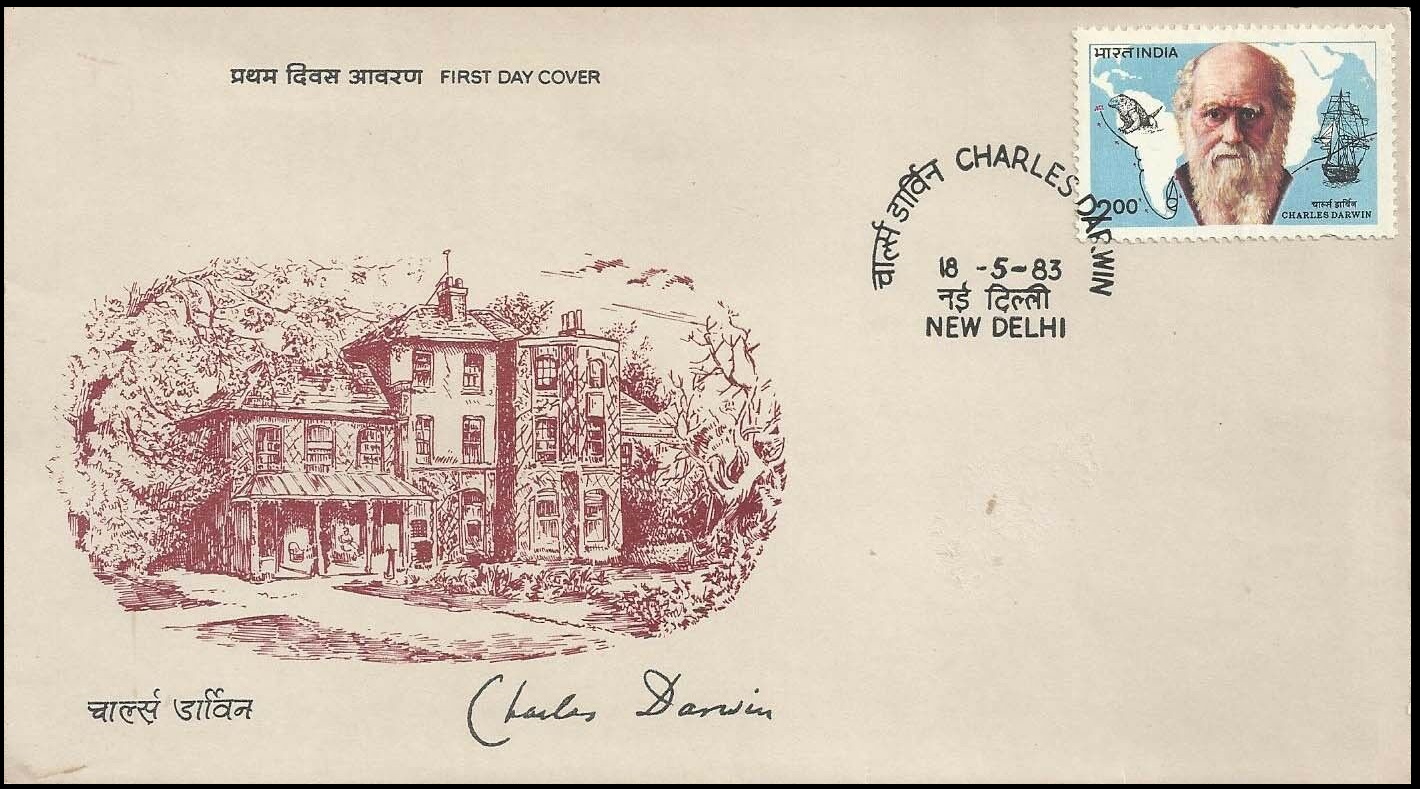
| 18.05.1983 "Charles Darwin" | 15.11.2006 "Diamond Jubilee of Birbal Sahni institute of Palaeobotany " [C1] | |
 |
 |
 |
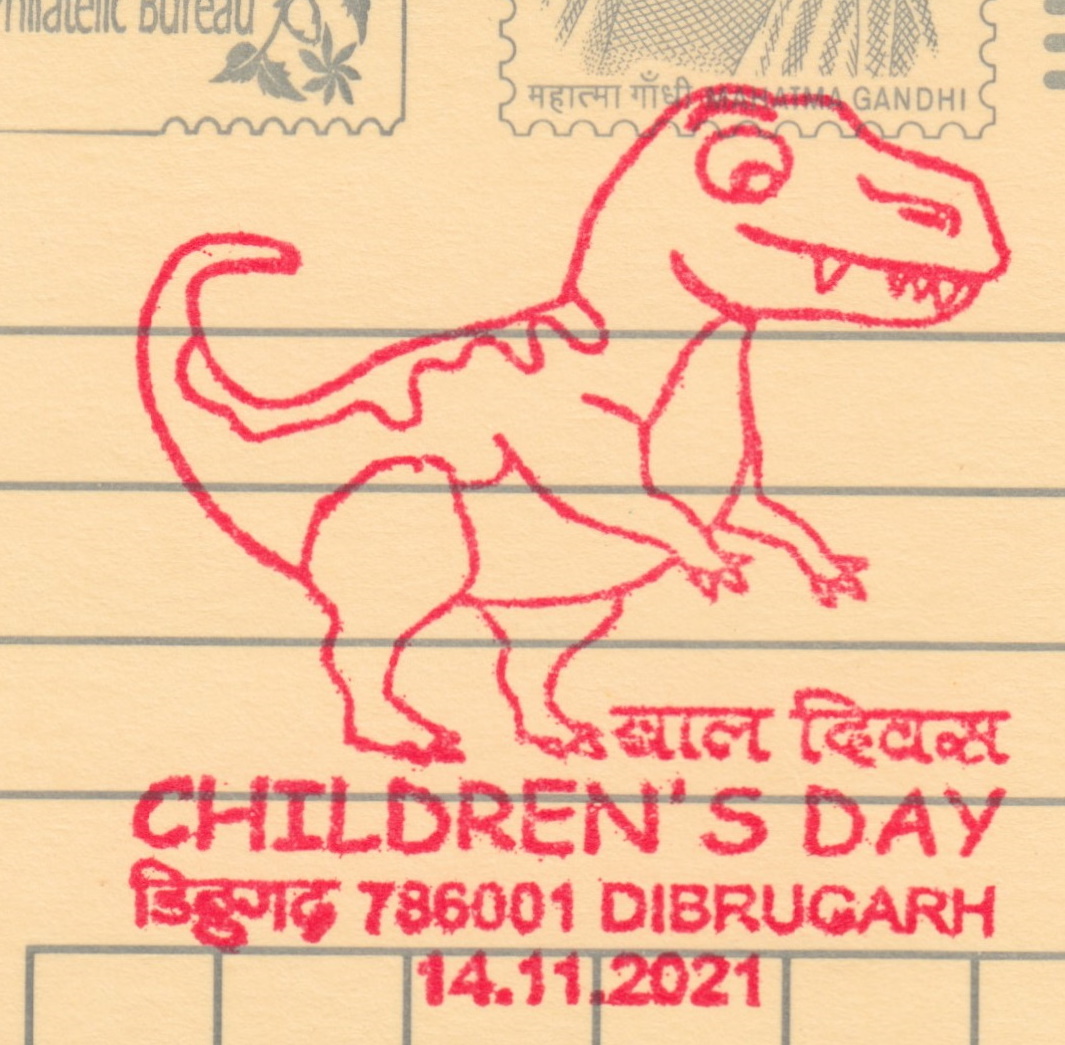
| 18.12.2009 "Stamp Mania 2009" | 18.09.2015 "Salkhan Fossil Park" | 14.11.2021 "Children's Day" [Sp] |
 |
 |
 |
| 14.11.2021 "Children's Day" [Sp] | 30.06.2022 "Geo Heritage Parks of Rajasthan - Gondwana plant fossils" [Sp] [C4] | |
 |
 |
 |
| 30.06.2022 "Geo Heritage Park of Rajasthan - Plant fossil, Star fish fossil, Tertiary fossils of Himalaya" [Sp] [C4] | ||
 |
 |
|
| 14.11.2024 "Children's Day" [Sp] | ||
| 431001 - Chhatrapati Sambhaji Nagar | 422001 - Nashik | 411001 - Pune |
 |
 |
 |
| 14.11.2024 "Children's Day" [Sp] | ||
| 403001 - Panaji | 440001 - Nagpur | 400001 - Mumbai |
 |
 |
 |
| 12.02.2025 "Marine Fossils" [Sp] | ||
 |
||
References
- [R1] India:
Wikipedia
WikiTravel
FlagCounter
-
[R2] Postal History and Philately of India:
Wikipedia,
Guinness World Records.
Links to official website of the Post Authority, stamp catalog and a list of new stamps of India are here - [R3] Darashaw Nosherwan Wadia: Wikipedia
- [R4] Birbal Sahni institute of Palaeobotany: official website Wikipedia
- [R5] Stegodon fossil from the Shivaliks Hills,: Hindustan Times, The Statesman, Jagran Josh, India Times.
Acknowledgements
Many thanks to Dr. Peter Voice from Department of Geological and Environmental Sciences, Western Michigan University, for reviewing the draft page and his valuable comments.