Singapore
Fossils and reconstructions of dinosaurs on stamps, postmarks and commemorative covers of Singapore
Singapore officially the Republic of Singapore, and often
referred to as the Lion City or the Little Red Dot, is a sovereign city-state in Southeast
Asia, and the world's only island city-state.
It lies one degree (137 km) north of the equator, south of the southernmost tip of continental Asia and peninsular Malaysia, with Indonesia's Riau Islands to the south.
Singapore's territory consists of a diamond-shaped main island along with 62 other islets. The island rose in importance during the 14th century and became an important port until it was destroyed by Portuguese raiders in 1613.
Singapore was founded as a British trading colony in 1819. Under British colonial rule, Singapore grew in importance rapidly becoming a major port city.
During World War II, Singapore was occupied by Japan from 1942 to 1945. After the war, Singapore reverted to British control, with increasing levels of self-government being granted.
It joined the Malaysian Federation in 1963 but separated two years later and became independent (9 August 1965). [R1]
The first stamps of independent Singapore country were issued on 9 August 1966 to commemorate the first anniversary of independence labeled Republic of Singapore but all later stamps to this day have been labeled just Singapore. [R2]
Notes:
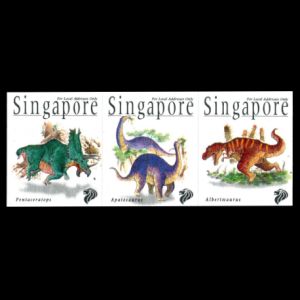
[1] This set of self-adhesive stamps, with "For the local address only" face value,
issued in a sheet of 15 and sold exclusively via OCBC (Oversea Chinese Banking Corporation)
ATMs for a limited period of time.
Within that period, two different designs of the backside were issued.
The sheet designed with exactly the same dimensions (156mmx74mm) as the currency note of SGD 50 and very thin (less than 0.13mm ) so that they can be issued through the same aperture.
(New notes with a different dimensions were issued in 1999). These stamps are very likely the thinnest Paleontology related stamps. So far there were only two such ATM issues in Singapore. The other was Palm Tree stamps issued in 1993. They were issued through arrangement by the bank with Singapore Post.
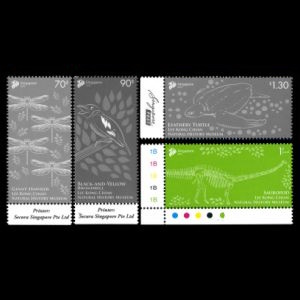
[2] One of three Sauropod Dinosaurs on display in The Lee Kong Chian Natural History Museum shown on green stamp of the set
Legend is here
Many thanks to Dr. Peter Voice from Department of Geological and Environmental Sciences, Western Michigan University, for reviewing the draft page and his valuable comments.
It lies one degree (137 km) north of the equator, south of the southernmost tip of continental Asia and peninsular Malaysia, with Indonesia's Riau Islands to the south.
Singapore's territory consists of a diamond-shaped main island along with 62 other islets. The island rose in importance during the 14th century and became an important port until it was destroyed by Portuguese raiders in 1613.
Singapore was founded as a British trading colony in 1819. Under British colonial rule, Singapore grew in importance rapidly becoming a major port city.
During World War II, Singapore was occupied by Japan from 1942 to 1945. After the war, Singapore reverted to British control, with increasing levels of self-government being granted.
It joined the Malaysian Federation in 1963 but separated two years later and became independent (9 August 1965). [R1]
The first stamps of independent Singapore country were issued on 9 August 1966 to commemorate the first anniversary of independence labeled Republic of Singapore but all later stamps to this day have been labeled just Singapore. [R2]
Official stamps of Singapore related to Paleontology: fossils and reconstructions of dinosaurs
| 22.04.1998 "Dinosaurs" [1] | 18.04.2015 "Lee Kong Chian Natural History Museum" [2] | |
 |
 |
|
Notes:

|

|
|
| The front and reverse sides of the Mini Sheet with self-adhesive dinosaur stamps of Singapore 1998 MiNr.: 874-876, Scott: 831-833 | ||
Within that period, two different designs of the backside were issued.
The sheet designed with exactly the same dimensions (156mmx74mm) as the currency note of SGD 50 and very thin (less than 0.13mm ) so that they can be issued through the same aperture.
(New notes with a different dimensions were issued in 1999). These stamps are very likely the thinnest Paleontology related stamps. So far there were only two such ATM issues in Singapore. The other was Palm Tree stamps issued in 1993. They were issued through arrangement by the bank with Singapore Post.
[2] One of three Sauropod Dinosaurs on display in The Lee Kong Chian Natural History Museum shown on green stamp of the set

Commemorative postmarks of Singapore related to Paleontology: dinosaurs
Legend is here
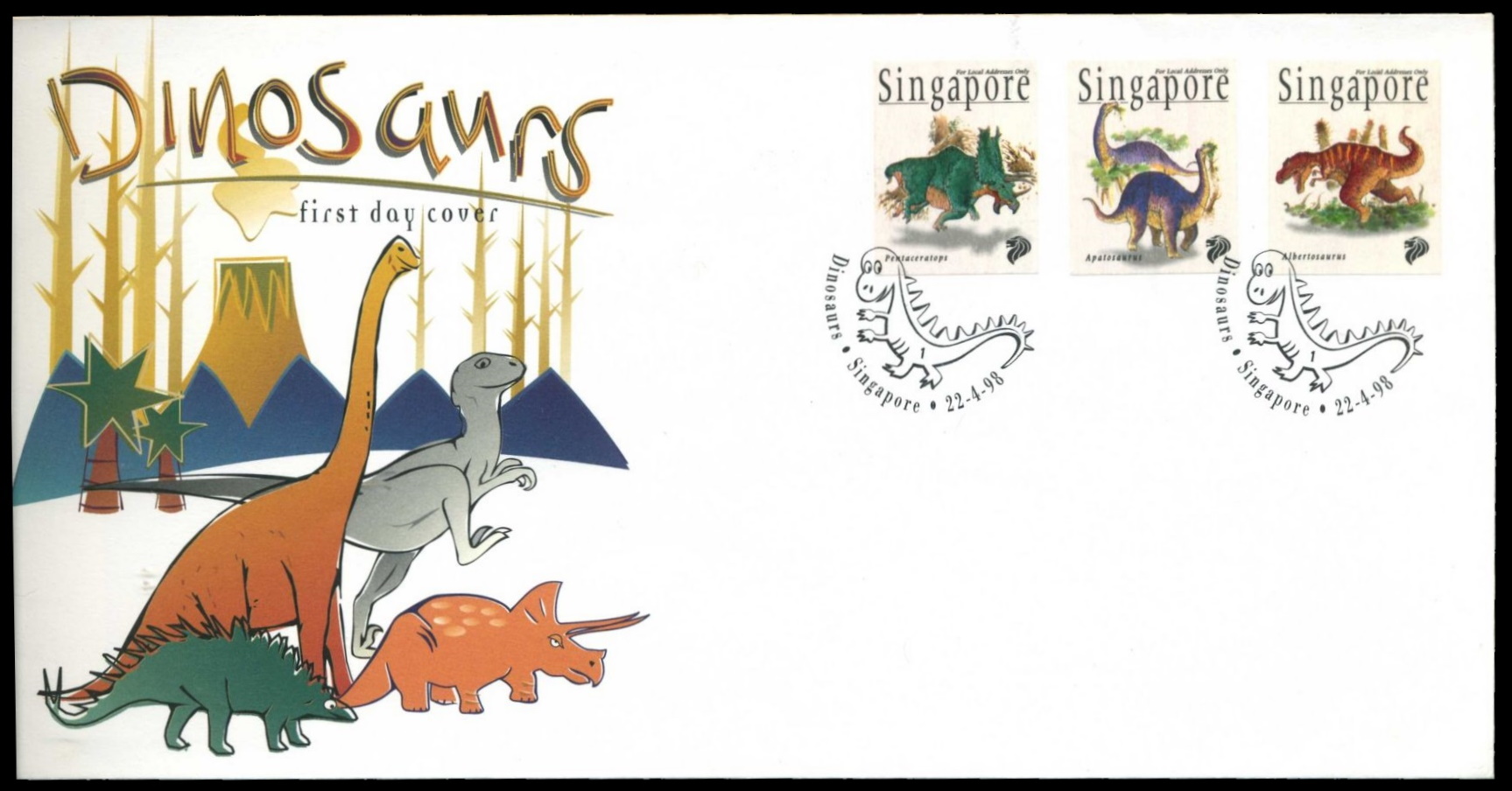
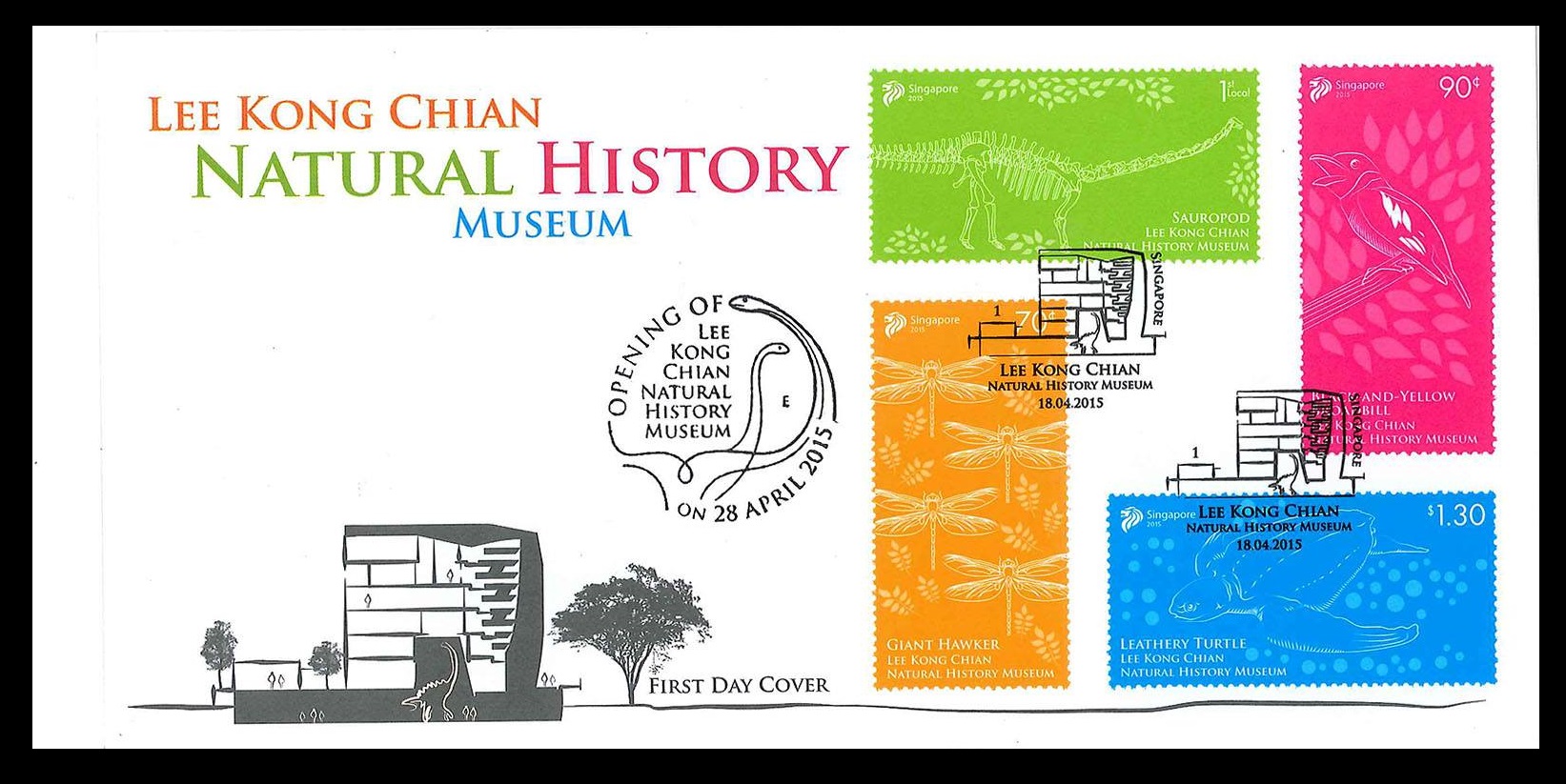
| 22.04.1998 "Dinosaurs" [FDC] | 18.04.2015 "Lee Kong Chian Natural History Museum"[FDC] | |
 |
 |
|
Commemorative covers of Singapore related to Paleontology: fossils and reconstructions of dinosaurs
| 1985 "The Evolution of Animal Exhibition" | ||
 |
||
References
- [R1] Singapore:
Wikipedia,
WikiTravel,
Flag Counter
- [R2] Postal History and Philately of Singapore:
Wikipedia,
Links to official website of the Post Authority, stamp catalog and a list of new stamps of Singapore are here.
Acknowledgement
Many thanks to Dr. Peter Voice from Department of Geological and Environmental Sciences, Western Michigan University, for reviewing the draft page and his valuable comments.