About Paleophilatelie.eu website
Paleophilatelie explores the fascinating connection between prehistoric life
and a wide range of philatelic materials, with its name derived from “paleo-”,
relating to paleontology and paleoanthropology, and “philately”.
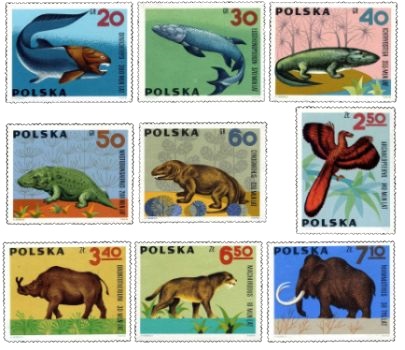
Paleontology
is the scientific study of life of the geologic past that involves the analysis
of fossils preserved in rocks.
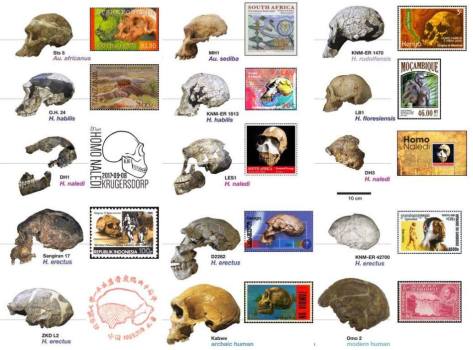
Paleoanthropology
interdisciplinary branch of anthropology concerned with the origins and
development of early humans.
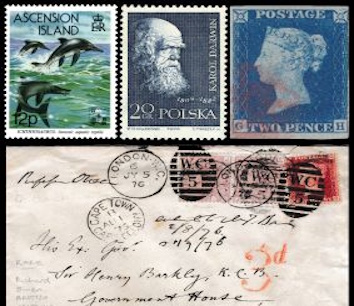
Philately
the study of postage stamps, stamped envelopes, postmarks, postcards, and other
materials relating to postal delivery.
Introduction
Paleophilatelie.eu website presents images and detailed information on thousands of related philatelic items from nearly 200 countries and territories sorted by country and date of issue. It contains many hundreds of pages describing individual stamp issues and articles related to “Paleophilatelie” topics, as well as many examples of philatelic exhibits created both for competitive display and for educational presentations.

|
|
|
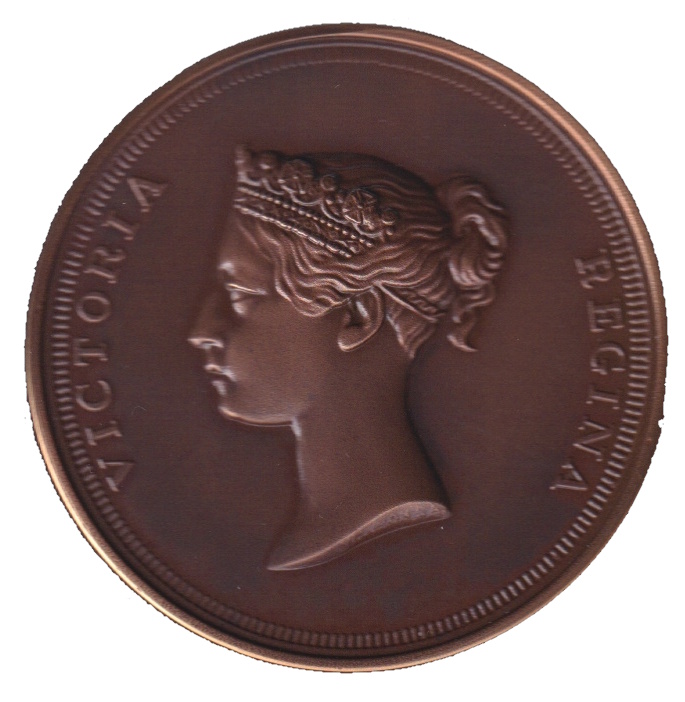
| Awards of Paleophilatelie website | ||
Whether you are a collector, researcher, student, or simply curious, you are invited to explore, learn, and enjoy this growing online resource.
The website regularly participates in international competitions of philatelic websites in the Electronic Literature category, with the aim of popularizing the topic and attracting new collectors, especially younger philatelists.
The purpose of the website
The website explores how prehistoric life, early humans, fossils, and the scientists who studied them have been represented through postage stamps and related postal materials issued around the world.At its core, the website functions as an online reference and thematic catalogue.
It documents thousands of philatelic items, including postage stamps, first day covers, commemorative postmarks, postal stationery, — each linked to paleontological or paleoanthropological subjects. The material is carefully organized by country and date of issue, allowing visitors to trace the global and historical development of these themes within postal history.
Paleophilatelie.eu goes beyond simple cataloguing by providing contextual and educational content.
Many entries are accompanied by background information on the depicted organisms, fossil sites, scientific discoveries, and prominent researchers, helping bridge the gap between philately and the natural sciences. In this way, the site serves not only collectors, but also educators, students, and anyone interested in the cultural representation of prehistoric life.
The website also promotes Paleophilately as a distinct topical collecting field, encouraging deeper appreciation of how stamps have been used to communicate scientific knowledge and national heritage. By combining documentation, visual material, and accessible explanations, Paleophilatelie.eu helps preserve this niche area of collecting and makes it available to a broad international audience.
The Main pages of Paleophilatelie website
- Stamp Catalogue - available in two variants: by country name or by chronology (date of issue), as well as with two interfaces "flat" and "frames".
- Illustrated Checklist of official, personalized and imprinted on postal stationaries stamps related to the topic of this website.
-
Description pages of philatelic materials related to the topic of the website
- Official stamps directly related to Paleontology or Paleoanthropology
- Other official stamps to consider - stamps depicting fossil-found places, Natural History Museums with significant collection of fossils, contributors to Paleontology or Paleoanthropology
- Personalized stamps directly related to Paleontology or Paleoanthropology
- Commemorative covers directly related to Paleontology or Paleoanthropology
- Commemorative postmarks directly related to Paleontology or Paleoanthropology
- Some postal stationary to consider - prehistoric animals as art objects
-
Image galleries
contains scans of almost 7.500 philatelic items, mostly in high resolution, related to
Paleontology or Paleoanthropology.
- Official stamps directly related to Paleontology or Paleoanthropology
- Other official stamps to consider - stamps depicting fossil-found places, Natural History Museums with significant collection of fossils, contributors to Paleontology or Paleoanthropology
- First Day Covers directly related to Paleontology or Paleoanthropology
- Other First Day Covers to consider - stamps depicting fossil-found places, Natural History Museums with significant collection of fossils, contributors to Paleontology or Paleoanthropology
- Commemorative Postmarks directly related to Paleontology or Paleoanthropology
- Other Commemorative Postmarks to consider - commemorative postmarks depicting fossil-found places, Natural History Museums with significant collection of fossils, contributors to Paleontology or Paleoanthropology
- Postal Stationeries directly related to Paleontology or Paleoanthropology
- Other Postal Stationeries to consider - postal Spellling - stationeries depicting fossil-found places, Natural History Museums with significant collection of fossils, contributors to Paleontology or Paleoanthropology
- Exhibits Room - philatelic exhibitions of fellow collectors of topics related to Paleontology or Paleoanthropology.
-
Topical Articles written by the author of
this
website or shared by the visitors.
Together, these articles explore a wide range of topics connected to the Paleophilatelie.eu website and invite readers to discover and share their interests in paleontology and philately.
Many of these articles were published in full or short forms in the international philatelic magazines, such as Stamp Collector and Gibbons Stamp Monthly in Great Britain and Stamp News AUSTRALASIA in Australia.
Aid in Philatelic Research
The stamps checklist and the gallery pages of this website can be used to compile a personal topical list.By slowly scrolling through the "Postage Stamps" gallery or the "Illustrated Checklist of Paleontology and Paleoanthropology related stamps" pages, visitors can easily identify and compile all stamps related to a specific subject, such as carnivorous dinosaurs, mammoths or fossils of birds, etc. In the same way, by scrolling through these galleries, visitors can locate and group together philatelic items related to particular themes, species, or geological periods.
The same exploratory approach can be applied to the first day cover (fdc), postmarks and postal stationeries galleries.
In this way, the galleries and the checklist encourage active engagement with the material, allowing visitors to construct their own thematic collections according to their personal interests or research needs.The website also contains numerous articles about Postal History, such as The first stamps and postal stationery and the beginning of Philately as well as articles related to the website's thematic focus, including The Discovery of the Woolly Mammoth and Charles Darwin in Philately. Some of these articles include lists of philatelic items related to the subject discussed.
Display
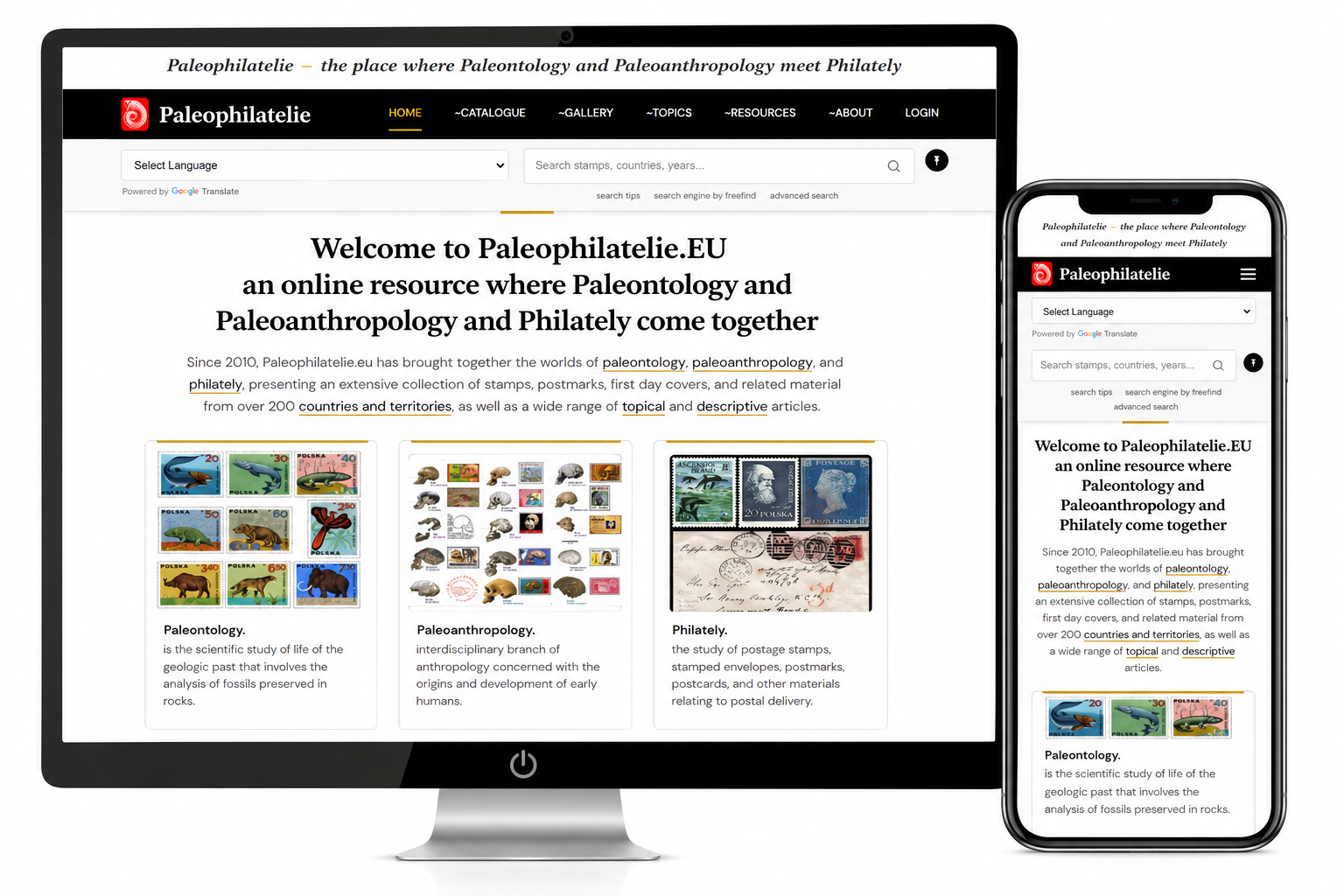 |
| The Paleophilatelie website is best viewed on a wide screen. |
However, the website is best viewed on a wide screen, where images, galleries, and text layouts can be displayed more clearly and comfortably.
If a computer or laptop is not available, visitors can still enjoy the website on a tablet or smartphone. For the best experience on smaller screens, it is recommend rotating your device to landscape mode. This allows images to appear larger and helps prevent pages from looking crowded or difficult to navigate. Using landscape mode on mobile devices will make browsing galleries, reading articles, and viewing detailed philatelic images easier and more enjoyable.
Search through the website
The integrated search bar can be used to find pages and articles on
the website that
contain the word or phrase a visitor is looking for.
For example, when the word "belemnites" is entered into the search bar, a list of articles and pages on the website in which the word "belemnites" is mentioned will be displayed. However, the search results will not include all images of postage stamps, and other philatelic materials, featuring belemnites. If the goal is to obtain a complete list of stamps depicting belemnites, it is recommended to browse the postage stamp gallery, as described above in the Aid in Philatelic Research chapter.
For example, when the word "belemnites" is entered into the search bar, a list of articles and pages on the website in which the word "belemnites" is mentioned will be displayed. However, the search results will not include all images of postage stamps, and other philatelic materials, featuring belemnites. If the goal is to obtain a complete list of stamps depicting belemnites, it is recommended to browse the postage stamp gallery, as described above in the Aid in Philatelic Research chapter.
Updates
To keep updated about latest modifications of the website please look at the pages
News and Current Year
(announcements of new and upcoming issues are here).
Visitors are welcome to follow the Author on X" formerly "Twitter" or join a thriving community of thousands of fossil and stamp enthusiasts in the "Paleophilately" group on Facebook, associated with this website to be able to chat with him and provide their feedback.
Visitors are welcome to follow the Author on X" formerly "Twitter" or join a thriving community of thousands of fossil and stamp enthusiasts in the "Paleophilately" group on Facebook, associated with this website to be able to chat with him and provide their feedback.
The Language Barrier
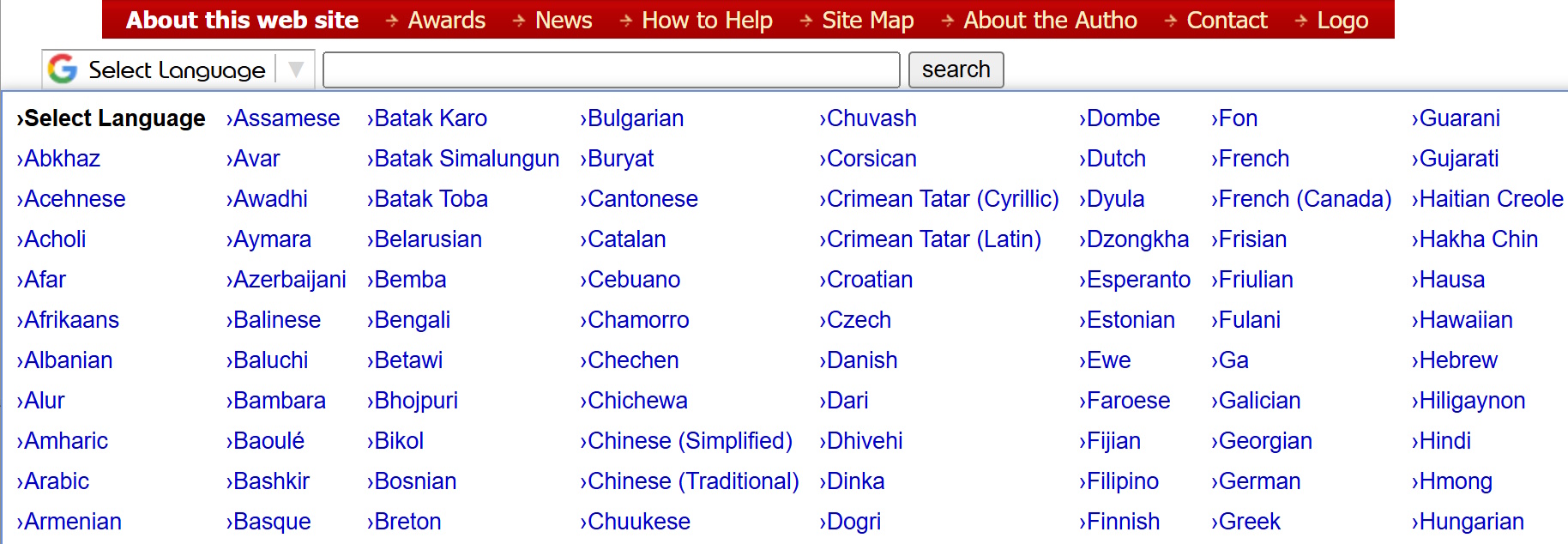
If English is difficult to read, you can easily view the website in your own language using the built-in Google Translator. Simply click Select Language at the top of any page and choose your preferred language.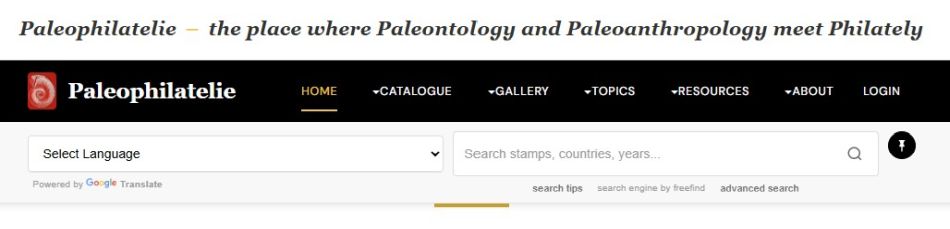
The Team
| This website is administered and owned solely by Mr. Michael Kogan from Germany, a member of the International Association of Philatelic Journalists and several international philatelic clubs. | Dr. Peter Voice of the Department of Geological and Environmental Sciences at Western Michigan University in the USA provides scientific advice and editorial support for the website, since 2019. |
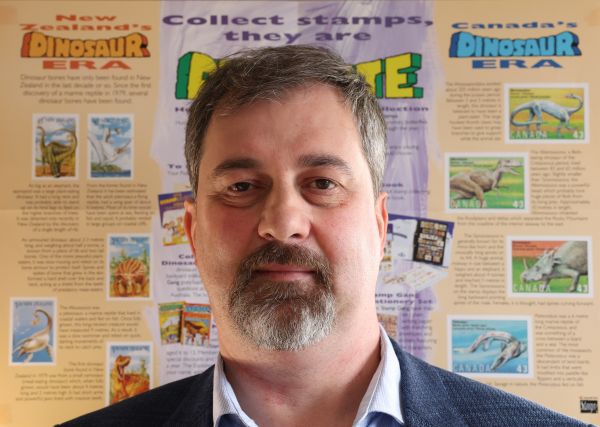
Mr. Michael Kogan, the Author and Admin of Paleophilatelie.eu website |

Dr. Peter Voice, Scientific Advisor and Editor of Paleophilatelie.eu website |
Mr. Michael Kogan and Dr. Peter Voice publish articles in the international philatelic press, mostly in English. Some of their articles have also been translated into other languages, including German, Portuguese, and Russian. A few examples are shown below.

Feedback
If you spot any display or content issues on this website, or if you'd like to
add or correct something, feel free to email
the Author
in English, German, or Russian.
You can also join a thriving community of thousands of fossil and stamp enthusiasts in the Paleophilately group on Facebook linked to this website to chat, share ideas, and connect with fellow enthusiasts.
You can also join a thriving community of thousands of fossil and stamp enthusiasts in the Paleophilately group on Facebook linked to this website to chat, share ideas, and connect with fellow enthusiasts.
Link exchange
I'm open to exchanging links with other Philately or/and Paleontology related
websites.
In case you like to add a link to Paleophilatelie website you might like to use one
of the
logo images or
QR Codes.
Preferred description text is:

Paleophilatelie is the most comprehensive resource about Paleontology and Paleoanthropology in Philately, the place where Paleontology and Paleoanthropology meets Philately.