Simultaneous Development of Philately, Geology, and
Palaeontology as a Result of the British Industrial Revolution.
Part 8: The Legacy of Rowland Hill’s Reform
The Postal Reform of Rowland Hill was a success.
In 1840, the first year of the "Penny Post", the number of letters sent in Great Britain more than doubled and within 10 years, it had doubled again. The growing number of letters required optimization of the letter collection service.
Mailboxes
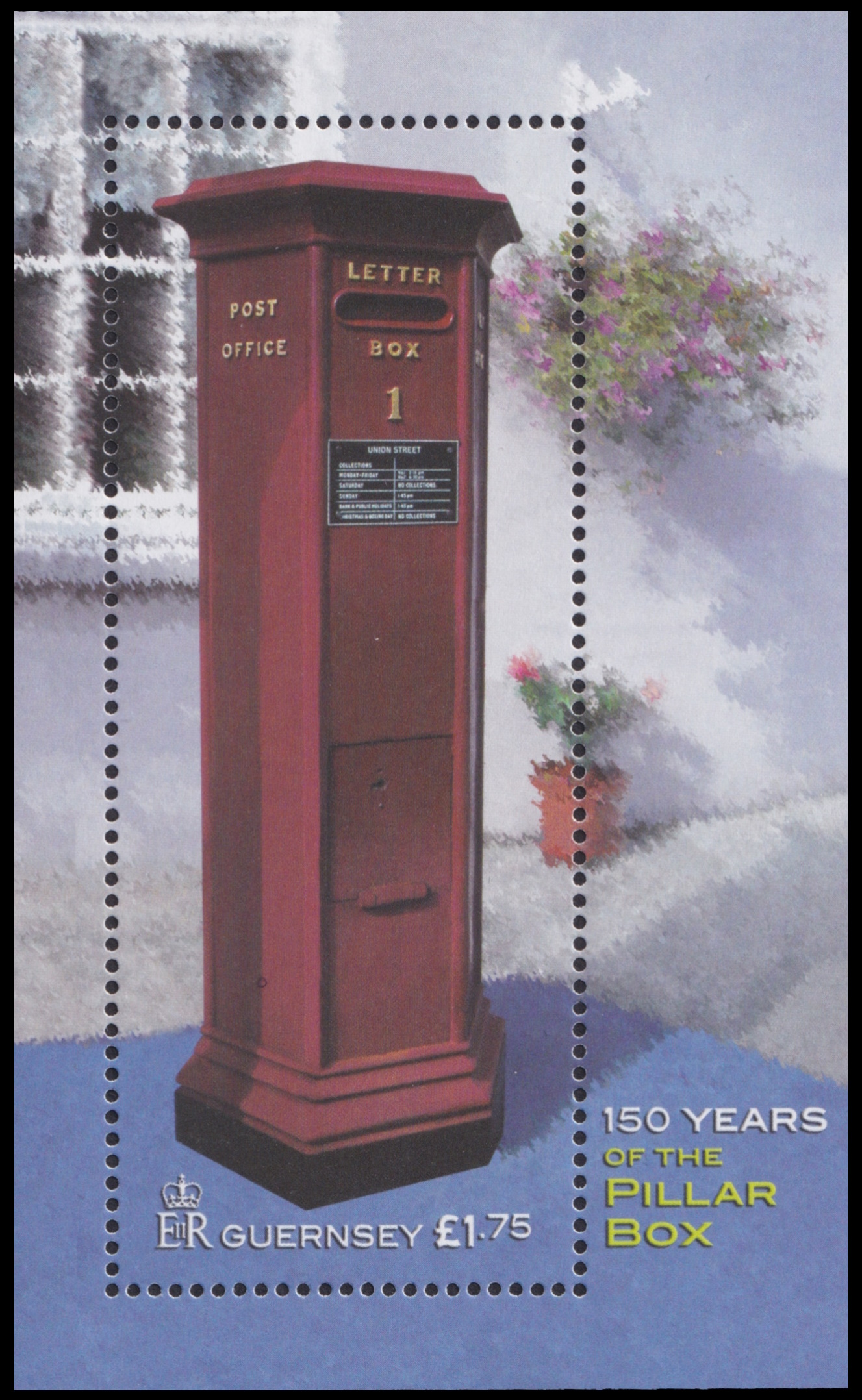
The first, experimental pillar mailboxes away from the post office were installed on Jersey and Guernsey in 1852 and 1853 respectively.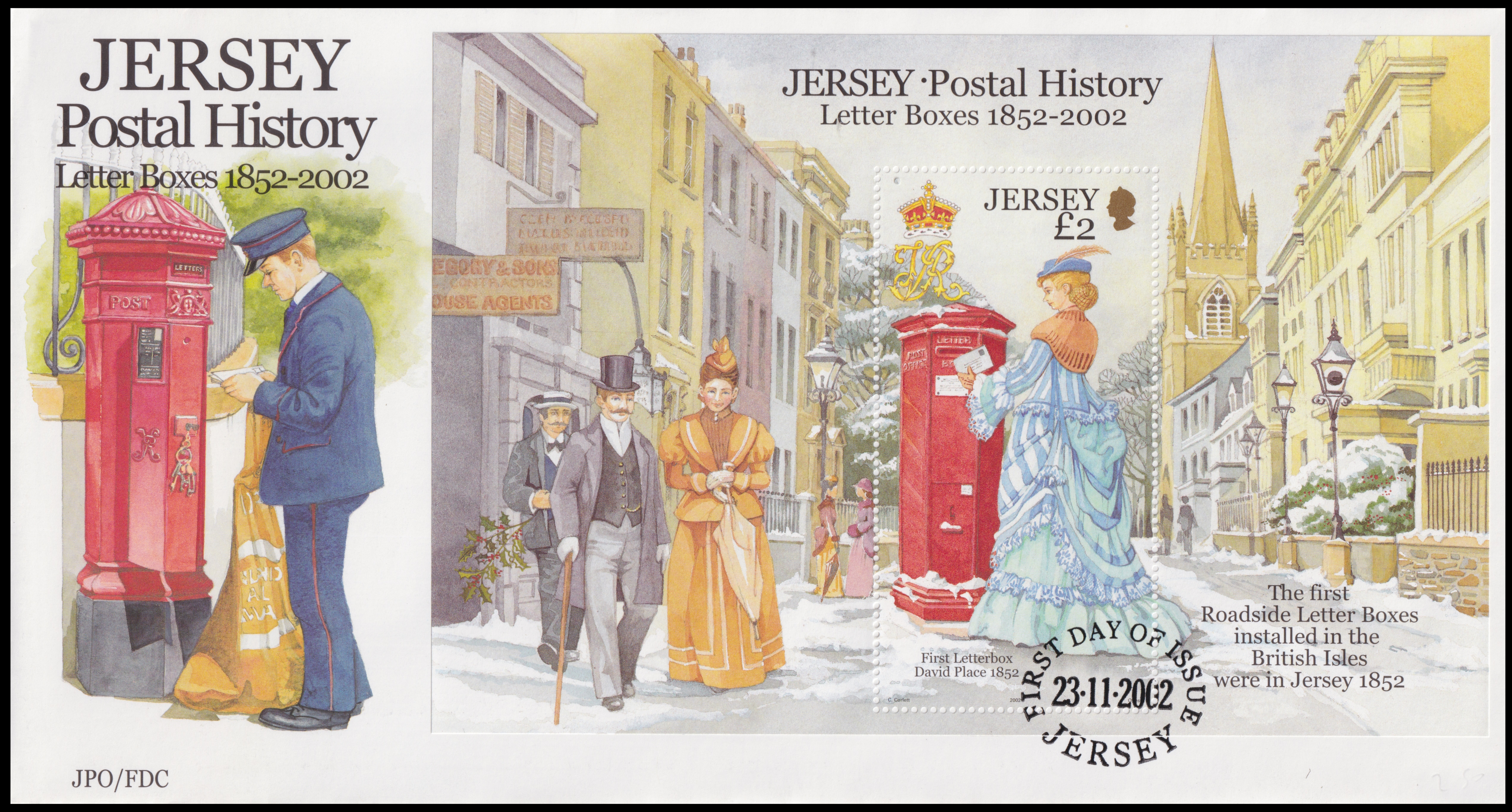 |
|
| "150th Anniversary of the First Pillar Mailbox", Jersey 2002, MiNr: Bl. 35 (1061), Scott: 1062. | |
 |
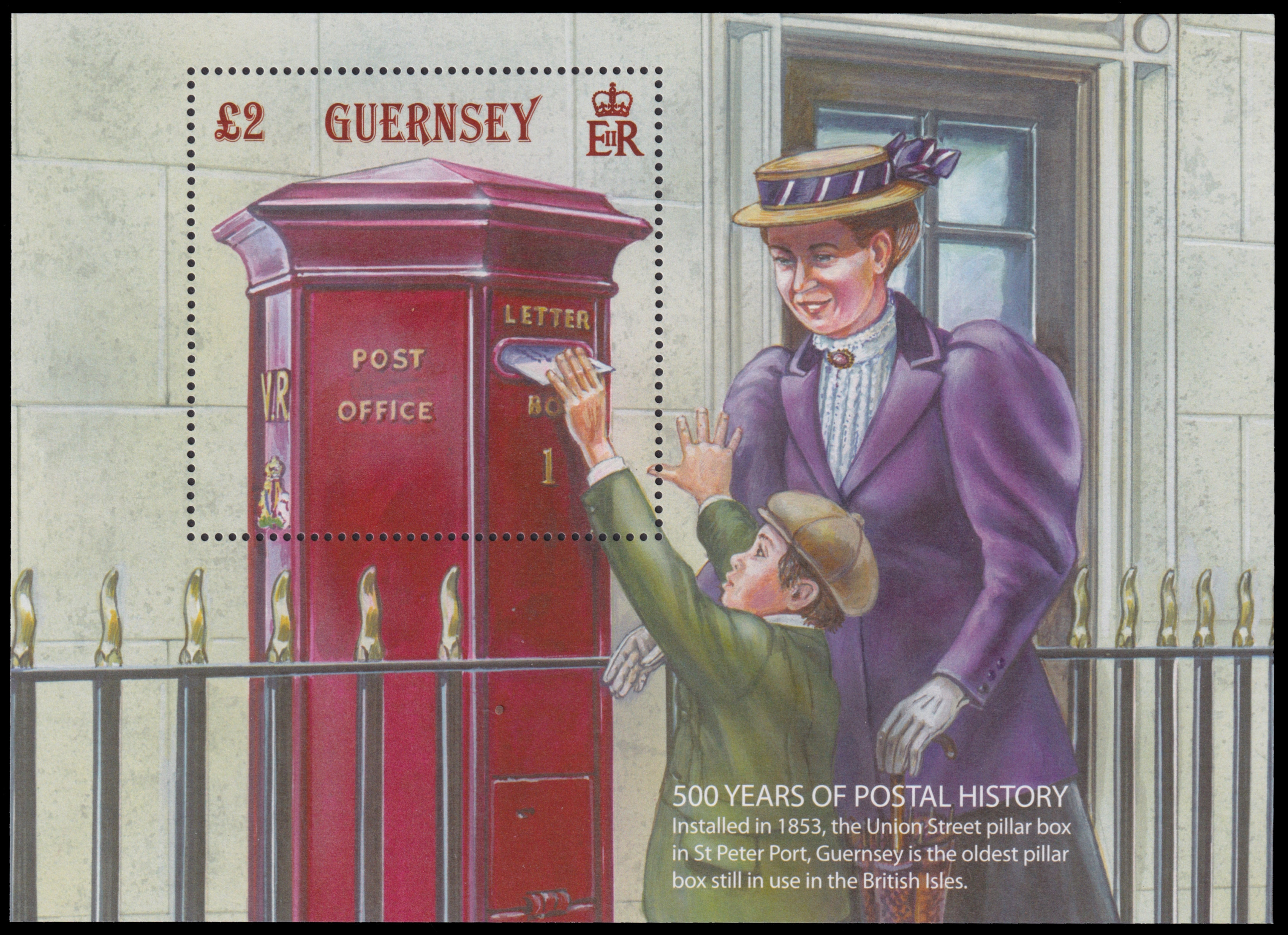 |
| "150th Anniversary of the First Pillar Mailbox", Guernsey 2002, MiNr: Bl. 30 (925), Scott: 768. | "500 Years of Postal History", Guernsey 2016, MiNr: Bl. 80 (1586), Scott: 1359. |
The first post boxes were created by M. De Velayer and are believed to have been installed in and around Paris in 1653.
During the reign of Louis XIV, De Velayer established a private "penny" post in Paris, with letters deposited in
collection boxes on street corners around the city.
These letter-boxes quickly disappeared, because they were often devastated and mice made their homes inside.
In the early 19th century the post boxes started to appear in France again and
by 1829, post boxes were in use throughout France.
The oldest post box in Great Britain is the post box originally installed in
the wall of the Wakefield Post Office, dating from 1809.
It is now on display at the Wakefield Museum.
In 1853, the pillar mailboxes started to appear on the British mainland and spread over the country.
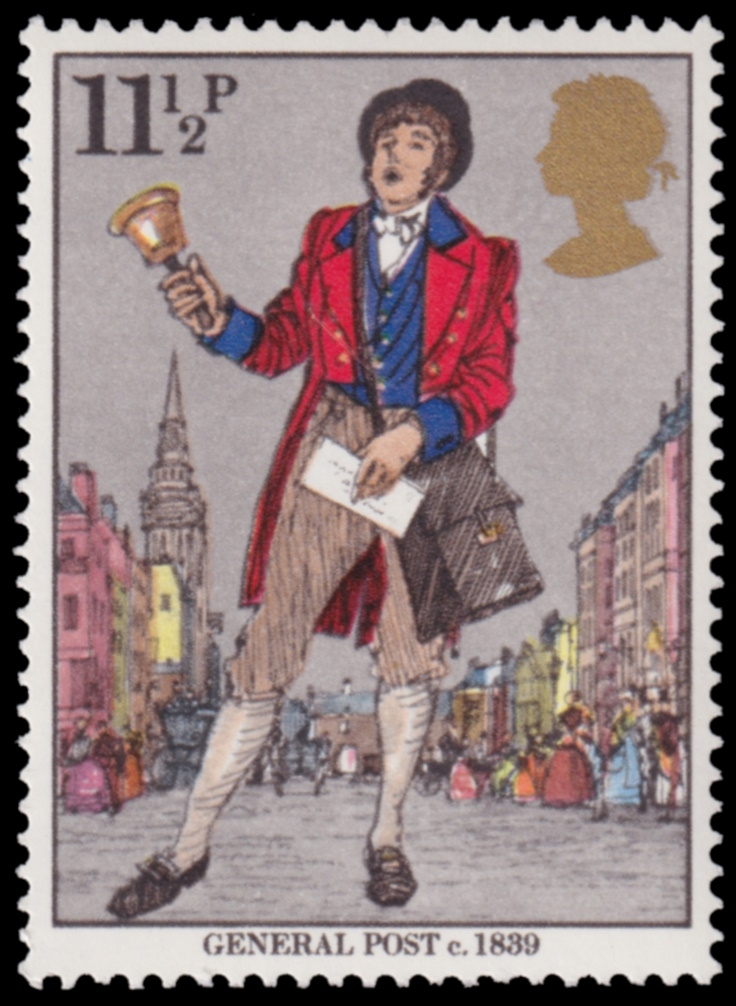
Prior to the Postal Reform, it was possible to bring the letter to the "Receiving House" (a kind of Post Office) or give it to the bellman, who wore a uniform and walked the streets collecting letters from the public, ringing a bell to attract attention.
The first mail boxes varied greatly in both form and color, with early designs painted a sage green that blended so seamlessly into the landscape that the public frequently complained they could not find them. To resolve this, the Post Office officially authorized a switch to a vibrant, uniform red color in 1874. Five years later, in 1879, the standard cylindrical shape was introduced nationwide, culminating in the iconic red pillar mailbox that remains one of the most recognizable symbols of Great Britain today.
Other countries soon followed the United Kingdom with their own stamps.
Brazil was the second country in the world to issue postage stamps valid within the entire country, in 1843.
Some Cantons of Switzerland issued stamps starting in 1840, but it wasn’t until 1850 that the Federal Postal Service issued stamps for nationwide use, becoming the third country to do so.
By 1860, postage stamps were used in 90 countries of the world.
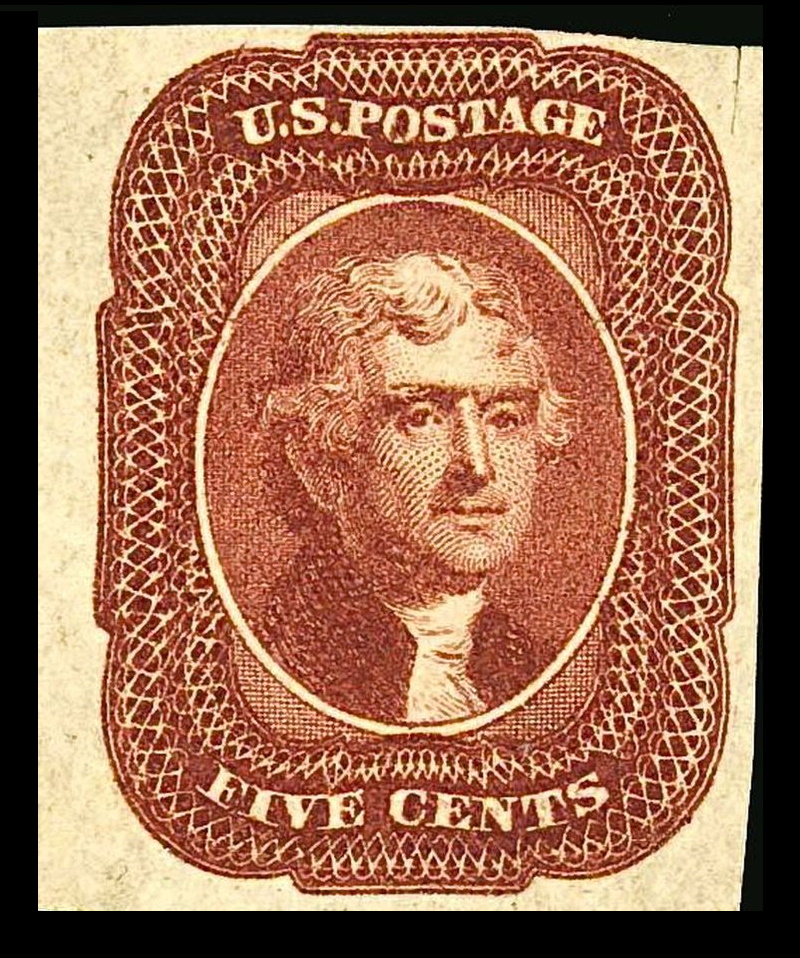 |
| Thomas Jefferson on stamp of USA 1856, MiNr.: 5; Scott: 12. |
This 5-cent brown stamp features a portrait of Thomas Jefferson (1743-1826).
Beyond his role as a US President, Jefferson was a passionate pioneer of vertebrate paleontology in North America.
He famously studied fossil bones sent to him from West Virginia, presenting a paper to the American Philosophical Society in 1797 describing a giant, extinct ground sloth that he named Megalonyx. Because of his crucial contributions to early fossil research, this 1856 issue stands as the earliest philatelic link to the history of paleontology.
Stanley Gibbons
The same year, only 16 years after the issue of the first stamp in the world, the first stamp store “Stanley Gibbons” was founded by Edward Stanley Gibbons in Plymouth, England.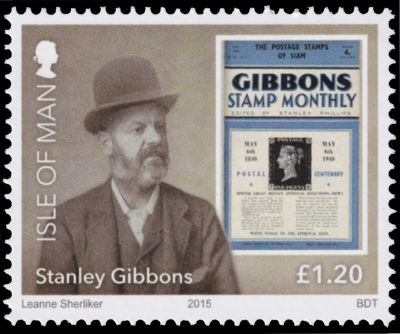 |
| Edward Stanley Gibbons on stamp of Isle of Man 2015, MiNr: 2013; Scott: 1707. |
Edward Stanley Gibbons (21 June 1840 – 17 February 1913) was born
at his father William Gibbons' chemists shop in the same year and only one month after
the Penny Black and
Mulready covers were issued in
Great Britain.
Edward left school at the age of 15 and worked for a short while in the Naval Bank, Plymouth,
before joining his father's business after the death of his elder brother.
William Gibbons encouraged his son's hobby and allowed him to set up a stamp desk in the shop
- probably the first stamp shop in the world.
Between 1861 and 1871 Gibbons was developing his own stamp business, he built up a large stock of
stamps and contacts abroad and within a few years his stamp business appears to have had a larger profit
than that of his father's more conventional shop.
By 1890 Stanley Gibbons wished to retire to travel the world and visit all the places whose postage stamps
he had been selling for the previous 34 years, and the business was sold to Charles Phillips for £25,000
(equivalent to £4.1 million in 2025).
|
|
In 1914 the company received a Royal Warrant from King George V, followed by all subsequent monarchs, including Queen Elizabeth II and recently King Charles III. This was the first time that any firm of Stamp Dealers or Philatelic Publishers had ever received this much honour.
What began as a small stamp-selling operation, has grown into an internationally recognized authority in philately, serving collectors and investors worldwide. Today, the company produces numerous catalogues covering different countries, regions and specialisms. Unlike other dealers' catalogues, Stanley Gibbons states that their catalogue is a retail price list. Today the company specializes in rare and investment-grade stamps, including prestigious British Empire issues (Penny Black, Blue and Red stamps for example) and historic postal items such as Mulready covers.
Universal Postal Union
On October 9th, 1874, 22 countries gathered to sign the Treaty of Bern, creating the General Postal Union, which would later become known as the Universal Postal Union (UPU).Before the establishment of the UPU, every pair of countries that exchanged mail had to negotiate a postal treaty with each other, which made international postal rates complicated and very expensive. Today the Universal Postal Union is a specialized agency of the United Nations (UN) that coordinates postal policies among member nations and facilitates a uniform worldwide postal system. It has 192 member-states and is headquartered in Bern, Switzerland.
Beginning of Philately
By the late 1840s, no more than 30 different postage stamps existed worldwide. However, by the mid-1860s, over 1,000 stamps from over 100 countries were in circulation. In an era when international travel was rare, and journeys to other continents were not only costly and time-consuming but for most people entirely improbable, these small pieces of paper from distant lands must have held an almost irresistible appeal for anyone with a spark of curiosity or a penchant for collecting.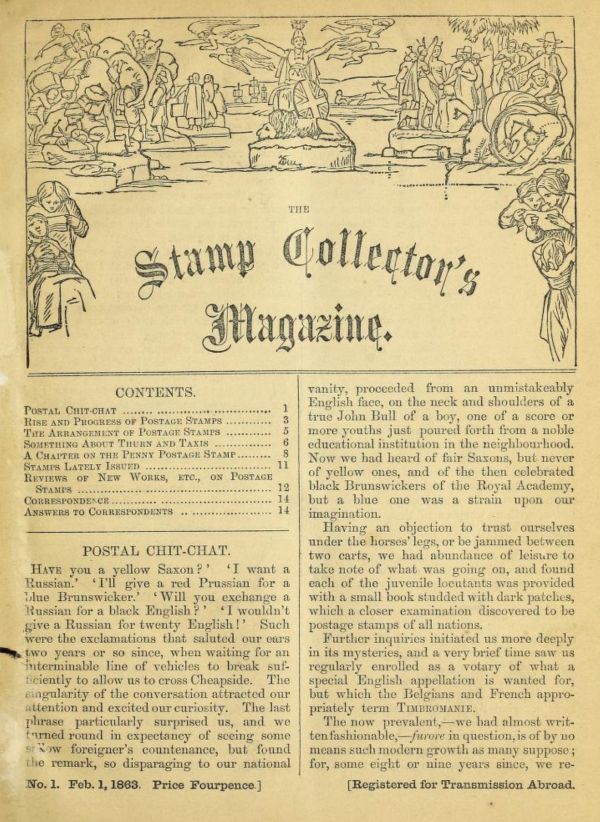 |
| "The Stamp Collector's Magazine" - title page of No. 1, February 1st, 1863 |
 |
| At the end of the 19th century it was possible to collect almost all world-wide stamps issued to date. |
On February 1st, 1863, the first magazine for stamp collectors in the world was published in Great Britain: "The Stamp Collector's Magazine".
Its title page featured a reproduction of the Mulready cover, an unexpected choice given the strong public criticism the Mulready design had received. The publication aimed to support the rapidly growing hobby of stamp collecting by examining the rise of the pastime, explaining postal history, describing new and rare issues, and announcing that future issues would survey each country in turn.
Surprisingly, the magazine also criticized the design of the Penny stamps, comparing them unfavorably with other stamps then in circulation.
Sir Rowland Hill deservedly claims credit for the introduction, — we may say, invention,— of the adhesive postal stamp; but we cannot congratulate the designer of our penny and twopenny stamps on the display of any taste.
Compared with some since issued, they are simply hideous. Those of other denominations are a shade more tasty, but poor in colour; and our envelopes are handsome, though not comparable with the Baden and some others. The newly-issued Antigua is extremely like the first English, but immeasurably superior, being well designed and exquisitely engraved.
French collectors sought stamps from their own country and abroad, leading to the emergence of the first stamp dealers. One of the most important early figures in French philately was Pierre Mahe, a Parisian stamp dealer active from the early 1860s. He is considered one of the first professional philatelists in France and even became an advisor to Napoleon III on stamp-related matters. Similar to Stanley Gibbons in Great Britain, Mahe's shop in Paris catered to collectors by offering rare and international stamps, making him a pioneer in the trade.
The term "philatelie" (philately in English) was coined by the French collector Georges Herpin in 1864 who played a key role in shaping the hobby of stamp collecting. Herpin used the term for the first time in the French magazine “Le Collectionneur de Timbres-Poste”.
Before Herpin’s term, stamp collecting was often called "timbromania" (meaning "stamp mania"). However, this term had a somewhat negative connotation, suggesting an obsessive or irrational hobby. Herpin wanted a more scientific and respectable name for the study of stamps, so he combined the Greek words:
"philos"– meaning "love" or "affection"
"ateleia" – meaning "exemption from tax" (a reference to postage stamps prepaying mail fees, making letters tax-free).
This new term quickly became popular, replacing timbromania and spreading internationally to describe the study and collection of stamps.
Sir Rowland Hill and the Penny stamps anniversaries in philately
Sir Rowland Hill and "Penny Black" stamp can be seen on several hundred stamps today. MICHEL-online, for example, retrieves 180 issues related to "Rowland Hill".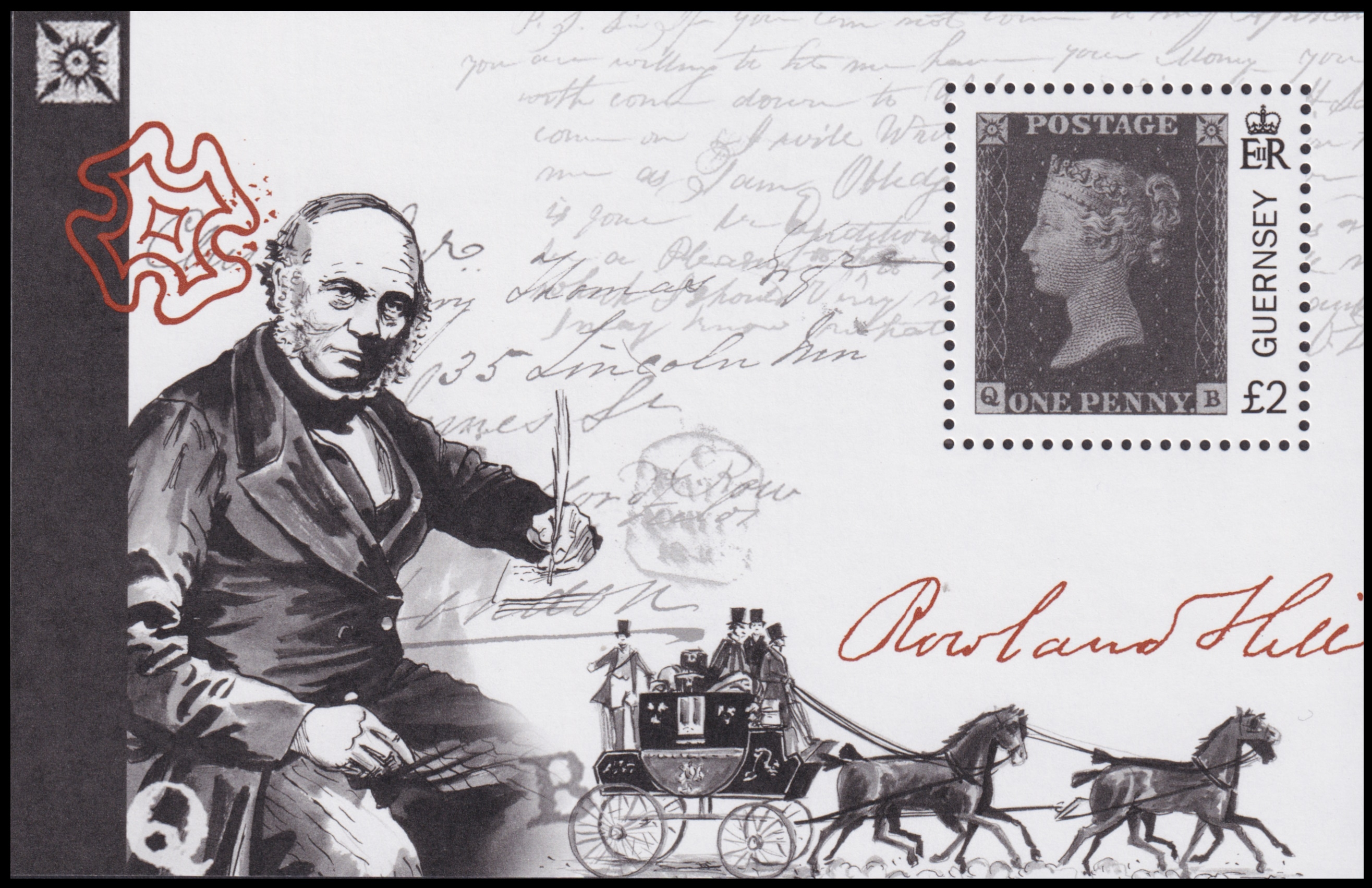 |
| Sir Rowland Hill on Souvenir Sheet of Guernsey 2015, MiNr: Bl. 74 (1526), Scott: 1300. |
- 1940 - "100th anniversary of Penny Black"
- In 1944, Argentina issued a stamp to commemorate the 150th Anniversary of Sir Rowland Hill (1795 - 1879)
- 1979 - "100 years since death of Sir Rowland Hill"
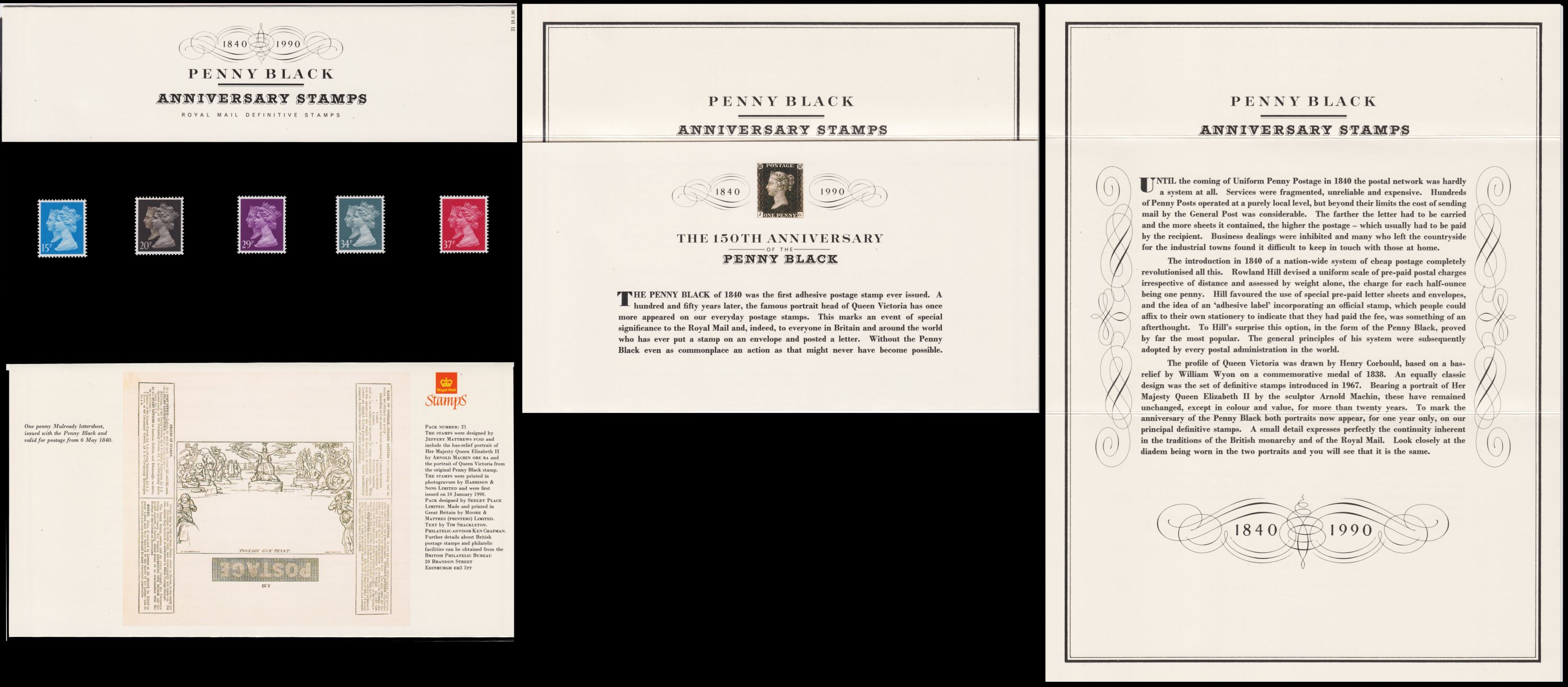
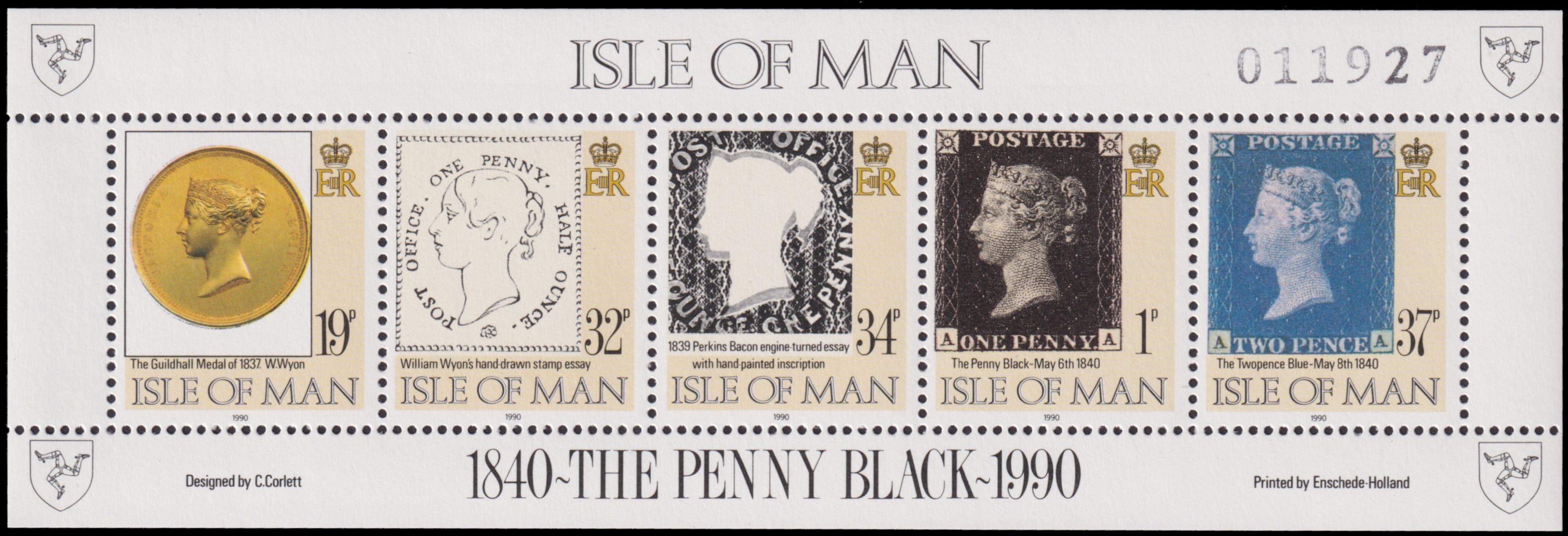
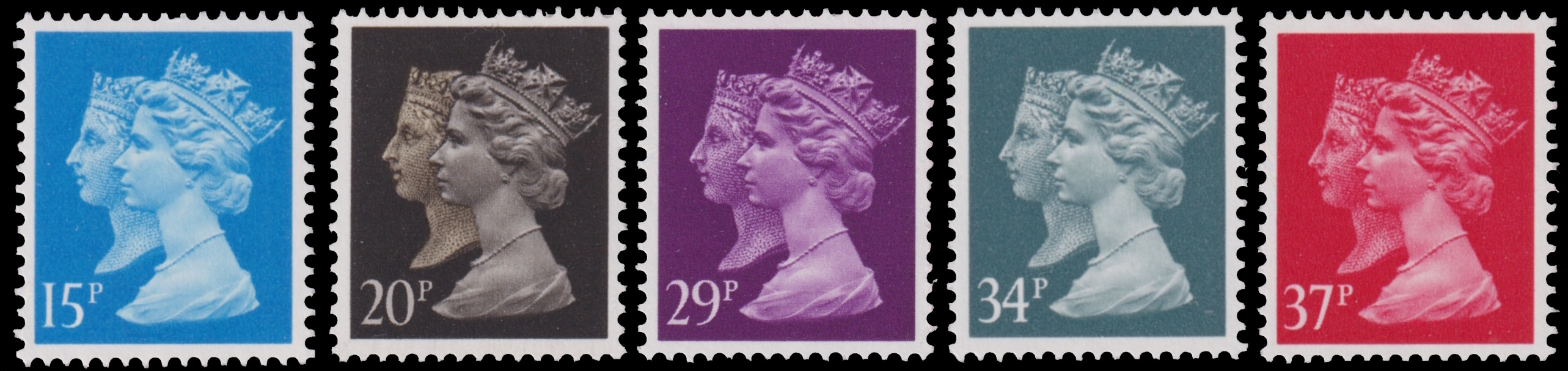
- 1990 - "150th anniversary of the Penny Black"
- 1995 - "200th anniversary of Sir Rowland Hill"
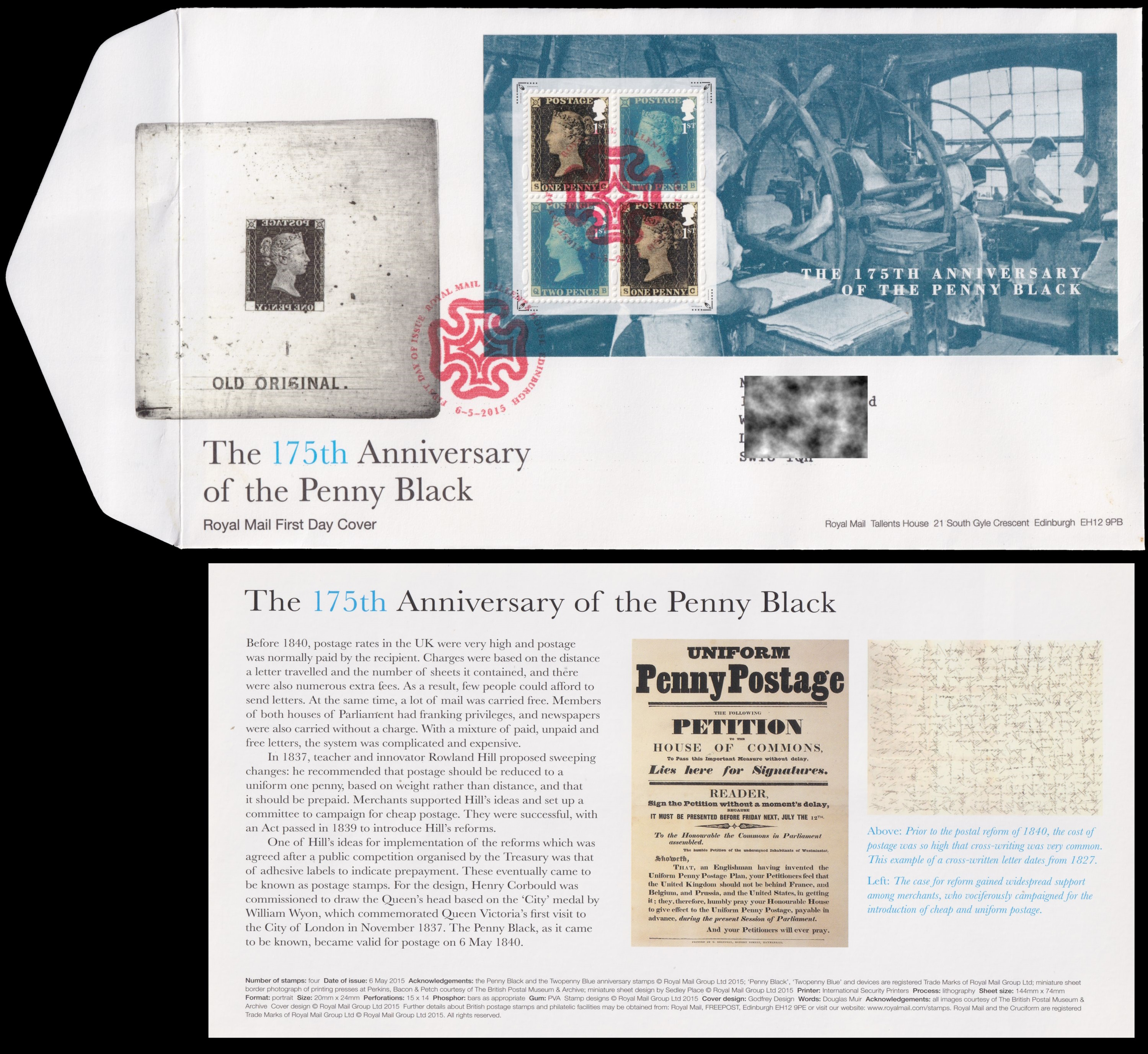
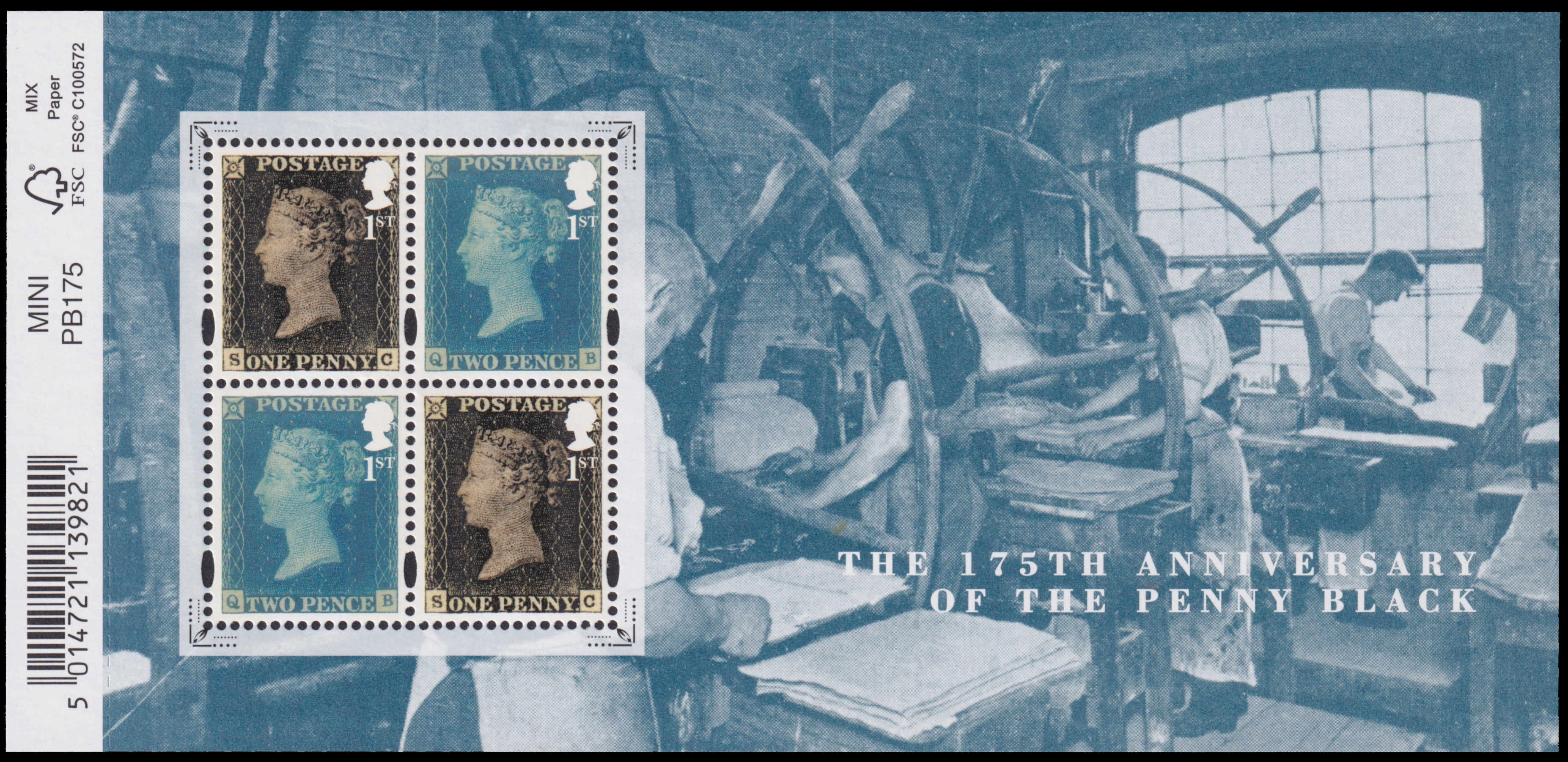
- 2015 - "175th anniversary of the Penny Black"
 |
 |
|
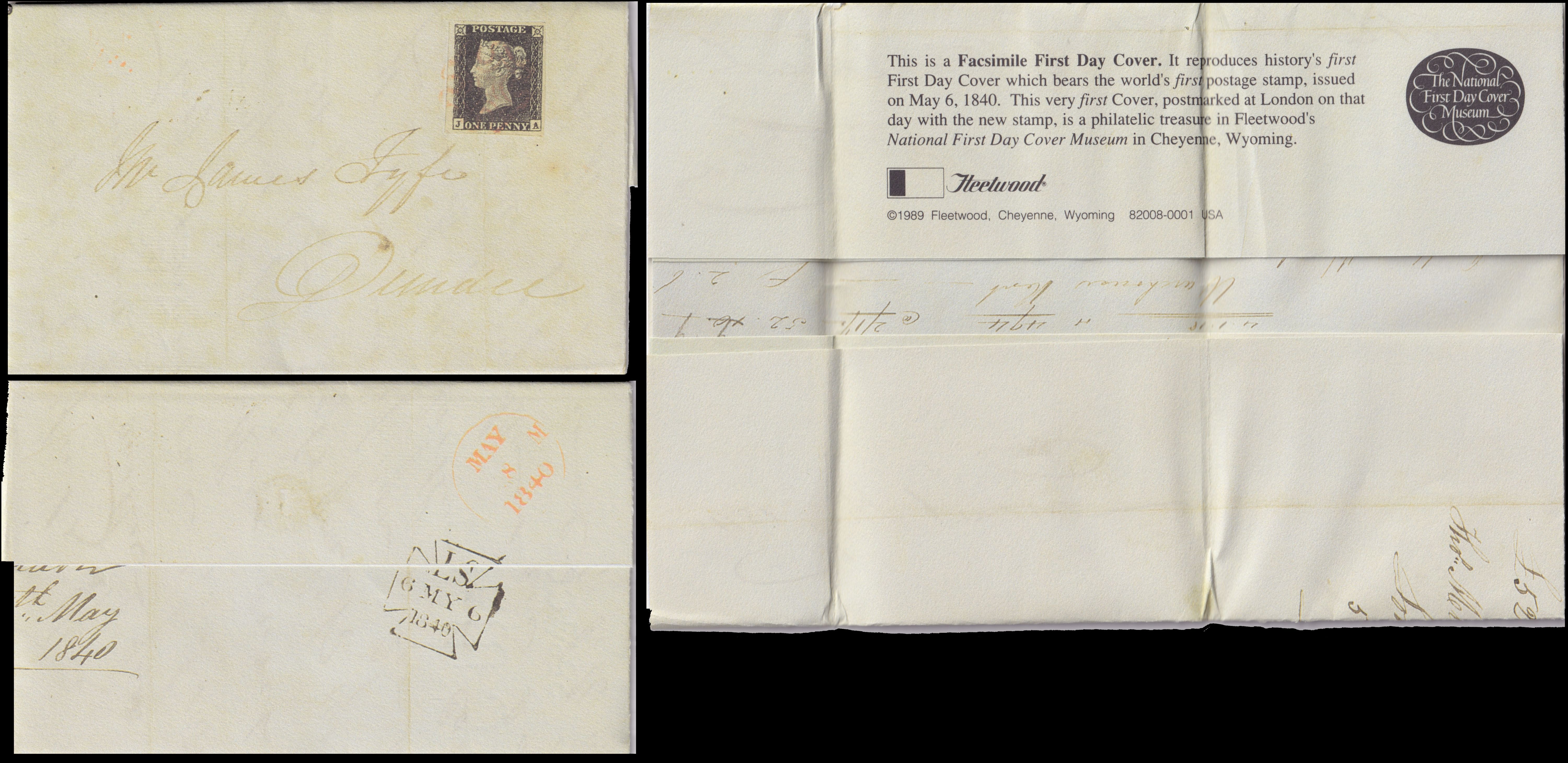
| Mini-Sheet of Great Britain from 2015 with stamp commemorating "175th anniversary of the Penny Black", MiNr: Bl. 92 (3735-3736), Scott: 3393. | The Facsimile First Day Cover, produced by Fleetwood Company in the USA for the 150th anniversary of the Penny Black. | |
|
 |
|
|
1. "150th anniversary of Penny Black" Mini-Sheet of Isle of Man 1990,
MiNr: Bl. 13 (431-436), Scott: 422a-e.
2. "Penny Black anniversary" stamps of Great Britain 1990, MiNr: 1240-1244, Scott: MH191-MH195. |
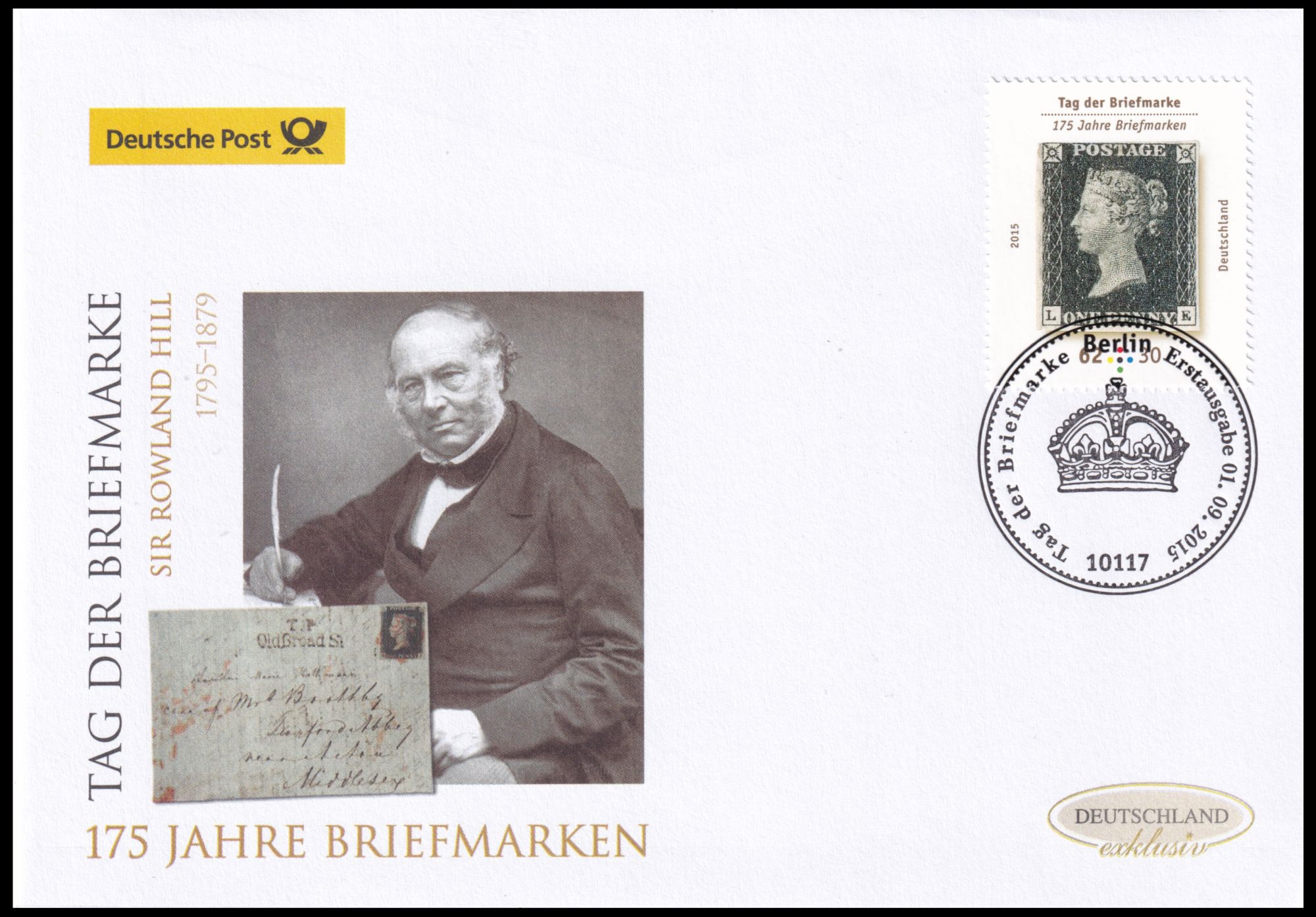
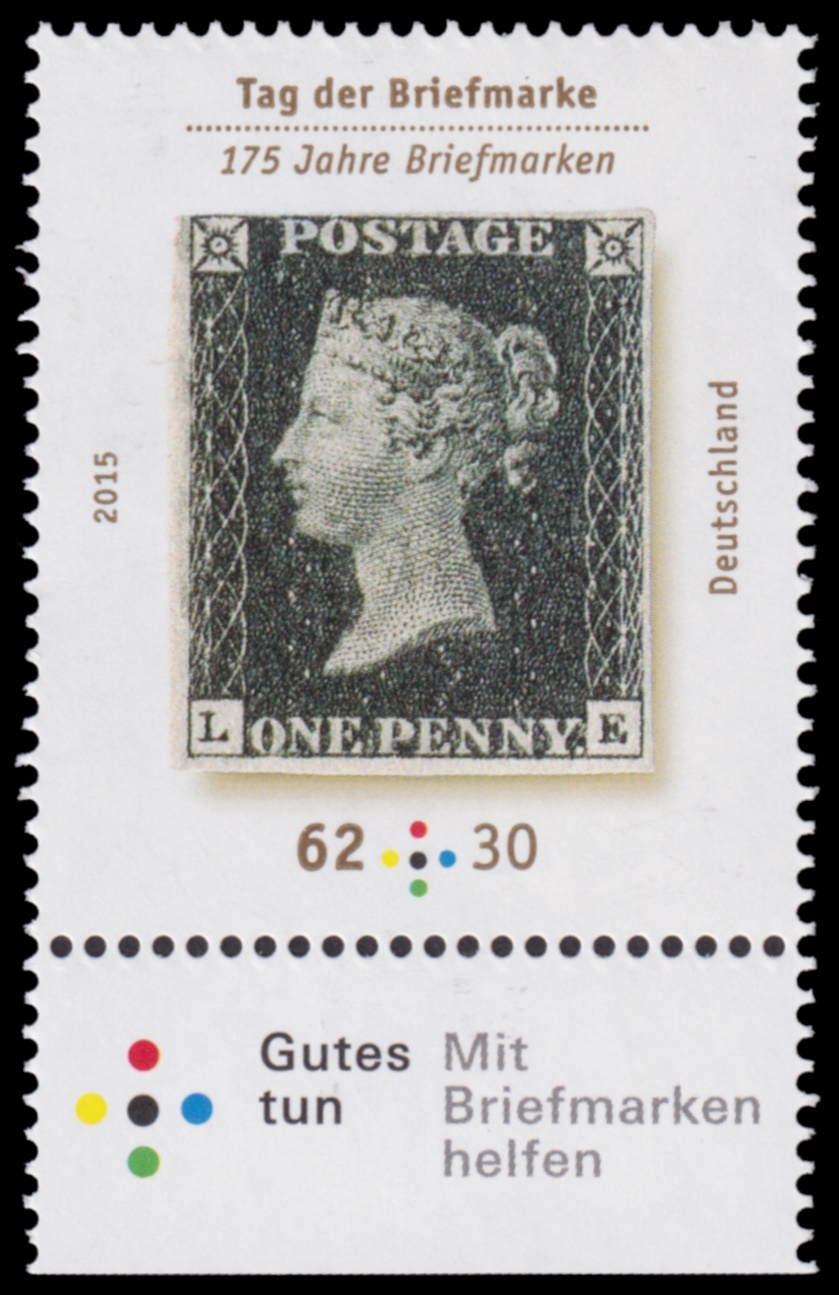
Penny Black on postage stamp of Germany 2015
MiNr: 3173, Scott: B1108, Sir Rowland Hill depicted on the cachet of the FDC. |
In 2000, the Royal Mail issued "Penny Black" facsimiles from a modern plate created using an original metal die, since all original 1840–41 plates had been destroyed. The facsimiles lacked the original corner letters and were produced solely as souvenir items for the Stamp Show 2000. They were intended for collectors and commemorative purposes, not for actual postage.
References
| Post and Mail Boxes | Universal Postal Union (UPU) |
Edward Stanley Gibbons
Stanley Gibbons |
The first stamp album
|
Stamp-collector's magazine (1863-1874) |
Philately |
Recommended Books
- "The Guinness Book of Stamps Facts and Feats" by James A. Mackay, published in 1988, ISBN: 0851123511