Simultaneous Development of Philately, Geology, and
Palaeontology as a Result of the British Industrial Revolution
Part 7: Replacement of Mulready covers by the "Penny Pink"
The Successor to the Mulready Stationery
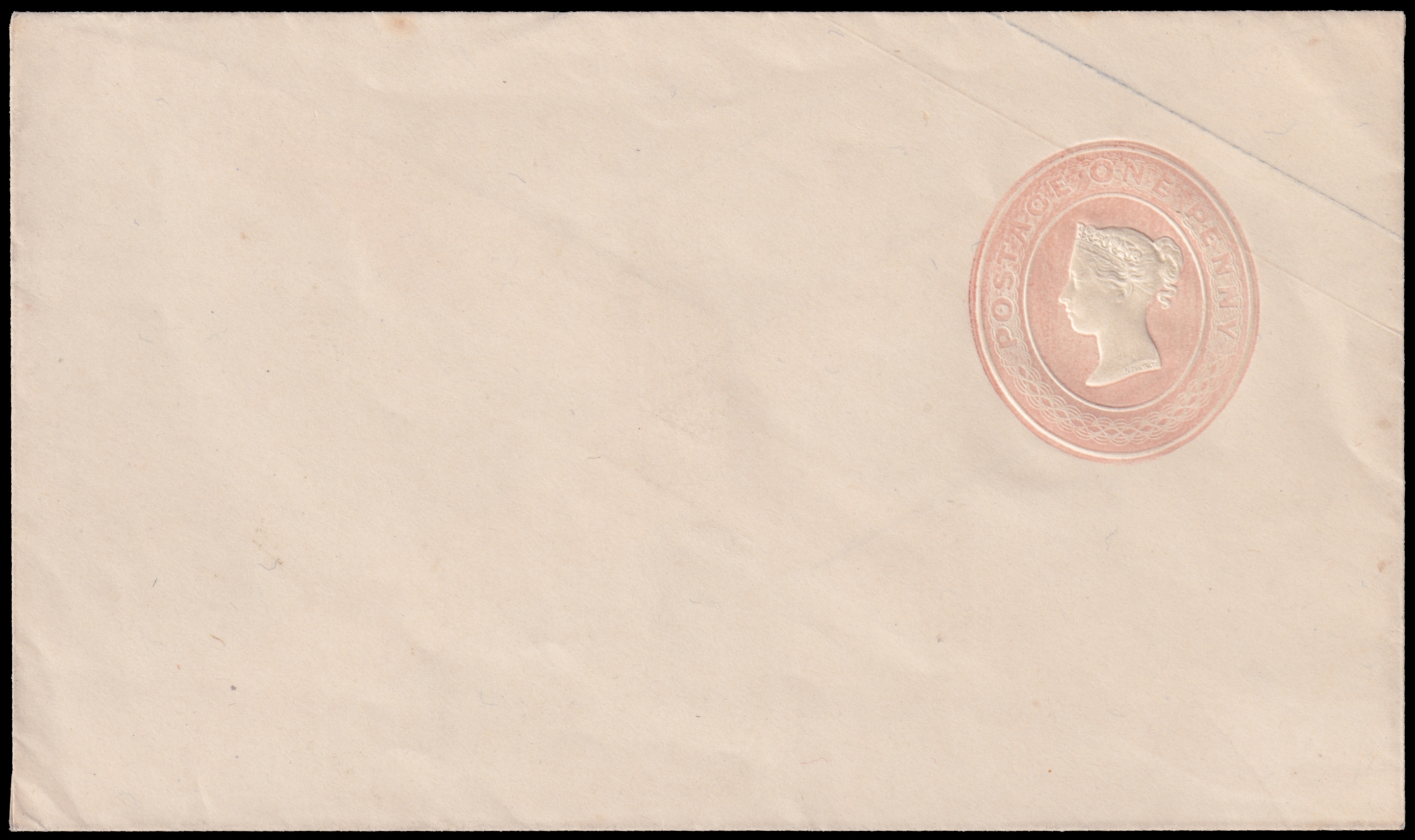 |
| The Penny Pink postal stationery - pre-paid envelope. |
The replacement for the "Mulready Two Penny" postal stationery, the "Two Pence Blue" embossed envelope, followed in April of the same year.
The new design abandoned the elaborate allegorical illustration of Mulready and presented a much simpler appearance, with a plain front featuring only the embossed Queen Victoria profile and one penny postage indication.
The portrait of Queen Victoria was engraved by William Wyon and was based on his 1837 City Medal. It became the standard portrait used on British embossed postal stationery for many decades, also serving as the model for the Penny Black adhesive stamp.
The oval frame surrounding the portrait was designed and engraved by Alfred Deacon, an engraver associated with Charles Whiting's firm, which was commissioned to design the decorative border framework. The actual embossing and production of the envelopes were carried out by the Inland Revenue Department at Somerset House under the supervision of Edwin Hill (older brother of Rowland Hill).
This central portrait was surrounded by a detailed engine-turned ornament. Engine turning was a sophisticated mechanical engraving technique that produced intricate, highly regular patterns. Because these designs were extremely difficult to reproduce without access to the original specialized machinery, they served as a vital and practical security feature.
The selection of Alfred Deacon and Charles Whiting’s firm to execute this border was therefore no coincidence; Whiting was a premier pioneer in anti-forgery relief printing. By utilizing these complex engine-turned lines alongside Wyon’s highly precise profile, Somerset House effectively turned the everyday pre-paid envelope into a miniature high-security banknote, calming government anxieties over mass counterfeiting in the new industrial mail system.
The Penny Pink
 |
| The letter was posted in 1895 to Henry Page Woodward (1858–1917), Government Geologist in Perth, Western Australia. It was mailed from South Kensington, London, where the Natural History Museum is located, perhaps by his father, Henry Woodward (1832–1921), an English geologist and paleontologist known for his research on fossil crustaceans and other arthropods. |
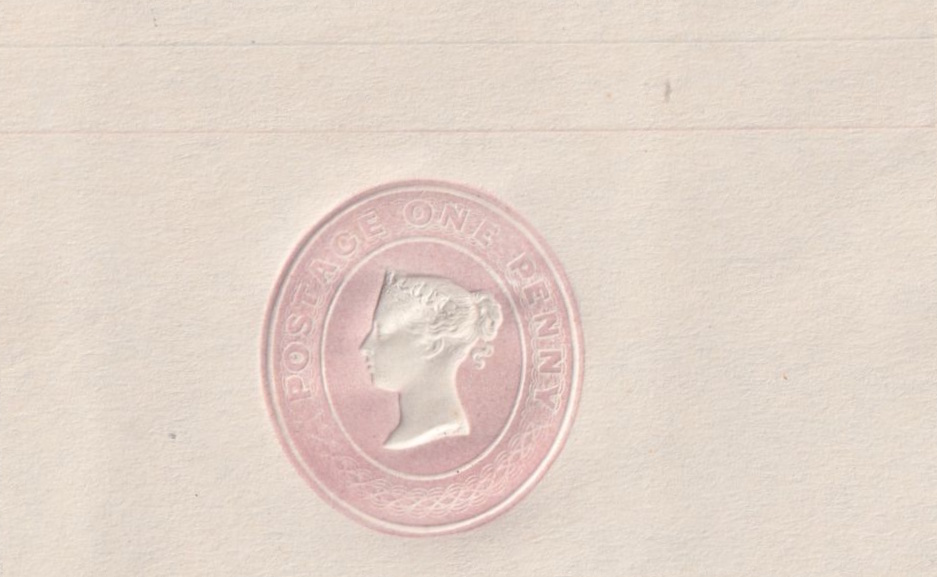 |
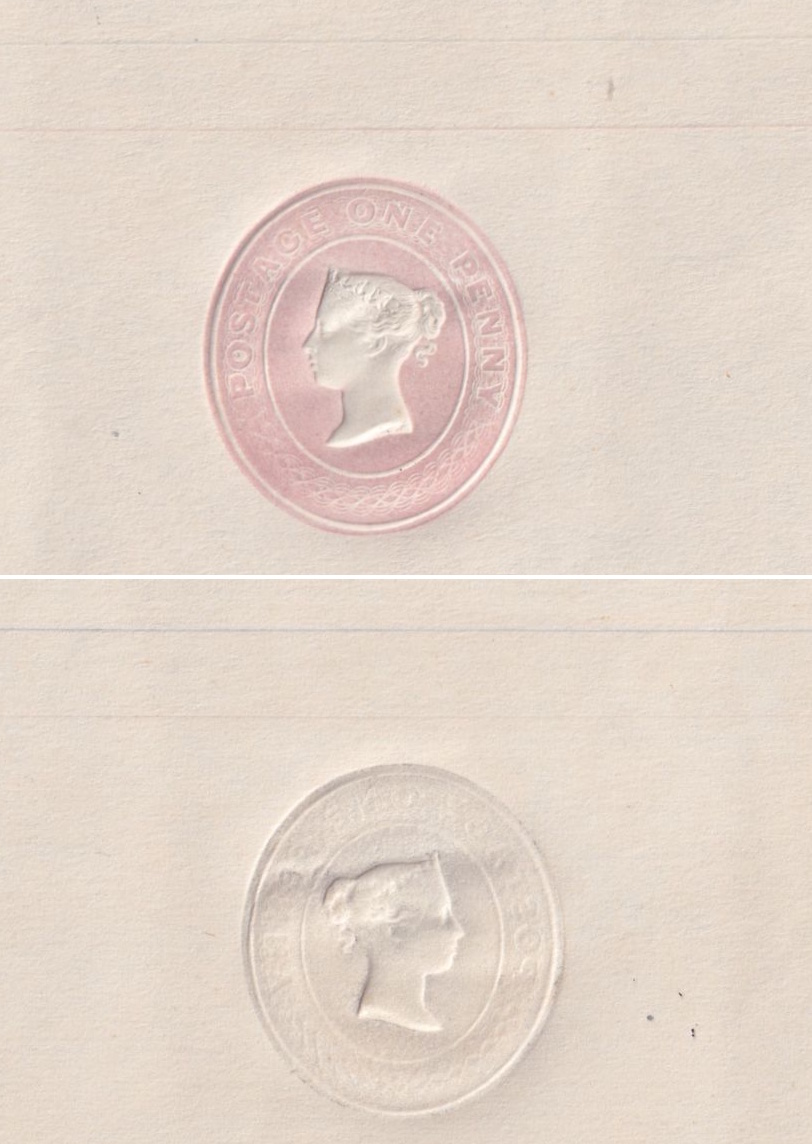
| Parallel security threads run above the embossed stamp on the letter sheet. The threads are more clearly visible on the reverse side. |
These modifications included the introduction of date plugs in 1857 (perhaps, reflecting the same principles that prompted the use of check letters on the adhesive issues), the alteration of Queen Victoria’s hairstyle from loose curls to a bunched lock in 1866, and the addition of florets to the border in 1881. Spanning 61 years, it became the longest-lived postal stationery issue in British postal history.
With the addition of further postage stamps, the Penny Pink was also used for international correspondence.
At the very end of Queen Victoria’s reign in 1901, the Post Office changed the colour of the embossed stamp on stationery used for overseas printed matter to green, bringing it into line with the Universal Postal Union’s (UPU) international colour scheme. Domestic stationery, including the Penny Pink and Two Pence Blue envelopes, retained their traditional colours.
The first issues of "Penny Pink", produced between February and April 1841, were printed on unused Dickinson silk paper (actually a twisted cotton yarn) originally manufactured for the Mulready stationery. A similar paper with slightly repositioned threads was ordered for the production of new postal stationery.
In the paper prepared for the Mulready envelopes, the two groups of three threads run through the paper at angles, whereas in the paper prepared for the Penny Pink, the threads run in parallel. Depending on the type of paper, two or three threads cross the upper-right corner of the "Penny Pink" envelopes.
The use of Dickinson’s silk-thread paper was discontinued in 1866, when the Post Office began adopting alternative security measures to protect its products from fraud, beginning with the abandonment of silk-thread paper and later replacing the date plugs with decorative florets in 1881.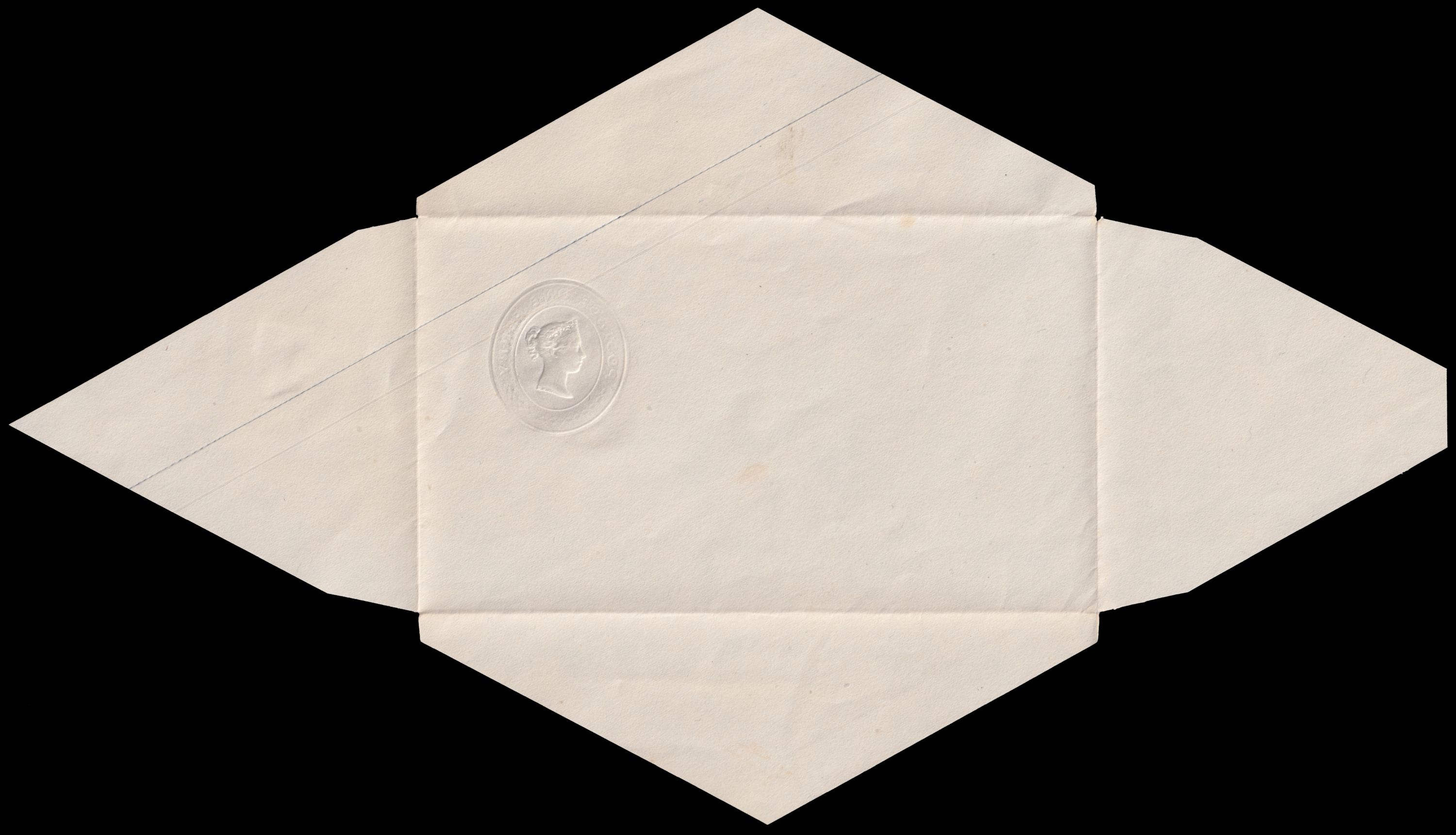
Two Pence Blue envelope
In April 1841, "Two Pence" pre-stamped envelopes with blue embossed stamps were introduced.
However, the earliest surviving circulated example of the 1841 edition, the Two Pence Blue envelope, was posted in December of that year. The Two Pence envelope was used far less frequently; consequently, far fewer were printed, and their design remained unchanged.
To help postal clerks and the public distinguish between the two values quickly, the postage value text was printed in different positions on the embedded stamps, in addition to the color difference.
The value “POSTAGE ONE PENNY” appeared in the upper half of the oval border on the pink stamps, while “POSTAGE TWO PENCE” was placed in the lower half of the oval border on the blue stamps.
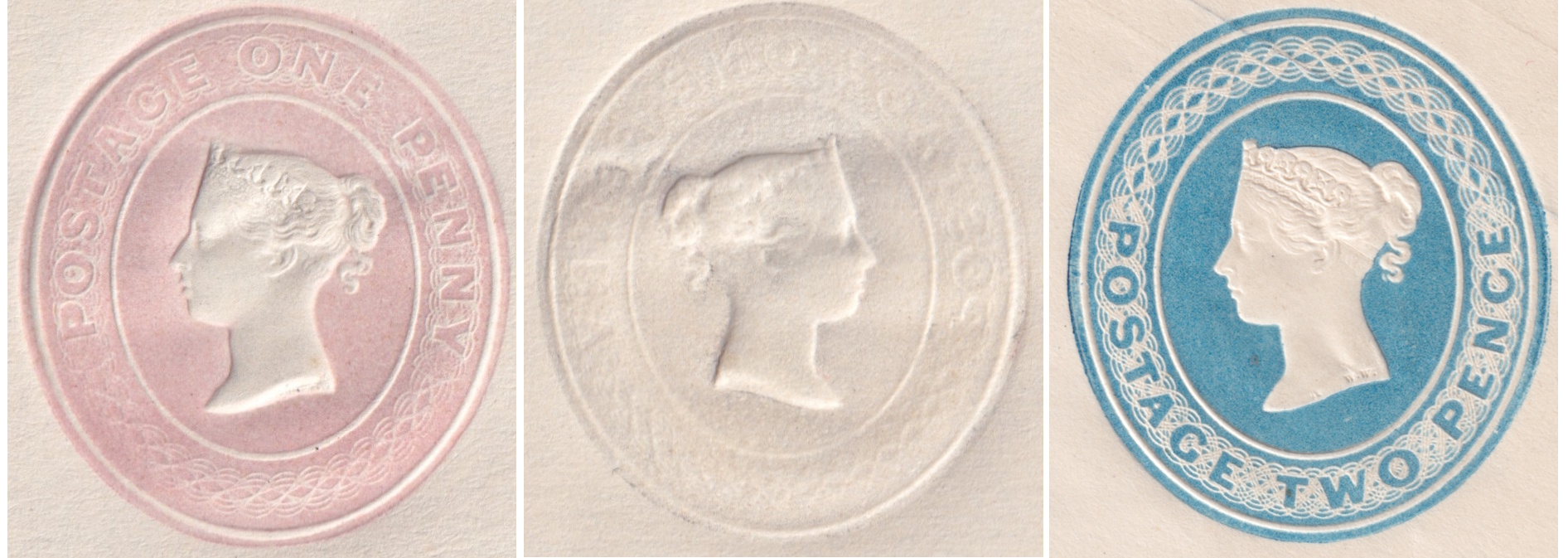
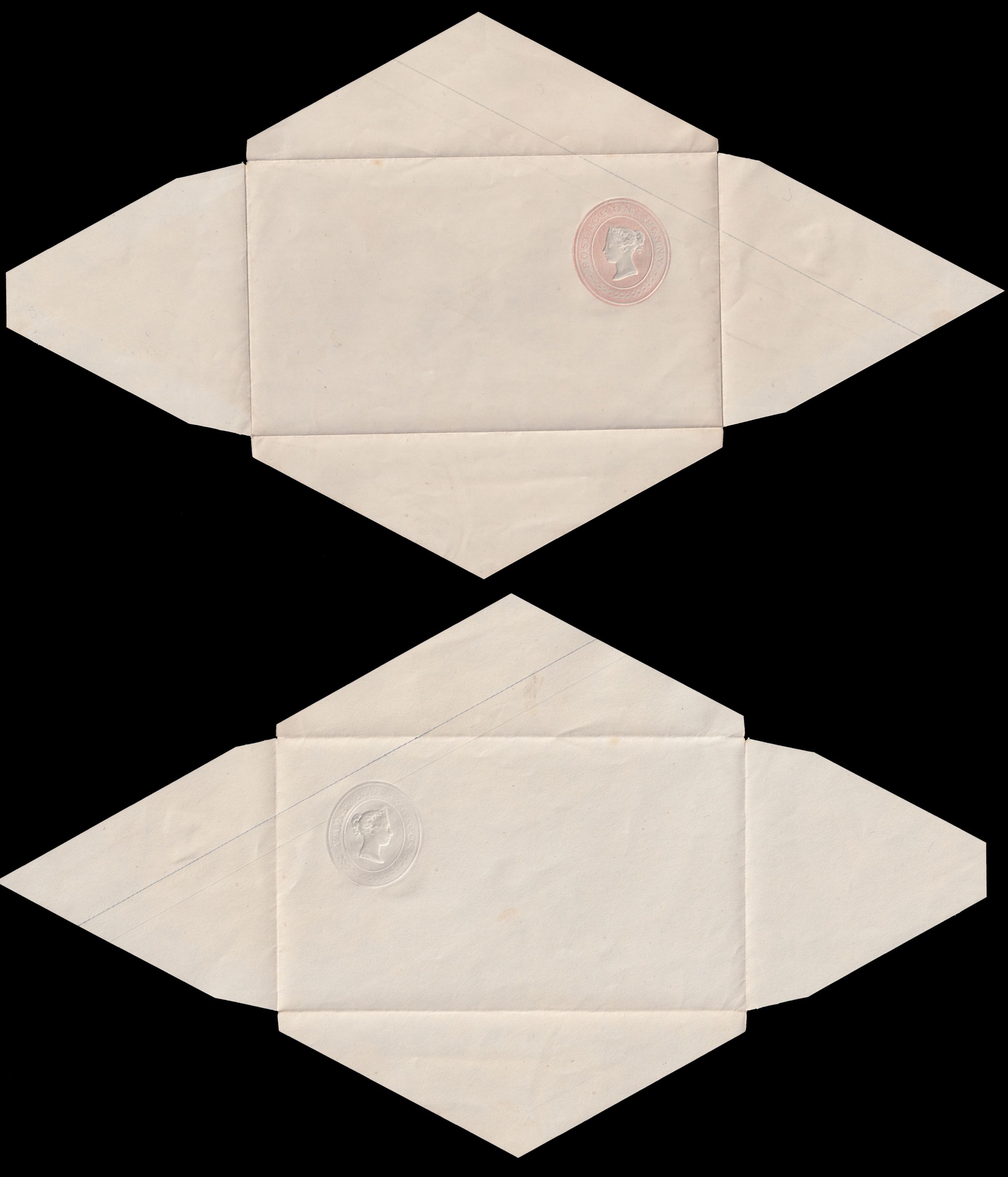
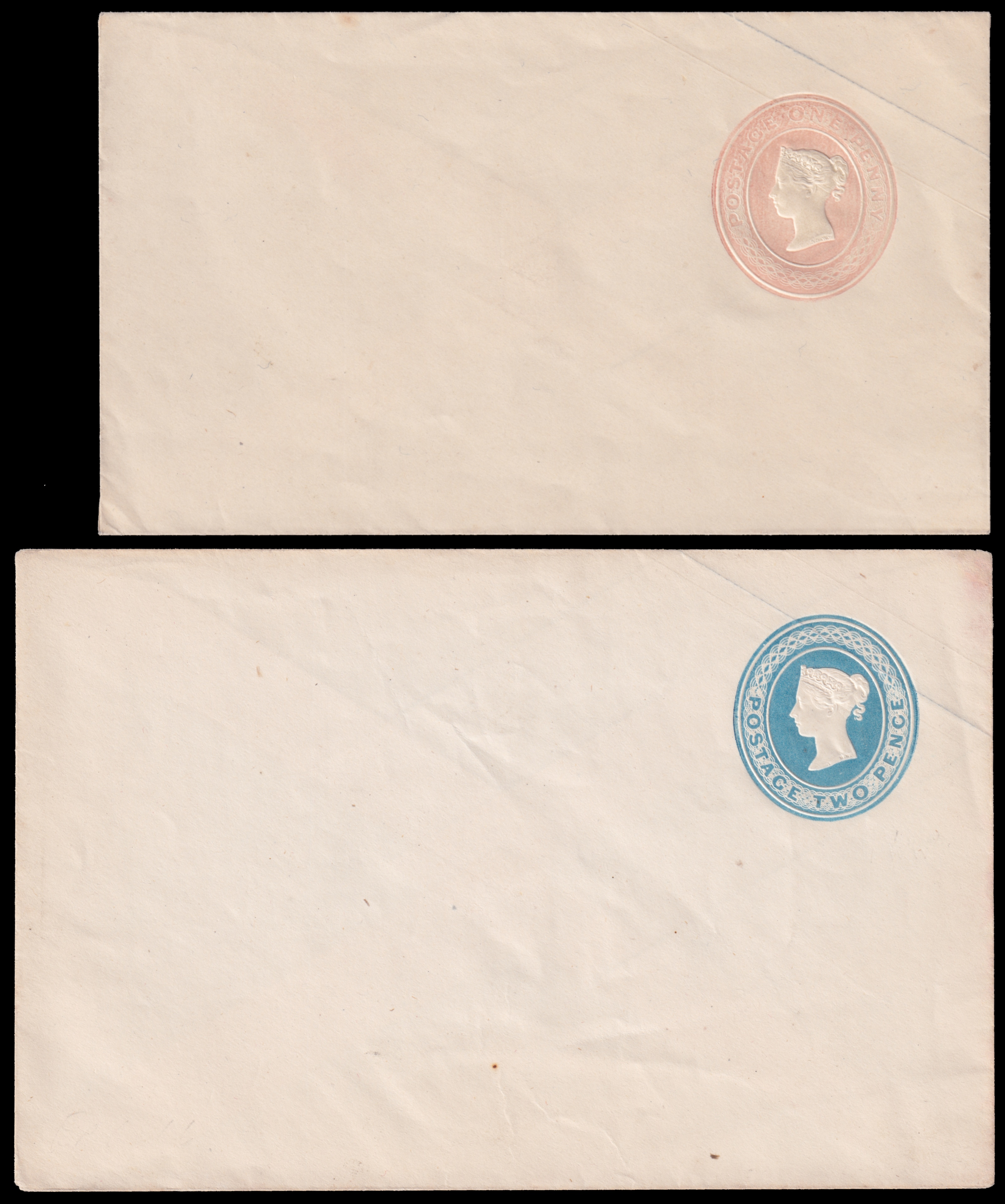
Like the "Mulready" envelopes, the new prepaid envelopes were sold unfolded and ungummed, until pre-folding machines were introduced in 1845 and pre-folded and gummed envelopes with curved top flaps were introduced in 1850.
 |
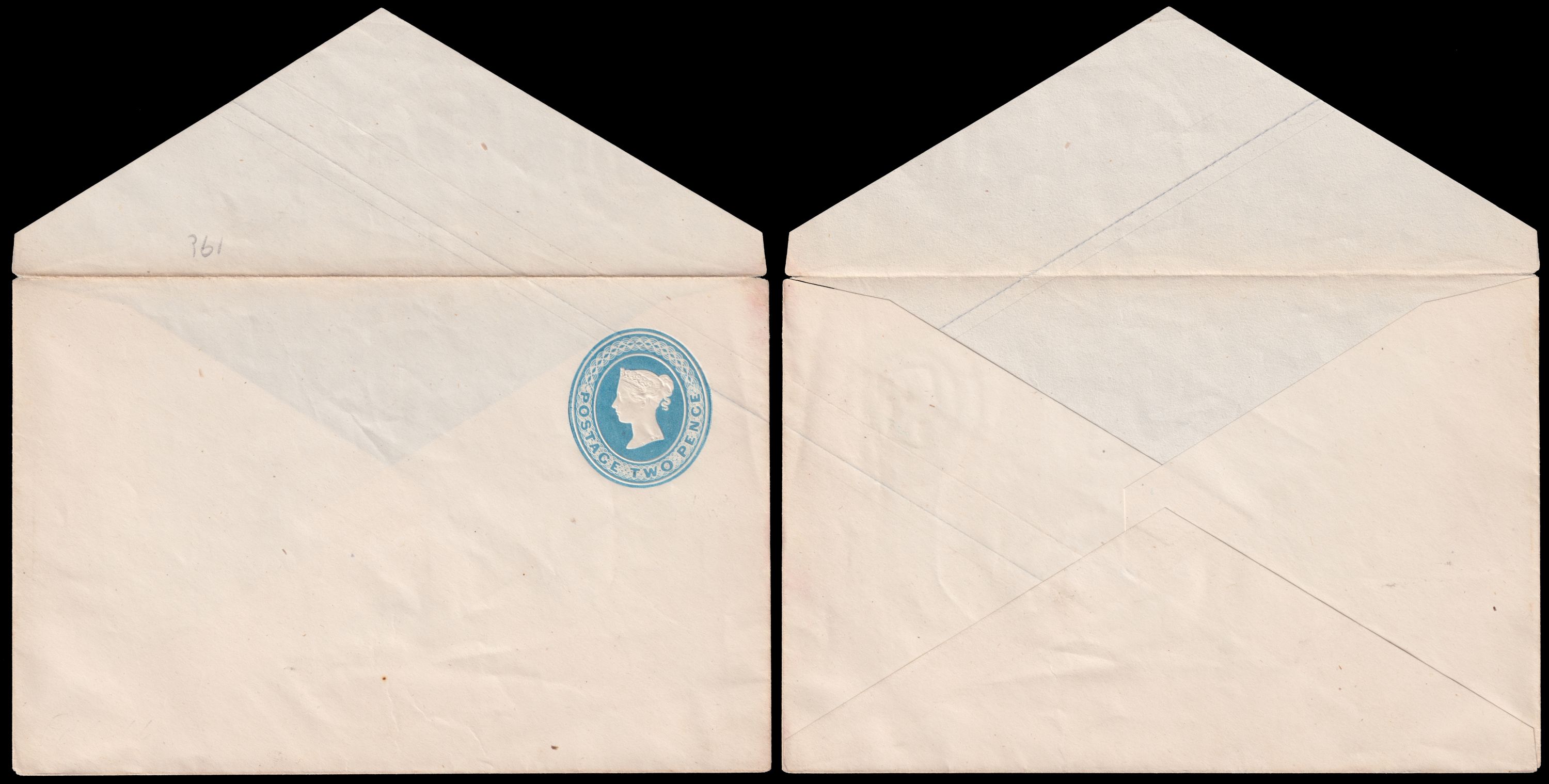 |
| Example of unfolded and ungummed Penny Pink envelope, issued between 1841 and 1845. | Example of folded and gummed Two Pence Blue envelope, issued after 1845. |
The Size Variants
Initially, the new postal stationery, available in two sizes (with a third, smaller size added later in the year), was sold exclusively in London.
Because envelopes were folded manually by the sender until the
introduction of folding machines in 1845, the dimensions of early envelopes
can vary slightly.
The two sizes of "Penny Pink" and "Two Pence Blue" prepaid envelopes,
introduced in February 1841 and April 1841 respectively, are approximately
120 x 69 mm and
133 x 85 mm.
The third, the smallest, size, used only for the "Penny Pink", is approximately
101 x 64 mm.
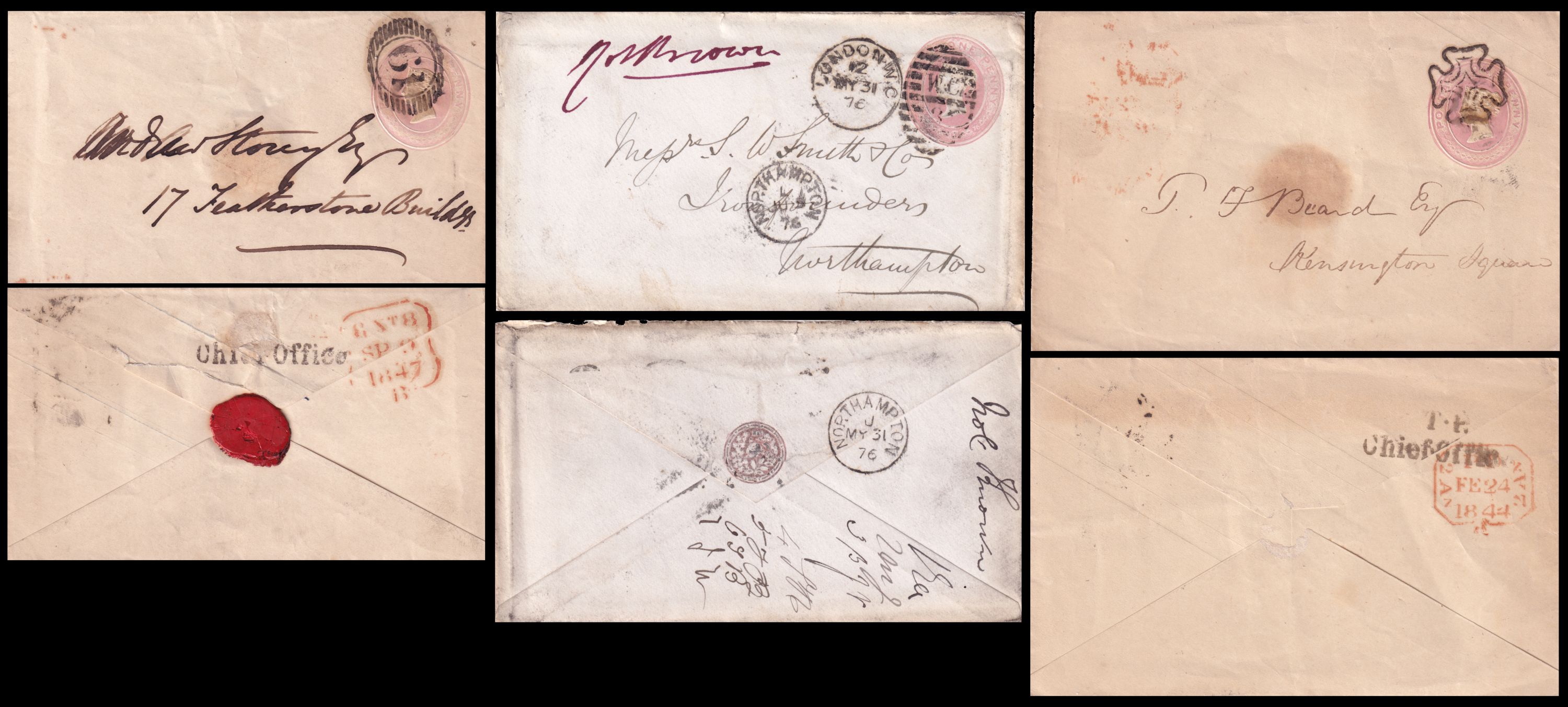
The envelope in the middle, posted in 1876, is a pre-folded and gummed version of the "Penny Pink" envelope.
The envelope on the right, posted in 1844, demonstrates a late usage of Maltese Cross cancellation mark.
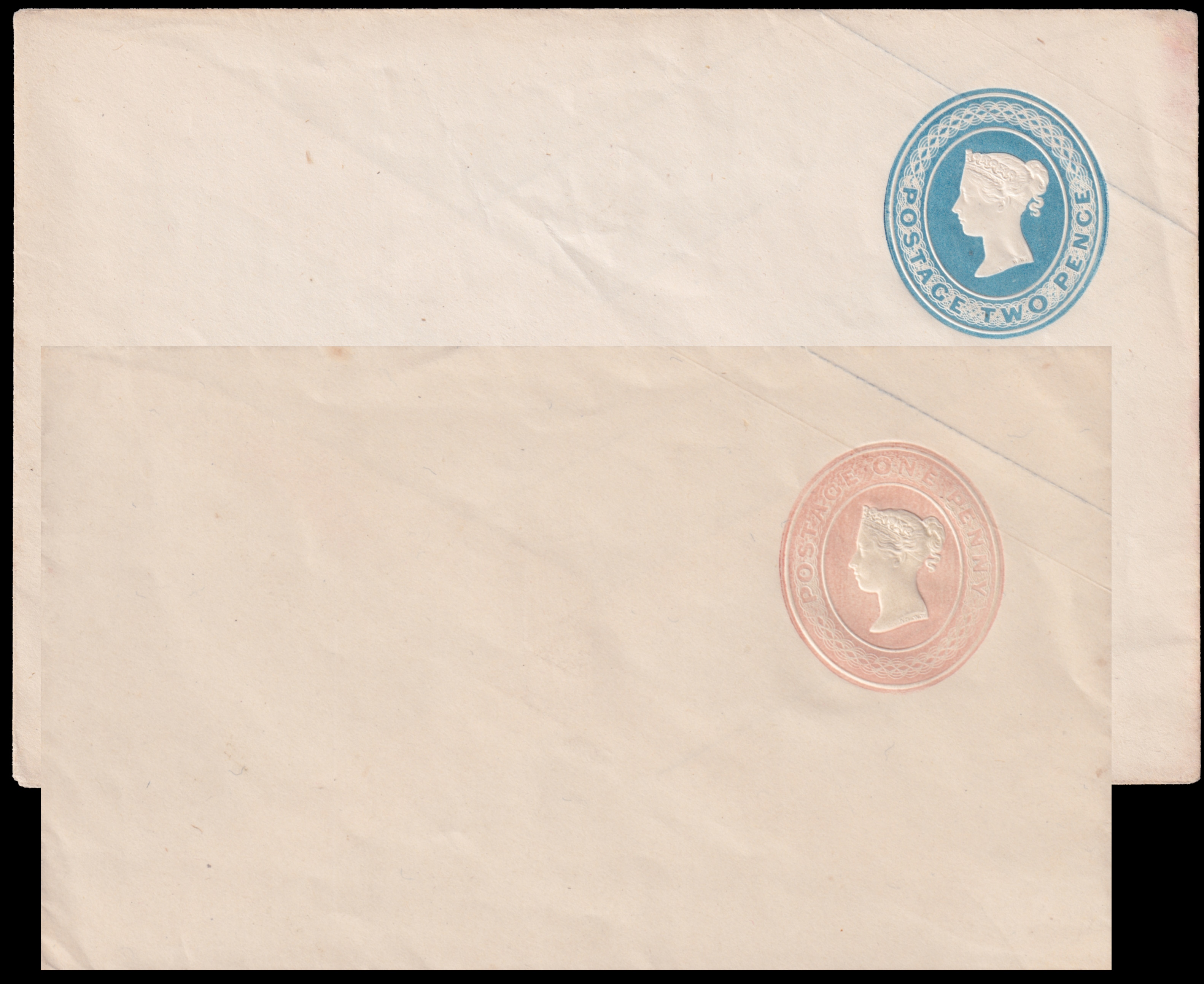 |
| An example of different-sized "Penny Pink" and "Two Pence Blue" postal stationery envelopes from 1841, printed on paper originally manufactured for the Mulready envelopes, showing the security threads running diagonally across the sheet and passing through the embossed stamp design. |
In addition to envelopes, “Penny Pink” letter sheets were introduced in 1844. They proved unpopular and were produced only in relatively small quantities. These sheets can be identified by three pink silk threads running above the design and two blue threads running below it. After 1850, their production was gradually discontinued.
As with the Mulready stationery, however, the new letter sheets soon became targets for commercial publishers, who printed advertisements inside them.
Folding of Letter Sheets
Unlike the “Mulready” letter sheets, the “Penny Pink” sheets carried no folding instructions.
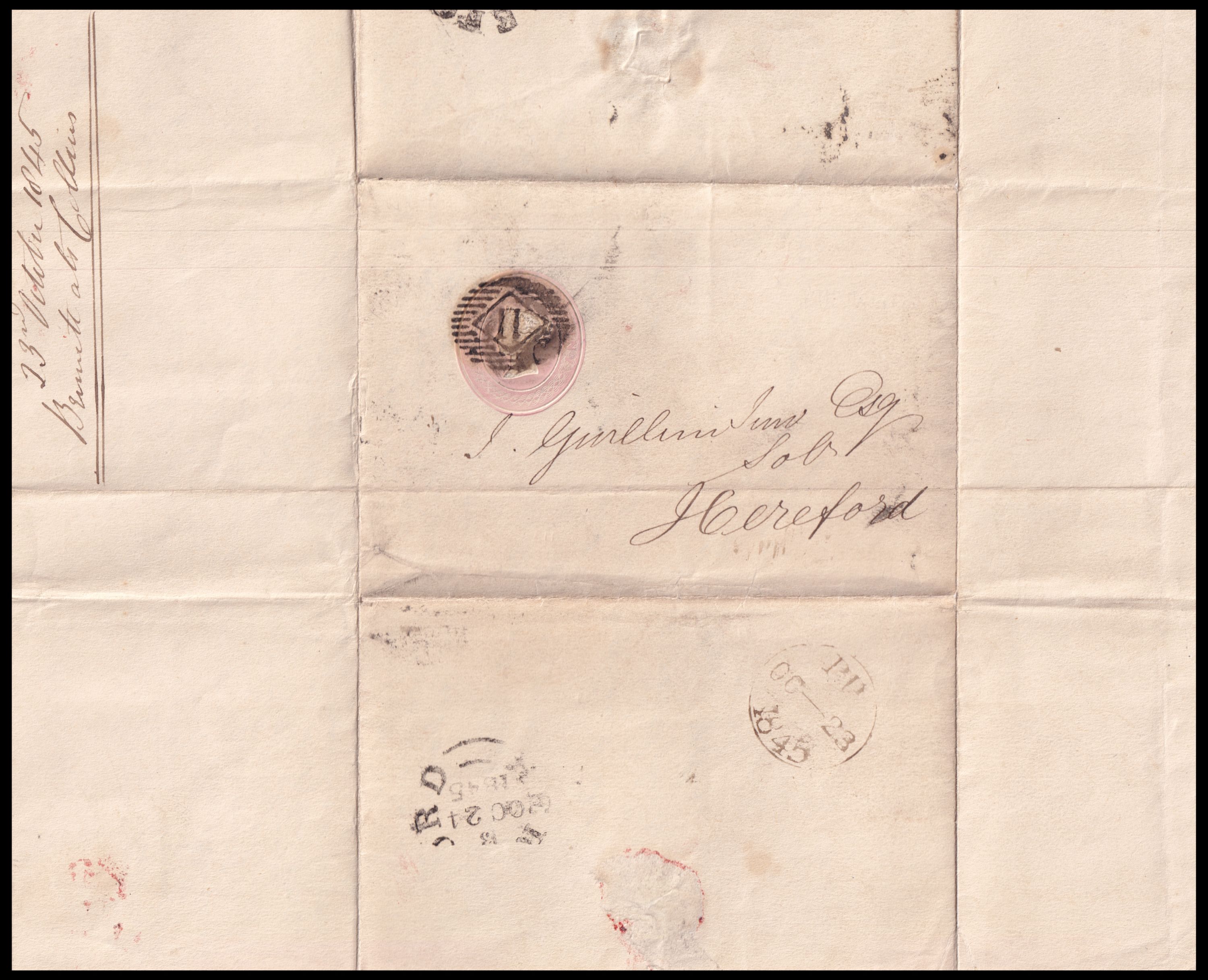
The Post Office issued no special rules for their use: they were sold simply as blank sheets of paper with an embossed stamp. Most users folded them so that the stamp appeared in the upper right corner, but some arranged the sheet differently, placing the embossed stamp in the center or even on the left side.

 |
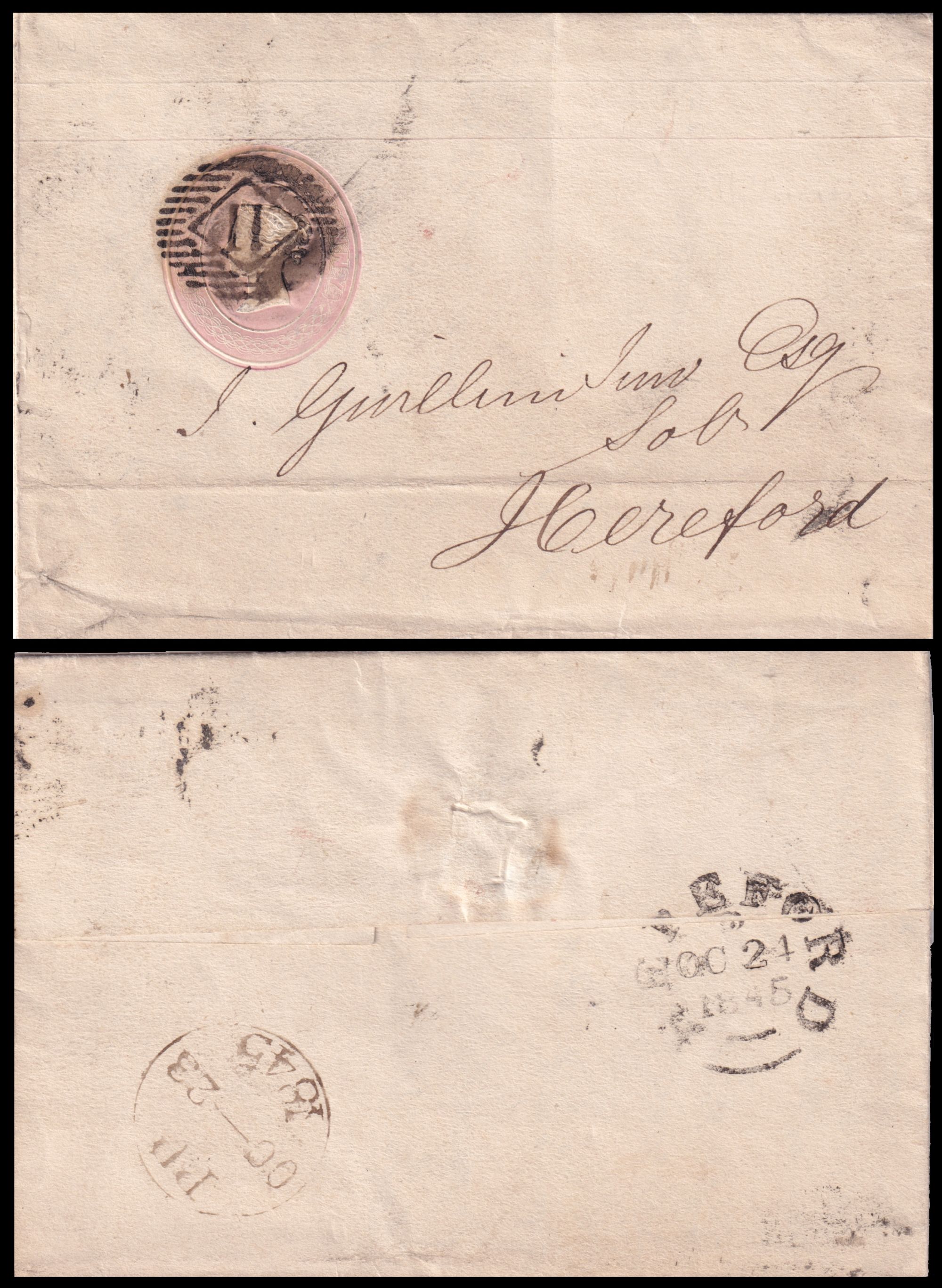 |
| “Penny Pink” letter sheet from 1844, addressed to the British Museum, which at the time held a major fossil collection. The cover shows the common Victorian folding technique, with the stamp positioned in the upper right corner. |
“Penny Pink” letter sheet from 1845,
with an unusual folding arrangement, placing the embossed stamp at mid-left rather than in the standard upper right corner.
|

 |
 |
|
|
The embossed stamp was always printed in a fixed position on the letter sheet,
as shown in the illustrations above and on the left.
The image on the left shows three examples: one unused letter sheet and two used sheets folded in different ways.
In one example the message was written only on the inside, while in the other it appears on both the inside and the outside of the sheet.
|
||
Propaganda Covers
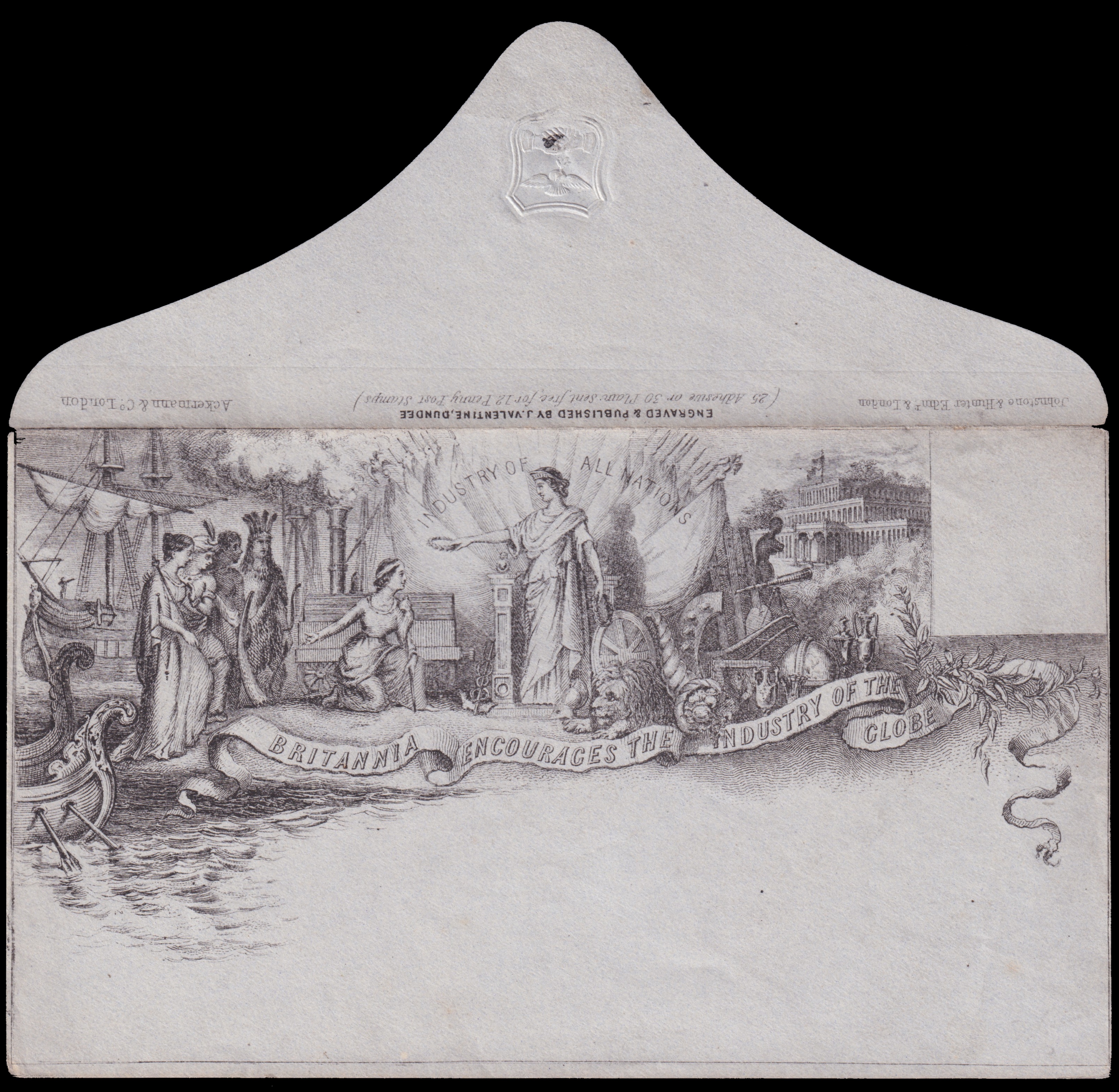 |
| An example of an illustrated envelope, engraved and published in 1850 by J. Valentine of Dundee for the Great Exhibition of the Works of Industry of All Nations, held in 1851. |
However, the culture of illustrated covers continued to flourish. Throughout the 19th century, many illustrated envelopes and letter sheets were produced in Great Britain, featuring a wide range of common, everyday subjects, as well as political, patriotic, and propaganda themes.
Mourning Postal Stationery
As private correspondence expanded dramatically, so did the need for clear social signals within the mail system. One such signal was the use of mourning stationery, and the "Penny Pink" and the "Two Pence Blue" postal stationery became the first mourning postal stationery in the world.
 |
|
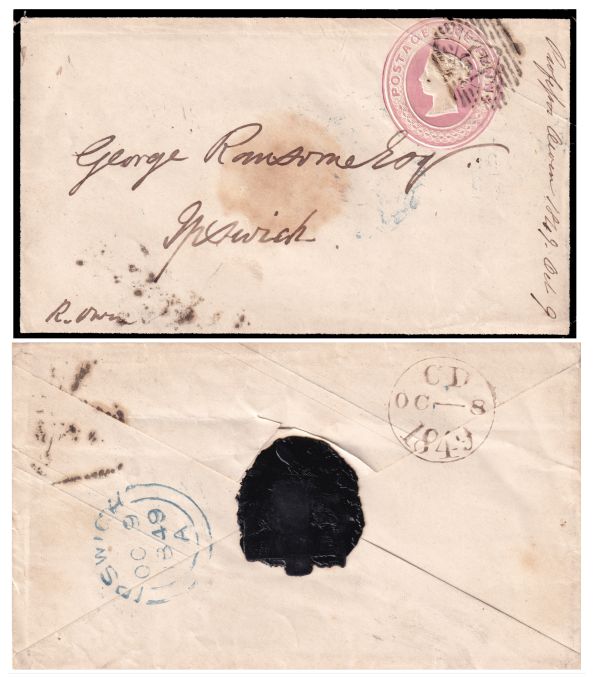
Mourning postal stationery, posted by Professor Richard Owen
in October 1849. His father‑in‑law, William Clift, who was far more than a family connection, died on June 20th, 1849. Clift had played a pivotal role in Owen’s early career, introducing him to leading anatomists, guiding his professional development, and helping him establish a lasting reputation as one of the most respected anatomists and paleontologists of the Victorian era. Consequently, Owen used mourning stationery and a black wax seal for both private and professional correspondence to reflect his grief while adhering to Victorian social norms. This loss also marked a massive professional turning point. As the long-time conservator of the Hunterian Collection, Clift's passing effectively transferred the absolute custody of Britain's most valuable comparative anatomy repository directly to Owen. The black-bordered covers sent during this period thus carried a double weight: they signaled the personal loss of a beloved mentor while simultaneously serving the administrative work of a scientist who had just inherited the physical foundations needed to classify the nation's prehistoric fauna. At this exact time, Owen was actively compiling his monumental work, "A History of British Fossil Reptiles" (published in parts starting in 1849). Many of the coordinating letters sent to provincial collectors to track down Iguanodon and Hylaeosaurus fossils travelled inside these exact Penny Pink mourning covers. |
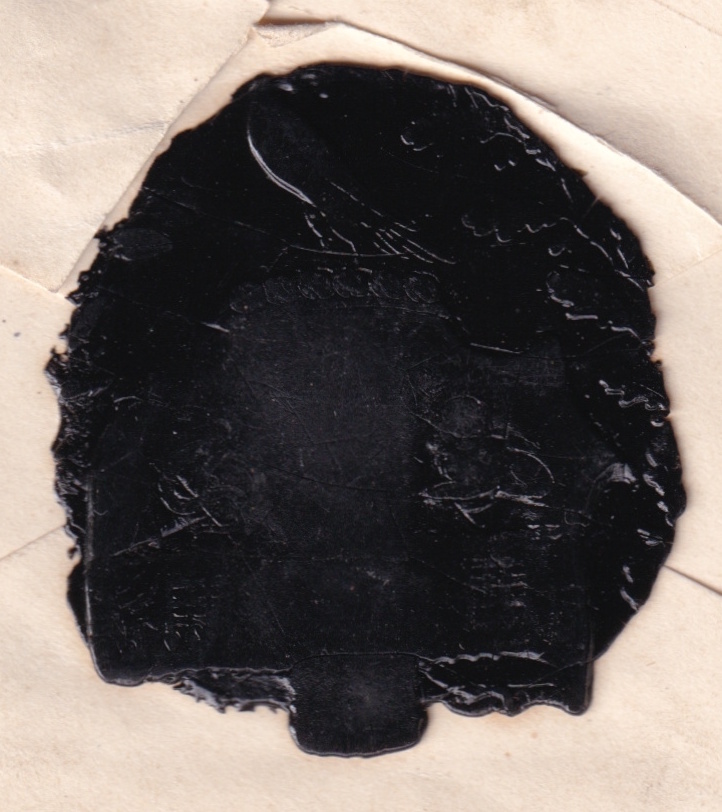
In the 1840s, a decade in which British mourning customs became increasingly formalized under the influence of Victorian social expectations, stationers quickly recognized the demand for pre-prepared mourning materials and began producing ready-made envelopes and writing paper with pre-printed black borders. These black-edged items allowed bereaved senders to communicate grief while adhering to the complex etiquette of Victorian mourning, signaling sorrow without requiring extensive handwritten explanation.
The black borders served as an immediate visual cue, ensuring that recipients recognized the solemn context of the correspondence even before opening the letter.
The thickness of the border indicated the intensity of mourning: the widest borders were reserved for the death of close relatives, such as parents or spouses, while narrower borders could be used for more distant relations. Over time, as the mourning period progressed, correspondents would use stationery with progressively thinner borders, visually reflecting the gradual return to everyday life.
By the late 1840s, commercially printed mourning stationery had become a standard and widely accepted part of Britain’s evolving postal and social culture. In addition to stationery, black sealing wax was occasionally used to close letters, reinforcing the message of grief. However, black wax was less common than black-edged paper, as it was more brittle and could obscure the seal’s impression, making it harder to read.
The widely circulated mourning postal stationery was used not only for announcing deaths within the family, but also for routine private and business correspondence during the mourning period, reflecting the Victorian expectation that grief should be visible both publicly and privately.
The use of mourning stationery was deeply intertwined with contemporary social norms, which prescribed specific periods of mourning depending on the relationship to the deceased: widows were expected to observe two years of mourning, parents six months for a child, and other relatives varying periods. Beyond etiquette, mourning stationery functioned as a subtle tool for emotional expression, allowing individuals to navigate the tensions between personal grief, public expectation, and social communication.
References
Penny Pink
|
Mourning stationery |
Recommended Books
- "The Mulready postal stationery - its Genesis, Production and Usage", by Alan Huggins and Alan Holyoake, published by GB Philatelic Publication Ltd. in 2015. ISBN: 978-0-907630-29-6
- "International Postal Reforms, volumes 1 and 2, Postal Reforms and the Historical Background to the Postage Stamp 1550 to 1898", by James Grimwood-Taylor RDP FRPSL, published by the Royal Philatelic Society London in 2020, ISBN: 978-1-913015-06-0 and 978-1-913015-07-7.
- "British Pictorial Envelopes of the 19th Century", by Ritchie Bodily, Chris Jarvis and Charless Hahn, published by the Collectors Club of Chicago in 1984, ISBN: 0-916675-02-5
- "COLLECT BRITISH POSTAL STATIONERY - A Simplified Listing of British Postal Stationery 1840 to 2007", by Alan Huggins and Colin Baker, published by GB Philatelic Publications Ltd in 2007, ISBN: 978-0-907630-22-7