Simultaneous Development of Philately, Geology, and
Palaeontology as a Result of the British Industrial Revolution
Part 4: Design of the first adhesive postage stamps in the world
Design of the first adhesive postage stamp (the Penny Black)
After Rowland Hill's proposal was accepted, he was given a two-year contract to run the new system.
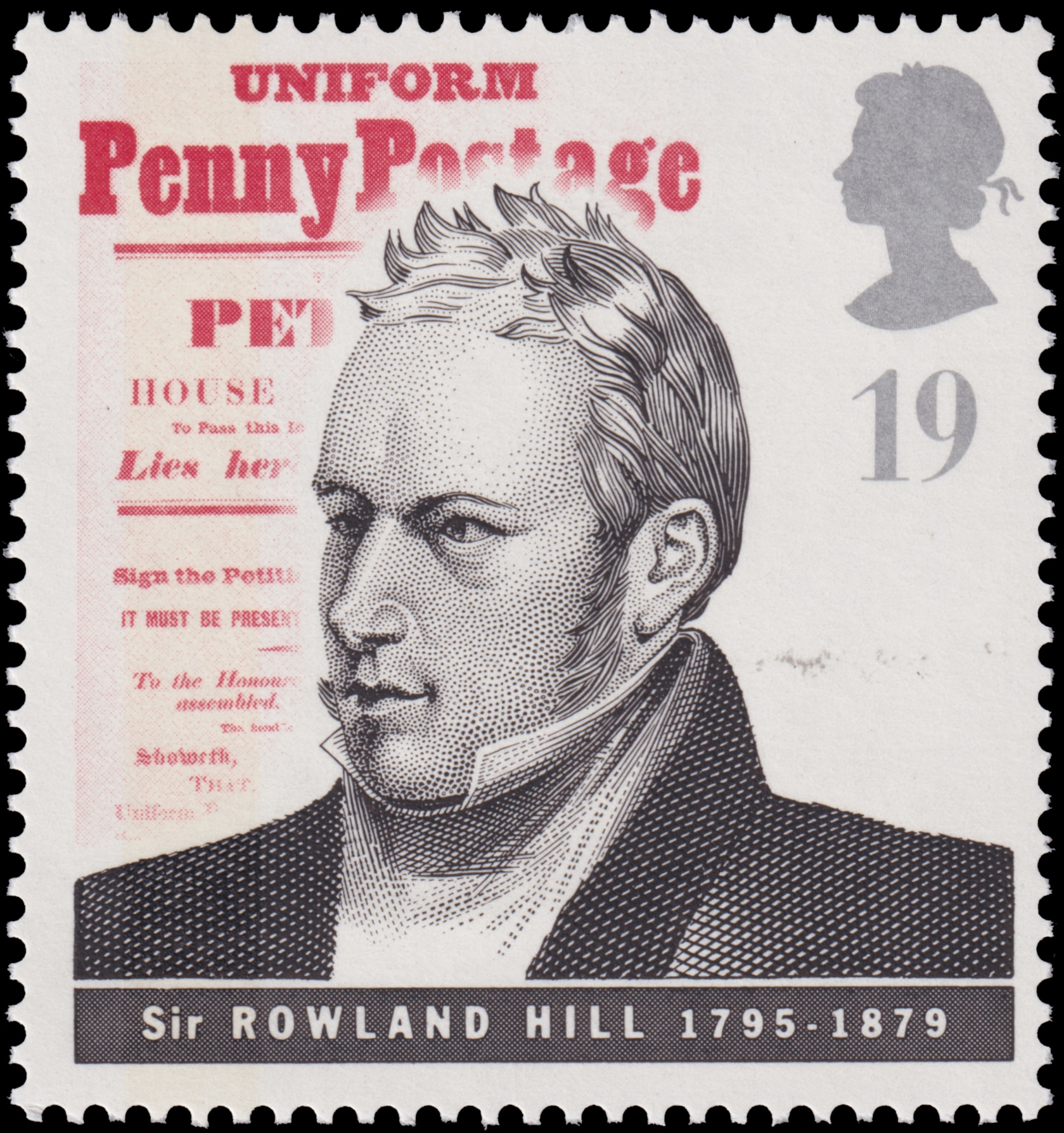 |
| Rowland Hill on postage stamp of Great Britain 1995, MiNr: 1587, Scott: 1625. |
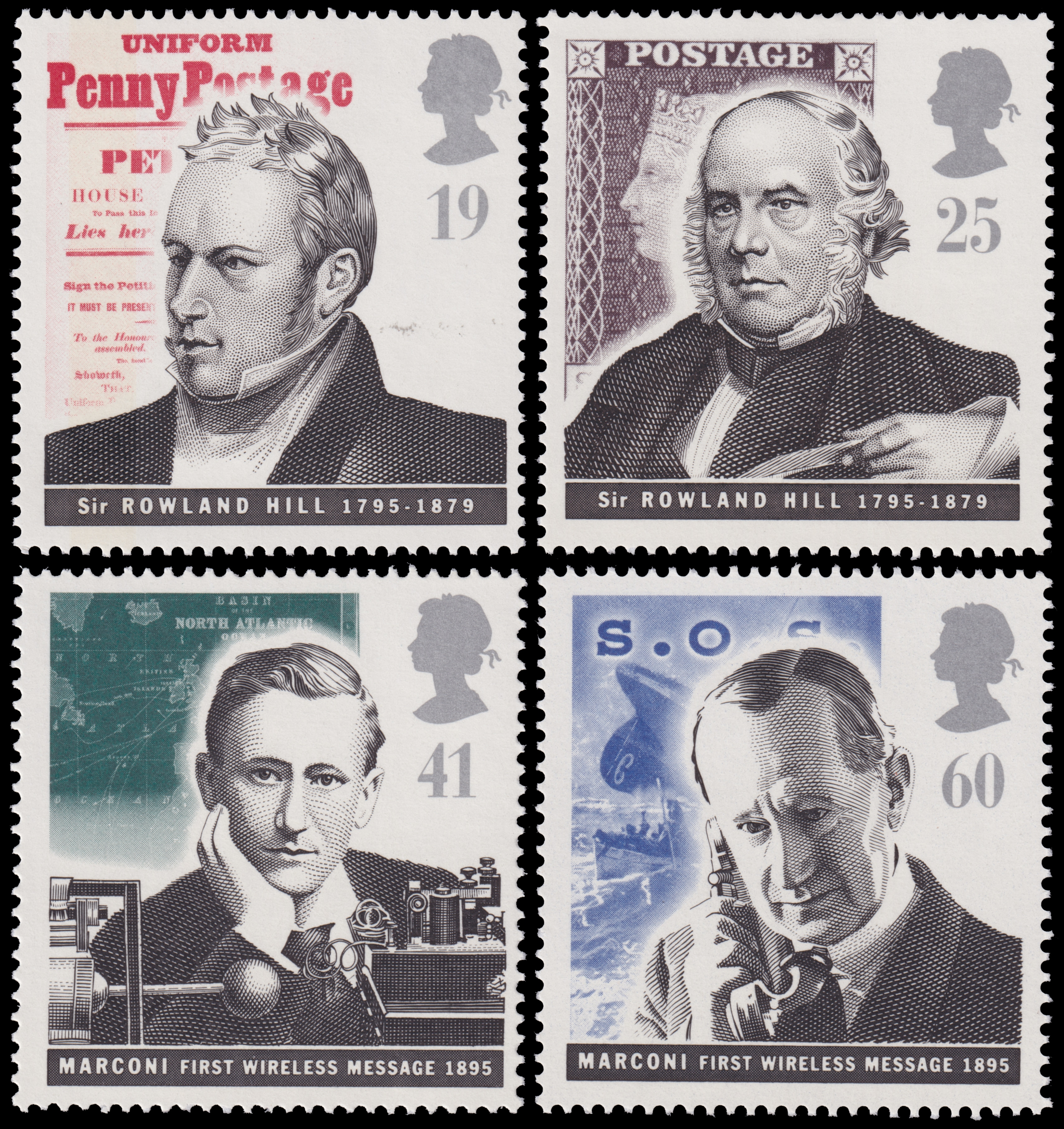
In a report to the Treasury Rowland Hill wrote:
I hope to be able, however, by combining the suggestions of many, to propose a plan which will secure the objects which their Lordships had in view in framing the Minute.
One of the prizes was awarded to Benjamin Cheverton for his practical suggestions that postage stamps should be printed in sheets of 240 (arranged in 20 rows of 12), so that a complete sheet would represent exactly £1 in postage value, and that they should be printed on watermarked security paper. To prevent forgery Cheverton suggested
"the embossment of a female head of greatest beauty to be executed by Mr. Wyon"
(the female head was a profile of Princess Victoria, who became the Queen in June 1837 at the age of 18). Hill accepted these proposals.
William Wyon (1795-1851) was a British engraver who was official chief engraver at the Royal Mint from 1828 until his death. On 10 March 1838 Wyon became a Royal Academician, the first medallist to be so honoured. He also modelled and engraved the head of Queen Victoria for her coinage and various medals, to universal acclaim.
The sketch
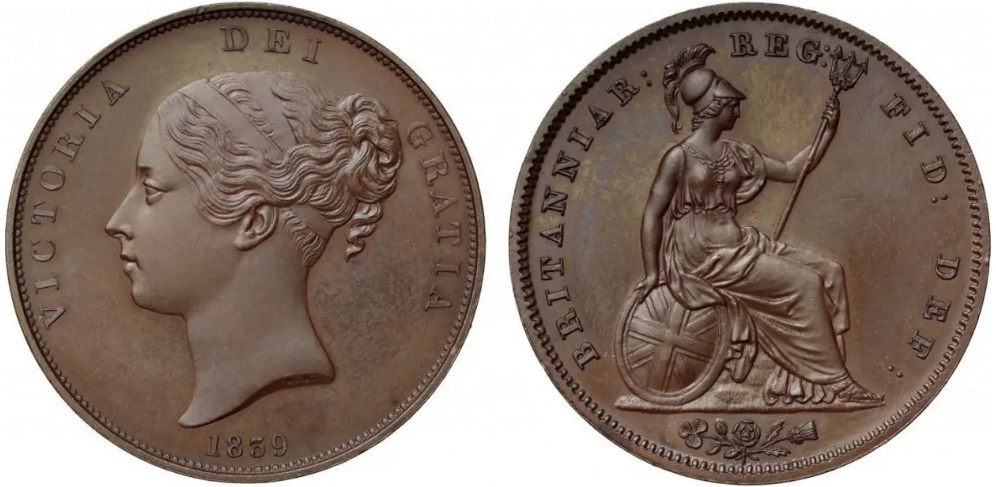
 |
 |
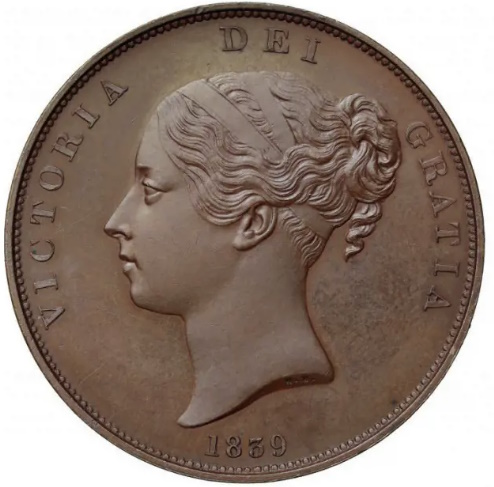
| One Penny coin from 1839 - the profile of the Queen is similar to the one from the profile of the City Medal, but without the diadem on the Queen’s head. |
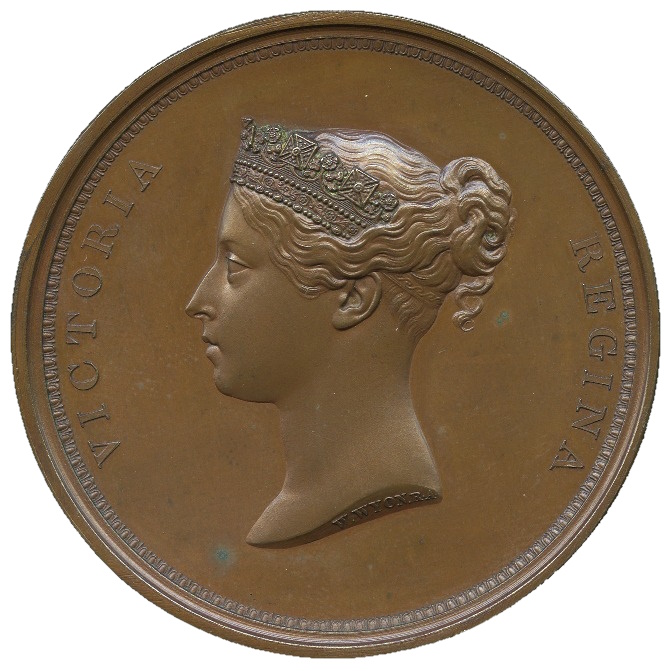
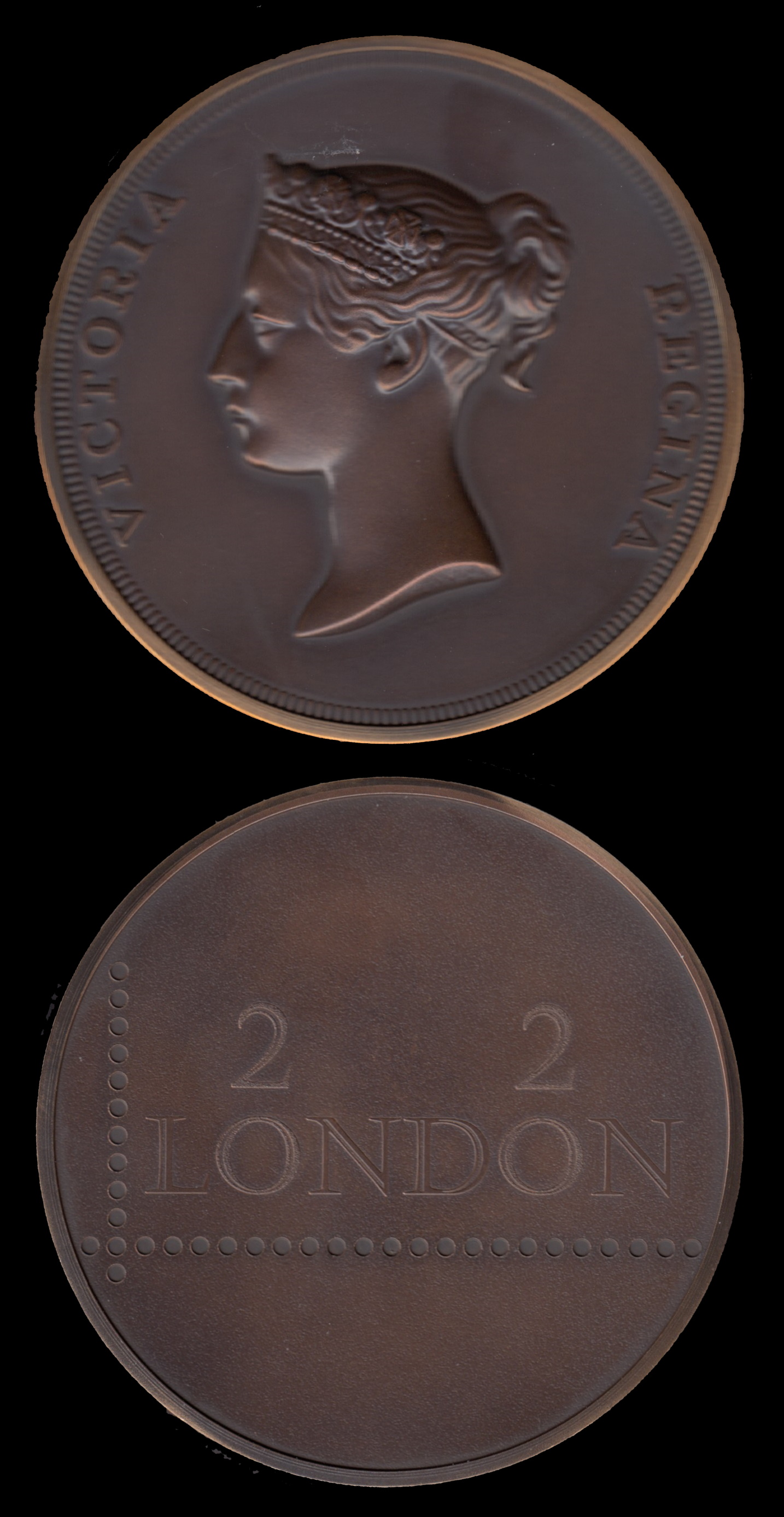
The City Medal commemorates Princess Victoria's visit to the Guildhall in 1837
(made in bronze and in silver). |
Minting a coin was a very different process from printing a stamp.
The latter allowed for much finer detail, which also made forgery more difficult. 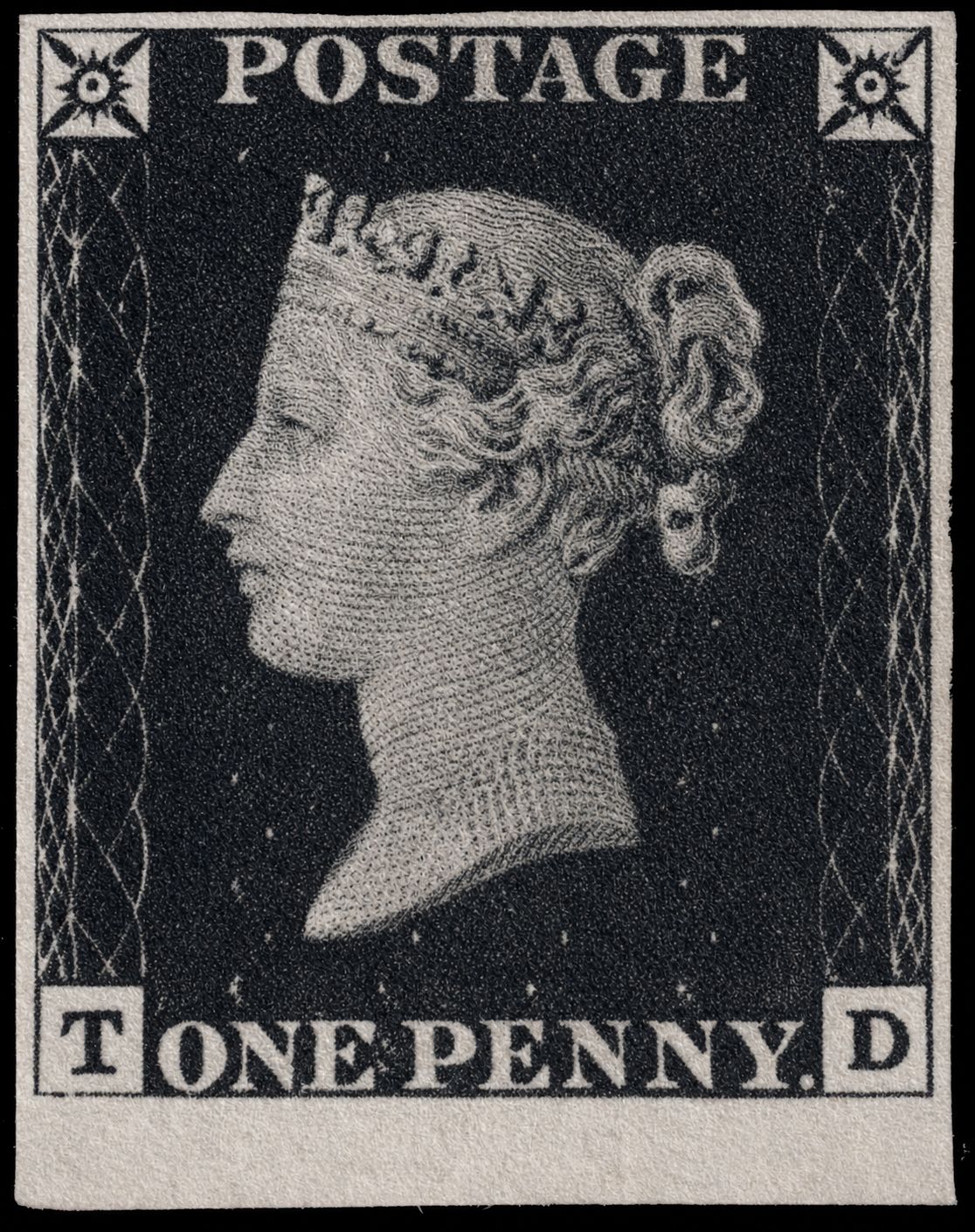 For this reason, the design of William Wyon’s medal, rather than that of the coin,
was chosen as the basis for the stamp.
For this reason, the design of William Wyon’s medal, rather than that of the coin,
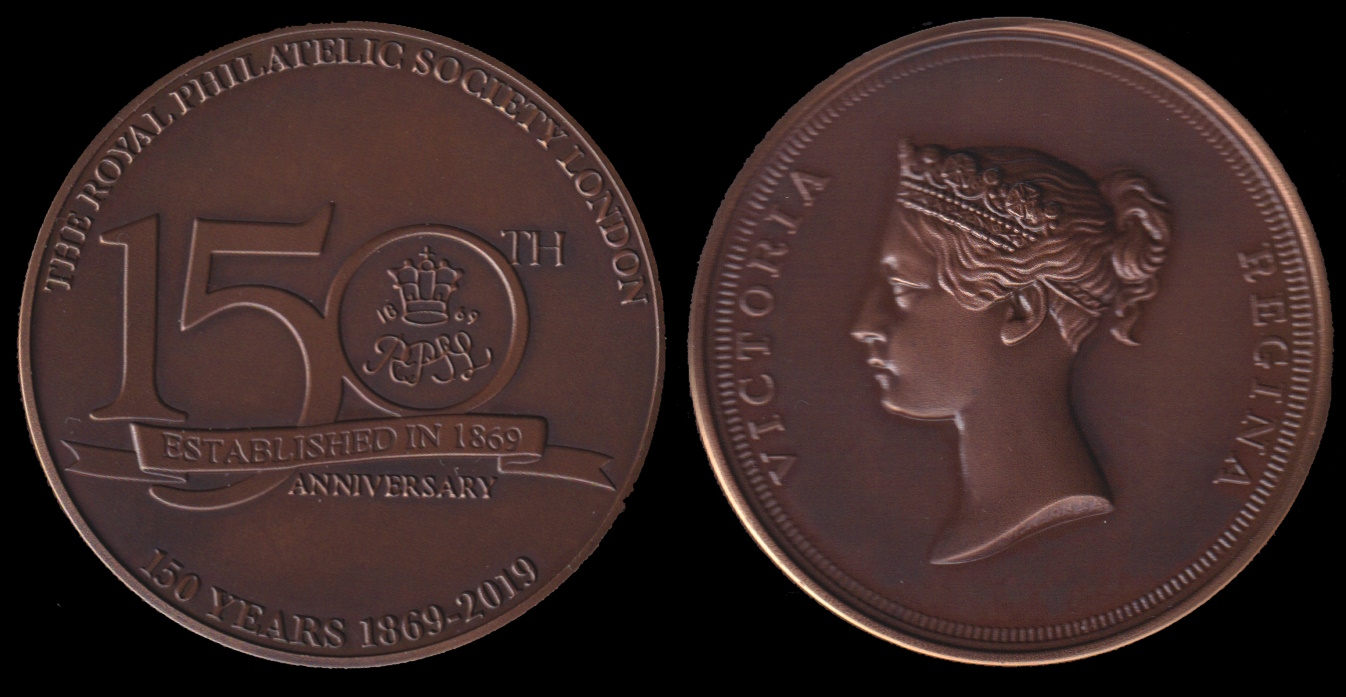
was chosen as the basis for the stamp.The design of the City Medal continues to be used today for major philatelic exhibitions in the United Kingdom. For example: Vermeil Medal, International Stamp Show London 2022, awarded to the Paleophilatelie website; 150th Anniversary Medal of the Royal Philatelic Society London (2019), re-purposed for EUROPHILEX Birmingham 2025. |
|
The printer house
Hill selected the leading security printing firm of "Perkins, Bacon & Petch" to produce the new adhesive postage stamps: the one-penny stamp printed in black, and the two-pence stamp for the double letter rate, printed in blue, later known as the TWO PENCE BLUE or TWO PENNY BLUE.
Perkins, Bacon & Petch were renowned for their expertise in security printing and the use of advanced engraving techniques, including the rose engine lathe for producing intricate geometric patterns on banknotes and other security documents. The Board of Stamps and Taxes selected the firm because of its experience in high-quality line engraving and security printing, believing that these techniques would make the new stamps difficult to counterfeit.
Jacob Perkins (1766-1849) was an American inventor, mechanical engineer and physicist.
He invented and sold "soft steel" plates for engraving that were hardened after being engraved.
The plates were between one and three inches thick, and some weighed over 22kg.
In 1819, Perkins moved to London on invitation of Charles Heath, who was
an engraver, a book publisher, and who convinced him to
participate in the competition of Bank of England, who offered
a prize of £20.000 for a banknote which was impossible to forge.
Their firm, "Perkins & Heath", produced very promising samples, but did not win the competition.
However, they did manage to secure smaller contracts for £1 banknotes,
and later won more government contracts.
In 1829, after a complicated transaction in which Heath gave up his shares
and Joshua Butters Bacon (Perkin's son in law) bought in, as "Perkins & Bacon".
Henry Petch joined in 1835, and thus the firm printing the first stamps was actually known as
"Perkins, Bacon & Petch".
The Master Die
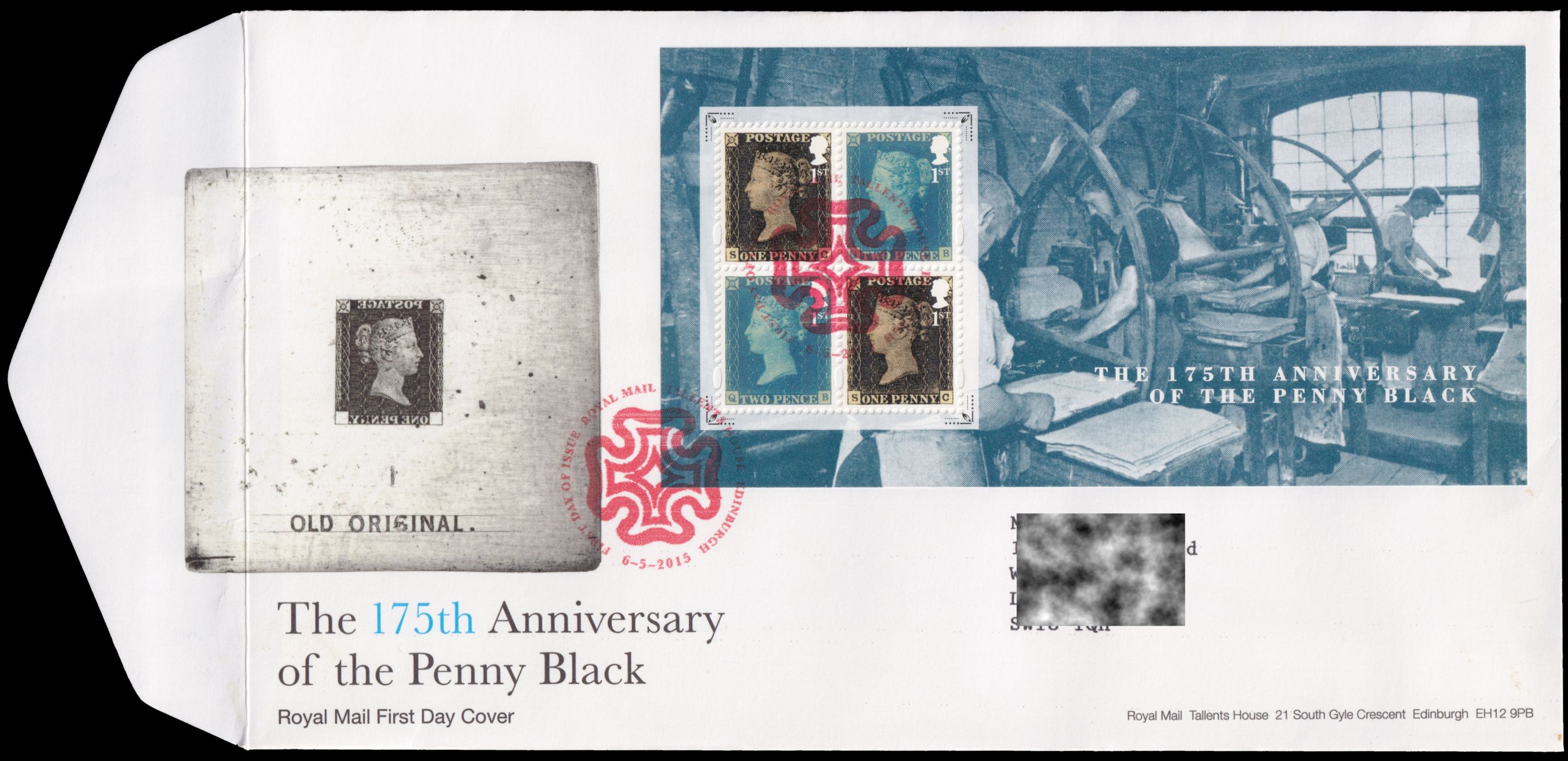 |
| The Die on the cachet of FDC with stamps "175th anniversary of Penny Black". The original can be seen in the British Postal Museum. |
When the master die was prepared and proof stamps with the profile of the Queen were printed at the end of February 1840, it was sent to Queen Victoria for her approval.
The reverse image was engraved into soft steel to create the master die. The die was hardened in a furnace. The master die was used to create plates of 240 stamps each. A soft steel roller was put in a transfer press and rolled under great pressure back and forth over the hardened die until the design was transferred to the roller.
The image of the die was transferred to the steel roller as a positive image. The roller was rolled over the soft steel plate under pressure to create recessed images which retain ink.
The first stamps in the world did not need to show the issuing country, therefore no country name was included on them. Today the United Kingdom remains the only country to omit its name on postage stamps.
Star-like designs
 |
| The star-like designs at the top corners of the stamp |
The Check Letters
Due to the high cost and technical difficulty of producing a line-engraved master die, the authorities (notably Rowland Hill and the Board of Stamps and Taxes) assumed that a counterfeiter would likely copy only a single stamp position, rather than try to reproduce an entire printing plate. To make forgery more difficult and to facilitate the detection of counterfeits, it was decided to punch letters indicating the position (row and column) of each stamp in the sheet, from "A A" to "T L". It was believed that any considerable sale or postal use of stamps bearing the same lettering would attract attention and lead to an official enquiry.
A General Post Office circular dated April 1840, enclosing two copies of the new "Penny Adhesive Labels" for distribution to the postmasters under its authority, explained:The letters on the corners of the bottom side were manually punched on the plates. This was precision work, because the size of the letters is about 1mm tall, and they had to fit tiny squares on the bottom side of the stamps of 19mm by 22mm in size, therefore no two pairs of letters are ever in precisely the same position.
In the event of your suspecting that the Stamps used on any Letters are forged, you will not detain the Letter, but simply take the Address, and report the circumstance to me without loss of time, in order that the Party to whom the Letter is directed may be at once applied to. You will observe, however, that the adhesive Stamps vary almost in all cases, one from the other, having different Letters at the bottom corners, and I point this out that you may not be misled by the circumstance, and be induced to suspect Forgery, where the variation of the Stamps has been intentional.
In some cases, the letters were significantly shifted from the center of the square or placed crookedly.
 |
| Check letters on two "Penny Black" stamps (plate No. 2 and No. 8) |
If the four recognised colour shades are also taken into account, the number of collectible combinations increases to 11,520.
The Sheets
These stamps were printed in sheets of 240: 20 rows, 12 stamps each, makes accounting easier.
The margins of the sheet included the following explanatory text:
"Price 1d Per Label. 1/- Per Row of 12. £1 Per Sheet. Place the Labels ABOVE the Address and towards the RIGHT HAND SIDE of the Letter. In Wetting the Back be careful not to remove the Cement."
The text on the margin of the "TWO PENCE BLUE" stamps sheet was the same but with altered values: 2d, 2/-, £2.
In the official General Post Office notes and circulars from the 1840s, the "TWO PENCE BLUE" stamps are often called: "Twopenny" or "Two-penny" adhesive labels.
Initially, it was proposed to print the stamps on paper containing thin threads. However, after careful consideration and consultation with the Bank of England, Rowland Hill suggested that the paper should be manufactured "in the ordinary manner, but with a very well defined and peculiar water-mark be employed for all Franking Stamps issued by the Government".The Watermarks
|
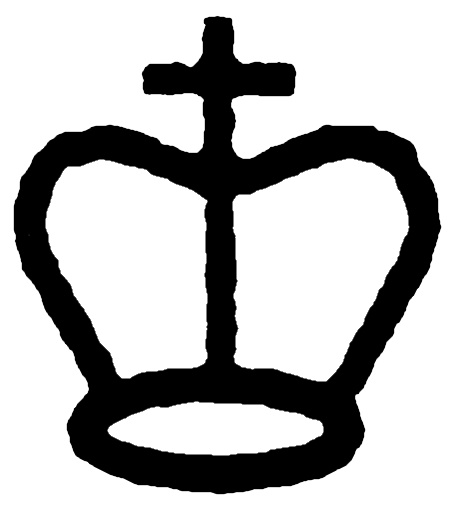
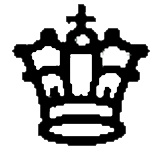
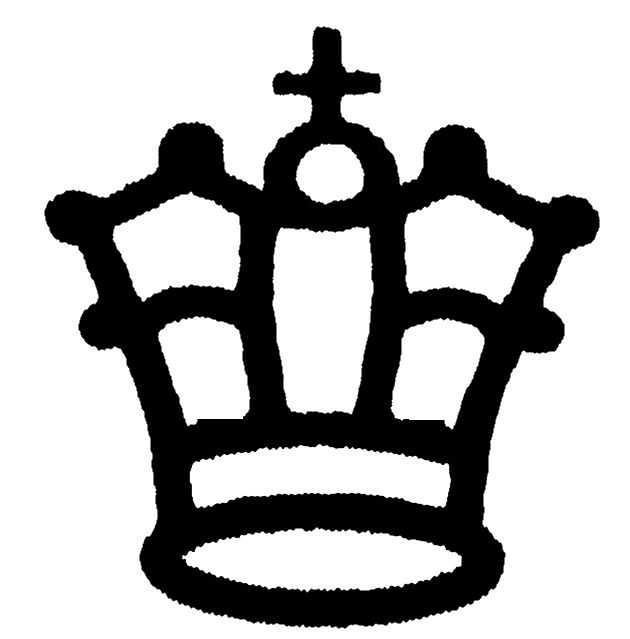
| The watermarks from 1840 and 1855 (type I, II) |
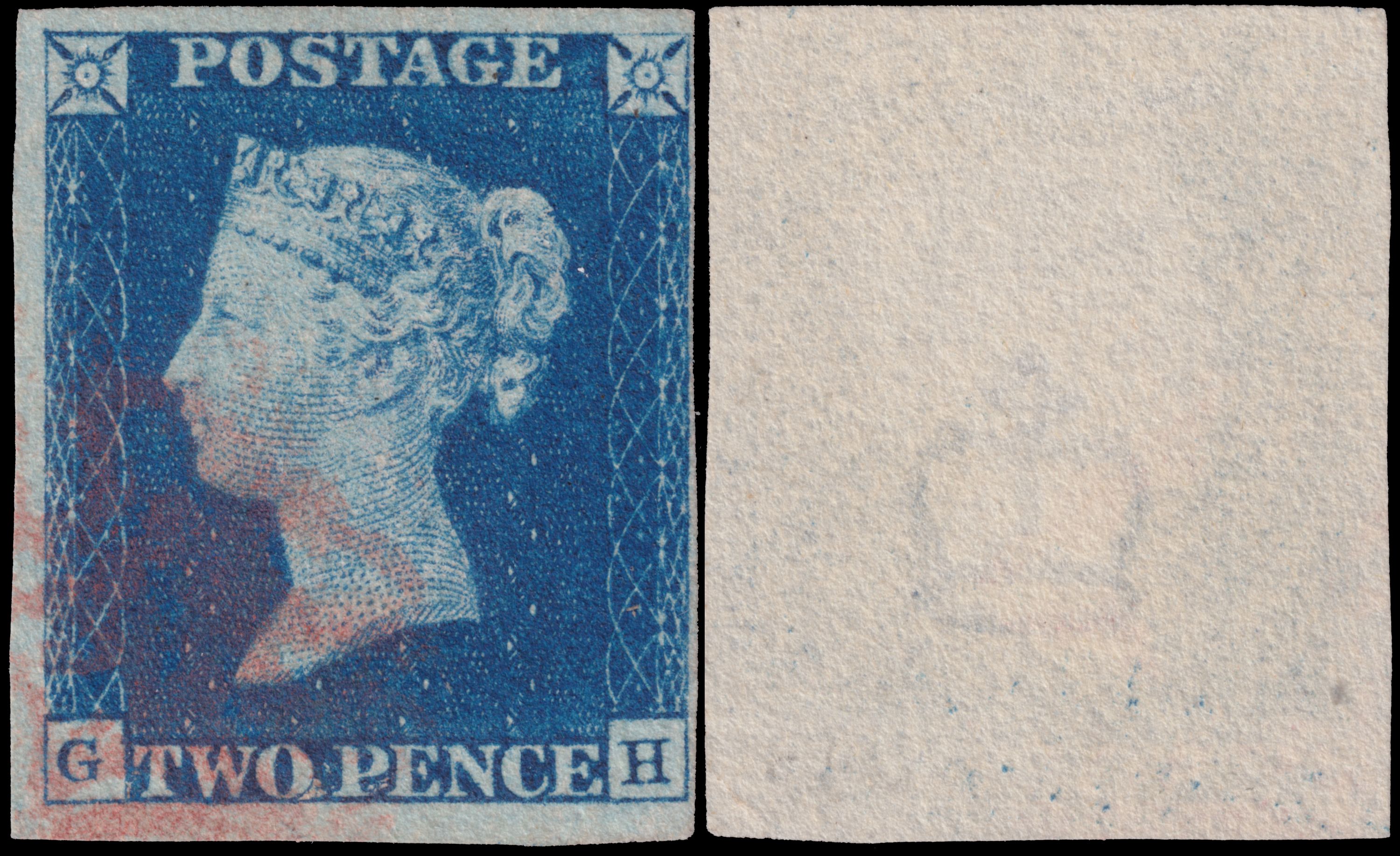
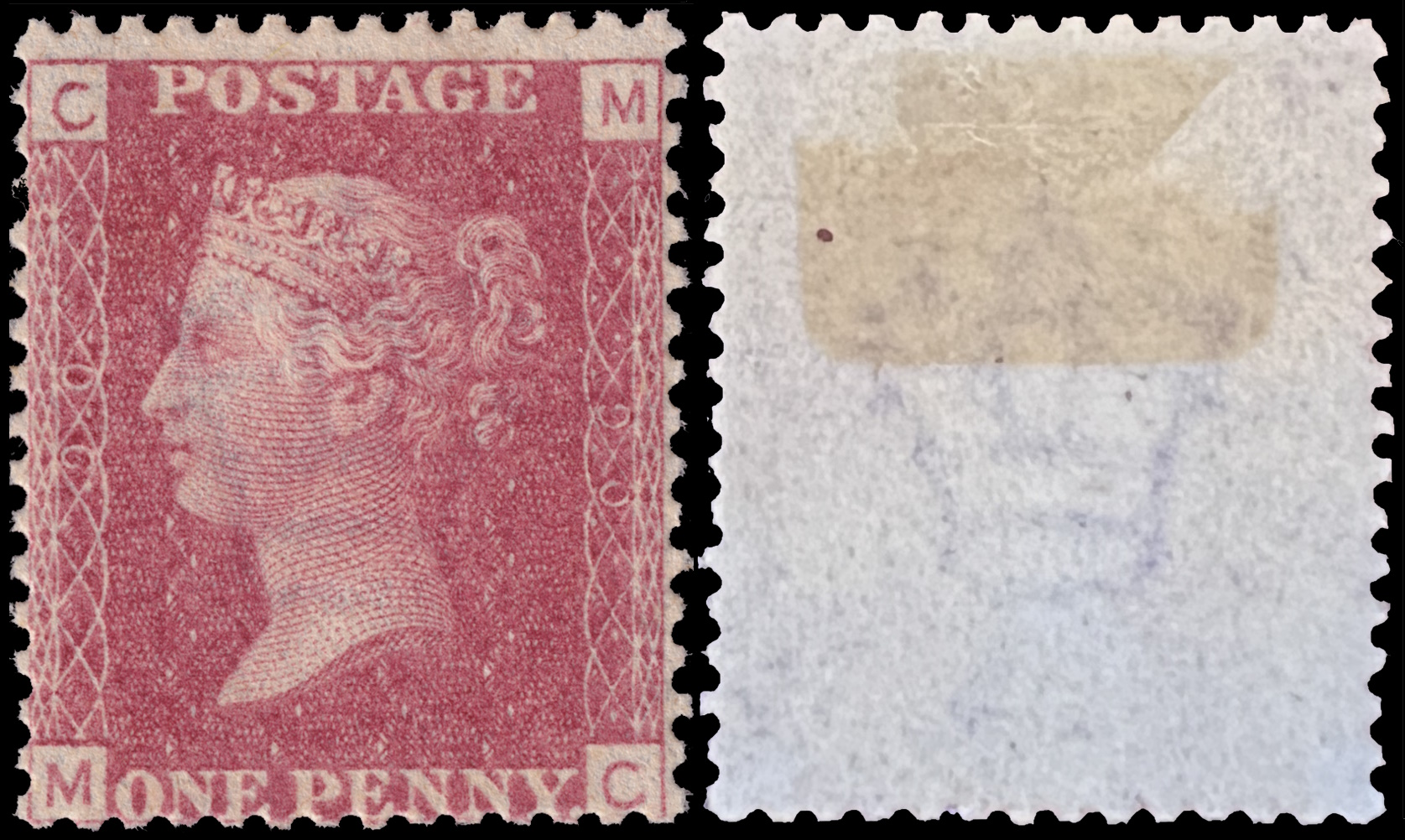
|
| The watermarks on the reverse sides of Penny stamps from 1840 and 1864 (type II). |
A Small Crown watermark appeared on every stamp. In 1854, the watermark was replaced by the Large Crown. The Large Crown was available in two very similar designs: Type I and Type II. Type I included two small lines in the lower arches, which were deleted in March 1861. Occasionally, the paper was loaded into the press in the rotated position, creating stamps with inverted watermarks.
The Gum
The gum used for the Penny Black was a starch-based adhesive made from potato starch and supplied by John Rawsthorne of Manchester, although its exact composition remained a trade secret. It varied in colour, adhesive properties, and taste; a rare variant was almost colourless. The adhesive was applied to the printed sheets after printing, while they were still warm, using brushes, and the sheets were then dried.The materials connected with the production and security of the new adhesive postage stamps were examined and evaluated by Richard Phillips, who effectively served as Britain's government chemist during this period.
.jpg)
|
| Richard Phillips (1778–1851). Source: Wikimedia Commons. |
In June 1839, Phillips was provided with a laboratory for the chemical analysis of rocks, minerals, and soils collected by the Geological Survey.
At a time when Britain had no dedicated government analytical laboratory, his expertise was soon sought by several government departments.
Although officially appointed as Curator and Chemist, Phillips effectively fulfilled the role of Britain's first government analytical chemist, investigating not only geological specimens but also a wide variety of industrial materials and commercial products submitted for official examination.
The Plates

|
| The Jacob Perkins' press, which printed the "Penny Black" and the "Two Pence Blue" stamps in 1840. |
The registration sheets were printed on April 11th, and after approval by the Board of Stamps and Taxes, the plate was registered and began printing stamps for issue on April 15th.
The term imprimatur (Latin for "let it be printed") refers to the official approval
given by the Board of Stamps and Taxes after a new printing plate had been examined and authorised for production.
For this purpose, a small number of registration sheets were first printed and submitted for approval.
After approval, one sheet was retained as the official reference specimen, known as the
imprimatur sheet.
The remaining sheets were returned to the printer.
Plates 1 and 2 were the only plates used to print the stamps placed on sale on May 1st, 1840, five days before they became valid for postage.
Plate 3 was registered on May 9th, 1840, just three days after the Penny Black came into use, and the remaining eight plates were brought into service gradually during the rest of the year.
In total, there were 11 plates used for production of over 68 million "Penny Blacks" stamps by the end of January 1841, when the ink of the stamp was changed to red.
The estimated survival rate of around 2% makes the "Penny Black" to be not a particularly rare stamp. Most surviving stamps are used stamps, which were removed from the business correspondence, mint examples are scarce so these can cost several thousand Euro.

Plate 1Plate No.1 printed the stamps in two variants, before and after extensive renovation due to excessive wear, because the plate had not been hardened. Due to extreme wear, the engraved lines of the Queen's head became very faint, and this required the restoration of every one of the 240 units of the plate.The plate was taken to repair on May 16th and returned to production between May 23rd and May 27th (exact date is unknown), 1840 after hardening. These variations are marked as plate No. 1a and plate No. 1b accordingly. These stamps from these two plates can be differentiated by the absent rays at the top of the star-like design. Plate No. 1 was withdrawn on March 23rd, 1841 and destroyed at the end of the year. |
Plate 11Plate No. 11 was registered on January 27th, 1841. Originally created to print the "Penny Red" stamps which were set to replace the "Penny Black".The red stamps were printed on January 29th and 30th. On February 1st and 2nd, due to the lack of red ink, the plate was used to print 700 sheets of the black stamps. Since February 3rd the plate was used to print "Penny Red" stamps only. |
Design of the second adhesive postage stamp (the Two Pence Blue)
The "Two Pence Blue" stamps were printed from two plates only (plate No. 1 and No. 2), which were destroyed in 1843.
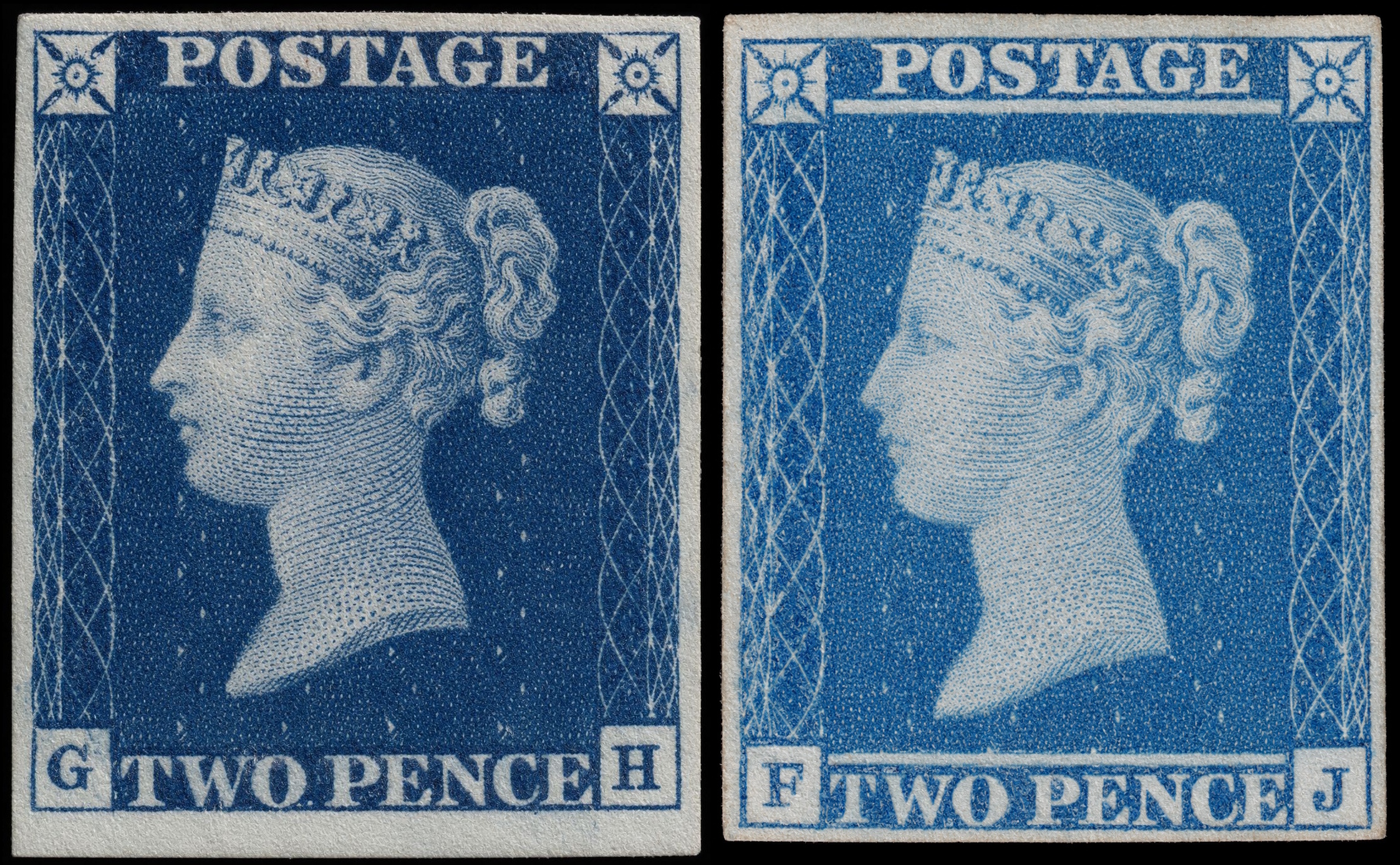 |
| "Two Pence Blue" stamps from 1840 (Plate No. 1) versus 1841 (Plate No. 3). |
Plate No. 1 was registered on May 2nd, 1840 and
the first stamps printed by this plate (619 sheets), came on sale
in London on May 6th, 1840.
Plate No. 2 was put on press on July 18th 1840 and
the earliest known used stamps of this plate are dated August 18th, 1840.
The slightly modified version of "Two Pence Blue", printed by plates No. 3 and No. 4 went on sale in March 1841 - a horizontal white line was added below word "POSTAGE" and above words "TWO PENCE" on the top and bottom sides of the stamp respectively. The blue stamp with small modification was in production until 1879.
These line-engraved stamps can be assigned to a specific plate based on the shape of star-like designs on the left and right corners on the top side (the rays have different length or missing on some plates) and letter variations in the words "POSTAGE" and "ONE PENNY"/"TWO PENCE" (flaw of some letters) as well as the check letters on the left and right corners on the bottom side.
References
Personalities
| Queen Victoria |
William Wyon
|
Rowland Hill | Henry Cole |
Richard Phillips
|
Jacob Perkins |
Postage Stamp Production
| Watermarks | Gum | Die | The Stamp press | Stamp plate |
YouTube videos for more details about design of Penny Black stamp
Other Topics
| The Rolling Press for Pictures - uses the same principle as the press used to print the Penny stamps in 1840. | The first Christmas Card was designed by Henry Cole who helped Sir Rowland Hill to design and produce the Penny stamps. |