Letter from Professor Richard Owen to George Ransome, posted in 1849
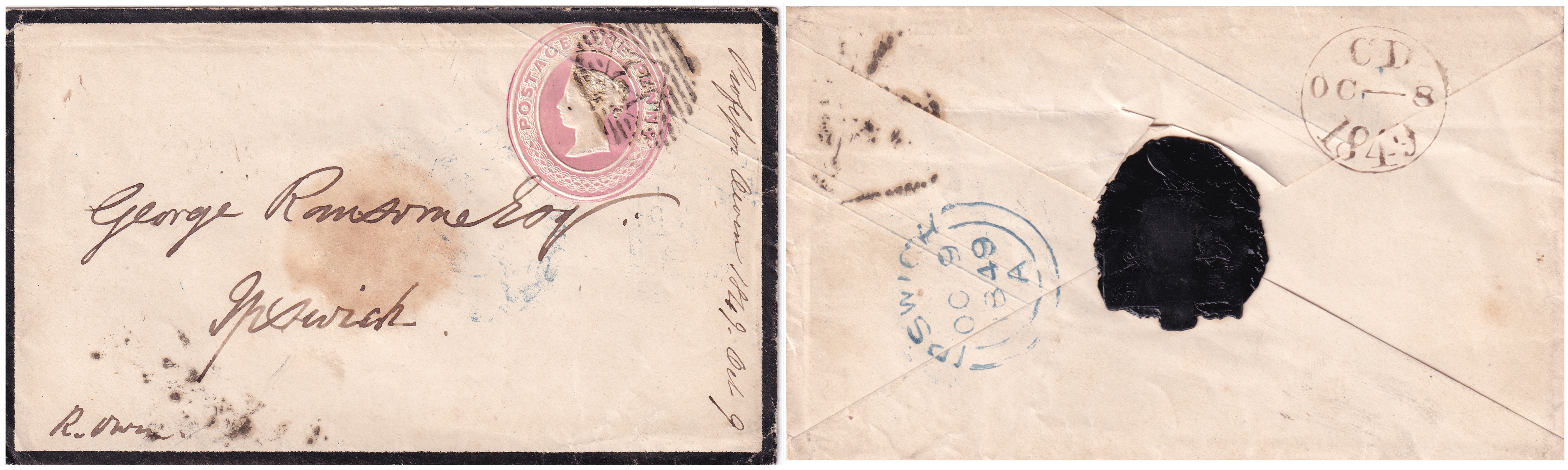
Letter from Professor Richard Owen to George Ransome in Ipswich, posted on October 8th, 1849
The Envelope
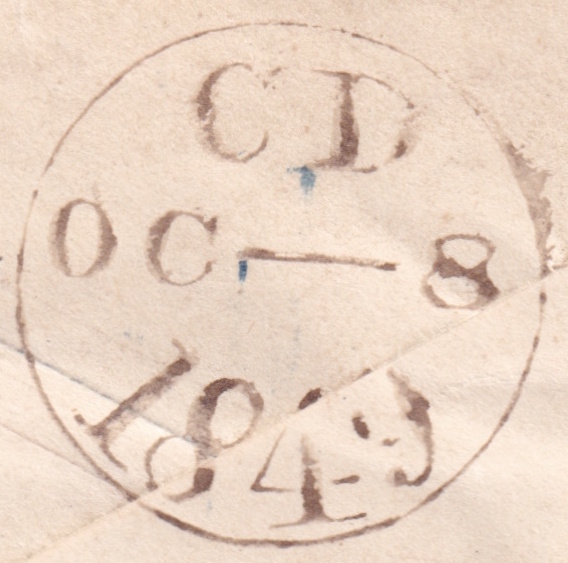
The letter was sent by Professor Richard Owen from the London Inland Post Office (Chief Office at St. Martin's-Le-Grand) to George Ransome in Ipswich on October 8th and was received the following day, October 9th, 1849.
 |
 |
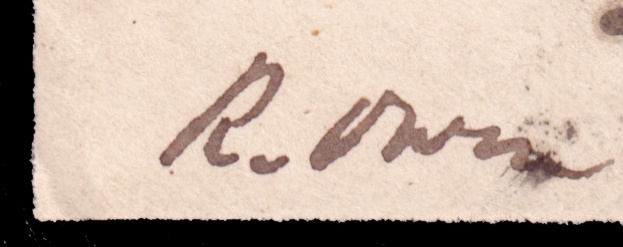
| The signature of Professor Richard Owen on the bottom-left of the envelope. | The sender's name and the date of receipt, added by George Ransome on the right side of the envelope, read: "Professor Owen 1849 Oct 9". |
 |
 |
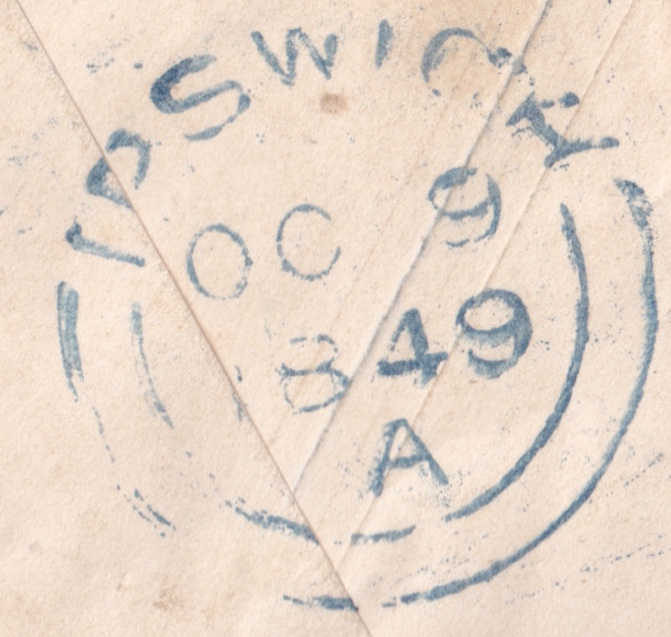 |
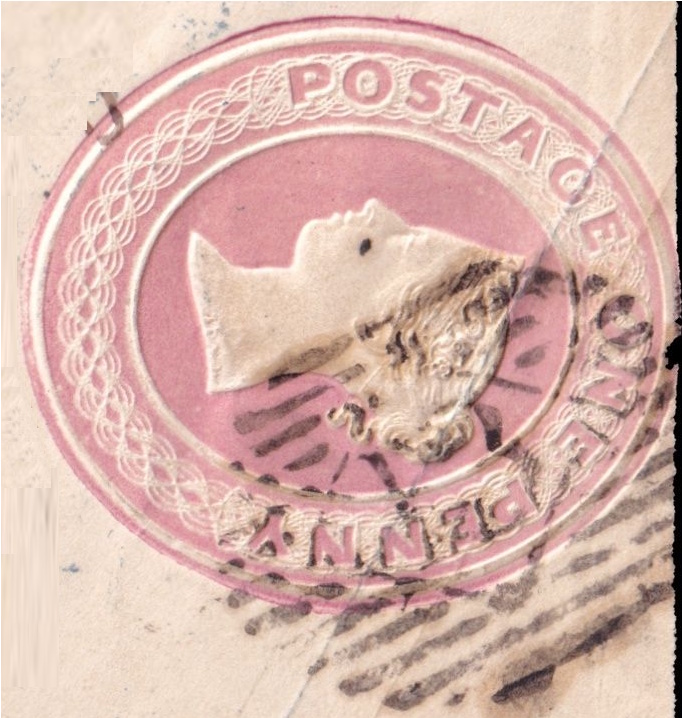
| The cancellation postmark with number 13 in the diamond was used by to the London Inland Post Office The date postmarks of London (sender) and Ipswich (receiver) post offices. | ||
Mourning postal stationery, such as the thick black-bordered 1d “Penny Pink”
envelope shown here, emerged in the 1840s,
a decade in which British mourning practices became increasingly formalised.
Its appearance was closely linked to
the Postal Reform of Rowland Hill,
which introduced the Uniform Penny Post and made letter-sending affordable to nearly everyone.
As private correspondence expanded dramatically, so did the need for clear social signals within the mail system.
Stationers soon began producing ready-made mourning envelopes and paper,
with pre-printed black borders, allowing bereaved senders to mark their letters in accordance with
newly codified Victorian etiquette.
These borders served as an immediate visual indicator of grief, ensuring that recipients recognised
the solemn context before opening the letter.
By the late 1840s, commercially printed mourning stationery had become a standard and widely accepted
part of Britain’s evolving postal and social culture.
Black wax seals were also used on mourning letters, although they were less common than black-edged paper.
Black sealing wax tended to be more brittle and made impressions harder to read, as is the case with this envelope.
William Clift (1745-1849) was far more than a family connection; he had played a pivotal role in Owen’s early career, introducing him to leading anatomists, guiding his professional development, and helping him establish a lasting reputation within the scientific community.
About the sender, Professor Richard Owen and the recipient, George Ransome of the cover.
Professor Richard Owen (1804–1892) was an English biologist, comparative anatomist, and palaeontologist, who was knighted by Queen Victoria in 1883. He is best remembered today for coining the term Dinosauria, meaning “terrible reptile” or “fearfully great reptile”. Owen first mentioned the term in 1841 (formally published it in 1842), just one year after Great Britain issued the world’s first postage stamp, the famous Penny Black (1840), which made letter-sending affordable to nearly everyone and revolutionised communication.
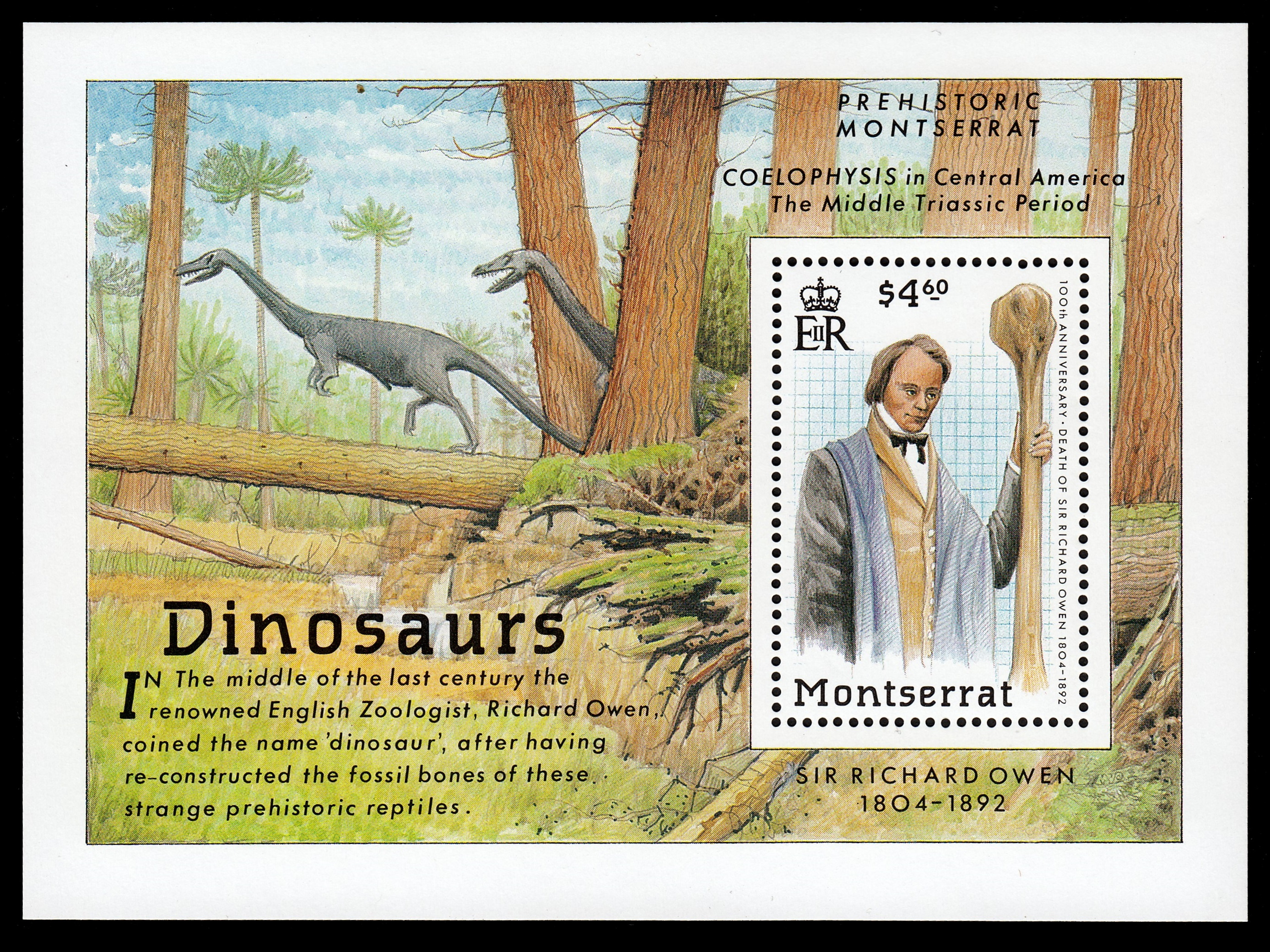 |
| Professor Richard Owen on stamp of Montserrat 1992, MiNr.: Bl. 63; Scott: 794. |
Owen is also well known for his outspoken opposition to Charles Darwin’s theory of evolution by natural selection. Although he agreed with Darwin that evolution occurred, he believed the process was far more complex than Darwin described in "On the Origin of Species". Owen’s views on evolution anticipated several ideas that have gained renewed attention with the rise of evolutionary developmental biology.
By this time the letter was sent, Owen was already a prominent figure in both fields. His earlier achievements included Odontography (1840–45), a major study of teeth, and significant work on Britain’s fossil mammals and birds. The year 1849 thus represents a turning point in his career, marking his shift toward large-scale syntheses that united his anatomical knowledge with broader paleontological ambitions.
In 1849, Owen published On the Nature of Limbs and began an ambitious survey of Britain’s fossil reptiles. This initiative ultimately developed into the four-volume History of British Fossil Reptiles (1849–1884), a foundational work that systematized knowledge of extinct reptiles, including dinosaurs. Through this project, Owen further strengthened the status of the group he had earlier named Dinosauria, establishing it as a major classification of Mesozoic reptiles.
That same year, Owen succeeded his former mentor and father-in-law, William Clift, as sole Conservator of the Royal College of Surgeons’ Museum, following Clift’s death. Clift had held this position for 32 years (1817–1849), serving as the Museum’s first Conservator. This role gave Owen full authority over one of the most important anatomical and paleontological collections of the period, greatly enhancing his influence in comparative anatomy and paleontology.
Alongside his scientific achievements, Richard Owen became a major driving force behind the effort to expand, reorganise, and properly house Britain’s museum collections. He spent nearly his entire professional life working within museums, and those institutions were deeply shaped by his vision and influence. One of Owen’s chief ambitions was the creation of a national museum dedicated solely to natural history. To gain support for separating the natural history collections from the British Museum and establishing an independent institution, he needed to appeal to a broad audience: leading scientists, influential politicians, and members of the public whose opinions could influence government decisions.
Beginning in 1837, Owen launched a long, running programme of public lectures and presentations, not only in London but also in regional centres such as Ipswich, aimed at general audiences. These lectures, which continued until 1864, were intended to popularise natural science and build public enthusiasm for his vision. Owen’s determination led to the realisation of his ambition in 1881, just two years before his retirement.
The Natural History Museum in London opened its doors as a separate institution—described as “a cathedral to nature”, created to showcase the wonders of the natural world, or, in Owen’s words, “all of God’s creations”.
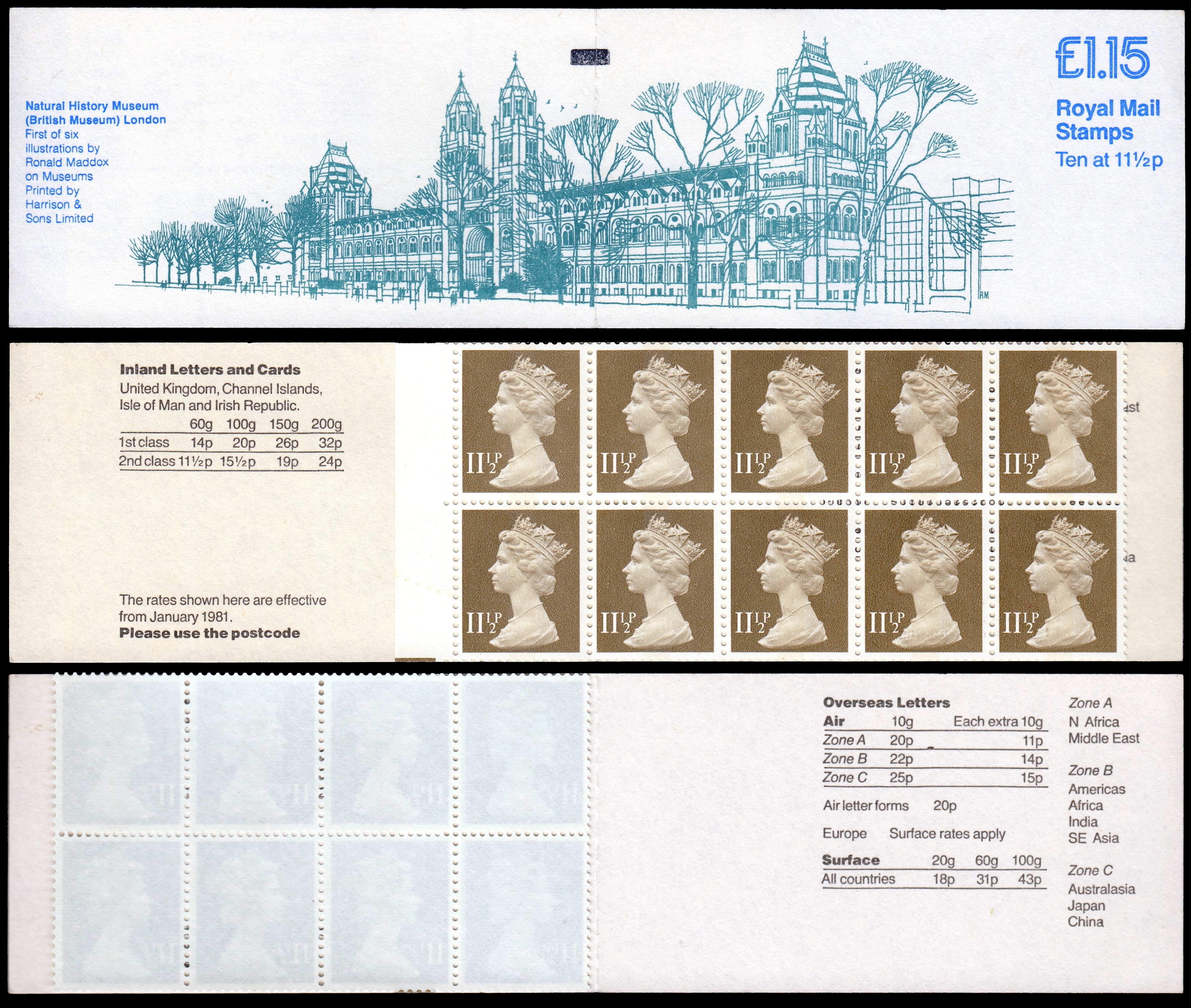
The Natural History Museum in London on the cover of booklet with inland stamps of UK 1981.
George Ransome (1811–1876), was a leading figure in Ipswich’s scientific community and served as secretary of the Ipswich Museum.
A member of the influential Quaker Ransome family, whose engineering enterprise had driven much of the town’s early 19th century industrial growth, he was instrumental in founding the museum. Through his initiative and extensive connections within Ipswich’s industrial and civic circles, Ransome helped shape the vision of a museum devoted to natural history and public education. The museum aimed to instruct local residents in the fundamentals of natural science, both through its exhibits and library, as well as through lectures and classes held on-site. Its ethos was strongly religious and supportive of natural theology.
George Ransome’s philanthropic leadership united people across political divides in the pursuit of social improvement, and more than sixty prominent scientists endorsed the museum as honorary members or vice-presidents.
Its first president was the entomologist Reverend William Kirby, author of one of the Bridgewater Treatises, and its second, appointed in 1850, was Reverend Professor John Stevens Henslow (1796-1861), Darwin’s mentor in Cambridge University.

|
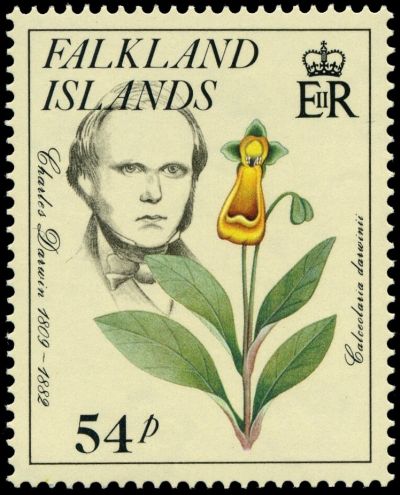 |
| John Stevens Henslow. Image credit: Wikimedia. | Charles Darwin on stamp of Falkland Islands 1985, MiNr.: 439; Scott: 436. |
It was Henslow who had recommended Darwin for the HMS Beagle expedition
in 1831, during which Darwin developed many of his ground-breaking ideas on natural history and the mechanisms of natural selection.
Due to health issues, Charles Darwin regrettably declined George Ransome’s invitation to attend the inauguration ceremony of his mentor,
as he explained in a letter to Ransome in August 1849.
Correspondence shows that Charles Darwin’s involvement with the Ipswich project was partly motivated by a sense of obligation to Henslow. Since this occurred before the publication of "On the Origin of Species", it did not provoke any religious controversy..
By 1849, George Ransome was fully engaged in his duties as honorary secretary of the Ipswich Museum, which had opened to the public in December 1847. In this role, he played a central part in the museum’s development, cultivating its network of scientific supporters, organizing lectures by prominent naturalists such as Professor Owen, overseeing administrative operations, and facilitating the production of the portrait series documenting its honorary members. Through these efforts, Ransome helped shape the museum’s early identity and intellectual ambitions, fostering a spirit of collaboration across social and political divides in the shared pursuit of public education and scientific advancement.
The Letter from the Envelope
Although the content of the letter is not available to the author of this article, the Library and Archives collections of the Natural History Museum, London, hold two letters sent by George Ransome to Richard Owen on October 6th and December 7th, 1849 respectively. In the first letter, Ransome invited Owen to deliver a lecture at the Museum’s Anniversary Meeting in December of that year, and in the second he advised Owen on how to reach the museum.
It is therefore reasonable to assume that the cover posted by Owen on October 8th of that same year was his reply to Ransome’s initial invitation, in which he accepted the request to give the lecture.
|
Ipswich, October 6th, 1849 My dear Friend, I take this early opportunity to inform you that our Anniversary Meeting is scheduled for Thursday, December 13th. As many of our friends will arrive the day before, I would be obliged if you could let me know whether we may arrange for your lecture to be delivered on the evening before the meeting, and on what subject. I announced, because I believe you almost promised me at Birmingham, that you would arrange to be with us at this time, although I could not then state the exact date. Among those who have promised to attend are Professor Sedgwick, Whewell, Bell, Forbes, Lyell, and others. I sincerely hope you will still be able to join us. I am anxious to know your plans, as I must write to Sir William Cubitt, Sir Charles Lyell, Sir Roderick Murchison, Dr. Buckland, and others. I look forward to welcoming you to Ipswich, as I believe we have much here that will interest you. My limited means allow me only to add that I hope your wife will accompany you, if she wishes, and that the best accommodation we can offer is entirely at your service, with a warm welcome. I hope to hear soon that you will come at the time proposed. Believe me, my dear friend, Yours very faithfully and sincerely, George Ransome. |
Ipswich, December 7th, 1849 My dear Friend, I think you had better come by the train that leaves Shoreditch Station at 11 a.m. and arrives in Ipswich at 1:57 p.m. The carriage will be ready to take you and your wife at once to the Paper Mills at Bernard Street. I will meet you so that you have no trouble. I sincerely hope your good lady will accompany you. Please tell her that the manners of the people of Ipswich are such that she will not find it difficult to feel at home — at least, I hope not. We shall be delighted to welcome her, and will do as much as we can to contribute to her comfort and pleasure. I find it difficult to express in words, my honoured friend, the gratitude I feel for your kindness in coming among us at this time. Perhaps when you are here I may be better able to say how highly I appreciate this mark of your goodwill towards the Ipswich Museum. Hoping soon to see you, I remain very sincerely yours, George Ransome. |
The Anniversary meeting of the Ipswich Museum in December 1849
Professor Richard Owen did indeed attend the meeting, as reported by "The Ipswich Journal, and Suffolk, Norfolk, Essex, and Cambridgeshire Advertiser", No. 3703 from Saturday, December 13th, 1849.
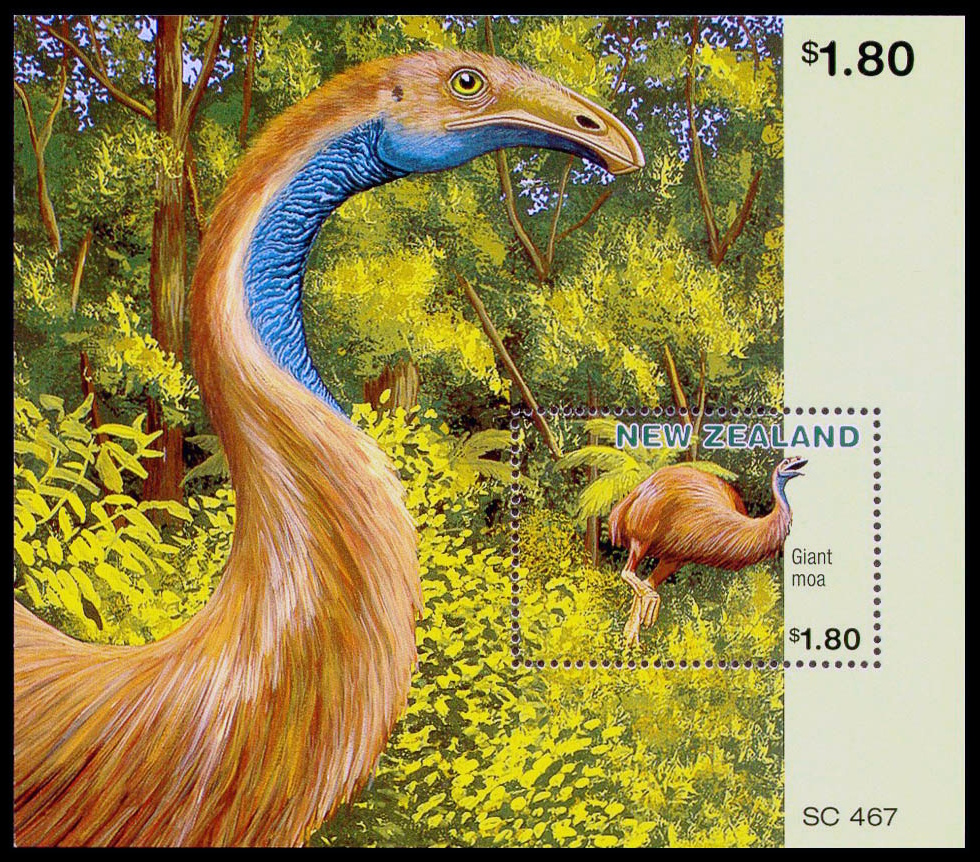 |
| Extinct bird Moa stamp of New Zealand 1996, MiNr.: Bl. 58; Scott: 1398a. |
"the Geographic Distribution of Birds of prey, and on the Geographical Distribution of Birds of prey, and on the Gigantic Birds of New Zealand, and on the Congregational Distribution of New Zealand, and on the Congregational Distribution of Birds"
This lecture focused on the geographical distribution of both living and extinct animals, particularly large flightless birds such as the New Zealand Dinornis (Moa), Emu, Ostrich, and the Dodo from Mauritius. Owen presented evidence, including fossil remains and comparative skeletal diagrams, to challenge the prevailing hypothesis that all species had dispersed from a single centre in Asia.
In the 1840s, many naturalists interpreted the distribution of species through a creationist framework. It was commonly assumed that after the Flood, the animals left the Ark and dispersed outward, implying a single point of origin - often placed somewhere in the Middle East. Before Charles Darwin’s theory of evolution gained acceptance, many scientists believed that God had created species in one or several distinct regions, and that geographical barriers determined how far they could spread. Within this context, Owen and others debated whether creation had a single centre or multiple independent centres.
 |
| God creates animal on stamp of Germany 2014, MiNr.: 3085; Scott: 2790.
|
On the second day of the meeting, the newly appointed Bishop of Norwich, Samuel Hinds, presided and commended the Museum for offering both education and wholesome recreation to the working classes. Secretary George Ransome reported that the Museum had received more than 65,000 visits during the year - evidence of growing public interest, and noted numerous donations of specimens, books, and even a telescope from the Duke of Hamilton.
During the proceedings, Ipswich was proposed as the host city for the 1851 meeting of the British Association for the Advancement of Science.
The Association did indeed meet in Ipswich in 1851, where the Museum was visited and warmly praised by His Royal Highness Prince Albert, who subsequently became its official Patron. At the meeting, palaeontological discussions centered on new discoveries from the local Red and Coralline Crag formations, including fossil sharks, mammals, and echinoderms. James Scott Bowerbank (1797–1877) reported on pterodactyl remains and other notable vertebrate fossils, while Richard Owen contributed observations on Eocene mammals. Collectively, the papers reflected ongoing revisions to Britain’s Tertiary fossil record.
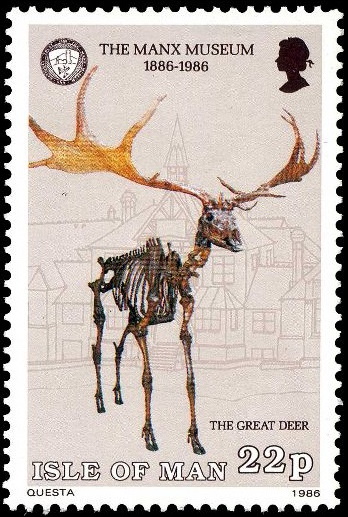 |
| Skeleton of "Irish Elk" on stamp of Isle of Man 1986, MiNr.: 304, Scott: 303. |
Later that day, more than sixty gentlemen attended a formal dinner at which the speakers highlighted the harmony between scientific inquiry and religious understanding, as well as the Museum’s moral contribution to society. The evening concluded with a well-attended evening event at the Museum itself, featuring lectures by Professor Adam Sedgwick on the Irish Elk, known as Megaloceros giganteus today; and Professor Henslow, who discussed recent advances in botany and the classification of local plant species.
Henslow’s presentation complemented the palaeontological discussions of the day, highlighting the interconnections between living and fossilized organisms and adding to the celebratory atmosphere.
Acknowledgements:
- Many thanks to Dr. Peter Voice from Department of Geological and Environmental Sciences, Western Michigan University, for reviewing the draft page and his very valuable comments.
References:
-
Richard Owen (1804-1892):
Wikipedia, Encyclopaedia Britannica, Strange Science.
- "The Dinosaur Hunters: A True Story of Scientific Rivalry and the Discovery of the Prehistoric World", by Cadbury, Deborah, published in 2012 by HarperCollins Publishers, ISBN 9780007388943.
- "Richard Owen, Biology without Darwin" by Nicolaas A. Rupke, published in 2009, ISBN: 978-0-226-73177-3.
- The letters from George Ransome to Professor Owen: the Library and Archives collections of the Natural History Museum, London
- William Clift (1775-1849): Wikipedia
- Mourning stationery: Wikipedia
- George Ransome (1811–1876):
-
Ipswich Museum:
Wikipedia,
official website.
- "The Ipswich Journal, and Suffolk, Norfolk, Essex, and Cambridgeshire Advertiser", No. 3703 from the Saturday, December 15th, 1849: British Newspaper Archive
- John Stevens Henslow (1796–1861): Wikipedia