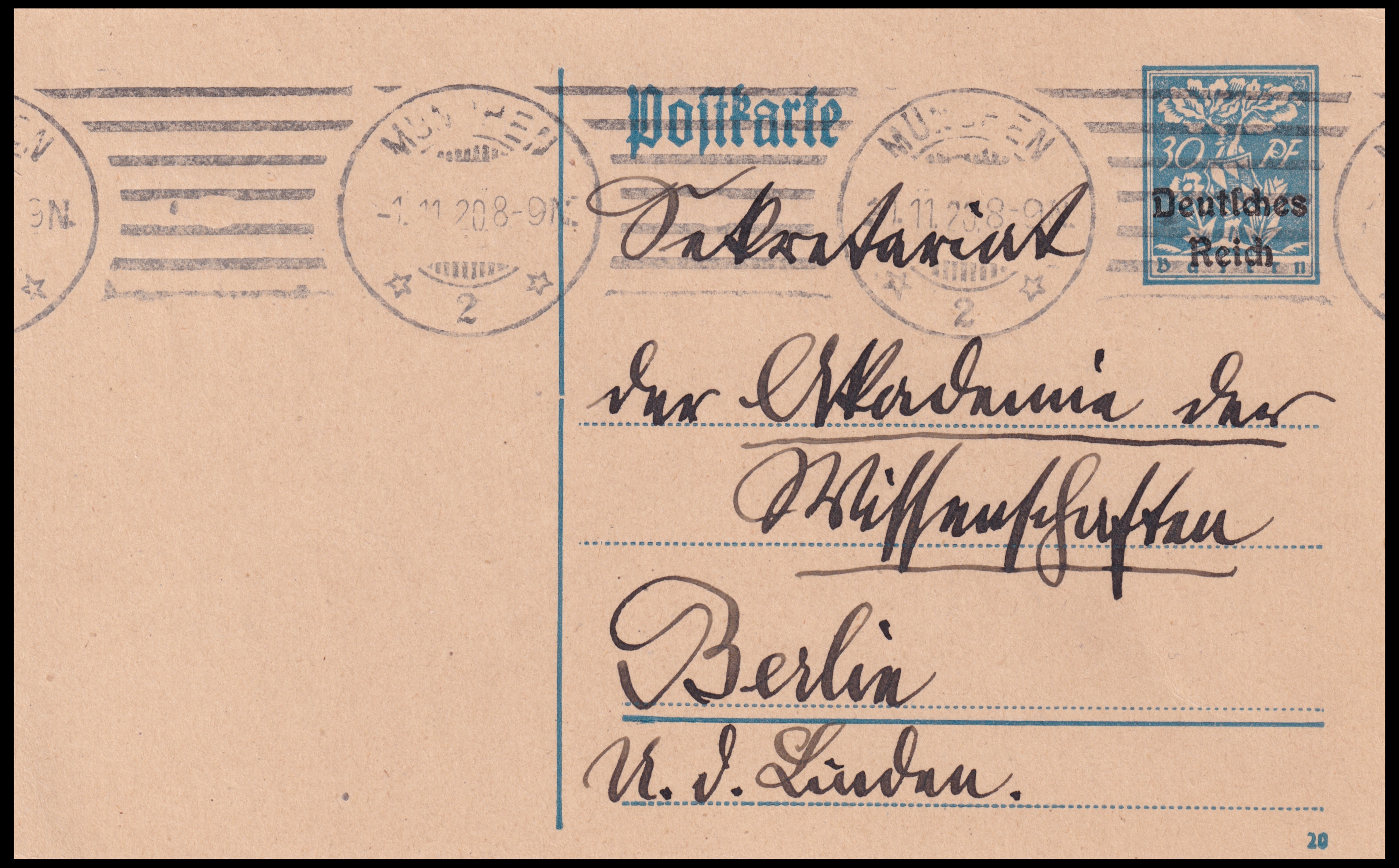
Postcard sent by Wilhelm von Branca from Munich to the Prussian Academy of Sciences in Berlin in 1920
 |
 |
| Postcard sent by Wilhelm von Branca from Munich to the Prussian Academy of Sciences in Berlin in 1920 (Weimar Republic) | |
The postcard
|
Original, German, text Sekretariat der Akademie der Wissenschaften Berlin U. d. Linden. |
English translation The Secretariat of the Academy of Sciences Berlin U. d. Linden. |
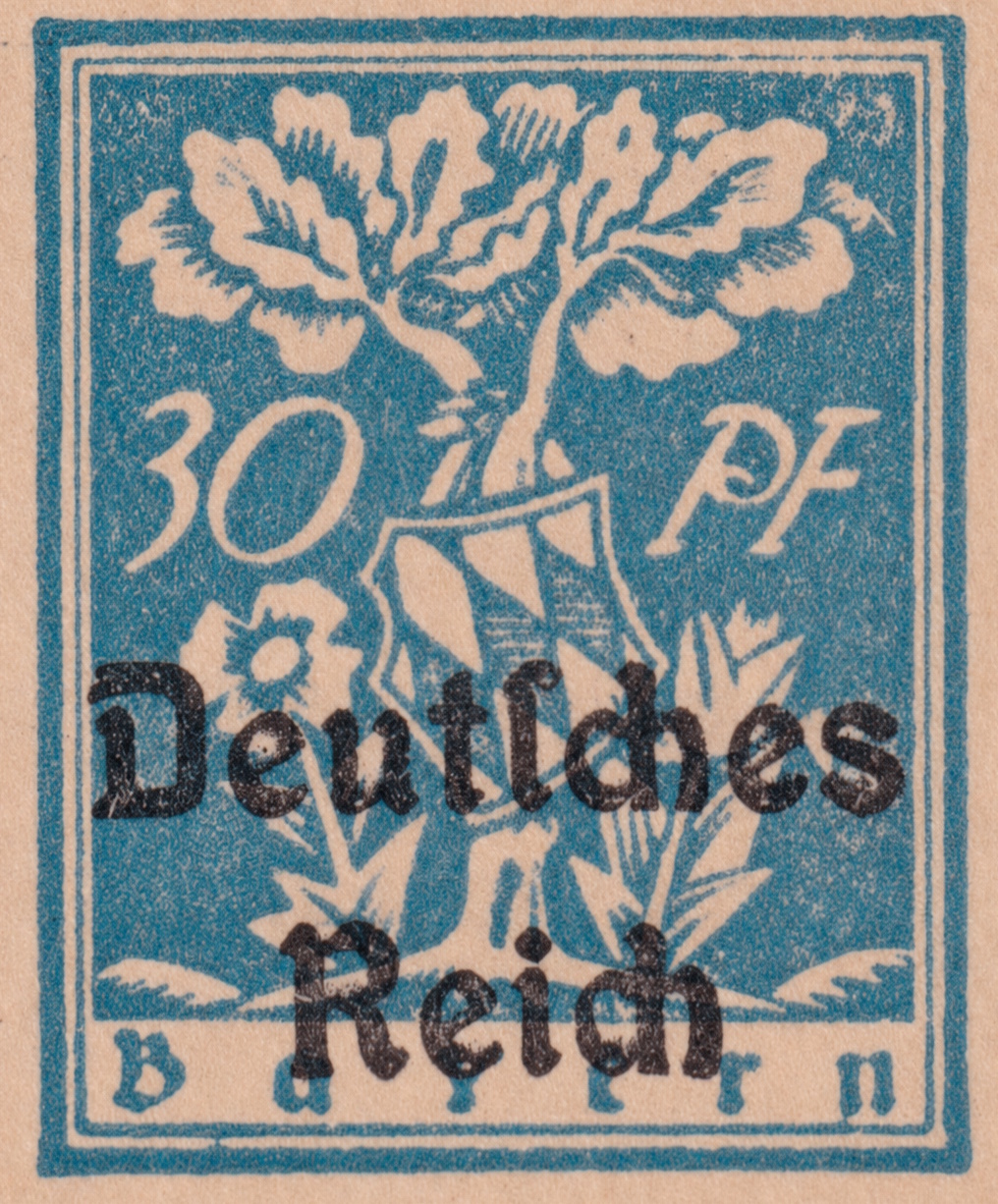
The postcard itself is also historically significant as a piece of German postal stationery from the transitional period following World War I. Produced in 1920, it features a Bavarian definitive stamp design that was overprinted with “Deutsches Reich” to mark the integration of Bavaria's autonomous postal administration into the national Reichspost.
The pre-printed stamp reproduces the 30 Pfennig definitive stamp of Bavaria (Bayern). The number 20 on the bottom right corner of the postcard indicates the year of manufacture - 1920.

 |
Bavaria subsequently became part of the Weimar Republic, which replaced the imperial system after the fall of the German Empire (Deutsches Reich) at the end of World War I.
In historical usage, the term “German Empire” ( “Deutsches Reich”) is sometimes loosely extended into the early Weimar period, although politically the monarchy ended in 1918 and the republic formally succeeded it.
The following details can be read from the postmark, beyond the date:
 |
- “8–9N” after the date indicates the evening postal collection period. The letter “N” stands for Nachmittag (“afternoon”), and in this context refers to the 8:00–9:00 p.m. (20:00–21:00) dispatch interval.
- The number “2” at the bottom identifies Munich (München) Post Office No. 2, located inside Munich Central Station (Hauptbahnhof).
-
The wavy lines at the sides of the postmark indicate a machine cancellation
rather than a hand-applied postal stamp.
This suggests that von Branca most likely deposited the postcard directly into a mailbox at the city instead of presenting it at a postal service counter.
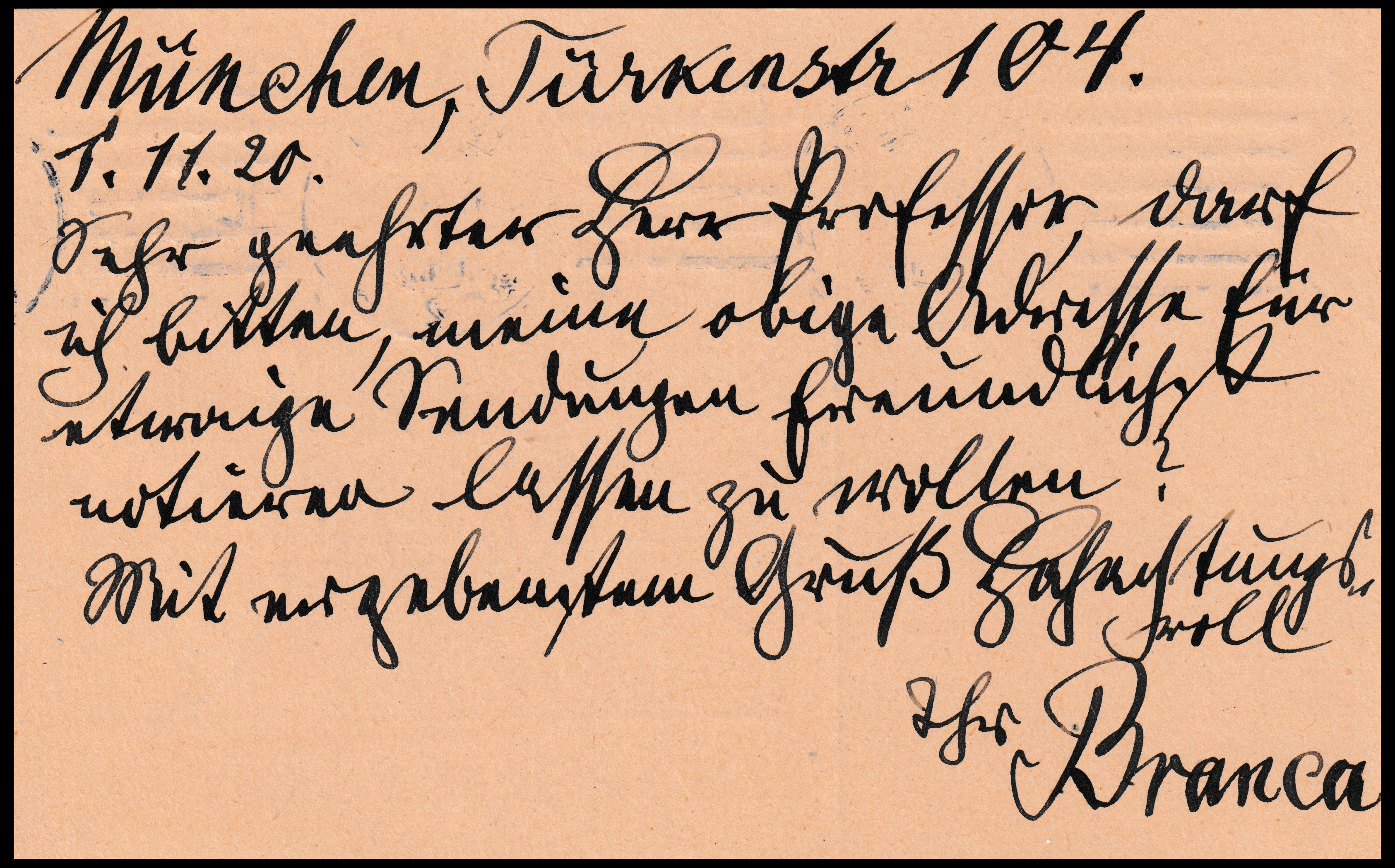
The message
|
Original, German, text München, Türkenstr. 104. 1.11.20. Sehr geehrter Herr Professor, darf ich bitten, meine obige Adresse für etwaige Sendungen freundlichst notieren lassen zu wollen ? Mit ergebenstem Gruß hochachtungsvoll Ihr Branca |
English translation Munich, Tuerkenstr. 104. 1.11.20 Dear Professor, may I kindly request you to use my address noted above for any future mailings ? With most sincere regards, respectfully yours, Branca |
After retiring from his academic career in Berlin on April 1st, 1917, von Branca relocated to Munich in 1918, where he lived until his death in 1928.
During the final years of his career, Branca increasingly suffered from health problems, particularly gout, and frequently sought relief in health spas and climatic resorts in southern Germany, especially in the spa regions of Baden and the Alpine foothills. The search for a milder climate appears to have been an important factor in his decision to leave Berlin and settle in southern Germany after retirement. The family initially considered relocating to Merano in northern Italy, but the plan failed when the Italian authorities refused to issue passports. Instead, the Brancas moved to Munich.
 |
|
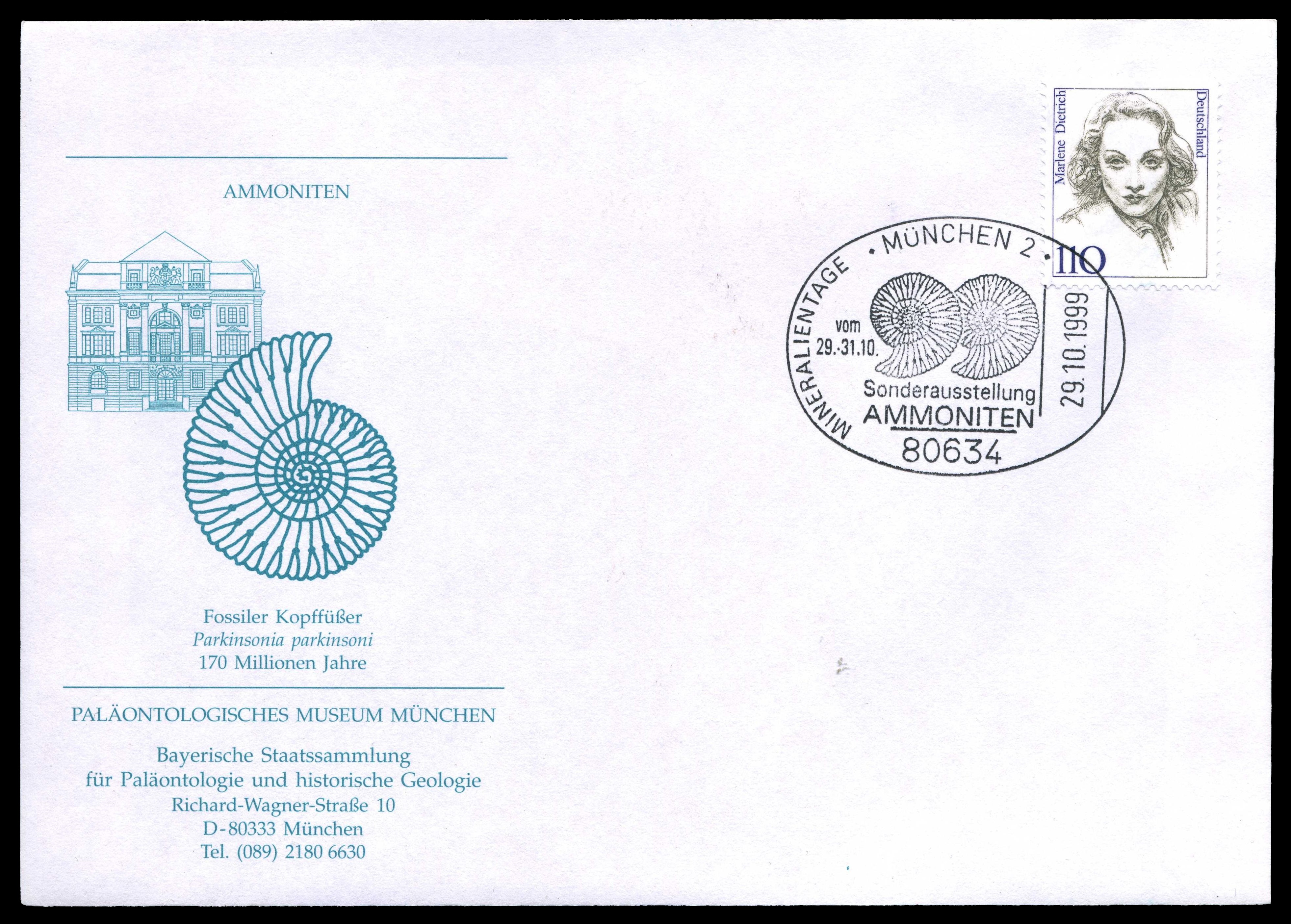
Commemorative cover of Paleontological Museum of Munich 1999,
with Ammonites on the postmark. |
He had first lived in Munich between 1878 and 1880 while studying fossil collections with Karl Alfred von Zittel at the Bavarian State Collection, residing in the Maxvorstadt district on Türkenstraße and later on Arcisstraße. During this period, Wilhelm von Branca focused his studies almost exclusively on fossil cephalopods, particularly ammonites.
Although his subsequent professorship at the University of Tübingen from 1890 to 1895 took him away from Munich, his return to the city after retiring in 1917 allowed him to spend his final years in a familiar and culturally rich environment, close to his early scientific roots.
 |
 |
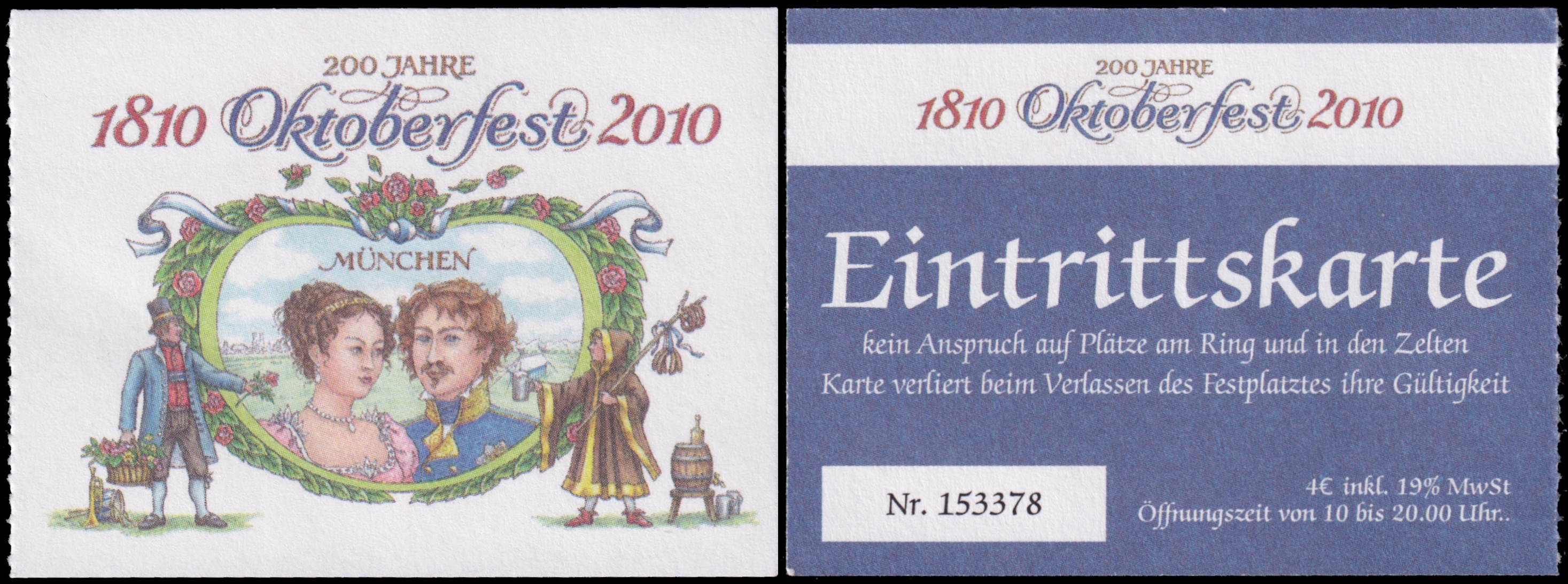 |
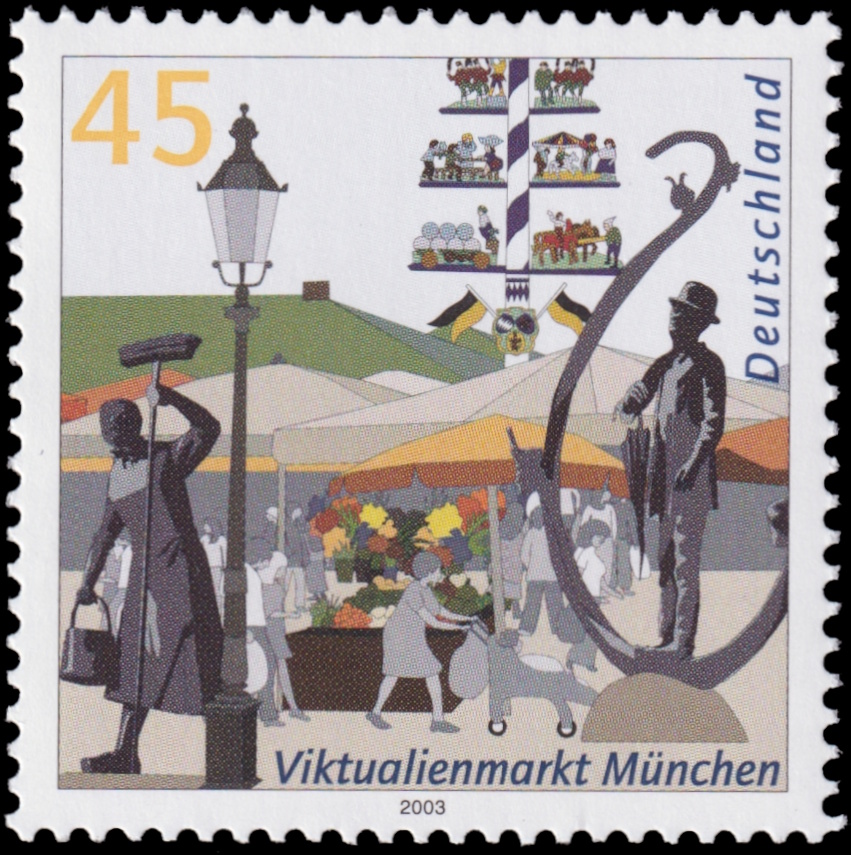
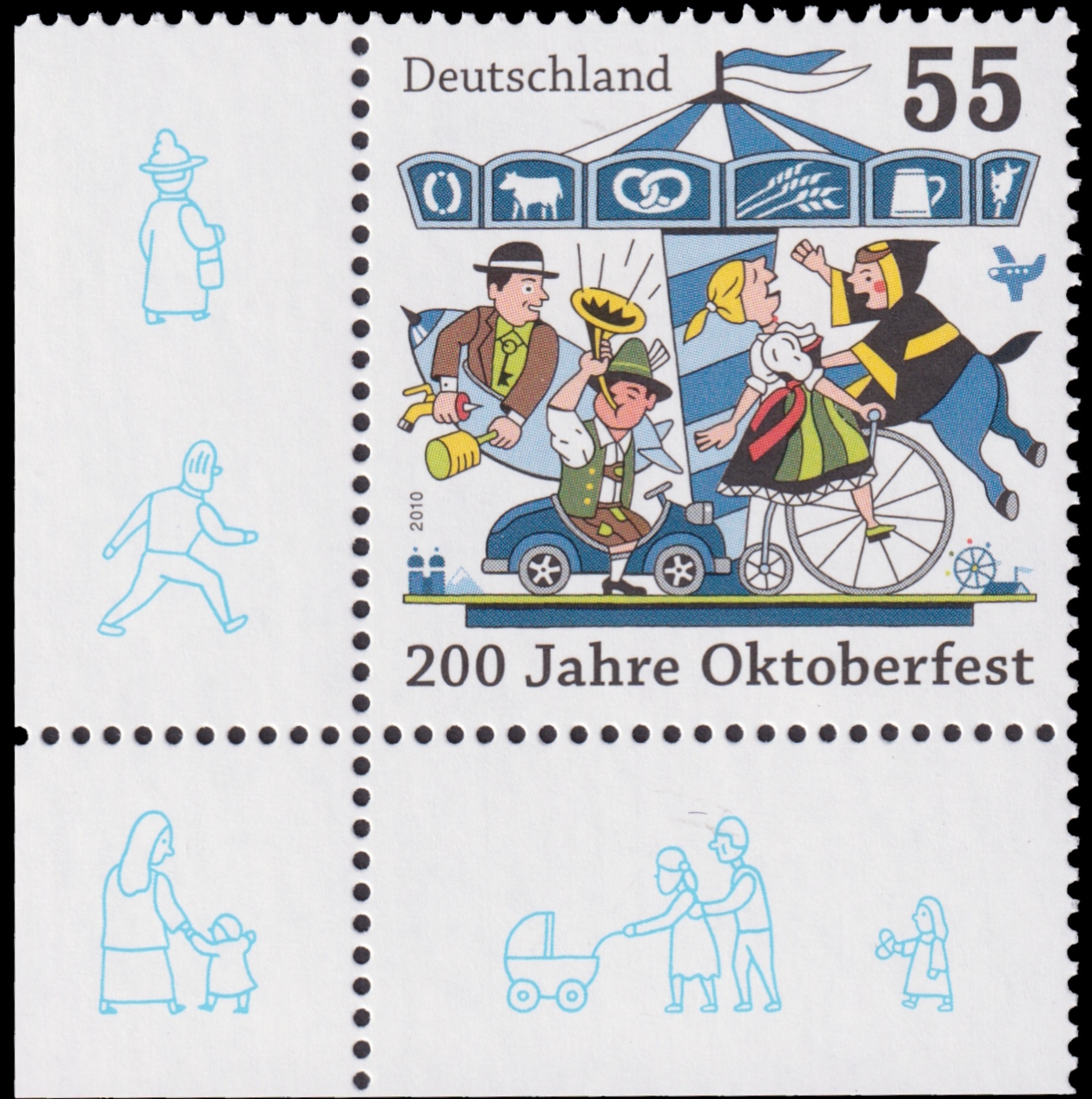
| Viktualenmarkt in Munich - a famous, permanent open-air food market in the heart of Munich's Old Town, on stamp of Germany 2003 | Germany 2010 – postage stamp and entrance ticket to the traditional Oktoberfest market. The Oktoberfest in Munich is the world’s largest beer festival and fun fair, and celebrated its 200th anniversary in 2010. No specific historical record or diary entry is known to the author that confirms Wilhelm von Branca visited the Oktoberfest during his years in Munich. However, given the chronology of his life and the proximity of his residences to the festival grounds, it is highly probable that he attended the event at least once. | |
Finding permanent housing during the difficult postwar years proved challenging, so Wilhelm von Branca and his wife lived at several temporary addresses in Munich and elsewhere in Bavaria while searching for a location better suited to Branca’s health. Eventually, they settled permanently at Kurfürstenplatz 8, where Branca spent the remainder of his retirement while continuing to correspond with universities, academies, and scientific societies.
By 1920, the family was residing at Türkenstraße 104 in the Maxvorstadt district, near the Ludwig Maximilian University of Munich. As a long-standing member of the Prussian Academy of Sciences, von Branca continued to receive official correspondence and scholarly publications from Berlin.
He mailed this postcard on November 1st, 1920, to ensure that Academy correspondence would be redirected to his Munich residence.
Even during his retirement in Munich, von Branca remained scientifically active. In 1920 he published the article Einiges über das Werden des Menschengeschlechtes (“Some Remarks on the Development of Humankind”) in the journal Deutsche Revue, reflecting his continued interest in evolution and paleoanthropology.
Administrative records from 1925 show that his membership was formally reclassified as that of an External Member (Auswärtiges Mitglied) because he permanently resided outside Prussia in Bavaria. The Academy continued sending correspondence to his Munich address until his death in 1928.
Wilhelm von Branco / von Branca
Wilhelm von Branco (1844–1928) was one of Germany’s most influential paleontologists and geologists of the late 19th and early 20th centuries. Born as Wilhelm Branco in Potsdam, he studied geology and natural sciences at the universities of Halle and Heidelberg, and completed further academic training in Rome and Berlin before beginning an academic career.Branco was well known for his research on fossil cephalopods, dinosaurs, and the geological structure of volcanic regions in Europe and the Middle East. He held professorships at several German universities before becoming professor of geology and director of the Geological-Paleontological Institute and Museum at the University of Berlin, later associated with the Museum für Naturkunde.
.png "Wilhelm von Branca") |
|
Wilhelm von Branca in 1899. Image source Wikimedia. |
He continued to teach in Württemberg for several more years before moving to Berlin (Kingdom of Prussia) in 1899, where he stayed until the end of his career in 1917. However, in Prussia his Württemberg title was not fully recognized for official purposes. Prussian authorities generally distinguished between hereditary nobility and personal ennoblements granted by other German states, limiting the official status of such titles. This situation appears to have caused considerable frustration for Branca during his years in Berlin.
In 1907, after establishing close ties with the Italian branch of his family, he changed his surname to von Branca, reflecting the original Italian spelling of the family name. However, he continued to use the name von Branco in many of his scientific publications.
Today, von Branca is best remembered for overseeing and promoting the famous Tendaguru Expedition (1909–1913) in German East Africa (modern Tanzania), one of the largest dinosaur excavations ever undertaken by German paleontologists. The expedition uncovered spectacular Jurassic dinosaur fossils, including remains of Giraffatitan brancai (originally classified as Brachiosaurus brancai), which was named in his honour. Many of these fossils remain among the most important exhibits in the Berlin natural history collections and were depicted on postage stamps.
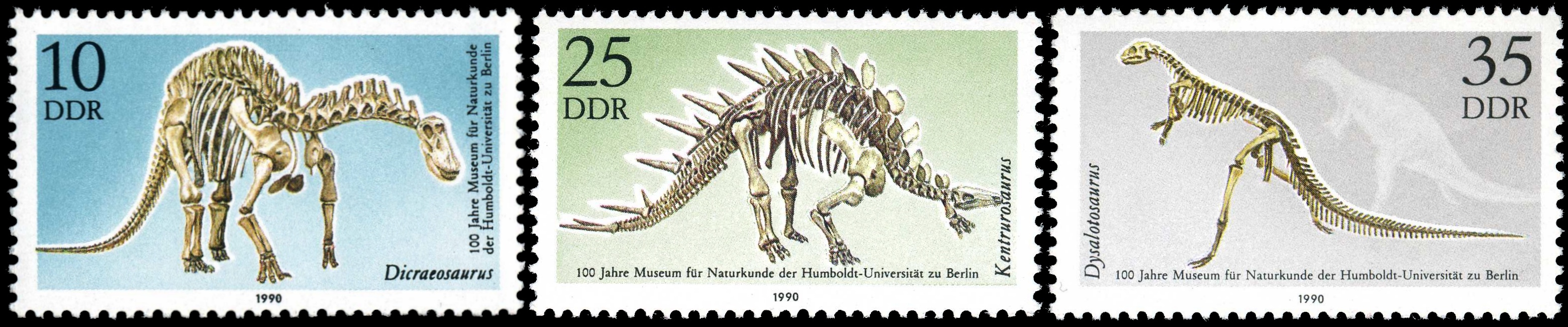 |
| Skeletons of three dinosaurs discovered during the Tendaguru Expedition and mounted in the Museum für Naturkunde, Berlin, depicted on postage stamps issued by the German Democratic Republic in 1990: Dicraeosaurus hansemanni, Kentrurosaurus aethiopicus, Dysalotosaurus lettow-vorbecki MiNr: 3324, 3325, 3326; Scott: 2812, 2813, 2814 respectfully. |
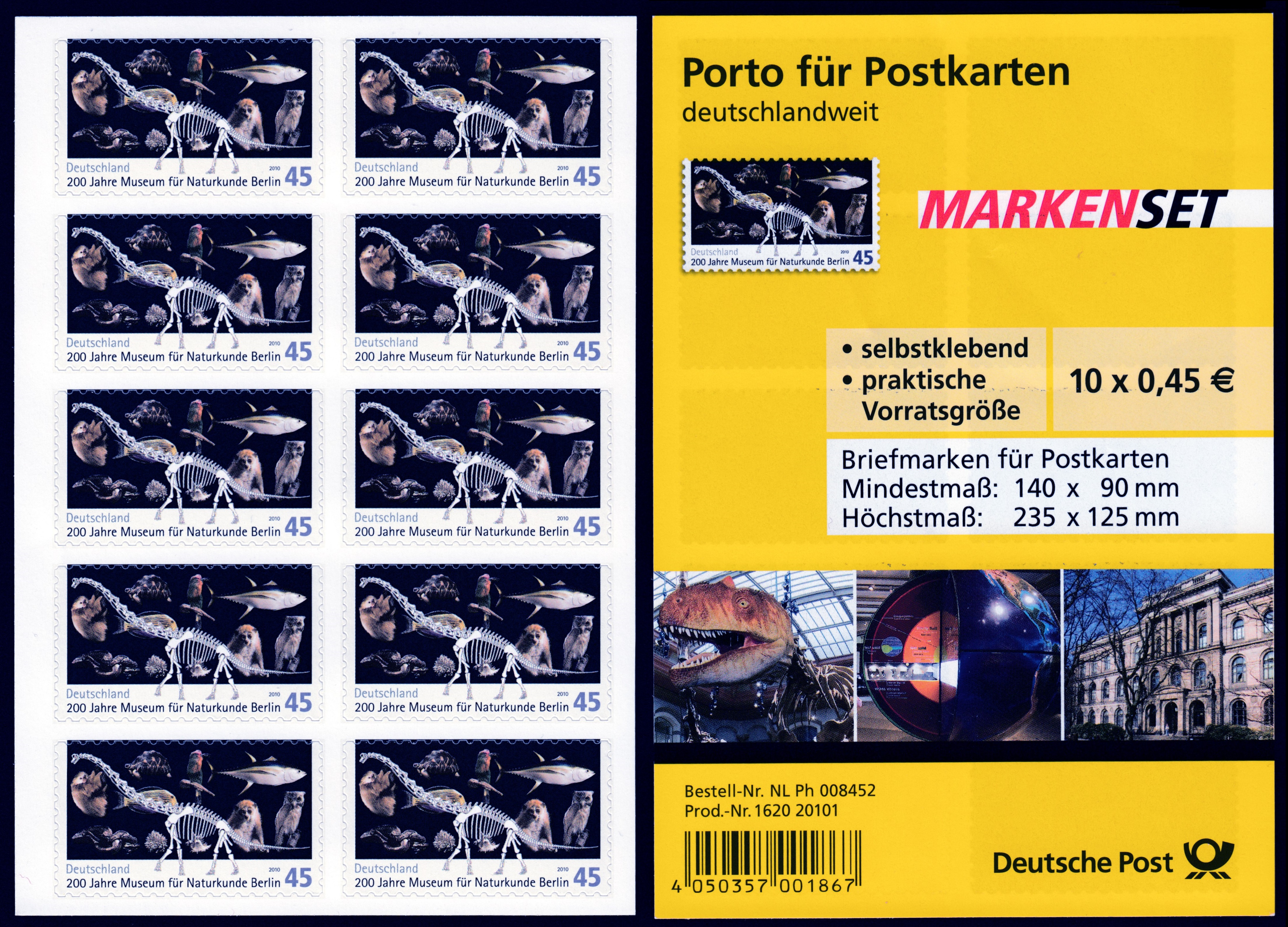 |
| Giraffatitan brancai on German postage stamp "Bicentenary of Nature Science Museum in Berlin" from 2010, the main entrance of the museum and some exhibits depicted on the reverse side of the booklet with 10 self-adhesive stamps. |
 |
| Natural History Museum in Berlin on cachet of FDC of German Democratic Republic 1990. |
Von Branca strongly supported Darwinian evolution at a time when evolutionary ideas were still debated within parts of the German scientific community. He also encouraged large-scale interdisciplinary research that combined geology, paleontology, zoology, and comparative anatomy.
Von Branca was also influential as an academic organizer and mentor.
He trained a generation of German geologists and paleontologists who later occupied important university and museum positions throughout Germany. Through his publications, university teaching, museum administration, and membership in the Prussian Academy of Sciences, he helped shape the direction of German paleontology during a period when the discipline was becoming increasingly professionalized and internationally connected.
Even after his retirement in 1917 and the political collapse of Imperial Germany in 1918, von Branca remained an important figure within German scientific institutions during the early Weimar Republic. His continued correspondence with the Prussian Academy of Sciences demonstrates that he retained scholarly influence and institutional recognition until the end of his life.
Acknowledgements:
- Many thanks to Dr. Peter Voice from Department of Geological and Environmental Sciences, Western Michigan University, for reviewing the draft page and his very valuable comments.
References:
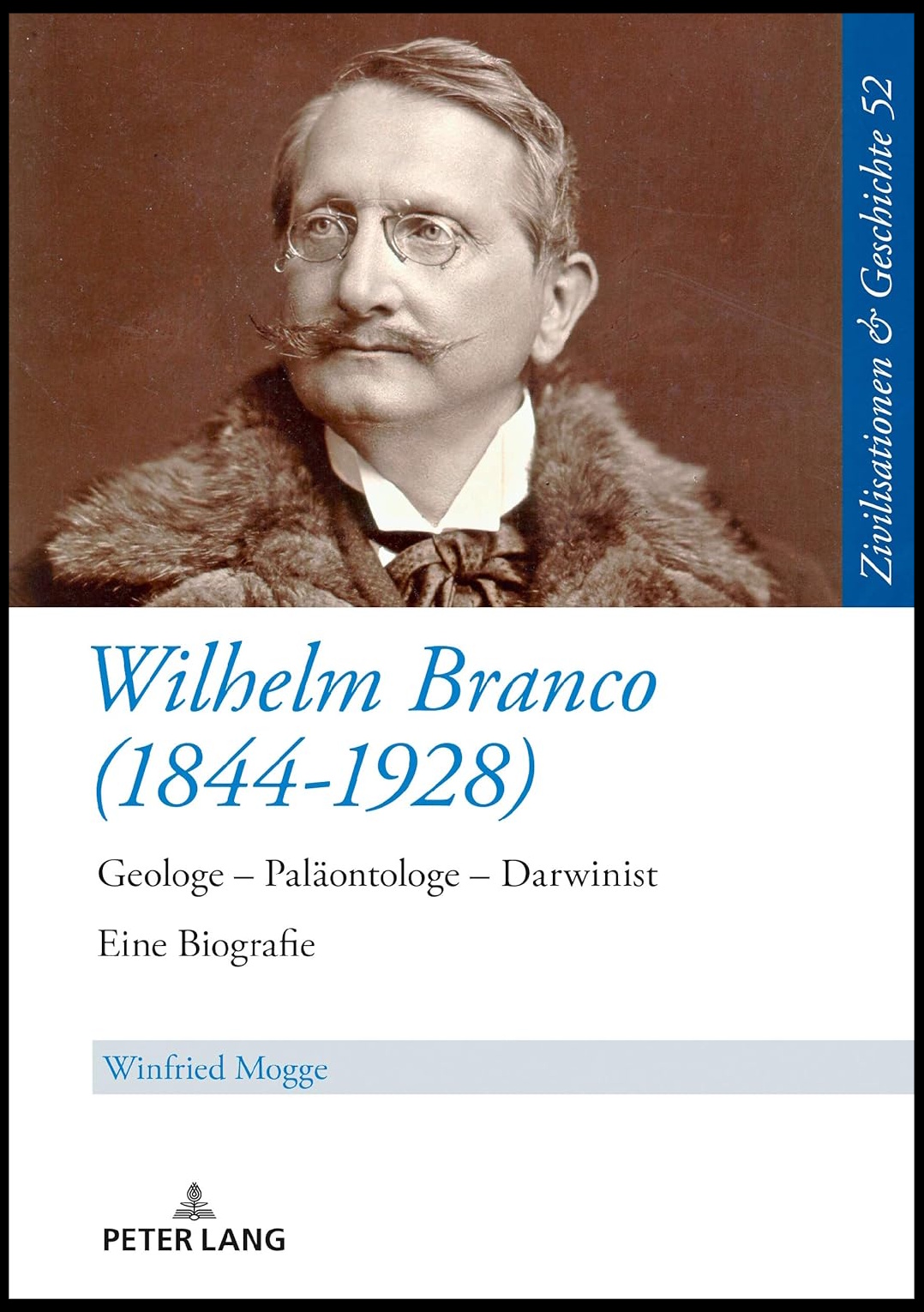 |
| Amazon: USA, DE |
- Wilhelm Branco / Wilhelm von Branca (1844 -1928):
Wikipedia, Deutsche Biographie (in German), Berlin-Brandenburgische Akademie der Wissenschaften (in German), Wikipedia, - Weimar Republic / Deutsches Reich (1918 -1933):
Wikipedia, Encyclopedia Britannica. - Prussian Academy of Sciences (Königlich-Preußische Akademie der Wissenschaften):
Wikipedia, The Berlin-Brandenburg Academy of Sciences and Humanities. - Tendaguru Expedition (1909 -1913):
Natural History Museum in Berlin,
"Dinosaurierfragmente: Zur Geschichte der Tendaguru-Expedition und ihrer Objekte, 1906-2018", Ina Heumann, Holger Stoecker, Marco Tamborini, Mareike Vennen; published in 2018. Amazon: USA, UK, DE.