The letter from Curt Teichert to Professor R. Kräusel mailed in 1951
 |
 |
| The letter from Curt Teichert to Professor R. Kräusel mailed in 1951 | |
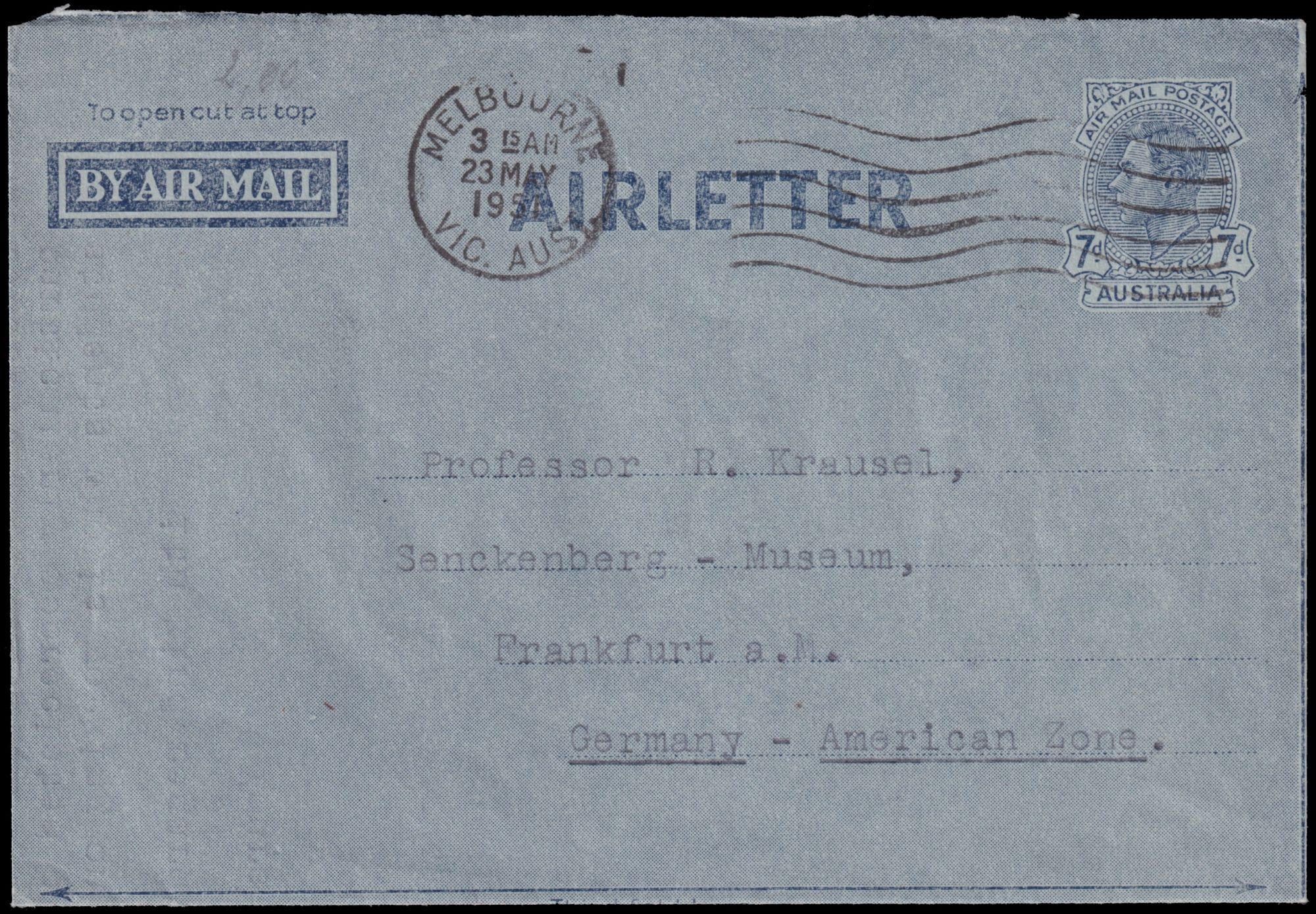
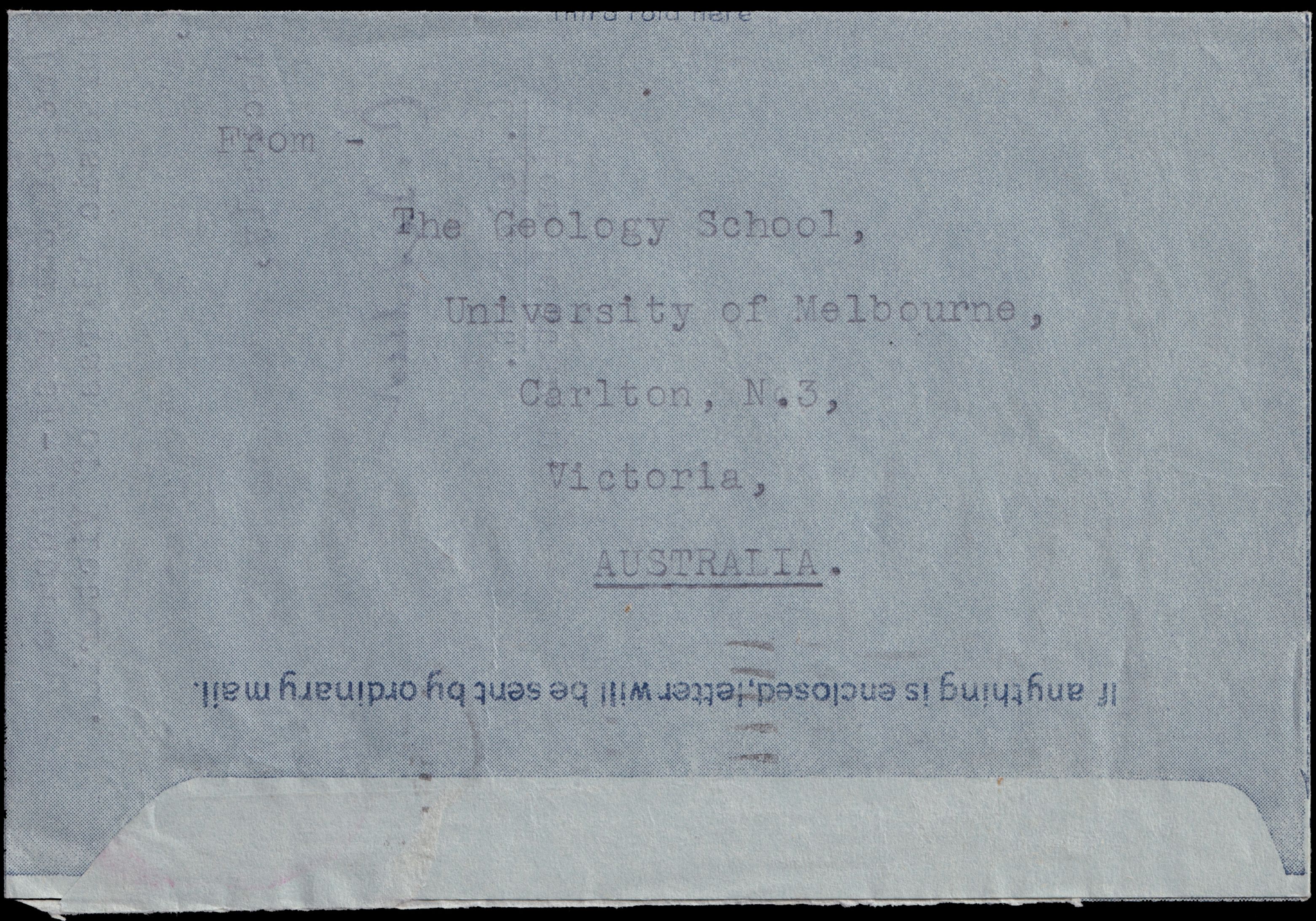
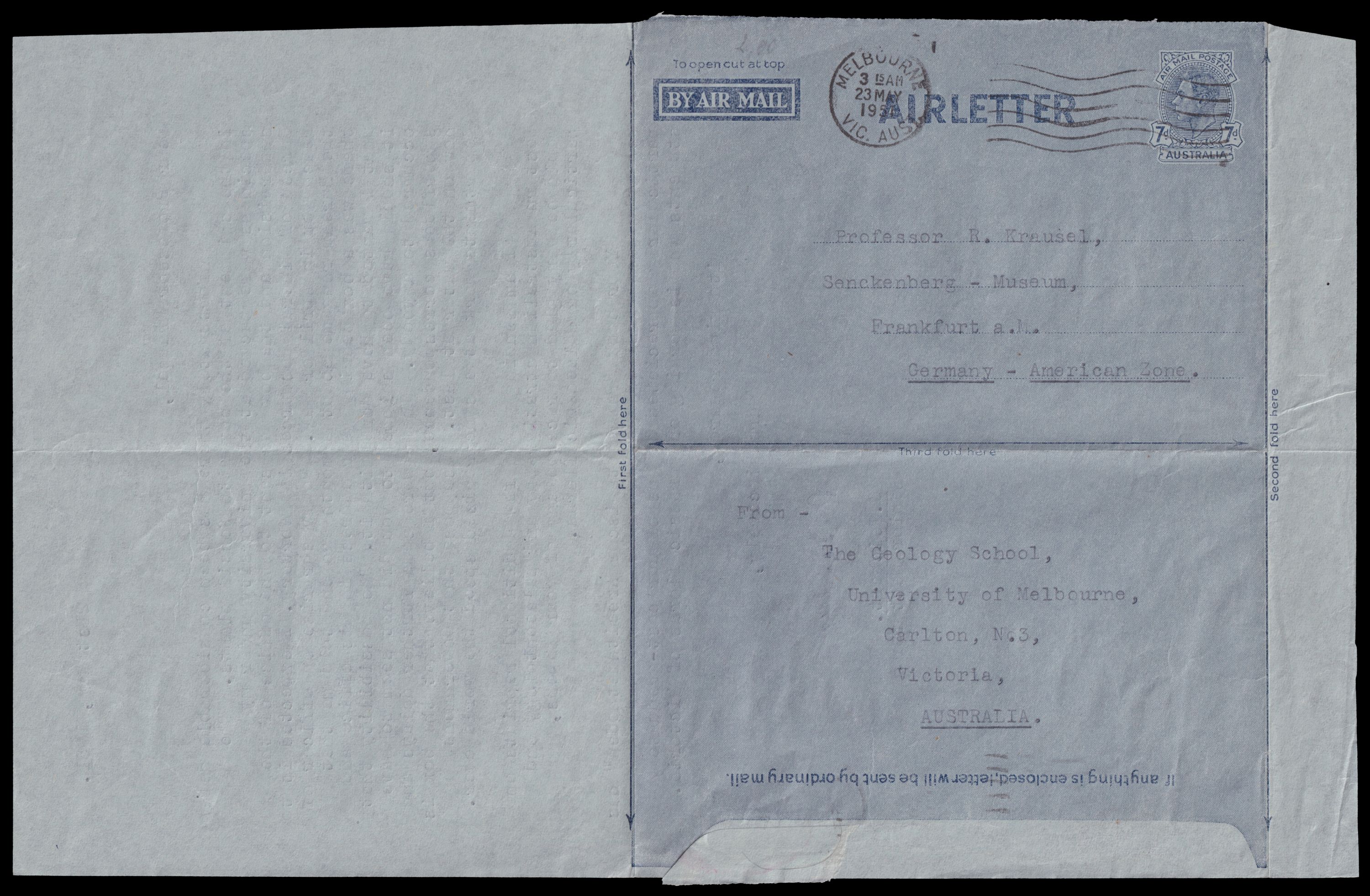
The letter (aerogramme) was sent from the University of Melbourne in Australia, to Professor R. Kräusel (Kraeusel) from the Senckenberg Museum in Frankfurt am Main in Germany (American Zone).
| The address on the front side: Professor R. Kräusel Senckenberg-Museum FRANKFURT a.M. Germany American Zone |
The address of the sender on the reverse side: The Geology School University of Melbourne Carlton, N.3 Victoria AUSTRALIA |
Following World War II, Germany was divided into four occupation zones.
Frankfurt am Main was located in the American Zone, as indicated on the front of the aerogramme.
In 1949, the
Federal Republic of Germany was established from the American,
British, and French zones, while the
German Democratic Republic emerged from the Soviet zone.
In 1990, both states were reunified to form the modern Federal Republic of Germany.
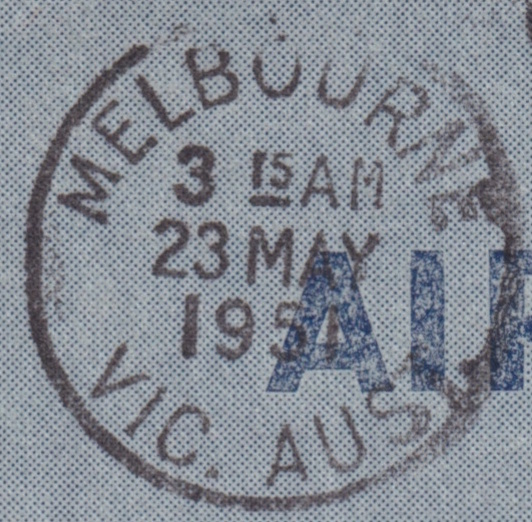 |
| The reconstructed postmark - click on it to see the original. |
The reverse side of the aerogramme contains the following warning: "If anything is enclosed, letter will be sent by ordinary mail".
The letter
The letter highlights how mid-20th-century geological research relied on the physical exchange of fossils and scientific literature, illustrating how scientific knowledge circulated between Europe and distant regions of the world long before the advent of electronic communication or even reliable communication by phone.
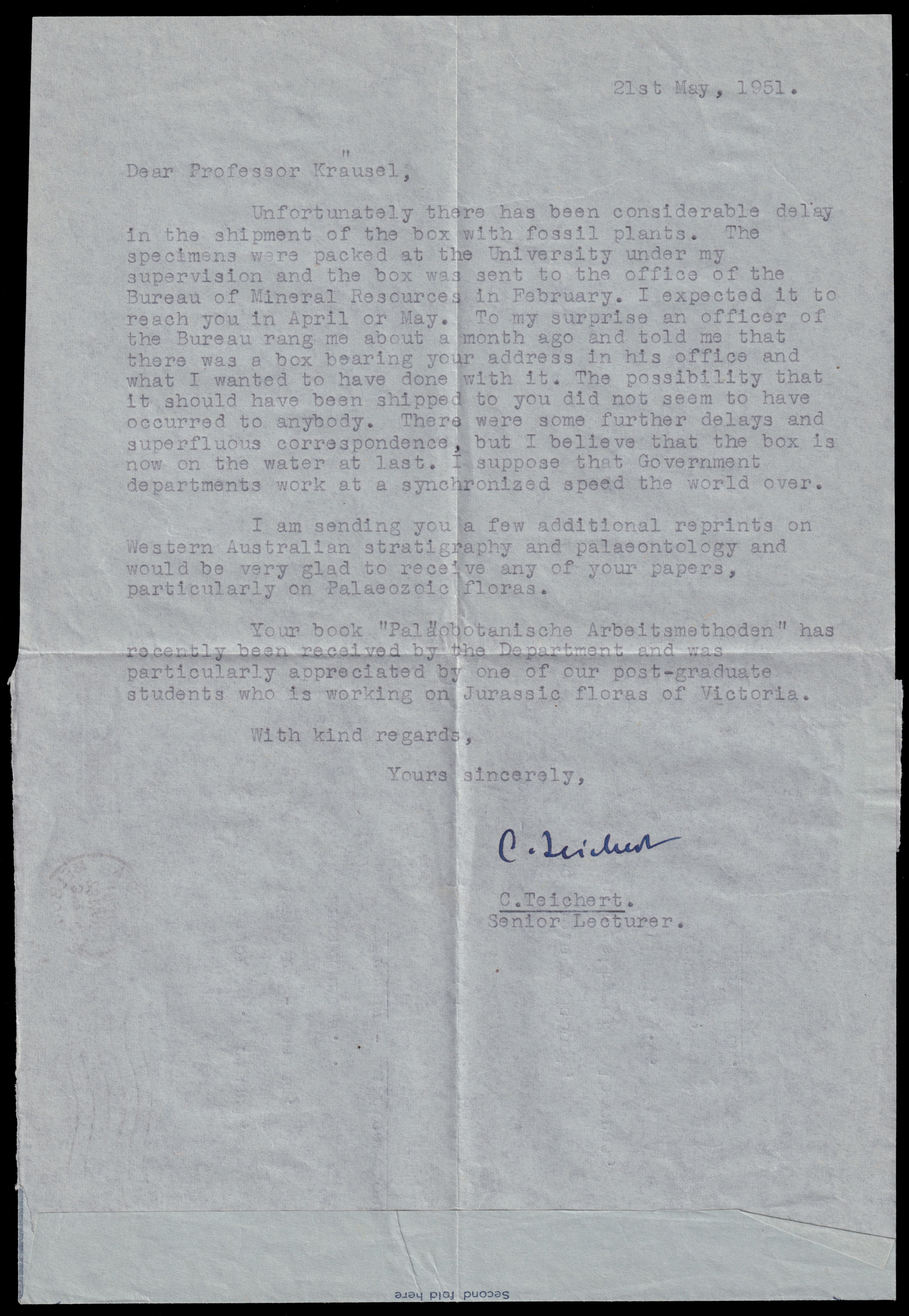
Teichert apologizes for the delay in sending the box of fossil plants and encloses additional reprints on Western Australian stratigraphy and paleontology, while requesting Kräusel’s latest papers on Paleozoic floras.
He also notes that one of Kräusel’s books had recently arrived at the University of Melbourne and was already being used by a postgraduate student studying Jurassic floras in Victoria.
21st May, 1951.
The letter from Curt Teichert to Professor R. Kräusel mailed in May 1951.
Dear Professor Kräusel,
Unfortunately there has been considerable delay in the shipment of the box with fossil plants. The specimens were packed at the University under my supervision and the box was sent to the office of the Bureau of Mineral Resources in February. I expected it to reach you in April or May. To my surprise an officer of the Bureau rang me about a month ago and told me that there was a box bearing your address in his office and what I wanted to have done with it. The possibility that it should have been shipped to you did not seem to have occurred to anybody. There were some further delays and superfluous correspondence, but I believe that the box is now on the water at last. I suppose that Government departments work at a synchronized speed the world over.
I am sending you a few additional reprints on Western Australian stratigraphy and palaeontology and would be very glad to receive any of your papers, particularly on Palaeozoic floras.
Your book "Paläobotanische Arbeitsmethoden" has recently been received by the Department and was particularly appreciated by one of our post-graduate students who is working on Jurassic floras of Victoria.
With kind regards,
Yours sincerely,
[Signature: C. Teichert]
C. Teichert. Senior Lecturer.
The personalities
| The sender, Curt Teichert, was a Senior Lecturer at the University of Melbourne and consultant to the Australian Bureau of Mineral Resources. | The recipient, "Professor R. Kräusel" (Richard Kräusel), was the head of the Department of Paleobotany and Botanical Paleontology at the Senckenberg Museum in Frankfurt am Main. |
Curt Teichert - the sender
Curt Teichert (1905–1996) was a German-American paleontologist and geologist, known for his work on Paleozoic stratigraphy, cephalopods, and global correlation of sedimentary rocks. His career spanned Europe, Australia, and the United States. Teichert was born on 8 May 1905 in Königsberg, East Prussia. He studied geology at the universities of Munich, Freiburg, and at Albertus University in Königsberg where he received his Ph.D. in 1928.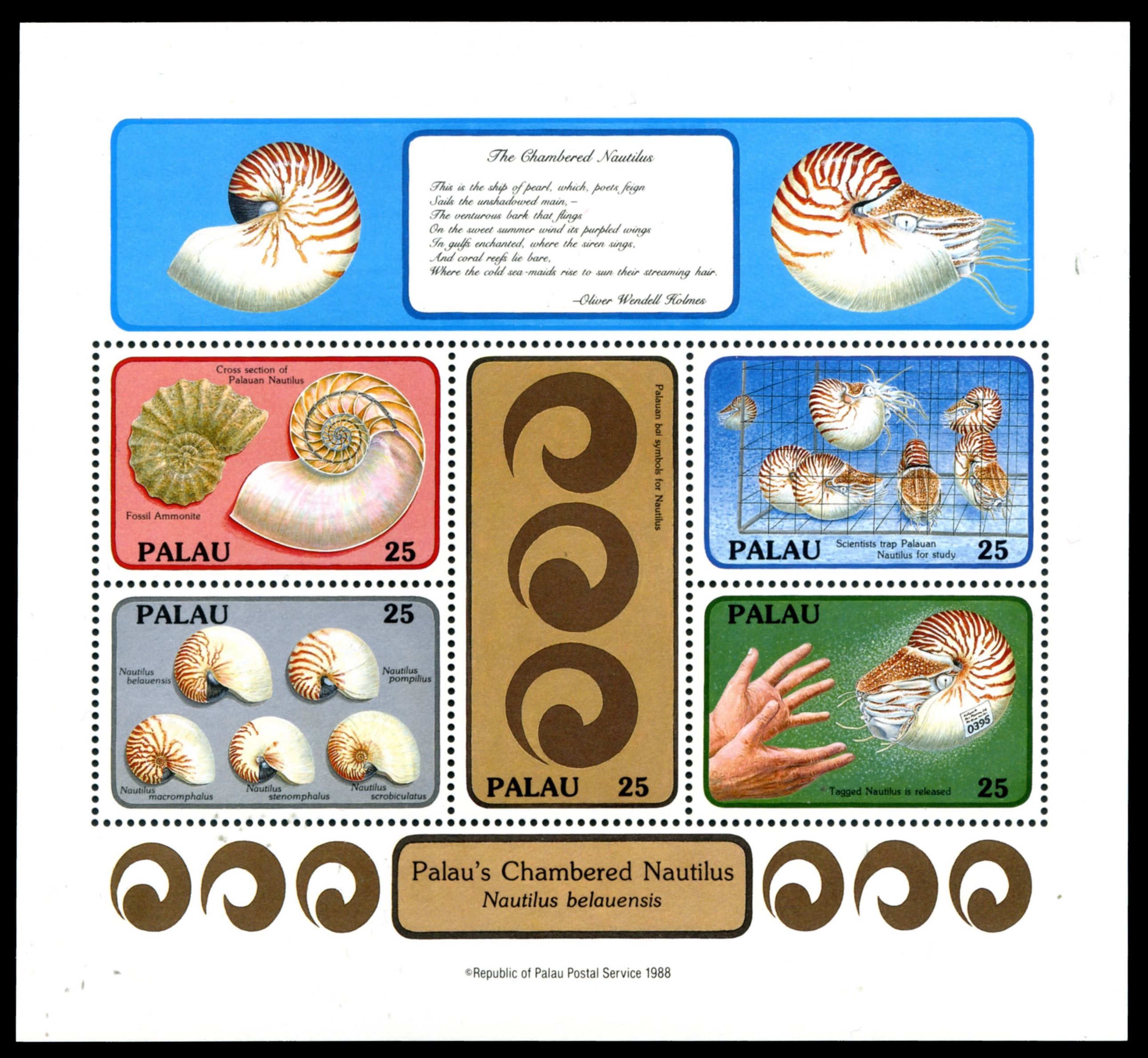 |
|
Palau 1988, Souvenir Sheet, MiNr: Block 13; Scott: 203. This philatelic issue focuses on the endemic cephalopod Nautilus belauensis. The top-left stamp illustrates a morphological comparison between a fossil ammonite and the internal chambered cross-section of a modern nautilus shell. This anatomical relationship reflects Teichert's research methodology, which utilized living nautiloids as modern analogues to reconstruct the shell geometries, buoyancy mechanisms, and paleoenvironments of extinct Paleozoic lineages. |
The rise of the Nazi regime forced a dramatic turn: because his wife Gertrud Kaufmann was Jewish, Teichert was advised by the University to divorce her. Instead, the couple fled to Copenhagen in 1933, where Curt received a small stipend in a temporary position as a research paleontologist.
A Carnegie Foundation grant enabled the Teicherts to move to Australia in 1937, where he had been offered a position at the University of Western Australia in Perth and where he became the only paleontologist in a vast, largely unexplored region. He conducted major studies on reefs, sedimentary basins, ammonites, and the Great Barrier Reef.
In 1949 he was invited by Raymond C. Moore from the University of Kansas to help compile the cephalopod volume of the monumental "Treatise on Invertebrate Paleontology", a project that would define much of his later career.
In 1951, Curt Teichert was in the final phase of his Australian career, based in Melbourne, and was simultaneously becoming deeply involved in the international effort to produce the Treatise on Invertebrate Paleontology.
At that time he served as Senior Lecturer at the University of Melbourne, a role he held from 1947 to 1952 and as consultant to the Australian Bureau of Mineral Resources during this period (1948–1952).
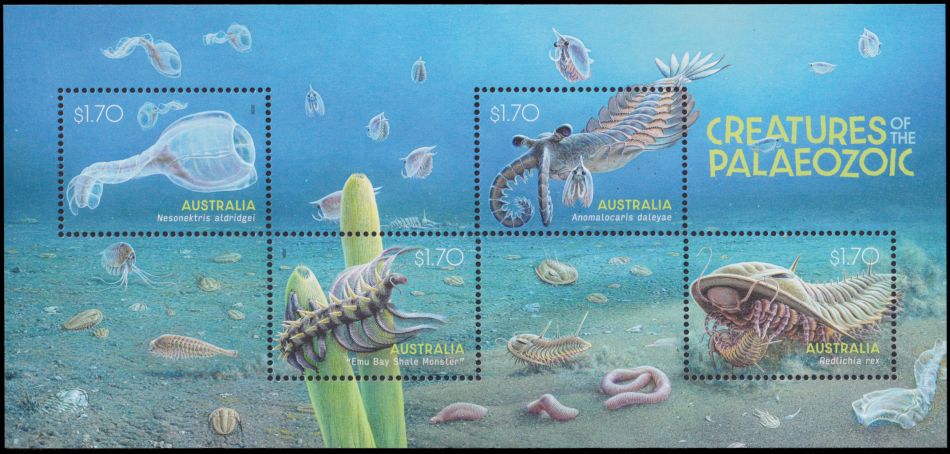
This issue showcases the exceptionally preserved 512-million-year-old soft-bodied marine fauna of the Emu Bay Shale. Curt Teichert played a historic role in validating the initial discoveries of the site's finder, Reg Sprigg, in 1952 and pioneered the mapping of Redlichia trilobite horizons across Australia, establishing the baseline stratigraphy for the continent's Cambrian System.
Professor Richard Kräusel - the receiver
Richard Kräusel (1890-1966) was a German paleobotanist. He studied botany and geology at the University of Breslau. From 1920 to 1952 he worked as a lecturer and professor at the University of Frankfurt. He was also associated with the Senckenberg Natural History Museum in Frankfurt, where he served as head of the department of paleobotany.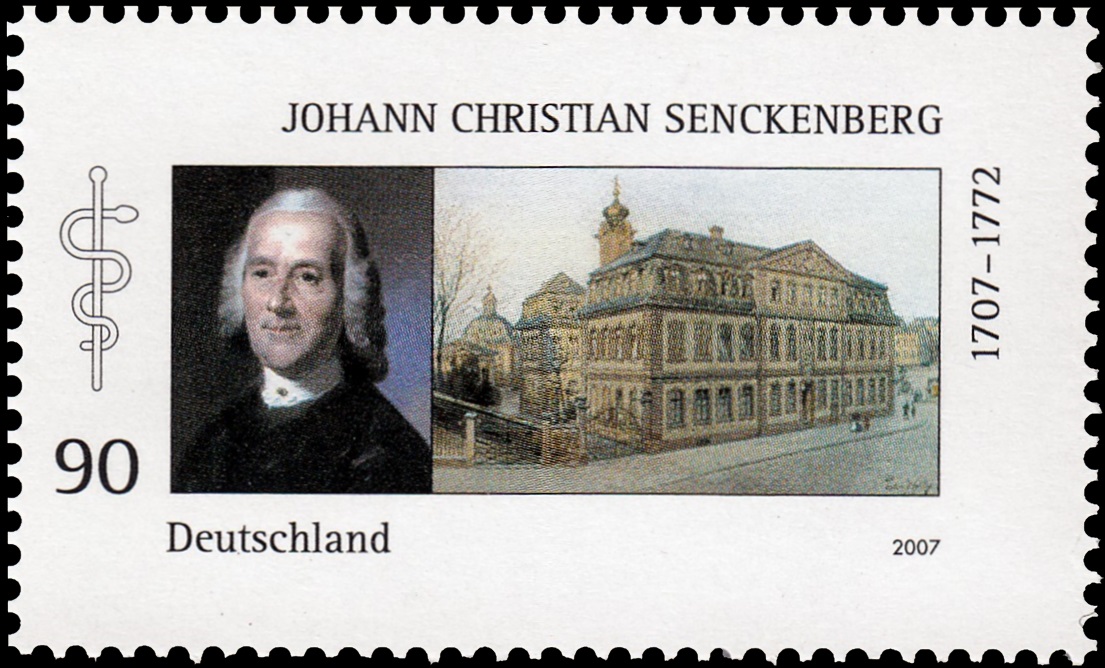 |
| "300th Anniversary of the Birth of Johann Christian Senckenberg" stamp of Germany 2007, MiNr.: 2588; Sn: 2430. The building depicted is the historic Senckenbergische Anatomie in Frankfurt am Main, the earliest institution founded through Senckenberg’s endowment. |
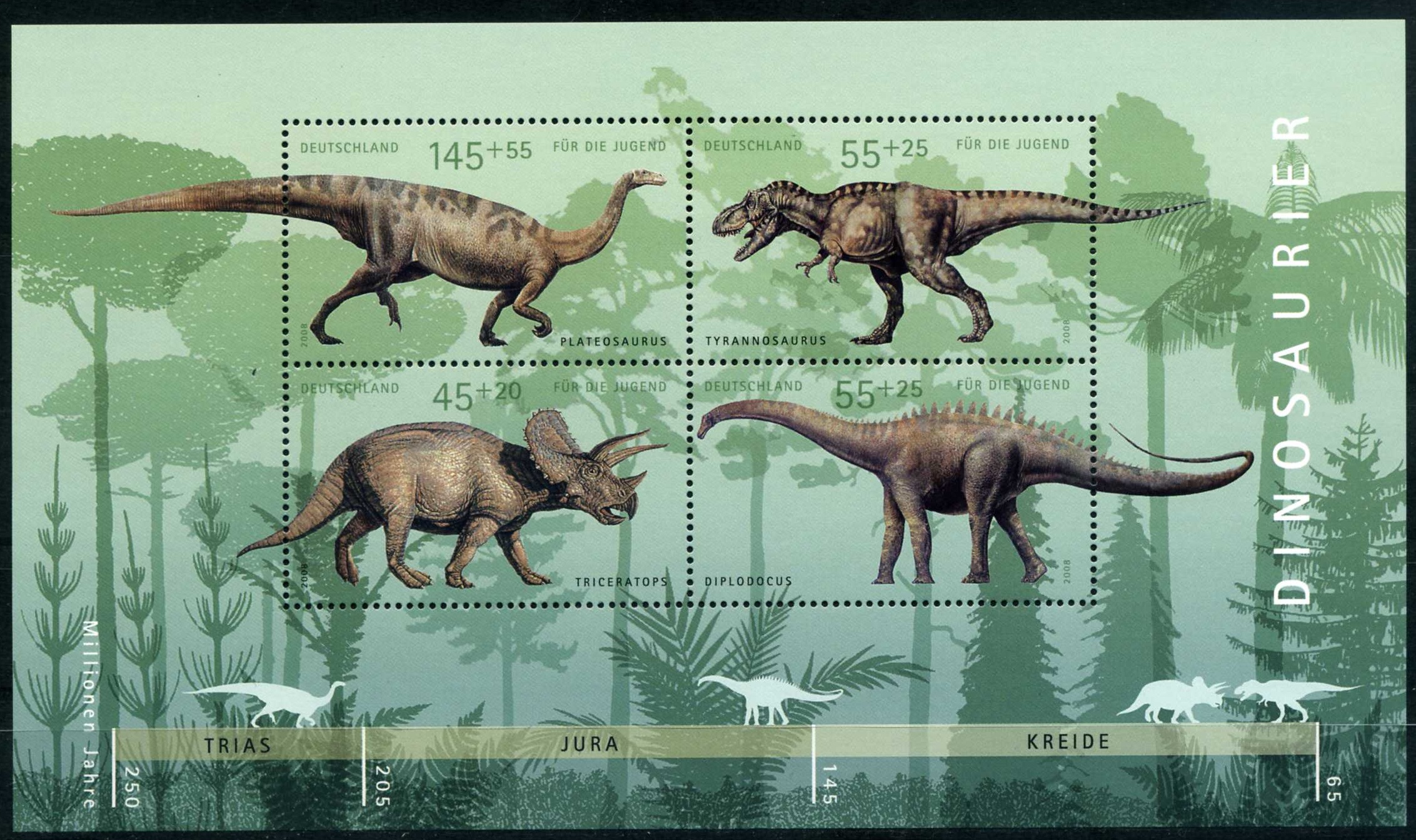 |
| Dinosaurs from the collection of the Senckenberg in Frankfurt am Main on stamps of Germany 2008, MiNr: Bl. 73 (2687-2690) ; Scott: B1007. |
The society's name translates as “Senckenberg Society for Nature Research”. Today, the society is one of Germany's leading centres for biodiversity and Earth system research and operates one of Europe's largest natural history museums in Frankfurt. The organization comprises eight research institutes and three natural history museums located in Frankfurt am Main. Görlitz, and Dresden, and employs approximately 900 staff members, including more than 300 scientists.
In 2008, German Post issued a Mini-Sheet of four stamps showing the reconstruction of four dinosaurs from the collection of the Senckenberg in Frankfurt am Main.
By the 1930s and 1940s, Kräusel was internationally recognized as a leading authority on fossil plants of the Permian.
During his career, he travelled worldwide in his investigations of fossil plants. On his later journeys, he conducted research on the flora of Gondwana and collected fossil specimens to replace those that were destroyed during World War II, including through exchanges with other paleontological and geological museums and institutions around the world, such as the School of Geology at the University of Melbourne in Australia.
In Europe, he carried out studies of Mesozoic flora of southern Germany, Austria and Switzerland.
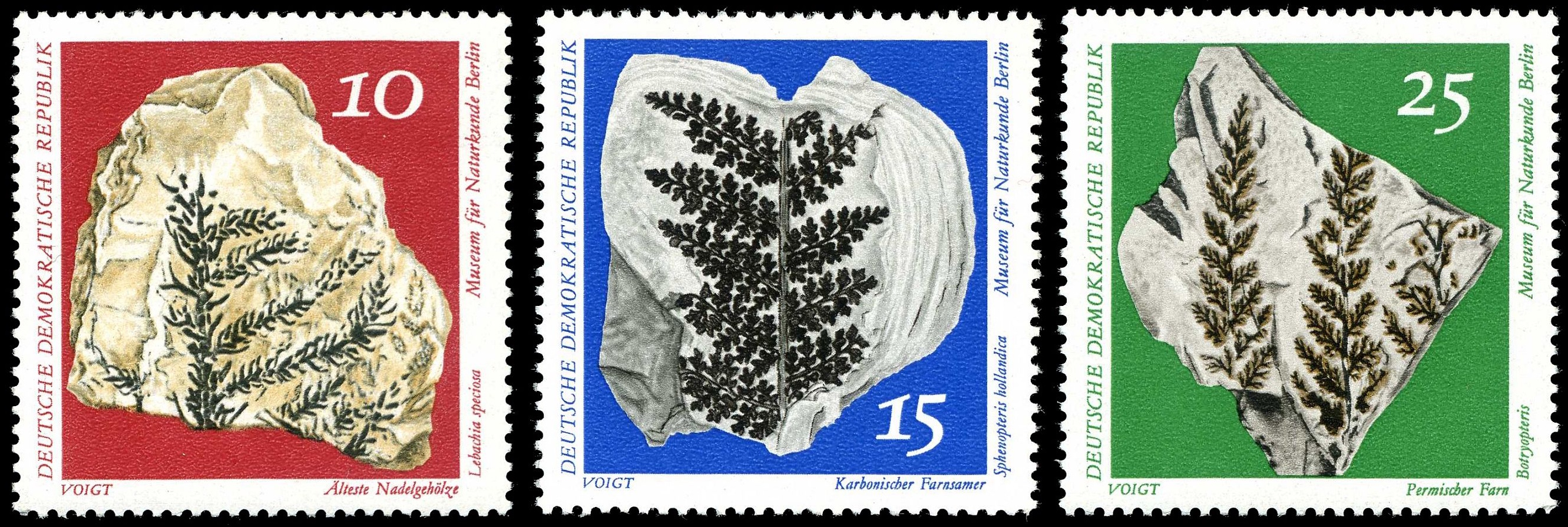
Fossilized remains of Lebachia speciosa, an early Permian conifer.
This primitive gymnosperm group was a key subject in Kräusel’s extensive comparative
studies on Paleozoic conifers and the geological stratigraphy of the Rotliegend Group,
which he evaluated extensively in his paleobotanical texts.
Imprint of Sphenopteris hollandica, a Carboniferous seed fern (Pteridospermatophyta).
Leaf forms and structural morphology of the widespread Sphenopteris genus were documented regularly
throughout Kräusel’s career to establish stratigraphical correlations across
European coal basins.
A fossilized Botryopteris specimen, representing a primitive Permian fern.
Primitive evolutionary lineages like these coenopterid ferns were central to Kräusel’s
specialized research on early land plant evolution and featured prominently in his landmark 1950 publication,
Versunkene Floren (Lost Floras).
In 1951, Richard Kräusel was at the height of his scientific productivity and institutional influence. At that time, he was the head of the Department of Paleobotany and Botanical Paleontology at the Senckenberg Museum in Frankfurt am Main, where he was responsible for paleobotanical collections, research programs, and international correspondence. He retired from teaching in 1952 but continued his work with the Senckenberg Society.
During the 1940s and 1950s, Richard Kräusel maintained close ties with the Australian palaeobotanical and botanical communities. Among his Australian colleagues was Herbert Eric Dadswell (1903–1964), Chief of the Division of Forest Products, CSIRO, Melbourne, and Secretary-Treasurer of the International Association of Wood Anatomists (IAWA). The following two letters, dated 1951 and 1953, were sent from Melbourne during Dadswell's tenure as Secretary-Treasurer.
The International Association of Wood Anatomists (IAWA), founded in 1931, is an international scientific society
dedicated to the study of the anatomy of wood, bark, and fossil plant tissues.
Its worldwide membership includes botanists, palaeobotanists, foresters, and wood scientists,
and the Association has established internationally accepted standards for wood anatomical terminology
and identification.
Through its peer-reviewed IAWA Journal, it promotes research spanning
tree biology, archaeology, and palaeobotany.
Today, IAWA's standardized methods also support forensic wood identification,
helping authorities detect illegally traded timber and combat illegal logging.
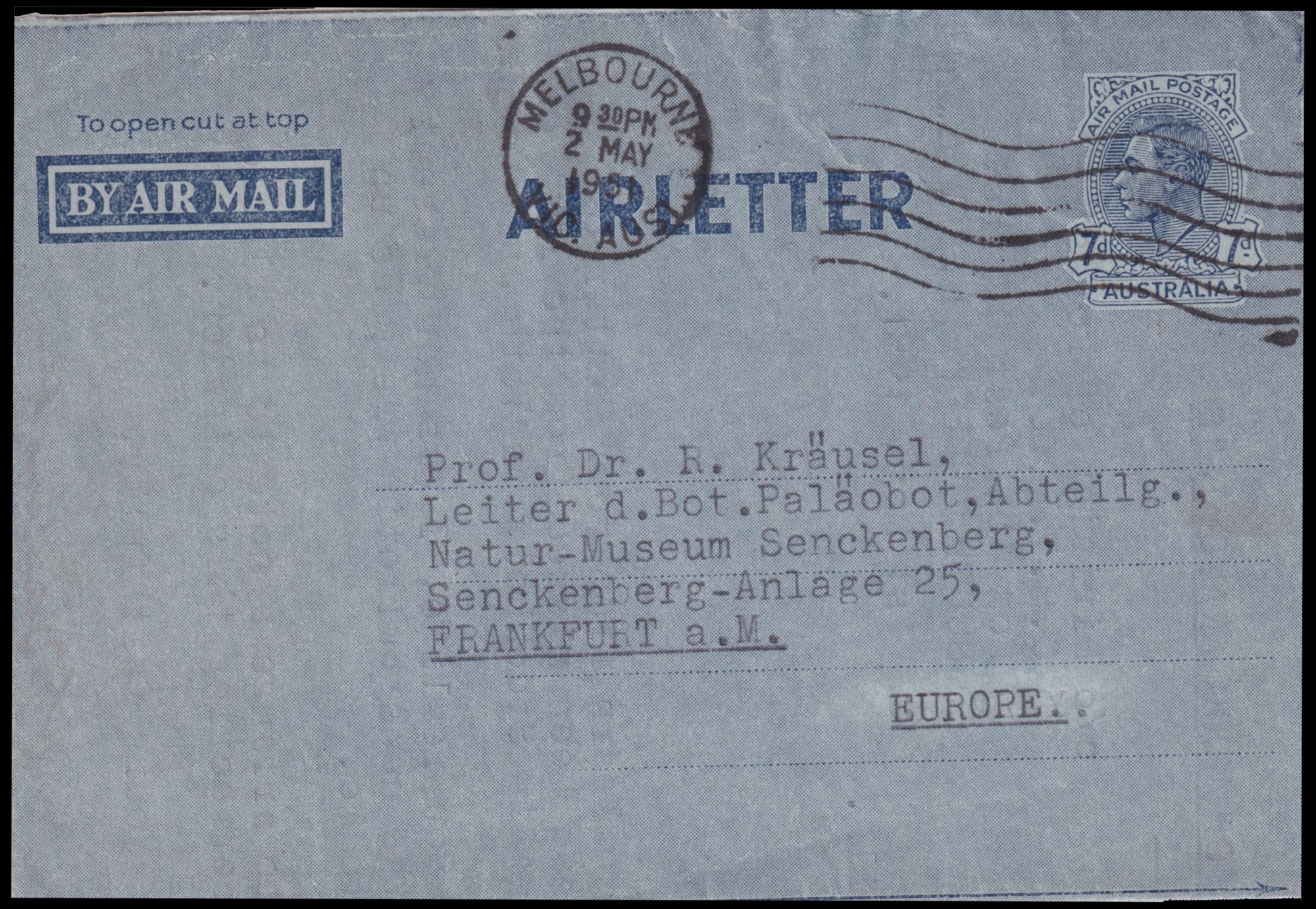 |
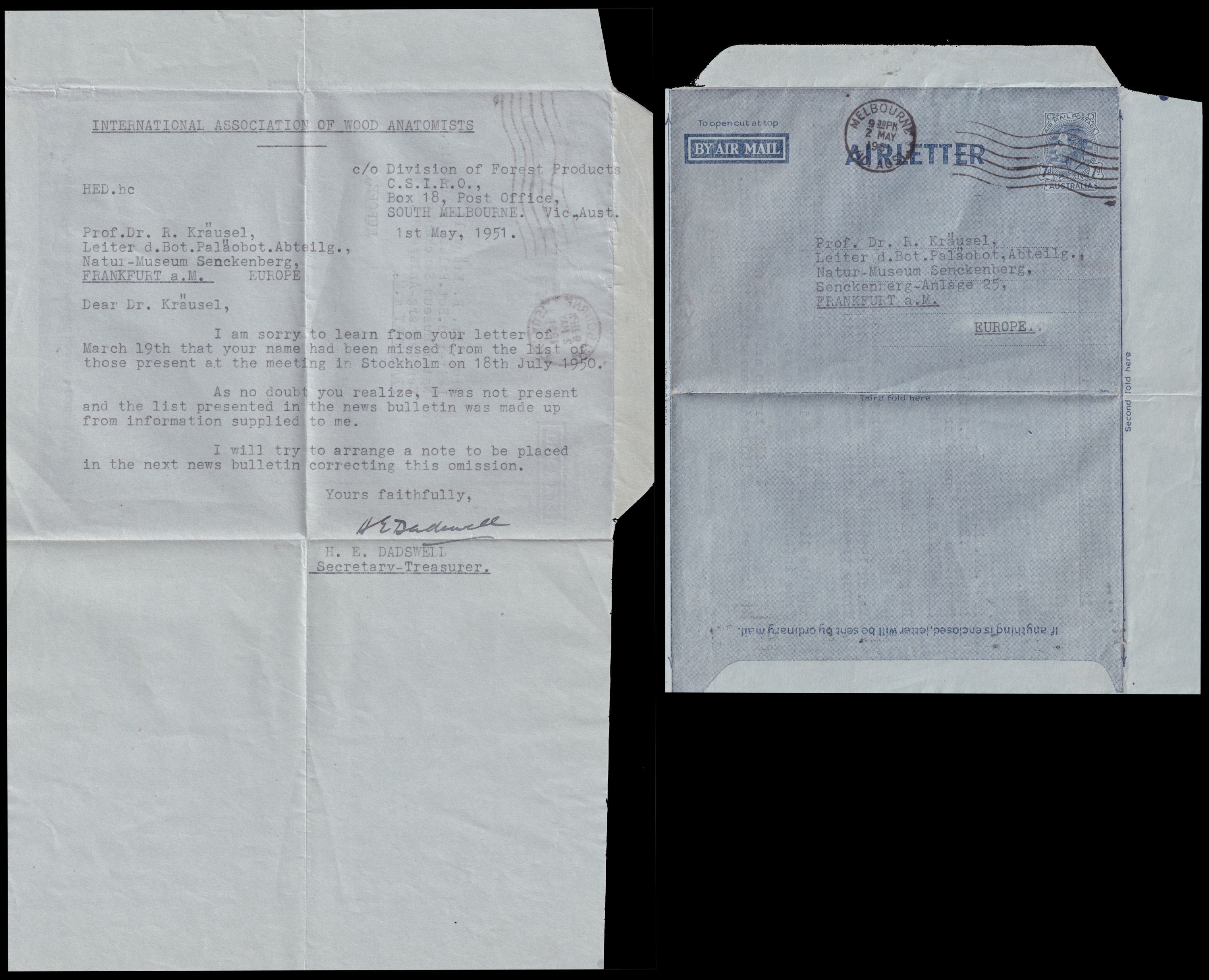
He explains that having been unable to attend the meeting himself, he had relied on a list compiled by another participant when preparing the Association's News Bulletin.
He also promises to publish a formal correction in the next issue.
INTERNATIONAL ASSOCIATION OF WOOD ANATOMISTS
Letter from Herbert Eric Dadswell to Professor R. Kräusel mailed in May 1951.
c/o Division of Forest Products
C.S.I.R.O.,
Box 18, Post Office,
SOUTH MELBOURNE. Vic. Aust.
1st May, 1951.
HED.hc [HED - the initials of the author: Herbert Eric Dadswell, hc - the initials of the stenographer or typist who took down the dictation and prepared the physical page on the typewriter.]
Prof.Dr. R. Kräusel,
Leiter d.Bot.Paläobot.Abteilg.,
Natur-Museum Senckenberg,
FRANKFURT a.M. EUROPE
Dear Dr. Kräusel,
I am sorry to learn from your letter of March 19th that your name had been missed from the list of those present at the meeting in Stockholm on 18th July 1950.
As no doubt you realize, I was not present and the list presented in the news bulletin was made up from information supplied to me.
I will try to arrange a note to be placed in the next news bulletin correcting this omission.
Yours faithfully,
[Signature: HEDadswell]
H. E. DADSWELL
Secretary-Treasurer.
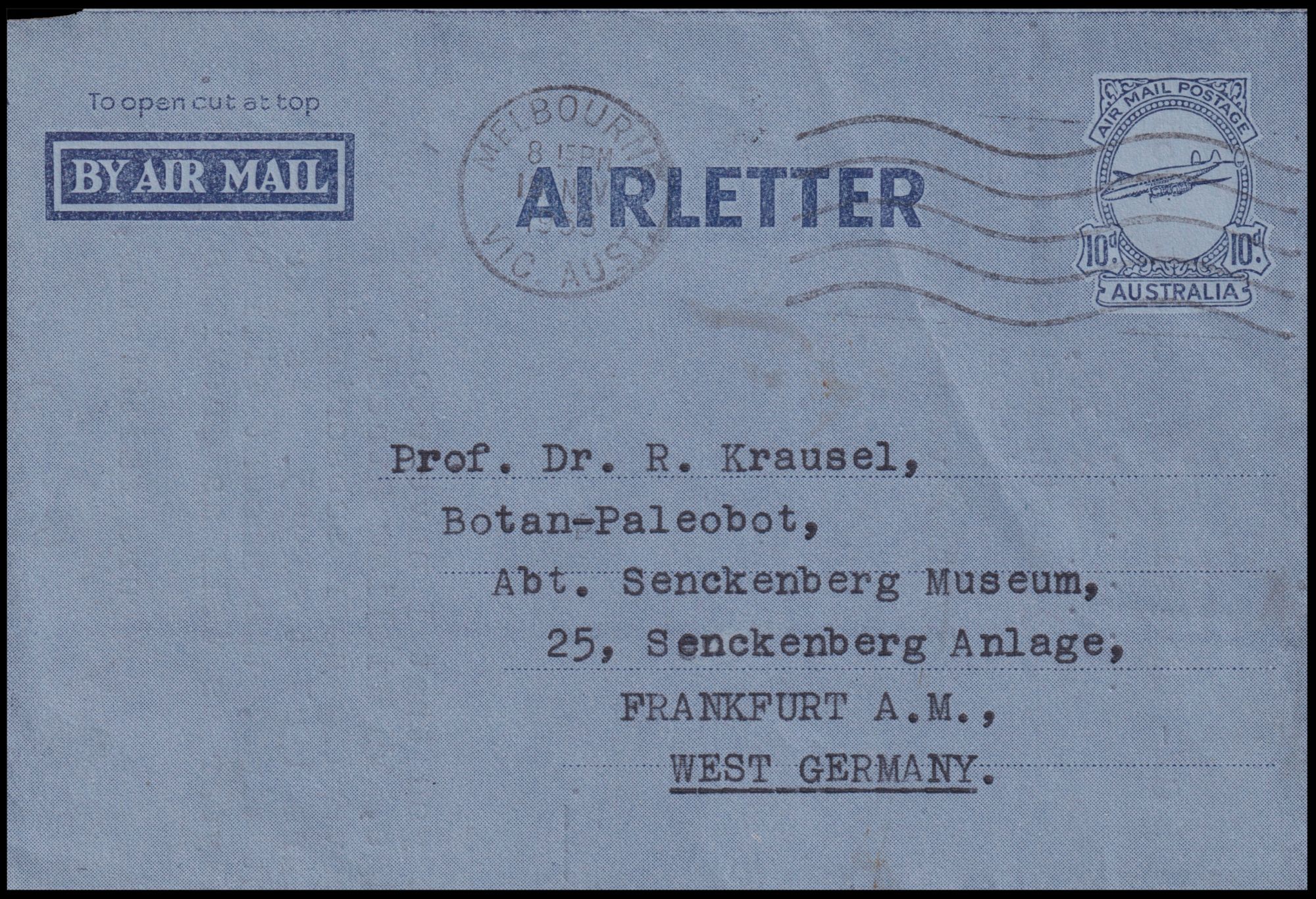 |
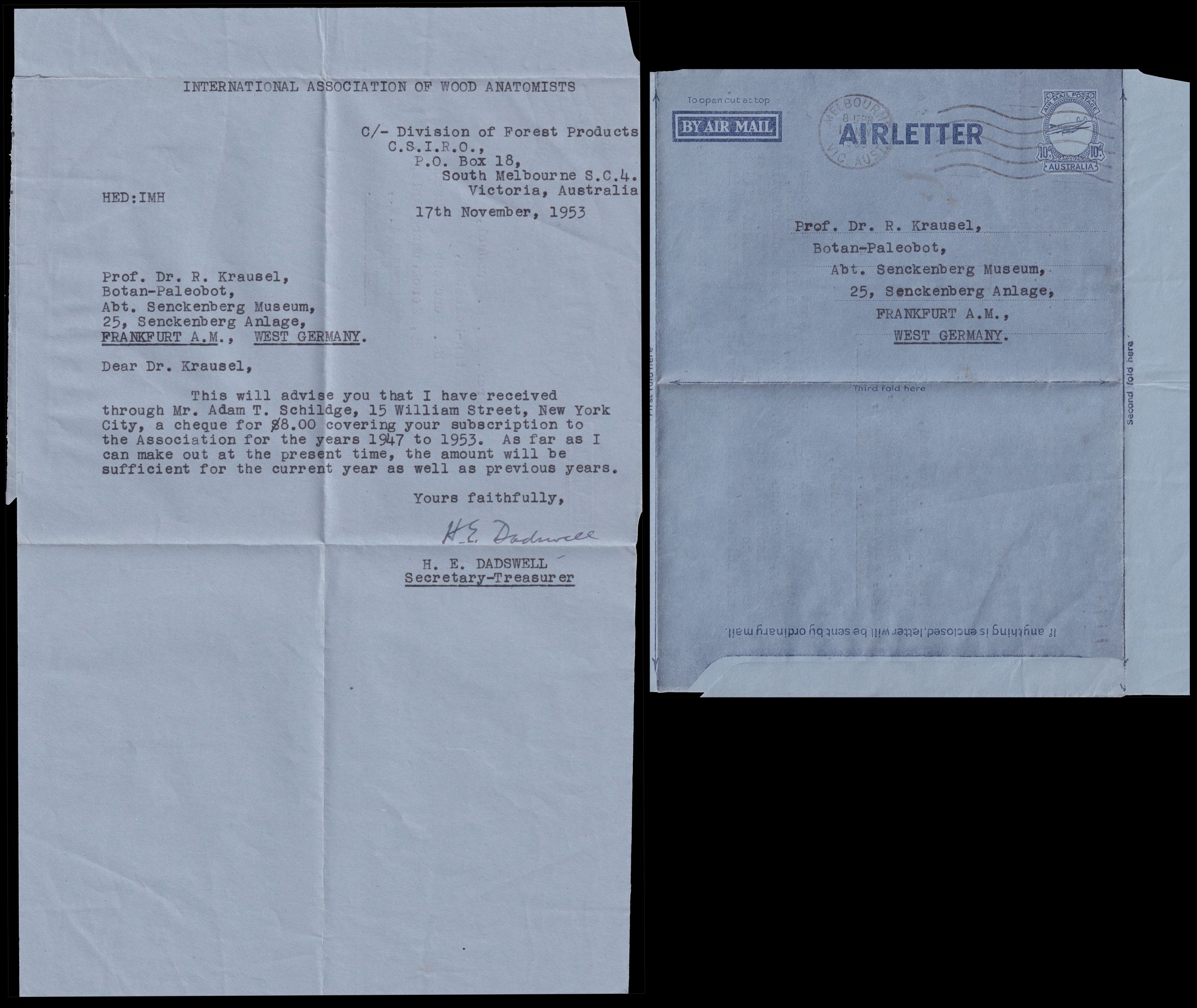
During the first decade after the end of the Second World War, international financial transactions from Germany were still heavily restricted, requiring the payment to be routed through an intermediary, Mr. Adam T. Schildge of New York City.
Dadswell notes that this amount successfully covers all back-dues as well as the current year.
INTERNATIONAL ASSOCIATION OF WOOD ANATOMISTS
Letter from Herbert Eric Dadswell to Professor R. Kräusel mailed in November 1953.
c/o Division of Forest Products
C.S.I.R.O.,
Box 18, Post Office,
SOUTH MELBOURNE S.C.4.
Victoria, Australia.
17th November, 1953.
HED:IMH [HED - the initials of the author: Herbert Eric Dadswell, IMH - the initials of the stenographer or typist who took down the dictation and prepared the physical page on the typewriter.]
Prof.Dr. R. Kräusel,
Botan-Paleobot,
25, Senckenberg Anlage,
FRANKFURT A.M., WEST GERMANY.
Dear Dr. Kräusel,
This will advise you that I have received through Mr. Adam T. Schildge, 15 William Street, New York City, a cheque for $8.00 covering your subscription to the Association for the years 1947 to 1953. As far as I can make out at the present time, the amount will be sufficient for the current year as well as previous years.
Yours faithfully,
[Signature: HEDadswell]
H. E. DADSWELL
Secretary-Treasurer.
Acknowledgements:
- Many thanks to Dr. Peter Voice from Department of Geological and Environmental Sciences, Western Michigan University, for reviewing the draft page and his very valuable comments.
References:
- Curt Teichert (1905–1996):
Wikipedia, Geological Society of America. - Richard Kräusel (1890–1966):
Wikipedia (in German), Frankfurter Personenlexikon (in German), researchgate - Senckenberg Nature Research Society:
official website.- Johann Christian Senckenberg (1707–1772):
Wikipedia.
- Johann Christian Senckenberg (1707–1772):
- Aerogramme:
Wikipedia. - The International Association of Wood Anatomists:
Wikipedia, official website.- Herbert Eric Dadswell:
Australian Dictionary of Biography , The Encyclopedia of Australian Science and Innovation,
- Herbert Eric Dadswell: