Mozambique
Fossils, dinosaurs and other prehistoric animals and humans, petrified wood, Charles Darwin on stamps of Mozambique
Mozambique, officially the Republic of Mozambique is a country in
Southeast Africa with a population of about 25 million people.
The capital and largest city is Maputo.
The area was explored by Vasco da Gama in 1498 and colonized by Portugal from 1505.
After over four centuries of Portuguese rule, Mozambique gained independence in 1975, becoming the
People's Republic of Mozambique shortly thereafter.
After only two years of independence, the country descended into an intense and
protracted civil war lasting from 1977 to 1992.
In 1994, Mozambique held its first multiparty elections and has remained a relatively
stable presidential republic.
Mozambique is one of the poorest and most underdeveloped countries in the world.
[R1]
The postal history of Mozambique began with the Portuguese trading posts established at the beginning of the 16th century.
The territory began to use stamps in 1877, with the same design used in other Portuguese territories – a view of the Portuguese Crown.
Until 1998, Mozambique issued approximately 50 stamps per year.
The number of stamps issued began to increase in the 1990s – with 100 stamps in 1999 and more than 200 stamps in 2000. Most of the stamps had no link to the country.
In 2001, the country became a client of Stamperija, who currently produces many hundreds of stamps per year on the behalf of Mozambique.
Almost 700 stamps produced by Stamperija on behalf of Mozambique in 2018, for example. [R2]
Notes:

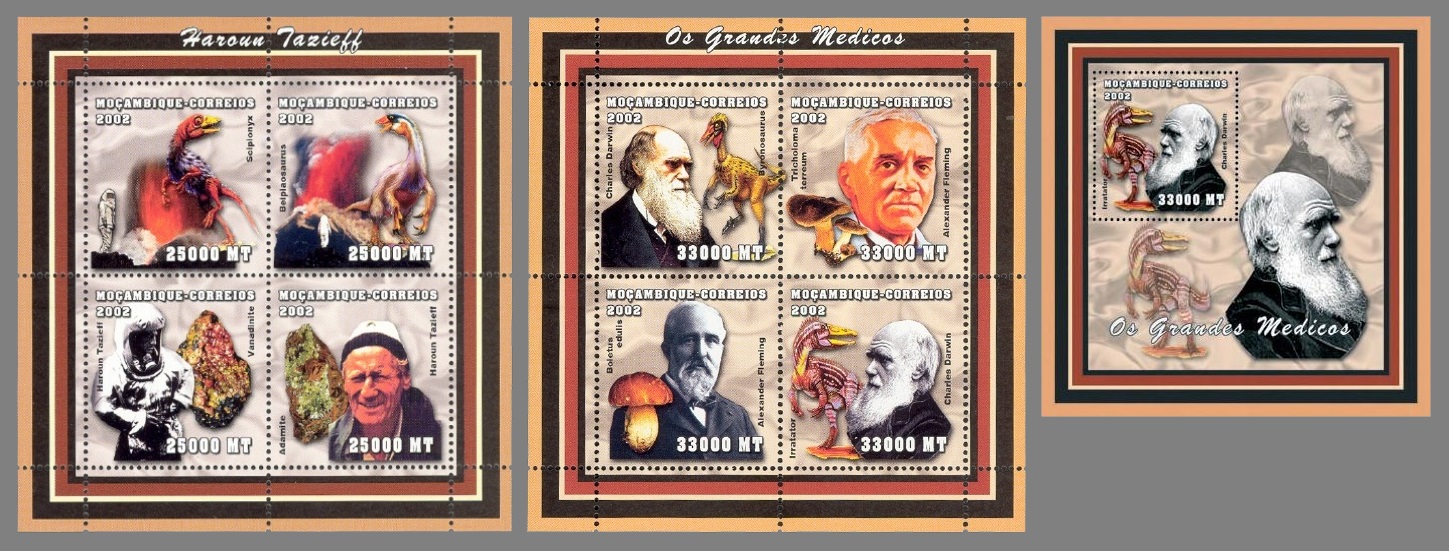
 [1] On 30th September 2002, Stamperia issued more than 200 stamps
of famous personalities, some of them show dinosaurs and Charles Darwin.
[1] On 30th September 2002, Stamperia issued more than 200 stamps
of famous personalities, some of them show dinosaurs and Charles Darwin.
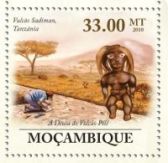
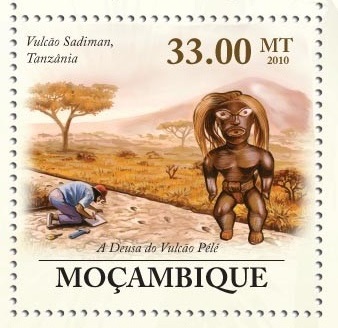
[2] Laetoli footprints are shown on the stamp. Laetoli is a site in Tanzania, dated to the Plio-Pleistocene and famous for its hominin footprints, preserved in volcanic ash.
The site of the Laetoli footprints is located 45 km south of Olduvai gorge. The location and tracks were discovered by archaeologist Mary Leakey in 1976, perhaps she is shown on the stamp. The footprints were excavated by 1978.
[3] Prehistoric human on the background
[4] "Flying dinosaurs" is not the correct term to apply to the animals shown on these stamps. The animals pictured are pterosaurs.
Pterosaurs are a group of flying reptiles in the Archosauria. Reptiles in the archosaurs include crocodiles, dinosaurs, and pterosaurs.
Notes:
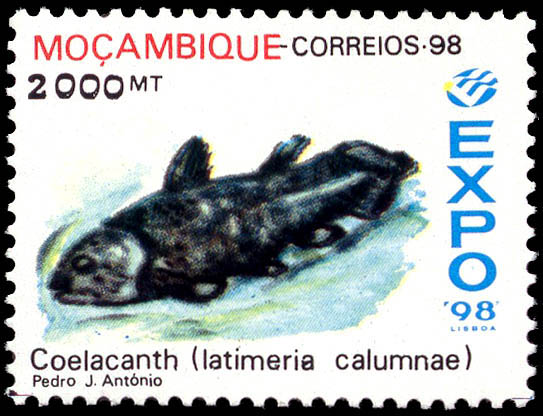
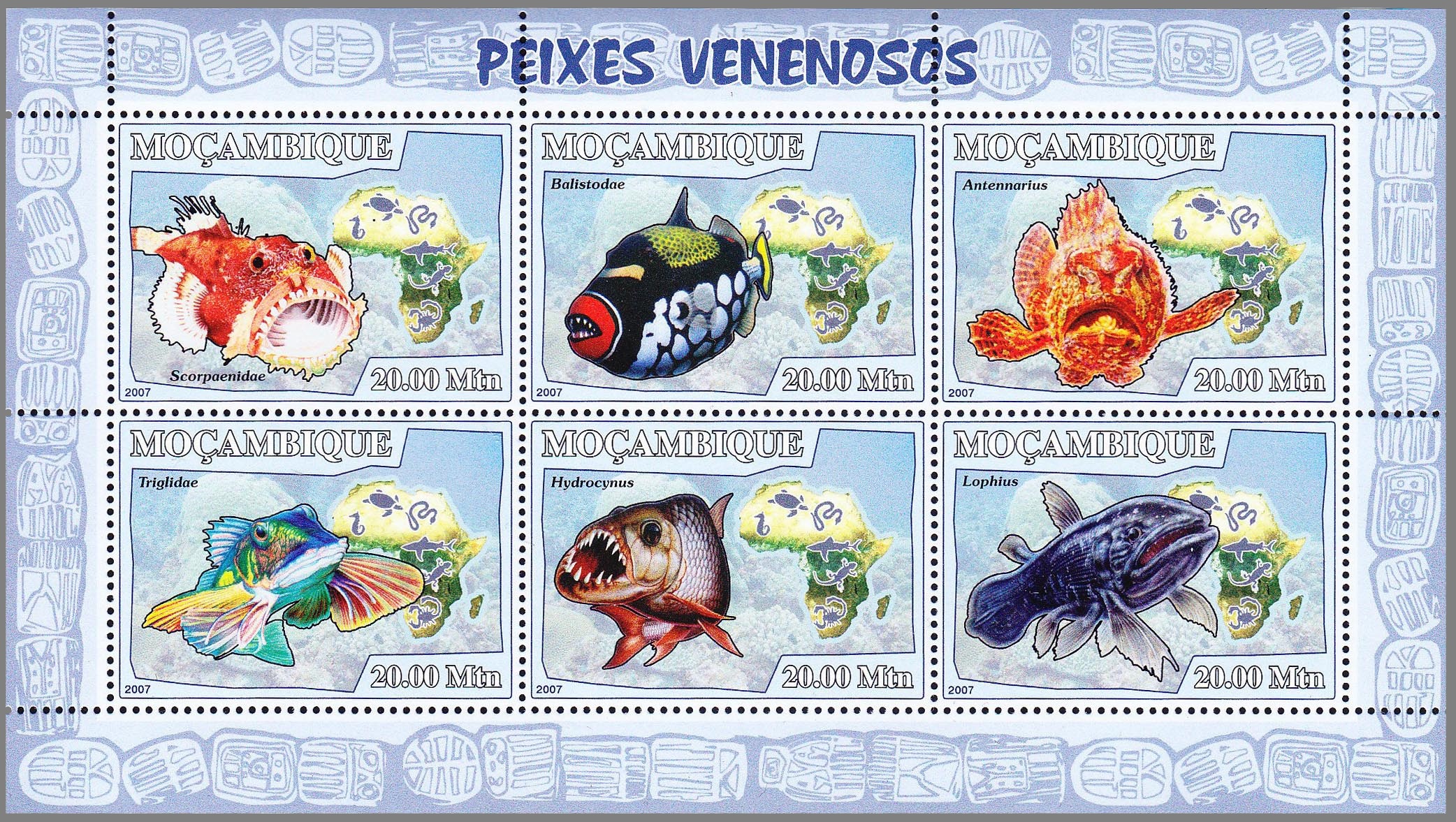
[A1] Coelacanth, Latimeria chalumnae, shown on stamp from 1998 and on one stamp from "Fish" mini-sheet from 2007.
On 20 February 1939, the stunning announcement was made that a Coelacanth (Latimeria) had been caught off the mouth of the Chalumna River near East London (a city in RSA).
At that time, the Coelacanth was thought to be extinct for nearly 70 million years.
The drama commenced on 22 December 1938, when Capt H Goosen, skipper of the trawler Nenrine, brought ashore a peculiar metallic-blue, heavily-scaled fish with fins resembling legs.
Miss Marjorie Courtenay-Latimer, Curator o the East London Museum, was informed of the strange catch, but was unable to identify the fish, which measured 1,5 m in length and weighed 57 kg. "Searching for African Coelacanths" exhibit of Susan Bahnick Jones explain the story of the "living fossil" discovery.
Many thanks to Dr. Peter Voice from Department of Geological and Environmental Sciences, Western Michigan University, for reviewing the draft page and his valuable comments.
The postal history of Mozambique began with the Portuguese trading posts established at the beginning of the 16th century.
The territory began to use stamps in 1877, with the same design used in other Portuguese territories – a view of the Portuguese Crown.
Until 1998, Mozambique issued approximately 50 stamps per year.
The number of stamps issued began to increase in the 1990s – with 100 stamps in 1999 and more than 200 stamps in 2000. Most of the stamps had no link to the country.
In 2001, the country became a client of Stamperija, who currently produces many hundreds of stamps per year on the behalf of Mozambique.
Almost 700 stamps produced by Stamperija on behalf of Mozambique in 2018, for example. [R2]
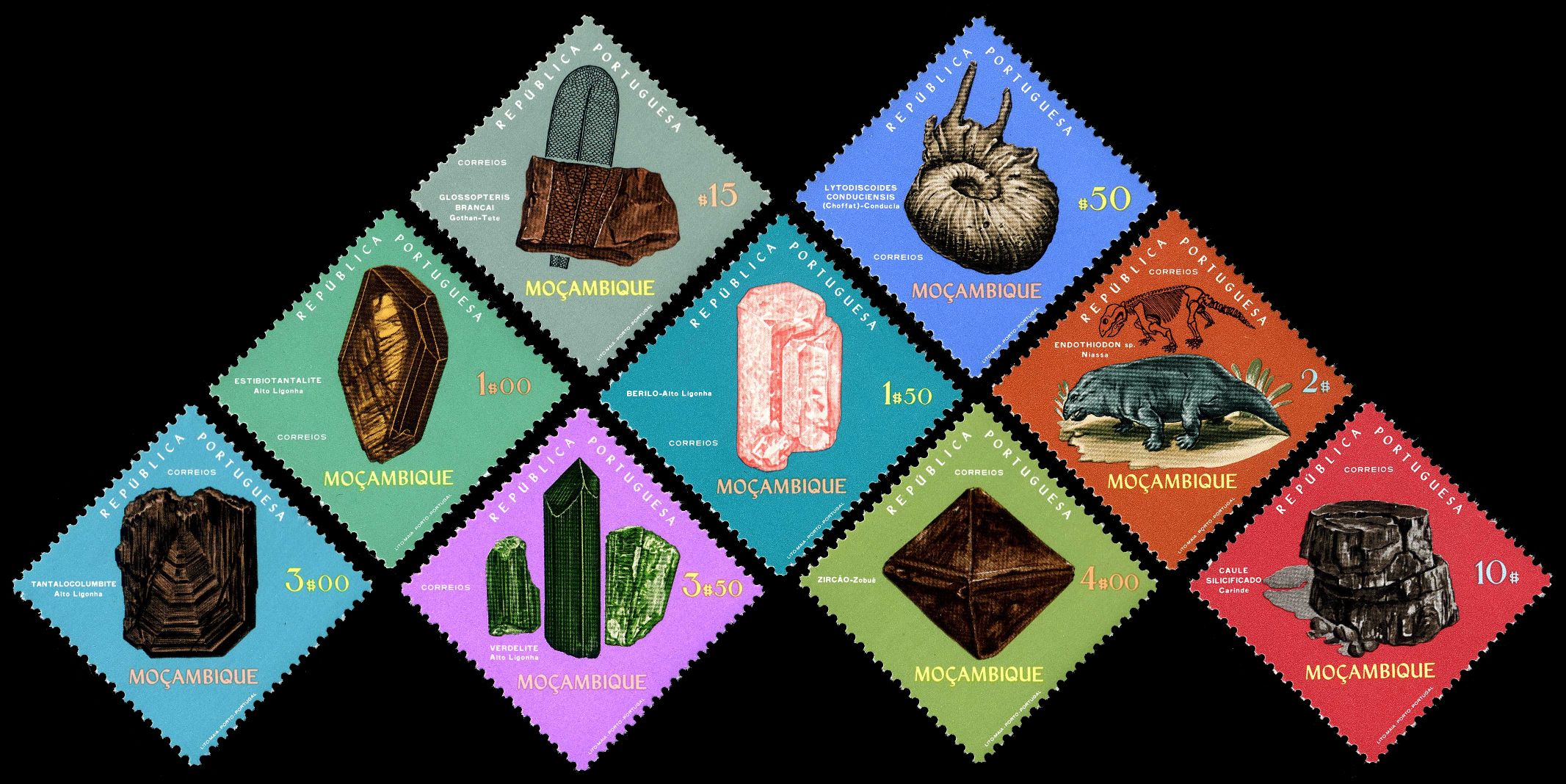
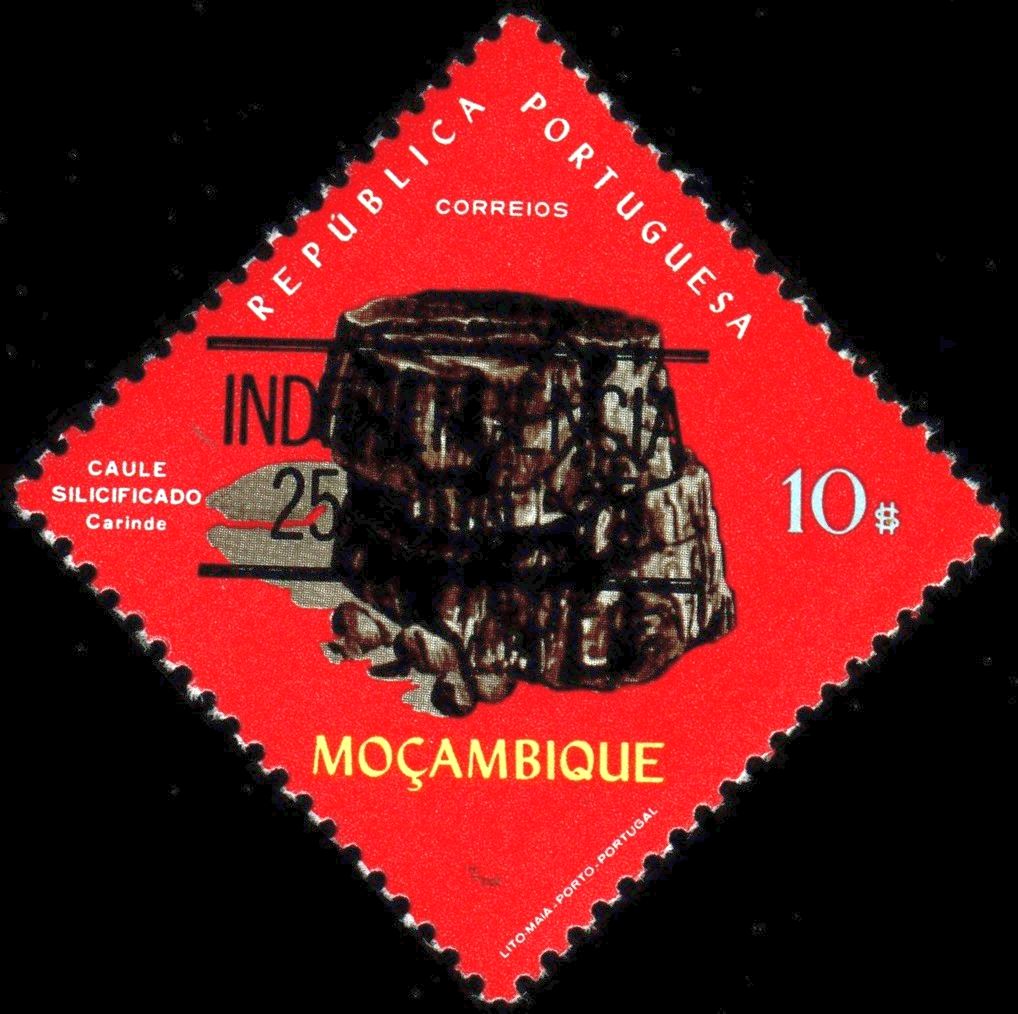
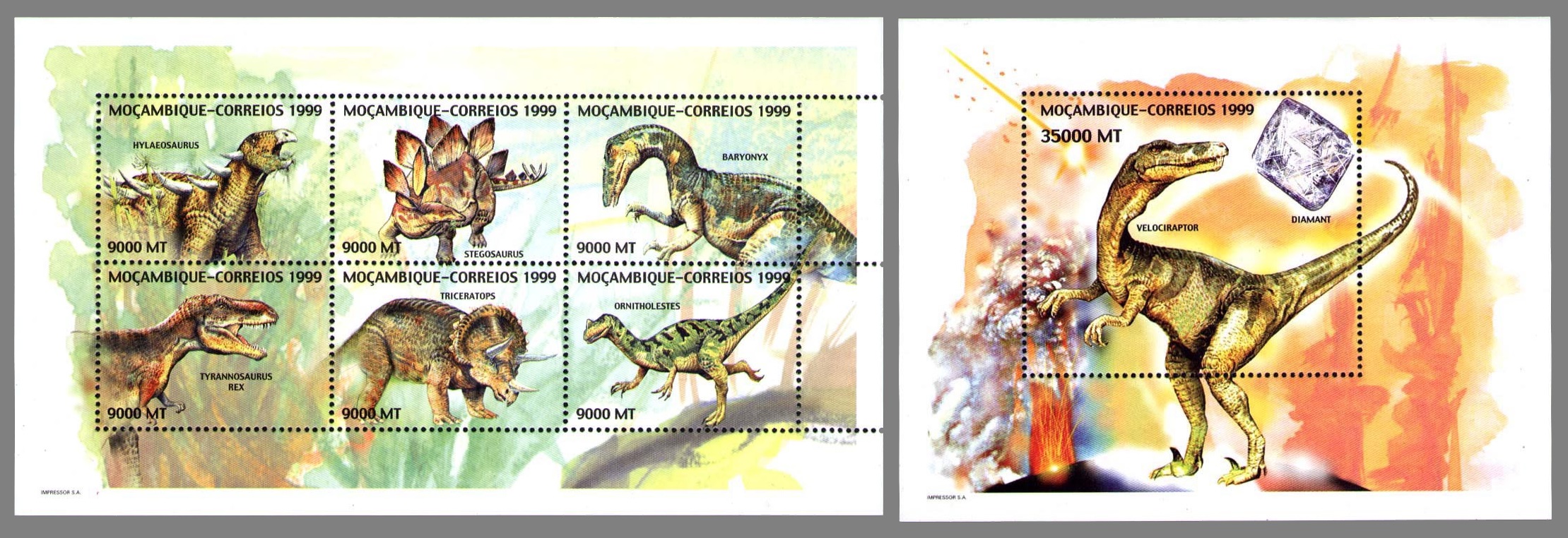
Official stamps of Mozambique related to Paleontology: fossils, dinosaurs and other prehistoric animals and humans, petrified wood, Charles Darwin
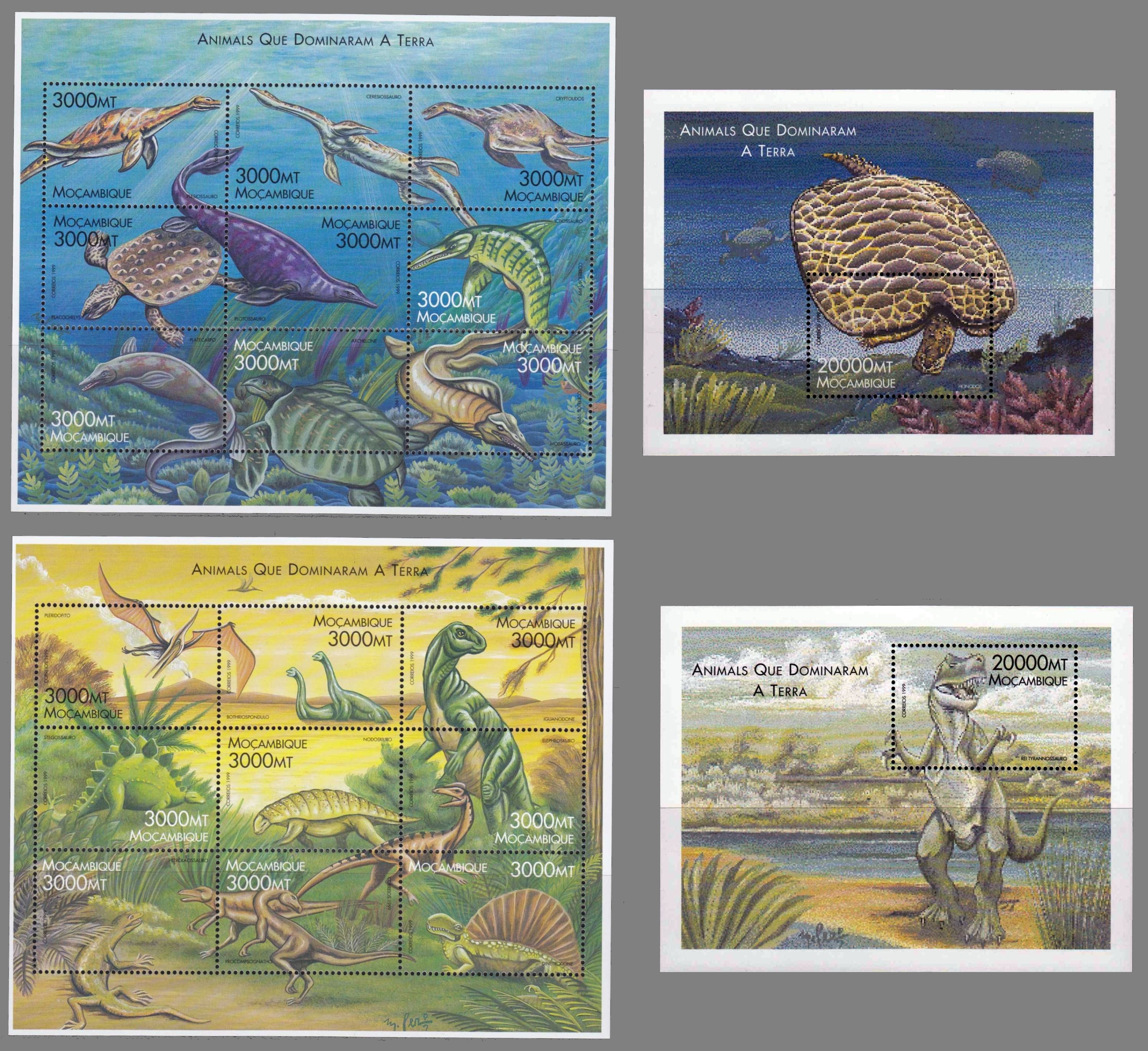
| 15.01.1971 "Fossils and Minerals" | 25.06.1975 overprint from 1971 | 24.09.1999 "Dinosaurs" |
 |
 |
|
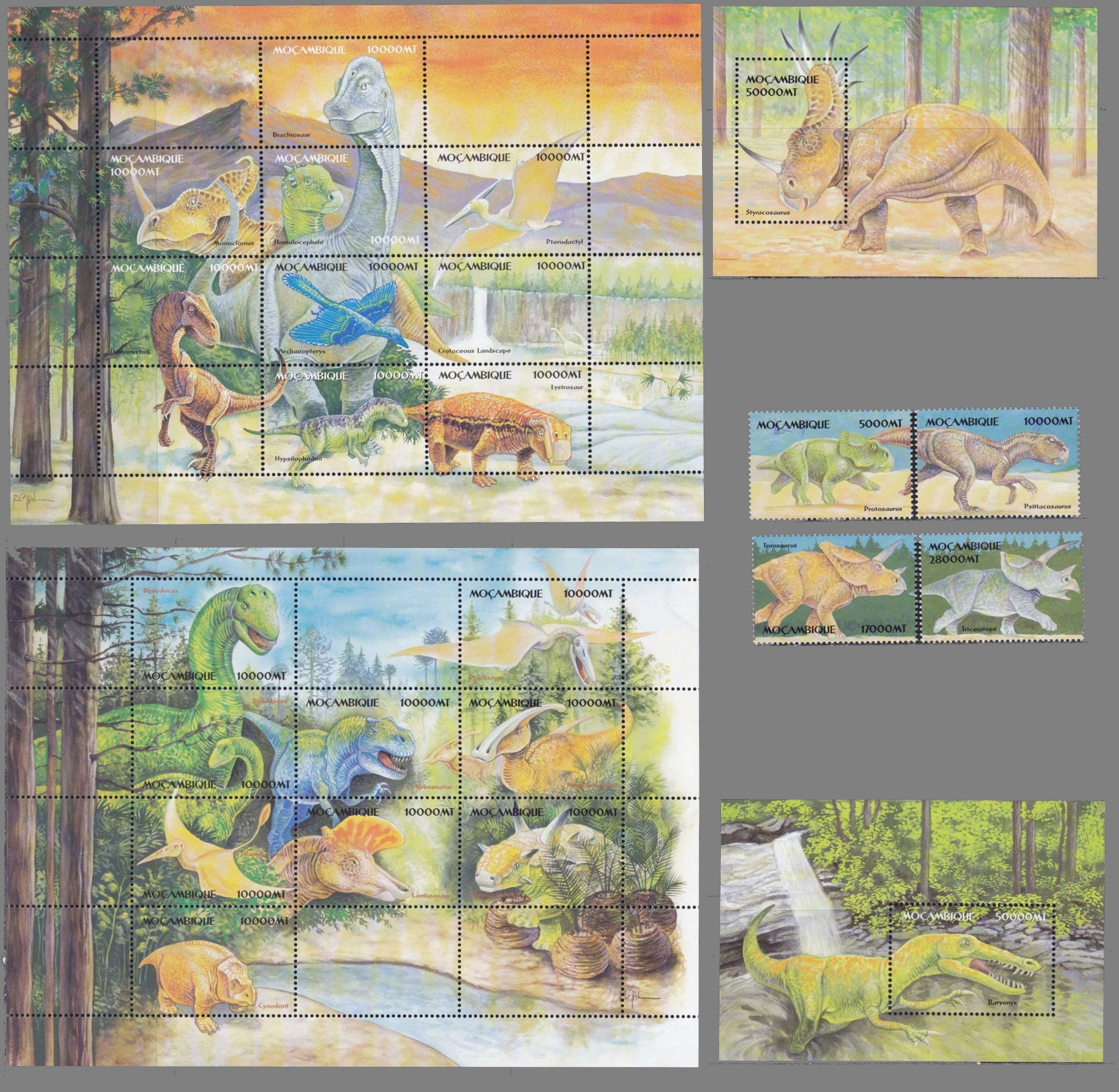
| 28.04.2000 "Prehistoric Animals" | 17.06.2002 "Prehistoric Animals" | 30.09.2002 "Famous People" [1] |
 |
 |
 |
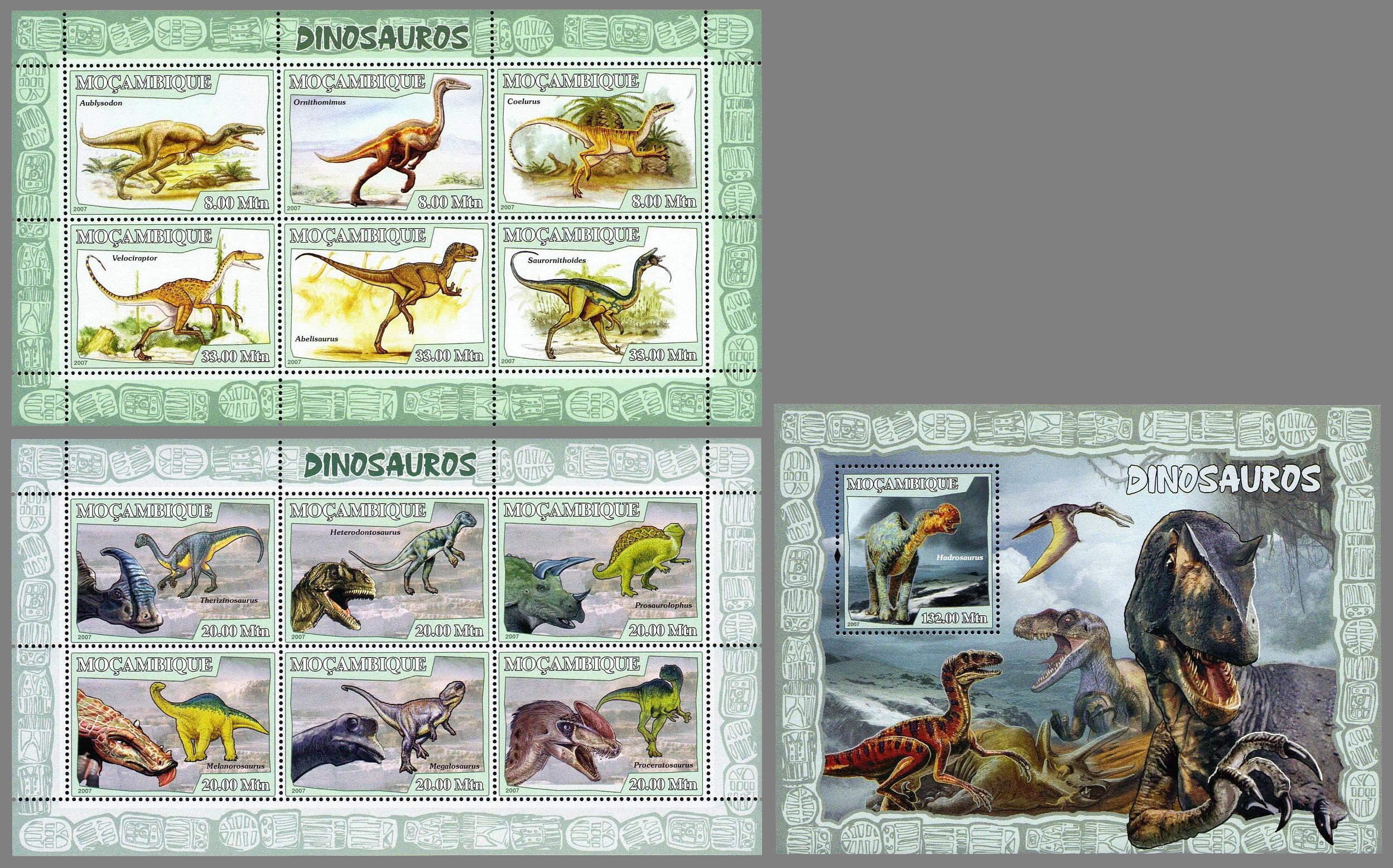
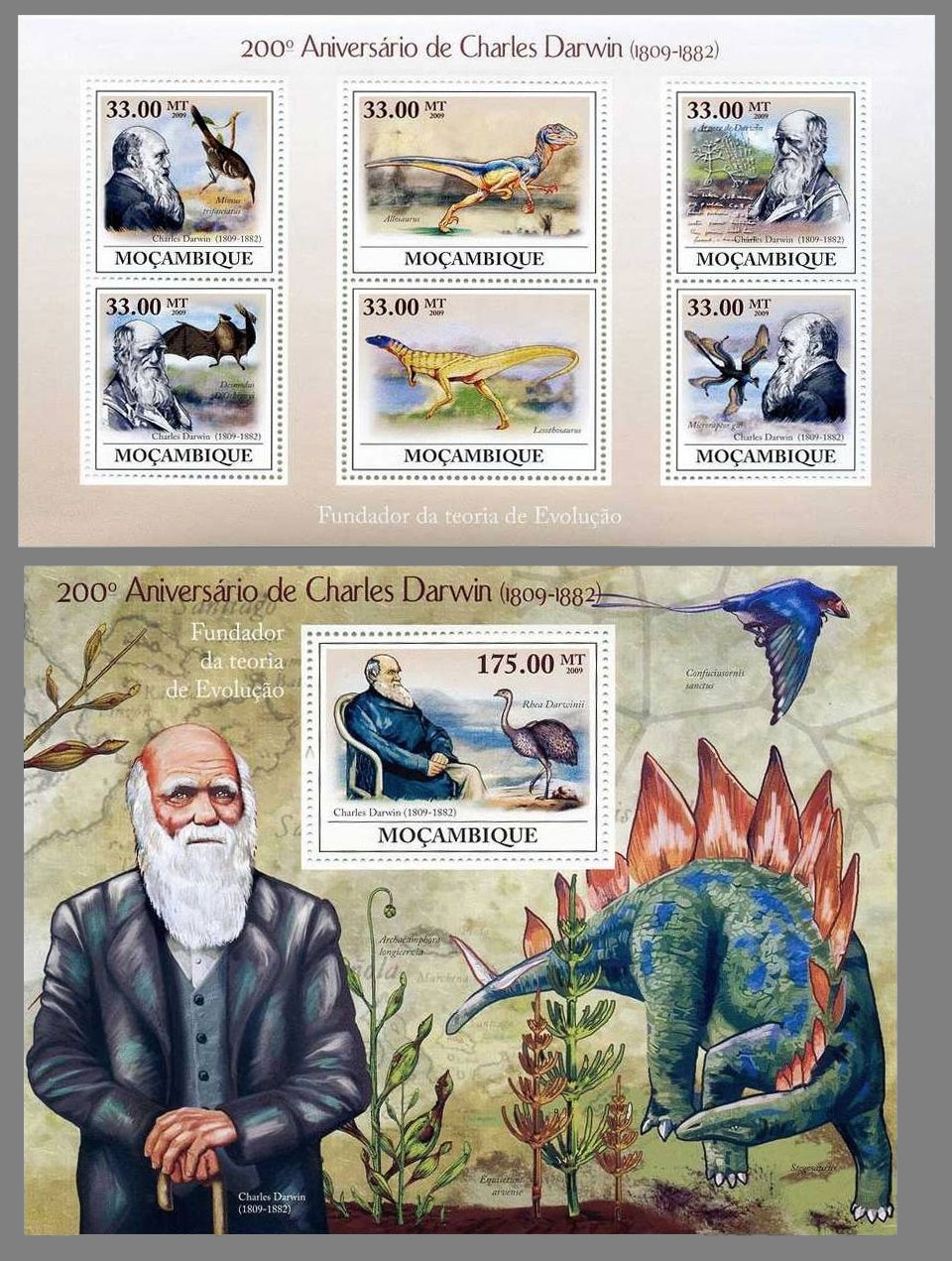
| 10.12.2007 "Dinosaurs" | 30.11.2009 "Charles Darwin" | 30.01.2010 "Volcanoes" [2] |
 |
 |
 |
| 30.04.2011 "Human Evolution" |
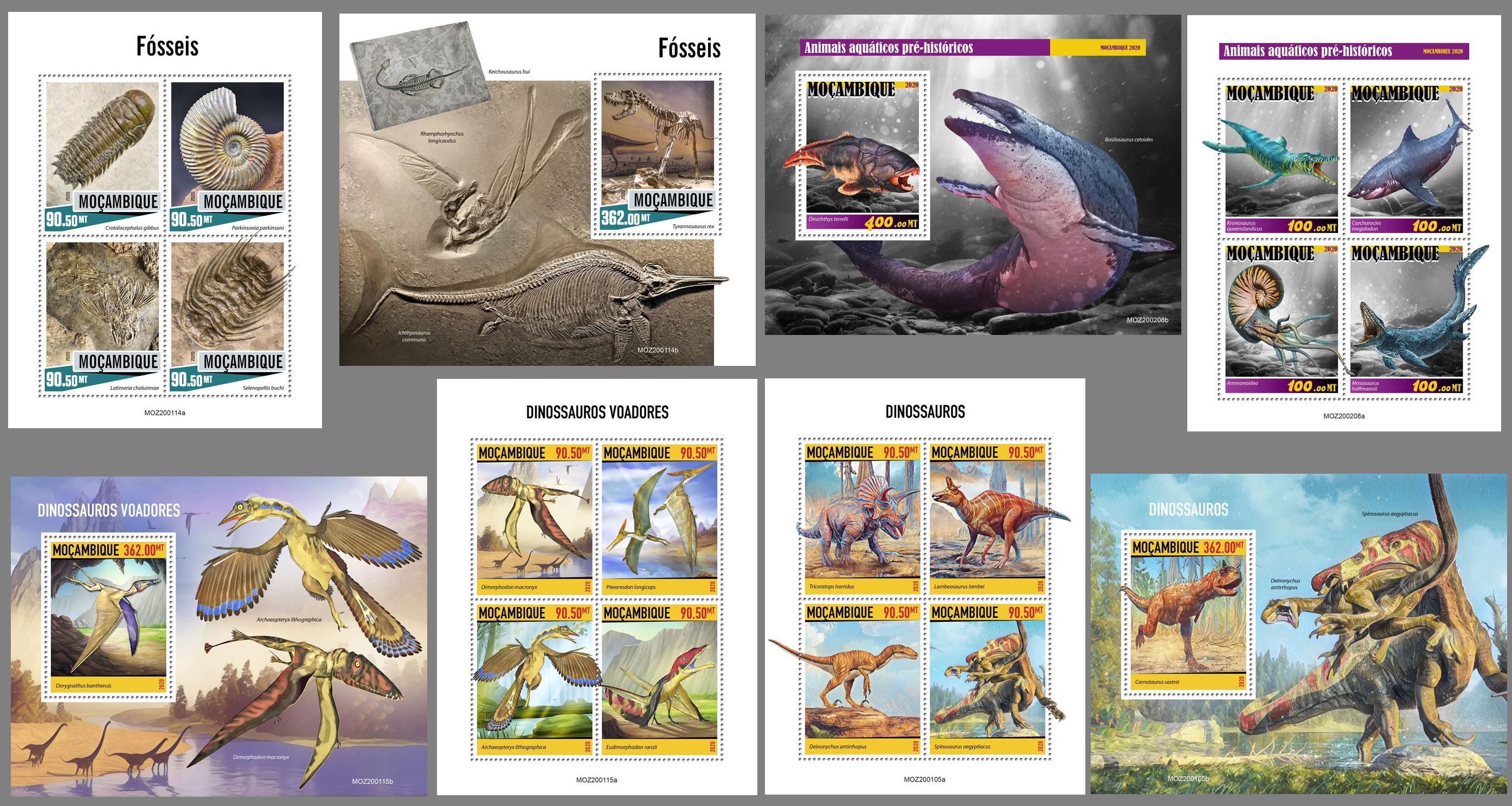
30.04.2012 "Endangered and Extinct Animals" (multiple sets) 30.06.2012 "Charles Darwin" 30.10.2012 "Mary Anning, British Paleontologist" |
28.02.2012 "Space Flight of Friendship 7, 50th Anniv." [3] |
 |
 |
 |
|
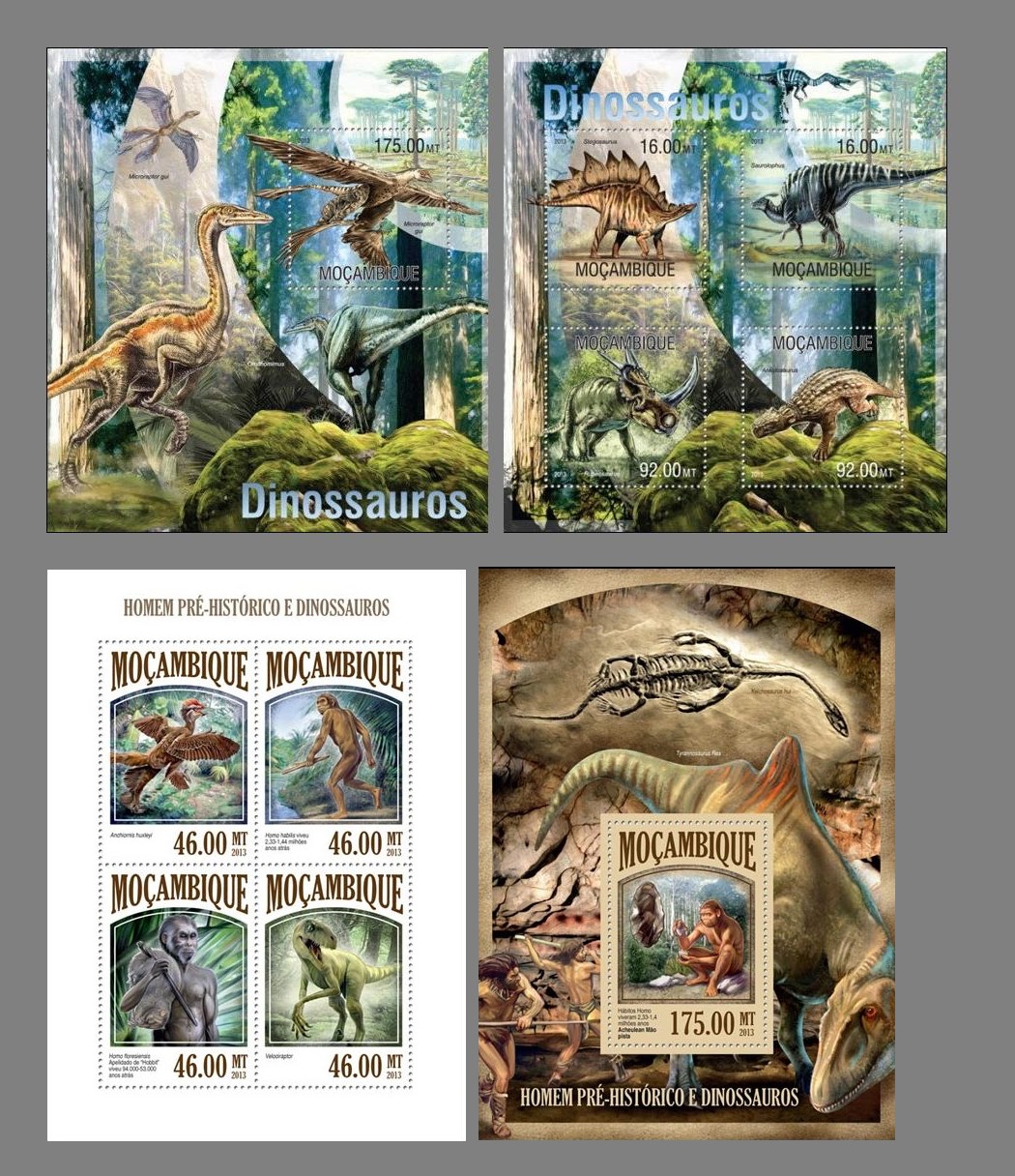
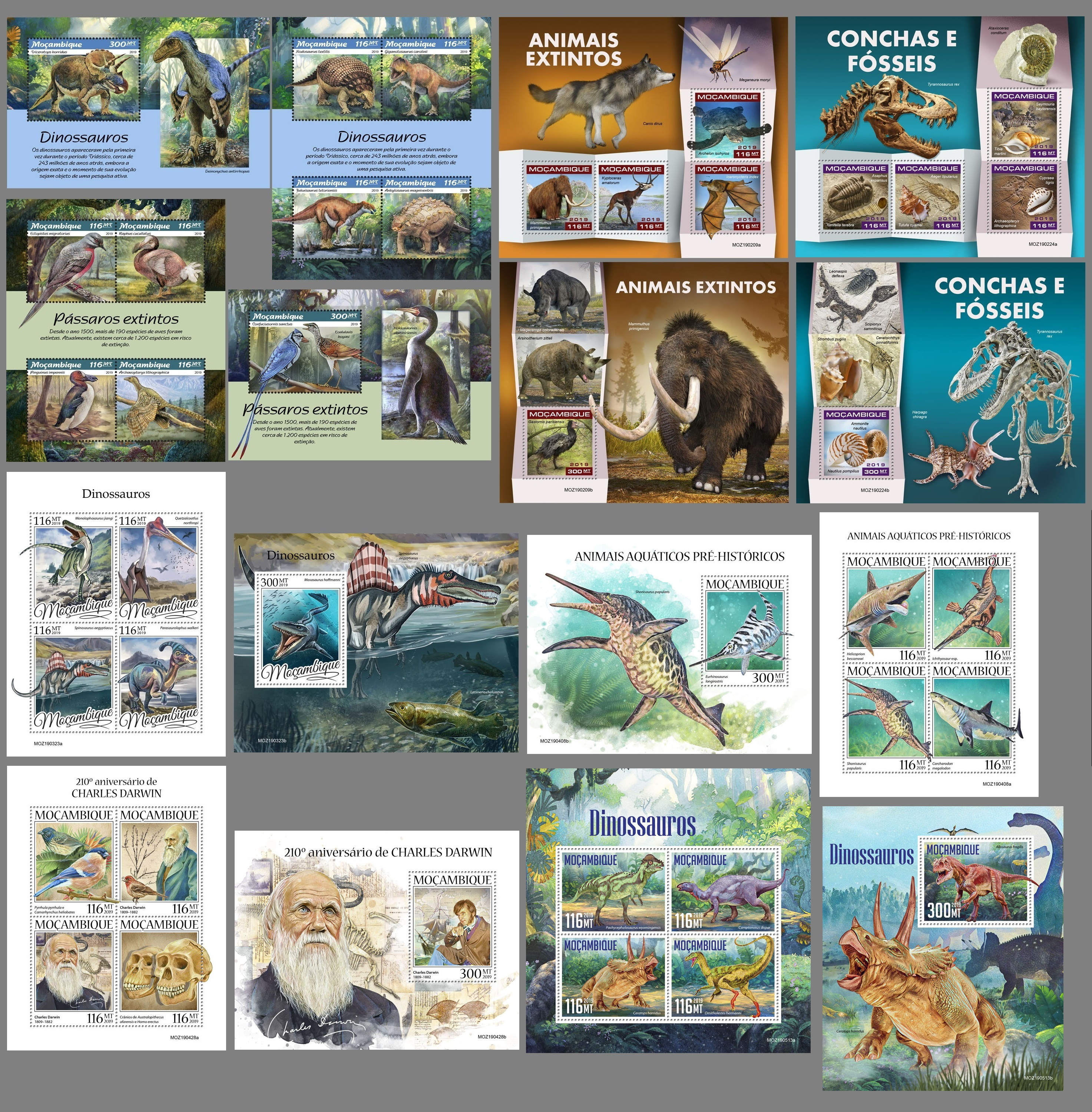
25.06.2013 "Dinosaurs" 25.09.2013 "Prehistoric animals and humans" |
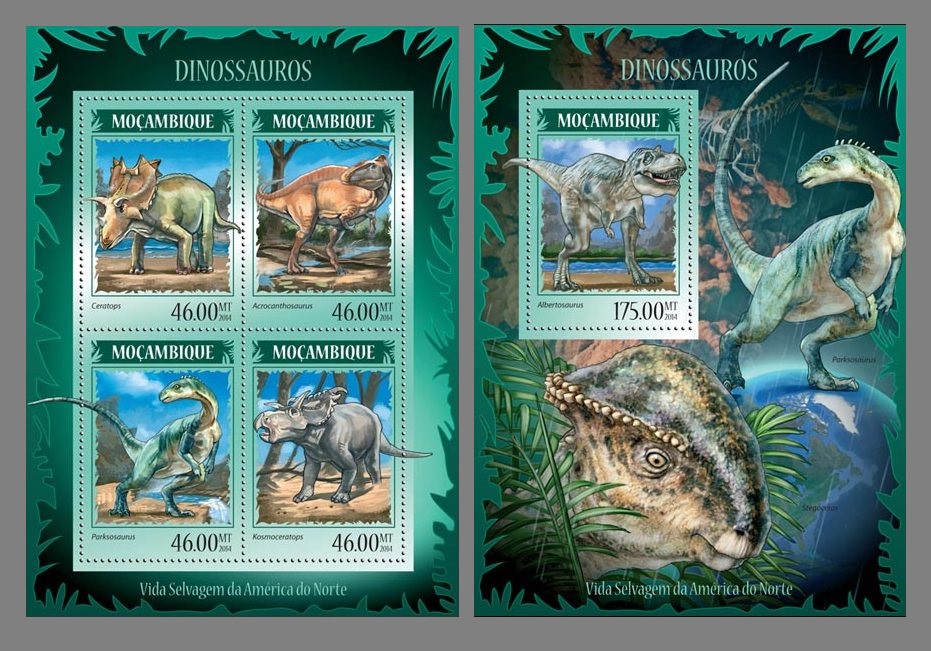
30.04.2014 "Dinosaurs" |
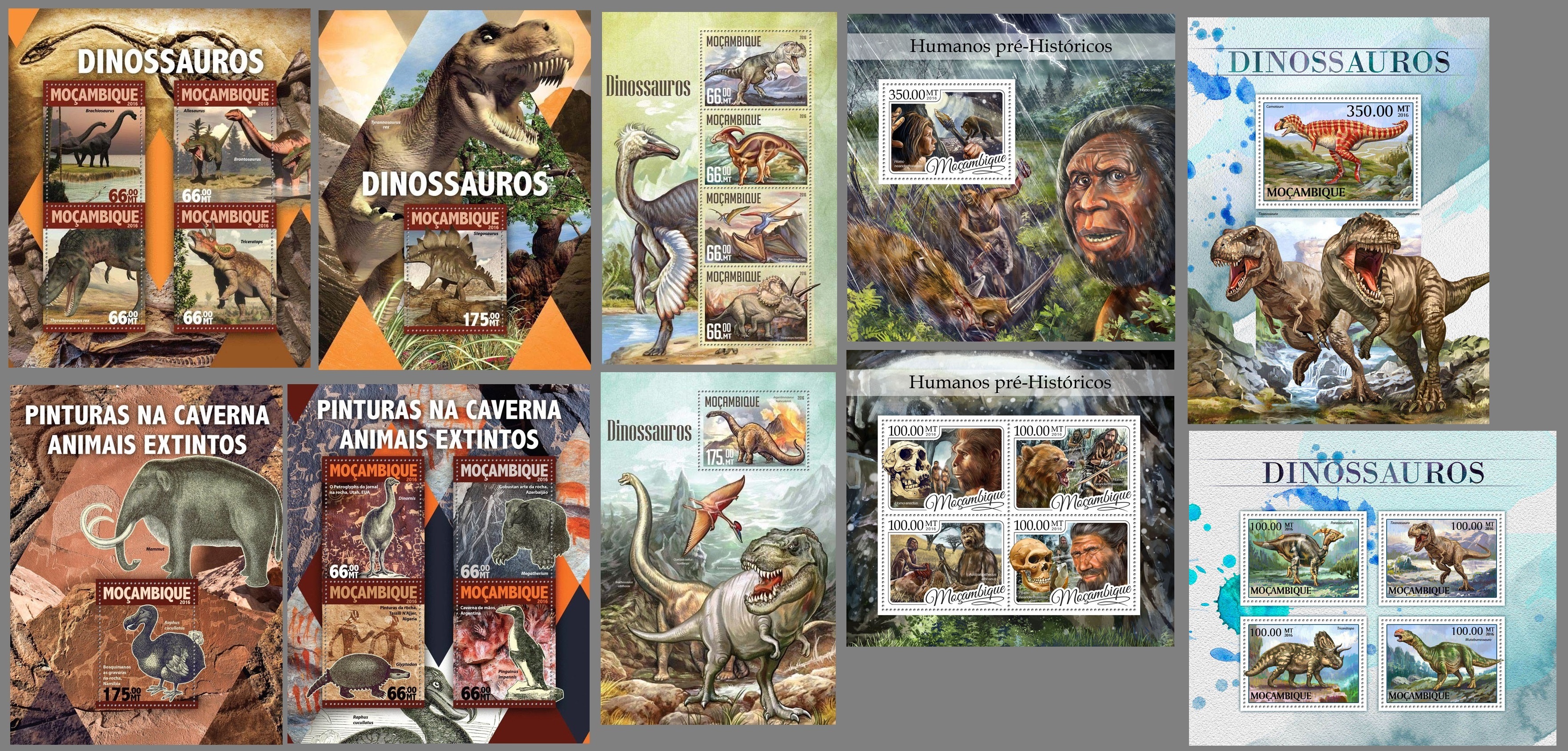
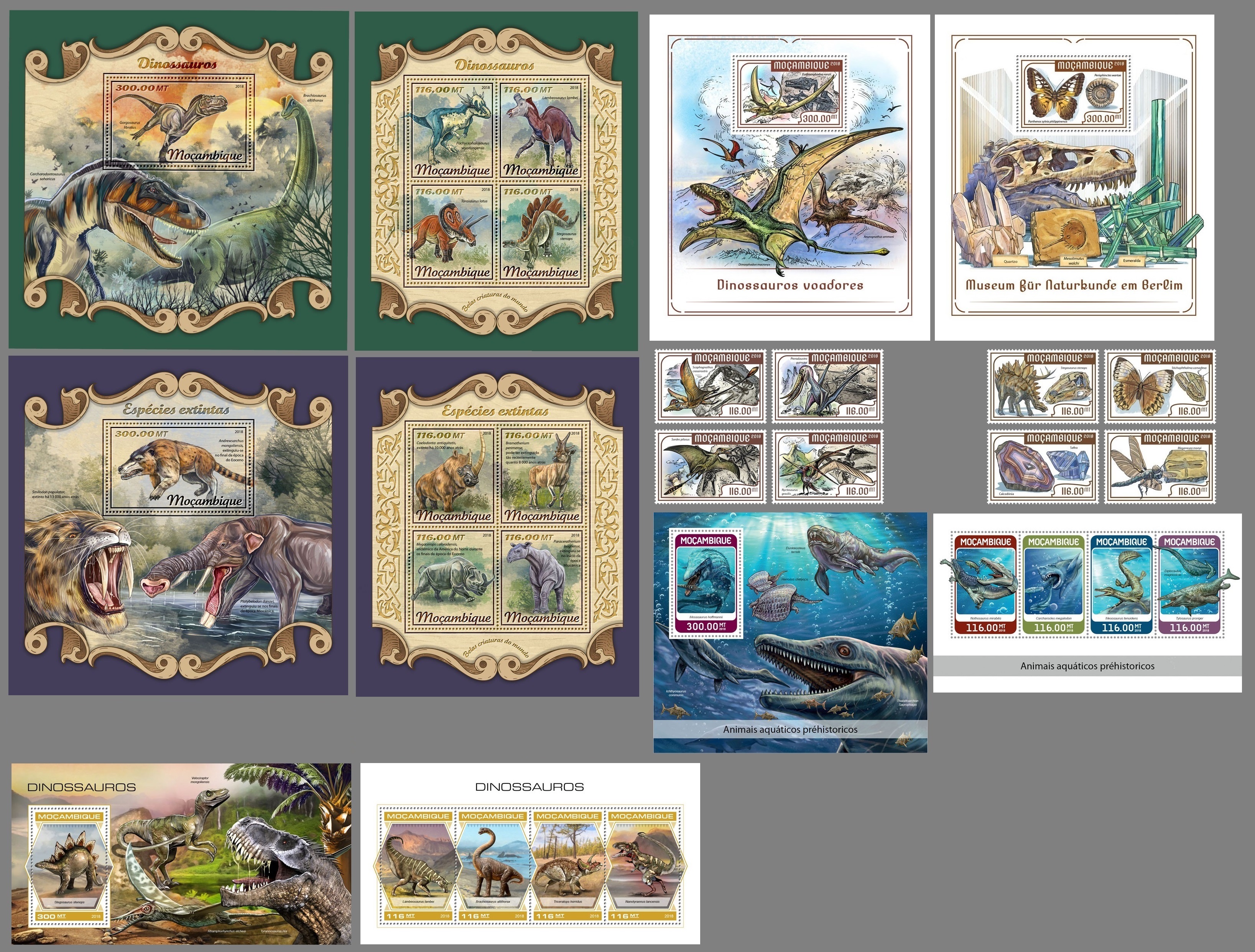
15.04.2015 "Dinosaurs" 15.06.2015 "Dinosaurs" 15.06.2015 "Aquatic Prehistoric Animals" 15.08.2015 "Stamps on stamps" |
 |
 |
 |
 |
 |
 |
|
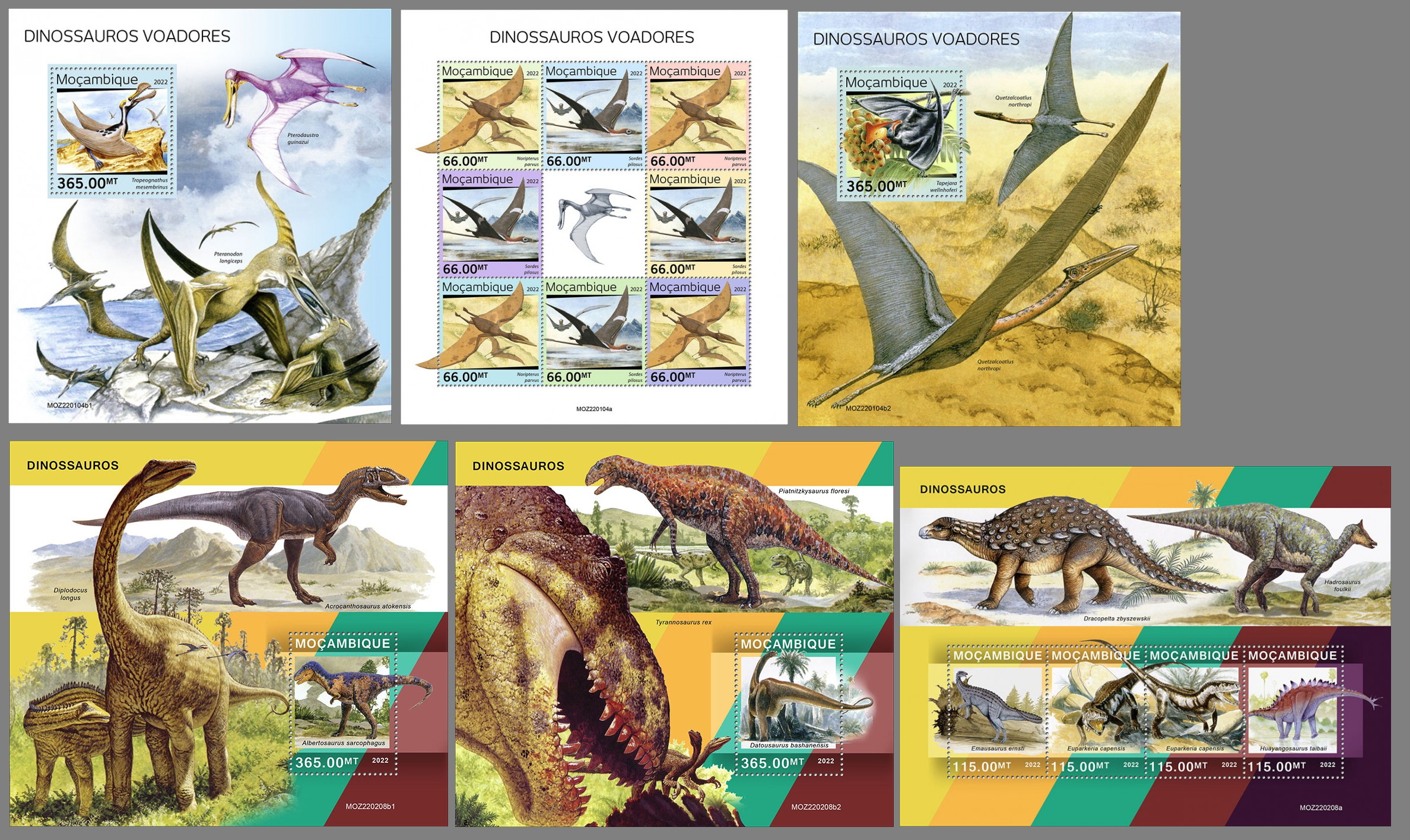
25.04.2022 "Dinosaurs"
|
||
 |
 |
 |
Notes:

 [1] On 30th September 2002, Stamperia issued more than 200 stamps
of famous personalities, some of them show dinosaurs and Charles Darwin.
[1] On 30th September 2002, Stamperia issued more than 200 stamps
of famous personalities, some of them show dinosaurs and Charles Darwin.[2] Laetoli footprints are shown on the stamp. Laetoli is a site in Tanzania, dated to the Plio-Pleistocene and famous for its hominin footprints, preserved in volcanic ash.
The site of the Laetoli footprints is located 45 km south of Olduvai gorge. The location and tracks were discovered by archaeologist Mary Leakey in 1976, perhaps she is shown on the stamp. The footprints were excavated by 1978.
[3] Prehistoric human on the background
[4] "Flying dinosaurs" is not the correct term to apply to the animals shown on these stamps. The animals pictured are pterosaurs.
Pterosaurs are a group of flying reptiles in the Archosauria. Reptiles in the archosaurs include crocodiles, dinosaurs, and pterosaurs.
Other stamps to consider: living fossil - Coelacanth/Latimeria
| 22.05.1998 "Expo ’98, Lisbon" [A1] | 10.12.2007 "Fishes" [A1] | |
 |
 |
|
[A1] Coelacanth, Latimeria chalumnae, shown on stamp from 1998 and on one stamp from "Fish" mini-sheet from 2007.
On 20 February 1939, the stunning announcement was made that a Coelacanth (Latimeria) had been caught off the mouth of the Chalumna River near East London (a city in RSA).
|
|
The drama commenced on 22 December 1938, when Capt H Goosen, skipper of the trawler Nenrine, brought ashore a peculiar metallic-blue, heavily-scaled fish with fins resembling legs.
Miss Marjorie Courtenay-Latimer, Curator o the East London Museum, was informed of the strange catch, but was unable to identify the fish, which measured 1,5 m in length and weighed 57 kg. "Searching for African Coelacanths" exhibit of Susan Bahnick Jones explain the story of the "living fossil" discovery.
References
- [R1] Mozambique:
Wikipedia,
WikiTravel,
FlagCounter.
- [R2] Postal History and Philately of Mozambique:
Wikipedia,
"In quest for abusive and undesirable stamp issues" by Jari Majander, published in Nr. 29
Links to official website of the Post Authority, stamp catalog and a list of new stamps of Mozambique are here
Acknowledgements
Many thanks to Dr. Peter Voice from Department of Geological and Environmental Sciences, Western Michigan University, for reviewing the draft page and his valuable comments.