Germany 2003 "Petrified forest of Chemnitz"
| Issue Date | 07.08.2003 |
| ID | Michel: 2358, Scott: 2259, Stanley Gibbons: 3234, Yvert et Tellier: 2184, Category: pF |
| Design | Joachim Rie, Chemnitz |
| Stamps in set | 1 |
| Value | Euro 1.44 |
| Emission/Type | commemorative |
| Places of issue | Chemnitz |
| Size (width x height) | 35mm x 35mm |
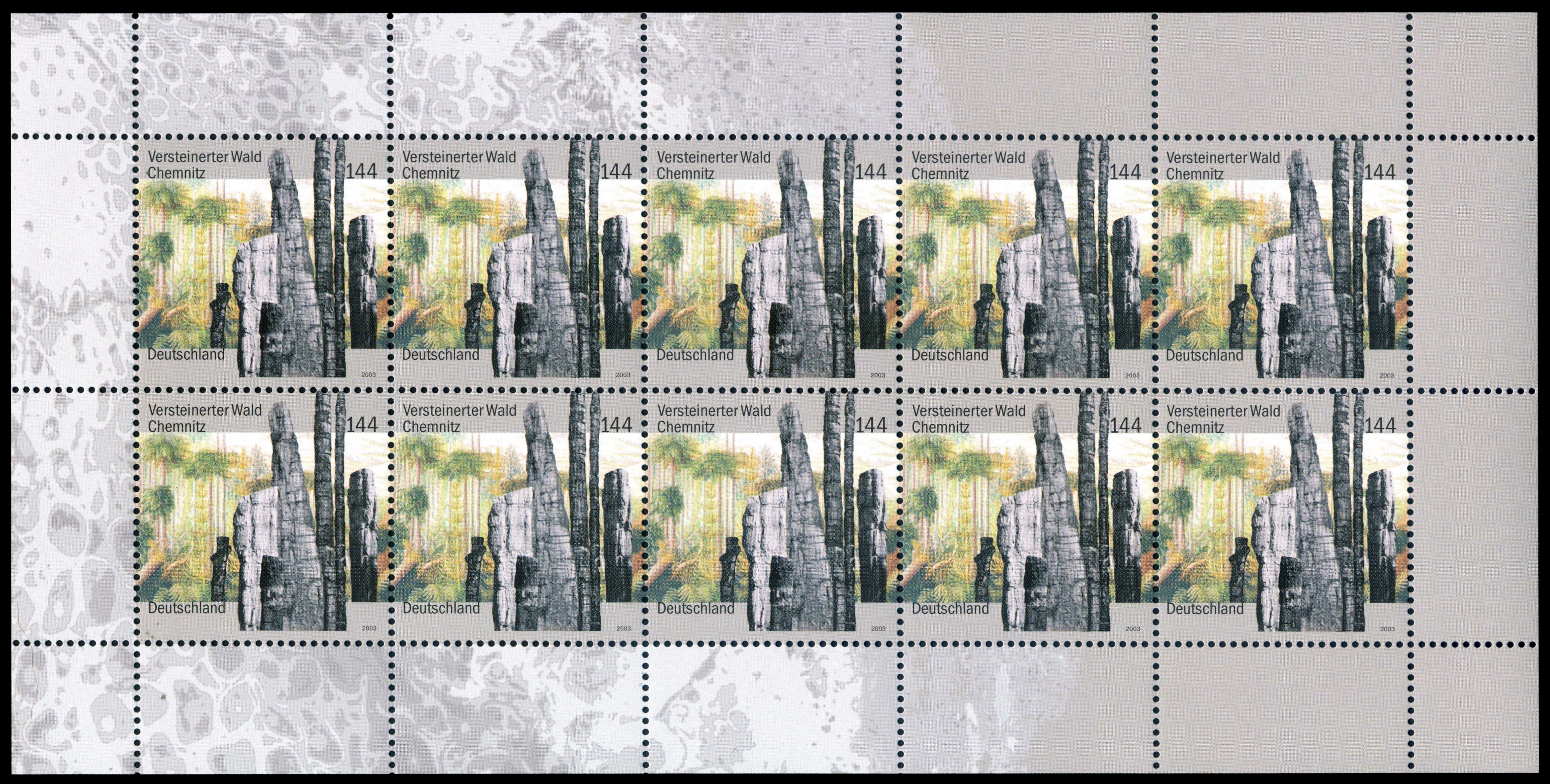
| Layout | MS of 10 stamps |
| Products | FDC x1 MS x1 |
| Paper | stroke, white, luoresce, special post paper DP 2 |
| Perforation | 13,25 |
| Print Technique | Multicolor offset print |
| Printed by | Giesecke & Devrient GmbH, Wertpapierdruckerei Leipzig |
| Quantity | 29,000,000 |
| Issuing Authority | Deutsche Post |

On August 7th, 2003, the Post Authority of Germany issued a stamp "Petrified Forest of Chemnitz". The design of the stamp was selected in a competition from a selection of submitted designs.

A massive volcanic eruption about 290 million years ago in what is now Chemnitz give rise to a geological feature: the Petrified Forest. According to recent research, the plants were buried by volcanic ash which helped preserve the plants. Over the course of time, silica and fluorite were precipitated in the plant's cells - silicifying the plant material, turning it into fossils with exceptional preservation.
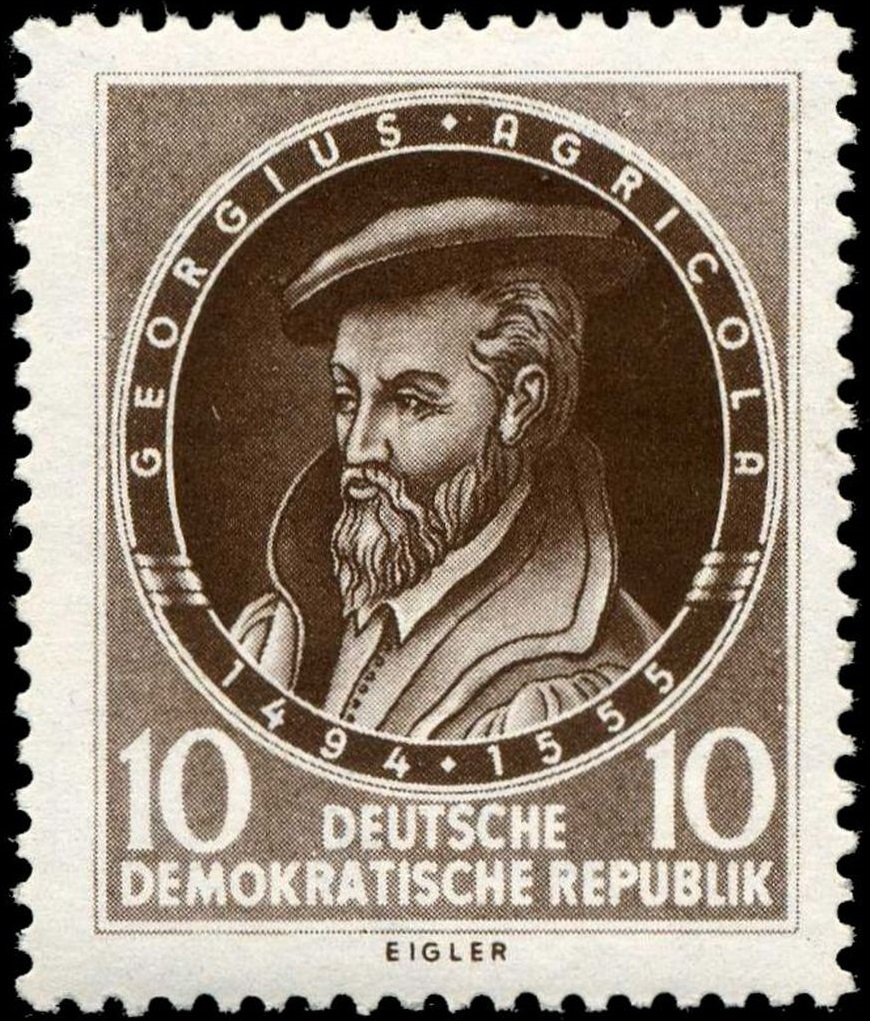 |
| "Georgius Agricola on stamp of Germany (GDR) from 1955, MiNr.: 497, Scott: 271. |
As early as the Chemnitz mayor and scholars Georgius Agricola (1494-1555), who coined term "fossil", mentioned these stones that were once in a polished form as jewelry very popular.
Under the leadership of Johann Traugott Sterzel (1841-1914), the Chemnitz suburb of Hilbersdorft systematically excavated these fossils. The museum of Petrified forest of Chemnitzt was opened in 1876. Since than, the museum changed his address several time. The last time it moved to center of the city in 2004, where several trunks of petrified trees were mounted in erected position in hall of the ground floor. The highest of 25 trunks is 14,4 meter height.
Many national and International paleobotanist coming to Chemnitz regularly to study the unique petrified forest. One of the most famous and grateful visitors of the museum was Birbal Sahni from India who came in 1929. Sahni was the founder of an internationally recognized institute in Lucknow (India), and his work in Chemnitz resulted in two quite important obsefvations:
- Within the petrified forest of Chemnitz there are many different type of climbing plants
- Some rare ferns show a combination of ancient and modern features
Since late 2001, gives the Museum of Natural History Chemnitz fascination petrified wood. Some of the silicified trunks from the region are situated in front of the museum. Since August 2004 the Museum is located in an important central building named TIETZ. The building was constructed by H&C Tietz in 1912/13 following the French neoclassical style. The historic shopping center hosts now the biggest civic collection and together with the arrangement of the 290 million years old Petrified Forest also one of the heaviest fossil collection.
Products and associated philatelic items
| First-Day-of-Issue Postmarks | ||
 |
 |
 |
|
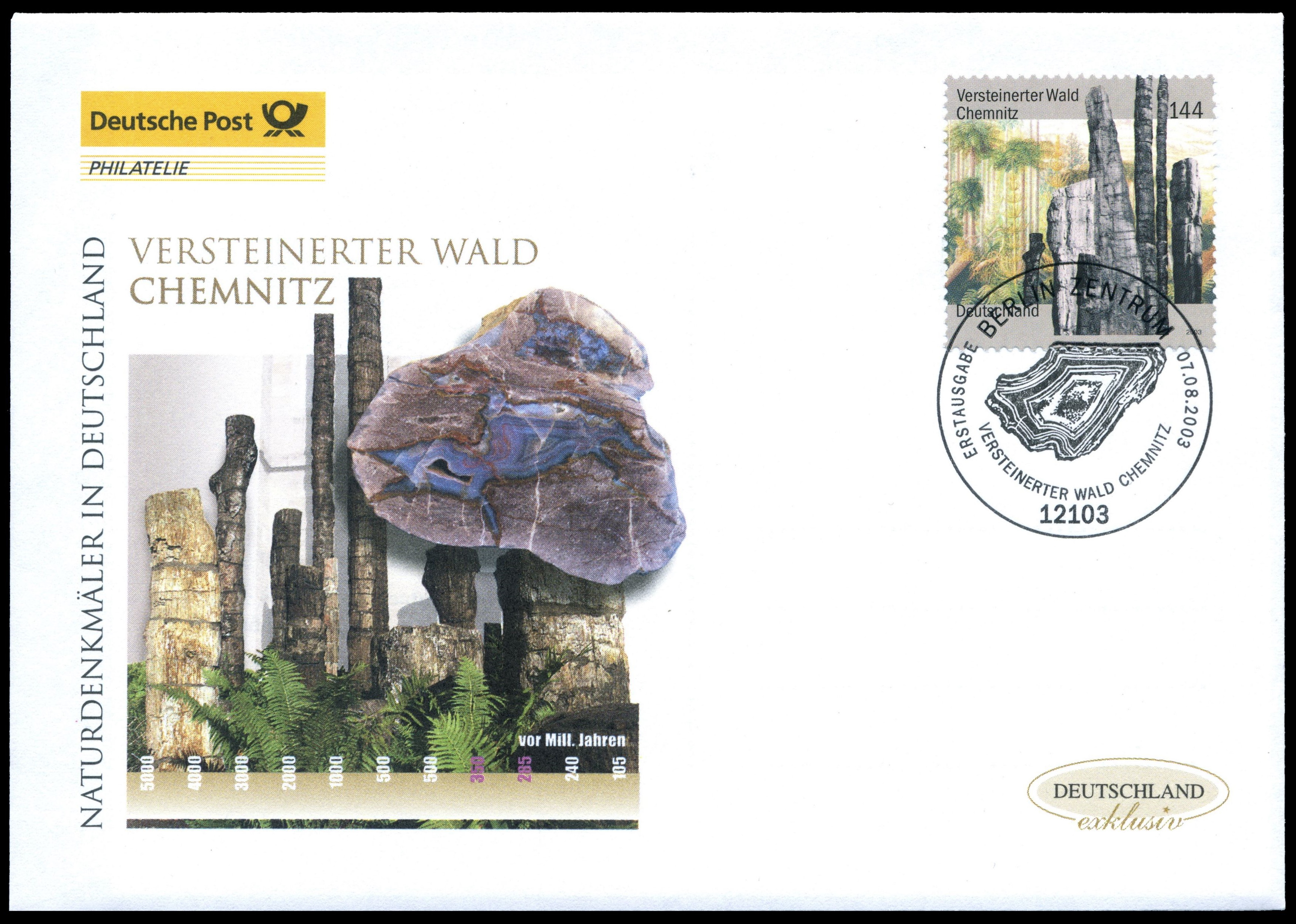
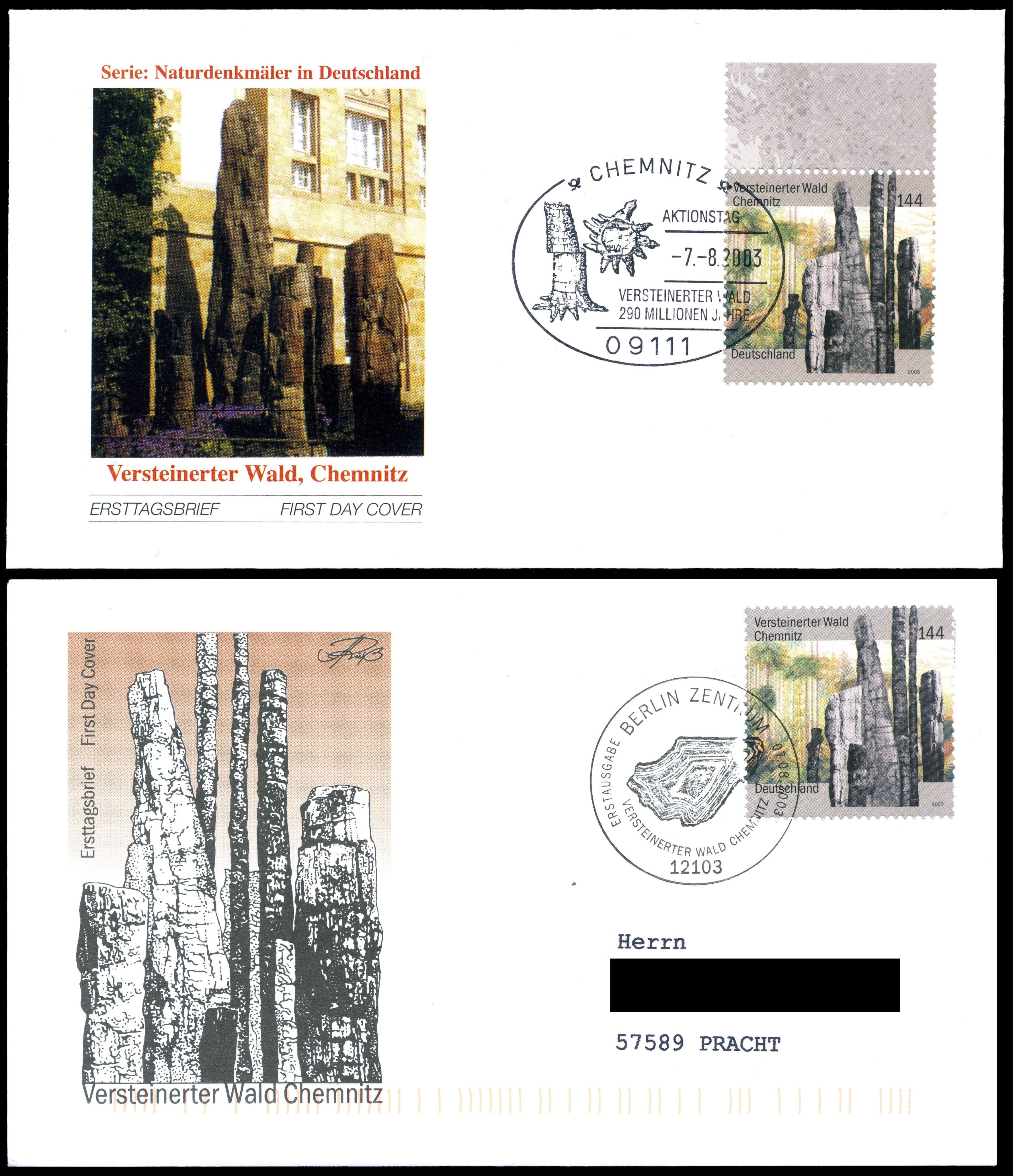
Addition to commemorative postmark of Bonn and Berlin the Museum of Natural
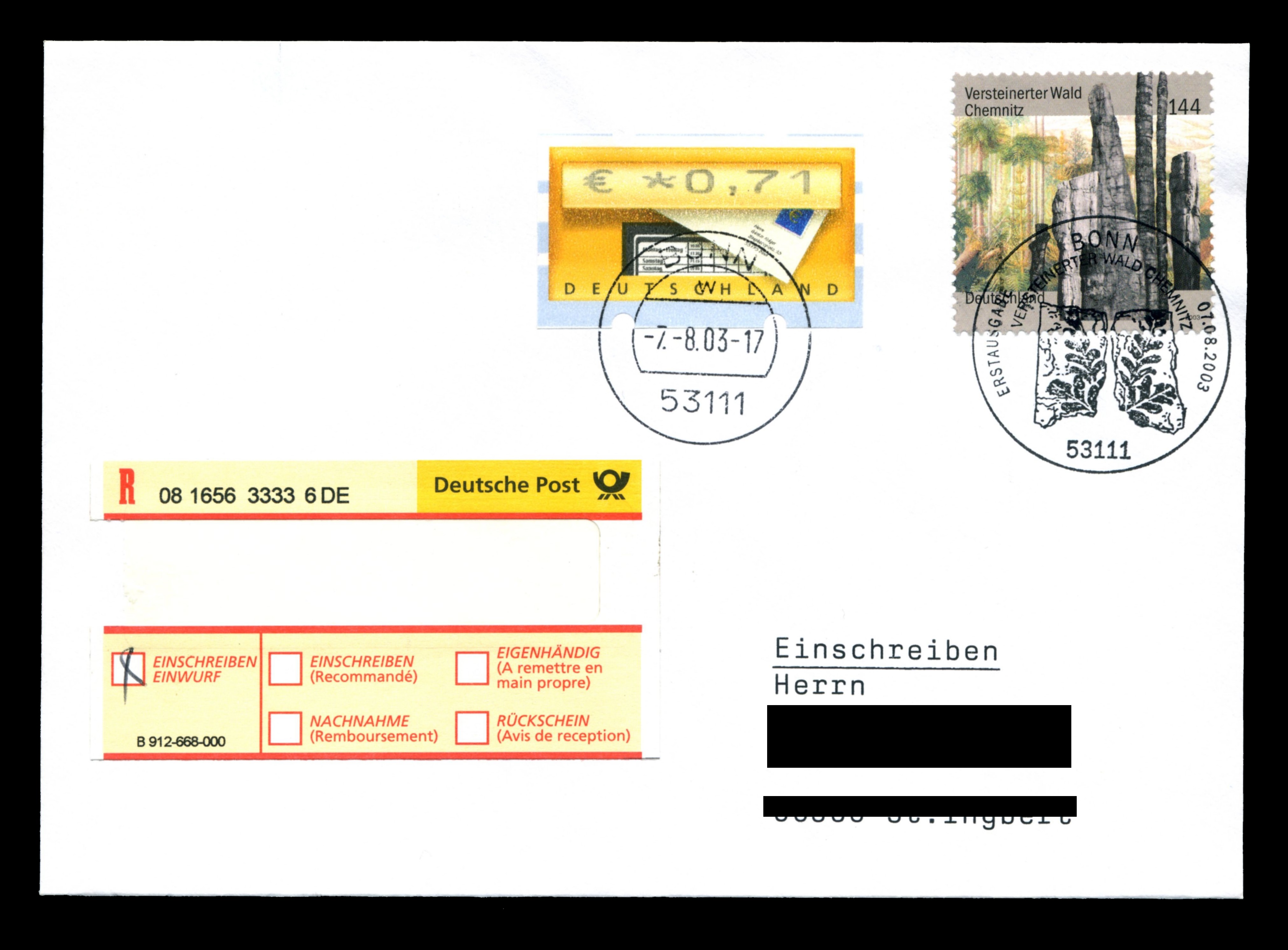
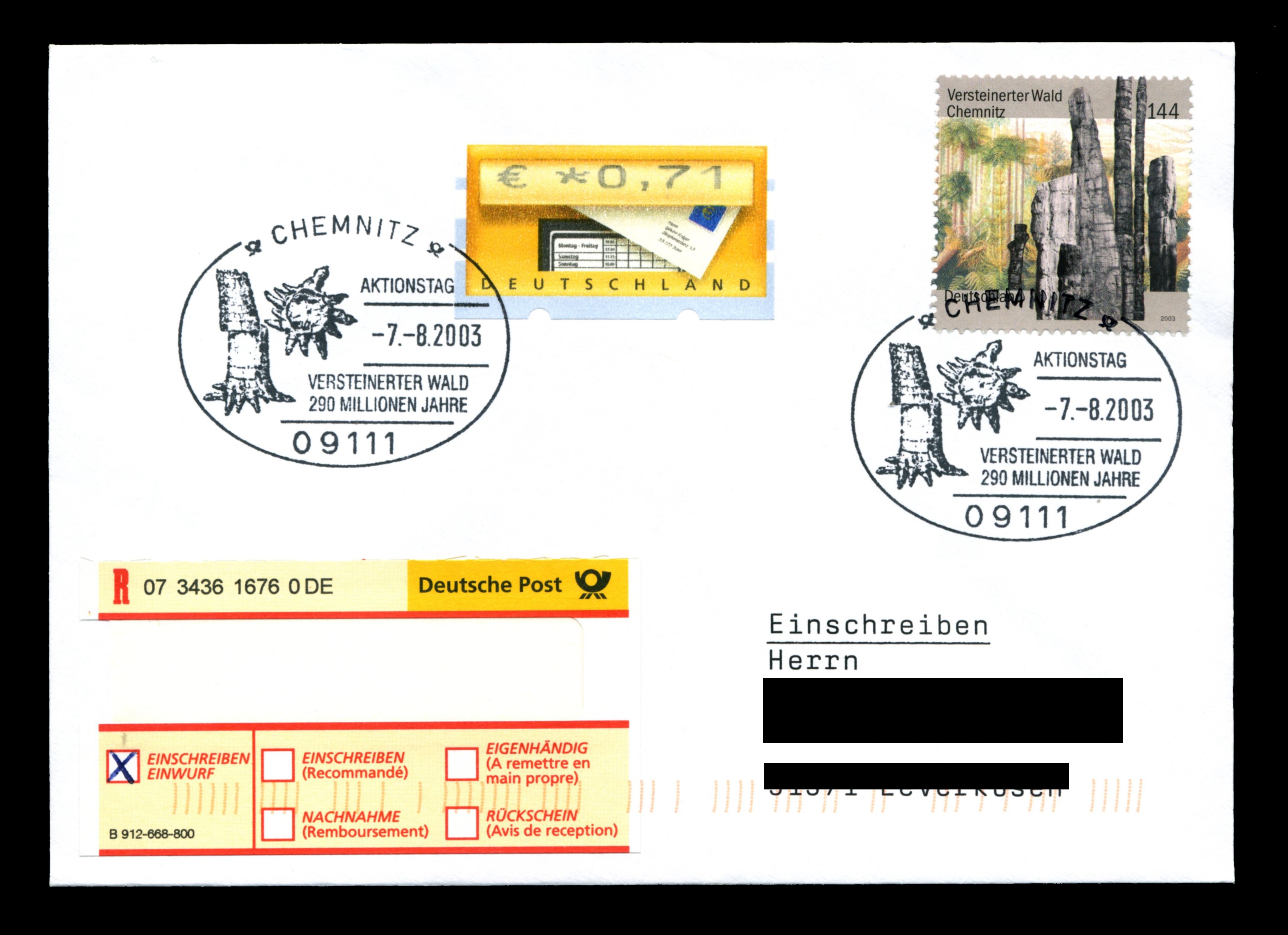
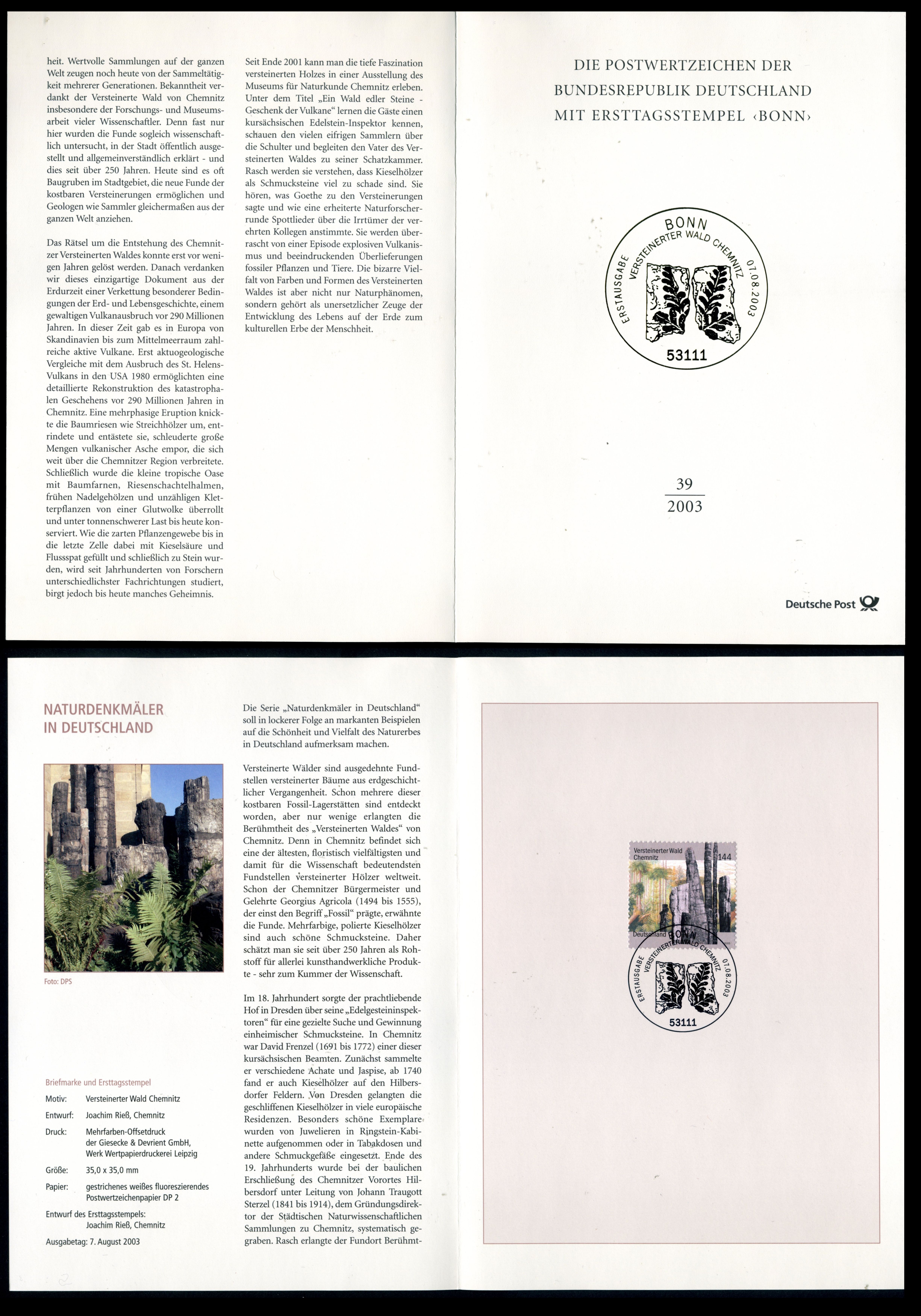
History Chemnitz produced its own commemorative postmark. The Postmark of Berlin was used on the official FDC of Deutsche Post, while the Postmark of Bonn was used on the Souvenir Sheet, and a postmark for the museum was used on covers produced by the museum. |
||
| FDC | ||
| Official | The Museum | Private |
|
|
 |
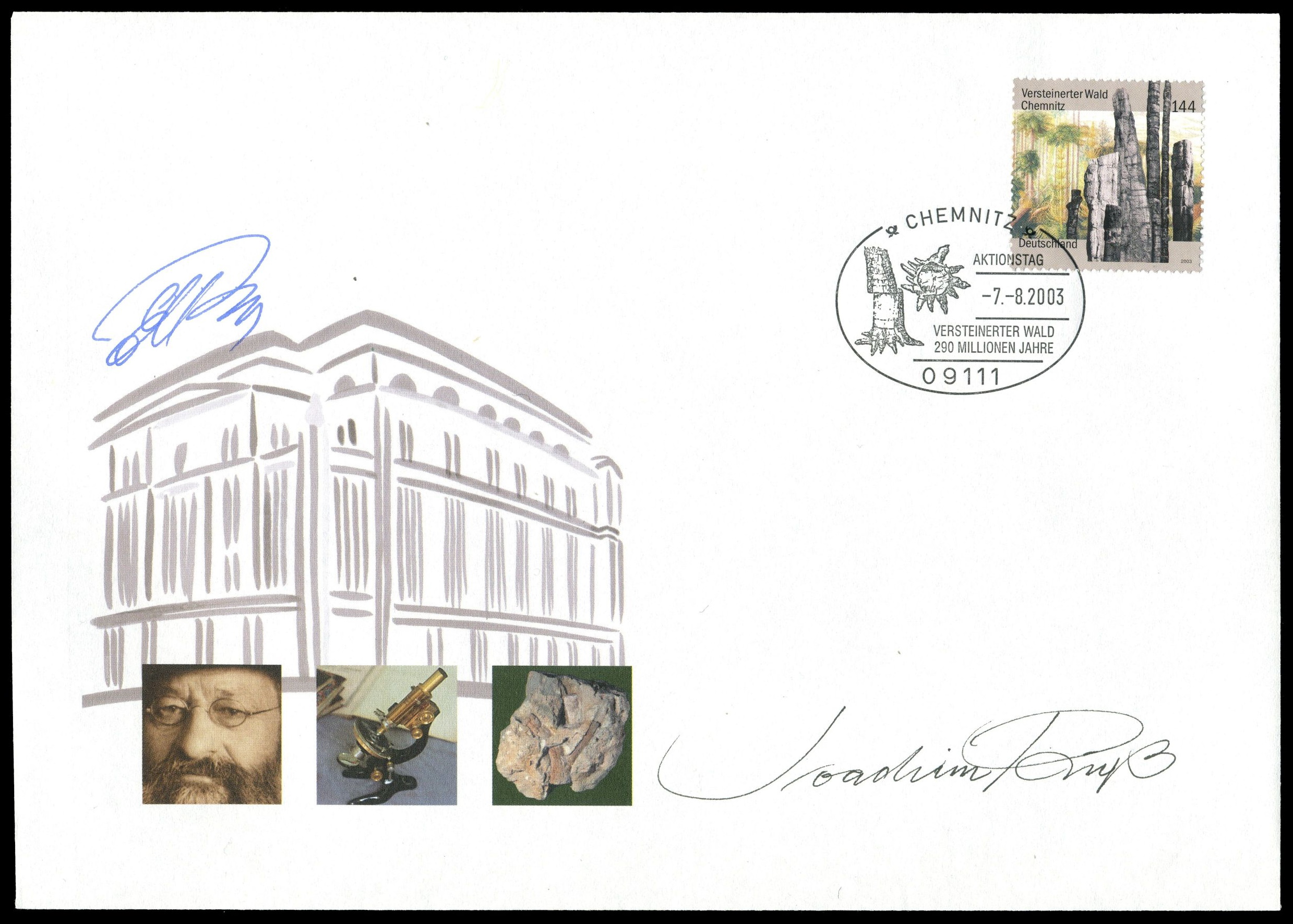
| The FDC of the Museum of Natural History Chemnitz signed by stamp designer Mr. Joachim Rie and Chemnitzer graphic designer and artist Evgeniy Potievsky who designed the first day cover. | ||
| Circulated FDC | ||
 |
 |
 |
| Souvenir Sheets with some technical and background descriptions | ||
|
 |
|
| Mini-Sheet | Example of circulated covers | |
 |
 |
|
References
- Technical details: Colnect Souvenir Sheet
- Chemnitz petrified forest: Wikipedia, chemnitz.de (in German).
- Museum of Natural History Chemnitz: Official website: main page, excavation history, the history of the museum in German.
Acknowledgements
Many thanks to Dr. Peter Voice, PhD Department of Geological and Environmental Sciences, Western Michigan University, USA, for review of a draft of this article and his very valuable comments.