Petrifacts of Castle Banz
Banz Abbey (German: Kloster Banz), now known as Castle Banz (German: Schloss Banz), is a former Benedictine monastery, since 1978 a part of the town of Bad Staffelstein north of Bamberg, Bavaria, southern Germany.
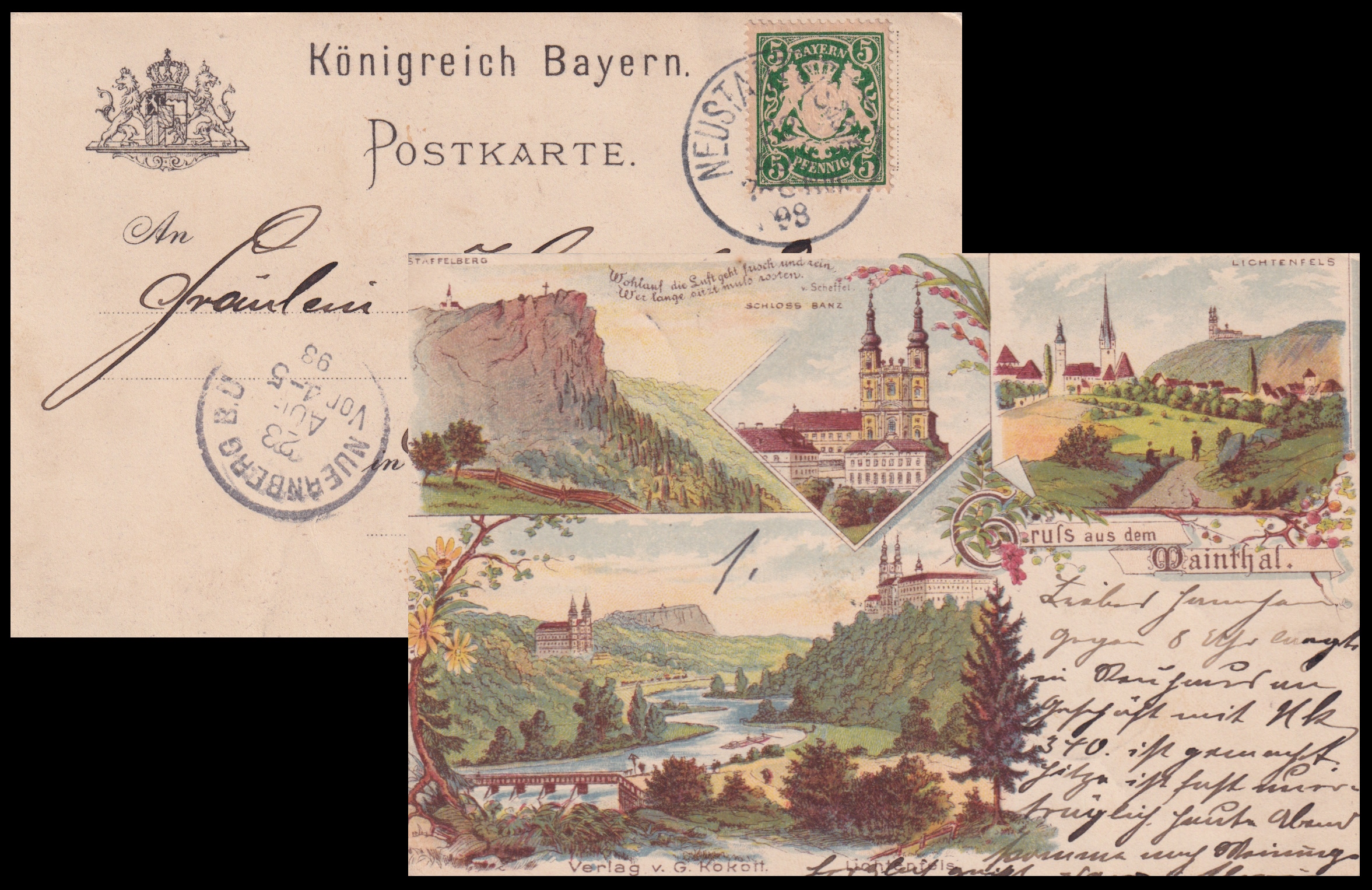 |
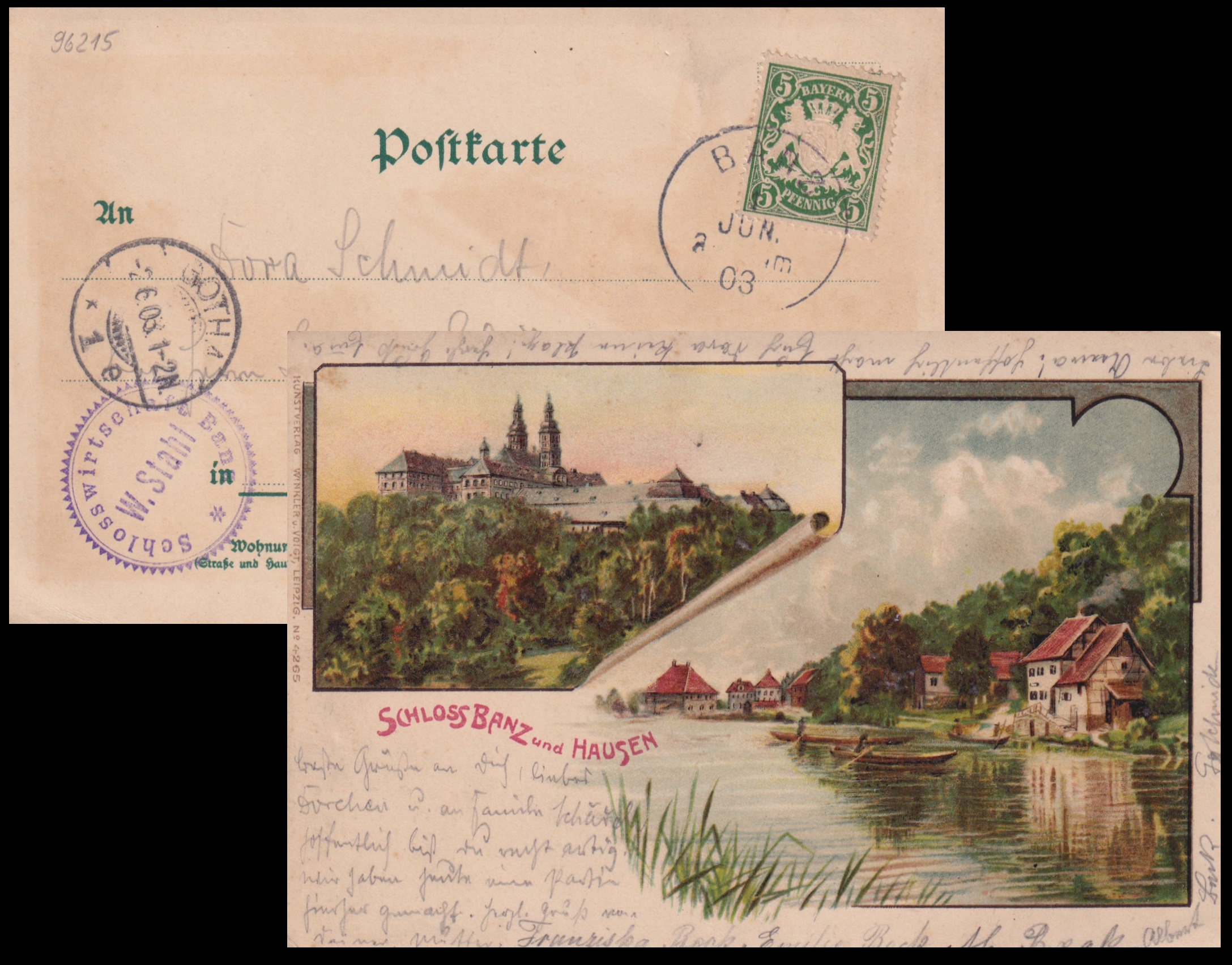 |
| Castle Banz on vintage postcards of Kingdom of Bavaria (today part of Germany), posted from Banz in 1898 and 1903 respectively. | |
The abbey was founded in about 1070 by Countess Alberada of Schweinfurt and her husband, Count Hermann of Habsburg-Kastl, on command of King Henry and until the secularisation of 1803 was the oldest monastery on the upper Main River.
In the late Middle Ages and until 1575 only members of the nobility were accepted as monks.
In the 18th century, the Benedictines experienced an incomparable period of prosperity, during which Banz Monastery was considered a center of science. The beginning of 19th century was the time of industrial explosion in Europe and scientific discoveries. Fossils of previously unknown creatures were unearthed during construction of new roads and big factories.
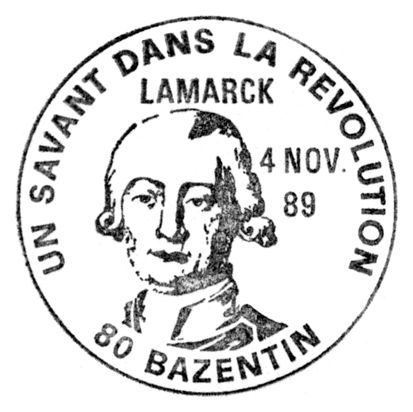 |
 |
| Jean-Baptiste de Lamarck (1744 –1829) on postmark of France 1989 | God creates animal on stamp of Germany 2014, MiNr.: 3085; Scott: 2790. |
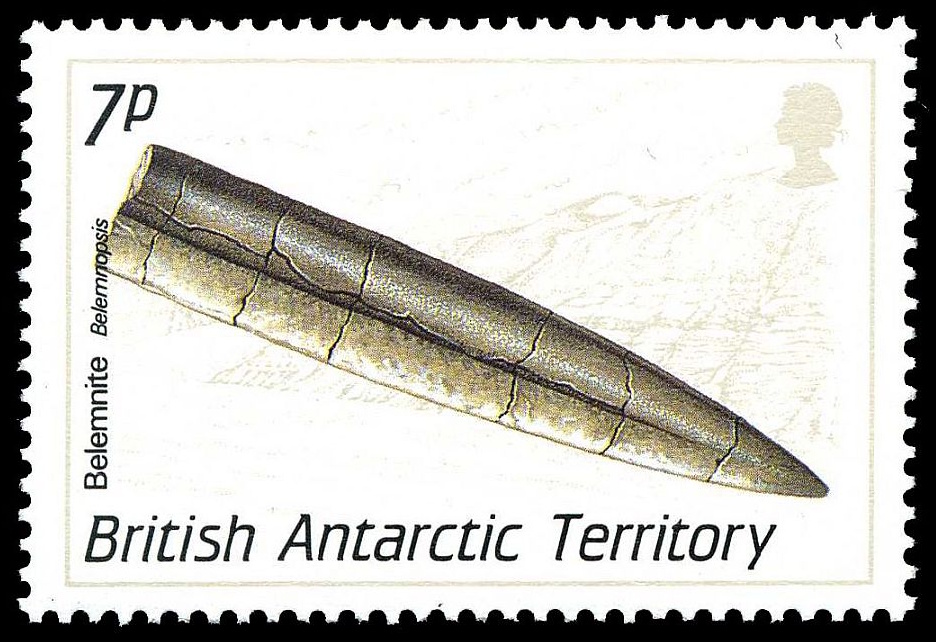
Curiosity cabinets (which later became Natural History Museums) were established by educated nobles in Europe. One of such cabinets (originally called Lokal-Petrefakten-Sammlung in German) was established in 1828 in Castle Banz, by lawyer Carl Theodori and the Catholic priest Augustin Geyer. It is one of the oldest paleontological exhibits in Bavaria, where they exhibited fossils of Ammonites, Belemnites, sea lilies and other animals who lived in the region during the Jurassic Period, around 200 million years ago.
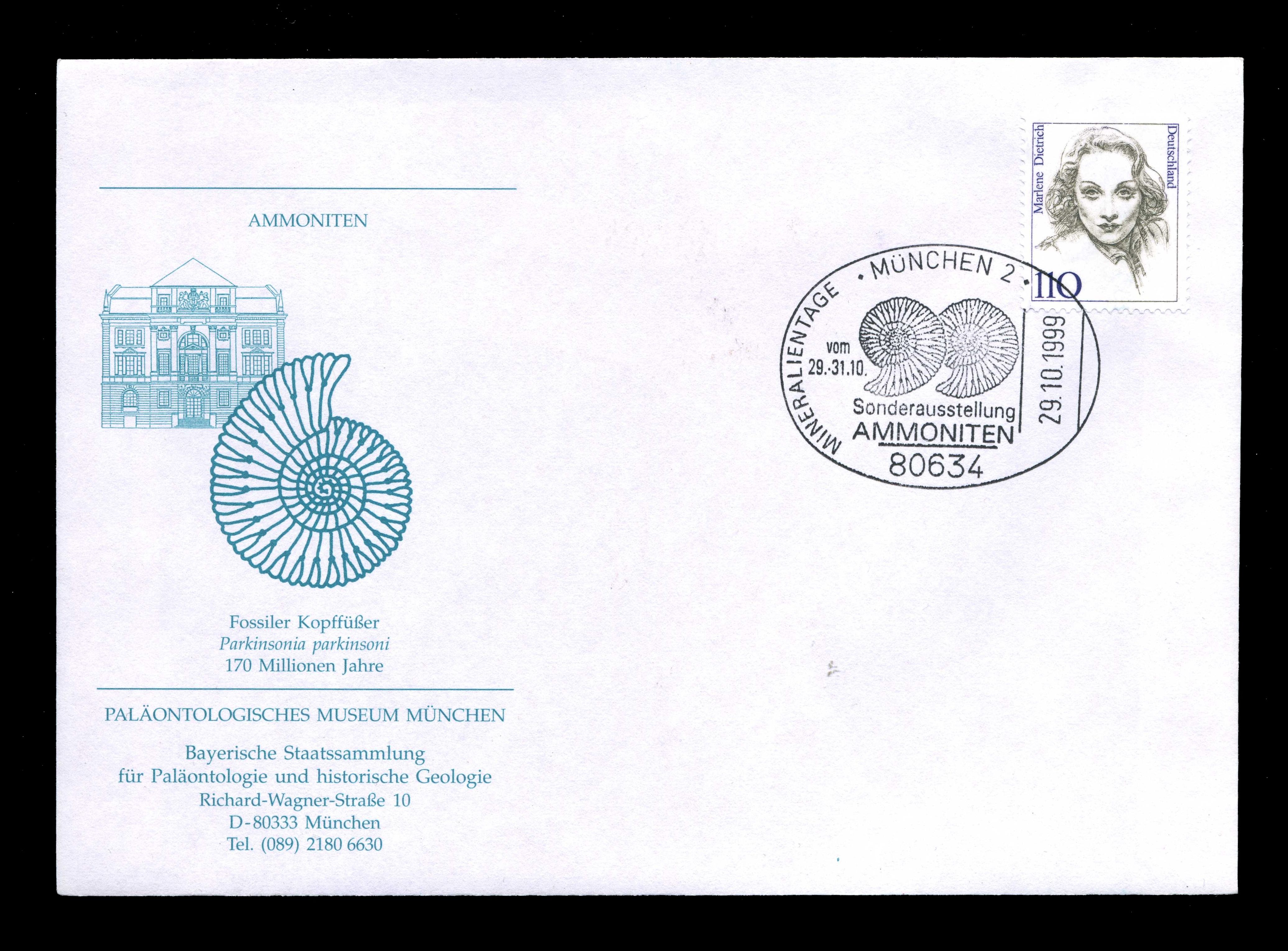 |
 |
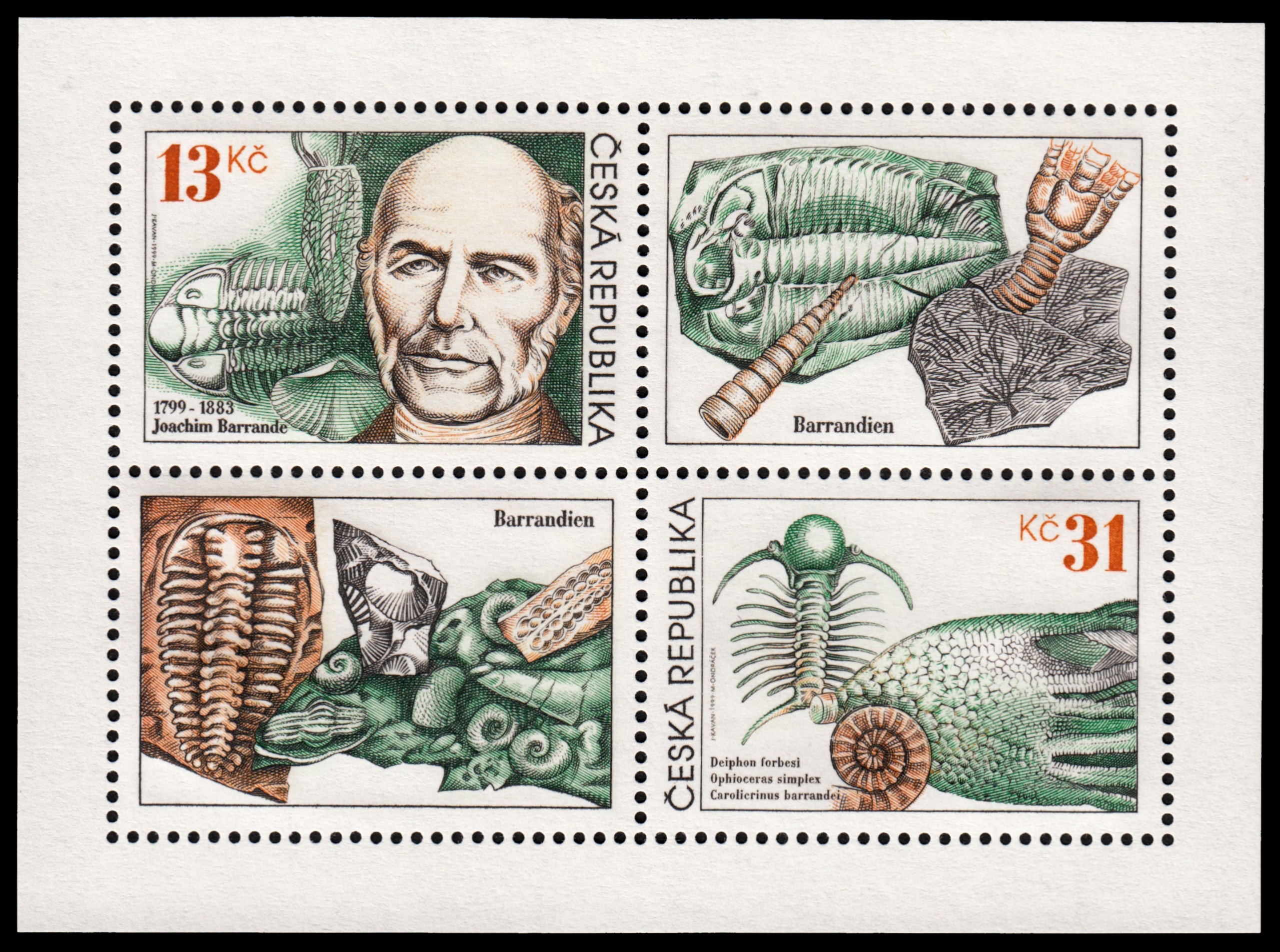 |
| Ammonites on commemorative postmark of Germany 1999 | Belemnite fossil on definitive stamp of the British Antarctic Territory 1990 | Fossilized sea lily (upper right) on label attached to stamp in honour of Joachim Barrande, Czech Republic, 1999. Other fossils on the label include a trilobite, a nautiloid, and a graptolite. |
 |
||
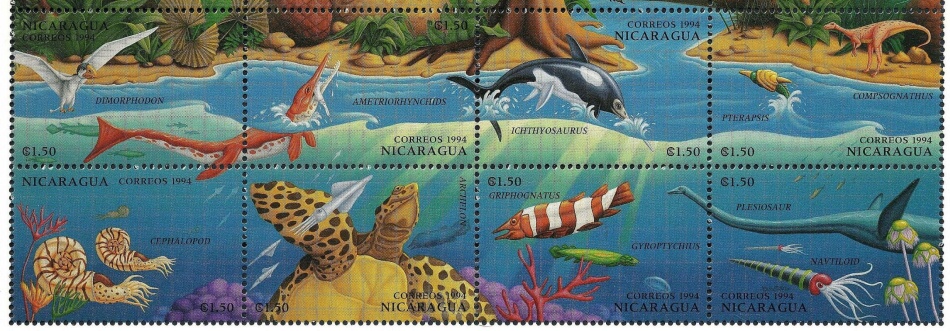
| Prehistoric life of the Mesozoic Era on stamps of Nicaragua 1994. MiNr: 3372-3387, Scott: 2041. Reconstructions of Ammonites, Belemnites, sea lilies shown on the bottom. | ||
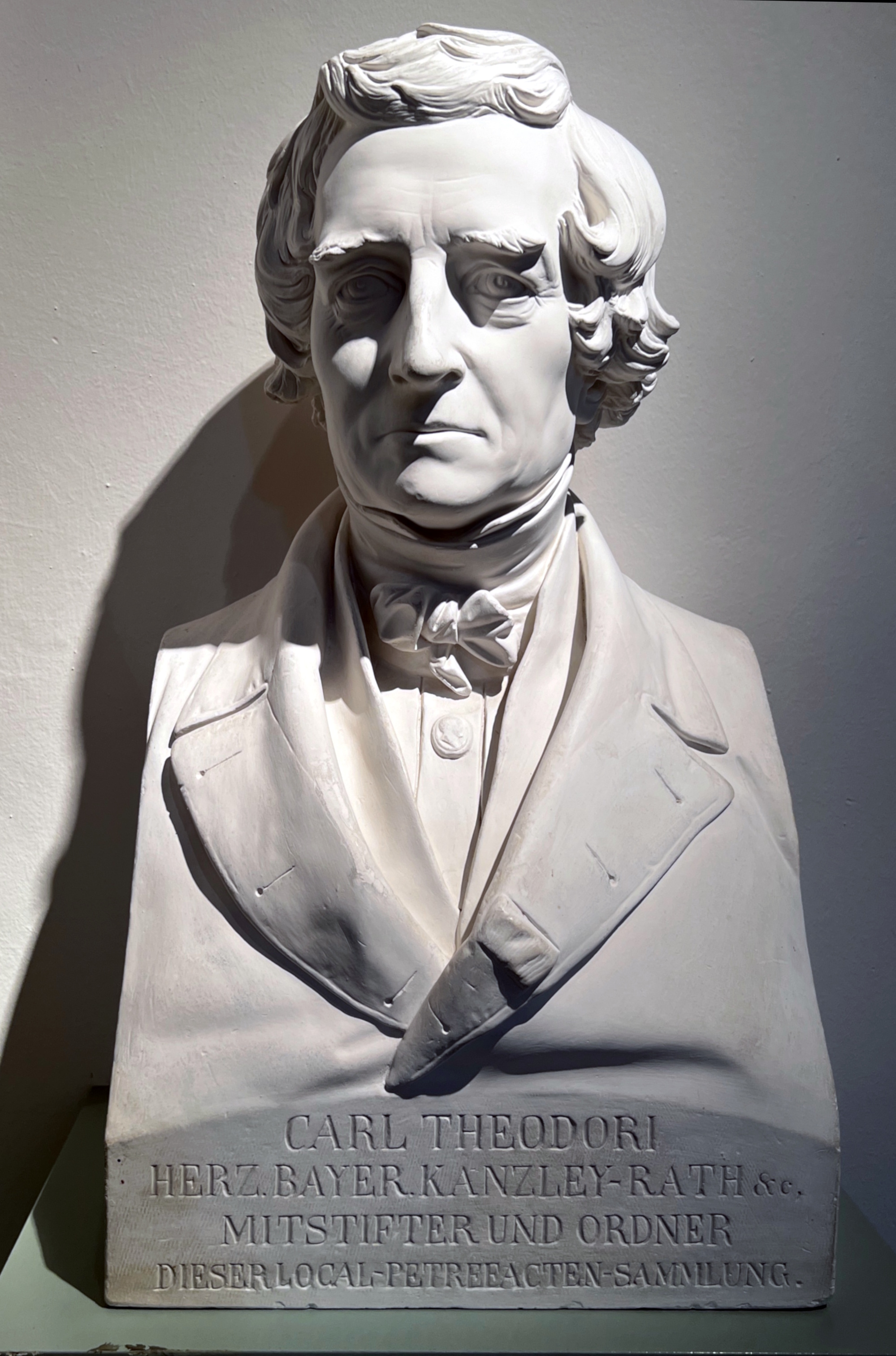 |
| Bust of Carl von Theodori in the museum of Castle Banz. The photo was taken by the author in May 2024. |
Carl Theodori (1788–1857) was a jurist who served the Bavarian court.
He began his career in the service of Wilhelm in Bayern. After 1834, he continued his work in Munich under Maximilian in Bayern, where he eventually became a chancellery councillor and later the Duke’s secretary. He first came to Banz as an official accompanying Duke Wilhelm, who had used the former monastery as his summer residence since 1814.
Like many scholars of his era, Theodori had a deep interest in natural history and explored the surrounding region in search of fossils and geological features.
In Augustin Andreas Geyer (1774–1837), Theodori found a like-minded companion. Geyer, a former Benedictine monk at Banz until the monastery’s dissolution in 1803, became the parish priest of Banz in 1815. While Geyer seems to have focused primarily on preparing the fossil finds, Theodori dedicated himself to drawing and scientifically analyzing them.
In 1828, Theodori and Geyer presented their private fossil collection to the Duke in Bavaria, on the condition that it remained in Banz. They continued to expand it in the years that followed. Among its most striking specimens are impressive fossils of ichthyosaurs, pterosaurs, and marine crocodiles.
The fossil collection was reorganized in the early 1920s, again in the 1930s, and once more in 1987/88.
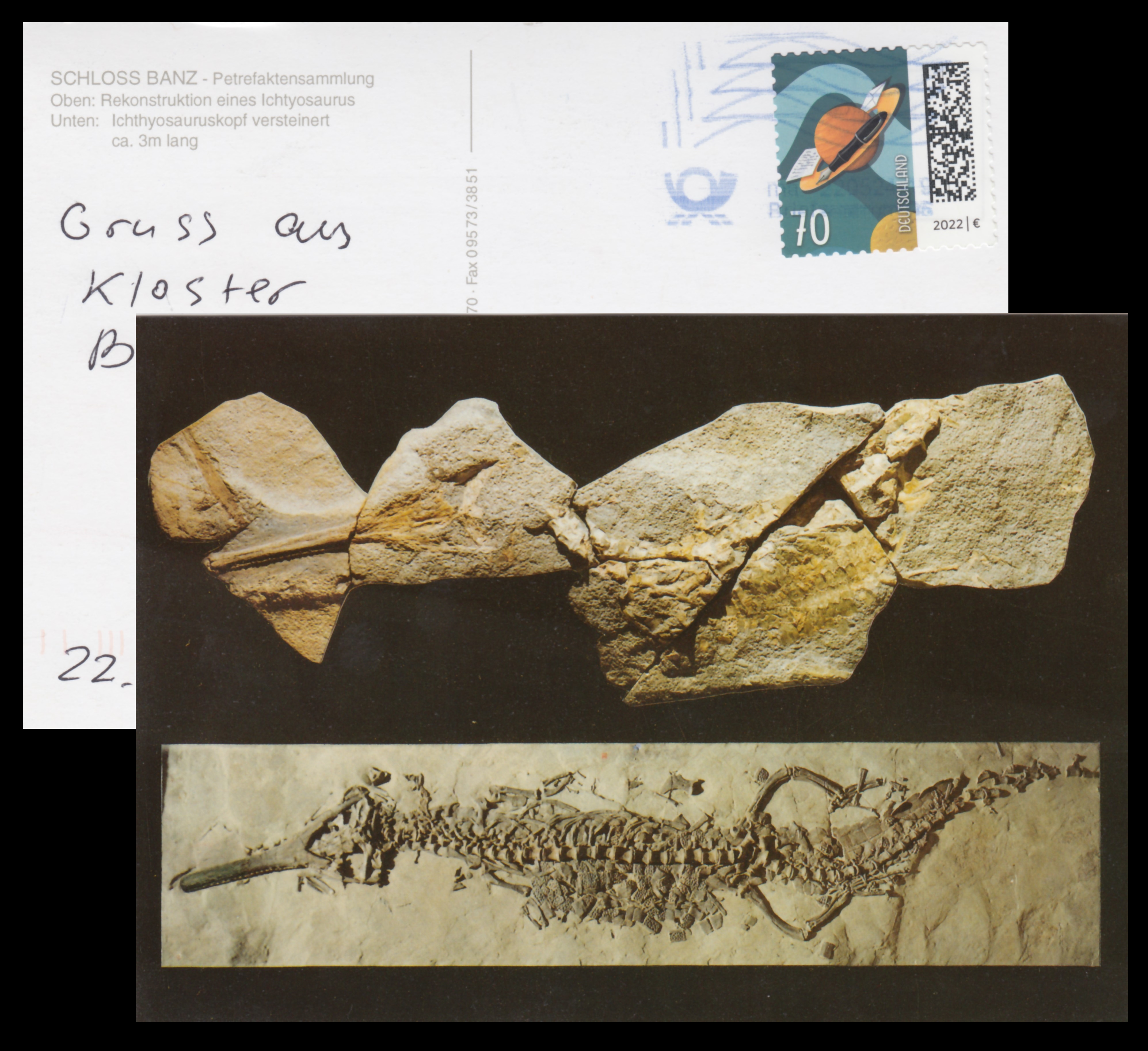
In 1834, Augustin Geyer made one of his most remarkable discoveries, near Weingarten: the fossil of a marine crocodile - Steneosaurus bollensis. Both the slab and counter-slab of this specimen have been preserved. Although the body is heavily decomposed, key features remain visible.
Unlike modern crocodiles, the sea crocodiles were fully adapted to life in the sea, with long, narrow snouts perfect for catching fish, making them some of the “top predators” of their time.
Like their modern relatives, these marine crocodiles were protected by rows of bony plates embedded in the skin—an effective natural armor still clearly visible on the right slab.
The fossil itself lies within the so-called Monotis bed, a distinctive rock layer named after the small mussel Monotis. The surface of the slab containing the crocodile is covered with tiny rounded bumps, each one the shell of a fossilized Monotis.
The most famous fossil site for sea‑crocodiles in Germany is Holzmaden, located about 155 km (In a straight line) from Castle Banz.
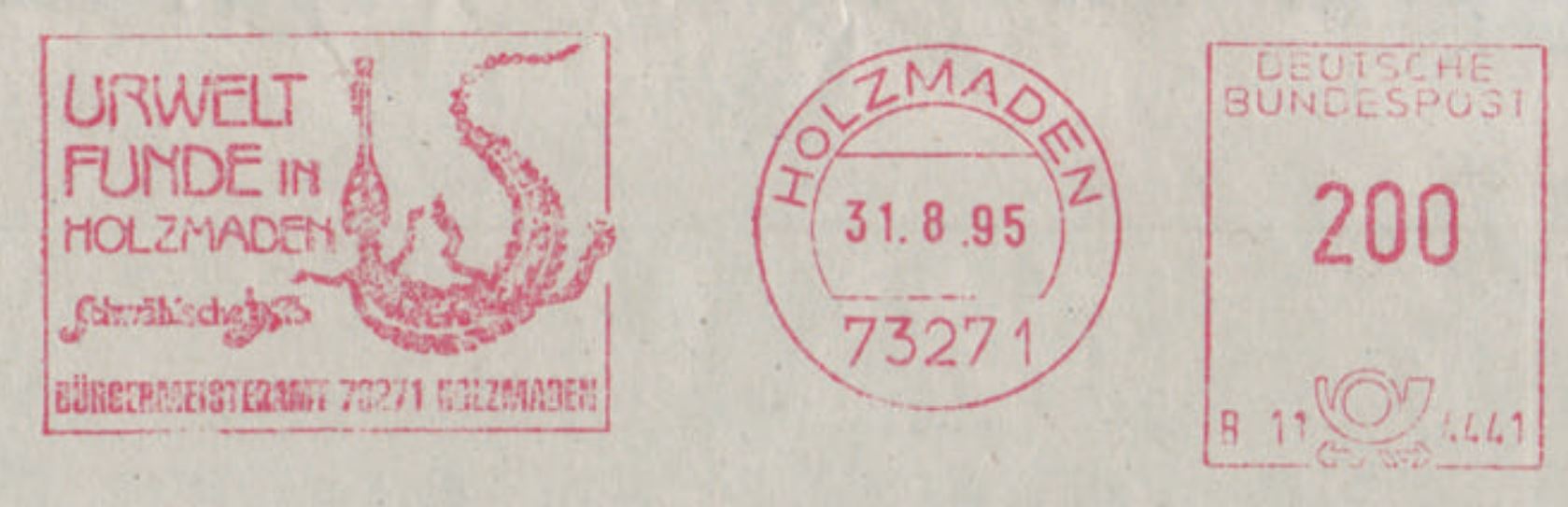 |
| Steneosaurus bollensis, on meter stamp of "Urwelt Museum Hauff" in Holzmaden. |
 |
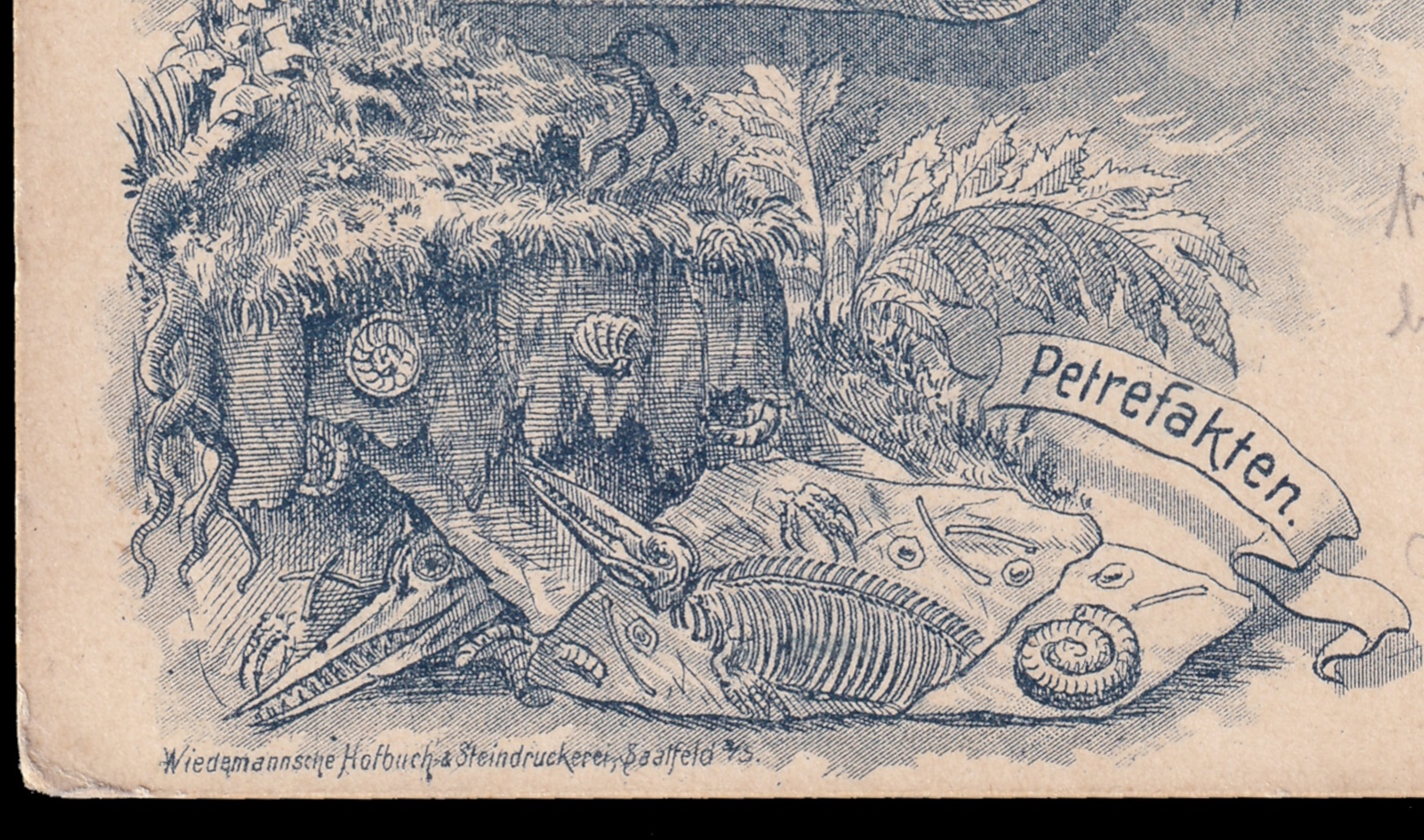 |
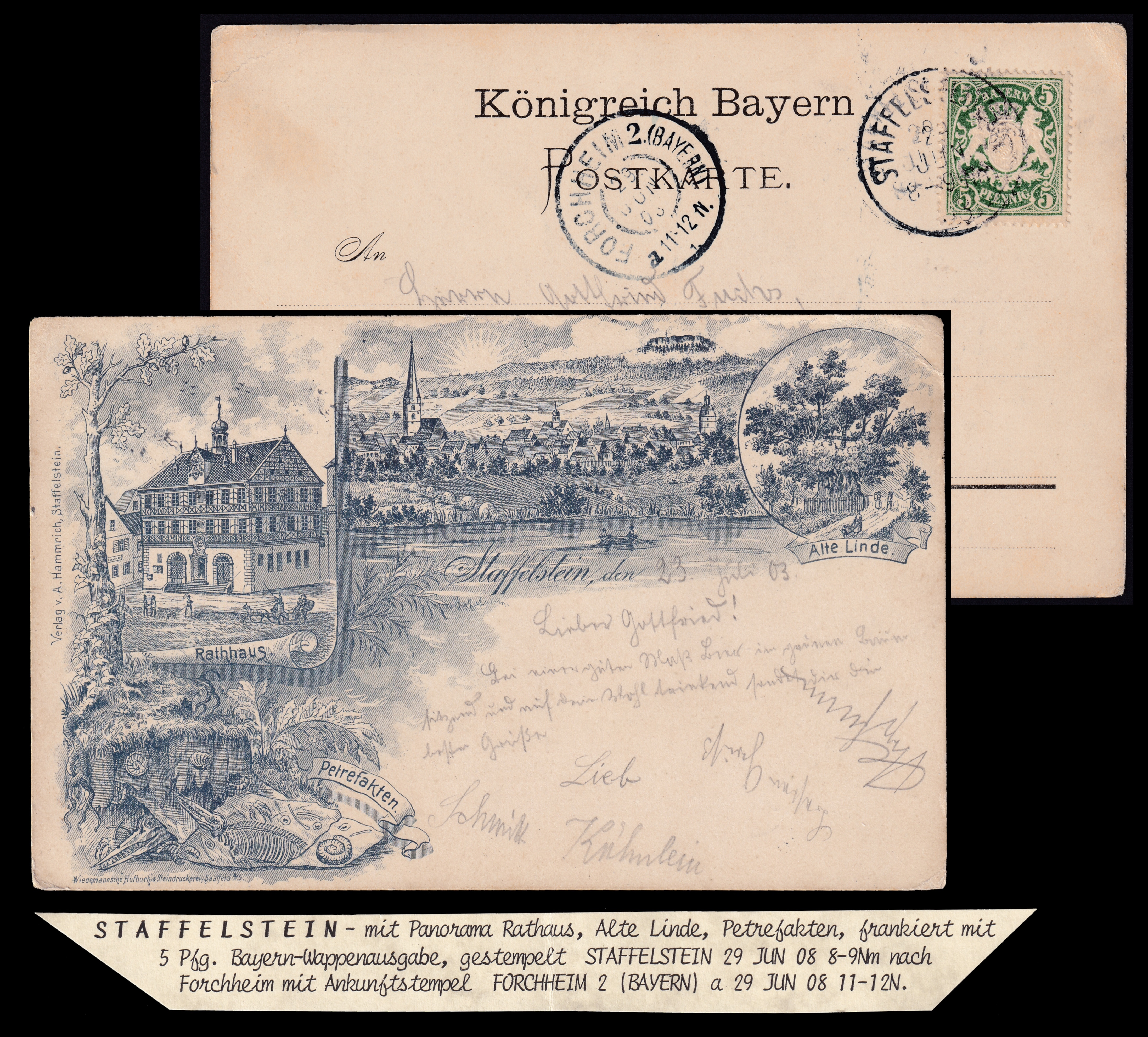
| Ichthyosaurs and other fossils discovered in Staffelstein on postcard of Kingdom of Bavaria, posted in 1908. |
|
| Stenopterygius on sketch and stamp of Luxembourg 2024. |
The Posidonia Shale, also named after abundant mollusc Posidonia bronni, deposited in an Early Jurassic sea around 180 million years ago, preserved an extraordinary array of marine life and provide a unique glimpse into the rich marine ecosystems of the Early Jurassic.
The marine crocodile Steneosaurus bollensis was selected as the logo of the Urwelt Museum Hauff, one of Germany’s largest private fossil museums, and even appears on the museum’s meter franking.
The well preserved anterior skeleton up to the hip region of an ichthyosaur was discovered by Pastor Geyer near Unnersdorf (near Bad Staffelstein), as depicted on a postcard of Kingdom of Bavaria (1808-1918) on the right. The rear part was already decayed and was washed away by the current of the Main River.
The vertebrae lie scattered on the ground. In the area of the abdominal cavity, a dark-brown layer can be seen under the ribs. This is the remnant of the belly skin, a skin in the abdominal cavity. Even at the upper edge of the vertebral column, small skin remnants in the form of a black coating are preserved. Presumably, further skin remnants were destroyed during preparation.
The animal was described by Theodori under the now outdated name Ichthyosaurus tenuirostris, but later reassigned to Stenopterygius quadricissus.
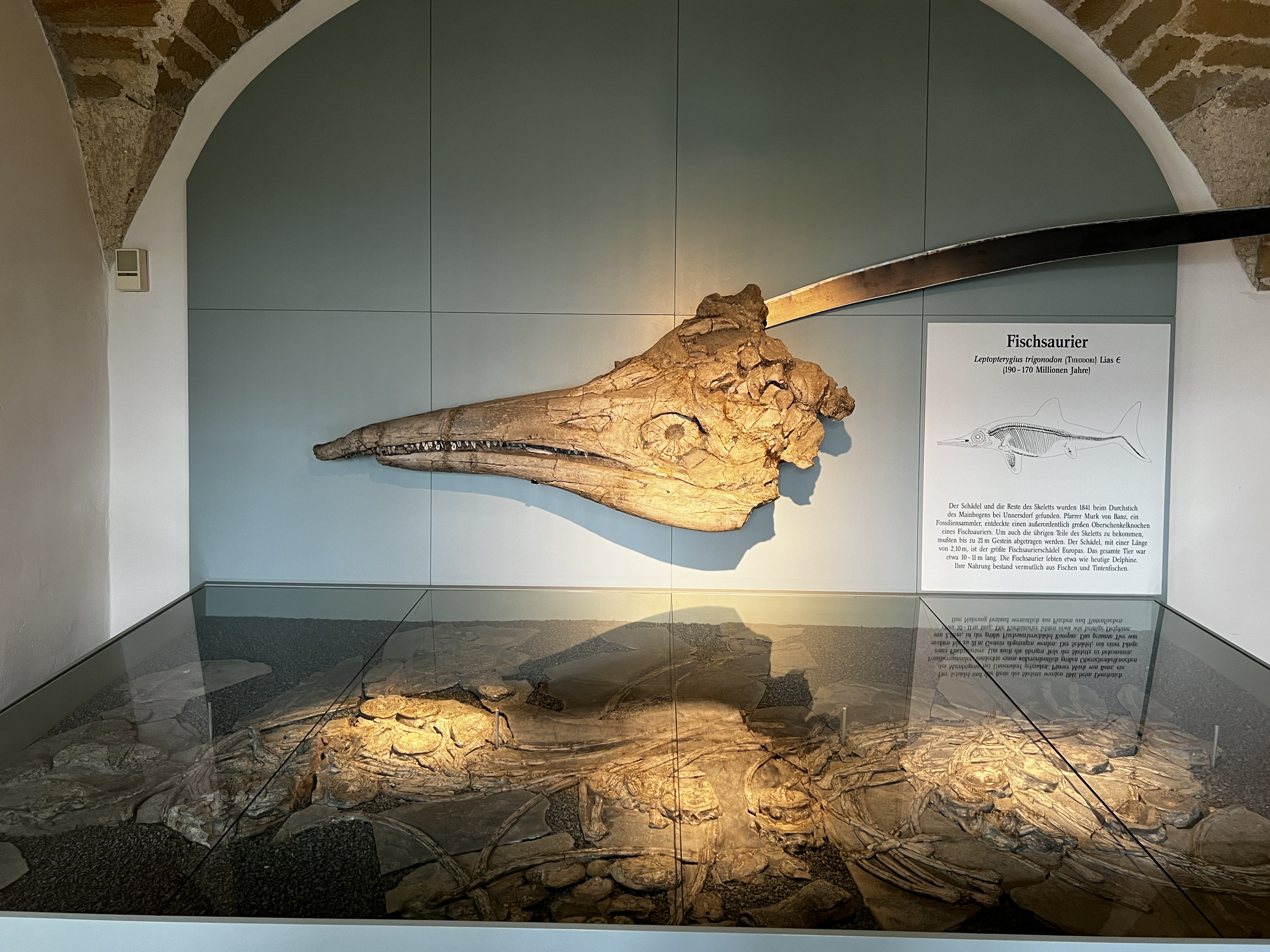
It is on display in the museum of Castle Banz in its original showcase, created in 1856, to show how specimens were presented in the 19th century.
Stenopterygius quadriscissus was a medium-sized ichthyosaur, reaching a maximum length of about 3.5 metres. Its skull was extended into a kind of a beak and was armed with a quantity of large teeth. The limbs had been transformed to fin-like structures.
The habits of these ichthyosaurs were similar to those of present-day dolphins. They spent most of their lives in the open sea, where they hunted fish, cephalopods (ammonites, belemnites, etc.), and other animals. The abdominal cavities of skeletons of this ichthyosaur often contain the remains of such food.
For the details about Ichthyosaurs: description of this extinct group of aquatic marine reptiles and their evolution, please read The History of the Discovery of Ichthyosaurs article.
The Stenopterygius quadricissus fossil is considered one of the most beautiful specimens in the collection of the Castle Banz Museum, but the most famous fossil in the collection of the museum was discovered by fossil collector Pastor Murk of Banz in 1841 (only one year after the introduction of the first postage in the world, the famous Penny Black).
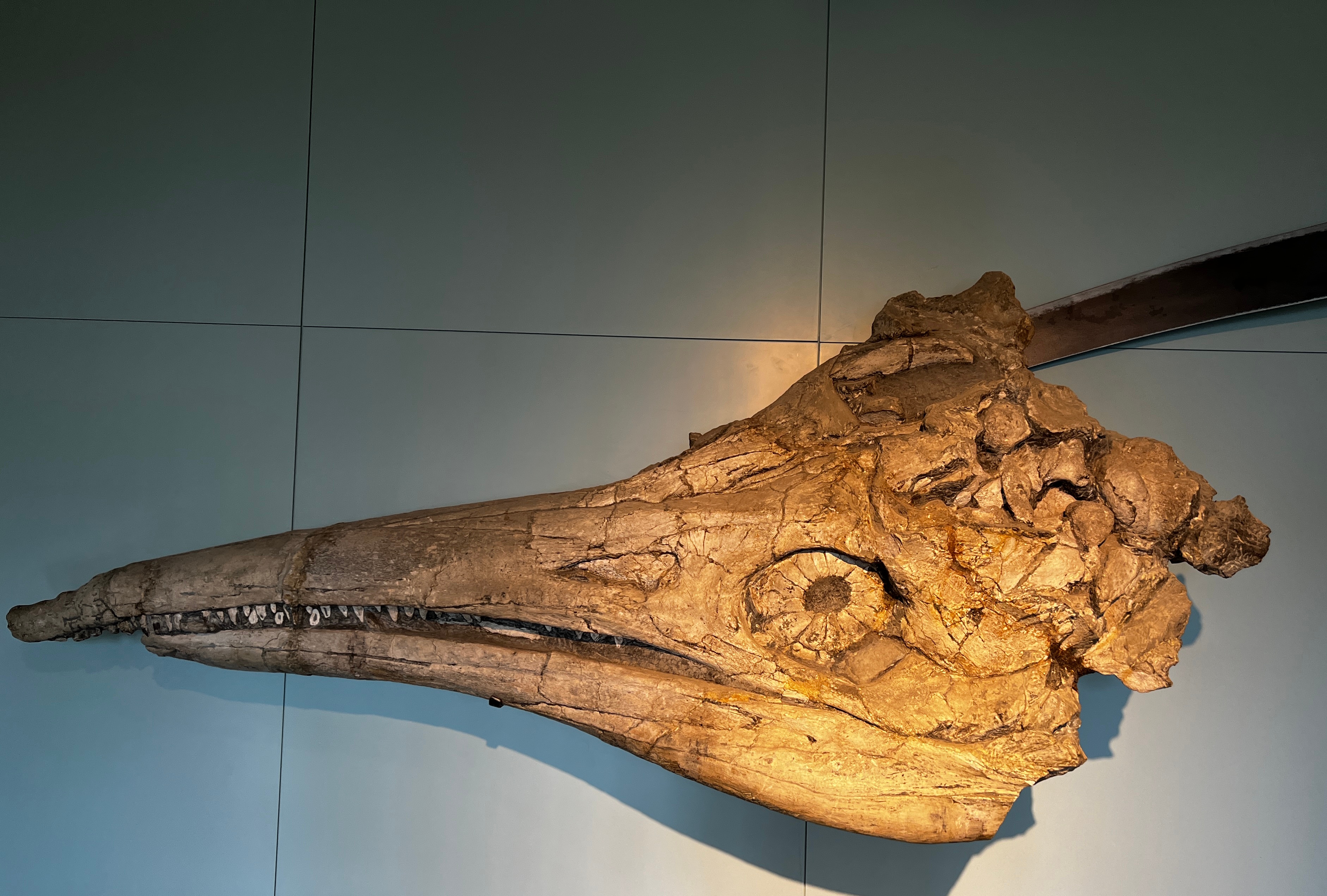
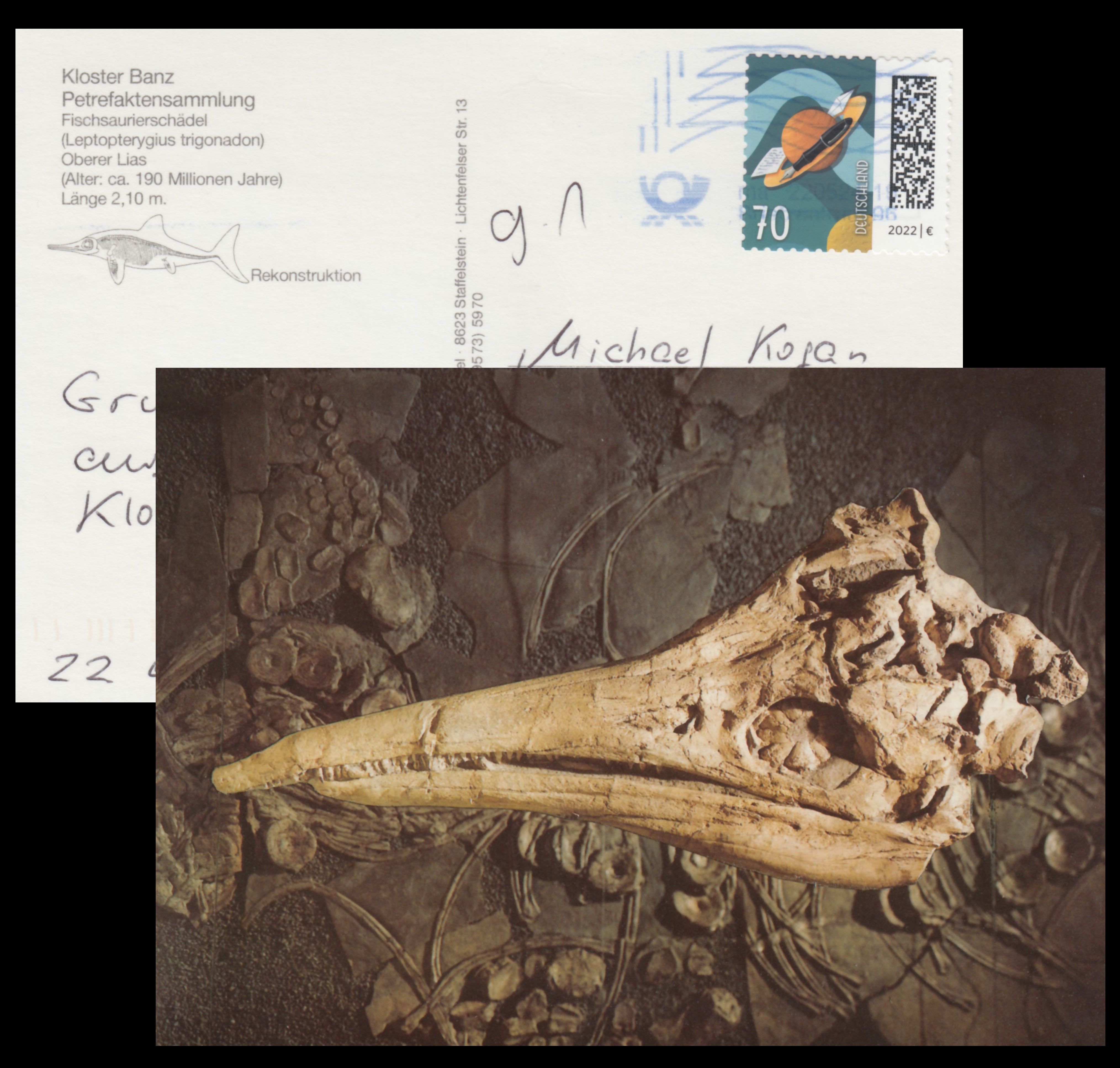
In November 1841, some construction to strengthen the river bank took place by Unnersdorf near Bad Staffelstein, 2km away from the Castle Banz. During the extraction of stone from the nearest hill, a 2.1 meters long ichthyosaur skull (one of the largest Ichthyosaur skull discovered in the continental Europe to date) and a partial, disarticulated skeleton were found.
Excavation of these fossils were made under very difficult circumstances - bad and cold weather as well as the need to ablate large amount of rock. The skull was so big and heavy that almost all of the men of the community of Unnersdorf were mobilized to extract and transport it over the hills to the fossil collection of the Monastery.
 |
 |
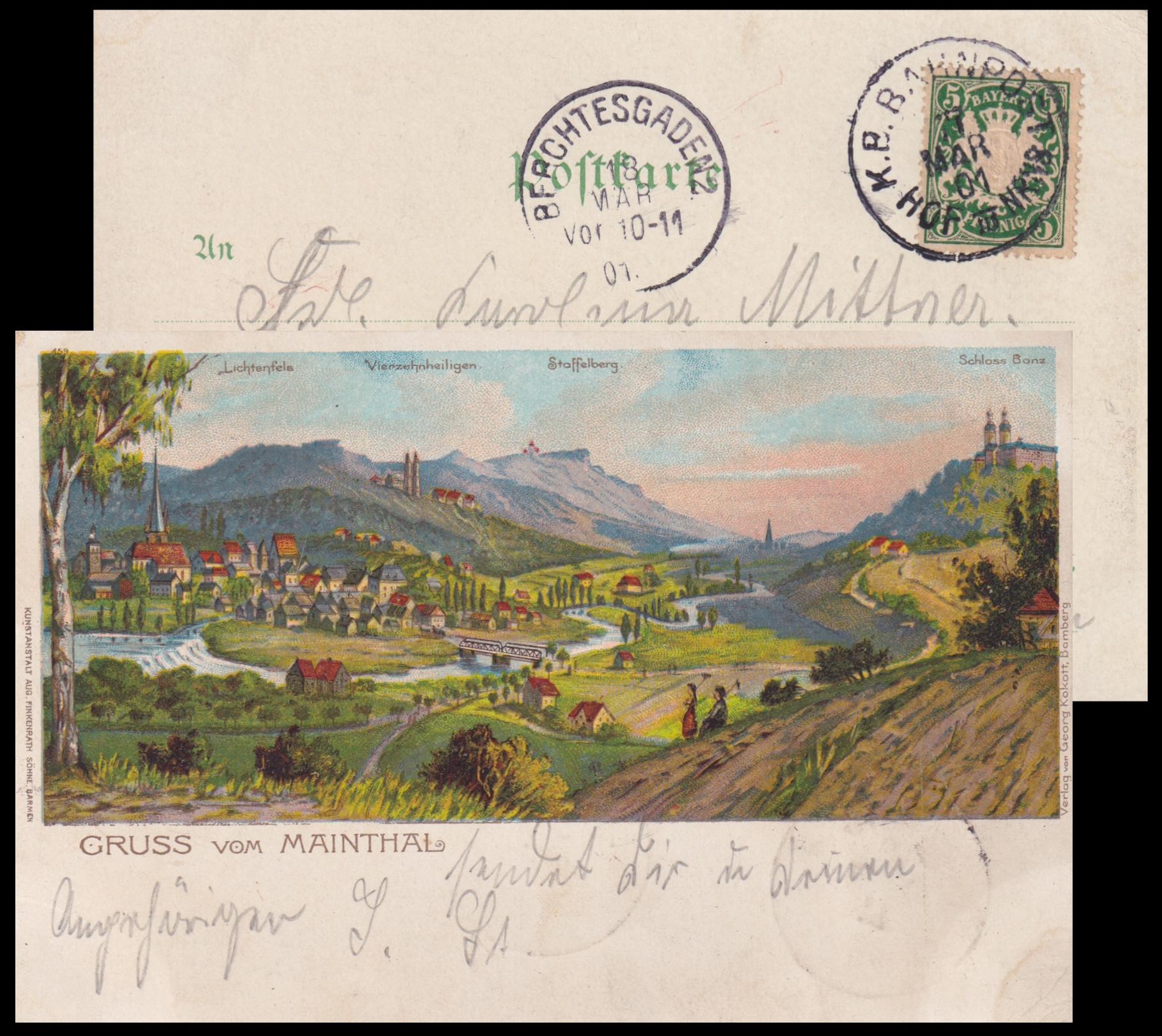
| The landscape of the Main valley on postcard of Bavaria Kingdom, posted in 1901. Castle Banz shown on the top-right corner. | Castle Banz and skull of Ichthyosaurus trigonodon on the postcard Bavaria Kingdom, posted in 1913. |
These fossils were described by Carl von Theodori, who published a short notice in "Gelehrte Anzeigen" (Scholarly Report) on June 8th 1843. In this short article, Theodori compared the ichthyosaur from Banz with some other ichthyosaur genera known at that time. He found that the closest species is Ichthyosaurus platyodon, as it has some similar features, the skull for example, but their teeth have a different form - flat in Ichthyosaurus platyodon, but triangular in cross-section in the one from Banz, therefore he decided to call it Ichthyosaurus trigonodon. Later on, both species were reassigned to Temnodontosaurus platyodon and Temnodontosaurus trigonodon accordently. Nowadays, some paleontologists propose that Temnodontosaurus trigonodon is a junior form of Temnodontosaurus platyodon. The ichthyosaur skull is on display in the fossil collection of the Castle Banz Museum today. Estimated length of the animal is 9-11 meters.

|
| The drawing of the Ichthyosaur skull made by Carl Theodori for his article about the discovery of Temnodontosaurus trigonodon fossils near Monastery Banz. The skull was drawn at the same scale as the original fossil (over 2m long). |
 |
| The skull on display in the fossil collection of the Castle Banz on photo-postcard of Germany, from early 20th century, before the museum’s reorganization in 1987-1988. |
 |
 |
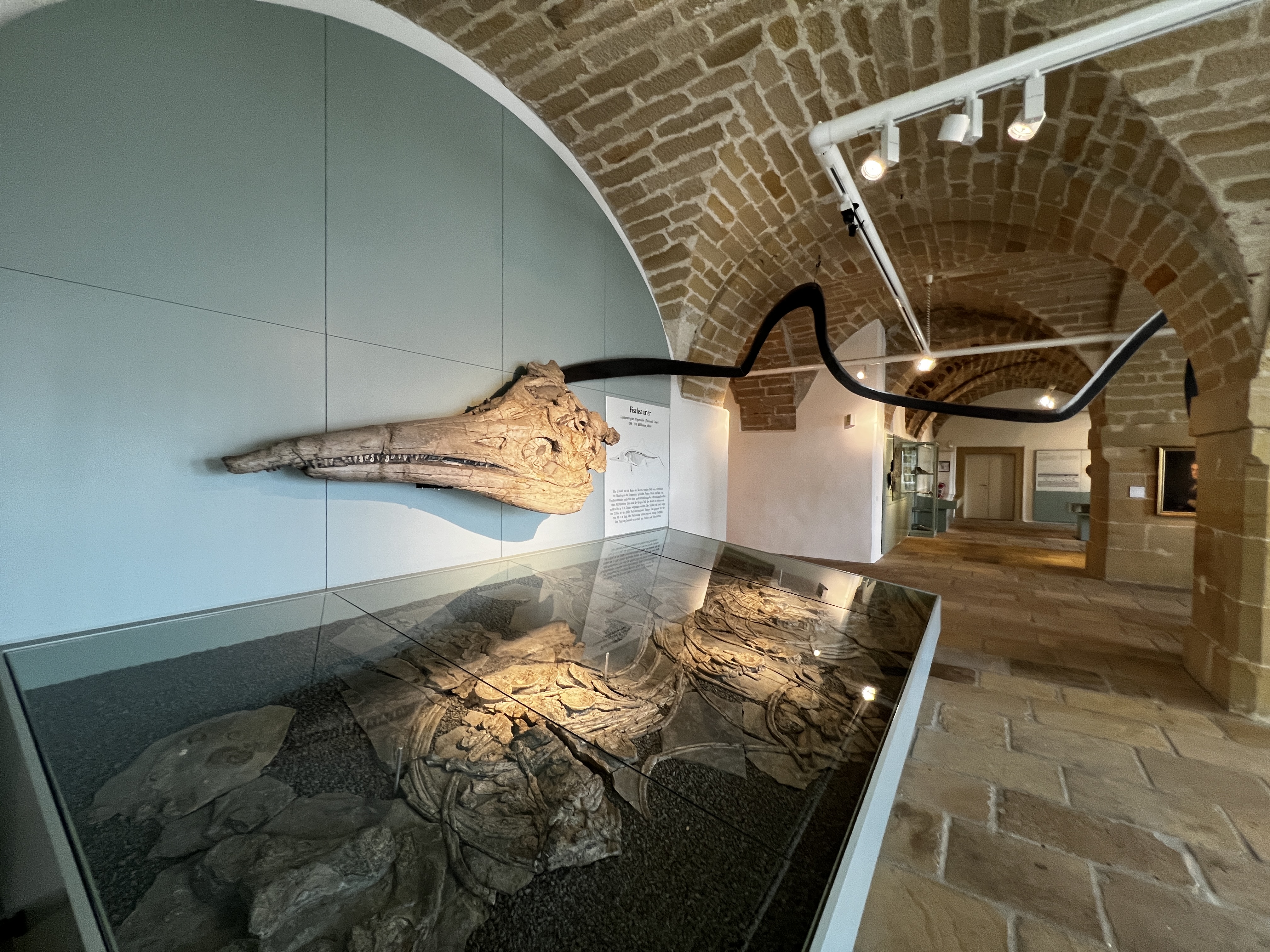 |
The ichthyosaur on display in the fossil collection of the Castle Banz today.
Note: Leptopterygius trigonodon as written on the panel, next to the skull, is a synonym of Temnodontosaurus trigonodon. |
In 1854 Carl Theodori published a very detailed article - "Beschreibung des kolossalen Ichthyosaurus trigonodon in der Lokal-Petrefakten-Sammlung u Banz nebst synoptischer Darstellung der übrigen Ichthyosaurus-Arten in derselben. Mit Abbildungen in natürlicher Größe".
In English "Description of the colossal Ichthyosaurus trigonodon from the local fossil collection at Banz along with synoptic representation, with illustrations in natural size".
The drawing of the Ichthyosaur skull, from both top and bottom sides, attached to the article was drawn in the same scale as the original fossil, to allow the readers to examine it's very fine details. In this article Theodori has not only a detailed description of this fossil and sediments where it was discovered but also tells the story of the discovery and provides his explanation how it came there.
A translation of "Über die Auffindung des Ichthyosaurus trigonodon" section of the article is below.
A short distance upstream from the bridge crossing the Main River near the village of Unnersdorf
on the right bank are exposed impressive rock formations at the foot of the mountain crowned by Banz Castle.
They consist of bituminous Upper-Lias marls and limestones.
Rocks from these outcrops were quarried for a riverbank construction in 1842
[in his article from 1843, Theodori mentioned November 1841 as the date of the discovery].
A rather strongly weathered colossal lower limb bone of an Ichthyosaur was found during this activity and shown to the then priest at Banz,
H. Murk, an avid collector for the Herzogliche Lokal-Petrefakten Kabinet [the fossil collection of the local duke].
He advised to follow the clue left by this find.
To this end more than 12 meter of overburden had to be removed till, 28-29 meter above the present level of the Main,
the geological layer that had contained the upper limb was reached.
The remains of the skeleton belonging to the earlier bone were found, spread over an area of 3,5 meters.
This provided also the proof that the largest part of the torso with the hind limbs was torn away by the floods,
that, in olden days, eroded the Main valley.
It was for this reason, that the exposed bones went from the slope of the valley wall into the mountain and ended with the colossal head.
The excavation of this large conglomeration of bones took place under very difficult circumstances, but, thank goodness, the head is now fully
freed from the sediments that enclosed it and is displayed, supported by strong iron brackets, in the largest hall of the collection.
The bones belonging to the skeleton are spread on individually recovered slate slabs with the body outline shown.
They are enclosed in a box and assembled to an exhibit of 2,33 meters width and 4 meters length.
I would like to add some thoughts here.
These skeleton remains have been found in a basin of the Keuper embedded in Lias, showing a forceful contact of the animal with a solid object.
The front part of the lower jawbone, thick like a beam, is broken off.
The tip of the upper jaw is bent; the back of the head is bashed in by a counter impact; the cervical vertebrae are pushed on
top of each other and the anterior ribs are bent in an acute angle.
All that could only have happened by bouncing the head, reinforced by a tremendous thrust from the body.
Thus, it can be assumed that the stranded animal has been hurled by the floods with great force against the wall of the Keuper shores.
Its remains, however, were not found in the immediate vicinity of the wall of the Keuper basin but quite a distance from the same,
buried in the Lias. But what stands in the way to assume that the carcass was not carried away from the shore by subsequent floods?
The carcass decomposed and the skeleton was probably for some length of time in the water, because there are, without doubt,
signs of a corrosive nature on several bones.
The skeleton disintegrated finally and the floods played with the remains so that they individually or as connected parts came to rest
in the sediments which preserved and kept them for the research of later generations.
The details listed so far can only be explained by external, random and violent forces in a horizontal direction;
but the crushing of the skeletal parts and especially of the head cavities in a vertical direction will appear equally natural
when one considers the enormous pressure exercised by the thick sediments of the Upper Lias Formation on the layer
that preserved the remains of our Ichtyosaurus trigonodon.
Carl von Theodori was not an “expert” as an academic, but a full-time administrative lawyer. His publications sprang from his idealism and scientific thirst for knowledge. He was presumably influenced by his collaborator, the catholic clergyman Augustin Geyer to follow the cataclysm theory promoted by the French natural scientist Georges Cuvier.
Cuvier (1769-1832), who often called "farther of Paleontology" postulated that major catastrophes repeatedly destroyed a large part of living beings in the history of the earth and new life emerged from the remaining species in subsequent phases.
Today, paleontologists understand much more about this animal and its habitat. The Banz's ichthyosaur could never have been smashed against a cliff of the Keuper land, as the Keuper sandstones are part of the uppermost Trias Formation and are deeply buried in the Banz region by the Jura Formation of which the Lias is the lowermost member.
 |
| Pangaea supercontinent on stamp of San Marino 2008. |
- The Keuper - a lithostratigraphic unit in the subsurface of large parts of west and central Europe. The Keuper consists of dolomite, shales or claystones and evaporites that were deposited during the Middle and Late Triassic epochs (about 220 million years ago). During Lias time (from about 205 to 180 million wars ago) the northern portion of the supercontinent Pangaea started to split up into the North American and Eurasian Plates. The gap between the two plates was filled by waters of the Tethys Sea. The sediments containing the fossils of Banz, Holzmaden, Bad Boll and those of other European areas were deposited during the Toarcian oceanic anoxic event (approx. 183 million years ago) when carbon-rich organic plant material mixed with silt was transported by rivers into the shelf areas of the advancing Tethys Sea and deposited as black shales and, thus, causing anoxic conditions at the bottom of the Toarcian Sea.
- Anoxic conditions mean there is no oxygen (O2) and a raised level of free hydrogen sulphide (H2S) in the bottom sea water. The oxygen is used up in decomposing organic matter – but too much organic matter was coming into the basin. If animal-like ichthyosaurs dived into this deadly zone chasing after prey, they would suffocate. This probably happened to the Banz ichthyosaur. .
Ichthyosaurus trigonodon is called Temnodontosaurus trigonodon today. It is a one of the largest ichthyosaurs with a length of 12 meters and the animal had the largest known eyes of any living or prehistoric animal. Its eyes were up to 26cm in diameter, as big as a dinner plate. Very well-preserved fossils of Temnodontosaurus trigonodon are on display in Natural History Museum of Stuttgart.
The following lithographic postcards "Greeting from castle Banz" ("Gruss aus Schloss Banz" in German) of Kingdom of Bavaria (today part of Germany) are the oldest philatelic items depicting ichthyosaurs known to the author to date. The oldest item in the author’s collection was posted in 1897, but it is likely that even earlier versions may exist.
 |
 |
 |
| The first Postcard, in the form we know it today, was issued in October 1869 in Austria. Other countries adopted postcards in 1870s. In the 1880s, many postcards were printed with small sketches or designs on the message side, initially just in black, but increasingly also in colour. Slowly, Germany came to dominate the industry of chromolithography, with many "Gruss Aus" (or "Greetings from") postcards being printed there. |  |
 |
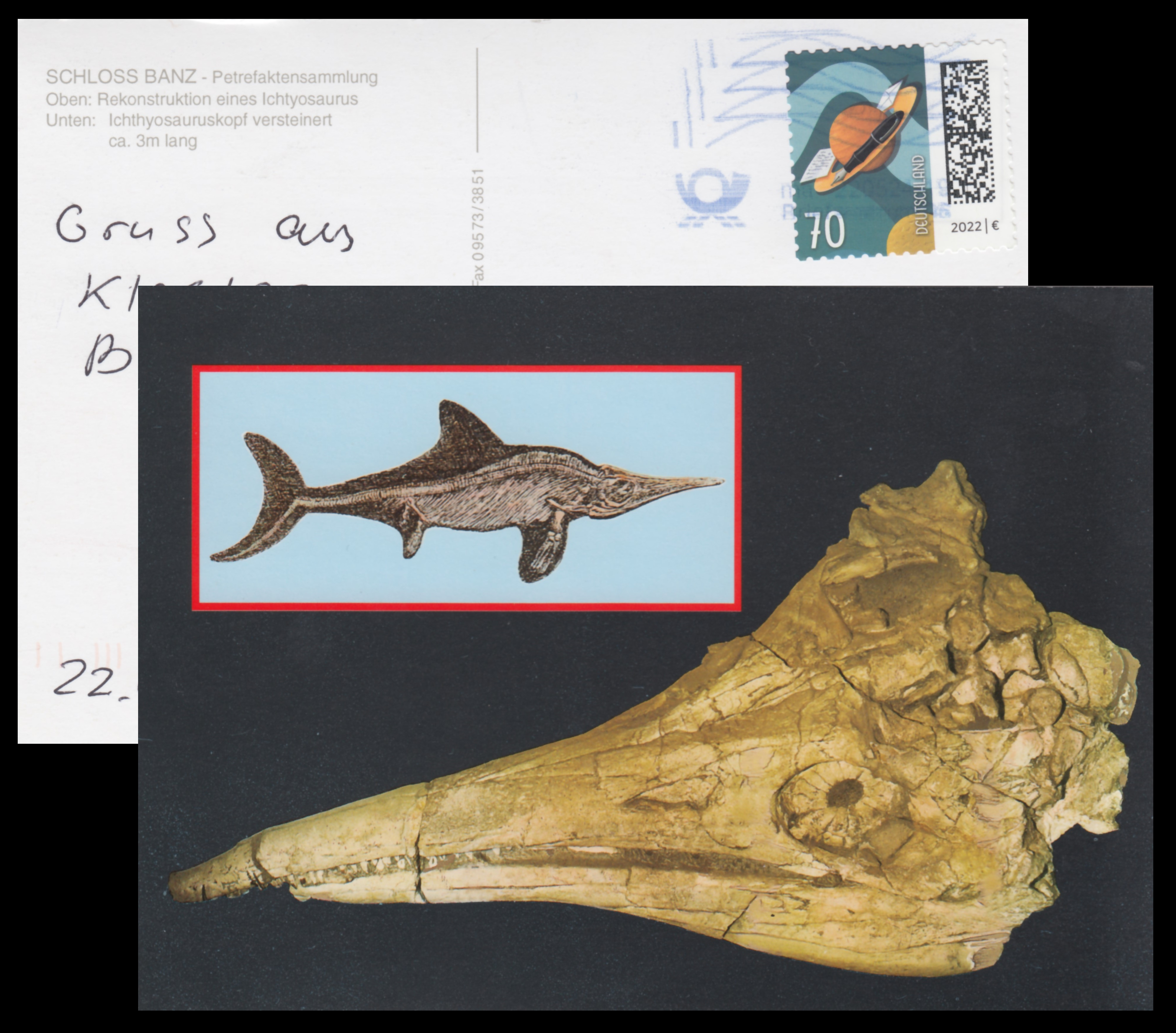
Many of these "Greeting from Castle Banz" shows not only the famous skull of an ichthyosaur and the sea crocodile, Mystriosaurus, but also some shells, ammonites and a Pterodactyl without labeling them.
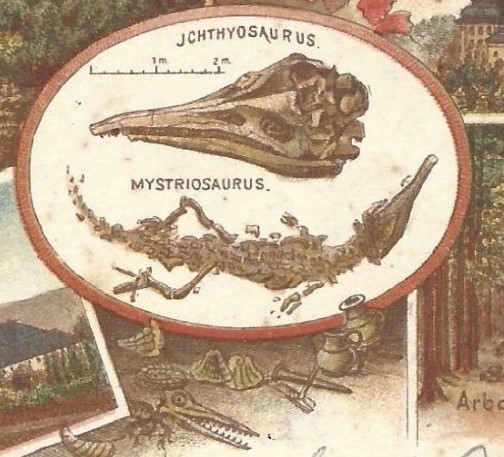 |
| Fossils from collection of Castle Banz's museum on cachet of Bavarian postcard from 1900. |
The pterosaur fossils now known as Dorygnathus banthensis were first described in 1830 by Carl von Theodori, based on numerous isolated bones from several individuals found in the Early Jurassic Lias Formation (about 205 to 180 million years ago) near Castle Banz.
Theodori described the fossils as new species of genus Ornithocephalus and named it Ornithocephalus banthensis, with banthensis referring to Banz. He noted the exceptional, three-dimensional preservation of these "jet-black" and fragile, hollow bones, which contrasted with the flattened specimens found elsewhere. A key feature highlighted in his 1852 paper was a unique lower jawbone with prominent, forward-pointing fangs - a "spear jaw" designed for catching fish. This distinctive dentition, together with the primitive, long-tailed anatomy, set it apart as a separate species, making the Banz specimens crucial for understanding early pterosaur evolution.
Following further studies, the species was moved from one genus to another until it was finally assigned to Dorygnathus in 1860 by Johann Andreas Wagner, professor of paleontology in Munich .
The pterosaur's skeleton on the cachet of these postcards either represents or belongs to Pterodactylus kochi, from the museum’s collection at the castle, although it was actually found in the Solnhofen Limestone of Bavaria, famous for the Archaeopteryx discoveries.
The museum still exists and is well worth a visit. They still produce postcards featuring fossils from the museum's collection, and there is even a mailbox in the parking area, but the correspondence goes through the letter-sorting station, rather a post office in Bad Staffelstein.
 |
 |
 |
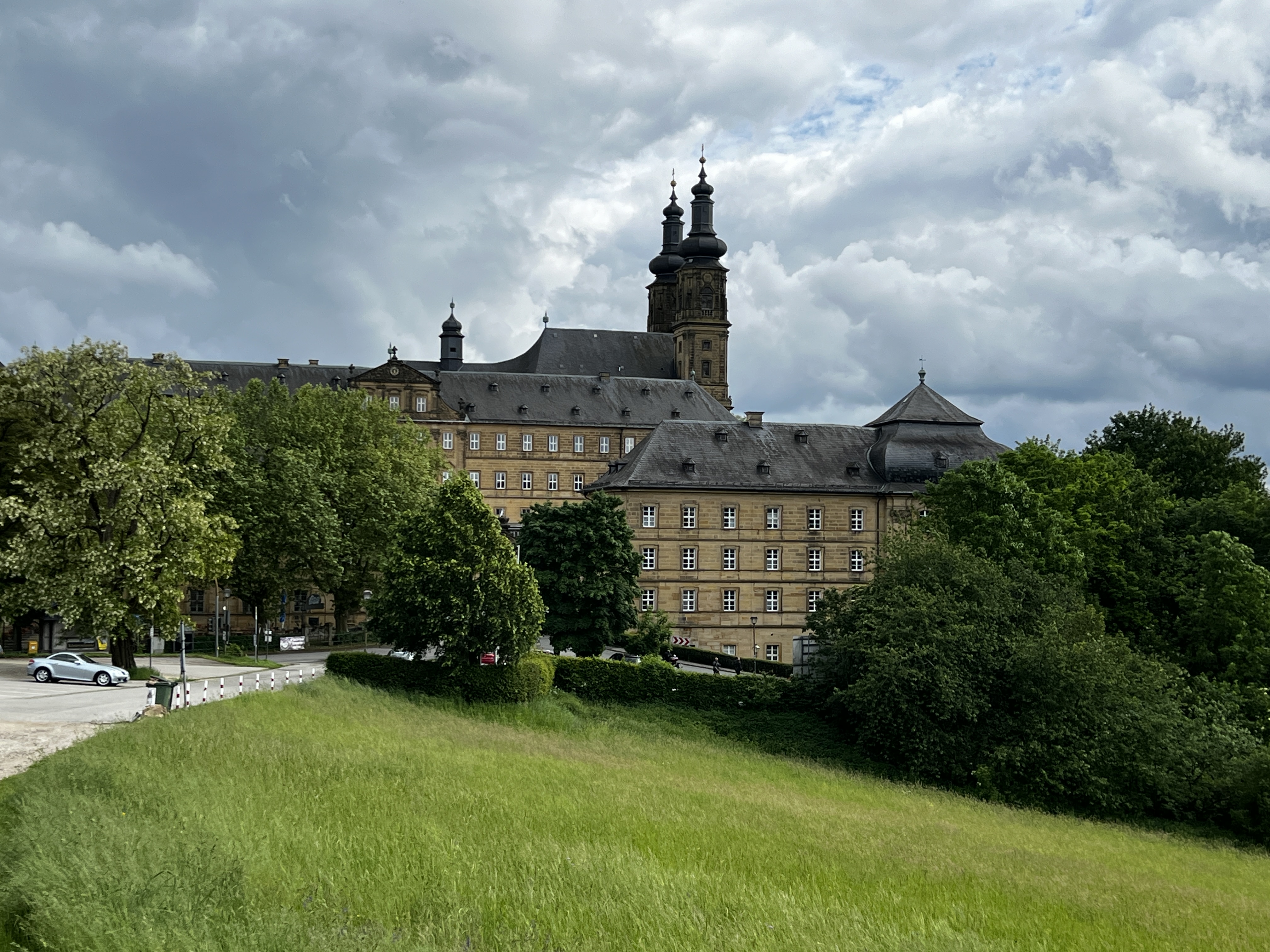
The photo of Castle Banz from the parking area, taken by the author in May 2024. The mail-box can be seen behind the car.
Acknowledgement
- Many thanks to fellow collector, Dr. H. U. Bantz, from South Africa, for his translation of an article of Carl von Theodori "Ueber die Auffindung des Ichthyosaurus trigonodon".
- Many thanks to Dr. Peter Voice from Department of Geological and Environmental Sciences, Western Michigan University, for reviewing the draft page, his valuable comments and great help to find materials for this article.
References
 |
- Fossils Collection Castle Banz:
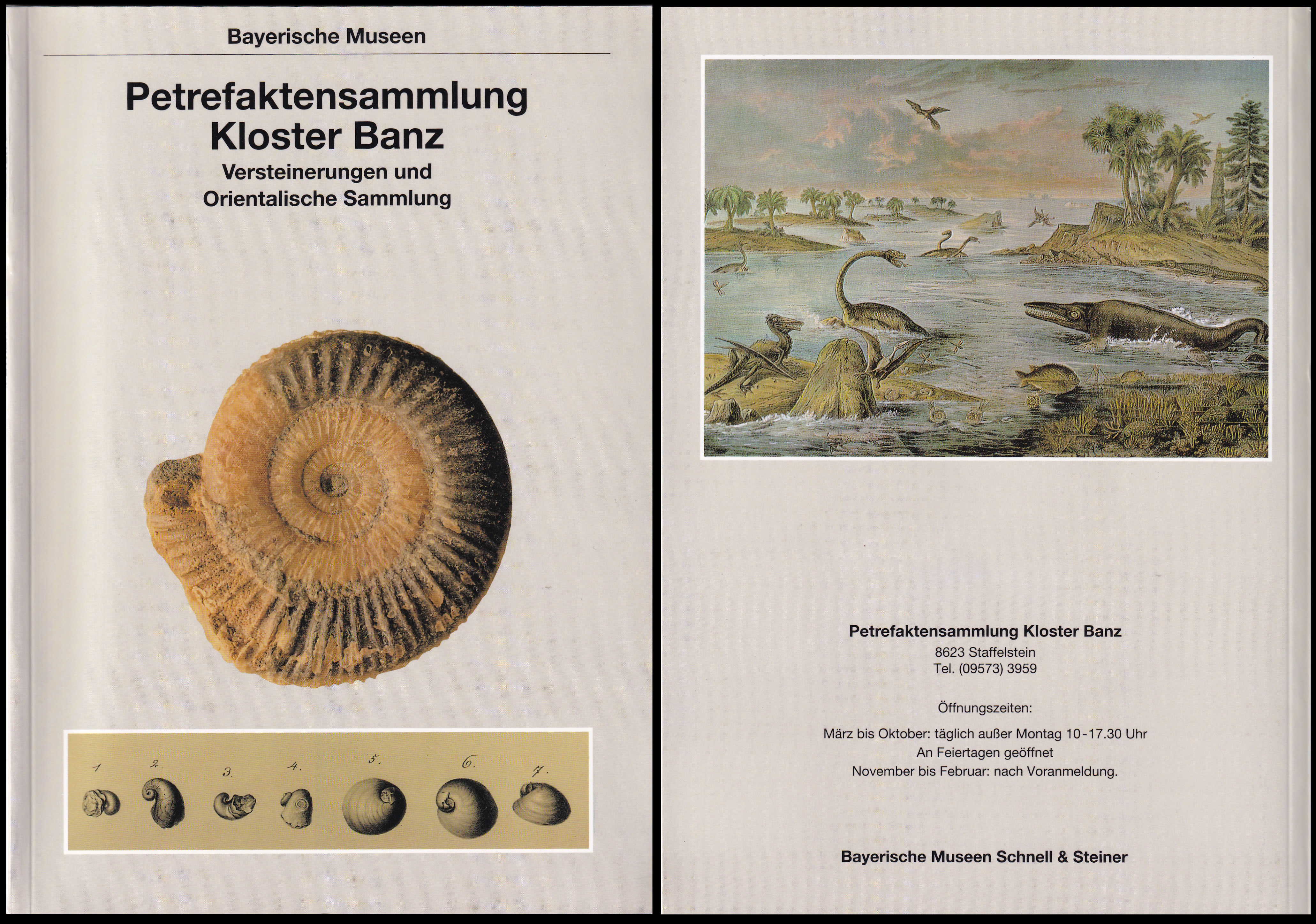
- "Museum's book: "Petrefaktensammlung Kloster Banz. Versteinerungen und Orientalische Sammlung", by Bernhard Kästle, published in 1992, ISBN: 3-7954-1016-9 (see on the right)
- Redaktion42.de
- Steinkern.de
- InFranken.de
- Carl von Theodori
- Wikipedia (in German)
- Ichthyosaur Stenopterygius
- Ichthyosaur Temnodontosaurus trigonodon / Ichthyosaurus trigonodon
- Wikipedia
- Geological Society UK
- Beschreibung des kolossalen Ichthyosaurus trigonodon in der Lokal-Petrefakten-Sammlung zu Banz nebst synoptischer Darstellung der übrigen Ichthyosaurus-Arten in derselben. Mit Abbildungen in natürlicher Größe" by Carl Theodori from 1854: Staatsbibliothek Bamberg
- Pterosaur Dorygnathus banthensis
- Wikipedia
- "Ueber die Pterodactylus-Knochen im Lias von Banz", by Carl von Theodori, 1852: Das Münchener Digitalisierungszentrum
- Sea crocodile Mystriosaurus / Steneosaurus bollensis
- Urwelt Museum Hauff in Holzmaden