Belgium 2026 "Unpublished photographs from the 19th century"
| Issue Date | 26.01.2026 |
| ID | Michel: ; Scott: Stanley Gibbons: FSG37-42; Yvert et Tellier: ; Category: pF |
| Design | Geert Wille |
| Stamps in set | 5 |
| Value |
"1 World" rate - worldwide letters weighing up to 20 g
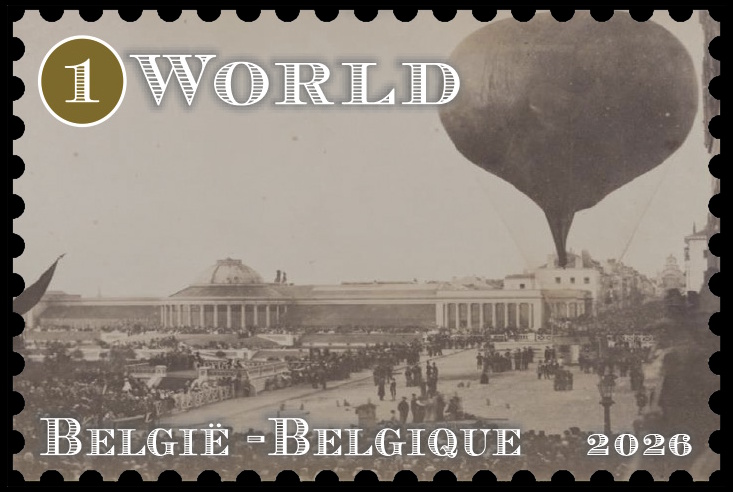
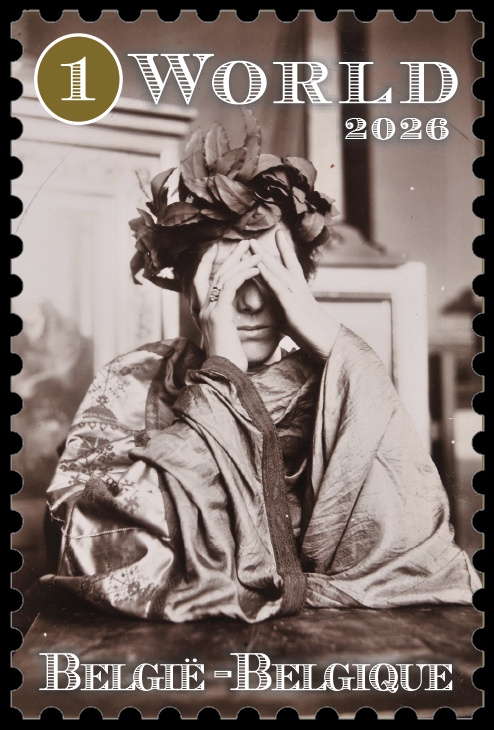
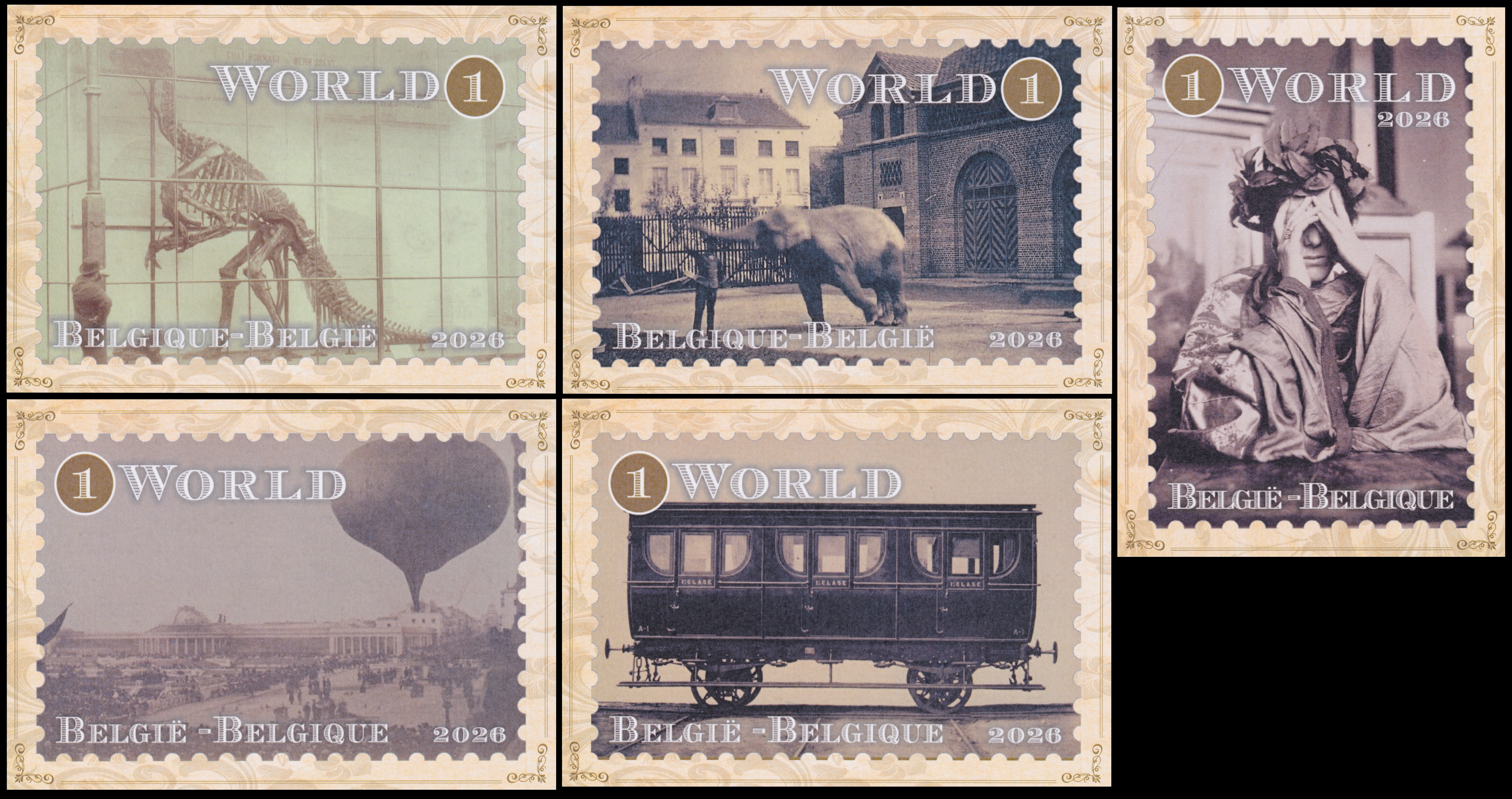
and was €3.19 on the day of issue. tr Air balloon Dinosaur skeleton - Iguanodon Train's passenger wagon Elephant in motion Portrait of Marguerite Khnopff |
| Emission/Type | commemorative |
| Issue place | Brussels-Central railway station |
| Size (width x height) | stamps: 30.0mm x 20.0mm, 20.0mm x 30.0mm Sheet: 110mm x 150mm |
| Layout | Sheet of 5 + 2 labels |
| Products | FDS x1, PC x5 |
| Paper | OBA-free FSC-certified paper |
| Perforation | 11.50 x 11.50 |
| Print Technique | Offset |
| Printed by | bpost Philately & Stamps Printing |
| Quantity | 26,447 sheets |
| Issuing Authority | BPost |
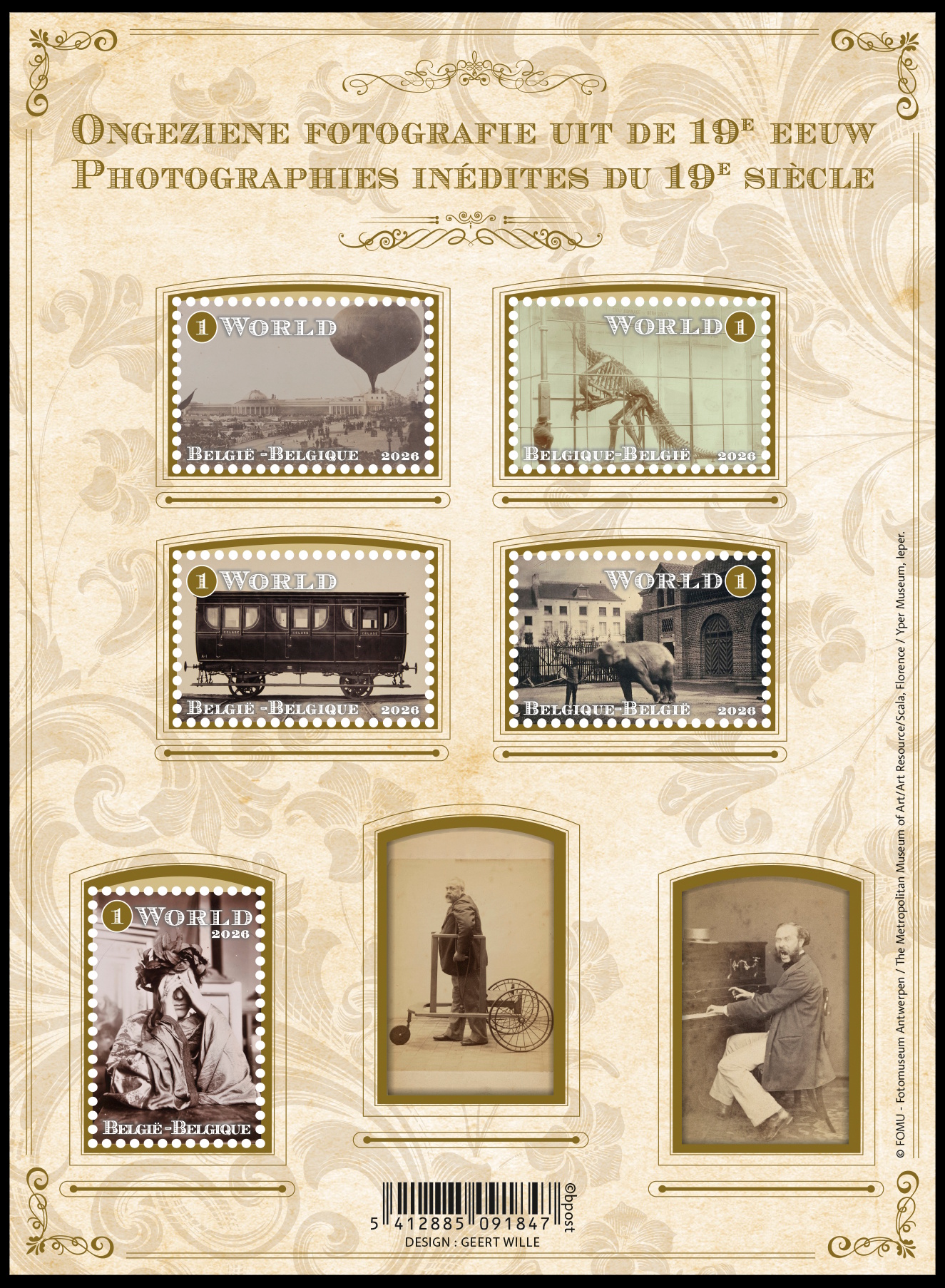
On January 26th, 2026, the Post Authority of Belgium, Bpost, introduced a stamp set "Unpublished photographs from the 19th century". These stamps were printed in a sheet of five stamps and two labels.
The year 2026 marks 200 years of photography. Although photography is now an everyday practice, it was a remarkable innovation in the 19th century. This stamp issue highlights the origins of photography in Belgium and honors the contributions of several Belgian pioneers.
- Louis Ghémar, The hot air balloon "Le Géant" by Nadar, 1864, albumen print, Yper Museum Collection SM 001627
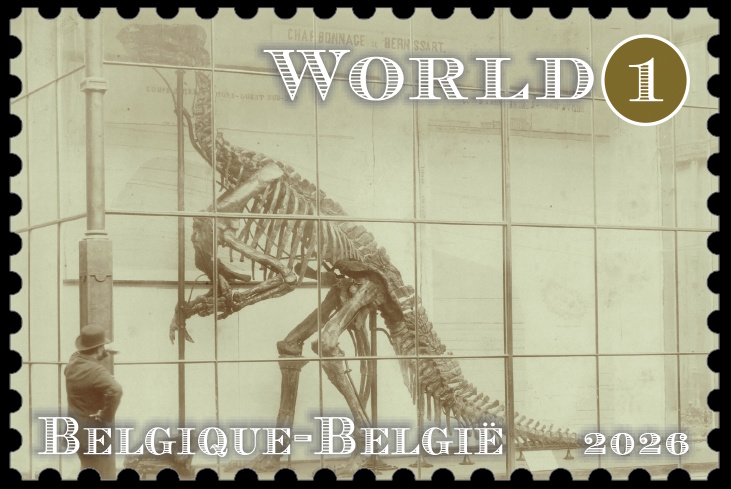
- "Iguanodon de Bernissart", by Alexandre (Alexandre Edouard Drains), ca. 1883, albumen print, Collection FOMU P/1984/0209
- Passenger wagon (1st class) railway, by Brand Frères, ca. 1865, albumen print, Collection FOMU P/1997/0096/0002
- Another Impossible Task, by Louis-Pierre-Théofile Dubois de Nehaut. 1854-1856, salt print, Metropolitan Museum of Art Collection
- Portrait of Marguerite Khnopff, by Fernand Khnopff, ca. 1890, daylight gelatin silver print, FOMU Collection P/1980/249/0001

- Man posing in a vehicle for people with reduced mobility, by François Smeesters, 1888-1890, albumen print, FOMU Collection 2023/0033/0001
- Self-portrait Louis Ghémar, 1866, albumen print, FOMU Collection 2022/013
When Belgium was barely independent, photography appeared as a revolutionary medium. Just weeks after its official unveiling in France and England, the invention arrived in Belgium.
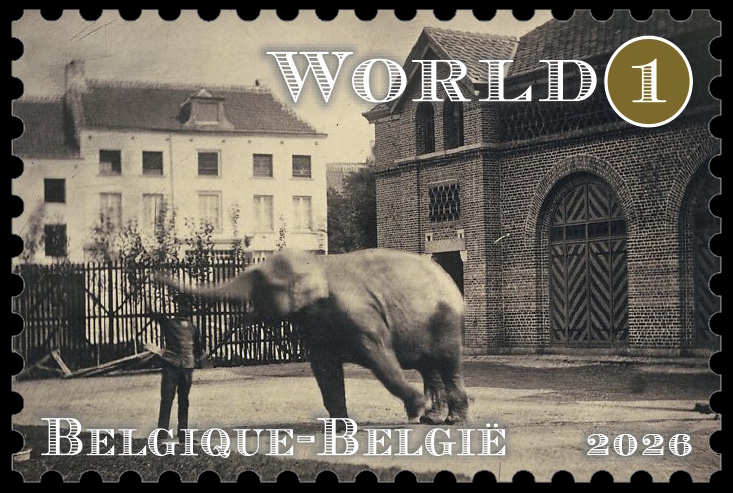 |
| Photo from 1854 - elephant in motion on one of the stamps of Belgium 2026, MiNr.: , Scott: |
The first photographs relied on daguerreotypes and salted paper prints — techniques that were expensive, painstaking, and even dangerous. “At first, photography was practiced mainly by scientists, artists, and printers, who experimented with the medium, presented their results to academic institutions, and pursued patents”. From around 1850, however, rapid progress followed. Innovations such as the wet collodion plate, the ambrotype, and, in 1871, the gelatin negative transformed photography into a faster and more mobile medium, opening up entirely new visual possibilities.
One of the most remarkable images, now reproduced on a postage stamp, portrays the elephant Miss Betzy. In 1854, photographer Louis-Pierre-Théophile Dubois de Nehaut set out to capture her in motion. “It was only on his twelfth attempt that he managed to freeze a precise movement — an extraordinary achievement for the period,” says Tamara Berghmans.
Iguanodon of Bernissart
 |
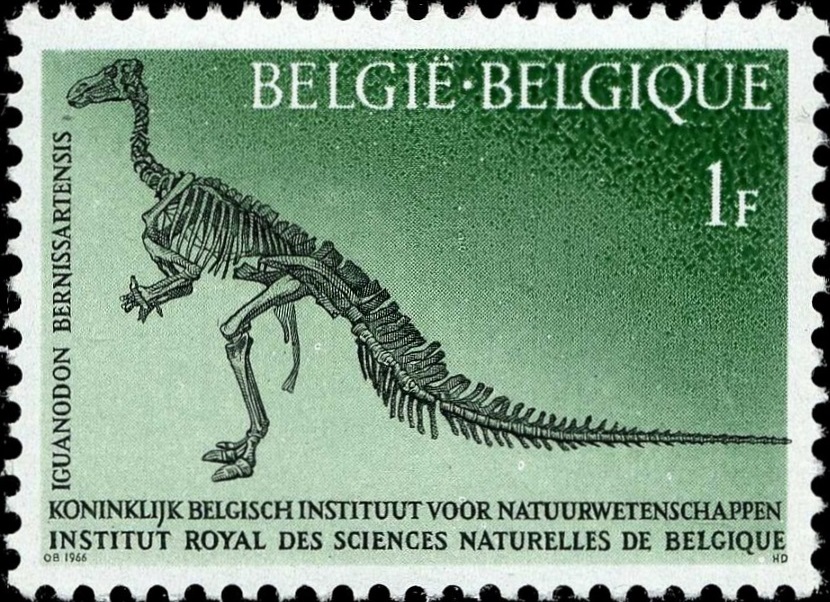 |
| Mounted skeleton of Iguanodon bernissartensis on stamps of Belgium 2026 and 1965, accordingly; MiNr.: , 1427; Scott: , 664; |
In 1883, Alexandre Édouard Drains took the first photograph of the reconstructed skeleton at the Brussels Museum of Natural History. This image is regarded as the earliest known photograph of a mounted dinosaur skeleton and documents a major milestone in palaeontology and public science.
The fossils were discovered at Bernissart in 1878, but it was not until 1882 that scientists succeeded in reconstructing one of the eight known Iguanodons. The skeleton was mounted in an upright, tail-supported posture typical of 19th-century interpretations, with the characteristic thumb spike correctly placed on the hand.
In 1883, the mounted skeleton was installed in the inner courtyard of the former Hôtel de Nassau, enclosed in a glass structure that protected it from the elements while allowing natural light for viewing and photography. The display attracted widespread public attention and contributed significantly to the emerging image of dinosaurs as real, once-living animals.
Discovery of Iguanodon at Bernissart
On February 28th, 1878, two mine workers, Jules Créteur and Alphonse Blanchard, accidentally discovered dinosaur bones in a coal mine at Bernissart, at a depth of 322 meters, initially mistaking them for petrified wood.After the discovery, mine officials inspected the site in early March and chose to continue driving the gallery through the clay, filled fault zone where the remains occurred. As work progressed, additional bones and teeth were exposed, making it increasingly clear that the material was fossil rather than vegetal. Samples were examined by specialists, notably Pierre-Joseph van Beneden, who recognised them as belonging to Iguanodon, confirming the scientific importance of the find. In April 1878 the Royal Belgian Museum of Natural History in Brussels was formally alerted by telegram, and preparations were made to intervene before mining operations could damage the deposit. Only after these assessments, communications, and logistical arrangements did the museum dispatch its chief preparator, Louis de Pauw, who arrived in Bernissart in early May and began the first organised excavation of the dinosaur skeletons on 15 May 1878.
Products and associated philatelic items
| Customized FDC | FDS (First Day Sheet) | Post Cards |
 |
 |
 |
 |
||
|

First Day Sheet (FDS) — A4 sheet printed on thick paper,
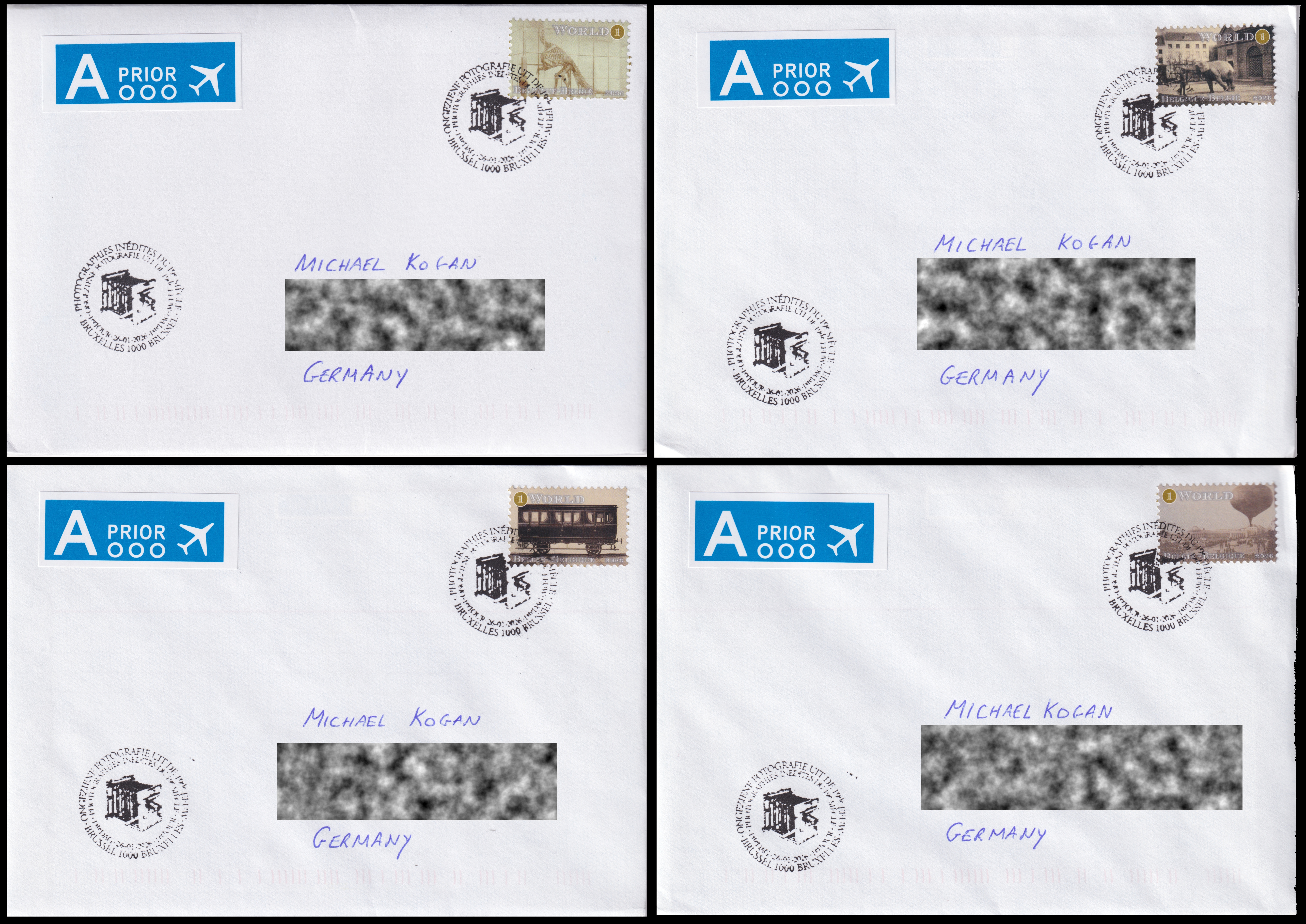
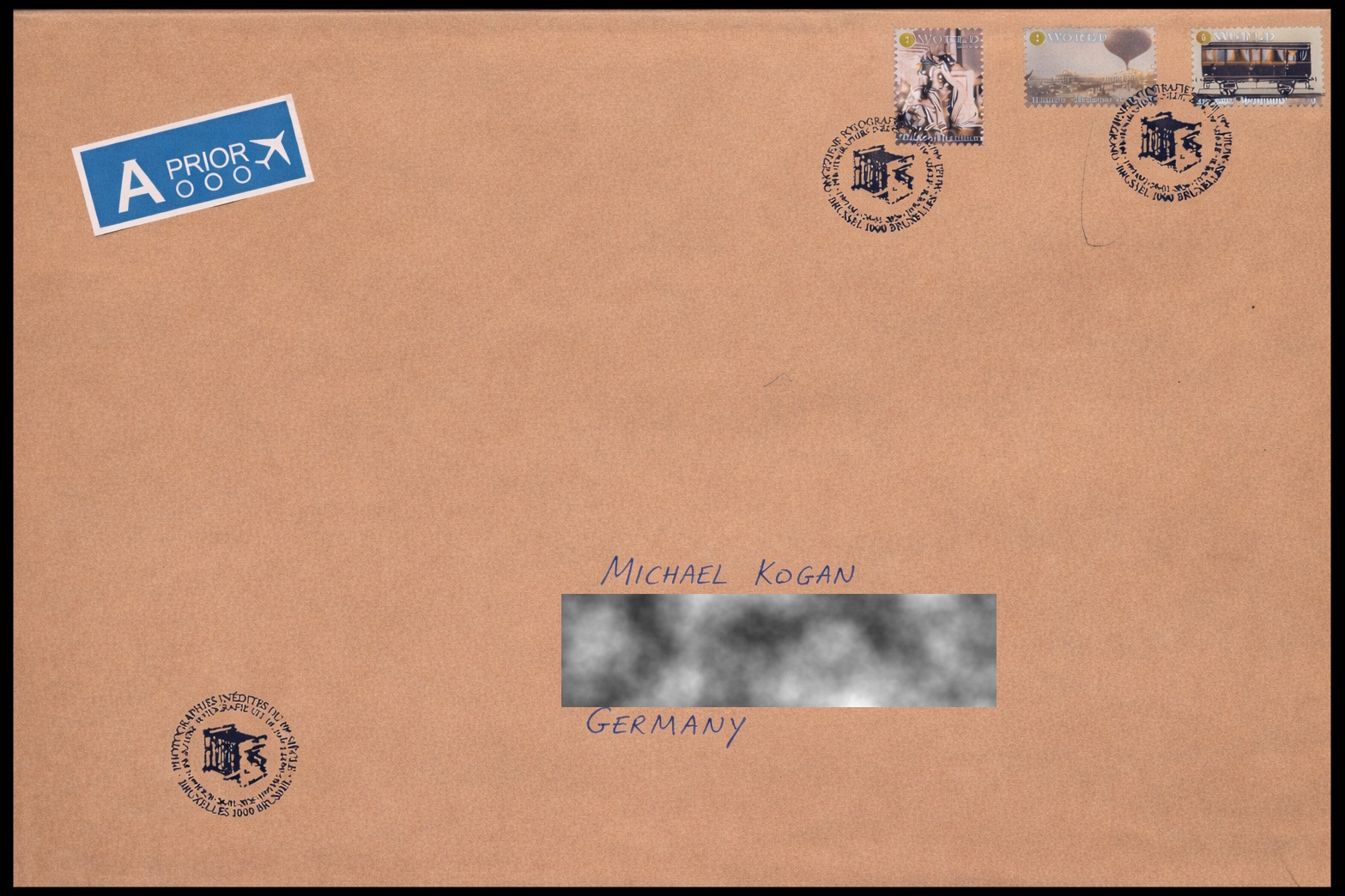
featuring a background information and technical details on the reverse. The stamps on the sheet were cancelled with both First-Day-of-Issue postmarks, in French and Dutch. Official FDCs were not produced; all FDCs with these stamps are private issues. The covers shown above were postmarked and mailed on the day of the stamp issue at the Central Train Station in Brussels. Three stamps from the issue were enough to pay big international letter, as shown on the left. The reverse side of all postcards are identical. |
|
|
| Special Postmark | First-Day-of-Issue Postmarks | |
 |
 |
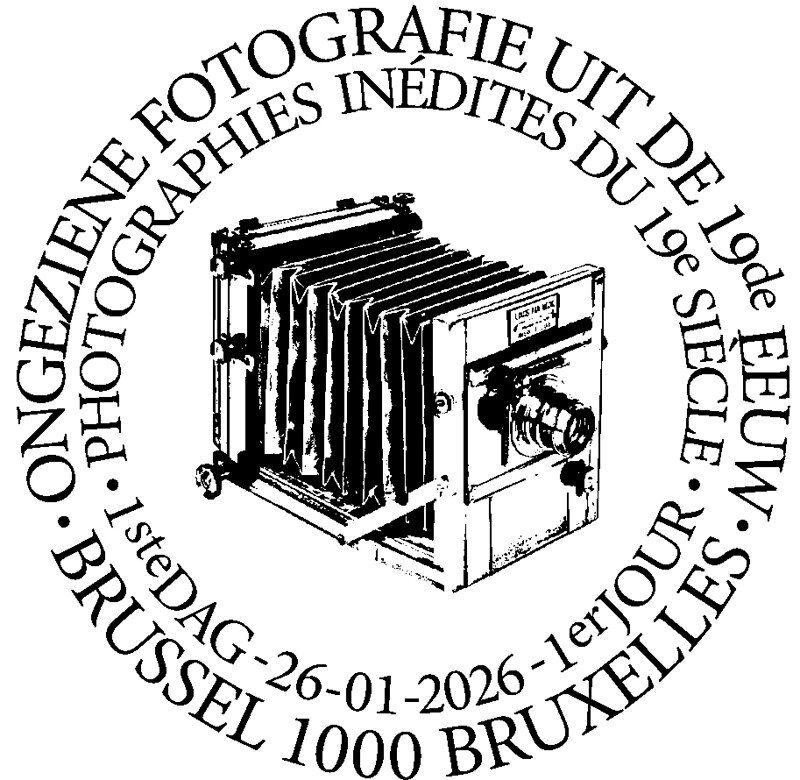 |
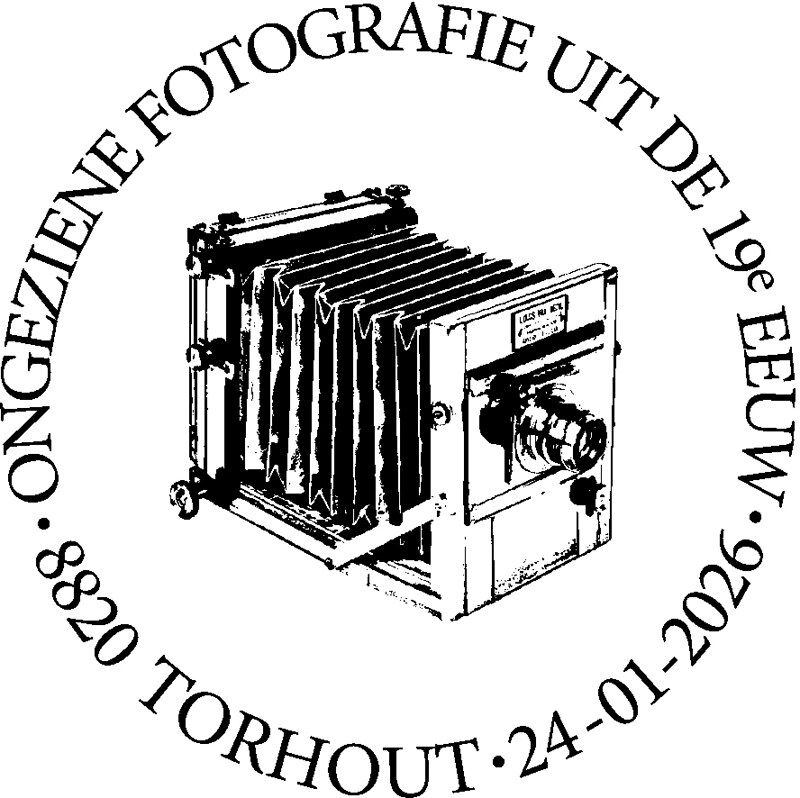
| Issued two days before the stamp release, on 24 January 2026, for the stamp presentation ceremony in Torhout. The text is in Dutch. | Both postmarks were issued on the first day of issue and were available at the post office of the Central Train Station in Brussels. They share the same design, but the text surrounding the image appears in different languages: Dutch on one and French on the other. | |
Acknowledgements
- Many thanks to Mr. Kevin Nolis, Administrator of the “Société d'Histoire Régionale de Rance – Musée du Marbre” and secretary of Palaeontologica Belgica, for his help finding an information about these stamps.
References
Books related to this article
- "Bernissart Dinosaurs and Early Cretaceous Terrestrial Ecosystems", by Pascal Godefroit, published in 2012, ISBN: 978-0253357212
- "Les Iguanodons de Bernissart: Des fossiles et des hommes", by Pascal Godefroit, published in 2024, in French, ISBN: 978-2803109210
- "Art and Science of the Crystal Palace Dinosaurs", by Mark P Witton and Ellinor Michel, published in 2022, ISBN: 978-0719840494
 |
 |
 |
Internet resources
- Technical details and official press release:
Bpost, Philanews 1-2026 bulletin of Bpost. - Iguanodon:
Wikipedia, - Iguanodon bernissartensis:
Wikipedia, https://biblio.naturalsciences.be (PDF file), Institute of Natural Sciences, Belgium,