Cyprus
Fossils on stamps of Cyprus
Cyprus, officially the Republic of Cyprus, is an island country in the Eastern
Mediterranean Sea, off the coasts of Syria and Turkey.
It is located south of Turkey, west of Syria and Lebanon,
northwest of Israel, north of Egypt and east
of Greece.
The earliest known human activity on the island dates to around the 10th millennium BC. Archaeological remains from this period include the well-preserved Neolithic village of Khirokitia, and Cyprus is home to some of the oldest water wells in the world.
Cyprus was placed under British administration at the Cyprus Convention in 1878 and formally annexed by Britain in 1914. Even though Turkish Cypriots made up only 18% of the population, the partition of Cyprus and creation of a Turkish state in the north became a policy of Turkish Cypriot leaders and Turkey in the 1950s. Following nationalist violence in the 1950s, Cyprus was granted independence in 1960.
A separate Turkish Cypriot state in the north was established in 1983. These events and the resulting political situation are matters of a continuing dispute. [R1]
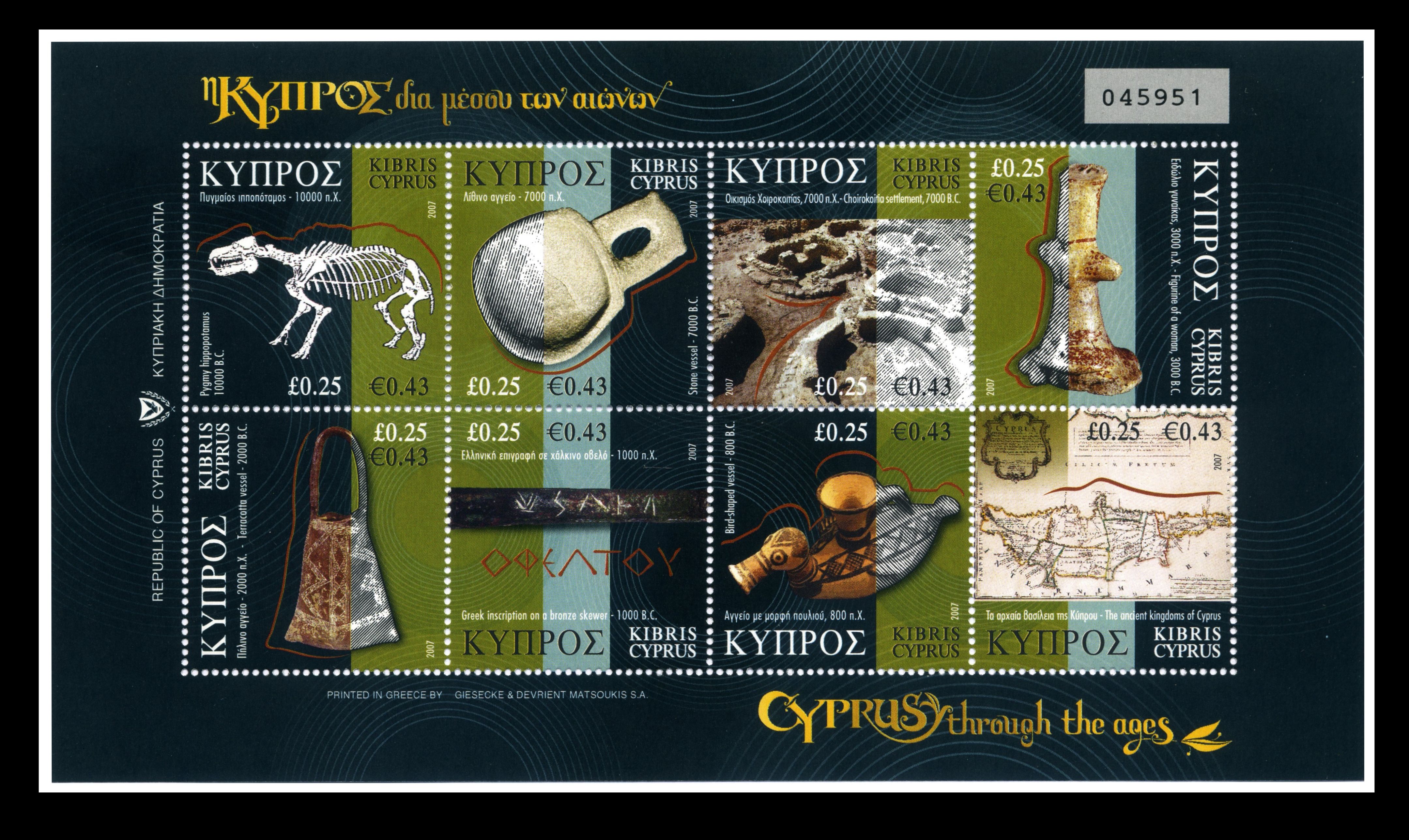
Since it independence in 1960, the Cyprus Postal Services have issued stamps in several series per year. So far there are only one stamp in "Cyprus through the Ages" that related to Paleontology as it shows skeleton of pygmy Hippopotamus from 12.000 years ago. [R2]
Notes:
[1] The skeleton of pygmy Hippopotamus from 12.000 years ago shown on the first stamp at the top row. Fossil of the Hippopotamus also shown on stamp of Northern Cyprus in 1991
Many thanks to Dr. Peter Voice from Department of Geological and Environmental Sciences, Western Michigan University, for reviewing the draft page and his very valuable comments.
The earliest known human activity on the island dates to around the 10th millennium BC. Archaeological remains from this period include the well-preserved Neolithic village of Khirokitia, and Cyprus is home to some of the oldest water wells in the world.
Cyprus was placed under British administration at the Cyprus Convention in 1878 and formally annexed by Britain in 1914. Even though Turkish Cypriots made up only 18% of the population, the partition of Cyprus and creation of a Turkish state in the north became a policy of Turkish Cypriot leaders and Turkey in the 1950s. Following nationalist violence in the 1950s, Cyprus was granted independence in 1960.
A separate Turkish Cypriot state in the north was established in 1983. These events and the resulting political situation are matters of a continuing dispute. [R1]
Since it independence in 1960, the Cyprus Postal Services have issued stamps in several series per year. So far there are only one stamp in "Cyprus through the Ages" that related to Paleontology as it shows skeleton of pygmy Hippopotamus from 12.000 years ago. [R2]
Official stamps of Cyprus related to Paleontology: fossil of prehistoric animal
| 02.10.2007 "Cyprus through the Ages" [1] | ||
 |
||
Notes:
[1] The skeleton of pygmy Hippopotamus from 12.000 years ago shown on the first stamp at the top row. Fossil of the Hippopotamus also shown on stamp of Northern Cyprus in 1991
References
- [R1] Cyprus: Wikipedia, WikiTravel, FlagCounter.
- [R2] Postal History and Philately of Cyprus:
Wikipedia,
Links to official website of the Post Authority, stamp catalog and a list of new stamps of Cyprus are here.
Acknowledgements
Many thanks to Dr. Peter Voice from Department of Geological and Environmental Sciences, Western Michigan University, for reviewing the draft page and his very valuable comments.