Central African Republic
Dinosaurs and other prehistoric animals, fossils, prehistoric human on stamps and postmarks of Central African Republic
The Central African Republic (RCA) is a landlocked country in Central Africa.
It is bordered by Chad to the north, Sudan to the northeast, South Sudan to the east,
the Democratic Republic of the Congo and the Republic of
the Congo to the south and Cameroon to the west.
The Central African Republic covers a land area of about 620,000 square kilometers and had an estimated population of around 4.7 million as of 2014.
Most of the Central African Republic consists of Sudano-Guinean savannas, but the country also includes a Sahelo-Sudanian zone in the north and an equatorial forest zone in the south. Two thirds of the country is within the Ubangi River basin (which flows into the Congo), while the remaining third lies in the basin of the Chari, which flows into Lake Chad. [R1]
The Central African Republic has been issuing stamps since 1959. Before this, it was called Ubangi-Shari. Ubangi-Shari became an autonomous state within the French Community and was renamed the Central African Republic on 1 December 1958.
The Republic became fully independent on 13 August 1960.
From December 4, 1976 to 1979, the country was renamed the Central African Empire when President Bokassa
crowned himself emperor.
It issued stamps labelled Empire Centrafricain in 1977.
In 1979 the name of the country was restored to the Central African Republic.
[R2]
Initially, the Central African Republic issued a few dozen stamps per year, but since the 1980’s the number of stamps issued per year has increased dramatically.
In 1995, the Central African Republic authorized Swiss based security printing company Impressor SA to produce and distribute stamps on the country behalf.
Impressor SA started to produce stamps of the Central African Republic in excessive quantities on topics mostly unrelated to the country.
Over 200 stamps issued by Impressor on behalf of this country in 1999, some of them shows dinosaurs and other prehistoric animals.
Since 2014, Stamperija has issued stamps on behalf of the Central African Republic – this has led to even greater increase in the number of stamps issued, covering many topics. The stamps released by Stamperija rarely deal with topics related to the Central African Republic.
Only in 2018, Stamperija issued almost 1000 (!) stamps on behalf of the Central African Republic, some of them shows dinosaurs and other prehistoric animals.
However, at least some of these stamps were sent to the county and could be purchased in the local post offices and used for postage.
Stamps on grey background are Undesired
Notes:
[1] Issued as a Block and Sheets
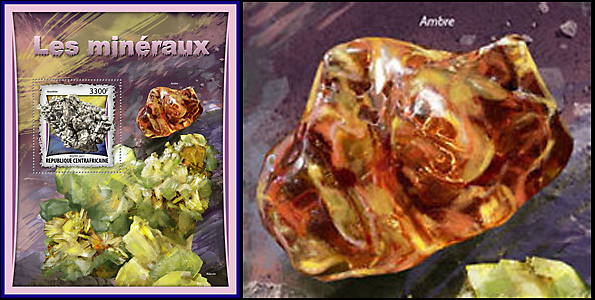
[2] Insect in amber is depicted on one of the stamps
[3] "Flying dinosaurs" is not a correct term to apply to the animals shown on these stamps. The animals pictured are pterosaurs. Pterosaurs are a group of flying reptiles in the Archosauria. Reptiles in the archosaurs include crocodiles, dinosaurs, and pterosaurs.
Notes:
[O1] Amber on margin of the Mini Sheet
Legend is here
Many thanks to Dr. Peter Voice from Department of Geological and Environmental Sciences, Western Michigan University, for reviewing the draft page and his very valuable comments.
The Central African Republic covers a land area of about 620,000 square kilometers and had an estimated population of around 4.7 million as of 2014.
Most of the Central African Republic consists of Sudano-Guinean savannas, but the country also includes a Sahelo-Sudanian zone in the north and an equatorial forest zone in the south. Two thirds of the country is within the Ubangi River basin (which flows into the Congo), while the remaining third lies in the basin of the Chari, which flows into Lake Chad. [R1]
The Central African Republic has been issuing stamps since 1959. Before this, it was called Ubangi-Shari. Ubangi-Shari became an autonomous state within the French Community and was renamed the Central African Republic on 1 December 1958.
|
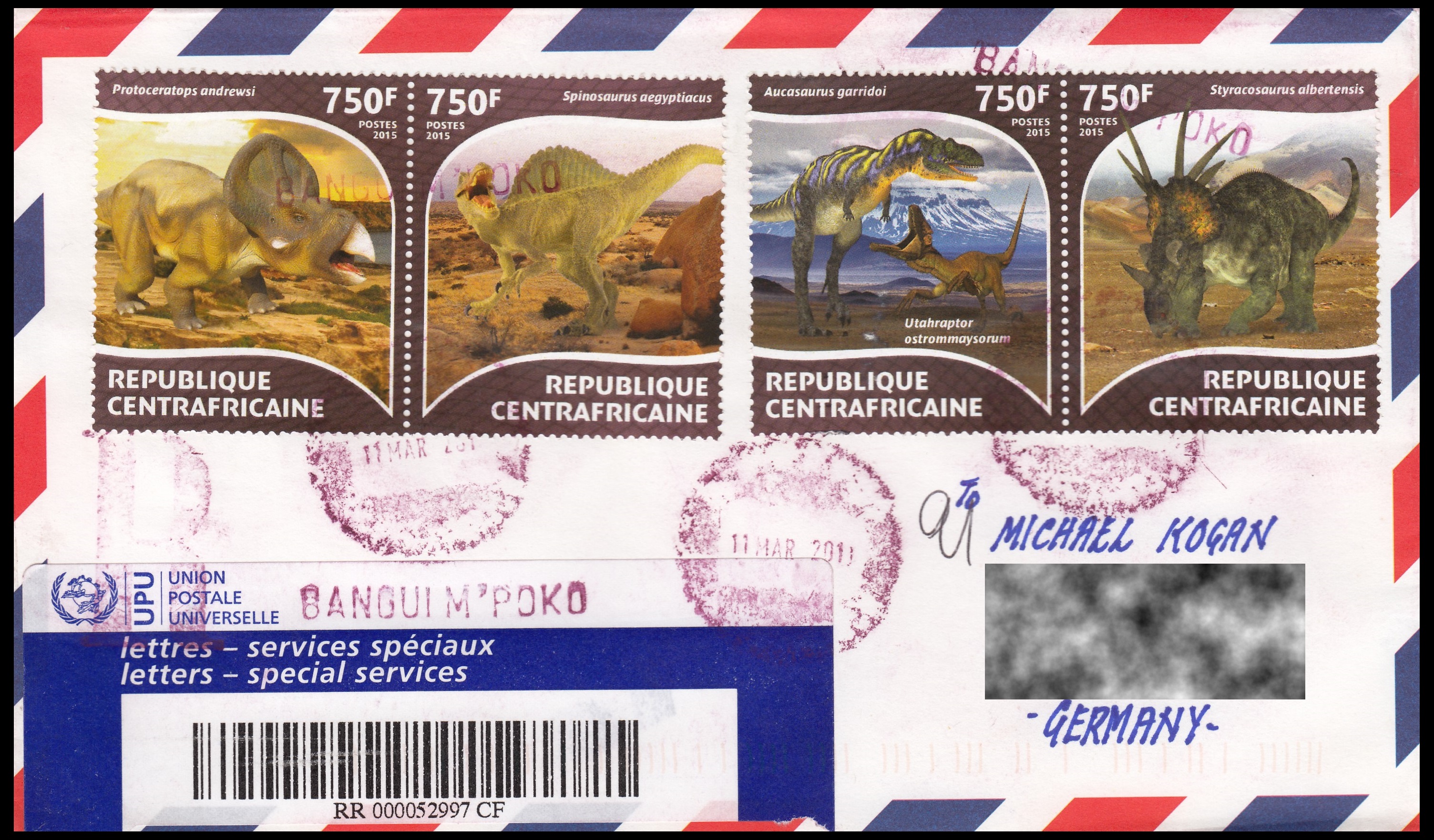
| Register letter from the Central African Republic, with dinosaur stamps from 2015, sent to Germany in 2018. |
Initially, the Central African Republic issued a few dozen stamps per year, but since the 1980’s the number of stamps issued per year has increased dramatically.
In 1995, the Central African Republic authorized Swiss based security printing company Impressor SA to produce and distribute stamps on the country behalf.
Impressor SA started to produce stamps of the Central African Republic in excessive quantities on topics mostly unrelated to the country.
Over 200 stamps issued by Impressor on behalf of this country in 1999, some of them shows dinosaurs and other prehistoric animals.
Since 2014, Stamperija has issued stamps on behalf of the Central African Republic – this has led to even greater increase in the number of stamps issued, covering many topics. The stamps released by Stamperija rarely deal with topics related to the Central African Republic.
Only in 2018, Stamperija issued almost 1000 (!) stamps on behalf of the Central African Republic, some of them shows dinosaurs and other prehistoric animals.
However, at least some of these stamps were sent to the county and could be purchased in the local post offices and used for postage.
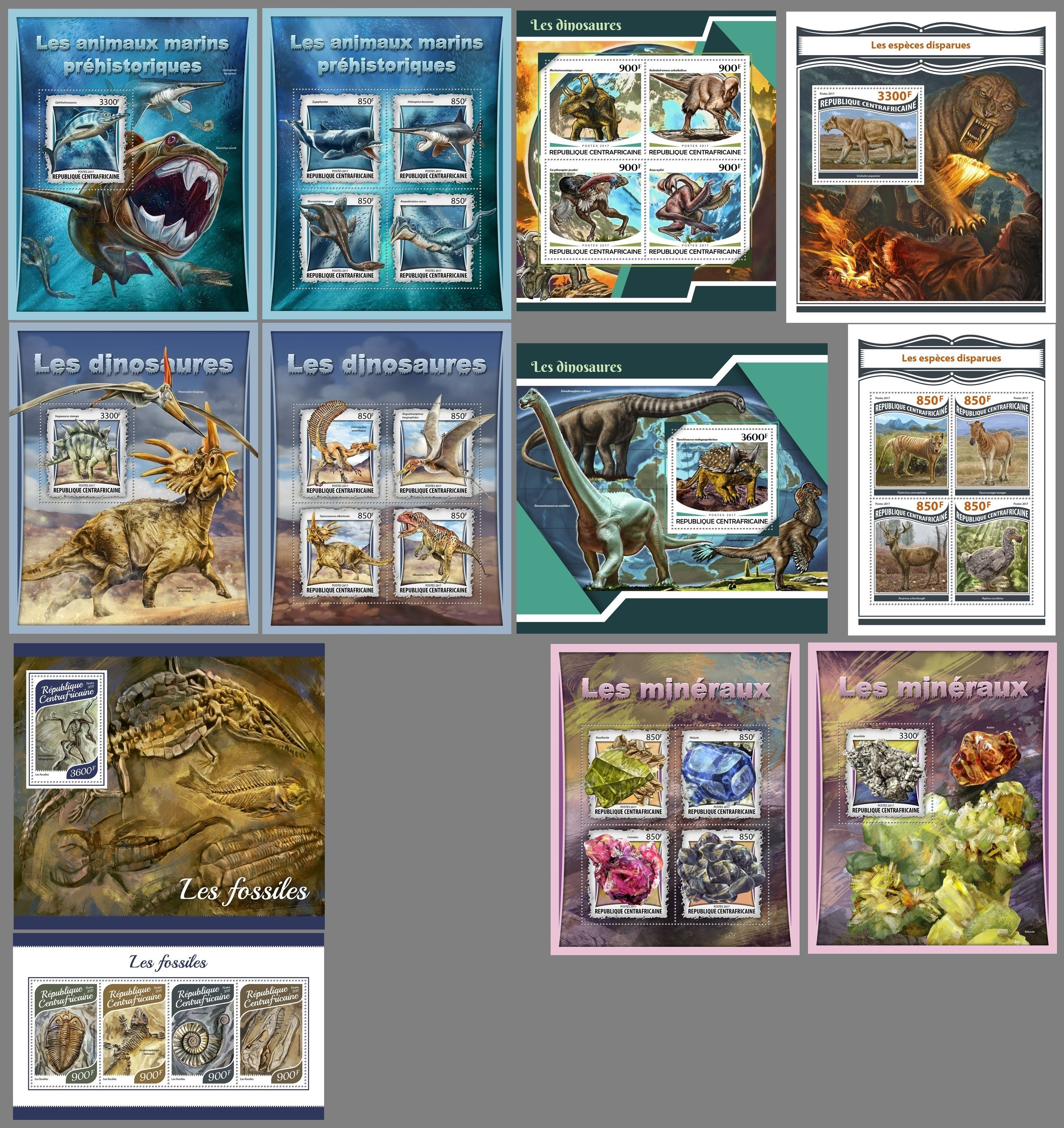
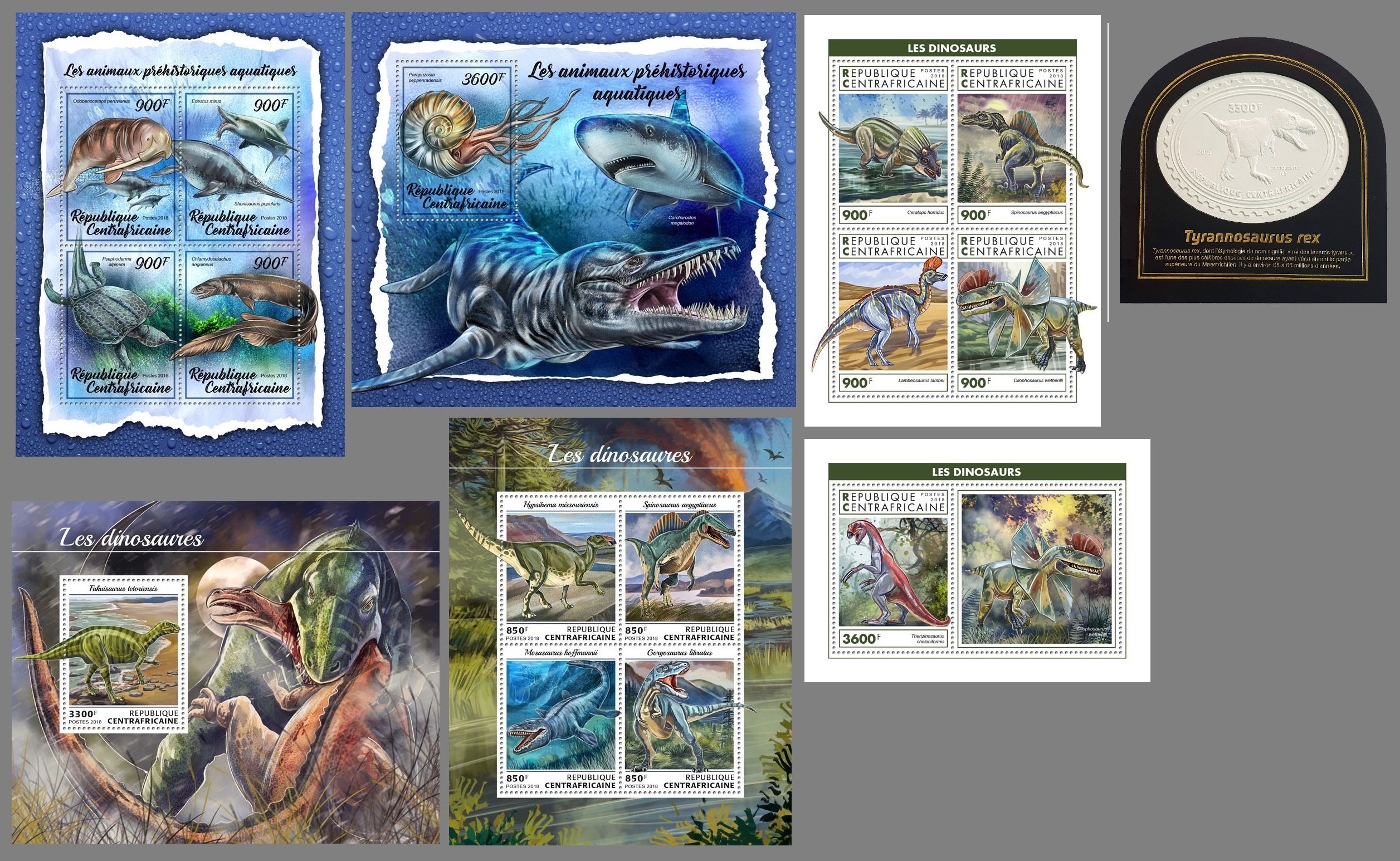
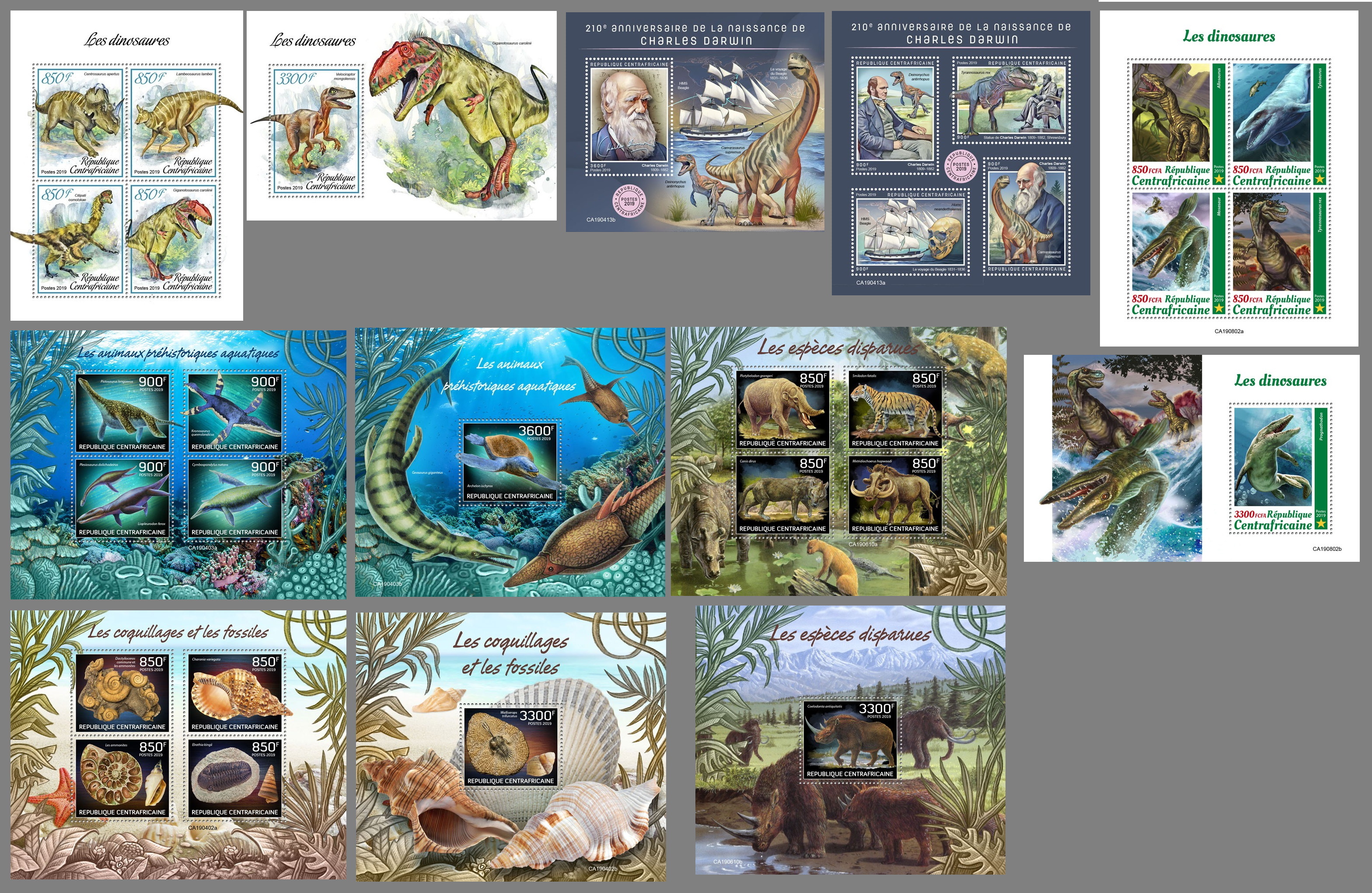
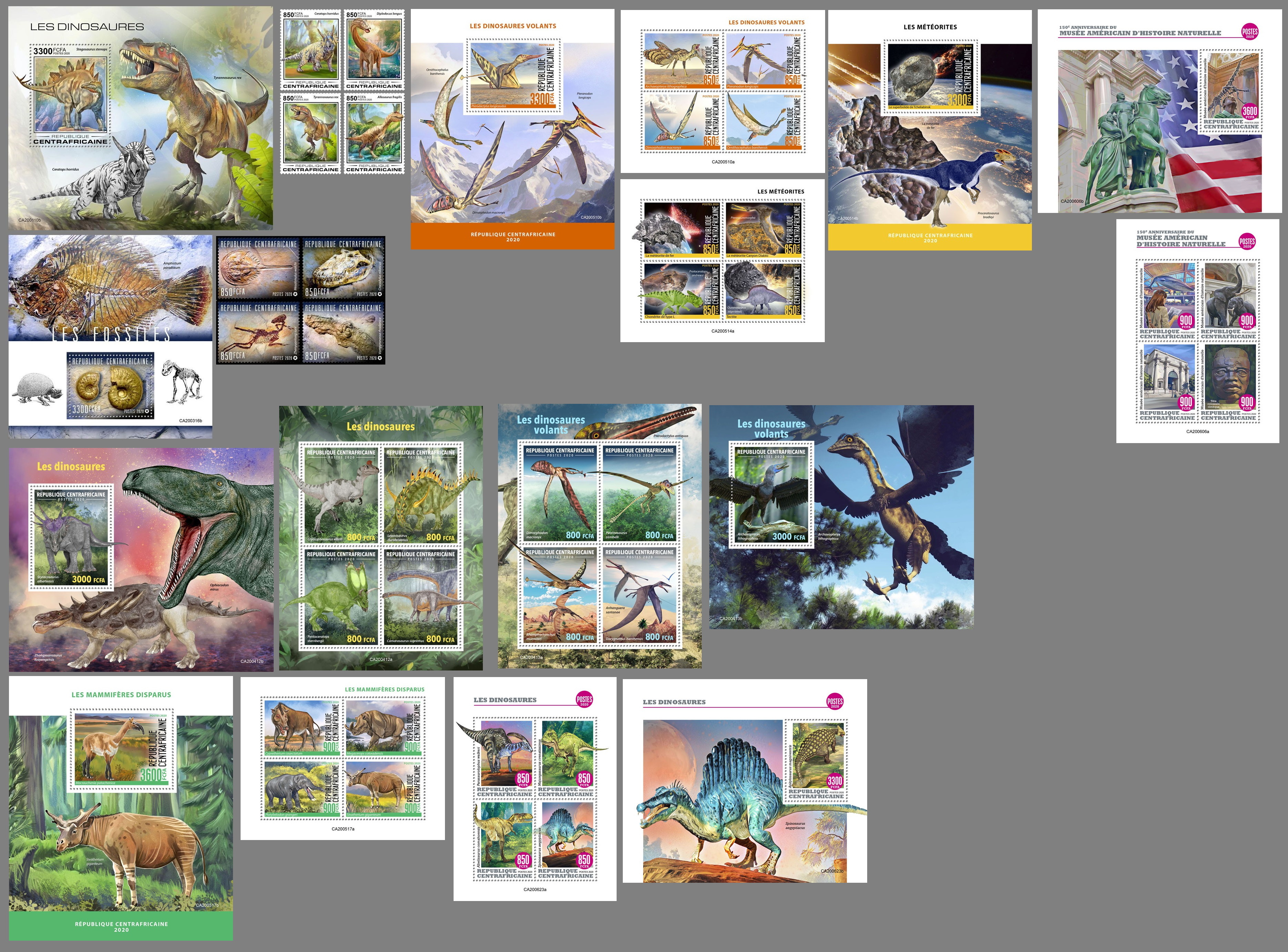
Official stamps of Central African Republic related to Paleontology: dinosaurs and other prehistoric animals, fossils
Stamps on grey background are Undesired
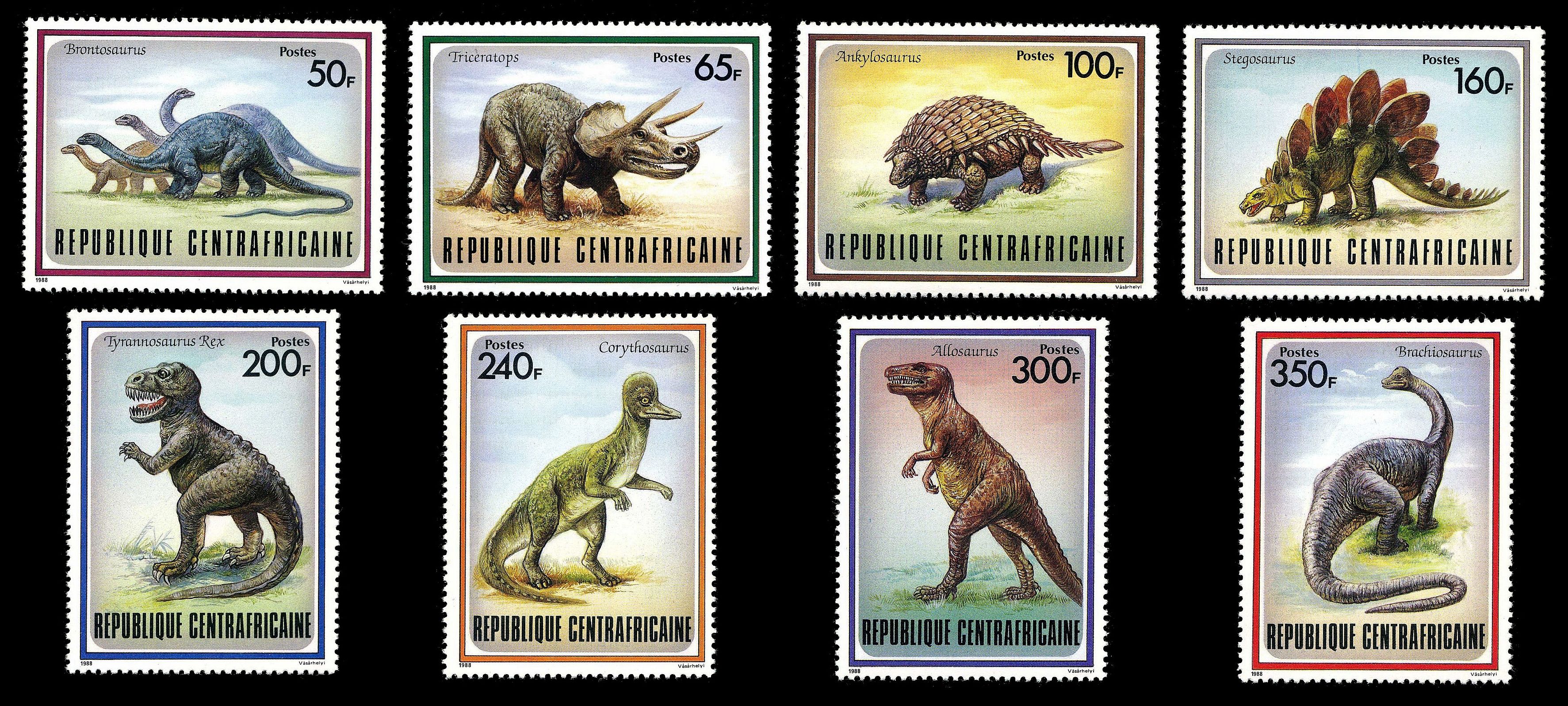
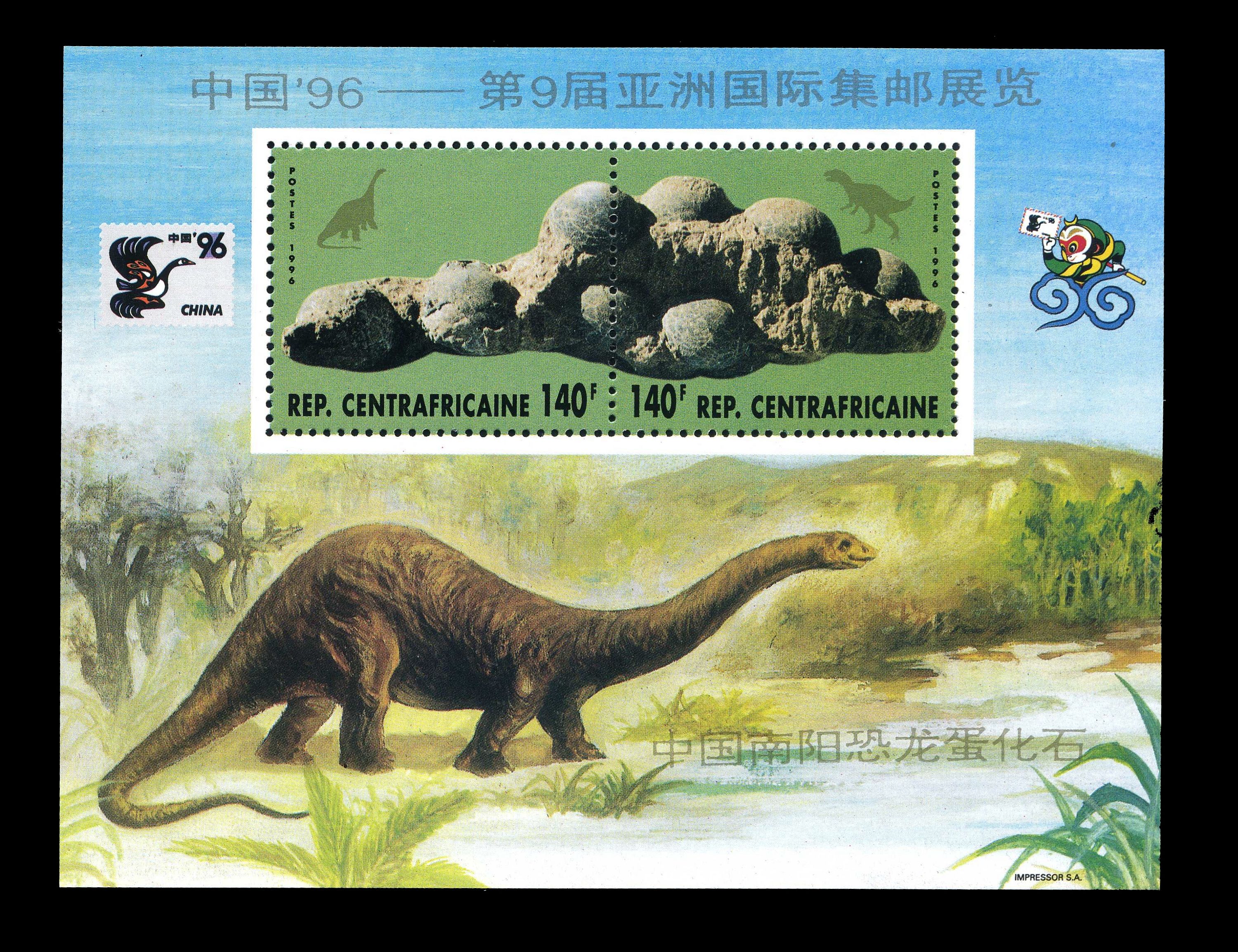
| 19.03.1988 "Dinosaurs" | 03.12.1993 "Dinosaurs" | 28.04.1996 "Dinosaur Eggs" [1] |
 |
 |
 |
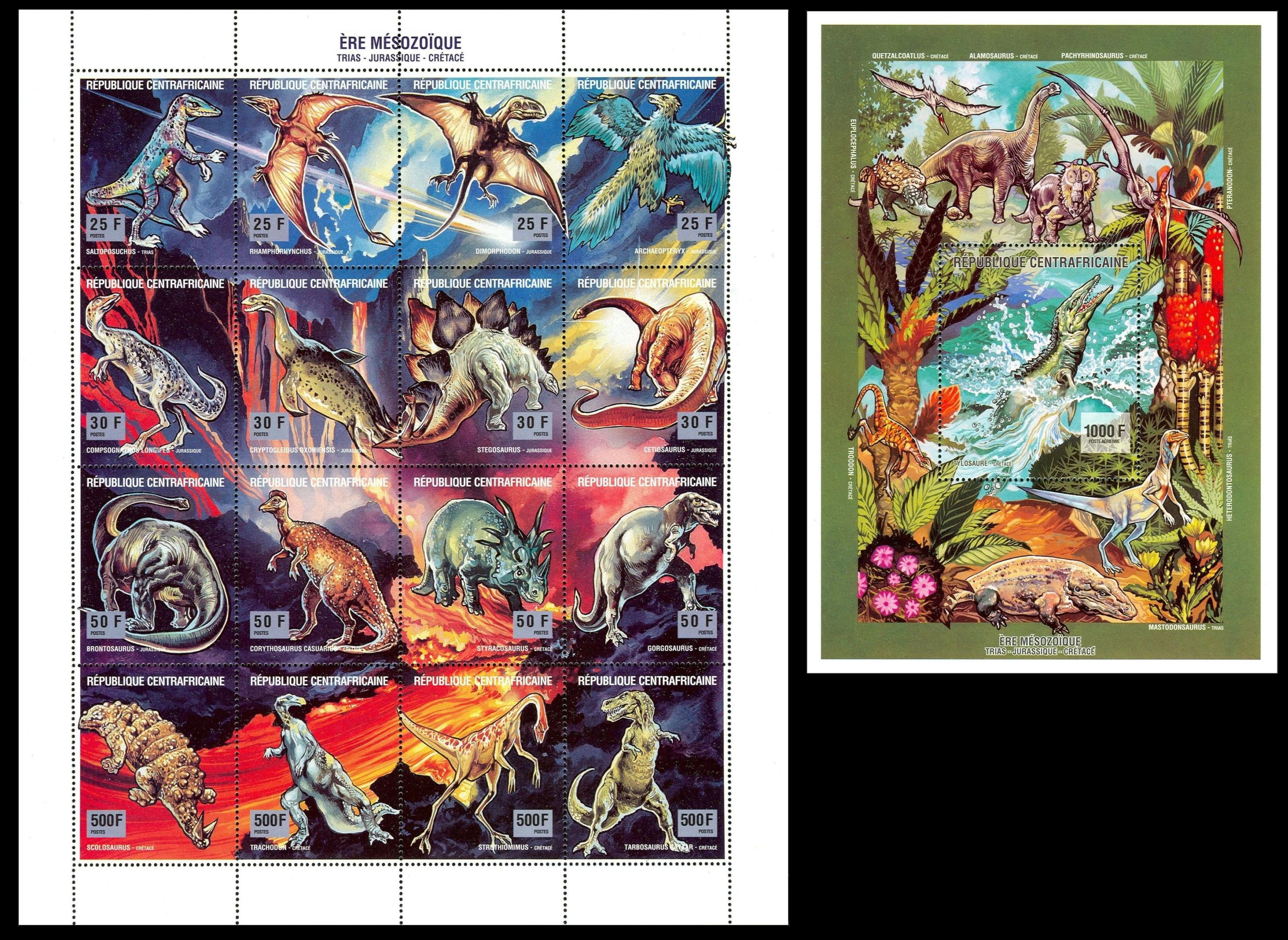
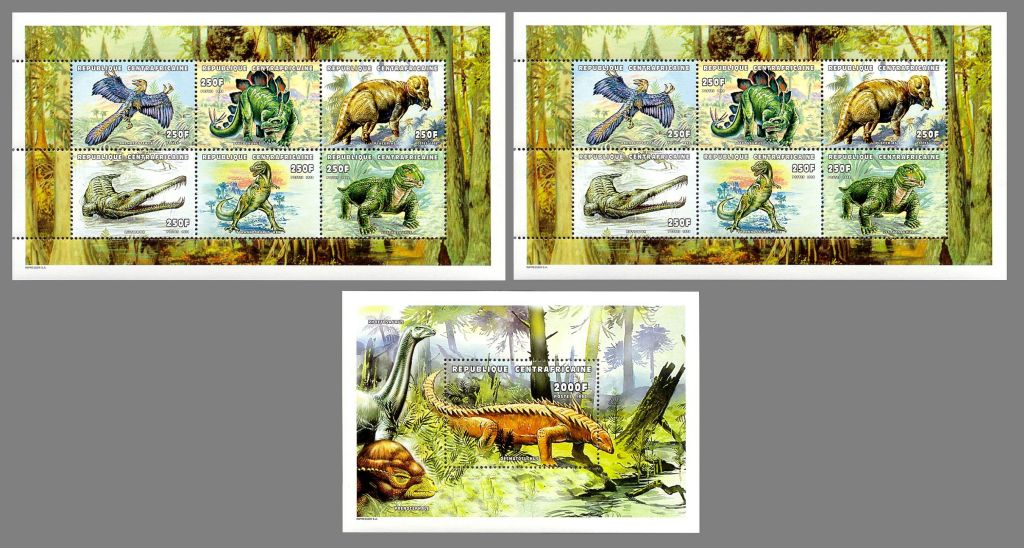
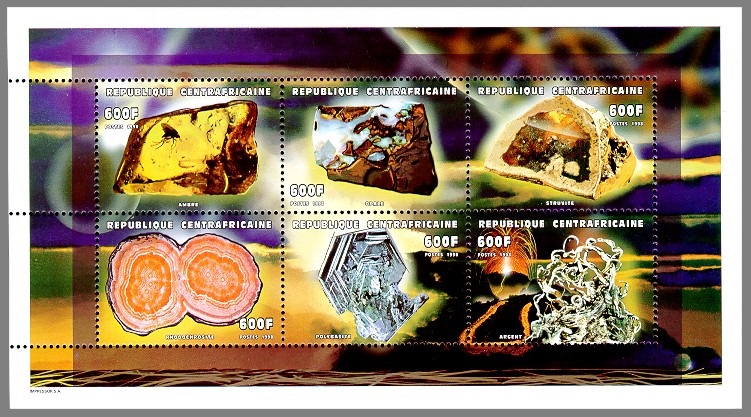
| 24.03.1999 "Prehistoric animals" | 24.02.1999 "Minerals" [2] | |
|
|
|
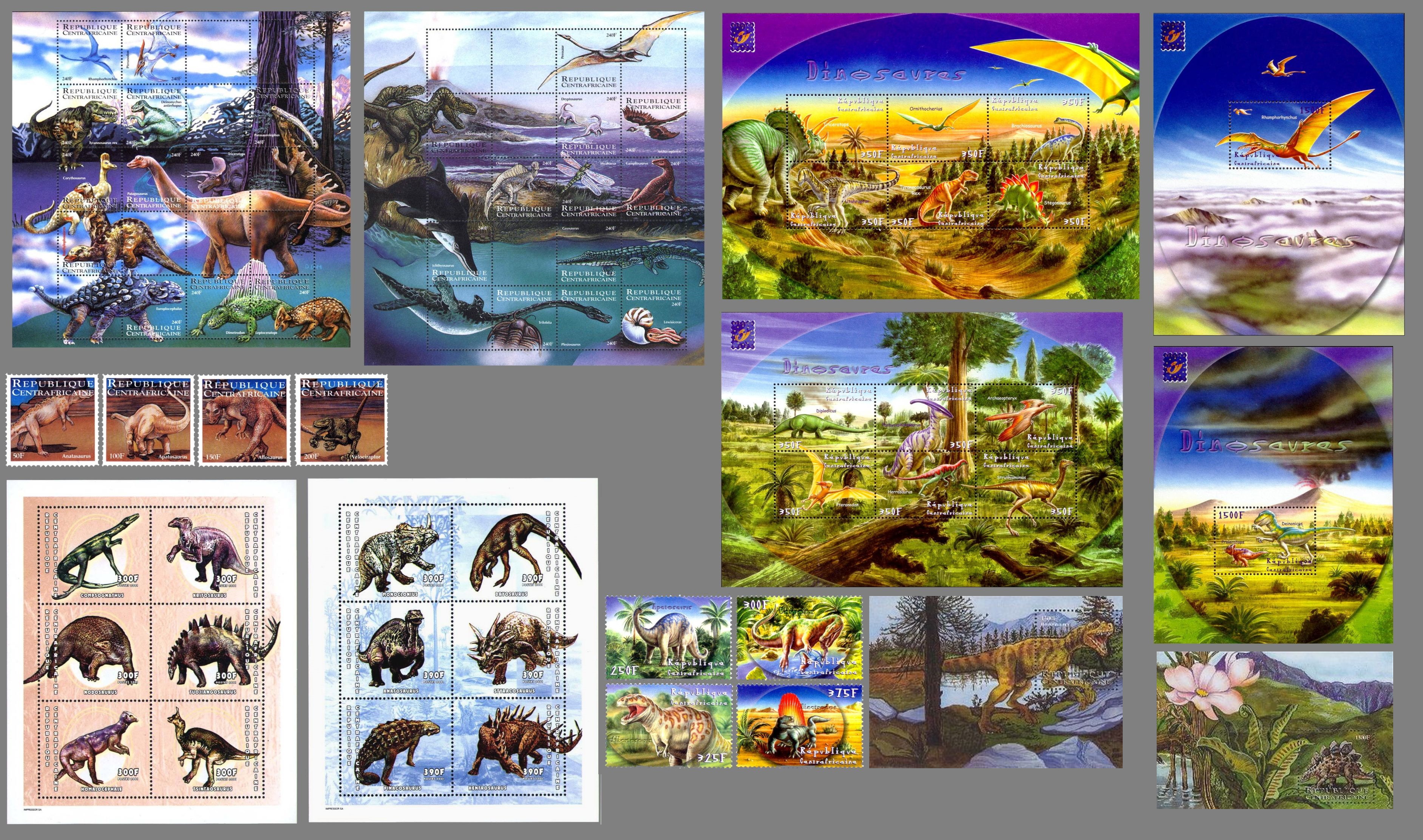
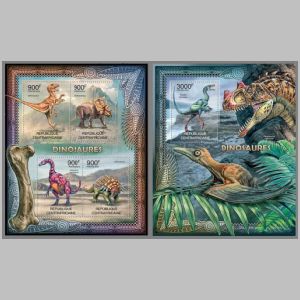
| 23.12.2002 "Scouts and Dinosaurs" | 25.04.2012 "Dinosaurs" | |

|
|
|
|
|

|
 |
 |
 |
|
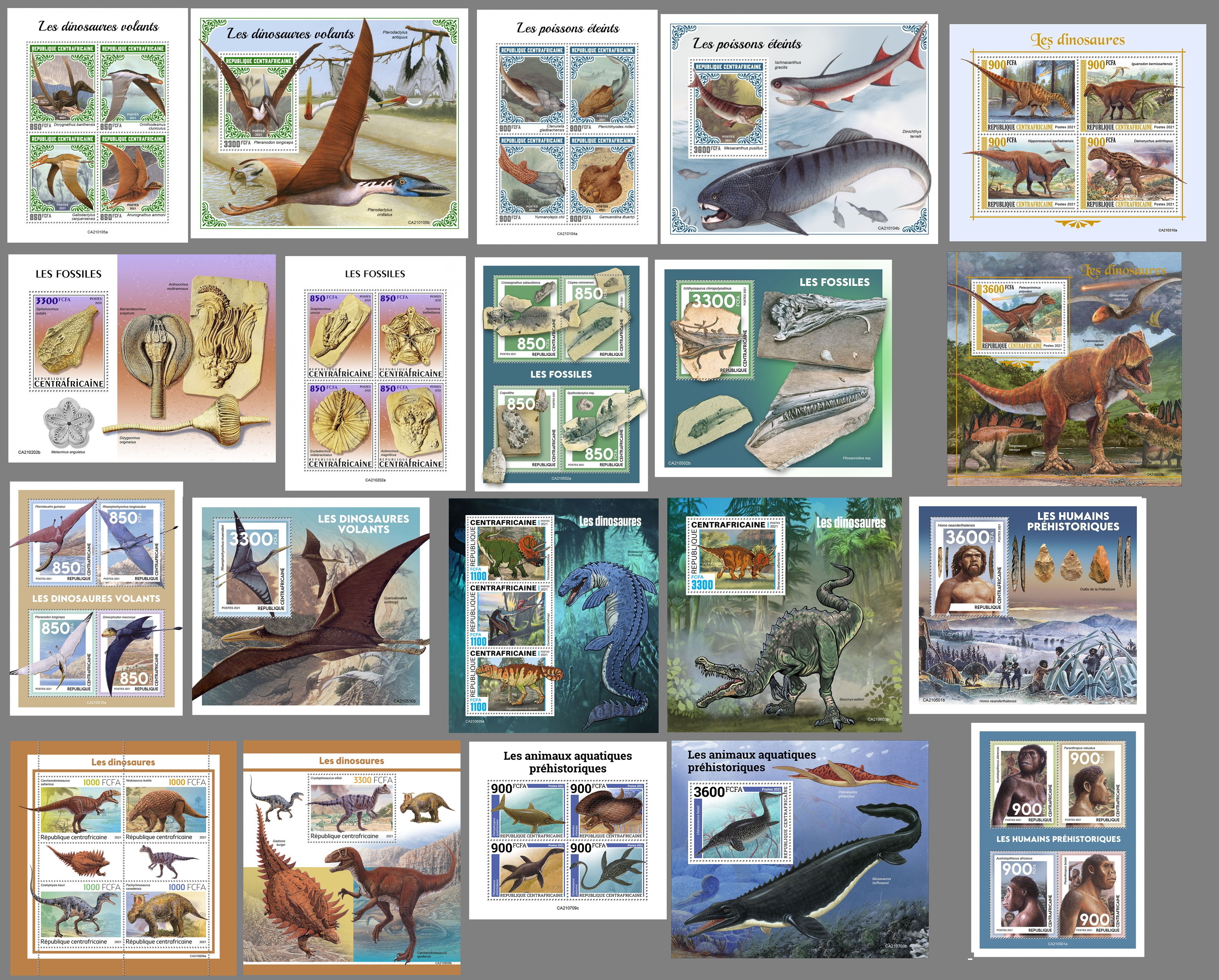
10.02.2022 "Fossils"
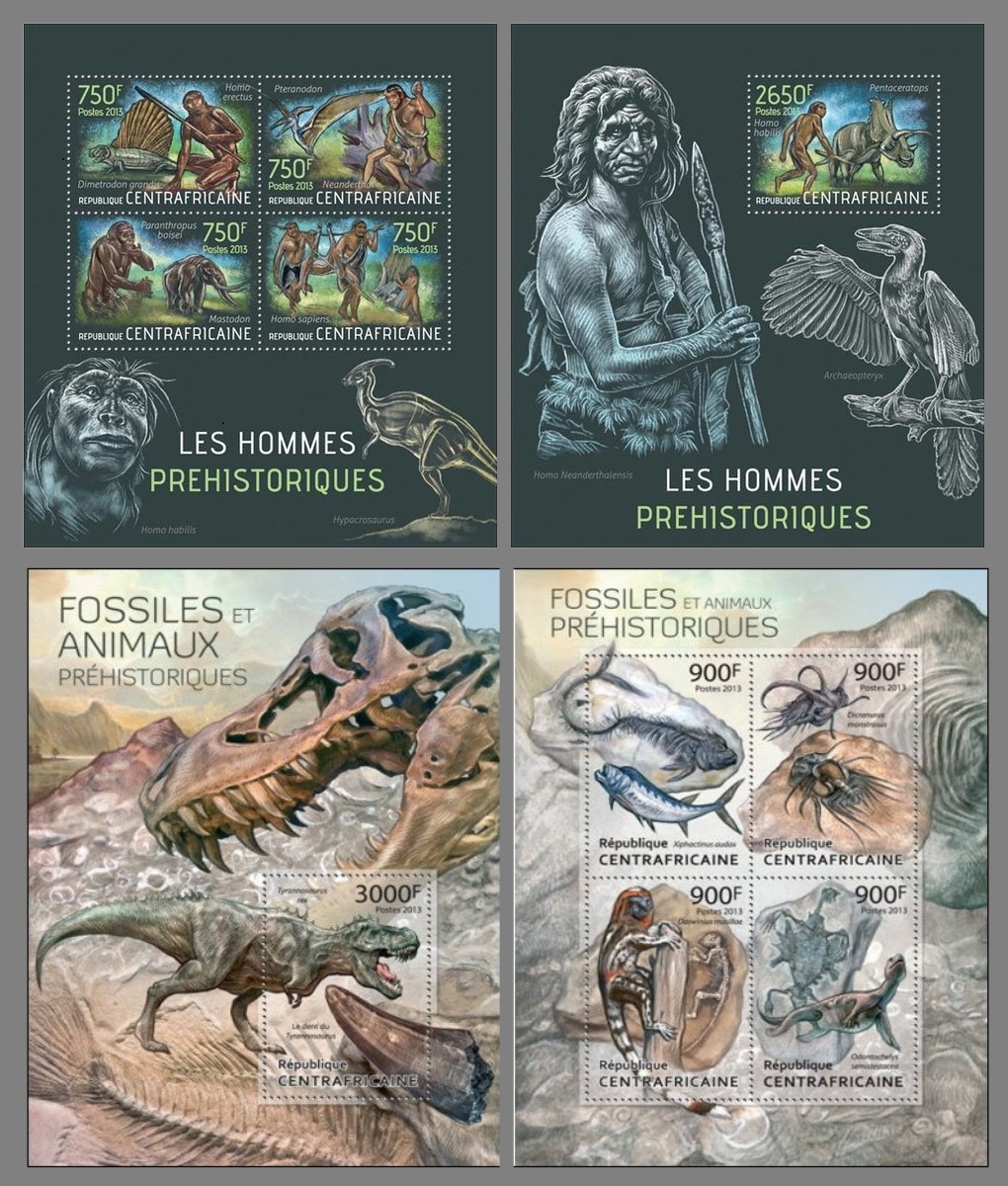
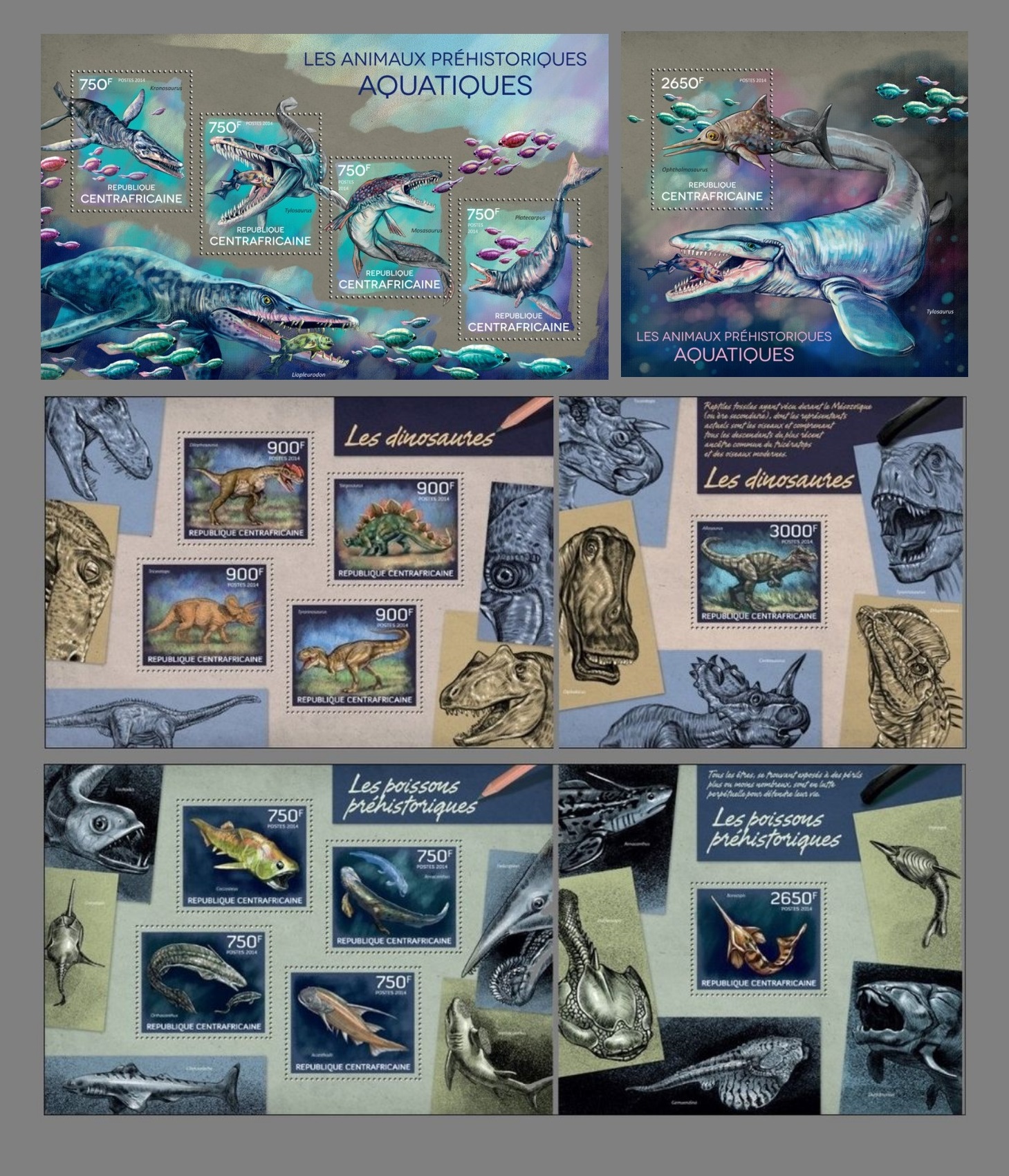
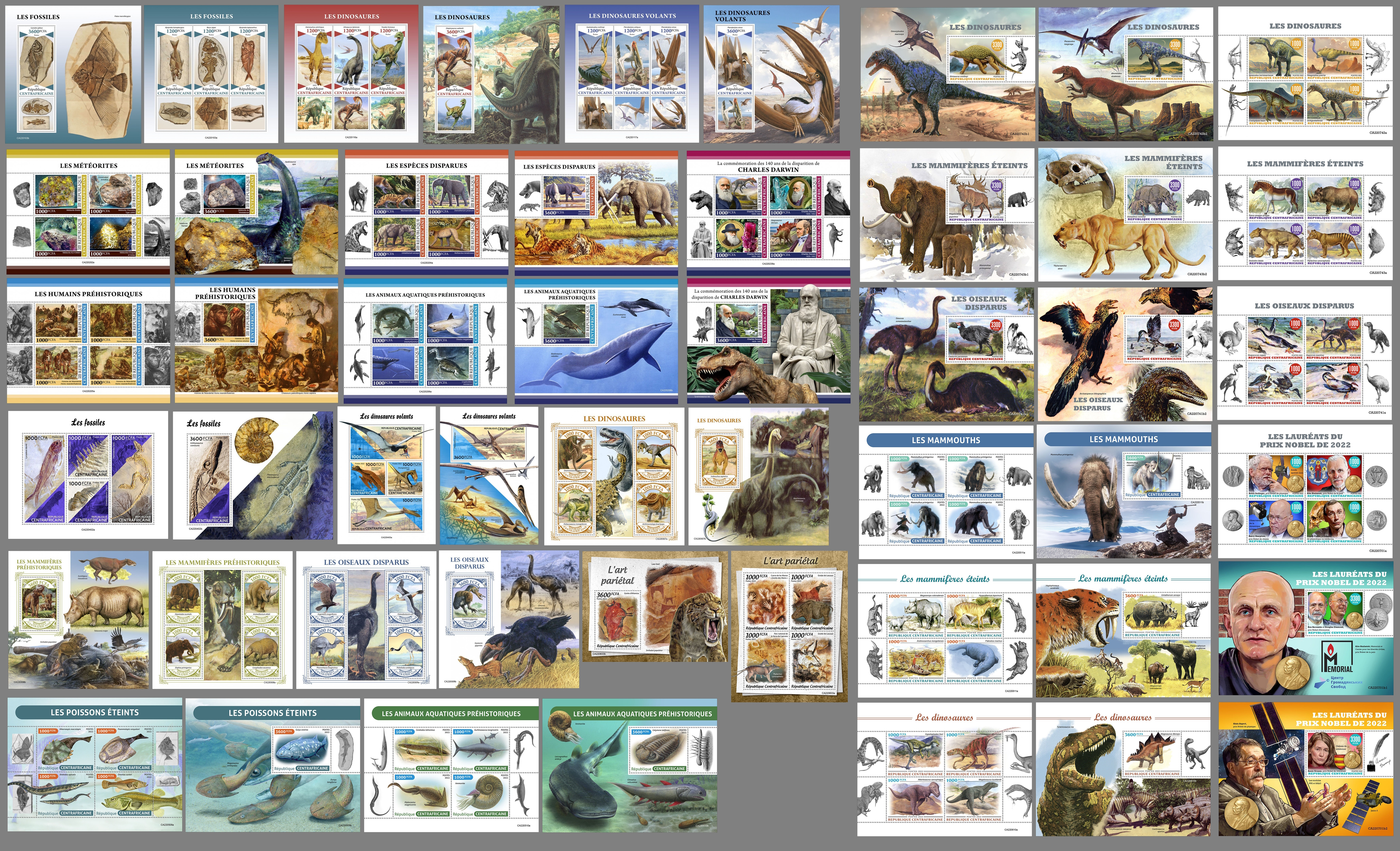
20.02.2022 "Flying dinosaurs" [3] 20.02.2022 "Dinosaurs" 25.02.2022 "Prehistoric water animals" 25.02.2022 "Prehistoric humans" 25.02.2022 "Extinct species" 25.02.2022 "Meteorites" 25.02.2022 "140th memorial anniversary of Charles Darwin" 20.04.2022 "Extinct birds" 20.04.2022 "Prehistoric mammals" 20.04.2022 "Dinosaurs" 31.08.2022 "Flying dinosaurs" [3] |
||
 |
 |
 |
|
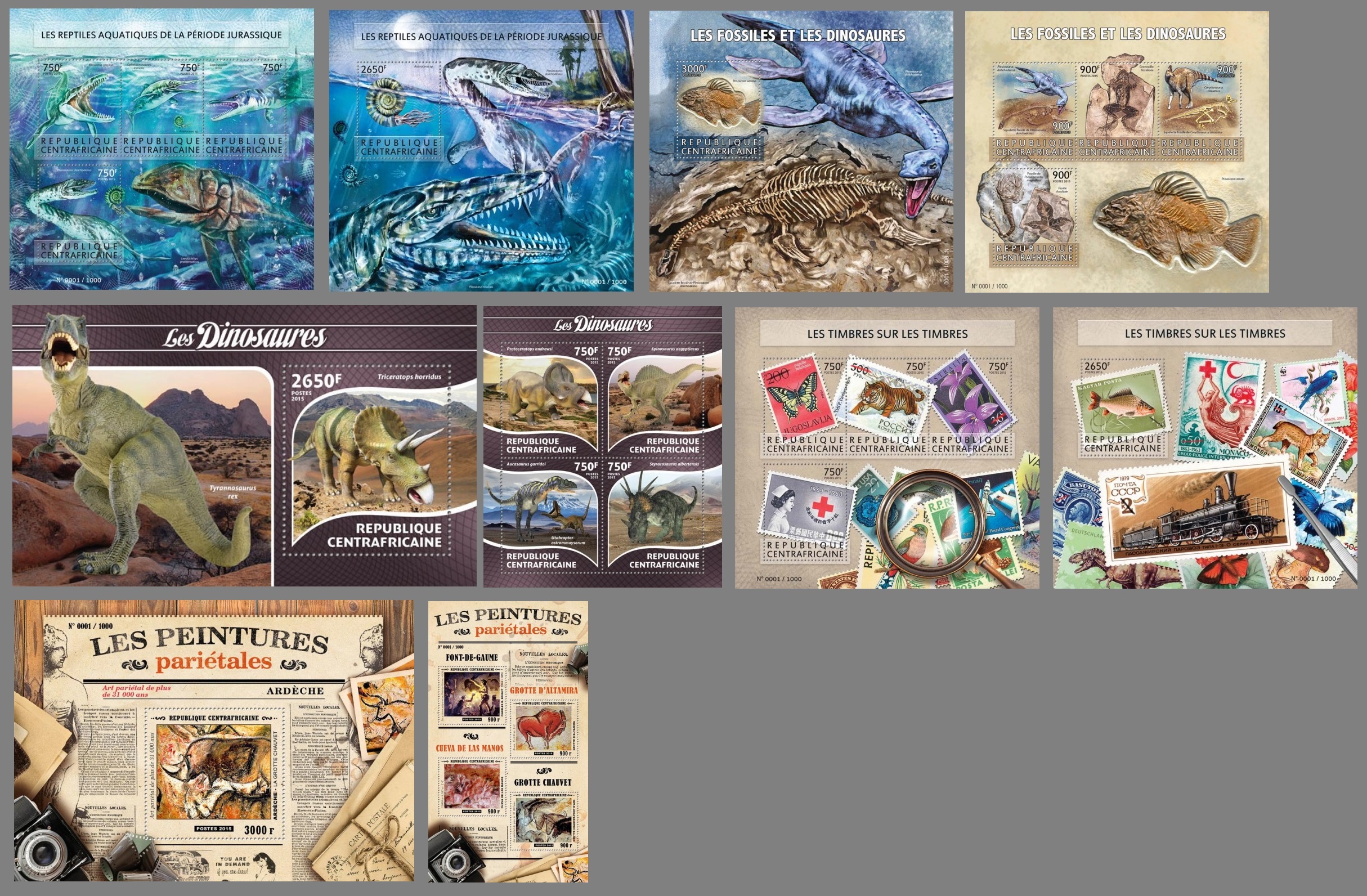
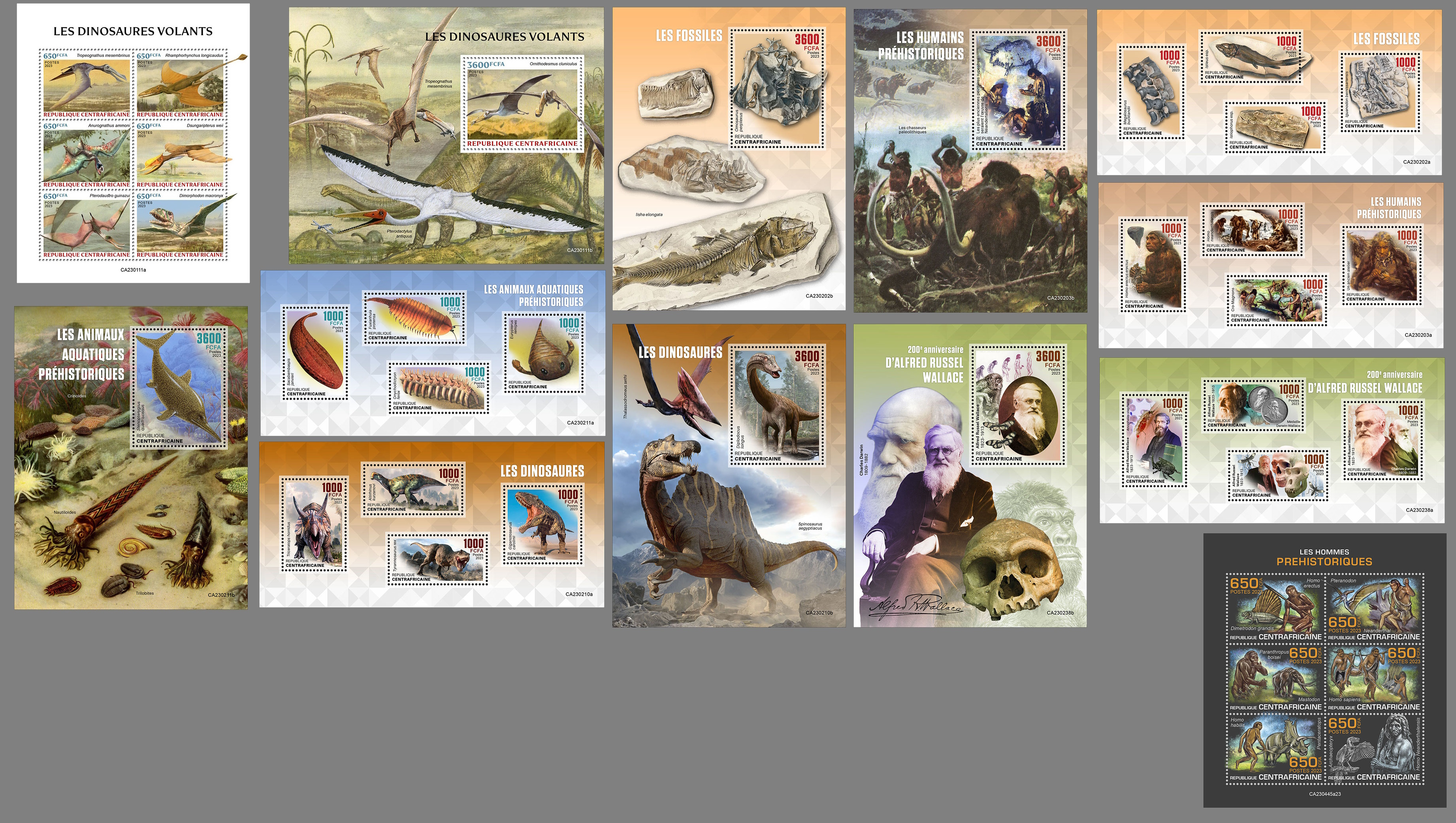
12.01.2023 "Dinosaurs"
12.01.2023 "Flying dinosaurs" 12.01.2023 "“200th anniversary of Alfred RusselWallace" 12.01.2023 "Fossils" 12.01.2023 "Dinosaurs" 12.01.2023 "Prehistoric humans" 12.01.2023 "Dinosaurs" 12.01.2023 "Prehistoric water animals" 05.07.2023 "Prehistoric people" 05.07.2023 "Dinosaurs" 05.07.2023 "Extinct mammals" 10.09.2023 "Fossils" 10.09.2023 "Dinosaurs" 10.09.2023 "Flying dinosaurs" 22.12.2023 "Extinct animals" 22.12.2023 "Extinct birds" 22.12.2023 "Extinct reptiles" 22.12.2023 "Volcanoes and dinosaurs" |
01.03.2024 "Dinosaurs"
01.03.2024 "Extinct birds" 01.03.2024 "Extinct plants" 01.03.2024 "Prehistoric humans" 01.03.2024 "Prehistoric water animals" 01.03.2024 "Prehistoric reptiles" 01.03.2024 "Meteorites" 01.03.2024 "215th anniversary of Charles Darwin" 05.07.2024 "Dinosaurs" 05.07.2024 "Prehistoric humans" 05.07.2024 "Prehistoric water animals" 05.07.2024 "Fossils" |
|
 |
 |
Notes:
[1] Issued as a Block and Sheets
[2] Insect in amber is depicted on one of the stamps
[3] "Flying dinosaurs" is not a correct term to apply to the animals shown on these stamps. The animals pictured are pterosaurs. Pterosaurs are a group of flying reptiles in the Archosauria. Reptiles in the archosaurs include crocodiles, dinosaurs, and pterosaurs.
Other stamps to consider: amber, cave painting
| .2017 "Minerals" [NO1] | 24.07.2020 "80th anniversary of the discovery of cave paintings in Lascaux, France" | |
 |
 |
|
Notes:
[O1] Amber on margin of the Mini Sheet
Official postmarks of Central African Republic related to Paleontology: dinosaurs
Legend is here
| 28.04.1996 "Dinosaur Eggs" [FDC] | ||
 |
||
References
- [R1] Central African Republic: Wikipedia, WikiTravel, FlagCounter.
- [R2] Postal History and Philately of Central African Republic:
Wikipedia,
Links to official website of the Post Authority, stamp catalog and a list of new stamps of Central African Republic are here.
Acknowledgements
Many thanks to Dr. Peter Voice from Department of Geological and Environmental Sciences, Western Michigan University, for reviewing the draft page and his very valuable comments.