Paleontologists on stamps and other philatelic items
Dr. Karel Absolon (1877 - 1960)
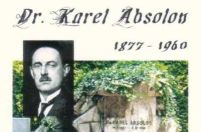 Czech paleontologist, archaeologist, geographer, and speleologist.
Absolon was the grandchild of paleontologist Jindrich Wankel. During
his studies at Charles University in Prague he started with
speleological research in the caves of Moravsk kras (Moravian Karst) in
the South Moravian Region of what is now the Czech Republic. In 1907 he
became the custodian of the Moravian museum in Brno and a professor of
paleoanthropology at the Charles University in Prague in 1926. His most
known works are the paleoanthropologic discoveries at Doln Vestonice
which include a Venus figurine. He worked on the systemic mapping of
the Moravsk kras, including the Macocha Abyss and the Pekrna, Punkevn
and Katerinsk caves. He also explored karstic caves in the Balkans,
France, and England.
[R1]
Czech paleontologist, archaeologist, geographer, and speleologist.
Absolon was the grandchild of paleontologist Jindrich Wankel. During
his studies at Charles University in Prague he started with
speleological research in the caves of Moravsk kras (Moravian Karst) in
the South Moravian Region of what is now the Czech Republic. In 1907 he
became the custodian of the Moravian museum in Brno and a professor of
paleoanthropology at the Charles University in Prague in 1926. His most
known works are the paleoanthropologic discoveries at Doln Vestonice
which include a Venus figurine. He worked on the systemic mapping of
the Moravsk kras, including the Macocha Abyss and the Pekrna, Punkevn
and Katerinsk caves. He also explored karstic caves in the Balkans,
France, and England.
[R1]
Jean Louis Rodolphe Agassiz (1807 - 1873)
 was a paleontologist, glaciologist, geologist and a prominent innovator
in the study of the Earth's natural history.In 1837 Agassiz was the
first
to scientifically propose that the Earth had been subject to a past ice
age. In the same year, he was elected a foreign member of the Royal
Swedish Academy of Sciences.
[R2]
was a paleontologist, glaciologist, geologist and a prominent innovator
in the study of the Earth's natural history.In 1837 Agassiz was the
first
to scientifically propose that the Earth had been subject to a past ice
age. In the same year, he was elected a foreign member of the Royal
Swedish Academy of Sciences.
[R2]
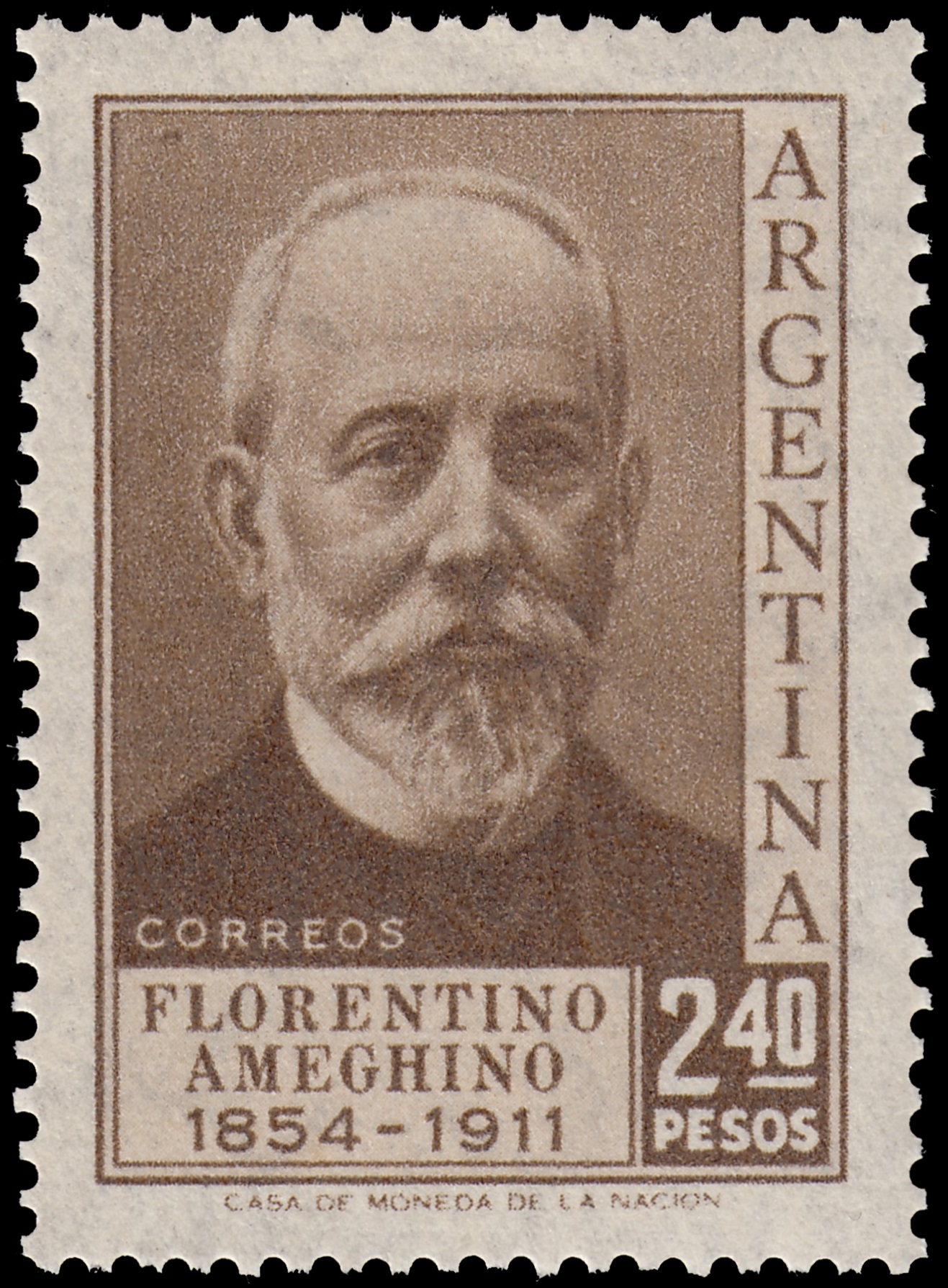
Florentino Ameghino (1854 -1911), was an Argentine naturalist, paleontologist, anthropologist and zoologist.
 |
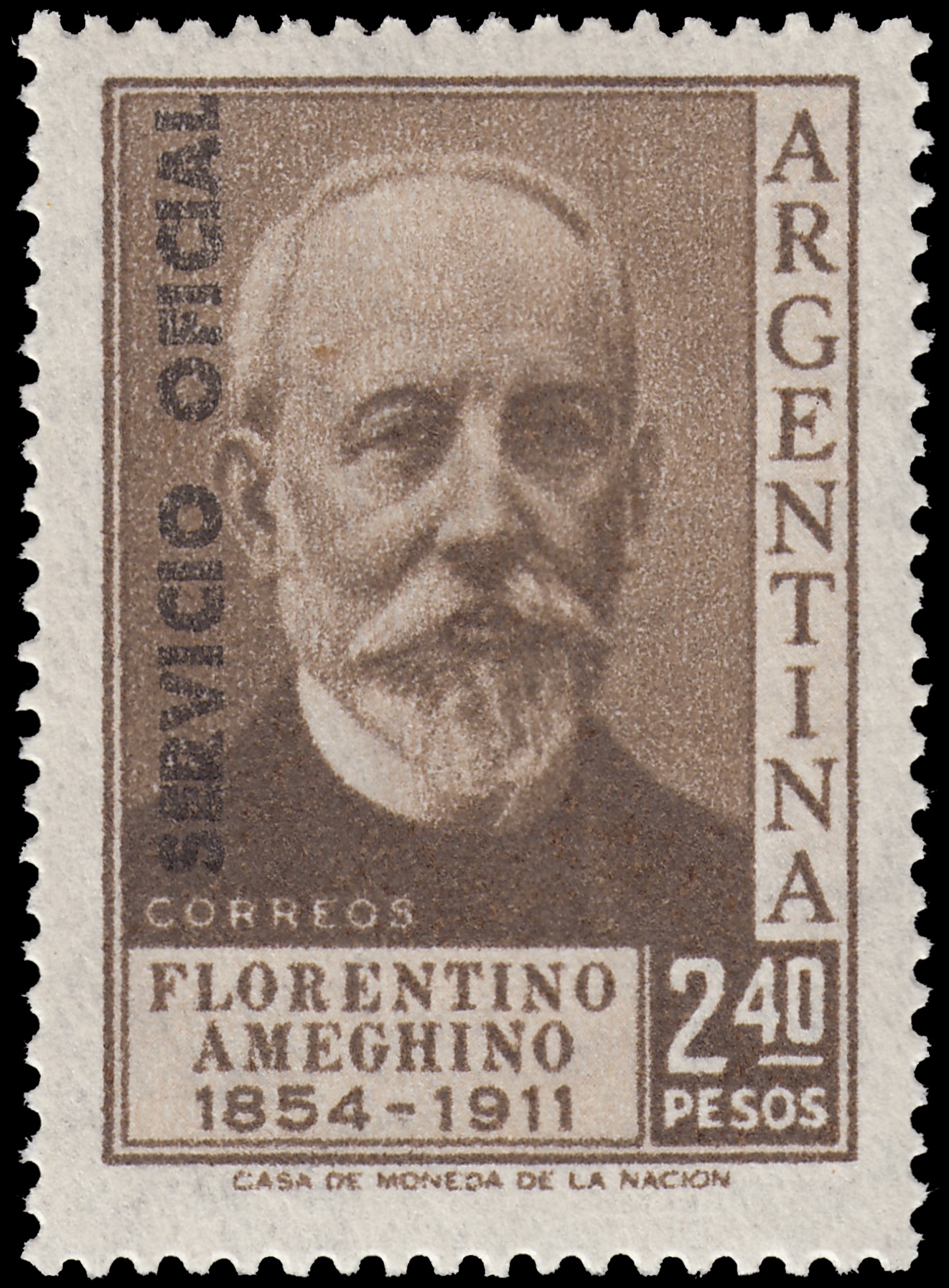 |
| Florentino Ameghino on definitive stamp of Argentina 1956 (MiNr.: 649, Scott: 658) and overprinted in 1957 (MiNr.: D90, Scott: O110) | |
 |
 |
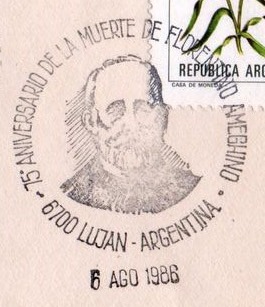
| Florentino Ameghino on commemorative postmark of Argentina 1986 and 2011: 75 and 100 years since his death. | |
He also investigated the possible presence of prehistoric man in the Pampas and made several controversial claims about human origins in South America.
In 1902 Florentine Ameghino became the first Argentine director of the “Bernardino Rivadavia" Argentine Natural Sciences Museum.
The Museum (MACN — CONICET) is the oldest Natural History Museum in the Argentine Republic, which celebrated its 200th anniversary in 2012.
The paleontology section of the Museum is notable for its dinosaur collection that includes Carnotaurus, Eoraptor, Herrerasaurus and Patagosaurus as well as some a Cenozoic animals such as Glyptodon, Macrauchenia, Megatherium and Smilodon. [R3]
Known Philatelic items: two definitive stamps of Argentina from 1956 and 1957 and two commemorative postmark of Argentina 1986 and 2011: 75 and 100 years since his death (see all 4 item above). There is also not pictorial postmark of Argenina from 1961 dedicated to 50 years since death of Ameghino.

Charles William Andrews (1860 -1924)

a British palaeontologist whose career as a vertebrate paleontologist, both as a curator and in the field, was spent in the services of the British Museum, Department of Geology. His first concerns were with fossil birds, and he described Aepyornis titan, the extinct "Elephant Bird" of Madagascar (1894). In 1977-1978 the Post Autrhority of Christmas Island issued serie of individual stamp to commemorate famous persond who visited the Island. One of thes stamps depict Charles William Andrews, who spemt several momthes there in 1897 to inspect it before the activities of phosphate mining compromised its natural history. The results were published by the British Museum in 1900. [R4]
Roy Chapman Andrews (1884 - 1960)
was an American explorer, adventurer and naturalist who became the director
of the American Museum of Natural History.
He is primarily known for leading a series of expeditions through the fragmented China of the
early 20th century into the Gobi Desert and Mongolia.
The expeditions made important discoveries and brought the first-known fossil dinosaur
eggs to the museum."Andrews is allegedly the real person that the movie character of Indiana Jones was patterned after. Andrews was an accomplished stage master. He created an image and lived it out impeccably there was no chink in his armor. Roy Chapman Andrews: famous explorer, dinosaur hunter, exemplar of Anglo-Saxon virtues, crack shot, fighter of Mongolian brigands, the man who created the metaphor of 'Outer Mongolia' as denoting any exceedingly remote place." Douglas Preston of the American Museum of Natural History With twenty-two books, and well over 200 magazine articles, Andrews did more to popularize dinosaur hunting than any professional palaeontologist, and generated more interest in Central Asia than any writer previously.
[R5]
Andrusov Nikolay Ivanovich (1861 - 1924)
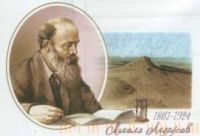 was a Russian geologist, stratigrapher, and palaeontologist.
He was born in Odessa, then a part of Russia. He studied geology and
zoology at the Novorossia University in Odessa. He then traveled across
Russia and central Europe to collect fossil specimens.
The Challenger expedition of 18721876 studied processes of the sea
floor.
In 1889 Andrusov published a review of this expedition in the Mining
Journal. He would later perform studies of the geology and sediments of
the Caspian Sea and the Black Sea. In
1890-1891 he participated in a deep water expedition to the Black Sea
by the Russian Geographical Society. This expedition discovered
hydrogen sulfide in the lower portions of this lake. Andrusov was the
first to propose that this substance was created by biological
decomposition of life forms (bacteria) containing sulfurous compounds.
[R6]
was a Russian geologist, stratigrapher, and palaeontologist.
He was born in Odessa, then a part of Russia. He studied geology and
zoology at the Novorossia University in Odessa. He then traveled across
Russia and central Europe to collect fossil specimens.
The Challenger expedition of 18721876 studied processes of the sea
floor.
In 1889 Andrusov published a review of this expedition in the Mining
Journal. He would later perform studies of the geology and sediments of
the Caspian Sea and the Black Sea. In
1890-1891 he participated in a deep water expedition to the Black Sea
by the Russian Geographical Society. This expedition discovered
hydrogen sulfide in the lower portions of this lake. Andrusov was the
first to propose that this substance was created by biological
decomposition of life forms (bacteria) containing sulfurous compounds.
[R6]
Joachim Barrande (1799 - 1883)
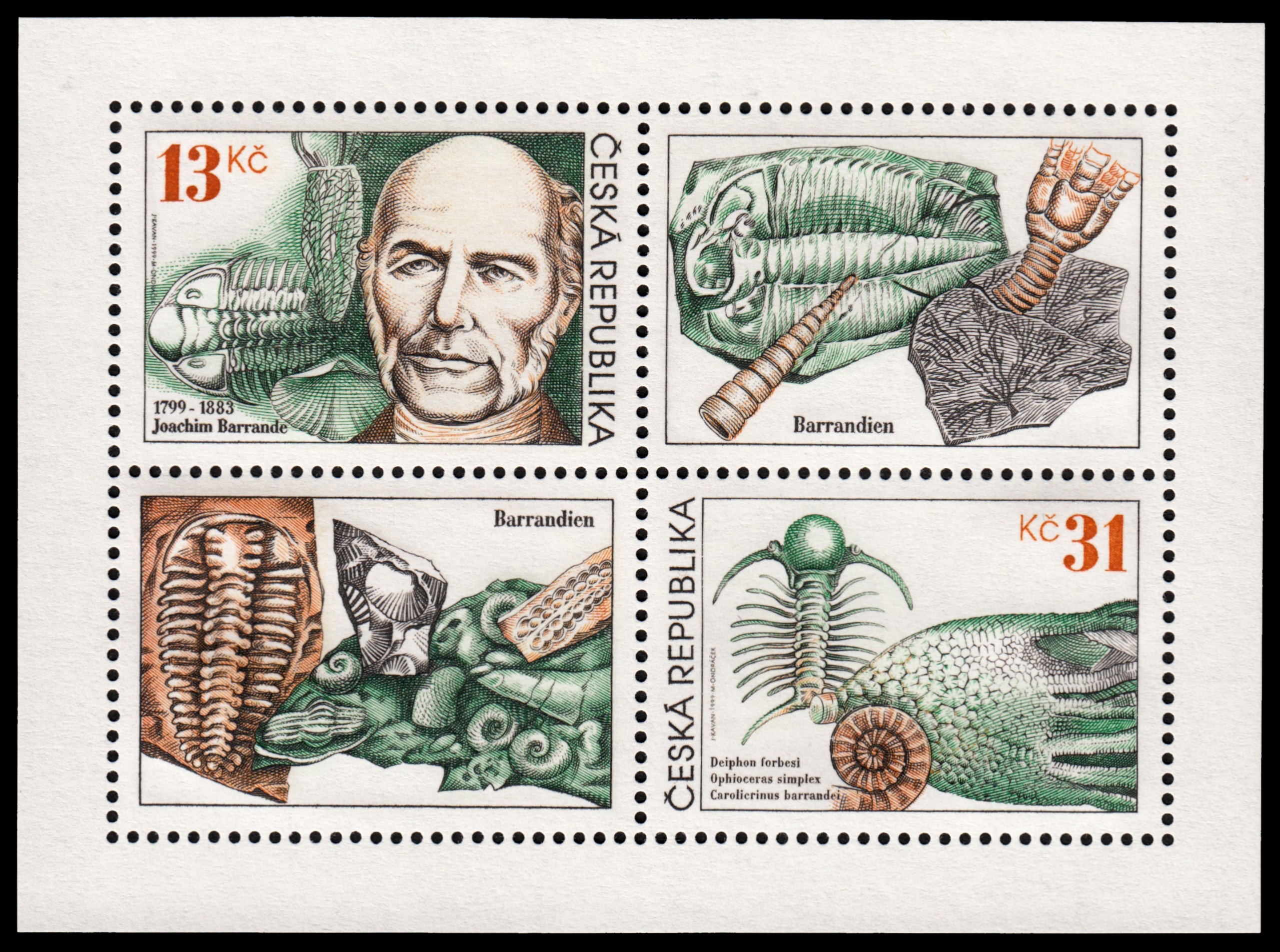 was a French geologist and palaeontologist, his attention was attracted
to the fossils from the Lower Palaeozoic rocks of Bohemia (Czech
Republic). For ten years (18401850) he made a
detailed study of these rocks, engaging workmen specially to collect
fossils, and in this way he obtained upwards of 3500 species of
graptolites, brachiopoda, mollusca, trilobites and fishes.He was a
fervent advocate of the theory of the catastrophes (as taught by
Georges Cuvier), thus opposing Charles Darwin's theory of evolution.
Barrande's book described more than 4,000 fossil species, and it
continues to be used as a reference book today.
[R7]
was a French geologist and palaeontologist, his attention was attracted
to the fossils from the Lower Palaeozoic rocks of Bohemia (Czech
Republic). For ten years (18401850) he made a
detailed study of these rocks, engaging workmen specially to collect
fossils, and in this way he obtained upwards of 3500 species of
graptolites, brachiopoda, mollusca, trilobites and fishes.He was a
fervent advocate of the theory of the catastrophes (as taught by
Georges Cuvier), thus opposing Charles Darwin's theory of evolution.
Barrande's book described more than 4,000 fossil species, and it
continues to be used as a reference book today.
[R7]
Alexei Alekseevich Borisyak (1872-1944)
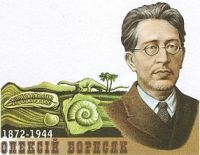 was, Russian and Soviet paleontologist and geologist, academician of the Academy of Sciences of the USSR, born
in Romny (now the Poltava region of Ukraine) on July 22 1872. He is
well known as the head of the Soviet school of
Vertebrate Paleontology, developing according to
research Kovalevsky.
His main works are devoted to the study of
Jurassic mollusks, vertebrate paleontology,
especially mammals (odd-toed ungulates - rhinos, horses, etc., and
Proboscidea).
[R8]
was, Russian and Soviet paleontologist and geologist, academician of the Academy of Sciences of the USSR, born
in Romny (now the Poltava region of Ukraine) on July 22 1872. He is
well known as the head of the Soviet school of
Vertebrate Paleontology, developing according to
research Kovalevsky.
His main works are devoted to the study of
Jurassic mollusks, vertebrate paleontology,
especially mammals (odd-toed ungulates - rhinos, horses, etc., and
Proboscidea).
[R8]
Robert Broom (1866-1951)
wasa South African doctor and paleontologist.
From 1903 to 1910 he was professor of zoology and geology at Victoria
College, Stellenbosch, South Africa, and subsequently he became keeper
of vertebrate paleontology at the South African Museum, Cape Town.He and John T. Robinson made a series of spectacular finds, including fragments from six hominids in Sterkfontein, which they named Plesianthropus transvaalensis, popularly called Mrs. Ples, but which was later classified as an adult Australopithecus africanus, as well as more discoveries at sites in Kromdraai and Swartkrans. In 1937, Broom made his most famous discovery of Paranthropus robustus. [R9]
Barnum Brown (1873-1963)
was an American paleontologist, who born in
Carbondale, Kansas, and named after the circus
showman P.T. Barnum, discovered the second fossil of Tyrannosaurus rex
during a career that made him one of the most famous fossil hunters
working from the late Victorian era into the early 20th
century.Sponsored by the American Museum of Natural History (AMNH),
Brown traversed the
country bargaining and trading for fossils. His field was not limited
to dinosaurs. He was known to collect or obtain anything of possible
scientific value. In one of its most significant finds, made in 1910,
Brown's team uncovered several hind feet from a group of Albertosaurus collected in
Dry Island Buffalo Jump Provincial Park.
[R10]
Wiliam Bruckland (1784-1856)
was an English geologist, palaeontologist and Dean of Westminster, who
wrote the first full account of a fossil dinosaur, which he named Megalosaurus.
His work proving that Kirkdale Cave had been a prehistoric hyaena den, for
which he was awarded the Copley Medal, was widely praised as an example
of how detailed scientific analysis could be used to understand
geohistory by reconstructing events from deep time. He was a pioneer in
the use of fossilized feces, for which he coined the term coprolites,
to reconstruct ancient ecosystems. Buckland was a proponent of the Gap
Theory that interpreted the biblical account of Genesis as referring to
two separate episodes of creation separated by a lengthy period; it
emerged in the late 18th and early 19th centuries as a way to reconcile
the scriptural account with discoveries in geology that suggested the
earth was very old. Early in his career he believed that he had found
geologic evidence of the biblical flood, but later became convinced
that the glaciation theory of Louis Agassiz provided a better
explanation, and he played an important role in promoting that theory in Great Britain.
[R11]
Spiro Brusina (1845-1908)
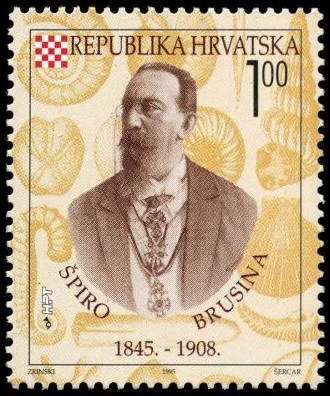 A zoologist of international reputation Spiridion Brusina
(born in Dubrovnik, 1845-1908), analyzed and classified 600 fossil species.
He has a great merit for popularizing science in Croatia.
Natural scientists throughout Europe named in his honor about 50 species according to his name.
He was in particularly interested in the study of marine and fresh-water
molluscs, the snails and shells of coastal Croatia.
By the end of his life he had compiled the most complete collection of Adriatic fauna to date.
[R12]
A zoologist of international reputation Spiridion Brusina
(born in Dubrovnik, 1845-1908), analyzed and classified 600 fossil species.
He has a great merit for popularizing science in Croatia.
Natural scientists throughout Europe named in his honor about 50 species according to his name.
He was in particularly interested in the study of marine and fresh-water
molluscs, the snails and shells of coastal Croatia.
By the end of his life he had compiled the most complete collection of Adriatic fauna to date.
[R12]
Christian Leopold von Buch (26 April 1774 – 4 March 1853),
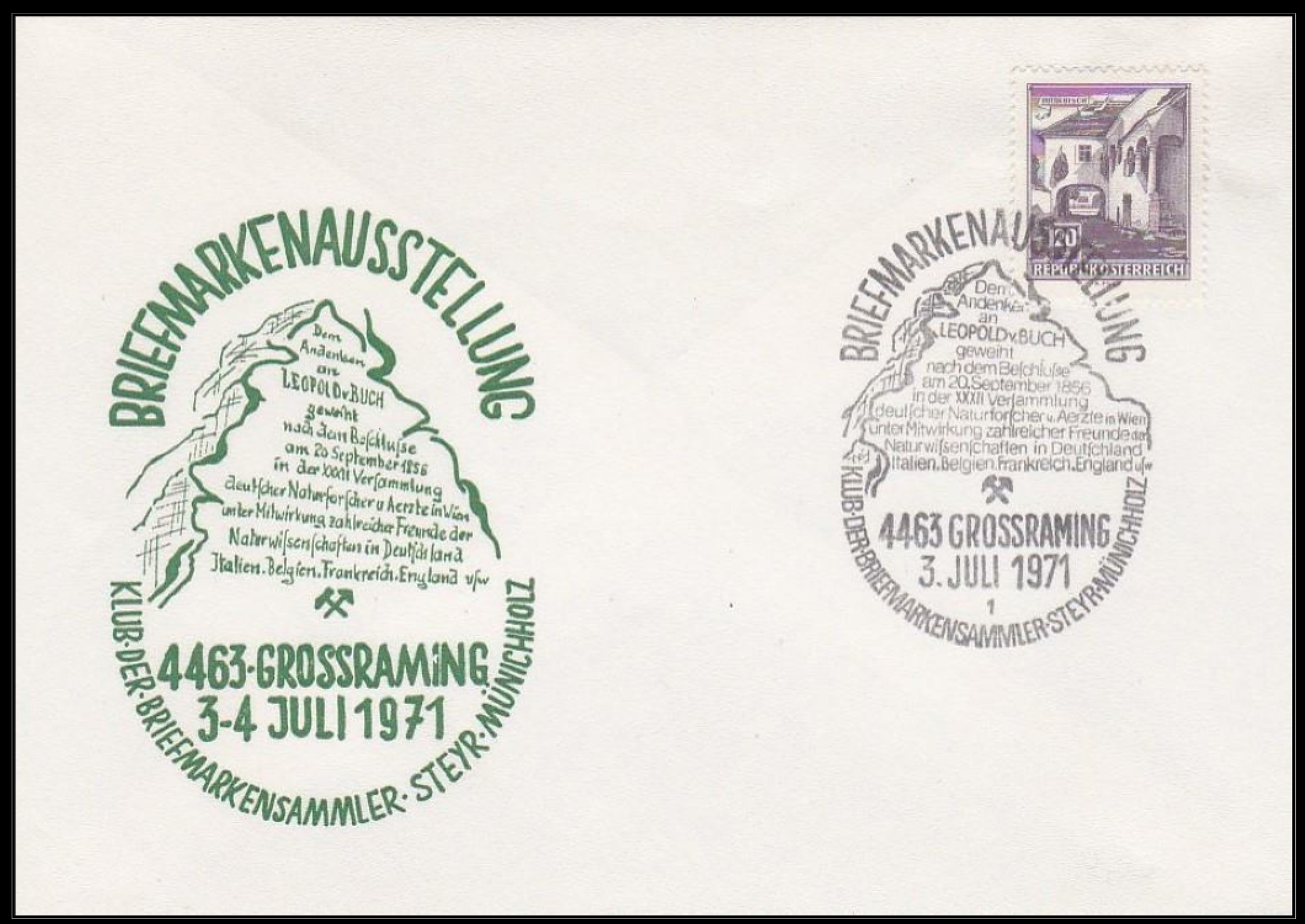 usually cited as Leopold von Buch, was a German geologist and paleontologist
born in Stolpe an der Oder (now a part of Angermünde, Brandenburg) and is remembered
as one of the most important contributors to geology in the first half of the nineteenth century.
His scientific interest was devoted to a broad spectrum of geological topics:
volcanism, petrology, fossils, stratigraphy and mountain formation.
His most remembered accomplishment is the scientific definition of the Jurassic system.
[R49]
usually cited as Leopold von Buch, was a German geologist and paleontologist
born in Stolpe an der Oder (now a part of Angermünde, Brandenburg) and is remembered
as one of the most important contributors to geology in the first half of the nineteenth century.
His scientific interest was devoted to a broad spectrum of geological topics:
volcanism, petrology, fossils, stratigraphy and mountain formation.
His most remembered accomplishment is the scientific definition of the Jurassic system.
[R49]
Pierre Teilhard de Chardin (1881-1955)

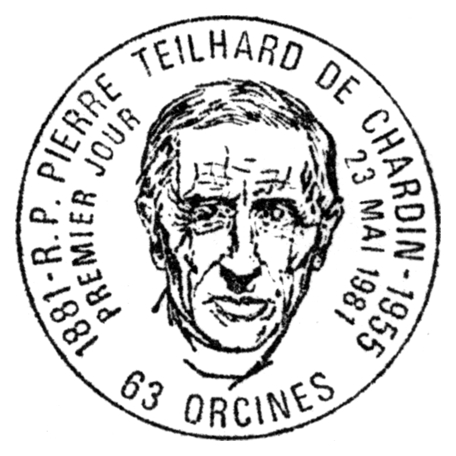 was a French philosopher and Jesuit priest who trained as a paleontologist and
geologist and took part in the discovery of both Piltdown Man and
Peking Man. Teilhard conceived the idea of the Omega Point and
developed Vladimir Vernadsky's concept of Noosphere. Some of his ideas
came into conflict with the Magisterium of the Catholic Church, and
several of his books were censured.
was a French philosopher and Jesuit priest who trained as a paleontologist and
geologist and took part in the discovery of both Piltdown Man and
Peking Man. Teilhard conceived the idea of the Omega Point and
developed Vladimir Vernadsky's concept of Noosphere. Some of his ideas
came into conflict with the Magisterium of the Catholic Church, and
several of his books were censured.From 1912 to 1914, Teilhard worked in the paleontology laboratory of the Muse National d'Histoire Naturelle, in Paris, studying the mammals of the middle Tertiary period. Later he studied elsewhere in Europe. In June 1912 he formed part of the original digging team, with Arthur Smith Woodward and Charles Dawson, to perform follow-up investigations at the Piltdown site, after the discovery of the first fragments of the (fraudulent) "Piltdown Man". Professor Marcellin Boule (specialist in Neanderthal studies), who so early as 1915 astutely recognised the non-hominid origins of the Piltdown finds, gradually guided Teilhard towards human paleontology. At the museum's Institute of Human Paleontology, he became a friend of Henri Breuil and took part with him, in 1913, in excavations in the prehistoric painted caves in the northwest of Spain, at the Cave of Castillo. [R13]
Aleksandr Aleksandrovich Chernov (1877-1963)
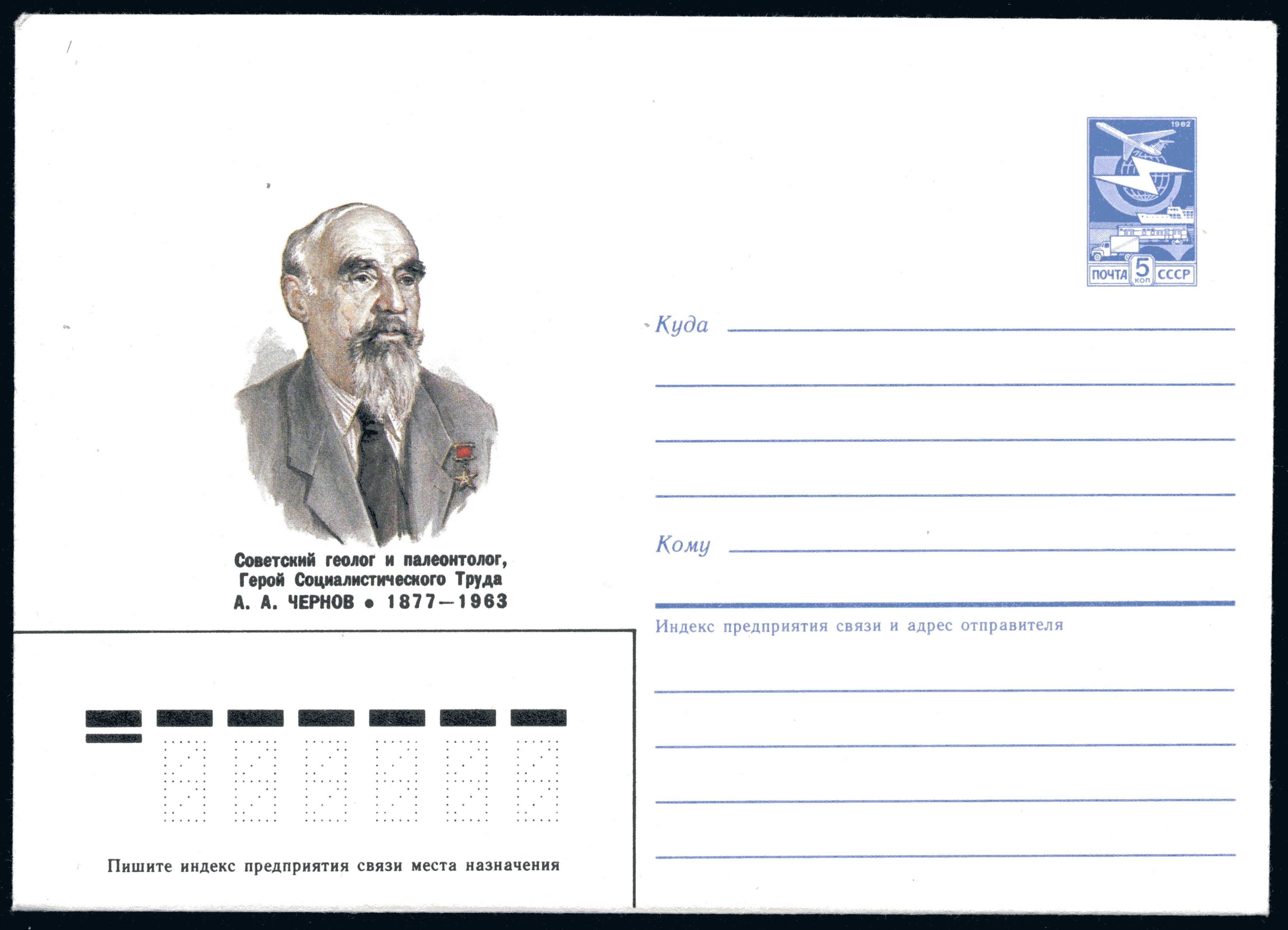 Soviet geologist and paleontologist.
Chernov's main works dealt with the geology and minerals of the Central and Northern
Urals, the Pai-khoi mountains, and the Pechora region.
Chernov provided theoretical substantiation for the existence of the Pechora Coal Basin
and studied the structure of the Ukhta Oil-bearing Region.
He collected extensive paleontological material, which helped establish the
stratigraphy of the Paleozoic of the western slopes of the Northern Urals and of the Pai-khoi.
[R14]
Soviet geologist and paleontologist.
Chernov's main works dealt with the geology and minerals of the Central and Northern
Urals, the Pai-khoi mountains, and the Pechora region.
Chernov provided theoretical substantiation for the existence of the Pechora Coal Basin
and studied the structure of the Ukhta Oil-bearing Region.
He collected extensive paleontological material, which helped establish the
stratigraphy of the Paleozoic of the western slopes of the Northern Urals and of the Pai-khoi.
[R14]
Grigore Cobilcescu (1831 -1892 )
 was a Romanian geologist and paleontologist, member of the Romanian Academy in 1886. It was the
first professor of geology and mineralogy at the University of Iasi. He
developed the first Romanian book on geology, "Limestone from fast"
(1862), which agrees catastrophic idealistic about
the origin of animals. After known Darwinism, Cobalcescu returned on
his own and has become one of the most ardent supporters of this view
in Romania this way and directing his students: N. Leon, Gr Antipa, D.
Voinova E. Racovita He
did research stratigraphy, petrography and paleontology, especially on
the Eastern Carpathians. The results of studies are included in the
work accestor "Studies on the geology and paleontology of Tertiary
realms of some parts of the Eastern Carpathians Geological
RomnieiCercetarile gave him the opportunity to deal with oil deposits
in the region, saying inorganic origin oil.
[R15]
was a Romanian geologist and paleontologist, member of the Romanian Academy in 1886. It was the
first professor of geology and mineralogy at the University of Iasi. He
developed the first Romanian book on geology, "Limestone from fast"
(1862), which agrees catastrophic idealistic about
the origin of animals. After known Darwinism, Cobalcescu returned on
his own and has become one of the most ardent supporters of this view
in Romania this way and directing his students: N. Leon, Gr Antipa, D.
Voinova E. Racovita He
did research stratigraphy, petrography and paleontology, especially on
the Eastern Carpathians. The results of studies are included in the
work accestor "Studies on the geology and paleontology of Tertiary
realms of some parts of the Eastern Carpathians Geological
RomnieiCercetarile gave him the opportunity to deal with oil deposits
in the region, saying inorganic origin oil.
[R15]
Thomas Condon (1822-1907) USA
was an Irish Congregational minister, geologist, and paleontologist who
gained recognition for his work in the U.S. state of Oregon.
Condon arrived in New York from Ireland in 1833 and graduated from
theological seminary in 1852, after which he traveled to Oregon by ship. As a
minister at The Dalles, he became interested in the fossils he found in
the area. He found fossil seashells on the Crooked River and fossil
camels and other animals along the John Day River. Many of his
discoveries were in the present-day John Day Fossil Beds National
Monument. He corresponded with noted scientists, including Spencer
Baird of the Smithsonian, Edward Cope of the Academy of Natural
Sciences, Joseph Leidy, O.C. Marsh, and John C. Merriam,
and provided specimens to major museums.
[R16]
Edward Drinker Cope (1840-1897)
was an American paleontologist and
comparative anatomist, as well as a noted herpetologist and
ichthyologist. Cope had little formal scientific training, and he
eschewed a teaching position for field work. He made regular trips to the American West prospecting
in the 1870s and 1880s, often as a member of United States Geological
Survey teams. A personal feud between Cope and paleontologist Othniel
Charles Marsh led to a period of intense fossil-finding competition now
known as the Bone Wars. Cope's financial fortunes soured after failed
mining ventures in the 1880s, forcing him to sell off much of his
fossil collection. Though Cope's
scientific pursuits nearly bankrupted him, his contributions helped to
define the field of American paleontology. He was a prodigious writer,
with 1,400 papers published over his lifetime, although his rivals
would debate the accuracy of his rapidly published works. He
discovered, described, and named more than 1,000 vertebrate species
including hundreds of fishes and dozens of dinosaurs. His proposals on
the origin of mammalian molars and for the gradual enlargement of
mammalian species over geologic time ("Cope's rule") are
notable among his theoretical contributions.
[R17]
Georges Cuvier (1769-1852) Jean Lopold Nicolas Frdric Cuvier (August 23, 1769 May 13, 1832), known as Georges Cuvier, was a French naturalist and zoologist.
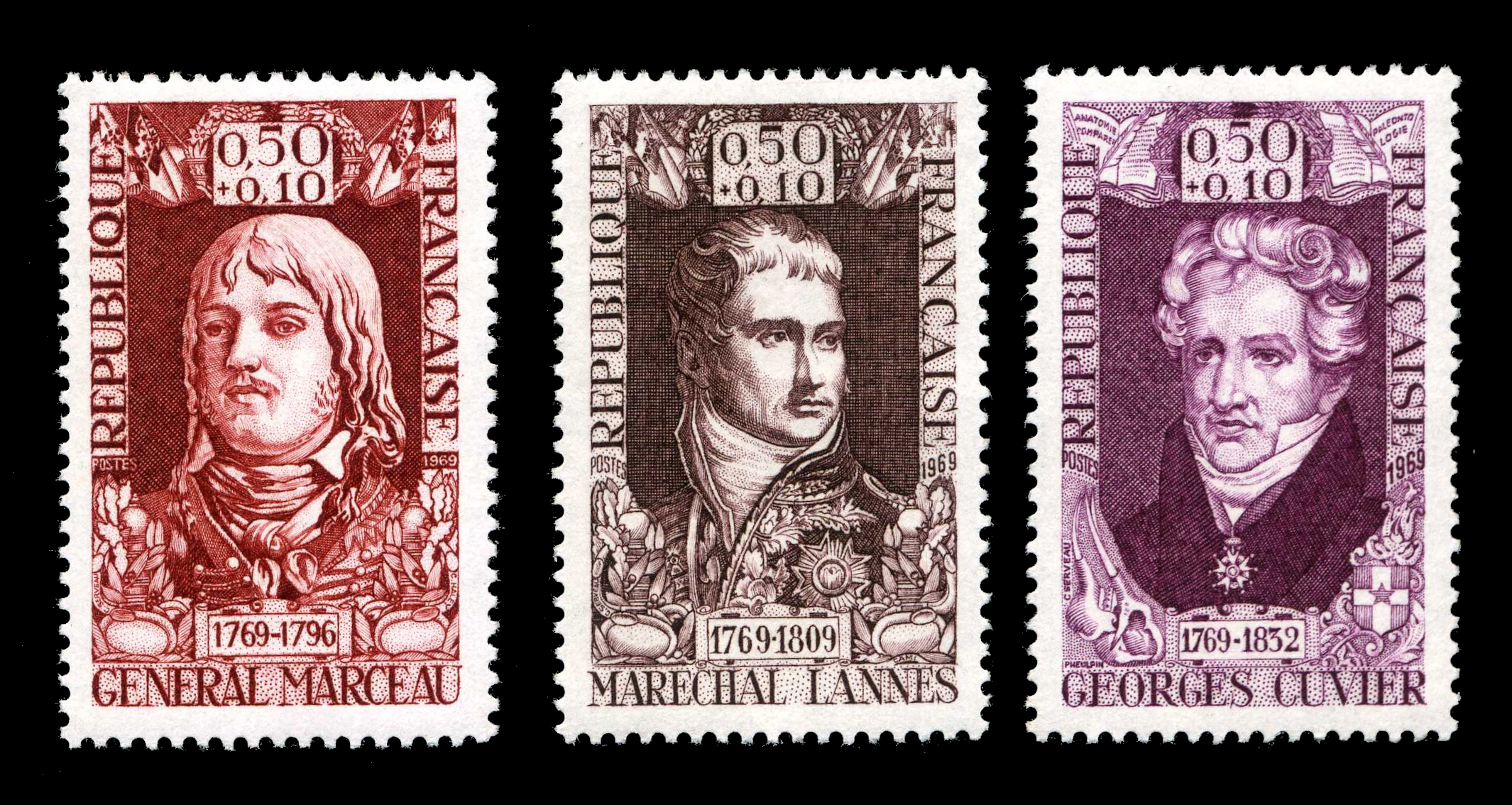
 Cuvier was a major figure in natural sciences research in the early 19th century, and was
instrumental in establishing the fields of comparative anatomy and paleontology through
his work in comparing living animals with fossils. He is well known for
establishing extinction as a fact, being the most influential proponent
of catastrophism in geology in the early 19th century, and opposing the
evolutionary theories of Lamarck and Geoffroy Saint-Hilaire. His most
famous work is the Le Rgne Animal (1817; English: The Animal Kingdom).
In 1819, he was created a peer for the life in honor of his scientific
contributions. Thereafter he was known as Baron Cuvier. He died in
Paris of cholera. In 1800, Cuvier was the first to
correctly identify in print, working only from a drawing, a fossil
found in Bavaria as a small flying reptile, which he named the
Ptero-Dactyle in 1809 (later Latinized as Pterodactylus antiquus)--the
first known member of the diverse order of pterosaurs. In 1808 Cuvier
identified a fossil-found in Maastricht as giant marine lizard, which
he named Mosasaurus, the first known mosasaur. Cuvier speculated that
there had been a time when reptiles rather than mammals had been
theMary Leakey
dominant fauna. This speculation was confirmed over the next two
decades by a series of spectacular finds, mostly by English geologists
and fossil collectors such as Mary Anning, William Conybeare, William
Buckland, and Gideon Mantell, who found and described the first
ichthyosaurs, plesiosaurs, and dinosaurs.
[R18]
Cuvier was a major figure in natural sciences research in the early 19th century, and was
instrumental in establishing the fields of comparative anatomy and paleontology through
his work in comparing living animals with fossils. He is well known for
establishing extinction as a fact, being the most influential proponent
of catastrophism in geology in the early 19th century, and opposing the
evolutionary theories of Lamarck and Geoffroy Saint-Hilaire. His most
famous work is the Le Rgne Animal (1817; English: The Animal Kingdom).
In 1819, he was created a peer for the life in honor of his scientific
contributions. Thereafter he was known as Baron Cuvier. He died in
Paris of cholera. In 1800, Cuvier was the first to
correctly identify in print, working only from a drawing, a fossil
found in Bavaria as a small flying reptile, which he named the
Ptero-Dactyle in 1809 (later Latinized as Pterodactylus antiquus)--the
first known member of the diverse order of pterosaurs. In 1808 Cuvier
identified a fossil-found in Maastricht as giant marine lizard, which
he named Mosasaurus, the first known mosasaur. Cuvier speculated that
there had been a time when reptiles rather than mammals had been
theMary Leakey
dominant fauna. This speculation was confirmed over the next two
decades by a series of spectacular finds, mostly by English geologists
and fossil collectors such as Mary Anning, William Conybeare, William
Buckland, and Gideon Mantell, who found and described the first
ichthyosaurs, plesiosaurs, and dinosaurs.
[R18]
Aleksander Piotr Czekanowski (12 February 1833 – 30 October 1876) was a Polish geologist, paleontologist and explorer of Siberia. Aleksander Czekanowski was born on 12 February 1833 in Krzemieniec, Volhynia.
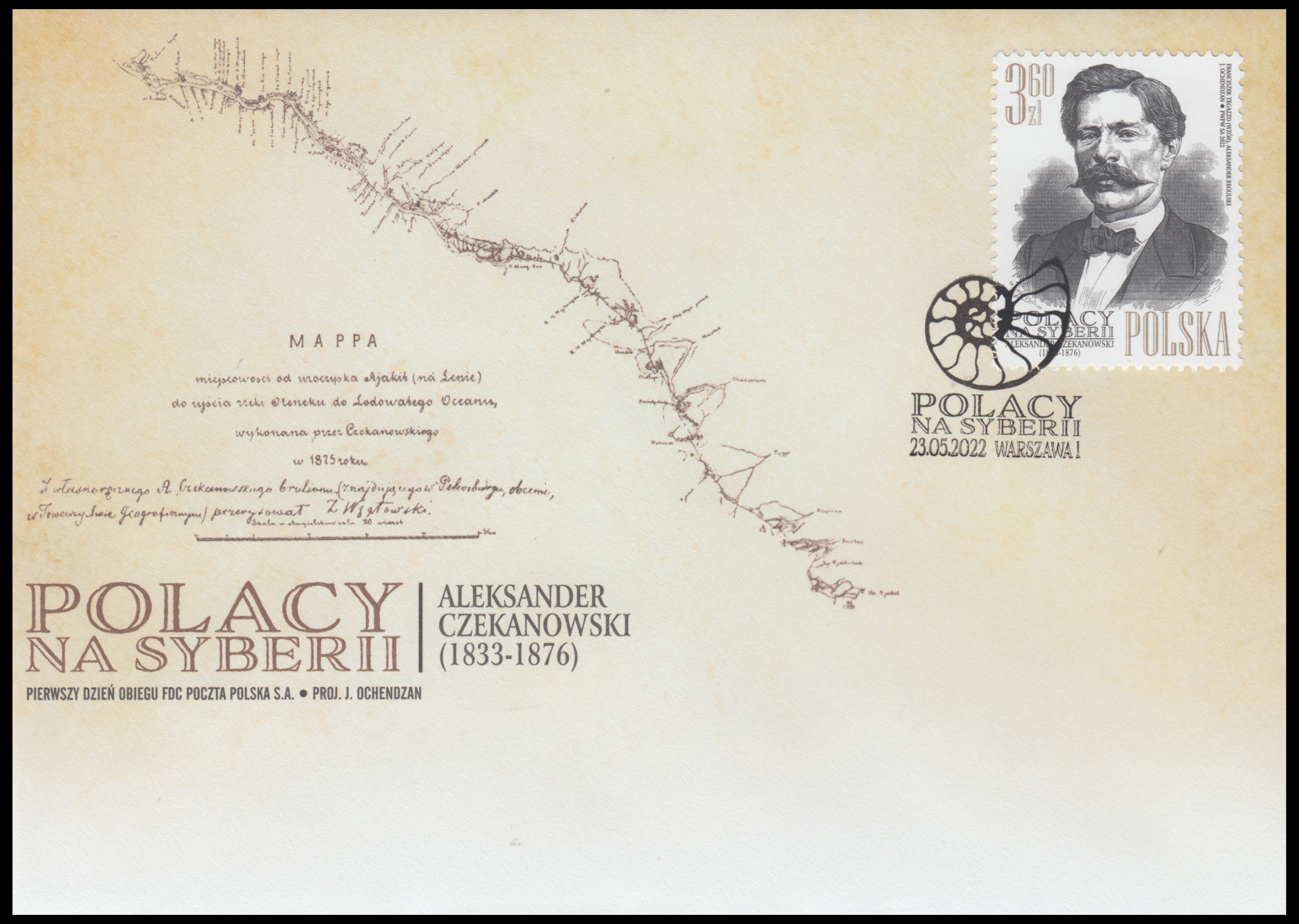
|
| Aleksander Piotr Czekanowski on stamp of Poland 2022, MiNr.:, Scott: . |
In 1850 Aleksander began studying medicine at the Faculty of Medicine in Kiev. After receiving a doctor's diploma in 1855 but without a taste for medicine, the 25-year-old Czekanowski moved to Dorpat University in Tartu (nowadays city in Estonia) to study mineralogy.
In 1857 owing to financial difficulties, he returned to Kiev without completing his studies. During the next five years he worked for an electrical engineering firm, Siemens and Halski, which was building a telegraph line to India.
The work involved frequent trips which gave him the opportunity to conduct scientific research. In addition to his main work, he also systematised the paleontological collections of the University of Kiev.
During his studies in Kiev and Tartu and his later period of employment, Czekanowski carried out studies in the natural sciences, collecting geological and paleontological materials, including rich paleontological material from the Baltic Paleozoic and organized the mineralogical collections of the university.
In Podolia (a historic region in Eastern Europe, located in the west-central and south-western parts of Ukraine and in northeastern Moldova), he collected rich collections of Silurian fossils.
The armored fish from these collections were later added to by the paleontologist Friedrich Schmidt.
In 1863, Czekanowski was arrested and sentenced to indefinite exile in Siberia with many other Polish and Lithuanian people who participated in the "January Uprising" (an insurrection principally in Russia's Kingdom of Poland aimed at the restoration of the Polish–Lithuanian Commonwealth. )
In 1868 Czekanowski entered into cooperation with the Russian Geographical Society, through the intervention of paleontologist Friedrich Schmidt.
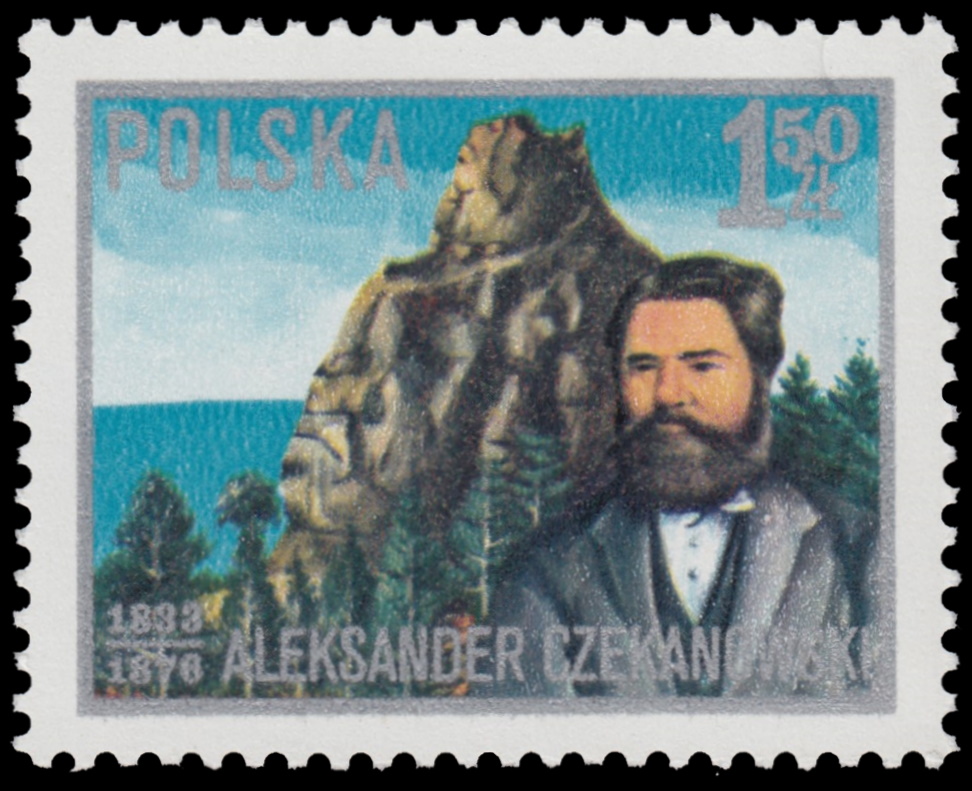
|
| Aleksander Piotr Czekanowski on stamp of Poland 1976, MiNr.: 2460, Scott: 2174 |
From 1869 to 1875 Czekanowski made several expeditions to Eastern Siberia. He made surveys and maps of the areas investigated, and the observations and geological and Paleontological material collected during these expeditions provided a basis for knowledge of the vast region between Mongolia and the Arctic Ocean.
Large areas of surface lavas and of Paleozoic and Mesozoic rocks were discovered and investigated. Certain stratigraphic problems were solved, including the assignment of the Siberian coal measures to the Jurassic and not, as had formerly been believed, to the Carboniferous.
The rich paleontological, zoological, and botanical collections assembled were found to contain many forms new to science. The material from these collections was later elaborated upon by the several international scholars.
Published in 1872, his monograph on the Irkutsk province (Eastern Siberia) was awarded a gold medal, and the collections collected in Ust-Baley formed the basis of the famous work on the Jurassic flora, written by Professor Geer of the University of Zurich.
In 1875, after twelve years of exile, Czekanowski was permitted to leave Siberia. In March 1876 he arrived in St. Petersburg, where he obtained the post of custodian in the Mineralogical Museum of the Academy of Sciences.
In connection with work on paleontological material collected in Siberia, he traveled during the summer of that year to Stockholm to acquaint himself with fossils from Spitzbergen.
After returning to St. Petersburg on 30 September 1876, he committed suicide while in a state of depression.
Czekanowski’s work brought him a series of distinctions and awards, such as gold medals from the Russian Geographical Society for geological studies in Irkutsk province, and from the International Geographical Congress in Paris for the maps of Eastern Siberia.
Several genera and numerous species of plant and animal fossils, as well as four present–day plants, are named after him.
A mountain range, about 320 kilometers in length, near the Lower Glensk, as well as one of the peaks of the Chamar Daban range near Lake Baikal also bear his name. [R48]
Known Philatelic items:
- commemorative stamp "100 years since death of Aleksander Piotr Czekanowski" of Poland 1976 (see above), MiNr.: 2460, Scott: 2174.
- commemorative stamp "Poles in Siberia - Aleksander Czekanowski" of Poland 2022 (see above), MiNr.:, Scott: .
Jan Czerski (1845-1892), was a paleontologist, osteologist, geologist, geographer and explorer of Siberia.
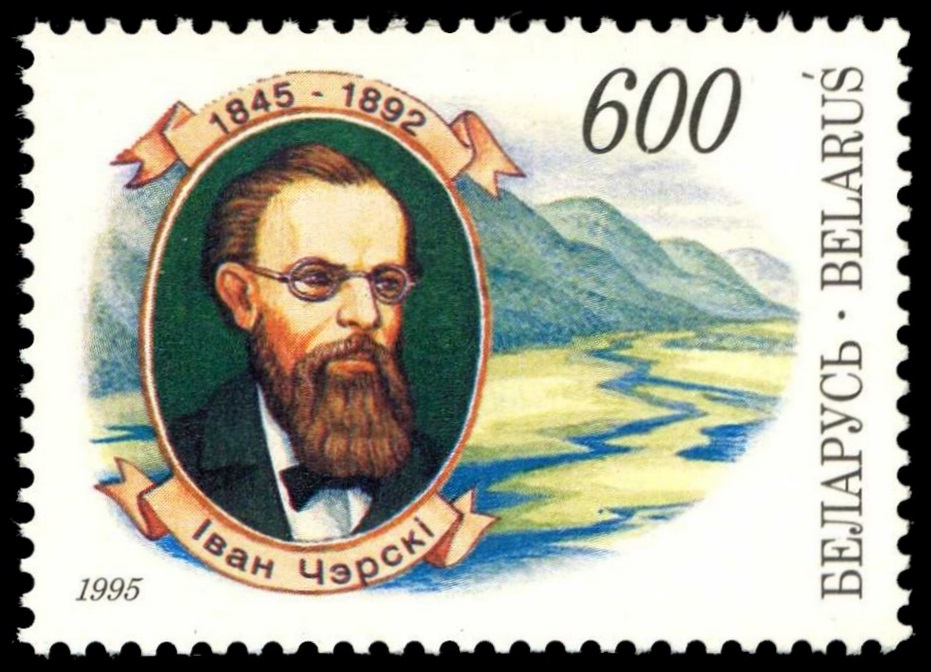
|
| Jan Czerski on stamp of Belarus 1995, MiNr.: 92, Scott: 113. |
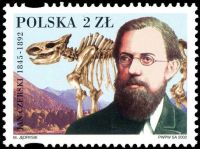
|
| Jan Czerski on stamp of Poland 2002, MiNr.: 3953, Scott: 3621. |
A self-taught scientist, he eventually received three gold medals from the Russian Geographical Society, and his name was given to a settlement, two mountain ranges, several peaks and other places.
He authored the first map of Lake Baikal and died during an expedition to Kolyma. During his expeditions he collected and cataloged over 2,500 ancient bones, publishing in 1888 a large work on Quaternary Period (from 2.588 ± 0.005 million years ago to the present) mammals followed by an even larger work on the Siberian mammals relics in 1891. [R19]
On one of the stamps Jan Cherski was depicted with fossil of fossilized skeleton of Coelodonta on the background.
Coelodonta (from the Greek "hollow tooth", in reference to the deep grooves of their molars) is an
extinct genus of wooly rhinoceros that lived in Eurasia between
3.7 million years to 10,000 years before the present, in the Pliocene and the Pleistocene epochs.
Known Philatelic items:
- commemorative stamp "150th anniversary of Jan Czerski" of Belarus 1995, MiNr.: 92, Scott: 113.
- commemorative stamp from the set "Poles in the World" of Poland 2002, MiNr.: 3953, Scott: 3621.
Carlos de Lattore (1856 - 1950)
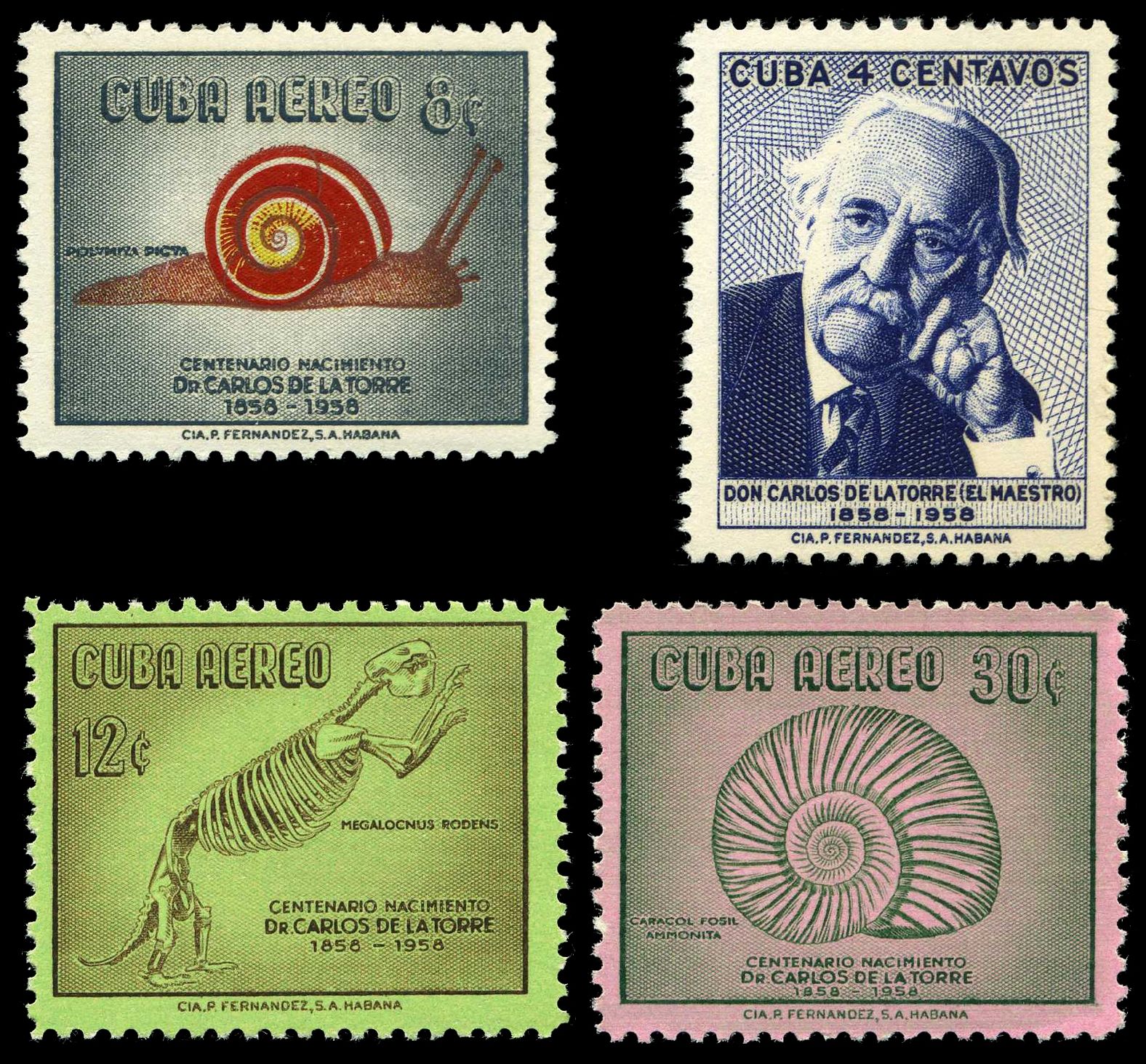
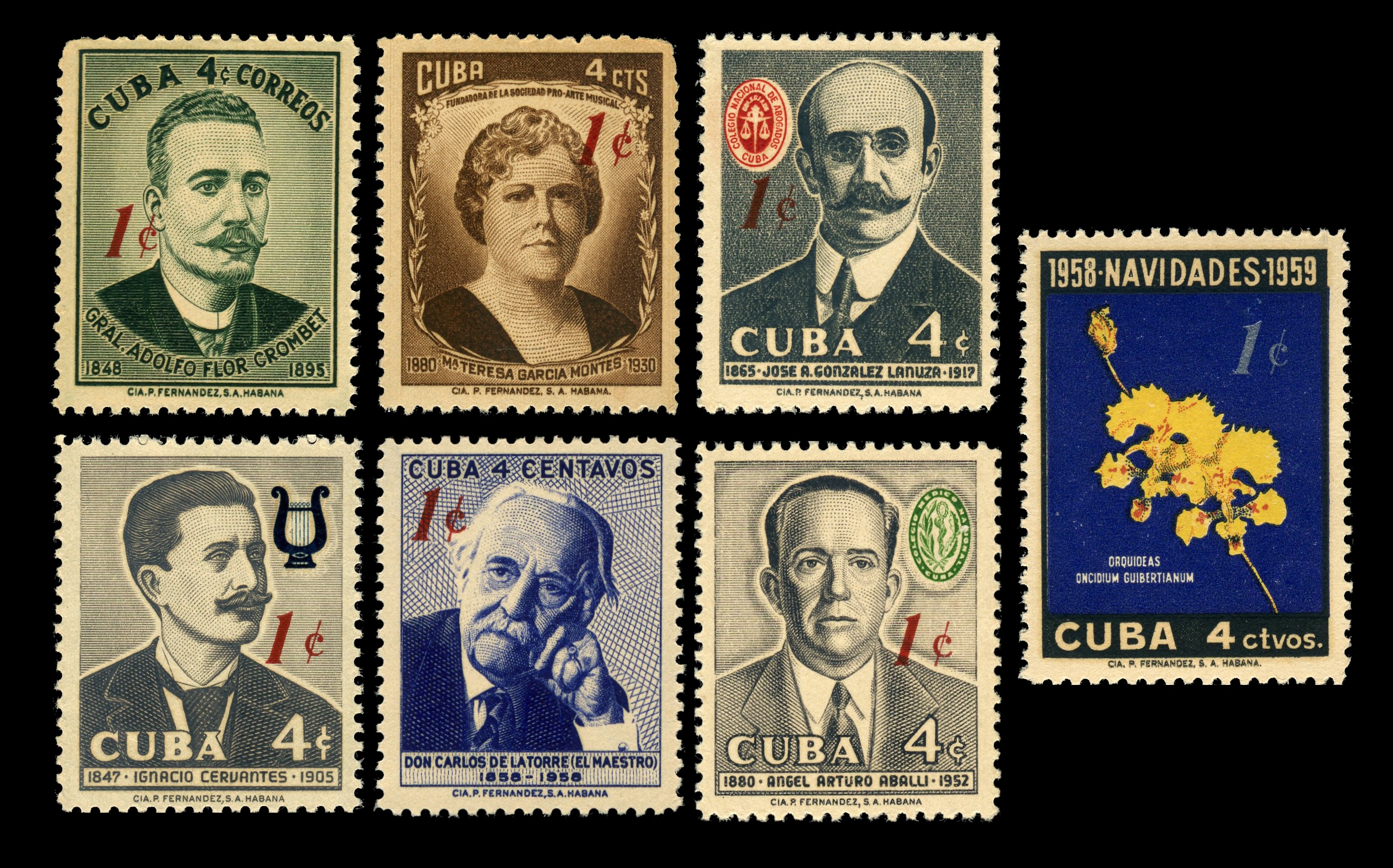 Carlos
de la Torre y la Huerta was the foremost Cuban naturalist of his era,
following in the footsteps of Felipe Poey. De la Torre was a naturalist
of the old school, with broad interests in natural history. He focused
his research on mollusks, both living and paleontological specimens. He
collaborated for many years with Paul Bartsch, curator of mollusks in
the United States National Museum and was a correspondent with many
Smithsonian staff, including Secretary Alexander Wetmore. He donated
many specimens to the U.S. National Museum during his long career.
De la Torre hosted many Smithsonian naturalists visiting Cuba and the
nearby Caribbean islands; indeed, a visit to de la Torre was the first
stop on the itinerary of any U.S. naturalist visiting Cuba. When the
Toms Barrera expedition arrived in Cuba, de la Torre joined the
group of American naturalists as they cruised the waters surrounding
the island to collect specimens. De la Torre was a leading figure in
the Academia de Ciencias Medicas, Fisicas y Naturales de la Habana.
[R20]
Carlos
de la Torre y la Huerta was the foremost Cuban naturalist of his era,
following in the footsteps of Felipe Poey. De la Torre was a naturalist
of the old school, with broad interests in natural history. He focused
his research on mollusks, both living and paleontological specimens. He
collaborated for many years with Paul Bartsch, curator of mollusks in
the United States National Museum and was a correspondent with many
Smithsonian staff, including Secretary Alexander Wetmore. He donated
many specimens to the U.S. National Museum during his long career.
De la Torre hosted many Smithsonian naturalists visiting Cuba and the
nearby Caribbean islands; indeed, a visit to de la Torre was the first
stop on the itinerary of any U.S. naturalist visiting Cuba. When the
Toms Barrera expedition arrived in Cuba, de la Torre joined the
group of American naturalists as they cruised the waters surrounding
the island to collect specimens. De la Torre was a leading figure in
the Academia de Ciencias Medicas, Fisicas y Naturales de la Habana.
[R20]
Ivan Antonovich Efremov/Yefremov (1907-1972)
 was a Soviet paleontologist, science fiction author and social thinker.
He
originated taphonomy, the study of fossilization patterns.
In 1924, due to the influence of academician Sushkin, he became
interested
in paleontology.
was a Soviet paleontologist, science fiction author and social thinker.
He
originated taphonomy, the study of fossilization patterns.
In 1924, due to the influence of academician Sushkin, he became
interested
in paleontology.
 Yefremov entered the Leningrad State
University but dropped out later. In mid-1930s, he took part in several
paleontological expeditions to the Volga region, the Urals, and Central
Asia. He headed
a research laboratory at the Institute of Paleontology.
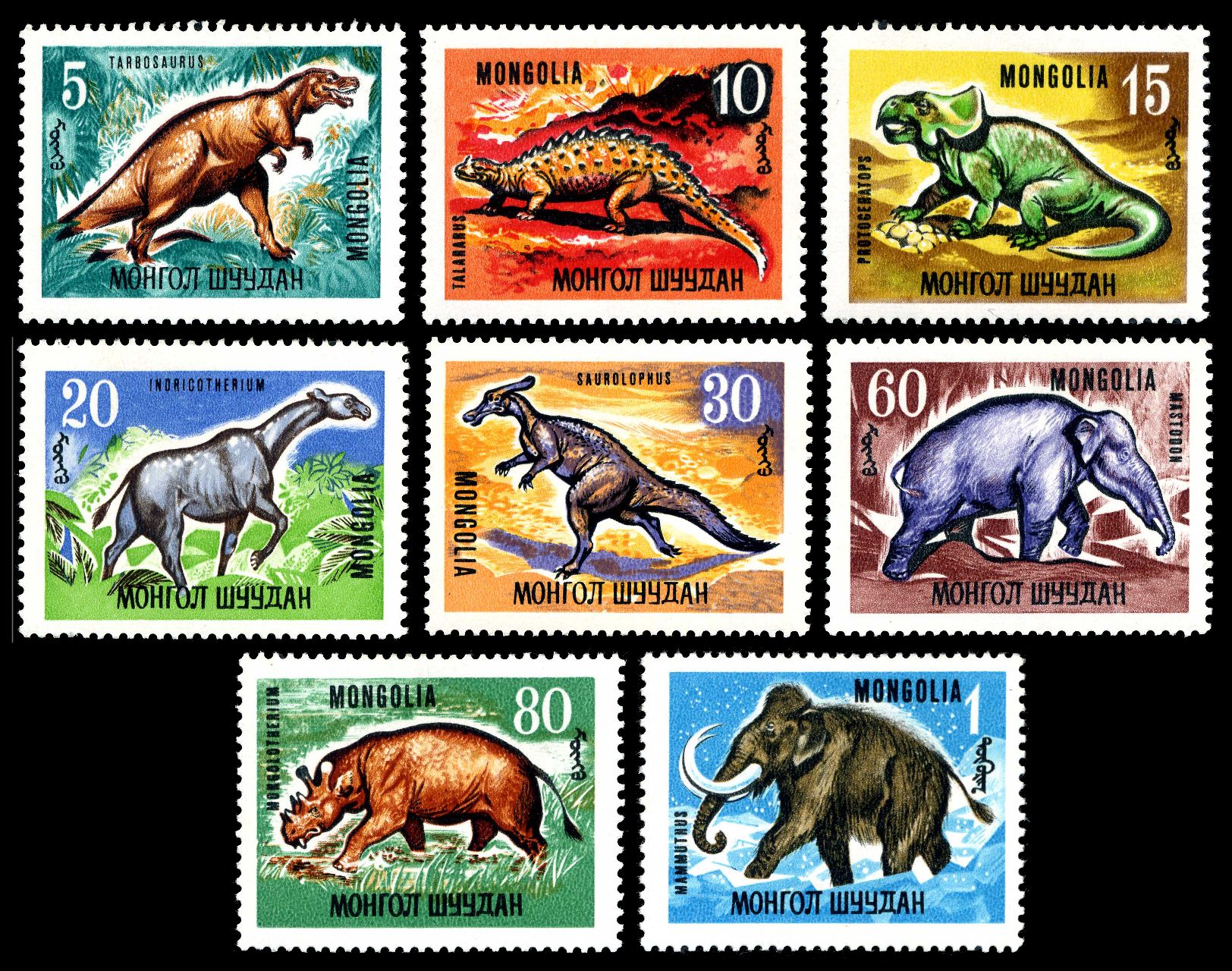
During some expedition to Gobi desert in Mongolia many fossil of
various
dinosuars are found by I.A. Efremov. One of Tabrosaurus species is
named after him: Tarbosaurus.efremovi (Tarbosaurus.efremovi,
on stamp of Mongoloia
1967 )
Yefremov entered the Leningrad State
University but dropped out later. In mid-1930s, he took part in several
paleontological expeditions to the Volga region, the Urals, and Central
Asia. He headed
a research laboratory at the Institute of Paleontology.
During some expedition to Gobi desert in Mongolia many fossil of
various
dinosuars are found by I.A. Efremov. One of Tabrosaurus species is
named after him: Tarbosaurus.efremovi (Tarbosaurus.efremovi,
on stamp of Mongoloia
1967 )In the 1940s, Efremov developed a new scientific field called taphonomy (study of decaying organisms over time and how they become fossilized (if they do).), for which he was awarded the Stalin prize in 1952. His book Taphonomy was published in 1950. He applied many taphonomic principles in his field work during a paleontological expedition to the Gobi desert in Mongolia. During these years, he was recognized as a successful scientist and won a state science award. [R21]
Edwin Harris Colbert (1905-2001)
was a distinguished American vertebrate paleontologist and prolific
researcher and author. Among the positions he held was Curator of
Vertebrate Paleontology at the American Museum of Natural History for 40 years, and Professor Emeritus
of Vertebrate Paleontogy at Columbia University. He was a protege of
Henry Fairfield Osborn, and a foremost authority on the Dinosauria. He
described dozens of new taxa and authored major systematic reviews,
including the discovery of more than a dozen complete skeletons of a
primitive small Triassic dinosaur, Coelophysis at Ghost Ranch, New Mexico, in 1947 (one
of the largest concentrations of dinosaur deposits ever recorded),
publication of their description, and a review of ceratopsian
phylogeny. In 1959, he headed an expedition to the Geopark of
Paleorrota (Brazil), within Llewellyn Ivor Price. His fieldwork
in Antarctica in 1969 helped solidify the acceptance of continental
drift, by finding a 220-million-year-old fossil of a Lystrosaurus. His
popularity and his text books on dinosaurs, paleontology, and
stratigraphy (with Marshall Kay) introduced a new generation of
scientists and amateur enthusiasts to the subject. He was the recipient
of numerous prizes and awards commemorating his many achievements in
the field of science.
He became curator of vertebrate paleontology at the Museum of Northern
Arizona in Flagstaff in 1970.
[R22]
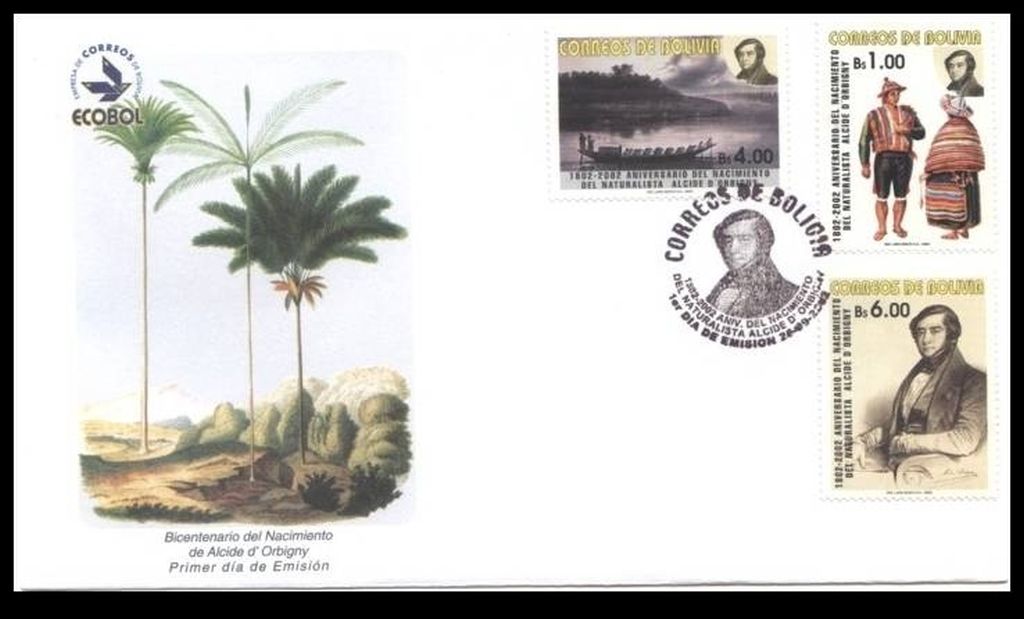
Alcide Charles Victor Marie Dessalines d'Orbigny (1802-1857)
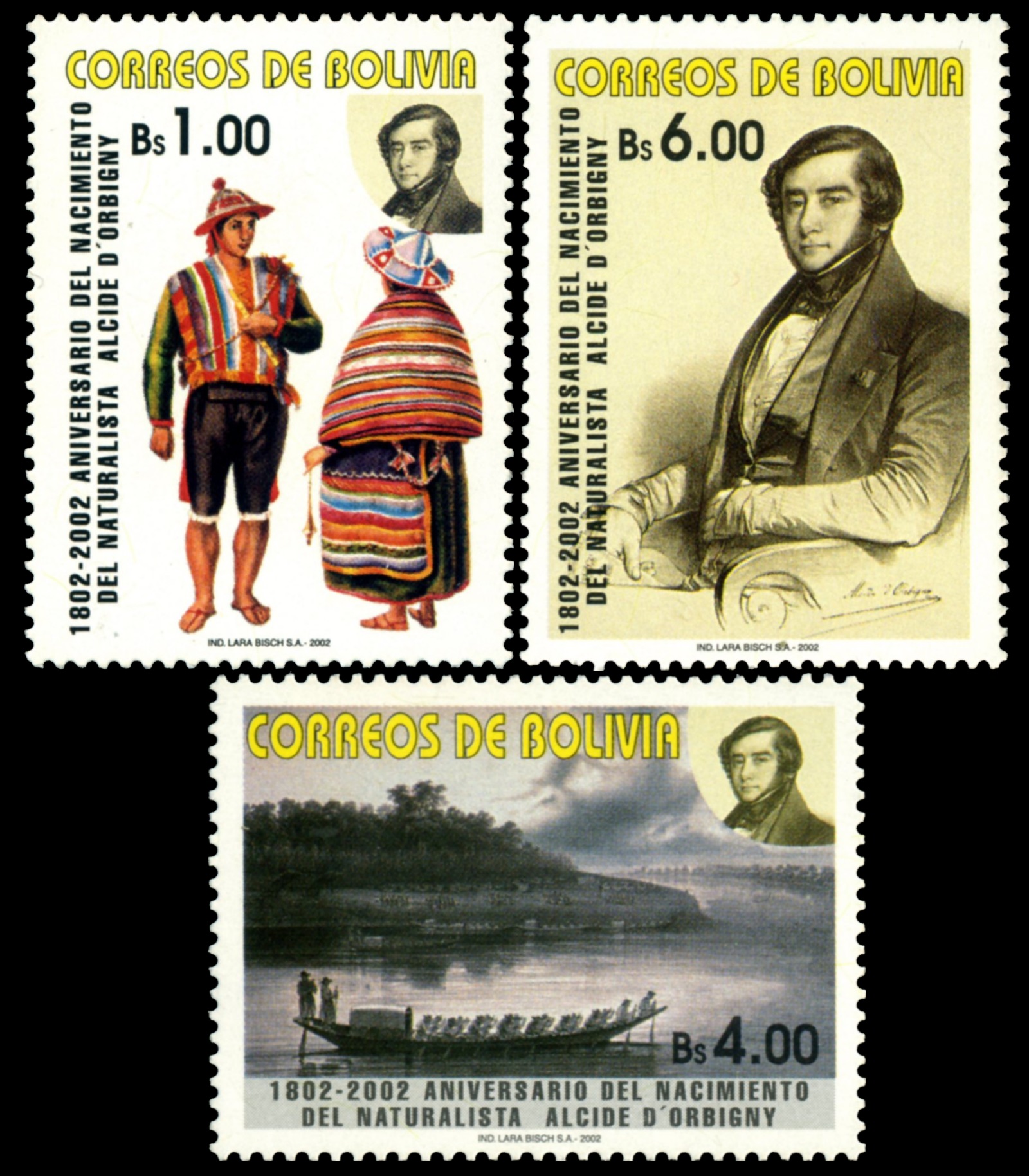 was a French naturalist who made major contributions in many areas,
including zoology (including malacology), palaeontology, geology, archaeology and
anthropology. D'Orbigny was born in Couron
(Loire-Atlantique), the son of a ship's physician and amateur
naturalist. The family moved to La Rochelle in 1820, where his interest
in natural history was developed while studying the marine fauna and
especially the microscopic creatures that he named "foraminiferans". In
Paris he became a disciple of the
geologist Pierre Louis Antoine Cordier (1777-1861) and Georges Cuvier.
All his life, he would follow the theory of Cuvier and stay opposed to
Lamarckism. In 1840, d'Orbigny started the
methodical description of French fossils and published La Palontologie
Franaise (8 vols). In 1849 he published a closely related Prodrome de
Palontologie Stratigraphique, intended as a "Preface to Stratigraphic
Palaeontology", in which he described almost 18,000 species, and with
biostratigraphical comparisons erected geological stages, the
definitions of which rest on their stratotypes.In
1853 he became professor of
palaeontology at the Paris Musum National d'Histoire Naturelle,
publishing his Cours lmentaire that related paleontology to zoology, as
a science independent of the uses made of it in stratigraphy. The chair
of paleontology was created especially in his honor. The dOrbigny
collection is housed in the Salle d'Orbigny and is often visited by
experts. He described as first the geological
timescales and defined numerous geological strata, still used today as
chronostratigraphic reference such as Toarcian, Callovian, Oxfordian,
Kimmeridgian, Aptian, Albian and Cenomanian.
[R23]
was a French naturalist who made major contributions in many areas,
including zoology (including malacology), palaeontology, geology, archaeology and
anthropology. D'Orbigny was born in Couron
(Loire-Atlantique), the son of a ship's physician and amateur
naturalist. The family moved to La Rochelle in 1820, where his interest
in natural history was developed while studying the marine fauna and
especially the microscopic creatures that he named "foraminiferans". In
Paris he became a disciple of the
geologist Pierre Louis Antoine Cordier (1777-1861) and Georges Cuvier.
All his life, he would follow the theory of Cuvier and stay opposed to
Lamarckism. In 1840, d'Orbigny started the
methodical description of French fossils and published La Palontologie
Franaise (8 vols). In 1849 he published a closely related Prodrome de
Palontologie Stratigraphique, intended as a "Preface to Stratigraphic
Palaeontology", in which he described almost 18,000 species, and with
biostratigraphical comparisons erected geological stages, the
definitions of which rest on their stratotypes.In
1853 he became professor of
palaeontology at the Paris Musum National d'Histoire Naturelle,
publishing his Cours lmentaire that related paleontology to zoology, as
a science independent of the uses made of it in stratigraphy. The chair
of paleontology was created especially in his honor. The dOrbigny
collection is housed in the Salle d'Orbigny and is often visited by
experts. He described as first the geological
timescales and defined numerous geological strata, still used today as
chronostratigraphic reference such as Toarcian, Callovian, Oxfordian,
Kimmeridgian, Aptian, Albian and Cenomanian.
[R23]
Known Philatelic items:
- commemorative stamps set and postmark of its FDC "Bicentenary of the birth of Naturalist Alcide d'Orbigny", Bolivia 2002, MiNr.: 1550-1552, Scott: 1198-200.
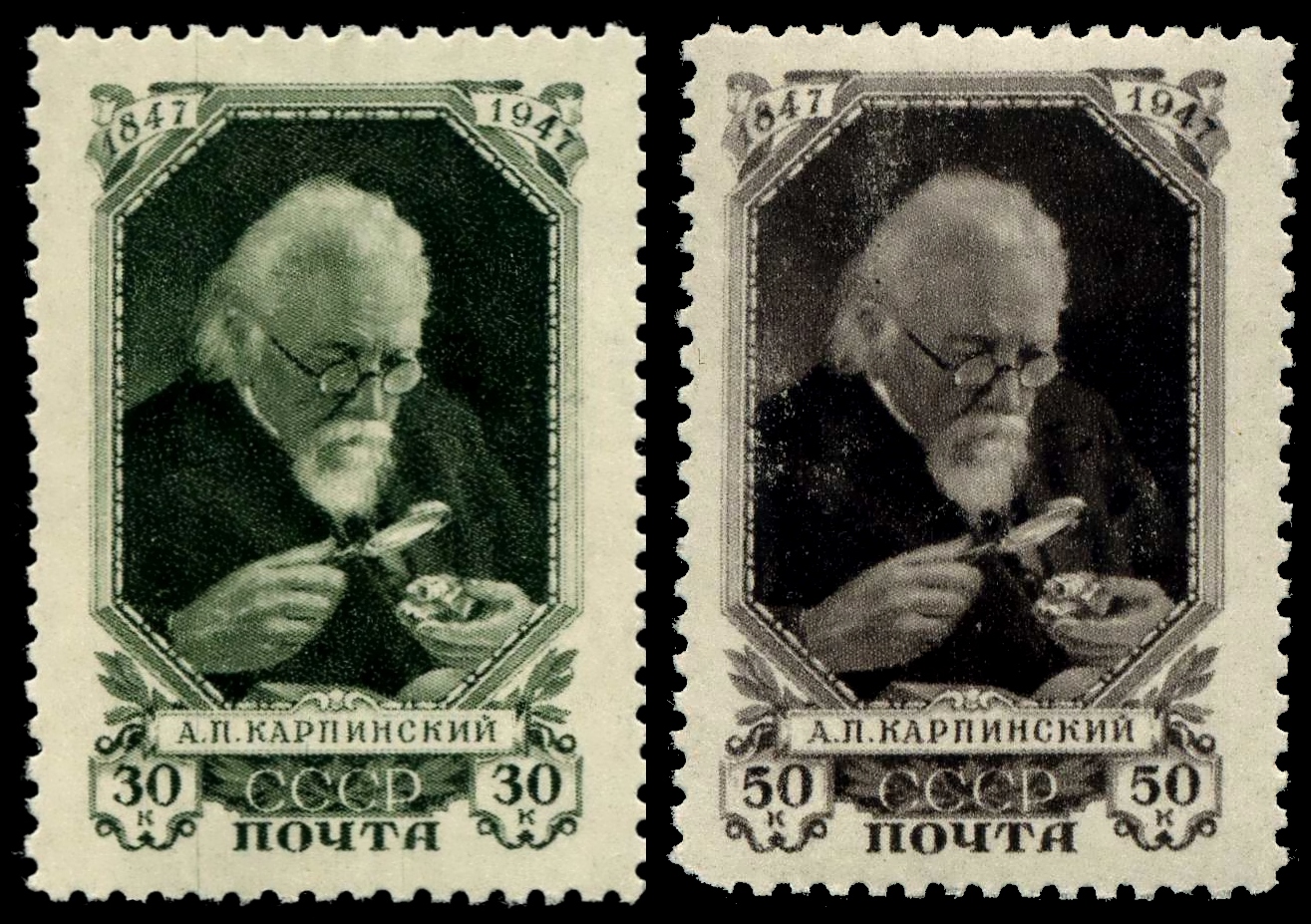 |
| Aleksandr Karpinskiy on stamp of USSR 1947 |
|
| Aleksandr Karpinskiy on stamp of USSR 1947 |
However, he was also a great geologist and paleontologist, who made some important discoveries in the Ural Mountains area of Russia.
The map as well as some minerals and fossils shown on the illustration of the cover. In 1899, for example, he described new bizarre species of prehistoric fishHelicoprion based on a fossil jaw found in limestones of the Ural Mountains. Helicoprion is a genus of extinct, shark-like eugeneodontid holocephalid fish, who had spirally arranged clusters of the individuals' teeth, called "tooth whorls"— the cartilaginous skull, spine, and other structural elements have not been preserved in the fossil record, leaving scientists to make educated guesses as to its anatomy and behaviour. Helicoprion lived in the oceans of the early Permian 290 million years ago, with species known from North America, Eastern Europe, Asia, and Australia.
The fossil fish genus Karpinskiprion and the disused fossil fish species Helicoprion karpinskii were named after him. [R24]
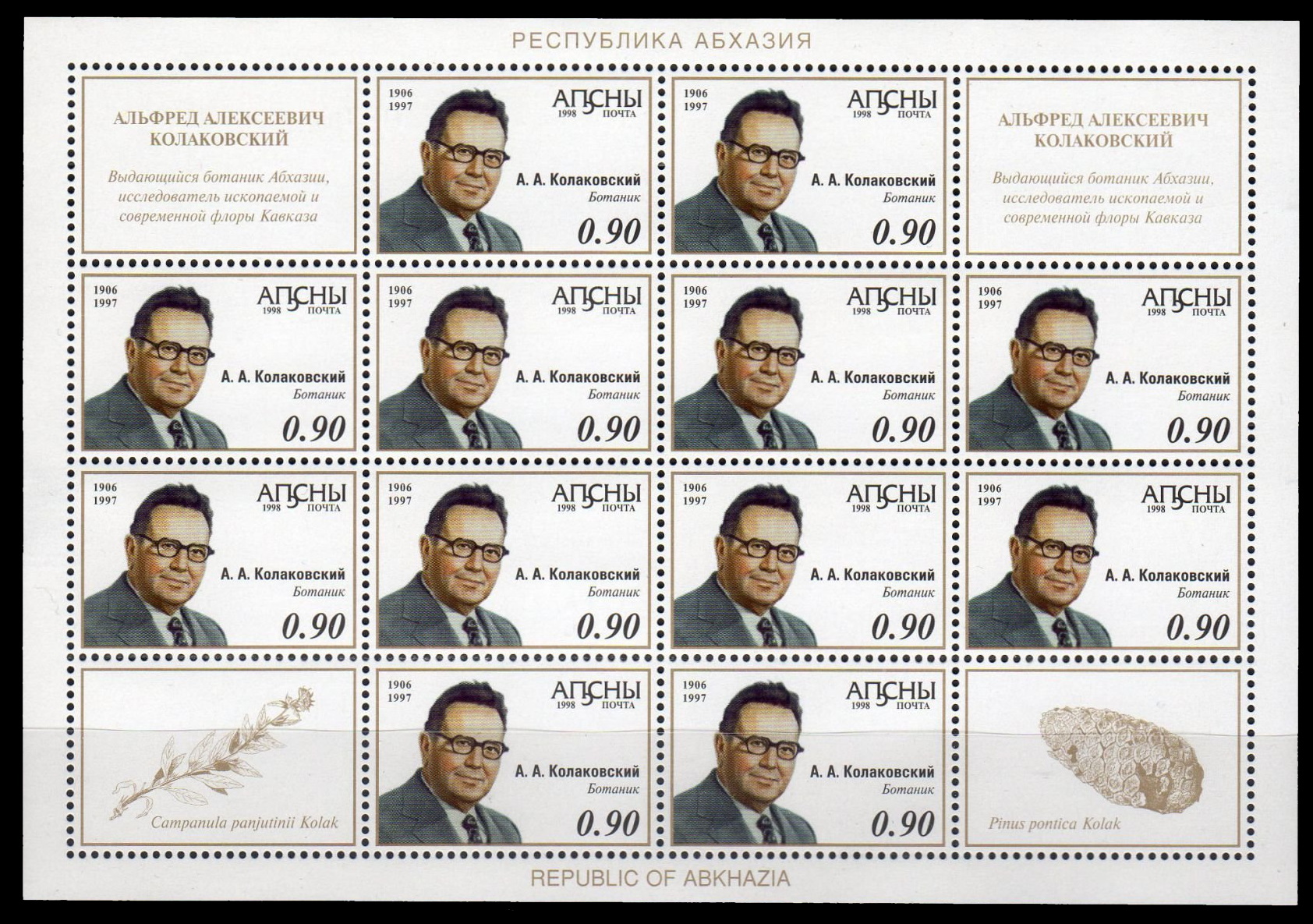
|
|
Alfred Alekseevich Kolakovsky on stamp of Abkhazia 1998 MiNr.: 281 |
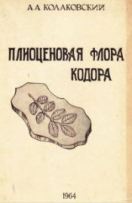
|
| The cover of "Pliocene Flora of the Kodori" book by Alfred Alekseevich Kolakovsky. |
In 1964 he published a book "Pliocene Flora of the Kodori". (Kodori valley is the valley around Kodori river - one of the two largest rivers of Abkhazia.)
The stamp was issued in a sheet of 16 with 4 tabs on the corners and exist as perforated and imperforated variations.Fossil of Pinus pontiac Kolak shown on a tab in the bottom right corner of the sheet. [R25]
Known philatelic items: commmemorative stamp of Abkhazia 1998.
Vladimir Onufreivich Kovalevsky (1784-1856)
 Russian paleontologist and supporter of Darwinism, husband of Sofia
Kowalewskaya first woman who was graduated as proffesor of mathematik
and teached stuidemts in University of Stockholm.
Russian paleontologist and supporter of Darwinism, husband of Sofia
Kowalewskaya first woman who was graduated as proffesor of mathematik
and teached stuidemts in University of Stockholm.
 Intrigued paleontology higher vertebrates, especially cloven-hoofed animals.
He was the one who assumed
horses are appeared first in Europe continent then migrate to
North America, then come back to Europe. Evidence of this theorie found
more then 100 years after his suicide due to some
trouble in private and commercial life in Grube
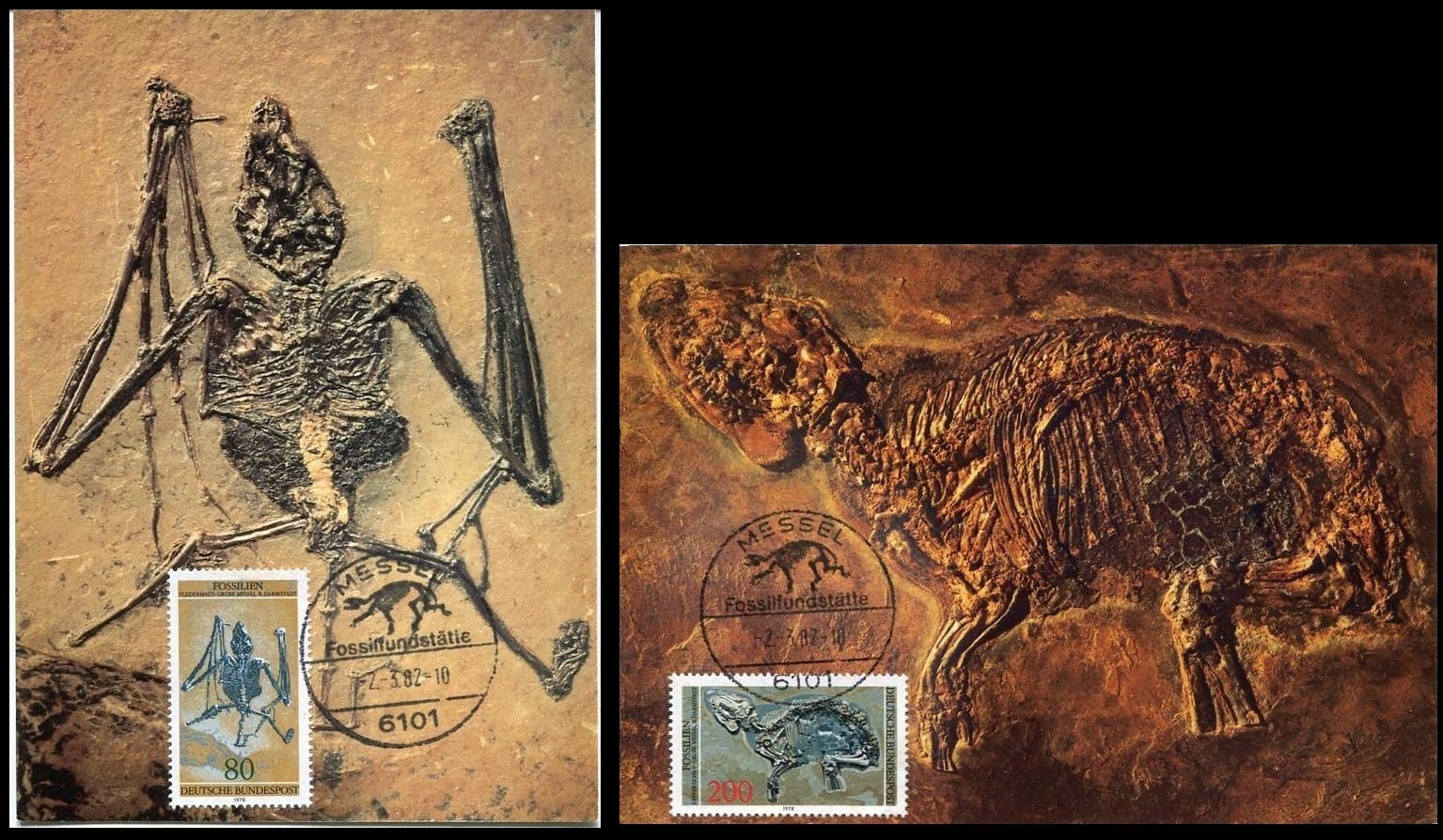
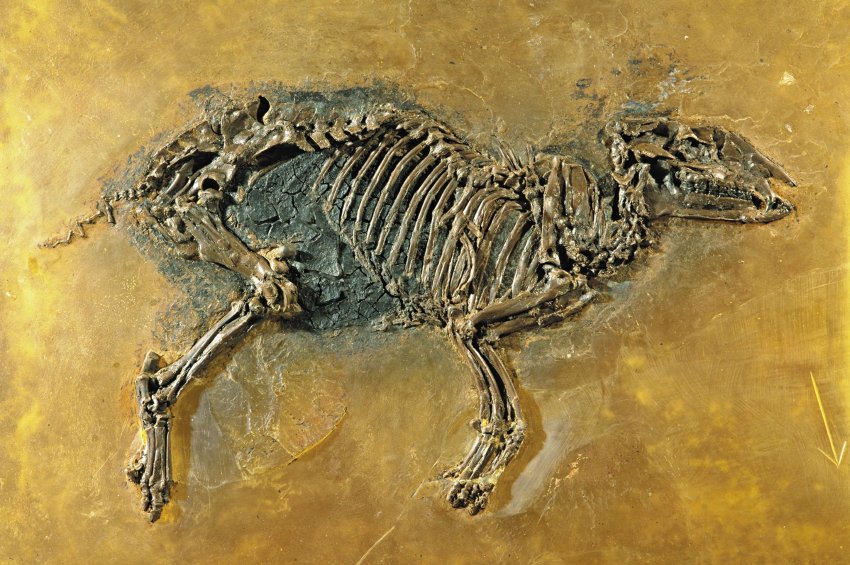
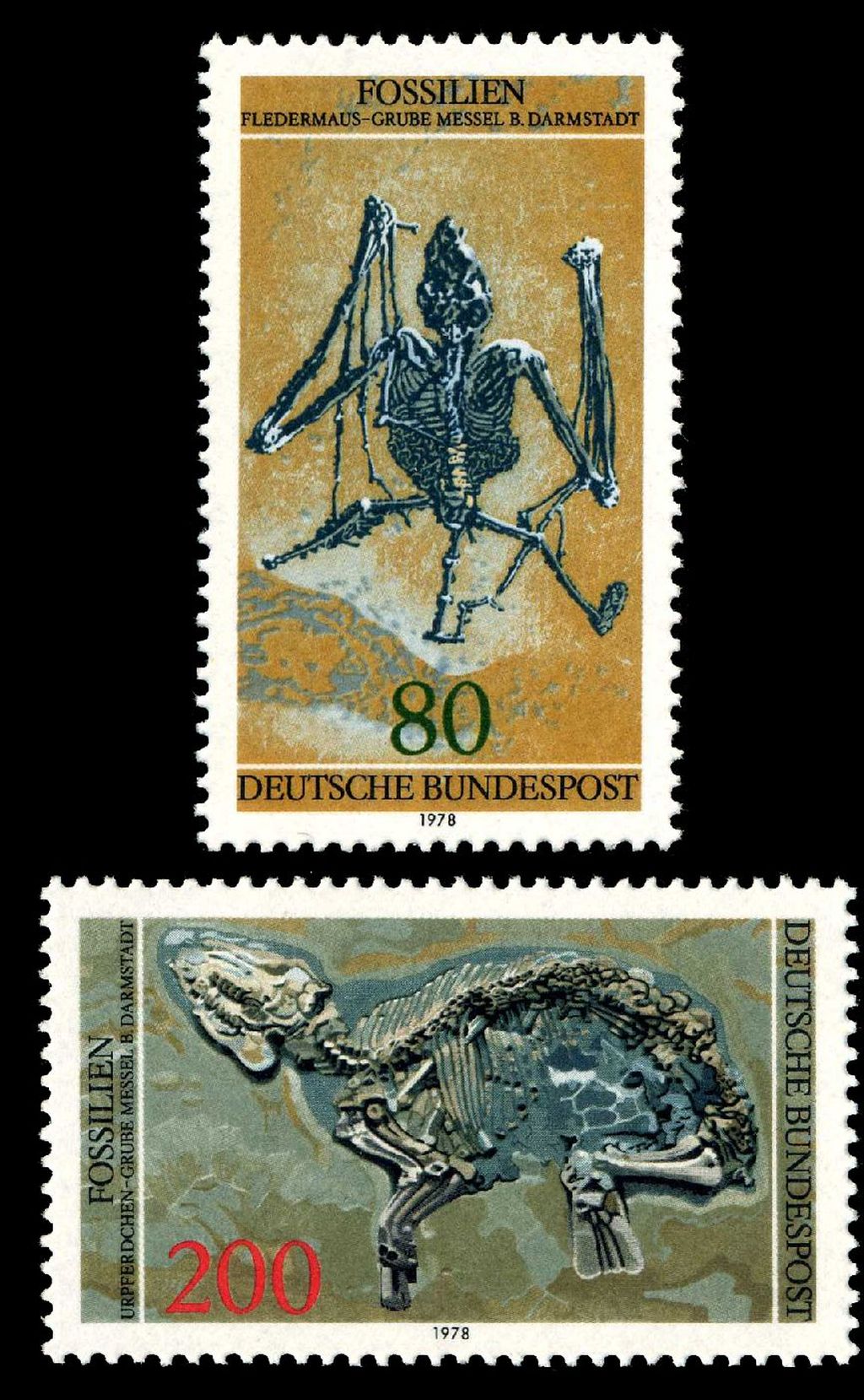
Messel by Darmstadt, Germany. Very little prehistoric
hourse in size of a big dog was found there and depicting on stamp of
BRD in
1978.
Intrigued paleontology higher vertebrates, especially cloven-hoofed animals.
He was the one who assumed
horses are appeared first in Europe continent then migrate to
North America, then come back to Europe. Evidence of this theorie found
more then 100 years after his suicide due to some
trouble in private and commercial life in Grube
Messel by Darmstadt, Germany. Very little prehistoric
hourse in size of a big dog was found there and depicting on stamp of
BRD in
1978.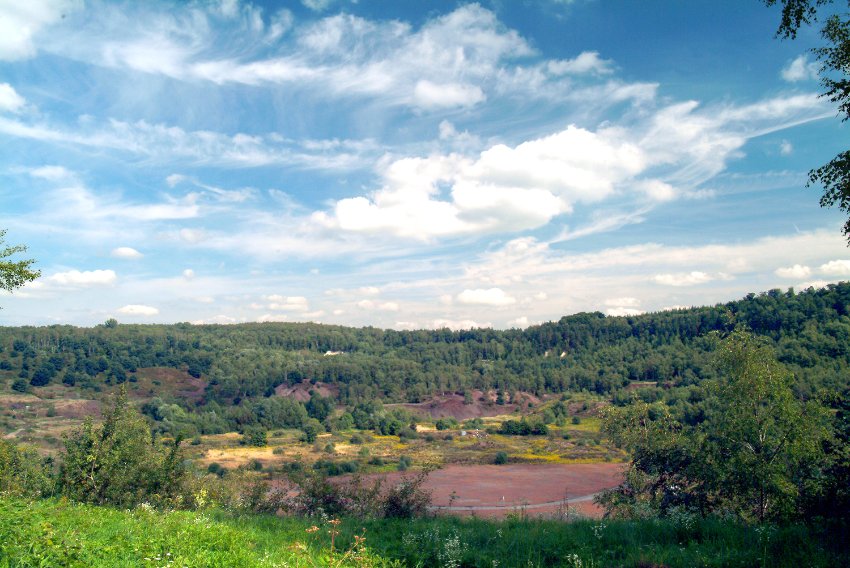
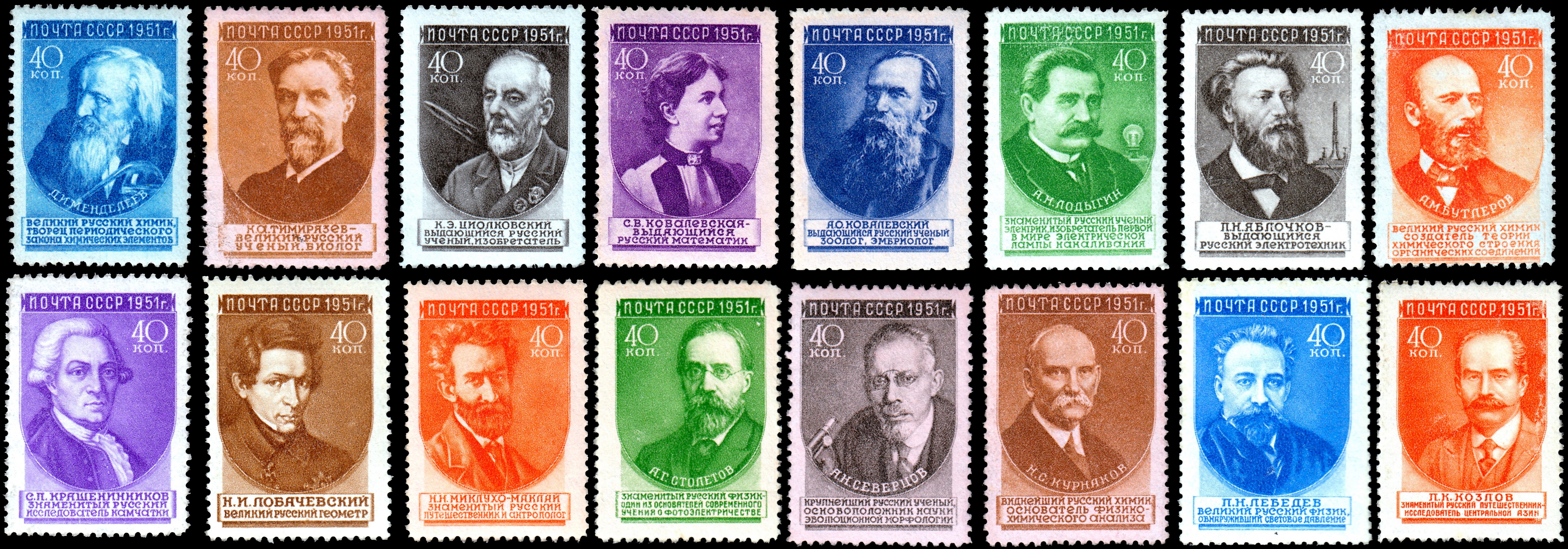
His older brother Aleksandr who also was zoologist and Darwinist depicting on great russian scientist set (third from left in the top row) issued by USSR in 1951 . His wife Sofia is also presents in the set (easy recognized as she is only a woman there - the first stamp in the second row from top). [R26]
Roman Kozlowski (1889 - 1977)
 Poland and the World Geology and Paleontology . Professor Roman
Kozlowski, an outstanding Polish scientist, Doctor of Paleontology, a member of the
Polish Academy of Sciences.
Born in Wloclawek, where he completed the High School of Commerce. He
studied in Switzerland and at Paris University under Professor's
M.Boule guidance. In 1913 he left for Bolivia receiving a position of
professor and director of Geological Sciences Department at the Mining
School in Oruro.
There he published eight papers dealing with natural resources of
Bolivia and
geology and paleontology of Devonian and Carboniferous, mainly with
brachiopods. In 1921 Professor Kozlowski returned to Europe. After
obtaining his PhD in Natural Sciences at Paris University, he was
appointed Head of the chair of Paleontology at the Polish Free
University and soon at the University of Warsaw, where he concentrated
all his creative activity on research. As a result he produced the
greatest monument of his life - a study on graptolites.
Poland and the World Geology and Paleontology . Professor Roman
Kozlowski, an outstanding Polish scientist, Doctor of Paleontology, a member of the
Polish Academy of Sciences.
Born in Wloclawek, where he completed the High School of Commerce. He
studied in Switzerland and at Paris University under Professor's
M.Boule guidance. In 1913 he left for Bolivia receiving a position of
professor and director of Geological Sciences Department at the Mining
School in Oruro.
There he published eight papers dealing with natural resources of
Bolivia and
geology and paleontology of Devonian and Carboniferous, mainly with
brachiopods. In 1921 Professor Kozlowski returned to Europe. After
obtaining his PhD in Natural Sciences at Paris University, he was
appointed Head of the chair of Paleontology at the Polish Free
University and soon at the University of Warsaw, where he concentrated
all his creative activity on research. As a result he produced the
greatest monument of his life - a study on graptolites.The specimens were collected in the Holy Cross Mountains. Graptolites very well preserved in chalcedone layers from the Cambrian/Ordovician boundary (Tremadocian). The belonged to the Dendroidea group. The specimens recovered by chemical treatment performed by the professor himself, were a revelation on the world's scale, as graptolites were formerly known only in a flattened form in slates. The three dimensional specimens made it possible to undertake specific anatomical studies. With his profound zoological background, Professor Kozlowski pointed out the inadequate systematic positions of graptolites, which he assigned to Hemichordata. Through his work he initiated a biological direction in paleontology. [R27]
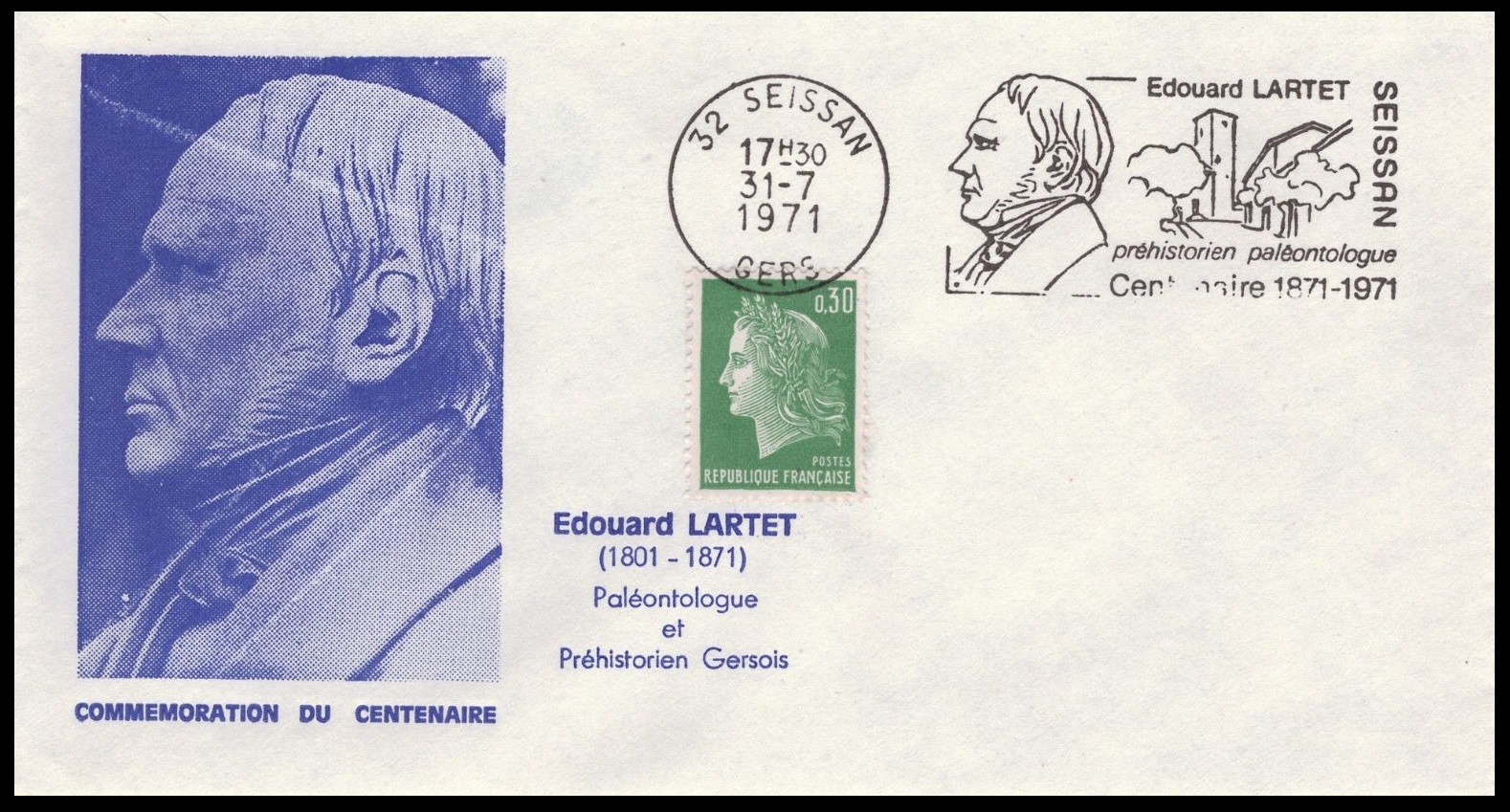
Edouard Lartet (15 April 1801 – 28 January 1871) was a French geologist archaeologist, and a principal founder of paleontology.
He is credited chiefly with discovering some of the earliest known examples of Paleolithic art and with establishing a date for the Upper Paleolithic Period of the Stone Age.
|
| Eduard Lartet on postmark of France "Centenary since death of Edouard LARTET" from 1971. |
In his paper he was apologetic for his lack of formal training in this relatively new field of research to which he quickly became devoted and changed the course of his life.
The importance of Lartet's discoveries at Sansan was acknowledged by the Minister of Public Instruction who granted him funding to continue excavating.
In December 1836, he found the jaw of a fossil ape that he named Protopithecus antiquus. Recognizing the significance of his find, he reported it to the Academie des Sciences in January 1837. Lartet continued working at Sansan, methodically sifting through huge quantities of silt and identifying 78 species many of which are still valid. The French state purchased the site in 1847 and the fossils were acquired for the Museum d’histoire naturelle in Paris.
Later on, Lartet began to devote himself to the excavation of cave and rockshelter sites where stone and osseous artefacts occurred in association with the remains of extinct animals.
In 1860, hearing of the discovery of human bones at a cave at Aurignac, and inspired by the work of William Pengelly, he turned his attention most fruitfully to the cave systems of the Dordogne.
His first publication on the subject, was followed in 1861. Since 1863 he had the encouragement (and financial support) of an English banker, Henry Christy, and the joint enterprise was soon rewarded.
Henry Christy (26 July 1810 – 4 May 1865) was an English banker and collector, who left his substantial collections to the British Museum.
Lartet found several reindeer antlers carved with the shapes of bears and deer in c aves at Aurignac and Massat. Then, in 1864, in a cave at La Madeleine, Lartet found a piece of a mammoth tusk, on which was engraved a beautiful outline of a wooly mammoth. Not only were these specimens important as being some of the first known examples of Paleolithic art, but the mammoth carving was a new kind of evidence for human antiquity, since whoever carved it was clearly living at a time when mammoths roamed the earth. The account of their joint researches appeared in a paper descriptive of the Dordogne caves and contents published in Revue archéologique (1864); and would eventually be published by Lartet and Christy under the title Reliquiae Aquitanicae, the first part appearing in 1865. Edouard Lartet was a founder of the emerging science of human palaeontology. He was appointed Professor at the Museum d'histoire naturelle in Paris in 1868, but ill health prevented him from giving any lectures during his short tenure. [R28]His son Louis (1840-1899) followed in his father's footsteps and excavated on his behalf at the rockshelter of Cro-Magnon in 1868 where burials of fully modern humans were found in association with stone tools, ornaments and faunal remains now known to be over 30,000 years old.
Known Philatelic items:
- postmark "Centenary since death of Edouard LARTET" of France 1971 (see above)
Peter Wilhelm Lund (1801 -1880) was a
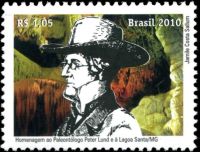
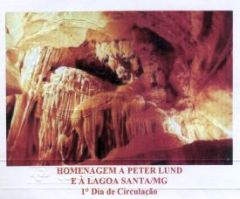 Danish paleontologist who came in Brazil for the firts time in 1833, to
continue his studies in botany and zoology.He settled in Rio de Janeiro, where
he made a thorough survey of all vegetation in the Baixada Fluminese
area, and also analyzed the behavior of ants. In
1835 he decided to settle in Lagoa Santa, in the state of Minas
Gerais, finding the perfect place to live and develop his work quitely.
In nine years of research he explored more than a hundred caves, and
found about 120 fossil species and 94 belonging to the current fauna.
He thus became the Father of Brazilian
Paleontology. These findings were of great importance for
the studies undertaken by British naturalist Cahrles Darwin on the
Theory of Evolution. In 1844, Lund ended his work in the
cave, and took a new direction in his research. In 1845, he sent his
magnificient collection to the University of Copenhagen in Denmark and
then devoted himself to botany. Currently this rich colection is at the
Zoological Museum in Copenhagen
[R29]
Danish paleontologist who came in Brazil for the firts time in 1833, to
continue his studies in botany and zoology.He settled in Rio de Janeiro, where
he made a thorough survey of all vegetation in the Baixada Fluminese
area, and also analyzed the behavior of ants. In
1835 he decided to settle in Lagoa Santa, in the state of Minas
Gerais, finding the perfect place to live and develop his work quitely.
In nine years of research he explored more than a hundred caves, and
found about 120 fossil species and 94 belonging to the current fauna.
He thus became the Father of Brazilian
Paleontology. These findings were of great importance for
the studies undertaken by British naturalist Cahrles Darwin on the
Theory of Evolution. In 1844, Lund ended his work in the
cave, and took a new direction in his research. In 1845, he sent his
magnificient collection to the University of Copenhagen in Denmark and
then devoted himself to botany. Currently this rich colection is at the
Zoological Museum in Copenhagen
[R29]
Mirko Malez (1924 - 1990)
 |
| Mirko Malez on postmark of Croatia 2024 |
Malez was renowned for his extensive research on fossil mammals from the Pleistocene Epoch, focusing on their taxonomy, migrations, and paleogeography. His work significantly contributed to the understanding of prehistoric life in the region. In Romualdova cave between 1961 and 1962, Malez found the bones of Pleistocene animals, including the cave bear, cave lion, leopard, cave hyena, wild horse, big deer, snow hare, and more. Notably, four species have been named in his honor: Dalmatichthys malezi, Ilyocypris malezi, Mimomys malezi, and Vaccinites malezi.
One of his most important discoveries were fossil remains of late Neanderthals from Vindija.
Malez's work helped establish Varazdin County as a notable area for Paleolithic research, often referred to as a "cradle of the Palaeolithic Age" due to his efforts in popularizing science.
Malez taught geology at the Faculty of Science and Mathematics in Zagreb for a number of years, he was also credited with the development of the Collection and Library of the Institute for Quaternary Palaeontology and Geology. Dr Malez was an honorary chairman, in a series of meetings "Krapina early man and hominid evolution", held on May, 31st 1969, in Zagreb to honour the 70th anniversary of the discovery of the Krapina man, primarily by the eminent Croatian geologist and paleontologist Dragutin Gorjanovic-Kramberger. He is the author of 430 scientific, professional and popular science papers.
Malez was also an associate professor at the Faculty of Science (Prirodoslovno-matematički Fakultet) at the University of Zagreb, the founder and President of the Speleological Association of Croatia. Malez was an honorary member of the Speleological Society of Croatia, the Croatian Geological Survey, the Croatian Natural History Society, the Croatian Anthropological Society and the Croatian Geographic Society. [R50]
Othniel Charles Marsh (1831 - 1899)
 was an American paleontologist. Marsh was one of the preeminent scientists
in the field; the discovery or description of dozens of news species
and theories on the origins of birds are among his legacies.Born
into a modest family, Marsh was able to afford higher education thanks
to the generosity of his wealthy uncle George Peabody. After graduating
from Yale College in 1860 he traveled the world studying anatomy,
mineralogy and geology. He obtained a teaching position at Yale upon
his return. From the 1870s to 1890s he competed with rival
paleontologist Edward Drinker Cope in a period of frenzied Western
American prospecting now known as the Bone Wars. Marsh and his many
fossil hunters were able to uncover about 500 new species
of fossil animals, which were all named later by Marsh himself. In May
1871, Marsh uncovered the first pterosaur fossils found in America. He
also found early horses, flying reptiles, the Cretaceous and Jurassic
dinosaurs; Apatosaurus and Allosaurus, and described the toothed birds
of the Cretaceous; Ichthyornis and Hesperornis. Marsh
is also known for the so-called "Bone Wars" waged against Edward
Drinker Cope. The two men were fiercely competitive, discovering and
documenting more than 120 new species of dinosaur between them. Marsh
eventually won the Bone Wars by finding 80 new species of dinosaur,
while Cope only found 56. Cope did not take this lightly, and the two
fought within scientific journals for many years to come, rumored to be
at the expense of recognized scientific method.
[R30]
was an American paleontologist. Marsh was one of the preeminent scientists
in the field; the discovery or description of dozens of news species
and theories on the origins of birds are among his legacies.Born
into a modest family, Marsh was able to afford higher education thanks
to the generosity of his wealthy uncle George Peabody. After graduating
from Yale College in 1860 he traveled the world studying anatomy,
mineralogy and geology. He obtained a teaching position at Yale upon
his return. From the 1870s to 1890s he competed with rival
paleontologist Edward Drinker Cope in a period of frenzied Western
American prospecting now known as the Bone Wars. Marsh and his many
fossil hunters were able to uncover about 500 new species
of fossil animals, which were all named later by Marsh himself. In May
1871, Marsh uncovered the first pterosaur fossils found in America. He
also found early horses, flying reptiles, the Cretaceous and Jurassic
dinosaurs; Apatosaurus and Allosaurus, and described the toothed birds
of the Cretaceous; Ichthyornis and Hesperornis. Marsh
is also known for the so-called "Bone Wars" waged against Edward
Drinker Cope. The two men were fiercely competitive, discovering and
documenting more than 120 new species of dinosaur between them. Marsh
eventually won the Bone Wars by finding 80 new species of dinosaur,
while Cope only found 56. Cope did not take this lightly, and the two
fought within scientific journals for many years to come, rumored to be
at the expense of recognized scientific method.
[R30]
Hermann von Meyer (1801-1869)
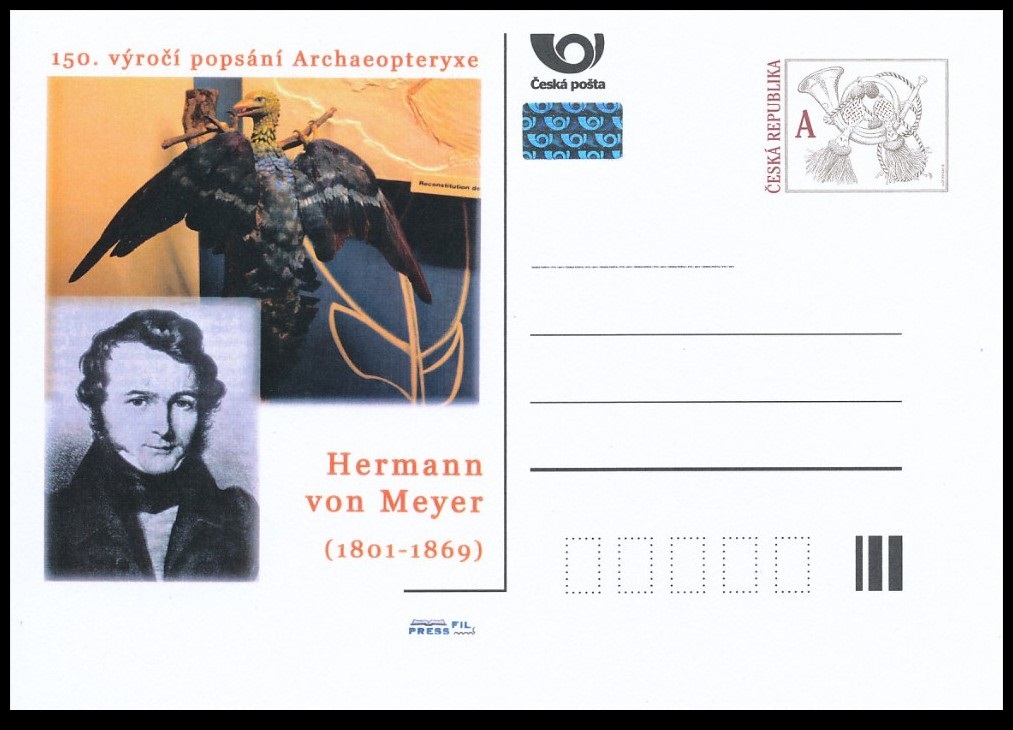 Christian Erich Hermann von Meyer (September 3, 1801 - April 2, 1869)
was a German palaeontologist.
Christian Erich Hermann von Meyer (September 3, 1801 - April 2, 1869)
was a German palaeontologist.He was born at Frankfurt am Main. In 1832 von Meyer issued a work entitled Palaeologica, and in course of time he published a series of memoirs on various fossil organic remains: molluscs, crustaceans, fishes and higher vertebrata, including the Triassic predator Teratosaurus, the earliest bird Archaeopteryx lithographica (1861), the pterosaur Rhamphorhynchus, and the prosauropod dinosaur Plateosaurus. In Palaeologica, von Meyer proposed a classification of fossil reptiles into four major groups based on their limbs. His more elaborate researches were those on the Carboniferous amphibia, the Permian reptiles, the Triassic amphibia and reptiles, and the reptiles of the Lithographic slates; and the results were embodied in his great work Zur Fauna der Vorwelt (18451860), profusely illustrated with plates drawn on stone by the author. He was associated with W Dunker and Karl Alfred von Zittel in the publication of the Palaeontographica, which began in 1851. He was awarded the Wollaston medal by the Geological Society of London in 1858. Today, von Meyer is probably best known for describing and naming the prosauropod dinosaur Plateosaurus engelhardti from Central Europe. [R31]
Francisco Pascacio Moreno (1852 - 1919 ) Argentina

 was a prominent explorer and academic in Argentina, where he is usually
referred to as Perito Moreno (perito means "specialist,
expert").Perito Moreno has been credited as one of the most influential
figures in the
Argentine incorporation of large parts of Patagonia Moreno
was born to Francisco and Juana Thwaites Madero in Buenos Aires. Raised
in
a traditional patrician family, he studied in local parochial schools.
He shared his spare time with his father searching for artifacts and
fossils, and at age 14, created a homemade museum of his extensive
collections. He was
director of the anthropological museum of Buenos Aires, chief of the
Argentine exploring commission of the southern territories, and member
of numerous European scientific societies.
[R32]
was a prominent explorer and academic in Argentina, where he is usually
referred to as Perito Moreno (perito means "specialist,
expert").Perito Moreno has been credited as one of the most influential
figures in the
Argentine incorporation of large parts of Patagonia Moreno
was born to Francisco and Juana Thwaites Madero in Buenos Aires. Raised
in
a traditional patrician family, he studied in local parochial schools.
He shared his spare time with his father searching for artifacts and
fossils, and at age 14, created a homemade museum of his extensive
collections. He was
director of the anthropological museum of Buenos Aires, chief of the
Argentine exploring commission of the southern territories, and member
of numerous European scientific societies.
[R32]
Dimitri Vasilievich Nalivkin (1889 - 1982) USSR
 was an geologist from the Soviet
Union. He was primarily interested in stratigraphy, but was also
responsible in large part for mapping the geology of the
USSR. The son of a mining engineer,
Nalivkin was born in St. Petersburg, and followed his father's
footsteps by entering the local Mining Academy in 1907. During his
training he began teaching there, and also became involved in fieldwork
expeditions in the Caucasus and Central Asia.Early
work dealt with Devonian
brachiopods in the Kyrgyzstan portion of the Fergana Valley, and he
retained an interest in this geological period throughout his
career. In 1917 he was elected to the
Geological Commission of Russia, and remained with it for more sixty
years. During his tenure with the Commission he was responsible for
directing research into palaeontology, sedimentology and stratigraphy,
work which led to the development and extraction of resources such as
coal, ores and petroleum. His most significant contribution
came with the creation of the index geological maps of the USSR (and
adjacent regions), which attracted considerable international
attention.
[R33]
was an geologist from the Soviet
Union. He was primarily interested in stratigraphy, but was also
responsible in large part for mapping the geology of the
USSR. The son of a mining engineer,
Nalivkin was born in St. Petersburg, and followed his father's
footsteps by entering the local Mining Academy in 1907. During his
training he began teaching there, and also became involved in fieldwork
expeditions in the Caucasus and Central Asia.Early
work dealt with Devonian
brachiopods in the Kyrgyzstan portion of the Fergana Valley, and he
retained an interest in this geological period throughout his
career. In 1917 he was elected to the
Geological Commission of Russia, and remained with it for more sixty
years. During his tenure with the Commission he was responsible for
directing research into palaeontology, sedimentology and stratigraphy,
work which led to the development and extraction of resources such as
coal, ores and petroleum. His most significant contribution
came with the creation of the index geological maps of the USSR (and
adjacent regions), which attracted considerable international
attention.
[R33]
Vladimir Afanasyevich Obruchev (1865-1956) USSR
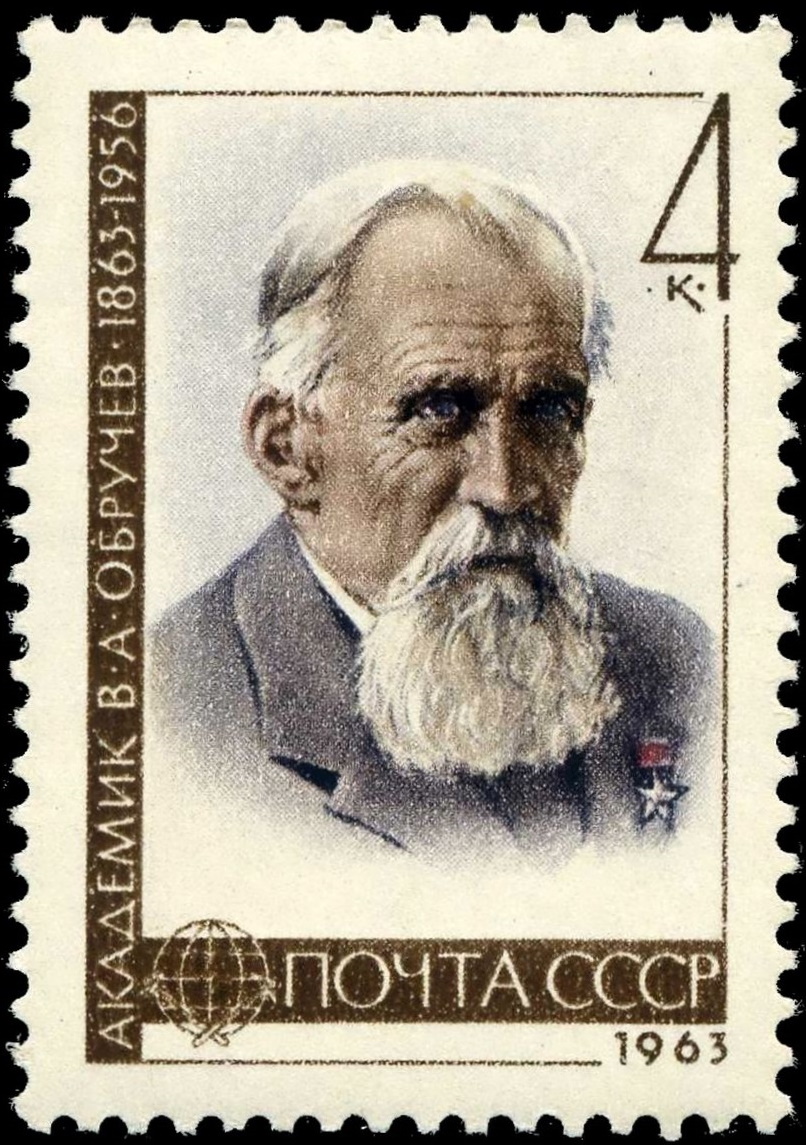 Russian expoler, geologist,
paleontologist, who found big fossil site in Gobi desert of Mongolia.He
was the first who found some bones of tertiary mammals (rhinoceros
tooth) in a hollow-Kuldzhin Gobi of Inner Mongolia in 1892.
It is radically altered the previous understanding of the Gobi
desert as the area covered by marine Tertiary sediments.
Finding Obruchev and guidance AA Borisyak the
development of the Middle Quaternary mammalian fauna of Central Asia
have been used by the expedition of the American Museum of Natural
History in the study of the southern Gobi the surrounding areas of
Inner Mongolia. From 1922 to 1925, the expedition discovered a number
of localities of reptiles and mammals in continental deposits, which
were then subdivided into 12 successive horizons of Cretaceous and
Tertiary age. Especially interesting and sensational discovery was the
discovery of Cretaceous mammals, dinosaur eggs and nests. The American
expedition was a light, mobile, technically equipped and great
composition. This allows them to search and collect materials over
large areas. "No matter how significant the opening of the Americans -
wrote AA Borisyak - yet the first major discoveries in Asia, though
much farther west, were made by Russian hunters. And that Russian
scientists indicate the richness of Asian continental deposits remains
of vertebrates has prompted Americans to come here. " Skeletons and
fossils nests prototseratopsov (Protoceratops andrewsi), found in the
Gobi Desert in the early twentieth century, became a sensation in the
expedition of the American Museum of Natural History.
Russian expoler, geologist,
paleontologist, who found big fossil site in Gobi desert of Mongolia.He
was the first who found some bones of tertiary mammals (rhinoceros
tooth) in a hollow-Kuldzhin Gobi of Inner Mongolia in 1892.
It is radically altered the previous understanding of the Gobi
desert as the area covered by marine Tertiary sediments.
Finding Obruchev and guidance AA Borisyak the
development of the Middle Quaternary mammalian fauna of Central Asia
have been used by the expedition of the American Museum of Natural
History in the study of the southern Gobi the surrounding areas of
Inner Mongolia. From 1922 to 1925, the expedition discovered a number
of localities of reptiles and mammals in continental deposits, which
were then subdivided into 12 successive horizons of Cretaceous and
Tertiary age. Especially interesting and sensational discovery was the
discovery of Cretaceous mammals, dinosaur eggs and nests. The American
expedition was a light, mobile, technically equipped and great
composition. This allows them to search and collect materials over
large areas. "No matter how significant the opening of the Americans -
wrote AA Borisyak - yet the first major discoveries in Asia, though
much farther west, were made by Russian hunters. And that Russian
scientists indicate the richness of Asian continental deposits remains
of vertebrates has prompted Americans to come here. " Skeletons and
fossils nests prototseratopsov (Protoceratops andrewsi), found in the
Gobi Desert in the early twentieth century, became a sensation in the
expedition of the American Museum of Natural History. [R34]
Sir Richard Owen (1804 - 1892)
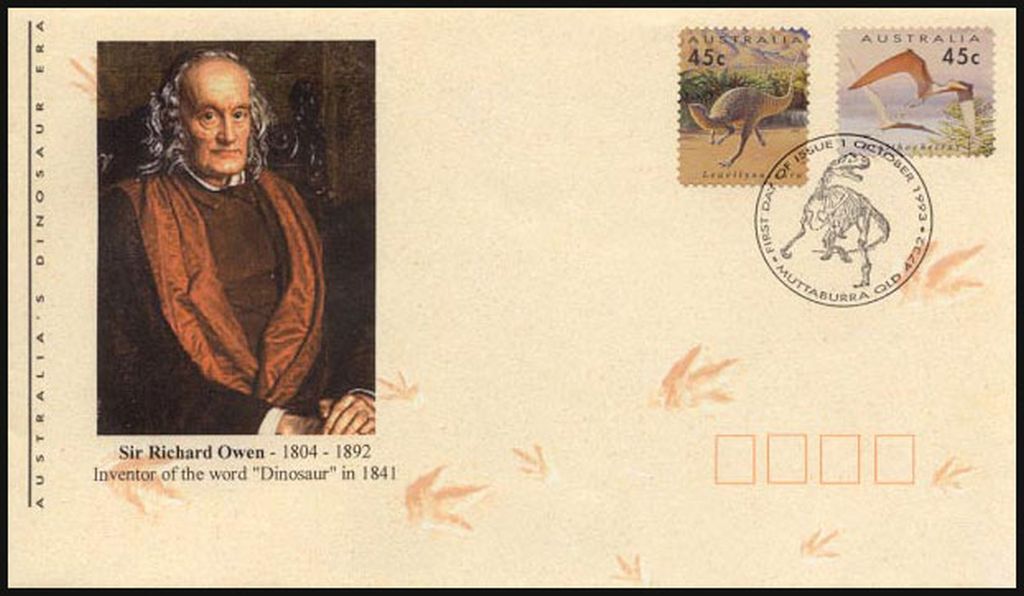
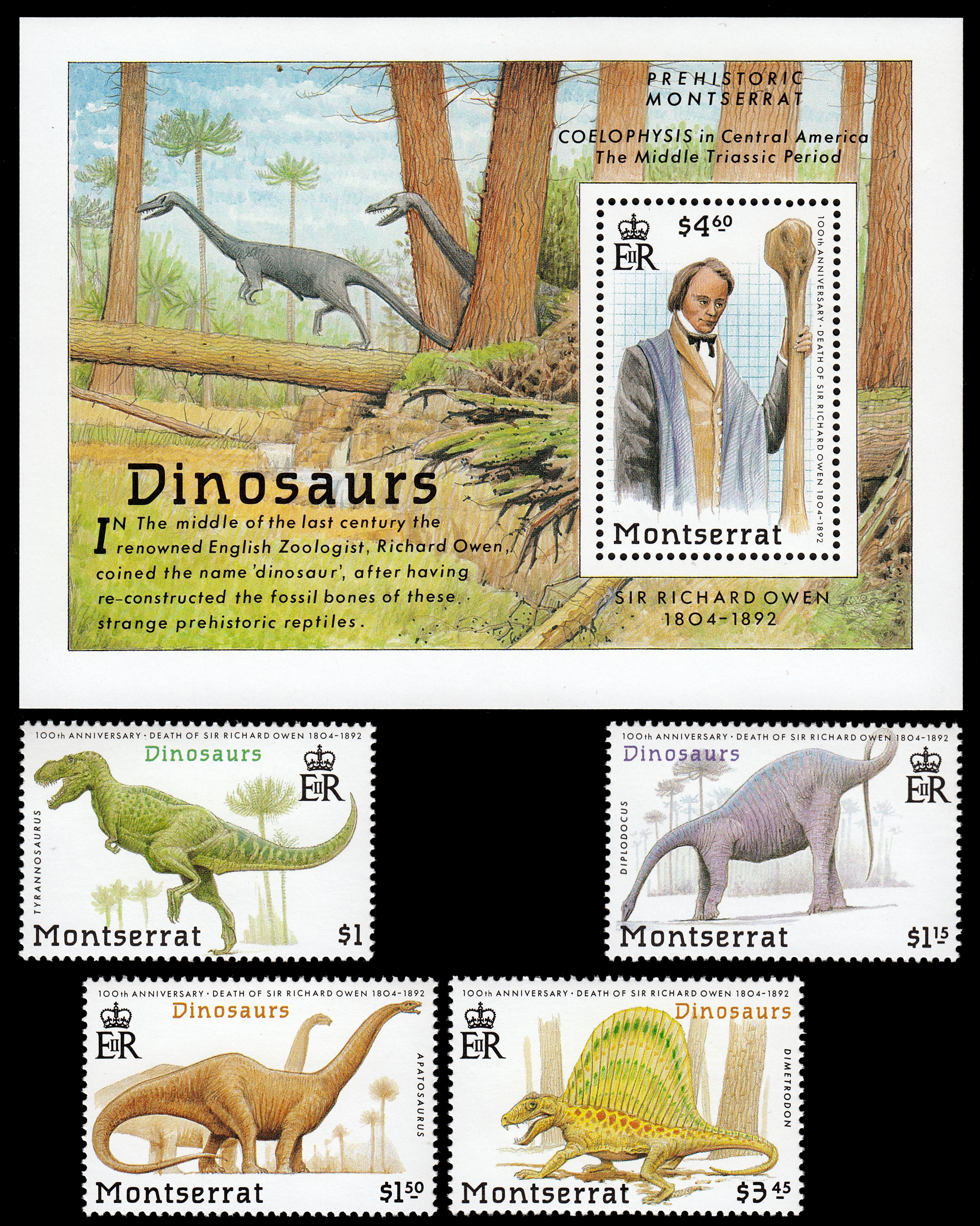 was an English biologist, comparative anatomist and palaeontologist. Owen is
probably best remembered today for coining the word Dinosauria (meaning
"Terrible Reptile" or "Fearfully Great Reptile") and for his outspoken
opposition to Charles Darwin's theory of evolution by natural
selection. He agreed with Darwin that evolution occurred, but thought
it was more complex than outlined in Darwin's Origin. Owen's approach
to evolution can be seen as having anticipated the issues that have
gained greater attention with the recent emergence of evolutionary
developmental biology. He was the driving force behind the
establishment, in 1881, of the British Museum (Natural History) in
London. Bill Bryson argues that, "by making the Natural History Museum
an institution for everyone, Owen transformed our expectations of what
museums are for".
was an English biologist, comparative anatomist and palaeontologist. Owen is
probably best remembered today for coining the word Dinosauria (meaning
"Terrible Reptile" or "Fearfully Great Reptile") and for his outspoken
opposition to Charles Darwin's theory of evolution by natural
selection. He agreed with Darwin that evolution occurred, but thought
it was more complex than outlined in Darwin's Origin. Owen's approach
to evolution can be seen as having anticipated the issues that have
gained greater attention with the recent emergence of evolutionary
developmental biology. He was the driving force behind the
establishment, in 1881, of the British Museum (Natural History) in
London. Bill Bryson argues that, "by making the Natural History Museum
an institution for everyone, Owen transformed our expectations of what
museums are for".[R35]
Gjuro Pilar (1846 - 1893)
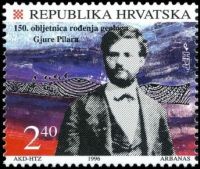 was born in Slavonski Brod in 1846.
After completing his education at grammar school in Osijek and Zagreb
he studied natural sciences in Brussels, where he also received his
doctoral degree at the age of 22. He published numerous geological
scientific papers, quite outstanding at the time, which have, for
decades, served as starting points for further fundamental and
practical reserches of Croatia and western Bosnia. He was engaged in
many geological disciplines: paleontology,
mineralogy, petrology, coal deposits, geodynamics, hydrogeology of
Karst. He was also engaged in studies regarding mining, mining law,
geodesy, astronomy, meteorology and archeology. He also participated in
the founding of the Croatian national science association, the Croatia
mountaineering association and, in 1885/6, together with some friends,
he founded and registered the first chess club in Zagreb; he also
organized a "trial tournament", the first modern Croatian chess
tournament based on the model of European chess contests.
[R36]
was born in Slavonski Brod in 1846.
After completing his education at grammar school in Osijek and Zagreb
he studied natural sciences in Brussels, where he also received his
doctoral degree at the age of 22. He published numerous geological
scientific papers, quite outstanding at the time, which have, for
decades, served as starting points for further fundamental and
practical reserches of Croatia and western Bosnia. He was engaged in
many geological disciplines: paleontology,
mineralogy, petrology, coal deposits, geodynamics, hydrogeology of
Karst. He was also engaged in studies regarding mining, mining law,
geodesy, astronomy, meteorology and archeology. He also participated in
the founding of the Croatian national science association, the Croatia
mountaineering association and, in 1885/6, together with some friends,
he founded and registered the first chess club in Zagreb; he also
organized a "trial tournament", the first modern Croatian chess
tournament based on the model of European chess contests.
[R36]
Karl Rouillier (1814 - 1858) Russia
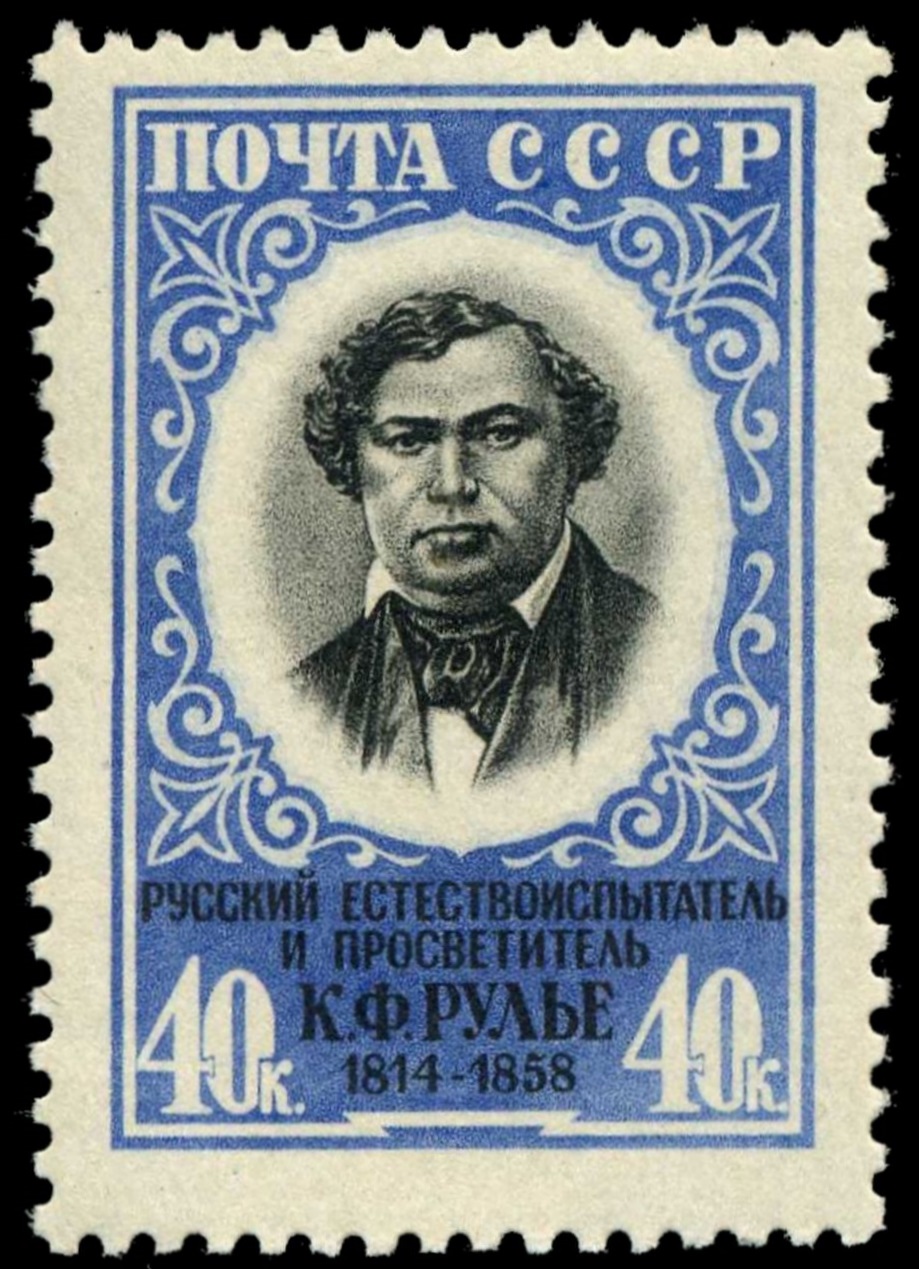 Roulier was active in the field of
geology and paleontology of the suburbs,
creating a foundation for the development of
evolutionary paleontology. He introduced the
comparative historical method
of investigation of the organic world. Roulier work
on studying the instincts of
animals and their mental activity laid the
foundations of evolutionary trends in animal
psychology.
Roulier was active in the field of
geology and paleontology of the suburbs,
creating a foundation for the development of
evolutionary paleontology. He introduced the
comparative historical method
of investigation of the organic world. Roulier work
on studying the instincts of
animals and their mental activity laid the
foundations of evolutionary trends in animal
psychology.The influence of external conditions on the animals, the laws of geographical distribution of animals, periodic wandering birds, fish move upstream during spawning, zooetika - these are the issues were Roulier. He examined the body is not taken separately and in relation to the world that preceded his appearance, the effect on the body environment, which is where his life, some of the changes and adaptations in the organs, which causes this environment - all this was the basis of the course Roulier.
Roulier in 1852 laid the so-called ecological direction in zoogeography, which is further developed by N.A Severtsov. [R37]
Birbal Sahni (1891 - 1949)
 Professor Birbal Sahni was the first
Indian to revitalize study of Indian fossil plants. He was a visionary
in that he saw the potential of palaeobotanical research in India in
understanding plant evolution through the ages and application of this
knowledge for human welfare. It was through Prof. Sahni's efforts and
zeal that the Institute of Palaeobotany was founded in September 1946
at Lucknow. The Institute functions as an autonomous research
organization under the Department of Science and Technology, Government
of India, to develop scientific knowledge and expertise in all branches
of palaeobotany and related disciplines.
Professor Birbal Sahni was the first
Indian to revitalize study of Indian fossil plants. He was a visionary
in that he saw the potential of palaeobotanical research in India in
understanding plant evolution through the ages and application of this
knowledge for human welfare. It was through Prof. Sahni's efforts and
zeal that the Institute of Palaeobotany was founded in September 1946
at Lucknow. The Institute functions as an autonomous research
organization under the Department of Science and Technology, Government
of India, to develop scientific knowledge and expertise in all branches
of palaeobotany and related disciplines.[R38]
Michael Sars (1805 - 1869)
 was one of the last great descriptive zoologists who cataloged
organisms more or less equally
successfully in all major animal groups. Sars also described fossils
from various fossil beds in Norway and appears to have been keenly
interested in all sorts of other issues. Sars was asked by the
Parliament of Norway to investigate the biology of Norwegian fisheries,
such as the herring and cod fisheries. He had started these
investigations by the time of his death, but most of them were
completed and published posthumously by his son, Georg Ossian
Sars.
was one of the last great descriptive zoologists who cataloged
organisms more or less equally
successfully in all major animal groups. Sars also described fossils
from various fossil beds in Norway and appears to have been keenly
interested in all sorts of other issues. Sars was asked by the
Parliament of Norway to investigate the biology of Norwegian fisheries,
such as the herring and cod fisheries. He had started these
investigations by the time of his death, but most of them were
completed and published posthumously by his son, Georg Ossian
Sars.He was elected a member of the Royal Swedish Academy of Sciences in 1855. [R39]
Nicholas Shackleton (1937 -2006)
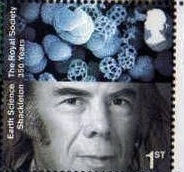 Sir Nicholas John Shackleton was a British geologist and climatologist
who specialised in the Quaternary Period. He was the son
of the distinguished field geologist Robert Millner Shackleton and
great-nephew of the explorer Ernest Shackleton. In 1967
Cambridge awarded him a PhD degree, for his thesis entitled 'The
Measurement of Paleotemperatures in the Quaternary Era'. Shackleton was
a key figure in the field of palaeoceanography, publishing over two
hundred scientific papers. He was a pioneer in the use of mass
spectrometry to determine changes in climate as recorded in the oxygen
isotope composition of calcareous microfossils. He
also found evidence that the Earth's last magnetic field reversal was
780,000 years ago.
Sir Nicholas John Shackleton was a British geologist and climatologist
who specialised in the Quaternary Period. He was the son
of the distinguished field geologist Robert Millner Shackleton and
great-nephew of the explorer Ernest Shackleton. In 1967
Cambridge awarded him a PhD degree, for his thesis entitled 'The
Measurement of Paleotemperatures in the Quaternary Era'. Shackleton was
a key figure in the field of palaeoceanography, publishing over two
hundred scientific papers. He was a pioneer in the use of mass
spectrometry to determine changes in climate as recorded in the oxygen
isotope composition of calcareous microfossils. He
also found evidence that the Earth's last magnetic field reversal was
780,000 years ago.Shackleton became known, in 1976, with the publication of his paper, with James Hays and John Imbrie, in Science entitled 'Variations in the Earth's orbit: Pacemaker of the ice ages'.Using ocean sediment cores, the researchers demonstrated that oscillations in climate over the past few million years could be correlated with variations in the orbital and positional relationship between the Earth and the Sun.
[R40]
Ion Simionescu (1873-1944) Romania
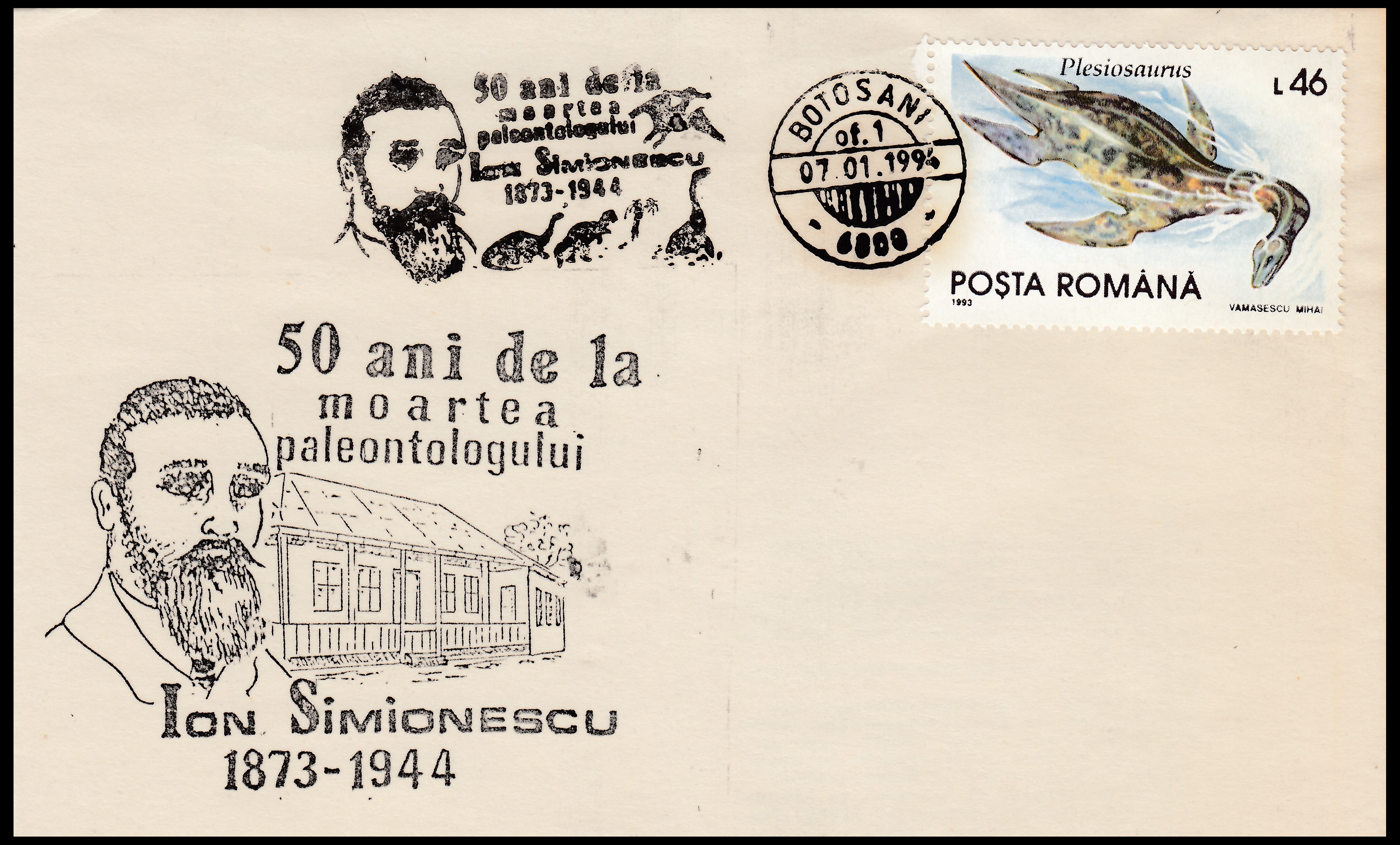 Ion Simionescu was an eminent geologist, geographer and paleontologist
who served as Vice President and President of the Academy, and who was the author of
several monumental works about Moldavia at first, then about the entire
Romanian territory. The popularization of sciences and the development
of a scientific culture among the general public were chief among his
preoccupations.
[R41]
Ion Simionescu was an eminent geologist, geographer and paleontologist
who served as Vice President and President of the Academy, and who was the author of
several monumental works about Moldavia at first, then about the entire
Romanian territory. The popularization of sciences and the development
of a scientific culture among the general public were chief among his
preoccupations.
[R41]
Grigoriy Stefanescu (1836 -1911)
 Romanian geologist and paleontologist (1836-1911), canceled by special stamp.The
stamp depict G. Stefanescu and sceleton of
Dinotherium giganteum, from
"Grigore Antipa" museum of natural history in Bucharest.
Gregoriu Stefanescu was director of the museum between 1867 and 1893.
During this period over 4,000 zoological and mineral exhibits new collections of geology and paleontology has
been added to museum's exhibitions.
He is the one who discovered the skeleton of the fossil elephant Deinotherium gigantissimum, in
the
Meotian sands of Moldavia, unique in the world, as it is the only complete skeleton of
Deinotherium giganteum discovered so far and one of the most valuable
exhibits of the museum.
Romanian geologist and paleontologist (1836-1911), canceled by special stamp.The
stamp depict G. Stefanescu and sceleton of
Dinotherium giganteum, from
"Grigore Antipa" museum of natural history in Bucharest.
Gregoriu Stefanescu was director of the museum between 1867 and 1893.
During this period over 4,000 zoological and mineral exhibits new collections of geology and paleontology has
been added to museum's exhibitions.
He is the one who discovered the skeleton of the fossil elephant Deinotherium gigantissimum, in
the
Meotian sands of Moldavia, unique in the world, as it is the only complete skeleton of
Deinotherium giganteum discovered so far and one of the most valuable
exhibits of the museum. [R42]
Petar Stefanovic (1914–1999)
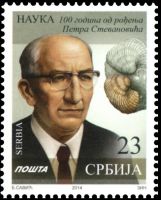 was professor of geology at the University
of Belgrade, member of the Serbian Academy of Sciences and Arts,
president of the Serbian Geological Society, and scientist with high
international reputation, is the last student of the prominent Serbian
geologist Jovan Žujović.
was professor of geology at the University
of Belgrade, member of the Serbian Academy of Sciences and Arts,
president of the Serbian Geological Society, and scientist with high
international reputation, is the last student of the prominent Serbian
geologist Jovan Žujović.He defended his PhD thesis “The Lower Pliocene of Serbia and neighboring areas” at the Moscow Paleontological Institute (USSR) in 1948. He lectured the following subjects: Introduction to independent geological-paleontological investigations, Stratigraphy of Yugoslavia, the Quaternary geology. He was the author of the textbooks: Historical Geology II-the Paleozoic Periods, Historical Geology-the Cenozoic Periods and the Quaternary Geology.
Owing to the great working capacity and self-discipline, he has achieved excellent scientific outcomes and made significant contributions to: developing and enhancing the geology school and geological education in Serbia, teaching and training of generations of geologists and paleontologists promoting and popularizing the geology and geosciences; developing the museology, and conserving and preserving the geological heritage of Serbia. [R43]
Kaspar Maria von Sternberg (1761 - 1838) Czech
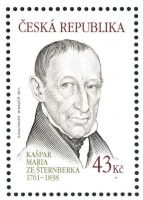 was one of the leading scientists of the first half
of the 19th century, with a special interest in botany, geology and
paleontology, and is considered as one of the founders of paleobotany.
He is the author of an extensive and precious collection of minerals,
fossils and herbs that became the core collection of the National
Museum in Prague, founded by Kaspar Maria von Sternberg.
[R44]
was one of the leading scientists of the first half
of the 19th century, with a special interest in botany, geology and
paleontology, and is considered as one of the founders of paleobotany.
He is the author of an extensive and precious collection of minerals,
fossils and herbs that became the core collection of the National
Museum in Prague, founded by Kaspar Maria von Sternberg.
[R44]
Ferdinand Stolichka (1838 - 1871)
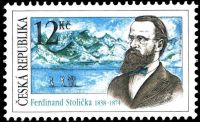 The Czech geologist, paleontologist and natural scientist of a world
significance F. Stolicka graduated in geology from the Faculty of Arts
in Vienna. He did mapping in the Eastern Alps, in Hungary and Dalmatia.
As a paleontologist of the Indian Geological Institute he researched
mainly the Himalaya and the Karakoram. He set for his first journey to
the Himalaya in 1864. During the four-month expedition he created
geological maps of extensive areas of the mountains; in particular, he
made it an exact fact that the core of the Himalaya consists of gneiss
layers covered with high primary and secondary sediments. He
contributed also to other disciplines, mainly to ornithology. On his
return from the third expedition to the Himalaya he died, probably of
high mountain disease. The extent of Stolicka's scientific work is
admirable.
[R45]
The Czech geologist, paleontologist and natural scientist of a world
significance F. Stolicka graduated in geology from the Faculty of Arts
in Vienna. He did mapping in the Eastern Alps, in Hungary and Dalmatia.
As a paleontologist of the Indian Geological Institute he researched
mainly the Himalaya and the Karakoram. He set for his first journey to
the Himalaya in 1864. During the four-month expedition he created
geological maps of extensive areas of the mountains; in particular, he
made it an exact fact that the core of the Himalaya consists of gneiss
layers covered with high primary and secondary sediments. He
contributed also to other disciplines, mainly to ornithology. On his
return from the third expedition to the Himalaya he died, probably of
high mountain disease. The extent of Stolicka's scientific work is
admirable.
[R45]
 Marie
Stopes, in full Marie Charlotte Carmichael Stopes,
(15 October 1880 – 2 October 1958) was a
British author, palaeobotanist
and campaigner for eugenics and women's
rights.
Marie
Stopes, in full Marie Charlotte Carmichael Stopes,
(15 October 1880 – 2 October 1958) was a
British author, palaeobotanist
and campaigner for eugenics and women's
rights. Stopes obtained a science degree (1902) from University College, London, which she completed in only two years. She went on to do postgraduate studies in paleobotany (fossil plants), earning a doctorate from the University of Munich in 1904. That same year she became an assistant lecturer of botany at the University of Manchester.
 She made significant
contributions to plant
palaeontology
and
coal classification, and was the first female academic on the faculty
of the University of Manchester.
She made significant
contributions to plant
palaeontology
and
coal classification, and was the first female academic on the faculty
of the University of Manchester. During Stopes's time at Manchester, she studied coal and coal balls and researched the collection of Glossopteris (Permian seed ferns). This was an attempt to prove the theory of Eduard Suess concerning the existence of Gondwana or Pangaea. A chance meeting with Antarctic explorer Robert Falcon Scott during one of his fund-raising lectures in 1904 brought a possibility of proving Suess's theory. Stopes's passion to prove Suess's theory led her to discuss the possibility of joining Scott's next expedition to Antarctica. She did not join the expedition, but Scott promised to bring back samples of fossils to provide evidence for the theory. Scott died during the 1912 Terra Nova Expedition, but fossils of plants from the Queen Maud Mountains found near Scott's and his companions' bodies provided this evidence.
Between 1903 and 1935 she published a series of palaeobotanical papers that placed her among the leading half-dozen British palaeobotanists of her time.
[R46]
 |
| The postal stationery exist in two variation of the imprinted stamp - the face value position. |
was a geologist, palaeontologist, university professor, and a full member of the Hungarian Academy of Sciences.
He contributed to the development of coal mining in Hungary with his coal field surveys in many parts of the Carpathian Basin, and his paleontological research is also significant.
The fossil on the bottom-left side is an Eocene shell.
During his career , he also dealt with paleontology, describing shark teeth from the Lajta Mountains and goat claws from Lake Balaton. Vitalis discovered previously unknown species in the sedimentary rocks of the Sopron region, such as some representatives of the Pannonian Sea mussel fauna (e.g. Limnocardium soproniense, Congeria soproniensis), as well as the snail genera Orygoceras and Baglivia (the latter he defined as a fossil marking the transition between the Sarmatian and Pannonian stages).
In 1981 Vitalis's bust was unveiled at the Nagyegyhaza mine. [R51]
Jovan M. Žujović (1856 -1936)
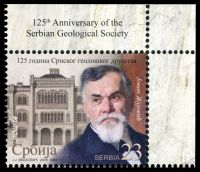 was an anthropologist, known as a pioneer in geological and paleontological science in Serbia.
He is known, among other things, for his work in anthropology. In his
book, Stone Age, published in 1893, relying mostly on French
scientists, he reviewed the contemporary state of knowledge in
paleoanthropology. Later, between 1927, and 1929, in the book
Genesis of the Earth and Our Country, he wrote about the biological
past of the Earth starting from the beginning of mankind. The work
takes particular interest in the history of the Balkan peninsula
was an anthropologist, known as a pioneer in geological and paleontological science in Serbia.
He is known, among other things, for his work in anthropology. In his
book, Stone Age, published in 1893, relying mostly on French
scientists, he reviewed the contemporary state of knowledge in
paleoanthropology. Later, between 1927, and 1929, in the book
Genesis of the Earth and Our Country, he wrote about the biological
past of the Earth starting from the beginning of mankind. The work
takes particular interest in the history of the Balkan peninsula[R46]
References:
- [R1] Karel Absolon: Wikipedia.
- [R2] Jean Louis Rodolphe Agassiz: Wikipedia.
- [R3] Florentino Ameghino: Wikipedia.
- [R4] Charles William Andrews: Wikipedia.
- [R5] Roy Chapman Andrews: Wikipedia, Strange Science.
- [R6] Andrusov Nikolay Ivanovich: encyclopedia.com.
- [R7] Joachim Barrande: Wikipedia, Strange Science.
- [R8] Alexei Alekseevich Borisyak: Wikipedia (in Russian).
- [R9] Robert Broom: Wikipedia, Strange Science.
- [R10] Barnum Brown: Wikipedia, Strange Science.
- [R11] Wiliam Bruckland: Wikipedia.
- [R12] Spiridon Brusina: Wikipedia, Wikipedia (German version is more detailed).
- [R13] Pierre Teilhard de Chardin: Wikipedia, Stamps of Chardin.
- [R14] Aleksandr Aleksandrovich Chernov: Wikipedia (in Russian).
- [R15] Grigore Cobilcescu: Wikipedia (in Romanian), Enciclopedi Aromaniei (in Romanian).
- [R16] Thomas Condon: Wikipedia, Strange Science.
- [R17] Edward Drinker Cope: Wikipedia, Strange Science.
- [R18] Georges Cuvier: Wikipedia, Strange Science.
- [R19] Jan Czerski: Wikipedia, Quaternary Period (on Wikipedia).
- [R20] Carlos de Lattore: Smithsonian Institution Archives, EcuRed.cu, Fossil matter, encyclopedia.com.
- [R21] Ivan Antonovich Yefremov: Wikipedia.
- [R22] Edwin Harris Colbert: Wikipedia.
- [R23] Alcide Charles Victor Marie Dessalines d'Orbigny: Wikipedia, NHM UK, Paleonerdish.
- [R24] Aleksandr Karpinsky: Wikipedia.
- [R25] Alfred Alekséyevich Kolakovsky: Wikipedia.
- [R26] Vladimir Onufreivich Kovalevsky: Wikipedia.
- [R27] Roman Kozlowski: Wikipedia, Graptolite.home.pl .
- [R28] Edouard Lartet: The British Museum, Encyclopedia Britannica, Linda Hall Librara, Wikipedia.
- [R29] Peter Wilhelm Lund: Wikipedia.
- [R30] Othniel Charles Marsh: Wikipedia.
- [R31] Hermann von Meyer: Wikipedia.
- [R32] Francisco Pascacio Moreno: Wikipedia.
- [R33] Dimitri Vasilievich Nalivkin: Wikipedia.
- [R34] Vladimir Afanasyevich Obruchev: Wikipedia.
- [R35] Sir Richard Owen: Wikipedia, Strange Science.
- [R36] Gjuro Pilar: Wikipedia, enciklopedija.hr.
- [R37] Karl Rouillier: Wikipedia, encyclopedia.com.
- [R38] Birbal Sahni: Wikipedia.
- [R39] Michael Sars: Wikipedia.
- [R40] Nicholas Shackleton: Wikipedia.
- [R41] Ion Simionescu: Enciclopedi Aromaniei.
- [R42] Grigoriy Stefanescu: Wikipedia (in Romanian), Meotian sands of Moldavia.
- [R43] Petar Stefanovic:
- [R44] Kaspar Maria von Sternberg: Wikipedia.
- [R45] Ferdinand Stolichka: Wikipedia (in German).
- [R46] Marie Charlotte Carmichael Stopes: Wikipedia, Britannica, Lyellcollection.
- [R47] Jovan M. Žujović:
- [R48] Aleksander Piotr Czekanowski: encyclopedia.com, Wikipedia.
- [R49] Christian Leopold von Buch : Wikipedia.
- [R50] Mirko Malez: Wikipedia,