Moldova 1995 "Exhibits from the National Ethnographic Museum"
| Issue Date | 06.04.1995 |
| ID | Michel: 161-163; Scott: 161-163 Stanley Gibbons: 171-173; Yvert et Tellet: 132-134 Category: pF |
| Design | Vladimir Sinitki |
| Stamps in set | 3 |
| Value |
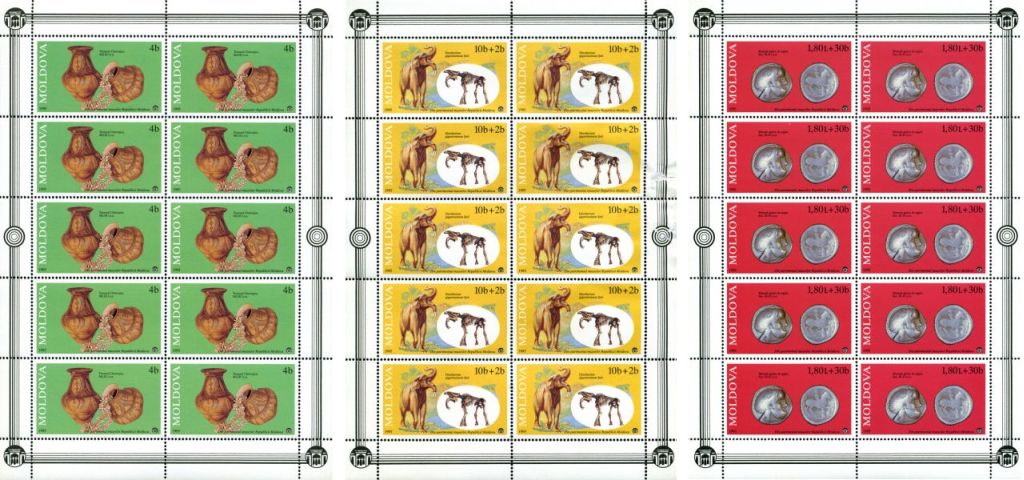
4b - Urns and necklace 10b+2b - Dinotherium (Deinotherium) gigantissimus, reconstruction and the skeleton. 1,80L + 30b - Coins |
| Emission/Type | commemorative |
| Issue place | Chisinau |
| Size (width x height) | 55 mm x 32.80mm |
| Layout | 3 MS of 10 stamps (5x2) each |
| Products | FDC x2, MS x3 |
| Paper | Coated |
| Perforation | 13.25 x 14 |
| Print Technique | Offset |
| Printed by | Bundesdruckerei, Germany |
| Quantity | 500,000 500,000 25,500 |
| Issuing Authority | Posta Moldovei |
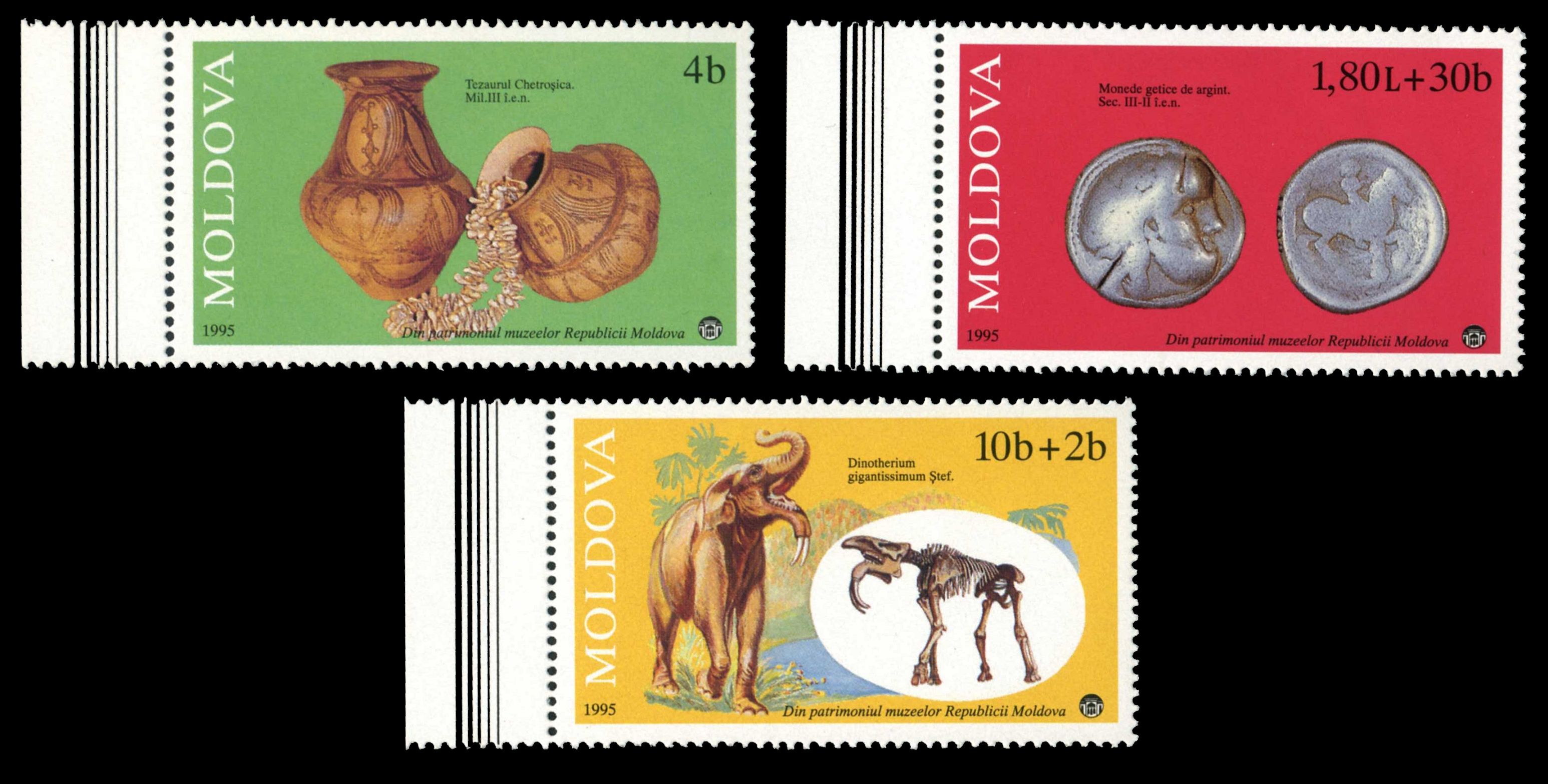
On April 6th, 1995, the Post Authority of Moldova issued the set of 3 stamps showing some artefacts of the National Ethnographic Museum.
These stamps are represent some exhibits of Museum of Ethnography and Nature - the first Moldavian Museum. The museum was founded in 1889 by baron Steward (first, it was called "Zoological, Agricultural, and Handicraft Museum of Bessarabia") and during the 20th century it was used as a laboratory for local scientists including F. Ostermann, S. Miller, F. Porouchik, I. Sukhov, B. Taraboukhin, M. Pocoara and others.
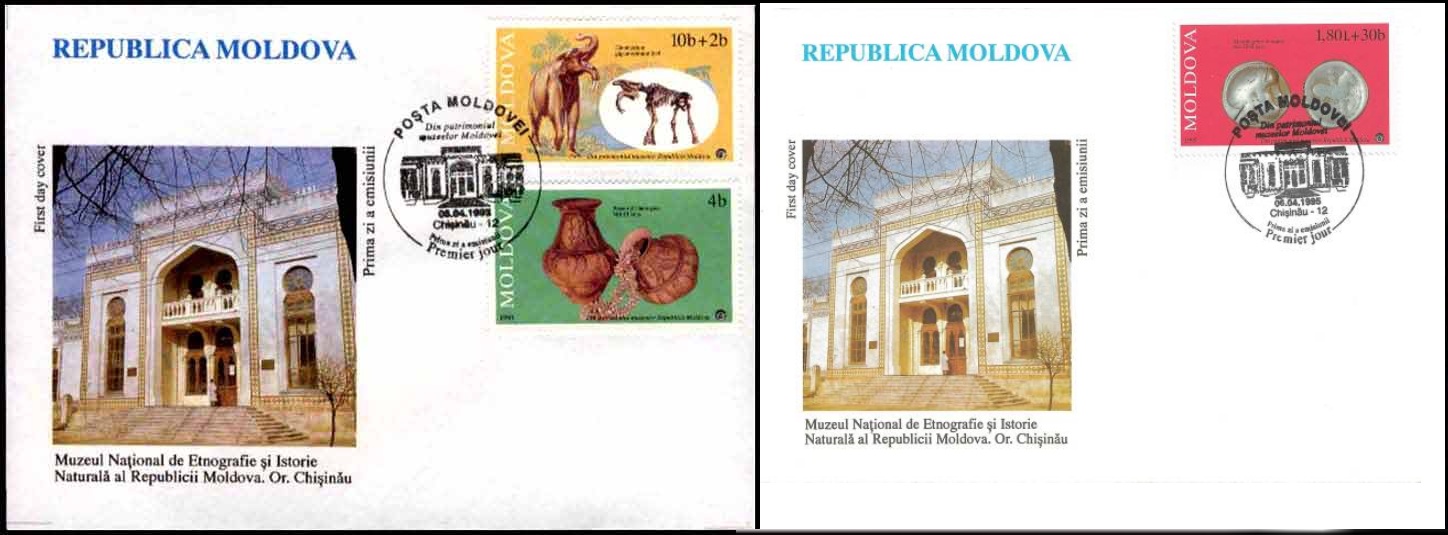 |
| Building of the National Ethnographic Museum of Moldova on illustration of FDC 1995. |
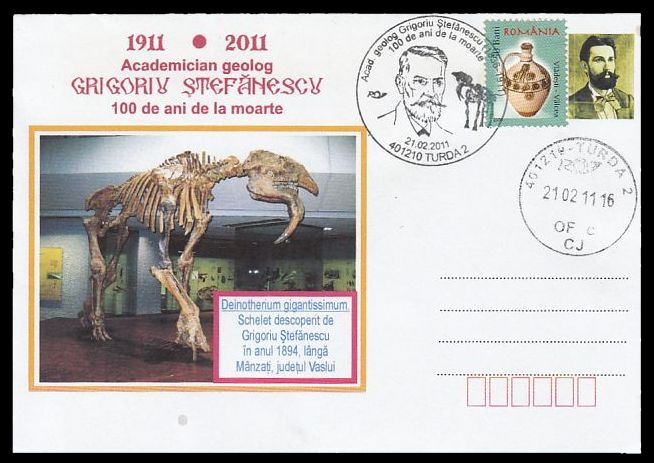 |
| Romanian paleontologist Grigoriu Stefanescu on commemorative postmark of Romania 2011. |
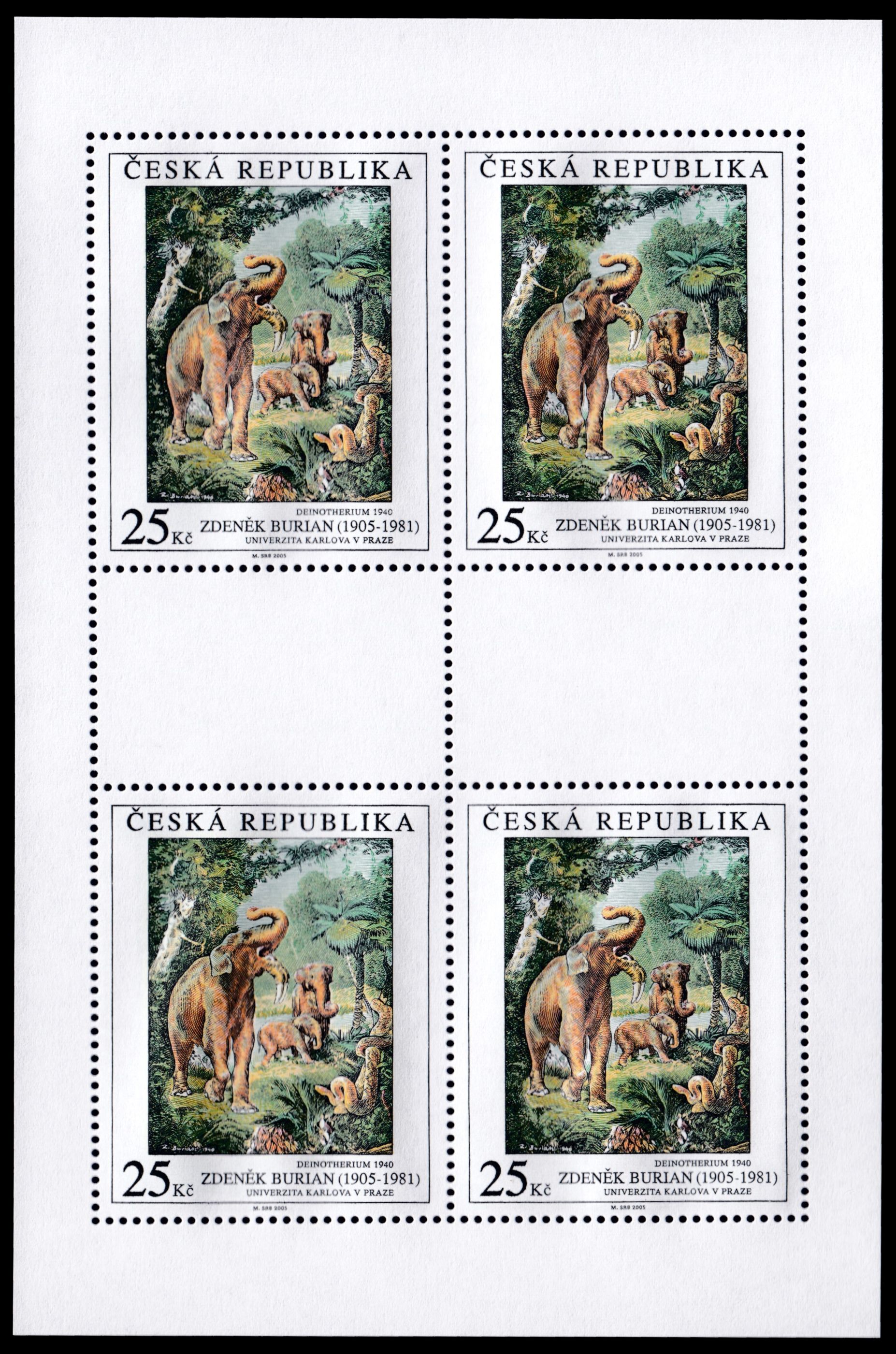 |
| Dinotherium gigantissimus on stamp of Czech Republic 2005, MiNr.: 452, Scott: 3288. |
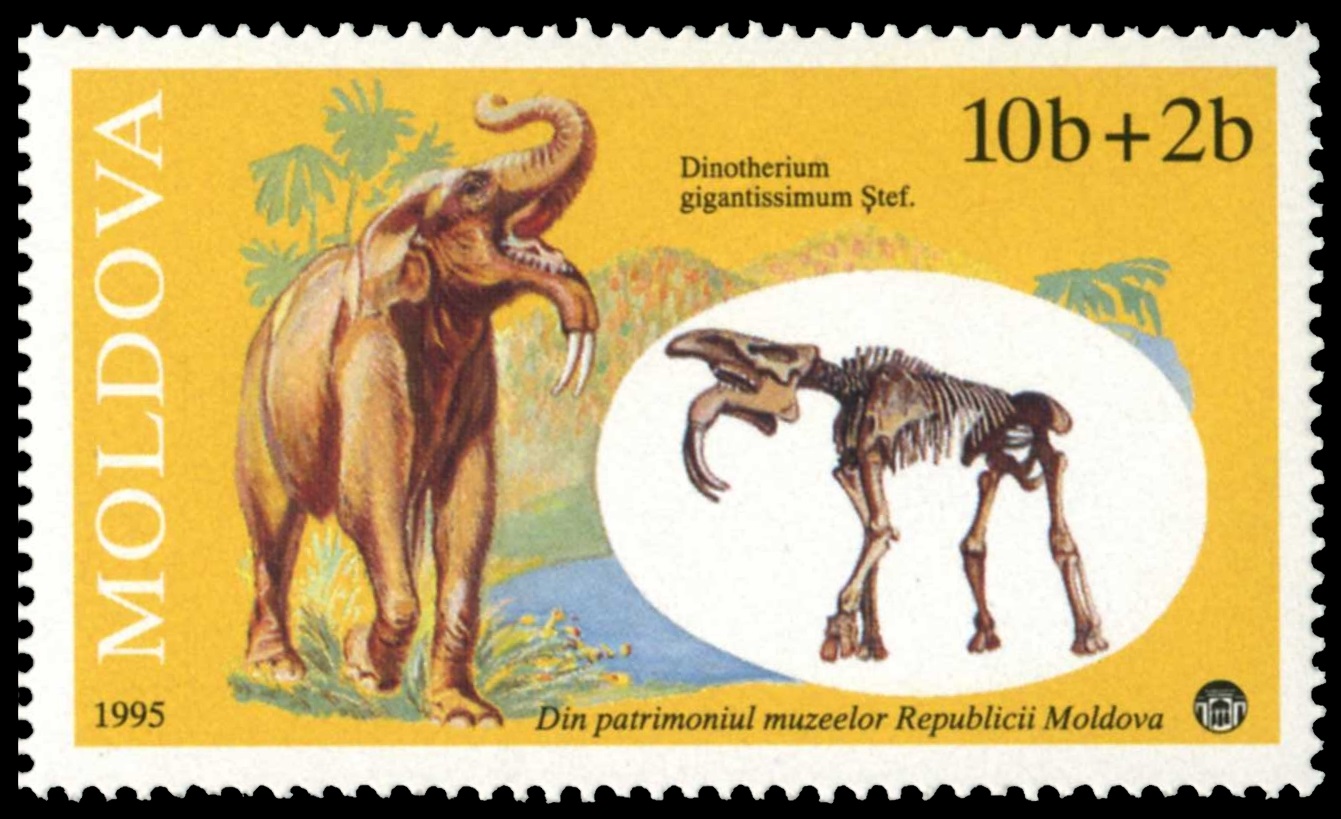 |
| Dinotherium gigantissimus on stamp of Moldova 1995, MiNr.: 162, Scott: 162. |
The stamp with the face value of "10b +2b" depicting Dinotherium (Deinotherium) gigantissimus. The skeleton was found in 1966 near the village Pripiceni, Moldova. The first description of this animal was made by Romanian paleontologist Grigoriu Stefanescu (1836-1911), who was depicted on Romanian commemorative postmark in 2011.
The reconstruction of Dinotherium at the left side of the stamp is after Zdenek Burian picture, that appeared on Czech stamp in 2005.
Deinotherium is an extinct genus of large, elephant-like proboscideans that lived from about the middle-Miocene until the early Pleistocene. Although its appearance is reminiscent of modern elephants, Deinotherium possessed a notably more flexible neck, with limbs adapted to a more cursorial lifestyle, as well as tusks which grew down and curved back from the lower jaw, as opposed to the upper mandible tusks seen in extant elephants. Deinotherium was a widespread genus, ranging from East Africa, north to southern Europe, and east to the Indian subcontinent. They were primarily browsing animals, with a diet largely consisting of leaves. The genus most likely went extinct due to environmental changes, such as forested areas gradually being replaced by open grasslands, during the latter half of the Neogene. Deinotherium thrived the longest in Africa, where they were found into the early Pleistocene.
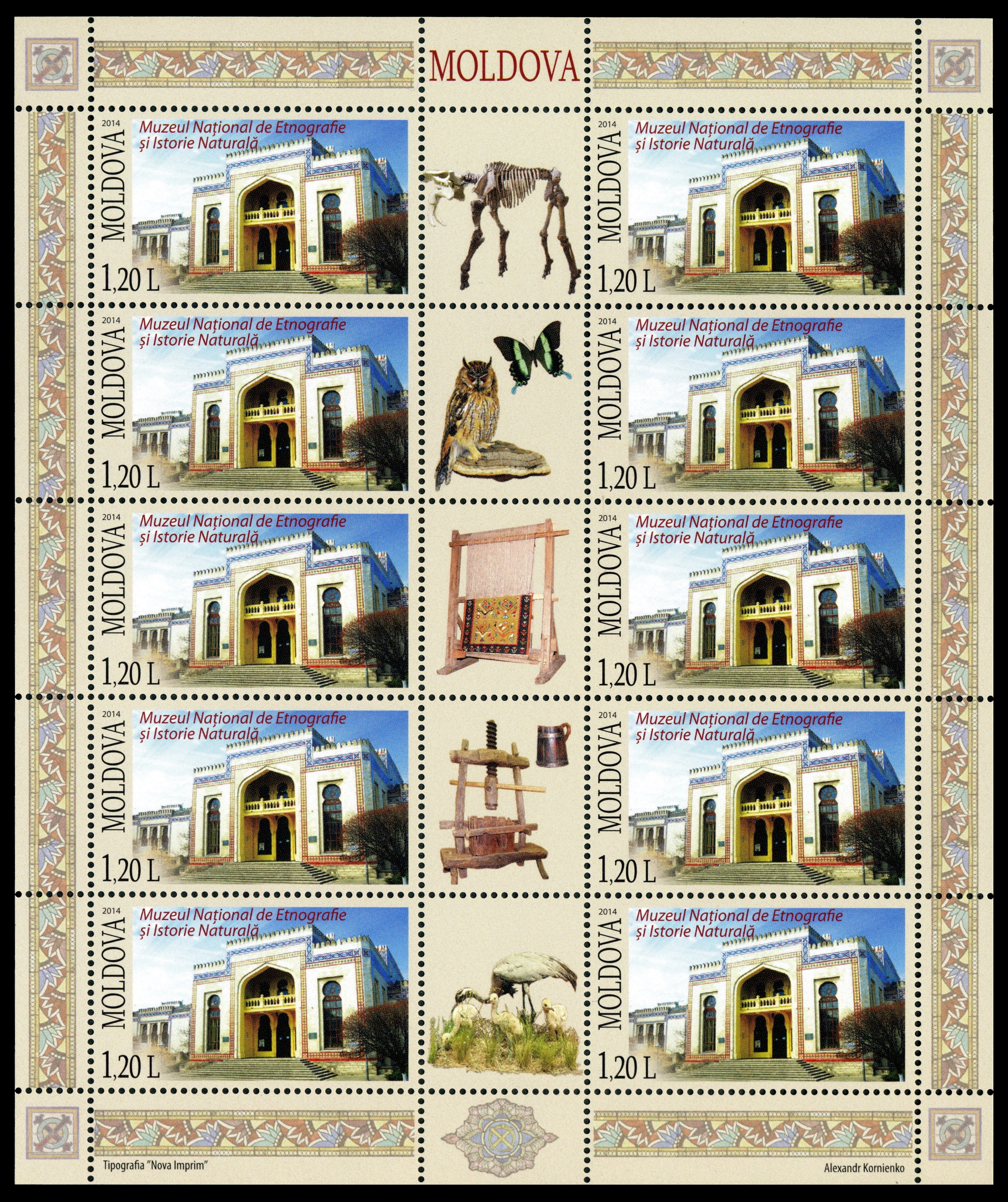
The skeleton of Deinotherium and the National Ethnographic Museum of Moldova appeared on postage stamps of Moldova in 2014 again.
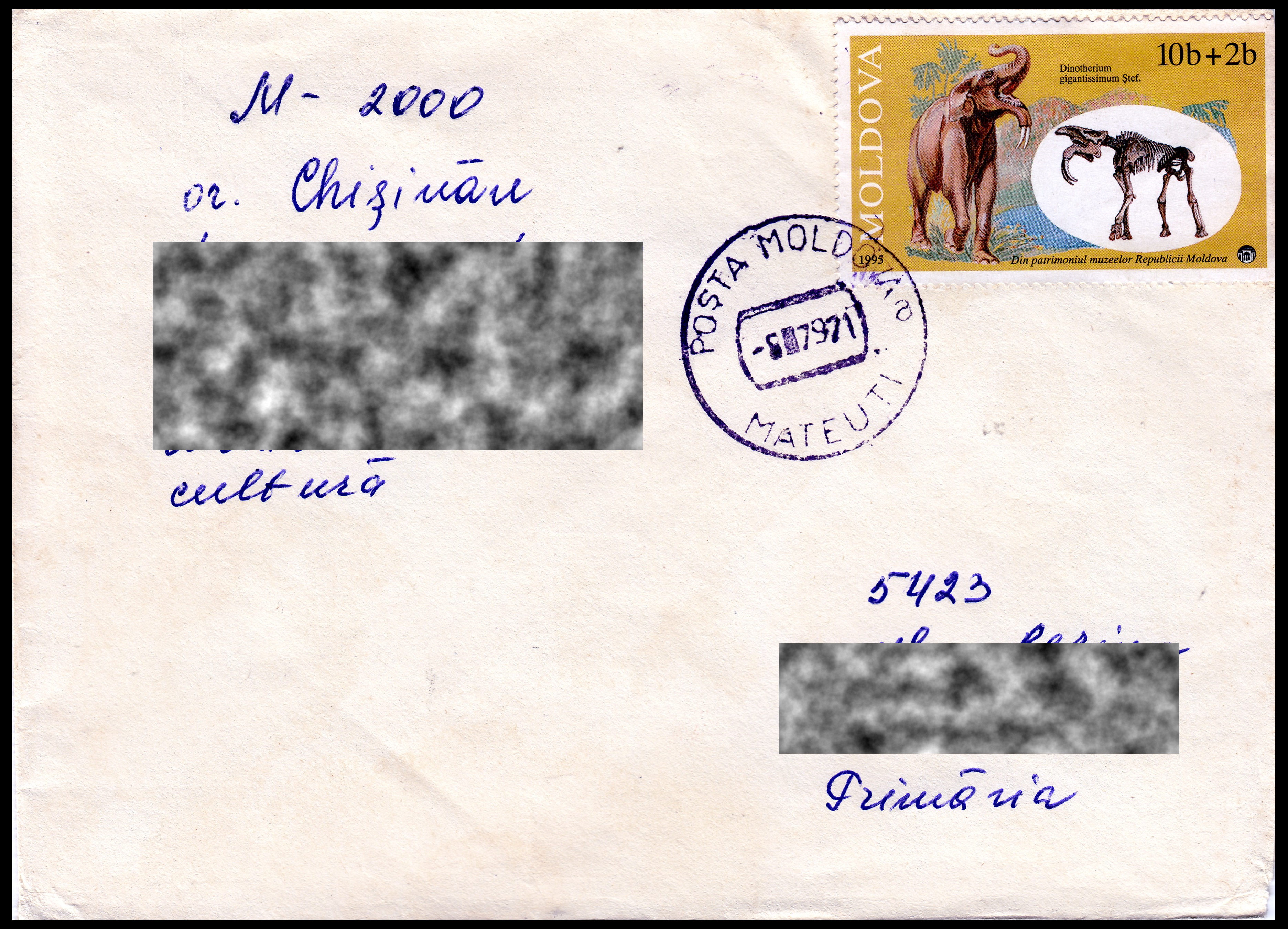
Products and associated philatelic items
| FDC | Mini-Sheets | Example of circulated cover |
|
 |
 |
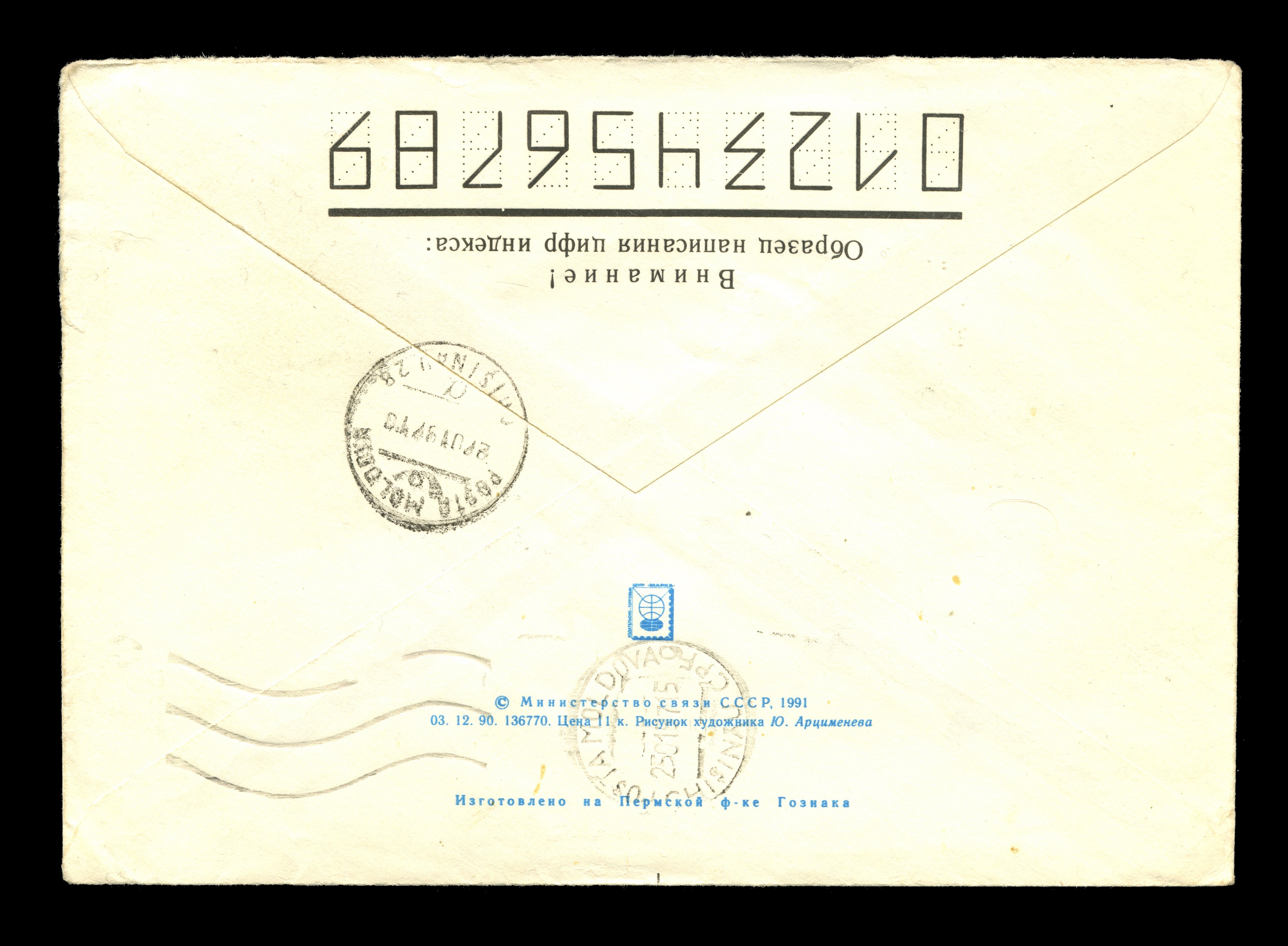
| The reverse side is here |
References
- Technical details and official press release:
Posta Moldovei (the article does not exist on the Internet anymore), colnect.
 |
-
the National Ethnographic Museum of Moldova:
World of Moldova, Tur.MD (the article does not exist on the Internet anymore), -
Deinotherium:
Wikipedia, "Prehistoric Life on Moldovan Stamps", by Peter Voice and Michael Kogan (the editor and the author of this website, accordantly)
Acknowledgements
Many thanks to Dr. Peter Voice from Department of Geological and Environmental Sciences, Western Michigan University, for reviewing the draft page and his valuable comments.