Australia 2026 "Creatures of the Palaeozoic"
| Issue Date | 10.02.2026 |
| ID | Michel: ; Scott: 5999-6002; Stanley Gibbons: ; Yvert et Tellier: ; Category: pR |
| Design |
Illustration: Peter Trusler
Stamp typography and product design:
Jason Watts, Australia Post Design Studio Medallion cover and collection design: Keith Downes, Pixelad |
| Stamps in set | 4 |
| Value |
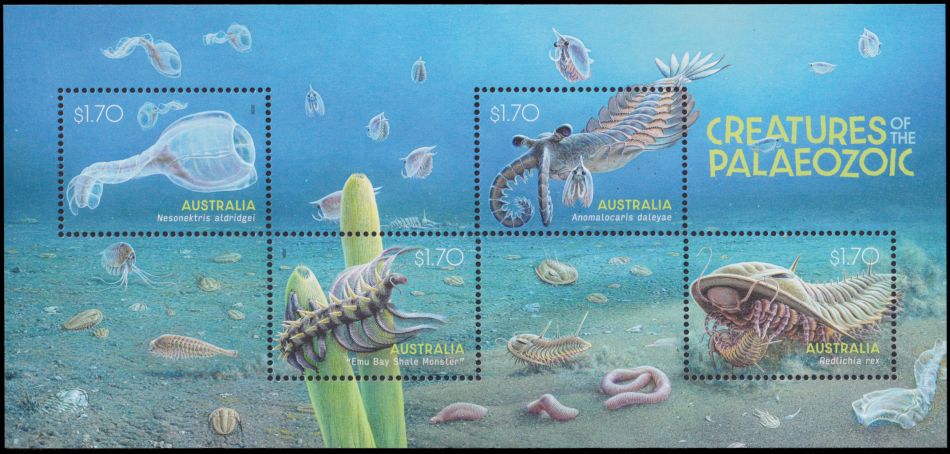
AUD 1.70 - Nesonektris aldridgei AUD 1.70 - Emu Bay Shale Monster AUD 1.70 - Anomalocaris daleyae AUD 1.70 - Redlichia rex Another 8 sea creatures featured on the selvage of the Mini-Sheet. |
| Emission/Type | commemorative |
| Issue place | Adelaide, SA 5000 |
| Size (width x height) | stamps: 37.5mm x 26mm Mini-Sheet: 170mm x 80mm |
| Layout | Four Sheets of 50 , Mini-Sheet of 4, Four Mini-Sheets in Prestige Booklet. |
| Products | FDC x2, MC x4, PP x1, Medallion Cover x1, Gutter Pairs x4, |
| Paper | Tullis Russell 104gsm Red Phosphor/Blue PVA Stamp |
| Perforation | 13.86mm x 14.6mm |
| Print Technique | Offset lithography |
| Printed by | Southern Impact |
| Quantity | |
| Issuing Authority | Australia Post |

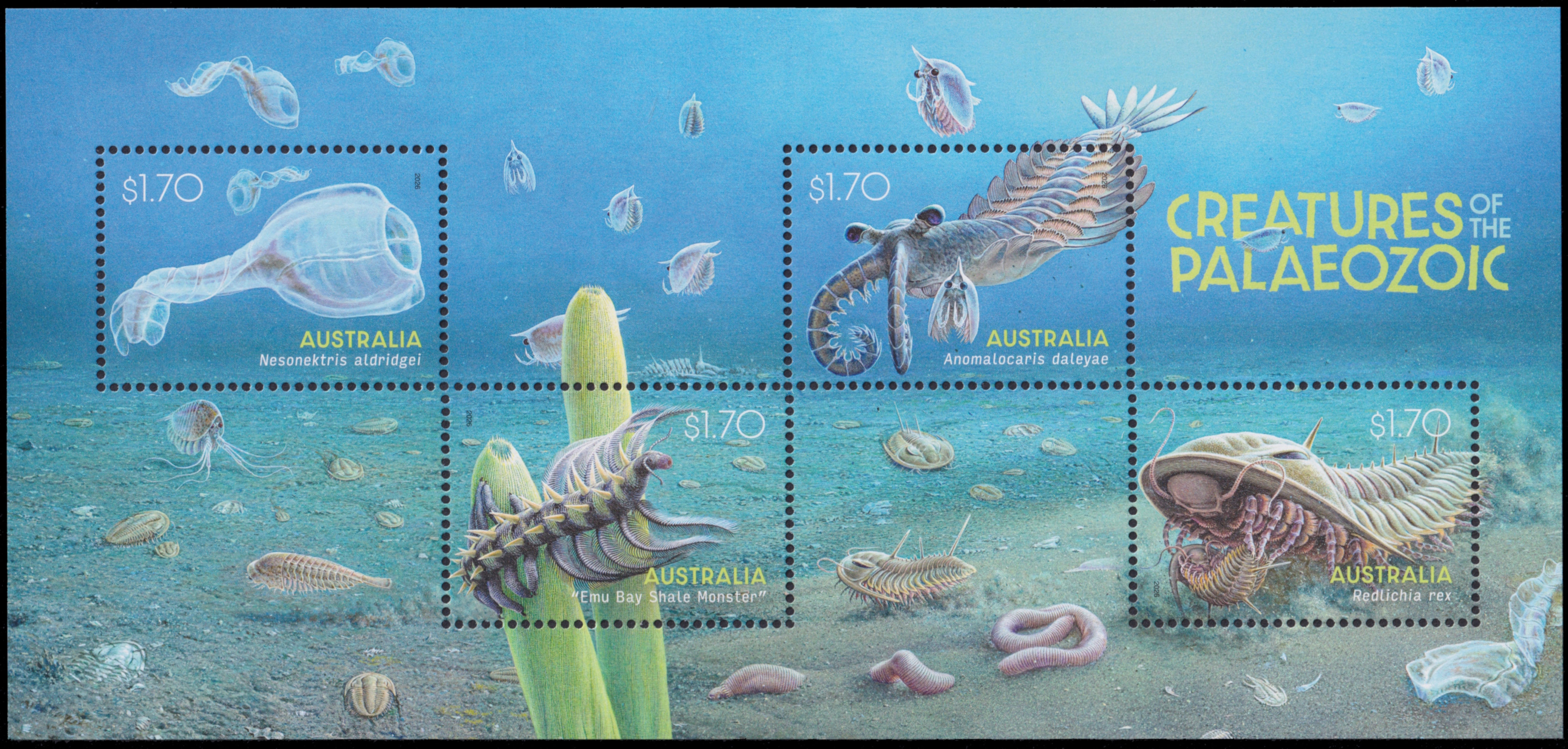
On February 10th 2026, Australia Post issued the stamp set “Creatures of the Palaeozoic”, available both in sheet format and as a Mini-Sheet of four stamps.
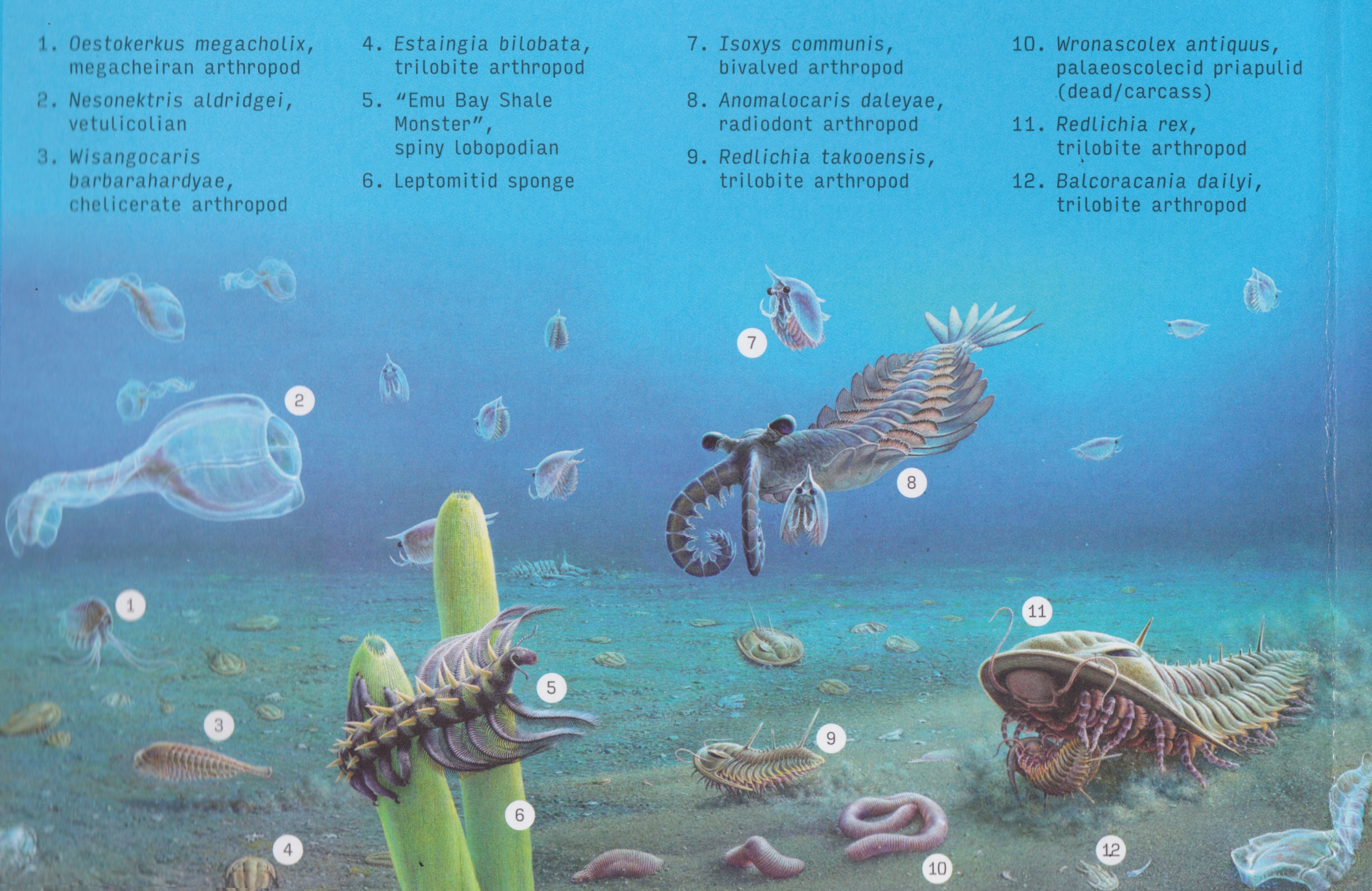
The Mini-Sheet is supplemented by decorative selvage illustrations depicting additional Palaeozoic marine organisms.
The sheet-issued stamps are printed with white margins on the left and lower sides.
In several designs, portions of the illustrated organisms extend beyond the perforated frame and are therefore truncated at the right-hand side of the design.
In contrast, the Mini-Sheet omits these white margins, allowing the designs to be completed seamlessly into the surrounding selvage, where the previously truncated elements, including parts of the organisms and associated algal motifs, are fully continued.
The issue highlights remarkable prehistoric sea creatures that inhabited Australian waters between 540 and 520 million years ago during the Early Cambrian Period of the Palaeozoic Era.
To celebrate the stamp issue, the South Australian Museum unveiled a new foyer display featuring 12 prehistoric creatures from the Emu Bay Shale. Upon entering the museum, visitors encounter these ancient animals in all their glory, providing a rare and immersive glimpse into a long-vanished Cambrian world.
The time between 540 and 520 million years ago forms part of the famous Cambrian Explosion, a period of rapid evolutionary diversification during which many major animal groups first appeared. Among the animals that emerged were the ancestors of modern sponges (poriferans), bristle worms (annelids), snails and clams (molluscs), crustaceans (arthropods), sea stars and sea urchins (echinoderms), and chordates — the group to which humans ultimately belong.
Our direct window into this ancient marine ecosystem comes from a world-renowned geological formation:
the Emu Bay Shale on Kangaroo Island, South Australia.
The significance of this exceptional fossil deposit was first recognized during geological surveys in the 1950s, notably through the pioneering work of German-Australian paleontologist Curt Teichert and South Australian geologist Reg Sprigg, who documented the first fossiliferous outcrops.
Later excavations by Dr Brian Daily and intensive fieldwork since 2007, led by the University of Adelaide and the South Australian Museum, revealed that the Emu Bay Shale is one of the world's most important fossil deposits, preserving an exceptional diversity of Cambrian life. Unlike typical fossil deposits that preserve only hard parts, this exceptional site also preserves delicate soft tissues, including mineralized eyes, gut tracts, and limbs, belonging to more than 50 species. Among them are the giant trilobite Redlichia rex, the early chordate Nesonektris aldridgei, and the formidable apex predator Anomalocaris daleyae.
At that time, life was confined almost entirely to the oceans, while the continents remained barren and uninhabited. One of the most significant evolutionary developments of the Cambrian was the emergence of predation. As predators evolved specialized structures for capturing prey, other organisms responded by developing protective adaptations such as shells, skeletons, spines, armour, burrowing behaviours, and improved swimming abilities. This evolutionary "arms race" played a crucial role in shaping the diversity of early animal life.
The creatures depicted on the stamps are based on fossils from the Emu Bay Shale of Kangaroo Island, South Australia.
The scientifically accurate reconstructions were created by artist Peter Trusler in collaboration with Associate Professor Diego García-Bellido of the University of Adelaide.
Professor Garcia-Bellido said: |
Peter Trusler explained: |
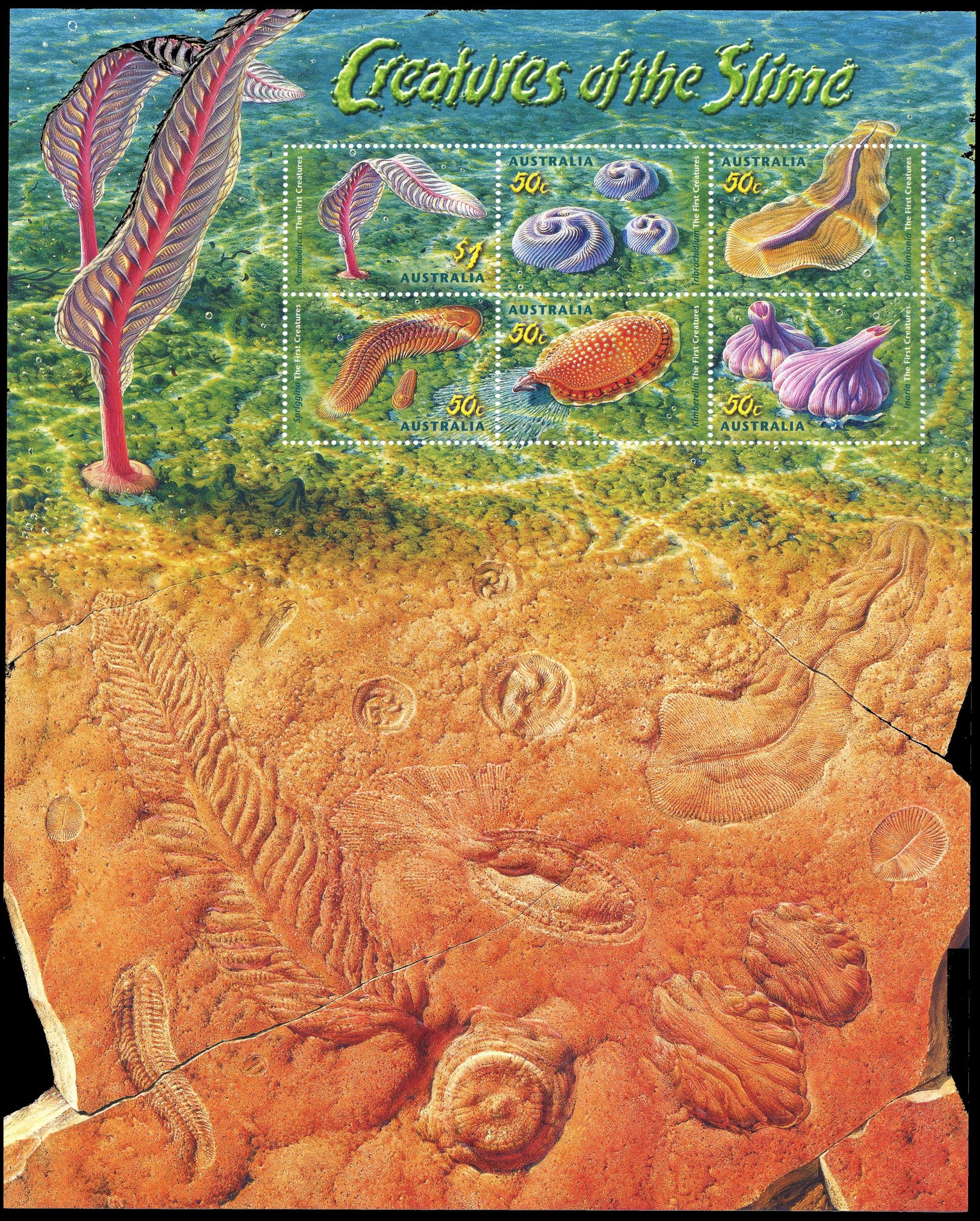
The renowned Australian paleoartist Peter Trusler has designed several postage stamps for Australia Post featuring prehistoric animals from different periods of Earth's history: "Creatures of the Slimes" (Ediacaran biota - approximately 635 to 538 million years ago) in 2005; "Australia’s Dinosaur Era" in 1993; "Australian Dinosaurs" in 2022 and "Megafauna" (giant prehistoric mammals of Australia) in 2008.
The following prehistoric animals depicted on the stamps and selvages of the Mini-Sheet
Oestokerkus megacholix (Megacheiran Arthropod) - depicted on the left side of the Mini-Sheet
Oestokerkus megacholix was discovered in the Lower Cambrian Emu Bay Shale at Buck Quarry
on Kangaroo Island and was formally described in 2011 by Gregory Edgecombe, Diego García-Bellido,
and John Paterson on the basis of numerous well-preserved specimens.
The researchers recognized it as the first Australian member of the family Leanchoiliidae,
a group of Cambrian "great-appendage arthropods" (Megacheira) previously known mainly from
the famous Burgess Shale of Canada and the Chengjiang biota
of China.
The new genus was established because of its distinctive forked tail (telson), a feature that inspired
the name Oestokerkus, derived from Greek words meaning "forked tail", and clearly distinguished it from its close
relative Leanchoilia.
The species name is also derived from Greek meaning “large” and “bile/gut,” referring to the
exceptionally developed digestive glands preserved in the fossils.
The discovery provided an important link between the Cambrian faunas of
Australia ,
China,
and North America and further demonstrated the global distribution of these early arthropods.
The exceptional preservation of the Emu Bay Shale also revealed details of the animal's anatomy,
including its digestive glands and sensory appendages, offering rare insights into the biology of
organisms that lived more than 500 million years ago.
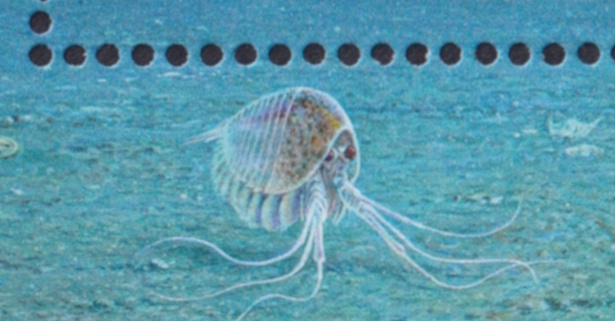
|
| Oestokerkus megacholix on the margin of Creatures of the Palaeozoic Mini-Sheet of Australia 2026. |
In addition to a pair of eyes, the cephalic shield bore a pair of frontal appendages with long filaments that served a sensory function. These appendages could rotate backwards when the animal needed to swim rapidly above the seafloor, as shown in the illustration.
The body possessed at least 13 pairs of appendages, including short walking limbs that probably did not reach the seafloor. Internally, there were 13 pairs of large digestive glands—two pairs located in the head and the remainder in the trunk. Oestokerkus megacholix is the larger of the two Australian representatives of the Cambrian megacheirans, or “great-appendage arthropods”.
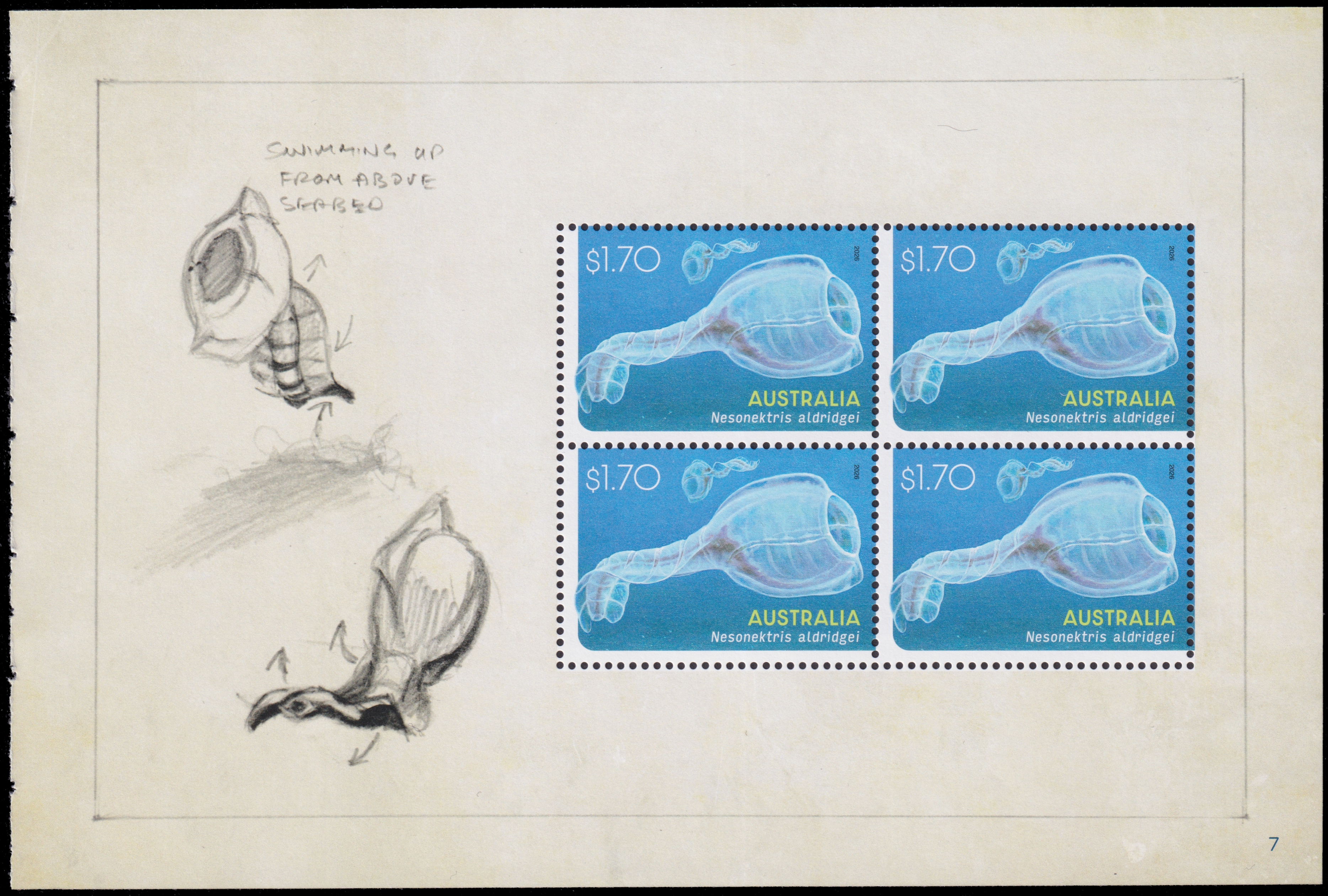
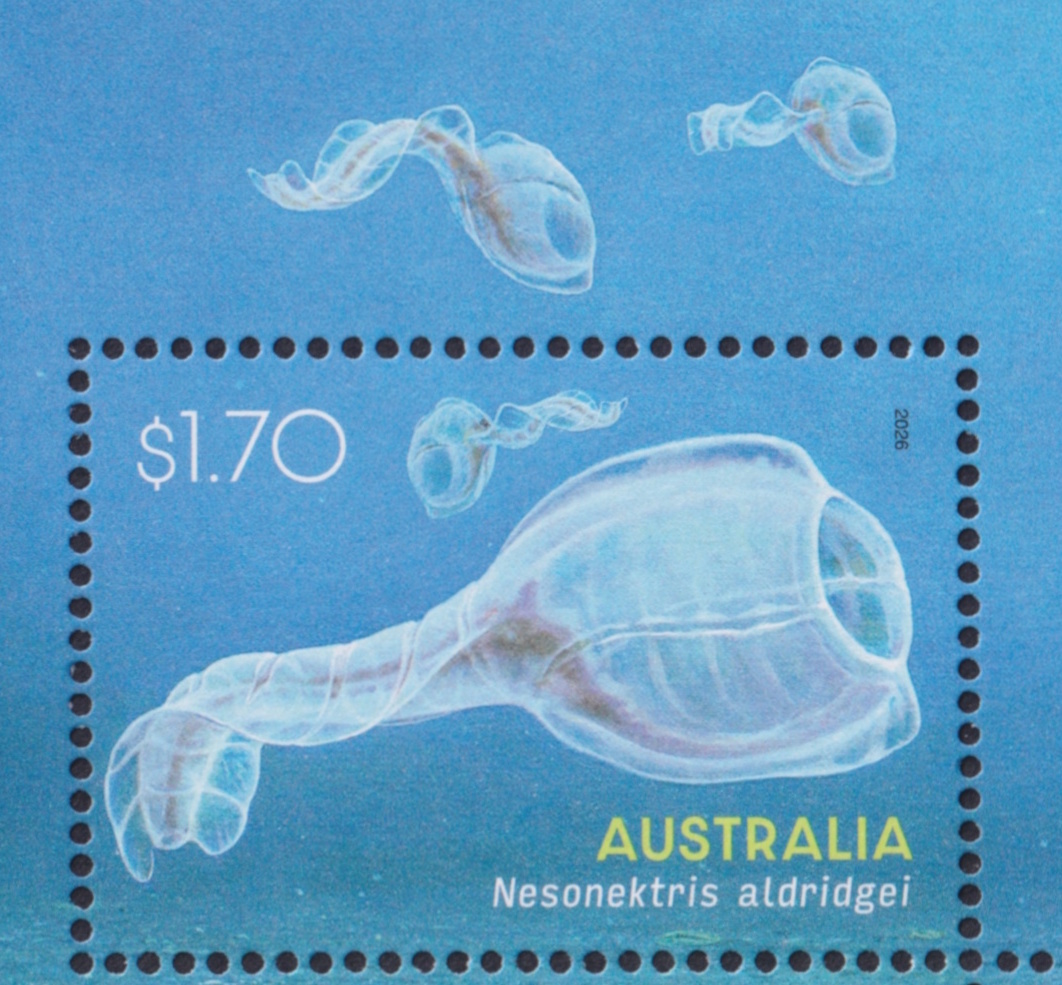
Nesonektris aldridgei (vetulicolian) - depicted on one of the stamps and on the left side of the Mini-Sheet
|
| Nesonektris aldridgei on Creatures of the Palaeozoic panel of Prestige Booklet of Australia 2026. |
These animals grew up to 18 centimetres in length, swam in the water column, and were very common, with approximately 300 specimens in the collections of the South Australian Museum. The genus name derives from Greek and means “island swimmer”, referring to its mode of life and its discovery on Kangaroo Island.
|
| Nesonektris aldridgei on the stamp and the margin of Creatures of the Palaeozoic Mini-Sheet of Australia 2026. |
Most specimens of Nesonektris are found twisted and broken in coarser-grained sediments, indicating they were likely trapped by underwater mudflows while swimming and subsequently buried after being transported into deeper waters. Although vetulicolians were originally interpreted as arthropods because of their segmented tails, the Emu Bay Shale fossils now support their interpretation as relatives of tunicates (such as sea squirts and salps), and thus distant relatives of vertebrates. Vetulicolians are also known from the Cambrian of China, Canada, and Greenland.
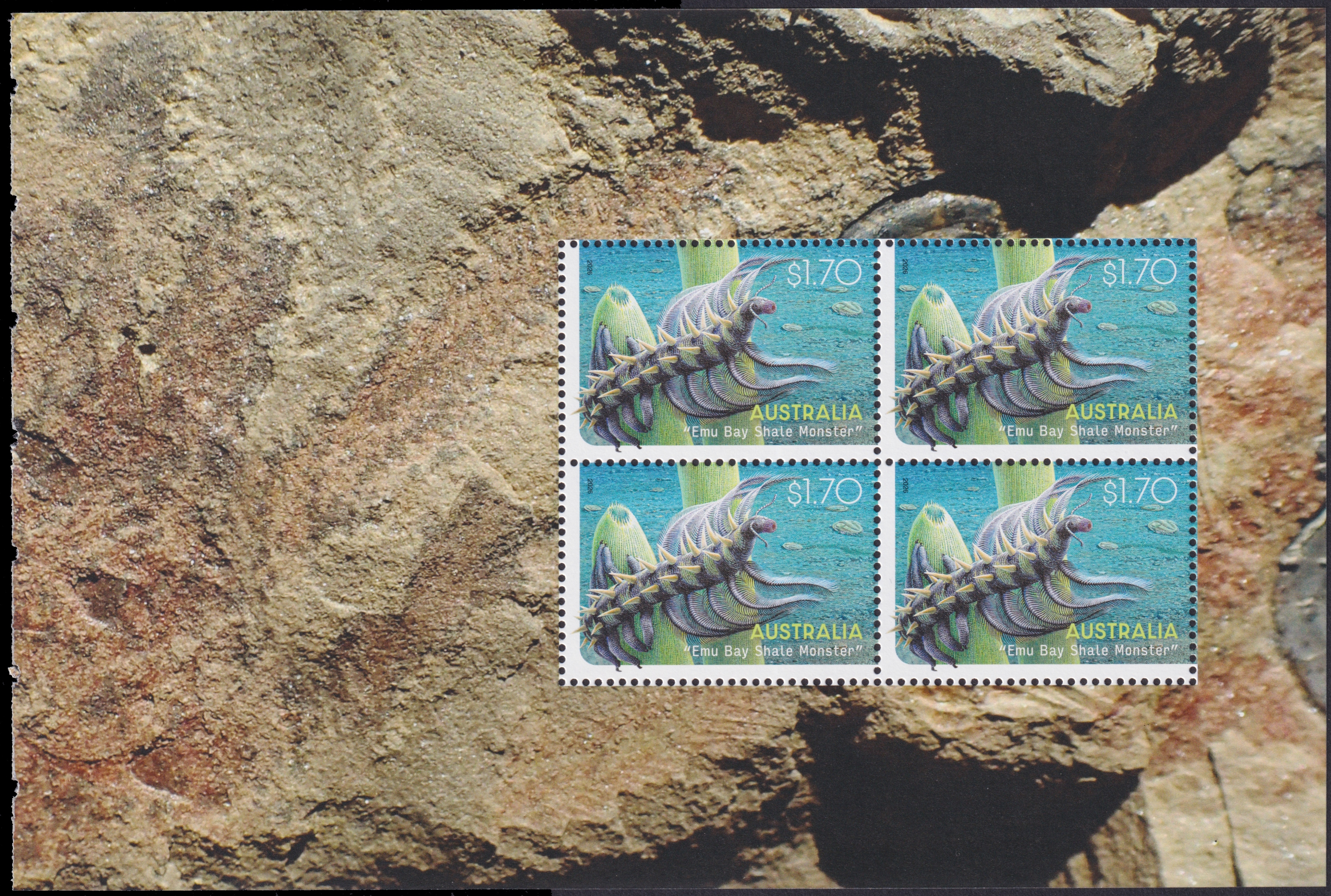
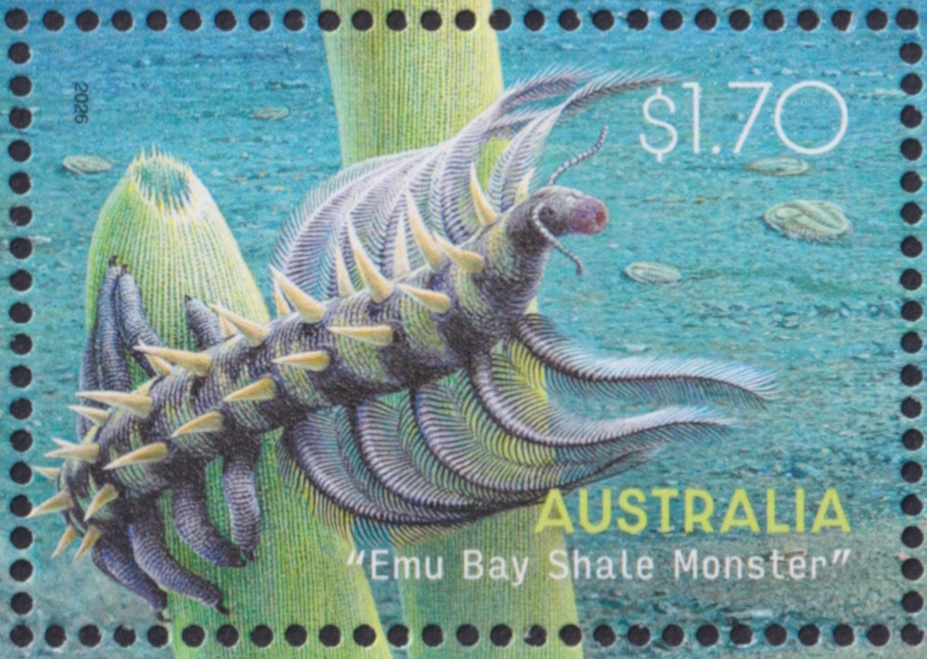
"Emu Bay Shale Monster" (Spiny Lobopodian) - depicted on one of the stamps and on the left side of the Mini-Sheet
|
| "Emu Bay Shale Monster" on Creatures of the Palaeozoic panel of Prestige Booklet of Australia 2026. |
|
| "Emu Bay Shale Monster" on the stamp and the margin of Creatures of the Palaeozoic Mini-Sheet of Australia 2026. |
The preserved body is incomplete but would have exceeded 4 centimetres in length. This soft-bodied, worm-like creature was a marine relative of modern velvet worms. It possessed a mineralized, bonnet-like head shield, protective spines along its back, and five anterior body segments bearing pairs of spiny filter-feeding appendages. The posterior part of the body carried an unknown number of short anchoring lobopods (or "fleshy legs"), each terminating in a pair of claws.
Similar spiny lobopodians have since been discovered in China, where exceptionally preserved fossils reveal a forward-facing mouth, a pair of sensory antenna-like structures, and a pair of eyes. These features have been incorporated into the reconstruction shown here.
The "Emu Bay Shale Monster" is depicted with aposematic colouration—bright, conspicuous colours that warn potential predators of its spiny defences, much like those seen in some modern caterpillars and wasps.
Leptomitid sponge - depicted on the stamps "Emu Bay Shale Monster" and in the full form on the Mini-Sheet
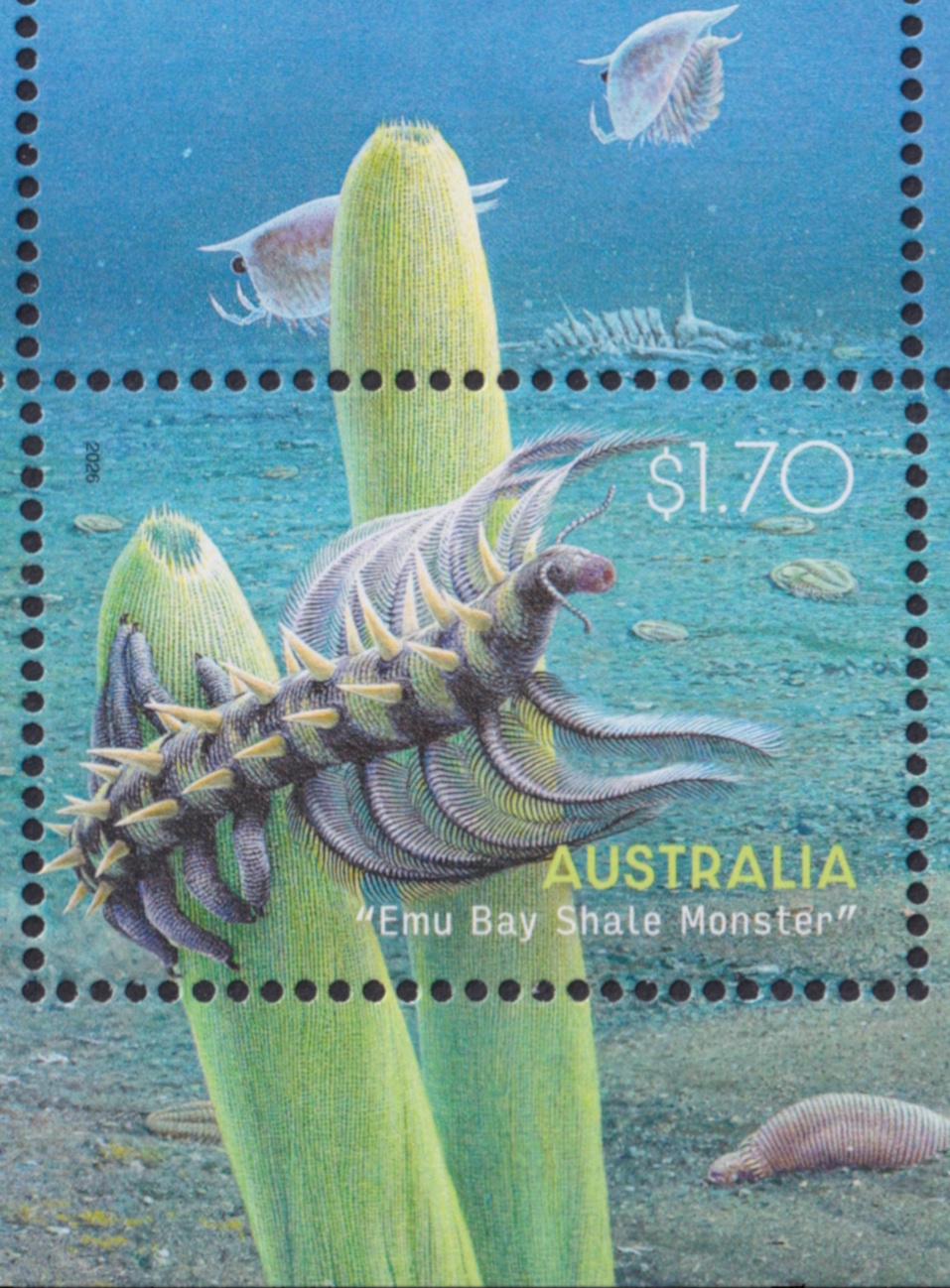 |
| Leptomitid sponge on the stamp and the margin of Creatures of the Palaeozoic Mini-Sheet of Australia 2026. |
These elongate, tubular sponges reached lengths of about 20 centimetres, and approximately 130 specimens are known from the Emu Bay Shale. They were mostly composed of long, thin spicules called oxeas, which formed a very thin, double-layered palisade through which water could flow. Organic particles were filtered from the water before it exited through the opening at the top, known as the osculum.
These sponges grew perpendicular to the seafloor, elevating themselves high enough to access suspended particles drifting in the currents. Canadian fossils suggest an association between sponges and clawed lobopodians (such as the "Emu Bay Shale Monster"), which may have climbed the sponge body to access food particles suspended higher in the water column, as depicted on the stamp and in the accompanying reconstruction.
Isoxys communis (Bivalved Arthropod) - depicted on the middle of the Mini-Sheet
Isoxys communis is one of the most abundant arthropods in the Lower Cambrian Emu Bay Shale
of Kangaroo Island, with more than 550 specimens known.
The genus Isoxys was first described in the 19th century from Cambrian rocks of
North America and is now known from fossil deposits around the world.
Its name is derived from Greek words meaning "equal" and "sharp", referring to the distinctive pair
of long spines projecting from the front and rear of the carapace.
The species name communis, Latin for "common", reflects its abundance in the Emu Bay Shale and
other Cambrian fossil assemblages.
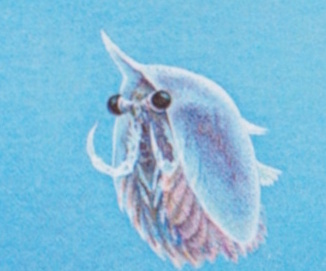 |
| Isoxys communis on margin of Creatures of the Palaeozoic Mini-Sheet of Australia 2026. |
These animals may have formed swarms in the water column or close to the seafloor but were probably not capable of crawling along the substrate. Isoxys communis is the largest known representative of a genus that includes more than twenty species distributed across Cambrian deposits worldwide.
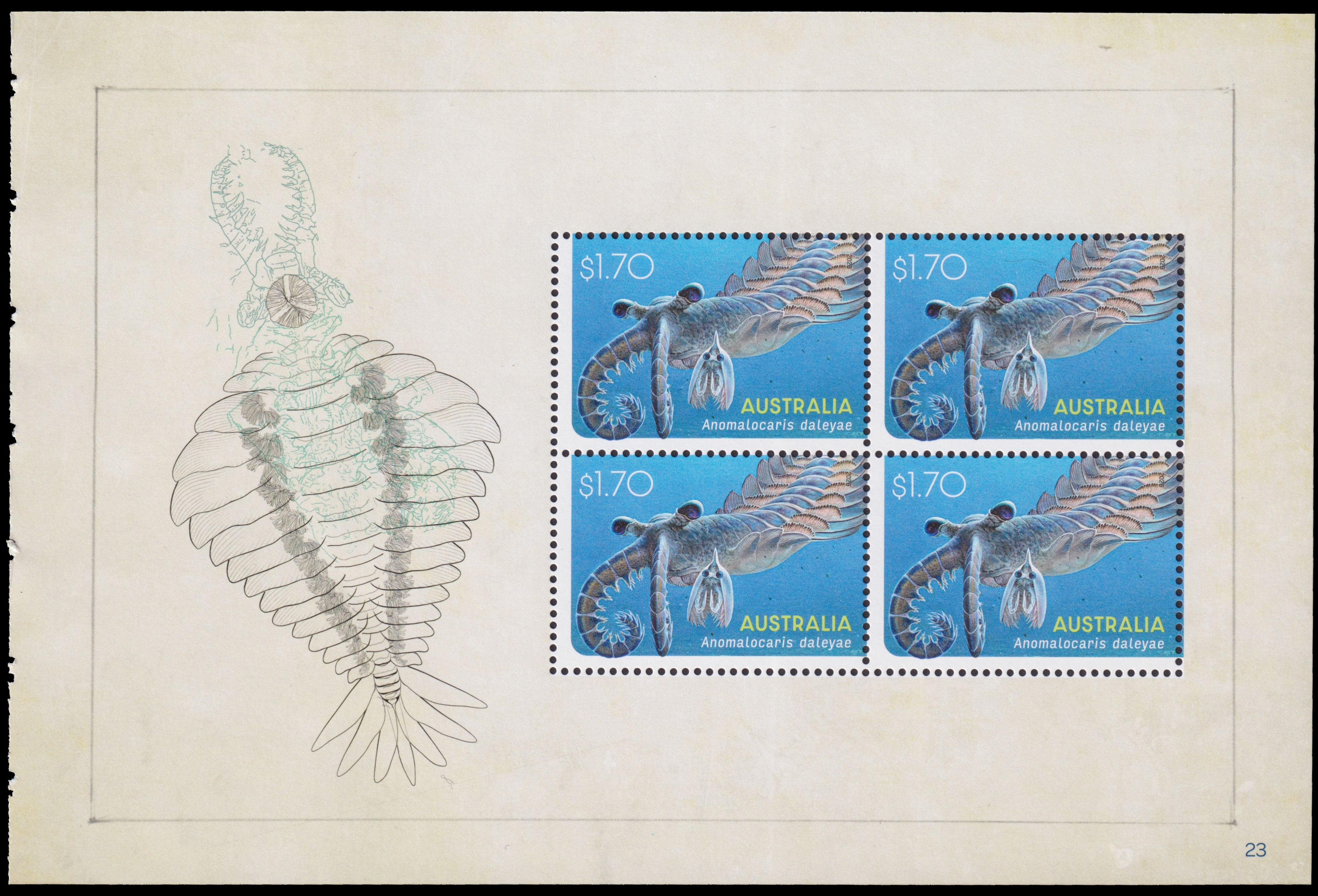
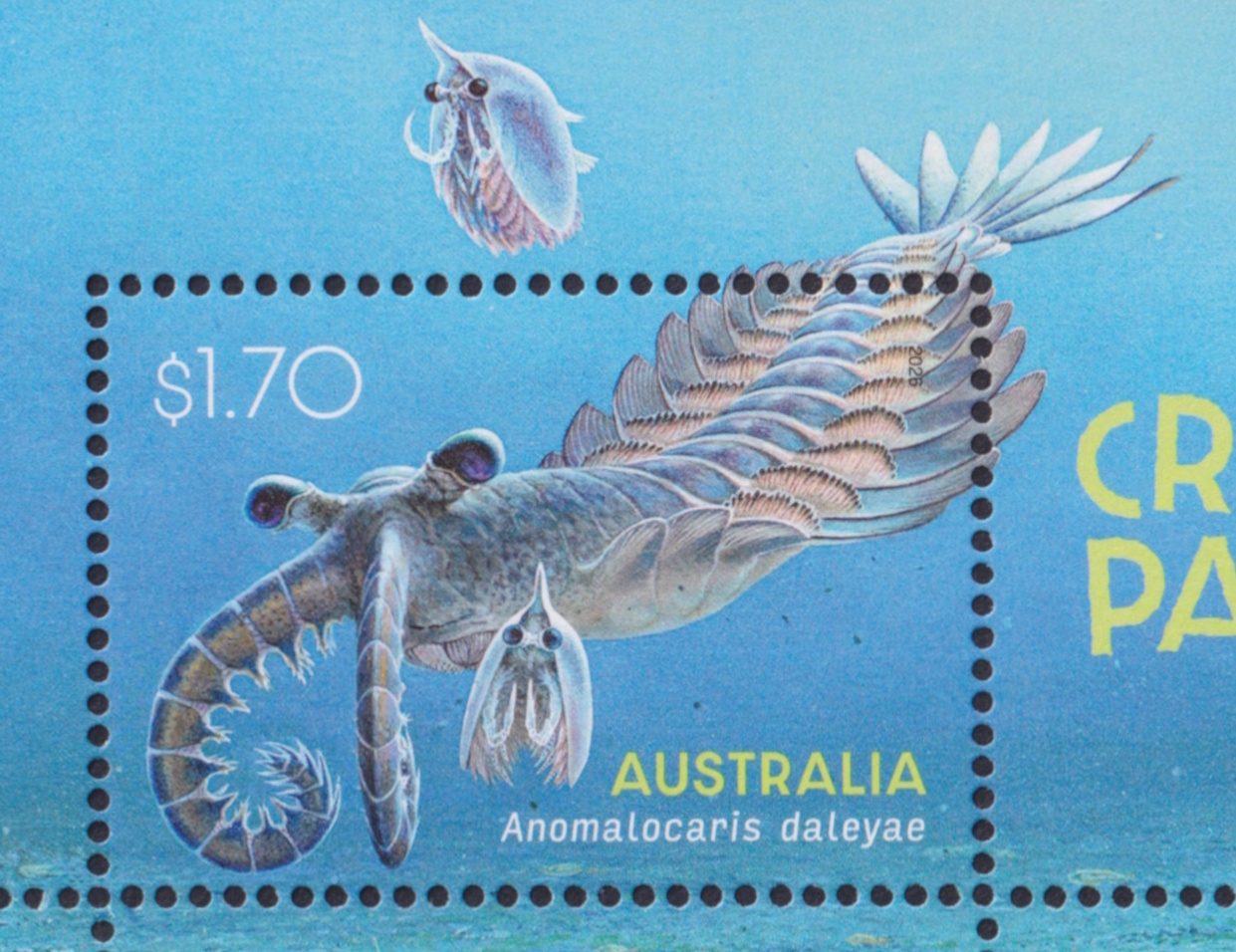
Anomalocaris daleyae (Radiodont Arthropod) - depicted on one of the stamps and in the middle of the Mini-Sheet
|
| Anomalocaris daleyae on Creatures of the Palaeozoic panel of Prestige Booklet of Australia 2026. |
|
| Anomalocaris on the stamp and the margin of Creatures of the Palaeozoic Mini-Sheet of Australia 2026. |
So far, only disarticulated remains have been recovered, including frontal appendages, oral cones (circular mouths composed of radial plates), swimming flaps, gills, and exceptionally preserved eyes. Unlike any other known Cambrian fossil locality, the Emu Bay Shale has yielded radiodont eyes preserving thousands of individual hexagonal lenses, each approximately 0.3 millimetres in diameter. It is estimated that the eyes of Anomalocaris may have contained up to 25,000 lenses, each functioning like a pixel in a digital camera.
This extraordinary visual system provided some of the most acute vision known among Cambrian animals and rivalled that of modern arthropod predators such as dragonflies. Combined with its powerful spiny frontal appendages, armour-plated oral cone, and large size, this made Anomalocaris a formidable apex predator, often described as the "great white shark" of the Cambrian seas.
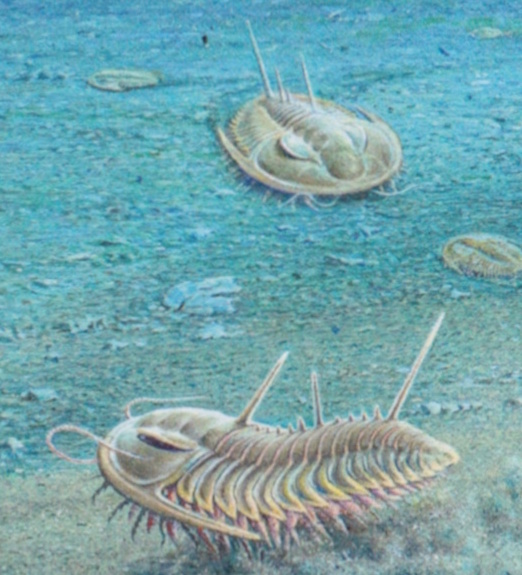
Redlichia takooensis (Trilobite Arthropod) - depicted in the middle of the Mini-Sheet
|
| Redlichia takooensis on the stamp and the margin of Creatures of the Palaeozoic Mini-Sheet of Australia 2026. |
This trilobite grew up to eight centimetres in length and possessed a calcium carbonate exoskeleton with large dorsal spines on several segments, particularly on the 11th thoracic segment, where the spine extended well beyond the length of the body. Despite this formidable defence, many specimens show evidence of attacks by larger predators.
The exceptionally preserved fossils of the Emu Bay Shale reveal not only the hard exoskeleton but also details of the animal's soft anatomy, including digestive organs and antennae that probably functioned as sensory structures similar to those of modern crustaceans. These fossils provide rare insights into the biology and ecology of trilobites that lived more than 500 million years ago.
Redlichia rex (Trilobite Arthropod) - depicted on one of the stamps and on the left side of the Mini-Sheet
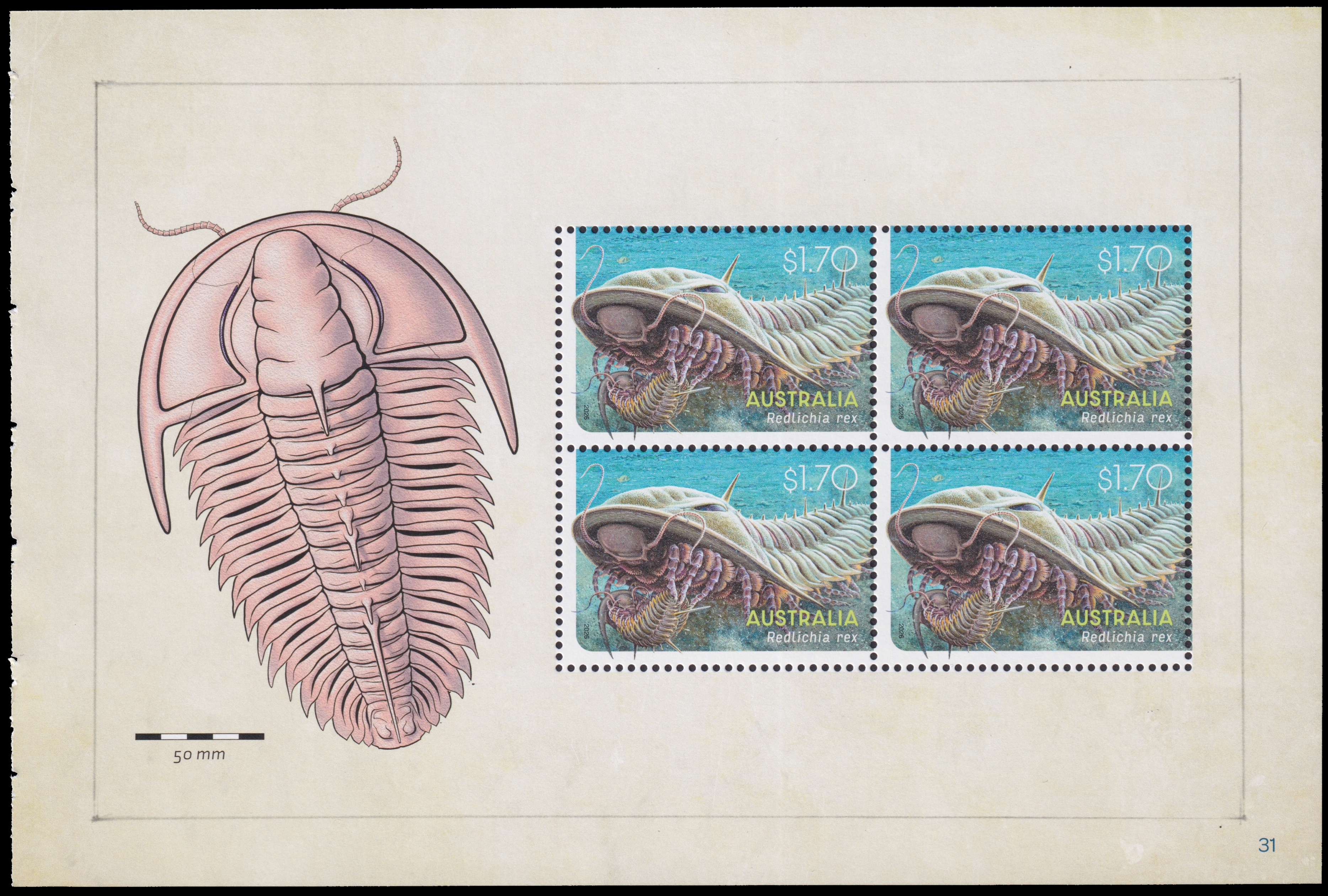
This trilobite reached around 25 centimetres in length, which makes it the largest trilobite
known from the Cambrian of Australia.
It was not as common as its smaller cousin, Redlichia takooensis, with only around 50 specimens
recorded from available collections.
|
| Redlichia rex on Creatures of the Palaeozoic panel of Prestige Booklet of Australia 2026. |
Redlichia rex is known from the exceptional Cambrian fossil deposits of the Emu Bay Shale, a classic Lagerstätte famous for its extraordinary preservation of both hard and soft-bodied organisms. Its discovery within this formation has provided rare insight into trilobite soft tissue anatomy, which is only very rarely preserved in the fossil record.
The species possesses a mineralised exoskeleton with a line of dorsal spines along the body axis. In several specimens, parts of the soft tissue anatomy are also preserved, including antennae and biramous limb structures. These appendages consist of two branches: an outer flap bearing a fringe of fine setae, likely functioning as a gill, and an inner walking branch composed of seven segments. The limb bases carry rows of robust spines arranged in a saw-like pattern, suggesting an adaptation for processing hard food items.
|
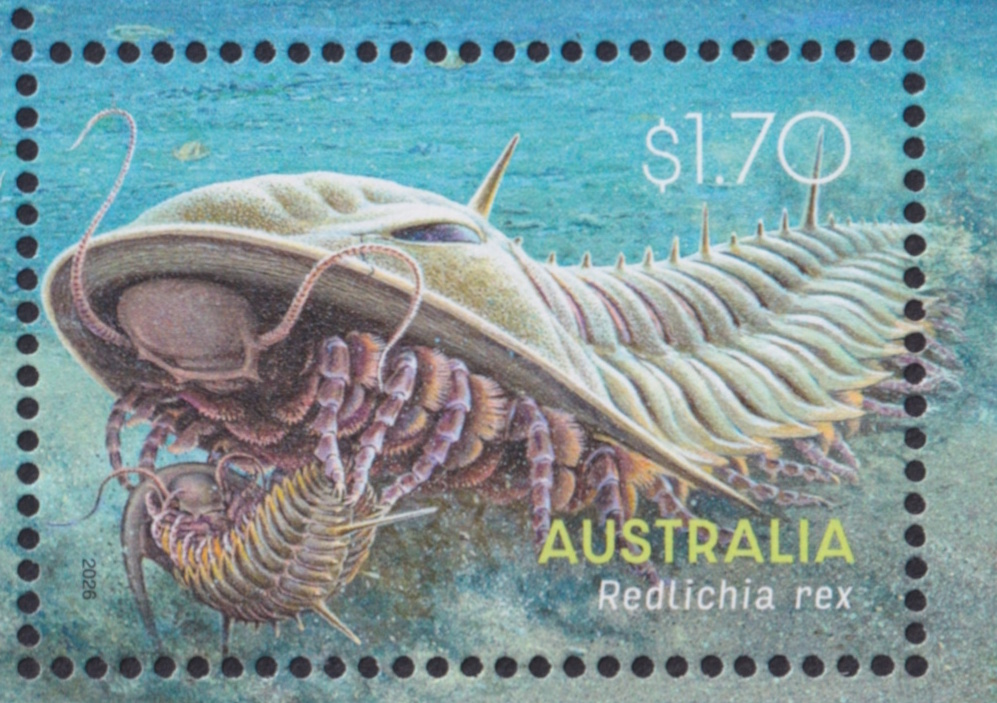
| Redlichia rex on the stamp and the margin of Creatures of the Palaeozoic Mini-Sheet of Australia 2026. |
These features indicate a highly active predatory or scavenging lifestyle. The robust spines were likely used to crush and shred prey, including shelled organisms. It has even been suggested that Redlichia rex contributed to the abundance of large shell fragments and coprolites found in the same deposits, and may have engaged in opportunistic cannibalism.
The genus name Redlichia derives from the name of the Austrian geologist Redlich, while the species epithet rex is Latin for “king,” referring to its unusually large size compared to related species. This naming convention follows the common paleontological practice of combining a historically derived genus name with a descriptive Latin species epithet that highlights a distinctive trait.
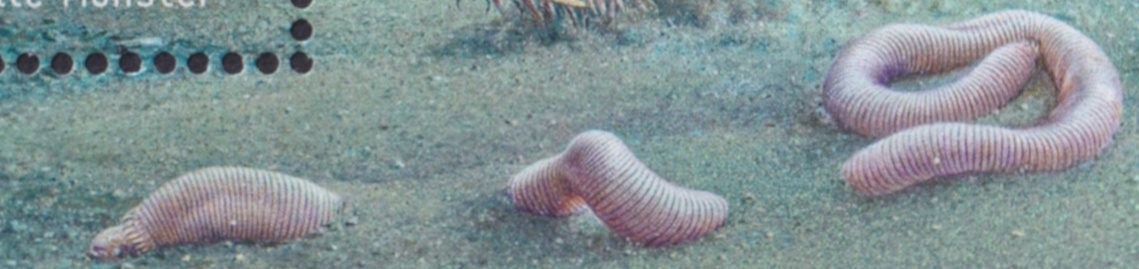
Wronascolex antiquus (Palaeoscolecid Priapulid) - depicted on the right side of the Mini-Sheet
Wronascolex antiquus is the most common worm fossil in the Lower Cambrian Emu Bay Shale,
with more than 350 specimens known.
The genus was established in 2004 and named in honour of the Polish palaeontologist Ryszard Wrona,
combined with the Greek word scolex, meaning "worm".
The species name antiquus is Latin for "ancient", reflecting the great age of these early marine
animals.
The discovery of numerous specimens, including both carcasses and moults, has provided valuable insights
into the growth and ecology of Cambrian priapulid worms.
|
| Wronascolex antiquus on the margin of Creatures of the Palaeozoic Mini-Sheet of Australia 2026. |
Most specimens from the Emu Bay Shale represent carcasses, although some are moults—the discarded outer skin shed as the animal grew. Wronascolex belongs to the palaeoscolecids, an extinct group of armoured worms closely related to modern priapulids, commonly known as "penis worms".
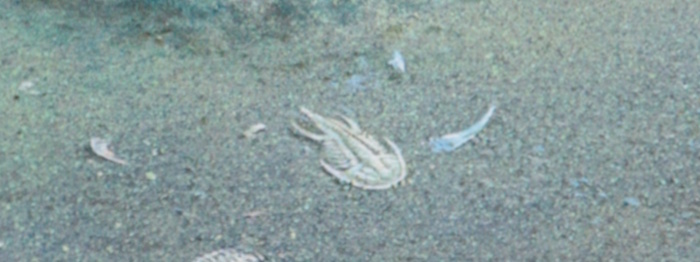
Balcoracania dailyi (Trilobite Arthropod) - depicted on the right side of the Mini-Sheet
This trilobite is small, about 1.5 centimetres in length, and is easily recognisable by its extremely
long thorax bearing a pair of prominent thorn-like “macropleural” spines that extend posteriorly
to the level of the pygidium (tail).
|
| Balcoracania on the stamp and the margin of Creatures of the Palaeozoic Mini-Sheet of Australia 2026. |
Balcoracania dailyi is among the rarest trilobites in the Emu Bay Shale, with only a handful of specimens known from the deposit, making it a particularly significant taxon for understanding Cambrian arthropod diversity.
The genus Balcoracania was named after Balcoracana Creek in the Flinders Ranges of South Australia, where the species was first discovered. The species epithet dailyi honours the Australian palaeontologist Gregory J. (John) Daily, in recognition of his contributions to Cambrian trilobite research.
Fossils of this species have also been reported from Antarctica, which during the Cambrian was part of the supercontinent Gondwana, indicating a much wider palaeogeographic distribution than its modern South Australian occurrences alone suggest.
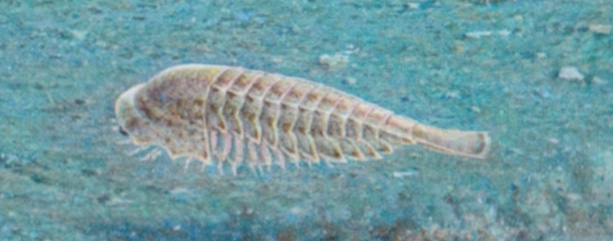
Wisangocaris barbarahardyae (Chelicerate Arthropod) - depicted on the left side of the Mini-Sheet
This arthropod is one of the oldest known relatives of the chelicerates, the group that today includes spiders,
scorpions, horseshoe crabs and sea spiders.
It inhabited the shallow seas that covered South Australia during the Early Cambrian, approximately 514 million years ago.
The animal possessed a segmented body protected by a broad head shield and specialised feeding appendages equipped with
spiny gnathobases that enabled it to crush and process prey.
Fossils preserving digestive remains suggest that it fed on trilobites and other hard-shelled organisms living
on the sea floor.
|
| Wisangocaris barbarahardyae on the margin of Creatures of the Palaeozoic Mini-Sheet of Australia 2026. |
The discovery of Wisangocaris was of considerable scientific importance because it helped bridge a gap in our understanding of chelicerate evolution. Together with other spectacular fossils from the Emu Bay Shale, it provides a rare glimpse into the Cambrian Explosion, the pivotal period in Earth's history when most major groups of animals first appeared in the fossil record. More than half a billion years later, the descendants of these early arthropods remain among the most successful and diverse animals on the planet.
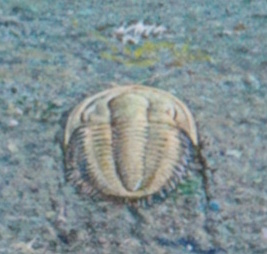
Estaingia bilobata (Trilobite Arthropod) - depicted on the left side of the Mini-Sheet
This trilobite was one of the most common inhabitants of the shallow marine environments that covered much of South
Australia during the Early Cambrian, approximately 514 million years ago.
Like other trilobites, it possessed a hard external skeleton divided into three longitudinal lobes,
a feature that gave the group its name.
The animal crawled across the sea floor searching for food and periodically shed its exoskeleton as it grew,
leaving behind fossils that are now abundant in Cambrian rocks throughout the region.
|
| Estaingia bilobata on the margin of Creatures of the Palaeozoic Mini-Sheet of Australia 2026. |
The abundance and wide geographic distribution of Estaingia bilobata have made it a particularly valuable index fossil. Because it occurs within a relatively narrow interval of geological time, palaeontologists use the species to correlate Cambrian rock formations across different parts of Australia and beyond. Its fossils help establish the age of sedimentary deposits and provide an important framework for studying the remarkable diversification of marine life during the Cambrian Explosion.
Although overshadowed by spectacular predators such as Anomalocaris, species such as Estaingia formed the backbone of Cambrian marine ecosystems. Their abundance provided a vital food source for larger predators and contributed to the complex ecological interactions that characterised some of Earth's earliest animal communities.
Products and associated philatelic items
| FDC | First-Day-of-Issue Postmark | |
 |
 |
 |
| Medallion Cover | Presentation Pack | Prestige Booklet |
 |
 |
 |
| Maxi Cards | Gutter Pairs | Mini-Sheet |
 |
 |
 |
References
- Technical details, official press release and short description of depicted animals:
- Stamp bulletin No. 399, 2026 of Australian Post.
- Prestige Booklet of Australian Post - 10 of 12 prehistoric creatures depicted on the Mini-Sheet, very well described in the booklet, which also contain additional 4 Mini-Sheets, shown in the article.
- Adelaide University
- South Australia Museum
- The Guardian
- The Emu Bay Shale:
South Australia Museum National Library of Medicine Wikipedia, - Oestokerkus megacholix:
Wikipedia,
"A ‘Collins’ monster’-type lobopodian from the EmuBay Shale Konservat-Lagerstätte (Cambrian), South Australia, by Diego C. García-bellido , Gregory D. Edgecombe , John R. Paterson & Xiaoya MaPublished online: 20 May 2013 (PDF),
- Nesonektris aldridgei:
Wikipedia,
"A new vetulicolian from Australia and its bearing on the chordate affinities of an enigmatic Cambrian group", by GREGORY D. EDGECOMBE, DIEGO C. GARCÍA−BELLIDO, and JOHN R. PATERSON (PDF),
- "Emu Bay Shale Monster" / "Collins' Monster":
"A new leanchoiliid megacheiran arthropod from the lower Cambrian Emu Bay Shale, South Australia", by GREGORY D. EDGECOMBE, DIEGO C. GARCÍA−BELLIDO, and JOHN R. PATERSON (PDF),
- Leptomitid sponge:
Wikipedia,
"Advanced adaptive strategies in an ancestral body plan: insights from a 510-Ma-old leptomitid sponge", by Cui Luo; Yanjie Hong; Zhixin Sun; Haijing Sun; Swee Cheng Lim; Tianyu Wang; Lei Zhang; Fangchen Zhao
- Isoxys communis:
Wikipedia, - Anomalocaris daleyae:
Wikipedia, University of New England, - Redlichia takooensis:
Wikipedia, - Redlichia rex:
Wikipedia,
Novataxa,
- Wronascolex antiquus:
Cambrian palaeoscolecids (Cycloneuralia) from Gondwana and reappraisal of species assigned to Palaeoscolex, by Diego C. García-Bellido - Balcoracania dailyi:
Wikipedia, - Wisangocaris barbarahardyae:
Wikipedia, - Estaingia bilobata:
Wikipedia,