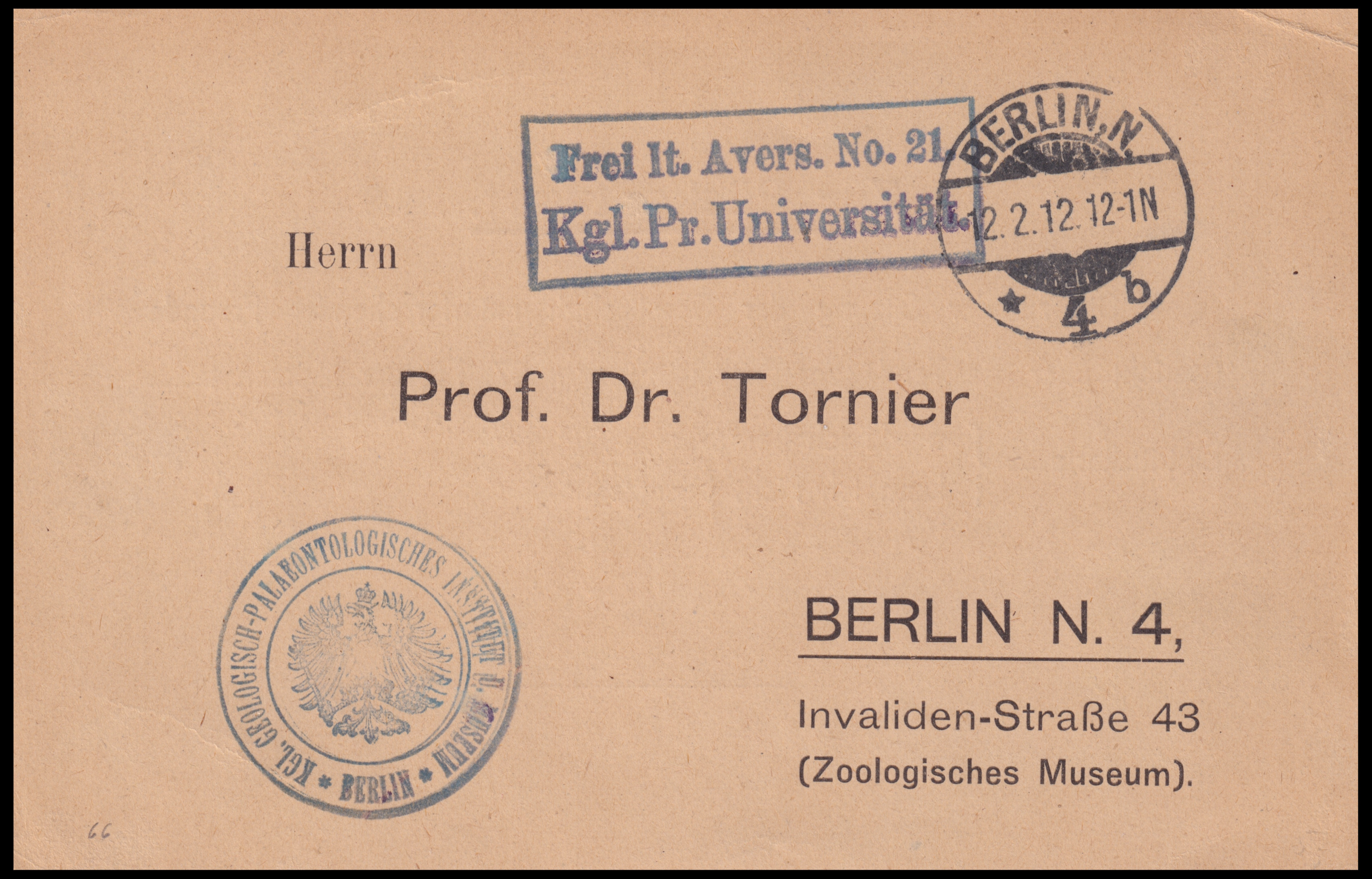
Reply card of Zoological Museum of Berlin from 1912
 |
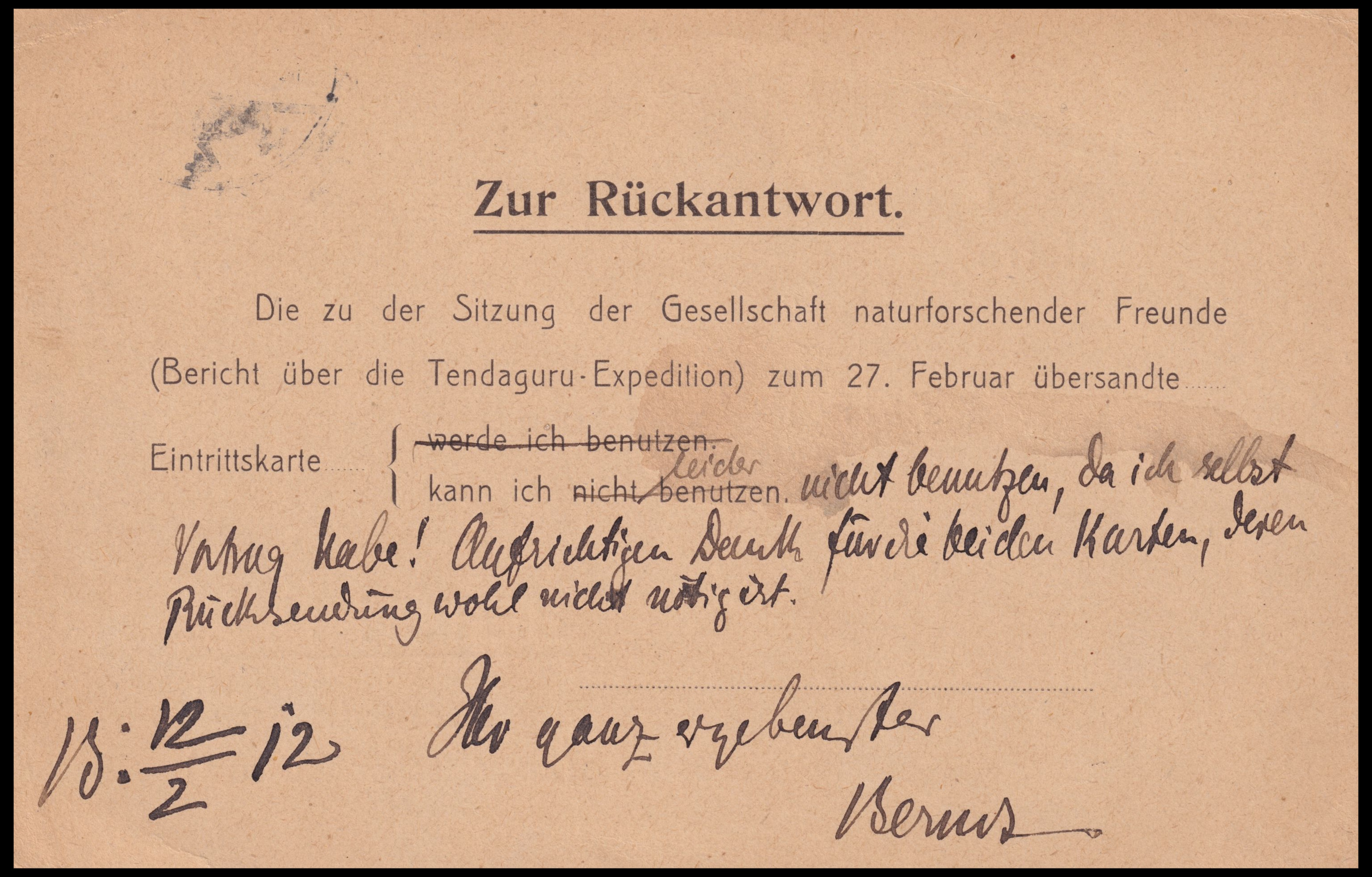 |
| The reply card of Zoological Museum of Berlin, sent to Professor Dr. Gustav Tornier on February 12th, 1912 | |
The postcard

|
| Professor Dr. Gustav Tornier, ca. 1905. Image credit: Wikimedia. |
Herrn [Mr.] Prof. Dr. Tornier
BERLIN N. 4,
Invaliden-Straße 43
(Zoologisches Museum)
Between 1907 and 1924, Tornier served on the board of the Gesellschaft Naturforschender Freunde zu Berlin (Society of Friends of Natural History), and in 1912 he was the Society’s chair.
In this role, he was closely involved in supporting and promoting the Tendaguru Expedition (1910–1912), in what was then the German colony of East African, still the largest German dinosaur excavation campaign to date.
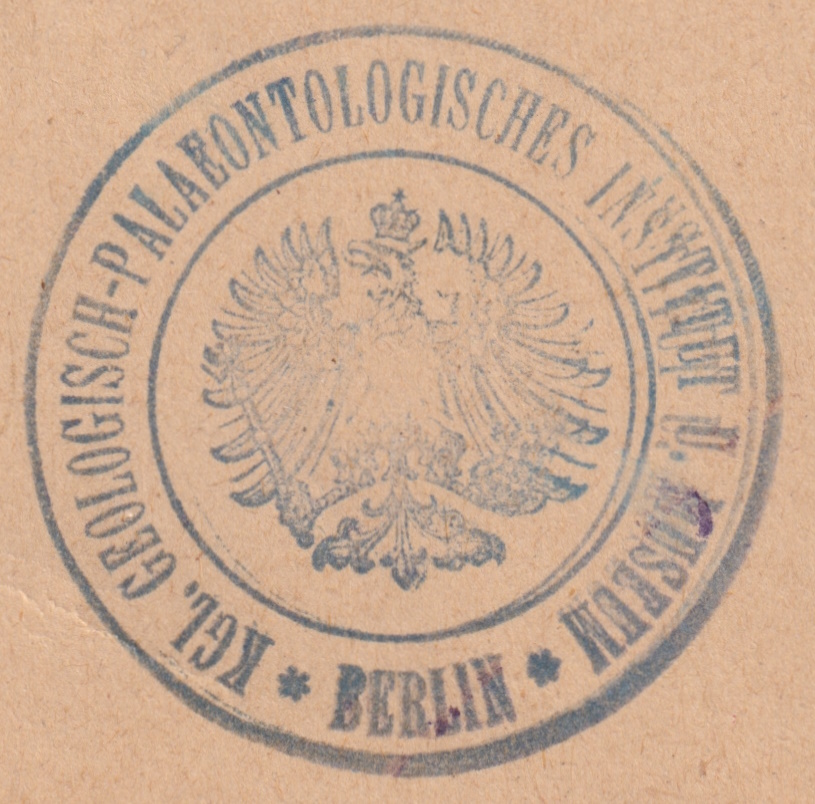
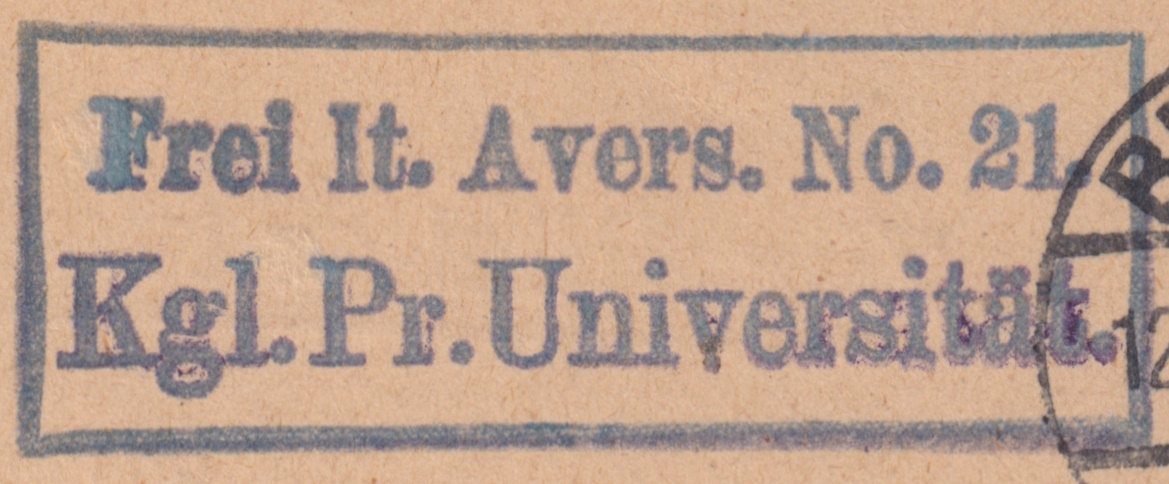
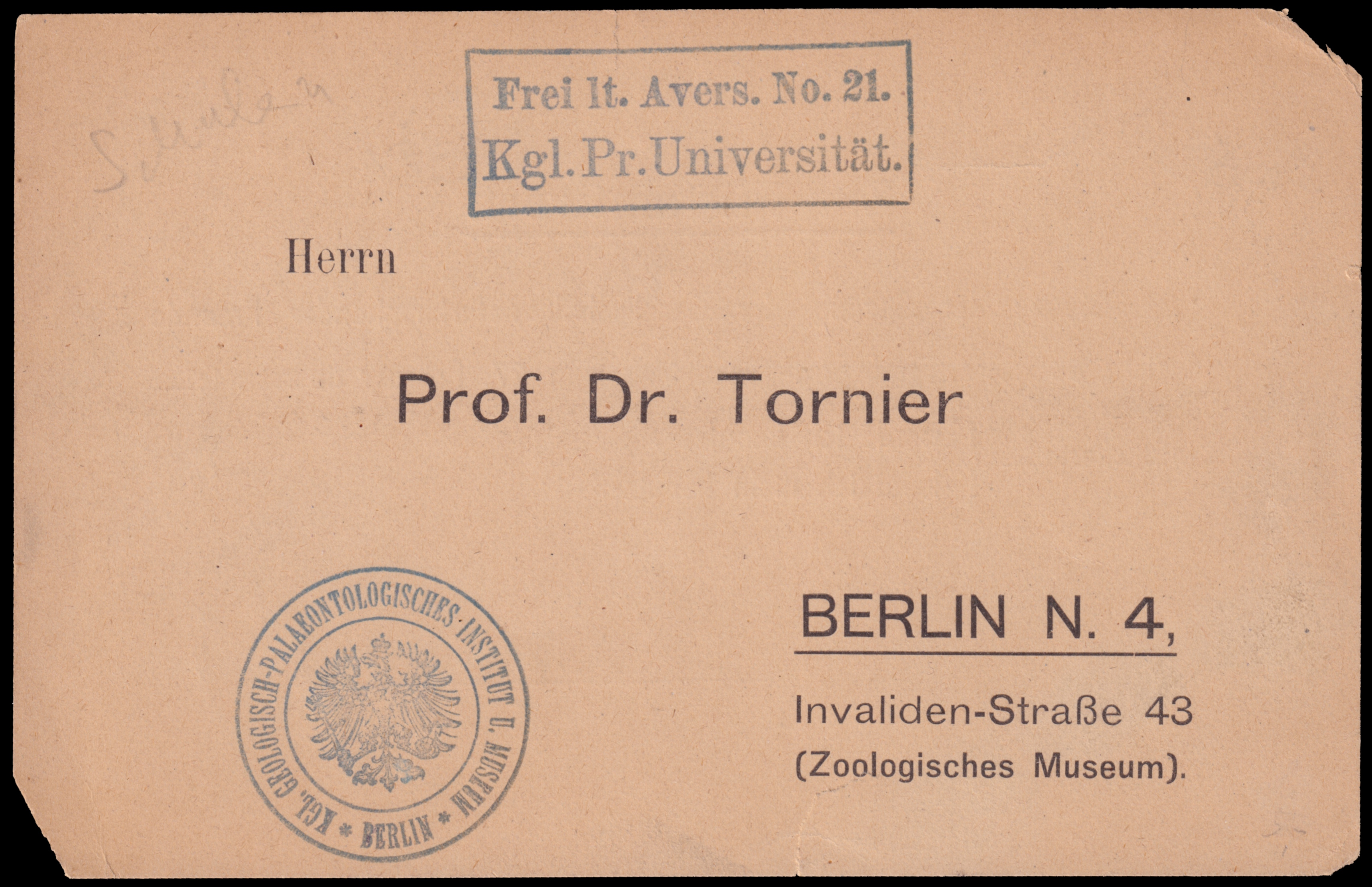
There are three handmarks on the front side of the postcard:
 |
 |
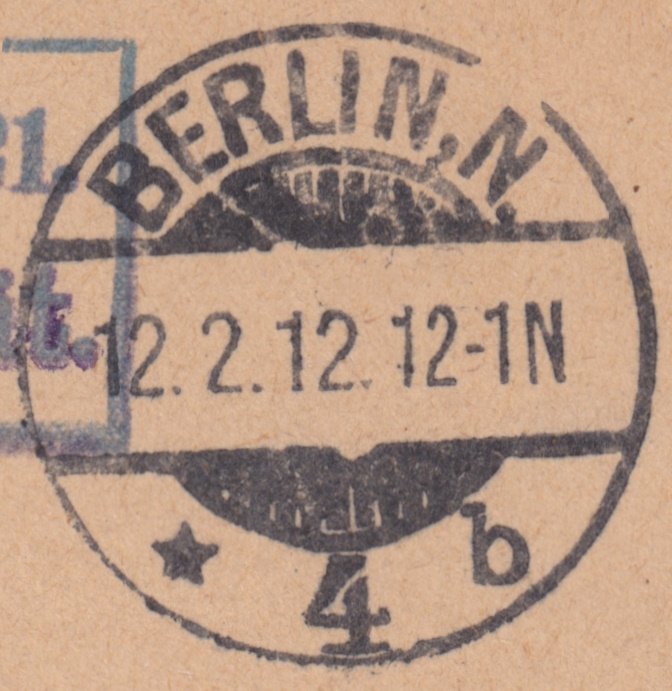 |
| 1. Institutional seal | 2. Free postage mark | 3. The date postmark |
| All three images were cleaned up by AI, for the original, please click on the images | ||
-
A blue, round, institutional seal (lower left)
"Geologisch-Paläontologisches Institut u. Museum d. Kgl. Universität Berlin"
with the Prussian eagle emblem in the middle, can be translated as "Geological-Paleontological Institute and Museum of the Royal University of Berlin ". - A blue rectangular postal mark in the center:
"Frei lt. Avers. No. 21 / Kgl. Pr. Universität"
indicates postage free privilege (“Frei lt. Avers” - free according to statute) granted to the Royal Prussian University (Königlich Preußische Universität) — meaning it was official university correspondence.
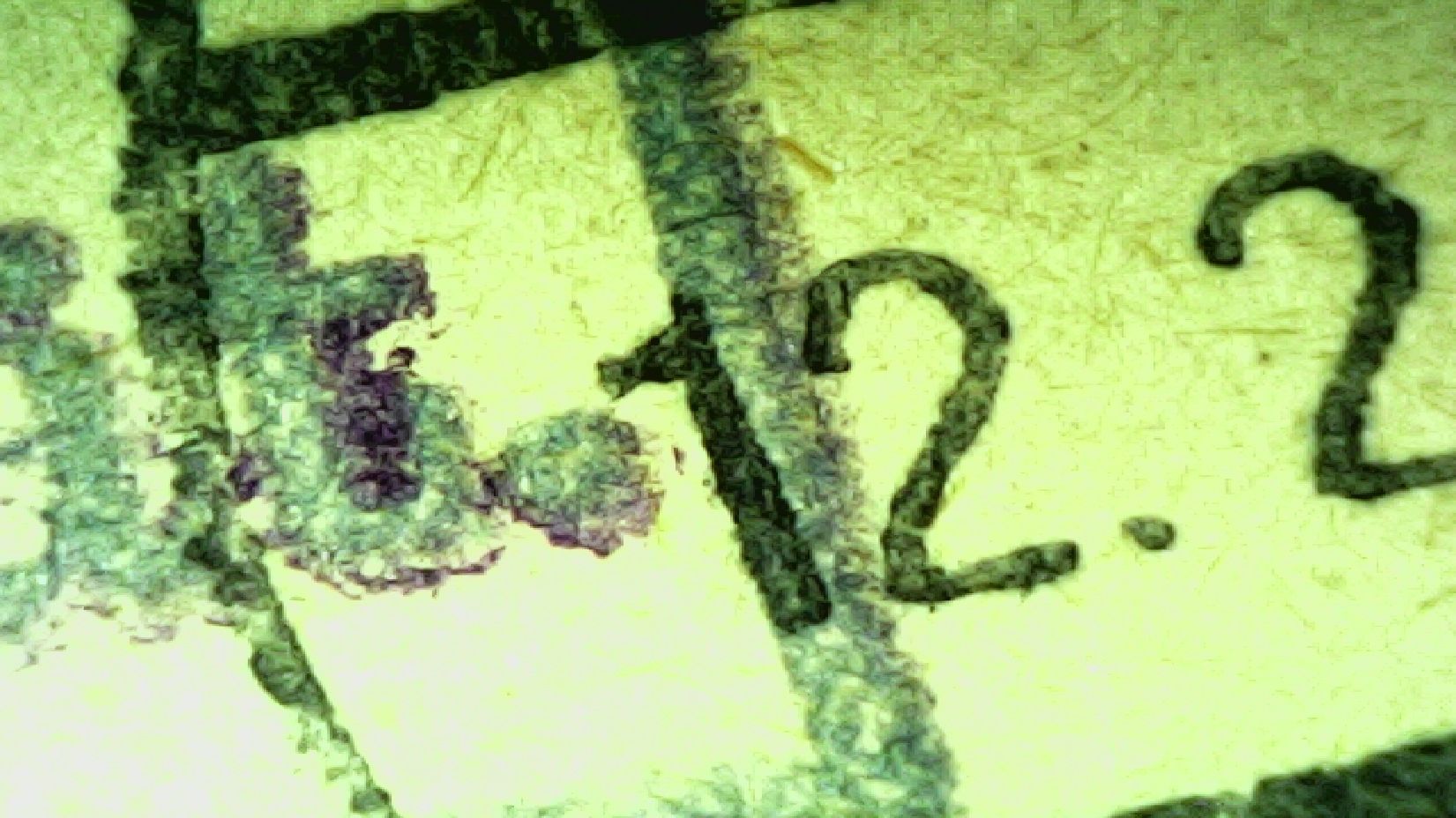
This postal mark was applied by the University, similar to a modern meter stamp, and was then cancelled by the round dated postmark at the post office. - A Berlin N.4 postmark dated 12 February 1912 — implying the postcard originated from that museum/institution,
and was addressed to Tornier in the same district.
“Berlin N. 4” means Berlin, Northern Postal District No. 4. This system was used until the introduction of the five-digit postal codes in the 1960s (and earlier versions in the 1940s).
However, the sender politely declines an invitation as he has his own lecture on the same day.
| Original text in German [Printed part] Die zu der Sitzung der Gesellschaft naturforschender Freunde (Bericht über die Tendaguru-Expedition) zum 27. Februar übersandte Eintrittskarte kann ich ... [Handwritten part] leider nicht benutzen, da ich selbst Vortrag habe! Aufrichtigen Dank für die beiden Karten, deren Rücksendung wohl nicht nötig ist. 15/2 12 Ihr ganz ergebener [signature] |
Translation to English. [Printed part] The admission ticket sent for the meeting of the Society of Friends of Natural Science on February 27 (Report on the Tendaguru Expedition) can I ... [Handwritten Part] unfortunately cannot use, as I have a lecture myself! Sincere thanks for the two tickets, whose return is probably not necessary. 15/2 12 Yours very sincerely [signature]_ |
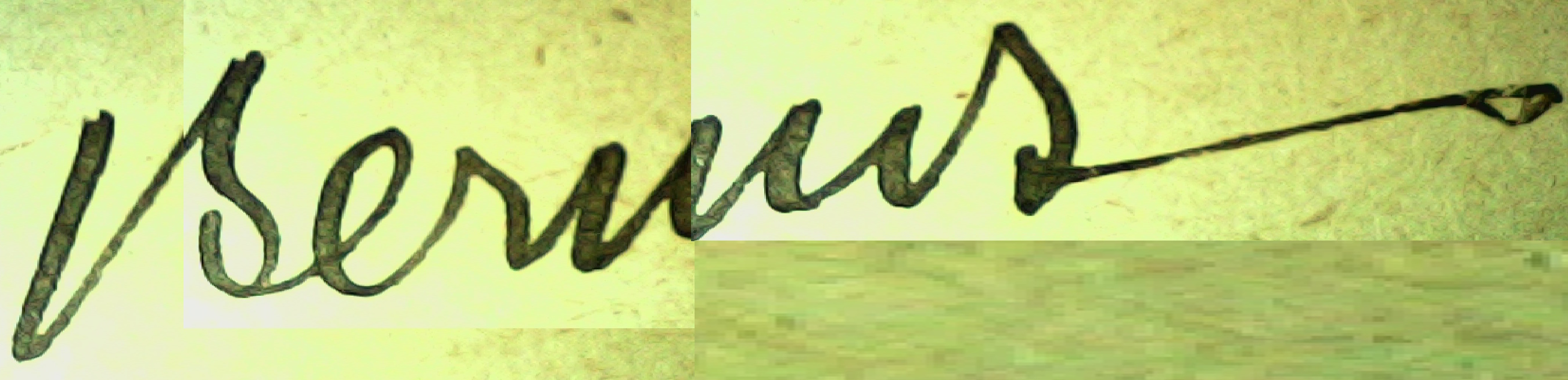
The signature on the card is unfortunately difficult to read and cannot be identified with certainty. Although the reply-card bears a signature that appears to read Vernus, Bernus, Berns or Berndt, no archival or published record associates any person by that name with the 1912 meeting, the supporting society, or the Tendaguru Expedition. Therefore, the identity and role of the signatory remain unknown.
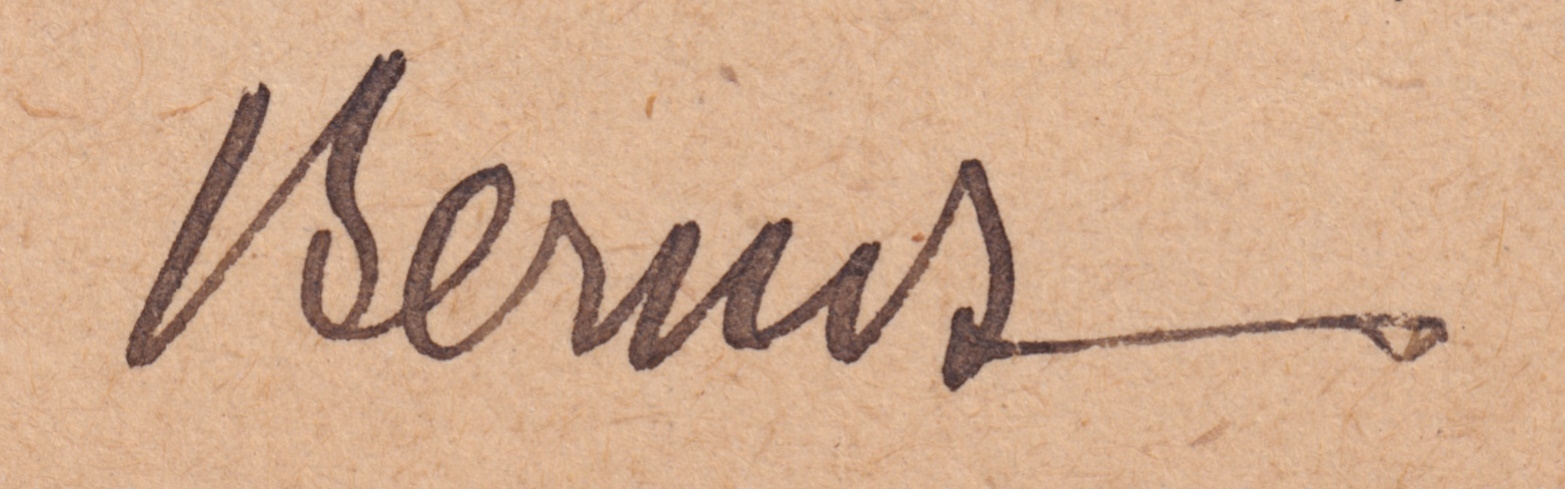 |
| The signature of the sender of the postcard. |
*Wilhelm Berndt (1878-1945) oversaw the zoological teaching collection at the University of Berlin from 1906, prepared teaching materials and collections, and may have served administrative roles in exchange between institutes.
*Jan (Johannes) Versluys (1873–1939) was a Dutch zoologist and anatomist who worked in Germany for a time, including in Berlin, and corresponded with leading zoologists there — such as Gustav Tornier, Franz Eilhard Schulze, and others at the Zoologisches Museum der Universität Berlin.
Around 1909–1912, he was active in publishing on reptile skull anatomy and vertebrate comparative morphology, and he was affiliated with the Zoological Institute of the University of Berlin for part of that period.
Versluys publications from that time often carry the affiliation “Zoologisches Institut der Universität Berlin” or “Anatomisches Institut der Universität Berlin”.
The second postcard
Many similar invitation postcards were sent by the Zoological Museum, including to members of its staff, who sometimes returned them personally rather than sending them through the post.
The following reply card was returned by Professor Franz Eilhard Schulze (1840–1921), the founding director of the Zoological Institute of the University of Berlin and one of Germany's leading zoologists of his generation. His research focused particularly on comparative anatomy, the development and physiology of lower animals, and marine invertebrates.
 |
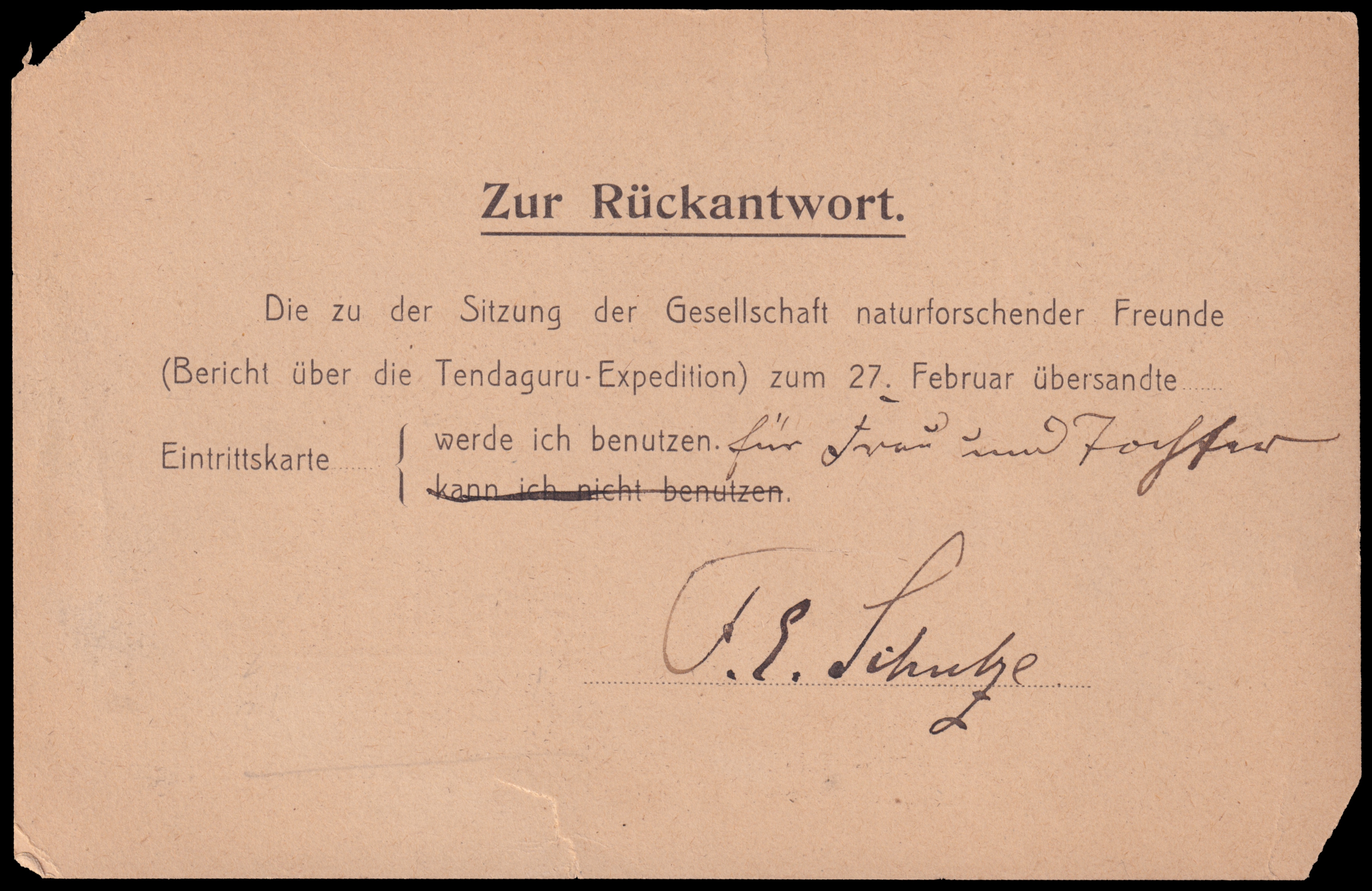 |
| The reply card of Zoological Museum of Berlin returned by Professor Franz Eilhard Schulze | |

|
| Franz Eilhard von Schulze (1884). Image credit: Wikimedia. |
Schulze's presence among the invitees is particularly significant in the context of Berlin's scientific institutions. He had served as the first director of the Zoological Institute of the University of Berlin from 1884 until his retirement in 1917, building the institute's zoological teaching collection and establishing it as an important centre for zoological research and education. He was also a member of the Prussian Academy of Sciences from 1884 and, from 1911, represented the Academy on the board of the Zoological Station of the Kaiser Wilhelm Society at Rovigno.
Although Schulze was not a palaeontologist and there is no need to attribute a direct scientific role in the Tendaguru expedition to him, his position within Berlin's scientific establishment placed him within the same institutional network that supported the city's museums, universities, and scientific societies. His research during these years remained primarily zoological and anatomical. In 1912, for example, he published a study of the air sacs of birds, reflecting his continuing interest in comparative anatomy and respiratory structures.
The invitation card therefore provides an interesting glimpse into the wider scientific community surrounding the Tendaguru research programme. Schulze's decision to attend the February 27 lecture with his wife and daughter shows that the presentation attracted interest not only from specialists directly involved in palaeontology, but also from prominent figures in Berlin's broader zoological and scientific community.
The subject
The postcard refers to a planned meeting of the Society of Natural History Friends in Berlin on 27 February 1912, at which a report on German Tendaguru Expedition (GTE), conducted by the paleontological team of the Museum für Naturkunde in Berlin (MfN) was to be presented. This major expedition, carried out between 1909 and 1913 following reports of dinosaur bones discovered in 1907, became one of the most significant fossil-hunting ventures of the early 20th century.
Thus, this small postcard represents a minor but genuine historical documentary link to the scientific and institutional network behind one of the most important paleontological expeditions of the early 20th century.
“Tendaguru” expedition
The expedition, led by German paleontologist Werner Janensch, uncovered a vast array of dinosaur fossils as well as remains of other prehistoric animals and plants. These discoveries were made across an area of roughly 80 square kilometers surrounding the Tendaguru, a prominent hill near the coastal town of Lindi in what was then German East Africa, today’s Tanzania. The fossil-bearing strata of the so-called Tendaguru Formation date to the Late Jurassic (Kimmeridgian–Tithonian), placing them between approximately 157 and 145 million years old.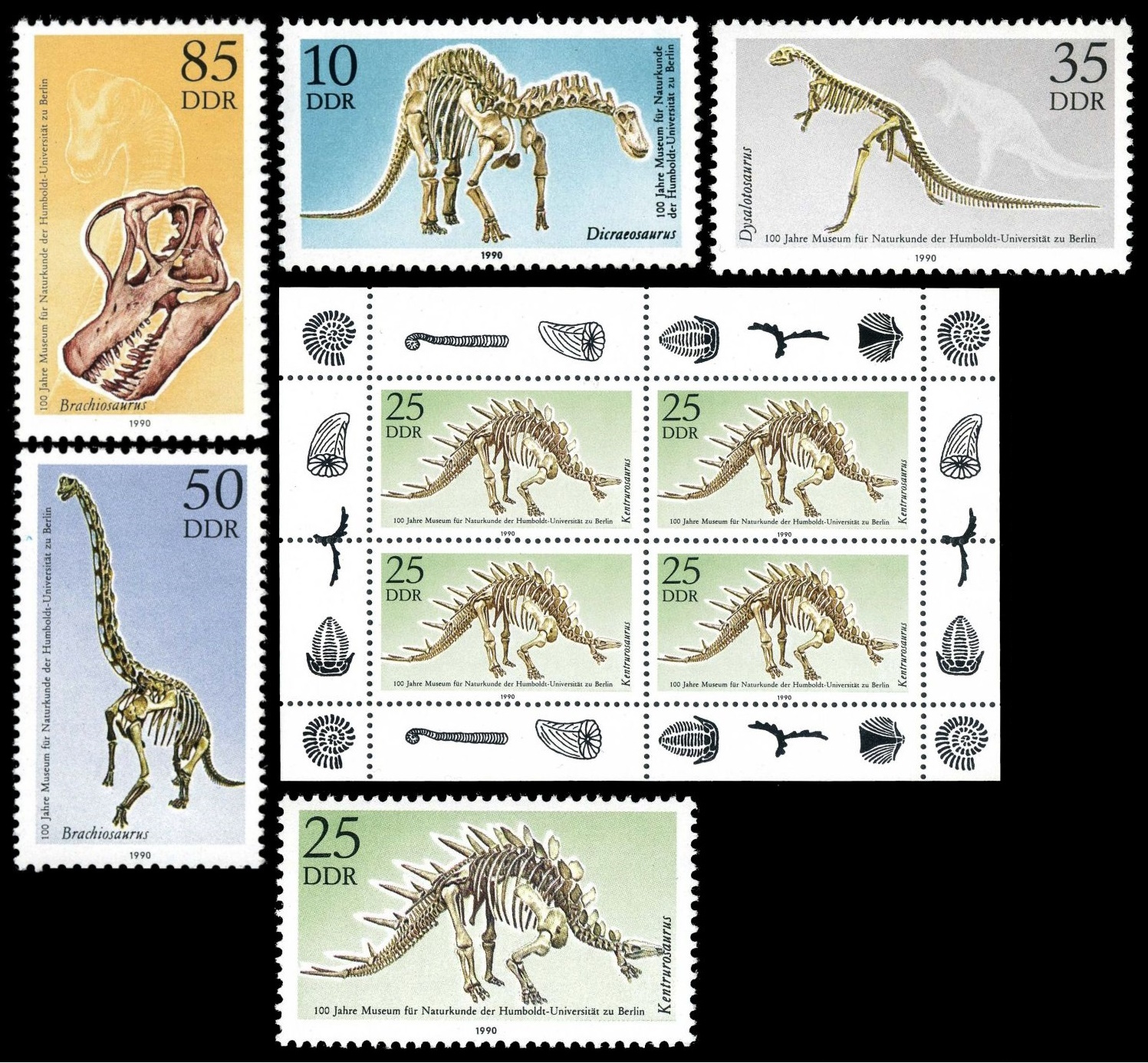 |
| Dinosaurs from the German Tendaguru Expedition on postage stamps of German Democratic Republic from 1990 MiNr: 3324-3328; Sn: 2812-2816. |
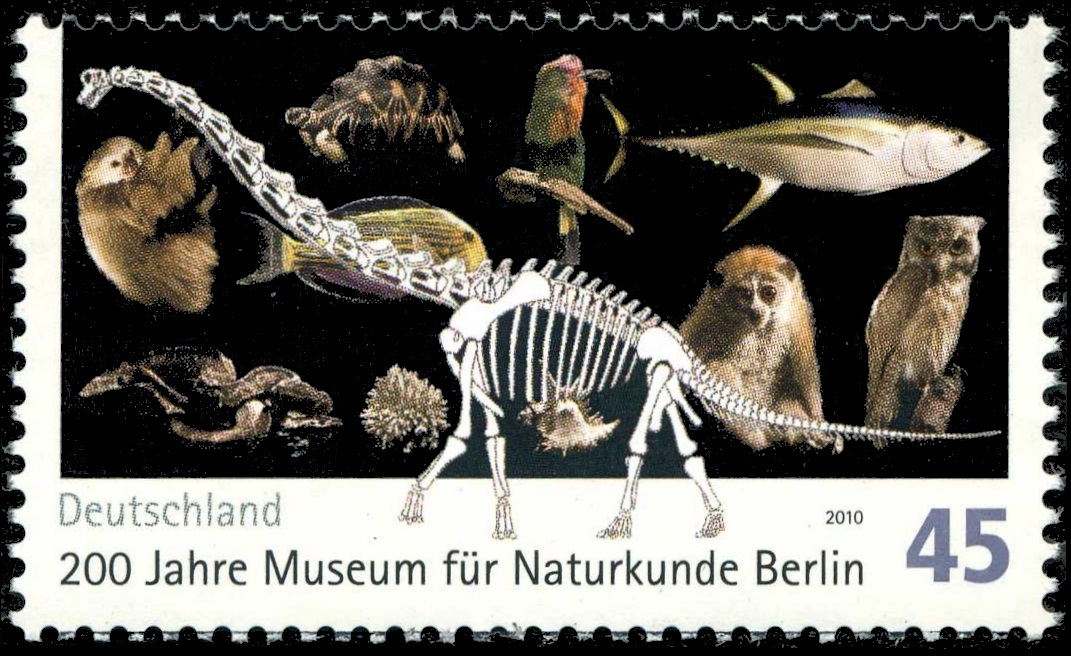 |
| Giraffatitan brancai from the German Tendaguru Expedition on postage stamps of Germany from 2010, Mn: 2775 ; Sn: 2555 |
The presence of marine fossils suggests that the area, today part of the Tanzanian coast, once consisted of mudflats and lagoons situated on an ancient foreshore. These environments were protected from the open sea by reefs, yet they still allowed continuous water exchange with the ocean.
The core of the Tendaguru collection consists of about 225 tons of dinosaur material, comprising roughly 5,000 individual bones as well as five mounted skeletons representing the species Giraffatitan brancai (formerly known as Brachiosaurus brancai), Dicraeosaurus hansemanni, Kentrosaurus aethiopicus, Elaphrosaurus bambergi and Dysalotosaurus lettowvorbecki. All of these species, except Elaphrosaurus bambergi, were featured on postage stamps of the German Democratic Republic in 1990.
Giraffatitan brancai
is the most iconic dinosaur recovered during the Tendaguru expedition, and its skeleton,
assembled from bones of several individuals, forms
the centrepiece of the main dinosaur exhibition at the Natural History Museum in Berlin today.
In 2007, it was certified by the Guinness Book of Records as the tallest mounted dinosaur skeletons
in the world.
The species name brancai honors the German paleontologist Wilhelm von Branca,
a key proponent of the Tendaguru Expedition and director of the Museum at the time of the discovery.
Giraffatitan belongs to the sauropods, the largest land-dwelling vertebrates in Earth’s history.
It was an herbivorous dinosaur approximately 23 meters long and more than 13 meters tall,
characterized by an exceptionally long neck, a relatively small head, column-like limbs,
and a body mass reaching up to 38 metric tons.
Today, the Tendaguru fossils remain a cornerstone of Natural History Museum in Berlin collections and continue to be studied.
 |
 |
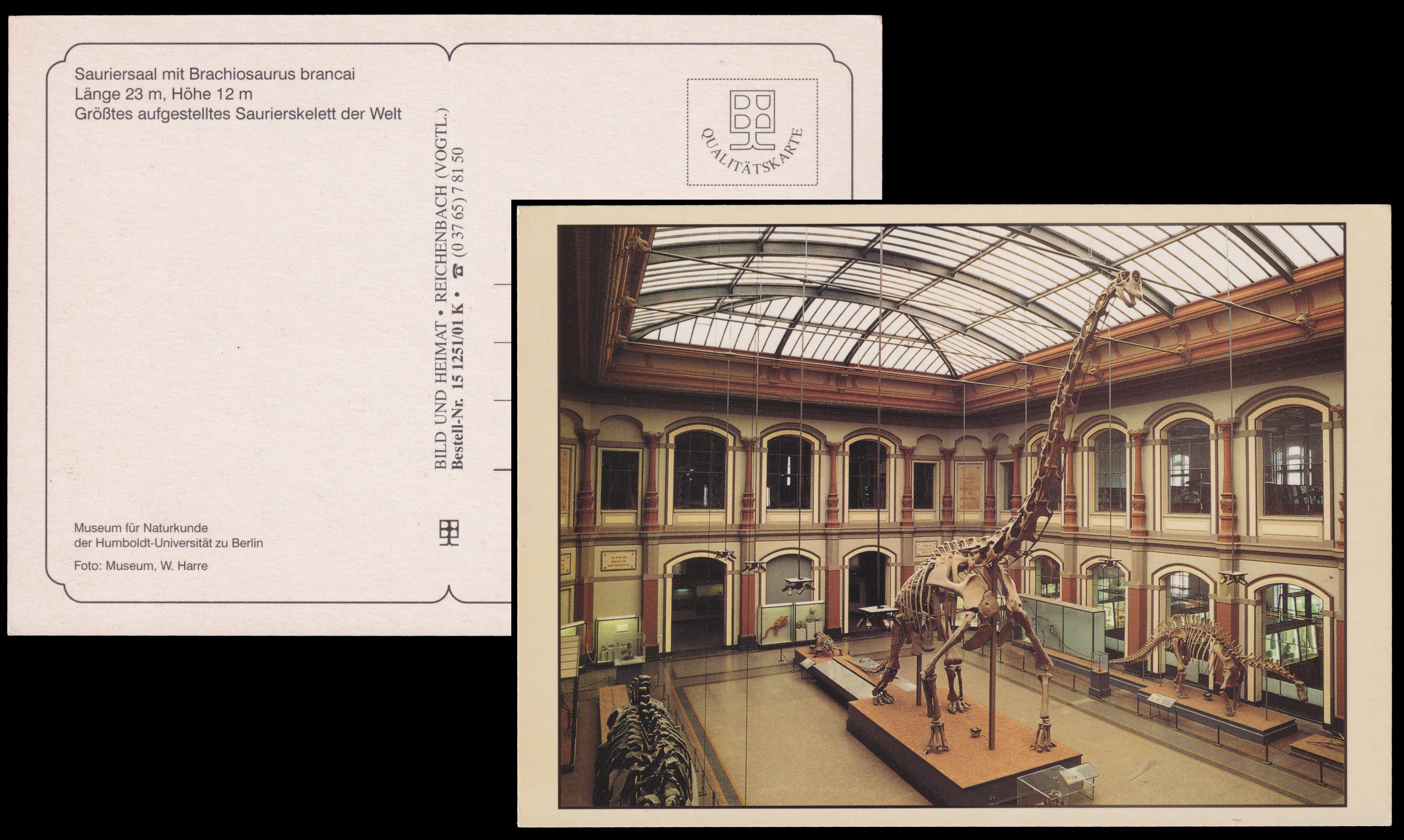 |
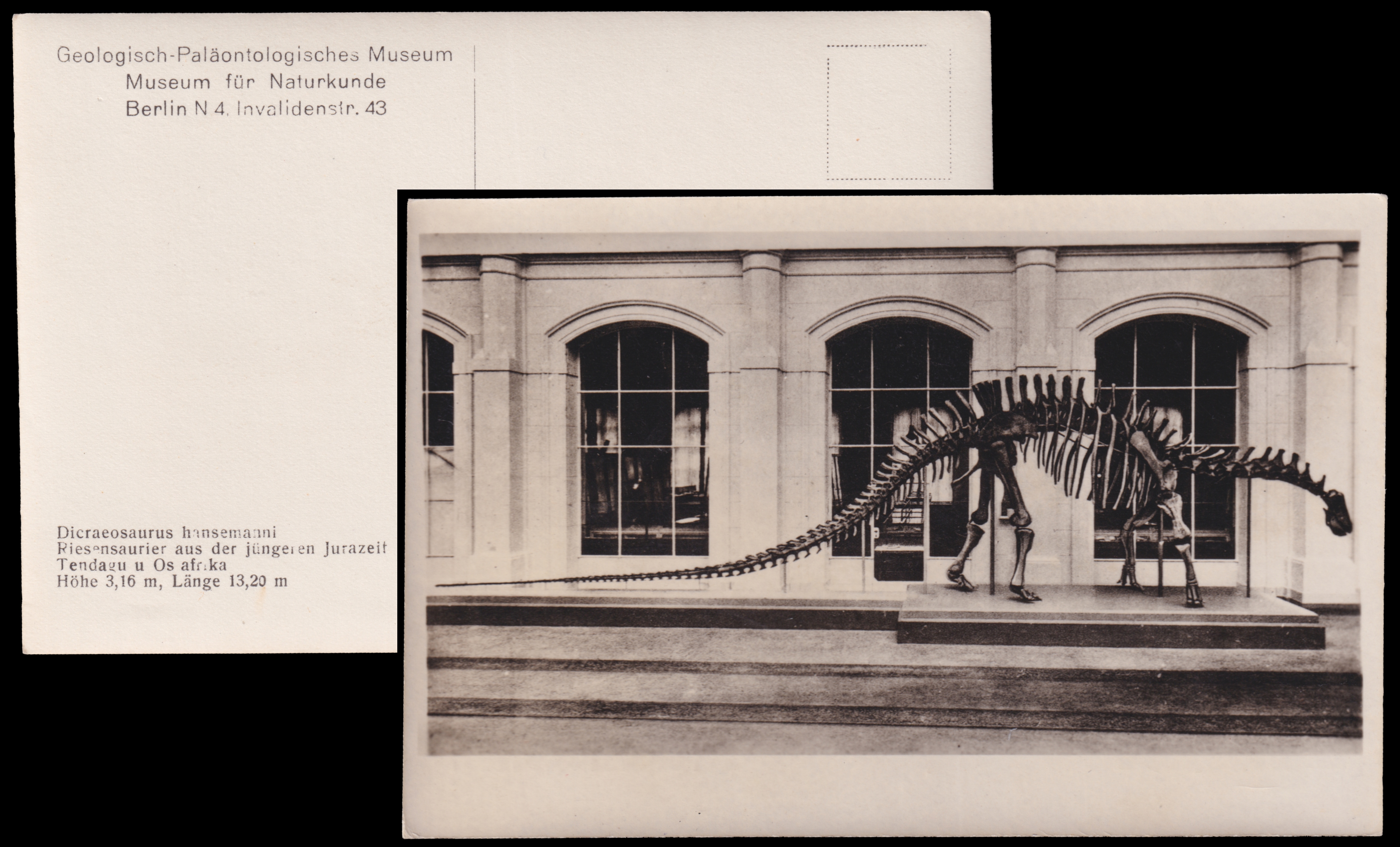
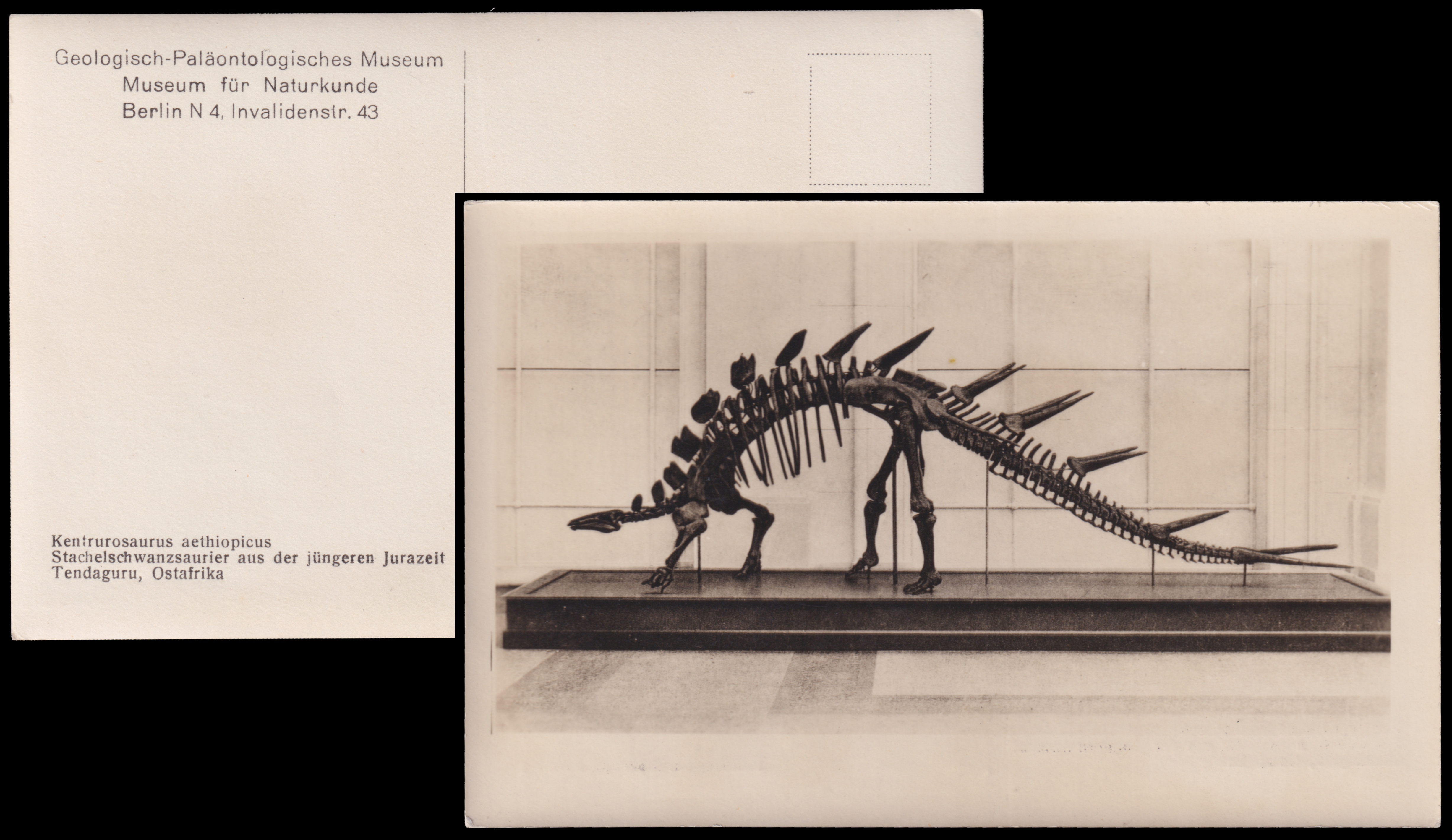
The postcards above and on the right show several dinosaur skeletons discovered during the Tendaguru Expedition and mounted by the museum's team after its return to Berlin.
The first two photo postcards, depicting Dicraeosaurus hansemanni and Kentrosaurus aethiopicus, respectively, were issued during the early years of the German Democratic Republic, probably in the 1950s.
The postcard on the right dates from the later years of the country, most likely the 1980s. It shows the entire dinosaur exhibition, with Brachiosaurus brancai in the centre. Dicraeosaurus hansemanni can be seen on the right-hand side of the postcard.
These postcards are of particular historical interest because they document the original mounts assembled in the 1930s. The skeletons displayed in the museum today differ in several respects, as the Tendaguru dinosaurs were re-examined and remounted in 2006–2007 using updated scientific interpretations and modern mounting techniques.
The meeting
On 27 February 1912, a formal session of the Gesellschaft naturforschender Freunde zu Berlin ("Society of Natural‑history Friends in Berlin") was held in Berlin to report on the progress and first results of the Tendaguru Expedition.The session was attended by 350–400 distinguished guests, including high state officials, aristocracy, ministers, scientists, and major donors, illustrating the exceptional public and political interest in the project.
Gustav Tornier, who at that time served as head of the Berlin Society of Friends of Natural Science, delivered a speech highlighting the important role of the expedition’s donors. He noted that their financial support placed them in a position of particular responsibility and that their contributions were instrumental in enabling the Tendaguru project and the subsequent large-scale paleontological exhibition in Berlin.
He also acknowledged Eberhard Fraas, paleontologist from Stuttgart, the first scientist to investigate the site in 1907, whom he praised as a “man of action”.
In the same category he placed Bernhard Sattler, the mining engineer credited as the “first discoverer”, said to have stumbled upon a massive bone and correctly recognized its “true nature”.
 |
|
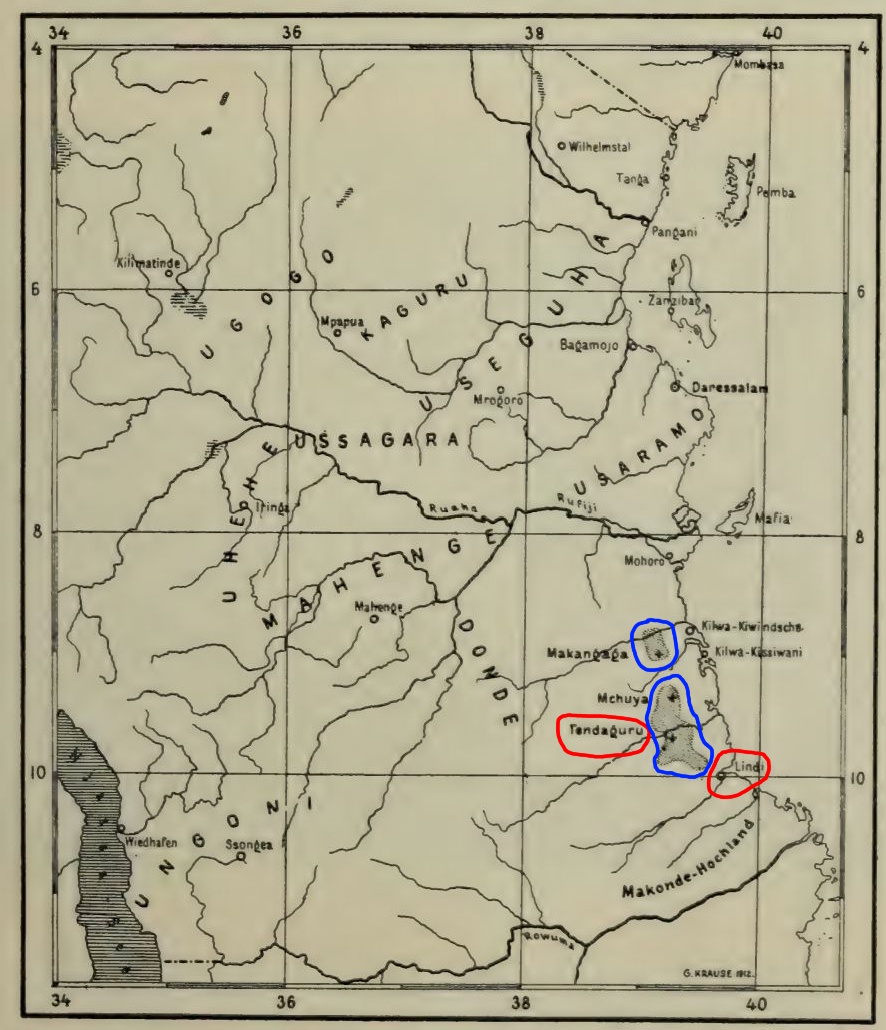
The map of the excavation - Tendaguru mount and port town of Lindi marked by red.
The excavation sites are marked in blue. The map is from the report of the Society of Natural‑history Friends in Berlin, published in 1912, as it was presented by Dr. Werner Janensch. |
At the end of his speech, Gustav Tornier invited the expedition leader, Dr. Werner Janensch (1878-1969), to present the results, accompanied by coloured slides (which were rare at that time). Janensch began by recounting how the venture started: how he and Dr. Edwin Henning (1882-1977) arrived in the port town of Lindi in German East Africa in April 1909, filled with excitement about the discoveries ahead. During the first year, they employed around 150 workers for the excavations, a number that grew to about 500 in the following seasons. He proudly emphasized that throughout the entire period of fieldwork, not a single serious incident occurred.
Thanks to favorable geological conditions, the team uncovered an extraordinary wealth of dinosaur material: complete skeletons, bone beds, and fossils belonging to a diverse Late Jurassic fauna, including the gigantic sauropods that would later make the expedition globally famous.
According to Dr. Janensch, the site containing the remains of giant dinosaurs was located at the foot of Tendaguru Mountain on the Mbemkuru River, which flows into the ocean north of Lindi (see the map on the right).
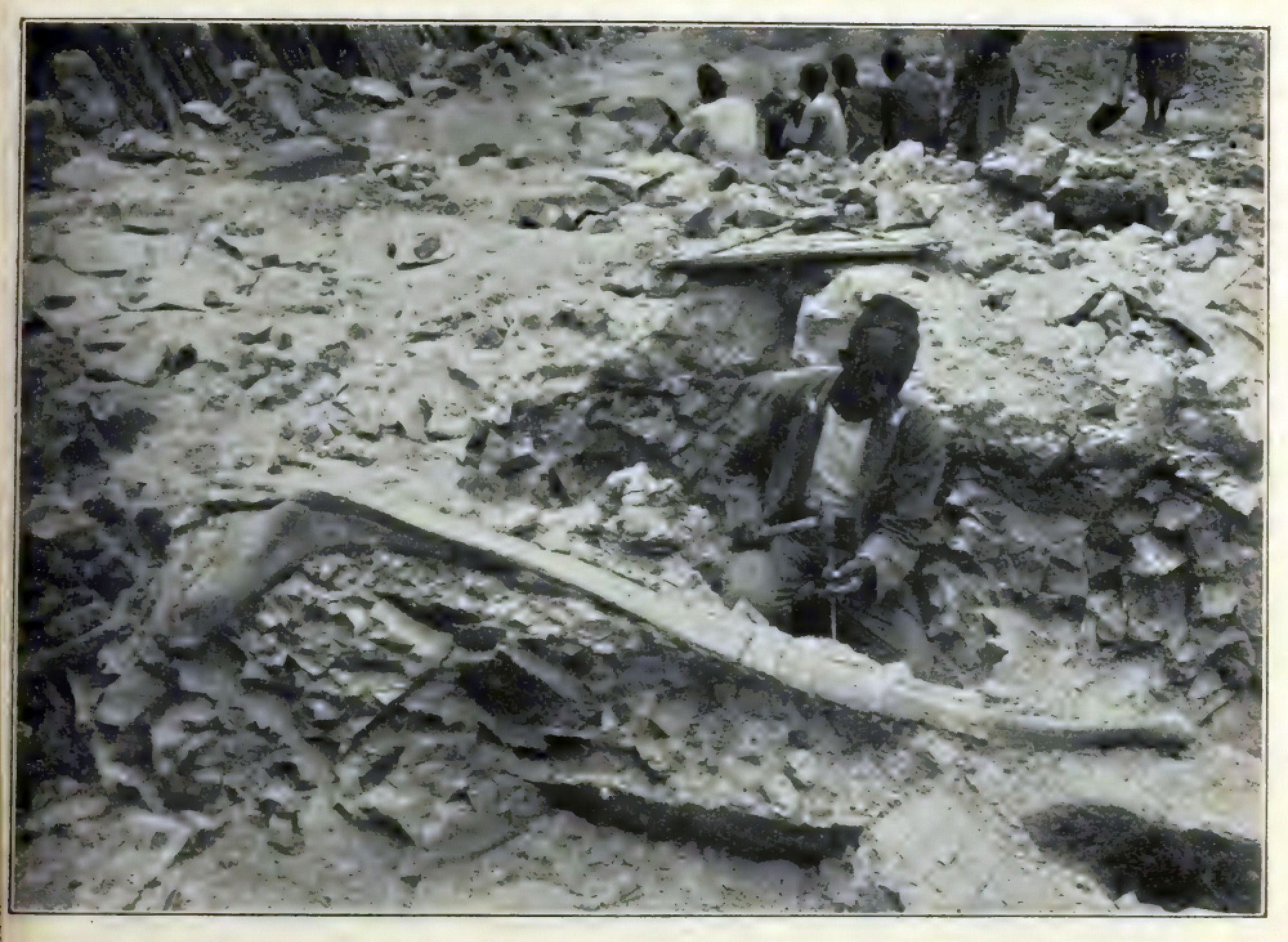
The bones, exposed by tropical downpours, laid partly on the surface, but mostly in layers of gravel, necessitating excavations and digging to depths of up to seven meters to recover them.
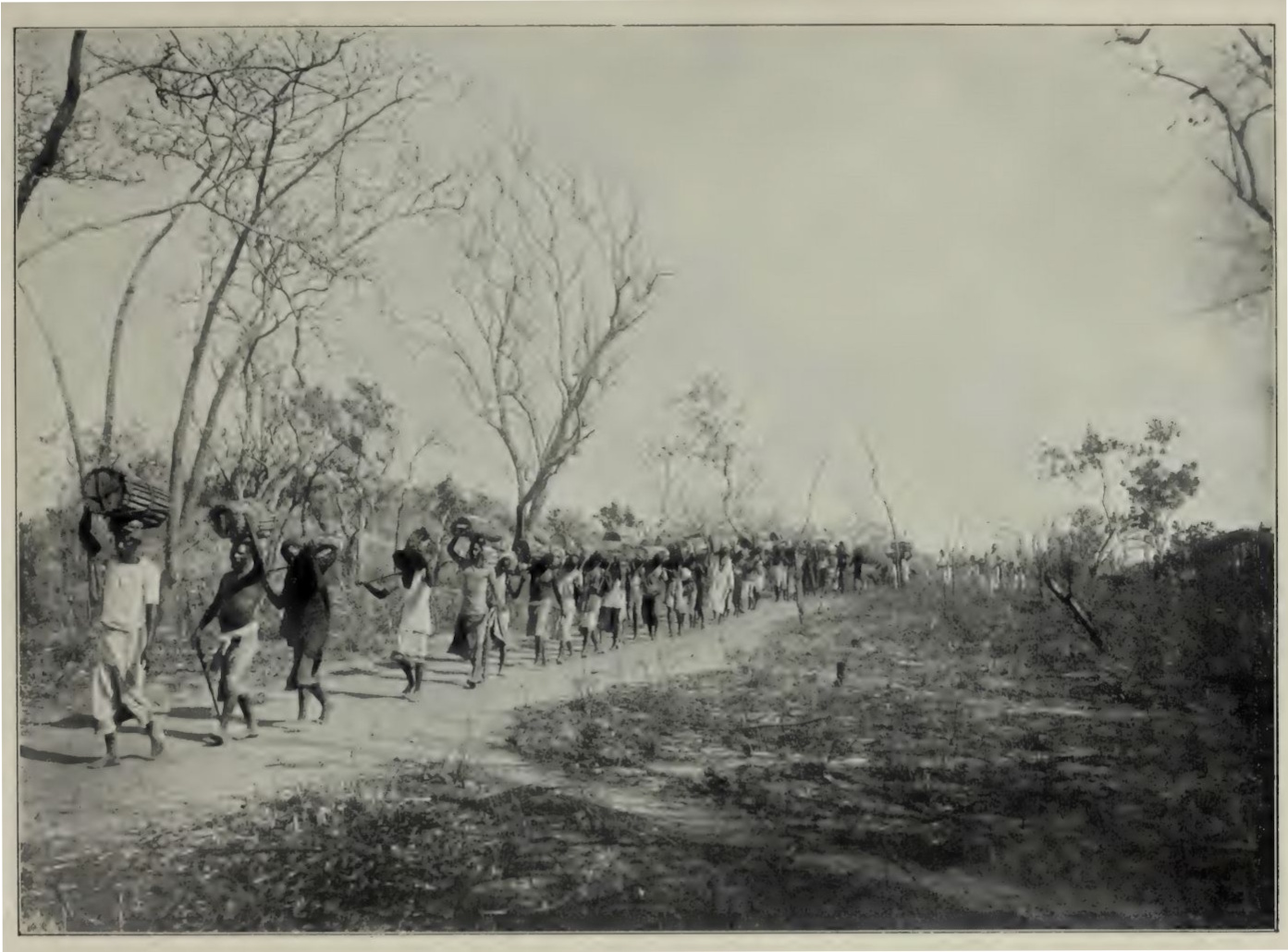
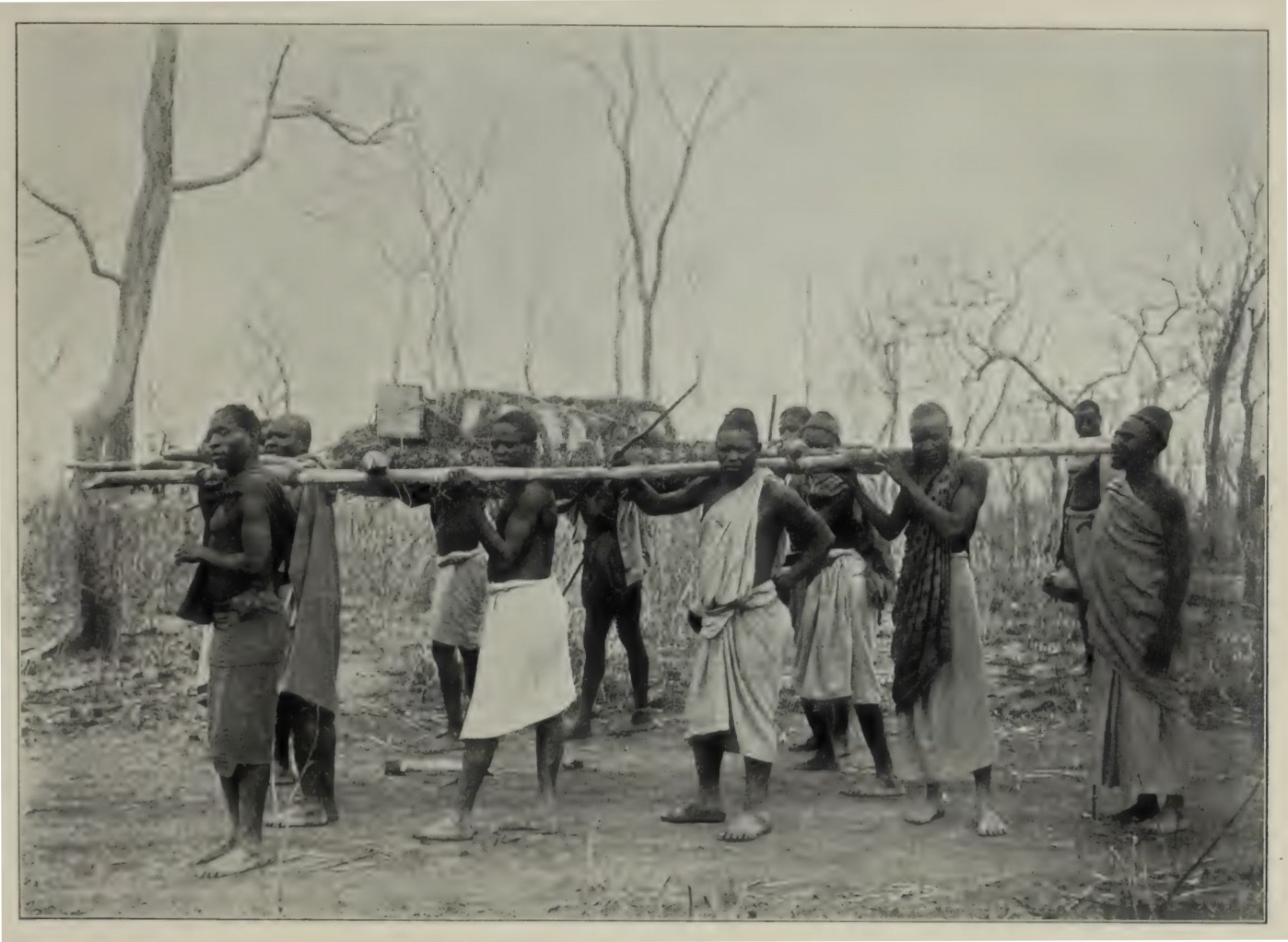
The work was further hampered by the fact that the sites were overgrown with tall steppe grass and, in some places, with virtually impenetrable bamboo and lianas. Another challenge was the transportation of bones, which were transported by large caravans of porters to the coast, where they were shipped to Germany.
 |
 |
 |
 |
 |
 |
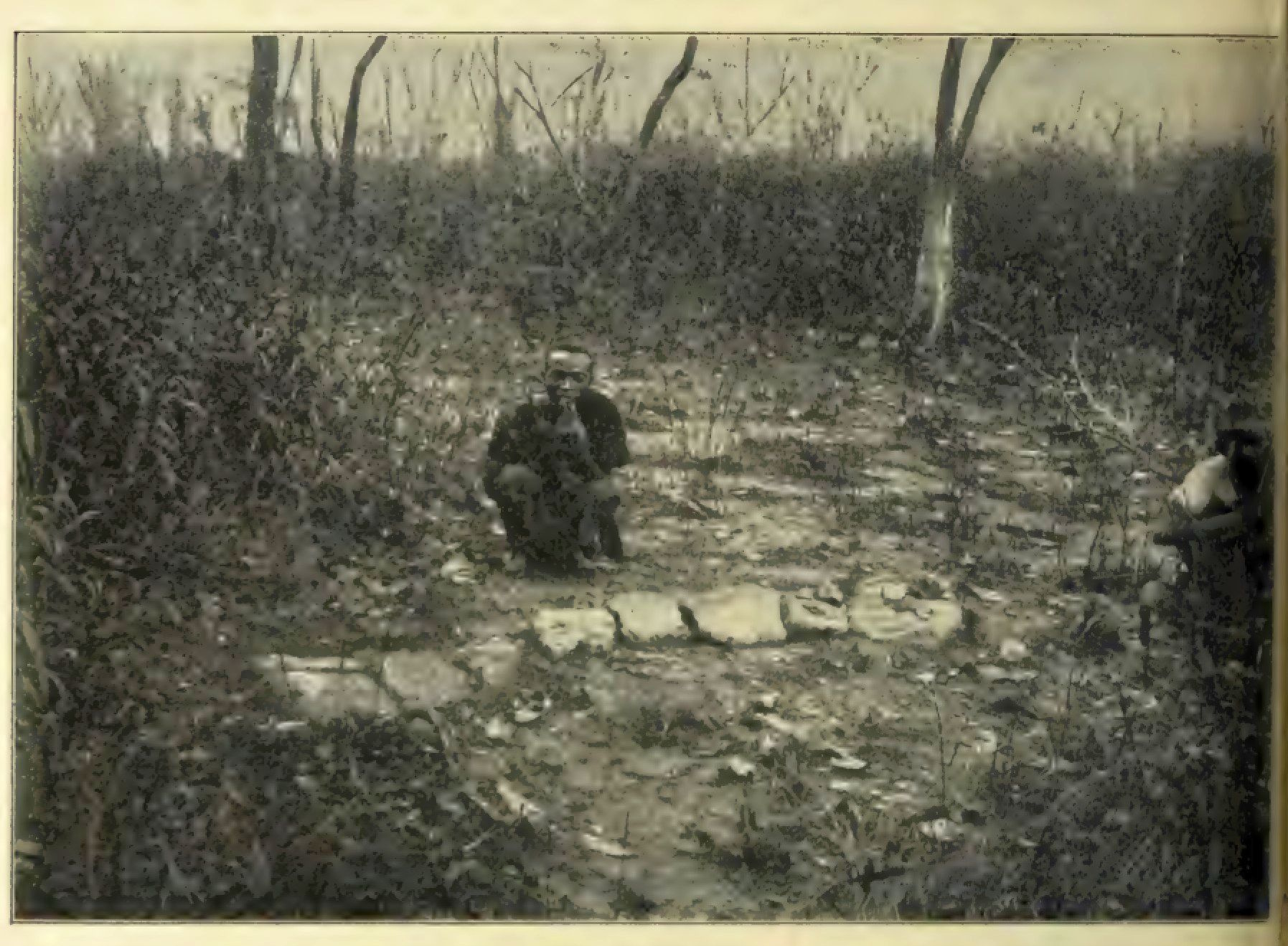
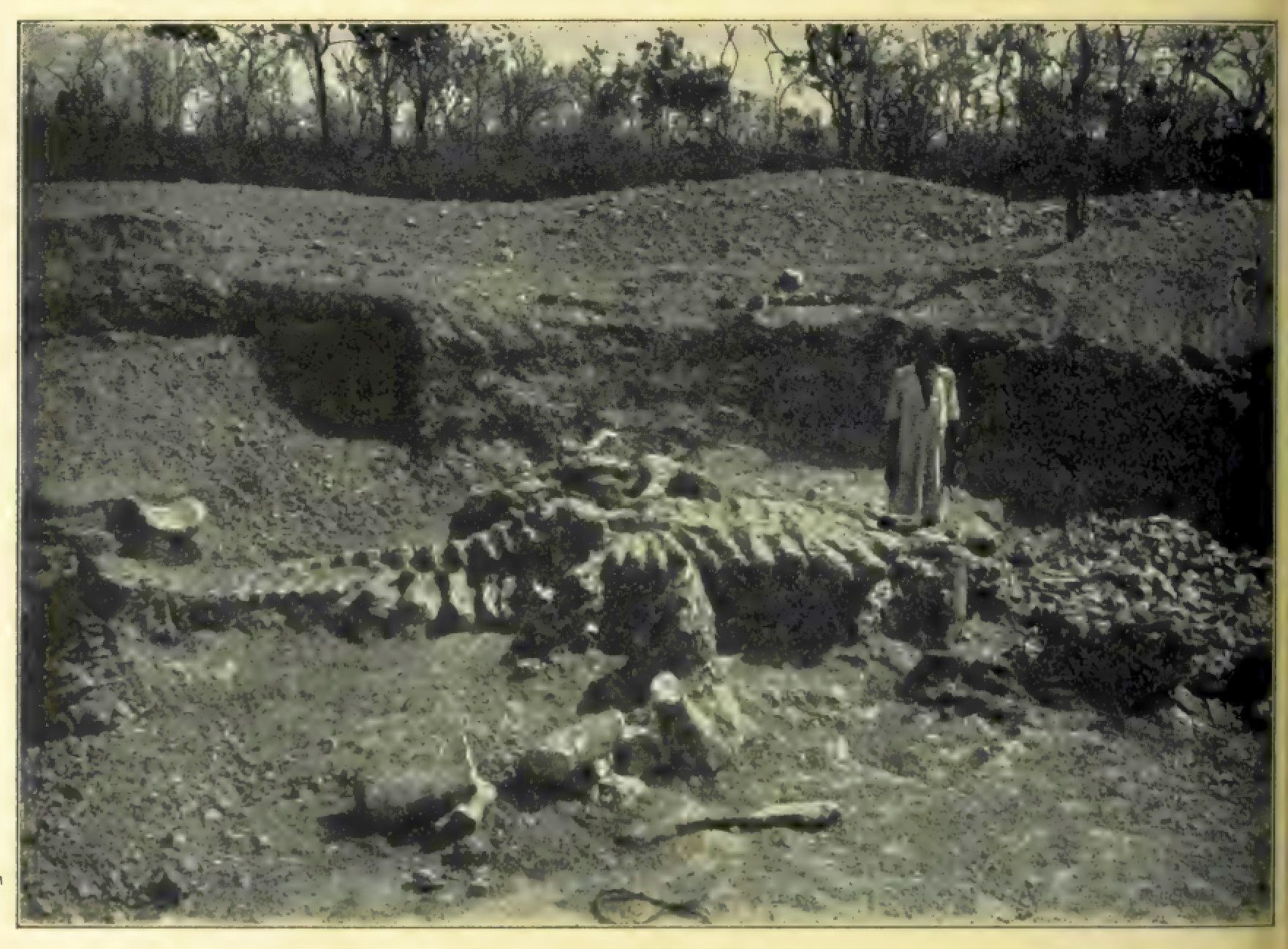
| Photos from the expedition, presented by Dr. Werner Janensch and Dr. Edwin Henning during their presentations. The first row: the workers with dinosaur bones at excavation sites. The first two photos on the second row show transportation of bones from the excavation sites to the port town of Lindi. The third photo depicts the houses built at one of the excavation sites to accommodate the staff. |
||
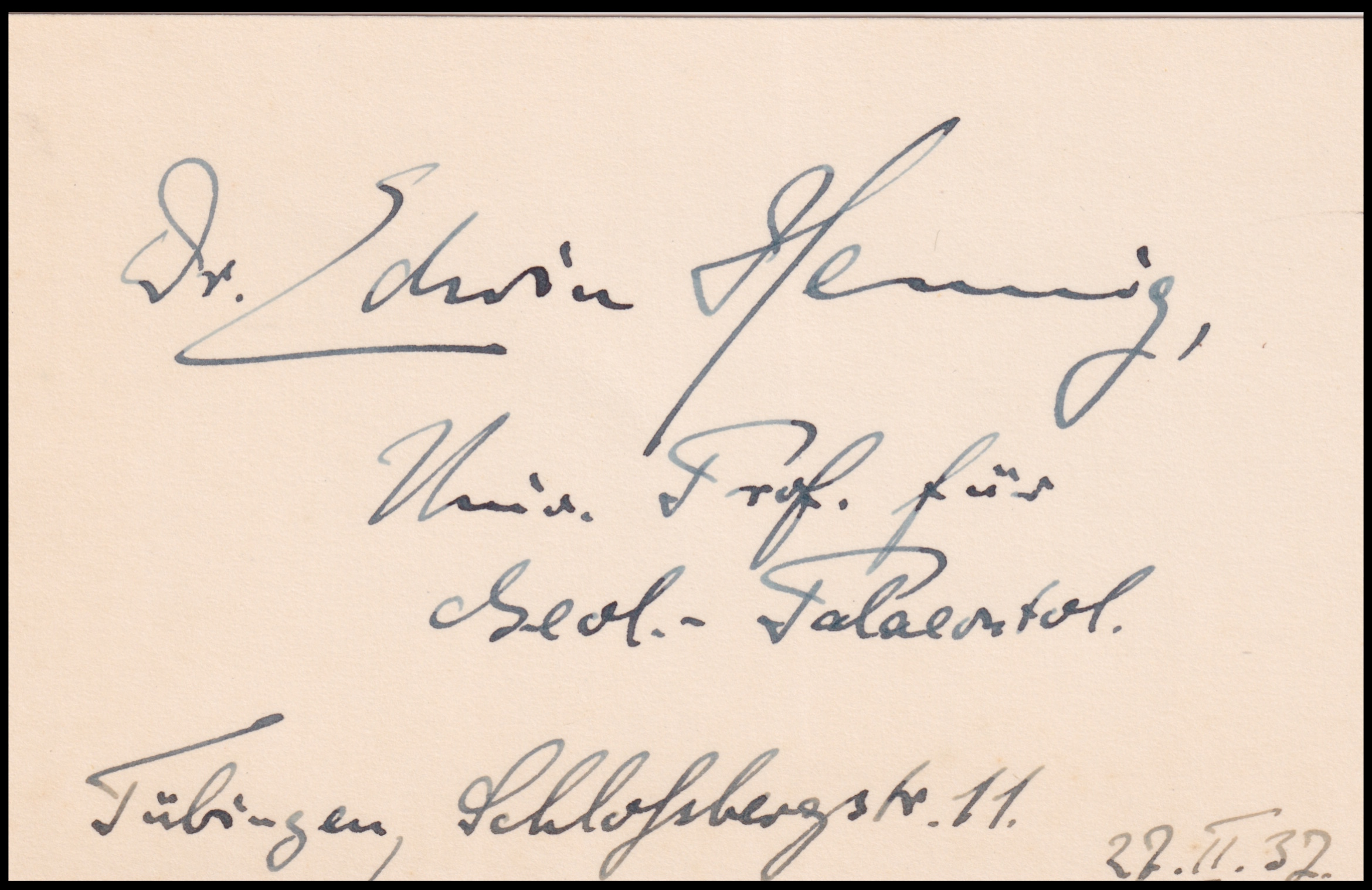 |
A handwritten visitcard of Dr. Edwin Henning
Dr. Edwin Hennig, |
Dr. Hans von Staff (1883-1915) was a German geologist and cartographer active in the early 20th century. He contributed to studies of East African geology during the period of German colonial administration, focusing on stratigraphy and landscape development. Although not a core member of the Tendaguru team, he was involved in regional geological surveying that provided broader contextual information for interpreting the fossil-bearing formations.
The meeting concluded with Tornier’s closing words, emphasizing the expedition as a scientific achievement comparable to major American dinosaur excavations, and expressing optimism that these finds would elevate German paleontology to world leadership. Attendees were then invited to view selected mounted fossils and excavation photographs displayed in the hall.
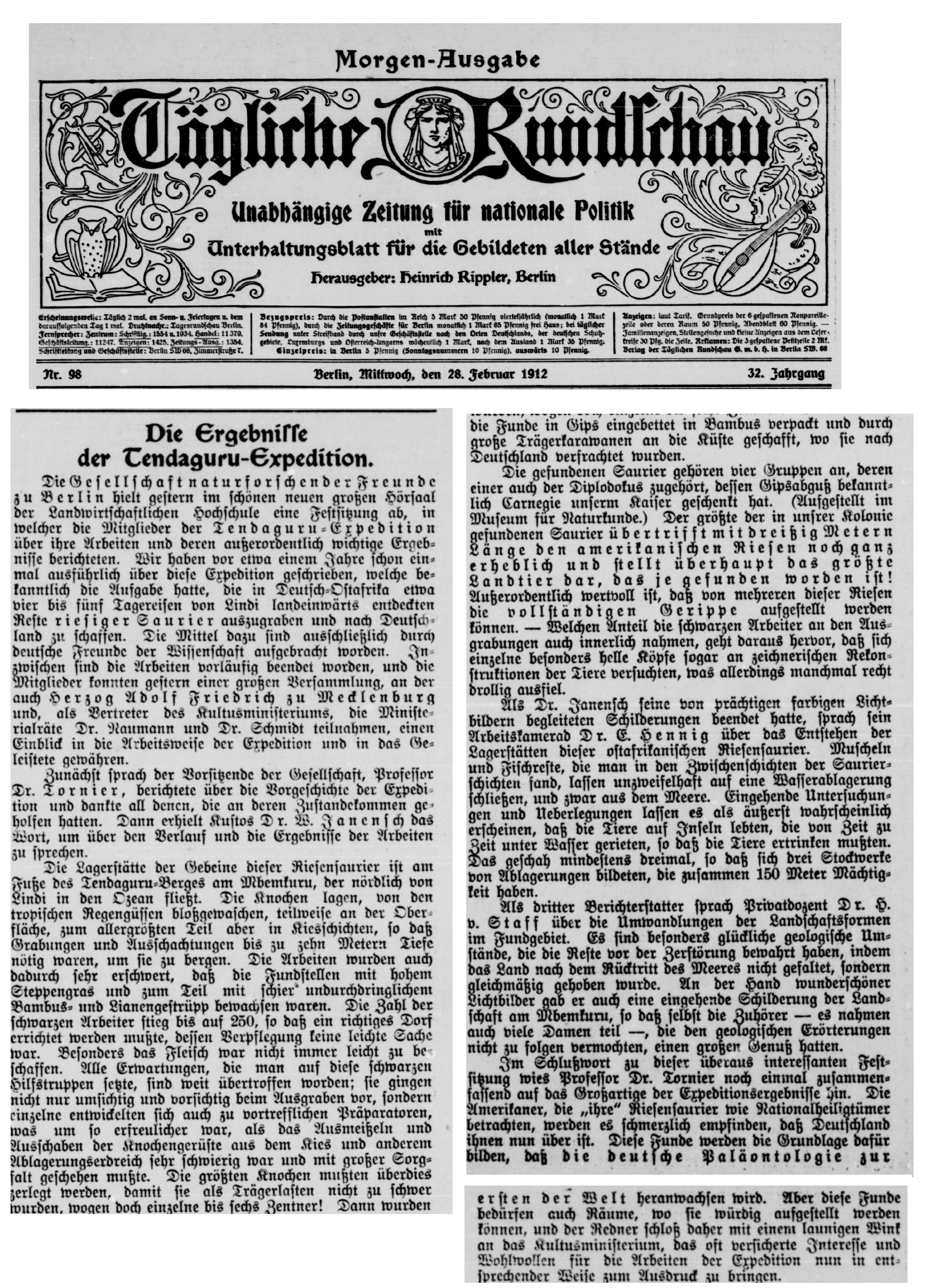
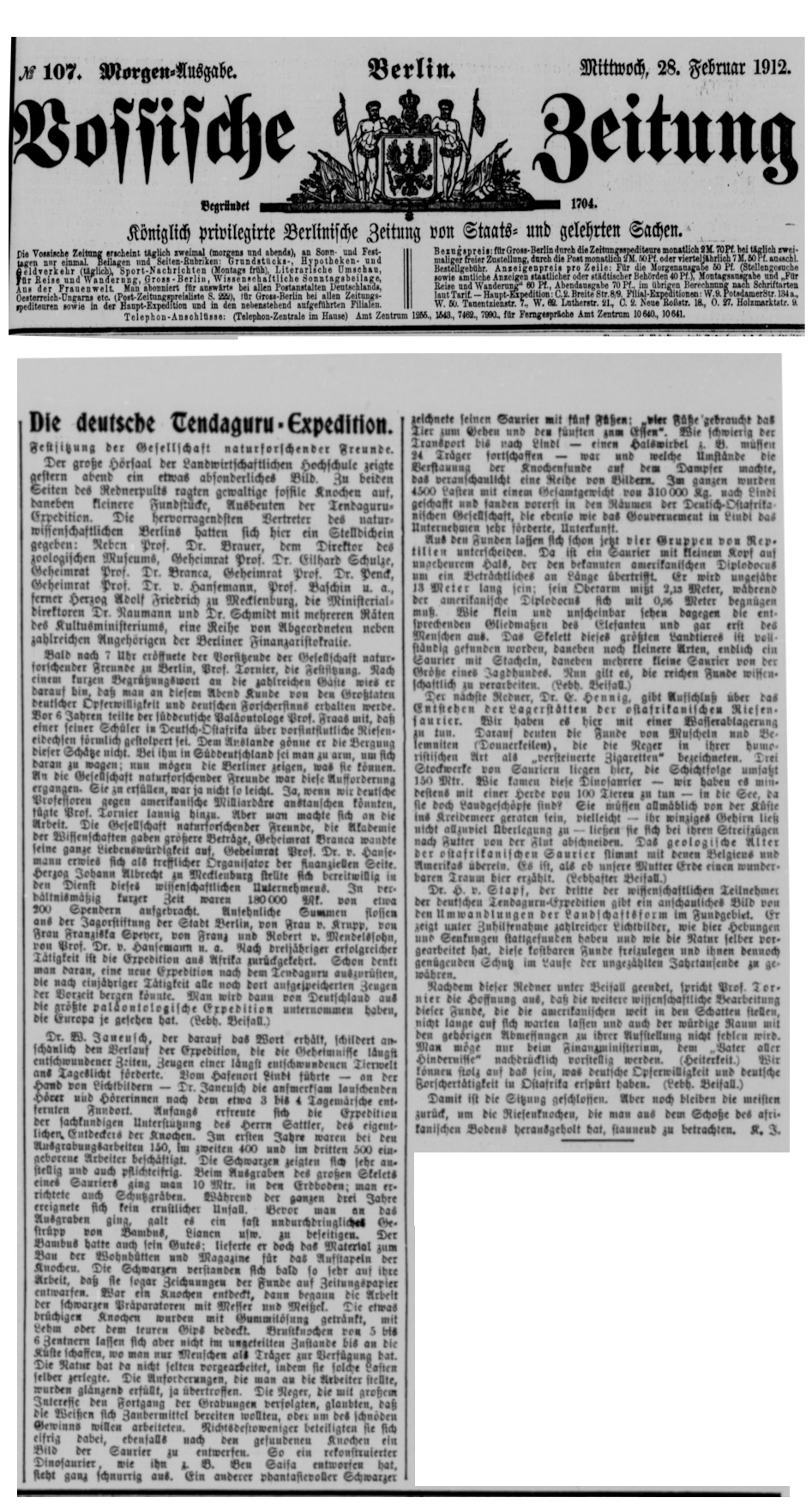
The following day (28.02.1912) several German newspapers, such as the Tägliche Rundschau (Nr. 98) and the Vossische Zeitung (Nr 107) of Berlin published the summaries of the meeting. Later that year, the Berlin Society of Friends of Natural Science (Gesellschaft Naturforschender Freunde zu Berlin), published all these presentations in their annual report "Proceedings of the meetings of the Society of Friends of Natural Science of Berlin" (in German Sitzungsberichte Gesellschaft Naturforschender Freunde zu Berlin).
Acknowledgements:
- Many thanks to Dr. Peter Voice from Department of Geological and Environmental Sciences, Western Michigan University, for reviewing the draft page and his very valuable comments.
References:
 |
- Gustav Tornier (1859-1938):
Wikipedia, - Tendaguru Formation:
-
Tendaguru Expedition (1909-1913):
- Natural History Museum in Berlin
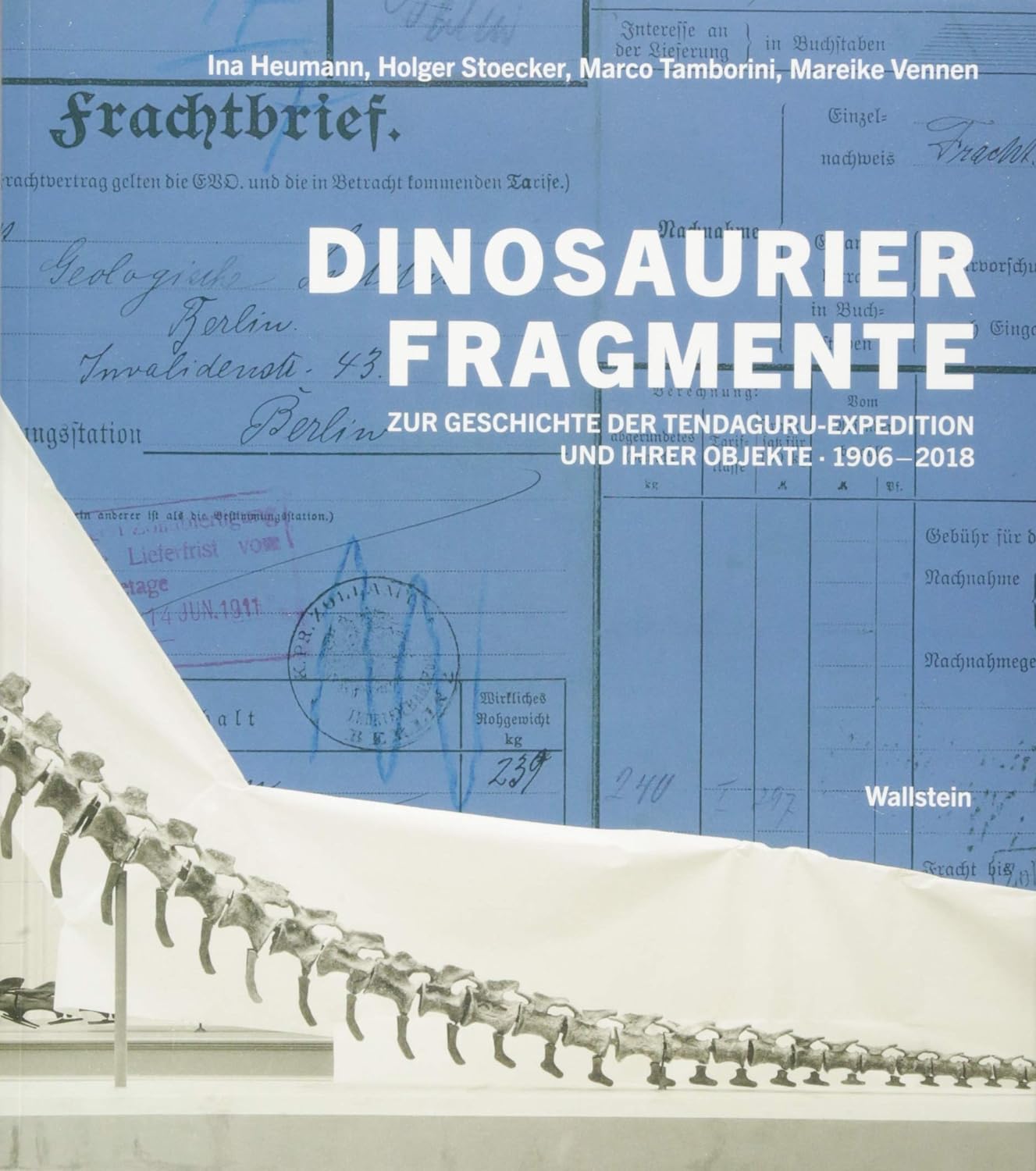
- "Dinosaurierfragmente: Zur Geschichte der Tendaguru-Expedition und ihrer Objekte, 1906-2018", Ina Heumann, Holger Stoecker, Marco Tamborini, Mareike Vennen; published in 2018. Amazon: USA, UK, DE.
- Giraffatitan (formely known as Brachiosaurus):
-
The meeting:
- Sitzungsberichte Gesellschaft Naturforschender Freunde zu Berlin (PDF) in Engish "Proceedings of the meetings of the Society of Friends of Natural Science of Berlin".
-
Newspapers reports:
- Tägliche Rundschau (Berlin),
- Wednesday, 28.02.1912: morning and evening issues
- Nr. 98 - the morning issue
- The article on page 6: Die Ergebnisse der Tendaguru-Expedition
- Vossische Zeitung (Berlin),
- Wednesday, 28.02.1912: morning and evening issues
- Nr. 107 - the morning issue
- The article on page 15: Die deutsche Tendaguru-Expedition
- Tägliche Rundschau (Berlin),
- Franz Eilhard Schulze (1840–1921):
Wikipedia, Deutsche Biographie.