Chile
Dinosaurs and other prehistoric animals, National History Museum, contributors to Paleontology science on stamps of Chile
Chile, officially the Republic of Chile, is a South American country occupying
a long, narrow strip of land between the Andes to the east and the Pacific Ocean to the west.
It borders Peru to the north, Bolivia to the northeast, Argentina to the east, and the Drake Passage in the far south. Chilean territory includes the Pacific islands of Juan Fernández, Salas y Gómez, Desventuradas, and Easter Island in Oceania. Chile also claims about 1,250,000 square kilometers of Antarctica, although all claims are suspended under the Antarctic Treaty. [R1]
Chile has produced stamps for national use since 1853. The first stamps of Chile were inscribed Colon Chile.
In 1894, Chile was one of the few countries to issue a stamp for the Avis de réception service. [R2]
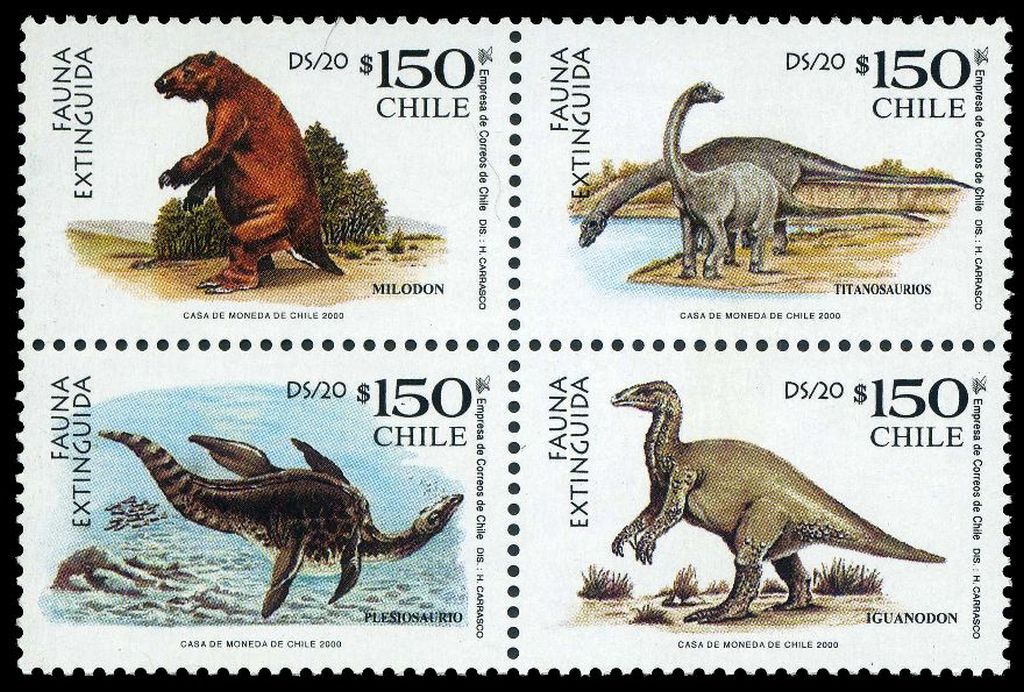
So far only one stamps set of prehistoric animals issued in Chile.
Notes:
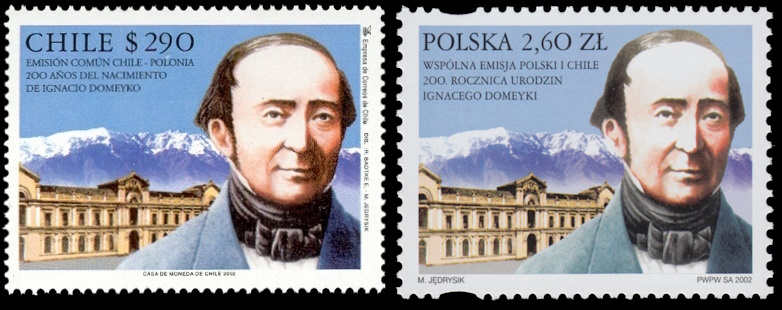
[A1] Ignacy Domeyko (31 July 1802 – 23 January 1889), was a Polish geologist, mineralogist and educator, who spent most of his life, and died, in his adopted country, Chile.
Domeyko was not particularly interested in paleontology but found fossils during his work. He occasionally sent these fossils to French Naturalists for study. [R3] For details please go here.
The stamp from 2002 is the joint issue with Poland.
[A2] Juan Ignacio Molina (June 24, 1740 – September 12, 1829) was a Spanish later Chilean Jesuit priest, naturalist, historian, botanist, ornithologist and geographer. As early as 1787 Molina mentioned the possibility of South America being populated from south Asia through the "infinite island chains" of the Pacific while North America could have been populated from Siberia. He also wrote several books about Natural History of Chile. [R4]
[A3] Chilean National Museum of Natural History, has twelve permanent exhibits.
One of them is Mesozoic era vertebrates, including a specimen of Carnotaurus sastrei.
The museum has five departments are botany, zoology, entomology, anthropology, and paleontology.
Claudio Guy, founder of the museum shown on the right stamp of the stripe from 1980.
The building of the Museum shown on stano with face value of 30 peso from the Museums set in 2007. [R5]
[A4] Joint issue with Poland. Stamp of very similar design issued in Poland on 3rd July 2002.
Many thanks to Dr. Peter Voice from Department of Geological and Environmental Sciences, Western Michigan University, for reviewing the draft page and his very valuable comments.
It borders Peru to the north, Bolivia to the northeast, Argentina to the east, and the Drake Passage in the far south. Chilean territory includes the Pacific islands of Juan Fernández, Salas y Gómez, Desventuradas, and Easter Island in Oceania. Chile also claims about 1,250,000 square kilometers of Antarctica, although all claims are suspended under the Antarctic Treaty. [R1]
Chile has produced stamps for national use since 1853. The first stamps of Chile were inscribed Colon Chile.
In 1894, Chile was one of the few countries to issue a stamp for the Avis de réception service. [R2]
So far only one stamps set of prehistoric animals issued in Chile.
Official stamps of Chile related to Paleontology: dinosaurs and other prehistoric animals
| 15.10.2000 "Prehistoric animals" | ||
 |
||
Other stamps of Chile to consider: Natural History Museum, contributors to Paleontology
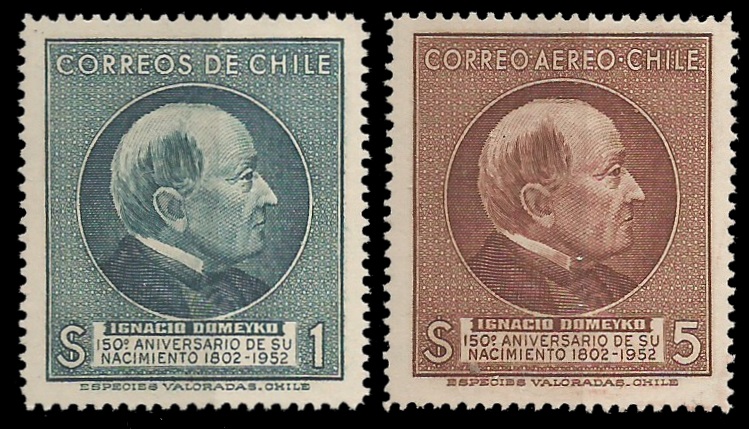
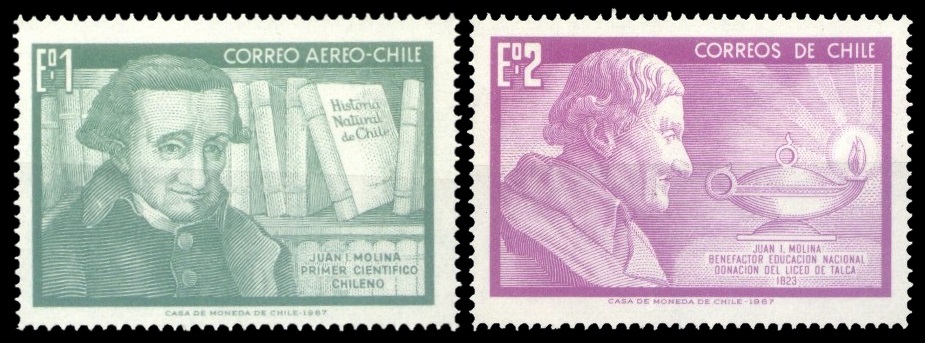
| 16.08.1954 "The 150th Anniversary of the Birth of Ignacy Domeyko" [A1] | 22.08.1968 "Juan Molina" [A2] | 14.09.1980 "The 150th Anniversary of National History Museum" [A3] |
 |
 |
 |
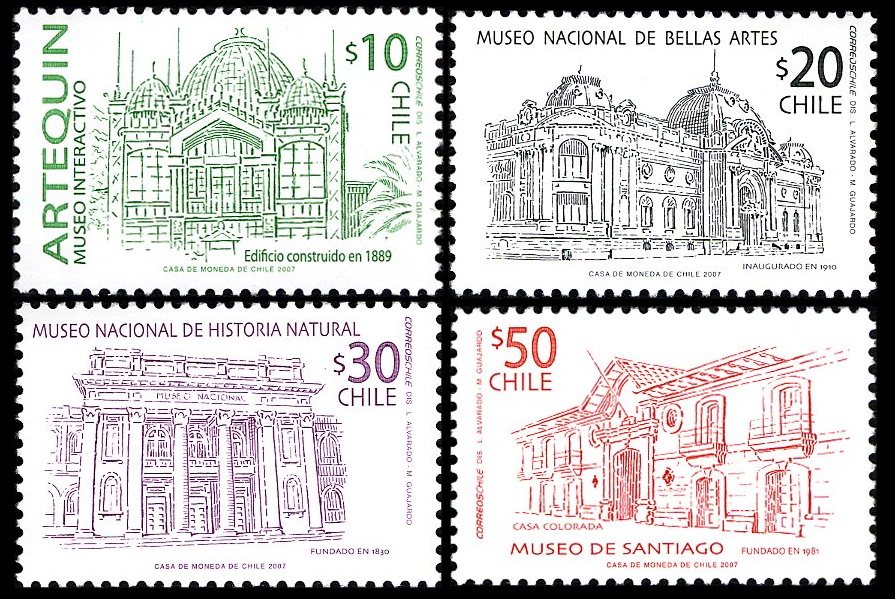
| 11.04.2002 "The 200th Anniversary of the Birth of Ignacy Domeyko" [A1] | 31.08.2007 "Museums in Santiago" [A3] | |
 |
 |
|
Notes:
[A1] Ignacy Domeyko (31 July 1802 – 23 January 1889), was a Polish geologist, mineralogist and educator, who spent most of his life, and died, in his adopted country, Chile.
Domeyko was not particularly interested in paleontology but found fossils during his work. He occasionally sent these fossils to French Naturalists for study. [R3] For details please go here.
The stamp from 2002 is the joint issue with Poland.
[A2] Juan Ignacio Molina (June 24, 1740 – September 12, 1829) was a Spanish later Chilean Jesuit priest, naturalist, historian, botanist, ornithologist and geographer. As early as 1787 Molina mentioned the possibility of South America being populated from south Asia through the "infinite island chains" of the Pacific while North America could have been populated from Siberia. He also wrote several books about Natural History of Chile. [R4]
|
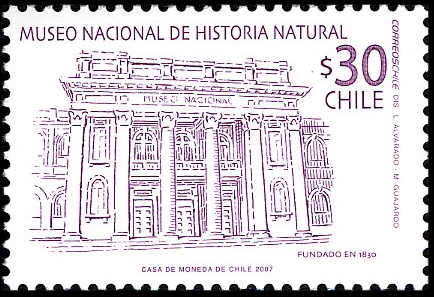
| The National Museum of Natural History on stamp of Chile 2007, MiNr.: 2187 Scott: 1480 |
One of them is Mesozoic era vertebrates, including a specimen of Carnotaurus sastrei.
The museum has five departments are botany, zoology, entomology, anthropology, and paleontology.
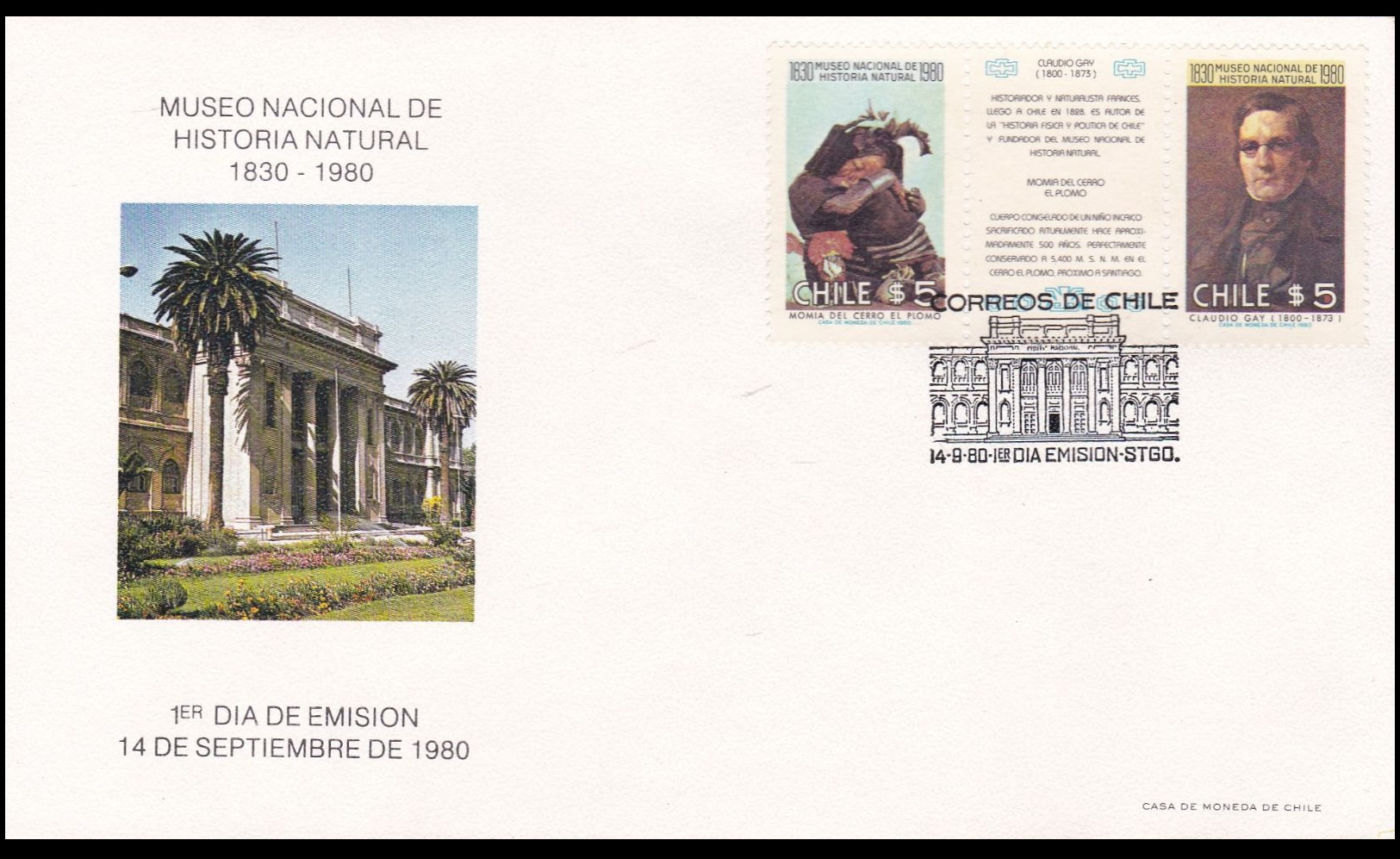
Claudio Guy, founder of the museum shown on the right stamp of the stripe from 1980.
The building of the Museum shown on stano with face value of 30 peso from the Museums set in 2007. [R5]
[A4] Joint issue with Poland. Stamp of very similar design issued in Poland on 3rd July 2002.
Some commemorative postmarks of Chile to consider: Natural History Museum
| 14.09.1980 "The 150th Anniversary of National History Museum" [A1] | ||
|
||
References
- [R1] Chile: Wikipedia, WikiTravel, FlagCounter.
- [R2] Postal History and Philately of Chile:
Wikipedia,
Links to official website of the Post Authority, stamp catalog and a list of new stamps of Chile are here. - [R3] Ignacy Domeyko: Wikipedia
- [R4] Juan Ignacio Molin: Wikipedia
- [R5] Chilean National Museum of Natural History: Wikipedia
Acknowledgements
Many thanks to Dr. Peter Voice from Department of Geological and Environmental Sciences, Western Michigan University, for reviewing the draft page and his very valuable comments.