Liechtenstein 2016
"Archaeological finds in Liechtenstein: Utensils"
| Issue Date | 09.03.2016 |
| ID | Michel: Scott: Stanley Gibbons: Yvert: UPU: Category: pR |
| Designer | Sven Beham, Ruggell |
| Stamps in set | 3 |
| Value |
CHF 1.00 - Dagger (flint tool) CHF 1.50 - Razor CHF 2.00 - Winged axe |
| Size (width x height) | 48 x 28 mm, sheet size 208 x 146 mm |
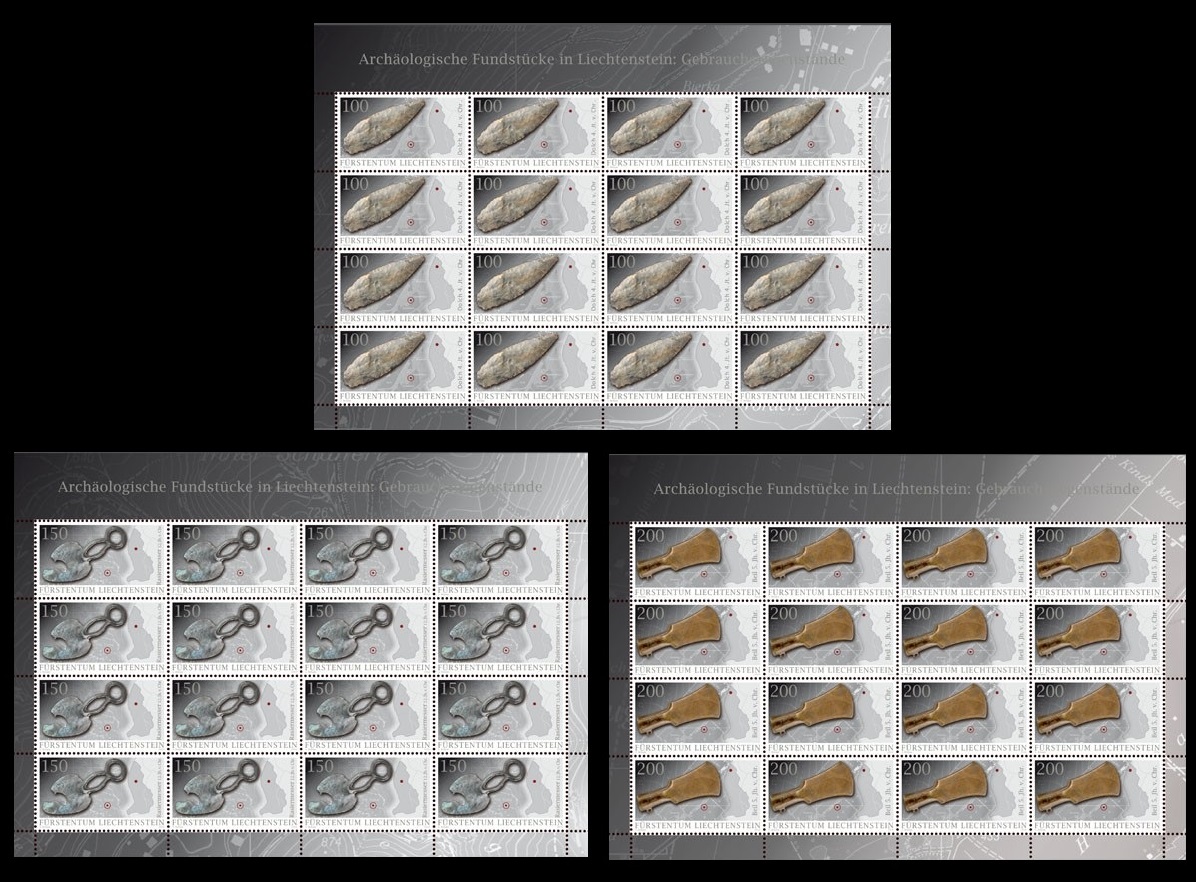
| Layout | Sheet of 16 stamps |
| Products | FDC x4 |
| Paper | Special stamp paper PVA, 102 g/m2, gummed |
| Perforation | 13.25 x 13.25 |
| Print Technique | 4-colour offset, FM screening, silver hot-foil stamping, multiheight embossing |
| Printed by | Cartor Security Printing Meaucé la Loupe |
| Quantity | |
| Issuing Authority | Liechtensteinische Post AG |
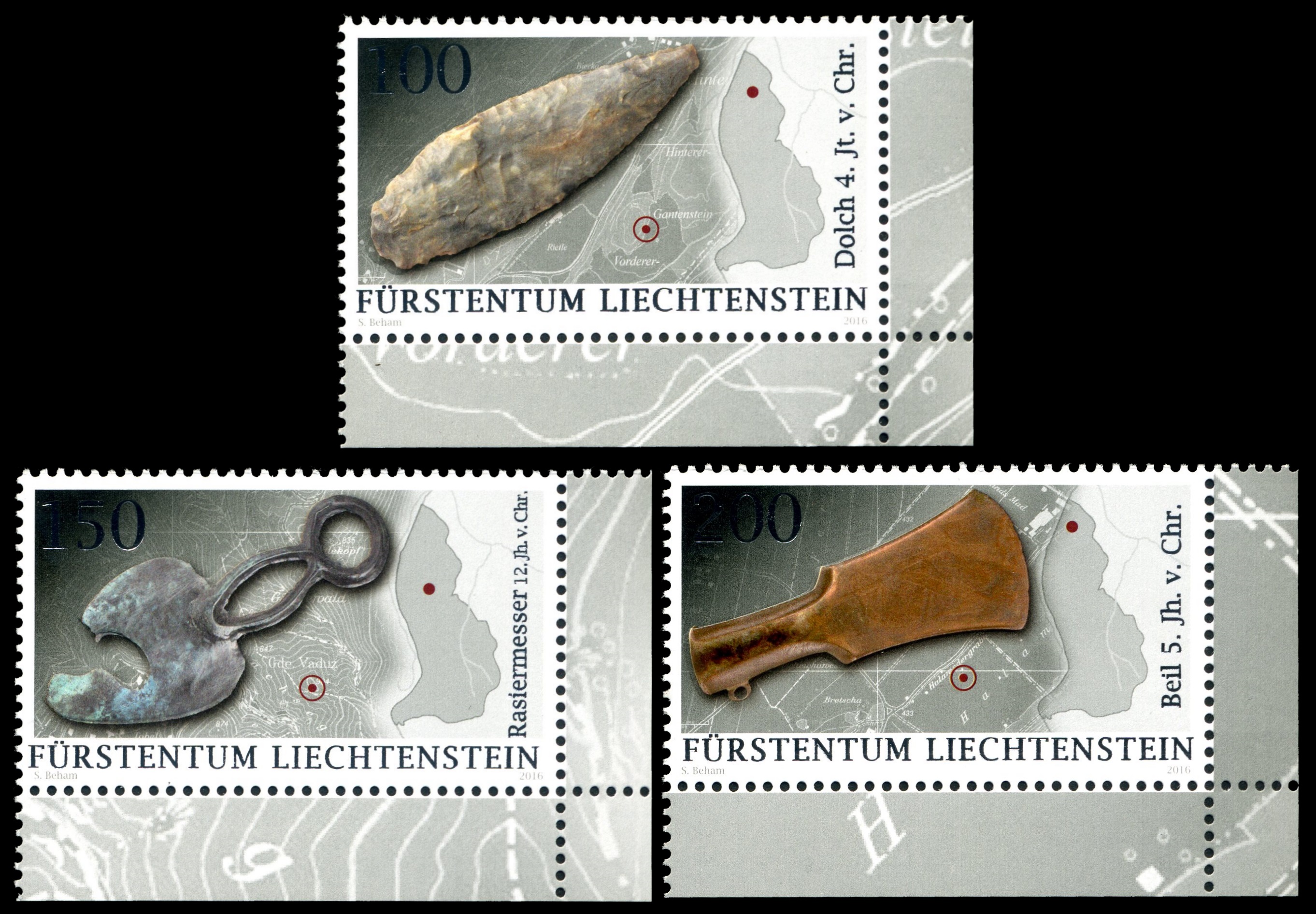
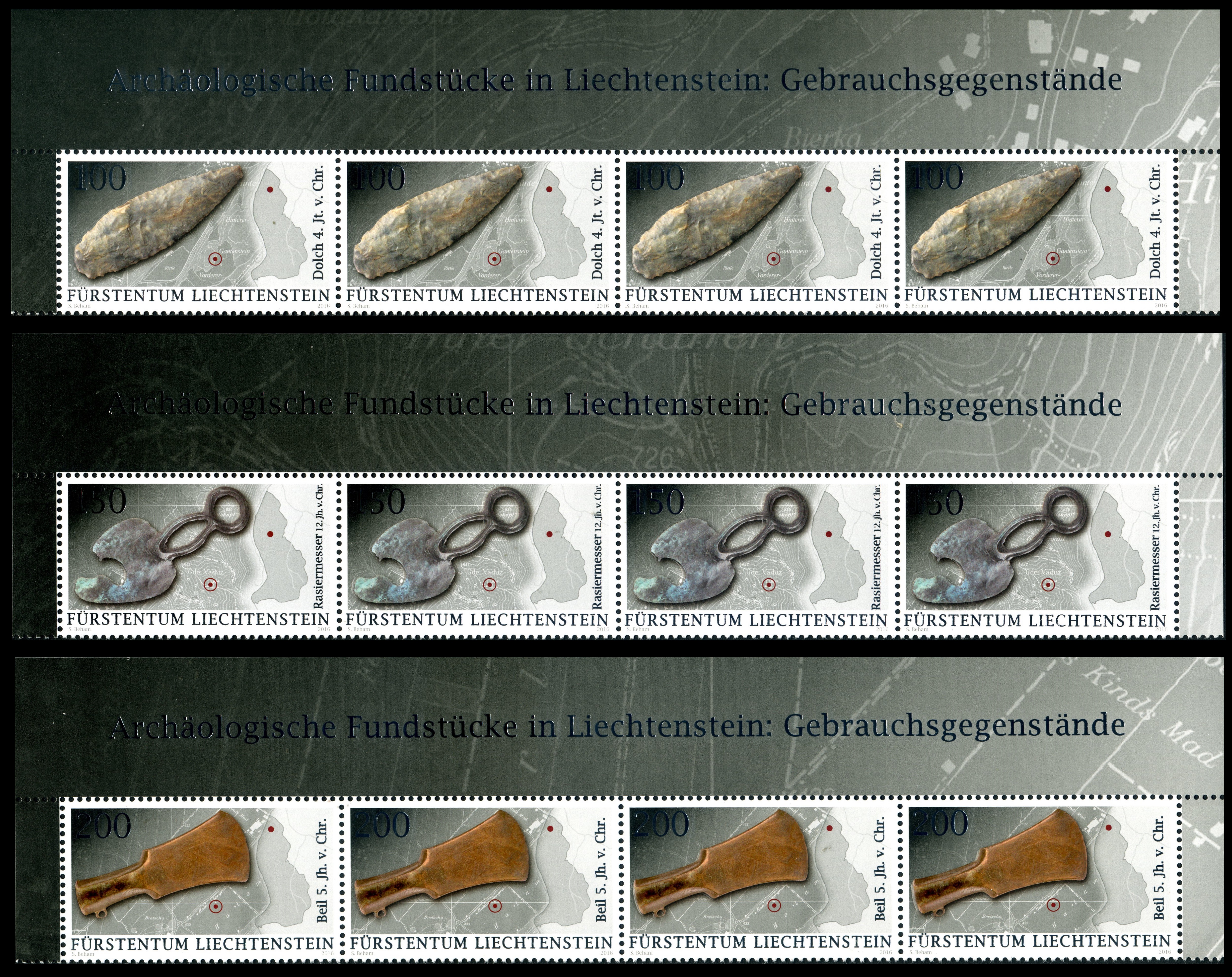
On March 9, Post of Liechtenstein issued a set of 3 stamps shows some archeology treasure of the country. The multi-part stamp series of archaeological finds in Liechtenstein shows three utensils in this issue.
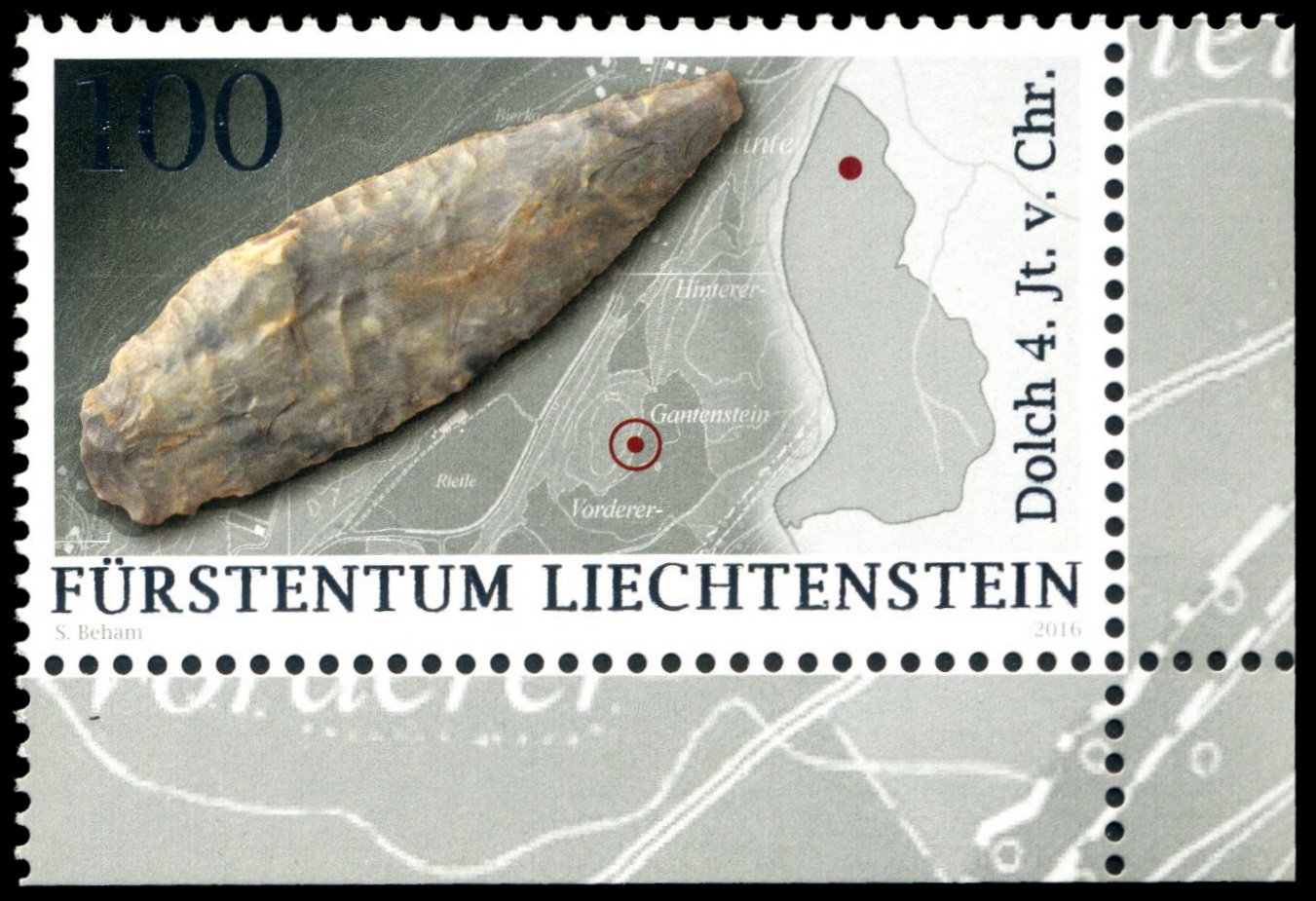
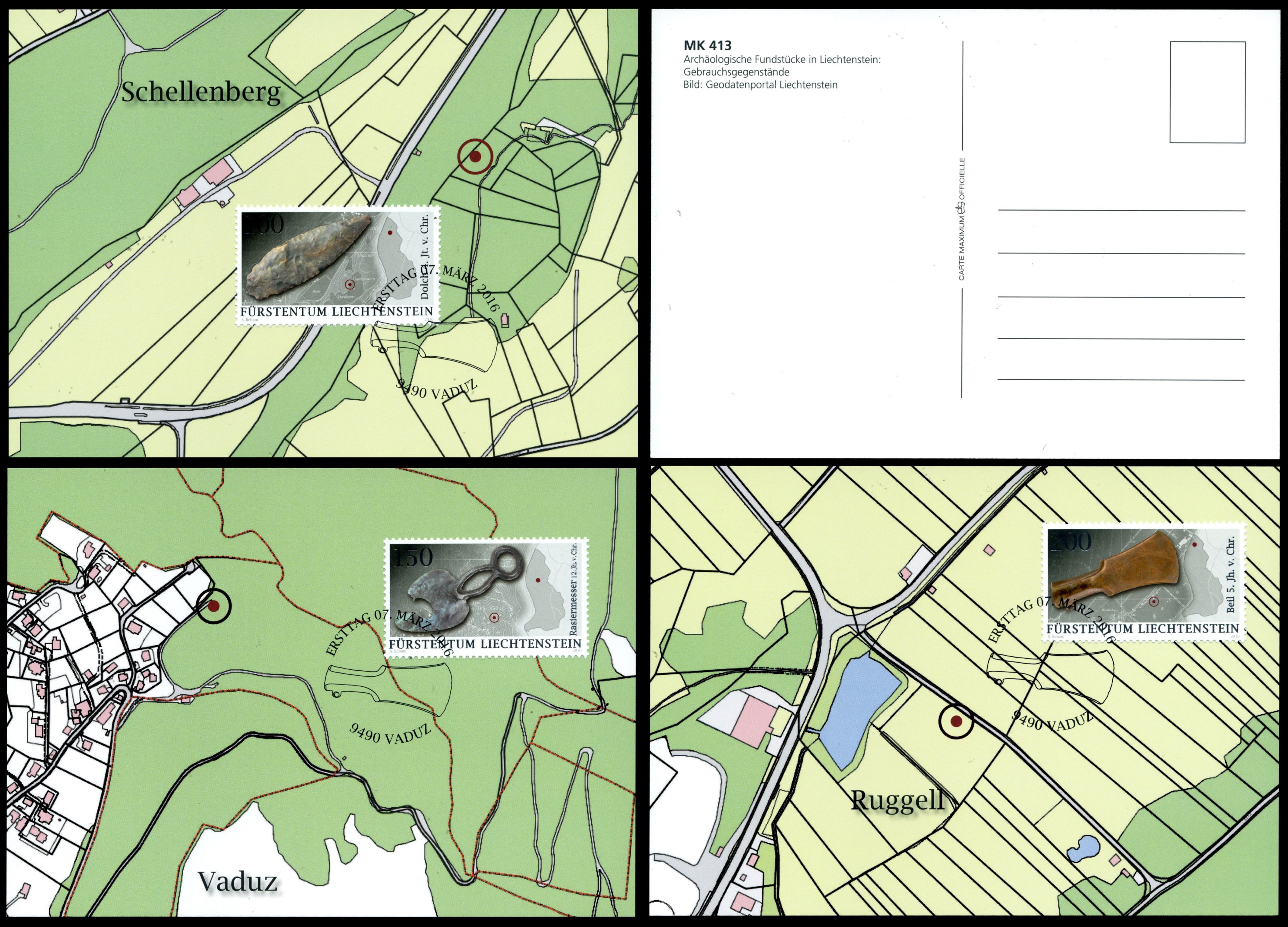
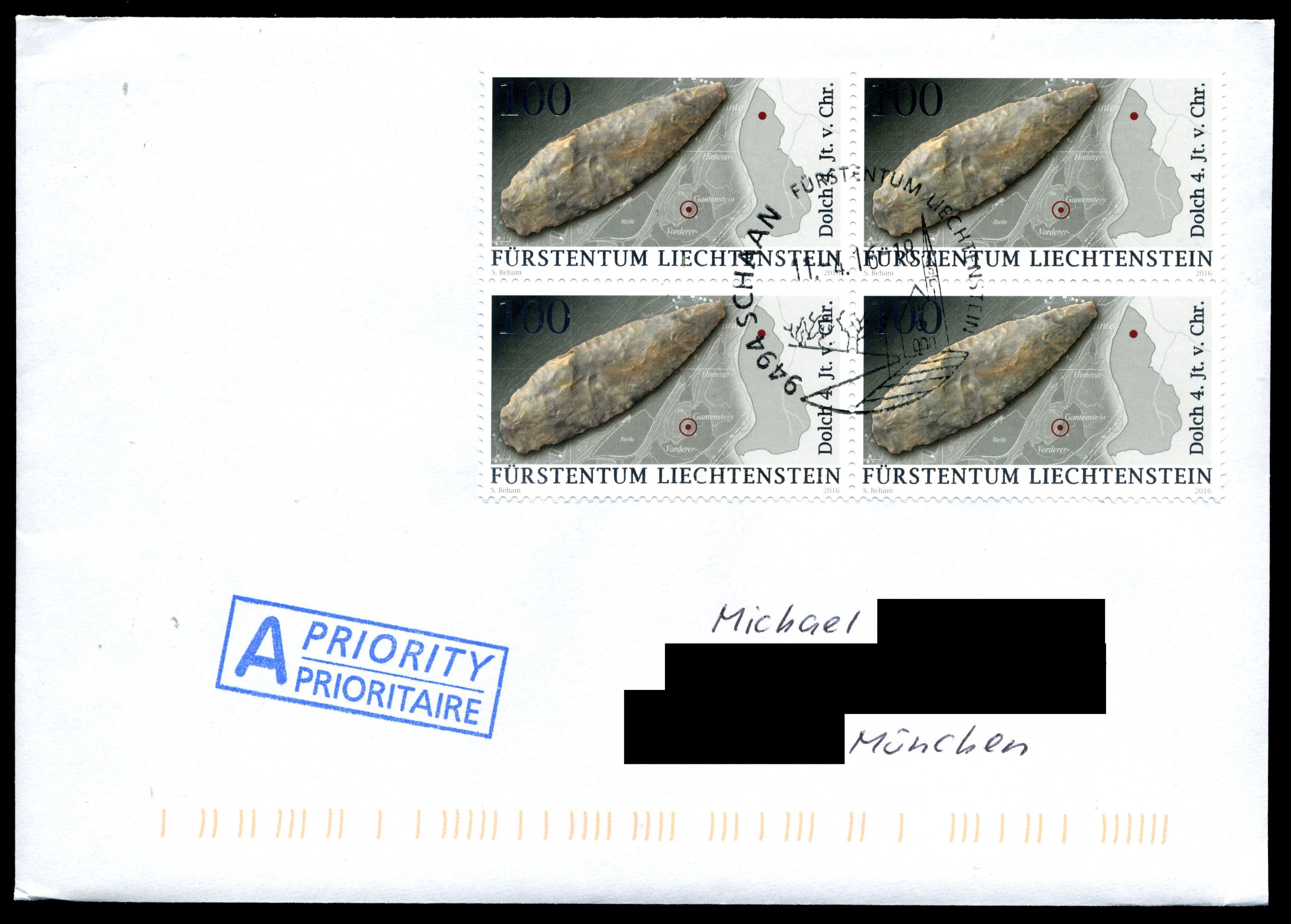
The dagger was made of flint, "prehistoric man’s steel", in the Neolithic period (12.000 years ago - 6.500 years ago). Experts assume that it was imported from Monti Lessini at Lake Garda by people belonging to the Horgen culture who lived on the Schellenberg-Borscht site. The lancet-shaped blade which has a broken-off tip is eleven centimetres long and the organic handle is missing. The dagger is important evidence of the trade relations that were conducted over long distances by the Neolithic inhabitants of the Alpine Rhine Valley.
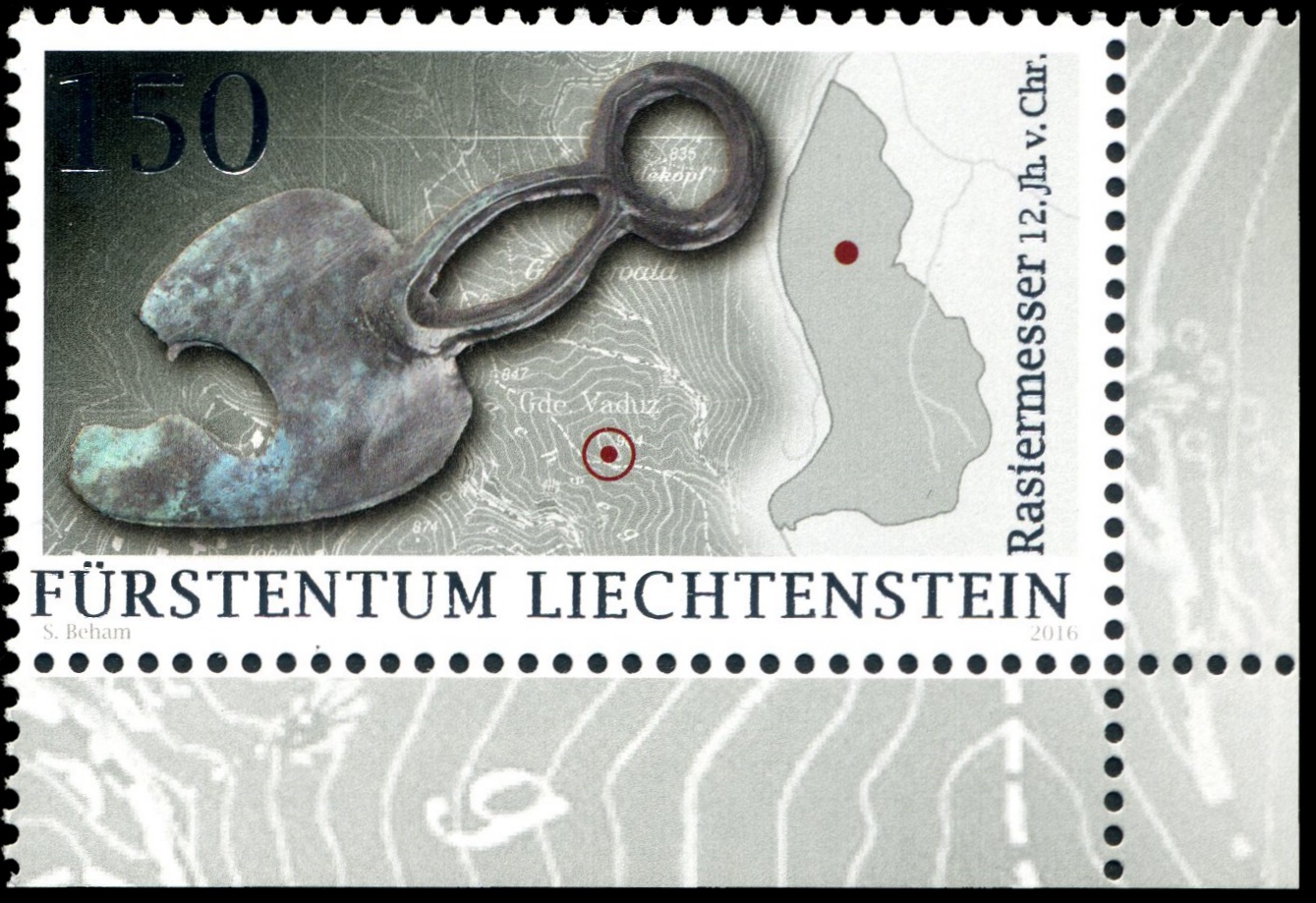 |
| Razor on stamp of Liechtenstein 2016 MiNr.: ; Scott: . |
The winged axe (right) from the Hallstatt period (5th century B.C.) is made of bronze. It was discovered in around 1920 whilst cutting peat in the Ruggeller Riet. The two wings and the eyelet serve to fix the blade to the wooden handle that no longer exists.
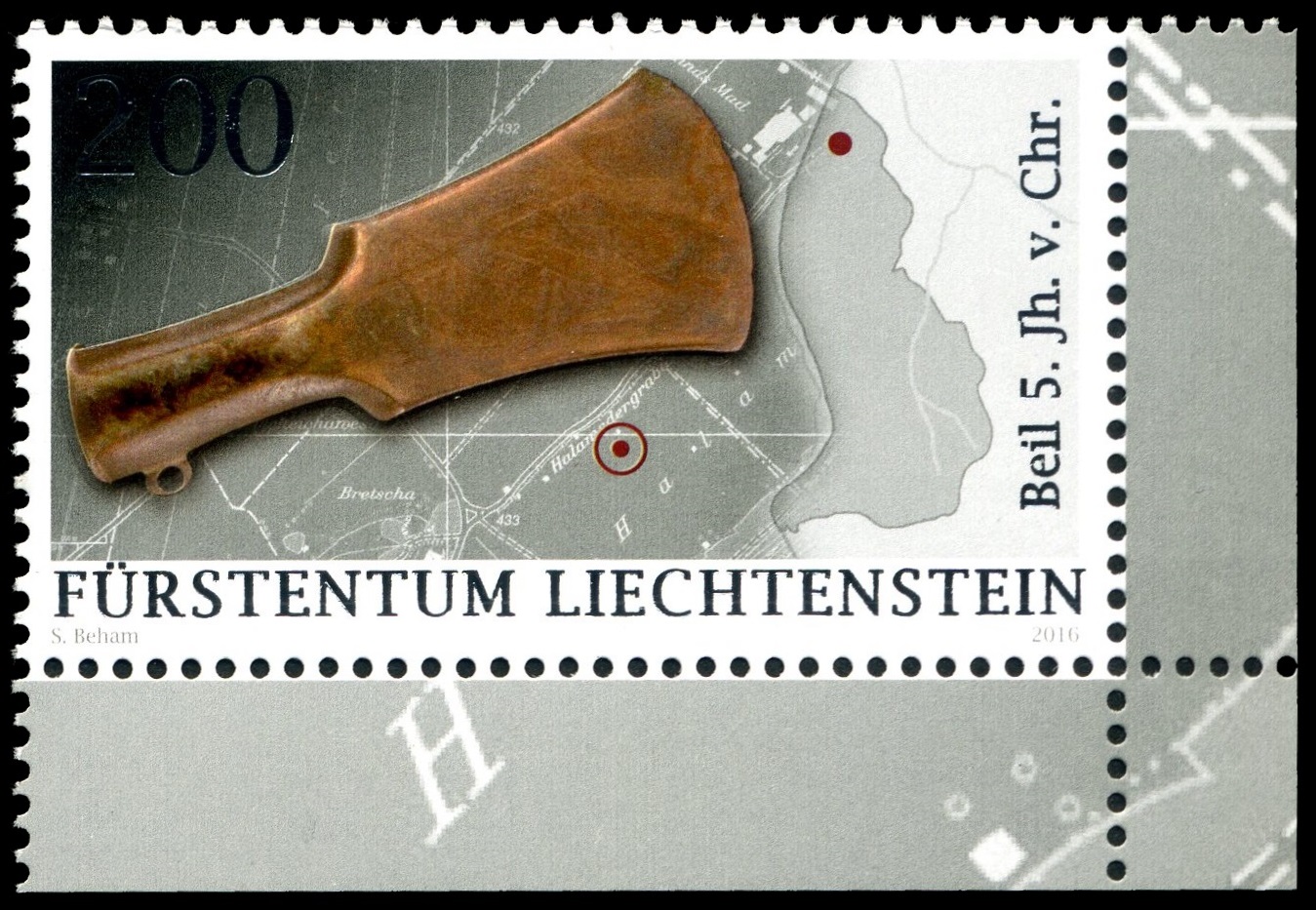 |
| Winged axe on stamp of Liechtenstein 2016 |
The razor (face value: CHF 1.50) dates back to the late Bronze Age (12th century B.C.) and was discovered as an individual find in a piece of woodlands in the municipality of Vaduz. Its large blade and oval, frame handle with an end ring are characteristic features of such utensils. The winged axe (face value: CHF 2.00) from the Hallstatt period (5th century B.C.) is made of bronze. It was discovered in around 1920 whilst cutting peat in the Ruggeller Riet. The two wings and the eyelet serve to fix the blade to the wooden handle that no longer exists.
Products and associated philatelic items
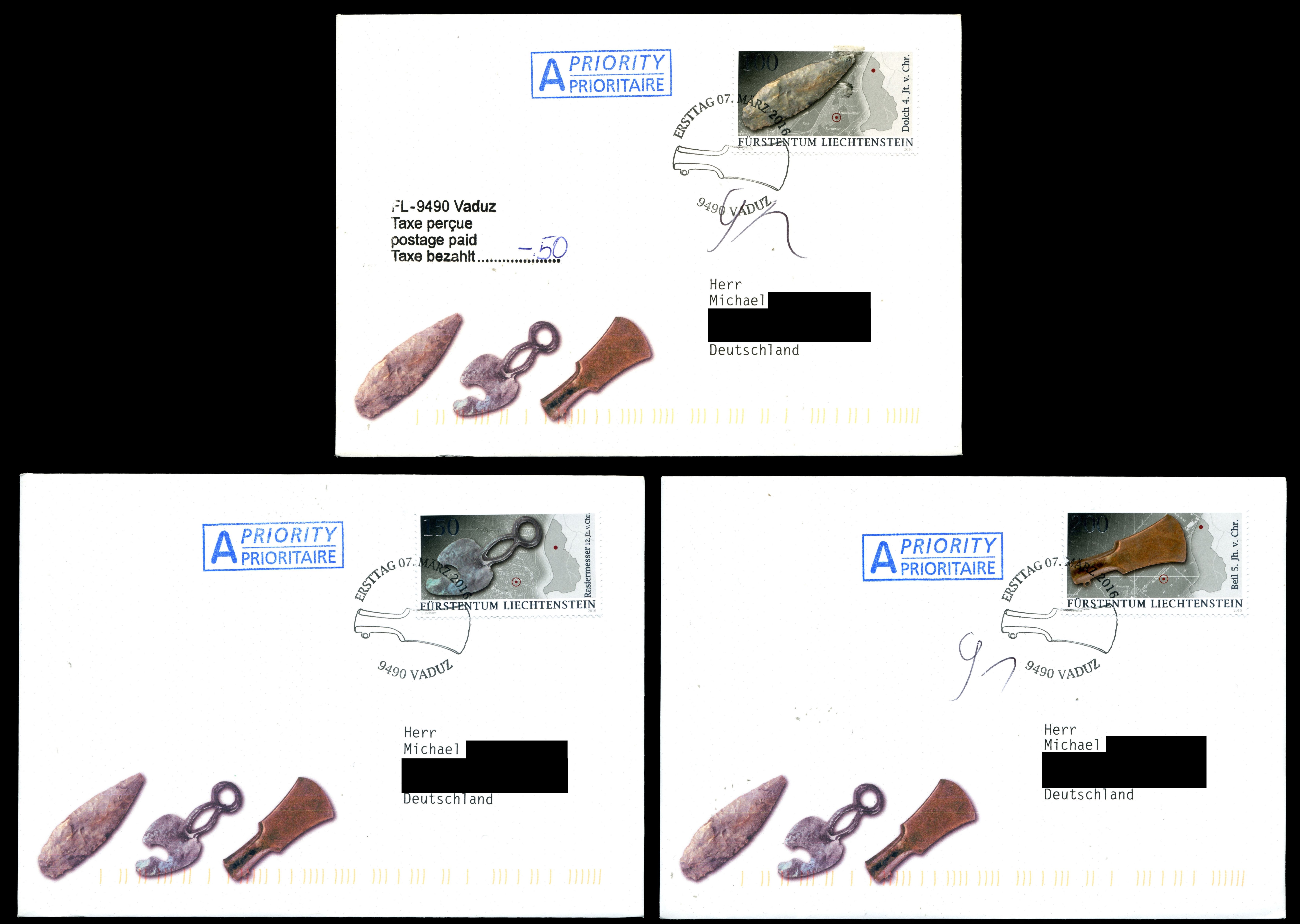
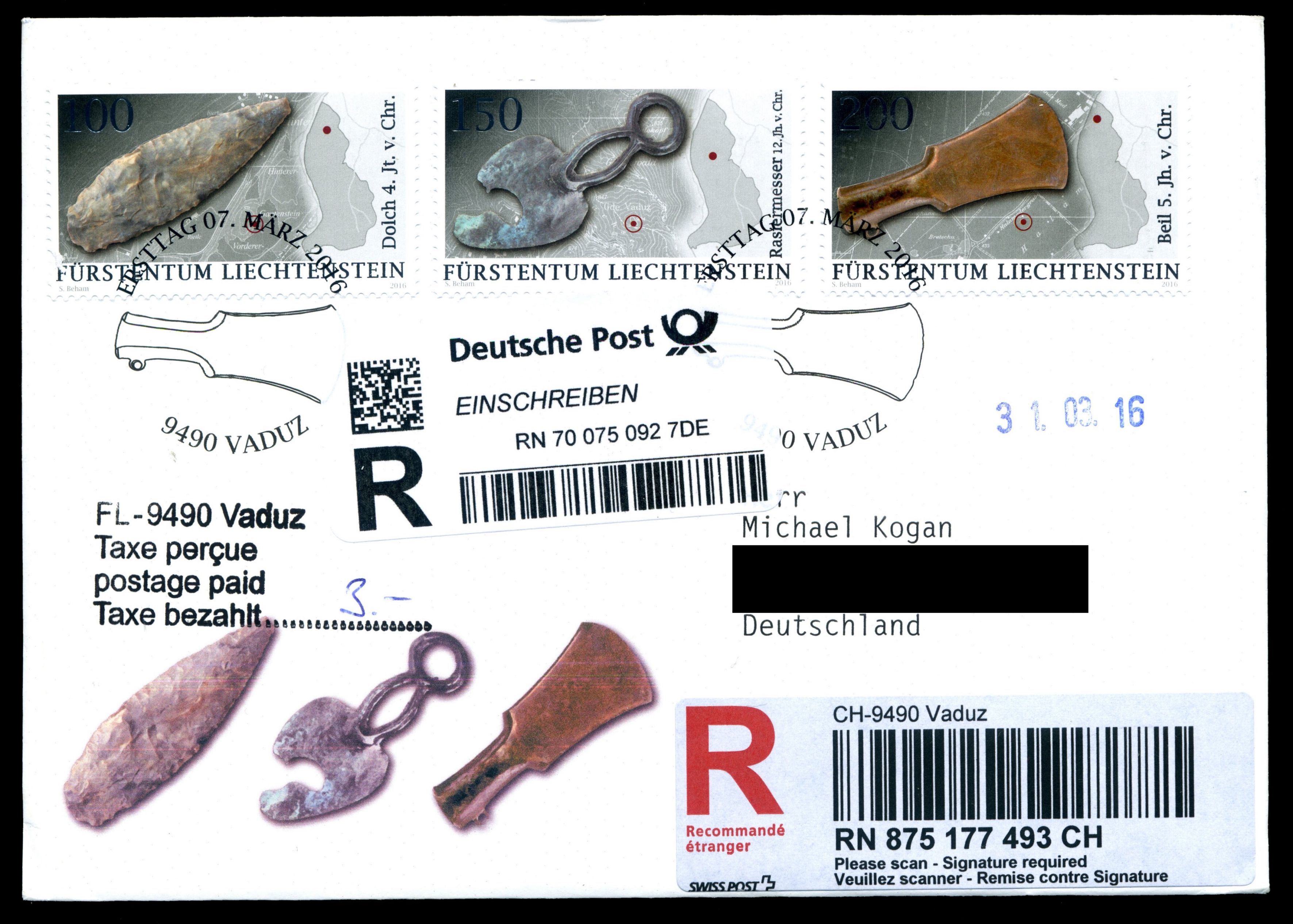
| Mini Sheet | FDC sent at the day of stamps issue | |
 |
 |
 |
| Maxi Cards | Example of Circulated Cover | |
 |
 |
|
| The back sides of all three cards are identical | ||
References
News brochure Liechtensteins's Post: Stamp issue 7 March 2016 (pages 11-12), Website Liechtensteins's Post.