Turkey 2026 "Saber-toothed tiger"
| Issue Date | 21.09.2026 |
| ID | Michel: Scott: Stanley Gibbons: Yvert: UPU: Category: pR |
| Design | |
| Stamps in set | 1 |
| Value | 45 TL - Saber-toothed tiger |
| Size (width x height) | 36mm x 52mm |
| Layout | Sheet of 25 |
| Products | FDC x1 |
| Paper | |
| Perforation | |
| Print Technique | Digital |
| Printed by | PTT Printing House |
| Quantity | stamps: 100.000 FDC: 2.000 |
| Issuing Authority | PTT |
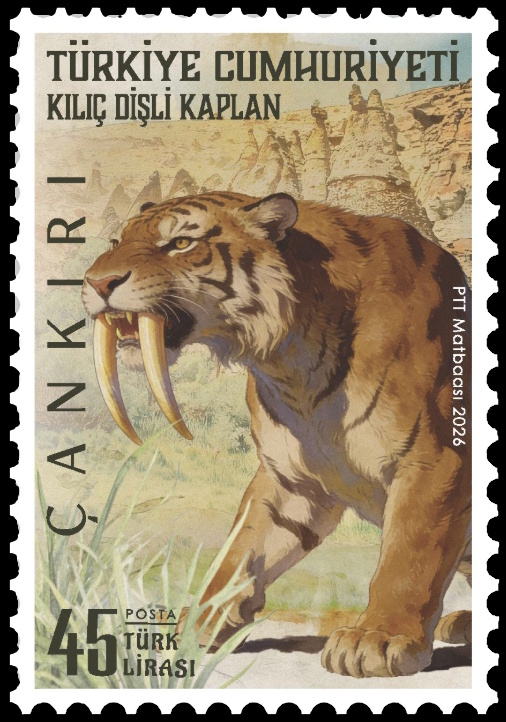
On September 21st, 2026, the Turkish Post issued a stamp depicting a saber-toothed cat. The design appears to be AI-generated, possibly based on an image of a modern tiger modified to feature elongated canine teeth, rather than a scientifically accurate reconstruction of an extinct species.
The stamp features a saber-toothed tiger associated with the rich fossil deposits of Çorakyerler, near the centre of Çankırı in central Turkey.
|
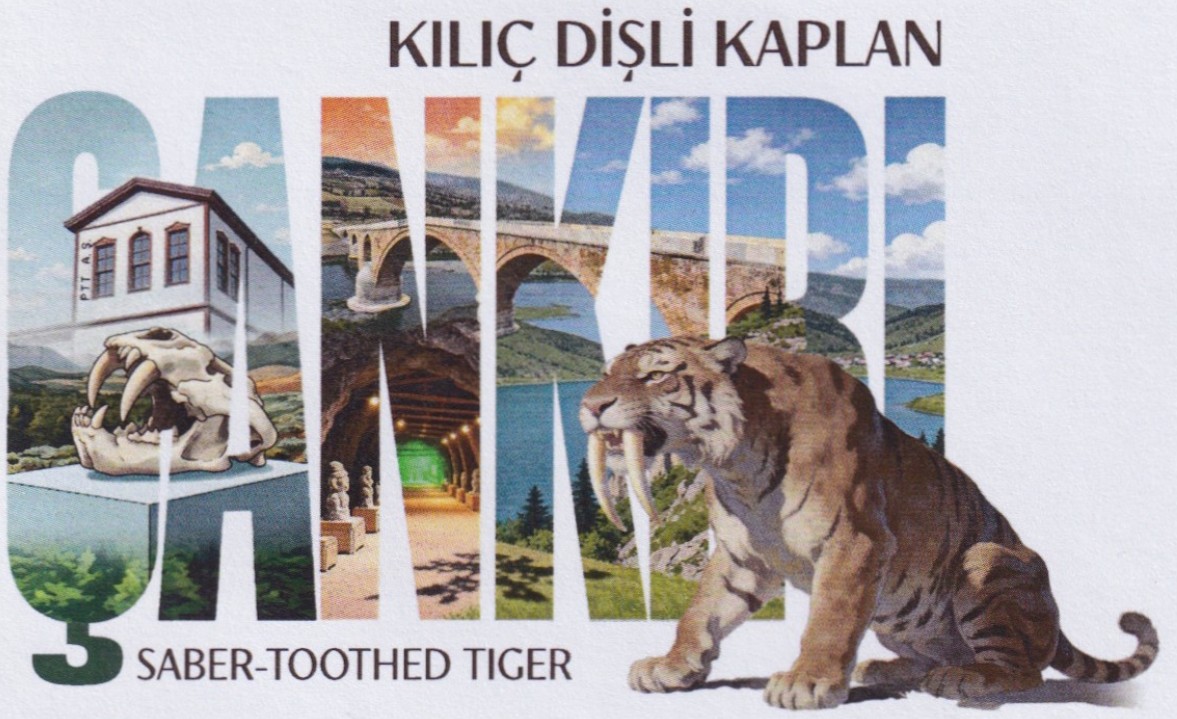
| The skull of the saber-toothed tiger from the collection of the Çankırı Museum depicted on the cachet of the FDC. |
The fossils include rhinoceroses, ancient giraffes, three-toed horses of the genus Hipparion, hyenas, antelopes, bovids, porcupines, primates, and extinct saber-toothed cats. Together, they provide valuable evidence of Miocene ecosystems in Anatolia and help researchers investigate mammalian evolution and dispersal between Europe and Asia.

|
| Machairodus on stamp of Bulgaria 2023, MiNr.: 5626, Scott: 5051. |
The remarkable diversity of the Çorakyerler fauna is not limited to mega-herbivores and large carnivores like Machairodus. In recent years, the site gained international scientific renown following the discovery of Anadoluvius turkae, an 8.7-million-year-old fossil primate. This groundbreaking specimen provides crucial clues regarding early hominid evolution, suggesting that human ancestors spent a significant evolutionary window in Anatolia before migrating south.
Today, these globally vital findings have made the Natural History wing of the Çankırı Museum a thriving cultural hub, drawing tens of thousands of international visitors annually.
Products and associated philatelic items
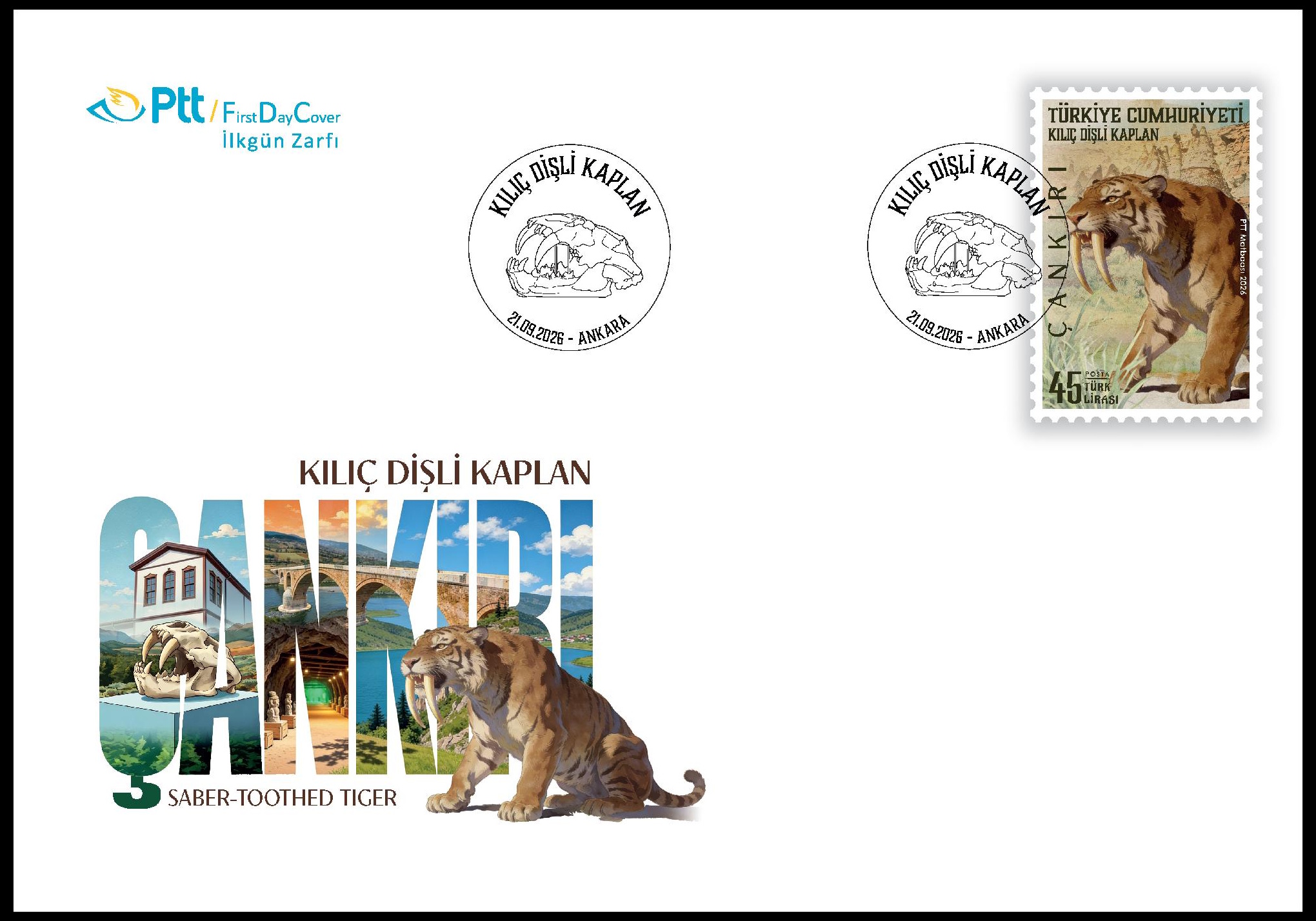
| FDC | First-Day-of-Issue Postmark | Examples of Circulated Covers |
 |
 |
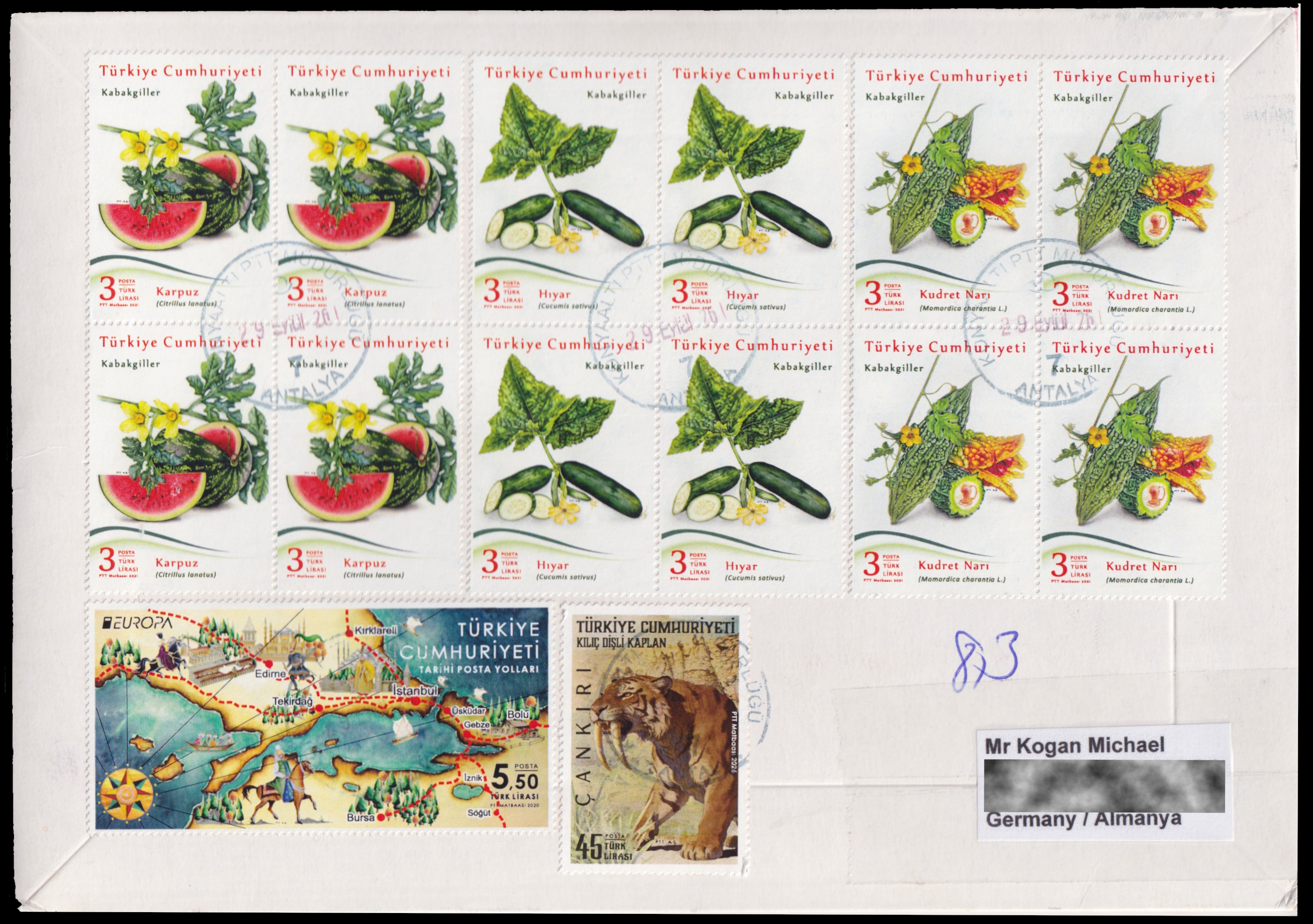 |
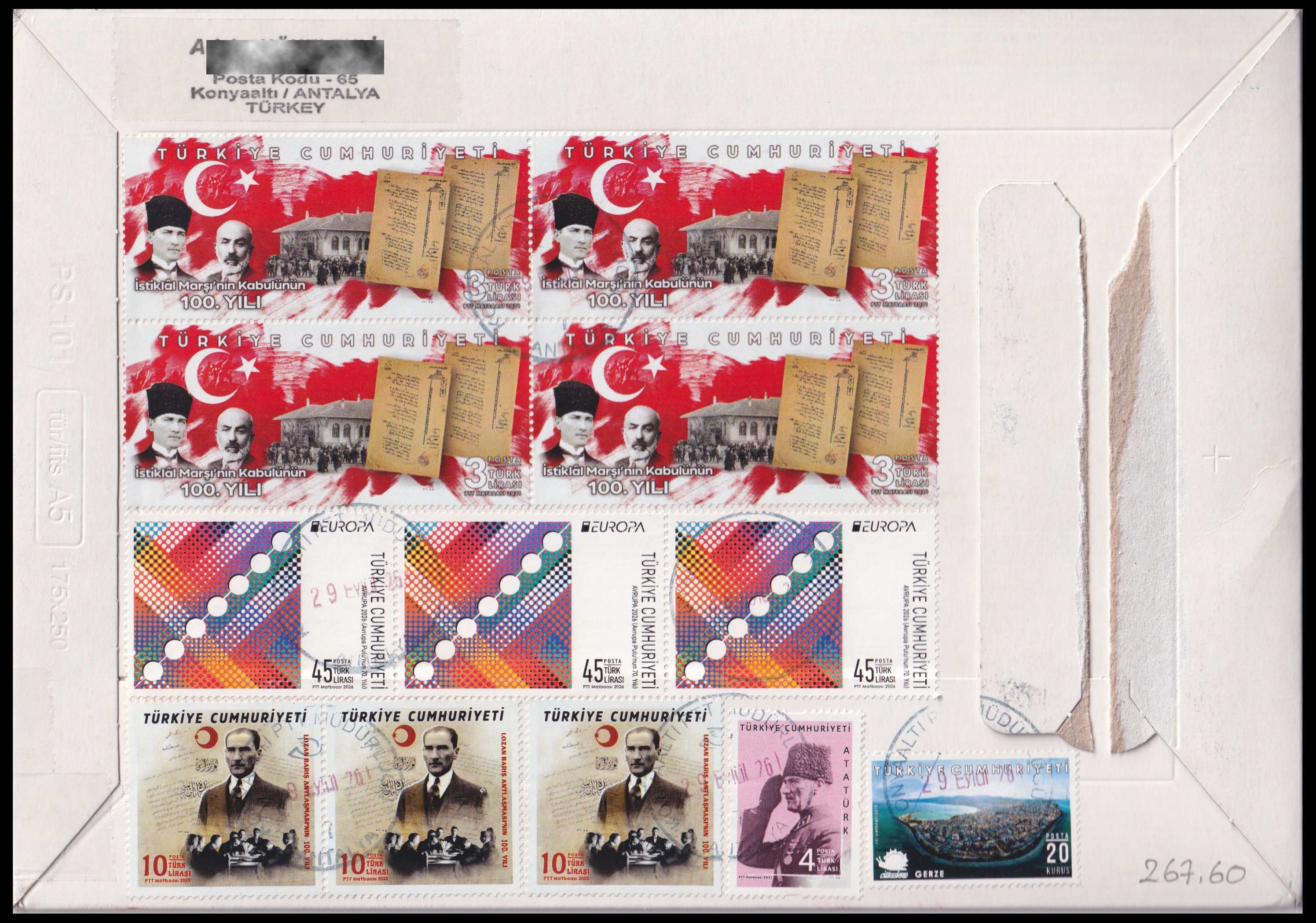
| The reverse side includes more stamps |
References
- Technical details and short description:
The Turkish Post website - Excavation at:
- Fossils dating back 9 million years are being unearthed in excavations in Çankırı. from 05.09.2025
- Prof. Dr. Erol: "It doesn't exist in any other city center in the world, it only exists in Çankırı!" from 04.05.2025
Cankiri Postasi - Cankiri Museum:
PDF Flyer, including the image of the skull. - Anadoluvius turkae:
Wikipedia (in German)