Bosnia and Herzegovina (Republic of Srpska) 2009 "Dinosaurs"
| Issue Date | 13.03.2009 |
| ID | Michel: 454-455, Scott: 358-359, Stanley Gibbons:, Yvert et Tellier: 425-426, Category: pR |
| Designers | M.Nikolic/N.Djumic/B.Dosenovic |
| Stamps in set | 2 |
| Value | KM 0,70 - Triceratops KM 1,50 - Diplodocus |
| Emission/Type | commemorative |
| Issue place | Banja Luka |
| Size (width x height) | 35 mm x 26 mm |
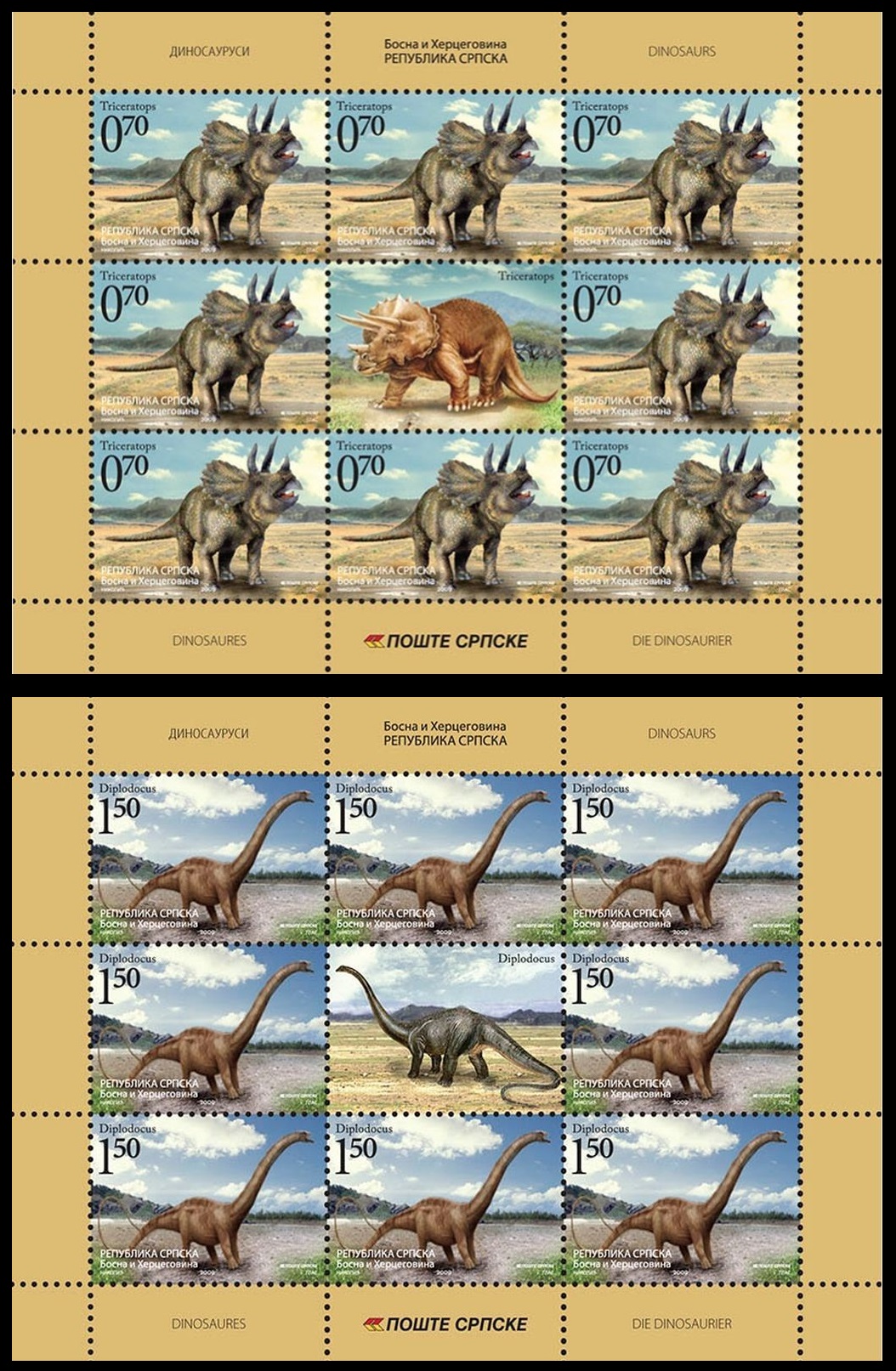
| Layout | Mini-Sheet of 8 stamps with label in the middle (3x3) |
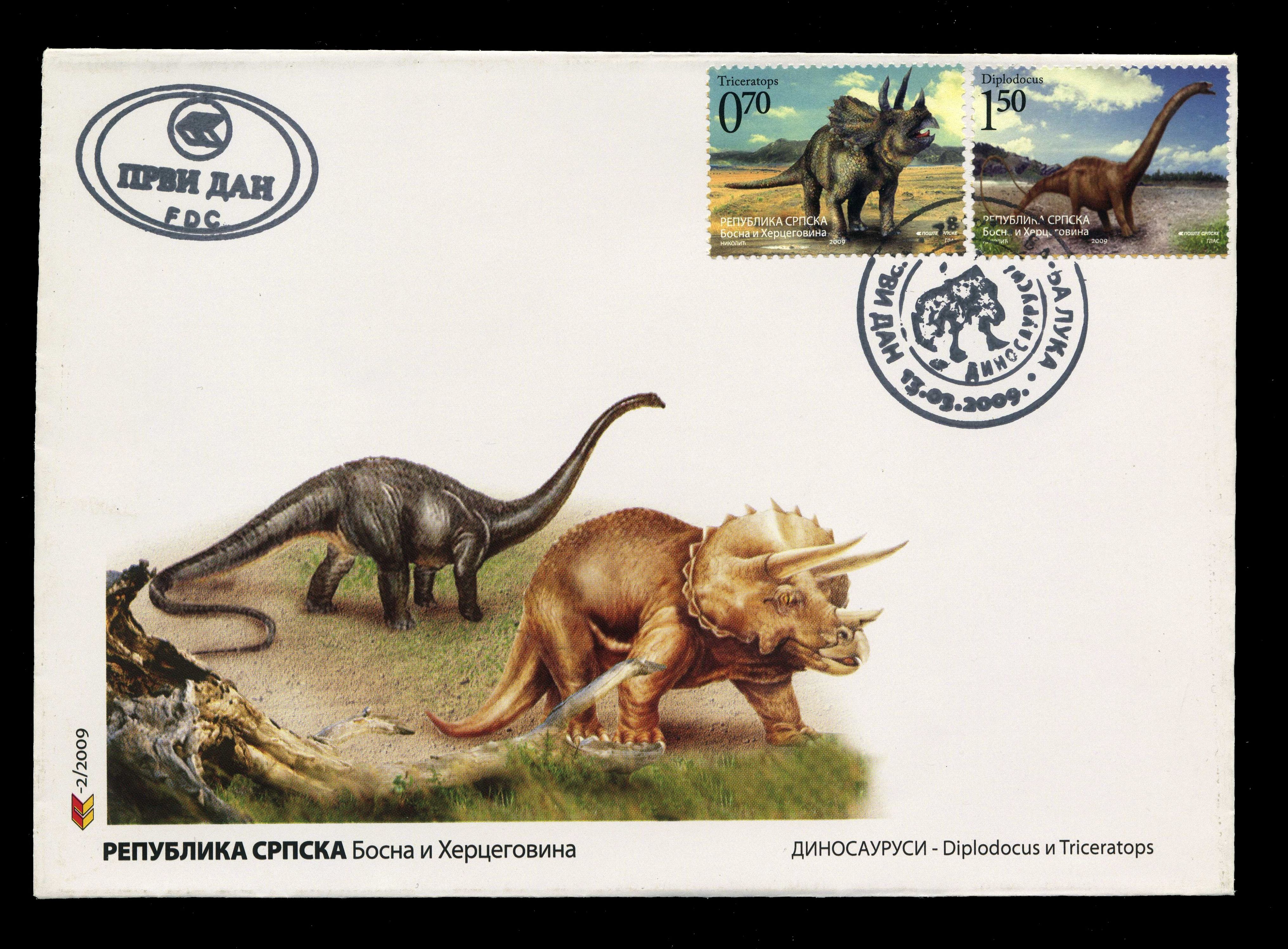
| Products | FDC x1, MS x2 |
| Paper | mufflep, 100g |
| Perforation | 13.25 x 13.25 |
| Print Technique | Offset, multicolour |
| Printed by | Glas Srpske Banjaluka Rep of Srpska Bosnia & Herzegovina |
| Quantity | 20,000 each |
| Issuing Authority | Enterprise for Postal Traffic of Republic of Srpska, Banja Luka |

On March 13th 2009, the Post Authority of Bosnia and Herzegovina (Republic of Srpska) issued the set of two "Dinosaur" stamps, depicting the dinosaurs Triceratops and Diplodocus.
Fossils of both dinosaurs are known from North America only. Up to the date of issue, no known dinosaur fossils have been discovered in Bosnia and Herzegovina.
Triceratops
is a genus of herbivorous chasmosaurine ceratopsid dinosaur that first appeared during the late Maastrichtian stage of the Late Cretaceous period, about 68 million years ago in what is now North America. It is one of the last-known non-avian dinosaur genera and became extinct in the Cretaceous–Paleogene extinction event 66 million years ago.
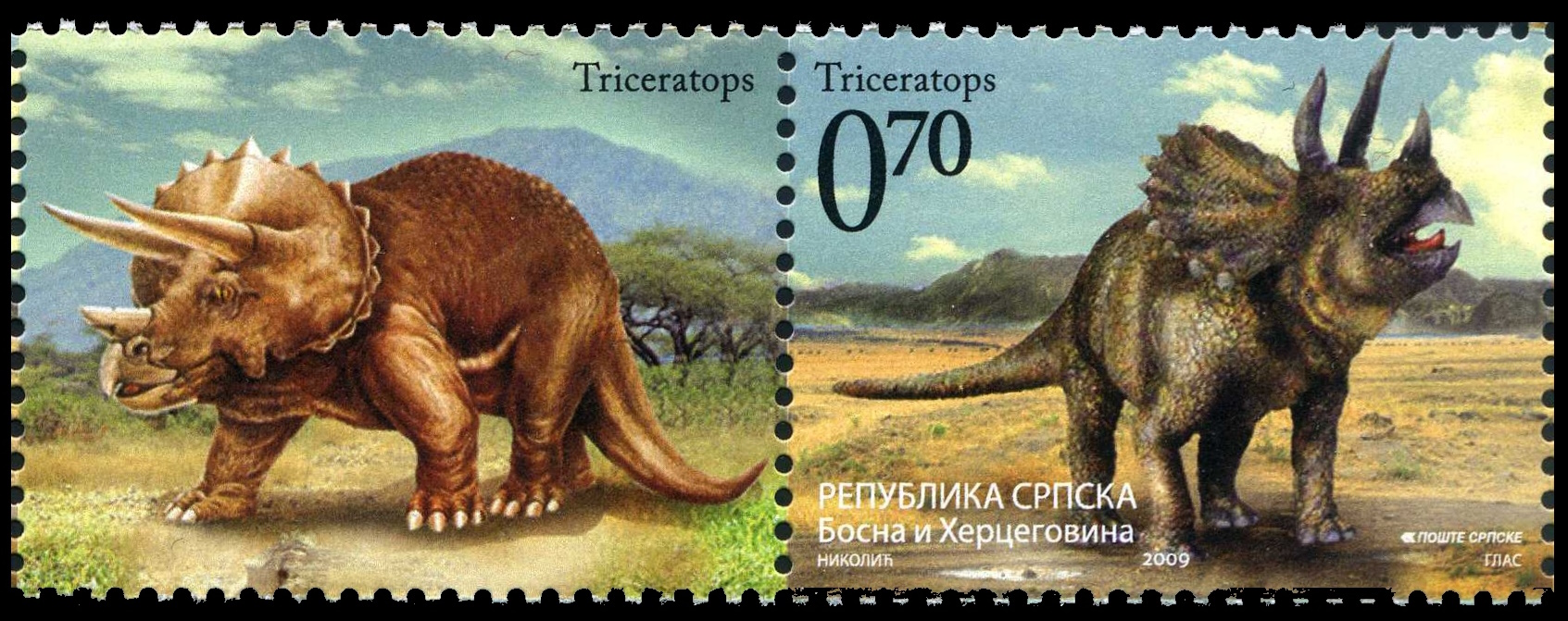 |
| Triceratops stamp with a tab from the middle of the Mini-Sheet of Bosnia Herzegovina 2009 |
The name Triceratops, literally means 'three-horned face'. Bearing a large bony frill, three horns on the skull, and a large four-legged body, exhibiting convergent evolution with bovines and rhinoceroses, Triceratops is one of the most recognizable of all dinosaurs and the most well-known ceratopsid.
It was also one of the largest non-sauropod dinosaur, up to 8–9 metres long and 5–9 metric tons in body mass. It shared the landscape with and was most likely preyed upon by Tyrannosaurus, though it is less certain that two adults did battle in the fanciful manner often depicted in museum displays and popular images.
The functions of the frills and three distinctive facial horns on its head have long inspired debate. Traditionally, these have been viewed as defensive weapons against predators. More recent interpretations find it probable that these features were primarily used in species identification, courtship, and dominance display, much like the antlers and horns of modern ungulates.
Diplodocus
is a gigantic dinosaur found in North America as fossils from the Late Jurassic Period (161 million to 146 million years ago). Fossils of Diplodocus were first discovered in 1877 by S. W. Williston, and were described and named by the famous American paleontologist Othniel Charles Marsh in the following year.
Its name means "double-beam" in reference to the double-beamed chevron bones located in the underside of the tail, which were then considered unique.
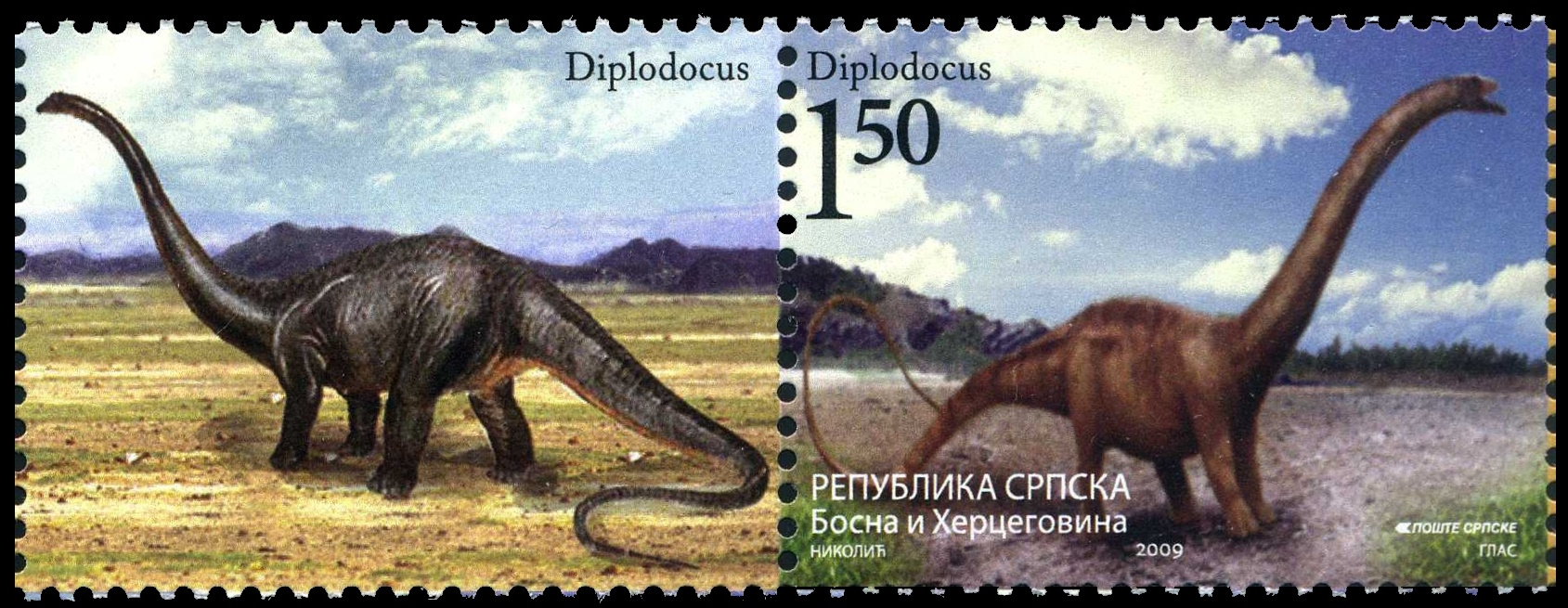 |
| Diplodocus stamp with a tab from the middle of the Mini-Sheet of Bosnia Herzegovina 2009 |
Its great size may have been a deterrent to the predators Allosaurus and Ceratosaurus: their remains have been found in the same strata, which suggests that they coexisted with Diplodocus.
Diplodocus is perhaps the most commonly displayed dinosaur.
For many years, it was the longest dinosaur known.
Products and associated philatelic items
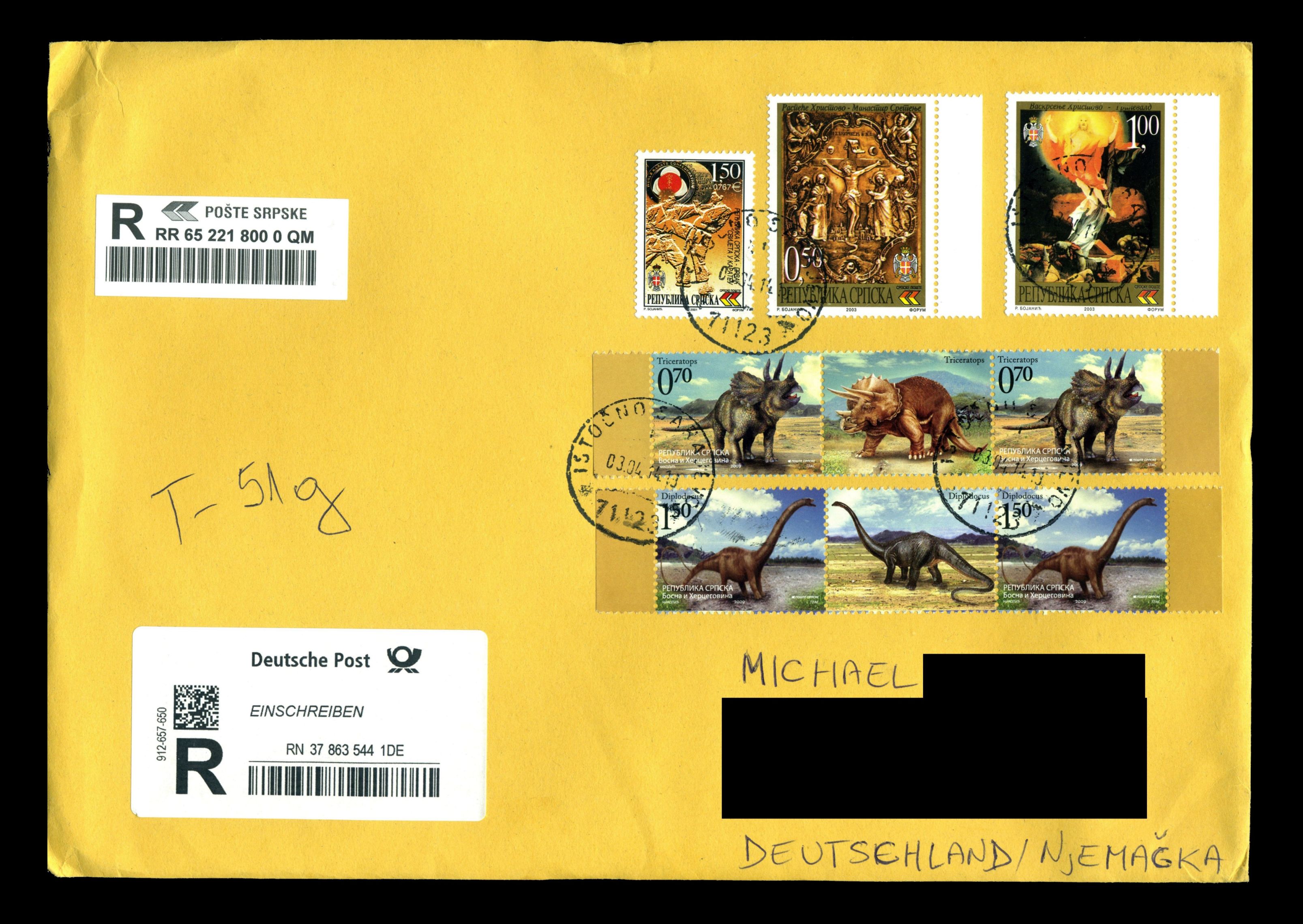
| FDC | Mini-Sheet | Example of circulated cover |
 |
 |
 |
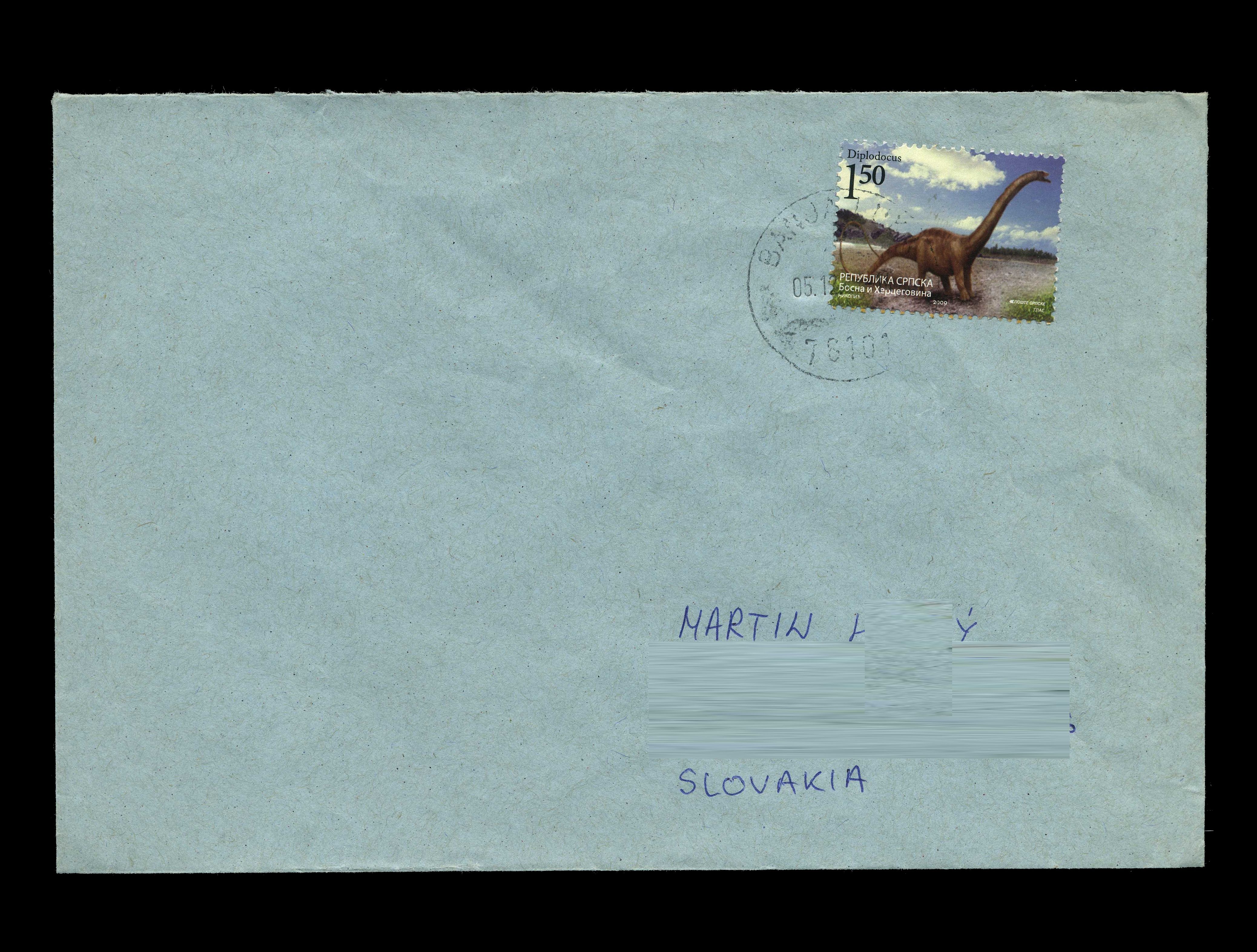
| First-Day-of-Issue Postmark | Example of circulated cover | |
 |
|
 |
References
- Technical details: WNS: [1], [2].
- Triceratops: Wikipedia, Encyclopaedia Britannica.
- Diplodocus: Wikipedia, Encyclopaedia Britannica.
Acknowledgements
Many thanks to Dr. Peter Voice from Department of Geological and Environmental Sciences, Western Michigan University, for his help to find an information for this article, the draft page review and his very valuable comments.