Taiwan 2026 "Dinosaurs"
| Issue Date | 07.07.2026 |
| ID | Michel: ; Scott: ; Category: pR |
| Design | Chung-Tat Cheung |
| Stamps in set | 4 |
| Value |
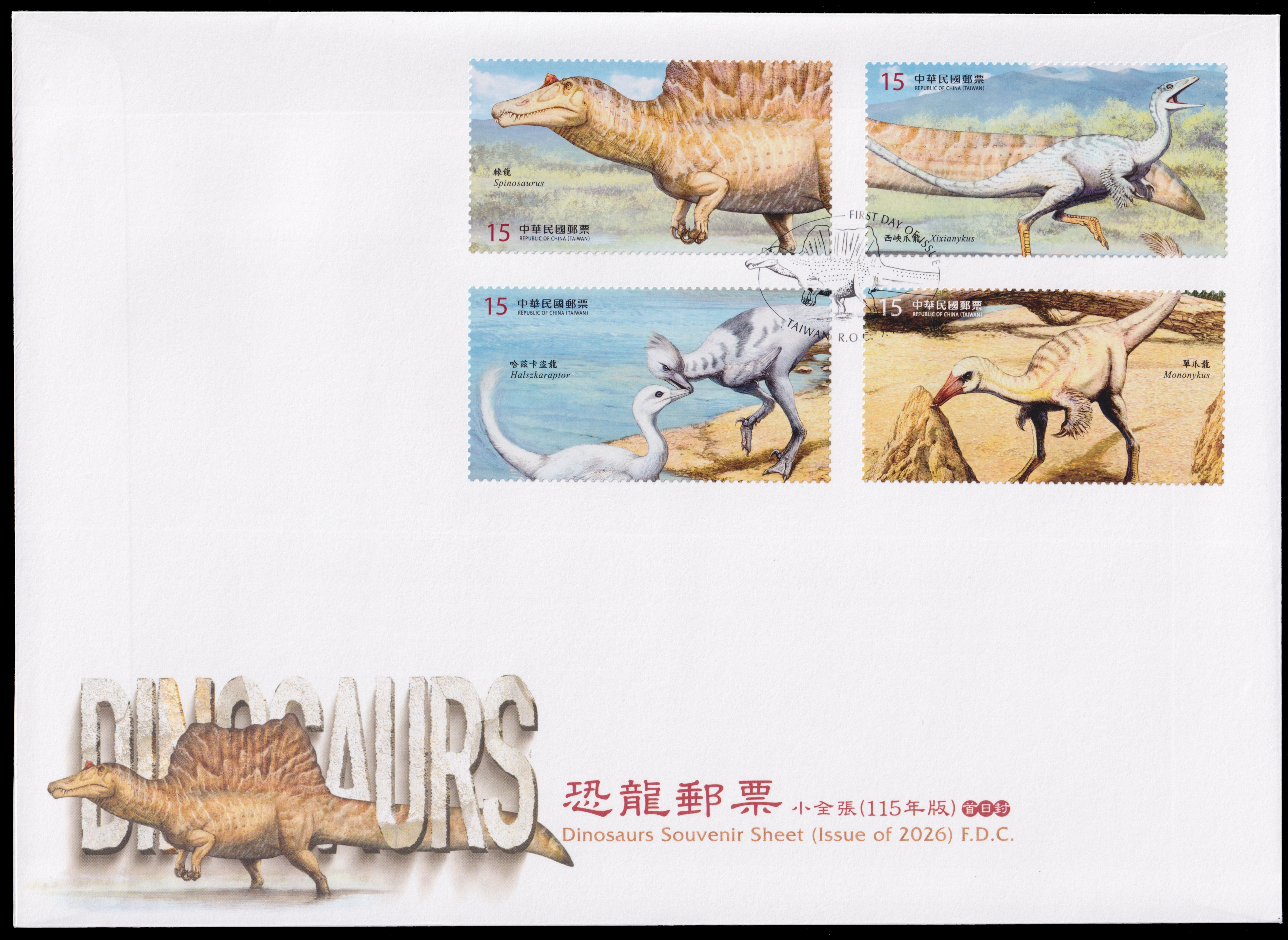
NTD 15 - Spinosaurus NTD 15 - Xixianykus NTD 15 - Halszkaraptor NTD 15 - Mononykus |
| Emission/Type | commemorative |
| Places of issue | |
| Size (width x height) | stamps: 63.0 mm x 34 mm Mini-Sheet: 150 mm x 100 mm |
| Layout | Mini-Sheet of 4 |
| Products | FDC x 1, MC x1, PP x1 |
| Paper | Self-adhesive stamp paper |
| Perforation | |
| Print Technique | Offset |
| Printed by | TOPPAN Inc. (Japan) |
| Quantity | |
| Issuing Authority | Chunghwa Post |
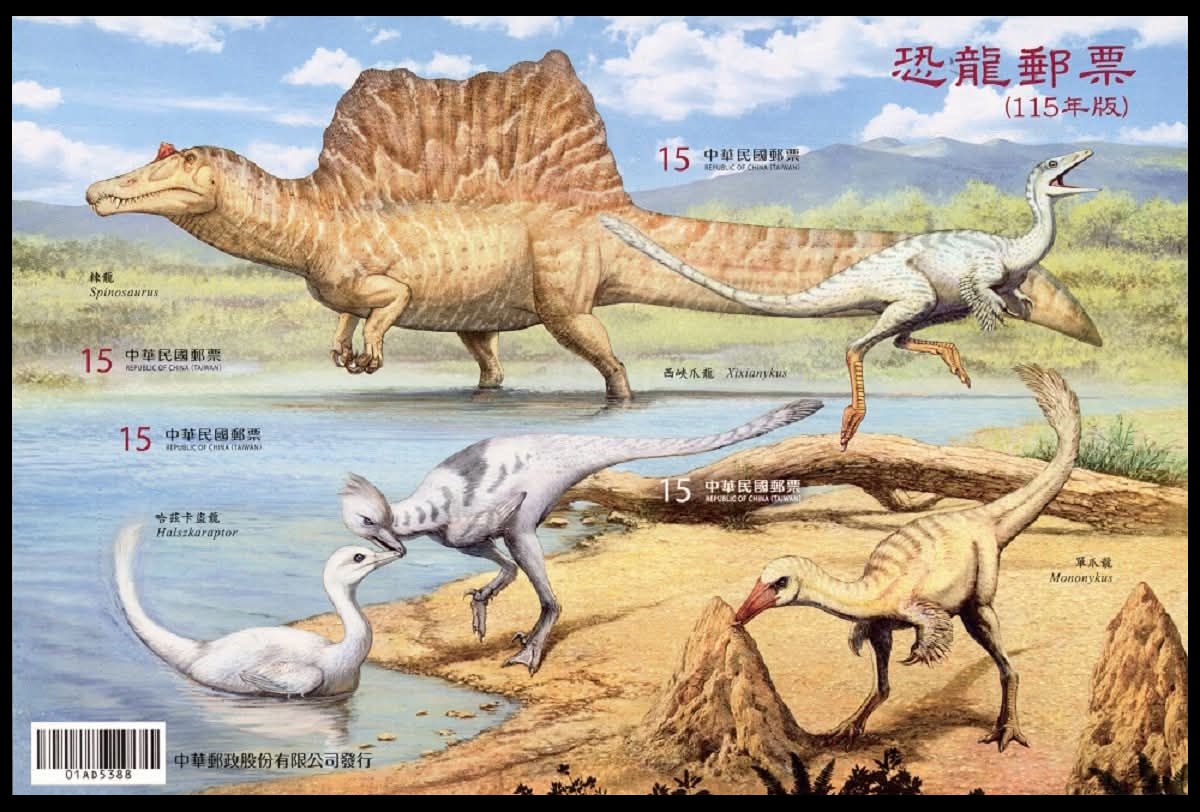
On July 7th, 2026, following the successful release of the "Dinosaurs Souvenir Sheet" in 2025, Chunghwa Post issued a second dinosaur-themed Mini-Sheet comprising four self-adhesive stamps, each with a face value of NT$15. Unlike the previous issue, which featured gigantic herbivorous dinosaurs, this set highlights four remarkable saurischian dinosaurs that illustrate the extraordinary diversity and evolutionary specialization of theropods during the Late Cretaceous.
The selected species: Spinosaurus, Xixianykus, Halszkaraptor, and Mononykus, represent some of the most unusual dinosaurs known to science. Rather than focusing solely on famous giants, Chunghwa Post chose species that reflect recent paleontological discoveries and modern scientific interpretations. Together they demonstrate the wide range of adaptations evolved by predatory dinosaurs, including semi-aquatic fishing, insectivory, and possible aquatic foraging.
Dinosaurs first appeared during the Late Triassic, about 230 million years ago. Over the following 160 million years they diversified into thousands of species, occupying nearly every terrestrial ecosystem on Earth. By the Late Cretaceous, dinosaurs had evolved an extraordinary variety of body forms, sizes, and ecological niches, ranging from giant herbivores to swift insect-eaters and specialized fish hunters.
Although Taiwan has no confirmed dinosaur fossils, the island has yielded numerous important Cenozoic fossils. Discoveries include fossil whales, dolphins, rhinoceroses, deer, elephants, crocodiles, birds, and other Ice Age mammals, particularly from the Penghu Channel and the Zuojhen area of Tainan. The famous Denisovan jawbone from the Penghu Channel is one of the most significant recent paleoanthropological discoveries in East Asia. By depicting dinosaurs from Africa and Asia rather than native species, this stamp issue celebrates the global history of paleontology and the remarkable diversity of prehistoric life.
The dinosaurs depicted on the stamps
Spinosaurus
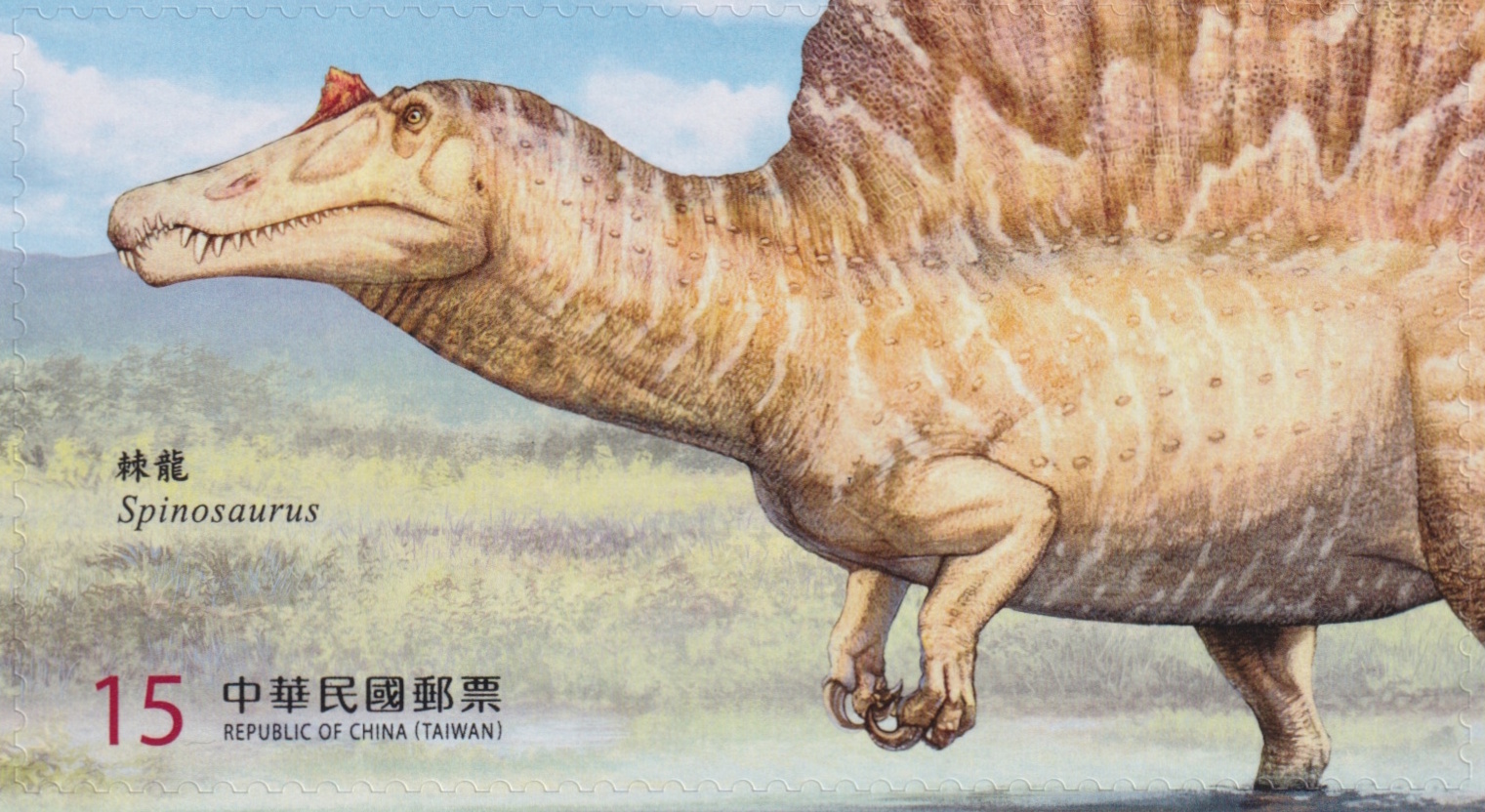 |
| Spinosaurus on stamp of Taiwan 2026, MiNr.: ?, Scott: ?. |
Although no fossils of Spinosaurus or other spinosaurids have been discovered in Taiwan, the species was selected for this stamp issue to showcase one of the most remarkable dinosaurs known to science.
Xixianykus
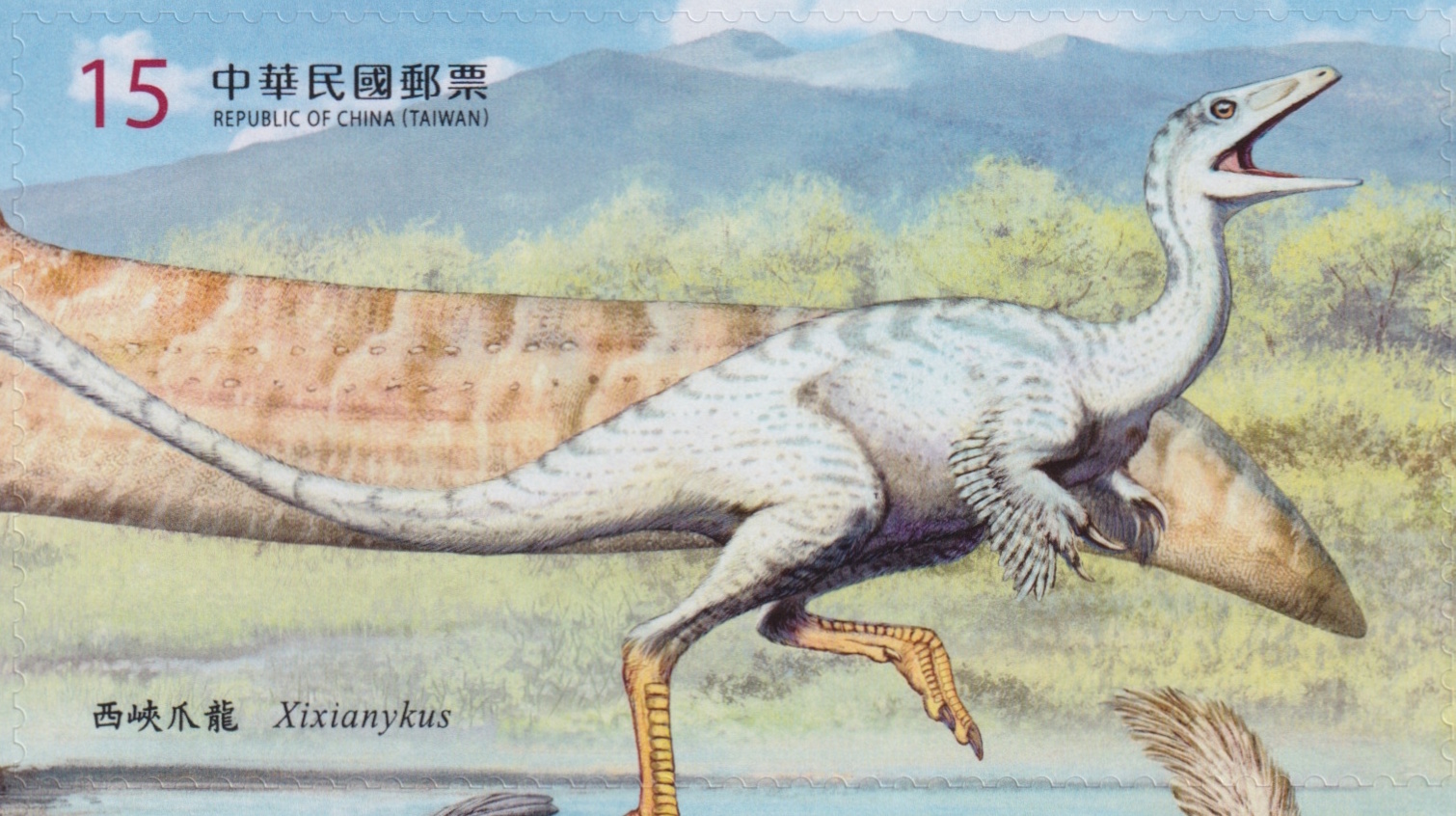 |
| Alvarezsauridae on stamp of Taiwan 2026, MiNr.: ?, Scott: ?. |
Although no fossils of Xixianykus have been discovered in Taiwan, its inclusion in this stamp issue highlights the remarkable diversity of Asian dinosaurs and the important paleontological discoveries made in neighboring China.
Halszkaraptor
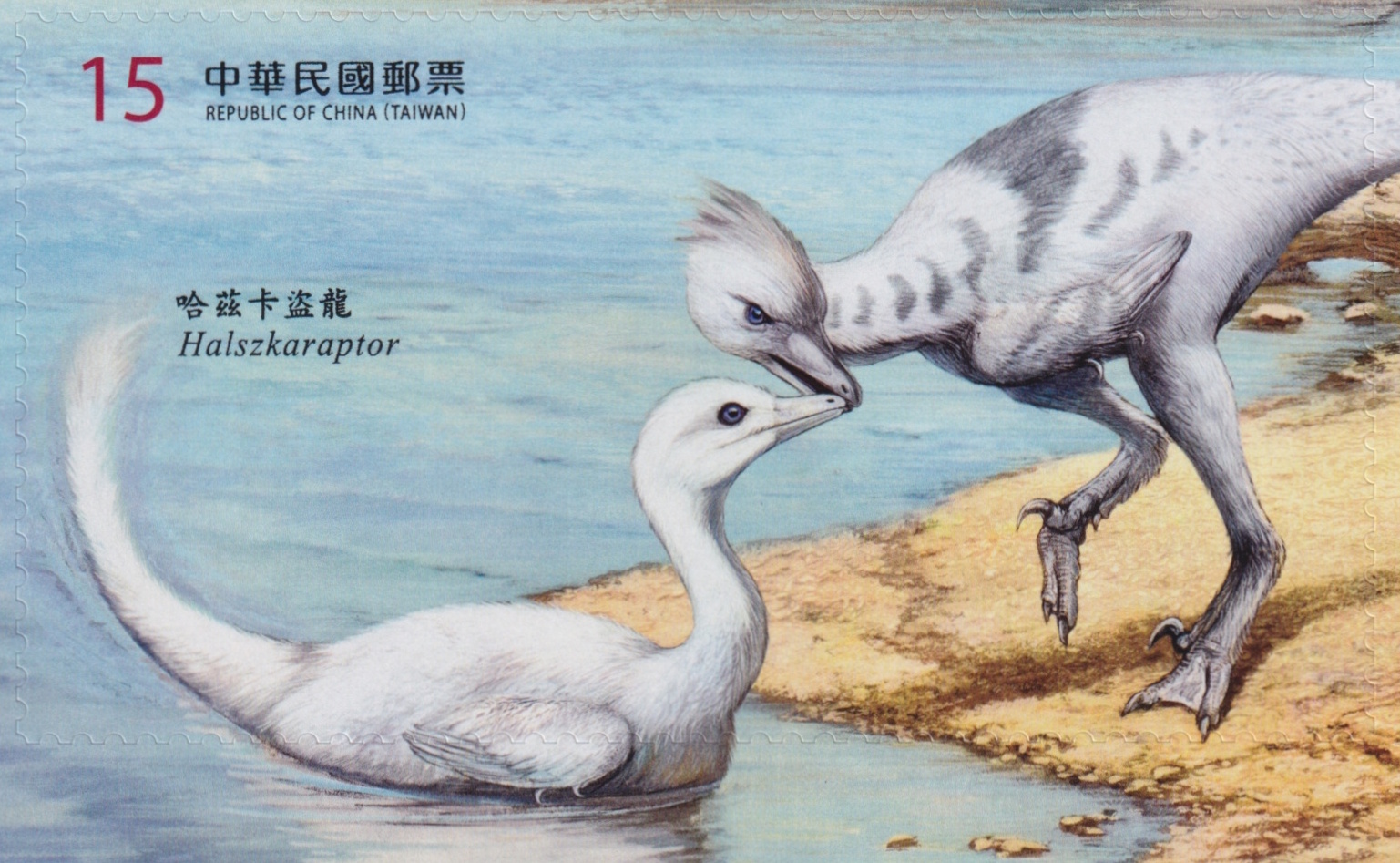 |
| Dromaeosauridae on stamp of Taiwan 2026, MiNr.: ?, Scott: ?. |
Although no fossils of Halszkaraptor have been discovered in Taiwan, its inclusion in this stamp issue highlights one of the most unusual dinosaur discoveries of the 21st century.
Mononykus
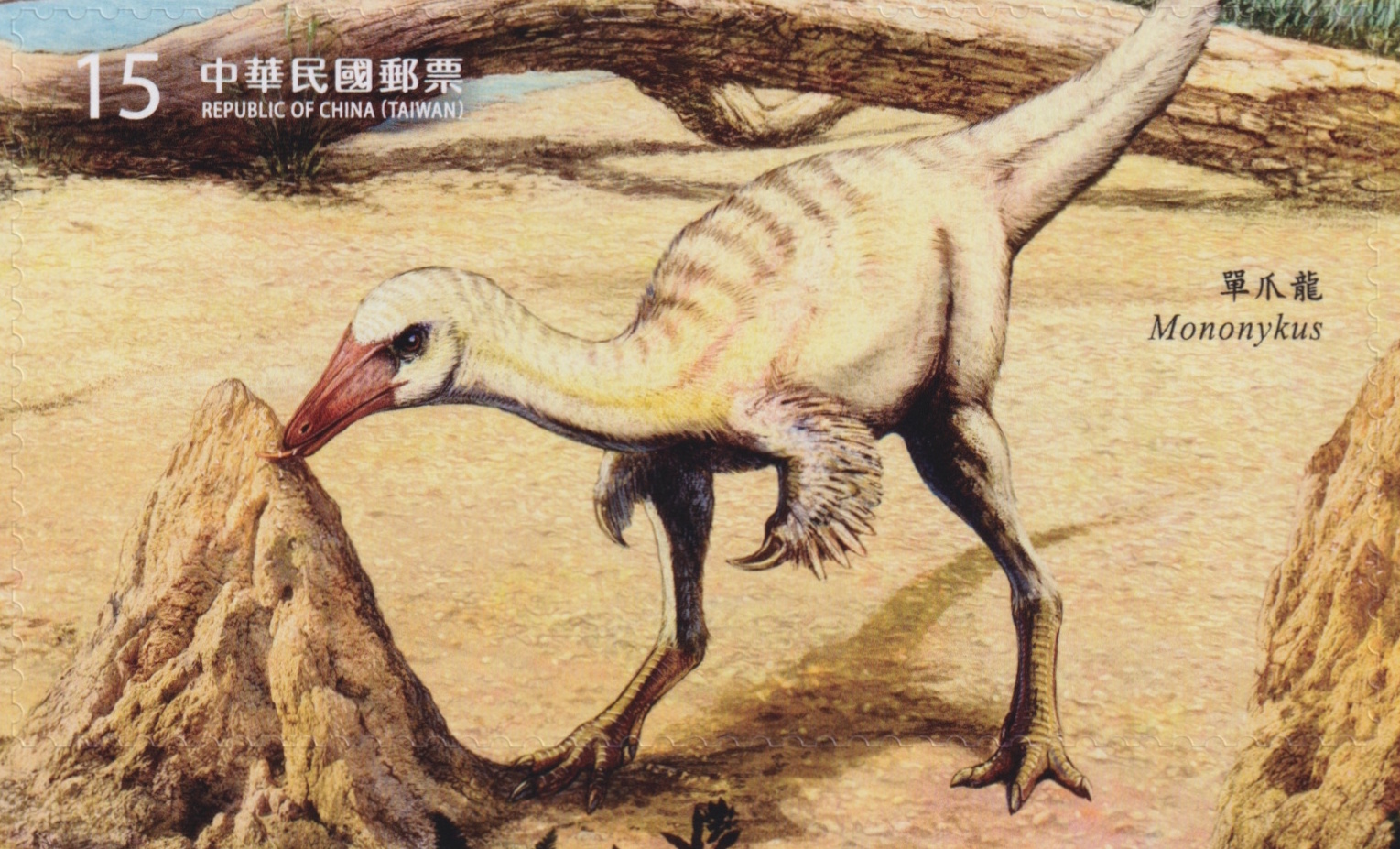 |
| Mononykus on stamp of Taiwan 2026, MiNr.: ?, Scott: ?. |
Although no fossils of Mononykus have been discovered in Taiwan, the species was selected for this stamp issue as one of the best-known members of the remarkable Alvarezsauridae family and an excellent example of evolutionary specialization.
Products and associated philatelic items
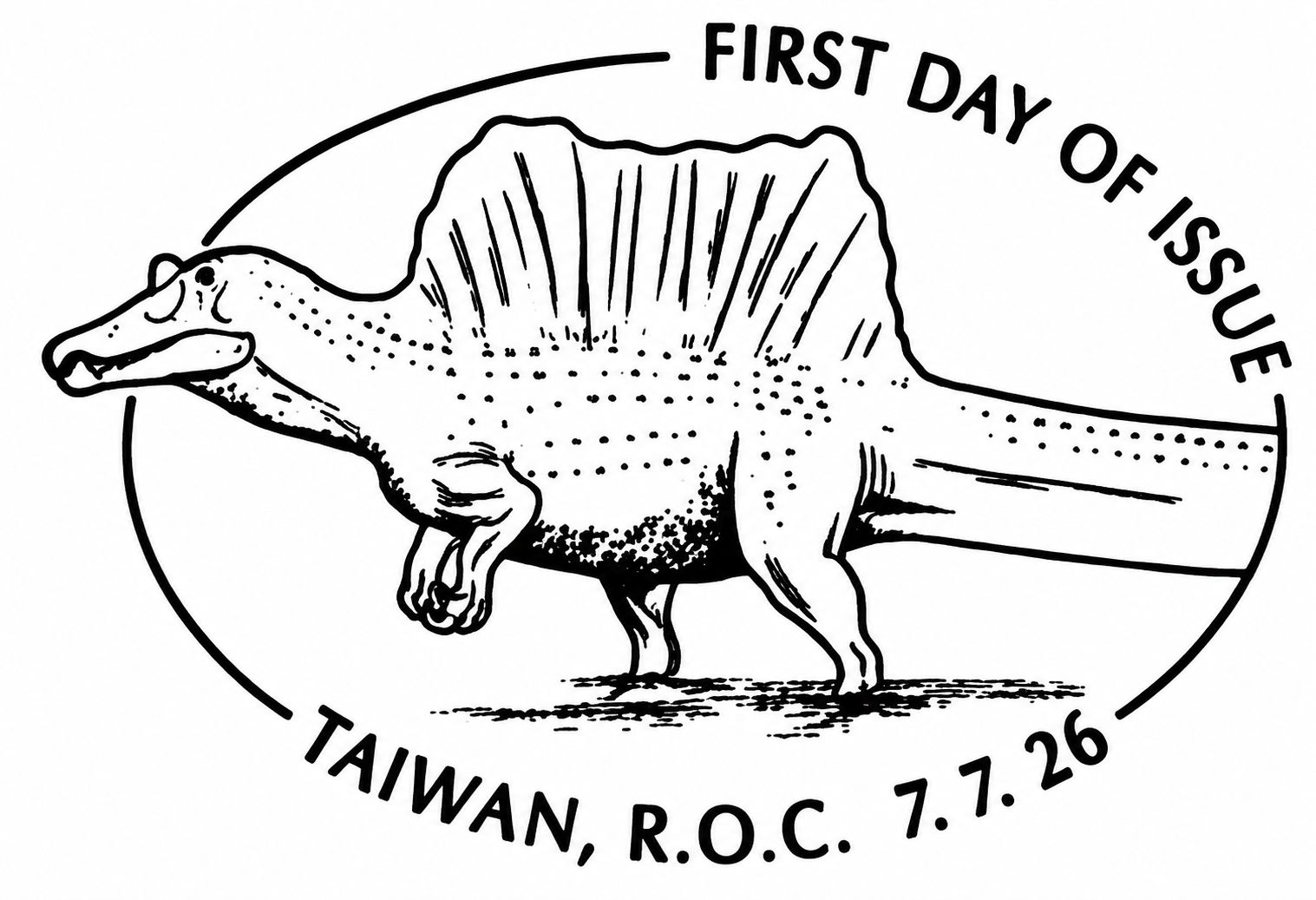
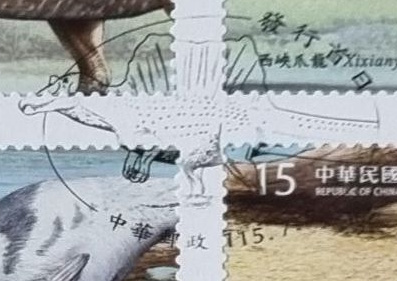
| FDC | First-Day-of-Issue Postmarks | ||
 |
 |
 |
|
| Presentation Pack | Eaxmple of circulated cover | ||
 |
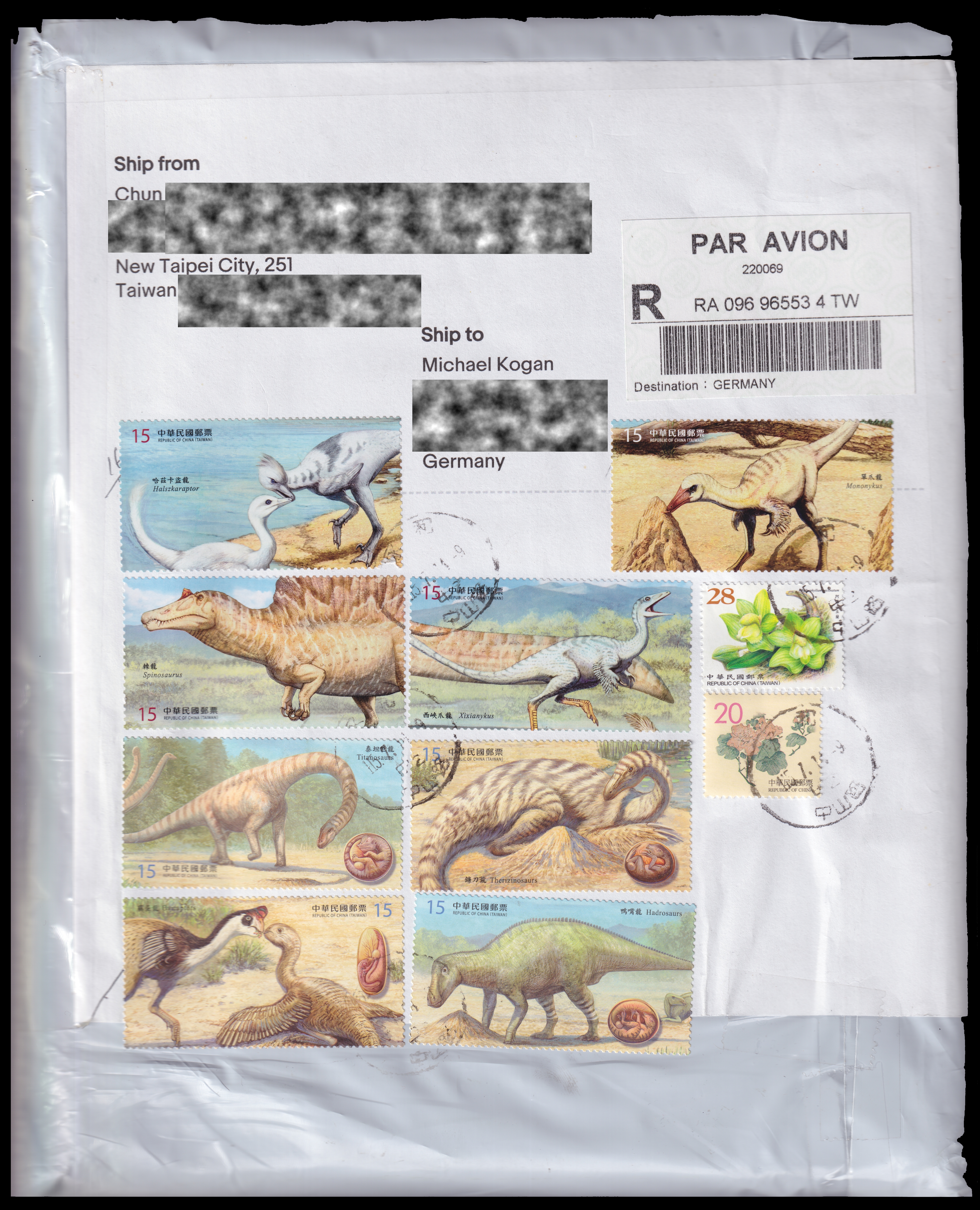 |
||
References
- Technical details and short description: Chunghwa Post,
- Spinosaurus: Wikipedia, Encyclopaedia Britannica, Ibrahim et al. (2014): Semiaquatic adaptations in a giant predatory dinosaur, Ibrahim et al. (2020): Tail-propelled aquatic locomotion in a theropod dinosaur, Chunghwa Post – Official First Day Bulletin.
- Xixianykus: Wikipedia, Dinopedia, The Dinosaur Database, Xu et al. (2010): A monodactyl nonavian dinosaur and the complex evolution of the alvarezsauroid hand, Chunghwa Post – Official First Day Bulletin.
- Halszkaraptor: Wikipedia, Encyclopaedia Britannica – Dromaeosaur, Cau et al. (2017): A dinosaur that breathed like a bird and swam like a crocodile, Cau et al. (2017): A bizarre Cretaceous maniraptoran theropod with preserved evidence of an aquatic lifestyle, Chunghwa Post – Official First Day Bulletin.
- Mononykus: Wikipedia, Encyclopaedia Britannica, Perle et al. (1993): Flightless bird from the Cretaceous of Mongolia, Perle et al. (1993): The first record of a primitive bird from the Cretaceous of Mongolia, Chunghwa Post – Official First Day Bulletin.